Tag: China

  • Chinese zoo keeper takes tiger for a walk

    Chinese zoo keeper takes tiger for a walk

    BEIJING (TIP):
    An animal keeper startled visitors to a zoo in China’s Henan province when he took a tiger for a walk through the public area of the zoo. It happened on February 11. The keeper said he it was therapeutic for the tiger which lives in cramped conditions. The keeper Hu held the 6-month old tiger with a thin iron chain as he walked it through the public walkway at the People’s Park Zoo in Jiaozuo city in northwest Henan Province. Hu said he was giving therapy to the tiger which was born with a deformity in its hind legs, a local paper said. It published a photograph showing the tiger being walked around.

    The keeper had been walking the tiger and massaging its limbs every day for the past three months before zoo visitors witnessed it. Veterinary experts have diagnosed the tiger for calcium deficiency and have put him on supplements. Initially visitors suspected it was a dog which had been painted like a tiger. Some even praised it saying the animal looked extremely “mighty and powerful”. No one has been injured by the animal. The paper quoted a zoo official saying the zoo is licensed to handle and breed tigers. But individual citizens cannot do so because tigers are endangered animals under firstclass state protection.

  • INCREDIBLE COMPLEXITY

    INCREDIBLE COMPLEXITY

    India’s politics is in disarray at a time when Delhi needs to connect the various dots and come up with a policy matrix of incredible complexity involving several interlocking templates – security situation within Afghanistan; evolving US regional priorities toward Afghanistan, Pakistan and India to optimize its ‘pivot to Asia’; rising tensions in the US’ equations with both China and Russia; US-Iranian engagement; India- Pakistan dialogue,” says the author

    The US-Pakistan Strategic Dialogue took place early last week in Washington after an interruption of three years following the American raid on Osama bin Laden’s secretive residence in Abbottabad in May 2011. These three years have been marked by much US-Pakistan discord and public acrimony.

    A brave attempt was made by both sides during Prime Minister Nawaz Sharif’s visit to the White House last October to put behind the bitterness of betrayal and get on with the relationship. But such deep wounds as Abbottabad take time to heal. At best, they could be cauterized for temporary relief. Indeed, bin Laden’s ghost was present at this week’s cogitation in Washington, as is apparent from the recent US legislation to make financial aid to Pakistan $33 million conditional on Islamabad pardoning and releasing the Pakistani doctor Shakil Afridi (who secretly helped the CIA to track down the elusive al-Qaeda leader’s hideout).

    Whereas Pakistan sees Afridi’s collaboration with the CIA as an “act of treason”, Americans hail him as a hero. In turn, Pakistan seeks the release of lady doctor Aafia Siddiqui whom the US locked up for an 80-year jail term for allegedly firing at US soldiers. While Washington regards her as a cold-blooded murderer, she is the stuff heroism in the Pakistani folklore. Clearly, this is much more than a war of words between two estranged partners.

    There is a crisis of confidence in their “spirit of cooperation”, to borrow the expression from the Pakistani foreign ministry statement condemning the US decision to link Afridi’s case to American aid. Meanwhile, hovering above is also the CIA-controlled drone mission haunting the US-Pakistan ties with President Barack Obama vaguely promising that he’d exercise greater “prudence” when Pakistani air space is violated in future and its citizens killed in missile attacks. The cup of Pakistani anger is overflowing. The testiness in the US-Pakistani ties was apparent at the strategic dialogue.

    Washington tried to inject some romance in the run-up to the strategic dialogue with the US special representative for AfPak James Dobbins even penning an article in the Pakistani media affirming that the meet would be an “important opportunity to advance a comprehensive agenda of mutually beneficial initiatives” and a sign of the “firm US commitment to advancing our relationship with Pakistan.” But in the event, the strategic dialogue ended without a compass to navigate the journey ahead. Sharif has since unilaterally ordered talks with Pakistani Taliban. For the Obama administration, the key agenda item was the post- 2014 Afghan scenario. Pakistan’s foreign and security policy advisor Sartaj Aziz said in his opening statement at the strategic dialogue meeting that the Afghan endgame provided “the overbearing and sobering background in which we are meeting to explore ways and means for transforming the post- 2014 US-Pakistan transactional relationship into a strategic partnership.”

    Strategic relationship
    Pakistan needs to know what is there in it for its interests. To quote Aziz, “At what stage does a normal transactional relationship become strategic? Are there one or more thresholds that must be crossed before a relationship can qualify as a strategic partnership?” Interestingly, Aziz proceeded to spell out the three “important prerequisites” of a US-Pakistan strategic partnership. One, “mutual trust at all levels and among all key institutions”; two, respect for each other’s security concerns; and, three, US willingness to “convey” to India Pakistan’s “legitimate concerns” with the “same intensity” with which Washington exerts “a lot of pressure” on Pakistan over “issues of concern to India”.

    Aziz dwelt on the Afghan scenario at some length to underscore that Pakistan is willing to cooperate with a “responsible and smooth drawdown” in Afghanistan and to facilitate “a continued flow of the lines of communication” as well as to “help in every possible way” the stabilization of Afghanistan “including through a comprehensive reconciliation process” – provided, of course, Islamabad could “at the same time hope that our security concerns are comprehensively addressed.” He then summed up that a resolution of the Kashmir issue would have an all-round salutary effect on the range of issues. To be sure, major security challenges lie ahead for India in the period ahead in its region.

    The USPakistani tango is a high-stakes game for both sides and it has commenced in right earnest at a juncture when the Indian government is in limbo and during the next 3-4 months at the very least, a new political order will be struggling to be born on the Raisina Hills. India’s politics is in disarray at a time when Delhi needs to connect the various dots and come up with a policy matrix of incredible complexity involving several interlocking templates – security situation within Afghanistan; evolving US regional priorities toward Afghanistan, Pakistan and India to optimize its ‘pivot to Asia’; rising tensions in the US’ equations with both China and Russia; USIranian engagement; India-Pakistan dialogue.

    The last point becomes crucial since much time has been lost in engaging Pakistan in a meaningful dialogue due to our competitive domestic politics leading to the April poll. Maybe, the Bharatiya Janata Party estimates that a new government dominated by it can always pick up the threads of Atal Behari Vajpayee’s dalliance with Sharif and, therefore, what is the hurry today about. But, as the USPakistan strategic dialogue forewarns, it will be first-rate naivety to imagine things are as simple as that. Lost time is never found again.

  • Feds grab $21.6M in counterfeits before Super Bowl

    Feds grab $21.6M in counterfeits before Super Bowl

    NEW YORK (TIP): Investigators have seized more than $21.6 million in knockoff souvenir football jerseys, caps and other merchandise, shut down illegal websites and made dozens of arrests in a crackdown on Super Bowl counterfeiters, authorities said Thursday, January 30.

    The seizures and arrests were announced at a Manhattan news conference where NFL and law enforcement officials displayed fake Payton Manning and Russell Wilson jerseyscomplete with knockoff Adidas labeling- Broncos and Seahawks hats, Super Bowl Tshirts and other goods made to look like official NFL gear.

    The league and law enforcement “are working hard to prevent fans from being scammed by criminals seeking to profit from the public’s passion for the NFL, their home teams and the Super Bowl,” Anastasia Danias, an NFL senior vice president, said in a statement issued three days before the game in East Rutherford, N.J. During an eight-month operation, investigators seized more than 202,000 Super Bowl-related items that, if legitimate, would have been worth more than $21.6 million.

    Authorities called the dollar amount a record for similar enforcement operations before other Super Bowls, including one last year that netted about $17 million in seizures. Authorities say most of the knockoffs were manufactured in China. They say once the makers learned the Broncos and Seahawks made the Super Bowl, they rushed to make the goods with the teams’ logos. Then the goods were smuggled into the United States, often using overnight shipping.

    Some of the items make their way to street corners in Times Square and elsewhere where they are sold for half the price or less of legitimate merchandise. But others are offered on websites designed to trick buyers into thinking they are purchasing officially licensed goods worth the nearly full price they pay. U.S. Immigration and Customs Enforcement has obtained court orders to shut down several of the bogus Super Bowl gear websites.

    Authorities warn that users of the websites risk identity theft, and that proceeds can go to other illegal activities like drug trafficking. Earlier this week, New York authorities announced the arrest of two men on charges they made high-quality counterfeit Super Bowl tickets and sold them online.

  • Vikas Khanna Launches Himalayan Cook Book ‘Return to the Rivers’

    Vikas Khanna Launches Himalayan Cook Book ‘Return to the Rivers’

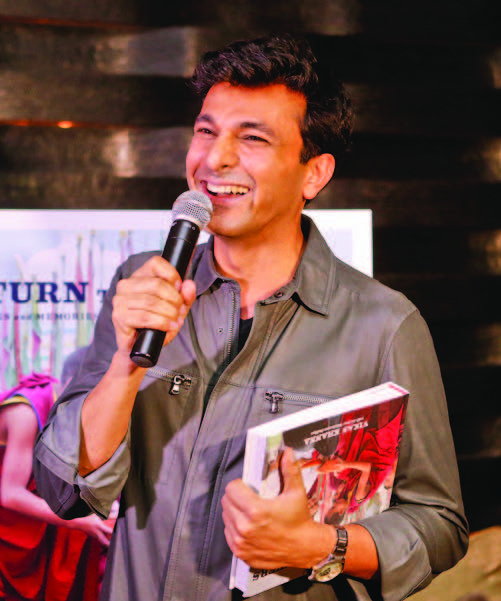
    NEW YORK (TIP): Vikas Khanna, an award-winning Michelin-starred Indian chef, restaurateur, filmmaker, humanitarian and the host of the TV show Master Chef India along with Lake Isle Press, launched his new book “Return to the Rivers” at an exclusive event on Tuesday, January 28 at Junoon Restaurant in New York City.

    Return to the Rivers boasts nearly 500 pages, and 100 full-color photographs of plated dishes, exotic travel experiences, and personal and thoughtful musings that preserve the traditions, values and simple gifts that the Himalayan people bestowed upon Khanna. Speaking at the launch event, in a personal interview Khanna said: The inspiration of the book came from within and it was the journey he had to take to explore himself.

    His spiritual and culinary journey through the Himalayan heartland brought foodies and travel enthusiasts some of the best recipes and culture from northern India, Bhutan, Nepal, Tibet and western China. Also 60% of his book revolves around vegetarians. Khanna’s book explores a wide variety of cultural delicacies, as it is organized by Street Foods; Soups and Noodles; Grains; Vegetables; Fish; Poultry, Eggs and Cheese; Meats; Breads; Condiments; Desserts; and Beverages.

    There’s even a section dedicated to the ever popular Momo, and the many ways in which to fold these iconic little dumplings. An exclusive evening Reception followed that evening at Junoon, attended by over 100+ people including several Media outlets. Guests enjoyed hand crafted appetizers and drinks while getting their books individually personalized from the author himself. The event was sponsored by Junoon Restaurant and organized by Jitin Hingorani of ZINGO Media.

    About the Author
    Born in India, Vikas Khanna learned to cook from his grandmother and opened his own catering company at a young age of seventeen. After apprenticing under the most renowned chefs of India, he moved to the United States in 2000 and has worked his way up to be one of New York City’s top-rated chefs. He was named one of StarChef’s “Rising Stars” in 2010 and is currently the Executive Chef of the Michelinstarred restaurant Junoon. Known to many as the host of MasterChef India and FOX Traveller’s Twist of Taste, Vikas is equally recognized for his humanitarian work with SAKIV, New York Chefs Cooking for Life and his documentary film series about food and religion, Holy Kitchens. Vikas currently resides in New York City.

  • GOOGLE SELLING MOTOROLA PHONE BUSINESS TO LENOVO FOR $2.9 BILLION

    GOOGLE SELLING MOTOROLA PHONE BUSINESS TO LENOVO FOR $2.9 BILLION

    SAN FRANCISCO (TIP): Google is selling Motorola’s smartphone business to Lenovo for $2.9 billion, a price that makes Google’s biggest acquisition look like its most expensive mistake.

    The deal announced on January 29 will rid Google Inc. of a financial headache that has plagued the internet company since buying Motorola Mobility for $12.4 billion in 2012. Motorola has lost nearly $2 billion since Google took over, while trimming its workforce from 20,000 to 3,800. Google had previously recovered some of the money that it spent on Motorola by selling the company’s set-top operations last year to Arris Group Inc. for $2.35 billion.

    Google is also keeping most of the patents that came with the Motorola purchase. It’s unclear if Google will have to absorb a charge to account for the difference between what it paid for Motorola Mobility and what it is getting back. The Mountain View, California, company may address the issue Thursday when it announces its fourth-quarter earnings after the market closes. Most investors viewed Motorola as an unnecessary drain on Google’s profit, a perspective that was reflected by Wall Street’s reaction to the sale.

    Google’s stock gained $28.08, or 2.5%, to $1,135 in extended trading. While Google is backpedaling, Lenovo Group Ltd. is gearing up for a major expansion. Already the world’s largest maker of personal computers, Lenovo now appears determined to become a bigger player in smartphones as more people rely on them instead of laptop and desktop computers to go online.

    Lenovo already is among the smartphone leaders in its home country of China, but it has been looking for ways to expand its presence in other markets, especially the US and Latin America. The company had been rumored to be among the prospective buyers for BlackBerry Ltd. when that troubled smartphone maker was mulling a sale last year. This marks Lenovo’s second highprofile deal this month. The company announced plans last week to buy a major piece of IBM Corp.’s computer server business for $2.3 billion.

    Buying Motorola will enable Lenovo to join Apple Inc. as the only major technology companies with global product lines in PCs, smartphones and tablets, putting Lenovo in a better position to become a one-stop shop for companies to buy all their devices from the same vendor, said Forrester Research analyst Frank Gillett. “This makes Lenovo a company to watch,” Gillett said in an email. “The personal device manufacturer business is consolidating, and manufacturers must compete in all three device markets, plus emerging wearable categories, or get left out of the next market shift.” After it takes over, Lenovo plans to retain a Motorola management team led by Dennis Woodside.

    Google had reassigned Woodside, one of its top executive, to run Motorola Mobility in hopes he could engineer a turnaround. Under Woodside, Motorola released two new smartphones last year, the Moto X and Moto G. The phones attracted lots of headlines, but didn’t sell as well as anticipated, analysts say. Lenovo executives also said they aren’t planning to lay off any more Motorola employees and that the subsidiary would remain based in its current headquarters in Libertyville, Illinois. “We buy this business, we buy this team as our treasure,” Lenovo CEO Yang Yuanqing said during a Wednesday conference call.

    Google is retaining most of Motorola’s portfolio of mobile patents, providing the company with legal protection for its widely used Android software for smartphones and tablet computers. Gaining control of Motorola’s patents was the main reason Google CEO Larry Page decided to pay so much for Motorola Mobility at a time the smartphone maker was already losing money and market share. Most analysts thought Page had paid too much money for Motorola and questioned why Google wanted to own a smartphone maker at the risk of alienating other mobile device makers that rely on Android. Selling Motorola’s smartphone operations will “enable Google to devote our energy to driving innovation across the Android ecosystem,” Page said in a statement. Lenovo is picking up about 2,000 Motorola patents in addition to the phone manufacturing operations.

  • Space tour? Chinese not allowed: UK firm

    Space tour? Chinese not allowed: UK firm

    Chinese nationals have been banned from flying on the commercial space flights operated by Virgin Galactic over fears that the rocket technology being implemented will be stolen.

    This is due to the fact that the British firm will be launching its craft from the US, where strict antiespionage regulations introduced during the Cold War still restrict the privileges of citizens from countries such as China, Iran and North Korea. Because Galactic’s craft are powered by rocket engines it is seen as a potential military technology and covered by the US’s International Traffic in Arms regulations.

    “We have had calls from people in China but we have to tell them we can’t accept them if they only have a Chinese passport,” said Hong Kong-based Virgin Galactic salesman. “We advise them on how they can make themselves eligible for a space tour. For example, they can get another nationality’s passport or they can apply for a (US) Green Card.” The news certainly deprives Virgin Galactic of access to a huge potential market of wealthy Chinese businessmen willing to pay the $250,000 ticket price for a space flight, but the company might also have more substantial problems. the independent

  • Challenges in Indo-Pacific Region

    Challenges in Indo-Pacific Region

    INDIA MUST PLAY A PROACTIVE ROLE FOR LONG-TERM SECURITY AND STABILITY

    It would be in India’s interest to readily join cooperative efforts aimed at maintaining stability. India has acquired robust military intervention capabilities and is formulating a suitable doctrine for intervention”, says the author.

    The security environment in the Indo- Pacific region has been vitiated by territorial disputes on land in the South China Sea and the East China Sea as well as terrorism, the proliferation of small arms and piracy in the Malacca Strait. Freedom of navigation on the high seas is of critical importance for the economies of most Asian countries.

    Maintaining peace and stability and ensuring the unfettered flow of trade and energy supplies through the sea lanes of communications will pose major challenges for the Asian powers as well as the United States. Only cooperative security architecture can provide long-term stability and mutual reassurance. Through its forward military presence and its abiding military alliances, the US has played a key role in providing stability in the Indo-Pacific region through many decades of turbulence during and after the cold war.

    The US is now re-balancing or ‘pivoting’ from the Euro-Atlantic zone to the Indo-Pacific in tune with its changing geo-strategic priorities and the rise of emerging powers. It is also simultaneously downsizing its forces and will need new strategic partners to help it maintain order and stability. According to Rory Medcalf, Senior Fellow, Brookings Institution, Washington, “the choreography of this geopolitical interplay will depend on the quality of leadership and decisionmaking in Beijing, New Delhi and Washington.”

    As C Raja Mohan has averred in his book “Samudra Manthan: Sino-Indian Rivalry in the Indo-Pacific”, the major powers in the region, including Australia, China, India, Indonesia, Japan and the US, need to work creatively to frame acceptable rules for the commons in the Indo-Pacific. Unless such realization comes about, subterranean tensions will continue to hamper stability. China has so far been ambivalent in seeking to join a cooperative framework and has preferred to stand apart. It has failed to realize that its growing trade and massive dependence on energy imports through the Indian Ocean make it imperative for it to join the efforts being made to establish such a framework.

    It would be in India’s interest to readily join cooperative efforts aimed at maintaining stability. India has acquired robust military intervention capabilities and is formulating a suitable doctrine for intervention. Though India has a pacifist strategic culture rather than a proactive one that nips emerging challenges in the bud through pre-emption, it has not hesitated to intervene militarily when its national interests warranted intervention, both internally and beyond the shores. The Army was asked to forcibly integrate the states of Goa, Hyderabad and Junagadh into the Indian Union soon after Independence as part of the nation-building process. The Indian armed forces created the new nation of Bangladesh after the Pakistan army conducted genocide in East Pakistan in 1971.

    India intervened in the Maldives and Sri Lanka at the behest of the governments of these countries and was ready to do so in Mauritius in 1983 when the threat to the government there passed. India had airlifted 150,000 civilian workers from Iraq through Jordan during Gulf War I in what became known as the largest airlift after the Berlin airlift. Also, almost 5,000 civilian workers were evacuated by ship from Lebanon in 2006. After the 2004 South-East Asian tsunami, 72 naval ships had set sail within three days to join the international rescue and relief operations even though India’s eastern sea board had itself suffered extensive loss of life and damage. India’s limited military presence overseas has been mostly benign.

    According to Shyam Saran, a former Foreign Secretary, “…most South-East Asian countries and Japan welcome a larger presence of Indian naval assets in the region.” As part of the Indo-US defense cooperation, joint patrolling of the SLOCs in the Indian Ocean is already being undertaken up to the western mouth of the Malacca Strait as part of joint naval exercises. Other military exercises have led to a broad understanding of each other’s military capabilities and limitations and many interoperability challenges have been ironed out. The Indian Army has designated one infantry division as a rapid reaction division, with an amphibious brigade, an air assault brigade and an infantry brigade. The Army also has an independent parachute brigade that can be deployed at short notice.

    The Indian Navy now possesses the INS Jalashva (USS Trenton) that can carry one infantry battalion with full operational loads and is in the process of acquiring additional landing ships. Besides long-range fighter-bomber aircraft with air-to-air refueling capability like the SU-30MKI, the Indian Air Force has acquired fairly substantive strategic airlift capabilities, including six C-130 Super Hercules aircraft for the Special Forces. A permanent corps-level tri-Service planning HQ with all-weather reconnaissance and surveillance capabilities needs to be set up under the aegis of the HQ Integrated Defense Staff to monitor emerging situations on a regular basis and act as a control HQ for intervention operations.

    In future, India may undertake joint military operations in its area of strategic interest if the country’s major national interests are at stake. Such a campaign may take the form of an intervention under the UN flag – something that India would prefer – or even a “coalition of the willing” in a contingency in which India’s vital national interests are threatened. There will naturally be several caveats to such cooperation as India will not join any military alliance. It will also be necessary to work with other strategic partners and friendly countries in India’s extended neighborhood and with organizations like the Gulf Cooperation Council (GCC), the ASEAN Regional Forum (ARF) and, when possible, even the Shanghai Cooperation Organization (SCO). The aim should be to establish consultative mechanisms through diplomatic channels for the exchange of ideas, and conduct joint training and reconnaissance. Small-scale joint military exercises with likely coalition partners help eliminate interoperability and command and control challenges and enable strategic partners to operate together during crises.

  • FOREIGN RELATIONS OF INDIA

    FOREIGN RELATIONS OF INDIA

    India has formal diplomatic relations with most nations; it is the world’s second most populous country, the world’s mostpopulous democracy and one of the fastest growing major economies. With the world’s seventh largest military expenditure, ninth largest economy by nominal rates and third largest by purchasing power parity, India is a regional power, a nascent great power and a potential superpower.

    India’s growing international influence gives it a prominent voice in global affairs. The Economist magazine argues, however, that underinvestment in diplomacy and a lack of strategic vision have minimised India’s influence in the world. India is a newly industrialised country, it has a long history of collaboration with several countries and is considered one of the leaders of the developing world along with China, Brazil, Russia and South Africa (the BRICS countries). India was one of the founding members of several international organisations, most notably the United Nations, the Asian Development Bank, G20 industrial nations and the founder of the Non-aligned movement.


    32
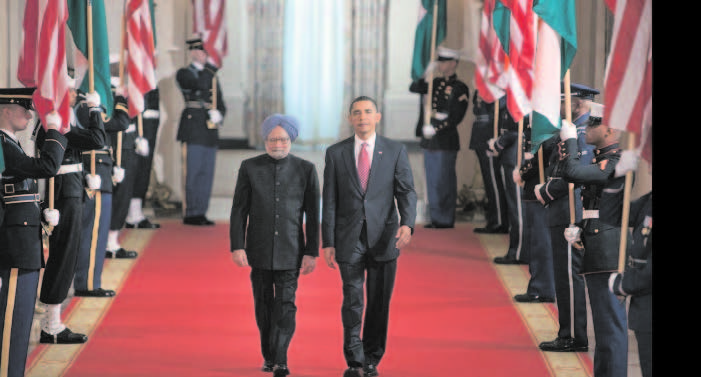
    India has often represented the interests of developing countries at various international platforms. Shown here is Prime Minister Manmohan Singh with Dmitry Medvedev, Hu Jintao and Luiz Inácio Lula da Silva during BRIC summit

    India has also played an important and influential role in other international organisations like East Asia Summit, World Trade Organisation, International Monetary Fund (IMF), G8+5 and IBSA Dialogue Forum. Regionally, India is a part of SAARC and BIMSTEC. India has taken part in several UN peacekeeping missions and in 2007, it was the secondlargest troop contributor to the United Nations.[12] India is currently seeking a permanent seat in the UN Security Council, along with the G4 nations. India’s relations with the world have evolved since the British Raj (1857–1947), when the British Empire monopolised external and defence relations. When India gained independence in 1947, few Indians had experience in making or conducting foreign policy. However, the country’s oldest political party, the Indian National Congress, had established a small foreign department in 1925 to make overseas contacts and to publicise its freedom struggle.

    From the late 1920s on, Jawaharlal Nehru, who had a longstanding interest in world affairs among independence leaders, formulated the Congress stance on international issues. As a member of the interim government in 1946, Nehru articulated India’s approach to the world. India’s international influence varied over the years after independence. Indian prestige and moral authority were high in the 1950s and facilitated the acquisition of developmental assistance from both East and West. Although the prestige stemmed from India’s nonaligned stance, the nation was unable to prevent Cold War politics from becoming intertwined with interstate relations in South Asia.


    33

    In the 1960s and 1970s India’s international position among developed and developing countries faded in the course of wars with China and Pakistan, disputes with other countries in South Asia, and India’s attempt to balance Pakistan’s support from the United States and China by signing the Indo- Soviet Treaty of Friendship and Cooperation in August 1971. Although India obtained substantial Soviet military and economic aid, which helped to strengthen the nation, India’s influence was undercut regionally and internationally by the perception that its friendship with the Soviet Union prevented a more forthright condemnation of the Soviet presence in Afghanistan. In the late 1980s, India improved relations with the United States, other developed countries, and China while continuing close ties with the Soviet Union. Relations with its South Asian neighbours, especially Pakistan, Sri Lanka, and Nepal, occupied much of the energies of the Ministry of External Affairs.

    In the 1990s, India’s economic problems and the demise of the bipolar world political system forced India to reassess its foreign policy and adjust its foreign relations. Previous policies proved inadequate to cope with the serious domestic and international problems facing India. The end of the Cold War gutted the core meaning of nonalignment and left Indian foreign policy without significant direction. The hard, pragmatic considerations of the early 1990s were still viewed within the nonaligned framework of the past, but the disintegration of the Soviet Union removed much of India’s international leverage, for which relations with Russia and the other post-Soviet states could not compensate. After the dissolution of the Soviet Union, India improved its relations with the United States, Canada, France, Japan and Germany. In 1992, India established formal diplomatic relations with Israel and this relationship grew during the tenures of the Bharatiya Janata Party (BJP) government and the subsequent UPA (United Progressive Alliance) governments.

    In the mid-1990s, India attracted the world attention towards the Pakistan-backed terrorism in Kashmir. The Kargil War resulted in a major diplomatic victory for India. The United States and European Union recognised the fact that Pakistani military had illegally infiltrated into Indian territory and pressured Pakistan to withdraw from Kargil. Several anti-India militant groups based in Pakistan were labeled as terrorist groups by the United States and European Union. India has often represented the interests of developing countries at various international platforms. Shown here are Prime Minister Manmohan Singh with Dmitry Medvedev, Hu Jintao and Luiz Inácio Lula da Silva during BRIC summit in June, 2009. In 1998, India tested nuclear weapons for the second time which resulted in several US, Japanese and European sanctions on India.

    India’s then-defence minister, George Fernandes, said that India’s nuclear programme was necessary as it provided a deterrence to potential Chinese nuclear threat. Most of the sanctions imposed on India were removed by 2001. After the 11 September attacks in 2001, Indian intelligence agencies provided the U.S. with significant information on Al-Qaeda and related groups’ activities in Pakistan and Afghanistan. India’s extensive contribution to the War on Terror, coupled with a surge in its economy, has helped India’s diplomatic relations with several countries. Over the past three years, India has held numerous joint military exercises with U.S. and European nations that have resulted in a strengthened U.S.-India and E.U.-India bilateral relationship. India’s bilateral trade with Europe and United States has more than doubled in the last five years.

    India has been pushing for reforms in the UN and WTO with mixed results. India’s candidature for a permanent seat at the UN Security Council is currently backed by several countries including France, Russia,[50] the United Germany, Japan, Brazil, Australia and UAE. In 2004, the United States signed a nuclear co-operation agreement with India even though the latter is not a part of the Nuclear Non- Proliferation Treaty. The US argued that India’s strong nuclear non-proliferation record made it an exception, however this has not persuaded other Nuclear Suppliers Group members to sign similar deals with India. During a state visit to India in November 2010, US president Barack Obama announced US support for India’s bid for permanent membership to UN Security Council as well as India’s entry to Nuclear Suppliers Group, Wassenaar Arrangement, Australia Group and Missile Technology Control Regime.

  • ENHANCING CAPABILITIES

    ENHANCING CAPABILITIES

    DEFENSE
    With personnel strength of 1.1 million soldiers (6 regional commands, a training command, 13 corps, and 38 divisions), the Indian Army has kept the nation together through various crises, including four wars since Independence, Pakistan’s “proxy war” in J&K since 1989–90, and insurgencies in many of the northeastern states.

    Given its large-scale operational commitments on border management and counterinsurgency, the army cannot afford to reduce its manpower numbers until these challenges are overcome. Many of its weapons and equipment are bordering on obsolescence and need to be replaced. The next step would be to move gradually toward acquiring network-centric capabilities for effects-based operations so as to optimize the army’s full combat potential for defensive and offensive operations.

    The army is also preparing to join the navy and the air force in launching intervention operations in India’s area of strategic interest when called on to do so in the future. Lieutenant General J.P. Singh (retired), former deputy chief of the army staff (planning and systems), stated in an interview with the CLAWS Journal that “the critical capabilities that are being enhanced to meet challenges across the spectrum include battlefield transparency, battlefield management systems, nightfighting capability, enhanced firepower, including terminally guided munitions, integrated maneuver capability to include self-propelled artillery, quick reaction surface-to-air missiles, the latest assault engineer equipment, tactical control systems, integral combat aviation support and network centricity.” [6] The army’s mechanized forces are still mostly “night blind.”

    Its artillery lacks towed and self-propelled 155- mm howitzers for the plains and the mountains and has little capability by way of multi-barrel rocket launchers and surface-to-surface missiles. Infantry battalions urgently need to acquire modern weapons and equipment for counterinsurgency and counterterrorism operations to increase operational effectiveness and lower casualties. Main battle tanks (MBT) and infantry combat vehicles (ICV) are the driving forces of India’s conventional deterrence in the plains. This fleet is being modernized gradually by inducting two regiments of the indigenously developed Arjun MBT and importing 310 T-90S MBTs from Russia. A contract has also been signed for 347 additional T-90S tanks to be assembled in India. The BMP-1 and BMP-2 Russian ICVs, which have long been the mainstay of the mechanized infantry battalions, need to be replaced as well.

    The new ICVs must be capable of performing internal security duties and counterinsurgency operations in addition to their primary role in conventional conflicts. Artillery modernization plans include the acquisition of towed, wheeled, and self-propelled 155- mm guns and howitzers for the plains and the mountains through import as well as indigenous development. The Corps of Army Air Defence is also faced with problems of obsolescence. The vintage L-70 40-mm air defense (AD) gun system, the four-barreled ZSU-23-4 Schilka (SP) AD gun system, the SAM-6 (Kvadrat), and the SAM-8 OSA-AK, among others, need to be replaced by more responsive modern AD systems that are capable of defeating current and future threats.

    The modernization of India’s infantry battalions is moving forward but at a similarly slow pace. This initiative is aimed at enhancing the battalions’ capability for surveillance and target acquisition at night and boosting their firepower for precise retaliation against infiltrating columns and terrorists hiding in built-up areas. These plans include the acquisition of shoulder-fired missiles, hand-held battlefield surveillance radars, and hand-held thermal imaging devices for observation at night. A system called F-INSAS (future infantry soldier as a system) is also under development. One infantry division has been designated as a rapid reaction force for employment on land or in intervention operations and will have one amphibious brigade and two air assault brigades. Similarly, the

    Indian Army proposes to substantially enhance the operational capabilities of army aviation, engineers, signal communications, reconnaissance, surveillance, and target acquisition branches in order to improve the army’s overall combat potential by an order of magnitude. Modern strategic and tactical level command and control systems need to be acquired on priority for better synergies during conventional and sub-conventional conflict. Plans for the acquisition of a mobile corps-to-battalion tactical communications system and a battalion-level battlefield management system likewise need to be hastened. Despite being the largest user of space, the army does not yet have a dedicated military satellite for its space surveillance needs. Cyberwarfare capabilities are also at a nascent stage. The emphasis thus far has been on developing protective capabilities to safeguard Indian networks and C4I2SR (command, control, communications, computers, intelligence, information, surveillance, and reconnaissance) from cyberattack. Offensive capabilities have yet to be adequately developed. All these capabilities will make it easier for the army to undertake joint operations with multinational forces when the need arises and the government approves such a policy option.

    INDIAN DEFENSE POWER AND MISSILE SYSTEMS


    26

    • Indian Army is the 3rd biggest military contingent in the World after USA and China.
    • India’s indigenous nuclear-powered ICBM (Inter-Continental Ballistic Missile) AGNI-V puts India into the Elite Club consisting of USA, China, France and Russia.
    • India claims AGNI-V to have a reach of 5,000 kms to which Chinese and Australian delegates and experts suspect to have a range of 8,000 kms. and that India is hiding these facts just to avoid any concern from foreign countries.
    • AGNI-VI(being built) will have a range of 10,000 kms. which would give India the power to strike in any part of the world barring South America and very small parts of North America.
    • India’s cruise missile (being tested) NIRBHAYA is a cruise nuclearwarhead missile which when blasted, takes the form of a plane and when the target is in nearby range, attacks it with a random procedure thus eliminating the probability of it getting stopped by any anti-missile system as its process is itself not defined. In other words-unstoppable.

    • In the hilly terrains, it gives an advantage as the missile goes from the side of the mountains and attacks the target from the rear side.
    • The missile BrahMos-2 (built under collaboration with Russia)(under testing)(Named after its rivers Brahmaputra+Moscow) is the fastest hypersonic missile in the world travelling at a speed of Mach-7 (7 times the speed of sound in air).
    • India’s INS-Vikrant (bought from the UK) is the first nuclear-powered aircraft carrier of India.
    • The HMS Harriers(airplanes on INS VIRAAT) are one of its kind which has the ability of vertical landing and take-off.
    • INS Viraat: Centaur class carrier (ex-HMS Hermes) in service since 1987.
    • INS Vikramaditya : Modified Kiev class carrier (ex-Admiral Gorshkov) due in service October 2013.
    • INS Vikrant: 40,000 ton Vikrant class carrier. It is being built at Cochin Shipyard and is expected to enter service in 2017.
    • INS Vishal: 65,000 ton Vikrant-class carrier. Expected to enter service in 2022.
    • India’s INS-ARIHANT is the first indigenous(built completely in India, by India) nuclear powered submarine in India. It has a capability to shoot missiles with nuclear war-heads even after being at some tens of kilometers beneath the water-level.
    • The Sukhoi Su-30MKI, Dassault Mirage 2000, and MiG-29 serve in the Indian Air Force and are also seen as a means to deliver nuclear weapons.
    • In addition India maintains SEPECAT Jaguar and MiG-27M which can be used to drop gravity bombs.
    • The new in queue for the indigenous aircraft of India is HAL-Tejas
    • It integrates technologies such as relaxed static stability, fly-by-wire flight control system, multi-mode radar, integrated digital avionics system, composite material structures, and a flat rated engine.
    • It is a tailless, compound delta-wing design powered by a single engine.
    • Indian Army is the 3rd biggest military contingent in the World after USA and China.
    • India’s indigenous nuclear-powered ICBM (Inter-Continental Ballistic Missile) AGNI-V puts India into the Elite Club consisting of USA, China, France and Russia.
    • India claims AGNI-V to have a reach of 5,000 kms to which Chinese and Australian delegates and experts suspect to have a range of 8,000 kms. and that India is hiding these facts just to avoid any concern from foreign countries.
    • AGNI-VI(being built) will have a range of 10,000 kms. which would give India the power to strike in any part of the world barring South America and very small parts of North America.
    • India’s cruise missile (being tested) NIRBHAYA is a cruise nuclearwarhead missile which when blasted, takes the form of a plane and when the target is in nearby range, attacks it with a random procedure thus eliminating the probability of it getting stopped by any anti-missile system as its process is itself not defined. In other words-unstoppable.
    • In the hilly terrains, it gives an advantage as the missile goes from the side of the mountains and attacks the target from the rear side.
    • The missile BrahMos-2 (built under collaboration with Russia)(under testing)(Named after its rivers Brahmaputra+Moscow) is the fastest hypersonic missile in the world travelling at a speed of Mach-7 (7 times the speed of sound in air).
    • India’s INS-Vikrant (bought from the UK) is the first nuclear-powered aircraft carrier of India.
    • The HMS Harriers(airplanes on INS VIRAAT) are one of its kind which has the ability of vertical landing and take-off.
    • INS Viraat: Centaur class carrier (ex-HMS Hermes) in service since 1987.
    • INS Vikramaditya : Modified Kiev class carrier (ex-Admiral Gorshkov) due in service October 2013.
    • INS Vikrant: 40,000 ton Vikrant class carrier. It is being built at Cochin Shipyard and is expected to enter service in 2017.
    • INS Vishal: 65,000 ton Vikrant-class carrier. Expected to enter service in 2022.
    • India’s INS-ARIHANT is the first indigenous(built completely in India, by India) nuclear powered submarine in India. It has a capability to shoot missiles with nuclear war-heads even after being at some tens of kilometers beneath the water-level.
    • The Sukhoi Su-30MKI, Dassault Mirage 2000, and MiG-29 serve in the Indian Air Force and are also seen as a means to deliver nuclear weapons.
    • In addition India maintains SEPECAT Jaguar and MiG-27M which can be used to drop gravity bombs.
    • The new in queue for the indigenous aircraft of India is HAL-Tejas
    • It integrates technologies such as relaxed static stability, fly-by-wire flight control system, multi-mode radar, integrated digital avionics system, composite material structures, and a flat rated engine.
    • It is a tailless, compound delta-wing design powered by a single engine.


    27

  • INDIA: A RISING ECONOMIC POWERHOUSE

    INDIA: A RISING ECONOMIC POWERHOUSE

    The India economy, the third largest economy in the world in terms of purchasing power, is going to touch new heights in coming years. As predicted by Goldman Sachs, the Global Investment Bank, by 2035 India would be the third largest economy of the world just after US and China.

    It will grow to 60% of size of the US economy. This booming economy of today has to pass through many phases before it can achieve the current milestone of 9% GDP. The history of Indian economy can be broadly divided into three phases: Pre- Colonial, Colonial and Post Colonial. PRE COLONIAL: The economic history of India since Indus Valley Civilization to 1700 AD can be categorized under this phase. During Indus Valley Civilization Indian economy was very well developed.

    It had very good trade relations with other parts of world, which is evident from the coins of various civilizations found at the site of Indus valley. Before the advent of the East India Company, each village in India was a self sufficient entity and was economically independent as all the economic needs were fulfilled within the village COLONIAL INDIAN ECONOMY: The arrival of the East India Company in India caused a huge strain to the Indian economy and there was a two-way depletion of resources. The British would buy raw materials from India at cheaper rates and the finished goods were sold at higher than normal price in Indian markets.

    During this phase India’s share of world income declined from 22.3% in 1700 AD to 3.8% in 1952. POST COLONIAL INDIAN ECONOMY: After India got independence from colonial rule in 1947, the process of rebuilding the economy started. For this various policies and schemes were formulated. First five year plan for the development of Indian economy came into implementation in 1952. These Five Year Plans, started by Indian government, focused on the needs of the Indian economy. If on one hand agriculture received the immediate attention on the other hand the industrial sector was developed at a fast pace to provide employment opportunities to the growing population and to keep pace with the developments in the world. Since then the Indian economy has come a long way.

    The Gross Domestic Product (GDP) at factor cost, which was 2.3 % in 1951-52 reached 6.5 in the financial year 2011-2012 Trade liberalization, financial liberalization, tax reforms and opening up to foreign investments were some of the important steps, which helped Indian economy to gain momentum. The Economic Liberalization introduced by Man Mohan Singh in 1991, then Finance Minister in the government of P V Narsimha Rao, proved to be the stepping-stone for Indian economic reform movements. To maintain its current status and to achieve the target GDP of 10% for financial year 2006-07, the Indian economy has to overcome many challenges.

    Challenges before Indian economy:
    Population explosion:The rising population is eating into the success of India. According to 2011 census of India, the population of India has crossed one billion and isgrowing at a rate of 2.11% approx. Such a vast population puts lots of stress on economic infrastructure of the nation. Thus India has to control its burgeoning population. Poverty: As per records of National Planning Commission, 36 crore people are living below the poverty line in India in 2012. Unemployment:The increasing population is pressing hard on economic resources as well as job opportunities. Indian government has started various schemes such as Jawahar Rozgar Yojna, and Self Employment Scheme for Educated Unemployed Youth (SEEUY). But these are proving to be a drop in an ocean. Rural Urban Divide:It is said that India lies in villages, even today when there is lots of talk going about migration to cities, 70% of the Indian population still lives in villages. There is a very stark difference in pace of rural and urban growth. Unless there isn’t a balanced development Indian economy cannot grow.

    These challenges can be overcome by the sustained and planned economic reforms. These include:

    • Maintaining fiscal discipline
    • Orientation of public expenditure towards sectors in which India is faring badly such as health and education.
    • Introduction of reforms in labour laws to generate more employment opportunities for the growing population of India.
    • Reorganization of agricultural sector, introduction of new technology, reducing agriculture’s dependence on monsoon by developing means of irrigation.
    • Introduction of financial reforms including privatization of some public sector banks.

    A Global Economic Super Power by 2030
    India is poised to take over the developed countries to emerge at the top of the heap in the global economic superpower league by 2030, says a survey.More than half of the respondents (53 per cent) of a survey commissioned by London-based independent think-tank Legatum Institute said India is likely to be the world’s most important economic power by 2030.

    According to the respondents of the survey, India is now on course to outstrip developed nations such as — the United States, Japan, Germany and the fast-emerging economic giant China over the next two decades. The survey, which questioned nearly 2,400 Indian senior managers, entrepreneurs and aspiring entrepreneurs said the levels of confidence among the country’s wealth-creators is very high, with nearly nine in ten saying they expected India to be in a stronger economic position in the next five years. Only one in five said the world economic crisis had badly affected business in India, the survey said.

    India is already moving up the economic league tables as the 12th largest economy in the world, as per the World Bank. Besides, it also ranked 45th in the internationally respected 2009 Legatum Prosperity Index — which embraces social and political data to provide a wider measure of national success. About two-thirds of the respondents said Indians were more entrepreneurial than people from other countries and 84 per cent said their country was going in the right direction. Beyond making money, Indian entrepreneurs are also highly motivated by the broader social impact of their work. Over half (54 per cent) of respondents say the social effects of their business, such as improving the quality of life in their communities or developing people, are a main motivation for what they do, the survey said.

  • A Panegyric for Arnab Goswami?

    A Panegyric for Arnab Goswami?

    B.V. Rao, editor of Governance Now, explains the name and the phenomenon – Time’s Now’s Arnab Goswami – to a childhood friend who lives in Canada. Readers will surely find the piece a refreshing reading.

    Dear Sharda
    Sometime ago during a Googlegroup discussion you innocently asked: “But who is Arnab?” In India not knowing Arnab is against national interest. You are lucky you live in Canada. But if you don’t want to be deported on arrival on your next visit, you better pay attention to this complimentary crash course on the subject.

    Arnab, as in Arnab Goswami, is India’s most-watched prime time news anchor and editor-in-chief of Times Now. But designations don’t even begin to describe him or what he is famous for. You must have heard about hurricanes Katrina and Sandy. Arnab is also a storm, a news-storm that hits India every night via his show, the “Newshour”.

    Nobody is quite sure how, but somehow Arnab gets to know the questions that the “whole nation” wants answers for, or the sinners the nation wants hanged before midnight that night. In effect then, Arnab speaks for a “billionplus people” each time he takes centre-stage. I can’t say for sure if he took this burden upon himself voluntarily or if his employers made it a contractual obligation. Whatever it is, the fact is that Arnab has come to relish asking the most “simple and direct” questions to the most dubious people demanding instant answers to complex problems because the “nation wants to know” and it wants to know “tonight” as in right now.

    That’s how impatient India has become while you’ve been away, Sharada. The Newshour airs on weekdays from 9 pm and continues till Arnab’s pleasure lasts. Often the show stretches up to 10.50 pm. That’s actually “News hour-and-threequarters- and-then-some” but I guess Arnab has not asked himself a “simple, direct” question: how many minutes make an hour? That, or his primary school maths teacher is not his viewer. In which case it is safe to say Arnab speaks for a billion-plus minus one Indians. You will see that at the altar of national interest it is not just the hour that is stretched.

    About two decades ago, Dileep Padgaonkar was the editor of the Times of India owned by the Jains of Bennett & Coleman who also own Times Now. Padgaonkar had pompously proclaimed that he held the second most important job in the country after the prime minister’s. Arnab hasn’t said it, but I think he disagrees with Padgaonkar on the pecking order: it’s now the prime minister who holds the second most important job in the country. Hence Arnab runs the show like he would run the country or like the prime minister should but doesn’t.

    You see, Sharada, there’s an awful lot of stuff the nation wants to know by nightfall but our prime minister isn’t much of a talker. Arnab fills the need gap. He opens his show with a passionate agenda-setting preamble that spells out all the problems of the day and how he wishes to solve them. We gratefully receive this wisdom and call it Arnab’s Address to the Nation, a prime ministerial duty that has fallen on his broad shoulders because the real guy has abdicated it. Let me tell you this, however. Arnab is a very reluctant power-grabber. It is not his intent to upstage the prime minister or make him look silly.

    He gives the prime minister an entire day to prove his worth and gets to work only at 9 pm when it is clear that the latter can’t handle stuff. He then solves all outstanding national issues of the day in just one 110 minute-hour of feverish debates where he grills the skin off the back of everybody who dares to stand in the way of India’s national interest. He is unrelenting in his pursuit of the truth and doesn’t give up unless everybody has agreed with him.

    “I am worried”, “I am concerned”, “I won’t let you politicize”, “I don’t agree”, “you can’t get away….” are some of the phrases he uses to suggest he is in complete control and that endears him to a nation starved of decisionmakers. Arnab hates home work. He wants to settle everything here and now, tonight. As a result, in Arnab country, there is no trace of the policy paralysis that has grounded the prime minister in the real country. Here you get resolutions, decisions, orders, diktats, judgments, justice and denouements all in one place, one show, by one man.

    The only people paralyzed are the subjects of his grilling and the bevy of experts he gathers around himself, not because he needs them, he doesn’t, but because it must feel awfully good to invite experts and out-talk them on national prime time. Like confused baboons trapped in little boxes, the experts, who are neatly arranged around Arnab’s own imposing self in the centre of the screen, keep staring into nothingness most of the time. Yes, you get the drift, Sharada, Arnab is the main dish here. The rest are just intellectual dips. For most of their airtime the experts keep putting up their hands or calling out “Arnab….Arnab….” to indicate they want to make a point. Arnab is too engrossed in disagreeing with what he has not allowed them to say to care too much. Some clever guests try to appeal to his Assamese roots by hailing “Ornob…Ornob”.

    He ignores them as well. Nationalism, after all, is above parochialism. The cleverer among them have cracked the code: they just agree with Arnab in exchange for a little extra air time. These are usually the people who have paid close attention to Arnab’s Address to the Nation and picked up the right cues on what to say that will get them his benefaction. It is tough to figure out why Arnab needs any experts at all because he knows the answers to all his questions. Times Now insiders say that more often than not he finds questions to the answers he already has. On his show, politicians can’t politicize, bureaucrats can’t beat around the bush, sportspersons can’t play games and lawyers can’t use legalese.

    In fact anybody who is good at something can’t do what they are known to do, to the extent that even civil society can’t be civil, especially if it wants to get a word in sideways. Everybody has to be direct, honest, blunt and keep things simple because that is what the (one-man) nation wants. Corruption, political expediency, opportunism, forked tongues, doublespeak, dishonesty and hypocrisy, are red rags to Arnab. He takes them head-on with the help of his reporters who keep throwing up “documentary” evidence ever so often to expose scamsters. Usually this is a thick sheaf of indistinguishable papers that Arnab holds up threateningly. It could be a bunch of used airline e-tickets for all we know, but since we don’t, he waves the sheaf confidently in the face of the enemies of the nation and it is generally assumed he’s got some incendiary stuff in there. Arnab’s problem-solving repertoire is not restricted to national boundaries.

    In fact, he is at his best when dealing with nations that have evil designs on India. The patriot in Arnab is best aroused when he is dealing with that evil, failed, rogue nation called Pakistan. He deals with Pakistan like no prime minister has ever been able to or decimates it like no Army has ever managed to. Each time a blade of grass bends to the breeze on the LoC, Arnab breathes fire at Pakistan for trying to sneak in terrorists into the country. He lines up a battery of serving and retired generals of Pakistan and conducts the verbal equivalent of a summary execution. Yet, the same generals keep resurfacing on Arnab’s show each time he feels the urge to have a Pakistani or two for dinner. This causes much wonderment among Newshour hounds on the masochist streak that makes the Pakistani generals offer themselves up as bait repeatedly.

    So, it is assumed the money must be good. But since Arnab insists that Pakistan is the way it is only because the generals have sold their country cheap, it is unlikely he is blowing his budget for this routine cross-border target practice. Of course, left to Arnab Pakistan would have existed only as the largest crater on earth since the meteors wiped out all life on the planet. Yes, he would have nuked it many times over by now. The Times of India, the country’s oldest English newspaper and the mother brand from the Times Now stable runs Aman Ki Aasha (Hope for Peace), the widely-acclaimed campaign for ending India-Pakistan hostilities. Just as Arnab doesn’t seem to know of this campaign, the Times of India seems quite oblivious of the fact that the last time there was absolute peace on the LoC was when Arnab took a two-week holiday in early September.

    It could be the marketing genius of the Times group to milk the issue from both ends or it could also be that their internal boundaries are not as porous as our LoC. Apart from conducting war exercises against Pakistan, Arnab land is eyeball-toeyeball with China, exposes the double standards of America in almost anything it does and highlights the hypocrisy of racist Australia which loves the education dollars from India but not the brown students who come along with. His blood boils so much when an old Sikh is roughed up by a bunch of racist women in the UK that he almost gets the whole of Punjab to rise in revolt against the Indian government’s inaction–even though there is nothing it can do as the gentleman is a citizen of the said country–or builds a tide of emotional revulsion against “inhuman” Norway for snatching an infant from his Indian mother’s custody for alleged physical abuse.

    I can go on and on, Sharada, but everything good must come to an end and so must my Arnab eulogy. So, in short and in conclusion, here’s what I have to say: Arnab is not just the editor-inchief of Times Now. He’s India’s protector-inchief. He is the guy who is keeping India safe while you are away on selfish pursuits. You are lucky you can get away by not knowing him.For a billion-plus Indians, minus of course his maths teacher, that is not even a distant option. Because, truth told, Arnab is the best we have got!

  • 8 arrested after blast in China’s gambling den killed 15

    8 arrested after blast in China’s gambling den killed 15

    BEIJING (TIP): Chinese police said eight people have been arrested in connection to an explosion which killed 15 people at a gambling site in Kaili City of southwest China’s Guizhou Province. It has not cited the cause yet of the blast which took place on January 12. State media quoted the police as saying that a “suspicious crater measuring between one and two meters in diameter” was found under the tent which was used as a gambling den.

    The police is collecting evidence and are trying to identify the bodies, it said. The blast also left eight people injured. All of them are in stable condition in hospital. The gambling site was a simple tent pitched on a flat area in mountains, it said. The gambling site specialized in a dice game called ‘Gundilong’ and took large bets from gamblers who travelled long distances in cars to gamble, locals told Xinhua.

  • Slow and steady tortoise beats rabbit, wins pet ski-off

    Slow and steady tortoise beats rabbit, wins pet ski-off

    BEIJING (TIP): A tortoise beat a rabbit in a skiing competition held for pets and their owners in China, a report said on January 13. Cats and dogs faced off against a menagerie including a rooster and a yellow duck in a race to the finish line on snowy slopes in Henan province, the state-run China News Service said. The 40 human competitors were allowed to place their animals on skis or sledges, or could guide the pet with a lead while skiing, the report said. In an unexpected outcome akin to an ancient Greek fable, a tortoise beat a rabbit, with the shelled reptile eventually claiming third place overall, the report said. “Because the rabbit loved jumping and didn’t follow its owner’s commands, it was overtaken by the tortoise,” it said.

    The tortoise — which would normally be expected to hibernate during the winter — apparently hitched a ride on its owner’s ski equipment, the report added. Pictures showed a yellow duck taking to the slopes in a fetching red neck tie, attracting curious stares from two dogs, before being held aloft by its owner who clutched a red certificate of honour after it waddled over the finish line — even though it finished last overall. The bird’s “spirit of persistence rendered onlookers speechless with admiration,” the report said. Skiing has become more popular in China in recent years, with a range of slopes opening across the country’s cold north, and it is bidding for the 2022 Winter Olympics.

    The bid, though, faces a number of challenges, not least that Asia will host both the 2018 winter Games in South Korea’s Pyeongchang and the 2020 summer Olympics in Tokyo. The US state of California plays host to an annual dog-surfing competition, and a Chinese farmer made headlines in 2012 for training pigs to dive from a threemetre platform.

  • India offers DGMO-level talks with China

    India offers DGMO-level talks with China

    NEW DELHI (TIP): The largely unmarked 4,057-km Line of Actual Control (LAC) between India and China has peace at hand after both sides accused each other of scores of border transgressions last year.What could make it happen is India’s experience with Pakistan on keeping in touch at the Director General of Military Operations (DGMO) level to ensure border tranquility. Government sources confirm that New Delhi has invited Deputy Chief of General Staff (CGS) of China’s People’s Liberation Army for talks on setting up more border meeting points and hotlines between the top military leadership of the two countries. The Defence Ministry has cleared a formal invite, to be sent through the Ministry of External Affairs, to the PLA’s Deputy CGS, who deals with operational issues and day-to-day matters, sources said.

    The PLA has no such post as DGMO, so the invite is directed to a General who will talk to the Indian DGMO, Lt Gen Vinod Bhatia. A source said: “The process has just started, but the aim is to ensure peace. A direct contact between the top military brass will help in keeping either side in check”. This is in line with the Border Defence Cooperation Agreement (BDCA) inked on October 23 last year during Prime Minister Manmohan Singh’s visit to Beijing. India has similar DGMO-level arrangement with Pakistan. The DGMO’s communicate with each other every Tuesday over a special hotline. They met last month in December at the Wagah-Attari land crossing and vowed to maintain ceasefire. The BDCA proposes ‘mutual consultations’ to facilitate contacts and meetings between relevant organizations.

    It refers to establishing border personnel meeting sites in all sectors, as well as telephone contacts and telecommunication links at mutually agreed locations along the LAC. It points to setting up a hotline between the military headquarters of the two countries. At present there are three meeting points for Brigadier-level officers to meet at Spanngur Gap in eastern Ladakh, Nathu La in Sikkim and Bumla in Arunachal Pradesh. There is keenness to have two more meeting points – one at Kibithoo in eastern Arunachal and the one in Himachal Pradesh. As an interim measure for the first time Brigadier level officers met on January 1 at Bumla. Normally, the meetings take place on six-designated days in a year. Brigadiers on either side of the divide can also seek a flag meeting on any contentious issue.

  • FY14 marine product exports set to rise 23% to Rs 26,750 crore

    FY14 marine product exports set to rise 23% to Rs 26,750 crore

    CHENNAI (TIP): Export of marine products is expected to touch $4.3 billion (Rs 26,750 crore) in 2013-14, an increase of 23 per cent compared to a year ago. The increase comes despite the US, Canada and Japan’s stringent regulations in recent months. One major contributor to growth is new markets and another value-added products, said an officer at the Marine Products Export Development Authority, under the commerce ministry. After announcing the 19th edition of the Indian International Seafood Show, January 10-12, in Chennai, Chairman Leena Nair said the Indian seafood sector had grown 20-22 per cent in three years, despite major hurdles.

    In the last two years, the sector saw the countervailing and anti-dumping duty by the US, as well as quality regulation from Canada and Japan.N Ramesh, director, marketing, added the $4.3-billion goal during the current financial year was achievable. Value-added products are gaining momentum, said Nair. These were five per cent of the seafood exports three years ago, but now are 17 per cent. The target is to increase it to 30 per cent and then 50 per cent in three-five years, said Ramesh. Abraham J Tharakan, president, Seafood Exporters Association of India, said over the years the sector had added capacity to export value-added products. India has been exporting these to China and Thailand, where they are converted into ready-to-eat and ready-to-cook products.Ramesh said in two-three years the sector had entered markets such as Africa, Commonwealth of Independent States and southeast Asia. These form 16 per cent of the export turnover.

  • Night fire destroys ancient Tibetan town in China

    Night fire destroys ancient Tibetan town in China

    BEIJING (TIP): A 10-hour inferno has razed an ancient Tibetan town in China’s southwest Yunnan province that’s popular with tourists. There is no immediate report of casualties, and the cause of the fire is unclear. The Deqen prefecture government said the fire broke out at 1.27am on Saturday in the ancient Tibetan town of Dukezong.

    It says more than 1,000 firefighters responded to the blaze and brought it under control after 11am. The official Xinhua News Agency says more than 100 houses were destroyed. The state-run China Central Television says most structures in Dukezong are made of wood and the fire spread easily because of dry weather. Photos and video footage show the town engulfed in a sea of fire that turned the night sky red.

  • INDIA BIGGER MARKET THAN CHINA FOR LE CIRQUE

    INDIA BIGGER MARKET THAN CHINA FOR LE CIRQUE

    MUMBAI (TIP): For New York’s legendary restaurant chain, Le Cirque, India, and not China, is the largest Asian market. With the country’s old and nouveau rich warming up to luxe fine dining, Le Cirque’s scion Mario Maccioni has set his eyes on the Indian shores and has brought the culinary experience from Manhattan to Mumbai. As part of the chain’s fresh expansion push, Maccioni plans to make open more outlets in this part of the region. “India is culturally stronger than other nations and is financially growing.

    The rising income of people here demands that we bring up the nation’s dining experience,” says the restaurateur, who after testing waters in New Delhi, has opened Le Cirque in Mumbai and is set to open in Chennai and Bangalore. “We are not looking at China at the moment. We first want to get a footing in India, which is our entry into the Asian market.”

    The Indian presence will up the chain’s global presence from the current 12. Though the chain entered India with Le Cirque, it has chosen the Le Cirque Signature brand, which is a little easier on the pocket, for Mumbai, Chennai and Bangalore. “The crowd in these three cities is casual unlike Delhi where it is formal,” says Maccioni. A meal at Le Cirque Signature will cost Rs 6,000-Rs 7,000 per person.

    Le Cirque has stepped up its operations at a time when several other luxury fine dining chains are jostling for space in India. However, the 48-year-old seems unfazed. “When there are 10 icecream shops on a street, you should go ahead and open the 11th one. The more the merrier.” Several other storied restaurants like London’s San Lorenzo, Spainsh-themed Arola and Japan’s Akira Back too have marked their presence at the country’s top five-star hotels like Taj and JW Marriott.

    The journey began in 1974, when Maccioni’s father Sirio Maccioni opened Le Cirque in New York, which went on to become a landmark. The success of Le Cirque gave birth to Circo and Sirio Restaurante. The Sirio restaurant, for instance, is housed at the Taj Pierre hotel in New York. Sirio’s sons Mario, Marco and Mauro followed in his steps, taking over the reins of the family-owned business. “There came a point when we decided that we should look beyond US. At that time, we had our ears and eyes open and an opportunity came knocking in the form of The Leela’s.

    We met Leela hotels president Rajeev Kaul and materialized the restaurant in New Delhi,” Maccioni says. Le Cirque has an exclusive arrangement with the Leela group of hotels. The owner of the illustrious brand, however, maintains that he does not want to go over the board by opening a number of restaurants across the world. “We do not want to be a large chain. We want to run a handful of restaurants where we can control quality and focus better,” he says. Well, that’s how most legendary chains want to be.

  • Chinese tycoon wants to buy Wall Street Journal

    Chinese tycoon wants to buy Wall Street Journal

    BEIJING (TIP): Chinese tycoon Chen Guangbiao has reaffirmed his plans to buy an American newspaper after his failure to acquire the New York Times. “I am going to talk to the Wall Street Journal and find out if it is up for sale,” he told Sinovision, a New York-based Chinese TV channel, on January 8. Chen apparently enjoys the Communist Party’s backing as it is unusual for Chinese businessmen to announce such plans.

    The official Xinhua news agency usually describes him as a “high profile Chinese philanthropist”. “I am very good at working with Jews,” Chen said. He said he was aware that Jews own many American newspapers. “I can comfortably run an American newspaper because I have equally competent IQ and EQ compared to Jews.” Chen is believed to have circulated a business card in New York in which he describes himself as “the most influential person of China”, “China moral leader”, and “most well-known and beloved Chinese role model”.

    A photograph of the card, which includes his photograph, has gone viral over the Internet. The New York Times website is banned in China. But Chen had earlier said he wanted to own and work on “rebuilding its credibility and influence” by reforming its coverage of China. Chen blamed himself for ruining his chances of meeting New York Times shareholders by leaking his plans to the media.

    “I am entirely to blame for this,” he said. The tycoon made a name for himself by donating cash to victims of the 2008 earthquake. But he has been involved in a series of attention grabbing activities including distribution of cans of “fresh air” to beat the smog in Beijing and a half-page advertisement in New York Times saying the disputed Japan-controlled Diaoyu Islands belong to China.

  • China has world’s most outbound tourists: Report

    China has world’s most outbound tourists: Report

    BEIJING (TIP): Nearly 100 million Chinese tourists visited foreign countries last year, and they are likely to extend their lead as the world’s biggest-spending travellers, state media reported on Thursday. A total of 97 million Chinese tourists left the country in 2013, up 14 million from the previous year, the state-run China Daily reported, citing official data from China’s National Tourism Administration. The figures underline the rapid rise in the numbers of Chinese travelling abroad, who numbered just 29 million in 2004.

    Chinese travellers spent $102 billion overseas in 2012, making them the world’s biggest spenders ahead of Germans and US tourists, and are almost certain to have surpassed that record last year, the report said, citing researcher Song Rui. China’s economy has boomed over the past decade, expanding the ranks of its middle-class who are hungry for foreign travel after the country’s decades of isolation in the last century. European Union and Asian countries have moved to ease visa application procedures for Chinese tourists in recent years, keen to cash in on their big-spending habits.

    “Chinese tourists spend so much abroad that some foreigners are calling us ‘walking wallets’,” Song, a researcher at the Chinese Academy of Social Sciences, was quoted as saying. Hotels and retailers around the world have stepped up efforts to woo Chinese visitors. London’s renowned Harrods department store says it now has 70 Mandarin-speaking staff and more than 100 China Unionpay terminals allowing direct payment from Chinese bank accounts.

  • INDIA-CHINA MAKE PEACE, FOR NOW

    INDIA-CHINA MAKE PEACE, FOR NOW

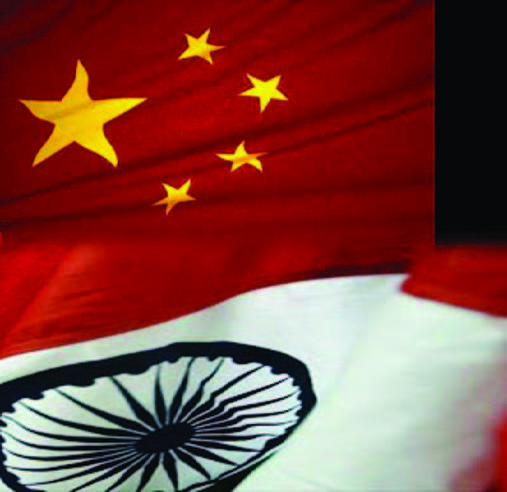
    India and China inked the crucial Border Defence Cooperation Agreement in October to ease the strained relationship between the two countries. The agreement is the outcome of a series of talks following diplomatic tensions arising out of the Chinese troops pitching their tents at Depsang valley in Ladakh in April.

  • GOVT REACHES OUT TO DIASPORA YOUTH AT PRAVASI BHARTIYA DIVAS

    GOVT REACHES OUT TO DIASPORA YOUTH AT PRAVASI BHARTIYA DIVAS

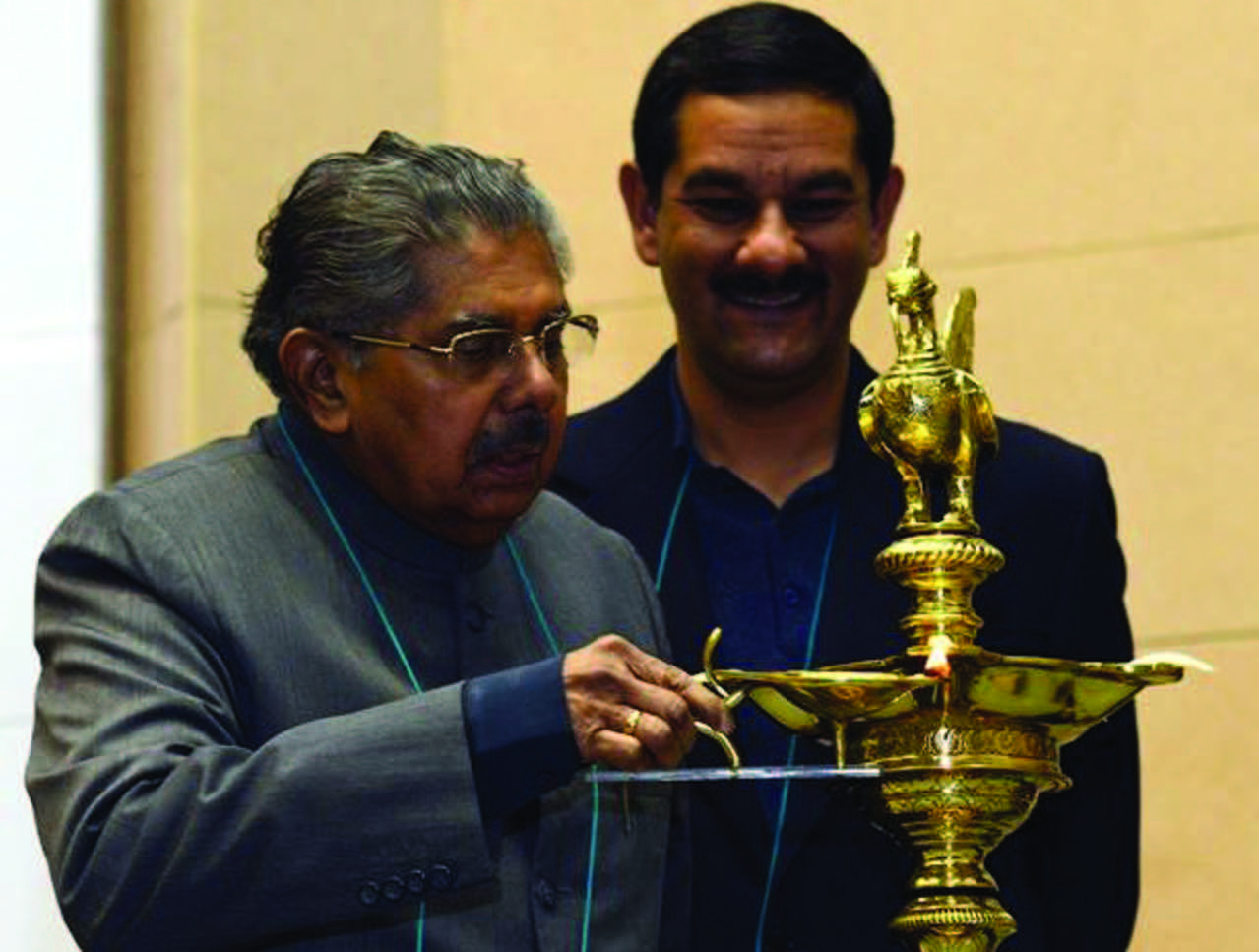
    NEW DELHI (TIP): Making a strong pitch for greater connectivity with diaspora youth, Overseas Indian Affairs Minister Vayalar Ravi on January 7 said partnerships between young Indians in the country and those residing overseas in industry and social sectors would create jobs and bring prosperity. He was speaking after inuagarating the 12th edition of the Pravasi Bhartiya Divas (PBD), India’s flagship annual event to connect with its global diaspora, which kicked off on January 7 with special focus on “engagement with the youth“.

    Referring to the opportunities for growth and development that India’s growing economy presents today, he said “the interactions should foster greater connectivity between Indian and diaspora youth, which should eventually result in economic cooperation leading to the creation of wealth, livelihoods and prosperity.” Ravi said that in this age of globalisation, there are greater trade and business links between nations. “Indian youth and their diaspora counterparts should come together in developing strong networks, which would lead to partnerships in trade, industry, entrepreneurship and social work,” he said. “This will lead to the creation of wealth and employment, which will benefit the masses at large.

    Our goal should be to build a strong global connect of youth for this purpose,” he said. This year’s theme is “Engaging Diaspora: Connecting across Generations” and this is the first time that the Youth PBD is being held on the first day of the event. “It is estimated that more than 50 per cent of our working population is between the age group of 18-35 years and are contributing immensely to the growth and development of our great country India,” Mr. Ravi said. The PBD will be formally inaugurated by Prime Minister Manmohan Singh on Wednesday while Malaysia’s Minister of Natural Resources and Environment Y B Datuk Seri Palanivel will be the chief guest.

    More than a thousand delegates are participating in the three-day event which is expected to open up horizons of a strong network of young overseas Indians to contribute to India’s engagement with youth in all sectors. Youth Affairs and Sports minister Jitendra Singh, while talking about the Nehru Yuva Kendra Sangathan (NYKS) and National Service Scheme (NSS) schemes run by the government, urged overseas Indians to connect with the volunteers of these programmes and said that the government also will promote social entrepreneurship. Mr. Singh said, “I encourage the Overseas Indian community to connect to these (NYKS and NSS) networks and work with them.

    Some of the brightest NSS volunteers who have been chosen to participate in the Republic Day parade are present. It is an opportunity for the Indian diaspora to interact with them,” Singh said. He said the government promotes social entrepreneurship and provides annual investment for social entrepreneurs. This facilitates the setting up of social ventures in India by overseas Indians. “My ministry will work to create an institutional framework under which the overseas Indians will have an opportunity to come and work with NYKS and NSS and other social organisations in India and further strengthen their ties,” he added.

    Mr. Singh said that 27.5 per cent of the country’s population belongs to the 15-29 year age group, while 41.3 per cent are in the 13-35 year group. By the year 2020, the population of India is expected to have an average age of 28 years. This figure, when compared with 38 years in the US, 42 years in China and 48 in Japan, makes India one of the youngest nations in the world, he added. President Pranab Mukherjee will deliver the valedictory address on January 9 and will confer the Pravasi Bharatiya Samman Awards which will be given to 14 people this time. A special session on “Issues of NRIs in the Gulf” will also be organised this year to discuss the problems faced by them and their possible remedies.

    Speaking at another session of the Pravasi Bharati conclave, Information and Broadcasting Minister Manish Tewari said the credit for holding the meet should go to the NRI community. He claimed that in this age of internet, border controls and visas have less significance as it was fast becoming a “seamless world“. “Internet represents the largest ungoverned space on planet Earth… The world is marked by two civilisations today — the physical civilisation and the virtual civilisation,” Mr. Tewari said. He expressed hope that the conclave will see a constructive and fruitful engagement between the diaspora, the Indian government and people. In reply to a question, the Minister accepted that there was a need for a more robust broadcast system to reach out to global viewers.

  • Christmas Celebrated around the World

    Christmas Celebrated around the World

    NEW YORK (TIP):
    Christmas Eve was marked by festivities and preparations around the world today. The faithful prepared for midnight services in places both traditional and unusual. At the Vatican, worshipers filled Saint Peter’s Basilica for Pope Francis’s first Christmas midnight mass as pontiff. Thousands more gathered outside in St. Peter’s Square. He was assisted by more than 300 cardinals, bishops and priests. In his homily, Pope Francis urged people to lead humble lives. “If our heart is closed, if we are dominated by pride, deceit, and the constant pursuit of self interest, then darkness falls within and around us,” he said.

    In a break with tradition, Pope Francis himself performed a task usually given to an aide. He carried a figurine of the baby Jesus to the altar at the start of the mass. The statue of Jesus was then placed in the manger of a life-size nativity scene behind the altar. Pope Francis offered a Christmas wish for a better world, praying for protection for Christians under attack, battered women and trafficked children, peace in the Middle East and Africa, and dignity for refugees fleeing misery and conflict around the globe. Francis delivered the traditional ”Urbi et Orbi” (Latin for ”to the city and to the world”) speech from the central balcony of St. Peter’s Basilica to 70,000 cheering tourists, pilgrims and Romans in the square below.

    He said he was joining all those hoping ”for a better world.” In his first Christmas message since being elected pontiff in March, he asked for all to share in the song of Christmas angels, ”for every man or woman … who hopes for a better world, who cares for others,” humbly. Among places ravaged by conflict, Francis singled out Syria, which saw its third Christmas during civil war; South Sudan; the Central African Republic; Nigeria; and Iraq. In Iraq on Wednesday, militants targeted Christians in two attacks, including a bomb that exploded near a church during Christmas Mass in Baghdad.

    The separate bombings killed dozens of people. The Vatican has been trying to raise concern in the world for persecution and attacks on Christians in parts of the Middle East and Africa. ”Lord of life, protect all who are persecuted in your name,” Francis said. pope also prayed that God ”bless the land where you chose to come into the world and grant a favorable outcome to the peace talks between Israelis and Palestinians.” Francis then explained his concept of peace. ”True peace is not a balancing of opposing forces. It’s not a lovely facade which conceals conflicts and divisions,” the pope said. ”Peace calls for daily commitment,” Francis said, reading the pages of his speech.

    Francis also spoke about the lives of everyday people, especially those struggling for a better life. In Bethlehem, parades filled the streets, as Christian pilgrims and tourists from around the world poured into Manger Square, considered the birthplace of Jesus. Decorations and holiday lights adorned the West Bank for the evening’s celebrations. And in Afghanistan, U.S. troops in Kabul marked the 13th Christmas Eve for American forces in Afghanistan with candles and hymns. In India which has a sizeable Christian population, Christmas was celebrated with zeal and enthusiasm.

    The faithful attended midnight mass in churches while a general atmosphere of celebration was witnessed in all major cities. Santa Claus has been a major attraction, as always. In the Philippines, survivors of last month’s catastrophic typhoon erected giant Christmas lanterns across the devastation in Tacloban. People in other towns sang and danced to holiday songs as they remembered lost loved ones.

    Devyani Khobragade had…
    December 12 for allegedly presenting fraudulent documents to the United States State Department in support of a visa application for an Indian national employed as a babysitter at housekeeper at Khobragade’s home in Manhattan? As it now turns out, diplomat Devyani Khobragade was accredited as an advisor to the Permanent Mission of India to the UN, allowing her full immunity from personal arrest or detention, when she was picked up from her children’s school by US authorities. India Government sources said Khobragade was accredited advisor to the Indian mission to the UN on August 26, 2013 to help the mission with work related to the General Assembly, and her accreditation was valid until December 31.

    The sources claimed the Convention on the Privileges and Immunities of the United Nations Article 4 Section 11A specifies “immunities from personal arrest or detention and from the seizure of their personal baggage” of all representatives of members to the United Nations. Section 16 of the same Article specifies that the expression “Representative” shall be deemed to include all delegates, deputy delegates, advisors, technical experts and secretaries of delegations. She was accredited as advisor on August 26 and was transferred to the permanent mission after the arrest and is currently holding the position of counselor. Because she was attached to the permanent mission only temporarily (until December 31), the State Department was not required to issue its own identity card and it is possible that they may not have known about Khobragade’s status.

    Sources said this was all the more reason for the State Department to have informed India about the move to arrest Khobragade. As the diplomat was working as acting consul general, the US ought to have notified India about her arrest under the Vienna Convention on Consular Relations. The MEA joint secretary who handles the US desk, Vikram Doraiswamy, was in that country on the day Khobragade was arrested, but he wasn’t informed about it. The alacrity with which the US “evacuated” Khobragade’s domestic help Sangeeta Richard’s family, two days before the diplomat’s arrest, rattled New Delhi. Bharara later justified this in a statement saying the Justice Department was “compelled” to make sure that victim, witnesses and their families “are safe and secure while cases are pending”.

    As the case now unravels fast, several US officials, especially those who handled Khobragade’s arrest,may have opened themselves to claims for damages and liability. The government has also discovered that the amount of $4,500 quoted by Bharara as salary promised to Sangeeta by Khobragade was actually just a mention of the employer’s salary on the help’s visa application form. The State Department’s own guidelines on diplomatic and consular immunity emphasize that law enforcement officials need to be sensitive because short-term official visitors from other States to the United Nations or to international conferences convened by the UN may enjoy full diplomatic immunity equivalent to that afforded to diplomatic agents.

    “Owing to the temporary nature of their visit, such officials will normally not have the usual official identity documents recognizable in the United States. Law enforcement officials (particularly in New York) should be sensitive to the existence of this situation and always coordinate with the US authorities indicated in the list of Useful Phone Numbers if confronted with an apparent offender appearing to fall into this category’,” it states. A diplomat’s daughter, Krittika Biswas, had last year filed a lawsuit in a NYC court seeking $1.5 million as damages for her wrongful arrest.

    Ambassador Dr. S.Jaishankar…
    Rao who has since retired. Dr. Jaishankar comes to Washington, DC with more than three decades of diplomatic experience. Joining the Indian Foreign Service in 1977, Dr. Jaishankar has represented India’s interests and fostered friendly working relationships in countries around the world. Dr. Jaishankar’s first postings abroad were as Third and Second Secretary (Political) at the Embassy of India in Moscow from 1979 to 1981. From 1981 to 1985, he served as Under Secretary (Americas) and Policy Planning in the Ministry of External Affairs.

    He then spent three years from 1985 to 1988 as First Secretary handling political affairs at the Indian Embassy in Washington, DC, followed by two years as First Secretary and Political Advisor to the Indian Peace Keeping Force (IPKF) in Sri Lanka. In 1990, Dr. Jaishankar became Commercial Counsellor in Budapest. After three years in that position, he returned to India where he served first as Director of East Europe Division of the Ministry of External Affairs, and then as Press Secretary for the President of India. Following this service in India, Dr. Jaishankar went abroad again – to Tokyo in 1996 as Deputy Chief of Mission. In the year 2000, he was appointed the Ambassador of India to Czech Republic and served in Prague till 2004.

    Upon completing his time as Ambassador in Prague, Dr. Jaishankar returned once again to India, where he led the Americas Division in the Ministry of External Affairs. After three years heading the division, he again left India in 2007 to serve as High Commissioner to Singapore for two years. Most recently, Dr. Jaishankar was the Ambassador of India to China from 2009 to 2013. Dr. Jaishankar holds a Ph.D. and M.Phil in International Relations and a M.A. in Political Science. He is a member of the International Institute for Strategic Studies in London. Dr. Jaishankar is married to Kyoko Jaishankar and has two sons and a daughter.

  • Christmas Celebrated around the World

    Christmas Celebrated around the World

    NEW YORK (TIP): Christmas Eve was marked by festivities and preparations around the world today. The faithful prepared for midnight services in places both traditional and unusual. At the Vatican, worshipers filled Saint Peter’s Basilica for Pope Francis’s first Christmas midnight mass as pontiff. Thousands more gathered outside in St. Peter’s Square. He was assisted by more than 300 cardinals, bishops and priests. In his homily, Pope Francis urged people to lead humble lives. “If our heart is closed, if we are dominated by pride, deceit, and the constant pursuit of self interest, then darkness falls within and around us,” he said.

    In a break with tradition, Pope Francis himself performed a task usually given to an aide. He carried a figurine of the baby Jesus to the altar at the start of the mass. The statue of Jesus was then placed in the manger of a life-size nativity scene behind the altar. In Bethlehem, parades filled the streets, as Christian pilgrims and tourists from around the world poured into Manger Square, considered the birthplace of Jesus. Decorations and holiday lights adorned the West Bank for the evening’s celebrations. And in Afghanistan, U.S. troops in Kabul marked the 13th Christmas Eve for American forces in Afghanistan with candles and hymns. In India which has a sizeable Christian population, Christmas was celebrated with zeal and enthusiasm.

    The faithful attended midnight mass in churches while a general atmosphere of celebration was witnessed in all major cities. Santa Claus has been a major attraction, as always. In the Philippines, survivors of last month’s catastrophic typhoon erected giant Christmas lanterns across the devastation in Tacloban. People in other towns sang and danced to holiday songs as they remembered lost loved ones. Some of 2013’s first Christmas Eve celebrations occurred in China, where guards and volunteers held back hundreds crowding into a Beijing cathedral for holiday services. And far above the planet, astronauts on the International Space Station performed a rare Christmas Eve space walk, only the second in NASA’s history, the goal, to replace a faulty cooling system that failed December 11, all this as American shoppers raced against time to find last- minute gifts.

  • Ambassador Dr. S. Jaishankar presents credentials to the US State Department

    Ambassador Dr. S. Jaishankar presents credentials to the US State Department

    WASHINGTON (TIP): Dr. S. Jaishankar, Ambassador of India to the United States, presented a copy of his credentials to the US State Department on 26th December, 2013. Ambassador Jaishankar met with Under Secretary for Political Affairs, Wendy Sherman, and Under Secretary for Management, Patrick F. Kennedy. Ambassador Jaishankar has succeeded Nirupama Rao who has since retired. Dr. Jaishankar comes to Washington, DC with more than three decades of diplomatic experience. Joining the Indian Foreign Service in 1977, Dr. Jaishankar has represented India’s interests and fostered friendly working relationships in countries around the world.

    Dr. Jaishankar’s first postings abroad were as Third and Second Secretary (Political) at the Embassy of India in Moscow from 1979 to 1981. From 1981 to 1985, he served as Under Secretary (Americas) and Policy Planning in the Ministry of External Affairs. He then spent three years from 1985 to 1988 as First Secretary handling political affairs at the Indian Embassy in Washington, DC, followed by two years as First Secretary and Political Advisor to the Indian Peace Keeping Force (IPKF) in Sri Lanka. In 1990, Dr. Jaishankar became Commercial Counsellor in Budapest. After three years in that position, he returned to India where he served first as Director of East Europe Division of the Ministry of External Affairs, and then as Press Secretary for the President of India.

    Following this service in India, Dr. Jaishankar went abroad again – to Tokyo in 1996 as Deputy Chief of Mission. In the year 2000, he was appointed the Ambassador of India to Czech Republic and served in Prague till 2004. Upon completing his time as Ambassador in Prague, Dr. Jaishankar returned once again to India, where he led the Americas Division in the Ministry of External Affairs. After three years heading the division, he again left India in 2007 to serve as High Commissioner to Singapore for two years. Most recently, Dr. Jaishankar was the Ambassador of India to China from 2009 to 2013. Dr. Jaishankar holds a Ph.D. and M.Phil in International Relations and a M.A. in Political Science. He is a member of the International Institute for Strategic Studies in London. Dr. Jaishankar is married to Kyoko Jaishankar and has two sons and a daughter.

  • 55 airlines accept China’s defence zone amid Biden’s visit

    55 airlines accept China’s defence zone amid Biden’s visit

    BEIJING (TIP): China on December 4 said 55 airlines from 19 countries have accepted its Air Defence Identification Zone (ADIZ) over the East China Sea. Beijing’s announcement aims to demonstrate the success of its ADIZ in the face of resistance from Japan, South Korea and the US, and coincides with US Vice President Joe Biden’s visit to China. These airlines have agreed to submit their flight plans to Chinese authorities before flying into the zone, which includes the disputed Diaoyu Islands being claimed by both China and Japan. China had earlier scrambled its fighter jets after US and Japanese warplanes entered the zone. The announcement came soon after a meeting between Biden and Chinese President Xi Jinping in Beijing. Biden, during a meeting with Japanese Prime Minister Shinzo Abe in Tokyo on Tuesday, had expressed concern over China’s ADIZ.

    Washington had earlier told US-based airlines to abide by China’s requirement that airlines flying into its zone submit flight plans. But it continued to express concern and also advised Beijing to exercise restraint. Japan reacted by establishing a National Security Council that will examine what it regards as a China threat. But Biden didn’t publicly protest against the zone in Beijing on Wednesday suggesting that the US resistance to it had softened further. Biden spoke in generalities at a reception in the Great Hall of the People and said, “Regional issues keep cropping up and there are more pronounced global challenges such as climate change and energy security. The world is not tranquil”. The official English-language China Daily, in a strongly worded editorial, said Biden “should not expect any substantial headway if he comes simply to repeat his government’s previous erroneous and onesided remarks.” “If the US is truly committed to lowering tensions in the region, it must first stop acquiescing to Tokyo’s dangerous brinkmanship. It must stop emboldening belligerent Japanese Prime Minister Shinzo Abe to constantly push the envelope of Japan’s encroachments and provocations,” the editorial said.