Tag: China

  • Biden warns China on air zone tensions

    Biden warns China on air zone tensions

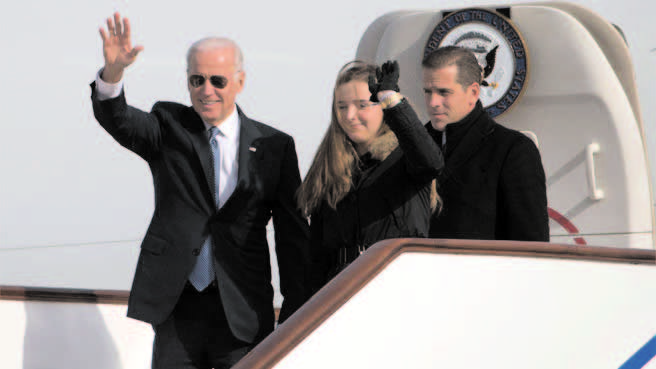
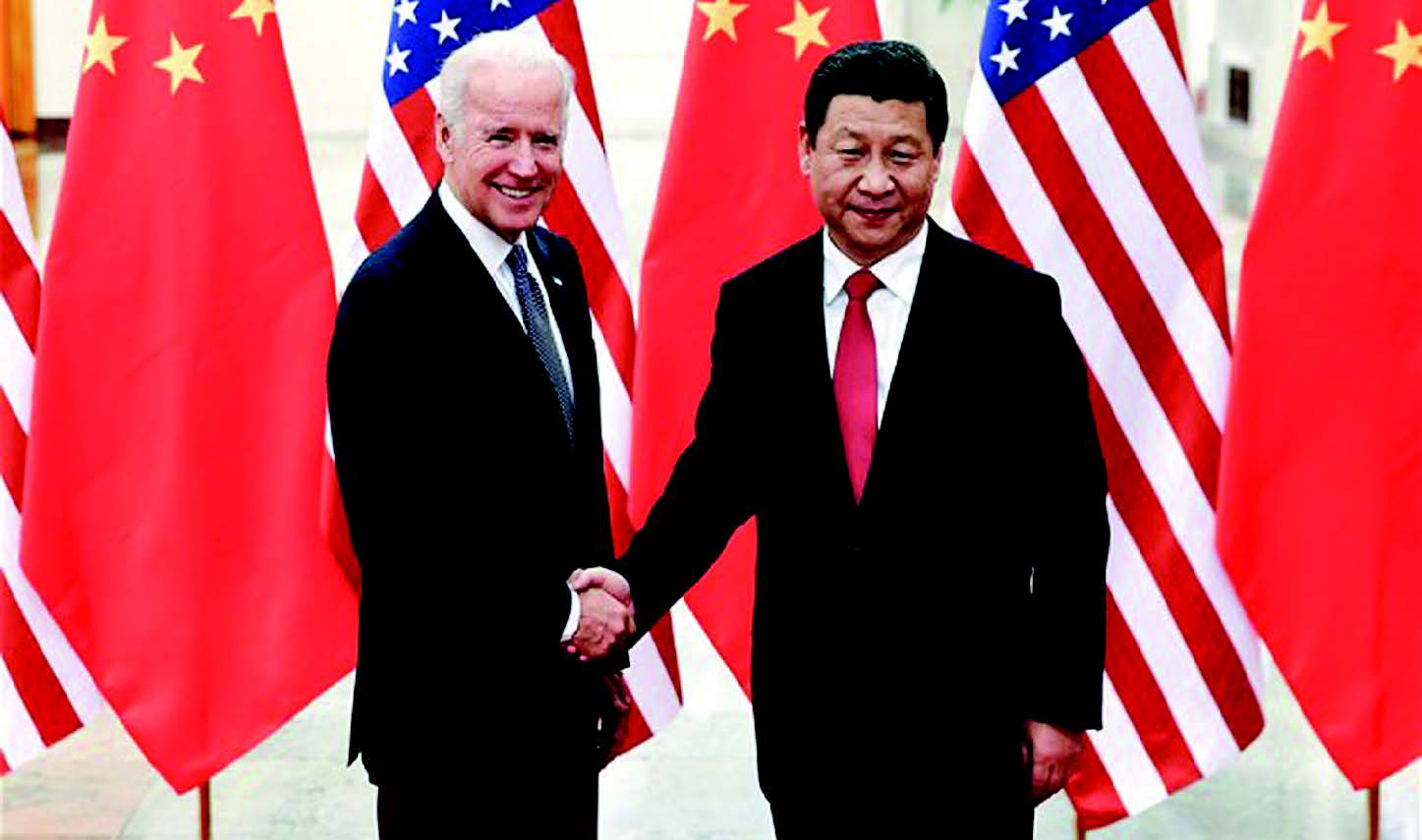
    BEIJING (TIP): Visiting US Vice President Joe Biden warned China on Thursday, December 5, against escalating a dispute over an East China Sea air zone, adding that regional peace and stability were in Beijing’s interests. Biden who arrived in Beijing December 4, also criticized China’s tightening of controls on foreign journalists, stressing that the world’s second-largest economy could become more prosperous with American values such as human rights and freedom of speech. China’s controversial move last month to declare an “air defense identification zone” (ADIZ) — which includes islands disputed with Japan — has “caused significant apprehension in the region”, Biden told a group of 60 American business leaders Thursday morning.

    “As China’s economy grows, its stake in regional peace and stability will continue to grow as well, because it has so much more to lose,” he added. “That’s why China will bear increasing responsibility to contribute positively to peace and security.” Biden reiterated in his meetings with Chinese President Xi Jinping that the US does not recognize China’s newly-declared air zone, a senior White House official told reporters in Beijing late Wednesday. China says all aircraft within it must obey its instructions or risk unspecified “defensive emergency measures”. The move provoked anger in the region and prompted the US, Japan and South Korea all to defy Beijing by flying military and paramilitary aircraft — including two B- 52 bombers in Washington’s case — into the newly-declared zone. Chinese foreign ministry spokesman Hong Lei, meanwhile, said Thursday that the US “should respect” that the zone “is in line with international laws and conventions”. View galler Beijing sees Tokyo as the aggressor in the dispute over the islands, which are controlled by Japan but claimed by China. Biden went on to South Korea late Thursday for the final leg of his threecountry trip before returning to Washington.

  • 55 airlines accept China’s defence zone amid Biden’s visit

    55 airlines accept China’s defence zone amid Biden’s visit

    BEIJING (TIP): China on December 4 said 55 airlines from 19 countries have accepted its Air Defence Identification Zone (ADIZ) over the East China Sea. Beijing’s announcement aims to demonstrate the success of its ADIZ in the face of resistance from Japan, South Korea and the US, and coincides with US Vice President Joe Biden’s visit to China. These airlines have agreed to submit their flight plans to Chinese authorities before flying into the zone, which includes the disputed Diaoyu Islands being claimed by both China and Japan.

    China had earlier scrambled its fighter jets after US and Japanese warplanes entered the zone. The announcement came soon after a meeting between Biden and Chinese President Xi Jinping in Beijing. Biden, during a meeting with Japanese Prime Minister Shinzo Abe in Tokyo on Tuesday, had expressed concern over China’s ADIZ. Washington had earlier told US-based airlines to abide by China’s requirement that airlines flying into its zone submit flight plans. But it continued to express concern and also advised Beijing to exercise restraint. Japan reacted by establishing a National Security Council that will examine what it regards as a China threat.

    But Biden didn’t publicly protest against the zone in Beijing on Wednesday suggesting that the US resistance to it had softened further. Biden spoke in generalities at a reception in the Great Hall of the People and said, “Regional issues keep cropping up and there are more pronounced global challenges such as climate change and energy security. The world is not tranquil”. The official English-language China Daily, in a strongly worded editorial, said Biden “should not expect any substantial headway if he comes simply to repeat his government’s previous erroneous and onesided remarks.”

    “If the US is truly committed to lowering tensions in the region, it must first stop acquiescing to Tokyo’s dangerous brinkmanship. It must stop emboldening belligerent Japanese Prime Minister Shinzo Abe to constantly push the envelope of Japan’s encroachments and provocations,” the editorial said.

  • NO ONE CAN FEEL SECURE IN CHINA: TOP US OFFICIAL

    NO ONE CAN FEEL SECURE IN CHINA: TOP US OFFICIAL

    WASHINGTON (TIP): A top Obama administration official has said that no one can feel secure in China as the country impose strict restrictions on the fundamental rights of its people. “The Chinese people are facing increasing restrictions, on their freedoms of expression, assembly and association. When people in China cannot hold public officials to account for corruption, environmental abuses, problems that affect China as well as the world go unaddressed,” US National Security Advisor Susan Rice said in her major policy speech on human rights. “When courts imprison political dissidents who merely urge respect for China’s own laws, no one in China – including Americans doing business there – can feel secure.

    “When ethnic and religious minorities, such as Tibetans and Uyghurs, are denied their fundamental freedoms, the trust that holds diverse societies together is undermined. Such abuses diminish China’s potential from the inside,” Rice said. Rice said in this new century, there are few relationships more complex or important than the one between the United States and China. Building a constructive relationship with China is crucial to the future security and prosperity of the world as a whole.

    “We value China’s cooperation on certain pressing security challenges, from North Korea to Iran. Our trade relationship, one of the largest in the world, supports countless American jobs. And that is precisely why we have a stake in what kind of power China will become, and that is why human rights are integral to our engagement with China,” she said. “So the United States speaks clearly and consistently about our human rights concerns with the Chinese government at every level, including at this year’s summit between President Obama and President Xi at Sunnylands,” she said.

    US officials engage their Chinese counterparts directly on specific cases of concern, like that of Liu Xiaobo, as well as about broader patterns of restrictive behaviour. “We voice our condemnation publicly when violations occur,” Rice said. In her speech, Rice said China is not the only country where human rights of people are being violated. She castigated Russia for its anti human rights deeds. “The same is true of Russia … we don’t remain silent about the Russia government’s systematic efforts to curtail the actions of Russian civil society, to stigmatise the LGBT community, to coerce neighbours like Ukraine who seek closer integration with Europe, or to stifle human rights in the North Caucasus,” she said.

  • China’s recent behaviour has been unsettling to neighbours: US officials

    China’s recent behaviour has been unsettling to neighbours: US officials

    WASHINGTON (TIP): Recent actions by China concerning air space over the East China Sea have worried its neighbors and US Vice-President Joe Biden will raise the issue during a visit to Beijing next week, senior US administration officials said on November 27. Biden is due to visit China, Japan and South Korea during a week-long trip. He will seek to de-escalate tensions heightened after China demanded that airplanes flying near contested islands identify themselves to Chinese authorities, officials said.

    In a phone call with his Japanese counterpart on Wednesday, US defense secretary Chuck Hagel reaffirmed that the US-Japanese defense treaty covers the small island group where China established a new airspace defense zone last week. Hagel “commended the Japanese government for exercising appropriate restraint” following China’s announcement and pledged to consult closely with Tokyo to avoid unintended incidents around the islands, a Pentagon spokesman said. China recently declared identification rules for planes passing through the new airspace defense zone, raising the stakes in a territorial standoff between Beijing and Tokyo over the contested islands.

    Defying those orders, two unarmed US B-52 bombers flew over the islands on Tuesday without informing Beijing and flights of Japan’s main airline similarly ignored Chinese authorities while flying through that air space. “The visit to China to creates an opportunity for the vice president to discuss directly with policy makers in Beijing this issue to convey our concerns directly and to seek clarity regarding Chinese intentions,” a senior administration official told reporters.

    “It also allows the vice president to make the broader point that there’s an emerging pattern of behavior that is unsettling to China’s own neighbors, and raising questions about how China operates in international space and how China deals with areas of disagreement with its neighbors,” the official said. Biden will not be making a demand on a specific issue but rather will raise the topic as part of talks spanning a range of themes, the official added.

  • The Geopolitics of Nuclear Proliferation

    The Geopolitics of Nuclear Proliferation

    AS I SEE IT

    It is not easy for Iran and the US to end mutual hostility

    The author sees no end to three decades of mutual hostility and suspicion between Iran and the US.

    Just after the foreign ministers of the self-styled “international community” (comprising the EU members and the US) together with their Russian and Chinese counterparts met the Iranian Foreign Minister in Geneva, the Foreign Ministers of India, China and Russia issued a statement which recognized “the right of Iran to peaceful uses of nuclear energy, including for uranium enrichment, under strict IAEA safeguards and consistent with its international obligations”.

    This was an important declaration as the Republican right wing in the US, egged on by a predictable alliance of Israel and Saudi Arabia, would like to scuttle any possibility of an agreement that ends sanctions against Iran in return for Iran accepting safeguards mandated by the IAEA on all its nuclear facilities. Israel wants a termination of uranium enrichment and plutonium production in Iran, together with an end to Iran’s implacable hostility to its very existence. American policies on clandestine nuclear enrichment have been remarkably inconsistent. The country responsible for triggering the proliferation of centrifugebased uranium enrichment technology was the Netherlands.

    It was the Dutch who carelessly granted A.Q. Khan access to sensitive design documents on centrifuge enrichment technology when he worked at the Holland-based Physical Dynamic Research Laboratory, a sub-contractor of the “Ultra Centrifuge Nederland”. Former Dutch Prime Minister Ruud Lubbers has revealed that after Khan’s activities came to light, he was prepared to arrest Khan in Holland, but was prevented from doing so in 1975 and 1986 by the CIA. It is well known that the Reagan Administration had tacitly assured Pakistan that it would look the other way at Pakistani efforts to build the bomb.

    If President Reagan looked the other way at Pakistani proliferation, President Clinton winked at Chinese proliferation involving the transfer of more modern centrifuges, nuclear weapon designs and ring magnets apart from unsafeguarded plutonium facilities to Pakistan. The A.Q. Khan-Iranian nexus goes back to the days of Gen Zia-ul-Haq when the Iranians received the knowhow for uranium enrichment from Khan. Iran is now known to possess an estimated 19,000 centrifuges, predominantly at its enrichment facilities in Natanz.

    It has an old plutonium reactor used for medical isotopes which, it says, is to be replaced by a larger reactor together with reprocessing facilities being built at Arak. Given the clandestine nature of its nuclear program, its activist role in the Islamic world and its virulent anti-Semitism, Iran’s nuclear program has invited international attention. This has resulted in seven UN Security Council Resolutions since 2006, which called on Iran to halt enrichment and even led to the freezing of assets of persons linked to its nuclear and missile programs.

    There have also been cyber attacks (Stuxnet) by the Americans and the killing of some of Iran’s key scientists, believed by the Iranians to have been engineered by the Israelis. While Iran’s nuclear program enjoys widespread domestic support,what have really hurt the Iranians are the crippling economic sanctions by the US and its European allies. These sanctions have led to the shrinking of its oil exports and spiraling of inflation. They have been crucial factors compelling Iran to seek a negotiated end to sanctions, without giving up its inherent right to enrich uranium that it enjoys under the NPT.

    Crucially, the US can now afford to review its policies in the Middle East. Its dependence on oil imports from the Persian Gulf has ended, its oil production will exceed that of Saudi Arabia in the next five years and it is set to become a significant exporter of natural gas. The emergence of Saudi backing for al Qaeda-linked Salafi extremists in Iraq and Syria is not exactly comforting as the Americans prepare to pull out of Afghanistan. While the Obama Administration may make soothing noises to placate the ruffled feathers in Riyadh and Jerusalem, rapprochement with Iran does widen its options in the Muslim world at a time when Iranian Foreign Minister Mohammad Javad Sharif proclaims that Shia-Sunni tensions are “the most serious threat not only to the region but to the world at large”.

    But it would be unrealistic to expect that negotiations between the P 5 and Germany on the one hand and the Iranians on the other will produce any immediate end to the Iranian nuclear impasse. The Israelis and the Saudis, who wield immense clout in the Republican right wing, the US Congress and in many European capitals will spare no effort to secure support for conditions that the Iranians would not agree to. Iran already has one nuclear power plant built by the Russians at Bushehr, with another 360 MW plant under construction at Darkhovin. It currently has stockpiles of uranium enriched to either 3.5%, which can be used in power reactors, or to 20%, which can be relatively easily further enriched and made weapons grade.

    The Iranians are reported to have agreed that the highly enriched uranium will be converted into fuel rods or plates. Iran has an old plutonium reactor for medical isotopes, which it requires to shut down. It is constructing a larger plutonium research reactor at the city of Arak. The Iranians claim that the reactor at Arak is set to replace the existing plutonium reactor, which is being shut down. This is not an explanation that skeptics readily buy. In the negotiations at Geneva, France reportedly took a hard-line position, demanding that the construction of the Arak plutonium reactor should stop and that there should be no reference to Iran’s “right” to enrich uranium.

    This is not surprising. France has recently concluded a $1.8 billion arms deal with Saudi Arabia and is the recipient of large Saudi investments in its sagging agricultural sector. The Iranians are hard bargainers and will not unilaterally give any concessions unless these are matched by a corresponding and simultaneous lifting of economic sanctions. Having already concluded an agreement with the IAEA, granting the IAEA access to its uranium mine and heavy water plant, Iran is unlikely to agree to yield to demands to stop the construction of its new plutonium reactor.

    More importantly, given the continuing gridlock in Washington between the Obama Administration and the Republican-dominated Senate, the Obama Administration will not find it easy to secure Congressional approval for easing sanctions against Iran, especially in the face of Israeli and Saudi opposition. It is not going to be easy for Iran and the US to end over three decades of mutual hostility and suspicion.

  • DIESEL PRICES TO BE DEREGULATED IN 6 MONTHS

    DIESEL PRICES TO BE DEREGULATED IN 6 MONTHS

    NEW DELHI (TIP): Petroleum Minister Veerappa Moily on November 20 said that diesel prices will be deregulated in six months with gradual price increases. He said the small monthly increases in rates will continue as planned and there was no plan for a one-time steep hike of Rs 3 or 4 per litre to bridge the gap. “In six months, the diesel sector will be deregulated,” he said at the KPMG Energy Conclave. The government had in January allowed oil companies to increase the price of diesel by up to 50 paisa a litre every month to gradually eliminate subsidies on the fuel. Stateowned fuel retailers, who control 95 per cent of the petrol pump sales, sell diesel at government-fixed rates, which are way lower than the cost of production.

    “Under-recoveries had come down to Rs 2.50 because of monthly increases, but they soared to Rs 14 as the rupee depreciated sharply. Currently, under-recoveries on diesel are at about Rs 9.28 per litre,” Moily said. At current rates, it will take 19 months to wipe off all the losses on diesel sales, but the Petroleum Minister is pinning hopes on the rupee appreciating and international oil prices cooling down for reducing this time window to six months. Wiping out the under-recoveries would help in the deregulation of diesel.

    “We are already going in the direction of deregulating diesel prices. If the rupee appreciates against the dollar and international oil prices drop, we will be in a position to completely deregulate,” he said. Speaking at the conference earlier, Moily said India was the fourth largest consumer of energy in the world after China, US and Russia and is expected to become the third largest by 2025. India consumed 157.057 million tonnes of petroleum products in 2012-13.

    Ever-widening gap
    Under-recoveries (loss on diesel sales) currently stand at a massive Rs 9.28 a litre This figure had come down to Rs 2.50 because of monthly increases, but it soared to Rs 14 as the rupee depreciated sharply It will take 19 months at current rates to wipe off all the losses on diesel sales The government had in June 2010 freed both petrol and diesel prices from its control

  • US China envoy who oversaw embassy drama to resign

    US China envoy who oversaw embassy drama to resign

    BEIJING (TIP): The US ambassador to China, who oversaw diplomatic dramas and gave refuge to a Chinese activist who escape from house arrest, is to resign, he said in a statement on November 20. Gary Locke, the first Chinese-American to hold the post, will step down early next year to “rejoin my family” in his hometown of Seattle, after two-and-a-half years of “immense and rewarding challenge”. Locke, whose grandfather immigrated to America from the southern province of Guangdong, arrived in Beijing in August 2011, standing out among the Western diplomatic corps because of his ethnicity. He quickly gained a reputation in China as a humble dignitary — in stark contrast to many Chinese officials — after being seen carrying his own luggage and travelling in a regular car.

    In February 2012 a diplomatic drama erupted when senior Chinese official Wang Lijun fled to the US consulate in the southwestern city of Chengdu from his powerful boss Bo Xilai, then head of the nearby metropolis of Chongqing. Wang soon left the premises to be dealt with by Chinese authorities and was last year sentenced to 15 years in prison. A few months later, Locke handled a tougher diplomatic standoff when blind rights activist Chen Guangcheng escaped house arrest in the eastern province of Shandong and sought refuge at the US embassy in Beijing. After days of tense negotiations involving then US secretary of state Hillary Clinton, Chen and his family were allowed to go to the US.

    The US ambassador garnered attention again in June 2013 by visiting Tibet, where rights groups complain of Chinese suppression of the ethnic minority, claims that Beijing denies. Authorities closed off the area in 2008 after deadly riots and Locke arrived amid a string of Tibetan self-immolations that have gathered pace since 2009 in the region and nearby provinces. In his brief statement, Locke mentioned visiting Tibet and meeting human rights lawyers as measures that “advanced American values”.

    A former commerce secretary, he also touted his promotion of American businesses in China and Chinese investment in the US. China’s foreign ministry spokesman Hong Lei said that Locke had “made positive efforts to promote exchanges and cooperation between China and the US”. “We appreciate that,” he added. State department spokeswoman Jen Psaki praised Locke’s “successful tenure” and said he had “devoted enormous personal energy to opening Chinese markets to American companies, promoting Chinese tourism and business travel to the United States and advocating greater respect for human rights.”

    She denied that his departure after only two and a half years in the job “reflects anything” about US-China ties, adding that the process would begin to find a “qualified and talented replacement.” Locke had replaced former envoy Jon Huntsman, a fluent Mandarin speaker, who spent less than two years in the post before leaving to launch an unsuccessful bid to be the 2012 Republican presidential nominee. On China’s popular microblog networks, which followed Locke’s tenure keenly, users expressed mixed views on his departure. “Farewell and don’t come again” said one poster, while another said: “He’s a good man.” Several cited Beijing’s notorious pollution as a possible reason for his departure, with one declaring: “Trust me, he’s leaving for the sake of his family’s health.”

  • The Geopolitics of Nuclear Proliferation It is not easy for Iran and the US to end mutual hostility

    The Geopolitics of Nuclear Proliferation It is not easy for Iran and the US to end mutual hostility

    The author sees no end to three decades of mutual hostility and suspicion between Iran and the US.

    Just after the foreign ministers of the self-styled “international community” (comprising the EU members and the US) together with their Russian and Chinese counterparts met the Iranian Foreign Minister in Geneva, the Foreign Ministers of India, China and Russia issued a statement which recognized “the right of Iran to peaceful uses of nuclear energy, including for uranium enrichment, under strict IAEA safeguards and consistent with its international obligations”.

    This was an important declaration as the Republican right wing in the US, egged on by a predictable alliance of Israel and Saudi Arabia, would like to scuttle any possibility of an agreement that ends sanctions against Iran in return for Iran accepting safeguards mandated by the IAEA on all its nuclear facilities. Israel wants a termination of uranium enrichment and plutonium production in Iran, together with an end to Iran’s implacable hostility to its very existence. American policies on clandestine nuclear enrichment have been remarkably inconsistent. The country responsible for triggering the proliferation of centrifugebased uranium enrichment technology was the Netherlands.

    It was the Dutch who carelessly granted A.Q. Khan access to sensitive design documents on centrifuge enrichment technology when he worked at the Holland-based Physical Dynamic Research Laboratory, a sub-contractor of the “Ultra Centrifuge Nederland”. Former Dutch Prime Minister Ruud Lubbers has revealed that after Khan’s activities came to light, he was prepared to arrest Khan in Holland, but was prevented from doing so in 1975 and 1986 by the CIA. It is well known that the Reagan Administration had tacitly assured Pakistan that it would look the other way at Pakistani efforts to build the bomb.

    If President Reagan looked the other way at Pakistani proliferation, President Clinton winked at Chinese proliferation involving the transfer of more modern centrifuges, nuclear weapon designs and ring magnets apart from unsafeguarded plutonium facilities to Pakistan. The A.Q. Khan-Iranian nexus goes back to the days of Gen Zia-ul-Haq when the Iranians received the knowhow for uranium enrichment from Khan. Iran is now known to possess an estimated 19,000 centrifuges, predominantly at its enrichment facilities in Natanz. It has an old plutonium reactor used for medical isotopes which, it says, is to be replaced by a larger reactor together with reprocessing facilities being built at Arak.

    Given the clandestine nature of its nuclear program, its activist role in the Islamic world and its virulent anti-Semitism, Iran’s nuclear program has invited international attention. This has resulted in seven UN Security Council Resolutions since 2006, which called on Iran to halt enrichment and even led to the freezing of assets of persons linked to its nuclear and missile programs. There have also been cyber attacks (Stuxnet) by the Americans and the killing of some of Iran’s key scientists, believed by the Iranians to have been engineered by the Israelis.

    While Iran’s nuclear program enjoys widespread domestic support,what have really hurt the Iranians are the crippling economic sanctions by the US and its European allies. These sanctions have led to the shrinking of its oil exports and spiraling of inflation. They have been crucial factors compelling Iran to seek a negotiated end to sanctions, without giving up its inherent right to enrich uranium that it enjoys under the NPT. Crucially, the US can now afford to review its policies in the Middle East.

    Its dependence on oil imports from the Persian Gulf has ended, its oil production will exceed that of Saudi Arabia in the next five years and it is set to become a significant exporter of natural gas. The emergence of Saudi backing for al Qaeda-linked Salafi extremists in Iraq and Syria is not exactly comforting as the Americans prepare to pull out of Afghanistan. While the Obama Administration may make soothing noises to placate the ruffled feathers in Riyadh and Jerusalem, rapprochement with Iran does widen its options in the Muslim world at a time when Iranian Foreign Minister Mohammad Javad Sharif proclaims that Shia-Sunni tensions are “the most serious threat not only to the region but to the world at large”.

    But it would be unrealistic to expect that negotiations between the P 5 and Germany on the one hand and the Iranians on the other will produce any immediate end to the Iranian nuclear impasse. The Israelis and the Saudis, who wield immense clout in the Republican right wing, the US Congress and in many European capitals will spare no effort to secure support for conditions that the Iranians would not agree to.

    Iran already has one nuclear power plant built by the Russians at Bushehr, with another 360 MW plant under construction at Darkhovin. It currently has stockpiles of uranium enriched to either 3.5%, which can be used in power reactors, or to 20%, which can be relatively easily further enriched and made weapons grade. The Iranians are reported to have agreed that the highly enriched uranium will be converted into fuel rods or plates. Iran has an old plutonium reactor for medical isotopes, which it requires to shut down.

    It is constructing a larger plutonium research reactor at the city of Arak. The Iranians claim that the reactor at Arak is set to replace the existing plutonium reactor, which is being shut down. This is not an explanation that skeptics readily buy. In the negotiations at Geneva, France reportedly took a hard-line position, demanding that the construction of the Arak plutonium reactor should stop and that there should be no reference to Iran’s “right” to enrich uranium. This is not surprising.

    France has recently concluded a $1.8 billion arms deal with Saudi Arabia and is the recipient of large Saudi investments in its sagging agricultural sector. The Iranians are hard bargainers and will not unilaterally give any concessions unless these are matched by a corresponding and simultaneous lifting of economic sanctions. Having already concluded an agreement with the IAEA, granting the IAEA access to its uranium mine and heavy water plant, Iran is unlikely to agree to yield to demands to stop the construction of its new plutonium reactor.

    More importantly, given the continuing gridlock in Washington between the Obama Administration and the Republican-dominated Senate, the Obama Administration will not find it easy to secure Congressional approval for easing sanctions against Iran, especially in the face of Israeli and Saudi opposition. It is not going to be easy for Iran and the US to end over three decades of mutual hostility and suspicion.

  • SAHARA TO SELL ICONIC LONDON AND NEW YORK HOTELS

    SAHARA TO SELL ICONIC LONDON AND NEW YORK HOTELS

    MUMBAI (TIP):
    The embattled Sahara Group has put up for sale the iconic luxury hotels it acquired over the last three years — The Plaza and Dream Downtown in New York and London’s Grosvenor House — with an Arab business family said to have made a £1-billion offer for all of them, according to three people close to the development. The family based in the Middle-East has extensive interests in hospitality and has offered a little over Rs 10,000 crore for the three trophy properties in the “Sahara portfolio” of Aamby Valley Mauritius, said the people cited above. If the deal goes through, Sahara stands to get about Rs 4,000 crore, or almost three times what it invested in the hotels, after repaying its debt to Bank of China of close to $1 billion against the properties.

    Dealmakers in Europe told ET Sahara would be the only business group globally to have earned that kind of return on investment in hospitality since the 2008 financial crisis. Subrata Roy, founder and head of Sahara Group, has been in talks with royal and business families in the Middle-East and Europe to sell the hotels for more than two months now, said the people cited above. The UK’s Halkin Investments, which has former Pakistan prime minister Shaukat Aziz on its board, is one of the key advisers to Sahara Group’s Aamby Valley Mauritius. Sahara Group did not respond to emails.

    Halkin Investment said it “acts for Aamby Valley Mauritius in an occasional and advisory-only capacity”. It did not answer other queries in the email. Sahara needs to repay holders of debentures that the capital market regulator said were sold in violation of rules. The Securities and Exchange Board of India (Sebi) was backed by the Supreme Court, which asked Sahara to refund the money. Sahara has said it has repaid much of the amount, but the regulator disagrees. The 494-room Grosvenor House, once home to the Duke of Westminster, was purchased by Sahara in 2010 from Royal Bank of Scotland for £470 million, or $726 million.

  • SAHARA TO SELL ICONIC LONDON AND NEW YORK HOTELS

    SAHARA TO SELL ICONIC LONDON AND NEW YORK HOTELS

    MUMBAI (TIP): The embattled Sahara Group has put up for sale the iconic luxury hotels it acquired over the last three years — The Plaza and Dream Downtown in New York and London’s Grosvenor House — with an Arab business family said to have made a £1-billion offer for all of them, according to three people close to the development. The family based in the Middle-East has extensive interests in hospitality and has offered a little over Rs 10,000 crore for the three trophy properties in the “Sahara portfolio” of Aamby Valley Mauritius, said the people cited above. If the deal goes through, Sahara stands to get about Rs 4,000 crore, or almost three times what it invested in the hotels, after repaying its debt to Bank of China of close to $1 billion against the properties. Dealmakers in Europe told ET Sahara would be the only business group globally to have earned that kind of return on investment in hospitality since the 2008 financial crisis.

    Subrata Roy, founder and head of Sahara Group, has been in talks with royal and business families in the Middle-East and Europe to sell the hotels for more than two months now, said the people cited above. The UK’s Halkin Investments, which has former Pakistan prime minister Shaukat Aziz on its board, is one of the key advisers to Sahara Group’s Aamby Valley Mauritius. Sahara Group did not respond to emails. Halkin Investment said it “acts for Aamby Valley Mauritius in an occasional and advisory-only capacity”. It did not answer other queries in the email. Sahara needs to repay holders of debentures that the capital market regulator said were sold in violation of rules. The Securities and Exchange Board of India (Sebi) was backed by the Supreme Court, which asked Sahara to refund the money. Sahara has said it has repaid much of the amount, but the regulator disagrees. The 494-room Grosvenor House, once home to the Duke of Westminster, was purchased by Sahara in 2010 from Royal Bank of Scotland for £470 million, or $726 million.

  • Substantial Foreign Direct Investment in the United States: Report

    Substantial Foreign Direct Investment in the United States: Report

    WASHINGTON (TIP): The United States has been the world’s largest recipient of foreign direct investment (FDI) since 2006. Every day, foreign companies establish new operations in the United States or provide additional capital to established businesses. With the world’s largest consumer market, skilled and productive workers, a highly innovative environment, appropriate legal protections, a predictable regulatory environment, and a growing energy sector, the United States offers an attractive investment climate for firms across the globe.

    Foreign direct investment in the United States is substantial
    ● In 2012, net U.S. assets of foreign affiliates totaled $3.9 trillion. The United States consistently ranks as one of the top destinations in the world for foreign direct investment (FDI), with inflows totaling $1.5 trillion in FDI just since 2006. For 2012, FDI inflows totaled $166 billion.
    ● The U.S. manufacturing sector draws a considerable share of FDI dollars, led by pharmaceuticals and petroleum and coal products. Outside manufacturing, wholesale trade; mining; non-bank holding companies; finance and insurance; and banking receive the greatest shares of foreign investment.
    ● Investment flows into the United States come mostly from a small number of industrial countries. Since 2010, Japan, Canada, Australia, Korea, and seven European countries collectively have accounted for more than 80 percent of new FDI. Although still small, flows from emerging economies like China and Brazil are growing rapidly.

    Foreign direct investment benefits the U.S. Economy
    ● In 2011, value-added by majority-owned U.S. affiliates of foreign companies accounted for 4.7 percent of total U.S. private output.
    ● These firms employed 5.6 million people in the United States, or 4.1 percent of private-sector employment. About one-third of jobs at U.S. affiliates are in the manufacturing sector.
    ● These affiliates account for 9.6 percent of U.S. private investment and 15.9 percent of U.S. private research and development spending.
    ● In the 2008-09 recession and subsequent recovery, employment at U.S. affiliates was more stable than overall private-sector employment. As a result, U.S. affiliates’ share of total U.S. manufacturing employment rose from 14.8 percent in 2007 to 17.8 percent in 2011.
    ● Compensation at U.S. affiliates has been consistently higher than the U.S. average over time, and the differential holds for both manufacturing and non-manufacturing jobs. Looking ahead, the United States will remain an attractive destination for foreign investment, and this investment will help bolster our economy. However, we need to continue to nurture and build upon the underlying strengths of the U.S. economy that make firms want to invest here; including an open investment regime, a large economy, a skilled labor force, community colleges, world-class research universities, predictable and stable regulatory regime, adequate infrastructure, and new energy sources.

  • Kerry to Congress: ‘Calm down’ over Iran sanctions

    Kerry to Congress: ‘Calm down’ over Iran sanctions

    WASHINGTON (TIP): US Secretary of State John Kerry urged lawmakers to “calm down” on Wednesday over proposed new sanctions on Iran, warning they could scuttle diplomatic efforts to rein in Tehran’s nuclear drive. “The risk is that if Congress were to unilaterally move to raise sanctions, it could break faith with those negotiations and actually stop them and break them apart,” Kerry said. Washington’s top diplomat was speaking before beginning a closeddoor meeting with senators, many of whom are skeptical of the White House’s request for a freeze on new sanctions. The House of Representatives has already passed legislation that toughens already-strict sanctions on Iran, whose economy by all accounts is reeling from the punitive action. The Senate Banking Committee is mulling new sanctions too, and some key members of President Barack Obama’s own Democratic Party back a tougher stance despite the diplomatic opening. “What we’re asking everybody to do is calm down, look hard at what can be achieved and what the realities are,” Kerry told reporters.

    “Let’s give them a few weeks, see if it works,” he said, adding that there was “unity” among the six powers — UN Security Council permanent members Britain, China, France, Russia and the United States, plus Germany — negotiating with the Islamic republic. “If this doesn’t work, we reserve the right to dial back up the sanctions.” In that event Kerry said he would return to Capitol Hill “asking for increased sanctions. And we always reserve the military option.” Washington and Western allies allege Iran is trying to develop a nuclear weapon, a charge Tehran denies. Obama has vowed he will not allow Tehran to develop an atomic weapon. But last week’s Geneva negotiations between Iran and six world powers failed to reach an interim deal to halt its program. Kerry faces tough questions from Senate Republicans and Democrats who bristled when the White House warned Tuesday that toughening sanctions could trigger a “march to war.” The administration’s remarks marked a significant hardening of Obama’s stance towards Congress on sanctions as Washington prepares to resume talks with Iran on November 20. As he entered the meeting, Kerry addressed criticism that negotiations failed in Geneva, saying Iran would have jumped at the interim deal if it was to their benefit. “We have a pause because it’s a tough proposal, and people need to think about it, obviously,” Kerry said.

  • India, US at odds over Bangladesh policy

    India, US at odds over Bangladesh policy

    NEW YORK (TIP): Reports emanating from diplomatic circles here and in New Delhi reveal that publicly, India and the US may appear to be on the same page regarding the situation in Bangladesh but in reality, India is increasingly uncomfortable with the US position, and believes it can have negative implications for Bangladesh and the region. Last week, US Ambassador to Dhaka, Dan Mozena, visited South Block in New Delhi and spent long hours meeting India’s Foreign Secretary Sujatha Singh and other senior officials. As picketing, shutdowns and street violence take over domestic politics in Bangladesh, India and the US have shared concerns regarding the country’s stability. Sources said Sheikh Hasina had invited her rival Begum Khaleda Zia for a meeting and dinner to end the impasse over the caretaker government. But main opposition, Bangladesh Nationalist Party (BNP), is unwilling to end the violence and insisting on a neutral dispensation. But India remains more concerned about the color of politics being pursued by BNP. This is where Indian and the US positions diverge. The US appears much more comfortable with the BNP-Jamaat combine, who have made no secret of their radicalized politics. India believes if this succeeds, Bangladesh would be very different as a nation. The politics of BNP and Jamaat have become more radicalized in the past couple of years.

    Indian intelligence has detected influences of both Pakistan-based Lashkar-e-Taiba (LeT) and al-Qaeda. There is a lot of funding available to these groups from West Asian countries, and some from Pakistan. The US is less comfortable with Sheikh Hasina’s government, especially after the PM’s confrontation with Mohammed Yunus of Grameen Bank – the fracas over funding for the Padma barrage project – and also the war crimes tribunal. There appears to be a part of official thinking in the US that believes, according to sources here, BNP-Jamaat have better free market credentials, and that they would move away from radical Islam once they are in power. “They are too far away to have a realistic view of the street,” they said. India is haunted by the 2001 Pyrdiwah massacre, when 15 BSF personnel were massacred by BDR troops in an ugly confrontation. BNP had explained Jamaat’s place in government thus: it would be better to have them in than out. But once in government, Jamaat occupied the ministries crucial to furthering their radical agenda. Those years saw the flowering of Jama’atul Mujahideen Bangladesh (JMB) and other terror groups like HuJI. India is opposed to a return to those days. An added regional vulnerability is the Rohingya problem in Myanmar. With heightened communal tensions in Myanmar along with considerable Rohingya population in Bangladesh, New Delhi believes that the situation is ripe for disaster. The implications of increased radicalized politics in Bangladesh would have terrible implications for Myanmar’s stability. Again, reports of LeT and al- Qaeda infiltration among Rohingyas are popping up frequently. The instability as a result of radical politics could spread to India’s north-east and even China’s Yunnan province.

  • World’s 6th largest number of billionaires in India

    World’s 6th largest number of billionaires in India

    NEW DELHI (TIP): Indian billionaires, the sixth largest group in the rich world, have thrown up an interesting trend found nowhere else in the world — holding on to one’s roots. Despite popular notions of billionaires being jet-setting, cosmopolitan individuals, most Indian billionaires remain where they were raised. The World Billionaire Census 2013 released on Wednesday shows that 95% of Indian billionaires who currently have their primary business in India, also grew up there. The trend globally is very different. Around 23% or just 1 in 4 billionaires globally made their home city the city of their primary business. Only 39% of all billionaires globally have the same home state as the state of their primary business Billionaire hotspots such as Singapore, Switzerland and Hong Kong have emerged as favoured destinations for the ultra-rich. However, only 36, 34, and 25% of their billionaire populations respectively, grew up in these countries. Another significant finding is that not all these Indian billionaires have college degrees, let alone attending Ivy League for a degree in business management. Three of every 10 billionaires in India don’t even have a college degree.

    5.5% dip in India’s billionaire population
    India’s billionaire contingent (103- strong) is narrowly behind Russia (108). However India’s billionaire population has decreased by 5.5% and the total billionaire wealth has fallen by $10 billion since last year. Mumbai is among the top 5 billionaire cities in the world and the only Indian entry in the top 10 list and New York remains the business city of choice for the world’s billionaires. Asia takes eight out of the top 20 spots for billionaire cities, the most for any region in the world. Moscow accounts for more than two thirds of Russia’s billionaires. The total number of billionaires who are based in the top 20 cities is 661, representing 30% of the world’s billionaires. India is one of the few countries where finance, banking and investments are not the most significant industries. Instead, industrial conglomerates and pharmaceuticals are the first and second most significant industries for Indian billionaires. Only 3% of Indian billionaires are female, the joint lowest of any focus country. The majority of Indian billionaires are college-educated with 72% possessing at least a bachelor’s degree (Switzerland and the US are the only other two focus countries that have a higher proportion of universityeducated billionaires). The Wealth-X and UBS Billionaire Census 2013 showed that Asia is where the largest number of newly-minted billionaires is based — since July 2012, 18 new billionaires came up in Asia with a total wealth of $136 billion. Asia was followed by North America (11).

    Five of the top 10 countries with the highest percentage of self-made billionaires are from Asia. Every region increased in wealth terms, with Asia the fastest growing at 12.9%. The global billionaire population reached a record 2,170 individuals in 2013 and total billionaire wealth in Asia surged nearly 13% making it the fastestgrowing region. At current growth rates, the census, the first-ever comprehensive global study on this ultra-wealth tier, forecasts that Asia will catch up with North America in five years. Asia also saw the highest percentage rise in billionaire population (3.7% from 2012) and total wealth (13%) in 2013, suggesting that it is driving the tectonic shifts in wealth globally. The report also shows that 810 individuals became billionaires since the 2009 global financial crisis. The billionaire population’s combined net worth more than doubled from $3.1 trillion in 2009 to $6.5 trillion in 2013 — enough to fund the United States’s budget deficit until 2024, and greater than the GDP of every country except the US and China. Wealth-X forecasts that the global billionaire population will increase by 1,700 individuals to nearly 3,900 by the year 2020. Europe is home to the most billionaires (766 individuals). However, North America has the most billionaire wealth ($2,158 billion). Around 60% of billionaires are selfmade, while 40% inherited their wealth or grew their fortunes from inheritance. Only 17% of female billionaires are selfmade, while 71% gained their fortunes through inheritance.

  • Mars mission a technological leap for India: US MEDIA

    Mars mission a technological leap for India: US MEDIA

    WASHINGTON (TIP): India’s successful launch of its Mars mission has been described by the mainstream American media as “technological leap” and “a symbolic coup” against China in this field. “If it succeeds, India’s Mars mission would represent a technological leap for the South Asia nation, pushing it ahead of space rivals China and Japan in the field of interplanetary exploration,” The Wall Street Journal wrote yesterday. “A successful mission by India’s Mars orbiter would make the country the first Asian nation to reach the Red Planet — and provide a symbolic coup as neighboring China steps up its ambitions in space,” the CNN reported, adding that this has given further credence to claims of an intensifying space race developing in Asia, with potentially dangerous ramifications. “I believe India’s leadership sees China’s recent accomplishments in space science as a threat to its status in Asia, and feels the need to respond,” Dr James Clay Moltz, professor at the US Naval Postgraduate School, told the CNN. The satellite launched by ISRO November 5 is expected to enter the Mars orbit next September and is at a significantly lower cost than that of other countries like the United States.

    The cost of the Mars mission is USD 73 million, less than a sixth of the amount earmarked for a Mars probe by NASA that will be launched later this month. The popular National Public Radio (NPR) wrote as to why the India’s Mars mission is cheaper than that of the NASA. One reason could be the salary of its engineers and scientists, it said. While the mean annual income for an aeronautical engineer in the United States is just under USD 105,000, the higher end scale for Indian engineers is less than USD 20,000. “I think labour is the biggest factor, as well as the complexity of the mission. It takes a whole team of engineers,” David Alexander, director of the Rice Space Institute told NPR. According to Alexander, it appears that India’s main goal is just getting to Mars, and so the probe is carrying “relatively simple” and therefore notso- expensive instrumentation. “What the Indians want to know is: Will it survive? And will it get into orbit? I think the hope is that even if it fails, they are going to learn something,” he said. Another expert Professor Russell Boyce of the Australian Academy of Science, chairman of the National Committee for Space and Radio Science, said any scientific gains from the mission is unlikely to prove earthshattering. “It would be a modest scientific gain that’s attempted in the first instance, to demonstrate the capability,” he told the CNN.

  • John Kerry to join Iran nuclear talks as hopes of deal rise

    John Kerry to join Iran nuclear talks as hopes of deal rise

    GENEVA (TIP): US secretary of state John Kerry will join nuclear talks between major powers and Iran in Geneva on Friday in an attempt to nail down a long-elusive accord to start resolving a decade-old standoff over Tehran’s atomic aims. Kerry, on a Middle East tour, will fly to the Swiss city at the invitation of European Union foreign policy chief Catherine Ashton in “an effort to help narrow differences” in the negotiations, a senior State Department official said. Ashton is coordinating talks with Iran on behalf of the five permanent UN Security Council members plus Germany. After the first day of meetings set for Thursday and Friday, both sides said progress had been made towards an initial agreement under which the Islamic state would curb some of its nuclear activities in exchange for limited relief from punitive measures that are severely damaging its oildependent economy. US President Barack Obama said the international community could slightly ease sanctions against Iran in the early stages of negotiating a comprehensive deal on Tehran’s atomic programme to remove fears about Iranian nuclear intentions. “There is the possibility of a phased agreement in which the first phase would be us, you know, halting any advances on their nuclear programme … and putting in place a way where we can provide them some very modest relief, but keeping the sanctions architecture in place,” he said in an interview with NBC News.

    Negotiators in Geneva cautioned, however, that work remained to be done in the coming hours in very complex talks and that a successful outcome was not guaranteed. Iran rejects Western accusations that it is seeking a nuclear bomb capability. Kerry said in Israel, Iran’s arch foe, that Tehran would need to prove that its atomic activities were peaceful, and that Washington would not make a “bad deal, that leaves any of our friends or ourselves exposed to a nuclear weapons programme”. “We’re asking them to step up and provide a complete freeze over where they are today,” he said in a joint interview with Israel’s Channel 2 television and Palestinian Broadcasting Corporation recorded in Jerusalem on Thursday. In Geneva, Iranian deputy foreign minister Abbas Araqchi said it was too early to say with certainty whether a deal would be possible this week, although he voiced cautious optimism. “Too soon to say,” Araqchi told reporters after the first day of talks between Iran and the United States, Russia, China, Britain, France and Germany. He added, “I’m a bit optimistic.” “We are still working. We are in a very sensitive phase. We are engaged in real negotiations.” The fact that an agreement may finally be within reach after a decade of frustrated efforts and hostility between Iran and the West was a sign of a dramatic shift in Tehran’s foreign policy since the election of a relative moderate, Hassan Rouhani, as Iranian president in June. The United States and its allies are aiming for a “first-step” deal that would stop Iran from further expanding a nuclear programme that it has steadily built up in defiance of tightening international pressure and crippling sanctions. The Islamic Republic, which holds some of the world’s largest oil and gas reserves, wants them to lift increasingly tough restrictions that have slashed its daily crude sales revenue by 60 percent in the last two years. Both sides have limited room to manoeuvre, as hardliners in Tehran and hawks in Washington would likely sharply criticise any agreement they believed went too far in offering concessions to the other side.

    US Senate may seek more sanctions
    Lending urgency to the need for a breakthrough was a threat by the US Congress to pursue tough new sanctions on Iran. Obama has been pushing Congress to hold off on more sanctions against Iran, demanded by Israel, to avoid undermining the diplomacy aimed at defusing fears of an Iranian advance towards nuclear arms capability. But many US lawmakers, including several of Obama’s fellow Democrats, believe tough sanctions brought Iran to the negotiating table and that more are needed to discourage it from building a nuclear bomb.

  • Iran: Nuclear plan ‘backed’ by 6 world powers

    Iran: Nuclear plan ‘backed’ by 6 world powers

    GENEVA (TIP): Iran’s plan to cap some of the country’s atomic activities in exchange for selective relief from crippling economic sanctions has been accepted by six world powers, the country’s chief nuclear negotiator said on November 7. The upbeat comments from Abbas Araghchi, reported by Iranian state TV, suggest that negotiators in Geneva are moving from broad discussions over a nuclear deal to specific steps limiting Tehran’s ability to make atomic weapons. In return, Iran would start getting relief from sanctions that have hit its economy hard. “Today, they clearly said that they accept the proposed framework by Iran,” Araghchi said. Though he described the negotiations as “very difficult,” he said he expected agreement on details by Friday, the last scheduled round of the current talks.International negotiators, representing the US, Russia, China, Britain, France and Germany, declined to comment on Araghchi’s statement. The last round of talks three weeks ago reached agreement.

  • India, US at odds over Bangladesh policy

    India, US at odds over Bangladesh policy

    NEW YORK (TIP): Reports emanating from diplomatic circles here and in New Delhi reveal that publicly, India and the US may appear to be on the same page regarding the situation in Bangladesh but in reality, India is increasingly uncomfortable with the US position, and believes it can have negative implications for Bangladesh and the region. Last week, US Ambassador to Dhaka, Dan Mozena, visited South Block in New Delhi and spent long hours meeting India’s Foreign Secretary Sujatha Singh and other senior officials. As picketing, shutdowns and street violence take over domestic politics in Bangladesh, India and the US have shared concerns regarding the country’s stability. Sources said Sheikh Hasina had invited her rival Begum Khaleda Zia for a meeting and dinner to end the impasse over the caretaker government. But main opposition, Bangladesh Nationalist Party (BNP), is unwilling to end the violence and insisting on a neutral dispensation. But India remains more concerned about the color of politics being pursued by BNP. This is where Indian and the US positions diverge. The US appears much more comfortable with the BNP-Jamaat combine, who have made no secret of their radicalized politics. India believes if this succeeds, Bangladesh would be very different as a nation.

    The politics of BNP and Jamaat have become more radicalized in the past couple of years. Indian intelligence has detected influences of both Pakistan-based Lashkar-e-Taiba (LeT) and al-Qaeda. There is a lot of funding available to these groups from West Asian countries, and some from Pakistan. The US is less comfortable with Sheikh Hasina’s government, especially after the PM’s confrontation with Mohammed Yunus of Grameen Bank – the fracas over funding for the Padma barrage project – and also the war crimes tribunal. There appears to be a part of official thinking in the US that believes, according to sources here, BNP-Jamaat have better free market credentials, and that they would move away from radical Islam once they are in power. “They are too far away to have a realistic view of the street,” they said. India is haunted by the 2001 Pyrdiwah massacre, when 15 BSF personnel were massacred by BDR troops in an ugly confrontation. BNP had explained Jamaat’s place in government thus: it would be better to have them in than out. But once in government, Jamaat occupied the ministries crucial to furthering their radical agenda. Those years saw the flowering of Jama’atul Mujahideen Bangladesh (JMB) and other terror groups like HuJI. India is opposed to a return to those days. An added regional vulnerability is the Rohingya problem in Myanmar. With heightened communal tensions in Myanmar along with considerable Rohingya population in Bangladesh, New Delhi believes that the situation is ripe for disaster. The implications of increased radicalized politics in Bangladesh would have terrible implications for Myanmar’s stability. Again, reports of LeT and al- Qaeda infiltration among Rohingyas are popping up frequently. The instability as a result of radical politics could spread to India’s north-east and even China’s Yunnan province.

  • A great game that all sides can win

    A great game that all sides can win

    Pakistan is averse to discussing Afghanistan with India, fearing that would legitimize India’s interests in that country. But it would be in the interests of all three to do so, says the author.

    Two questions have increasingly taken centre-stage in discussions about what might happen in Afghanistan after United States withdrawal in 2014. One, if it will become a proxy battlefield for India and Pakistan, the two big South Asian rivals, and two, if anything can be done to prevent this.

    William Dalrymple, for instance, wrote in an essay for Brookings Institution this year that beyond Afghanistan’s indigenous conflicts between the Pashtuns and Tajiks, and among Pashtuns themselves, “looms the much more dangerous hostility between the two regional powers – India and Pakistan, both armed with nuclear weapons. Their rivalry is particularly flammable as they vie for influence over Afghanistan.

    Compared to that prolonged and deadly contest, the U.S. and the ISAF [International Security Assistance Force] are playing little more than a bit part – and they, unlike the Indians and Pakistanis, are heading for the exit.” The assertion is not new.Western commentators have long put out that the new great game in Afghanistan is going to be between India and Pakistan.

    The theory goes that India’s search for influence in Afghanistan makes Pakistan insecure, forcing Islamabad to support and seek to install proxy actors in Kabul to safeguard its interests, and that this one-upmanship is one of the biggest stumbling blocks to stability in that country. As 2014 nears, the idea has naturally gained better traction. India would have several problems with this formulation.

    The foremost is that such a theory panders to the Pakistan security establishment’s doctrine of strategic depth, in the pursuit of which it sees a third, sovereign country as an extension of itself. India, for its part, views its links to Afghanistan as civilization, and its own interests there as legitimate. Its developmental assistance to Kabul now tops $2 billion and it has undertaken infrastructure projects in Afghanistan.

    And, if the situation allowed, Afghanistan could become India’s economic gateway to Central Asia. New Delhi also believes the “proxy war” theory buys into Islamabad’s allegations against India that it refutes as baseless. Since about 2005, Islamabad has alleged that Indian consulates in Afghanistan, especially in Jalalabad and Kandahar, which are close to the Pakistan-Afghan border, are a cover for anti-Pakistan activities.

    It alleges that Afghanistan is where India arms and funds Baloch secessionists. And after the Taliban unleashed a relentless campaign of terror inside Pakistan, allegations are rife that sections of them are on India’s payroll. The Indian position would be that if there is a war, it will actually be a one-sided one, in which Pakistan targets Indian interests and Indians in Afghanistan through its proxies.

    The latest was the attempted bombing of the Jalalabad consulate in August. The deadliest, the bombing of the Kabul embassy in July 2008, was linked by the Americans too to the Haqqani network, a faction of the Taliban that is widely viewed as a proxy of the Pakistan security establishment. Despite repeated prodding by the Americans, the Pakistan Army has made it clear it will not go after safe havens of the Haqqanis in the Federally Administered Tribal Areas.

    NEW DELHI’S CONCERN

    Concerned that any instability in Afghanistan is certain to spill over across Indian borders, over the last two years New Delhi has suggested repeatedly to Islamabad that the two sides should talk about Afghanistan. But as Pakistan has emerged as a key player in facilitating talks with the Taliban, and while it has no problems talking to every other country with an interest in Afghanistan, including Russia and China, it has cold-shouldered India.

    The ideal course would of course be for trilateral talks involving Kabul, Islamabad and New Delhi. For, Afghanistan is not just a piece of strategic real estate but a sovereign country made up of real people. Right now, though, Pakistan is averse to any idea of talks on Afghanistan, believe as it does that India has no role in there, and that talking would give legitimacy to New Delhi’s claim that it does. It already resents the India- Afghanistan Strategic Partnership Treaty.

    DIVERGENCE ON VIEW

    The divergence surfaced starkly at a recent Track-2 dialogue convened by Friedrich Ebert Stiftung – a German think tank associated with the Social Democratic Party, which brought together retired bureaucrats, former generals, journalists, civil society representatives as well as one politician each from the two countries.

    One of the issues that came up for discussion was if there was at all a need for India and Pakistan to talk about Afghanistan. Most, but not all, Pakistani participants and some Indians too were of the view that talking about Afghanistan was impossible so long as tension between India and Pakistan remained, and that right now Islamabad was in any case too preoccupied with the ‘reconciliation’ process in Afghanistan.

    A suggestion was made by an Indian participant that in view of the approaching U.S.-set deadline for the withdrawal of its troops, and the possibility that a dialogue on other subjects between India and Pakistan was unlikely to resume until after the 2014 Indian elections, the two sides should consider discussing Afghanistan as a standalone subject in the interim. But this was dismissed by many Pakistani participants.

    Why should Pakistan jump to talk on something simply because India considered it important, asked one, when on every other issue, New Delhi behaves as if talks are a huge concession to Islamabad – including the recent Manmohan Singh-Nawaz Sharif summit in New York. But a far-sighted approach perhaps would be to consider that none of the likely scenarios in Afghanistan after the U.S.

    drawdown looks pretty, and to weigh the consequences for Pakistan itself especially if, as one Pakistani participant rightly suggested, the Taliban refuse to play Islamabad’s puppet; after all, they did not when they ruled Afghanistan from the late 1990s to 2001. As well, the Afghan presidential election, to be held in April 2014, is sure to have its own impact, though it is still anyone’s guess if it will be held and whether the country will make a peaceful democratic transition. In Pakistan, many commentators believe the backwash from Afghanistan post-2014 is dangerously going to end up on its western/north-western borders.

    Strategic depth no longer holds Pakistanis in thrall the way it used to in the last century. A Pakistani participant pointed out, only half-jokingly, that his country had ended up providing strategic depth to Afghanistan through its two wars, rather than the other way around.

    As for the view that Pakistan and India cannot talk about Afghanistan without repairing their own relations first, it might be worth considering if such a discussion could actually contribute to reducing bilateral tensions, given that the concerns over Afghanistan do not exist in a vacuum but arise from other problems in the relationship between the two.

    It could even provide the opportunity the Pakistan side has long wanted to bring up with New Delhi its concerns about Balochistan. By rejecting Kabul’s entreaties to New Delhi to play a bigger role in securing Afghanistan post-2014 than just training Afghan security forces, India has signaled it is sensitive to Pakistan’s concerns. As Afghanistan’s immediate neighbor, Pakistan is right to claim a pre-eminent stake in what happens in there, and India should have no quarrel with this. As was pointed out at the Track-2 meeting, Pakistan has suffered the most from the two Afghan wars; it provided refuge to Afghans during the first war in the 1980s. More than 100,000 Pakistanis live in that country.

    The two countries are linked by ethnicity, culture and religion; over 55,000 Afghans cross daily into Pakistan through the two crossing points Torkham and Chaman, not to mention the hundreds who cross over the Durand Line elsewhere. What Pakistan could do in return is to acknowledge that as an important regional actor, India too has legitimate interests in Afghanistan, and also as a route to Central Asia.

    After all, if Pakistan considers itself to be the guard at the geo-strategic gateway to Afghanistan, it must also recognize that squatting at the entrance can only serve to neutralize rather than increase the gate’s geostrategic importance. On the other hand, India-Pakistan cooperation in Afghanistan could open up a world of opportunities for both, and who knows,maybe even lead to the resolution of some old mutual problems. As both countries grapple with new tensions on the Line of Control, Afghanistan may seem secondary on the bilateral agenda. In reality, it may be too late already.

  • US missions in Asia used for spying?

    US missions in Asia used for spying?

    SYDNEY (TIP): China and Southeast Asian governments demanded an explanation from the US and its allies on October 31 following media reports that American and Australian embassies in the region were being used as hubs for Washington’s secret electronic data collection programme.

    The reports come amid an international outcry over allegations that the US has spied on the telephone communications of as many as 35 foreign leaders. A document from NSA leaker Edward Snowden, published this week by German magazine Der Spiegel, describes a signals intelligence programme called “Stateroom” in which US , British, Australian and Canadian embassies secretly house surveillance equipment to collect communications.

    Those countries, along with New Zealand, have an intelligence-sharing agreement known as “Five Eyes.” “China is severely concerned about the reports, and demands a clarification and explanation,” Chinese foreign ministry spokeswoman Hua Chunying said. Australia’s Fairfax media reported on Thursday that the Australian embassies involved are in Jakarta, Bangkok, Hanoi, Beijing and Dili in East Timor; and High Commissions in Kuala Lumpur and Port Moresby, Papua New Guinea.

    The Fairfax report, based on the Der Spiegel document and an interview with an anonymous former intelligence officer, said those embassies are being used to intercept phone calls and internet data across Asia. Indonesia’s foreign minister Marty Natalegawa said his government “cannot accept and strongly protests the news of the existence of wiretapping facilities at the US embassy in Jakarta.

    It should be emphasized that if this is confirmed, such action is not only a breach of security, but also a serious breach of diplomatic norms and ethics, and certainly not in tune with the spirit of friendly relations between nations,” he said. The Snowden document said the surveillance equipment is concealed, including antennas that are “sometimes hidden in false architectural features or roof maintenance sheds.

    Des Ball, a top Australian intelligence expert, said he had personally seen covert antennas in five of the embassies named in the Fairfax report. He declined to go into further detail or specify which embassies those were. But Ball said what Der Spiegel has revealed is hardly surprising or uncommon.

  • Policeman arrested, 6 suspended over deadly shooting in China

    Policeman arrested, 6 suspended over deadly shooting in China

    BEIJING (TIP): A Chinese policeman was arrested after he allegedly shot a woman dead and injured another in China’s southern Guangxi Zhuang Autonomous Region. Head of Pingnan County’s public security bureau, where the policeman worked, as well as five other lower-ranking police officers, were suspended from their duties for investigation yesterday, according to officials.

    The policeman surnamed Hu, who was reportedly drunk, went to a rice noodle shop to buy food and shot and injured the female shop owner surnamed Wu and her husband after a brawl. Wu died later after emergency treatment failed while her husband’s condition was stated to be stable, state-run Xinhua news agency reported.

  • India, China ink border pact

    India, China ink border pact

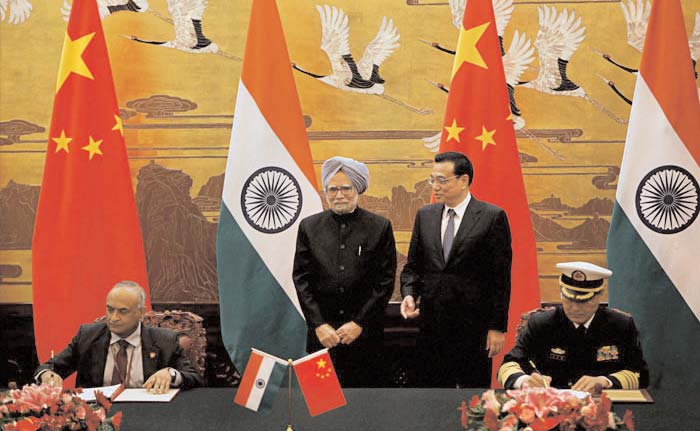
    NEW DELHI (TIP): India and China took a leap towards reducing recurring tensions across the border and promised to strengthen cooperation on trans-border rivers, even as New Delhi delayed a pact for a liberalised visa regime. The Border Defence Cooperation Agreement (BDCA) was among the nine pacts the two countries signed here at the conclusion of talks between the two sides led by Prime Minister Manmohan Singh and Premier Li Keqiang. The BDCA envisages having incremental interaction across levels starting with border personnel meetings at designated places along the 4,000-km border; periodic meetings between officers of the Military Regions of China and Army Commands of India, and similar meetings between representatives of Defence Ministry on either side; meetings of the Working Mechanism for Consultation and Coordination; and the regular Sino-India annual defence dialogue. The Prime Minister also met President Xi Jingping, who underscored the need for the two countries to charter a course for the future need to stand tall and look far.

    The Prime Minister invited Xi to visit India, while the Chinese President promised to take New Delhi’s concern on river water into account from a human angle. China’s assistance to Pakistan was also brought up during the meetings with the two Chinese leaders. Underscoring the significance of Prime Minister Singh’s visit, Premier Li noted that this was the first time since 1954 that exchange visits of Prime Minister of India and Chinese Premier took place within the same calendar year. Premier Li came to India in May, the first overseas country he chose to start international engagement after assuming the office. Both India and China held wide ranging talks on bilateral, regional and international issues and arrived at a broad consensus and reaffirmed their commitment to take forward the “Strategic and Cooperative Partnership for Peace and Prosperity” for its 2.5 billion people. As Prime Minister Singh characterised the development at the joint press conference: “When India and China shake hands, the world takes notice.” He noted that both India and China had agreed that as large neighbours, the relationship pursued with other countries following independent foreign policy should not become a cause for concern for each other. “This will be our strategic reassurance.” Prime Minister Singh and Premier Li mentioned that both sides had agreed to strengthen strategic communication at all levels, including on shared neighbourhood in order to build mutual trust.

    The liberalised visa regime that would have enhanced extended period of stay for business visitors was put on the hold by India to convey its unease over the decision to give stapled visas to two archers from Arunachal Pradesh recently. India did not allow the sportspersons to take part in the event in China and raised the issue during the talks today. But having placed the issue on the table, Foreign Secretary Sujatha Singh said it would remain in discussion. Asserting Arunachal Pradesh is an integral part of the country, India felt the state cannot be discriminated against by such a policy which China felt was a practice followed by countries in some cases. Through the Memorandum of Understanding on trans-border rivers pertaining to Brahmaputra or Yaluzangbu, as the Chinese call it, both agreed to extend the hydrological data provision period during flood season in China from May 15 to October 15, instead of existing start period of June 1 each year. The two will further strengthen cooperation and cooperate through existing Expert Level Mechanism on provision of flood-season hydrological data and emergency management.

    India has expressed concerns over China’s plans to construct a series of dams across the river as an upper riparian state. Manmohan Singh said Premier Li was receptive when he expressed concern about the unsustainable trade imbalance and explore avenues to bridge the gap. India agreed to take forward the suggestion by Premier Li for setting up an industrial park to attract investment from China to India. India faces an adverse trade balance of up to 42 per cent while bilateral trade touched $ 62 billion last year as against the 2015 target of $100 billion. Around the time the two leaders were meeting, CEOs Forum of India and China were engaged in a discussion in an adjoining room of the Great Hall of the People. Besides, both countries envisage further discussion on concept of alignment of the ambitious BMIC (Bangladesh, Myanmar, India and China) economic corridor. Deputy Chairman of Planning Commission Montek Ahluwalia said besides understanding on water efficiency, railway modernisation was being looked at as an idea including technology for heavy haul of freight and increasing speed of trains.

  • PM says CBI can question him on coal scam: PM

    PM says CBI can question him on coal scam: PM

    NEW DELHI (TIP): Prime Minister Manmohan Singh on October 24 on board his special aircraft offered to open his doors for questioning by the Central Bureau of Investigation (CBI) in the probe into the allocation of a coal block to Aditya Birla Group company Hindalco. “I am not above the law of the land. If there is anything that the CBI, or for that matter, anybody wants to ask, I have nothing to hide,” Singh said as he headed back from Beijing ahead of polls in five states including Delhi and Madhya Pradesh. Singh’s offer to put himself under the CBI scanner is his first. The opposition has been seeking to know why the CBI is not investigating Singh, who had cleared the allocation of the coal block in Odisha as the minister incharge in 2005. Hindalco has denied any wrongdoing in the allocation. The Prime Minister’s Office had hoped to cap the controversy before Singh left on a two-nation tour to cement ties with Russia and China with a detailed statement, explaining the circumstances and reasons for the decision. It had recalled that Odisha chief minister Naveen Patnaik had written to them to give Hindalco the coal block to help generate more employment in the state. The opposition Bharatiya Janata Party (BJP), however, did not relent and has kept up the pressure on the Congress-led UPA government and the CBI, which is investigating 14 cases in the coal scandal. Asked if a string of scandals, from the 2G spectrum allocation to the coal allocation scam, had cast a shadow on his legacy, Singh said, “That is for history to judge”. “I am doing my duty… What impact my 10 years of Prime Ministership will have is something which is for historians to judge.”

  • India gets 101st rank on global gender gap index

    India gets 101st rank on global gender gap index

    NEW DELHI/GENEVA (TIP): Indicating a poor state of affairs on gender parity front, India was today ranked at a low 101st position on a global Gender Gap Index despite an improvement by four places since last year. The index, compiled by Geneva-based World Economic Forum (WEF), has ranked 136 countries on how well resources and opportunities are divided between men and women in four broad areas of economy, education, politics, education and health. While India has been ranked very high at 9th place globally for political empowerment, it has got second-lowest position (135th) for health and survival. Its rankings for economic participation and opportunity are also low at 124th and for educational attainment at 120th. The high rank for political empowerment is mostly because of India getting the top-most score in terms of number of years with a female head of state (President), as its political scores is not very good for factors like number of women in Parliament and women in ministerial positions. While India has moved up four positions from its 105th position in 2012, it still remains lowest-ranked among the five BRICS nations.

    Top-four positions on the global have been retained by Iceland, Finland, Norway and Sweden. Philippines has moved up to 5th place, while Ireland has slipped one position to sixth rank. They are followed by New Zealand, Denmark, Switzerland and Nicaragua in the top ten. Other major countries on the list include Germany at 14th, South Africa at 17th, UK at 23rd, Russia at 61st, Brazil at 62nd and China at 69th. Those ranked lowest include Pakistan at 135th and Yemen at 136th. The countries that are ranked below India also include Japan (105th), UAE (109th), Republic of Korea (111th), Bahrain (112th) and Qatar (115th). About India, WEF said that India continues to struggle to demonstrate solid progress towards gender parity. Its economic participation and opportunity score has actually gone down in the past twelve months, although it has done well on political empowerment front. “This is largely down to the number of years it has had a female head of state and for the other two indicators — women in parliament and women in ministerial positions — it ranks 106 and 100 respectively,” it said. While no country has reached parity in terms of years with a female head of state, India has managed to get top rank for this indicator, whereas 65 per cent of countries have never had a female head of state over the past 50 years.

    India’s ninth position on political empowerment front is also its best-ever rank for this sub-index, where it was ranked 17th in 2012 and its lowest score was 25th in 2008. The overall ranking of 101st is also its highest in the past seven years. India had ranked better at 98th position in the WEF’s inaugural Gender Gap Index in 2006. WEF said that increased political participation has helped narrow the global gender gap across the world. A total of 86 countries have improved their rankings since last year, while Iceland has maintained narrowest gender gap for fifth year running. Globally, progress is being made in narrowing the gender gap for economic equality, but women’s presence is economic leadership positions is still limited in both developing and developed countries alike. “Countries will need to start thinking of human capital very differently ? including how they integrate women into leadership roles. This shift in mindset and practice is not a goal for the future, it is an imperative today,” WEF founder and executive chairman Klaus Schwab said. “Both within countries and between countries are two distinct tracks to economic gender equality, with education serving as the accelerator,” said Saadia Zahidi, co-author of the Report and Head of the Women Leaders and Gender Parity Programme at WEF. “For countries that provide this basic investment, women’s integration in the workforce is the next frontier of change. For those that have not invested in women’s education, addressing this obstacle is critical to women’s lives as well as the strength of economies,” Zahidi added.

  • China making N-reactor copies to sell to Pakistan

    China making N-reactor copies to sell to Pakistan

    ISLAMABAD (TIP): China will be able to sidestep global nuclear commerce rules when it sells its third generation nuclear reactors to Pakistan, making its sale a win-win deal for both countries. China has reverse-engineered Westinghouse’s AP-1000 reactor to build an indigenous reactor, which, officials said, is a clever copy of the original. With Pakistani nuclear officials travelling several times this year to China as they work on a contract, the “indigenized” Chinese reactor will help Beijing overcome a key objection by the Nuclear Suppliers Group (NSG) that forbids sale of nuclear reactors or components to third countries without NSG approval and without an NPT signature. The Chinese reactors in Pakistan will be under IAEA safeguards that make them safer and lesser cause for worry in India. But Indian officials are much more concerned about nuclear weapons and missiles that China is reportedly helping Pakistan with. That, senior Indian officials say, is a greater cause for concern. China has not yet tested the design of its indigenized reactor but this is the one that will be sold to Pakistan, scheduled to be installed in Karachi.

    According to sources here, China National Nuclear Corporation (CNNC) has claimed it has indigenously designed and developed a thirdgeneration nuclear power reactor which they have named as the Advanced China Pressurised (ACP)- 1000. China has reportedly indigenized most of the reactor components, which will be sold to Pakistan bypassing NSG requirements, under a grandfathering clause. Reports say Beijing is planning to install the first Chinese reactor in Fujian province. China was helped in this when Westinghouse sold its first reactor to China in 2007, China insisted on transfer of technology. According to a leaked cable by the US Consul General in Shanghai, “Chinese government made it very clear that failure to transfer AP1000 technology would have been a deal-breaker, and Westinghouse would have lost the contract.” The US official quotes a Westinghouse official as saying, “Westinghouse expressed the pragmatic view that, “If people are going to reverse engineer or copy nuclear technology, Westinghouse would prefer that people copy Westinghouse technology.” The Chinese contract was the biggest ever at $8 billion.

    India is negotiating the purchase of two AP1000 reactors from Westinghouse — a pre-early works agreement was signed during PM Manmohan Singh’s recent visit to the US. But it is not clear that India would be getting any technology transfer of the variety that the Chinese have received from the American company. China’s indigenization programme is aimed at being able to provide more nuclear reactors to other customers in the world. There has been little Western protest against Chinese decision to sell such reactors to Pakistan. When China does begin building nuclear reactors in Pakistan, experts reckon, Beijing will still need to import a fair number of components from other industrialized nations. This would be seriously flouting NSG rules. Indian officials say China helps the Pakistan nuclear programme in a myriad different ways. For example, China sends its nuclear experts under the IAEA umbrella to undertake safety missions in Pakistan that Western officials avoid due to security problems.