Tag: China

  • Immigration reform tops Obama menu

    Immigration reform tops Obama menu

    WASHINGTON (TIP): US President Obama on October 24 asked the Republican-majority House of Representatives to pass by the year end a stalled immigration bill over which India has expressed concern. “Let’s see if we can get it done this year. Let’s not wait. It doesn’t get easier to just put it off. Let’s do it now. Let’s not delay. Now it’s up to Republicans in the House to decide whether reform becomes a reality or not,” Obama said in a White House speech.If enacted into law the bill will pave the way for citizenship of 11 million undocumented people and accelerate immigration of science and technology professionals from India and China. Prime Minister Manmohan Singh has expressed India’s concern over the comprehensive immigration bill, already passed by the Senate. Certain provisions of the bill, in particular those related to H-1B and L1 visas, will adversely impact top Indian IT companies doing business in the US. Obama said the current immigration system is broken. “It’s not smart; it’s not fair; it doesn’t make sense. We have kicked this particular can down the road for too long,” he said.

    “It’s not smart to invite some of the brightest minds from around the world to study here and then not let them start businesses here. We’ve sent them back to their home countries to start businesses and create jobs and invent new products someplace else,” he said. The Senate passed the bill in June. The plan, crafted and approved with Senate Republican support, would strengthen the border with Mexico and reorganise the visa system to give priority to high-demand fields, including engineers and farm workers.Meanwhile, the US-India Business Council (USIBC) is keeping a close eye on the bill on the House version of the bill to protect the interest of the Indian companies. PTIand US businesses with ties with India. “USIBC plans on being absolutely vigilant in the coming weeks and months with its Coalition for Jobs and Growth, with Patton Boggs leading the lobby effort, to ensure that when the Immigration Reform Bill reawakens and begins to gain traction that we are in front of it and doing our best to educate lawmakers to make certain the discriminatory provisions are excised from any final Bill,” USIBC president Ron Somers said. “We will continue to sensitise the Senate as to these harmful provisions, while working with the House to ensure a clean bill, so that when legislation goes to conference we will have champions in both chambers to ensure a clean outcome,” Somers said.

  • China – Pak Nuclear Deal Vs Sino- Indian ‘Strategic Partnership’

    China – Pak Nuclear Deal Vs Sino- Indian ‘Strategic Partnership’

    With India’s ascent in global hierarchy and American attempts to carve out a strong partnership with India, China’s need for Pakistan is only likely to grow. A rising India makes Pakistan all the more important for the Chinese strategy for the subcontinent. It’s highly unlikely that China will give up playing the Pakistan card vis-à-vis India anytime soon. Indian policymakers would be well advised to disabuse themselves of the notion of a Sino-Indian ‘strategic partnership.’ China doesn’t do sentimentality in foreign policy, India should follow suit”, says the author.

    When Prime Minister Manmohan Singh was getting ready to leave for his trip to China, news emerged of China- Pakistan nuclear cooperation. In what will be the first foreign sale of its indigenous 1,100 MW nuclear reactor, ACP 1000, China is all set to sell two more nuclear reactors to Pakistan in direct contravention of its own global commitments as a member of the NPT and the NSG. India has been reduced to protesting ever since the details of a potential Sino-Pak deal came to light some months back. New Delhi, we are told, has made its reservations known to Beijing through diplomatic channels. But should it really come as a surprise that China is trying its best to maintain nuclear parity between India and Pakistan? After all, this is what China has been doing for the last five decades. Based on their convergent interests vis-à-vis India, China and Pakistan reached a strategic understanding in the mid-1950s, a bond that has only strengthened ever since. Sino- Pakistan ties gained particular momentum in the aftermath of the 1962 Sino-Indian war when the two states signed a boundary agreement recognizing Chinese control over portions of the disputed Kashmir territory and since then the ties have been so strong that Chinese President Hu Jintao has described the relationship as “higher than mountains and deeper than oceans.”

    Pakistan’s President, Asif Ali Zardari, has suggested that “No relationship between two sovereign states is as unique and durable as that between Pakistan and China.” Maintaining close ties with China has been a priority for Islamabad and Beijing has provided extensive economic, military and technical assistance to Pakistan over the years. It was Pakistan that in early 1970s enabled China to cultivate its ties with the West and the US in particular, becoming the conduit for Henry Kissinger’s landmark secret visit to China in 1971 and has been instrumental in bringing China closer to the larger Muslim world. Over the years China emerged Pakistan’s largest defense supplier. Military cooperation between the two has deepened with joint projects producing armaments ranging from fighter jets to guided missile frigates. China is a steady source of military hardware to the resource-deficient Pakistani Army. It has not only given technology assistance to Pakistan but has also helped Pakistan to set up mass weapons production factories. Pakistan’s military modernization process remains dependent on Chinese largesse. In the last two decades, the two states have been actively involved in a range of joint ventures, including JF-17 Thunder fighter aircraft, K-8 Karakorum advance training aircraft, and Babur cruise missile the dimensions of which exactly replicate the Hong Niao Chinese cruise missile.

    The JF-17 venture is particularly significant, given its utility in delivering nuclear weapons. In a major move for China’s indigenous defense industry, China is also supplying its most advanced home-made combat aircraft, the thirdgeneration J-10 fighter jets to Pakistan, in a deal worth around $6 billion. Beijing is helping Pakistan build and launch satellites for remote sensing and communication even as Pakistan is reportedly already hosting a Chinese space communication facility at Karachi. China has played a major role in the development of Pakistan’s nuclear infrastructure and emerged Pakistan’s benefactor at a time when increasingly stringent export controls in Western countries made it difficult for Pakistan to acquire materials and technology from elsewhere. The Pakistani nuclear weapons program is essentially an extension of the Chinese one. Despite being a member of the NPT, China has supplied Pakistan with nuclear materials and expertise and has provided critical assistance in the construction of Pakistan’s nuclear facilities. It has been aptly noted by non-proliferation expert Gary Milhollin, “If you subtract China’s help from Pakistan’s nuclear program, there is no nuclear program.” Although China has long denied helping any nation attain a nuclear capability, the father of Pakistan’s nuclear weapons program, Abdul Qadeer Khan, himself has acknowledged the crucial role China has played in his nation’s nuclear weaponization by gifting 50 kg of weapon-grade enriched uranium, drawing of the nuclear weapons and tons of uranium hexafluoride for Pakistan’s centrifuges.

    This is perhaps the only case where a nuclear weapon state has actually passed on weapons grade fissile material as well as a bomb design to a non-nuclear weapon state. India has been the main factor that has influenced China’s and Pakistan’s policies vis-à-vis each other. Whereas Pakistan wants to gain access to civilian and military resources from China to balance the Indian might in the subcontinent, China, viewing India as potential challenger in the strategic landscape of Asia, views Pakistan as it central instrument to counter Indian power in the region. The China-Pakistan partnership serves the interests of both by presenting India with a potential twofront theatre in the event of war with either country. In its own way each is using the other to balance India as India’s disputes with Pakistan keep India preoccupied, failing to attain its potential as a major regional and global player. China, meanwhile, guarantees the security of Pakistan when it comes to its conflicts with India, thus preventing India from using its much superior conventional military strength against Pakistan. Not surprisingly, one of the central pillars of Pakistan’s strategic policies for the last more than four decades has been its steady and ever-growing military relationship with China. And preventing India’s dominance of South Asia by strengthening Pakistan has been a strategic priority for China. But with India’s ascent in global hierarchy and American attempts to carve out a strong partnership with India, China’s need for Pakistan is only likely to grow. A rising India makes Pakistan all the more important for the Chinese strategy for the subcontinent. It’s highly unlikely that China will give up playing the Pakistan card vis-à-vis India anytime soon. Indian policymakers would be well advised to disabuse themselves of the notion of a Sino-Indian ‘strategic partnership.’ China doesn’t do sentimentality in foreign policy, India should follow suit.

  • Beyond the border

    Beyond the border

    The Border Defense Cooperation Agreement signed during Prime Minister Manmohan Singh’s visit to China is without doubt a constructive step towards resolving the boundary dispute. The BDCA itself is not a gamechanger: it simply reinforces the basic international norm that countries ought to settle differences through peaceful means. Specifically, the Agreement adds to the existing layer of confidence-building measures through flag meetings, joint military patrols, and periodic highlevel interaction. The BDCA nevertheless indicates both New Delhi and Beijing have accorded high priority to preventing hostile incidents along the Line of Actual Control. That Chinese Premier Li Keqiang and Dr. Singh have exchanged visits within six months of the incident reflects this fact. The Chinese intrusion and subsequent withdrawal from the Depsang plain earlier this year provided the impetus to BDCA negotiations, and prompted serious introspection on the effectiveness of the Working Mechanism on Border Affairs. By opting for a tempered Agreement though, Dr. Singh has chosen to play his hand cautiously in an election year.

    The BJP, which facetiously claimed the government has ceded territory to China, would do well to acknowledge the spirit with which former Prime Minister Atal Behari Vajpayee established the Special Representative mechanism on border talks during his 2003 Beijing visit. The ultimate objective of finalizing an LAC acceptable to both countries is still some distance away.With no clear understanding of how the other perceives the Line, and China preferring “status quo” along the boundary, the onus will be on India to seize the initiative. Preparing the framework for a lasting settlement is important: that said, India-China ties cannot be hostage to the boundary dispute. It is unfortunate – but entirely predictable – that plans to usher in a liberal visa regime were shelved owing to the controversy over China handing out stapled visas to two athletes from Arunachal Pradesh. The stapled visa issue has assumed dangerous proportions. It cannot be allowed to eclipse the need for greater cooperation, particularly in the fields of trade and tourism. While making the case for robust engagement at the Strategic Economic Dialogue scheduled for next month, India must also ensure our exporters gain a stronger foothold in the Chinese market. Whether it is on the strategic or the commercial side, both governments can only reap the benefits of cooperation through constant dialogue. In snuffing out “old theories of alliance and containment,” Dr. Singh has rightly emphasized a workmanlike approach to dealing with this important relationship.

  • US-India Relations Hit a Rough Patch

    US-India Relations Hit a Rough Patch

    The author feels that there are a number of vital issues which are unlikely to be settled within the tenures of either Obama or Singh, leaving a lingering note of ambivalence in the US-India relationship even as it deepens outside of the high politics.

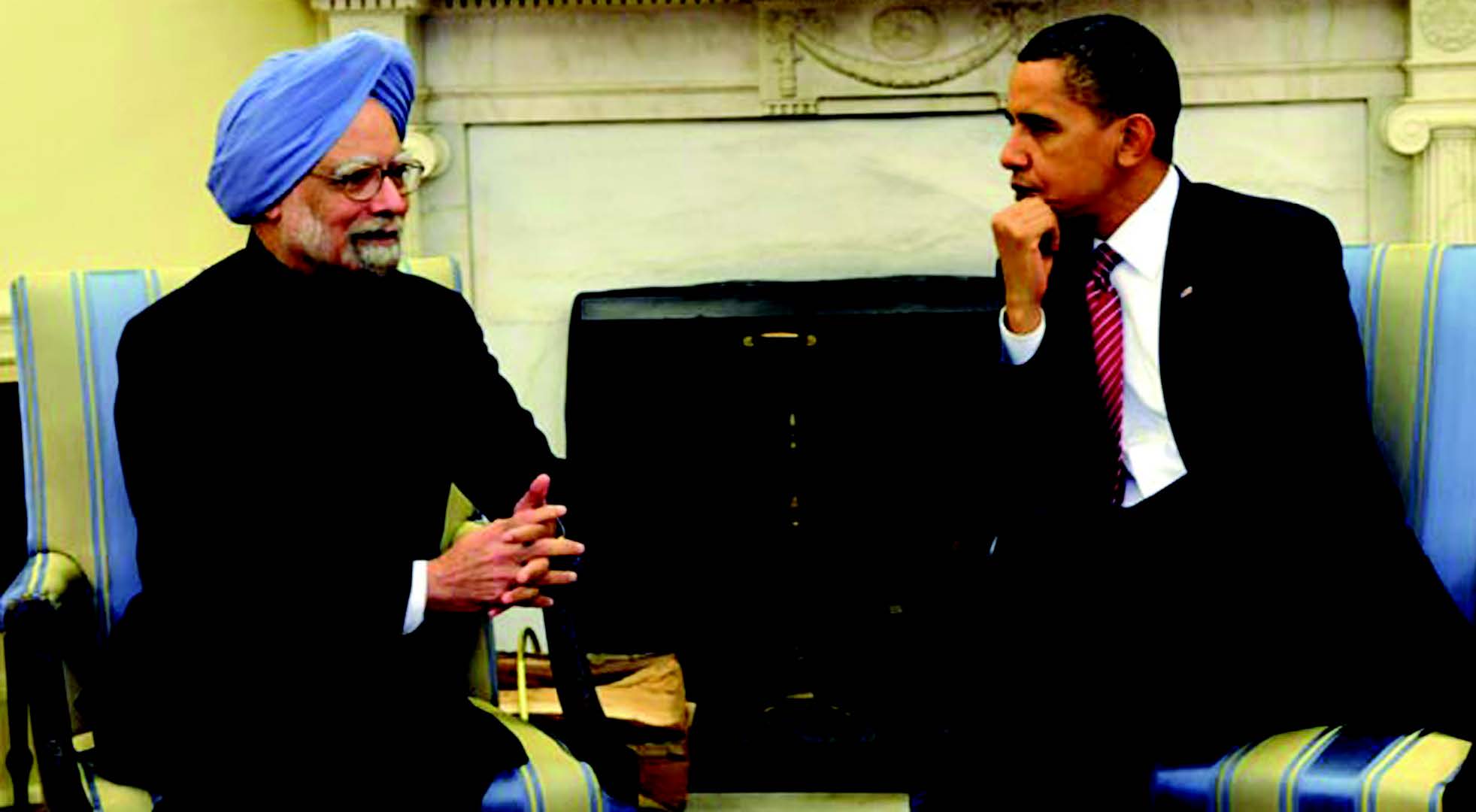
    When Indian Prime Minister Manmohan Singh visited Washington last month for the first time in four years, the mood was distinctly subdued. India’s once-stratospheric growth rate is stubbornly depressed. The Indian government is low on political capital and stuck in risk-averse mode until next year’s general elections, with a huge question mark over Singh’s personal future. Most Indians anyway focused on Singh’s New York meeting with his Pakistani counterpart Nawaz Sharif – underwhelming, as it turned out, and marred by a perceived slur – rather than his meetings with President Obama. More generally, the promise of USIndia relations remains far below the levels anticipated only a few years ago.

    Why the stasis?
    There are any number of reasons. Indian journalist Indrani Bagchi suggests that ‘there remains a strong lobby within this government starting with [ruling Congress Party chairwoman] Sonia Gandhi and [Defense Minister] AK Antony downwards, which retains an instinctive aversion to America’. That same government’s slow rate of economic reform irks American companies who want to invest in India. In particular, a strict nuclear liability law limits those companies’ ability to exploit a landmark civil nuclear cooperation agreement initiated by the Bush administration in 2005. Also, India’s Byzantine procurement rules madden the American defense companies eager to sell into what is one of the few growing arms markets in the world. A sense prevails that the low-hanging fruit in the bilateral relationship was picked some years ago. But one less-noticed problem is that the limited bandwidth of US foreign policy is presently occupied by issues in which India is either wary of US policy or simply apathetic.

    The Middle East
    In his speech to the United Nations General Assembly on 24 September, President Obama noted that ‘in the near term, America’s diplomatic efforts will focus on two particular issues: Iran’s pursuit of nuclear weapons and the Arab-Israeli conflict’. India has much to gain from a rapprochement between Iran and the United States, not least the ability to once again freely import Iranian oil. India was circumventing international sanctions by paying for a diminished flow of Iranian oil in rupees, but the new Iranian government is insisting that India can only pay for half this way. India is a bystander rather than active participant in the broader dispute, watching from the sidelines as the P5+1 bloc, which includes Russia and China, participates in negotiations. On Syria, India is sympathetic to the regime of President Bashar al-Assad. It views the issue through the lens of the Afghan jihad in the 1980s, which Indians see as indelibly associated with the subsequent uprising in Kashmir and the growth of anti- Indian militancy. When the Indian Government summoned the Syrian Ambassador in Delhi last month, it was not because of Syrian policies but because the ambassador had alleged that Indian jihadists were fighting with the rebels. The ambassador stated, tellingly, that ‘he was always deeply appreciative of India’s position on Syria’.

    India unsurprisingly opposes efforts to arm the Syrian rebels, tends to see the armed opposition as irredeemably compromised by jihadists and reflexively opposes US proposals for military action, particularly outside the ambit of the UN Security Council. India has already had to abandon several oil fields in Syria and, in September 2013, India’s foreign secretary even referred to an existing Indian line of credit to the Syrian government. Yet, despite these equities, India has no leverage over the parties to the conflict. In May, an Iranian suggestion of greater Indian involvement went nowhere. There is little that Singh would usefully have been able to say to Obama on the subject. At a broader level, the more the Middle East distracts from US attention to Asia- Pacific – including the so-called ‘pivot’ of American military forces eastwards – the less high-level attention India receives in Washington. India was not mentioned once in Obama’s UN address (to compare: China was mentioned once, Iran 26 times, and Syria 20).

    Afghanistan
    India’s attitude to US policy in Afghanistan is even more conflicted. India is ostensibly supportive of US policy, and has formally signed on to an Afghan-led peace process. But Indian officials and strategists scarcely disguise their discomfort towards what they see as undue American haste in withdrawing troops, an overeagerness to accommodate the Taliban as part of political reconciliation, and a continued indulgence of Pakistan despite its support for Afghan insurgents. India felt that its views were vindicated by the June debacle over the opening of a Taliban office in Doha, which deviated from the agreed protocol, handed a propaganda victory to the Taliban, and angered the Afghan government. Indian national security reporter Praveen Swami summed up many Indians’ views in complaining that the US was ‘subcontracting the task of keeping the peace in Afghanistan to the ISI’, Pakistan’s premier intelligence service.

    In recent months, Indians have taken offence at statements by James Dobbins, the US Special Representative for Afghanistan and Pakistan, echoing earlier Indian anger at the late Richard Holbrooke, and have chafed at what they see as a Western equivalence between Indian and Pakistani policy in Afghanistan. For their part, US and British officials have grown increasingly frustrated with India’s approach to the issue, arguing that India offers no plausible alternative to the policy of reconciliation given the long-term weakness of the Afghan state. Yet it is in Obama’s interests to assuage Indian concerns, emphasize that reconciliation with the Taliban will be constrained by the established ‘red lines’, that the US will not abandon counterterrorism efforts in Afghanistan after 2014, and that India’s role in Afghanistan is not only welcome, but also necessary to the strengthening of the Afghan state. India rebuffed Afghan President Hamid Karzai’s request for arms earlier this year, wary of provoking Pakistan. But one area that deserves more discussion is greater direct cooperation between India and the NATO-led coalition in Afghanistan to train and equip Afghan National Security Forces (ANSF).

    According to one report, Obama asked Singh last week for an ‘increased effort’ in Afghanistan, although it’s unclear whether this included an implied or explicit training dimension. India, entirely reasonably, sees a potential eastward flow of militants from Afghanistan and Pakistan as a major security threat, particularly with violent trends in Kashmir worsening this year. India would therefore be particularly receptive to a US commitment to monitor and disrupt militant movement in the years after 2014. In truth, it will be difficult to make progress on these issues until Washington settles its own internal debates over what its posture in Afghanistan will be after 2014 (for example, how many (if any) troops will remain in a training capacity?), which in turn will depend on the peace process itself, President Karzai’s domestic political calculations in the face of presidential elections next year, the integrity of that election, and trends in Afghanistan.

    Where next?
    The level of US-India tension should not be exaggerated. It is telling that recent revelations over US intelligence collection against Indian diplomatic targets have, unlike in the case of Brazil, had negligible impact on the relationship. Indian officials chose to brush the issue under the carpet, presumably hoping that the issue had little domestic salience and perhaps even tacitly acknowledging that the NSA’s activities against Indian internet traffic were indirectly beneficial to Indian policy objectives. Twenty years ago, the Indian response may have been very different. It is these changes in tone that convey strategic shifts as much as any large policy initiative. And although the two countries differ on the contentious big-picture issues outlined above, this has not prevented the relationship from advancing on other tracks. In September, US Deputy Secretary of Defense Ashton Carter visited India to push ahead with the bilateral Defense Trade Initiative (DTI), which Carter co-chairs with India’s National Security Advisor, Shivshankar Menon.

    Carter reiterated his suggestion, dating from last year, that US and Indian firms cooperate to produce military equipment – including helicopters, nextgeneration anti-tank missiles, mine systems, and naval guns – for both countries’ use. India has been bafflingly slow and reticent to respond to these overtures, despite the possibility of much-needed technology transfer to Indian industry (though many analysts are skeptical as to its capacity for technology absorption). The negotiations nevertheless reflect the US perception that the defense strand of its relationship with India are a priority. The road ahead is rocky. Over the next eighteen months, the US-India relationship will be severely buffeted by US policy towards Afghanistan. As the American drawdown accelerates, one possibility is that the US intensifies diplomatic efforts to peel away moderate factions within the Afghan Taliban, Whether that amounts to anything or not (and few are optimistic) the process is certain to involve at least a period of deeper USPakistan consultations, at the expense of India. Later this month, for instance, a fourth Afghanistan-Pakistan-UK trilateral summit will take place in London.

    India has quietly seethed at the previous three, viewing them as a coordinated effort to reduce Indian influence. Yet, for the United States at least, the centre of gravity of the US-India relationship is not Afghanistan, but China. The Middle East’s fast-moving and highly visible crises have briefly distracted from a slow-moving background trend: the political and economic rise of China. Yet this remains where Indian and American strategic interests are most collectively at stake, if not necessarily congruent. Following India’s most recent crisis with China, involving deep Chinese incursions into disputed territory a few months ago, New Delhi’s instinctive response was not to make a prominent feint towards Washington – something that might have been the natural response of other states eager to balance against Beijing – but to engage China more intensively, including on the border dispute itself. Indeed, Singh will make a trip to Beijing next month, with indications that he may sign an upgraded border agreement. Nothing better underscores how India’s internal debate over the desired scope of its relationship with the United States is unsettled, on-going, and erratic. More generally, much of India’s press and strategic community have accepted the popular narrative that American leadership, as well as American power, is in decline, and that US reliability is therefore in question. These issues are unlikely to be settled within the tenures of either Obama or Singh, leaving a lingering note of ambivalence in the USIndia relationship even as it deepens outside of the high politics.

  • India-US Partnership

    India-US Partnership

    Defense Trade to be the Driving Engine

    Contrary to the forecasts of doom and gloom and the skepticism surrounding his visit to Washington, the third Manmohan- Obama Summit meeting on September 27 has been quite productive. With hindsight, one can say that media reports about growing impatience of US NSA Susan Rice, impact of the comprehensive immigration law, lobbying in the Capitol Hill by Microsoft, IBM and American drug manufacturing giants against Indian IT and drug manufacturing companies and differences on Afghanistan, Iran, Syria, nuclear liability Act etc were highly exaggerated. An honest and dispassionate assessment of India-US relations in the last decade clearly shows that they have been transformed beyond recognition; India-US strategic partnership is for real and it is in for a long haul in spite of serious differences on some issues in the short run. Nothing demonstrates this better than the exponential expansion of defense trade; US exports of defense and military hardware to India in the last five years have crossed US$ 9bn; with the long shopping lists of the Indian Army, Air Force and Navy this is bound to expand further.

    If the promise of transfer of defense technology, joint research and co-production mentioned in the joint statement is taken to its logical conclusion, this collaboration could become the driving engine of closer Indo-US strategic partnership. In this regard, the US decision to supply offensive weapons to India will be the leitmotif of this burgeoning relationship. Notwithstanding these positive signals, well-known strategic analyst Brahma Chellaney feels that India-US strategic relationship is somewhat “lopsided and unbalanced” on account of structural and strategic limitations of India. A lot is made out of the flattering phrases such as the “defining relationship of the 21st century” (used by Obama and John Kerry) which might transcend into the 22nd century and India being the “lynch pin” of the US policy in Asia (used by Leon Panetta) and optimistic projections made by the heads of think tanks such as Ashley Tellis of Carnegie Endowment. Visiting American dignitaries seldom fail to stress the commonalities between India and the US: democracy, rule of law, human rights, and multi-ethnic, multireligious, multi-lingual, plural societies. These are, no doubt, important factors but must be taken with a pinch of salt.

    In the real world, so long as it serves their national interests, countries don’t mind doing business with other countries where these factors don’t hold water. The US-China relations are an obvious example of this phenomenon. While the US IT companies might continue urging the US government to apply some indirect brakes on the Indian IT companies, the fact is they have been receiving “great service, great quality at low costs” from Indian companies and it has enabled them to operate efficiently and profitably. The misperception created by media reports that the US wishes to “contain” China and hence is trying to warm up to India warrants closer scrutiny. The US-China economic, financial, trade, business and investment ties are so huge and millions of jobs in the US depend on this collaboration that the US will never risk them. As a matter of fact, the US has been quite careful not to hurt China’s sensitivities; it’s decision to call its new approach in Asia now as “Asia Rebalance” instead of “Asia Pivot” is a “course correction” keeping China in mind. On the issues of alleged incursions into Indian territories by the Chinese troops and the India-China spat regarding the ONGC-Vietnam offshore oil drilling collaboration, the US has maintained strict neutrality.

    Conversely, it is also a fact that the US won’t like to see a China-dominated Asia. This, apart from the economic considerations, explains its concerted efforts to come closer to India, ASEAN and beyond to shore up its influence in Asia-Pacific and maintain pressure on China to keep trade routes through the South China Sea open to international trade according to international laws. Some recent developments have eased the alleged “drift”, “wrinkles” and imaginary or real “plateau” in relations. The preliminary contract between the US nuclear companies, Westinghouse and NPCIL for setting up a nuclear plant in Gujarat is a welcome beginning. The establishment of “an American India- US climate change working group” and convening the “India-US Task Force on HFCs” are viewed as positive developments. And the reiteration of US support for a place for India in the reformed UNSC should be music to Indian ears. Besides, a temporary postponement by the US Federal Reserve to end the stimulus package should give countries like India some breathing time to put their finances in order. Though nothing concrete has been promised, some negotiated compromise on the new Immigration laws shouldn’t be ruled out.

    In the field of foreign affairs, the biggest relief has come from Iran. There is thaw in the air in the US-Iran relations thanks to the speech of the newly elected President Rouhani in the UN General Assembly and his wishes on the Jewish New Year on his Twitter which prompted Obama to make the historic Presidential phone call for the first time in 30 years! Unless, this process is cut short by the Iranian supreme leader, US-Iran relations should see some further easing of tension and resolution of the nuclear issue which has led to the imposition of crippling UN sanctions on Iran. This thaw has the potential of lightening India’s oil import bill if more Iranian oil comes on the market. India’s expectations from the US to put further pressure on Pakistan to bring the perpetrators of 26/11 Mumbai attack to book and rein in the terrorist groups like Al-Qaida and LeT and dismantle terror infrastructure and go slow on co-opting the Taliban in the talks on the future of Afghanistan aren’t likely to be met fully because of the US priorities to exit from Afghanistan smoothly. In the meanwhile, India should brace itself for a Taliban-dominated Afghanistan after the withdrawal of the American troops in 2014.

    What role India could play in Afghanistan after the US exit can’t be guaranteed by the US; it will have to work out a strategy with countries like China, Russia, and Iran and, of course, the US. As the economies of India and the US aren’t doing as great as they would have expected, there are domestic pressures in both countries which impact negatively on the bilateral relations. The IT and pharma MNCs in the US and the constituencies in India which didn’t favor FDI in retail and pressed for a more stringent nuclear liability Bill are manifestations of such domestic pressures. As both India and the US have strategic partnership with a number of countries, in crises situations each country will take a decision based on its strategic interests. From this perspective, KS Bajpai, a former Ambassador to the US, injects a reality check: “If ever India finds herself in an open conflict with another country, she will be just by herself; none will come to her help”. That should give us a wake-up call to mend our fences with our neighbors and create an environment of goodwill and warmth without lowering our guards and ignoring defense preparedness.

  • Back from the Brink

    Back from the Brink

    The financial markets worldwide felt relieved after the US Congress reached an agreement shortly before the deadline was to expire on Wednesday. A debt default would have raised the cost of borrowings for the US. The 16-day government shutdown over a budget fight between the Democrats and the Republicans caused losses not just to the domestic economy but to all those countries dependent on US exports for growth. Many such countries were relying on a US demand pick-up to compensate for the sluggish economic conditions at home. There is one positive outcome that should cheer the emerging economies like India and China. There is hope that the US Federal Reserve will not rush to roll back its $85 billion a month bond-buying program, giving more time to the Asian countries to stabilize their economies and currencies, which had been shaken by dollar outflows in recent months.

    The Republicans had brought the US government to a halt, demanding that President Barack Obama’s favorite health care program should be either delayed or defunded and the existing taxes should be cut. Two years ago when there was a similar confrontation over raising the debt ceiling, President Obama had retreated, agreeing to a staggered slashing of domestic spending. This time Obama was firm and assertive, and called the Republicans’ bluff. The deal that was signed at the last minute indicated a complete Republican surrender. There was a minor concession on health care which required the administration to audit incomes of those seeking insurance subsidies. But the damage the Republicans have caused to the US reputation is incalculable. Americans dependent on government programs and Federal employees were the main sufferers. A fringe group in the Republican Party took the entire nation to ransom and ended up hurting its own leadership. The approval ratings of the Republicans are at the rock-bottom. But the relief is for a limited period. “Our drive to stop the train wreck that is the President’s health care law will continue”, said the Republican leader, Speaker John Boehner. Early next year the battle is expected to resume.

  • Britain opens its nuclear industry to Chinese investors

    Britain opens its nuclear industry to Chinese investors

    BEIJING (TIP): Britain opened the door to Chinese investors taking majority stakes in future nuclear plants on Thursday as finance minister George Osborne signed a deal aimed at helping find the billions of pounds needed to replace the country’s ageing reactors. On a visit to China, Osborne said the two countries had signed a memorandum of understanding (MOU) on nuclear cooperation that included roles for British companies in China’s nuclear sector, which is the fastest growing in the world. “While any initial Chinese stake in a nuclear power project is likely to be a minority stake, over time stakes in subsequent new power stations could be majority stakes,” a statement from the UK Treasury said. The MOU also covers training in Britain for Chinese technicians, it said.

    Chinese nuclear companies have expressed an interest in building in Britain, but until Thursday’s announcement it was unclear whether the British government would welcome China’s participation. The government said this week it was “extremely close” to a deal with French energy company EDF related to building Britain’s first new nuclear power station since 1995, a project which is likely to involve China General Nuclear Power Group (CGNPG). That deal centres on a 35-year contract guaranteeing EDF and its potential partners an electricity price for the power from the new plant of £92.5 per megawatt hour, roughly double the current wholesale price, Wall Street Journal reported. A spokesman for the UK’s department of energy and climate change said the talks were ongoing. Osborne’s statement did not refer to the EDF project but his announcement was made at the Taishan nuclear power plant in southern China, which is a collaboration between EDF and CGNPG.

    Ageing plants

    Britain aims to renew ageing nuclear power plants that are going out of service but it needs foreign investment to pay the huge upfront costs involved. Britain’s shrinking power capacity could lead to blackouts during the winter of next year, a report prepared for an advisory body to the prime minister warned on Thursday. Energy Secretary Ed Davey said on Sunday he expected nuclear investments from South Korea as well as China, Japan and France. Last year, Japan’s Hitachi bought a new nuclear joint venture company from Germany’s RWE and E.ON , underlining interest from Asian firms in entering Britain’s nuclear industry. Last month, Britain also signed a cooperation agreement with Russian nuclear conglomerate Rosatom. Britain has shortlisted eight sites that can house new nuclear plants, two of which are owned by Hitachi, one by a joint venture between GDF Suez and Iberdrola and the remainder by EDF. The Westinghouse unit of Japan’s Toshiba is in talks to purchase Iberdrola’s stake. Investment from China would similarly involve Chinese companies buying stakes in projects or partnering with the existing owners. “Investment from Chinese companies in the UK electricity market is welcome, providing they can meet our stringent regulatory and safety requirements,” Energy Secretary Ed Davey said in Thursday’s statement. China has 17 nuclear reactors in operation, accounting for about 1 percent of electricity production capacity. Another 28 nuclear plants are under construction. Osborne is in China on a trade mission that this week saw Britain take a step closer to becoming the main offshore hub for trading in China’s currency and bonds by offering less stringent rules for Chinese banks setting up in London

  • ‘Big lender’ China urges US to avoid bankruptcy

    ‘Big lender’ China urges US to avoid bankruptcy

    WASHINGTON (TIP): As the Government shutdown in the US enters its second week, the country is just 8 days away from default, and the country’s main creditor China has urged Washington to take decisive steps to avoid bankruptcy and ensure safety of Chinese investments. China, the US government’s largest foreign creditor, is “naturally concerned about developments in the US fiscal cliff”, as Reuters quoted Vice Finance Minister Zhu Guangyao giving the Chinese government’s first public response to the Oct 17 US deadline for raising the debt ceiling. China currently holds 22.85 percent of the US $16.7trln debt, which makes it the biggest US creditor, followed by Japan which holds 2.31 percent. Treasury Secretary Jacob Lew calculated the US would run out of money by October 17 and have less than $30 billion cash in hand if Congress fails to agree on its spending plans. “We ask that the United States earnestly takes steps to resolve in a timely way before October 17 the political (issues) around the debt ceiling and prevent a US debt default to ensure safety of Chinese investment in the United States and the global economic recovery,” Zhu said.

    In 2011 a similar budget deadlock cost the US its triple-A rating, with Standard & Poors downgrading the country to AA+. “We hope the United States fully understands the lessons of history,” Zhu said. The debt ceiling debate of 2011 resolved with a last minute decision following tough warnings over the economic catastrophe from the looming default. This time around alarm bells are ringing again, with Treasury Secretary Jack Lew warning that the budget brinkmanship was “playing with fire” and imploring the Congress to pass legislation to re-open the government as well as increase the nation’s debt limit. The lack of accord in the US Congress could cost the US a default – the first in history – which would send the global economy into a financial crisis similar to 2008 or worse. The 2008 financial crisis plunged the country into the worst recession since the Great Depression of the 1930s.

    Raising the debt ceiling is vital for the US itself and the global economy, but Republican House Speaker John Boehner insists the increase of the maximum allowed borrowing limit should come with terms. Boehner vowed on Sunday that there was “no way” Republican lawmakers would agree to a measure to raise the debt ceiling unless it included conditions to rein in deficit spending. “The votes are not in the House to pass a clean debt limit, and the President is risking default by not having a conversation with us,” Boehner said. The shutdown has put hundreds of thousands of workers off the job, closed national parks and museums and stopped an array of government services. The one bright spot in a Washington deadlock is a significant chunk of the furloughed federal workforce is headed back to work. Defense Secretary Chuck Hagel ordered nearly 350,000 back on the job, basing his decision on a Pentagon interpretation of a law called the Pay Our Military Act. Those who remain at home or are working without paychecks are a step closer to getting back pay once the partial government shutdown ends. The Senate could act this week on the measure that passed the House unanimously on Saturday.

  • China to train 250,000 journalists before they get work passes

    China to train 250,000 journalists before they get work passes

    BEIJING (TIP): About 250,000 Chinese journalists will be given on-the-job training under a specially designed program by the government’s media agency, which also implements laws on censoring and “guiding” the media. The move suggests greater government control over media and flies in the face of expectations that it was allowing greater freedom. The State General Administration of Press, Publication, Radio, Film and Television on Thursday said the program will cover all reporting staff with newspapers, news agencies, TV stations and other press organizations in the country. The training is mandatory. It will last for three months until the end of 2013. Chinese media training involves courses on patriotism and journalists in the program are required to wear military uniforms on certain days. Currently, media organizations have separate training program for their staff. Now, the government has created a unified training program, which will be provided free. Journalist need to pass a post training examination to obtain press card or accreditation. The training will focus on six subjects, including theories on socialism with Chinese characteristics, the Marxist view on journalism, journalistic ethics, laws and regulations, norms in news gathering and editing, and content on preventing false information.

  • The Pivot under Pressure

    The Pivot under Pressure

    It’s not just the canceled trip. Other factors are limiting the ability of the U.S. to focus on the Asia-Pacific.

    Senior U.S. administration officials have been at pains in recent weeks to demonstrate how Washington’s strategic focus is shifting from the military quagmires of the greater Middle East to the dynamism of Asia. It’s a tough sell, and there is reason to doubt that America’s allies and friends in the region are buying it. Even before the cancellation of President Barack Obama’s Asia trip, which would have included the APEC and East Asia summits, doubts about U.S. focus were rising. Take Obama’s address before the UN General Assembly earlier this month. Its core takeaway is that the manifold problems of the Middle East have once more re-asserted their claim on Washington’s attention. Unveiled with much fanfare (here and here) two years ago, the so-called Asia pivot is all about shoring up the U.S. presence in a vital region that is increasingly under the sway of an ascendant China.

    Obama dubbed himself “America’s first Pacific president” and declared that Asia is where “the action’s going to be.” Vowing that the future would be “America’s Pacific Century,” his lieutenants rolled out two specific initiatives: 1.) A buildup of military forces that is plainly directed against China; and 2.) An ambitious set of trade and investment negotiations known as the “Trans-Pacific Partnership” (TPP) that would contest Beijing’s economic hegemony in East Asia. But the pivot – or the “strategic rebalance,” as administration officials now prefer to call it – was birthed with two congenital defects: It was unveiled just as the convulsions of the Arab Spring began tearing apart the decades-old political order in the Middle East, and just as an era of severe austerity in U.S. defense budgeting was taking shape. Until a few weeks ago, Obama gave every appearance of a man wishing the problems of the Middle East would just go away. But much like the Glenn Close character in Fatal Attraction, the region refuses to be ignored. For all the talk about turning the page on years of military and diplomatic activism in the region, Obama keeps having to take notice.

    Indeed, he was forcefully reminded of its combustibility when the outbreak of fighting in Gaza between Israel and Palestinian militants intruded on his last trip to Asia a year ago. And despite his stubborn determination to steer clear of it, he now finds himself sucked into Syria’s maelstrom. The president’s General Assembly address underscores the power of this gravitational pull. In it, Mr. Obama affirmed: “We will be engaged in the region for the long haul,” and outlined the security interests that he is prepared to use military action to protect. He reiterated his intention to see through the uncertain prospect of Syria’s chemical disarmament and then staked his prestige on two longshot projects: stopping Iran’s nuclear weapons program and brokering an Israeli-Palestinian peace accord. He also pledged renewed focus on sectarian conflicts and humanitarian tragedies like the Syrian civil war. This marks quite an evolution in Obama’s thinking from earlier in the year when he justified his Hamlet-like ambivalence on Syria by pondering: “And how do I weigh tens of thousands who’ve been killed in Syria versus the tens of thousands who are currently being killed in the Congo?” In all, Obama’s remarks last month mark a noticeable change in his foreign policy agenda.

    As the New York Times noted: “For a president who has sought to refocus American foreign policy on Asia, it was a significant concession that the Middle East is likely to remain a major preoccupation for the rest of his term, if not that of his successor. Mr. Obama mentioned Asia only once, as an exemplar of the kind of economic development that has eluded the Arab world.” This shift will only renew the multiplying doubts in the region about his commitment to the pivot. So too will the fiscal policy drama currently being played out in Washington, which regardless of its precise outcome, looks certain to end up codifying the sequestration’s deep budget cuts that have disproportionally affected defense spending. Already the drama in Washington has prompted him to cancel his Asia visit. Meanwhile, many in Asia are questioning whether the administration has the fiscal wherewithal to undertake its promised Asia pivot, including the military aspect. The budget squeeze is already cutting into military readiness. The U.S. Navy is slated to play a central part in the buildup, but two thirds of its non-deployed ships and aviation units reportedly don’t meet readiness goals, and the frequency of naval deployments has been noticeably pared back. The Air Force has grounded a third of its fighter squadrons and “Red Flag,” its premier combat training exercise, was canceled for the fiscal year that just ended. Deep reductions in Army and Marine Corps ground forces are in the offing, and joint exercises involving U.S. forces and their Asian counterparts have been scaled back.

    Moreover, a senior officer working on strategic planning for the Pentagon’s Joint Staff recently acknowledged the difficulty of militarily disengaging from the Middle East and re-directing forces to Asia. As Defense News reported: “‘We’ve been consumed by that arc of instability from Morocco to Pakistan for the last 10 years,’ Rear Adm. Robert Thomas said. And while the senior staffs at the Pentagon are dutifully discussing how they are rebalancing to the Pacific, ‘I suspect, though, for the next five years, just as the last 10 years, we will have this constant pull into the’ Middle East.” “Over the next several years, he continued, ‘I think that you’re going to continue to talk about a rebalance to Asia, and you’re going to do some preparatory work in the environment, but the lion’s share of the emphasis will still be in that arc of instability.’” Thomas also predicted a constant tug for resources between the U.S. military commands responsible for Asia and the Middle East. This strain may explain why the Pentagon has yet to develop a comprehensive game plan for the military buildup in Asia. Likewise in doubt is U.S. resolve on the TTP, which involves 12 Pacific Rim countries that together account for a third of the world’s trade.

    The Obama administration, having already missed the initial November 2011 deadline it set for completion, was hoping to have a basic agreement in place in time for the Asia Pacific Economic Cooperation (APEC) summit that convened in Indonesia on the weekend. But there has been slow progress in the negotiations (see here, here and here for background), and even the revised deadline looks likely to slip. Moreover, the White House has not even moved to formally request socalled “trade promotion authority,” a traditional indicator of serious intent because it puts trade deals on a quick path to Congressional approval. The administration announced more than a year ago that it would request this authority from Congress but Michael Froman, the new U.S. Trade Representative, recently stated there is “no particular deadline in mind.” Nor has the White House used its political capital to address rising domestic opposition (here and here) to the trade deal. Washington will continue to proclaim the Obama administration’s steadfastness to the Asia pivot. But U.S. allies and friends now have even more reason to think otherwise.

  • Odisha man is Chief Executive of Bank of India’s US Operations

    Odisha man is Chief Executive of Bank of India’s US Operations

    NEW YORK, NY (TIP): Weeks after Bank of India Chief Executive of US operations B.B. Joshi who was transferred as Executive Director of Bank of Baroda in Mumbai, the new incumbent has finally taken over. He is P.K. Pattanaik from Odisha. Speaking about his priorities, he said he would address core issues to improve the profitability of operations. “Profitability of banks has come under severe strain following the global slowdown and there is a crying need to address the core customer base”, said Pattanaik. He would strive hard to improve and enforce systems and procedures for strict regulatory compliances. He said the bank has an independent compliance department with more than half a dozen officers and all efforts would be made to strengthen the department. Bank of India, New York branch and San Francisco Agency have been operating in the US since December 1978 and December 1977 respectively and are familiar, confident and comfortable doing business the American way.

    Bank of India has global assets of $ 39 Billion and has a network of over 2884 branches spread over the length and breadth of India. The bank which was set up in 1906 also has branches in international commercial centers like London, Tokyo, Singapore, Hong Kong, Paris, Antwerp, ShenZen (China) to name a few and is wellversed in international trade. Bank of India, New York and San Francisco has a team of banking professionals who have come from different parts of India and are well versed in Indiarelated trade and have good rapport with key personnel in the banking sector in India. In view of this, unlike any other bank, Bank of India is in a position to move things in India, should there be roadblocks. Pattanaik started his career as a probationary officer in the bank in 1981 and rose up to the level of General Manager. He served in various capacities in branches in his home state Odisha and also in Mumbai Metro as Chief Manager besides working in the corporate office in Mumbai. A postgraduate in agriculture from Orissa institute of Agriculture, he also worked as General Manager of the bank’s Nagpur Zone. A former chairman of Aryabhatt Grameen Bank in Lucknow, Pattanaik have intensive experience in priority sector credit and compliances. He also served as General Manager of Human Resources of Financial Inclusions in bank’s head office in Mumbai prior to his posting in New York.

  • Ratan Tata, 8 Indian- Americans inducted in US engineering academy

    Ratan Tata, 8 Indian- Americans inducted in US engineering academy

    WASHINGTON (TIP): Leading Indian industrialist Ratan Tata has been inducted into the prestigious US National Academy of Engineering in the US for his “outstanding contributions to industrial development in India and the world”. Tata, chairman emeritus of the Tata Group, was inducted as one of 11 new foreign associates of the private, independent, nonprofit institution that provides independent advice to the US federal government on matters involving engineering and technology. Besides Tata, eight Indian- Americans were among 69 new elected members taking the total US membership to 2,250 and the number of foreign associates to 211. Addressing the annual meeting of the group on Sunday, NAE president CD Mote Jr lamented that talented engineering workforce was not being given desired priority attention in the US.

    At just four percent, the percentage of US engineering graduates among all its graduates is 1/3 of the European average (13 percent) and 1/6 of the Asian (India, Japan, China, Taiwan, South Korea, and Singapore) competitor average of 23%, he said. As part of its efforts to push its global reach, NAE has started bilateral “Frontiers of Engineering” programmes with India, Germany, Japan, China, and the EU and a new one with Brazil is scheduled for 2014, he said. The new Indian-American members are: Anant Agarwal, president, edX (online learning initiative of MIT and Harvard University) for contributions to shared-memory and multicore computer architectures. Murty P Bhavaraju, senior consultant, PJM Interconnection, Norristown, Pennsylvania for probabilistic reliability evaluation tools for large electric power systems. Ashok J Gadgil, director and senior scientist, environmental energy technologies division, Lawrence Berkeley National Laboratory for engineering solutions to the problems of potable water and energy in underdeveloped nations.

  • India looks to the Diaspora with a lot of Expectations – BOB CMD Mundra

    India looks to the Diaspora with a lot of Expectations – BOB CMD Mundra

    Bank of Baroda Chairman and Managing Director, Mr. S.S. Mundra visited New York from September 16th to 18th. It was his first visit to New York after he took over as Chairman and Managing Director of the second largest public sector bank of India, second only to State Bank of India. Mr. Mundra met with customers and the Indian American community and also launched the internet banking. A reception to Mr. Mundra was hosted by the Indian Consulate where he met the Consul General Dnyaneshwar Mulay and a cross section of Indian American community.


    img49

    He also addressed the gathering and spoke about banking industry in general and, the Bank of Baroda operations in US in particular. He spoke about the synergy that can be developed through Bank of Baroda. Mr. S. S. Mundra was born on 18th July, 1954. After completing his Masters in Commerce, he joined Bank of Baroda as a Probationary Officer on 21st March, 1977. In his first stint in Bank of Baroda, he rose to the level of General Manager in 2007. During his illustrious career in Bank of Baroda, he held several challenging assignments which included a stint as Head of Bank’s Maharashtra & Goa Zone and Global Treasury Operations for over 5 years. During his overseas assignments, he served with Bank of Baroda (Uganda) Ltd. and was also Territorial Head of Bank’s European Operations, headquartered at London during the period 2008 – 2010.

    Mr. Mundra was elevated as Executive Director in Union Bank of India in September, 2010. During his tenure at Union Bank of India, he handled many important portfolios including Treasury, International, Large Corporate and Alternate Channels. On his elevation as Chairman and Managing Director on 21st January, 2013, he joined Bank of Baroda a premier Public Sector Bank (PSB) in India having a branch network of over 4000 branches including Bank’s overseas operations spread over 24 countries with a global business of over INR 8 trillion (USD 131 bn). Bank of Baroda is second largest Public Sector Bank of India only after State Bank of India in terms of Balance Sheet size.


    img51

    It has 100 branches/ offices outside India. He is on the Board of many national and international organizations which include EXIM Bank, National Institute of Bank Management (NIBM), Bank of Baroda (Uganda) Ltd., India International Bank Malaysia Bhd, Bank of Baroda (New Zealand) Ltd., BOBCARDS Ltd., India First Life Insurance, Baroda Pioneer Mutual Fund etc. He has remained Director on the Board of The Clearing Corporation of India Ltd. (CCIL), Central Depository Services (India) Ltd. (CDSL), MITCONConsulting and Engineering Services Ltd., BOB Asset Management Company, India Infrastructure Finance Corporation (UK) Ltd. (IIFCL), Star Union Dai-Ichi Life Insurance Company Ltd., National Payments Corporation of India Ltd (NPCI) and Bank of Baroda (Kenya) Ltd. He has also served on many Committees of RBI, IBA, NIBM, CII etc.

    He has also attended many training programs, seminar/ conferences both in India and abroad, in the area of Banking and Finance. He has widely traveled abroad. The countries he visited include UK, Belgium, France, USA, Japan, China, Hong Kong, Singapore, various African countries etc. With the blend of wide overseas and domestic banking exposure at top management level, he has immensely contributed to the improvement of policy framework of the banking industry. As recognition of his contributions in the field of banking, finance, industry and commerce, he has won many Awards and accolades, latest being his inclusion in the list of India’s top 100 CEOs in CD-ET (Corporate Dossier – Economic Times) Survey after a stringent process of selection while Bank of Baroda is also ranked as 20th Best Indian Brand by Brand Equity – Economic Times.

    The Indian Panorama chief editor Prof. Indrajit S Saluja interviewed Mr. Mundra. Here are excerpts from the interview.

    Q. You have launched internet banking. How does it help your customers?

    In today’s wired world, customers should have the right to have information in real time. At the moment, we are providing to our customers viewing facility. As of now, we are not providing transaction facility, which is a little complicated affair. However, there is no fee for the facility we are providing.

    Q. When, do you think, you will provide the real time transaction facility?

    There has to be an enhanced security level. Also, there has to be a higher comfort level for both the customers and the bank before we can go in for providing this facility. Q. Are there any legal or procedural difficulties in providing transaction facilities? Not so. Internet banking is an internationally accepted practice. There is no legal problem, as such. Yes, there could be procedural problems. There has to be a robust procedure that ensures the comfort level of customers. After all, the facility is meant to give comfort to customers.

    Q. What are your impressions of your meetings with customers here?

    I am glad our customers spoke highly of the services being provided by New York branch. All felt very happy with the staff and the cooperation they were getting.We look forward to long term relationship with our customers.We believe in making and cementing relationship. Of course, some suggested that we start retail banking. But then, there is no plan with the bank as of now.

    Q. We hear of banks in India committing irregularities and being pulled up. Did your bank ever face this kind of situation?

    We are a conservative bank, so to say.We are acutely compliant. There has never been a complaint about our not being compliant. However, there could some times be some small and inconsequential matters. But there always is room for improvement. Please remember, we are the second largest public sector bank, after State Bank of India.We have 42,000 employees and a customer base of 50 million. The total business of the bank, as on 31st march, 2013 , was 8 lac 50 thousand crore.

    Q. What do you think about the future of Indian economy?

    I believe the fundamentals of Indian economy are very strong. From a distance, the Diaspora may some times not be able to see the clear picture and have misgivings about the strength of the economy. But let me assure the Diaspora that Indian economy is strong and has the capacity to withstand knocks.

    Q. Your message to the NRIs?

    Indians abroad are doing very well. They are doing good to their genetic mother and also to their adopted mother. India is proud of them. And India looks up to them with great expectations.

  • 2 killed in Nepal ultra-light aircraft crash

    2 killed in Nepal ultra-light aircraft crash

    KATHMANDU: Two people, including a Chinese tourist, were killed on Thursday when an ultra-light aircraft crashed in bad weather in Nepal’s resort town of Pokhara. Pilot Stephen Shrestha and a Chinese national died when the ultra-light aircraft crashed after slamming into a hill near the Shanti Stupa in Pumdibhumdi village in Pokhara, 210 kilometres west from here, according to police. Ultra-light aircraft is popular among tourists for sightseeing in the Pokhara Valley and the Annapurna mountain range. The bodies have been sent for postmortem. It was raining and the sky was cloudy when the accident took place, eyewitnesses said. The ultra-light aircraft belongs to Avia Club Nepal, which has started the flight since 1997. Over 5,00,000 tourists visit Nepal every year, mostly from neighbouring India and China, and tourism is one of the major contributors to the economy of the impoverished Himalayan nation.

  • Chinese general’s son gets 10 years jail for rape

    Chinese general’s son gets 10 years jail for rape

    BEIJING (TIP): A Chinese court has sent the teenage son of a Chinese military general to 10 years in jail for participating in a gang rape. The sentencing nullifies a recent out-of-court agreement reached with the rape survivour who agreed to “forgive” the perpetuators of the crime. The other four accomplices in the sexual attack were sentenced to between three and 12 years in prison, the court in Beijing said. The lawyer of one of the defendant recently said they had entered into an arrangement with the victim’s family, which accepted $450,000 and agreed to “forgive” the attackers. The accused’s father Li Shuangjiang is a famous military singer holding a rank equivalent to general in China’s army. The case has been in public limelight in recent months. It was seen as a case of extravagant and arrogant living standards of families connected to high offices. The boy and four other men were found guilty of raping a woman last February in a Beijing hotel, according to court authorities in the Chinese capital.

    He had attracted controversy in 2011 when he and another teenager allegedly attacked a couple who had tried to block passage for their expensive cars. Both his parents are famous for singing patriotic songs. His father is dean of the music department in the People’s Liberation Army’s art academy. Reporting the trail, the Beijing News said that he “did not admit to the sexual assault and did not admit to a relationship, saying he was drunk and did not know anything” about what happened. The judgment was praised by large number of users of Weibo, the Chinese version of Twitter, who feared the court would accept the out-of-court agreement with the victim’s family and allow the attackers to go scot free. There are signs the authorities were mindful of the public criticism about the agreement that involved large sum of money, sources said.

  • 28 killed, hundreds injured in Hornet attack in China

    28 killed, hundreds injured in Hornet attack in China

    BEIJING (TIP): A massive attack by swarms of hornets in the southern Chinese province of Shaanxi left 28 people dead and hundreds injured, according to local newspaper reports. Many of the victims were stung more than 200 times by the Asian giant hornets or Vespa mandarinia, which are known for their toxic sting. Multiple stings can prove fatal if the victim is not immediately given medical treatment. Attacks by the thumb-sized wasp took place off and on over a period of several weeks in and around the towns of Ankang, Hanzhong and Shangluo of Shaanxi. Reports said one of the patients suffered from kidney failure after being stung in the head and legs.

  • End of Euphoria

    End of Euphoria

    “What prompts Obama to bracket Manmohan Singh with Hassanal Bolkiah is not difficult to fathom – simply put, both are potential buyers of American products” says the author.
    For a prime minister who got branded – unfairly, to my mind – as the most ‘pro- American’ in independent India, Manmohan Singh’s visit to the White House on Friday has an anti-climactic touch. There is near-total absence, on either side, of the sort of rhetoric that traditionally characterized such events. Meanwhile, next Monday also happens to be an important anniversary date. Five years ago the US Congress gave final approval on October 1, 2008 to the agreement facilitating nuclear cooperation between the US and India. Ironically, neither side is eager to celebrate the 5th anniversary. The nuclear deal was expected to bring India and the US together beneath the canopy of a strategic partnership based on an unprecedented convergence of interests. The leitmotif was the containment of China. The hyperbole raised very high expectations about a brave new world in which the US and India would fasten the “global commons”, exorcise terrorists, clean up environment and propagate democracy. But the unfulfilled expectations have come to haunt the relationship.

    There has been criticism that the US-India relations are in a state of drift and New Delhi should take the blame. Indeed, the nuclear deal brought about a sea change in the mutual perceptions regarding the relationship. In tangible terms, India is able to access uranium supplies from abroad, which in turn enables it to divert the scarce domestic reserves for the nuclear weapon program. As for the US, the new climate of relationship enabled it to make an entry into the massive Indian market and arms deals so far struck by it already exceed $10 billion in value. On the other hand, the US gradually lost the enthusiasm it claimed to have possessed in 2008 for getting India inducted into the technology control regimes, especially the Nuclear Suppliers Group. Nor is Washington fulfilling its 2008 commitments on transfer of reprocessing technology. Indeed, no one talks anymore about India’s permanent membership of the UN Security Council. On the contrary, the US behaves like the aggrieved party, complaining that India got ‘more’ out of the nuclear deal, since the expected dozens of billions of dollars worth nuclear commerce that Delhi had pledged may remain a distant dream unless the Indian government ‘tweaked’ its nuclear liability legislation. The blame game has put the Indian elites under pressure to ‘perform’ – that is, to ‘compensate’ the American side by at least buying more weapons from the US so that Washington is somehow kept in good humor. It also works as pressure to open up the Indian economy to boost US exports.

    Exceptional honor
    The American side knows how to play the game, especially the present administration whose top agenda is the recovery of the US economy. Thus, President Barack Obama is hosting a lunch in honor of Manmohan Singh and the US officials claim this to be an exceptional honor being bestowed on our prime minister because he would only be the second visiting dignitary that the US president is hosting to a lunch – other than the Sultan of Brunei. What prompts Obama to bracket Manmohan Singh with Hassanal Bolkiah is not difficult to fathom – simply put, both are potential buyers of American products. However, if the fizz has disappeared from the 2008 nuclear deal, the real reasons for it are to be found somewhere else. On the one hand, the US is a diminished world power today and is rebalancing its global strategies. On the other hand, India is acutely aware of the shift in the global balance of power that is happening and is making own adjustments to meet emergent realities. Thus, even as Manmohan Singh arrives in Washington, an Indian team landed in Beijing to prepare for a historic visit by the prime minister to China in October. Again, the impending visit of Manmohan Singh to Washington did not deter Delhi from talking loudly about stepping up its oil imports from Iran.

    Similarly, at the recent G20 summit in St Petersburg, President Vladimir Putin was pleasantly surprised at the forceful opposition to foreign military intervention in Syria by Manmohan Singh. The heart of the matter is that the euphoria of the nuclear deal was simply not sustainable. The latest revelations of the US National Security Agency whistleblower Edward Snowden come as a reality check. New Delhi covered up for the US so far by bravely defending the widespread snooping by American intelligence agencies as in the interests of preventing ‘terrorist attacks.’ The argument won’t wash anymore. The disclosures on Tuesday reveal that the NSA selected India’s Permanent Mission to the UN at New York and its embassy in Washington with great deliberation as “location targets” for infiltrating the hard disks of office computers and telephones with hi-tech bugs. Are we to believe that Indian diplomats posed threat to America’s homeland security? The disclosures say the Indian missions were specifically marked for various snooping techniques including one codenamed “Lifesaver,” which “facilitates imaging of the hard drive of computers.” It is fortuitous that Snowden’s disclosures have come on the eve of the fifth anniversary of the US-India nuclear deal. They serve to bring a sense of proportions to the India-US discourse. Hopefully, this will also be the end of the blame game that the US-India ties have lost their ‘sheen’ due to the Indian inertia. There never was any real sheen in the first instance – except in the rhetoric.

  • ‘Strong Fundamentals’

    ‘Strong Fundamentals’

    The truth about the economy is different
    The middle class today is feeling insecure because the public services are poor and most people are saving 30 per cent to 40 per cent of their incomes to face problems in the future. Many fear job losses, inflation and others feel worried about healthcare expenditure in case a family member falls sick. Then there is insecurity about the future of their children. Only expensive English medium schools can give a child a good future. Few will know or care about the strong fundamentals that the leaders talk about. Most only know about their daily problems of survival”, says the author.
    In India economic problems seem to sort themselves out on their own over time. Now the rupee is slowly climbing up and the stock market is also showing signs of rebound. At least temporarily – and the economic leaders of the country are once again harping on the ‘sound and strong fundamentals’ of the economy. One may not understand what these are. If it is GDP growth, 4.4 per cent per annum in the first quarter of the current fiscal is hardly indicative of ‘strong’ fundamentals. India needs at least 6 per cent growth in order to absorb the 12 million people who enter the job market every year. The recent data on employment show that only seven million jobs a year were created between 2009-10 and 2011-12. The developed countries can afford to grow at 1 or 2 per cent because they have their ‘fundamentals’ in place – high human development, efficient infrastructure, reliable institutional framework, round-theclock availability of power and clean drinking water from taps and a good quality of life.

    If the economic gurus are talking of the current account deficit, again 4.2 per cent of the GDP is high and now the government is talking of controlling the non-essential imports to reduce it. The rupee has depreciated 20 per cent in the last four months and imports have become expensive. Export growth has picked up no doubt but many exports contain imported parts and components and to the extent they use such parts, their costs will go up and they may suffer. Even in gems and jewelry exports for which India is known internationally, India has to import raw precious and semiprecious stones and pearls from abroad. These are cut or processed and made into jewelry. Gold too is imported. Thus there is some doubt whether export growth will pick up exponentially with the depreciation of the rupee. Some exports like software and business processing services will, however, become competitive. Another fundamental of the economy is industrial growth which unfortunately has been plunging and the latest data show a negative manufacturing growth (-1.2) and low mining sector growth. If manufacturing growth is shrinking, fewer jobs will be created and there will be a higher rate of unemployment.

    It is the only sector which absorbs semi-skilled labor. The service sector growth too has slowed down. The service sector contributes around 60 per cent of the GDP and its high growth had been the key driver of India’s GDP growth in the past. But the service sector does not create as many jobs as the manufacturing sector and it has few highly paid jobs and the rest are low-paid informal jobs. The high-end jobs comprise only 2 per cent of the entire service sector jobs like IT, business and financial services, insurance and real estate. Agricultural growth too has not been up to the mark of 4 per cent. There is widespread inequality in the agricultural sector because 80 per cent of the farmers are small and marginal. Unless agricultural growth rate picks up, farmers and farm labor would not be fully employed and there will be a pressure to migrate to towns and cities. Low agricultural productivity is keeping the incomes of small farmers low. Migration has its dark side as it leads to the growth of slums and 18 million people in India are living in slums in different metro cities. Mumbai has the biggest slum population in India. Another fundamental is the fiscal deficit of the country. Indeed to the credit of the Finance Minister, Mr. P. Chidambaram, the fiscal deficit has been contained at 4.8 per cent of the GDP. But how this has been achieved has not been spelt out. If it means the compression of important government expenditures, then the long-term impact may be disastrous.

    As compared to China, India’s foreign exchange reserves are small at $275 billion or equal to seven months’ imports. But recent reports suggest that India is in a vulnerable situation because the total external debt is $390 billion. Around $85 billion will be needed to cover the current account deficit and the corporate sector debt is around $172 billion. Inflation is another fundamental which is not totally in control especially if you take the food inflation or the Consumer Price Index into account. The Wholesale Price Index too is likely to go up further because of yet another diesel price hike soon which will have a cascading effect on all prices. Thus one wonders how the leaders are bandying about the strong fundamentals of the economy. In a recent book by Jean Dreze and Amartya Sen “India and its Contradictions: an Uncertain Glory” many serious problems of the economy have been discussed. Most importantly, the authors have pointed out the low achievements on the human development front, especially in gender, health and education in which inequalities in India seem to be more glaring than in Bangladesh and Nepal. In public healthcare especially there has been little progress so far. Even as private clinics and hospitals are sprouting all over metro cities, one is scared of entering them because no one knows how much they would charge.

    Exorbitant charges and unnecessary tests are the bane of private healthcare and patients remain helpless. No wonder India has one of the highest out-of-pocket expenditures on healthcare in the world. Public healthcare expenditure is still less than 3 per cent of the GDP. Another fundamental is infrastructure – roads, the Railways, the iron and steel sector, coal and power which can hardly be termed as world class. There is a huge power deficit and 80,000 villages remain without electricity. The delivery of public services remains dismal at most places – be it sanitation, sewage or availability of safe drinking water. If you ask an average person whether he or she feels secure in the present situation, the answer is likely to be ‘no’. Insecurity is also reflected in the behavior of the people who have been buying gold like never before. Why are people hoarding gold? Part of it is tradition but a lot of it is due to insecurity. The middle class today is feeling insecure because the public services are poor and most people are saving 30 per cent to 40 per cent of their incomes to face problems in the future. Many fear job losses, inflation and others feel worried about healthcare expenditure in case a family member falls sick. Then there is insecurity about the future of their children. Only expensive English medium schools can give a child a good future. Few will know or care about the strong fundamentals that the leaders talk about. Most only know about their daily problems of survival.

  • PM Manmohan Singh to address United Nations General Assembly on September 28

    PM Manmohan Singh to address United Nations General Assembly on September 28

    NEW DELHI (TIP): India’s Prime Minister, Dr. Manmohan Singh, will address the 68th session of the United Nations General Assembly on September 28. During his visit to US, he will meet with President Obama in Washington on September 27. He is also likely to have a meeting with Pakistan Prime Minister Nawaz Sharif in New York, on the sidelines of United Nations General Assembly meeting. The UNGA, with the theme “Post-2015 Development Agenda: Setting the Stage!”- will be attended by nearly 193 member countries and is scheduled from September 17 to October 2. Dr Singh will address during the high-level meeting segment which will be from September 24 to October 1, Additional Secretary Navtej Singh Sarna (International Organizations) in Ministry of External Affairs said. Mr. Sarna also said the External Affairs Minister Salman Khurshid will hold bilateral talks with ministers of China, Egypt, Libya, Germany and UAE among others apart from attending ministerial meeting at the UN. Mr. Khurshid will also take part in G-77, NAM ministerial, BRICS, IBSA and G-4 meetings of Foreign Ministers.

  • ARMS DEALS WORTH RS 15,000 CRORE CLEARED

    ARMS DEALS WORTH RS 15,000 CRORE CLEARED

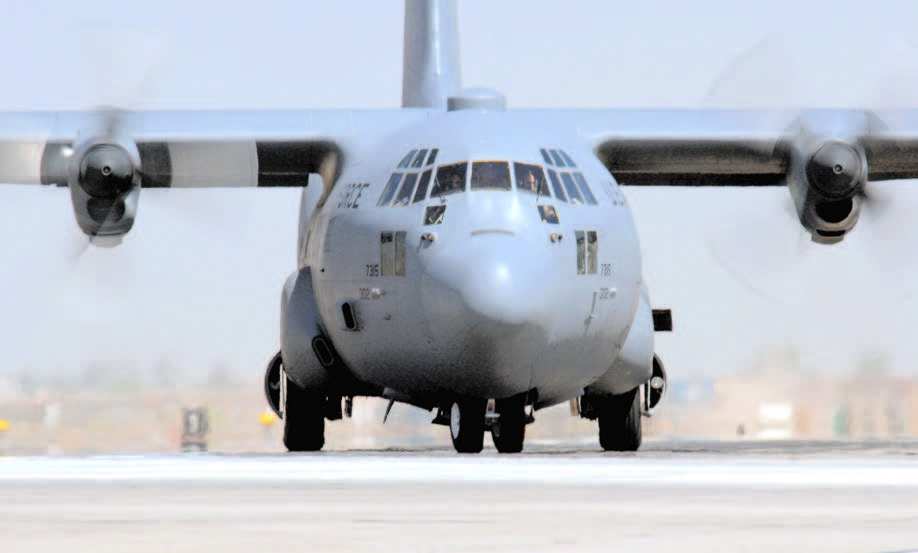
    NEW DELHI (TIP): The defence ministry on September 13 cleared several arms acquisition projects worth almost Rs 15,000 crore for the armed forces, which included six more American C-130J “Super Hercules” aircraft, 236 Russian T-90S main-battle tanks and 4,400 new lightmachine guns (LMGs). The projects were cleared in a meeting of the Defence Acquisitions Council (DAC) — chaired by defence minister A K Antony and included the three Service chiefs and the defence secretary — just four days before US deputy secretary of defence Ashton B Carter arrives here next week. The C-130J deal is among the four major Indian deals worth around $5 billion that the US is all set to clinch within this financial year.

    The other three are for 22 Apache attack helicopters ($1.4 billion), 145 M-777 ultralight howitzers ($885 million) and 15 Chinook heavy-lift helicopters (around $1 billion). The new contract for six more C-130J planes – worth over Rs 4,000 crore in the direct government-togovernment deal under the US foreign military sales (FMS) programme – will now go the Cabinet Committee of Security (CCS) for the final nod by next month. While the first six C-130J aircraft already acquired by IAF are based at Hindon airbase, the six new “Super Hercules” will be housed at Panagarh in West Bengal. Panagarh will be the headquarters for the new mountain strike corps, along with two “independent” infantry brigades and two “independent” armoured brigades (totalling over 80,000 soldiers), which will be raised over the next seven years to plug operational gaps against China. Russia – not too happy with the US bagging Indian defence deals worth over $8 billion in recent years – also had some reason to cheer on Friday with the fresh order for the 236 T-90S tanks. They will be built by the Indian Ordnance Factory Board (OFB), at a cost of around Rs 6,000 crore, under transfer of technology (ToT) from Russia.

    India, in 2001 and 2007, had inked two contracts worth Rs 8,525 crore with Russia to import 657 T-90S tanks. With the OFB subsequently beginning to manufacture these tanks under licensed production, the Army has till now inducted around 780 of the 1,657 T-90S tanks it eventually wants. The LMG project is part of the Army’s endeavour to overhaul the basic weaponry of its infantry soldiers, which range from new-generation assault rifles to closequarter battle (CBQ) carbines, as reported earlier. Infantry battalions will induct the new 7.62mm calibre LMGs, with spare barrels and an effective 1-km firing range, under the new project worth around Rs 530 crore. The project will see the OFB tying up with a foreign vendor after issuing a global tender. The existing 5.56mm LMGs have only a 700-metre range and weigh much heavier at 6.23-kg. The US, of course, is steadily cornering a major chunk of the lucrative Indian defence market. It has already bagged defence contracts worth over $8 billion from India in recent years, including the first six C-130J aircraft for $1 billion, 10 C-17 Globemaster-III strategic-lift aircraft for $4.1 billion and eight P-8I long-range maritime patrol aircraft for $2.1 billion. Another major deal being negotiated is the follow-on order for four more P-8I aircraft for the Navy.

  • S JAISHANKAR NAMED AMBASSADOR TO US

    S JAISHANKAR NAMED AMBASSADOR TO US

    NEW DELHI (TIP): India’s envoy to China Subrahmanyam Jaishankar has been appointed as the next Ambassador to the US and his position in Beijing will be taken by Ashok K Kantha. Both Jaishankar and Kantha are from 1977-batch IFS. Significantly, both appointments come ahead of Prime Minister Manmohan Singh’s visit to these countries. Singh is leaving for the US on September 25 and is expected to visit China next month. Both the diplomats are expected to take up their respective assignment shortly, Ministry of External Affairs said today. Jaishankar will replace Nirupama Rao. Ashok Kantha is currently Secretary (East) in the MEA and has served in Malaysia and Sri Lanka among other postings. The country’s envoy to Beijing since August 2009, Jaishankar’s name was making rounds for the position of Foreign Secretary after Ranjan Mathai. However, the Prime Minister opted for the seniority and appointed Sujatha Singh as the Foreign Secretary.

  • BOB Chairman & MD visiting New York

    BOB Chairman & MD visiting New York

    NEW YORK, NY (TIP): Bank of Baroda Chairman and Managing Director, Mr. S.S. Mundra will be visiting New York from September 16th to 18th. It is the first visit of Mr. Mundra to New York after he took over as Chairman and Managing Director of one of the largest public sector banks of India. Bank of Baroda Chief Executive for Americas, Mr. Dhimant Pradyumna Trivedi informed TheIndian Panorama that during his visit to New York Mr. Mundra would be meeting customers and the Indian American community besides launching internet banking. Mr. Trivedi said that a reception to Mr. Mundra is being hosted by the Indian Consulate on Monday, September 16th where he will be meeting the Consul General Dnyaneshwar Mulay and a cross section of Indian American community.

    He will also address the gathering and, while talk about banking in general, he is likely to speak about the synergy that can be developed through Bank of Baroda. Read below a brief biography of Mr. Mundra. Mr. S. S. Mundra was born on 18th July, 1954. After completing his Masters in Commerce, he joined Bank of Baroda as a Probationary Officer on 21st March, 1977. In his first stint in Bank of Baroda, he rose to the level of General Manager in 2007. During his illustrious career in Bank of Baroda, he held several challenging assignments which included stint as Head of Bank’s Maharashtra & Goa Zone and Global Treasury Operations for over -5- years. During his overseas assignments, he served with Bank of Baroda (Uganda) Ltd. and was also Territorial Head of Bank’s European Operations, headquartered at London during the period 2008 – 2010.

    Mr. Mundra was elevated as Executive Director in Union Bank of India in September, 2010. During his tenure at Union Bank of India, he handled many important portfolios including Treasury, International, Large Corporate and Alternate Channels. On his elevation as Chairman and Managing Director on 21st January, 2013, he joined Bank of Baroda a premier Public Sector Bank (PSB) in India having a branch network of over 4000 branches including Bank’s overseas operations spread over 24 countries with a global business of over INR 8 trillion (USD 131 bn). Bank of Baroda is second largest Public Sector Bank of India only after State Bank of India in terms of Balance Sheet size.

    It has 100 branches/ offices outside India. He is on the Board of many national and international organizations which include EXIM Bank, National Institute of Bank Management (NIBM), Bank of Baroda (Uganda) Ltd., India International Bank Malaysia Bhd, Bank of Baroda (New Zealand) Ltd., BOBCARDS Ltd., India First Life Insurance, Baroda Pioneer Mutual Fund etc. He has remained Director on the Board of The Clearing Corporation of India Ltd. (CCIL), Central Depository Services (India) Ltd. (CDSL), MITCONConsulting and Engineering Services Ltd., BOB Asset Management Company, India Infrastructure Finance Corporation (UK) Ltd. (IIFCL), Star Union Dai-Ichi Life Insurance Company Ltd., National Payments Corporation of India Ltd (NPCI) and Bank of Baroda (Kenya) Ltd. He has also served on many Committees of RBI, IBA, NIBM, CII etc. He has also attended many training programs, seminar/ conferences both in India and abroad, in the area of Banking and Finance. He has widely traveled abroad.

    The countries he visited include UK, Belgium, France, USA, Japan, China, Hong Kong, Singapore, various African countries etc. With the blend of wide overseas and domestic banking exposure at top management level, he has immensely contributed to the improvement of policy framework of the banking industry. As recognition of his contributions in the field of banking, finance, industry and commerce, he has won many Awards and accolades, latest being his inclusion in the list of India’s top 100 CEOs in CD-ET (Corporate Dossier – Economic Times) Survey after a stringent process of selection while Bank of Baroda is also ranked as 20th Best Indian Brand by Brand Equity – Economic Times

  • So-Called Spring; Su-Shi Strife and The South-West Asia

    So-Called Spring; Su-Shi Strife and The South-West Asia

    “The author foresees tremendous tectonic changes in the wake of Arab Spring et al. He says, “There will be following major discernible evolutionary geo-political trends underlying the so-called Arab spring. The despotic regimes headed by dictators, monarchs, military strongmen, presidents-for-life and supreme leaders-for-life would eventually be overthrown by the popular revolt. The middle-east is surely due for a major cartographic make-over in the next few decades. The fault-lines would be sectarian, ethnic and linguistic. The glue of Political Islam supported by embedded Jihadi elements would be torn asunder while facing the sectarian, ethnic and linguistic divide.”

    Arab Spring, Arab Winter, Arab Summer, Arab Renaissance, Arab Awakening, Islamic Awakening and Islamic Rise are just few of the epithets used to describe the complex and multidimensional geopolitical changes in the middle-east region that comprises of West Asia and Northern Africa. Depending upon one’s perspective, each of these adjectives is inadequate to describe the complex geopolitical phenomena that have engulfed the region. It is important to recapitulate that barring three nations, viz. Iran, Turkey an Israel all other countries in this region are Arab. Despite Francis Fukuyama’s puerile musings about the “end of history”, we are now witnessing tectonic changes of historic proportions.

    However, it will be a very slow and bloody change that would be unstoppable despite numerous western interventions. The genie of historic change had been unleashed much earlier in 2003 when the Baathist regime was toppled in Iraq ostensibly to chase the now non-existent “weapons of mass destruction”. The ten year anniversary of the US invasion of Iraq and “the ensuing mother of all battles” does not witness peace and tranquility in that nation, divided de facto, on sectarian and ethnic fault-lines. The Iraqi Kurdistan, nominally under the central government of Iraq is on a rapid trajectory to peace, prosperity and development while Baghdad continues to witness sectarian violence and bomb attacks. The Prime Minister Nouri al- Maliki is grabbing executive powers and has inadvertently encouraged sectarian divide and Shia identity politics. Besides the Iraqi Kurds, the real beneficiary of the US invasion worth $ 870 billion has been the Islamic Republic of Iran.

    If one chooses to be historically correct, the Islamic revolution of 1979 in Iran is the real harbinger of the so-called Arab spring. A US supported dictator was overthrown by popular revolt in Iran. The popular revolution was usurped and captured by Islamist Ayatollah Khomeini leading to a lot of blood-shed and massacre of democratic and liberal sections of the Iranian society in a targeted manner. A mini-version of this so-called (“Persian”) spring was again manifest in Iran, a non-Arab Shia theocracy in 2009 under the name of “green revolution”. However, the US administration led by Barak Hussain Obama “rightly” failed to capitalize on the situation leading to brutal suppression of young Iranians by the theocratic regime and its revolutionary guards. For the first time the US and its cronies missed an opportunity for externally driven regime change in Iran. Starting with Tunisia, the Arab Spring phenomena later on engulfed Egypt and Yemen. In Yemen, an extended “managed” political change was indeed brought in grudgingly under the patronage of Western imperialistic powers. Both Tunisia and Egypt saw subsequent takeover by Islamists in democratic elections. After over-throwing of Ben-Ali, the fundamentalist An-Nahda Islamists were the victors of the Tunisian democratic elections in October 2011.

    The Jihadists and the Salafists are now working in tandem with the conservative An-Nahda Islamists to infiltrate the previously secular Tunisian state from within. The story in Egypt is not very much different where the popular revolution against Hosni Mubarak and the Armed Forces has already been annexed by the Muslim Brotherhood (MB) and Mohammad Morsey. The Egyptian judiciary, especially the Supreme Court has resisted the Muslim Brotherhood and its attempts to foist an Islamist constitution. Furthermore, the Egyptian Supreme court has postponed yet again the parliamentary elections denying the MB an opportunity to control the entire state. Parts of the civil police force have already stopped obeying orders of the Islamist government to fight against fellow citizens forcing the MB to spare its cadre for law enforcement duties. Using the fig-leaf of so-called Arab Spring, the opportunistic Western powers militarily intervened in Libya, another socialist Baathist party ruled Arab dictatorship and brought out a regime change they had craved for long.

    The subsequent Islamist take-over of Libya, the barbaric treatment (victor’s justice) given to the quixotic dictator Col Mommar Gadaffi and killings of the US ambassador and other personnel by Al Qaeda in Ben Ghazi is illustrative of the nature of the beast. Interestingly, the Shah of Iran, Saddam Hussain and Col Mommar Gadaffi, all three had indeed served with great distinction as the “useful idiots” of the Western imperialism. The ideological hollowness of the West and the cheer-leaders of the socalled Arab Spring was noted again in Bahrain where popular and public demands for political change were exterminated brutally by foreign military intervention undertaken by the Kingdom of Saudi Arabia (KSA) and Pakistan in order to prevent take-over of the Sunni ruled nation by a Shia majority population. Syrian example shows the true colors of the cheer-leaders of the so-called Arab spring.

    Another socialist and secular Arab country ruled by the Baath party is being systematically destabilized from outsideintervention for the last two years and sacrificed at the altar of Sunni-Salafi- Jihadi-Wahabi (SSJW) geopolitical interests. Foreign Sunni fighters are leading the war against the Assad regime, fully supported by the regional Sunni monarchies. What we see now is essentially a Sunni-Shia (SU-SHI) sectarian power struggle in the Islamic nations of the West Asian region with Western imperialistic intervention in a systematic manner to defeat the secular and socialist Baath party regimes and of course to safeguard the interests of the Sunni-Salafi-Jihadi-Wahabi (SSJW) alliance. This bloody sectarian conflict will not be resolved in next few months or years.

    As the geopolitical events unfold, we will witness a quasi-permanent fratricidal intra-Islamic sectarian war for decades in the west Asian region culminating in major cartographic changes. There will be multiple incarnations of Arab & Islamist “Tianamen Squares” during which the despotic rulers will brutally suppress the revolting citizens. The US strategic retreat from the middle- east and pivot to Asia will finally allow the history to emerge in the middle-east uncontaminated by the hegemonic order imposed by the US hyper-power. Right now all the Arab monarchies have tried to buy out the demands for freedom and socio-political change by bribing their respective populations with yet more goodies financed by petro-dollars. This monetary intervention would at best delay the clamor for freedom and political change only by a few years in the oil-rich nations. There will be Islamist take-over of one-kind or other in all these countries. But political Islam would not be able to provide stability and strategic security to these nations.

    Just like in the communist countries as they vied with one another for title of the adherents of the true nature of communism practiced in the former communist countries, one would witness competitive claims of “true or genuine Islamism” by various ruling dispensations in this region. Fundamentalist competitive “political Islam” in alliance with Jihadis would hijack liberal and democratic popular uprisings. Indeed, there will be immense loss of human life and Jihadi terrorism will rule the roost. Transfer of power and change of regimes will be an inherently bloody process. There will be serious human rights violations and genocide by all the sides in the name of “true Islam”. Western apologists and backers for these despotic countries under severe financial crunch would no longer be interested in maintaining the geo-political status quo ante. geopolitical tectonic changes are likely to result in emergence of new nation states. Syria might be balkanized into multiple small entities or state-lets analogous to the former Republic of Yugoslavia.

    One would not be surprised if an Independent Kurdistan finally emerges as the 4th non- Arab country in the middle-east. Iraq, Iran, Syria and Turkey may lose their respective Kurdish populations to a newly independent and democratic Kurdistan. Since the fall of the Ottoman empire, the Western imperialistic powers while arbitrarily carving out state-lets to safeguard their own economic and hydrocarbon interests, chose to sacrifice the Kurdish national interests and denied them right to a state. West Asia has app 35 million Kurdish (non-Arab) people with app half (18 million) in Turkey, 8 million in Iran, 7 million in Iraq and 2 million in Syria. Unraveling of Syria will serve as a catalyst for Turkish Kurds to revolt against the increasingly Islamist Sunni dispensation of Turkish Prime Minister Recep Tayyip Erdogan in Ankara that has systematically deviated from the secular ideology of Kemal Ata-Turk, the founding father of modern Turkey.

    Both the PKK (Kurdistan Workers Party) and its imprisoned leader Abdullah Ocalan have successfully orchestrated staggered, coordinated hunger strikes for more than two months by thousands of Kurdish prisoners in Turkish jails. Turkey is going through a schizophrenic struggle between its European aspirations and Islamic moorings. However, political Islam will not be able to hold the Turks and the Kurds together. With increasing Sunniazation of the Turkish polity, this large ethnic and linguistic Kurdish minority will eventually assert itself in this chaotic geopolitical transition. Islamic glue will not be able to hold together Turkish and Kurdish ethnic identities and a volcanic eruption of nationalist fervor will unravel Turkey as we know it. If Turkish and Syrian Kurds turn more nationalistic and declare an independent Kurdistan, Iraqi and Iranian Kurds will be forced to follow suit. As a result of this, a truncated Iraq would eventually come out as a Shia-Arab theocracy with a Sunni minority supported by the neighboring Shia-Persian theocracy, Iran. Iran would not be insulated from demands of political freedom and change if there is no external intervention.

    Young, educated and emancipated Iranians will eventually overthrow the conservative Ayatollah-cracy leading to a more democratic and liberal regime change. A non-theocratic and more democratic and liberal Iran will re-emerge as a major regional power with friendly Shia majority governments in Iraq, Azerbaijan, Bahrain and elsewhere including in Lebanon. Iran will be a longterm winner in the despite losing some territory to Kurdistan and Baluchistan. A loose federation of Shia states may become a power grouping in the region. In such a geopolitical scenario, the territorial integrity and sovereignty of the Kingdom of Saudi Arabia (KSA) would no longer be safeguarded by a strategically retreating USA. By 2017, the USA will surpass the Saudis as the largest petroleum producing nation that will become a net exporter of hydro-carbons in 2020. Future US administrations will be forced by domestic isolationists to give up the stability mantra leaving the middle-east region to its own devices.

    The ultrageriatric conservative clan of Saudi princelings with all their extremities in the grave will not be able to hold the country together especially in the face of increasingly restive and un-employed young men. Increasing modernization and “secularization” of this tribal society will be resisted violently by the ruling political establishment. There have already been small demonstrations by Sunni Muslims calling for the release of people held on security charges. Saudi women will demand equal rights and driving privileges. The Saudi women would like to emulate their more emancipated Iranian counter-parts in public discourse. If Al Qaeda or its various mutants take-over the Saudi Arabia, the House of Saud will be brutally slaughtered in the name of “liberating Islam”. The internal strife in Saudi Arabia will manifest openly in an explosive manner when the oilfields dry up in few decades. The only unrest to hit Saudi Arabia during the so-called Arab Spring wave of popular uprisings was among its Shi’ite Muslim minority. The Shia populations in the Eastern region of Saudi Arabia will eventually revolt against a Sunni-Salafi- Jihadi-Wahabi (SSJW) complex leading to emergence of another Shia state-let.

    Bahraini Shia population is likely to overthrow the ruling Sunni dynasty, leading to emergence of another Shia nation. A Palestinian state-let may eventually be established as a joint protectorate of Egypt and Jordan. Egypt and Turkey will have much diminished geo-political influence. Egypt will have to deal with the issue of human rights of an increasingly vocal Coptic Christian minority. Some countries might eventually disappear by 2030. The most putative candidates are Lebanon, Kuwait and the Palestine. The impact of these geo-political changes will without doubt creep eastwards towards the Af-Pak region of the South-Asia leading to cartographic changes in national boundaries. Pakistanoccupied Baluch principalities, exploited by the Punjabi-dominated Pakistani army will successfully revolt for an independent Baluchistan as the Chinese footprint increases in the Gwadar port. After taking over the Gwadar port, China will seriously attempt to exploit the mineral and hydrocarbon wealth of Pakistan-occupied Baluch areas, thereby, increasing the sense of alienation and marginalization amongst the Baluch tribes.

    The separatist Baluchistan Liberation Army will target Chinese companies and personnel in the ensuing war of independence. The Sistan- Baluchistan province of Iran will take its own time joining an Independent Baluchistan. The consequent undoing of the artificial geographic boundaries arbitrarily determined by the British colonialists will lead to emergence of newer states carved out of the Af-Pak region. Another fall-out of these changes would be emergence of an independent and greater Pakhtoonistan comprising of the Khyber-Pakhtoonwah province of Pakistan and the Pakhtoon areas of the Afghanistan across the now defunct Durand line. The result would a truncated but more stable Afghanistan controlled by the northern alliance comprising of the Tajeks, Hazaras and Uzbeks. A truncated Pakistan will continue to remain as a rent-seeking failed state. It may implode eventually, leading to its fragmentation followed by multi-lateral external intervention under supervision of the UN and the IAEA to secure the nuclear weapons and the fissile materials.

    Further to north-east, a restive Uighurs’ population will force the emergence of Eastern Turkistan while throwing away the 300 years’ old occupation by the Han Chinese and subsequent annexation by the Communist China led by Comrade Mao. Will this tectonic change engulf the central Asian states or the “stans” is not clear at this time as the geopolitical dynamics are entirely different in the Central Asia in comparison to the South and West Asia. There will be following major discernible evolutionary geo-political trends underlying the so-called Arab spring. The despotic regimes headed by dictators, monarchs, military strongmen, presidents-for-life and supreme leaders-for-life would eventually be overthrown by the popular revolt. The middle-east is surely due for a major cartographic make-over in the next few decades. The fault-lines would be sectarian, ethnic and linguistic. The glue of Political Islam supported by embedded Jihadi elements would be torn asunder while facing the sectarian, ethnic and linguistic divide.

    Whether some kind of democracy will eventually prevail in this region in near future is doubtful, at best. Political Islam with its Jihadi mutant will be on the ascendance temporarily as an essential bloody interim phase in the long-term development of liberal democracy in the West Asia, North Africa and Af-Pak regions of South Asia. Increasing modernization, secularization and intellectual emancipation of the common masses will eventually defeat the Islamist counterreaction in each of these countries. Iran which is way ahead in the trajectory of civilizational change and democratic evolution will emerge as the most influential regional player while Egypt, Turkey and the KSA will eclipse relatively.

  • Uproar in parliament over Chinese incursion reports

    Uproar in parliament over Chinese incursion reports

    NEW DELHI (TIP): Both houses of parliament on September 5 saw noisy protests by members demanding a statement from Defence Minister A.K. Antony over media reports claiming that Chinese troops have intruded into Indian territory. As soon as the Lok Sabha met at 11 a.m., Bharatiya Janata Party (BJP) and Samajwadi Party (SP) members raised the issue, saying Indian territory has been occupied by China. The protesting members did not relent even after repeated requests by the chair to allow scheduled business to commence and consequently the house was adjourned briefly. After the house reconvened, BJP leader Yashwant Sinha said he had raised the matter Thursday but the government had yet not responded. SP chief Mulayam Singh Yadav attacked the government and said it has failed to take any action to prevent Chinese troops from entering Indian territory.

    “If the government can’t protect our interest, they have no right to stay in power,” said Yadav. Parliamentary Affairs Minister Kamal Nath responded: “It is no doubt a serious matter … neither the government is weak nor useless. The government has nothing to hide on the issue.” He said the defence minister will make a statement in the Lok Sabha at 1 p.m.and Rajya Sabha at 3 p.m. According to media reports, an official National Security Advisory Board (NSAB) probe report submitted to the Prime Minister’s Office had said that Indian troops are not being allowed to patrol the Line of Actual Control (LAC). The committee in its report allegedly concluded that 640 sq km of Indian territory has been occupied by China. However, NSAB had denied media reports. In Rajya Sabha, BJP leader M. Venkaiah Naidu called it a serious matter and insisted that the defence minister must respond

  • Pak military official in Beijing for advice on top appointments?

    Pak military official in Beijing for advice on top appointments?

    BEIJING (TIP): General Khalid Shameem Wynne, chairman of Pakistan’s Joint Chiefs of Staff Committee (JCSC), met Chinese vicepremier Zhang Gaoli in Beijing on Aug 29. The meeting came just days before Pakistan is expected to make two important appointments in its armed forces: the next army chief and JCSC chairman. Wynne, one of the top two military officers of Pakistan, is believed to have consulted Beijing on the new appointments and assured it of Pakistan’s continued friendship.

    China is particularly worried about the upcoming retirement of Ashraf Parvez Kayani, the Pakistan Army chief, who is seen as having ensured that Taliban militants do not spill over the border into its restive Xinjiang province. Wynne is due to retire on October 6 and Kayani on November 28. Pakistani prime minister Nawaz Sharif has said he will not give an extension to Kayani and will choose the next army chief on the basis of merit. The Wynne-Zhang meeting also came days before Chinese and Pakistani air forces begin a joint drill (from September 2 to 22) in the Xinjiang Uygur Autonomous Region. The drill, codenamed ‘Shaheen-2’, comes after the first joint drill in Pakistan in March 2011. “Maintaining and deepening strategic cooperation between China and Pakistan is in the fundamental interests of the two countries and is also the common aspiration of the two peoples,” a Chinese government spokesman said