Tag: China

  • SHARAD, MULAYAM SEEK LAW TO CURB RUNAWAY

    SHARAD, MULAYAM SEEK LAW TO CURB RUNAWAY

    NEW DELHI (TIP): Backward satraps Mulayam Singh Yadav and Sharad Yadav made a strong pitch for a law to control population, turning the infamous Emergency on its head when “socialists” were at the forefront of opposing the coercive measures authored by Sanjay Gandhi. JD(U) president Sharad Yadav told Lok Sabha that no matter how many laws are made, they would be nonstarter till a strong law is brought to rein in population. He even demanded a special session of Parliament to discuss the issue.

    The Bihar MP found strong support from Samajwadi Party chief Mulayam who said there was a law on population but was not being respected. “You say that jobs should not be given to people who have more than two children. Everything will fall into place on its own,” Mulayam said. The issue came up for a brief but animated discussion in Lok Sabha during the debate on land acquisition bill. Mulayam warned that continued acquisition of agricultural land could lead to food scarcity in future, adding that farm land was decreasing by 3% annually while population was increasing. No sooner did he make the remark that Sharad Yadav interjected to say “a law should be brought to control population”. The advocacy to curb the growing numbers, even through a law, surprised observers who said the political journey of the backward satraps had come a full circle.The socialist bloc that the Yadav duo hails from had opposed coercive population control pushed by Sanjay Gandhi during the Emergency. The forced sterilization on men to stop births were condemned as totalitarian approach modeled on the China formula. Later, even supporters of the move in Congress had acknowledged it was a mistake

  • INDIA EYES LOCAL CURRENCY SWAPS

    INDIA EYES LOCAL CURRENCY SWAPS

    NEW DELHI (TIP): The government is planning to go for local-currency-swap deals with trading partners to lower its dependence on dollars to foot the soaring import bills. It is looking at establishing multiple arrangements with some of the country’s key trading partners — China being the primary one. Commerce Secretary S R Rao said: “We are exploring the option of trading in local currencies with select partners, somewhat like we are currently doing with Iran. It’s different from central banks’ currency swap agreements that India has with Japan and Bhutan.” In other words, the government is exploring the option of using the rupee to trade with some of its partners — an arrangement similar to that with Iran for importing crude oil. Unlike in the case of dollar-swap deals, a country enters into local-currency-swap arrangements when it intends to lower its dollar dependence.

    For this, India’s focus is likely to be on BRICS countries, which have a combined forex reserve of about $4.4 trillion. The grouping had signed a swap facility last year, too. The government was now looking to have such an arrangement with China, another senior commerce department official said, asking not to be named. China has been scouting for such swap deals with some its key trade partners to promote its own currency, the yuan or renminbi, to free up its financial markets. The government is not ruling out the option of having such deals with other non-FTA countries (the countries with which India does not have a free trade agreement in place). But the real challenge would be identifying the exportable items, as India did not enjoy an edge in manufactured exports. Besides, the country had a trade deficit of around $41 billion with China, which did not gave it the comparative advantage for entering into a swap agreement, an EXIM Bank official said. At present, within BRICS, Russia and Brazil swap its currencies with China, which exports around $140 billion worth of goods and services to its trading partners. Commerce Minister Anand Sharma announced setting up an internal task force under the commerce department to “examine, study and explore” the possibility of a currency-swap arrangement with its trading partners to help stabilise the rupee. It will have representatives from the finance ministry, EXIM Bank and RBI.

  • Indians now the third largest immigrant group in the US

    Indians now the third largest immigrant group in the US

    NEW YORK (TIP): Mexicans and Chinese alone are ahead of India when it comes to considering the presence of immigrant groups in the US. Indians have emerged as the third largest immigrant group in the United States with their numbers touching 1.9 million as of 2011. The Indian-born population in America has grown by over 150 times in size since 1960, says a new study from the Washington-based Migration Policy Institute. Back in 1960, America had just about 12,000 Indianborn immigrants, accounting for less than 0.5 per cent of the total immigrant population of 9.7 million immigrants at that time.

    Now, the US immigrant population stands at 40.4 million, with Indians representing almost 5 per cent of the total. “As a group, immigrants from India are better educated, more likely to have strong English language skills and arrive on employment-based visas, and are less likely to live below the federal poverty line than the overall foreign-born population,” says the study. In 2011, India was the second most common country of origin for international students at US institutions of higher learning, after China. Although the Indian immigrants are scattered all over America, more than one-quarter of them live in just three metropolitan areas: Greater New York, Chicago and San Jose in California’s Silicon Valley. Nearly one-third of the community resides in just two states: California and New Jersey.

    California alone accounts for 21 per cent of the Indian population, followed by New Jersey (11 per cent), Texas (9 per cent); New York (8 per cent), and Illinois (7 per cent). According to the figures cited by the study, more than 29 per cent of employed Indian-born men worked in information technology occupations, while 19 per cent of employed Indian-born women worked in management, business and finance. In 2012, more than 66,000 Indian-born immigrants were granted US legal permanent residency or green cards, the study says, noting that compared to other immigrant groups, Indians have made it largely through the employment-based channel. About 43,000 Indian immigrants became naturalized US citizens in 2012. The share of Indian immigrants who have naturalized (47 per cent) is said to be slightly greater than that of the overall foreign-born population (45 per cent).

  • US-India ties hit a Plateau

    US-India ties hit a Plateau

    It has now been confirmed that before going to New York to participate in the UN General Assembly deliberations in New York, Prime Minister Manmohan Singh will be visiting Washington in September for his second bilateral engagement with US President Barack Obama. Though New Delhi was very keen on the visit and the US President had extended an invitation to Manmohan Singh earlier this year, it’s not entirely clear what a lame-duck Prime Minister is likely to achieve during this visit.

    That US-India ties have hit a plateau has been evident from the lackluster engagements between the two sides in recent months. It was the turn of US Vice President Joseph – a month after Secretary of State John Kerry’s visit — to India to reassure New Delhi how Washington remains keen on a robust partnership with India. Biden’s four-day visit to India last month, first for a US Vice President in three decades, was aimed at laying the groundwork for the Indian Prime Minister’s visit to the US in September. Though it was clear from the very beginning that Biden’s trip will not result in any ‘deliverables’, it also remains a mystery as to what an Indian Prime Minister at the fag-end of his term and with hardly any political capital left will be able to do to galvanize this very important relationship with a perfunctory visit to the US.

    These are difficult times for the USIndia bilateral relationship which has been flagging for quite some time now and there is little likelihood of it gaining momentum anytime soon. The growing differences between the two today are not limited to one or two areas but are spread across most areas of bilateral concern. These include market access issues, the problems in implementing the US-India civil nuclear accord, the US immigration changes, changing US posture towards Afghanistan, defense cooperation and trade. Biden’s visit was specifically focused on trying to give a push to economic ties, enhancing cooperation on defense issues, pushing India for a greater role in the Asia-Pacific and addressing climate change. That the US is clearly concerned about Indian economic slowdown was reflected in Biden’s comments.

    He exhorted New Delhi to try to take bilateral trade with the US to $500 billion by removing trade barriers and inconsistencies in the tax regime. He recommended more measures like recent relaxation in the FDI rules by underlining “caps in FDI, inconsistent tax system, barriers to market access, civil nuclear cooperation, bilateral investment treaty and policies protecting investment.” Investor confidence in the Indian economy, Asia’s third largest, is at an all-time low with growth slowing down to its lowest level in a decade. Foreign direct investment slid about 21 per cent to $36.9 billion last fiscal year compared with 2011-12. The US is keen to see India remove investment caps in sectors like finance, retail and insurance. The US corporate sector has been up in arms in recent months about India’s trade policies, complaining that American firms are being discriminated against and the US intellectual property rights are being undermined by India.

    Sporadic outbursts of reform measures from New Delhi have not been enough to restore investor confidence in India even as Indian policymakers are now busy trying to secure their votes for the next elections. Policy-making in India remains paralyzed and haphazard with Washington getting increasingly frustrated with the Indian government’s lackadaisical public policy. For his part, Biden went out of his way to assuage the concerns of the Indian corporate sector by suggesting that Washington plans to increase the number of temporary visas and green cards to highly skilled workers from India. The concerns, however, continue to persist because the US Senate has already cleared the much talked-about immigration Bill that will significantly restrict Indian IT companies in the US. If the House of Representatives ends up endorsing it, then the Obama Administration will have to do some heavy lifting to mollify India. Meanwhile, the civil nuclear deal is floundering as the US companies remain wary of Indian laws on compensation claims in the event of a nuclear accident. India’s nuclear liability law is aimed at ensuring that foreign companies operating in Indian nuclear sector assume nearly unlimited liability for accidents, a condition that all but precludes the participation of US firms. After all the political and diplomatic investment that Washington made in making the nuclear deal happen, there is a pervading sense in the US that the returns have not been at all impressive.

    On climate change where the Obama Administration is focusing significantly, Biden pushed India to work with the US to reduce the flow of hydroflurocarbons and provide opportunities to the scientific establishment to work on green technology options. The US is already working with China on a joint effort to curb greenhouse gases. Biden also tried to ease Indian concerns on Afghanistan by underlining that the Taliban would have to give up ties with Al Qaeda and accept the Afghan constitution as part of the reconciliation process. New Delhi remains concerned about the impact of US withdrawal from Afghanistan for Indian security. The recent bombing outside the Indian consulate in Jalalabad merely highlights the challenges India faces in Afghanistan. According to Biden, “there are no obvious places where Indian interests and American interests diverge worldwide, regionally or domestically.” That may well be true but in the absence of a big idea to push the relationship forward strategically, the tactical issues where there are significant differences between Washington and New Delhi continue to shape the trajectory of the US-India bilateral ties. The relationship stands at a serious inflection point.

    The two sides need to start thinking seriously about bringing it back on track. New Delhi, in particular, needs to acknowledge the importance of what Biden suggested when he said that “there is no contradiction between strategic autonomy and strategic partnership.” In the name of ‘strategic autonomy’ New Delhi has become quite adept at scuttling its own rise. At this moment of significant geostrategic flux in the Indo-Pacific, India and the US need each other like no other time in the past. Biden’s visit has underlined India’s importance in US strategic calculus. It is now for India to decide what role it sees for the US in its foreign policy matrix and as a corollary what role it sees for itself in the rapidly changing global order.

  • India, the Land Columbus Set out to Find

    India, the Land Columbus Set out to Find

    What is it about India, that its tryst with destiny is still on-going? Why does India keep moving forward despite the doers and the naysayers, the empire builders and the colonized? The answer, I submit, lies in the glorious amalgam of history and hope, glory and defeat, education and renunciation, family and loneliness, accomplishment and worthlessness, ego and doubt, government and the governed, “East” and “West,” nuclear energy and organic linen; in short, India is a living contradiction – old and young, religious and secular, Eastern and Western, proud and humble, poor and rich, stranger and friend. On India’s Independence Day, one cannot but thank the British empire for all of its managerial excellence and vision, for it is they who did what no maharaja was able to do short of Ashoka the Great: create a Greater India, a unified India.


    img145

    That there was a Great Partition, with untold stories of misery and heroism, courage and slaughter, so that a few “Royals,” domestic and foreign, could uproot so much humanity for mapmakers’ joy rather than compel sovereign governments to give equal protection to the governed, remains an irksome lesson for would-be nation-makers. Arab Spring’s lessons are both forward-looking, as they are rear-view looking, and given the world being conquered, as a whole, by the unstoppable digital binary code, the great denominator, the world has indeed gone “flat,” and time “instantaneous”: lost are the curves of the globe and the hands of time on the alter of digital transparency – more controlled by multinational corporations than by analogue sovereign governments desperately seeking to harness the binary code to defend against “enemies, foreign and domestic.” What is to become of India, one may ask. Beware, I say to all who thought that China would counter-balance the Soviets.

    Like China’s core greatness lay sub-rosa unseen by the likes of Henry Kissinger, so, I fear is true of India, albeit, mercifully, only in part. In part, I say, because India’s investment in democracy’s warts is full-throttle and every citizen, poor and rich alike, sees themselves as the master of the public trust. Just ask The New York Times’ columnist Thomas Friedman as to why he is so in love with India, and why India, a Hindu-majority nation, effortlessly and confidently rests its position in the comity of nations in the gentle, strong and erudite hands of Salman Khurshid.


    img147

    It is as if Ashoka the Great, Akbar the Great, Guru Nanak, and Mother Teresa, not just Gandhi, Jinnah and Nehru, wrought this continuing tryst with destiny. For us in the United States, where each of the 50 states are a laboratory of policy for the nation to embrace or reject, India, I submit, given its diverse religious content and in the main peaceful co-existence, economic growth that defies the weight of regulations, may well be a laboratory to the world – for there, East and West, greed and charity, ambition and detachment live in substantial harmony. Since Secretary John Kerry is working overtime to seize the moment decreed by destiny, as he races to the Middle East to jumpstart the cob-webbed peace process between Israel and Palestine, no matter the profit of the status quoers, and harder yet, to re-order the Afgan-Subcontinent equation, each of the affected nations and citizenry, in the exercise of their enlightened selfinterest, owe a good faith response – for destiny awaits, in an infinite variety of shades and colors, the outstretched-hand’s state of loneliness or girth, given the many amalgamated hands reaching for the same sweet spot of history. Moreover, the dynamic of Israel’s meddlesome Thomas Dewey-like preference in last year’s presidential elections when Barack Obama won the “imperial term” in a resounding Harry Truman-like fashion, presents the Middle East a better shot than ever before.

    However, multi-lateral frustration infecting the Afgan- Subcontinent recalibrated process requires a critical mass of trilateral leadership, which ignores the interlopers’ inflammatory excesses, so as to bring the blessings of liberty and prosperity to their populace, unhappily aware of their common ancestry and uncommon present. For them I recall the example of the European Union’s birth, when jealous pride of many a nation, that claimed the world as its own, was overcome – surely those in the sub-continent can bequeath to their childrens’ children a gentle neighborhood where all are free to worship as they see fit and prosper per individual effort, as they have the benefit of cross-pride “across the border.” It may well be that the United Nations, created with the ink of World War II victory and a subsequent switcheroo a la ROC with PRC, needs the reforms that many have pushed for, including, Prime Minister Manmohan Singh, and his then-Permanent Representative Hardeep Singh Puri, after winning an unprecedented near-unanimous electoral victory to a rotational seat on the Security Council.

    It may well be that the “bubbling” South China Sea needs to bubble less, even as it starts the Kabuki dance of a future theater of avoid-able war and remilitarization. India’s attention, then, must be Eastward, Upward, and Westward. As an American, I can only hope that the land Columbus set out to find, India, and the nation he caused to be born, the United States, find in each other a common soul, aided by the rule of law and abetted by a democratic republic, such that Jefferson’s Declaration of Independence, “When in the Course of human events, it becomes necessary for one people to dissolve the political bands which have connected them with another, and to assume among the powers of the earth, the separate and equal station to which the Laws of Nature and of Nature’s God entitle them, a decent respect to the opinions of mankind requires that they should declare the causes which impel them to the separation. We hold these truths to be self-evident, that all men are created equal, that they are endowed by their Creator with certain unalienable Rights, that among these are Life, Liberty and the pursuit of Happiness.–

    That to secure these rights, Governments are instituted among Men, deriving their just powers from the consent of the governed, — That whenever any Form of Government becomes destructive of these ends, it is the Right of the People to alter or to abolish it, and to institute new Government, laying its foundation on such principles and organizing its powers in such form, as to them shall seem most likely to effect their Safety and Happiness. …” and Jawaharlal Nehru’s “Tryst with Destiny” speech loudly resonates to this day: “Long years ago we made a tryst with destiny, and now the time comes when we shall redeem our pledge, not wholly or in full measure, but very substantially. At the stroke of the midnight hour, when the world sleeps, India will awake to life and freedom. A moment comes, which comes but rarely in history, when we step out from the old to the new, when an age ends, and when the soul of a nation, long suppressed, finds utterance. It is fitting that at this solemn moment we take the pledge of dedication to the service of India and her people and to the still larger cause of humanity. At the dawn of history India started on her unending quest, and trackless centuries are filled with her striving and the grandeur of her success and her failures.

    Through good and ill fortune alike she has never lost sight of that quest or forgotten the ideals which gave her strength. We end today a period of ill fortune and India discovers herself again. The achievement we celebrate today is but a step, an opening of opportunity, to the greater triumphs and achievements that await us. Are we brave enough and wise enough to grasp this opportunity and accept the challenge of the future?” The world is better that Columbus lived, dreamed and strove. For we are here, dear Cristoforo Columbo, to prove you were never map-lost.

  • INDIA, CHINA TO SIGN COOPERATION PACT IN ROAD SECTOR

    INDIA, CHINA TO SIGN COOPERATION PACT IN ROAD SECTOR

    NEW DELHI (TIP): India and China are set to sign an agreement for cooperation in the road and transport sector when Prime Minister Manmohan Singh visits Beijing in October. One of the areas would be cooperation in sharing of information on transport infrastructure. Government sources said the transport ministries of both sides have approved the details of the proposed agreement.

    Sources said the identified areas of cooperation include sharing best practices in road and bridge building technologies, policies, intelligent traffic system besides road-related issues. China has taken huge strides in building world class highways, and has built over 60,000 km of expressways. Plans are afoot to build around 18,000 km of expressways in India. China has also made a mark in speedy implementation of infrastructure projects, particularly road and rail. “Once we have technology sharing, it will help us push the pace of construction. They have also improved their record in reducing road deaths in the past sixseven years.

    Cooperation will open a window of opportunity for both the countries,” an official said. Around half-a-dozen road projects are being built with participation of Chinese companies. Sources said all these projects were bagged by private entities in which Chinese firms had a share. Sources said no project has been identified that can be taken up under this cooperation. “This is just a beginning. As we progress, projects will be identified,” the official said. The other major area of cooperation will in the electronic mode of collecting toll (ETC).

    China is way ahead of India in this sector. India also plans to bring all toll plazas on national highways under ETC so that people can pass through all plazas using a single smart card. India and China will also cooperate in the field of intelligent traffic system, vehicle specifications and their certification. While India is likely to benefit from Chinese sharing of information and knowledge, China will learn from India’s success in implementing public-private-partnership projects.

    Last year, former highways minister C P Joshi had reached out to Chinese infrastructure companies to invest in the road sector. He had said around 40 road construction projects were being undertaken by companies from China, Russia, the UK, Dubai, Singapore, Italy, South Korea, Malaysia, Spain and Thailand.

  • PRIVATE EQUITY FLOWS INTO WATER SECTOR

    PRIVATE EQUITY FLOWS INTO WATER SECTOR

    MUMBAI (TIP): Private equity funds are eyeing investments in the country’s water sector. Singaporebased CLSA Capital Partners invested $9.2 million (Rs 55 crore) in Gurgaonbased Luminous Water Technologies in end-July, through its two funds. Last year, the alternative asset management firm had invested $15 million in Delhi-based Earth Water Group,

    which is into water and wastewater treatment projects. Similarly, Capvent AG, a Switzerland-based private equity (PE) fund, picked up 51 per cent stake for Rs 12 crore in Morf India Ltd, a Chennai-based water engineering company. Earlier this month, Organica Water, which is into treatment and recycling of wastewater, completed a Series B round of financing.

    Led by the International Finance Corporation and WLR China Energy Infrastructure Fund, existing investors RNK Capital and Gamma Capital Partners also participated in the funding. The Hungarian firm has offices in New Delhi, and has signed contracts with several Indian water companies for design and equipment supply of water treatment plants. Currently pegged at Rs 3,500 crore, analysts estimate by 2015, private equity investment in the water sector is set to touch Rs 7,500 crore.

    A report by TechSci Research has noted that India’s water purifiers market is expected to grow at a compounded annual growth rate of 24 per cent between 2013-18. Approximately 70 per cent of the country’s water purifier market is dominated by organised players such as Eureka Forbes, Hindustan Unilever, Tata Chemicals and Kent. With the level of water contamination considerably higher in Rajasthan, Andhra Pradesh, and Odisha, the report said the demand for water purifiers was bound to increase there. Kent, the largest water purifier manufacturer in the Reverse Osmosis (RO) segment, is not looking at raising funds through the PE route, for now. However, Managing Director Mahesh Gupta said that of late, there has been a lot of activity in the water space, with many new players entering the segment.

    Hot property

    “We have been approached by several players (for a stake), but we are not looking at it right now. But I am not totally against the idea too,” Gupta told Business Line, adding that some 30-40 companies in Ahmedabad and Delhi dealing in water, were indeed looking for funds.

    Gupta said PEs would not provide any technical expertise to these companies, but help them expand faster. An IDFC official told Business Line that foreign PE consider India’s water sector as “hot property” and many Indian water and wastewater companies have raised funds to fuel their expansion activities.

  • ADVANI Wants India To Unlock Unlimited Potential

    ADVANI Wants India To Unlock Unlimited Potential

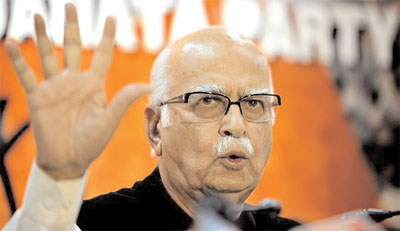
    NEW DELHI (TIP): On a day when Gujarat chief minister Narendra Modi took on Prime Minister Manmohan Singh in his Independence Day speech, senior BJP leader L K Advani struck an optimistic note, saying “India has unlimited potential for the future”. In his address after hoisting the national flag at his residence, Advani said, “This past decade, which, as the prime minister said today, will get over in 2014.

    He has enumerated the achievements and the shortcomings of this decade. We should now be concerned about making the decade starting from 2014 an unprecedented one in India’s history. We should give it the best performance we can.” Striking a positive note, the BJP veteran said no one should be critical of each other on this occasion, rather each one should try to put in their best to ensure that India’s potential to shine in the 21st century is exploited.

    Since Advani was speaking moments after Modi’s speech in Gujarat, there was speculation that he was being critical of the Gujarat CM. However, the BJP veteran is learnt to have been unaware of the contents of Modi’s speech. Since the function at Advani’s residence was soon after the Red Fort event, which he attended, he was not aware of what Modi had said about the PM in his speech, it is learnt.

    Talking about a book on black money, which he is currently reading, Advani said, “The theme of the book is that though capitalism is good, if ethics and morality are set aside and people indulge in corruption, then it gives capitalism a bad name.” Leader of opposition in Lok Sabha Sushma Swaraj took a dig at the PM for not mentioning the name of his immediate predecessor and BJP veteran Atal Bihari Vajpayee while lauding the work of earlier prime ministers.

    “Dr Manmohan Singh referred to four prime ministers who contributed to the making of India — all from the Congress party. He forgot even Lal Bahadur Shastri there. The contribution of Morarji Desai and Atal Bihari Vajpayee has been no less. This partisan approach does not go with the solemnity of this great occasion,” Swaraj said on Twitter.

    Later, BJP described the PM’s speech as “lacklustre and an outright disappointment” but hoped that the coming year — in which general elections are due — will usher in a new decade of growth. Party general secretary Rajiv Pratap Rudy described the PM’s speech as “an outright disappointment”. “The country had large expectations from the prime minister on his parting Independence Day speech which was full of hollow claims.

    Country would have the PM to express his stand on issues of national security, especially in the backdrop of Pakistan attacking Indian soldiers and China intruding into Indian territory,” Rudy said. BJP president Rajnath Singh said if voted to power his party will tackle internal and external security challenges facing the country. He described the recent communal violence in Kishtwar as a “challenge to democracy”.

  • Indians Across World Celebrate Independence Day With Gusto

    Indians Across World Celebrate Independence Day With Gusto

    BEIJING/MELBOURNE (TIP): Indians across the globe on August 15 donned patriotic colours as they celebrated the country’s 67th Independence Day, unfurling the national flag and organising cultural events to mark the occasion. India’s ambassador to China S Jaishankar hoisted the tri-colour at the embassy premises in Beijing to celebrate the Independence Day.

    A large gathering of Indian expatriates working in Beijing attended the ceremony. Jaishankar read out President Pranab Mukharjee’s national address and later hosted a reception on the occasion. The national tricolour also fluttered proudly across southeast Asia, as Indians and friends of India thronged to witness the unfurling of the flag by Indian envoys in the region to mark India’s 67th Independence Day. In Bangkok, India’s ambassador to Thailand Anil Wadhwa unfurled the flag and read out the President’s speech.

    School children sang patriotic songs while 14 dancers from Arunachal Pradesh’s Tawang district performed the Snow Lion dance much to the delight of hundreds of Indians present at the Embassy. The tricolour was also unfurled by Indian envoys in neighbouring Myanmar, Singapore, Laos, Indonesia, Malaysia, the Philippines, Cambodia and Vietnam. In Tokyo, India’s ambassador to Japan Deepa Wadhwa unfurled the national flag. About 300 Indians and friends of India attended the function. Patriotic songs were sung by school children from two Indian schools in Tokyo.

    In Singapore, India’s high commissioner Vijay Thakur Singh led more than 500-strong Indian community in celebrating the Independence Day. Singh read out the President’s message which was followed by three hours of cultural performances and singing of patriotic songs. Students from Indian schools in Singapore also performed during the cultural events. Singh hosted a morning reception for the Indian community and businessmen in Singapore.

    In Australia, Indian diaspora celebrated the 67th Independence Day by organising flag hoisting ceremonies across the country followed by gala dinners and events. Speaking on the occasion, India’s high commissioner to Australia Biren Nanda extended greetings to Indian nationals and persons of Indian origin in the country. He said India’s relations with Australia have grown from strength to strength since the establishment of a strategic partnership between the two countries in 2009. “Our bilateral trade has reached $20 billion. There has been a very significant growth in two-way investment.

    Indian companies have invested significantly in the resources sector and have propelled our economic relationship to the strategic level,” he said. Nanda further took note of Indian companies which have established joint ventures in Australia in the manufacturing sector in areas like auto components, aircraft manufacture, the manufacture of tractors and refining of vegetable oils. “The Free Trade Agreement that we are now negotiating will diversify and deepen our economic engagement,” Nanda said.

    Indian government is organising Regional Pravasi Diwas this year in Sydney which is expected to be attended by over 1000 participants across the region. In the southern Chinese city of Guangzhou, consul general K Nagaraj Naidu hoisted the tricolour and read the President’s address to the nation at the Indian Consulate.

  • INDIA CELEBRATES 66TH ANNIVERSARY OF INDEPENDENCE

    INDIA CELEBRATES 66TH ANNIVERSARY OF INDEPENDENCE

    Independent India is 66 years old today, as is Pakistan. Both countries got their Independence from British rule on August 14/15, 1947. Pakistan celebrates August 14 as its Independence Day. Mohammed Ali Jinnah was Pakistan’s first Governor- General and the main driving force for the formation of that country. Jawaharlal Nehru was India’s first Prime Minister but Mahatma Gandhi is considered the father of the nation.

    Both Jinnah and Gandhi died soon after their countries’ independence, but Nehru remained to guide India. In Pakistan, an elected government has recently given way to another democratically-elected, an unprecedented devolution for Pakistan, bedeviled as it has been with coups and long bouts of military rule. Indeed, a disastrous army dictatorship, that of the bumbling General Yahya Khan, led to a humiliating defeat at the hands of India, the break-up of Pakistan and the creation of Bangladesh.

    Fortunately, India has not broken up, though the doomsayers predicted that it would, since it was much more diverse than Pakistan, with more languages, communities and faiths that threatened to pull it apart. Pakistan imagined that religion was the glue that would bind it together. It was wrong. India’s democracy proved to be a much stronger binding force than religion. First, there was the revolt of the Nagas in the northeast who wanted an independent Nagaland.

    Despite the continuing unrest in the region, many former rebels have become elected leaders. Similarly, in Tamil Nadu, in the south, there was a powerful separatist movement, the demands of which were much more radical than those of the Bengalis in East Pakistan. Yet, the Tamil separatists moderated their demands once they were elected to power – and got them – whereas East Pakistan was forced to rise up in revolt when it was denied its representative rights.

    Democracy has kept India united; the lack of it broke up Pakistan. India has, of course, had other serious divisive threats, mainly in Punjab and the State of Jammu and Kashmir. In Punjab, Indira Gandhi made a fatal error by sending in troops into Amritsar’s Golden Temple, the holiest shrine of the Sikhs. Her advisers told her that the army would clear the Sikh militants, who were holed up in the shrine, in no time at all with little loss of life.

    And she would be seen as upholding the unity of the country against terrorists. Her advisers were grievously wrong. It took the army two days and nights to defeat the heavily-armed and well-trained terrorists. Hundreds of Sikh militants, soldiers and innocent pilgrims (who were caught in the crossfire) were killed in the fighting (the exact toll has never been released by the Indian authorities). Indira Gandhi paid for the blunder with her life, when two of her Sikh bodyguards gunned her down in her garden.

    Eventually, the traumatized Sikh community returned to the mainstream, the election of a Sikh, the gentle and upright Dr Manmohan Singh, as Prime Minister being symbolic of the change. Again, democracy had provided the healing touch and rescued India. Meanwhile, Kashmir had also gone up in flames, thanks partly due to a rigged election and corrupt misgovernance. Kashmir remains one of India’s major unresolved problems and the main sticking point in better ties between India and Pakistan.

    So, is India’s glass half full, or half empty? The empty part relates to insufficient progress in two main areas: Education and health. India’s literacy rate is still only a little over 70 per cent, which means that over 300 million Indians, mostly girls, cannot read or write. And the expectancy of life – the surest indicator of health – is still less than 70 years. Countries like China, Indonesia and even Sri Lanka, which were behind India in these social parameters six decades ago, have done better than India.

    Where the glass is half full is in the rapid economic growth India has made in the past two decades, next only to China’s, creating a middle class of around 300 million Indians. India has become a giant in the information and technology (IT) areas and a major base for outsourcing jobs and skills for major western multinational companies. Indian companies like the Tatas and Birlas have also successfully ventured abroad. A quarter century ago, India did not figure among the nations that mattered in the world.

    It now matters and Indians can justifiably be proud of that. Major challenges remain, but they can hold their heads up high, in India and abroad. The same, sadly, cannot be said for Pakistan. However, with a stable democratic government in power and the army in the background, it may be about to finally turn the corner. On August 15, 1947, Jawaharlal Nehru made perhaps his most eloquent speech. He spoke about his nation stepping out “from the old to the new” and of India’s “tryst with destiny”. That tryst still needs to be fulfilled.

  • A PICTORIAL HISTORY OF INDEPENDENT INDIA

    A PICTORIAL HISTORY OF INDEPENDENT INDIA

    A chronology of key events
    India has been home to several ancient civilisations and empires, some dating back to more than 2,000 BC. Culture and religions have flourished over the millennia, and foreign influence has ebbed and flowed. 1947 – End of British rule and partition of sub-continent into mainly Hindu India and Muslim-majority state of Pakistan.

    1947-48 – Hundreds of thousands die in widespread communal bloodshed after partition.
    1948 – Mahatma Gandhi assassinated by Hindu extremist.
    1948 – War with Pakistan over disputed territory of Kashmir.
    1951-52 – Congress Party wins first general elections under leadership of Jawaharlal Nehru. Regional tensions 1962 – India loses brief border war with China.
    1964 – Death of Prime Minister Jawaharlal Nehru.
    1965 – Second war with Pakistan over Kashmir.
    1966 – Nehru’s daughter Indira Gandhi becomes prime minister.
    1971 – Third war with Pakistan over creation of Bangladesh, formerly East Pakistan.
    1971 – Twenty-year treaty of friendship signed with Soviet Union.
    1974 – India explodes first nuclear device in underground test. Democratic strains
    1975 – Indira Gandhi declares state of emergency after being found guilty of electoral malpractice.
    1975-1977 – Nearly 1,000 political opponents imprisoned and programme of compulsory birth control introduced. 1977 – Indira Gandhi’s Congress Party loses general elections. 1980 – Indira Gandhi returns to power heading Congress party splinter group, Congress (Indira).
    1984 – Troops storm Golden Temple – Sikhs’ most holy shrine – to flush out Sikh militants pressing for self-rule.
    1984 – Indira Gandhi assassinated by Sikh bodyguards, following which her son, Rajiv, takes over.
    1984 December – Gas leak at Union Carbide pesticides plant in Bhopal. Thousands are killed immediately, many more subsequently die or are left disabled.
    1987 – India deploys troops for peacekeeping operation in Sri Lanka’s ethnic conflict.
    1989 – Falling public support leads to Congress defeat in general election.
    1990 – Indian troops withdrawn from Sri Lanka.
    1990 – Muslim separatist groups begin campaign of violence in Kashmir.
    1991 – Rajiv Gandhi assassinated by suicide bomber sympathetic to Sri Lanka’s Tamil Tigers.
    1991 – Economic reform programme begun by Prime Minister PV Narasimha Rao.
    1992 – Hindu extremists demolish mosque in Ayodhya, triggering widespread Hindu-Muslim violence. BJP to the fore
    1996 – Congress suffers worst ever electoral defeat as Hindu nationalist BJP emerges as largest single party. 1998 – BJP forms coalition government under Prime Minister Atal Behari Vajpayee.
    1998 – India carries out nuclear tests, leading to widespread international condemnation.
    1999 February – Vajpayee makes historic bus trip to Pakistan to meet Premier Nawaz Sharif and to sign bilateral Lahore peace declaration.
    1999 May – Tension in Kashmir leads to brief war with Pakistan-backed forces in the icy heights around Kargil in Indian-held Kashmir.
    1999 October – Cyclone devastates eastern state of Orissa, leaving at least 10,000 dead.
    2000 May – India marks the birth of its billionth citizen.
    2000 – US President Bill Clinton makes a groundbreaking visit to improve ties.
    2001 January – Massive earthquakes hit the western state of Gujarat, leaving at least 30,000 dead. 2001 April – 16 Indian and three Bangladeshi soldiers are killed in border clashes. A high-powered rocket is launched, propelling India into the club of countries able to fire big satellites deep into space.
    2001 July – Vajpayee meets Pakistani President Pervez Musharraf in the first summit between the two neighbours in more than two years. It ends without a breakthrough because of differences over Kashmir.

    2001 September – US lifts sanctions which it imposed against India and Pakistan after they staged nuclear tests in 1998. The move is seen as a reward for their support for the US-led anti-terror campaign. Kashmir tensions rise
    2001 October – India fires on Pakistani military posts in 1984 – Indira Gandhi assassinated by Sikh bodyguards, following which her son, Rajiv, takes over.

    1984 December – Gas leak at Union Carbide pesticides plant in Bhopal. Thousands are killed immediately, many more subsequently die or are left disabled.
    1987 – India deploys troops for peacekeeping operation in Sri Lanka’s ethnic conflict.
    1989 – Falling public support leads to Congress defeat in general election.
    1990 – Indian troops withdrawn from Sri Lanka.
    1990 – Muslim separatist groups begin campaign of violence in Kashmir.
    1991 – Rajiv Gandhi assassinated by suicide bomber sympathetic to Sri Lanka’s Tamil Tigers.
    1991 – Economic reform programme begun by Prime Minister PV Narasimha Rao.
    1992 – Hindu extremists demolish mosque in Ayodhya, triggering widespread Hindu- Muslim violence. BJP to the fore
    1996 – Congress suffers worst ever electoral defeat as Hindu nationalist BJP emerges as largest single party. 1998 – BJP forms coalition government under Prime Minister Atal Behari Vajpayee.
    1998 – India carries out nuclear tests, leading to widespread international condemnation. 1999 February –

    Vajpayee makes historic bus trip to Pakistan to meet Premier Nawaz Sharif and to sign bilateral Lahore peace declaration.
    1999 May – Tension in Kashmir leads to brief war with Pakistan-backed forces in the icy heights around Kargil in Indian-held Kashmir.
    1999 October – Cyclone devastates eastern state of Orissa, leaving at least 10,000 dead. 2000 May – India marks the birth of its billionth citizen.
    2000 – US President Bill Clinton makes a groundbreaking visit to improve ties. 2001 January – Massive earthquakes hit the western state of Gujarat, leaving at least 30,000 dead.
    2001 April – 16 Indian and three Bangladeshi soldiers are killed in border clashes. A high-powered rocket is launched, propelling India into the club of countries able to fire big satellites deep into space.
    2001 July – Vajpayee meets Pakistani President Pervez Musharraf in the first summit between the two neighbours in more than two years. It ends without a breakthrough because of differences over Kashmir.
    2001 September – US lifts sanctions which it imposed against India and Pakistan after they staged nuclear tests in 1998. The move is seen as a reward for their support for the US-led anti-terror campaign.

    Kashmir tensions rise
    2001 October – India fires on Pakistani military posts in the heaviest firing along the dividing line of control in Kashmir for almost a year.
    2001 December – Suicide squad attacks parliament in New Delhi, killing several police. The five gunmen die in the assault.
    2001 December – India imposes sanctions against Pakistan, to force it to take action against two Kashmir militant groups blamed for the suicide attack on parliament. Pakistan retaliates with similar sanctions, and bans the groups in January.
    2001 December – India, Pakistan mass troops on common border amid mounting fears of a looming war.
    2002 January – India successfully test-fires a nuclear-capable ballistic missile – the Agni – off its eastern coast.
    2002 February – Inter-religious bloodshed breaks out after 59 Hindu pilgrims returning from Ayodhya are killed in a train fire in Godhra, Gujarat. More than 1,000 people, mainly Muslims, die in subsequent violence. Police and officials blamed the fire on a Muslim mob, but a 2005 government investigation said it was an accident. In 2012 a court convicts 32 people over the Naroda Patiya riots in Ahmedabad. 2002 May – Pakistan test-fires three medium-range surface-to-surface Ghauri missiles, which are capable of carrying nuclear warheads.War of words between Indian and Pakistani leaders intensifies. Actual war seems imminent.

    2002 June – UK, US urge their citizens to leave India and Pakistan, while maintaining diplomatic offensive to avert war.
    2002 July – Retired scientist and architect of India’s missile programme APJ Abdul Kalam is elected president.
    2003 August – At least 50 people are killed in two simultaneous bomb blasts in Bombay. Kashmir ceasefire 2003 November – India matches Pakistan’s declaration of a Kashmir ceasefire. 2003 December – India, Pakistan agree to resume direct air links and to allow overflights.
    2004 January – Groundbreaking meeting held between government and moderate Kashmir separatists.
    2004 May – Surprise victory for Congress Party in general elections. Manmohan Singh is sworn in as prime minister.
    2004 September – India, along with Brazil, Germany and Japan, launches an application for a permanent seat on the UN Security Council.

    2005 7 April – Bus services, the first in 60 years, operate between Srinagar in Indianadministered Kashmir and Muzaffarabad in Pakistani-administered Kashmir.
    2006 February – India’s largest-ever rural jobs scheme is launched, aimed at lifting around 60 million families out of poverty. Nuclear deal 2006 March – US and India sign a nuclear agreement during a visit by US President George W Bush.

    The US gives India access to civilian nuclear technology while India agrees to greater scrutiny for its nuclear programme.
    2006 November – Hu Jintao makes the first visit to India by a Chinese president in a decade.
    2006 December – US President George W Bush approves a controversial law allowing India to buy US nuclear reactors and fuel for the first time in 30 years.
    2007 March – Maoist rebels in Chhattisgarh state kill more than 50 policemen in a dawn attack.
    2007 April – India’s first commercial space rocket is launched, carrying an Italian satellite.
    2007 May – At least nine people are killed in a bomb explosion at the main mosque in Hyderabad. Several others are killed in subsequent rioting.
    2007 May – Government announces its strongest economic growth figures for 20 years – 9.4% in the year to March. First woman president 2007 July – Pratibha Patil becomes first woman to be elected president of India. 2008 July – Congress-led coalition survives vote of confidence brought after left-wing parties withdraw their support over controversial nuclear cooperation deal with US. After the vote, several left-wing and regional parties form new alliance to oppose government, saying it has been tainted by corruption. India successfully launches its first mission to the moon, the unmanned lunar probe Chandrayaan-1. Mumbai attacks

    2008 November – Nearly 200 people are killed and hundreds injured in a series of coordinated attacks by gunmen on the main tourist and business area of India’s financial capital Mumbai. India blames militants from Pakistan for the attacks and demands that Islamabad act against those responsible.
    2009 May – Resounding general election victory gives governing Congress-led alliance of PM Manmohan Singh an enhanced position in parliament, only 11 seats short of an absolute majority.
    2009 December – The government says it will allow a new state, Telangana, to be carved out of part of the southern state of Andhra Pradesh. Violent protests for and against break out.
    2010 May – The solve surviving gunman of the 2008 Mumbai attacks, Ajmal Amir Qasab, is convicted of murder, waging war on India and possessing explosives. 2010 June – A court in Bhopal sentences eight Indians to two years each in jail for “death by negligence” over the 1984 Union Carbide gas plant leak. Thousands died in this, the world’s worst industrial accident.
    Ayodha ruling 2010 September – Allahabad High Court rules that disputed holy site of Ayodhya should be divided between Hindus and Muslims; the destruction of a mosque on the site by Hindu extremists in 1992 led to rioting in which about 2,000 people died.
    2011 March – Results of 2011 census put India’s population at 1.21bn, an increase of 181 million over ten years.
    2011 August – Prominent social activist Anna Hazare stages 12-day hunger strike in Delhi in protest at state corruption.
    2011 November – Fourteen people including a government minister go on trial in one of India’s biggest ever corruption scandals – a telecoms deal alleged to have involved the selling of mobile phone licenses at knock-down prices in exchange for bribes.
    2012 May – Manmohan Singh pays first official visit to Burma by an Indian prime minister since 1987. He signs agreements aimed at providing border area development and an Indian credit line. 2012 June – Police in Delhi arrest a key figure allegedly involved in planning the 2008 Mumbai attacks. They say Abu Hamza, also known as Syed Zabiuddin, was the “handler” of the 10 gunmen. 2012 July – Pranab Mukherjee from the ruling Congress party is elected as president, comfortably beating his rival P.A. Sangma.

    2012 August – Court convicts 32 people over the 2002 religious riots in Gujarat and acquits 29 others. Among those convicted in the Naroda Patiya killings in Ahmedabad are former state minister Maya Kodnani and Babu Bajrangi, a former leader of the militant Hindu group Bajrang Dal.

    2012 December – The rape and murder of a young woman in Delhi triggers nationwide protests and a debate about sexual violence.
    2013 February – Two explosions in crowded Dilsukhnagar area of central Hyderabad kill 16 people. Police suspect the Indian Mujahideen Islamist armed group.
    2013 March – Five policemen are killed in a militant assault in Indian-administered Kashmir – the first major attack in the region in three years
    2013 August – In a deadly instance of firing on Indian Army troops on the Line of Control from Pakistan-occupied Kashmir, five Indian soldiers died in Poonch sector in Jammu and Kashmir.

  • INDIA’S JOURNEY TO BECOMING AN ECONOMIC SUPERPOWER

    INDIA’S JOURNEY TO BECOMING AN ECONOMIC SUPERPOWER

    The economic development in India followed socialist-inspired policies for most of its independent history, including state-ownership of many sectors; India’s per capita income increased at only around 1% annualised rate in the three decades after Independence. Since the mid-1980s, India has slowly opened up its markets through economic liberalisation.

    After more fundamental reforms since 1991 and their renewal in the 2000s, India has progressed towards a free market economy. In the late 2000s, India’s growth reached 7.5%, which will double the average income in a decade. Analysts] say that if India pushed more fundamental market reforms, it could sustain the rate and even reach the government’s 2011 target of 10%. States have large responsibilities over their economies.

    The annualised 1999-2008 growth rates for Tamil Nadu (9.8), Gujarat (9.6%),Haryana (9.1%), or Delhi (8.9%) were significantly higher than for Bihar (5.1%), Uttar Pradesh (4.4%), or Madhya Pradesh (6.5%). India is the tenth-largest economy in the world and the third largest by purchasing power parity adjusted exchange rates (PPP). On per capita basis, it ranks 140th in the world or 129th by PPP. The economic growth has been driven by the expansion of services that have been growing consistently faster than other sectors.

    It is argued that the pattern of Indian development has been a specific one and that the country may be able to skip the intermediate industrialisationled phase in the transformation of its economic structure. Serious concerns have been raised about the jobless nature of the economic growth. Favourable macroeconomic performance has been a necessary but not sufficient condition for the significant reduction of poverty amongst the Indian population.

    The rate of poverty decline has not been higher in the post-reform period (since 1991). The improvements in some other non-economic dimensions of social development have been even less favourable. The most pronounced example is an exceptionally high and persistent level of child malnutrition (46% in 2005-6). The progress of economic reforms in India is followed closely. The World Bank suggests that the most important priorities are public sector reform, infrastructure, agricultural and rural development, removal of labour regulations, reforms in lagging states, and HIV/AIDS.

    [5] For 2012, India ranked 132nd in Ease of Doing Business Index, which is setback as compared with China 91st and Brazil 126th. According to Index of Economic Freedom World Ranking an annual survey on economic freedom of the nations, India ranks 123rd as compared with China and Russia which ranks 138th and 144th respectively in 2012. India ranks second worldwide in farm output.

    Agriculture and allied sectors like forestry, logging and fishing accounted for 18.6% of the GDP in 2005, employed 60% of the total workforce and despite a steady decline of its share in the GDP, is still the largest economic sector and plays a significant role in the overall socioeconomic development of India. Yields per unit area of all crops have grown since 1950, due to the special emphasis placed on agriculture in the five-year plans and steady improvements in irrigation, technology, application of modern agricultural practices and provision of agricultural credit and subsidies since the green revolution.

    India is the largest producer in the world of milk, cashew nuts, coconuts, tea, ginger, turmeric and black pepper. It also has the world’s largest cattle population (193 million). It is the second largest producer of wheat, rice, sugar, groundnut and inland fish. It is the third largest producer of tobacco. India accounts for 10% of the world fruit production with first rank in the production of banana and sapota. The required level of investment for the development of marketing, storage and cold storage infrastructure is estimated to be huge.

    The government has implemented various schemes to raise investment in marketing infrastructure. Amongst these schemes are Construction of Rural Go downs, Market Research and Information Network, and Development / Strengthening of Agricultural Marketing Infrastructure, Grading and Standardisation.

    Main problems in the agricultural sector, as listed by the World Bank, are:

  • INDIA’S RELATIONS WITH NEIGHBOURING COUNTRIES

    INDIA’S RELATIONS WITH NEIGHBOURING COUNTRIES

    India has formal diplomatic relations with most nations; it is the world’s second most populous country, the world’s most-populous democracy and one of the fastest growing major economies. With the world’s seventh largest military expenditure, ninth largest economy by nominal rates and third largest by purchasing power parity, India is a regional power, a nascent great power and a potential superpower. India’s growing international influence gives it a prominent voice in global affairs.

    The Economist magazine argues, however, that underinvestment in diplomacy and a lack of strategic vision have minimised India’s influence in the world. India is a newly industrialised country, it has a long history of collaboration with several countries and is considered one of the leaders of the developing world along with China, Brazil, Russia and South Africa (the BRICS countries). India was one of the founding members of several international organisations, most notably the United Nations, the Asian Development Bank, G20 industrial nations and the founder of the Nonaligned movement.

    India has also played an important and influential role in other international organisations like East Asia Summit, World Trade Organisation, International Monetary Fund (IMF), G8+5 and IBSA Dialogue Forum. Regionally, India is a part of SAARC and BIMSTEC. India has taken part in several UN peacekeeping missions and in 2007, it was the secondlargest troop contributor to the United Nations. India is currently seeking a permanent seat in the UN Security Council, along with the G4 nations.

    Relations with PakistanDespite historical, cultural and ethnic links between them, relations between India and Pakistan have been plagued by years of mistrust and suspicion ever since the partition of India in 1947. The principal source of contention between India and its western neighbor has been the Kashmir conflict. After an invasion by Pashtun tribesmen and Pakistani paramilitary forces, the Hindu Maharaja of the Dogra Kingdom of Jammu and Kashmir, Hari Singh, and its Muslim Prime Minister, Sheikh Abdullah, signed an Instrument of Accession with New Delhi.

    The First Kashmir War started after the Indian Army entered Srinagar, the capital of the state, to secure the area from the invading forces. The war ended in December 1948 with the Line of Control dividing the erstwhile princely state into territories administered by Pakistan (northern and western areas) and India (southern, central and northeastern areas). Pakistan contested the legality of the Instrument of Accession since the Dogra Kingdom has signed a standstill agreement with it.

    The Indo-Pakistani War of 1965 started following the failure of Pakistan’s Operation Gibraltar, which was designed to infiltrate forces into Jammu and Kashmir to precipitate an insurgency against rule by India. The five-week war caused thousands of casualties on both sides. It ended in a United Nations (UN) mandated ceasefire and the subsequent issuance of the Tashkent Declaration. India and Pakistan went to war again in 1971, this time the conflict being over East Pakistan.

    The large-scale atrocities committed there by the Pakistan army led to millions of Bengali refugees pouring over into India. India, along with the Mukti Bahini, defeated Pakistan and the Pakistani forces surrendered on the eastern front. The war resulted in the creation of Bangladesh. In 1998, India carried out the Pokhran-II nuclear tests which was followed by Pakistan’s Chagai-I tests. Following the Lahore Declaration in February 1999, relations briefly improved. A few months later however,Pakistani paramilitary forces and Pakistani Army, infiltrated in large numbers into the Kargil district of Indian Kashmir.

    This initiated the Kargil conflict after India moved in thousands of troops to successfully flush out the infiltrators. Although the conflict did not result in a full-scale war between India and Pakistan, relations between the two reached all-time low which worsened even further following the involvement of Pakistan-based terrorists in the hijacking of the Indian Airlines IC814 plane in December 1999. Attempts to normalise relations, such as the Agra summit held in July 2001, failed.

    An attack on the Indian Parliament in December 2001, which was blamed on Pakistan, which had condemned the attack[105] caused a military standoff between the two countries which lasted for nearly a year raising fears of a nuclear conflict. However, a peace process, initiated in 2003, led to improved relations in the following years. Since the initiation of the peace process, several confidence-buildingmeasures (CBMs) between India and Pakistan have taken shape. The Samjhauta Express and Delhi–Lahore Bus service are two of these successful measures which have played a crucial role in expanding people-to-people contact between the two countries.

    [106] The initiation of Srinagar–Muzaffarabad Bus service in 2005 and opening of a historic trade route across the Line of Control in 2008 further reflects increasing eagerness between the two sides to improve relations. Although bilateral trade between India and Pakistan was a modest US$1.7 billion in March 2007, it is expected to cross US$10 billion by 2010. After the Kashmir earthquake in 2005, India sent aid to affected areas in Pakistani Kashmir & Punjab as well as Indian Kashmir.

    The 2008 Mumbai attacks seriously undermined the relations between the two countries. India alleged Pakistan of harboring militants on their soil, while Pakistan vehemently denies such claims. Relations are currently hampered since India has sent a list of 40 alleged fugitive in various terror strikes to Pakistan, expecting them to be handed over to India. Pakistan, on the other hand, has declared that it has no intentions whatsoever of carrying out their extradition. The August 2013 attack by the Pak army on the LoC killed five Indian army men,which further strained the relations between the two nations.

    China Despite lingering suspicions remaining from the 1962 Sino-Indian War and continuing boundary disputes over Aksai Chin and Arunachal Pradesh, Sino-Indian relations have improved gradually since 1988. Both countries have sought to reduce tensions along the frontier, expand trade and cultural ties, and normalise relations. A series of high-level visits between the two nations have helped improve relations. In December 1996, PRC President Jiang Zemin visited India during a tour of South Asia.

    While in New Delhi, he signed with the Indian Prime Minister a series of confidence-building measures for the disputed borders. Sino-Indian relations suffered a brief setback in May 1998 when the Indian Defence minister justified the country’s nuclear tests by citing potential threats from the PRC. However, in June 1999, during the Kargil crisis, then-External Affairs Minister Jaswant Singh visited Beijing and stated that India did not consider China a threat. By 2001, relations between India and the PRC were on the mend, and the two sides handled the move from Tibet to India of the 17th Karmapa in January 2000 with delicacy and tact.

    In 2003, India formally recognised Tibet as a part of China, and China recognised Sikkim as a formal part of India in 2004. Since 2004, the economic rise of both China and India has also helped forge closer relations between the two. Sino-Indian trade reached US$36 billion in 2007, making China the single largest trading partner of India. The increasing economic reliance between India and China has also bought the two nations closer politically, with both India and China eager to resolve their boundary dispute.

    They have also collaborated on several issues ranging from WTO’s Doha round in 2008 to regional free trade agreement. Similar to Indo-US nuclear deal, India and China have also agreed to cooperate in the field of civilian nuclear energy. However, China’s economic interests have clashed with those of India. Both the countries are the largest Asian investors in Africa and have competed for control over its large natural resources. India and China agreed to take bilateral trade up to US$100 billion on a recent visit by Wen Jiabao to India.

  • ASHWAGANDHA GETS US PATENT FOR VACCINE ADJUVANT

    ASHWAGANDHA GETS US PATENT FOR VACCINE ADJUVANT

    MUMBAI (TIP): A group of researchers from Pune University and Serum Institute have received a patent on the use of Ashwagandha as a vaccine adjuvant, or component that helps improve its efficacy. A medicinal herb, Ashwagandha is also referred to as Indian Gensing. In a project supported by the Department of Science and Technology, the research was part of a project to develop “botanical immunomodulators” as adjuvants to improve vaccine efficacy, said a researcher from Serum.

    In the past, the industry used aluminium salts as an adjuvant, but as newer vaccines are developed, industry is also looking for alternatives, he added. In fact, the finding would be used in new vaccines such as the pentavalent vaccine targeting meningitis, or those against dengue and pneumococcal diseases, said Serum Executive Director Suresh Jadhav. About nine herbs were studied, before research found the required property in ashwagandha (Withania somnifera) and more work was done to understand in what ratio it could be used in a vaccine, a researcher said. Unlike earlier instances where companies tried to patent turmeric, for example, the researcher clarified, the patent here was in an area not claimed by ayurveda.

    VACCINE APPLICATIONS
    Further, he said, that all known claims on herbs have been digitised and a patent would not have been granted in the US, if the latest claim was similar to existing knowledge in India or China. The adjuvant showed properties where it could be used with other licensed adjuvants in T-cell dependent antigens such as diphtheria, tetanus and pertusssis group of vaccines.

    The project was supported by DST and Serum Institute of India with total financial outlay of Rs 90 lakh spread over 3 years. The research project was completed in 2007, but development work continued at Serum Institute. Patents were filed in India and in the US. The researchers receive their patent in India in 2007, but the US patent was granted on August 6.

  • Rupee Falls To Historic Low Of 62 Per Dollar, Sensex Plunges Over 400 Points

    Rupee Falls To Historic Low Of 62 Per Dollar, Sensex Plunges Over 400 Points

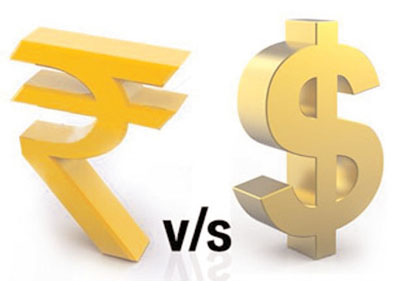
    MUMBAI (TIP): The rupee dropped to a historic low of 62.00 per dollar in late morning trade on August 16 on good demand for the US currency from banks and importers in view of sharp fall in equity market. The rupee resumed slightly higher at 61.35 per dollar as against the last closing level of 61.43 at the Interbank Foreign Exchange (Forex) Market.

    But, it fell sharply to an all-time low of 62.00 on good dollar demand from banks and importers in view of fall in equity market, before quoting at 61.90 per dollar at 1045 hours. It moved in a range of 61.32 and 62.00 per dollar during the morning deals. In global market, the US dollar seesawed against major rivals in the early trade, in line for further volatility as the week wraps up with more data to fuel Federal Reserve consideration of tapering monetary stimulus.

    Sensex snaps 4-session winning spree, tumbles 475 points The S&P BSE benchmark Sensex snapped 4-session rising spree, tumbling 475 points in late morning trade due to all-round selling from operators in view of fall in global markets amid depreciation of rupee value against the dollar. Shares of consumer durable, banking, realty, capital goods, metal, power and refinery sectors declined sharply.

    The BSE-30 share index, Sensex, resumed lower at 19,297.11 points and dropped further to a low of 18,852.40 before quoting at 18,892.86 at 1115 hours. It showed a sharp fall of 474.73 points, or 2.45 per cent, from its last close. It had gained by 702.71 points or 3.76 per cent in last four sessions. The NSE 50-share barometer Nifty also tumbled by 159.90 points or 2.78 per cent to 5,582.40 at 1050 hours.

    Major losers were – BHEL (4.59%), HDFC (4.44%), Maruti Suzuki (4.24%), Tata Power (3.73%), Icici Bank (3.59%), M&M (3.41%), Tata Steel (3.36%) and Larsen (3.19%). The market sentiment was also affected by RBI’s decision on Wednesday to reduce the limit for overseas direct investment (ODI) under automatic route for all fresh ODI transactions from 400 per cent of the net worth of an Indian party to 100 per cent of its net worth.

    Asian stocks stumbled on Wednesday after some weak earnings and worries that the Federal Reserve would soon pare its bond purchases slammed Wall Street. Key benchmark indices in China, Hong Kong, Indonesia, Singapore, South Korea and Japan were down by 0.51 to 1.35%.

  • Area’s Aging Airports Cry For Attention

    Area’s Aging Airports Cry For Attention

    NEW YORK (TIP): Anyone who frequents New York City’s airports is familiar with the delays that plague them, which are consistently ranked among the worst in the nation. And while the causes are myriad, the sheer volume of flights crowding the runways and airways is putting the system’s aging infrastructure to the test. Newark, JFK and LaGuardia handle more passengers combined-109 million in 2012-than any other regional airport system in the country.

    Last year the number of flights approached the prerecession peak of 110 million-from 2007, a year notorious in the aviation industry for its record delays. While rates of growth are hard to predict, a 2011 Regional Plan Association study estimated as many as 150 million passengers by 2030. The economic losses from congestion at the airports, while hard to quantify, are very real. Not only are regional businesses and travelers affected, but delays in New York have a cascading effect on air travel throughout the nation.

    According to The New York Times, a third of all delays in the country each year originate in New York airports. A study from the pro-business Partnership for New York City put the figure at closer to three quarters of all delays. Some steps are being taken at the local and federal levels to streamline, modernize and expand, but many New Yorkers are not satisfied with the snail’s pace of improvement.

    In response, an unlikely coalition of policy analysts, labor representatives and business leaders came together earlier this year to launch the Global Gateway Alliance, an advocacy organization vowing to lobby for significant improvements at the city, state and federal level. “This involves multiple levels of government-and, frankly, when something requires intergovernmental cooperation, it very often doesn’t happen without an outside catalyst,” said Kathryn Wylde, president and CEO of the Partnership for New York City and a Global Gateway Alliance board member.

    “The idea is that the Gateway Alliance provides an external advocate and pressure point for getting the multiple levels of government to cooperate and invest.” The Partnership for New York City’s 2009 study estimated that air traffic delays dealt a $2.6 billion hit to the regional economy in 2008, and projected $79 billion in avoidable costs and lost opportunities by 2025 if no improvements are made.

    The study, which relied on input from the Port Authority, looked at factors like lost time for leisure and business travelers, losses sustained by shipping companies, and the costs of increased staffing and wasted jet fuel in the airline industry. The negative impacts on the environment and on New York’s ballooning tourist industry were taken into account as well.

    Wylde noted that places like London and China have invested heavily in upgrading their air traffic control systems from radar to satellite-based technology, something the Federal Aviation Administration is still struggling to implement as part of their “NextGen” program. To date it is unclear when New York will receive the NextGen technology. The FAA’s regional office did not return requests for comment.

    “There was a period of time during the first Obama administration in which there were a lot of people at the FAA who were focused on it and working hard to implement it,” said Stephen Sigmund, executive director of the Global Gateway Alliance. “And I think as the gridlock has happened in Washington, there just simply has been no real movement on it recently. You can’t get it done because the money’s not flowing.”

    Joseph Sitt, a real estate magnate and chairman of the coalition, promised an investment of $1 million to get his airport advocacy group up and running. The Alliance has recruited an impressive collection of backers, including New York City’s Economic Development Corporation, ABNY, NYU’s Wagner School of Public Service, the Hotel Association of New York City, the Hotel Trades Council, and the Retail, Wholesale and Department Store Union, along with business leaders like Jared Kushner and Alvin Trenk.

    “We need a full-court press approach to reducing delays, with everyone responsible for airports playing their role,” Sitt said. “But most critically, we need the federal government to make New York City its top priority in fully implementing NextGen to relieve congestion in the skies, because without New York’s airspace functioning at its best, the rest of country won’t fully benefit from this new technology.”

    Sigmund, who once headed up the Port Authority’s public affairs department, says that aside from trying to influence federal policy, the Alliance will push to modernize and expand infrastructure, and for customer service and quality of life improvements in terminals, which have outdated signs, endless TSA lines and Wi-Fi that is only available for a fee. The Alliance also hopes to circumvent government gridlock and bureaucracy by harnessing private investment, which Wylde said has been a major factor in improvements at airports worldwide.

    New York State laws prohibit publicprivate partnerships without special legislative permission, but the Port Authority, which straddles New York and New Jersey, is exempt from such restrictions. The Port Authority’s planned renovation of LaGuardia’s grungy Central Terminal, which involves just such a private investment, is a model for the Global Gateway Alliance-but Sigmund says he isn’t sure if the plan is moving forward. “I think the Port has expressed its priority to do so, but I don’t know that there’s any process on it moving forward,” he said.

    “They certainly haven’t picked a developer or done anything in that area.” A Port Authority spokesman said that private sector bids for the Central Terminal project are still being evaluated. In late July the board approved $225 million for repairs and maintenance to keep the terminal operational in the interim. The Port Authority also reached an agreement with the South Jersey Transportation Authority recently to assist in the operation of Atlantic City International Airport, in the hopes of attracting new airlines and more passengers to the underused facility.

    But some observers note that Atlantic City is some 150 miles away from the core of Manhattan. “I don’t think it’s terribly relevant to New York City,” Wylde said. In 2011 the Regional Plan Association, which is not formally affiliated with the Global Gateway Alliance, released a study assessing the region’s air travel needs and made recommendations for how best to manage demand, expand runway capacity and improve transit to and from the airports.

    One of the study’s authors, Jeff Zupan, said that the Port Authority showed interest in the group’s findings but insisted on hiring a consultant to verify and expand on the study. The Port Authority expects its own study, which has been undertaken in conjunction with the FAA, to be ready early next year, according to a spokesman. Sigmund said that the lack of momentum on these projects illustrates the need for an organization like the Global Gateway Alliance. Some politicians, like Sens.

    Charles Schumer and Kirsten Gillibrand of New York, and Sen. Robert Menendez of New Jersey, have been supportive. But legislators have a lot on their plates, and airports don’t get the same level of attention as other forms of mass transit, like subways and roads. “Airports don’t get the same kind of sustained coverage from the press or attention from the stakeholders that they need to keep moving forward,” Sigmund said.

    “So you get things like the announcement of the LaGuardia plan and then the attention goes away. Just as the straphangers were the vehicle for sustained improvements to the subways in the ’80s and the ’90s, we hope to create a vehicle for sustained focus on airport infrastructure today.”

  • Six-fold increase in Green cards for Indians

    Six-fold increase in Green cards for Indians

    NEW YORK (TIP): Indians chasing the American dream have reason to cheer. In 2012, as many as 35,472 Indians with H- 1B visas got green cards, up from 6,000 in 2011 – accounting for more than 50% of all green cards issued to H-1B holders for all countries in the year.

    The data from the US Citizenship and Immigration Services (USCIS) comes in the wake of a new Bill that focuses on attracting knowledge workers to the US by providing them citizenship. The common impression is that the US is increasingly trying to keep foreigners out with new immigration walls. But that’s only a partial truth; it pertains to less skilled overseas workers. In reality, the US is also trying to attract the best brains from around the world and among the biggest beneficiaries are talented Indians.

    A green card allows a person to live and work anywhere in America, and is a path to citizenship. An H-1B visaholder is beholden to the employer who hired him or her, and can be deported unless the holder can find another H-1B sponsor. Most Indians who got green cards in 2012 came from the EB-2 category, which includes professionals with advanced degrees in STEM (science, technology, engineering and math).

    Clearly, the US wants to retain its competitive edge and accelerate R&D. “They need people with specialized skills who can substantially contribute to the knowledge economy. The large base of Indians with advanced degrees and domain expertise is highly sought after and given preferential treatment,” said Rakesh Prabhu, partner, immigration practice, ALMT Legal. The number of green cards a country gets in a year cannot exceed 7% of the total available. The limit primarily restricts those born in India, China, Mexico and the Philippines, given the large numbers of applicants from these countries.

    However, most of the rest of the world does not come anywhere close to this quota. The unused numbers in a year from other countries are often given to countries that have long queues. In 2012, India appears to have benefited. “The US visa office seeks to use the available visa numbers by the time the fiscal year ends, at the end of September. They don’t like to waste numbers. So there could be a new surge (Indians becoming eligible for green cards) in August 2013 and in subsequent months,” said Cyrus D Mehta, managing attorney and founder of the New York-based law firm Cyrus D Mehta & Associates.

    Now, there’s a serious effort to remove country quotas, which has a broad agreement among Republicans and Democrats. The Comprehensive Immigration Bill, which is before the Senate, seeks to remove the country caps to attract the best minds to the US. The political consensus right now is that knowledge workers with permanent residency are valuable to the economy. “If Congress removes country quotas, it should help Indian citizens. However, it will affect the rest of the world adversely,” said Denyse Sabagh, partner in the Philadelphia-headquartered law firm Duane Morris.

  • INDIA CLOSE TO LOSING $1 TRILLION MARK-CAP TAG

    INDIA CLOSE TO LOSING $1 TRILLION MARK-CAP TAG

    MUMBAI (TIP): Thanks to the weakness of the rupee and the slide in the stock market for six consecutive sessions, India is on the brink of losing the elite tag of a trillion-dollar stock market. As the Indian rupee traded near its all-time low of 61.20 and the sensex was down over 150 points, BSE’s market capitalization was almost close to breaking below the $1-trillion mark.

    At close, however, as the rupee recovered sharply and the sensex too rebounded from its intra-day low to close at 19,346, down just 3 points, the country’s market value ended the session at $1.03 trillion — just managing to keep its membership of the trillion-dollar market cap club intact. One of the main reasons for this slide is the sharp depreciation of the rupee in recent months. From about 54.5 to a dollar at the start of the year, the Indian currency has depreciated about 12.7% to its current level.

    And since the stock market has remained almost stagnant during this period, India’s market value in dollar terms has eroded substantially, market analysts said. Led by a $20-trillion plus market value, US leads the pack of 11 countries which are currently in this elite group, Bloomberg data showed. Along with the US, Japan and UK complete the top three slots. The table, however, considers Hong Kong ($3.2 trillion) and China ($3 trillion) as separate markets. In case the two are combined, they would replace Japan from its second slot with a combined market value of $6.2 trillion.

    At number 11, India is behind Australia, which has a market cap of $1.3 trillion. From the BRICS bloc, only China and India are the two countries present in this 11-nation league. The last time India’s marketcap was below the 12-figure mark was exactly four years ago, in mid-July of 2009. Since then, although the rupee has depreciated, a steady gain in the stock market ensured that India remained in the elite group.

  • India To Help Build World’s Most Powerful Telescope

    India To Help Build World’s Most Powerful Telescope

    MUMBAI (TIP): India has signed a master partnership agreement to become a full-fledged partner of the $1.5-billion five-member international Thirty Metre Telescope (TMT) project. On completion, the Hawaii-situated TMT is said to “become the most advanced and powerful optical telescope on Earth”. Following the agreement signed on July 26, India will now be moving from its current observer status to becoming a full-fledged partner of the project with a 10% share.

    This implies a financial commitment of around Rs 1,000 crores, the department of science and technology said on Thursday. The department, along with the department of Atomic energy, will fund the Indian component. Set to become operational in 2022, the project has four other countries as partners, namely Canada, China, Japan and the US. TMT is promoted mainly by Caltech, the University of California and the Association of Canadian Universities for Research and Astronomy. The in-principle approval of India’s participation was accorded in 2010.

    However, the go-ahead from the legal section of the external affairs ministry came on July 24. Besides the Indian Institute of Astrophysics, the other participating institutions are the Inter-University Centre for Astronomy and Astrophysics, Pune, and the Aryabhatta Research Institute of Observational Sciences, Nainital. Much of India’s contribution will be in-kind, with Indian institutes and industry collaborating to build most of the telescope’s control systems. India will also be contributing the mirror coating systems of the telescope.

  • Mechanism To Prevent Face-Offs Between India And China Soon, Says AK Antony

    Mechanism To Prevent Face-Offs Between India And China Soon, Says AK Antony

    NEW DELHI (TIP): India and China are trying to develop effective mechanisms to prevent the “embarrassing” face-offs between their troops along the “disputed” points of the Line of Actual Control, defence minister AK Antony said. Terming the 21-day stand-off between the two sides in Depsang valley in Daulat Beg Oldi area as an “unusual” incident, the defence minister said the two countries will meet soon in Beijing to discuss issues and try to find a solution for such “unpleasant incidents”.

    Till the final settlement of the border issue, we are trying to find out more effective mechanisms to prevent occasional incidents. There are many points in the LAC that are disputed and they are patrolled by both sides. So, sometimes it leads to some faceoff,” he told reporters on the 14th anniversary of Kargil Vijay Diwas. The minister was asked to comment on the rising incursions by the Chinese troops into the Indian territory along the LAC in Ladakh and Northeastern sectors.

    Antony said, “There are disputed points where both sides are going there which sometimes causes some embarrassing situations.” He said after the Depsang incident in April, India and China had “free and frank” talks and “we are trying to have more border personnel meeting places and have more effective mechanisms to prevent such unpleasant incidents.” “On the one side, both sides are trying to find a long term solution to the long pending border dispute.

    Till that time, our aim is to maintain peace and tranquillity at the border,” Antony said. On the recent third meeting of the Joint Working Group between the two sides, the Minister said free and frank discussions were held between both sides. “We are going to have another round of this meeting in Beijing soon on this issue. So, I think we will be able to find out a solutions to such unpleasant incidents on the border,” he said.

    In the recent past, there have been several incidents of incursions in Ladakh sector where Chinese troops have entered well within Indian side and stayed there for long hours before returning to their areas. In one such incident, Chinese troops had entered Chumar area in Ladakh on July 16-17 on horses and ponies and demanded that Indian troops leave the area staking claim over it. In the last two weeks, there have been at least five incursions in the area and around 150 incidents in the last seven months.

    Meanwhile, commenting on the alleged “mistreatment” of armed forces personnel and the lack of accommodation for them, Antony said though the situation had improved in comparison with past but “a lot was still required to be done”. “Under the married accommodation project, nearly 1.99 lakh houses are to be built for forces. Out of that, 50 per cent has been completed,” he said. On the rank pay issue of the forces, the defence minister said the government has referred it to the Attorney General for his “final advise” on the matter.

  • India’s Economic Growth: Once a Shining Economy, India is in Danger of Running out of Gas

    India’s Economic Growth: Once a Shining Economy, India is in Danger of Running out of Gas

    “India Shining” has been the unofficial slogan for India since the turn of the 21st century. India averaged 8% annual GDP growth in the three years before the recent global financial crisis. Armed with population strength of more than a billion people, India is now the 11th largest economy in the world. According to data, from India’s Planning Commission, rapid economic growth has contributed to a decline in the poverty rate with 37.2% in 2005 to 29.8% in 2010, a drop of 40 million people in the absolute number of the country’s poor.

    Per capita income doubled during those five years. Internationally, India has also become an important actor. Forming the ‘I’ in the BRICS group of nations, India plays a very important role in the leadership of the emerging markets and developing nations. India boasts a culture of entrepreneurship and innovation, pioneering the global IT services industry, and has a global Diaspora that are leaders in various fields.

    On paper, India’s potential is immense, with approximately 500 million people between the ages of 18-25; its best years seem to be ahead. Polls have revealed that the Indian youth and business people are bullishly confident of a bright future in India. This potential is reason why India is tipped to become the largest economy by 2050. However, potential does not always translate to growth, and India has been learning this the hard way.

    An economy that once was shining is now rapidly losing that shine. India is at a serious risk of plunging itself into a crisis, one that might soon be too large to be defeated by policy.

    The Twist
    1991 is often used as the central year for economists and other experts when discussing the Indian economic growth story.In June 1991, then finance minister Manmohan Singh, passed widespread reforms that liberalized and opened India’s economy to the world. However, 1991 is also the year the last time India has passed economic reforms of such significance. Over the past 12 months, the optimistic mood within India’s economy has taken a sharp dip. GDP growth slowed to 6.3% in 2011-12; the worst it has been in 9 years, and the first quarter of 2012 India grew a measly 5.3%, according to some estimates.

    While a slowdown in GDP growth has been relatively recent, India has been battling with a rising inflation for the past two years, which included food inflation at between 15-25%. The Rupee has been in a sharp decline, decreasing by 25% in value of the past six months to become one of the worst performing currencies in the international market.

    Although a weakening external demand, due to the Eurozone crises and U.S. economic slowdown has contributed to the slowdown, India’s economy is very much based on internal demand, which has slowed recently partly because of private consumption dropping from 5.5% in 2011/12 from 8.1% the previous year. India’s economy is showing signs of overheating with a growing demand and inability to match it with supply.

    Leading domestic business people have exerted frustration at the economic situation. Since business confidence is at a low, the IMF, OECD and financial rating agency S&P are all issuing warnings to the Indian government. They all unanimously call for….

    Reform, Reform, Reform
    In its current form, the Indian economy is like a car sputtering forward and now slowly running out of fuel. India is in desperate need of reform of its tax laws. For over two years it has delayed passing laws on the goods & services tax which will allow the central government to regulate taxing on services and certain goods, rather than the current system of state regulations. In the current system, it is extremely difficult for business to run operations across the 28 state lines. Foreign investors have raised concerns on two Indian provisions seeking to tax indirect investments and combat tax evasion.

    The first gives India power to retroactively tax the indirect transfer of assets. The second targets tax evaders via the General Anti-Avoidance Rule (GAAR), putting the responsibility on investors registered in countries with special tax exemptions with India to prove they do not intend to explicitly avoid tax. Investors are fretting and such policies are threatening to drive away private investment rather than encourage it.

    Major hedge funds such as Macquarie’s Asia hedge fund which manages over $50 billion in emerging markets, have begun pulling out. A situation unthinkable a couple of years ago, India is feeling significant strains on its fiscal budget. When India was growing at 8% a few years ago, no one questioned the government’s spending. The Indian government spent freely on a variety of populist subsidies programs, racking up a fiscal deficit that it allowed itself due to GDP growth. India considered this deficit sustainable.

    The deficit currently stands close to 7% and the government must reign in on its spending, and it must discontinue these subsidies programs and allocate money to other sectors. For over a year, the central government has attempted but failed to institute such reforms.

    Bottlenecks
    India is in urgent need of reform on Foreign Direct investment (FDI) rules, particularly in its retail sector. Outdated technology, and lack of organization and inefficiency, has seen the Indian retail industry slowly and steadily pull down India’s economy. The Indian retail industry’s has an annual revenue of $500 billion as of 2011 and employs the second-most number of people after agriculture, a sector that is intrinsically linked to the retail sector. Yet, the Indian retail industry is also one of the most unorganized sectors in the country. 90% of the retail industry is controlled by smallscale, family-run operations with big chains making up just 10% of the market.

    Thus far, Indian suppliers have not been able to deliver to the consumer. Indian Commerce Minister Anand Sharma asserted that 30% of agricultural produce does not reach the market, and of the remaining 70%, more than 50% is lost due to poor transportation and storage technology. This is a gross waste in any country; especially in a developing country where there are still hundreds of millions bellow the poverty line.

    This lack of organization has led to much inefficiency, which is the root of many of India’s problems, especially inflation. Over the past two years, basic foods have been suffering an inflation of 15-20% and they have been directly linked to the inefficient supply chain. Increasing the cap on FDI in the retail sector will allow foreign firms to enter the country and make major investments that will significantly modernize the sector and will set the country on a path towards further modernization, and help it to increase consumer spending and address the food inflation.

    When the shoe doesn’t fit anymore
    India’s biggest challenge is its infrastructure deficit. If you have traveled to India, you have experienced tremendous traffic on poor roads burdened with bottle necks. India’s infrastructure deficit problem is nothing new, and the government has been trying to catch up for years. However, India’s economy has grown to a size that e will make it very difficult for both new businesses to enter the market and existing business to expand.

    According to the consulting firm Mckinsey, India is suffering a shortfall of $190 billion in the infrastructure sector and is in urgent need of capital. India’s roads are often unsuitable for large vehicles and they even literally form blockades for progress. The railways and roads dominate the country’s transport landscape.Within these two modes, 2% of road length carries 40 percent of all road traffic of the country, and one-sixth of the rail network.

    With the fragmented character of the industry, road transport services in India are generally poor and logistics costs high. Clocking the world’s lowest average speeds, trucks in India are used for 60,000-100,000 km annually – less than a quarter of the average in developed countries. A quick comparison with an immediate neighbor to the northeast gives you an idea. The time to travel by rail or road between India’s political capital New Delhi and Financial hub Mumbai is over 12 hours to cover 1180 km.

    In China, between Beijing and Shanghai, a train covers the 1071 km in approximately 5 hours. India needs to boost growth in this sector, and fast. Indian Urban Development Minister Kamal Nath stated, “With growth preceding infrastructure, we are not building for the future, but for the past.” There is a sense of saturation within the economy that is proving to be a damper for business. The government has steadily increased spending, but some wounds are self-inflicted.

    Private business have been desperately calling for reform in land acquisition, and in its current state, the lack of reform means companies are facing problems making large capital investment.Without such reform or encouragement for further private investment through allowing foreign funds and mutual insurance funds, India will continue to be building for the past. The root of India’s economic woes, in all the areas mentioned above, all find themselves leading to one common problem: The central government.India is in a crisis of politics and the center of the Indian government is stuck in a paralysis.

    In Office But not in Power
    India’s center of governance lies in the parliament in the capital city of New Delhi. However, power seems to lie everywhere, but in the center. The way India’s parliamentary system works is the ruling party holds together a coalition of smaller parties who come together to form a majority in the parliament. The current ruling coalition since 2009, called the UPA, is weak and fragmented, while the incumbent Prime Minister has shown himself to be to inept.

    The parliament has no significant majority and the center is loosing power to regional parties who consistently threaten to pull support from the coalition over major reform issues, forcing the leadership to back down. The opposition party, BJP, has shown itself more committed and content to reveal the weaknesses of the congress than to work towards a solution.

    The word ‘political paralysis’ has now become synonymous when discussing the Indian economy. Bills on subsidy reduction, tax reform, land acquisition reform, and FDI reform all exist, but a divided parliament is unable to pass such bills, and continues to be laborious and indecisive. The government has attempted to answer the calls for an end to the fiscally straining fuel and fertilizer subsidies that totally amount to 2.5% of GDP. However, these subsidies are extremely popular measures and the government has consistently faced opposition from regional parties.

    During the last 12 months, each time the central government has attempted to repeal the subsidies, regional parties carried out “All-India Bandhs,” enforcing the closure of all business for a day, using force if necessary. Acts such as this have only crippled the country further, diminishing the central government’s power and preventing reform. However, perhaps the biggest symbol of the political paralysis has been the attempt to raise the cap for FDI in the retail industry.

    In December 2011, PM Manmohan Singh announced that he was set to approve the bill on raising the cap from 21% to 49% FDI in domestic retail. There was a sense of relief for this would have a revolutionary impact on the retail industry. However, relief was short lived as Mamata Banerjee, Chief Minister of West Bengal, and an important UPA ally, threatened to pull support if this bill was passed, forcing the PM to once again pull back. There is a popular saying in India that all “economic growth in the country has been in spite the government, rather than because of the government,” and this tells a tale of frustration among Indian and foreign business people.

    Corruption has “paralyzed the government,” reckons the chief executive of one of India’s most prestigious firms. Further asserting, “We know what the problems are and we have done nothing … somebody’s neck has got to be on the line,” says the leader of a bank. What Indians always knew, is now beginning to reveal itself internationally. Business confidence in India is taking a big hit. Bureaucracy and red tape continue to scare foreign investors away.

    For example, regulatory and other obstacles recently delayed a proposed $12 billion steel investment deal from Korean company POSCO, who joined the list of other countries who have faced similar restrictions. Standard & Poor recently announced, in a special report, that India is in serious risk of being downgraded from its current BBB+ to BBB-. This downgrade is mainly connected to India’s slowing economic growth and weakening fiscal profile. S&P cited poor governance and political paralysis as the key root to India’s economic woes.

    What lies ahead?
    The most encouraging sign, although equally frustrating, is that the answers lie in its own hands. Reform bills, if passed, will take effect in a very short time, speeding business up while also inspiring confidence, which will encourage investors currently too afraid or unable to open their check book to begin investing again. The government recently announced the controversial bill on retroactive bill will be changed, which is a boost for foreign investors and is also a sign that the government is still capable of making decisions.

    Although still affected by the European debt crises and the global slowdown, India is still not as dependent on the international economy and is mostly inward looking. The service sector is continuing to grow and perform well. India’s monetary policy has proved extremely resilient, and helped carry India through from the financial crises until now. Masking inaction under conservatism or simply suffering from a gridlocked parliament will not help India’s cause.When times are tough a country needs its leaders to stand up and be counted.

    The unfortunate truth is PM Singh is not capable or powerless to do so, as he answers to Congress head Sonia Gandhi, and holds no true power base of his own. The last two years have seen a diffusion of power from the center to regional parties and this is alarming for the country. Regional parties are playing to popular vote policies, with short term rather than long term in interest.

    The situation is not as bad as it was in 1991, but it seems like it would take a crises of that magnitude to bring about the change. So far, high economic growth has legitimized the UPA’s inaction; however, that growth is no more. Ultimately, India is a democracy, and the government is responsible to the people. If reform does not come, the “Indian shining” story will be no more.

  • Joe Biden Bats For More Skilled Visas

    Joe Biden Bats For More Skilled Visas

    MUMBAI (TIP): US is considering increasing the number of temporary visas and availability of Green Cards to highly skilled Indians, Joe Biden, the first US vice-president to visit India in three decades, said in his address to India Inc in the financial capital on Jukly 24. Biden, who sought a greater cooperation between the two countries to boost trade and investments five-fold, acknowledged the contribution of Indian expatriates to America’s growth story.

    “The US has benefited due to Indian human capital,” said Biden. He pointed out that Indians received more skilledworker visas to the United States than any other country in the world. “And the legislation our Congress is considering increases the number of temporary visas and Green Cards availability for highly skilled Indians to come work in the United States,” the 47th vice-president of US said while addressing the industry gathering at theBombay Stock Exchange.

    In a 40-minute speech which was interspersed with lighter moments, Biden said, “Our bilateral trade has increased five-fold to touch $100 billion in the last 13 years. We see tremendous opportunity and there is no reason that if our countries make the right choices, trade cannot grow five-fold or more,” he said. Making a strong case for India to further open up its economy in a serious bid to attract more foreign investment, Biden, said, “A young Indian woman graduating from IIT-Bombay who wants to start the next Tata Motors should be able to buy the best technology and parts, wherever in the world they come from — as her competitors around the world are able to do.”

    However, Biden said, a lot more is needed to remove trade barriers. “We still have a lot of work to do on a wide range of issues, including limit in FDI, inconsistent tax system, barriers to market access, civil nuclear cooperation, bilateral investment treaty and policies protecting innovations,” said Biden.

    Biden later addressed India Inc at the Taj Mahal hotel too in south Mumbai. While assuring US support for India’s candidacy for a permanent seat at the United Nations Security Council (UNSC), Biden said, “That’s why yesterday, on behalf of the President Obama, I invited Prime Minister Singh to make a visit to Washington at the end of September.” India has been vying for a permanent seat in UNSC along with Japan, Brazil and Germany.

    On India’s military needs, Biden pointed out how cargo aircraft C-130s that US had sold to India were now saving the lives of flood victims in Uttarakhand. Biden also called by a greater cooperation between India, China and US. “We are three big nations — China, India and the United States — with our own perspectives. We have significant common interests. All three of us and the entire region would benefit if we coordinated more closely,” said Biden.

  • G20 Seeks To Chart Recovery Course Amid Choppy Markets

    G20 Seeks To Chart Recovery Course Amid Choppy Markets

    MOSCOW (TIP): The world’s economic crisis response team will grapple with the prospect of more market volatility as finance ministers and central bankers gather in Moscow to chart a course towards recovery. The Group of 20, a forum that took the lead in the 2008- 09 financial crisis, now faces a multi-speed global economy in which only the United States appears to be nearing a self-sustaining recovery.

    China, for years the engine of global growth, is suffering a slowdown amid doubts over the stability of its financial system, Japan has only recently embarked on a radical fiscal and monetary experiment, and Europe’s economy is more stop than go. Collective efforts to balance the prospect of a withdrawal of US monetary stimulus against expansionary policies elsewhere evoke visions of passengers rushing from port to starboard to stabilise a listing ship.

    “We used to believe that as soon as the economic situation stabilises … we will have less volatility in financial markets and currency markets,” Russia’s G20 summit coordinator, or ‘sherpa’, Ksenia Yudayeva, told Reuters. “The events we just saw have proved that we will not necessarily have less volatility – we will probably have quite a lot,” she added.

    Chairman Ben Bernanke’s guidance in May that the Fed may start to wind down its $85 billion in monthly bond purchases – intended to ease the flow of credit to the economy – triggered a steep sell-off in stocks and bonds, and a flight to the dollar. Investors were calmed by dovish testimony to Congress this week by Bernanke, who is not coming to Moscow. Yet emerging markets – especially those that depend on commodities or that have external deficits – have underperformed.

  • US Wants To Hasten Emergence Of An Asia-Pacific Order: Biden

    US Wants To Hasten Emergence Of An Asia-Pacific Order: Biden

    WASHINGTON (TIP): US wants to hasten emergence of an Asia-Pacific order that delivers prosperity for all the nations involved, US Vice President Joe Biden has said. “For the past 60 years, the security we provided has enabled the region’s people to turn their talents and hard work into an economic miracle,” Biden said. “Now we want to hasten the emergence of an Asian- Pacific order that delivers security and prosperity for all the nations involved,” he said.

    “In short, we want to help lead in creating the 21st century rules of the road that will benefit not only the United States and the region but the world as a whole,” he said. The lifeblood of the region is economic development, but growth has slowed in India, China, in many places in Asia, and each country faces distinct and different challenge, he said.

    “To spark new growth, there has to be fewer barriers at and behind our borders, protections for intellectual property to reward innovation, new commitments to make sure everyone plays by the same rules because that’s what attracts investment and jobs,” he added. Biden said economically and strategically, it’s clear why the United States had to rebalance, to direct more resources and attention toward the Asia-Pacific region.

    “Because imagine what could happen if growing Asia- Pacific middle classes help lift the global economy even more than they already are, if nations reject the temptations of zero-sum thinking and rise peacefully together,” he said. The Vice President said the American rebalance towards Asia Pacific was not at the expense of its European allies. “Europe remains the cornerstone of our engagement with the rest of the world. That is a fact. We’re not going anywhere,” Biden said, adding that the US was absolutely convinced that its engagement in the Pacific was in selfinterest of Europe.

  • A Harassed Indian Student’s Tale of Woe

    A Harassed Indian Student’s Tale of Woe

    The Open Doors report, which is published annually by the Institute of International Education (IIE) with support from the U.S. Department of State’s Bureau of Educational and Cultural Affairs, says that the number of international students at colleges and universities in the United States increased to an all-time high of 6,71,616 in the 2008-09 academic year and has been steadily growing.

    The report says India that has been at the top in enrolment in 2008, is now the second leading place of origin of students after China that has gained only a marginal edge over India. The report is based on a comprehensive survey of approximately 3,000 accredited U.S higher education institutions of all types and sizes, regarding international students at all levels of study. On many occasions we have heard stories of sufferings and misery of Indian students in the U.S. Most relate to bias and discrimination.

    Many a time the embassy of India and the Indian consulates have been accused of complete indifference to the students’ plight. The present story of a young student at University of Texas, Brownsville is no different. Harassed by the university authorities the young man turned to the Consulate at Houston but failed to move the authorities there.

    I do not wish to pass any judgment on the Indian Consulate in Houston but our readers will agree that this unhelpful attitude of the Consulate authorities in protecting the interests of an Indian student is not compatible with their charter of duties. Please do not forget young Indians come to this country with big dreams, as many of us came with, and we need to help them realize their dreams, for themselves and for India.

    Indian students are the second highest foreign student contingent in USA. They come here to study, to make a career and to experience a different culture. They do not come here to get assaulted, hazed upon, or to have sexually profane acts get carried out in their house. Lastly they do not expect their college to take a biased decision against them. However such is exactly the list of inexperiences that an Indian student, who requests not to be identified, had to suffer at University of Texas, Brownsville between January and December 2011, as a graduate student.

    During his stay, he was hazed upon by a PhD student from Sri Lanka by the name of Shihan Weeratunga, who asked repeatedly for over 3 months to be included in a start-up already registered in the Indian student’s and his American business partner’s name. No one can ask to divulge company secrets (tantamount to asking one to commit a crime) or insist overtly to be included in a start-up at the expense of an existing co-founder. Mr.Weeratunga also behaved in many unacceptable ways in the Indian student’s house, including but not limited to groping of a common friend.

    There were also plenty of sexual allusions and at least one promiscuous act with a fellow student, in the Indian student’s house, after tactfully getting the latter inebriated, the details of which are not being divulged for now upon request. This reporter feels that this act alone is enough to get someone thrown out of a college and possibly incarcerated.

    Finally on the night of 25th August, Mr.Weeratunga cornered the Indian student on the staircase outside his house, and with much name calling, finger pointing and shouting, physically assaulted (coming chest to chest, shove/push, hit) him. The University’s code of conduct can be found here – http://www.utb.edu/ba/hoop/Polic y/6-4-1.pdf Mr.Weeratunga was clearly in violation of multiple items.

    The Indian student lodged a complaint to the college coordinator of judicial affairs, first submitting a brief report on the 19th September 2011 and then a full complaint on the 2nd October 2011. The adjudicator, upon receiving the first of the complaints, replied with the following, even though he had been asked to sit in judgment – “Because your allegation of harassment of you by Mr. Weeratunga is so serious, I am compelled to respond in some form.

    I need to do this because if your allegations are found to be true, then they represent a violation of our policy on harassment. The University is intolerant of behaviors that would be deemed as harassment and that create a hostile environment for any individual on our campus.” The official complaint was only against Mr.Weeratunga, and did not directly implicate anyone else.

    However the adjudicator then made a volte face and shut the case up in one day, conducting only a shoddy evaluation, once another Hispanic female student of the college (who carried out her share of distasteful acts in his house) came into the picture. The Indian student was denied a fair and full investigation, which is mandated by US law for all employees (student worker) of American institutions, and was instead threatened verbally with suspension and told by the adjudicator not to mention these incidents ever again.

    The about turn (and shoddiness and haste with which the investigation was carried out) made by a Hispanic adjudicator of a principally Hispanic institution after a Hispanic woman came into the picture, reeks of prejudice and borders on racial partiality to say the least.We suspect the adjudicator had already decided to exonerate Mr. Weeratunga and intimidate the Indian student to keep things secret even before receiving the full (2nd) report, for the sake of the female student.

    The Indian student had to lapse into medical trauma (noted by the college medical counselor Miss. Liebscher) since the day of the assault and more so since this misjudgment. U.T. Brownsville is part of the University of Texas system of colleges and cannot act in violation of their central set of rules.

    We demand that U.T. Brownsville please explain the anomaly, and explain why Mr.Weeratunga was allowed to get away with assault and many other violations of University policy and why another student was made to suffer in this way – is it for the reason we suspect – to protect the reputation of the woman? Mr.Weeratunga is part of the Physics PhD program of U.T. Brownsville, which is a degree conferred by the University of Texas, San Antonio – we believe that U.T.S.A. would also consider distancing themselves from him once the full extent of Mr. Weeratunga’s misdoings emerges.

    The Indian student after suffering this way, produced a dismal grade, and was ousted by U.T. Brownsville. He has since returned to another college in Texas and is doing many times better there. He went back to Brownsville this April and filed a case for assault against Mr. Weeratunga, and made the Indian Consulate in Houston aware of these developments (including supplying the police report). The Consulate promised to take up the matter with the college but has not done so as yet.

    He also contacted many Indian organizations and Indian media agencies (including NDTV) and the U.S.I.E.F. in India, but with little or very modest success. Indian Panorama is the first to feature this story. The student has recently made the U.T. Brownsville Physics department aware of the full extent of Mr. Weeratunga’s misdemeanors and now intends to sue the college for damages on grounds of partiality and deliberate negligence but does not have the resources to engage another law firm (he already engaged the law offices of Sherin Thawer, to file for an U visa), except on a percentage basis.

    He is now toying with the idea of writing a reveal-all book in future and contacting watch-dog bodies that monitor acts of hazing, violence, sexual misdemeanor and racial partiality in American Universities.