Tag: China

  • The Dragon Covets the Arctic

    The Dragon Covets the Arctic

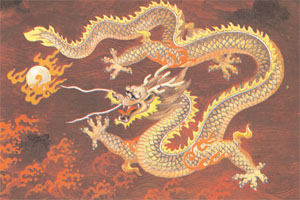
    China’s lust for oil, minerals, rare earths, fish and desire for an alternative northern sea route boils the Arctic Geopolitics!
    Iceland is a small, sparsely populated island nation with a population of only 320,000 and area of 40,000 square miles. It is the only member of the NATO that does not have an army of its own. Icelandic banks were part of the 2008 global financial crisis and meltdown when they exposed the Icelandic government of huge financial risks by indulging in risky loans and speculative foreign currency transactions without having enough liquidity and capital reserves. The fiscal crisis led to a former Icelandic prime minister losing his job and being hauled to court of law for not supervising the banks enough. In an international capitalistic, mercantile system, if Iceland were a company, it was “sitting duck” for outright purchase and acquisition. Fortunately, foreigners are not allowed to buy any property or real estate in Iceland and need a special permit. And here comes the Peoples’ Republic of China, rich with $ 3.4 trillion in foreign exchange reserves in its kitty.

    It has built a palatial embassy in Reykjavik, Iceland worth $250 million with only 7 accredited diplomats. China is negotiating a free trade area with Iceland, the first with any European nation. Former Chinese Prime Minister Wen Jiabao even paid a state visit to Iceland for two full days in 2012. Other Chinese ministers and officials have also been very active in Iceland with bilateral visits and cultural events. In 2010, Huang Nubo, a “poetry loving” Chinese billionaire and former communist party official visited Iceland to meet his former classmate Hjorleifur Sveinbjornsson, a Chinese translator with whom he had shared a room in 1970s in the Peking University. He expressed his intense love for poetry and put up $ one million to finance Iceland-China Cultural Fund and organized two poetry summits, the first one in Reykjavik in 2010 and the second one in Beijing in 2011.

    Last year (2012), Huang Nubo and his Beijing based company, the Zhongkun group offered to buy 300 sq km of Icelandic land ostensibly to develop a holiday resort with a golf course. This Chinese billionaire wanted to pay $7million to an Icelandic sheep farmer to take over the land and build a $100 million 100-room five star resort hotel, luxury villas, an eco-golf course and an airstrip with 10 aircrafts.

    A state owned Chinese bank reportedly offered the Zhongkun group a soft loan of $ 800 million for this project. The deal was blocked by the Icelandic Interior Minister who asked many pertinent questions but reportedly got no answers. Huang would not take no for an answer and has submitted a revised bid for leasing the land for $ one million instead of outright purchase. He makes an unbelievable assertion that there is a market demand for peace and solitude: “Rich Chinese people are so fed up of pollution that they would like to enjoy the fresh air and solitude of the snowy Iceland”. The current Icelandic government, a leftof- center coalition has given this proposal a cold shoulder.

    But, with elections due in April 2013 in Iceland, China is hoping for a more sympathetic government to approve the project. Iceland looks like an easy bird of prey for the wily red Dragon with insatiable appetite. China is showing generosity to another poor and sparsely populated, self-governing island of Greenland by offering investments in mining industry with proposal to import Chinese crews for construction and mining operations. Greenland is rich in mineral deposits and rare earth metals. China wants Greenland to provide exclusive rights to its rare earth metals in lieu of the fiscal investments. Under one such proposal, China would invest $2.5 billion in an iron mine and would bring 5000 Chinese construction and mining workers whereas the population of the capital of Greenland, Nuuk is only 15000.

    Arctic Council Membership:
    There are eight members of the Arctic Council that includes Canada, Denmark (including Greenland), Finland, Iceland, Norway, Russia, Sweden and the USA. All these eight countries have geographic territories within the Arctic Circle. It was constituted in 1996 as an intergovernmental body but has evolved gradually from a dialogue forum to a geo-political club and a decision making body. There are continuing territorial disputes in Arctic Circle. Ownership of the Arctic is governed by the United Nations Convention of the Law of the Sea, which gives the Arctic nations an exclusive economic zone that extends 200 nautical miles from the land. Member countries signed their first treaty on joint search and rescue missions in 2011. A second treaty on cleaning up oil spills is being negotiated. The group established its permanent secretariat at Tromso, Norway in January 2013.

    Arctic Melting and Opening of Newer Sea Lanes:
    With global warming becoming a reality, the Arctic ice has started to melt rapidly opening the northern sea-lanes that were frozen earlier. In summer of 2012, 46 ships sailed through the Arctic Waters carrying 1.2 million tonnes of cargo. There are legal questions about the international status of the northern sea lanes.

    China’s Lust for Arctic Resources:
    The Arctic has 13% of the world’s undiscovered oil and 30% of gas according to the US Geological Survey. Greenland alone contains approximately one tenth of the world’s deposits of rare earth minerals. China which already has a monopoly on world’s rare earth metal trade wants to continue controlling this global trade. China piously claims that the Arctic resources are the heritage of the entire mankind while insisting that the South China sea is its exclusive sovereign territory. In 2004, China set up its first and the only Arctic scientific research station, curiously named “Yellow River Station” on the Svalbard Island of Norway.

    China, so far, has sent 6 arctic expeditions. China plans to build more research bases. In 2012, the 170- meters long ice-breaker “Snow Dragon” (MV Xue Long) became the first Chinese Arctic expedition to sail along the Northern Sea Route into the Barente Sea. Incidentally, as early as 1999, this 21000 metric ton research ice-breaker Xue Long had docked in the Canadian North-Western territory unexpectedly. China is building another 120-meter long ice-breaker with the help of Finland while the Polar Research institute in Shanghai trains scientists and other personnel for Arctic expeditions.

    China’s Previous Use of Deception:
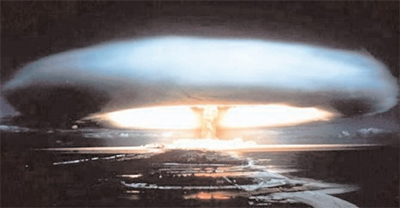
    There is no mandarin character for word transparency. China has been known to use duplicity and deception since the Art of War was written by Sun Tzu. China’s rhetoric of “peaceful and harmonious rise” and hegemonic behavior are predictably diametrically opposite to each other. China’s use of deception to camouflage its intentions in geopolitical matters is not surprising. While China joined the NPT in 1991, it provided 50 kg of highly enriched uranium to Pakistan, provided that country with a nuclear weapon design and supervised Pakistan’s first nuclear test at the Chinese nuclear testing site of Lop Nur.

    China purchased in 1998 an unfinished aircraft carrier from Ukraine after the break-up of Soviet Union ostensibly for developing a floating casino. The same “floating casino” is now China’s first aircraft carrier projecting Chinese naval and maritime power in the South China Sea. China’s Application in Arctic Council Membership: China currently has an ad hoc observer status with Arctic Council. China’s application for permanent observer-ship was denied by Norway in 2012 owing to bilateral dispute over awarding of Nobel peace prize to China’s Liu Xiabo in 2010. China still has a pending application to be decided in May 2013 Arctic Council summit in Sweden when Canada takes over the chair for the next two years. With a permanent observer status, China would get full access to all Arctic Council meetings. Permanent observers do not have voting rights in the council but can participate in deliberations.

    China is trying to distinguish itself from the rest of the applicants as a “Near Arctic State” on the perniciously clever but fallacious grounds that the northernmost part of China in the province of Manchuria (the Amur river) is only one thousand miles south to the Arctic circle. The fallacy is that Manchuria was a separate, independent country that was annexed by China after the Communist take-over. Manchus had ruled over China for centuries during the reign of Manchu dynasty and last Chinese Emperor Pu Yi was actually the last Manchu emperor. Chinese ownership and annexation of Manchuria (Manchu-Kuo) is still not settled. A disputed territory cannot be used by China to make a geo-political claim for being a “Near Arctic State”.

    Other Pending Applications:
    Other countries or non-state actors with pending applications for permanent observer-ship status include Japan, South Korea, India, Singapore, European Union, and non-state actors like Greenpeace and the International Association of Oil and Gas Producers. All these applications will be decided one way or the other in May 2013. The vote has to be unanimous for acceptance and how the US and Russia will vote is the crucial issue. In the past, Norway had vetoed China’s membership application. Some of the Arctic Council members may not approve European Union’s application because of EU’s penchant for restrictive and narrow rulings. Whereas Sweden, Canada, Iceland and Denmark may support China’s application, there are doubts about Norway, Russia and the US. Russia is currently the most vociferous member of Arctic Council that has serious reservations in expanding the Arctic club.

    Strategic Issues:
    China has voracious appetite for new territories and has been seeking new frontiers for the last three hundred years with Inner Mongolia, Manchuria, Xinjiang and Tibet. China’s list of “core issues” is ever-expanding, starting with Taiwan and Tibet. China has included the whole the South China Sea and its islands as a core issue. China is aggressively claiming sovereignty on these islands based on historical maps and manufactured mythological evidence. China has now a license from the UN for deep sea bed mining for minerals in the Indian Ocean and has developed naval bases in Indian Ocean and Arabian Sea ports. If China manages to get a toehold in Arctic Circle, its behavior will become as belligerent in Arctic as it is in the South China Sea. It might claim sovereignty over the whole of the Northern route sea lanes based on “historical evidence”. If in 22nd century, China decides that the Arctic Circle is its core national issue, one would be seeing Chinese aircraft carriers in the Arctic Sea and Chinese nuclear powered submarines in the Barente Sea along with military bases with “Chinese characteristics” in the Iceland and Greenland.

  • Singapore Favourable Investment Destination For Indian Companies

    Singapore Favourable Investment Destination For Indian Companies

    NEW DELHI (TIP): Singapore is increasingly popular becoming a popular destination among Indian companies keen on globalising their businesses. “Singapore is seen (by Indian companies) as home away from home for their business growth on the international front because Asia is booming,” according to Lee Eng Keat, International Director at Singapore’s Economic Development Board (EDB). So far, Indian companies have invested US$ 14.11 billion during 2008-09 and 2011-12 in Singapore, said Keat. Several IT companies will accompany the other Indian enterprises already operating out of the city state. In addition, an Indian pharmaceutical major plans to set up its regional office in Singapore this year. “This year we will be garnering more Indian IT investments into Singapore as well as potentially a pharmaceutical project as well,” said Keat.

    However, the name of pharma company was not disclosed. Keat was confident that more and more bio-pharmaceutical and pharmaceutical companies would be locating their regional offices in Singapore. The advance levels of medical, diseases and drug researches undertaken by Singapore-based institutes would support Indian pharma companies’ global market plans.

    Singapore was inviting international corporations in the field of pharmaceuticals to set up operations and business here, Mr Keat added. “We do feel that there are groups of companies in India that are looking into innovative drug developments and formulation capabilities and delivery mechanism,” said Mr Keat. More than 4,500 Indian companies have set up operations in Singapore to globalise their businesses or trades, making it the largest business community in corporate Singapore, ahead of the Chinese, Malaysians and Indonesians. Indian companies are looking at advantages of Singapore’s free trade agreements with China, Australia and Southeast Asia.

    These treaties will enable them to lower the tariff for their exports of goods into these markets. Singapore offers basic financing need to these companies. Keat observed India was looking to increase its trade with China, and pointed out that Singapore offered one of the most competitive foreign exchange options, including Renminbi/Yuan (RMB). Singapore has recently been acknowledged asthe second clearing centre for RMB. China appointed the Industrial and Commercial Bank of China Singapore branch as the clearing bank for RMB in Singapore in February 2013. Keat highlighted options of Singapore’s other financial capabilities including convertible bonds, currency hedging and participation in the equity markets.

    The top Indian companies operating out of Singapore, includes Tata Consultancy Services (TCS) and HCL Technologies as well as infrastructure group Punj Lloyd, highlighted Keat. “These companies see Singapore as a home for innovation. They are actually creating new solutions for their global clients,” he added. These companies have also built their skilled manpower from the cosmopolitan workforce in Singapore and international operations, said Keat. TCS had recruited its top management from Singapore for setting up operations in China, he added.

  • US military to return some Okinawa land to Japan: Reports

    US military to return some Okinawa land to Japan: Reports

    TOKYO (TIP): Japan and the United States have agreed on a plan that will see some land occupied by the US military returned to the islands in a bid to break the deadlock in a long-stalled deal, reports said on Friday. Prime Minister Shinzo Abe and US ambassador John Roos were expected to sign off on the pact later on Friday, in a deal that involves five US military facilities and other areas on Okinawa’s main island, Kyodo News said. Tokyo and Washington have also agreed they will return land currently occupied by the controversial Futenma airbase in 2022 or later, Jiji Press said. The reported deals come after years in which a plan to move the US Marine Corps’ Futenma base from a crowded residential area have been stuck in stasis because of vocal opposition from islanders.

    Locals want the base moved off Okinawa altogether, arguing that the island bears an unequal burden hosting the lion’s share of the 47,000 US service personnel stationed in Japan. The central government says the US military presence in the strategic island is a key for maintaining security at a time of increasing selfassertiveness from China and an unpredictable North Korea. Tokyo and Washington originally agreed to move the base in 2006. Prime Minister Shinzo Abe, who took office late December, met US President Barack Obama in February and confirmed the two countries would go ahead with the planned relocation of Futenma, despite local opposition.

  • India To Reject Global Arms Trade Treaty

    India To Reject Global Arms Trade Treaty

    NEW DELHI (TIP): New Delhi is set to reject a global arms trade treaty (ATT) since the agreement is heavily loaded against weapons-importing countries like India, and let exporting nations like the US and China call the shots. The treaty, meant to regulate all transfers of conventional arms around the world, is likely to be passed by the UN General Assembly next week. India’s inability to establish an indigenous defence production industry may now become a strategic vulnerability. New Delhi had several concerns which Indian negotiators, led by Sujata Mehta, who heads the Indian mission at the Conference on Disarmament (CD) in Geneva, fought on, but virtually none of them have been incorporated by the treaty’s co-authors, led by Peter Woolacott of Australia. The current round of negotiations in New York is the second and final round.

    The first round, held last July, didn’t have an agreement largely because the US backed out. India wanted the treaty to regulate arms transfers to non-state actors like terror groups. New Delhi’s focus was on terror groups that target the nation or even internal insurgent groups like the Maoists but this was shot down. Countries like the US and the UK who supply arms to opposition groups such as in Syria and Libya wanted to retain the flexibility to continue to do so.

    Terror groups do find mention, but only in the non-binding preamble, and not in the main body. In her remarks, Mehta said, “Without such provisions, the ATT would in fact lower the bar on obligations of all states not to support terrorists and/or terrorists acts …We cannot allow such a loophole in the ATT.” Second, India wanted to preserve bilateral defence cooperation agreements (arms supplies are covered under such pacts) from the ATT’s purview. This hasn’t found favour with the treaty’s authors, either. Mehta said, “Such a loophole in the Treaty would have the effect of strengthening the hands of a few exporting states at the expense of the legitimate defense and national security interests of a large number of importing states.” Once this treaty goes through bilateral arms supply agreements could come under this treaty if the exporting country makes an “export assessment” under article 7 that it feels warrants stoppage of supply. This would be disastrous for India, as was evident during the Kargil war in 1999.

    India and China are the world top arms importers, according to the latest figures by SIPRI. But China itself has climbed to the top five global arms exporters last year — and the bulk of its arms exports are to Pakistan. Given the nature of China-Pakistan relationship, Islamabad is unlikely to suffer even if this treaty comes into effect. On the other hand, for India, it will become the conventional version of the global nuclear suppliers’ regime. Once this treaty goes through India will have to provide similar kinds of end-user verification and access to satisfy exporters that it does with nuclear imports.

    India feels the burden of obligations rests largely on the importers because they have to satisfy the exporters on end-user verification, on keeping national records of weapons and ammunition used, etc. In fact, New Delhi wanted ammunition transfers to stay out of the treaty’s scope, but that too fell by the wayside. A lot of international arms transfers are no longer outright sales, but incorporate leases, and even barter deals in exchange for resources etc. That should have been part of the treaty but it isn’t.

    The treaty absolves any state which transfers arms under its own control if it states that it retains control of such arms. This means diversions and illicit transfers will continue to happen under different guises. The treaty applies to transfers of battle tanks, armoured combat vehicles, large caliber artillery systems, combat aircraft, attack helicopters, warships, missiles and missile launchers, small and light weapons, while ammunition and parts and components are also brought under scrutiny.

  • US, Japan review worst-case plans for island dispute

    US, Japan review worst-case plans for island dispute

    WASHINGTON (TIP): US and Japanese officers are discussing worst-case contingency plans for retaking disputed islands in the East China Sea if China moves to seize them, US officials said on Wednesday. Japan’s Nikkei newspaper first reported the talks, which prompted a strong reaction from China. “We have contingency plans and we discuss them with allies,” a US official, speaking on condition of anonymity, said it was “natural” that the two governments would confer on emergency scenarios given recent tensions.

    A Pentagon official, who also asked not to be quoted by name, confirmed the discussions, saying “we’re a planning organization”. But both sources said the US government did not want to fuel tensions, and that the contingency planning would be only one of many topics on the agenda when top US and Japanese officers meet in Hawaii later this week. Admiral Samuel Locklear, head of US Pacific Command, is scheduled to host General Shigeru Iwasaki, chief of the Japanese Self Defense Forces Joint Staff, for Thursday’s talks. Officially, the Pentagon would neither confirm nor deny whether the contingency plans were under discussion.

  • India, Egypt trade may double in next  few years, says Morsi

    India, Egypt trade may double in next few years, says Morsi

    NEW DELHI (TIP): Bilateral trade between India and Egypt may double to $10 billion in the next few years, said Egypt president Mohammed Morsi. President Morsi who is heading a high-level delegation of ministers and business leaders, is on a four-day visit to India which started on March 18. “Currently, the bilateral trade between both countries is around $5 billion. We are looking to double this exchange trade volume in the next few years. The trade surge between India and Egypt pushes us to set up more ambitious goal of doubling this volume within the coming few years,” president Morsi said at an interaction jointly organized by industry chambers. “One of our main focus is on attracting foreign direct investment.

    Both countries can co-operate in areas like trade, energy, technology and space science. I would like to invite Indian companies, businessmen and investors to take advantage of the promising opportunities Egypt offers and to assure that we will provide all required facilities and create the most inducting atmosphere for investment and business practices,” he added.

    Prior to visiting India, Morsi also visited Pakistan. “Egypt needs more grains, which could be exported by India,” he said. Anand Sharma, commerce and industry minister said, “I will urge Indian companies to look at Egypt more seriously and invest in various sectors. Indian companies can also partner with Egyptian firms in sectors like infrastructure, biotechnology, energy and pharmaceuticals.” Morsi said that due to Egypt’s location, it could act as bridge between Asia and Africa, and as a major global trade route, makes it an attractive business destination for India. He added that Egypt would ensure that there wouldn’t be any obstacles for investors while setting up businesses there. Egypt is also looking into setting up free economic zones by Indian companies to trade with third countries.

    Morsi also said that Brics nations like Brazil, India, China, Russia and South Africa have a major role to play in the development of the country in a democratic set up. He indicated that Egypt is looking forward to a time when it also becomes part of Brics, forming E-Brics. Meanwhile, Egypt, Small Industries Development Bank of India (SIDBI) and World Bank also signed a tripartite memorandum of understanding (MoU) wherein, SIDBI would help in income generation and employment creation in Egypt and provide boost to strengthen the ties between India and Egypt.

  • Dragon’s Feet In Land Of Cold Blooded Murders

    Dragon’s Feet In Land Of Cold Blooded Murders

    When the chilling new photographs of LTTE supremo Velupillai Pirapaharan’s 12-year-old son Balachandran captured and held in a sandbag bunker of the Sri Lankan Army and executed in cold blood and photographed again were published in the media recently, the international community was shocked but official India was unmoved. Unlike his older brother Charles Antony and sister Dwarka, Balachandran never joined the LTTE, never bore arms against the Sri Lankan armed forces or anyone else.

    He was executed in cold blood because of his ethnicity and parentage. It was an extremely barbaric act. The photographic evidence is part of the third documentary by Britain’s Channel 4 titled “No War Zone: The Killing Fields of Sri Lanka,” which will be screened in Geneva in March ahead of a second resolution sponsored by the USA against the island nation at the UN Human Rights Council.

    While most civilized world rallied behind a similar resolution last year to fix accountability of Sri Lanka’s war crimes and to take reparative steps, India made sure the text of the resolution was watered down to make it virtually ineffective. As the 22nd session of the UNHRC began in Geneva this week, it is important to keep in mind that Sri Lanka government has ignored last year’s resolution and that it is not at all committed to implementing the recommendations prescribed in its own presidentially appointed Lessons Learnt and Reconciliation Commission. The Human Rights Watch has called for the UNHRC to authorize an independent, international investigation into war crimes committed during the final months of Sri Lanka’s armed conflict. It was of the opinion the Commonwealth community of nations may have some leverage because Sri Lanka is scheduled to host Commonwealth Heads of Government Meeting in November, a prestigious event for a small country.

    A UN report compiled by its former spokesman in Colombo, Gordon Weiss, had said that about 40,000 people had been killed in the closing days of the civil war in May 2009. The Sri Lanka government, backed by a handful of nations with dubious human rights record, has been defiant even after the UNHRC resolution and has done precious little to implement it. In fact, it has become more brazen in muzzling free speech and civil liberties, and stripping down its constitutional institutions, including the judiciary.

    The UN High Commissioner for Human Rights, Navy Pillay, said recently the Sri Lanka government was indulging in triumphalism in the Northern Province. She said that no mechanism had been established to trace people who went missing in the aftermath of the civil war and that investigations of disappearances had not led to any arrest or prosecution.

    Civilians in the north have been prevented from commemorating victims of the war and more than 20,000 Tamil graves have been razed in the Vanni area where war museums and war memorials hailing Sinhala soldiers have been erected, Navi Pillay said. She warned the triumphalist images will create a strong sense of alienation among the Tamil population. The Sri Lanka government has launched a systematic campaign to destroy Tamil culture and identity in the island nation. Names of 89 Tamil villages and towns have been changed and given Sinhala names. Three hundred and sixty-seven Hindu temples have been demolished to make room for army camps.

    In the small district of Mullaitivu alone, there are 148 small and 13 large army camps. Although the war has ended four years ago and the LTTE decapitated, the defence (offence?) budget for 2013 has been raised to Rs. 290 billion from Rs. 230 billion in 2012, representing 11.5 per cent of the budget. The budget allocation for education is only 1.86 per cent of the GDP, which is the lowest in South Asia and one of the lowest in the world. The crisis in the education sector is compounded by closure of rural schools, particularly in Tamil areas, and militarization of the education space.

    When Mahinda Rajapaksa was elected President of Sri Lanka for the first time in 2005, he wanted to go down in history as the man who resolved the festering ethnic crisis which had already taken a heavy toll. He was also fully aware that without the active support and co-operation of India he could not accomplish his mission. From the early days of his presidentship, he was sending emissaries holding the olive branch to New Delhi to build bridges only to be rebuffed contemptuously.

    He was keen on India constructing the Hambantota all-weather port in southern Sri Lanka. Nirupama Menon Rao, who was then India’s High Commissioner in Colombo, would not even forward the proposal to New Delhi. Where India failed, China moved in with alacrity. Not willing to give up, Rajapaksa chose the back channel to find a solution. As it was beginning to show result, the Prime Minister’s Office in New Delhi intervened and blocked the channel and promised all assistance – moral, material and physical – to annihilate the LTTE.

    Rajapaksa found the offer tempting. The turnaround in India’s Sri Lanka policy was brought about by four civilian officers whose primary objective was to promote the sphere of influence of China in the Indian Ocean rim States and keep the USA out. The PMO played along with this group. The leader of this group is Shivshanker Menon who cut his teeth in the Indian Foreign Service as a junior officer in Beijing when he was bowled over by the Thoughts of Mao.

    He had two more postings in Beijing which helped the Chinese strengthen their ties with the Indian official. Vijay Nambiar, a 1967 batch IFS officer, is fluent in Chinese language and has worked in India’s diplomatic missions in Hong Kong and Beijing among other palaces and developed close affinity with China. Nirupama Rao also had a stint as India’s ambassador to China before becoming external affairs secretary.

    The three, with former National Security Adviser MK Narayanan played a crucial role in reversing India’s time-tested Sri Lanka policy enunciated by Nehru and carried forward by Indira Gandhi. The foundation of that policy was rested on the belief the Tamils in Sri Lanka are the natural ally of India while the Sinhalese are fair weather allies. This was proved time and again, most notably during the Bangladesh war. Shortly before that, Sri Lanka faced its worst ever internal threat by the JVP insurrection.

    Unhesitatingly India pressed into service its Air Force and Navy to save the government of the day. When the Bangladesh war broke out soon after, Pakistan found itself handicapped to rush troops and arms to its eastern wing as India refused right of its skies.

    Sri Lanka offered Pakistan use of its territory for transshipment of men and material and thereby delayed the liberation of Bangladesh by a few days. The foreign office trio and Narayanan, in the name of fighting ‘international terrorism’ helped train and equip Sri Lankan armed forces to wipe out the LTTE and along with it the Tamil movement for autonomy. For the final push, Rajapaksa sought the help of Lt.-Gen. Satish Nambiar, a retired Indian Army officer.

    Vijay Nambiar, as adviser to the UN Secretary-General, had ensured the closing stages of the war was conducted without witnesses. India has much to answer for the atrocities Sri Lanka had committed. The Northern and the Eastern Provinces, traditional homeland of the Tamils, have come under the virtual suzerainty of China. While Sri Lanka has not yet revoked the Indo- Sri Lanka Agreement of 1987, which promises autonomy to the provinces, Rajapaksa declared on the occasion of the Sri Lanka Independence Day recently that it was not practical for his country to grant autonomy to any province or ethnic group. “Equal rights to all communities” is his new mantra under which the Sinhala community is more equal than the rest.

  • Gender equality in India among worst in world: UN

    Gender equality in India among worst in world: UN

    NEW DELHI (TIP): When India’s Human Development Index is adjusted for gender inequality, it becomes south Asia’s worst performing country after Afghanistan, new numbers in the UNDP’s Human Development Report 2013 show. Pakistan, Nepal and Bangladesh, which are poorer than India and have lower HDIs, all do comparatively better than India when it comes to gender equality. The new UNDP report, released on March 14, ranks India 136th out of 186 countries, five ranks below postwar Iraq, on the HDI.

    The HDI is a composite indicator composed of three equally weighted measures for education, health and income. On the newly constituted Multidimensional Poverty Index (MPI), which identifies multiple deprivations in the same households in education, health and standard of living, only 29 countries do worse than India (though data-sets are from varying periods of time across nations). The MPI puts India’s poverty headcount ratio at 54%, higher than Bangladesh and Nepal.

    This was even as India did extremely well economically. India and China doubled output per capita in less than 20 years, at a scale the UNDP has said was “unprecedented in speed and scale”. “Never in history have the living conditions and prospects of so many people changed so dramatically and so fast,” the UNDP said; it took Britain 150 years to do the same after the Industrial Revolution and the United States, which industrialized later, took 50 years. On the whole, developing countries have been steadily improving their human development records, some faster than others.

    No country has done worse in 2012 than in 2000, while the same was not true for the preceding decade. India, Bangladesh and China are among 40 countries that have done better on the HDI than was predicted for them in 1990. By 2030, more than 80% of the world’s middle class is projected to be in the global South; within Asia, India and China will make up 75% of the middle class. The HDR identifies three drivers of human development transformation in the countries of the global South – proactive developmental states, tapping of global markets and determined social policy innovation.

  • A Player but no Superpower

    A Player but no Superpower

    Why China’s military shouldn’t scare the United States.

    On March 5, at the opening of the National People’s Congress, Beijing announced its official 2013 defense budget: roughly $114.3 billion, a 10.7 percent increase over the previous year and, in nominal terms, nearly four times the official budget a decade ago. This level of spending is enough to make China a force in its neighborhood, but not one to engage in combat overseas. Beijing has long faced a much more problematic geostrategic position than Washington has. The United States borders two friendly neighbors and is buffered by massive oceans to its east and west.

    It enjoys abundant natural resources and the most allies in the world. China, by contrast, borders 14 countries (including four states with nuclear weapons) and has ongoing disputes with all its maritime neighbors, including its powerful rival, Japan. Since the early 1990s, China has been surprisingly forthright about the reasons it is strengthening its military: to catch up with other powers, to construct a more capable and modern military force in order to assert its outstanding territorial and maritime claims, and to secure its development on its own terms. It also wants to acquire prestige as a full-fledged “military great power” — a status its leaders appear to increasingly see as necessary to enhance China’s international standing. Despite technological inferiority through most of the last two decades, the People’s Liberation Army (PLA) utilized its geographical proximity to potential hot spots in what it calls the “Near Seas” (the Yellow, East China, and South China seas) to develop deterrents based on asymmetric technologies aimed at exploiting the vulnerabilities in potential adversaries’ expensive military technologies.

    China’s ballistic and cruise missiles, for example, are cheaper to produce, deploy, and use to attack enemy surface ships than the defensive systems necessary to protect would-be targets. In short, China is increasing the potential cost for the United States to intervene in the Near Seas. Beijing is still spending well within its means. Its defense budget is the world’s second-largest, but so is its economy. China’s military-spending growth is roughly consistent with its rising GDP and is actually outpaced by Beijing’s rapid increase in state financial expenditures.

    China is no Soviet Union, whose military spending ultimately stunted its economy, reaching unsustainable levels — far higher proportionally than that of China today, even when compared with high-end estimates of Beijing’s actual spending. China’s official defense budget still doesn’t capture all defense-related spending, but no country’s does.

    U.S. spending on nuclear weapons, as well as the hundreds of billions of dollars in supplemental appropriations that George W. Bush’s administration used to fund operations in Iraq, doesn’t appear in the official Pentagon budget. U.S. defense-related spending appears clearly in other official documents, but the same is true for at least one major item China excludes from its defense budget: spending on its paramilitary force, the People’s Armed Police, which is published in annual statistical yearbooks — albeit without significant details — under “Public Security.” Although China’s official budget figure remains far less transparent than Pentagon spending, it appears increasingly accurate. The U.S. Defense Department estimates that China’s “total military-related spending” in relation to Beijing’s official defense-budget figure has fallen from approximately 325 to 400 percent of official figures for 2002, to 143 to 214 percent for 2008, to 113 to 170 percent for 2011 — a significant trend in Chinese budget transparency. Meanwhile, the United States is convulsed by debate over whether it can afford to maintain current defensespending levels.

    In China, however, rapid economic and tax-revenue growth has provided a rising budgetary tide, allowing Chinese leaders the luxury of avoiding many tough decisions about spending priorities. And there’s no end in sight: The U.S. National Intelligence Council predicts that China’s GDP will surpass that of the United States in purchasing-power-parity terms in 2022, and near 2030 at market exchange rates, suggesting that high defense spending may be sustainable for a long time.

  • India Sixth Most Favourable Nation For Americans: Poll

    India Sixth Most Favourable Nation For Americans: Poll

    WASHINGTON (TIP): India is the sixth most favourable nation for Americans, while at least eight out of 10 do not like Pakistan, making it the third most unfavourable nation after Iran and Korea, according to a latest poll.

    According to the Gallup Polls, nearly seven (68 per cent) out of every 10 persons interviewed for the poll favoured India, thus ranking it sixth after Canada (91 per cent), Great Britain (88 per cent), Germany (85 per cent), Japan (81 per cent) and France (73 per cent).

    In fact Israel, the traditional American ally ranks seventh after India with 66 per cent while Mexico get only 47 per cent favourable votes. Opinion about Russia is equally divided among favourable and unfavourable rating while 52 per cent of the Americans put China in the unfavourable category. Nine out of 10 Americans have an unfavourable view of Iran, making it the worst rated country out of 22 surveyed. Seven other countries – Libya (72 per cent), Iraq (76 per cent), Afghanistan (80 per cent), the Palestinian Authority (77 per cent), Syria (75 per cent), Pakistan (81 per cent) and North Korea (84 per cent)– also receive unfavourable ratings of 70 per cent or more. “Eight countries with the most negative ratings are currently or over the past decade were involved in wars, disputes, or turmoil — in a number of instances, in ways that are hostile to the US,” Gallup said. It said the currently “hostile” category includes Iran and North Korea.

    Libya was hostile toward the US under the government of Muammar Gaddafi and more recently Ambassador Christopher Stevens and three other Americans were killed there. “The US-Pakistani relationship is beset with rockiness despite the strained cooperation between the two on military matters. Americans also strongly favour Israel’s enduring conflict with Palestinian Authority,” the survey said.

  • Ah! Chavez

    Ah! Chavez

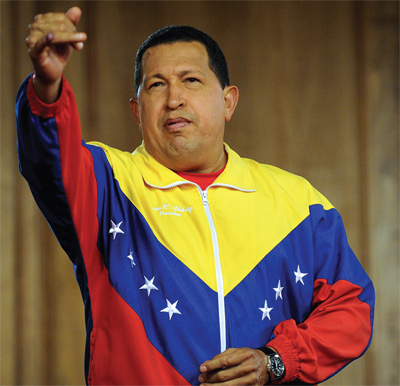
    NAME: Hugo Rafael Chávez Frías
    OCCUPATION: World Leader
    BIRTH DATE: July 28, 1954
    DEATH DATE: March 05, 2013
    EDUCATION: Venezuelan Academy of Military Sciences

    CARACAS (TIP): Venezuela president Hugo Chavez died on 6th March, 2013. He was 58 and was suffering from cancer since a couple of months. With the death of Chavez, the future of Latin America is now uncertain.

    The news of death of Chavez was announced by Vicepresident Nicholas. He spoke to the television reporters from Caracas military hospital. Chavez was seen as a populist leader by the supporters. His critics called him neo fascist. He was an engaging speaker and charismatic personality.

    Hugo Chavez was admitted into the hospital on 18th February, 2013. It was decided to continue the chemotherapy treatment. Earlier, he was operated for cancer in Cuba. That was the fourth cancer surgery he underwent since June, 2011. Hugo Chavez was the president of Venezuela for 14 years.

    He became the symbol of Latin America. In December 2012, he went to Cuba and was out of public sight. There were many rumors about his health. A few photos were released in January which showed him on the bed in a hospital. He was looking at his two daughters who were beside him. Chavez was the favorite leader for poor. He spent the country’s revenue earned from oil on building houses for poor, health, food and education of them. Other Latin America leaders who followed Chavez have lost a good friend with the death of Chavez. Chavez’s body is kept in the military academy for people and other leaders to visit.
    Biography
    Born in Sabaneta, Venezuela, on July 28, 1954, Hugo Chávez attended the Venezuelan military academy and served as an army officer before participating in an effort to overthrow the government in 1992, for which he was sentenced to two years in prison.

    Chávez became president of Venezuela in 1999. Early into his presidency, he created a new constitution for the country, which included changing its name to the Bolivarian Republic of Venezuela. He later focused his efforts on gaining control of the state-run oil company, which stirred controversy and led to protests, strained relations with the United States and other nations, and Chávez briefly being removed from power. His actions included selling oil to Cuba and resisting efforts to stop narcotic trafficking in Columbia. In 2006, Chávez helped create the Bolivarian Alternative for the Americas, a socialist free-trade organization. He died on March 5, 2013, at age 58, following a long battle with cancer.
    Failed Coup Attempt
    Born Hugo Rafael Chávez Frías on July 28, 1954, in Sabaneta, Venezuela, Hugo Chávez was the son of schoolteachers. Before becoming known for his reform efforts and strong opinions as president of Venezuela (1999-2013), Chávez attended the Venezuelan Academy of Military Sciences, where he graduated in 1975 with a degree in military arts and science. He went on to serve as an officer in an army paratrooper unit.

    In 1992, Chávez, along with other disenchanted members of the military, attempted to overthrow the government of Carlos Andres Perez. The coup failed, and Chávez subsequently spent two years in prison before being pardoned. He then started the Movement of the Fifth Republic, a revolutionary political party. Chávez ran for president in 1998, campaigning against government corruption and promising economic reforms.
    Venezuelan President
    After taking office in 1999, Chávez set out to change the Venezuelan constitution, amending the powers of congress and the judicial system. As a part of the new constitution, the name of the country was changed to the Bolivarian Republic of Venezuela. As president, Chávez encountered challenges both at home and abroad.

    His efforts to tighten his hold on the state-run oil company in 2002 stirred up controversy and led to numerous protests, and he found himself removed from power briefly in April 2002 by military leaders. The protests continued after his return to power, leading to a referendum on whether Chávez should remain president. The referendum vote was held in August 2004, and a majority of voters decided to let Chávez complete his term in office.

    Hostility Towards the U.S.
    Chávez was known for being outspoken and dogmatic throughout his presidency, refusing to hold back any of his opinions or criticisms. He insulted oil executives, church officials and other world leaders, and was particularly hostile with the United States government, which, he believed, was responsible for the failed 2002 coup against him. Chávez also objected to the war in Iraq, stating his belief that the United States had abused its powers by initiating the military effort. He also called President George W. Bush an evil imperialist.

    Relations between the United States and Venezuela have been strained for some time. After taking office, Chávez sold oil to Cuba-a longtime adversary of the United States-and resisted U.S. plans to stop narcotics trafficking in nearby Colombia. He also helped guerrilla forces in neighboring countries. Additionally, during his presidency, Chávez threatened to stop supplying oil to the United States if there was another attempt to remove him from power. He did, however, donate heating oil to help the victims of Hurricane Katrina and Hurricane Rita, which destroyed numerous fuel-processing facilities.
    International Collaboration
    Regardless of the state of Venezuela’s relationship with the United States, while in office, Chávez leveraged his country’s oil resources to form connections with other nations, including China and Angola. In 2006, he helped create the Bolivarian Alternative for the Americas, a socialist free-trade organization joined by Fidel Castro, president of Cuba, and Evo Morales, president of Bolivia. Chávez was also an active member of the Non-Aligned Movement, a group of more than 100 countries, including Cuba, Iran and several African nations.
    Declining Health and Death
    Chávez discovered that he had cancer in June 2011, following a surgery to remove a pelvic abscess, and from 2011 to early 2012, he underwent three surgeries to remove cancerous tumors. Prior to his third surgery, in February 2012, Chávez acknowledged the severity of the operation as well as the possibility of not being able to continue his service as president, and subsequently named Venezuelan Vice President Nicolas Maduro as his successor.

    Due to his declinging health, Chávez was prevented from being inaugurated for a fourth term in January 2013. Following his years-long battle with cancer, Hugo Chávez died on March 6, 2013, at age 58, in Venezuela. He was survived by his wife, Maria Isabel Rodriguez, and five children: Rosines, María Gabriela, Rosa Virginia and Hugo Rafael.

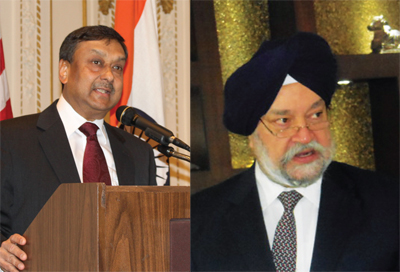
  • Ambassador Hardeep S. Puri And Consul General Prabhu Dayal Retire

    Ambassador Hardeep S. Puri And Consul General Prabhu Dayal Retire

    NEW YORK (TIP): Two senior Indian diplomats posted in New York retired on February 28. Ambassador Hardeep S. Puri, India’s Permanent Representative to the United Nations retired after a brilliant diplomatic career spanning 39 years. Mr. Puri had joined the Indian Foreign Service at the age of 22. Mr. Puri had joined as PR in March, 2009 and had superannuated in 2012. But he was given an extension for one year. During his tenure, India presided twice over the Security Council.

    Known as an exceptionally dynamic diplomat, Mr. Puri can solely be attributed for the many successes India has found itself being lauded with at the United Nations. His vision and efforts have helped India play a pivotal role at the United Nations. It would take volumes to do justice to the man who contributed so much not only for India but for the world at large, during his four year tenure as India’s Permanent Representative to the United Nations. One of the most loved and admired diplomats, he won many friends for India and minimized opposition to India which all contributed to India’s strength at the world body.

    Ambassador Puri’s relentless working was much in evidence when The Indian Panorama team of Prof. Indrajit S. Saluja and Pooja Premchandran walked in to his office February 25. Ambassador Puri was working feverishly on a file, to meet a deadline. He was to give an interview to another news agency and then follow it up with a reception he had hosted for the media. And, as we learnt later, he was to proceed to Washington immediately after the reception which all meant he would hit the bed in early hours of February 26 and follow up with meetings in the morning. In an exclusive interview with The Indian Panorama, Ambassador Puri relived his diplomatic pilgrimage, speaking from the heart, of his experiences and moments of joy as well as despair. We found him reminiscing, with eyes closed for a jiffy, and then picking up the thread of conversation. Obviously, he was getting nostalgic. Here are the excerpts.

    Q. How do you feel when you are ready to demit your office after having a distinguished career as a diplomat, and more particularly, as one of the best known Permanent Representatives of India to the United Nations?
    This is not just handing over the PR of New York. This is the end to a 39-year old service to the ministry and the government. I have a deep sense of satisfaction, a sense of fulfillment that I have been able to devote the bulk of my life to the nation. I joined the Foreign Service at the age of 22. I am 61 now. So I have a deep sense of satisfaction.

    Q. Was serving in the Foreign Service always your ambition?
    Unlike most of my other colleagues I was born into the Foreign services. My father Bhagat Singh Puri was a part of the ministry for foreign affairs. I undertook my first journey accompanying him to Bonn when I was four years old. For me the ministry and the Foreign Service have been the only life I know. The kind of experience Foreign Service provides and the kind of opportunities that come your way lead to self-growth; it leads to widening one’s horizon. I have seen the country evolve. Slowly, but surely.

    Q. Surely you have one too many wonderful experiences to share with our readers?
    I have a very funny story to tell. When I was accompanying my father on an international posting, we underwent an internal form of McCarthyism. They suspected a Communist under every bed. My father was posted in Belgrade, former Yugoslavia. Those were the days when there was no air travel. We took ship to reach our destination. When we reached Geneva, there was a telegram waiting for my father diverting him to Bonn. The reason was that my grandfather was an educationist. He was a principle at a Khalsa school in Delhi. He had apparently reprimanded a teacher. To get even with my grandfather he decided to write an anonymous letter to the intelligence bureau stating that Sardar Kartar Singh Puri (my grandfather) subscribed to a paper titled Preet Larhi, which was a left of center newspaper. This lead to my father getting posted in Bonn instead of Belgrade. But Bonn was a wonderful experience. I studied in a Catholic school. My younger brother studied in a Protestant school. So everyone wondered, what kind of people are they? They wear a turban on their heads and have their children sent to different kinds of school. We had to explain to them that we were Sikhs. There were not too many Sikhs there back then. In all, Bonn was a terrific experience.

    Q. Can you recall your journey in foreign services?
    I married into the foreign services. We had postings together in Tokyo, Delhi, Geneva and in Colombo. Then we came back to Geneva where I joined the United Nations and she joined a mission. Even after that I traveled to many different places.

    Q. You seem to have trained your staff well. But do you think, without you at the helm they will be able to deliver?
    My staff was born well trained. Let me make that clear. I was very lucky to get one of the best teams there is. And even after I joined I had the opportunity to select a few exceptionally skilled staff members. At present, I am also in the process of completing a book about my selected speeches in the United Nations and many exclusive photographs. Therefore, I have decided to dedicate this book to my staff. They are the ones who write these wonderfully woven speeches and I thought it best to acknowledge them.

    Q. Of all the issues that you faced, which one was the most significant to you?
    I joined the Permanent Mission at the UN in March 2009. When I came here, clearly the highest priority was to get a seat in the Security Council. In 2006, it was an act of courage by my predecessor and his team to recommend contesting election for a seat on the Security Council. On the previous occasion in 1996, we contested an election against Japan and we were traumatized. We received only about 40 or 45 votes whereas Japan got about 140. It was a complete misjudgment. And in the last election we received 187 out of 190 votes in total. But our critics questioned our performance and undermined it saying that we did not have any opponent. To that I would like to reply that Kazakhstan contested the elections twelve years before I joined. So it was an act of courage by my predecessor to recommend participating in elections in 2007. When I arrived we had about 37 reciprocal votes. We needed 120 to win. At this point I felt awkward to meet and talk about the elections with my Kazakhstan counterpart. I always found myself wondering what I would tell her with just about 37 votes in my kitty. I was always nice to her but we never discussed the election issues. Eventually we received half of the total number of votes. So we crossed the fifty percent mark. At this point I knew that Kazakhstan did not have enough votes as us to win. I was now more confident about India winning the elections. Subsequently, we contested and received 187 out of a total of 190 votes, a miss of just three votes. It was a record of sorts. It will surely stand in the books. We worked extremely hard. We fought many elections. The election at ACABQ (Advisory Committee on Administrative Budgetary Questions) was one of the toughest elections. It was a straight fight between India and China to join the inspection unit. Our contestant was UN Ambassador to Geneva, Mr. Gopinathan. For three seats we had 5 candidates. In an electoral college of 192, India received 165 votes, Japan got about 140 and China got 137. Saudi Arabia withdrew its participation and Pakistan lost. It is indicative of India’s popularity and strength. We have won every election we contested. This also proved that India is a constructive part of the UN. We played an important role in establishing (albeit behind the screens) UN Women. We have helped in bridging gaps between the West and many other democracies. On the Security Council we couldn’t have done more. We had two Presidencies of the Council, in August 2011 and again in November 2012. We took up key issues such as peacekeeping, terrorism, women, peace, piracy and development, etc. We received excellent reviews. We left the Council extremely gratified. We acquitted ourselves with dignity. After 19 years we have a more enduring presence in the Security Council. My advice would be that we must continually contest for reelection or we must continually fight for Security Council reforms.

    Q. What is India’s position on Syrian crisis?
    On Syria, to date the only common position remains the Presidential stand that we received in August 2011. The operative part is that both sides need to walk away from violence. We also need to note that our stand during the Libyan crisis makes sense with the passage of time. During the peak of this crisis, the perception was that Gaddafi was a tyrant tormenting peaceful protestors. But now we know that the protestors weren’t that peaceful. There were scores of jihadists involved in the fight. Libya was the second largest contributor to Al Qaeda. The grievance against Gaddafi was strong and he did not receive any support from the Security Council either. After all, he was the leader who walked into the Security Council and tore up the UN Charter before the representatives of UN. So our question is that if there is a crisis should the immediate response be an attack from the international community? Or should we not try and solve the problem? In Libya, we had none of the defined war crimes. And now similarly in Syria, we have about 20000 tons of arms coming from the gulf. These are used to destabilize Syria, Algeria and Mali. At the end of the day, when the history is written we will notice that India has always been a voice of moderation. Many countries acted under media pressure and opted for more violent response. Yet when the death toll keeps mounting, can we expect the two parties to resolve the conflict? Especially when this was a part of the Six-point plan formulated by Kofi Annan? In any negotiation its take two to tango. If we tell Assad to have a discussion he will probably do that too. And someone needs to do that with the armed opposition as well. Opposition is not a group who are peaceful and innocent. These are armed jihadists.

    Q. We had Lakhdar Brahimi approaching the opposition as soon as he took office. Nothing sufficed out of that either?
    I was hopeful that maybe he could have done something but unfortunately he couldn’t. Currently, the situation in Syria looks bleak. The consequences are going to be disastrous. There will be sectarian violence and it will spiral down further. Kofi Annan said brilliantly that when Libya exploded it will destabilize the country, but when Syria explodes it will destabilize the whole Middle Eastern region. Syria constitutes a different kind of demographics and so do many other countries in the region. We can only hope that better sense prevails soon and there is an end to the meaningless violence.

    Q. What are your plans for the future?
    I am not leaving New York; just the office. I am extremely excited. I now plan to reinvent myself. In my whole career, I never took a proper leave. I will also write exclusively for The Indian Panorama. So I look forward to this now. The

    Indian Panorama wishes Ambassador Hardeep Singh Puri all happiness and fulfillment in his new avatar as a retired career diplomat.

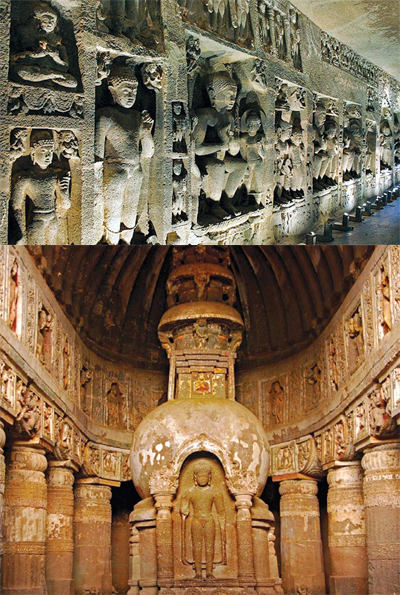
  • Ajanta Caves A Legacy From The Golden Age

    Ajanta Caves A Legacy From The Golden Age

    Ajanta and Ellora are the pride of Maharashtra. The rock-cut caves of both these sites are world famous and illustrate the degree of skill and artistry that Indian craftsmen had achieved several hundred years ago. Ajanta dates from 100 B.C. while Ellora is younger by some 600 years. The village of Ajanta is in the Sahyadri hills, about 99 kms. From Aurangabad; a few miles away in a mammoth horseshoe-formed rock, are 30 caves overlooking a gorge, `each forming a room in the hill and some with inner rooms.

    Al these have been carved out of solid rock with little more than a hammer and chisel and the faith and inspiration of Buddhism. Here, for the Buddhist monks, the artisans excavated Chaityas (chapels) for prayer and Viharas (monasteries) where they lived and taught. Many of the caves have the most exquisite detailed carvings on the walls, pillars and entrances as well as magnificent wall paintings.

    These caves were discovered early in the 19th century quite by chance by a party of British Officers on manoeuvres. Today the paintings and sculptures on Buddha’s life, belonging to the more mellow and ritualistic Mahayana Buddhism period, are world famous. Copies of them were shown in the Crystal Palace exhibition in London in 1866. These were destroyed in a fire there.

    Further copies were published soon afterwards and four volumes of reproductions were brought out in 1933 by Ghulam Yazdani, the Director of Archaeology of the then Hyderabad State. Ajanta has formed an epicentre of interest for those who appreciate and are eager to know more about Indian history and art. It is a protected monument under the Archaeological Survey of India and has been listed in the World Heritage list of monuments.

    The 30 caves of Ajanta were created over a span of some 600 years. In their range of time and treatments they provide a panorama of life in ancient India and are a source of all kinds of information… hair styles, ornaments, textiles, musical instruments, details of architecture, customs etc.

    It was from this collection of classical Indian art that a particular style was formed that traveled with Buddhism to many parts of the world. Similar paintings can be seen in Sigiriya in Sri Lanka, Bamiyan in Afghanistan, temples and shrines in Tibet, Nepal, China and Japan. Royal patronage made Ajanta possible. Professional artists carried out much of the work and each contributed his own individual skill and devotion to this monumental work.

    Visitors often ask how the artist who painted the detailed frescoes and chiseled out the intricate carvings, managed to work in the dark interiors of the caves. It has been noticed that the caves are illuminated by natural light for part of the day and it is presumed that metal mirrors or sheets of white cloth were used to reflect sunlight into the inner recesses.

    Here, briefly, are some of the highlights of the caves. In the Cave 26, the sculpture is elaborate and beautiful though the painted frescoes are incomplete. The arched chapel window set in an elegantly simple façade, is repeated in an elaborate frontage in Cave 19 with its complete Chaitya and a slender votive stupa enclosing a standing Buddha at the far end. Of particular note is a sculpture of a seated Nagaraja with his consort and female attendant.

    Cave 16 is an elegant Vihara with an inscription that mentions the king and his minister who had the cave built. Here a towering Buddha sits preaching. He is flanked by attendants with fly whisks.

    There are undamaged portions of the wall paintings that are clear and vibrant in Caves 1, 2, 16 and 17. Cave I has the well known Bodhisattva Padmapani which is a wonderful portrayal of tender compassion. A gentle figure holding a lotus delicately in one hand. In the same cave is the golden figure of Avalokiteswara, elaborately adorned. The women, nymphs, princess and attendants are elegant and beautifully attired.

    Here also is a lively panel of dancing girls and musicians. In Cave 2 there is a detailed panel of Queen Maya’s dream, of the white elephant which was interpreted by royal astrologers to mean the birth of an illustrious son. The row upon row of Buddhas, can be seen in this cave. In Cave 17, there is a flying apsara in a fashionable embroidered turban and splendid jewellery.

    It is worth walking away from the caves in order to look back on to the horseshoe gorge. The ingenuous water cistern system can be seen which must have provided water for the monks and their visitors. Ajanta was on the ancient trade route leading to the coast so there must have been considerable activity and many visitors. Nobody really knows what life was like in those times and visitors can interpret the past as they wish, which is perhaps yet another secret charm of Ajanta.

  • Britain’s Hat-Tip Towards Honest History

    Britain’s Hat-Tip Towards Honest History

    PM Cameron’s admission of colonialshame, while short of an apology orreparations to the heirs of thoseslaughtered, is welcome by all who insistthat history must be honest and not a tool ofadded insult to those who were victims ofpast crimes, “monstrous” or otherwise.The rule of law abandoned “trial bycombat” in favor of “trial by jury,” so thatright, not might, prevail.

    In a social mediaconnectedworld the “governed” require oftheir respective governments to be “for thepeople,” and every government is charged, ifit is to survive, to strip away false denials ofpast misconduct and help history becomehonest. That core issue, honest history, is apostulatic foundation to the rule of law,mutual respect in the comity of nations and”…to form a more perfect world.”

    In Asiaalone, we see the continuing damage ofdishonest history from the “disputedislands” between Japan and China,uncompensated “Korean Comfort Women,”Tibet, Kashmir, and the list goes on.I salute PM Cameron’s genuine remorseon behalf of a nation, as he seeks to havethe sun re-shine on the British isles. Finally,I have felt that the “strategic partnership”between our nation and India needed to bere-calibrated up to a “special relationship.

    “I’m jealous that PM Cameron hasannounced his intentions to do so before we,the United States do, and accordingly I callupon Secretary of State John Kerry, whoselegacy has added greatness waiting to berecorded in history as he seeks to re-engagethe Middle East peace process, to cause a”special relationship” between the UnitedStates and the Sub-Continent.”

    Ravi Batra
    Chair, National Advisory Council onSouth Asian Affairs (NACSAA)
    Cell: 914 882 6382

  • As I See It : The Origin Of Wars

    As I See It : The Origin Of Wars

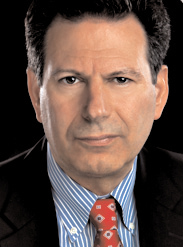
    Just as Herodotus is the father ofhistory, Thucydides is the father ofrealism. To understand thegeopolitical conflict zones of the 21stcentury, you must begin with the ancientGreeks. Among the many importantlessons Thucydides teaches in his Historyof the Peloponnesian War is that whatstarts a war is different from what causesit.Thucydides chronicles how thePeloponnesian War began in the latterpart of the late fifth century B.C. withdisputes over the island of Corcyra innorthwestern Greece and Potidaea innortheastern Greece. These places werenot very strategically crucial in and ofthemselves. To think that wars must startover important places is to misreadThucydides.

    Corcyra and Potidaea, amongother locales, were only where thePeloponnesian War started; not whatcaused it. What caused it, he writes in thefirst book of his eight-book history, wasthe growth of perceived maritime powerin Athens and the alarm that it inspiredin Sparta and among Sparta’s allies.Places like Corcyra and Potidaea, and thecomplex alliance systems that theyrepresented, were in and of themselvesnot worth fighting a war over — a war thatwould last more than a quarter century,no less. That didn’t matter. They werepretexts.No one understood this distinction,which was perhaps made first inliterature by Thucydides, better thanThucydides’ most distinguishedtranslator, the 17th century Englishphilosopher Thomas Hobbes.

    Hobbeswrites that a pretext for war over someworthless place “is always an injuryreceived, or pretended to be received.”Whereas the “inward motive to hostility isbut conjectural; and not of the evidence.”In other words, the historian or journalistmight find it hard to find literaldocumentation for the real reasons statesgo to war; thus, he often must infer them.He often must tease them out of thepattern of events, and still in many casesbe forced to speculate.In applying the wisdom of Thucydidesand Hobbes to conflict zones across Asia,a number of insights may be obtained.The South China Sea conflict, forexample, becomes understandable.

    Hereare geographical features which, in theirown right, are valuable because of themeasurable energy deposits insurrounding waters. They also fall in thepath of sea lines of communications vitalfor access to the Indian Ocean in onedirection, and the East China Sea and Seaof Japan in the other, making the SouthChina Sea part of the word’s globalenergy interstate. Nevertheless, let’sassume one is somewhat dismissive ofthese facts and says such specks of dryland in the middle of a great sea are inany case not worth fighting a war over.Thucydides and Hobbes would pronouncehim wrong. They would say that it is theperceived rise of Chinese sea power — andthe alarm that it inspires amongAmerica’s formal allies and de facto allies– that, in turn, could be the real cause ofconflict sometime over the coming decade.

    Thus, the features in the South China Sea,as important as they might be, wouldmerely be the pretext.Indeed, nobody would prefer to say theyare provoking a conflict because of risingChinese sea power; rather, they would saythey are doing so because of this or thatinfringement of maritime sovereigntyover this or that islet. All the rest mighthave to be conjectured.The same is true with the conflictbetween China and Japan over theSenkaku/Diaoyu islands in the EastChina Sea. Even if one argues that theseislets are worthless, he or she would missthe point. Rather, the dispute over theseislets is a pretext for the rise of Chinesesea power and the fear that it inspires inJapan, helping to ease Japan out of itsquasi-pacifistic shell and rediscovernationalism and military power. (And bythe way, the rise of Chinese sea powerdoes not mean that China is able toengage the U.S. Navy in fleet-on-fleetbattle.

    It only means, for example, thatChina can use the placement of warshippatrols, along with economic anddiplomatic pressure and the staging ofprotests at home, all together in a seriesof “combination punches” to underminethe Japanese and other East Asian rivals.)Then there is North Korea. With a grossdomestic product of only that of Latvia orTurkmenistan, it might be assumed to beanother worthless piece of real estate.Geography tells a different story. Juttingout from Manchuria, the KoreanPeninsula commands all maritime trafficin northeastern China and traps in itsarmpit the Bohai Sea, home to China’slargest offshore oil reserve.

    China, as I’vepreviously written, favors an economictakeover of the Tumen River region –where China, North Korea and Russiaintersect, with good port facilitiesfronting Japan. The fate of the northernhalf of the Korean Peninsula will helpdetermine power relationshipsthroughout northeastern Asia, therefore.Of course, all of this, as Thucydides andHobbes would say, would have to beinferred, conjectured. North Korea’serratic behavior could start a conflict, butthe causes might also lie elsewhere.India and China have territorialtripwires in the Himalayan foothills, anarea which, again, might be judged bysome as worthless. But these tripwiresbecome more meaningful as Indiapartially shifts its defense procurementsaway from confronting Pakistan andtowards confronting China.

    It is doing sobecause the advance of technology hascreated a new and claustrophobicstrategic geography uniting India andChina, with warships, fighter jets andspace satellites allowing each country toinfringe on the other’s battle space. If aconflict ever does erupt between these twodemographic and economic behemoths, itprobably will not be because of thespecific reasons stated but because ofthese deeper geographical andtechnological causes.As for India and Pakistan, I rememberdecades ago sitting with a group ofjournalists in Peshawar, reading aboutPakistani and Indian troops confrontingeach other on the Siachen Glacier inKashmir, terrain so high the troops had towear oxygen masks.

    Could such territorybe worth fighting over? Again, theconflicting claims were merelysymptomatic of a deeper dispute over thevery legitimacy of these states arising outof the partition of the subcontinent in1947.Of course, Israel fears for its ownsurvival, were Iran to develop adeployable nuclear bomb. This is a casewhere the start of a conflict (by theUnited States, acting as Israel’s proxy)may largely overlap with its cause.Nevertheless, Israel has other fears thatare less frequently expressed.

    Forexample, a nuclear Iran would make everycrisis between Israel and Hezbollah,between Israel and Hamas, and betweenIsrael and the West Bank Palestiniansmore fraught with risk. Israel cannotaccept such augmentation of Iranianpower. That could signal the real cause ofa conflict, were Israel ever able to dragthe United States into a war with Iran.In all these cases, and others, the mostprofound lesson of Thucydides andHobbes is to concentrate on what goesunstated in crises, on what can only bededuced. For the genius of analysis lies inquiet deductions, not in the mereparroting of public statements. Whatstarts conflicts is public, and thereforemuch less interesting — and less crucial –than the causes of conflicts, which arenot often public.

    (The author is Chief GeopoliticalAnalyst for Stratfor, a private globalintelligence firm, and a non-residentsenior fellow at the Center for a NewAmerican Security in Washington. Hehas been a foreign correspondent forThe Atlantic for over a quartercentury. He is the author of 14 bookson foreign affairs and traveltranslated into many languages.)

  • China Urges Calm After DPRK Nuclear Test Announcement

    China Urges Calm After DPRK Nuclear Test Announcement

    BEIJING (TIP): A Foreign Ministryspokesman called for calm andrestraint from all concerned partieson Thursday after the DemocraticPeople’s Republic of Korea (DPRK)vowed to conduct “a higher-levelnuclear test.””It is in the common interests of allparties concerned to maintain peaceand stability on the Korean Peninsulaand achieve the denuclearization ofthe peninsula,” spokesman Hong Leisaid at a regular news briefing.”(We) hope all concerned partieswill keep calm and act in a cautiousand prudent way, as well as refrainfrom taking any action that could leadto the progressive escalation oftensions,” the spokesman said.

    The DPRK National DefenseCommission issued a statement inresponse to a resolution adoptedTuesday by the UN Security Councilthat condemns a DPRK satellitelaunch that took place in December2012.”We will not hide the fact that avariety of satellites and long-rangerockets will be launched and a nucleartest of a higher level will be carriedout during the next phase of the anti-U.S. struggle,” said a statementcarried by the KCNA news agency.The 15-member UN SecurityCouncil on Tuesday unanimouslyapproved Resolution 2087, whichrequires the DPRK to comply with allrelevant resolutions approved by theSecurity Council and to refrain fromusing ballistic missile technology forany launches.The resolution also suggests seeking apeaceful, diplomatic and politicalsolution for related issues and advocatesthe renewal of the six-party talks.

    TheNational Defense Commission alsodeclared that the six-party talks, as wellas a related Sept. 19, 2005 jointstatement, will “no longer exist,” addingthat the UN Security Council “has beenreduced to an organization bereft ofimpartiality and balance.” Hong said thesix-party talks are still an effectivemechanism to realize thedenuclearization of the peninsula.The six-party talks, a negotiationmechanism that includes the DPRK,the Republic of Korea (ROK), theUnited States, China, Japan andRussia, were launched in 2003, butstalled in December 2008. The DPRKquit the talks in April 2009.

    Hong said all concerned partiesshould boost dialogues in order toaddress their concerns, as well asimplement all of the goals set in theSept. 19, 2005 joint statement.In the joint statement, the DPRKcommitted to abandoning all nuclearweapons and existing nuclearprograms and returning, at an earlydate, to the Treaty on the Non-Proliferation of Nuclear Weapons andto International Atomic EnergyAgency safeguards.The United States affirmed that ithas no nuclear weapons on the KoreanPeninsula and has no intention toattack or invade the DPRK withnuclear or conventional weapons. TheROK reaffirmed its commitment notto receive or deploy nuclear weaponsin accordance with the 1992 JointDeclaration of the Denuclearization ofthe Korean Peninsula, while alsoaffirming that no nuclear weaponsexist within its territory.”China is ready to make joint effortswith the international community toachieve these goals,” Hong said.

  • An Indian American’s Plea For Economic Partnership Between India And US

    An Indian American’s Plea For Economic Partnership Between India And US

    An Overview of the Economy in India
    I. Overview

    India is Asia’s third largest economy in nominal GDP. It hasa GDP of over $1.6 trillion, growing even during this globalrecession at approximately 6% per annum.

    II. India Economic Reforms
    How did India reach this point?In 1991, faced with a balance of payment crisis, India beganthe process of liberalizing its economy. While India has hadmany successive governments since 1991, with different rulingparties, the overall direction of liberalization has remainedthe same. Some may call it slow, plodding, reform, whichstudiously ignores contentious issues such as labor lawreforms. However, the fact is that India is today transformedfrom a socialist economy, with growth rates of 3 to 3.5%, to amarket economy, with an average growth rate of over 6%.

    Let’s put this into perspective:

  • Since 1991, India’s GDP has more than quadrupled;
  • Today, India is the third largest economy in the world inpurchasing power parity and tenth largest in nominal GDP;
  • Its foreign exchange reserves have grown from anegligible level to about $300 billion;
  • It has great strengths ininformation technology, auto components,telecommunications, chemicals, apparels andpharmaceuticals;
  • India has become one of the consumption and growthengines of the world;· IMF forecasts that India is expected to continue its growthmomentum for the next 20 years becoming five times itspresent size.
  • Poverty Reduction
    The best testimony to India’s economic reforms is the factthat, depending on how you define poverty, they helped 100 to300 million people to escape poverty. The history of economicreforms in India has proved that there is a direct correlationbetween the progress of economic reforms and elimination ofpoverty… more economic reforms in India have alwaystranslated into less poverty.

    III. What are the Key Drives of India’s Economy
    There are four key drivers of India’s economy:
    (i) Savings Rate

  • The first key driver is India’s high savings rate;
  • India has a savings rate of approximately 30%;
  • Which mean approximately $0.5 trillion dollars isavailable each year from domestic savings as investiblecapital;
  • India’s savings rate went up from 20% in 1991 to 30%today;
  • So as India’s GDP grows, India’s savings grow, both inactual numbers and percentage terms, and provide the criticalcapital require to finance its further growth;
  • At the same time, unlike China, India’s savings rate is notso high as to choke-off domestic demand.
  • (ii) Service Sector
    The second driver of India’s growth is its service sector which has:

  • Increased its share of the GDP from 41% in 1991 to over57%;
  • Creating an additional wealth of over $6.5 trillion;
  • This sector has grown at a rate of approximately 10%annually in the last decade;
  • It provides employment to 23% of the work force and isgrowing quickly; and
  • Accounts for approximately 33% of India’s total exports.
  • The biggest growth engines of this sector continue to be:

  • information technology and information technologyenabled services;
  • which have grown at a compound annual growth rate ofapproximately 20% over the last few years; and
  • generate a cumulative annual revenue of about $75 billion.
  • Cheap labor, low rents, tax incentives made India a hub for ITservices and outsourcing.While some of these advantages arebeing eroded, India’s service sector, nevertheless, continues togrow, with a low-end services moving to cheaper destinationslike Malaysia, Bangladesh, and Philippines and high-end valueadded services moving to India.

    (iii) Demographic Dividend
    The third key driver of the India’s economy is itsdemographic dividend.

  • India is an old country getting younger every day;
  • Half of India’s population is under 30 years old;
  • This will lead to an addition of 120 million people to theworking population in the next decade;
  • which already constitutes over 60% of the presentpopulation;
  • According to PricewaterhouseCoopers’ forecast, theworking age population growth rate in India will be thehighest among major economies in the world;
  • According to the United Nations, the median age of Indianpopulation is the lowest among the major economies and willcontinue to remain the lowest until 2020;
  • For instance, according to the United Nations, the medianage of population in India in 2020 will be 27.5 years, which willcompare very favorably to 37.5 years in China and the U.S., 42.5years in Europe and 47.5 years in Japan;
  • This will provide India with a requisite workforce, whichwhen properly educated and trained, would be a key driver forthis growth; and
  • It would also lead to a huge increase in the demand forgoods and services typically associated with the youngpopulation because a young wage earner starting life needseverything a house (and everything that goes withit), car, entertainment etc. and in his/her optimism isgenerally a liberal spender.
  • (iv) Urbanization
    The fourth key driver of India’s economy is increasingurbanization.

  • McKinzie forecasts that by 2030 the urbanized populationof India would increase by 70% to 590 million people;
  • The increasing urbanization is projected to requireinvestments in housing, education, healthcare, urbantransportation, telecommunications and sports facilities;
  • For example, increasing urbanization would require Indiato add 700 to 800 million square feet of residential andcommercial space every year. That is like building a brandnew Chicago every year.
  • IV. What are the Key Challenges to India’s Growth
    There are four key challenges to India’s growth:
    (i) Infrastructure

    One of the biggest challenges that India faces is the lack ofinfrastructure. Almost every statistic on India’s infrastructurespeaks of its inadequacy.The Indian government plans to counter the problem withan investment of $1 trillion during 2012-2017, half of whichwill be in the private sector, with significant public/privatepartnerships. A significant portion of this investment isplanned to be made in the construction of a high-speed roadnetwork, dedicated rail-freight corridor, intra-city connectivitythrough metros, power projects and telecommunicationnetworks. The road and metro rail capacities in India areexpected to increase by 20 times during the next two decades.All major airports are being modernized to internationalstandards. Therefore, once India gets its act together oninfrastructure, India’s infrastructure sector, with its massivecapital outlays and multiplier effect on growth, could be thebiggest driver of India’s growth and the biggest opportunityfor foreign investors.

    (ii) Massive Inefficient Public Sector
    The second key challenge for India is the massive inefficientpublic sector, a vestige of its socialist past. The Indiangovernment has made some progress towards privatization ofthe public sector. Generally, it has preferred to dribble downequity in the public sector companies, rather than sellstrategic stakes in government companies. However, the paceof privatization in India continues to be disappointing.

    (iii) Agriculture
    The third key challenge for India is its agricultural sector.Agriculture which supports over 50% of India’s populationsaw a decline from 32% of the GDP to approximately 16% ofthe GDP during the last two decades, which has resulted inincreasing disparity between the rural population and theurban population. This is a challenge that the Indiangovernment needs to tackle head on with a quantum leap insupply chain management and agricultural technology. TheIndian government has increased its budgetary support foragriculture from $800 million in 2001 to $2.7 billion in 2011.For all its shortcomings, agriculture sector is India’s mostpromising sector. Today, 40% of the total agricultural producein India which leaves the farm gates does not reach theconsumers because of lack of roads, refrigeration facilities,storage facilities, cold storage facilities and other supply chainissues. Therefore, as India builds its infrastructure andstrengthens its supply chain, the agricultural sector wouldreceive a boost and could become a key driver of the Indianeconomy.(iv) Manufacturing Sector The fourth key challenge ofIndia’s economy is its manufacturing sector. India’smanufacturing sector also has not done as well as its servicesector and India’s share in the world manufacturing is stillrelatively modest. However, rising middle class and consumerdemand is boosting India’s manufacturing sector. The grosscapital formation in industry has grown at a compoundannual growth rate of 11.76% between 2005 and 2010.

    However, India’s manufacturing sector also has greatpromise:

  • First, the development of the Delhi-Mumbai IndustrialCorridor will give a great boost to India’s manufacturingsector.
  • Second, the key challenge to India’s manufacturing sectoris that more than half of manufacturing is done in theinefficient, public sector. Therefore, as India privatizes itspublic sector, it would add efficiency to the manufacturingsector which could give the manufacturing sector a quantumleap.
  • Third, Indian manufacturing sector has struggled againstan artificially low RNB. As China, under the U.S. pressure,allows RNB to appreciate, India’s manufacturing sector willbecome more competitive.
  • V. How can the U.S. and India Help Each Other?
    U.S. is a rich developed economy that needs stable newmarkets to fuel its growth. India is an emerging economy thatneeds large capital investments, know-how in critical areassuch as supply chain management and a market for its servicesector.

    VI. Conclusion
    The idea of the world’s two largest democracies, U.S. andIndia, working together in an economic partnership, so thateach becomes the growth engine of the other is “an idea whosetime has come” and as Victor Hugo said, “an invasion ofarmies can be resisted, but not an idea whose time has come.”

  • Starbucks expects India to be among top 5 global markets

    Starbucks expects India to be among top 5 global markets

    NEW DELHI (TIP): US coffee chain Starbucks, which opened its seventh store in the country on Wednesday, expects India to be among the top five global markets for the company in the long term. John Culver, President, Starbucks Coffee China and Asia Pacific, said, “We are committed to the Indian market for the long term and we are looking to grow our business aggressively, expand stores, make investments and offer locally relevant innovations.” He did not specify the company’s expansion plans or investment figures but said that India is expected to be among the top five global markets of the company in the long term.

    This is the company’s flagship store in New Delhi. It already has presence in the NCR region through two stores at the Delhi International Airport, besides four stores in Mumbai. Starbucks entered the Indian market in October 2012, and its stores operate under a 50:50 joint venture partnership between Starbucks Coffee Co and Tata Global Beverages called Tata Starbucks Ltd.

    He also said that the company was committed to ethically sourcing and roasting coffee through its partnership with Tata Coffee to elevate the story of the Indian coffee farmer, a unique initiative being undertaken in India. The store at Delhi reflected examples of Indian craft of weaving and sported handicrafts made by local artists.

    The company has kept the Indian palette in mind as the menu includes Indian cuisine like Murg Makhani Pie, Mutton Seek in Roomali Roti, besides also offering Tata Tazo tea which is a co-branded product under its partnership with Tata Global Beverages. On future locations that have been identified for opening new stores, Avani Saglani Davda, CEO, Tata Starbucks, said India offers diverse growth opportunities and the company will thoughtfully open stores in locations, “where customers want and expect us to be.”

  • Chinese Presence At Pak Port A Matter Of Concern: Antony

    Chinese Presence At Pak Port A Matter Of Concern: Antony

    BANGALORE (TIP): Pakistan’s decision to hand overthe strategic Gwadar port to China is a matter of“serious concern” for India, Defence Minister AKAntony said on February 7.“Chinese are now constructing that port on Pakistan’srequest. In one sentence, I can say that it is a matter ofconcern to us. My answer is simple andstraightforward,” he said at the Aero India pressconference here.

    The minister was responding to amedia query if the handing over of Gwadar port inPakistan to China would make India’s western frontiersmore vulnerable.Gwadar port is located at the apex of the Arabian Seaand the mouth of the Persian Gulf.It is also only about 400 km away from the Strait ofHormuz, a key global oil supply route. The minister’sremarks in the backdrop of reports in Chinese officialmedia that the port development was not an attempt bythe Chinese side to “encircle” India.

  • 70 Held In Crackdown Against Self-Immolation Protests In Tibet

    70 Held In Crackdown Against Self-Immolation Protests In Tibet

    BEIJING (TIP): Stepping up itscrackdown against self-immolation protestsin Tibet, China has detained 70 suspects fora string of suicides in November last year,coinciding with the once-in-a-decadeleadership change in China’s rulingCommunist Party.A total of 70 people have been detainedby the police in Huangnan of northwestChina’s Qinghai Province in connectionwith a string of self-immolations that haveoccurred since November 2012, state-runXinhua news agency quoted a senior policeofficer as saying today.

    Lyu Benqian, deputy chief of theQinghai Provincial Public SecurityDepartment, said 12 of the suspects wereofficially arrested over the self-immolationcases in the Huangnan TibetanAutonomous Prefecture.The self-immolation cases wereinfluenced by the separatism of the DalaiLama clique, as the Dalai Lama has prayedfor self-immolators and Tibetan separatistsoverseas flaunt them as “heroes”, he said.

    There was a big spurt in selfimmolationswith 23 such cases reported inNovember last year, the highest in onemonth apparently to coincide with the 18thParty Congress to elect a new leadership.About 95 to 100 Tibetans have so farcommitted suicide in the recent monthsprotesting Chinese rule in Tibet and callingfor the return of the Dalai Lama from exilein India.So far China has convicted sevenpersons, including a Buddhist monk, whowas given a two-year suspended deathsentence.

    “Some of the victims (of self-immolation)were frustrated and pessimistic in life, andthey wanted to earn respect by selfimmolation,”Lyu said while analysing themotive for the action.Last night, China’s state-run televisionaired a documentary accusing theDharamsala-based Tibetan Youth Congress(TYC) of orchestrating the incidents.The half-an-hour documentary, second byCCTV, has also accused the Tibetan serviceof the Voice of America (VOA) of passingon coded messages to some of the contactsin Tibet at the instance of Dalai Lamasupporters.

  • All Aboard As Millions Race Home For China’s Biggest Holiday

    All Aboard As Millions Race Home For China’s Biggest Holiday

    GONGXIAN, CHINA: Pushingthrough scores of passengers in theaisle of a cramped train at BeijingWest station, Chen Guolan couldbarely contain her excitement atjoining the world’s largest annualhuman migration.”I have been so busy working awayall year, and now I will soon be seeingmy family,” she said to a group ofstrangers sitting alongside her as shebegan an epic 2,000 kilometre journeyback to the quiet backwater she callshome.

    Chen is one of China’shundreds of millions of migrantworkers, who together make most ofthe 220 million train rides takenduring the 40-day travel season beforeand after the Lunar New Year.Around 7:30am she left the high-riseapartment where she works as adomestic worker for a family of sevenin the capital, a city of more than 20million people enduring sub-zeroFebruary temperatures and heavilypolluted air. Within 48 hours shewould be beside her husband and sonin the family home in a quiet, ruggedarea of the warmer south-westernprovince of Sichuan, where the treecappedmountains are hugged by mist,rather than toxic haze.

    Chen hadbought her 229 yuan ($37) ticket forthe 10.35am to Chongqing two weeksearlier, joining millions who haveclogged internet travel sites andqueued at train stations to ensure theywill be home for China’s mainnational holiday. Demand isphenomenal. For China’s 236 millionmigrant workers, it is the only time ofyear they can see their families.

  • Chinese New Year 2013

    Chinese New Year 2013

    Chinese Spring Festival, also called Lunar New Year,has more than 4,000 years of history. Being one ofthe traditional Chinese festivals, it is the grandestand the most important festival for Chinese people. It isalso the time for the whole families to get together, which issimilar with Christmas Day to the westerners. Originatingduring the Shang Dynasty (about 17th – 11th century BC),Spring Festival, which celebrates family reunion, is full ofrich and colorful activities, and new hopes with the adventof spring and flowers blossoming. People from differentregions and different ethnic groups celebrate it in theirunique ways.

    Festival Time
    The Spring Festival comes on the first day of Chineselunar calendar and lasts for almost half of a month. But infolk custom, this traditional holiday lasts from the 23rd dayof the twelfth month to the 15th day of the first month(Lantern Festival) in the lunar calendar. Among these days,the New Year’s Eve and the first day of the New Year is thepeak time of the festival. The exact days are different inevery year according to the lunar calendar. Schedule ofSpring Festival in recent years is offered in the followingtable.Chinese New Year begins according to the Chinesecalendar which consists of both Gregorian and lunar-solarcalendar systems. Because the track of the new moonchanges from year to year, Chinese New Year can beginanytime between late January and mid-February.

    Below isa chart that shows the beginning day of Chinese New Yearand the animal sign for that year.Chinese New Year is the longest and most importantfestivity in the Chinese calendar. The origin of ChineseNew Year is itself centuries old and gains significancebecause of several myths and traditions. Chinese New Yearis celebrated in China and in countries and territories withsignificant Chinese populations, including Hong Kong,Macau, Singapore, Thailand, Indonesia, Malaysia, Taiwan,Mauritius, Philippines, and also in Chinatowns elsewhere.Chinese New Year is considered a major holiday for theChinese and has had influence on the lunar new yearcelebrations of its geographic neighbors.Within China, regional customs and traditionsconcerning the celebration of the Chinese new year varywidely.

    People will pour out their money to buy presents,decoration, material, food, and clothing. It is alsotraditional for every family to thoroughly cleanse thehouse, in order to sweep away any ill-fortune and to makeway for good incoming luck. Windows and doors will bedecorated with red color paper-cuts and couplets withpopular themes of “good fortune” or “happiness”, “wealth”,and “longevity.” On the Eve of Chinese New Year, supper isa feast with families. Food will include such items as pigs,ducks, chicken and sweet delicacies. The family will endthe night with firecrackers. Early the next morning,children will greet their parents by wishing them a healthyand happy new year, and receive money in red paperenvelopes.

    The Chinese New Year tradition is to reconcile,forget all grudges and sincerely wish peace and happinessfor everyone.Although the Chinese calendar traditionally does not usecontinuously numbered years, outside China its years areoften numbered from the reign of the Yellow Emperor. Butat least three different years numbered 1 are now used byvarious scholars, making the year beginning in 2012 AD the”Chinese Year” 4710, 4709, or 4649.Every family does a thorough house cleaning andpurchases enough food, including fish, meat, roasted nutsand seeds, all kinds of candies and fruits, etc, for thefestival period. Also, new clothes must be bought,especially for children. Red scrolls with complementarypoetic couplets, one line on each side of the gate, are pastedat every gate. The Chinese character ‘Fu’ is pasted on thecenter of the door and paper-cut pictures adorn windows.

    Taboos
    The Spring Festival is a new start for a new year, so it isregarded as the omen of a new year. People have manytaboos during this period. Many bad words related to”death”, “broken”, “killing”, “ghost” and “illness” or”sickness” are forbidden during conversations. In someplaces, there are more specific details. They consider itunlucky if the barrel of rice is empty, because they thinkthey will have nothing to eat in the next year. Takingmedicine is forbidden on this day, otherwise, people willhave sick for the whole year and take medicine constantly.

    Festival Food
    Food during this festival has its characteristics, which isthe representative of Chinese festival food culture.Dumplings and the reunion dinner are indispensable atthis time. Cold and hot dishes are all served. Fish is alwaysan important dish then, which expresses people’s hope ofhaving a wealthy new year.

    History
    It is said that the custom of Spring Festival started inwhen people offered sacrifice to ancestors in the last monthof Chinese lunar calendar. At that time, people preparedthe sacrifice by doing thorough cleaning, having bathesand so on. Later, people began to worship different deitiesas well on that day. It is the time that almost all the farmworks were done and people have free time. The sacrificingtime changed according to the farming schedule and wasnot fixed until the Han Dynasty (202BC-220AD). Thecustoms of worshipping deities and ancestors remainseven though the ceremonies are not as grand as before. It isalso the time that spring is coming, so people held all kindsof ceremonies to welcome the spring.

    Legends
    There are many legends about the festival in Chineseculture. In folk culture, the Spring Festival is also called”guonian” (meaning “passing a year”). It is said that the “nian”(year) was a strong monster which was fierce and cruel andate one kind of animal including human being a day. Humanbeings were scared about it and had to hide on the eveningwhen the “nian” came out. Later, people found that “nian” wasvery scared about the red color and fireworks. So after that,people use red color and fireworks or firecrackers to driveaway “nian” every year. As a result, the custom of using redcolor and setting off fireworks remains.

    Festivities Schedule
    Preparing the New Year starts 7 days before the NewYear’s Eve. According to Chinese lunar calendar, peoplestart to clean the house on Dec. 24, butcher on Dec. 26th andso on. People have certain things to do on each day. Thesefestival activities will end Jan. 15th of the lunar calendar.

  • As I See It: Worry About Kerry

    As I See It: Worry About Kerry

    As the US president, Barack Obama embarks on his second term, New Delhi is once again feeling the chill of a new administration in Washington. Sections of the Indian foreign policy making community are once again doing what they do best – crying hoarse over a possible change in the tone and tenor of US foreign policy. Obama has a new cabinet line-up with John Kerry nominated for the post of secretary of state, Chuck Hagel for the secretary of defense and John Bremmer as the head of the CIA. The US foreign policy is in a state of flux and some very significant changes are likely over the course of the next few years under the second Obama presidency. The most important issue in the short to medium term will be withdrawal of around 66,000 US troops from Afghanistan after more than a decade battling al Qaeda and the Taliban.

    Like most nations around the world, New Delhi will also be impacted by the impending changes in the foreign policy priorities of Washington. But instead of debating the larger ramifications of these changes, the discussion in India today is reminiscent of the discussion in the country when Obama came to office for the first time in 2008. There were widespread concerns about Obama’s attitudes towards India after eight years of privileged position under George W Bush administration. George W Bush, deeply suspicious of communist China, was personally keen on building strong ties with India.

    Hence, he was willing to sacrifice long-held US non-proliferation concerns to embrace nuclear India and acknowledge it as the primary actor in South Asia, dehyphenated from Pakistan. The Obama administration’s concerns in its initial months with protecting the nonproliferation regime, dealing with the immediate challenge of the growing Taliban threat in Afghanistan and Pakistan, and solving the unprecedented economic challenge led it to a very different set of priorities and an agenda in which India seemed to have a marginal role. The only context in which Obama mentioned India in his early months was related to the need to resolve Kashmir so as to find a way out of the west’s troubles in Afghanistan.

    To many Indians, the new administration seemed intent on sidelining India. In a similar vein, discussion these days is centered around the appointment of John Kerry and his supposed ’tilt’ toward Pakistan. Kerry has been closely associated with Obama administration’s Pakistan policy.

    It was he who helped broker the release of the CIA contractor, Raymond Davis, arrested on suspicion of murder and later persuaded Islamabad to return parts of US stealth helicopter that crashed during the Abbottabad raid that killed Osama bin Laden. Kerry has already been termed by sections of the Indian media as a friend of Pakistan, implication being that he would be unfriendly towards India. Kerry’s strong support for strengthening the NPT and the Kerry-Lugar-Berman bill authorizing a five-year $7.5 billion financial aid package to Pakistan have been viewed as examples of Kerry’s pro-Pakistan worldview.

    Sympathetic ear
    Pakistan’s effusive praise for Kerry’s nomination may indeed underscore a sense in Islamabad and Rawalpindi that they have gained a sympathetic ear in the new US cabinet. It won’t be surprising if the recent adventurous behavior of Pakistan military at the Line of Control may have been inspired by this bravado.

    But just as Pakistan will be fooling itself, if it believes that Kerry is going to be Pakistan’s friend, India is being unnecessarily defeatist if it thinks that Kerry’s nomination will be a disaster for India. Kerry is neither going to be pro-India nor pro-Pakistan, he will be pro-US. And if Obama had to change his foreign policy worldview vis-à-vis India soon after coming into office, Kerry will have no choice but to build on Obama’s first term and strengthen ties with India.

    After all, it was Kerry who has described India-US ties as “without doubt one of the most significant partnerships in US foreign policy.” The US-India relationship has matured and reached a stage where changes in personnel will only have a limited impact on its trajectory. There is a growing perception that India is not yet ready for prime-time and that the political leadership in New Delhi remains perpetually preoccupied with domestic turmoil and lacks political will to claim India’s rightful place in the comity of nations.

    It is for India to pursue strategic partnerships with like-minded nations and advance its interests. The world will only take India seriously when India starts taking itself seriously and starts behaving like a serious power. There is a larger problem that underlies this perpetual hyperventilation in India about the ostensible tilt in Washington.

    It has become a regular feature of Indian diplomacy to press America toward securing its own regional security interests. The speed with which India has outsourced its regional foreign policy to Washington is astonishing.New Delhi is now reduced to pleading with Washington to tackle Pakistan and to rein in Pakistan army’s nefarious designs against India in Afghanistan, in Kashmir and elsewhere.

    For all the breast beating in recent years about India emerging as a major global power, Indian strategic and political elites display an insecurity that defies explanation. A powerful, self-confident nation should be able to articulate a coherent vision about its priorities and national interests.

    The brazen display of a lack of self-confidence by Indian elites in their nation’s abilities to leverage the international system to its advantage only weakens India.

    A diffident India will continue to crave for the attention of Washington but will find it difficult to get. A confident India that charts its own course in world politics based on its national imperatives will force the world to sit up and take notice.

  • Rethinking our China strategy

    Rethinking our China strategy

    Senate committees will soon be asked to vote on President Obama’s nominees to head the departments of State and Defense and the Central Intelligence Agency. Many, if not most, of the senators’ questions will be focused on the nominees’ views on the pressing security problems the United States faces in the greater Middle East and Afghanistan. But it would be a mistake for the committees to let the hearings pass without also examining the administration’s own stated policy priority – the “pivot” or “rebalance” to the Asia-Pacific region. A productive discussion of the pivot, however, will require a frank acknowledgment that the primary factor driving the change is increased nervousness in Washington and Asian capitals about China’s rise and, in turn, recognition that the U.S. policy of engagement with China has not been as effective in shaping that rise as successive administrations, Republican and Democratic, had hoped. On this point, it is particularly useful to reread then-Deputy Secretary of State Robert Zoellick’s 2005 speech in which he famously invited Beijing to become a “responsible stakeholder” in the international system. Since the late 1970s, the U.S. had been, as Zoellick put it, “opening doors to China’s membership into the international system” with the expectation that doing so would lead to change in Chinese behavior as it saw the security and economic benefits of that system. By no means a China “hawk,” Zoellick provided a reasonable set of benchmarks for judging just how successful engagement would be in moving China along the path of a benign rise to great-power status. So,what does the score card look like? To start, Zoellick noted that, although China had “gained much from its membership in an open, rules-based international economic system,” its mercantilist economic policies put in doubt its commitment to that system’s underlying principles. And little has changed on that front. China keeps its currency undervalued to promote its exports, limits foreign access to its markets and treats natural resources as exclusive national assets. The government has done little to rein in intellectual property piracy or commercial cyber-espionage. State-owned banks still dominate China’s financial sector, and Beijingdriven industrial policies have increased, not decreased, in recent years. Another point of contention Zoellick hoped the Chinese would address was the lack of transparency when it came to China’s military buildup. But despite repeated U.S. initiatives, military-to-military exchanges have produced little of substance, and American intelligence continues to be surprised as some new Chinese weapons system is rolled out of its hangar or deployed at sea. Even during some of the roughest patches of the Cold War, the White House had a direct hot line to the Kremlin, and we knew, by mutual agreement, how many strategic warheads and missiles the Soviets had.With China,we haven’t a clue. As a responsible stakeholder, Zoellick said, China could and should do more to address the problem of North Korea and weapons proliferation more generally. On North Korea, only Beijing has the ability to pressure or persuade Pyongyang to change behavior. Yet North Korea continues to stockpile nuclear weapons and is bent on perfecting missiles that threaten our allies and, soon enough, the United States. If there is any good news, China’s direct role in proliferating has lessened. And while the recent vote by Beijing in support of the U.N. Security Council resolution condemning North Korea’s last missile test is a small but positive step, Beijing has not used its considerable leverage with Pyongyang to stop North Korea’s proliferation, and has dragged its feet on helping the rest of the world deal with the destabilizing impact of Iran’s nuclear program.

    As Zoellick noted, “China’s actions on Iran’s nuclear program will reveal the seriousness of China’s commitment to nonproliferation” and, so far, its record falls short of that mark. And, finally, Zoellick said that “China’s choices about Taiwan will send an important message too…. It is important for China to resolve its differences with Taiwan peacefully.” However, despite the most conciliatory government in Taiwan since the establishment of the People’s Republic of China, Beijing’s military buildup across from the island democracy has not diminished.

    Since Zoellick’s speech, China has taken an even more aggressive posture toward its neighbors, with confrontations with Japan in the East China Sea and Vietnam and the Philippines in the South China Sea. So what does this assessment of Chinese behavior mean for U.S. policy in an Obama second term? First, it reinforces the administration’s rationale for upping America’s strategic game in the Asia-Pacific region.

    What the Senate should be looking to hear, however, is exactly how the new national security team will go about making that a reality, especially in an era of major cuts in defense spending. Second, it means that, to the extent engagement is pursued, it should be with an eye to what is mutually and concretely beneficial, not with the expectation that the process itself will lead to China’s transformation.

    Finding the right balance in U.S.-China policy is a complex task. But the first step for the new secretaries of State and Defense in getting it right must be to understand what engagement can and can’t do, and to realize it is unlikely that China will become a member in good standing of the liberal international order until its leaders have made the decision to become liberal at home.

  • Toyota Reclaims Global Auto Sales Crown

    Toyota Reclaims Global Auto Sales Crown

    Toyota officially recaptured the title ofworld’s largest automaker Monday, January28 as its final 2012 sales total toppedGeneral Motors, which held the lead in 2011.

    NEW YORK (TIP): Earlier in January, General Motors(GM, Fortune 500) announced global sales of 9.29 millionvehicles for the year. In late December, Toyota Motor(TM) said it expected that global sales for 2012 hit 9.7million vehicles, and it confirmed that Monday, January28 when it reported global sales of 9.75 million.Volkswagen Group (VLKAY), which includes the VW,Audi and Porsche brands, came in at No. 3 with 9.09 millionvehicles, the first time the company has topped 9 million.

    GM is the leading automaker in the world’s two largestmarkets, China and the United States. But Toyota is aclear leader in its home market of Japan, where non-Japanese automakers have had trouble competing due tolimited dealerships. And Toyota enjoyed a bounce-backyear in Japan, with sales rebounding 35% from 2011,when they were hurt by the earthquake and tsunami.Toyota’s sales totals also were helped by the fact thatit made more than 600,000 heavy-duty trucks and busesduring the year, a vehicle segment GM essentially shedin its home market.Toyota is No. 3 in terms of sales in the U.S., a keymarket where Ford Motor (F, Fortune 500) is No. 2.

    Fordtook back that ranking back from Toyota in 2010 whenthe Japanese automaker was hit with recall problemsthat forced it to stop selling its most popular models fora period of time.GM topped global sales for 77 years through 2007,when it finished just barely ahead of Toyota. Bothautomakers’ sales suffered in 2008 as the bottom fell outof the U.S. economy, but high gas prices and a loomingbankruptcy at GM ultimately nudged Toyota into thelead, where it stayed for the next two years.

    The federal bailout of GM in 2009, and the problems atToyota the next two years allowed the U.S. company torecapture the lead much quicker than most expected.Neither GM nor Toyota had a comment on therankings earlier this month when GM’s sales figuresessentially insured Toyota would move back into theglobal sales lead.Mike Wall, auto analyst for IHS Global Insight, saidit’s possible GM could come out on top in 2013. Aterritorial dispute between China and Japan couldadversely affect Toyota, while the recession in Europecould be a drag on Volkswagen’s sales growth.”In terms of GM returning to the lead, I certainlywouldn’t count them out, especially with the productthey’re set to introduce this year,” he said.

    “I actuallythink all three will be huddled close together for thenext few years.”Wall says GM is a much healthier company today atNo. 2 than when it held the sales lead but posted hugefinancial losses in the previous decade.”The sales lead makes for bragging rights, but GM is astronger company than it was then,” he said.