Tag: China

  • China’s lies, damned lies and statistics

    China’s lies, damned lies and statistics

    • By Prabhu Dayal

      China deliberately concealed the extent of the outbreak of the Covid-19 outbreak during the early days

    • China also kept mum about its casualties after the clash with Indian Army in Galwan Valley
    • Now, after eight months have elapsed since the clashes, China has grudgingly acknowledged casualties

    Abraham Lincoln had famously said: “You can fool some of the people all of the time, and all of the people some of the time, but you cannot fool all of the people all of the time.” The Chinese leadership does not seem to realize this and continues to use false figures and statistics to bolster its case. Thus, it weaves one web of lies after another, totally oblivious of its own eroding credibility. For example, CNN reported in December that documents from Wuhan accessed by it reveal how China deliberately concealed the extent of the outbreak of the Covid-19 outbreak during the early days by playing down the actual figures. The ‘Wuhan Files’, as they have come to be called show China’s complete lack of transparency about its poor handling of the coronavirus outbreak in the early days. The health authorities in the province of Hubei, where the virus was first detected listed a total of 5,918 cases on February 10 last year—more than double the number that was made public. False statistics were used by the Chinese authorities to hide their incompetence.

    Experts and persons in positions of authority have continued to accuse Beijing of lying and being opaque about information pertaining to the virus. US Secretary of State Antony Blinken recently said that Beijing has to step up and make sure it is being transparent about the deadly virus. In an interview with MSNBC, Blinken said that the Chinese government’s failure’ in sharing and providing pertinent information regarding the deadly virus is something “we must address”. He added: “There is no doubt that, especially when COVID-19 first hit but even today, China is falling far short of the mark when it comes to providing the information necessary to the international community, making sure that experts have access to China. All of that – that lack of transparency, that lack of being forthcoming, is a profound problem and it’s one that continues.”

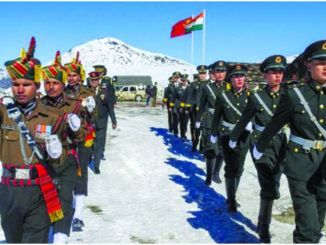
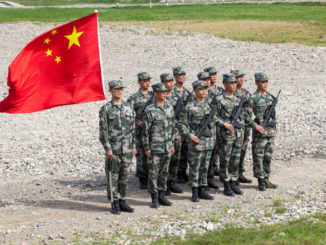
    Not surprisingly, such jiggery-pokery also remains a hallmark of the Chinese leadership’s approach to its casualties in the savage June 15 Galwan Valley clashes. Shortly after the clashes, India had confirmed the loss of 20 soldiers. Moreover, these slain soldiers were honored for their bravery with their names installed in memorials. In sharp contrast, China kept mum about its casualties, although not just Indian but international sources too reported that the figure of such casualties was higher than that for India. For example, the Russian news agency TASS reported recently that China suffered 45 casualties during the clash.

    Simply put, Xi Jinping and his henchmen are again lying through their teeth, perhaps oblivious to the act that others can see through their lies and deception. Why are they acknowledging only four casualties when it is widely believed that the figure was much higher? Is it because they want to continue propagating their theory of China’s superiority over India? Now, after eight months have elapsed since the clashes, China has grudgingly acknowledged casualties and named four of its soldiers who were killed–a far smaller number than what is widely believed. Asked why this was being done eight months after the clash, the spokesman of the Chinese Foreign Ministry Hua Chunying said that “The report has been revealed to give the truth to the public because the truth is long-awaited and is necessary for the people to know the true story.” However, in view of the fact that international sources have reported much, much higher casualty figures, the figures now disclosed by the Chinese authorities only highlight their unflinching belief in their own ability to pull the wool over the eyes of not just their own people but everyone else’s too.

    After acknowledging the above casualties, the Chinese Foreign Ministry spokesman went on to say: ” “India is an important neighbor of China and restoring a healthy, stable relationship is the aspiration and also in the interest of the two peoples. I hope the Indian side will work with us towards achieving this shared goal.” Given China’s track record, will anyone believe that there is even an iota of sincerity in these remarks? Will anyone be taken in by China’s lies, damned lies or it’s falsified statistics?

    (The author is a former diplomat)

    (Courtesy OPOYI)

  • China bans BBC from broadcasting

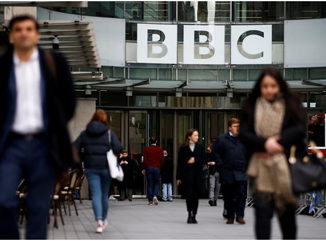
    China bans BBC from broadcasting

    Beijing (TIP): China has banned BBC World News from broadcasting in the country for seriously violating its guidelines for reporting, its television and radio regulator has announced. The move comes a week after the UK revoked the license of Chinese state-owned broadcaster China Global Television Network’s (CGTN). China has criticised the BBC for its reporting on the deadly coronavirus pandemic and the persecution of ethnic minority Uighurs and lodged a protest with the British broadcaster. The BBC said it was “disappointed” by China’s decision to ban it. The Chinese regulator, National Radio and Television Administration (NRTA), has made the announcement on Thursday night on pulling BBC World News off the air in the country for serious content violation. The NRTA said BBC World News was found to have seriously violated regulations on radio and television management and on overseas satellite television channel management in its China-related reports, state-run Xinhua news agency reported.

    The BBC coverage went against the requirements that news reporting must be true and impartial, and undermined China’s national interests and ethnic solidarity, it said. “As the channel fails to meet the requirements to broadcast in China as an overseas channel, BBC World News is not allowed to continue its service within Chinese territory. The NRTA will not accept the channel’s broadcast application for the new year,” NRTA said in a statement.

    China’s ban followed British media regulator Ofcom revoking state broadcaster CGTN licence to broadcast in the UK.

    Ofcom’s decision to revoke the license of CGTN came after it found that the Chinese state television licence was wrongfully held by Star China Media Limited.

    CGTN was also found in breach of British broadcasting regulations for airing the allegedly forced confession of UK citizen Peter Humphrey.

    Reacting to China’s ban, the BBC said in a statement: “We are disappointed that the Chinese authorities have decided to take this course of action. The BBC is the world’s most trusted international news broadcaster and reports on stories from around the world fairly, impartially and without fear or favour.”

    The commercially-funded BBC World News TV channel broadcasts globally in English. In China, it is largely restricted and appears only in international hotels and some diplomatic compounds, meaning most Chinese people cannot view it, the BBC report on China’s ban said.

    British Foreign Secretary Dominic Raab called the move an “unacceptable curtailing of media freedom”.

    The US State Department condemned the decision, calling it part of a wider campaign to suppress free media in China.

    Relations between China and the UK have seen a serious deterioration in recent months over Hong Kong, where Beijing introduced a controversial new security law after a large pro-democracy movement swept the ex-colony.

    In January the UK introduced a new visa that gives 5.4 million Hong Kong residents the right to live in the UK and eventually becomes citizens because it believes China is undermining the territory’s rights and freedoms, the BBC report said.

    China’s tiff with BBC followed Beijing’s spat last year with three US newspapers resulting in the expulsion of some journalists from those media outlets.

    China has sharply criticised this month’s BBC report featuring interviews with Uighur women who said they had been systematically raped, sexually abused and tortured in China’s “re-education” camps in Xinjiang. PTI

  • The Dragon Roams the Arctic

    The Dragon Roams the Arctic

    By Dr A. Adityanjee

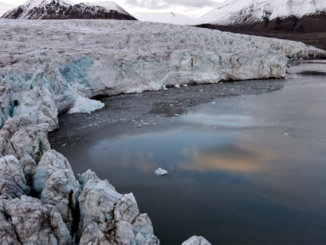
    The Arctic region is home to almost four million inhabitants, of which approximately one-tenth are indigenous people. The United States Geological Survey estimates that up to 25-30% of the world’s remaining oil and natural gas resources might be held within the Arctic Region. The five littoral states, Canada, Russia, USA (Alaska), Denmark (Greenland) and Norway, have competing claims over the Arctic. Together with the five Arctic littoral states, three regional states, Finland, Iceland and Sweden, constitute the eight-member Arctic Council. The Arctic is considered the final frontier for the human to conquer. Resource competition and human migration will become facts of life in the Arctic region as the snow melts. Economic and mercantile competition among nation states for natural resources is bound to result in strife and conflict at some point in time. Every nation must secure its strategic interests. China has steadily increased its footprint in the Arctic for the last decade. China’s lust for the Arctic mineral and live-stock resources has been universally noted. China was approaching the Arctic region surreptitiously in a deceitful manner while trying to obtain a physical toehold. China obtained observer status in the Arctic Council in 2013 along with India, Singapore, South Korea and Japan. China’s original application was denied in 2012 owing to objections from Norway. China touts itself as a “near-Arctic state”. The northernmost point in China is 5,000 kilometers away from the center of the Arctic Circle. If Chinese rationale for “Near-Arctic State” is accepted; several others will also qualify this distinction. China released a so-called white paper on its Arctic policy in 2018, startling not only the Arctic littoral states but also rest of the world. China’s so-called white paper is highly verbose and dense with redundancies and focuses primarily on geo-political issues, while advocating China’s right to exploiting the mineral and hydrocarbon reserves and fisheries. In characteristic Chinese arrogance, it has linked its involvement with the Arctic region to the “Belt and Road Initiative” and its subsidiary “Polar Silk Road”. Chinese posturing has led to renewed interest of the US in the Arctic region. Former US President Donald Trump had offered to purchase Greenland from Denmark. The US policy establishment is now in the process of defining Chinese strategic threats in the Arctic. Almost all branches of the US armed forces have released their Arctic Strategy documents. US Army has been training to develop appropriate capabilities to compete and deter conflict in the Arctic region while emphasizing creation of an “Arctic ready” force.

    China already controls 90% of world’s trade in rare earth and mineral resources. China is investing heavily into projects in every Arctic country. China’s investments in cash-strapped Iceland, vulnerable Greenland and Canadian Arctic communities are predatory and mercantile in nature. China attempted to buy land for dubious purposes in Iceland in 2011, but attempts were rebuffed by the Icelandic PM. China signed a bilateral energy accord with Iceland in 2012 and a bilateral free trade agreement in 2015. Chinese investment of $1.2 billion into Icelandic economy during 2012-17 constituted almost 6% of its GDP during that period. Chinese investments focusing on mineral extraction, including rare earth minerals, iron, copper and uranium totaled $2.0 billion, constituting 12% of the GDP of Greenland during 2012-17. China has built a satellite station in northern Sweden and invested in Finland as part of its Polar Silk Road. China’s growing interest in the Canadian Arctic (40% of Canadian landmass) is a calculated move to access and control the abundant deposits of oil, gas and minerals. In 2017, Chinese icebreaker XueLong (aka Snow Dragon) made its first passage through the Northwest Passage, which Canada recognizes as its internal waters. China’s second commercial research icebreaker Xuelong2 (Snow Dragon 2) became fully operational in 2019. China is in the process of developing a nuclear-powered icebreaker. In 2013, China acquired Nexen, a Calgary-based oil and gas company for $15.1 billion that transferred a portion of Alberta’s oil-sands wealth to China. China is focusing on investments into mining in Canadian Arctic provinces, while the joint Canada-US moratorium on offshore oil and gas drilling in the Arctic ocean is due for review later in 2021. Since 2014, Russia and China have entered into a marriage of convenience. China invested billions of dollars into extracting energy sources from beneath the permafrost on the Yamal peninsula in Northern Russia.

    China has inserted itself into the Arctic governance by creating parallel institutions to the Arctic Council. In 2013, Icelandic President, after signing bilateral FTA with China, announced the creation of the Arctic Circle conference, an annual open meeting in Reykjavik on Arctic governance. China harps repetitively on the basic principles of “respect”, “cooperation” “sustainability” and “win-win results” and honoring international laws, especially the UN Charter, UNCLOS (UN Convention on the Laws of the Seas), treaties on climate change and the rules of the IMO (International Maritime Organization). China has tendency to not respect international treaties as it bides for its time to dictate the terms to others. China flouted the rulings of the UNCLOS in other maritime theatres e.g., Scarborough Shoal in conflict with the Philippines and the EEZ norms in the South China Sea. China is likely to invoke the “concept of respect” in its future flouting of international norms related to the Arctic.

    I had earlier predicted in 2013 China’s intention to obtain military bases in Iceland and Greenland. China attempted to buy a defunct US naval base in Greenland and wanted to refurbish the airport outside Nuuk, Greenland’s capital and two other airfields for $550 million. The Danish government openly expressed its concern at China’s interest in the autonomous, self-governing territory of 57,000 population and vast array of natural resources. The US and Denmark finally blocked Chinese investment in dual use facilities in Greenland. Chinese analysts have suggested a deceptive four-point action plan to incrementally expand Beijing’s strategic security footprint in the Arctic. While building military capacity, China will camouflage the strategic interests by providing humanitarian “public goods” services such as maritime and aeronautical search-and-rescue and disaster relief to Arctic littoral and user states.

    There is renewed interest in India’s role, scientific activities and policy towards the Arctic region following publication of a draft policy by the Ministry of External Affairs. India’s interest in the Arctic research is mainly because of her own climatic change concerns. There is an intricate link between conditions in the Arctic and the monsoon and the Himalayan systems. Himalayas are like the third pole besides the North Pole and the South Pole. India’s Arctic policy should be grounded on pragmatic geo-political realities and be predicated on projections for the next hundred years. India should not be left out in the global competition for Arctic resources sheerly because of strategic myopia and inertia in formulating long-term policies. There must be a strategic focus on threat perception, threat analysis, capacity assessment and developing appropriate counter capabilities. We recommend adopting a SWOT (Strength, Weakness, Opportunities and Threats) analysis model prior to finalizing the policy.

    India’s Arctic Policy rests on five pillars: science and research; economic and human development cooperation; transportation and connectivity; governance and international cooperation; and national capacity building. India’s involvement with the Arctic region started in 1920 when the Svalbard treaty was signed in Paris. In 2007, India’s first scientific expedition to the Arctic was launched. The Himadri station on the Svalbard island has been operating since 2008. India does not have any physical anchor points in the Arctic region. India should target investments primarily into Greenland, Iceland, Russia (Siberia region) and in the Canadian Arctic regions. Our investments in Iceland can help spur Arctic tourism industry. India should invest in mining sector, hydrocarbons, fisheries and arctic tourism sectors in the Canadian Arctic provinces. India should follow a public-private-partnership (PPP) model. We must encourage exports and investment of human resources into the Arctic economies. Indian mining companies should be given tax incentive to invest in mining in Greenland and Iceland. Public sector companies like Metal and Minerals Trading Corporation of India should take lead in mining investment. Airports Authority of India, Inland Waterways Authority along with Land Port Authority of India must leverage with private Indian companies in developing infrastructure in the Arctics. The Ministry of Civil Aviation, Ministry of Road Transport and Highways and Ministry of Ports, Shipping and Waterways must develop a joint “Arctic Infrastructure Group”. Ministry of Fisheries, Animal husbandry and Dairying should prepare a blueprint for fishing and use of marine mammals and livestock in the Arctic region.

    The National Center for Polar and Ocean Research (NCPOR), the nodal agency for India’s Arctic Studies and research should sign partnership agreement with the International Arctic Science Committee. Indian researchers working on “Arctic Science” should be encouraged to participate in the Arctic Science Summit Week (ASSW). India should participate in all the international institutions on Arctic Science studies to build bilateral and multilateral partnerships amongst institutions, research groups and academicians. International academic exchange programs, fellowship program and grant applications should be encouraged. India should expand her trained manpower in the services sector backed by English speaking skills in maritime insurance, chartering, arbitration and brokerage activities. Indian universities and technological institutions should start degree courses and PhD programs on “Arctic Studies”. The polar icecap is shrinking fast and since 1980, the volume of the Arctic Sea ice has declined as much as 75%. While the northern sea route is likely to become ice-free by 2050, commercial shipping is possible even now during the summer. India has a strong sea-faring tradition. Transportation and connectivity will be harbinger of tourism to the Arctic region. India needs to remain vigilant about access to navigational and shipping infrastructure in the Arctic region. The need is to strengthen nautical training institutions for training polar/ice navigation and build region specific hydrography capacity and skills necessary to undertake Arctic transits. India must enhance the technical capabilities for the NavIC navigational system to assist with accurate real-time positioning in the Arctic seas.

    Indian government should immediately apply for observer status as a non-voting member with the Arctic Economic Council (AEC). The AEC is open to corporations, partnerships and indigenous groups that have an economic interest in the Arctic. Since the AEC welcomes the participation of other stakeholders from across the globe as non-voting members. Organizations like FICCI, ASSOCHAM and other business chambers should be encouraged to join as observers with the AEC. India should host an annual meeting of the Arctic Circle conference. India should invite Prime Ministers of Iceland and Greenland for developing stronger bilateral political, economic and commercial ties. Ministry of External Affairs must create a separate desk for Arctic states and North Pole region. India must develop a de jure and de facto presence on the ground in the Arctic in order to have a locus standi. India should foster five plus one, three plus one and eight plus one meeting formats with our Arctic partners in various international fora.

    The September 2019 joint statement between Prime Minister Narendra Modi and Russian President Vladimir Putin in Vladivostok acknowledged India’s wish to play a greater role in the Arctic Council, and to cooperate more closely with Moscow in the Arctic Affairs. Perhaps, India should consider collaboration with Russia in developing its own nuclear-powered icebreaker to increase the speed in ice-packed waters.

    India’s armed forces should look into the possibility of creating an integrated “Arctic command”. Indian Army’s cash-starved mountain strike corps should be fully funded in order to become an “Arctic-capable” corps. Opportunities to train jointly with other Arctic nations’ armies should be sought. Incidentally, Indian Coast Guard must participate in the Arctic Coast Guard Forum on a regular basis. We recommend that the Ministry of Defense and the Indian armed forces produce a separate strategic and security policy document to define and meet challenges in Arctic geopolitics.

    We must also invest India’s soft power in the Arctic states. Civil society organizations should be encouraged to foster people to people relations with the indigenous communities whose way of life and survival itself is at stake. Ministry of Education, Ministry of Culture, Indian Council for Cultural Relations, Indian Council for Social Sciences Research, Bharatiya Vidya Bhavan must jointly organize an annual conference highlighting the challenges faced by the indigenous communities in the Arctic region and device solutions.

    Our Arctic region policy should include fostering global, regional, multilateral and bilateral alliances with Arctic littoral states, Arctic regional states and friendly near-Arctic states. The policy must not neglect the ongoing geopolitical competition and great power rivalry in the Arctic region and prepare India for future challenges. Militarization of the Arctic is a reality and can’t be swept under the carpet by wishful thinking.

    (The author is President, The Council for Strategic Affairs)

  • Over 80 people arrested in China for smuggling fake COVID-19 vaccines

    Beijing (TIP): China has arrested over 80 people for smuggling and supplying counterfeit COVID-19 vaccines, amid reports that some of the jabs have already made their way to Africa, the official media has reported.

    Apart from the arrests, 3,000 doses of the fake vaccines were confiscated from the accused in a special drive that China has carried out to curb vaccine-related crimes, the Global Times reported on Tuesday.

    The raids were carried out in a joint action by police in Beijing and East China’s Jiangsu and Shandong provinces, among other regions. The criminal activity was scattered across multiple cities, the report said.

    The suspects were profiting from the illegal manufacture and sale of the vaccines since September last year, the report added. The accused made the counterfeit vaccines by injecting saline into pre-filled syringes, the newspaper said, adding that the “doses” were being sold for high prices.

    The smugglers are believed to have smuggled the fake vaccines into Africa, although it is not known how they managed to leave the country, the report said.

    Asked about the reports of fake vaccines in circulation, Chinese Foreign Ministry spokesman Wang Wenbin told a media briefing on Tuesday that China will take effective measures to fight against the counterfeit vaccines and their smuggling. He said cooperation with other countries would be needed to prevent such criminal activities.

    The captured suspects might have planned to send vaccines abroad, the report said. The police have multiple times checked with vaccine manufacturers to confirm the vaccines illegally sold in markets were the fake ones produced by the suspects.

    In early January, Japanese media had reported that smuggled Chinese vaccines were in circulation in the country. However, the reports were slammed by the Chinese Embassy to Japan as “unverified and misleading”.

    China is presently conducting clinical trials of 16 COVID-19 vaccines, seven of which have entered phase three trials and one has conditionally hit the market, according to Wu Yuanbin, an official with the Ministry of Science and Technology.

    The deadly coronavirus emerged in the central Chinese city of Wuhan in December 2019 and then spread across the world and became a pandemic.

    According to Johns Hopkins University COVID-19 tracker, over 2,240,00 people have died and more than 103,500,000 people have been hit by the coronavirus. China is vaccinating people at home with two vaccines and sending the same doses abroad. The Chinese government has given conditional approval to the Sinopharm vaccine, even as the results of the third trial is yet to be released. PTI

  • Gandhi Memorial Observes Gandhi Punyatithi

    Gandhi Memorial Observes Gandhi Punyatithi

    CHICAGO, IL(TIP): Mahatma Gandhiji 73rd death anniversary was observed with singing of Gandhiji’s favorite hymns, release of a book, swearing in of New Gandhi Memorial Board,powerful tributes by community leaders and floral tributes to the Mahatma Gandhi Statue in the National Heritage Park on McCormick Boulevard in Skokie, Illinois. The homage ceremonies opened with garlanding of Gandhi’s Statute followed by singing of the American national Anthem followed by the Indian national Anthem sung by Mrs Bharti Desai, renowned Gujarati singer. Suresh Bodiwala, Chairman of Gandhi Memorial Foundation, Chicago welcomed the guests and announced the new officers of the Board of Directors: Chandrakant Modi MD, Founder, Suresh Bodiwala, Chairman, Dr. Mrs. Santosh Kumar, President, Dr. Sriram Sonty & Dr. Vijay G Prabhakar Vice Presidents and Mrs. Bharti Desai, Treasurer. Chairman Suresh Bodiwala applauded the Founder of the Gandhi Memorial, Chandrakant Modi MD who personally donated over $150,000 dollars in 2005 to facilitate this Gandhi Statue in Skokie. Chairman Suresh Bodiwala hoped that the new Board will expand the organization’s activities to be more global in outlook and involve all other communities in cherishing Gandhi’s vision.

    India’s Consul General at Chicago Amit Kumar administered the Oath of Office to the new Board of Directors of Gandhi Memorial Foundation, Chicago headed by Dr. Mrs. Santosh Kumar.

    Dr. Mrs. Santosh Kumar in her presidential remarks said, “I am honored to be part of this noble institution, the Gandhi Memorial Foundation, Chicago. With all humility, I accept this great responsibility as your President. Mahatma Gandhi inspired me as a teenager to choose Law as my career rather than being a physician for what I studied for. GandhiJi ‘s freedom struggle and the injustice done to our motherland emboldened me to become an Attorney to fight for the oppressed. Gandhiji’s words: “Be the Change” is the words of reckoning that still guide me every step of the way and are relevant even today in this digital age. Our Consul General Amit Kumar and his wife Mrs. Surabhi Kumar are very Godfearing and Simple people called to serve with a smile. We look forward to seeking his guidance as our new Board builds on the legacies of our past presidents and boards in realizing GandhiJi vision in our daily lives. I am fortunate to have three very creative, energetic and dedicated leaders: Dr. Sriram Sonty, Dr. Vijay Prabhakar, Mrs. Bharathi Desai to join me on the new Board with our Chairman Bodiwala. Today we seek Mahatma Gandhi blessings in all our endeavors as we strive to incorporate Gandhiji ideals into our everyday lives by embarking on life transforming projects that can make a difference in our lives and in the lives of our communities., She added”.

    Dr. Vijay G. Prabhakar, the Master of Ceremonies introduced India’s Consul General Amit Kumar and his wife, Mrs. Surabhi Kumar as an action couple who has endeared themselves to the community. Dr. Prabhakar recalled the key assignments held by Consul General Amit Kumar which included Deputy Chief of Mission at Washington D.C., Chief of Human Resources Management at Ministry of External Affairs, Delhi, Deputy Chief of Mission at Tokyo, who also had previously served in PMI, UN, New York, Beijing, China, Berlin, Germany, and Ankara, Turkey. Career Diplomat Amit Kumar is an alumnus of IIT Kanpur, India and had worked with the Spiritual Guru Dalai Lama, when he as Director of Protocol, External Affairs Ministry, Delhi. Dr. Prabhakar commended the work of the Consul General Amit Kumar along with his Consuls P.K. Misra, Ranjith Singh and L.P. Gupta during this pandemic time for their effective response to the Midwest Community needs.

    Speaking on the occasion, Consul General Amit Kumar traced the different significant initiatives of Gandhiji during India’s freedom struggle and extolled Gandhiji’s services to the Nation. Consul General Amit Kumar congratulated the new board of the Gandhi Memorial Foundation and was pleased to note that Mrs. Santosh Kumar and Dr. Vijay Prabhakar was involved in several Gandhi initiatives in Delhi and Chicago. He also commended Dr. Sriram Sonty’s efforts for a U.S. Gandhi Stamp. Consul General Amit Kumar exhorted the Indian diaspora to translate Gandhi’s vision into action by undertaking meaningful and purposeful projects here in Chicago. Consul General Amit Kumar honored Dr. C.M. Modi and his wife Mrs. Dina Modi with a silk shawl. Mrs. Surabhi Kumar presented the MAFS Gandhi Global Icon Medallion to Dr. C.M. Modi, Founder Gandhi Memorial, Chicago for all his efforts in nurturing the Gandhi Memorial Foundation, Chicago.

    Consul General Amit Kumar released a Book: “Lasting Legacy of Gandhiji -Ma Santosh Kumar” and Dr. Sriram Sonty received the first Copy of the book. Dr. Sriram Sonty said that 7 June 1893, the day young Gandhi was thrown out of the Durban to Pretoria train at the Pietermaritzburg Railway station was the turning point in Gandhi’s life. From that date, Gandhi took up the fight against racial oppression and Gandhiji’s    nonviolence movement was born, he added. Dr. Sonty said that when he personally visited that Railway station in 1983, it led him to become a staunch Gandhi follower.

    Ms. Nisha Modi daughter of the Gandhi Memorial Founder Dr. C.M. Modi acknowledged the honor bestowed on her parents at the event. Dr. Sreenivas Reddy, President, American Association of Multiethnic Physicians, Chicago read the message U.S. Congressman Raja Krishnamoorthi sent for the occasion. U.S. Congressman Raja Krishnamoorthi in his message reminded us of a Gandhi quote,” It is not just words. Action expresses priorities.” That defined Gandhi’s own life, as well as your work to honor him and his legacy. Americans for generations to come can learn from Gandhi’s example as we strive to create a more perfect Union. A Union that shuns violence and promotes civil rights, equality and liberty for all its people, Congressman Krishnamoorthi added.

    Community leaders Sohan Joshi, Trustee FIA-Chicago, Dr. Suresh Reddy, AAPI Past President, Chandini Divvuri, Chairperson, Nari Global Foundation, Palatine, and Smitesh Shah, UMAS Coordinator, Chicago paid glowing tributes to Mahatma Gandhi on the occasion. Gandhi’s favorite songs were sung by the MAFS Senior Chorale Group led by Anthony Rathor, Urvashi Bhatt, Himali Bharucha, Promila Mehta and Pankaj Patel while floral tributes were placed at the Gandhi Statue.

    Ms. Bharti Desai, Treasurer of Gandhi Memorial Foundation, Chicago proposing a vote of thanks appreciated the presence of all the guests who attended this event despite the chilling cold weather. Ms. Desai said “We the people are eternally indebted to Dr C.M. Modi and his family for a generous gesture that is remembered in posterity. The presence of our Honorable Consul General Amit Kumar with us on this cold morning is a testament of Government of India’s support for propagating Gandhi’s ideals throughout the world. Sir Amit Kumar Ji, thank you for being with us and we look forward to your continued support to our new board with all the exciting plans ahead.  Your presence here is a great source of inspiration to our new board and we count on your continued support. Refreshments were served by Volunteers of Metropolitan Asian Family Services to all.

    (Photograph and Press release by Asian Media USA)

  • China derecognises British passport amid row over HK

    China derecognises British passport amid row over HK

    Beijing/London (TIP): Britain on Friday hailed a new visa offering Hong Kong citizens a route to citizenship after China’s crackdown but Beijing said it would no longer recognise special British passports offered to residents of the former colony. Britain and China have been bickering for months about what London and Washington say is an attempt to silence dissent in Hong Kong, though Beijing says the West’s views are clouded by misinformation and an imperial hangover. Britain says it is fulfilling a historic and moral commitment to the people of Hong Kong after China imposed a tough new security law on the city that Britain says breaches the terms of agreements to hand the colony back in 1997. “I am immensely proud that we have brought in this new route for Hong Kong BN(O)s to live, work and make their home in our country,” Prime Minister Boris Johnson said, referring to a special British National Overseas (BNO) passport. But China and the Hong Kong government hit back by saying neither would recognise the BNO passport as a valid travel document from January 31. “Britain is trying to turn large numbers of Hong Kong people into second-class British citizens. This has completely changed the original nature of BNO,” Chinese foreign ministry spokesman Zhao Lijian told a regular briefing. Beijing’s decision not to recognise the travel document is largely symbolic as Hong Kong residents would not normally use their BNO passports to travel to the mainland. A BNO passport holder in Hong Kong could still use their Hong Kong passport or identity card. Beijing’s imposition of a national security law in the former British colony in June last year prompted Britain to offer refuge to almost 3 million Hong Kong residents eligible for the BNO passport from January 31. The scheme, first announced last year, opens on Sunday and allows those with “British National (Overseas)” status to live, study and work in Britain for five years and eventually apply for citizenship. — Reuters

  • The Biden-Kamala era

    India needs to sidestep the eddies

    The most-used words in Joe Biden’s inaugural speech were ‘America, American and Americans’ and ‘nation, people and democracy’. The message to heal a badly split America, its apogee reached in the mob assault on the Capitol barely a fortnight back, is understandably Biden’s top-most priority. But apart from some intense navel-gazing, Biden also declared that ‘America is back’. Hopefully, this will not be an America that under Trump was nickel-and-diming even close allies. India was robbed of zero-duty access to over Rs 40,000 crore worth of exports to the US and PM Modi mocked for high import duty on Harley Davidson motorcycles. Though India has been a bipartisan success story so far, this is more because the US still has to make further ingress into its markets and defense sectors. But like all of Washington’s other partners, India will be hoping the Biden-Kamala team will usher in predictability and sensitivity to the needs of others. Unlike in the Obama administration, the Left has a firm hook into the White House this time. Several of Biden’s appointees are instinctively ranged against ill-liberalist and majoritarian tendencies. Trump’s free pass to the Modi government on the CAA, lynchings and the communal riots was facilitated due to New Delhi’s enthusiastic over-identification with Washington’s China-baiting in the Indo-Pacific. With Kamala Harris as Vice-President, human rights issues will not get overlooked. The farmers’ agitation will be the latest on the list. The Modi government has to instead get the US more interested in non-military areas of cooperation that have been marked by friction and apathy. The shifting of supply chains away from China ought to start with pharmaceuticals and move on to other areas of high dependency. In the military field, India and the US must move to higher-level strategic discussions that lead to a division of labor in the Indian Ocean. India will also need elbow room in its foreign choices — to source oil from Iran and Venezuela and defense platforms from Russia. The Modi government will need to sidestep eddies to carve out a more meaningful relationship with the new US administration in the post-Covid, post-Galwan Valley world.

    (Tribune, India)

  • Ahead of Budget Session, BJP leaders meet; Oppn to corner govt over farm laws, China

    Ahead of Budget Session, BJP leaders meet; Oppn to corner govt over farm laws, China

    New Delhi (TIP): Top Bharatiya Janata Party (BJP) leaders met at Union minister Rajnath Singh’s residence on Wednesday, Jan 20,  to discuss the strategy for parliament’s Budget Session from January 29. The party is preparing to face a belligerent Opposition seeking to corner the government on the farm laws, the Chinese aggression and the leaked WhatsApp messages of Republic TV editor-in-chief Arnab Goswami.

    Prime Minister Narendra Modi will chair an all-party meeting virtually on January 30. The Opposition’s demands and the government’s legislative plans for the session are expected to be discussed at the meeting. All party meetings are customary affairs before every parliament session.

    A BJP functionary said the Opposition will raise the issue of protests against the three farm laws passed in September even as the government has maintained repeatedly that they benefit the farmers and that the provisions of the legislation were suggested by several parties including the Congress.

    “The Congress has been misleading the farmers by alleging that the laws will benefit cooperates but the truth is that they themselves had made similar suggestions such as abolishing the APMC [Agricultural Produce Market Committee] Act when they were in power,” said the functionary, who did not want to be named.

    Union ministers S Jaishankar, Ravi Shankar Prasad, Pralhad Joshi, and Thawar Chand Gehlot were among others who attended the meeting.

    The Congress has said it will raise the issue of Goswami’s chats during the session. The opposition has suggested the leaked messages point to collusion and leak of classified security information. The Congress has accused Modi and top ministers of violating the Official Secrets Act and demanded a probe and action against those who allegedly leaked sensitive information to Goswami.

    BBC apologises for ‘incomplete’ India map after complaint

    The BBC has  apologised for any offence caused and rectified what it termed as the mistaken use of an inaccurate map of India, which had the boundaries of Jammu and Kashmir entirely missing, triggering a formal letter of complaint by Labour Party MP Virendra Sharma.

    In a video broadcast about President-elect Joe Biden on BBC World Service entitled ‘US Election 2020: What do countries around the world want from Joe Biden’, the graphic depicting the map of India was incompletely highlighted in red with the Union Territories of Jammu and Kashmir missing.

    Sharma, who is also chair of the Indo-British All Party Parliamentary Group (APPG), termed the action as “deeply insulting” in a letter addressed to the Director General of the British Broadcasting Corporation (BBC), Tim Davie, and called for an explanation of the editorial guidelines followed.

    IFFCO ranks first among top 300 cooperatives of the world

    The Indian Farmers Fertiliser Cooperative Limited (IFFCO) has stepped up to 65th position in overall turnover ranking from 125th position in last financial year and now is at the top spot among 300 leading cooperatives in the world, according to an official release.

    The ranking is based on the ratio of turnover over the gross domestic product (GDP) per capita.

    “It signifies that IFFCO is contributing significantly to the GDP and economic growth of the Nation. It relates the turnover of the enterprise to the wealth of the country according to the 2020 edition of the 9th Annual World Cooperative Monitor (WCM) report published by International Cooperative Alliance (ICA),” IFFCO said. IFFCO with more than 36,000 member cooperatives and a group turnover of nearly 7 billion dollars, it is amongst the biggest cooperative institutions in the world, it said.

    Dr U S Awasthi, MD, IFFCO said it is a proud moment for IFFCO and cooperative as well.

    “A great achievement for all of us in the Indian cooperative movement. At IFFCO, we are always committed to the growth of farmers across the country and strengthening the Indian Cooperative movement. We believe in innovation as it is the key to success. I congratulate everyone at IFFCO and the entire cooperative fraternity of the country for this big achievement,” he said.

  • India and China continue to maintain close communication

    India and China continue to maintain close communication

    New Delhi (TIP): India and China continue to maintain close communication through diplomatic and military channels with the objective of ensuring complete disengagement at all friction points along the Line of Actual Control (LAC) in eastern Ladakh, the Ministry of External Affairs(MEA) said on Thursday, January 14.

    The MEA spokesperson Anurag Srivastava said the two sides have agreed to hold the next round of military talks and are in constant communication in this regard. “India and China continue to maintain close communication through diplomatic and military channels with the objective of ensuring complete disengagement in all friction points along the LAC in the western sector and for full restoration of peace and tranquillity,” he told a media briefing.

    Srivastava was responding to a question on the status of talks between the two countries on the military face-off in eastern Ladakh. The troops of the Indian Army and the Chinese People’s Liberation Army(PLA) are locked in a standoff for over eight months. Last month, India and China held another round of diplomatic talks under the framework of the Working Mechanism for Consultation and Coordination (WMCC) on India-China border affairs.

    “As you are aware, the latest round of WMCC was held on December 18. The two sides have agreed to hold a next round of senior commanders meeting, and are in constant communication through diplomatic and military channels in this regard,” Srivastava said. The eighth and last round of military talks between the two sides took place on November 6 during which both sides broadly discussed disengagement of troops from specific friction points. Army chief Gen MM Naravane on Tuesday hoped for an amicable resolution of the standoff through talks based on “mutual and equal security”. The Chief of Army Staff at the same time asserted that Indian troops are fully prepared to deal with any eventuality along the LAC and will hold their ground as long as it takes to achieve the “national goals and objectives.” India has all along been maintaining that the onus is on China to carry forward the process of disengagement and de-escalation at the friction points in the mountainous region.

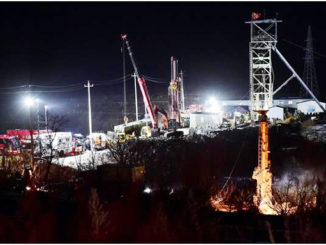
  • Managers detained as 22 trapped in China mine for 3rd day

    Managers detained as 22 trapped in China mine for 3rd day

    Beijing (TIP): Authorities have detained managers at a gold mine in eastern China where 22 workers have been trapped underground following an explosion on Sunday. The condition of the workers trapped for more than three days remains unknown. Managers waited more than a day to give notice of the explosion in violation of rules saying accidents must be reported within one hour, the official Xinhua News Agency said on Thursday, calling that an illegal act that will not go unpunished. It wasn’t clear if other accusations would be brought against them. The mine in Qixia, a jurisdiction under the city of Yantai in Shandong province, had been under construction at the time of the Sunday afternoon blast, the cause of which hasn’t been announced. More than 300 workers are seeking to clear obstructions while drilling a new shaft to reach the chamber and expel dangerous fumes. Dominated by coal, China’s mining industry used to be the world’s deadliest, suffering more than 5,000 fatalities a year from explosions, gas leaks an floods. Safety improved dramatically after authorities overhauled the industry starting about 15 years ago, closing most smaller, more dangerous operations and boosting supervision. Still, accidents happen relatively frequently, including two in the southwestern megacity of Chongqing last year that killed 39 miners. AP

  • Hong Kong police arrest 11 on suspicion of aiding activists’ escape attempt, says media

    Hong Kong (TIP): Hong Kong police have arrested 11 people over suspected crimes related to assisting a group of 12 pro-democracy activists accused of attempting to flee the city by boat for Taiwan last year, local media and activists reported on Thursday. Those arrested, ages 18 to 72, according to local broadcaster RTHK, included eight men and three women. Daniel Wong, a lawyer who tried to help the 12 people detained in mainland China last August, was among those arrested. Wong wrote on Facebook that police arrived at his apartment at 6 am local time.

    Police told Reuters they were still gathering information and could not make any immediate comment.

    Local media said those arrested were suspected of assisting the 12 Hong Kong residents, who faced charges related to anti-government protests in the Chinese-ruled city in 2019, in their attempt to flee last year.

    In late December, a Chinese court sentenced 10 of them to between seven months and three years in prison for illegally crossing the border, in a case that drew international attention and concern over the treatment of the activists. Two, who were minors at the time of arrest, have been returned to Hong Kong.

    The detainees’ families said they had been denied access to independent lawyers and aired suspicion that Hong Kong authorities helped in China’s arrests.

    Self-ruled Taiwan has become a popular destination for Hong Kong pro-democracy activists since Beijing imposed a national security law in June 2020, a move that critics say is aimed at stamping out dissent and curbing freedoms.

    More than 100 people have now been arrested under the national security law.

    Hong Kong returned to Chinese rule in 1997 with the guarantee of freedoms not seen on the mainland, including freedom of speech and assembly. Democracy activists complain that Communist Party rulers in China are whittling away at those freedoms, a charge Beijing rejects. The United States and European Union have called for the activists to be released and allowed to return to Hong Kong. Reuters

  • GENERAL DOUGLAS MacARTHUR & CHURCHILL ARE NEEDED IN 2021

    GENERAL DOUGLAS MacARTHUR & CHURCHILL ARE NEEDED IN 2021

    By Ravi Batra

    The world has not seen a weapon that without a bomb launched or a bullet fired could devastate economies of all nations on earth in one fell swoop, and render their citizenry dead or fearing for life itself.

    2020, to paraphrase FDR, is a year that will live in infamy, and it is also the year when Neville Chamberlain reigned supreme. Indeed, no less than President Trump – who has stood taller than any before him, including, Richard M. Nixon, when he was a Communism-buster up until prior to his 1967 abdication in Foreign Affairs’ pages with a quid pro quo op-ed entitled “Asia After Viet Nam” – called the Virus the “China Virus,” yet, then incredulously declared: that we are fighting “an invisible enemy.” No, we are not Mr. President. The Virus isn’t our enemy, just as on December 7, 1941 the Japanese bombs and bullets weren’t the enemy; Imperial Japan was, by attacking us at Pearl Harbor, in Hawaii. Then, FDR, after sentencing that day “to live in infamy,” unleashed the indominatable General Douglas MacArthur. The same General, who when first expelled from Philippines, left written messages for the people of Philippines:  “I shall return.” And, return he did. Promise made; promise kept. Indeed, a short few years later on September 2, 1945 there was a Surrender Ceremony. A visit to the USS Missouri website proudly shows that the infamous history started at Peral Harbor was in-fact stopped, and a new history of American Freedoms, for all, was made to wit:

    “On the teak decks of USS Missouri, WWII finally came to an end on 2 September 1945. The Surrender Ceremony, which formally brought an end to the bloodiest conflict in human history, lasted a mere 23 minutes. It began at 0902 with a brief opening speech by General Douglas MacArthur. In his speech, the General called for justice, tolerance, and rebuilding. After MacArthur’s speech, Foreign Minister Mamoru Shigemitsu, representing the Emperor of Japan, signed the Instrument of Surrender. He was followed by the Chief of the Army General Staff, General Yoshijirō Umezu, who signed for the Japanese Army. After this, General MacArthur signed the Instrument of Surrender as the Supreme Allied Commander with 6 pens. Of these pens, he gave two to former POWs Lt. General Jonathan Wainwright and Lt. General Lt. General Arthur E. Percival. Following MacArthur, other allied representatives followed in this order:

    Fleet Admiral Chester W. Nimitz signed for the United States; General Xu Yongchang for the Republic of China; Admiral Sir Bruce Fraser for the United Kingdom; Lt. General Kuzma Derevyanko for the Union of Soviet Socialist Republics (USSR); General Sir Thomas A. Blamey for the Commonwealth of Australia; Colonel Lawrence Moore Cosgrave for the Dominion of Canada; General Philippe Le Clerc for the Provisional Government of the French Republic; Lt. Admiral Conrad E. L. Helfrich for the Kingdom of the Netherlands;Air Vice Marshal Leonard M. Isitt for the Dominion of  New Zealand.

    5-Star General MacArthur’s Remarks – that day – on the deck of the USS Missouri are illuminating, and hence, worthy of reproduction so we may escape, even belatedly, History’s “curse of repetition” upon those who forget the past, while cuddling up to happy-amnesia:

    “We are gathered here, representatives of the major warring powers, to conclude a solemn agreement whereby peace may be restored. The issues involving divergent ideals and ideologies have been determined on the battlefields of the world, and hence are not for our discussion or debate. Nor is it for us here to meet, representing as we do a majority of the peoples of the earth, in a spirit of distrust, malice, or hatred.

    But rather it is for us, both victors and vanquished, to rise to that higher dignity which alone befits the sacred purposes we are about to serve, committing all of our peoples unreservedly to faithful compliance with the undertakings they are here formally to assume. It is my earnest hope, and indeed the hope of all mankind, that from this solemn occasion a better world shall emerge out of the blood and carnage of the past — a world founded upon faith and understanding, a world dedicated to the dignity of man and the fulfillment of his most cherished wish for freedom, tolerance, and justice. The terms and conditions upon which surrender of the Japanese Imperial Forces is here to be given and accepted are contained in the Instrument of Surrender now before you. As Supreme Commander for the Allied Powers, I announce it my firm purpose, in the tradition of the countries I represent, to proceed in the discharge of my responsibilities with justice and tolerance, while taking all necessary dispositions to insure that the terms of surrender are fully, promptly, and faithfully complied with. I now invite the representatives of the Emperor of Japan and the Japanese government and the Japanese Imperial General Headquarters to sign the Instrument of Surrender at the places indicated.”

    [After the Instrument of Surrender was executed by all, he concluded with:]

    “Let us pray that peace be now restored to the world, and that God will preserve it always. These proceedings are closed.” (Emphasis added)

    InWWII – we were united with USSR and China (not today’s Chinese Communist Party’s (CCP’s) People Republic of China (PRC)), but the Republic of China (ROC) – today, known as Taiwan, when General Chiang Kai-shek was head of ROC.  I cite the above snippet of history to document the gross geopolitical malpractice of leaders, here at home and abroad, since 1945. Indeed, CCP’s brilliant Chairman Mao, who had originally joined under the leadership of General Chiang, revolted, caused a civil war, and finally expelled him in 1949 from Mainland China to a mere island, Formosa, aka Taiwan. CCP’s China is a new world order – different from feudalism, communism, socialism, corporate-capitalism and our cherished Bill of Rights embedded in our Separated Powers regime – as it is an amalgam of all. Indeed, there are 99 million members of CCP – think corporate governance and the now-disappeared “Avon Lady.” Everybody in China is directly and intimately known by a CCP Member.

    From Chiang Kai-shek, to Harry Truman, to Pandit Nehru, and above all others, to Richard Nixon who rolled out the red carpet for CCP’s China and gifted the critical multi-polar Permanent Seat on the United Nations Security Council – after unilaterally amending History and taking it away from ROC – the world could not, and sadly did not, see the slowly moving tortoise of CCP-China as a threat greater than the fast-moving Adolf Hitler.

    We are at the Third Act of CCP’s “rejuvenation” of the Ming Dynasty’s Tribute System. Indeed, President Xi has honestly stated his China Policy to be “rejuvenation” – almost with as much delight as Edgar Allen Poe had in writing the Purloined Letter.  What former National Security Advisor H.R. McMaster warned about in The Atlantic on May 19, 2020 – “What China Wants” – but left off at, I have continued – as I must warn as Paul Revere did – that our “Emperor wears no clothes,” to metaphorically assert without doubt, that our China Policy – created and effectuated by our Deep State and Executive and Legislative Leaders – is both a misdiagnosis, and a mistreatment that embraces de facto, if not de jure, impotent Chamberlain while rejecting the necessary Churchill, who to them is truly “invisible,” let alone “necessary.” Giving us governmental malpractice that is both decrypt, as it is impotent.

    The world has not seen a weapon that without a bomb launched or a bullet fired could devastate economies of all nations on earth in one fell swoop, and render their citizenry dead or fearing for life itself. Coronavirus, with its transplanted from Bats’ “Spike Glycoprotein (S)” – which I wrote about in my Open Letter to President Trump on April 14, 2020, and the next day United States opened its then-Preliminary Investigation of China – is now the very piece of protein that Pfizer and Moderna’s mRNA-based vaccines now – in error – implant in every patient, and after the initial 2-shots, require a booster shot every 3 months, for life. Result: the enemy get refreshed, while our body’s “T cell” get exhausted or run out. Indeed, Merck’s CEO Kenneth C. Fraizer has correctly said: we don’t even understand the Virus yet, let alone treat it. How right he is. This vaccine frenzy is nothing short of a global clinical trial – worse than if you signed up for one – for now, as a patient, you don’t get paid, and if you suffer a severe reaction, you can’t sue as they have a liability shield, courtesy of Operation Warp Speed that didn’t have to do 10 years of public health studies to identify its efficacy, but its side effects. Risks vs Benefits. A patient with a migraine headache would never accept decapitation as a solution; yet, now, we are to accept this vaccine with a public health study over 10-years of time. Yes, we need a vaccine; but, we need the raw truth about the creation of SARS-CoV2, its escape from the Wuhan lab, its variations, etc., before we can figure out the correct cure.

    Kompromat – is a term used to suggest Russia’s ability to control another person or nation through some act or knowledge that the target would not like exposed. Blackmail. In our social media-connected world, with data that documents one’s hallucinations as if “fact,” our exceptional separated powers regime is sadly checkmated. As 2021 is the Year of Hope, like never before, I end with a wish that just as the Ming Dynasty voluntarily gave up its Tribute system, so does President Xi Jinping; and, instead, he joins in transparent disarming of SARS-CoV2 and dismantles his Jaws of War (which I have previously described). Otherwise, let Churchill be re-born as an American – worthy of everyday hardworking Americans who toil to achieve the American Dream, as merit alone can – and uphold our Flag high and free, as those who died doing so in 1814 at Fort McHenry and caused lawyer-poet Francis Scott Keys to be so moved by their undying courage and national pride to write “The Star-Spangled Banner.”

    (Ravi Batrais a senior attorney and  advisor to many governments. Twitter @RaviBatra)

  • How Covid-19 changed the world

    How Covid-19 changed the world

    In the last 12 months, the novel coronavirus has paralyzed economies, devastated communities and confined nearly four billion people to their homes. It has been a year that changed the world like no other for at least a generation, possibly since World War II.

    When the world celebrated the dawn of a new decade with a blaze of firework parties and revelry on January 1, few could have imagined what 2020 had in store.

    In the last 12 months, the novel coronavirus has paralysed economies, devastated communities and confined nearly four billion people to their homes. It has been a year that changed the world like no other for at least a generation, possibly since World War II.

    More than 1.6 million people died. At least 72 million people are known to have contracted the virus, though the actual number is likely much higher. Children became orphans, grandparents were lost and partners bereaved as loved ones died alone in hospital, bedside visits considered too dangerous to risk.

    “This is a pandemic experience that’s unique in the lifetime of every single person on Earth,” says Sten Vermund, infectious disease epidemiologist and dean of Yale School of Public Health. “Hardly any of us haven’t been touched by it.”

    Covid-19 is far from the deadliest pandemic in history. Bubonic plague in the 14th Century wiped out a quarter of the population. At least 50 million succumbed to Spanish Influenza in 1918-19. Thirty-three million people died of AIDS.

    But contracting coronavirus is as simple as breathing in the wrong place at the wrong time.

    “I went to the gate of hell and came back,” said Wan Chunhui, a 44-year-old Chinese survivor who spent 17 days in hospital. “I saw with my own eyes that others failed to recover and died, which has had a big impact on me.”

    The scale of the global disaster was scarcely imaginable when on December 31, Chinese authorities announced 27 cases of “viral pneumonia of unknown origin” that was baffling doctors in the city of Wuhan.

    The next day, authorities quietly shut the Wuhan animal market initially linked to the outbreak. On January 7, Chinese officials announced they had identified the new virus, calling it 2019-nCoV. On January 11, China announced the first death in Wuhan. Within days, cases flared across Asia, in France and the United States.

    By the end of the month, countries were airlifting foreigners out of China. Borders around the world started to close and more than 50 million people living in Wuhan’s province of Hubei were in quarantine.

    New disease, lockdown

    AFP images of a man lying dead on his back outside a Wuhan furniture shop, wearing a face mask and holding a plastic bag, came to encapsulate the fear pervading the city. AFP could not confirm the cause of his death at the time. Emblematic of the horror and claustrophobia also was the Diamond Princess cruise ship on which more than 700 people ultimately contracted the virus and 13 died.

    As the horror went global, the race for a vaccine had already begun. A small German biotech company called BioNTech quietly put their cancer work aside and launched another project. Its name? “Speed of Light”.

    On February 11, the World Health Organization named the new disease as Covid-19. Four days later, France reported the first confirmed death outside Asia. Europe watched in horror as northern Italy turned into an epicentre.

    “It’s worse than the war,” said Orlando Gualdi, mayor of the Lombardy village of Vertova in March, where 36 people died in 25 days. “It’s absurd to think that there could be such a pandemic in 2020.”

    First Italy, then Spain, France and Britain went into lockdown. WHO declared Covid-19 a pandemic. US borders, already closed to China, shut to much of Europe. For the first time in peacetime, the summer Olympics were delayed.

    By mid-April, 3.9 billion people or half of humanity were living under some form of lockdown. From Paris to New York, from Delhi to Lagos, and from London to Buenos Aires, streets fell eerily silent, the all too frequent wail of ambulance sirens, a reminder that death loomed close.

    Scientists had warned for decades of a global pandemic, but few listened. Some of the richest countries in the world, let alone the poorest floundered in the face of an invisible enemy. In a globalised economy, supply chains ground to a halt. Supermarket shelves were stripped bare by panic buyers.

    Chronic underinvestment in healthcare was brutally exposed, as hospitals struggled to cope and intensive care units were rapidly overwhelmed. Underpaid and overworked medics battled without personal protective equipment.

    “I graduated in 1994 and government hospitals were utterly neglected then,” said Nilima Vaidya-Bhamare, a doctor in Mumbai, India, one of the worst-hit countries. “Why does it take a pandemic to wake people up?” she asked in May.

    In New York, the city with more billionaires than any other, medics were photographed having to wear bin liners. A field hospital was erected in Central Park. Mass graves were dug on Hart Island.

    ‘Absolute calamity’

    “It is a scene out of a horror movie,” said Virgilio Neto, mayor of Manaus in Brazil. “We are no longer in a state of emergency but rather of absolute calamity.” Bodies were piling up in refrigerated trucks and bulldozers were digging mass graves.

    Businesses closed. Schools and colleges shut. Live sport was cancelled. Commercial airline travel saw its most violent contraction in history. Shops, clubs, bars and restaurants closed. Spain’s lockdown was so severe that children couldn’t leave home. People were suddenly trapped, cheek by jowl in tiny apartments for weeks on end.

    Those who could, worked from home. Zoom calls replaced meetings, business travel and parties. Those whose jobs were not transferrable were often sacked or forced to risk their health and work regardless.

    In May, the pandemic had wiped out 20 million American jobs. The pandemic and global recession could push to 150 million the number of people living in extreme poverty by 2021, the World Bank has warned.

    Social inequities, which for years had been growing, were exposed like never before. Hugs, handshakes and kisses fell by the wayside. Human interaction took place behind plexiglass, face masks and hand sanitizer.

    Instances of domestic violence soared, so did mental health problems. As city dwellers with means congratulated themselves on riding out the pandemic at palatial second homes in the countryside and governments floundered, tempers boiled among those trapped in cities and rage spilled onto the streets.

    The United States, the world’s biggest economy and a country without universal healthcare, rapidly became the single worst-hit nation. More than 300,000 people have died while President Donald Trump pooh-poohed the threat and touted questionable treatments such as hydroxychloroquine and floated the idea of injecting disinfectant.

    By May, he launched Operation Warp Speed, with the US government spending $11 billion on developing a Covid-19 vaccine by the end of the year. Trump touted it as the biggest US endeavour since creating the atom bomb in World War II. Not even the rich and powerful could buy immunity. In October, Trump contacted Covid-19 as had Brazilian leader Jair Bolsonaro in July. Trump’s response to the pandemic likely helped cost him the election to Joe Biden. British Prime Minister Boris Johnson spent three days in the ICU with coronavirus in April.

    A-list movie star Tom Hanks and his wife fell sick. Cristiano Ronaldo, one of the greatest footballers of his generation, tennis champion Novak Djokovic, Madonna, Prince Charles and Prince Albert II all tested positive.

    2021 vaccine drive

    As the year draws to a close, governments are on the cusp of innoculating millions, starting with the elderly, medics and the most vulnerable before moving into mass campaigns presented as the only ticket back to a normal life.

    In December, Britain became the first Western country to approve a vaccine for general use and then roll out the innoculation developed in the BioNTech lab in cooperation with US pharmaceutical giant Pfizer. The United States quickly followed suit and regulatory approval is expected in Europe by the end of the month.

    “If I can have it at 90 then you can have it too,” said Margaret Keenan, the British grandmother who became the first person to receive the approved Pfizer/BioNTech vaccine.

    As wealthy nations rush to buy up stocks, 2021 will likely see China and Russia vie for influence by expanding beyond their borders their own, cheaper vaccines.

    The extent to which the Covid-19 pandemic will leave a lasting legacy is far from clear. Some experts warn it could yet take years to build up herd immunity through mass vaccination, especially in the face of entrenched anti-vax beliefs in some countries. Others predict lives could snap back to normal by the middle of next year.

    Many expect a more flexible approach to working from home, increased reliance on technology and supply chains that become more local. Travel is likely to resume, but how quickly is uncertain. The disease can leave otherwise healthy young people debilitated for months.

    If home-working for white-collar workers remains common place, what will happen to commercial real-estate in downtown cities? Could urban centres start to de-populate as people, no longer bound by the commute, move away in search of greener or quieter lifestyles?

    There are also concerns about the impact on civil liberties. Think tank Freedom House says democracy and human rights have deteriorated in 80 countries as governments abuse power in their response to the virus.

    Others predict that fear of large crowds could have profound consequences, at least for public transport, cultural, sporting and entertainment venues, and the cruise ship industry.

    “I think there are going to be some profound shifts in our society,” warned Yale School of Public Health’s Vermund.

    The world economy is also in for a rough ride. IMF has warned of a recession worse than that which followed the 2008 financial crisis. But for many, the pandemic is just a spot on the long-term horizon of a far deadlier, far more challenging and far more life-changing calamity.”Covid-19 has been something of a big wave that’s been hitting us, and behind that is the tsunami of climate change and global warming,” says astrobiologist Lewis Dartnell whose 2014 book “The Knowledge” advises how the world can rebuild following a global catastrophe.            (Source: AFP)

  • China-Canada joint military exercises called off after US raises concerns: Report

    China-Canada joint military exercises called off after US raises concerns: Report

    Vancouver  (TIP): Canada and China were set to carry out military winter exercises in 2019, which were cancelled by the Canadian Chief of the Defence Staff, reported The Globe and Mail.

    General Jonathan Vance’s move alarmed Canada’s Global Affairs department which worried China would interpret the cancellation as retaliation for the arbitrary arrest of two Canadians.

    Vance had allegedly cancelled the exercises after the US urged it to do so, according to the paper.

    “Should Canada make any significant reductions in its military engagement with China, China will likely read this as a retaliatory move related to the Meng Wanzhou case,” a February, 2019, memo to Ian Shugart, then deputy minister of Foreign Affairs, outlining the case for a letter he would be sending to Jody Thomas, deputy minister of the Department of National Defence, The Globe reported.

    A pair of Canadians have been held for almost two years amid a dispute over the arrest of an executive of Chinese technology giant Huawei.

    The pair have been confined since December 2018, just days after Canada detained Huawei executive Meng Wanzhou, who is also the daughter of the company’s founder.

    No information has been released about where the Canadians are being detained or under what conditions.

    Canada accuses China of arbitrarily arresting the pair in order to pressure it into releasing Meng, who lives under a form of house arrest in Vancouver while she challenges a US extradition order to face fraud charges related to trade sanctions on Iran.—With PTI

  • AS I SEE IT -“Our Nation Is like None Other; President Trump Is like None Other; Our Election Was like None Other; and 2020 Civil War Continues, As China Grabs Lands and Assets.”

    AS I SEE IT -“Our Nation Is like None Other; President Trump Is like None Other; Our Election Was like None Other; and 2020 Civil War Continues, As China Grabs Lands and Assets.”

    By Ravi Batra

    The Presidential Election on November 3, 2020 between Donald Trump and Joe Biden, in a perverse way, was somewhat akin to 9/11 – albeit, the conflict was internal – as our Republic was convulsing, our divisions deep

    and open, and the very fabric of our nation laid bare and in conflict. Despite being the

    preeminent nation of laws in human history, Law & Order was unwelcome to too many of our neighbors and fellow Americans. And a nation that was inhabited by those who abandoned a society encrusted with landed gentry for one that defined “fate” and “destiny” on the wings of “merit” alone – and called it the American Dream – was now seriously flirting with Communism’s more appealing sibling, Socialism – where all get what they need and want, by just taking it from those who got ahead. Sweet and Godly “compassion,” however, is not Socialism. Thrown in the dustbin created by hubris, these new American Leaders, like the Evil Queen in “Snow White” asking the “mirror,” “who is the fairest of them all,” these new Leaders – elected or community loud mouths – fancy themselves “perfect,” and issue mandates for removal of Monuments – even of George Washington; my favorite, Thomas Jefferson; the scoundrel, Alexander Hamilton; and even Abraham Lincoln, the Great Emancipator. And then there are folks who have no chance like General Robert E. Lee, who honorably accepted defeat in our great Civil War, or John Newtown, a slave-trader, who found God, became a Preacher, authored “Amazing Grace,” and helped cause slavery to be outlawed in Great Britain. Amazing Grace today defines hope itself. You need not be a devout Christian to know that Judas, who in a singular act of betrayal, gave up Jesus to the Romans and caused Him to be crucified, and, later became the well-loved “Saint Jude” – the Saint, who helps you find things you lost. Indeed, we are lost – in materiality, ego and self, which Mother Nature, heated up by global warming, is ready to eradicate humanity to save the planet – which many leaders fight about what started the fire, when every firefighter knows first “put out the fire,” then look for arsonists.   I know that hubris comes easily to the ignorant or the wicked. For our cherished Republic, a gift from Founders like Ben Franklin, either do harm; both together, are an existential threat – which about eighty (80) million Biden Voters and seventy-four (74) million Trump Voters have tasted together.  It is now the American Spring, in full blossom – in ways similar to the Arab Spring, and yet, in answer to it.

    President Donald J. Trump at a MAGA Rally

    The Great Disrupter – has achieved much good, from Criminal Justice Reform to kick-starting Middle East Peace to Warp Speed Vaccine for a battle-weary population, and our fiscal house anemic and bleeding jobs and souls. But his cadre of disruption-amplifiers, from Steve Bannon, Steve Miller, and our own Rudy Giuliani, are headed for positions – personal and policy – that are  more distant from “honor” and “truth,” but closer to the always sought-after “loyalty,” which weaves a path to the ever-attractive “consolidated power” – the very concept, and a goal – our cherished and honorable Founders deemed un-American, as it devalues American Exceptionalism – built, as it is, on the genius of purposefully separating “power,” by constitutional design, at every turn, and then again for benefits of redundancy – so as to deny “tyranny” a residence in these united States of America (“united,” being the humble lower case, yet more powerful, as an “adjective” always is over the proud and useless “noun.” Our original name was lower-case; our current, a noun).

    To not concede the election, and to even block the Biden Transition from full access to government resources, as federal law mandates, is pure Trumpian joy to his base. By that simple statement, we have upon us a new Civil War, where slavery is not the bone of contention – for there can be no proponents of that economic model, even as slavery was not originally racist, but an aftermath of victory in war: pillage & plunder. As slaves could be of the same race. It is later, about 500 years ago that slave-trading, like Blood Diamonds, became an evil enterprise in, and with, Africa. Indeed, the bronze door knocker to my office in Manhattan is of William Wilberforce – the enlightened soul who successfully campaigned to abolish the African Slave Trade in England, supported as he was, by John Newton. Sadly, not a single person has recognized that Great Abolitionist door-knocker in my office..

    This 2020 Civil War – is about Law & Order, and keeping the American Dream. They say, “[p]olitics makes strange bedfellows.”  Well, no one can truly argue that Joe Biden is against Law & Order, or isn’t a great supporter of the American Dream, even as New York State Attorney General Tish James and New York County District Attorney Cy Vance Jr. appear to not only argue, but are in court dealing with President Trump, for his actions as a civilian. Of course, POTUS’ Attorney General Bill Barr has until 11:59a.m. January 20, 2021 to do likewise to President Barack Obama and inter alia, then-Vice President Joe Biden, for their official acts, etc. We are in a Twilight Zone, in more ways that desirable.

    President-elect Joe Biden at a campaign rally

    There is no doubt that Joe Biden will be sworn in on January 20, 2021, and Kamala Harris, as an African-American woman (and situationally, also Indian-American) as our President and Vice President, respectively. The world leadership has collectively let go and breathe deeply – independent of Eric garner and George Floyd who made that act famous, as each came loaded with baggage – as normalcy, defined by centuries of wisdom embedded in protocols, will re-emerge, an state secrets will again separate policy errors from policymakers, and leave public “respect,” at maximum strength as a calibrated tool, all the way to public “insult,” leaving “private insult” to be candidly used, with the percussion effect of a table smacked in anger for emphasis. But, I write to issue a “Surgeon General’s Warning” to the body politic here at home, and across the world: Donald J. Trump may have come down the escalator almost alone on June 15, 2015 to throw his hat in the ring to be POTUS 45, but on January 20, 2021 he takes with him almost 75 million Trump Voters, and 88.9 million Twitter followers. Poetically, I note that Trump-the-POTUS has 32.8 million Twitter followers. All prior Presidents over last 50 years or more, have largely remained silent and kept quiet after leaving the White House, and declining, in the main, to opine on their successor.

    “Normalcy,” at Least Political and Geopolitical, Is Now Consigned to History.

    Well I hate to say this, but President-Elect Joe Biden and leaders across the world, buckle up!

    As Donald J. Trump, to the great delight of his large and effusive base, will not go quietly into the night and instead, will opine even more freely on matters big and small, public and private. Republicans, let alone Mitch McConnell and Kevin McCarthy, also are not free to go back to “normalcy,” as Trump “owns” the Republican party’s base.

    We are now blessed with an activated citizenry, which makes governance more transparent, and responsive. That, used to be good. It still will be, not because we, as Americans are better than other human beings, but because we live in a nation that our Founders created with an architectural design that exceeds the Pyramids, Parthenon, Colosseum, Great Wall of China, and the Taj Mahal. America is designed to harness competing and ambition-driven energy for self-gain, and turn it into enhancing the public good. Pure alchemy.

    Politicians who wish to be shepherds of quiet and distracted sheep, as before, will have to be on top of their game, to figure out where the public wants to go, and then get there first, so as to lead. Perhaps, Lincoln’s Gettysburg recipe, Government of, by and for the people, will finally pay dividends to the most elusive of that trilogy: “for the people.”

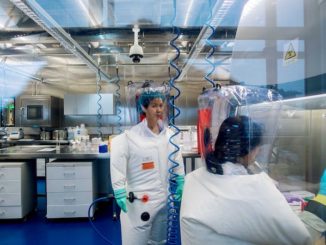
    The lab of global suffering -The Wuhan Lab

    The great battle upon us is: Can Americans be safe without the Police, and can the merit-based American Dream co-exist with Socialism? And, in addition, another battle rages: Social Media, be it Big Tech or individual users, will they destroy representative democracy, as they did the media, and render it into merely Mob Rule, aka direct democracy – the one that killed the great Socrates in Athens for being a “nag” and asking the question, “why.” And, then, there is yet another battle that will render the above two irrelevant: the Chinese Communist Party (CCP) Chairman Mao, a mastermind and globally under-estimated, created a 100 year plan, that included their “Golan Heights” (well before Golda Meir, born in Kyiv, seized it in 1973, and Bibi Netanyahu recently renamed, Trump Heights), with the secret 1949 Karachi Agreement land acquisition, the size of which would leave one breathless; followed up, by swallowing Tibet in 1958, etc.; and reviving Chinese’s Ming Dynasty’s Tribute System – as opposed to Western Nations’ Feudalism – is Commercial favoritism and tributes paid to China, the superior nation. Their OBOR, BRI, and inter alia, AIIB, has weaponized money-giving into land-grabbing in exchange for non-payment of debt – converting unpaid loans to seizure of land and assets that a traditional war could not achieve for China. Having weaponized debt, they weaponized reefs, as in Mischief Reef, and since late last year, they weaponized Viruses by lab-engineering them to bypass human auto-immune system with a “master key,’ the spike glycoprotein, a Trojan Horse, and gave it a deceptively harmless name of coronavirus or Covid-19, and used it to start an undeclared war against us, and the rest of the world.

    Unleashing this Virus is a crime against humanity. It’s like a Bond movie, where they are playing for the world. Well, sadly and infuriatingly, 250,000 Americans have died, and more will in CCP’s Undeclared War on all of us. And yet, we do nothing, other than try to find a vaccine and accuse each other of not fighting the virus correctly. Leaving China unpunished and worse, un-stopped. I tried, and failed, to get Trump as president to cancel China’s debt here, as well as globally, just to offset, in part, the damage and injury China caused. War reparations can only occur – if we are willing to stand up – or will we profit our way into slavery, Ming Style?

    The recent election was a fraud on the Voters. They were told we are fighting “an invisible enemy” (or “we were not fighting the Virus correctly”) No we are not. The virus is invisible; the enemy isn’t. Indeed, look at any map – from 1949 – and all of us can all find it. Show me a current map issued by China, aside from its breathless growth, partially, illegally, it is hard to miss.Hat tip to Marcus Aurelius: Neville Chamberlain Was an Honorable and Reasonable Man.

    Finally, Neville Chamberlain was the epitome of normal leadership, and saw in Hitler, our own mistakes that created the disastrous Weimar Republic and gave birth to the Third Reich. He dealt with him, in a calibrated way. He lost. Churchill begged FDR to get involved, joined up with Stalin, no angel, and faced Hitler down. Chairman Mao, and his hand-picked successors, an unbroken line of the faithful High Priests of Maoism, with President Xi Jinping being an exceptional leader worthy of not only rejuvenating the Ming Tribute system, but a reincarnation of Chairman Mao in a Brooks Brothers Business Suit.

    POTUS Must Do More.

    President Trump – will you ignore the Trademarks given to you and the lovely Ivanka – and use your remaining days as America’s fiduciary and defend us – as FDR did after Pearl harbor – when we have now suffered more deaths than 100 Pearl Harbors?

    Wolf Warriors Stay at Home and Safe, While Virus Kills Relentlessly.

    President-Elect Joe Biden – will you stand up and defend us from the Wolf Warriors that stay comfortably at home, as their Virus does its damage unrelentingly, including, Denmark’s recent discovery of a mutant strain, Cluster 5, which the WHO says is drug resistant. That means the current vaccines – Pfizer’s and Moderna’s 95% effective –  are not effective against it.

    We are on the precipice of an Armageddon, death-by-virus and starvation-by-lockdown, while China seizes property and assets in exchange of “debt” for  “equity.” Exactly what we didn’t teach the Russians after the Berlin Wall came down, which our CPAs and Attorneys know so well to keep the capital markets robust for capitalism to work, China created a different system, just as they are creating at every level, including, making our use of sanction-capacity as a punishment irrelevant. Just ask Russia, Iran and China how they do business, and settle the business accounts outside of “SWIFT”.

    n God We Trust

    Time to heal – may be premature – unless, President Biden can assure 74 million Trumpers that Law & Order is necessary for Public Safety, which is even more important than Public Health, and that the American Dream – meritocracy – is what our cherished separated-powers regime aimed to achieve in perpetuity. And, then, and only them, will E Pluribus Unum be a fact, instead of a slogan.

    (The author is an eminent  attorney based in New York. He can be reached at   ravi@ravibatralaw.com            Twitter @RaviBatra)

  • China holds COVID-19 vice-ministerial meeting with Pakistan, Bangla, Nepal and Sri Lanka

    China holds COVID-19 vice-ministerial meeting with Pakistan, Bangla, Nepal and Sri Lanka

    Beijing (TIP): China has hosted a vice-ministerial-level meeting with Pakistan, Bangladesh, Nepal and Sri Lanka on controlling the COVID-19, expanding its first such meeting held in July involving Islamabad, Kathmandu and Kabul.
    Chinese Vice Foreign Minister Luo Zhaohui hosted the virtual meeting. “To jointly defeat COVID-19, protect people’s life, safety and health, and accelerate economic and social recovery and development, China, Bangladesh, Nepal, Pakistan and Sri Lanka convened a vice-ministerial-level video conference on COVID-19 response on November 10,” the Chinese Foreign Ministry said in a statement on Thursday.
    The five countries had “in-depth exchanges on cementing the political consensus on jointly fighting COVID-19, enhancing cooperation on containing the coronavirus and restoring economic development and movement of people and achieved positive results,” the statement said.
    This is the second ministerial meeting held by China involving the South Asian region on COVID-19. Chinese Foreign Minister Wang Yi held a similar meeting with his counterparts of Pakistan, Afghanistan and Nepal in July.
    China has pledged that COVID-19 vaccine development and deployment in China, when available, will be made a global public good, the statement said.
    China is also ready to consider providing vaccines to developing countries positively, the other four countries included, it said. In the context of long-term COVID-19 containment, the five countries will uphold multilateralism, firmly support the World Health Organisation in playing a leading role in the global fight against COVID-19.
    They reiterated their opposition to “politicisation and stigmatisation” by using COVID-19, and also agreed that the autumn and winter seasons are a crucial period for its containment and vowed to strengthen information sharing and coordination of policies and actions to cope with the impact of its second wave.
    The Chinese side is ready to step up cooperation with the other four parties in testing, diagnostics, treatment and medicine, and continue to provide them with assistance of containment supplies, the statement said.
    They agreed that countries linked by land ports should establish joint response mechanisms in border areas.
    Standard operating procedures will be developed on COVID-19-related notification, border control, containment measures at points of entry and emergency response to prevent cross-border transmission. They also agreed on the importance of coordinating COVID-19 response and economic and social development, and will advance the Belt and Road cooperation to boost post-COVID-19 economic recovery and development, it said. “In a spirit of mutual trust, openness and win-win cooperation, the Five Parties welcome other regional countries to join the cooperation against COVID-19 and are ready to engage in dialogue and communication with them,” the statement added. According to Johns Hopkins coronavirus tracker, the coronavirus has so far infected more than 52 million people and killed over 1.2 million others globally after it emerged in the central Chinese city of Wuhan last year. PTI

  • UK to consider sanctions against China for breaching Hong Kong treaty

    UK to consider sanctions against China for breaching Hong Kong treaty

    London (TIP): Britain on Thursday said China had broken its main bilateral treaty on Hong Kong by imposing new rules to disqualify elected legislators in the former British colony, cautioning that it would consider sanctions as part of its response. The British flag was lowered over Hong Kong when the colony was handed back to China in 1997 after more than 150 years of British rule — imposed after Britain defeated China in the First Opium War. Hong Kong’s autonomy was guaranteed under the “one country, two systems” agreement enshrined in the 1984 Sino-British Joint Declaration signed by then Chinese Premier Zhao Ziyang and British Prime Minister Margaret Thatcher.

    “Beijing’s imposition of new rules to disqualify elected legislators in Hong Kong constitutes a clear breach of the legally binding Sino-British Joint Declaration,” Foreign Secretary Dominic Raab said.

    “China has once again broken its promises and undermined Hong Kong’s high degree of autonomy,” Raab added.

    Britain summoned China’s ambassador, Liu Xiaoming, to express its deep concerns and Raab’s deputy, Nigel Adams, told the Parliament that it was considering possible sanctions on individuals over China’s actions.

    “We will continue to consider designations under our Magnitsky-style sanctions regime,” said Adams, Britain’s minister for Asia. He was asked by lawmakers if Britain would sanction Hong Kong Chief Executive Carrie Lam.

    Adams said it would not be helpful to speculate on names at this stage. China’s embassy did not immediately respond to a request for comment. The European Union called on Beijing to immediately reverse the new rules which it said undermined Hong Kong’s autonomy.

    MAKING A STAND

    Hong Kong’s pro-democracy opposition lawmakers said on Wednesday they would resign in protest against the dismissal of four of their colleagues from the city assembly after Beijing gave local authorities new powers to further curb dissent. The Chinese Parliament earlier adopted a resolution allowing the city’s executive to expel lawmakers deemed to be advocating Hong Kong independence, colluding with foreign forces or threatening national security, without having to go through the courts.

    Opposition members of the Hong Kong assembly say they have tried to make a stand against what many people in Hong Kong see as Beijing’s whittling away of freedoms and institutional checks and balances, despite a promise of a high degree of autonomy. China denies curbing the rights and freedoms in the global financial hub but authorities in Hong Kong and Beijing have moved swiftly to stifle dissent after anti-government protests flared in June last year and plunged the city into crisis. Britain now considers China has broken the Joint Declaration three times, including with the national security legislation for Hong Kong introduced this year.

    “The UK will stand up for the people of Hong Kong, and call out violations of their rights and freedoms,” Raab said, adding: “With our international partners, we will hold China to the obligations it freely assumed under international law.” The national security law punishes what China broadly defines as subversion, secession, terrorism and collusion with foreign forces with up to life in prison. Critics of the law fear it will crush freedoms, including the freedom to protest and an independent judiciary. Supporters say it will bring stability after last year’s sometimes violent anti-government and anti-China unrest. Reuters

  • Biden plans to increase H-1B visa limit and remove country quota for green cards

    Biden plans to increase H-1B visa limit and remove country quota for green cards

    • Move expected to benefit tens of thousands of Indian professionals

    WASHINGTON (TIP): US President-elect Joe Biden plans to increase the number of high-skilled visas, including the H-1B, and eliminate the limit on employment-based visas by country, both of which are expected to benefit tens of thousands of Indian professionals impacted by some immigration policies of the outgoing Trump administration. With Kamala Harris as his deputy, Biden is expected to reverse the move of the outgoing Trump administration to revoke work permits to the spouses of H-1B visas, which had adversely impacted a large number of Indian families in the US. All these are part of a comprehensive immigration reform that the Biden administration plans to work on, either in one go or in separate pieces. “High-skilled temporary visas should not be used to disincentivize recruiting workers already in the US for in-demand occupations. An immigration system that crowds out high-skilled workers in favor of only entry level wages and skills threatens American innovation and competitiveness,” according to a policy document issued by the Biden campaign.

    “Biden will work with Congress to first reform temporary visas to establish a wage-based allocation process and establish enforcement mechanisms to ensure they are aligned with the labor market and not used to undermine wages. Then, Biden will support expanding the number of high-skilled visas and eliminating the limits on employment-based visas by country, which create unacceptably long backlogs,” it said.

    H-1B visas, which expand the available pool of high skilled workers in the US, is a non-immigrant visa that allows American companies to employ foreign workers in specialty occupations that require theoretical or technical expertise. The technology companies depend on it to hire tens of thousands of employees each year from countries like India and China.Employment-based visas, also known as green cards, allow migrants to gain lawful permanent residence in the US in order to engage in skilled work. Noting that currently, the number of employment-based visas is capped at 140,000 each year, without the ability to be responsive to the state of the labor market or demands from domestic employers, the policy document said that as president, Biden will work with Congress to increase the number of visas awarded for permanent, employment-based immigration — and promote mechanisms to temporarily reduce the number of visas during times of high US unemployment.

    In June, Trump had suspended the H-1B visas along with other types of foreign work visas until the end of 2020 to protect American workers. In October, the Trump administration had announced new restrictions on the H-1B non-immigrant visa programme, which it said is aimed at protecting American workers, restoring integrity and to better guarantee that H-1B petitions are approved only for qualified beneficiaries and petitioners.

    According to the policy document, Biden will also exempt from any cap recent graduates of PhD programs in STEM (science, technology, engineering and math) fields in the US who are poised to make some of the most important contributions to the world economy.

    “Biden believes that foreign graduates of a US doctoral programme should be given a green card with their degree and that losing these highly trained workers to foreign economies is a disservice to our own economic competitiveness,” it said.

    The Biden administration plans to create a new visa category to allow cities and counties to petition for higher levels of immigrants to support their growth.

    “The disparity in economic growth between US cities, and between rural communities and urban areas, is one of the great imbalances of today’s economy. Some cities and many rural communities struggle with shrinking populations, an erosion of economic opportunity, and local businesses that face unique challenges.

    “Others simply struggle to attract a productive workforce and innovative entrepreneurs. As president, Biden will support a programme to allow any county or municipal executive of a large or midsize county or city to petition for additional immigrant visas to support the region’s economic development strategy, provided employers in those regions certify there are available jobs, and that there are no workers to fill them,” the policy document said. The holders of these visas would be required to work and reside in the city or county that petitioned for them, and would be subject to the same certification protections as other employment-based immigrants, it argued.

    According to the policy document, Biden believes that keeping families together and allowing eligible immigrants to join their American relatives on US soil is critically important, but the current system is poorly designed with per-country caps that prevent applications from being approved in a timely fashion.

    That means approved applicants may wait decades to be reunited with their families, it said. “As president, Biden will support family-based immigration by preserving family unification as a foundation of our immigration system; by allowing any approved applicant to receive a temporary non-immigrant visa until the permanent visa is processed; and by supporting legislation that treats the spouse and children of green card holders as the immediate relatives they are, exempting them from caps, and allowing parents to bring their minor children with them at the time they immigrate,” the policy paper said. PTI

  • Biden reassures US allies in calls with leaders of Japan, South Korea, Australia

    Biden reassures US allies in calls with leaders of Japan, South Korea, Australia

    NEW YORK (TIP): In their first calls with Joe Biden since the U.S. election, the leaders of Japan, South Korea and Australia on Thursday reaffirmed plans to form close ties with the president-elect to tackle issues including climate change and regional security.

    The three key Asian allies – Japanese Prime Minister Yoshihide Suga, South Korean President Moon Jae-in and Australian Prime Minister Scott Morrison – join other global leaders in recognizing the Democratic challenger’s Nov. 3 victory over incumbent Donald Trump, who has so far refused to concede.

    Biden’s projected win comes against a backdrop of China’s growing military and economic assertiveness in the region, and after years of sometimes tumultuous relations between Asian allies and the United States under Trump over issues including trade, defense and the environment.

    All sides expressed their determination to strengthen bilateral ties as well as tackle global issues such as the coronavirus pandemic and climate change, Biden’s office said.Japan’s Suga said he spoke with Biden by telephone and confirmed the importance of bilateral ties. “President-elect Biden said that he looks forward to strengthening the U.S.-Japan alliance and working together on achieving a free and open Indo-Pacific,” Suga said to reporters, in separate comments made at the Prime Minister’s Office.

    Many world leaders including United Kingdom, France and Germany as well as others have already congratulated Biden for his win, while China and Russia have so far held off.

    SECURITY AND PROSPERITY

    Biden on Wednesday named Ron Klain as his White House chief of staff, his first major appointment as he builds his administration. Anthony Blinken, a diplomat and longtime confidant of Biden is seen as a likely pick for Secretary of State or National Security Adviser, both key roles for Asian allies.

    Speaking to South Korea’s Moon, Biden reaffirmed the U.S. commitment to defend South Korea, highlighting the Asian ally as a “lynchpin of the security and prosperity of the Indo-Pacific region,” Moon’s spokesman Kang Min-seok said.

    “President Moon asked for close cooperation for the forward-looking development of the bilateral alliance, and the denuclearization and peace on the Korean peninsula,” Kang told a briefing. “President-elect Biden said he would closely cooperate to resolve the North Korean nuclear issue.” Trump and North Korean leader Kim Jong Un vowed to work towards denuclearization at their unprecedented summit in 2018, but little progress has been made since their second summit and working-level talks collapsed last year.

    While Biden has said he would not meet with Kim without preconditions, he has also said he would embrace “principled diplomacy” with North Korea.

    South Korean officials are also hopeful that Biden will quickly resolve a drawn-out, multi-billion-dollar dispute with Washington over the cost of thousands of U.S. troops on the peninsula. Tackling the global coronavirus pandemic and climate change were key themes in Biden’s calls with all three leaders, readouts from Biden’s office showed.

    Australia’s Morrison said he spoke with Biden about emission reduction technology, though a target for zero net emissions by 2050 was not discussed.

    “I raised with the president-elect the similarity between the president-elect’s comments and policies regarding emissions reduction technologies that we needed to achieve that, and we look forward to working on those issues,” Morrison told reporters in Canberra. Both Moon and Suga said they agreed to arrange summits with the new president shortly after his inauguration in January.

    Biden will also face the challenge of managing unresolved political and economic disputes between South Korea and Japan, which have threatened a military intelligence-sharing arrangement and complicated U.S. efforts to counter China.

    (Agencies)

  • Bihar has strong message for Opposition

    Bihar has strong message for Opposition

    The results of the Bihar elections have a message for all states headed for polls in the months ahead on taking on the BJP under Modi.

    By Neerja Chowdhury

    Bihar has sent a strong message to the Opposition parties. They will have to combine effectively to have any chance of taking on the Modi-led BJP in states going to the polls. The RJD’s alliance with the Left parties in Bihar— CPI(ML), CPI(M) and CPI— did well, leading to a high strike rate.

    Even though Nitish Kumar has been weakened, the BJP will find it difficult to replace the chief minister with one of its own, having burnt its fingers in Maharashtra, where Uddhav Thackeray, denied the chief ministership, joined hands with the Congress and the NCP. The BJP is expected to tread more carefully in Bihar after the outcome.

    Economic distress of an unprecedented kind, compounded by a health pandemic of the last nine months, the migrant march of lakhs of workers on foot with probably the largest number walking back to their villages in Bihar, incursions made into Indian territory by China in the last few months which could have created a nationalistic upsurge against the government, palpable anger against Chief Minister Nitish Kumar that was evident — if these could not bring about a change of government in Bihar, it only shows that the other factors were more dominant. This when, in this instance, there was a clear alternative in Tejashwi Yadav leading the charge on the Opposition side and getting a popular response.

    Clearly, Brand Modi managed to slow down the Tejashwi chariot, though it was a closely run race. And Tejashwi, though not able to form a government in Patna, has established himself as a leader of the Mahagathbandhan at the age of 31. He set the terms of the poll narrative when he flagged ‘joblessness’ as the central theme of Bihar 2020, for the first time giving an economic — and aspirational — spin to caste which has determined poll outcomes in Bihar for three decades and more.

    Given the downturn in the economy, creation of jobs is increasingly going to find resonance, particularly among the young, as also in other states going to polls in the next few months. The first phase of the election was going the Tejashwi way. The turning point came with Narendra Modi’s invocation of ‘jungle raj’ of the Lalu Yadav-Rabri Devi years. This sent those among the most backward castes and women, who were beginning to look at Tejashwi with new eyes — Yeh naya ladka hai— scurrying back to the NDA again. The upper castes are anyway more enamored of the Hindutva, nationalist theme than of any economic hardship, and stayed by the BJP’s side.

    Bihar has reinforced the invincible image of Narendra Modi. He swayed the voters in national elections. This was not always the case in state polls. The BJP did not make it in many states, be it Maharashtra, Jharkhand, Telangana, Andhra Pradesh, Karnataka, Delhi, Rajasthan, Madhya Pradesh and Chhattisgarh. In Bihar, the Prime Minister made a difference to the poll outcome. The Bihar strategy may help the BJP in states which are going to the polls in the coming months — in West Bengal, Assam, Punjab, Kerala and then UP in 2022. It combined Modi’s undimmed popularity and sharp articulation, with Hindutva and nationalism (Ayodhya, Pulwama, Jai Shree Ram) as not so covert a theme, undergirded by a subtle appeal to certain castes. The PM has for some time now emphasized the help given to the poor by his government at the Centre, through the programs he has initiated. So, if money was transferred to the people in Bihar during COVID-19 times, they saw it coming ‘from Narendra Modi’ and ‘not from Nitish Kumar’. In the handling of the pandemic, which exacerbated the problems of the migrants, the Central Government successfully managed to shift the responsibility to the chief ministers. In Bihar, the BJP went one step further. It even managed to distance itself from the Bihar CM, even though it was part of the government headed by him. By going hammer and tongs at only Nitish Kumar, and urging the people to vote for the BJP, Chirag Paswan helped shield the BJP while directing the popular ire towards the CM. The BJP’s seats went up substantially, and those of the JD(U) came down, equally substantially. The BJP as the senior partner in the government will have its obvious advantages, and will increase its clout in the decision-making process.

    Even though Nitish Kumar has been weakened, the BJP will find it difficult to replace the chief minister with one of its own. Having burnt its fingers in Maharashtra, where Uddhav Thackeray, denied the chief ministership, joined hands with the Congress and NCP, the BJP is expected to tread more carefully in Bihar. For Nitish Kumar, with his reputation for doing ‘flip flops’, can always extend outside support to Tejashwi Yadav, if the BJP tries to replace him. Unless the BJP can, at a future date, break the JD(U), the Congress and wean away MLAs also from the RJD to form its ‘own’ government. But that does not seem to be on the cards for the moment.

    Bihar has sent a strong message to the Opposition parties. They will have to combine effectively to have any chance of taking on the Modi-led BJP in states going to the polls. The RJD’s alliance with the Left parties in Bihar— CPI(ML), CPI(M) and CPI— did well, leading to a high strike rate.

    Tejashwi Yadav might have just made it, had he not allowed Mukesh Sahni’s Mallah (Most backward)-based VIP party to leave the Mahagathbandhan over the issue of seat-sharing. This might have been possible had he given less seats to the Congress and accommodated the ‘VIP’ party and enabled Left parties to fight more seats, the ticket distribution based on the ground level strength of the parties today rather than on the position they enjoyed in the past. This Congress’ tally came down from what it was in 2015. While the RJD was able to transfer its votes to the Congress, the Congress could not ensure this for the RJD candidates. As it is, the Congress’ kitty does not have much to transfer.

    The five seats won by Asaddudin Owaisi, who did well in the Muslim-dominated areas of Bihar (Seemanchal) should come as a wake-up call for the Congress. The Muslims, who feel beleaguered and apprehensive, particularly with the way they have been targeted by the BJP, after the NRC, CAA and abrogation of Article 370, have looked to the Congress as the only party which would be able to take on the BJP nationally. For them to turn to Owaisi’s party which was not in a position to form the government in Bihar, being part of the small so-called ‘Third Front’, and not to the Congress, shows their growing sense of alienation from the grand old party. This is not good news for the Congress.

    The crisis — and drift — in the Congress is not likely to go away unless the party settles the question of its leadership, which is hanging out there unaddressed.

    Given the Bihar outcome, will the Opposition parties look afresh at the new challenge being mounted by a BJP determined to increase its footprint all over India, state after state, and go for one-party dominance in the country? Or will it remain business as usual?

    (The author is a senior political commentator)

  • Biden likely to give India more strategic space

    Biden likely to give India more strategic space

    Biden has said that he would constitute a united front of the US, its allies and partners to ‘confront China’s abusive behavior and human rights violations’ and ‘place US back at the head of the table’ to mobilize collective action on global threats. Germany, France and the European Union have welcomed Biden’s election promise to work on issues like China’s unfair trade practices and other challenges.

    By Yogesh Gupta

    Joseph  Biden Jr. will soon take over as the 46th President of the United States. There is some consternation as many critics are not sure how the Joe Biden-Kamala Harris duo will react to the human rights situation, particularly in Kashmir. Also, that he will be ‘soft’ on China which may recoil on India in its current military confrontation with that country. Biden is a seasoned and skillful politician, who for decades has served on the Senate Foreign Relations Committee, including as its chair. Second, he is calm, contemplative and a team leader who will listen to and go by the professional advice of the US establishment — including the State, Defense, National and Homeland Security, CIA, Trade and other departments. His long innings as the Vice President in two terms of President Obama unambiguously authenticate this view.

    In an article, Why America must lead again, in the Foreign Affairs journal in March this year, Biden wrote that President Trump had diminished the credibility and influence of the US by abdicating the American leadership, indulging in ill-advised trade wars which had hurt its own consumers and undermining and abandoning its allies which are America’s biggest strength.

    The post-COVID-19 world will be very different from 2016 when the Obama-Biden duo left. China’s economy has made huge strides during this period. However, much of China’s economic growth is based on extensive use of unfair trade practices, including denial of market access, stealing of foreign technologies, subsidies to its state-owned industries and others.

    China’s swift growth has been accompanied by massive modernization of its military, including manufacture of fifth generation of fighter and stealth aircraft, long- and medium-range missiles, hypersonic and artificial intelligence (AI)-based weapons, destroyers and aircraft carriers.

    Similarly, China has made considerable progress in other emerging technologies like 5G, quantum computing, new materials, robotics and space weapons. The rapidly growing China is now challenging the economic and military pre-eminence of the US in Asia. It has launched aggression against a number of countries allied or getting closer to the US such as India, Taiwan, Vietnam, Australia and others and is trying to divide the transatlantic alliance.

    Biden has said that he would constitute a “united front of the US, its allies and partners to confront China’s abusive behavior and human rights violations” and “place US back at the head of the table” to mobilize collective action on global threats. “When we join together with fellow democracies, our strength more than doubles. China can’t afford to ignore more than half the global economy,” he argued. Germany, France and leaders of the European Union have welcomed Biden’s election promising to work together on China and other challenges.

    Though the aggressive rhetoric of Trump administration may change as Biden seeks China’s collaboration on climate change, non-proliferation and control of infectious diseases, the US and its allies will take collective action against China’s unfair trade policies, as per the Biden team. The US sanctions on export of sensitive technologies to China are likely to continue. In his earlier avatars, Biden played an important role in the passage of the Indo-US Civil Nuclear Deal in the Congress (2005) and later when the Obama administration declared India as a ‘major defense partner’ (2016). With the signing of Logistics Exchange Memorandum of Agreement (LEMOA), Communications Compatibility and Security Agreement (COMCASA) and Basic Exchange and Cooperation Agreement for Geo-spatial Cooperation (BECA) recently, India has established close linkages with the US security architecture. Its large growing economy, professional armed forces and stout determination to resist China have augmented its strategic value. In its pursuit of multipolar world, India can play a critical role in checking the growth of China’s hegemony and its domination of Asia.

    Biden made it clear in his Foreign Affairs essay that he would “fortify the USA’s collective capabilities with democratic friends by reinvesting in its treaty alliances with Australia, Japan, South Korea and deepening partnerships from India to Indonesia to advance shared values in a region that will determine the USA’s future.”

    Biden has promised to invest in improving America’s competitiveness, pull down trade barriers, resist the slide towards protectionism and give more emphasis to fair trade. Given the rising trade deficit and unemployment in the US, it is likely that there will be some tough negotiations with India on issues such as high tariffs, market access, levy of taxes on US technological giants like Amazon and Google, but in an amicable manner without resorting to threats and tariffs.

    On issues relating to immigration, H1B visas and the studies of Indian students in US universities, Biden is likely to be more positive though keeping in view unemployment in his own country.Some Biden advisers have stated that he would raise human rights issues with India like Obama. This will be more in the nature of a dialogue among friendly states and would not be the main driver of his overall policy given New Delhi’s sensitivities and the importance attached to strategic issues confronting the two countries.

    Biden has stated that his administration would stand with India against the threats it faces from its own region and along its borders. Given the above template, it is likely that India would find greater resonance on Pakistan’s support of terrorism, a continued US role in the fight against terror groups in Afghanistan and on resuming a nuclear deal with Iran.

    Similarly, his stand on re-joining the Paris climate change agreement, convening a summit of democracies to discuss issues of common interest, meetings of major carbon emitters to reduce harmful emissions and control of infectious diseases would be of considerable interest to India. Summing up, India is likely to get more strategic space and a greater sympathetic understanding of its concerns from the Biden administration than that of President Trump.

    (The author is a former ambassador)

  • US poll outcome will not impact ties with India, says MEA

    US poll outcome will not impact ties with India, says MEA

    Ties between India and US have witnessed major upswing in last four years

     NEW DELHI (TIP): As the world awaits the result of the American presidential election, India on Friday, November 6,  said the global strategic partnership between the two countries have a very strong bipartisan support in the US, suggesting that the bilateral ties will not be impacted by the poll outcome.

    “We are also awaiting the election results,” Ministry of External Affairs spokesperson Anurag Srivastava said during an online media briefing while replying to questions on impact of US presidential outcome on the Indo-US ties.

    He asserted that “the comprehensive strategic (Indo-US) partnership has very strong bipartisan support in the US and successive presidents and administrations have raised the level of the relationship even higher.” As per latest vote count, Democrat Biden was inching closer to the 270 Electoral College votes required to win the race.

    “Indo-US relations rest on strong foundations. Our relations encompass cooperation in every possible sphere, extending from strategic to defense, from investment to trade to people-to-people ties,” the spokesperson added.

    The ties between India and the US have witnessed a major upswing in the last four years under the Trump administration, particularly in areas of defense and security. The Trump administration has also been strongly favoring a greater role for India in the Indo-Pacific in the backdrop of rising military assertiveness by China in the region.

    (Source: PTI)

  • Biden vows to rejoin Paris Climate Agreement

    Biden vows to rejoin Paris Climate Agreement

    NEW YORK (TIP): On November 4, the US formally withdrew from the 2015 Paris Agreement on Climate Change. Democratic presidential candidate Joe Biden has pledged that his administration would rejoin the historic Paris Agreement on climate change.

    Mr. Biden, 77, has not won the presidential elections yet, but is inching closer to be declared the winner by garnering 253 electoral votes out of the required 270. His Republican rival and incumbent US President Donald Trump has got 213 electoral votes, according to latest projections released by the US media. On November 4, the US formally withdrew from the 2015 Paris Agreement on Climate Change, a decision originally announced three years ago.

    “Today, the Trump Administration officially left the Paris Climate Agreement. And in exactly 77 days, a Biden Administration will rejoin it,” Mr. Biden tweeted on Wednesday night, reflecting his decision to reverse one of the key policies of the Trump administration on day one.

    The US, under the Obama administration, had acceded to the Paris Agreement in 2016. It was a signature achievement of the Obama administration.

    The Paris accord committed the US and 187 other countries to keeping rising global temperatures below 2C above pre-industrial levels and attempting to limit them even more, to a 1.5C rise.

    Mr. Trump argues that the agreement is disadvantageous for the US, while it gives benefits to countries like China, Russia and India. According to him, it could be economically detrimental and cost 2.5 million Americans their jobs by 2025. The decision by the US – one of the world’s biggest emitters of greenhouse gases – to quit the agreement has led to condemnation from environmentalists and expressions of regret from world leaders.

    Mr. Biden has proposed a USD 5 trillion plan to combat climate change.

    The US is the second leading producer of all carbon dioxide emissions globally, behind China.

    President Trump originally announced his intention to withdraw from the agreement in 2017 and formally notified the United Nations last year. The US exited the pact after a mandatory year-long waiting period that ended on Wednesday.

    The US is the only country to withdraw from the global pact. It can still attend negotiations and give opinions, but is relegated to observer status. Mr. Trump had stated that he intended to renegotiate the details of the US’ membership within the Paris Agreement that can better protect US workers in industries like coal, paper, and steel.

    (Agencies)

  • Indo-China border situation tense, possibility of larger conflict can’t be discounted: Bipin Rawat

    Indo-China border situation tense, possibility of larger conflict can’t be discounted: Bipin Rawat

    New Delhi (TIP): Chief of Defence Staff General Bipin Rawat on Friday, November 6, said the situation astride the India-China border in Ladakh continued to remain tense, five months after their deadliest military confrontation in decades, PTI reported. Rawat admitted that the possibility of confrontations and unprovoked military actions spiralling into a larger conflict “cannot be discounted”. Nonetheless, India’s posturing is “unambiguous”, the military official said. “We will not accept any shift in Line of Actual Control. China’s People’s Liberation Army is facing unanticipated consequences for its misadventure in Ladakh because of firm responses by Indian forces.”

    Rawat made the statements at the Diamond Jubilee Webinar 2020, organised by National Defence College, according to ANI. On August 24, Rawat had made similar assertions and said that the military option is on the table if talks between New Delhi and Beijing to de-escalate the tension along the border fail. “Defence services always remain prepared for military actions should all efforts to restore status quo along the LAC do not succeed,” he had said.

    The standoff along the Line of Actual Control in eastern Ladakh is in a stalemate since May, when Chinese troops moved to take control of the territory that had been patrolled by Indian soldiers for decades. The initial scuffles led up to a pitched battle – without firearms – in June that saw 20 Indian soldiers killed, with Beijing refusing to release casualty numbers on its side.

    Both India and China have accused each other of crossing into rival territory and of firing shots for the first time in 45 years.

    The sides have held several rounds of talks by military, diplomatic and political officials, including negotiations between their foreign ministers and defense ministers in Moscow last month. But the standoff has persisted, although no new military aggression has been reported for over a month now. Rawat also criticised Pakistan and alleged that the “unabated proxy war in Jammu and Kashmir” unleashed by the neighbouring country, accompanied by its “vicious anti-India rhetoric” have taken the bilateral ties to a new low.

  • How thousands in China got infected by brucellosis in one single outbreak

    How thousands in China got infected by brucellosis in one single outbreak

    Beijing (TIP): Brucellosis, a bacterial disease with flu-like symptoms, has infected more than 6,000 people in a single outbreak in northwestern China.
    Usually caused by contact with animals, the outbreak in Lanzhou, the capital of Gansu province, was due to a leak at a vaccine plant, according to Lanzhou’s health commission. People are still being treated at hospitals even though the outbreak happened a year ago.
    China’s top legislative body passed a law last month to establish protocols for biosecurity risk prevention and control, and systems to respond to risks including sudden outbreaks.
    What is brucellosis?
    Brucellosis is a zoonotic infectious disease, or a disease in animals that can spread to humans. It is caused by a bacteria that affects sheep, goats, cattle, swine and even dogs and is reported in many countries. Humans generally get the disease from direct contact with infected animals through the consumption of tainted animal products such as unpasteurised milk or cheese, or through the inhalation of airborne agents.
    Human-to-human transmission is extremely rare, according to the World Health Organization.
    Symptoms in humans include fever and weakness, which emerge over a few weeks. The mortality rate is low, though complications could lead to death. Some symptoms such as joint pain may become chronic and never go away.
    What happened in Lanzhou?
    The latest outbreak in Lanzhou was first uncovered in November 2019 when some students at the Lanzhou Veterinary Research Institute tested positive for brucellosis. By the end of December, at least 181 people at the institute had been infected, according to the provincial health authority.
    The outbreak even spread to Heilongjiang province in the northeastern corner of China, where 13 people who worked at the veterinarian institute in August 2019 tested positive, state media reported.
    The government has tested 55,725 people in the city, of which 6,620 are positive for brucellosis as of now, the Lanzhou government said at a press conference, according to a report on Thursday by the state-owned Global Times.
    The outbreak originated at a biopharmaceutical factory owned by Shanghai-listed China Animal Husbandry Industry Co , according to a statement from Lanzhou’s health commission in September.
    The factory had used expired disinfectants in July to August 2019 to make brucellosis vaccines, leaving the bacteria in its waste gas. The contaminated gas later formed aerosols that drifted downwind to the veterinary institute.
    Is Brucellosis common in China?
    About half a million infected people are reported each year around the world, with China typically accounting for tens of thousands.
    In 2019, China reported 44,036 cases with one death, up from 37,947 cases and zero deaths a year earlier.The very first cases reported in China were in the southwestern city of Chongqing in 1905. China saw a widespread epidemic of brucellosis in the 1950s and 1960s, according to state media.
    Brucellosis is more common in pastoral areas in the west and north of China. It is categorized as a Class B infectious disease under a three-tier system
    Last year, China reported over 10 million cases of infectious diseases, including brucellosis, scarlet fever, dysentery and dengue. Reuters