Tag: China

  • Sri Lanka allays India’s concerns  renegotiates port deal with China

    Sri Lanka allays India’s concerns renegotiates port deal with China

    COLOMBO (TIP): Sri Lanka’s cabinet has cleared a revised agreement for its Chinese-built southern port of Hambantota on July 24, the government said, after terms of the first pact sparked widespread public anger in the island nation.

    The port, close to the world’s busiest shipping lanes, has been mired in controversy ever since state-run China Merchants Port Holdings, which built it for $1.5 billion, signed an agreement taking an 80 per cent stake.

    Under the new deal, which Reuters has examined, the Sri Lankan government has sought to limit China’s role to running commercial operations at the port while it has oversight of broader security.

    Chinese control of Hambantota, which is part of its modern-day “Silk Route” across Asia+ and beyond, as well as a plan to acquire 15,000 acres (23 sq miles) to develop an industrial zone next door, had raised fears that it could also be used for Chinese naval vessels.

    Sri Lankans demonstrated in the streets at the time, fearing loss of their land, while politicians said such large scale transfer of land to the Chinese impinged on the country’s sovereignty.

    Details of the new agreement have not yet been made public. But according to parts of the document seen by Reuters, two companies are being set up to split the operations of the port and allay concerns, in India mainly but also in Japan and the United States, that it won’t be used for military purposes. (Reuters)

  • Beijing sends conciliatory signals after Doval’s first meeting with his Chinese counterpart Yang Jiechi

    Beijing sends conciliatory signals after Doval’s first meeting with his Chinese counterpart Yang Jiechi

    BEIJING (TIP): In the first official meeting between top Indian and Chinese officials since the Doklam stand-off+ became public, national security adviser Ajit Doval met state councillor Yang Jiechi here on July 27, offering the possibility of serious diplomatic efforts to deescalate the confrontation.

    Yang, who as China’s state councillor overseeing foreign affairs occupies a powerful position in the state council, is the Chinese nominee in the India-China special representative level dialogue with Doval. An influential post, the state councillor is a member of the state council.

    Indications of how the bilateral meeting went could be gleaned by the commentary released by the official Xinhua news agency which sent out a conciliatory signal before Doval is expected to meet Chinese president Xi Jinping on Friday. It spoke of the need to enhance mutual trust as the two countries are “not born rivals”.

    The comments released by the official Xinhua news agency made a strong plea to avoid the possibility of a war. “Most economies, including those in the West, will find themselves negatively affected by an India-China war in a globalised and intertwined world today,” it said. In Delhi, the Indian government reminded China of the agreements on peace and tranquility that go back to 1993.

    Yang also held separate meetings with security officials of three other countries on the sidelines of a security dialogue of BRICS nations comprising Brazil, Russia, India, China and South Africa.

    He discussed issues concerning bilateral relations, international and regional issues and multilateral affairs with the visiting security officials, the official Xinhua news agency said.

    The remarks are a contrast to the hectoring tone in the comments published in publications like Global Times that are seen to reflect the views of the government.

    China’s official spokespersons have accused India of trespassing into Chinese territory, ignoring India’s protests that the face-off near the Sikkim-Tibet-Bhutan trijunction has been caused by unilateral attempts by China to alter the ground position.

    There are signs that the two neighbours might be able to scale down tensions that have spiked due to the military muscle flexing over China’s bid to build a road through a plateau in Bhutanese territory.

    This is the first time in weeks that the official media ran a commentary without demanding withdrawal of Indian troops from the disputed Doklam region. China has so far been insisting that troop withdrawal is a pre-condition to a “meaningful dialogue”.

    Doval reached Beijing on Thursday ahead of his planned meetings with Chinese President Xi Jinping and state counsellor Yang Jiechi on Friday. “The recent border issue between the two countries shows a lack of strategic trust on the Indian side,” Xinhua said.

    It is not China but a set of problems common to all developing countries like corruption, a lack of quality education and healthcare that is holding back India.

    “India must understand that China wishes what’s good for the Indian people and would love to see a strong India standing shoulder by shoulder with China,” Xinhua, which reflects the government’s thinking said, giving an emotional touch to the vexed relationship.

    Doval’s formal purpose of visiting Beijing is to attend a security dialogue of BRICS nations. He is expected to discuss the border standoff with Chinese leaders in separate meetings. Chinese foreign ministry has said that bilateral meetings are usually held during BRICS meetings and indirectly confirmed meetings on the border issue with Doval.

    “Instead of being rivals, India and China have much more common ground, common interests and common aspirations. Both as developing countries, the two need to work together on important issues like fighting climate change, protectionism and the financial privileges of Washington,” Xinhua said.

    It further said, “Hopefully, wisdom will guide the two countries to common prosperity. There is more than enough room for them to co-exist and thrive in Asia and in the world”.

    “Both China and India need to enhance communication and nurture trust between them, first by recognizing that the two are not born rivals and that harboring ill will against each other is dangerous,” Xinhua added.

  • China steps up warning to  Botswana over Dalai Lama visit

    China steps up warning to Botswana over Dalai Lama visit

    BEIJING (TIP): China stepped up its warning to Botswana on July 27 over a planned visit by exiled Tibetan spiritual leader the Dalai Lama next month, demanding the African nation respect China’s core interests.

    The Dalai Lama, reviled by Beijing as a dangerous separatist, is expected to address a human rights conference in the capital, Gaborone, on August 17-19 and will also meet Botswana’s president. China is a major investor in Botswana’s economy.

    China has already “clearly” expressed its point of view about the Dalai Lama’s visit, Foreign Ministry spokesman Lu Kang told a daily news briefing. “Issues relating to Tibet concern China’s sovereignty and territory integrity. We demand the relevant country earnestly respect China’s core interests and make the correct political decision on this matter,” Lu said, using stronger language than before on the issue.

    “China will not interfere in other countries’ internal affairs, but will certainly not tolerate another country doing anything that harms China’s core interests,” he added, without elaborating.

    The Dalai Lama, who fled from Tibet into exile in India in 1959 following a failed uprising against Chinese rule, has long been at loggerheads with China, which sent its troops into Tibet in 1950.

    The Dalai Lama, who won the Nobel Peace Prize in 1989, denies he is seeking independence for his Himalayan homeland. He says he is merely seeking greater rights, including religious freedom and genuine autonomy. Visits by the Dalai Lama to foreign countries infuriate China. (Reuters)

  • US admiral stands ready to obey a Trump nuclear strike order

    US admiral stands ready to obey a Trump nuclear strike order

    CANBERRA (TIP): The US Pacific Fleet commander said on July 27 he would launch a nuclear strike against China next week if President Donald Trump ordered it, and warned against the military ever shifting its allegiance from its commander in chief.

    Adm Scott Swift was responding to a hypothetical question at an Australian National University security conference following a major joint US-Australian military exercise+ off the Australian coast. The drills were monitored by a Chinese intelligence-gathering ship off northeast Australia.

    Asked by an academic in the audience whether he would make a nuclear attack on China next week if Trump ordered it, Swift replied: “The answer would be: yes.” “Every member of the US military has sworn an oath to defend the constitution of the United States against all enemies foreign and domestic and to obey the officers and the president of the United States as commander and chief appointed over us,” Swift said.

    “This is core to the American democracy and any time you have a military that is moving away from a focus and an allegiance to civilian control, then we really have a significant problem,” he added. (AP)

  • Indian Americans among top investors in residential property in US

    Indian Americans among top investors in residential property in US

    MUMBAI (TIP): A Times of India report published July 21 says that the pall of gloom owing to protectionist policies has not kept Indians residing in the US from investing in real estate. By purchasing residential property worth $7.8 billion during the 12-month period ending March 2017, Indians emerged as the fifth largest investors in real estate in the US. Backed by mortgage finance, these properties were largely acquired for use as primary residence or for use by a child studying in the US.

    Chinese nationals were the biggest buyers, purchasing residential property worth $31.7 billion in the same period. They were followed by the Canadians, British, Mexicans and, lastly, Indians.

    Between April 2015 and March 2016, Indians had invested $6.1 billion and occupied third place on the list of biggest buyers. However, a surge of investments from other nationalities resulted in Indians slipping to fifth position in 2016-17.

    The bulk of buyers from China, India, and Mexico were working and residing in the US, while most buyers from Canada and the UK were non-resident buyers, adds the report, “2017- Profile of international activity in US residential real estate” released recently by the National Association of Realtors (NAR).

    More than a third of the Chinese buyers purchased residential property in California. Compared to the other major foreign buyers, Indians were not as concentrated in any state in the US and the location of their jobs largely determined their purchase. While California, New Jersey, Texas, Massachusetts, and Kentucky were top destinations, more than two in five Indian buyers purchased in another state.

    In aggregate, foreign buyers purchased $153 billion of residential property in US between April 2016 and March 2017, which is a 49% jump from the figure of the corresponding previous period of $102.6 billion. In terms of number of units, foreign buyers purchased 2.84 lakh residential properties in US in April 2016-March 2017, up 32% from the previous period’s figure of 2.14 lakh properties.

    On an average, foreign buyers paid $536,852 for their properties, 12% more than the average price during the previous 12-month period. The average purchase price of properties bought by Indians was $522,440.

    “The political and economic uncertainty both here and abroad did not deter foreigners from exponentially ramping up their purchases of US property over the past year,” said Lawrence Yun, NAR’s chief economist. “While the strengthening of the US dollar in relation to other currencies and steadfast home-price growth made buying a home more expensive in many areas, foreigners increasingly acted on their beliefs that the US is a safe and secure place to live, work and invest,” he added.

    While a stronger dollar makes it more expensive to purchase US property, fears of a further weakening of a local currency against the dollar prompts some foreign buyers to accelerate their purchase.

    Referring to the value of the Indian rupee, the report says it depreciated modestly (by 2%) relative to the dollar over the entire survey period. However, post-demonetization in November 2016, which caused a severe liquidity squeeze, the rupee reversed course and began to appreciate.

    From November 2016 to March 2017 (the end of the survey period), the rupee had appreciated nearly 3% against the dollar. Data from June 2017 shows that the rupee had strengthened nearly 5% against the dollar from November 2016, suggesting that terms could improve for Indian buyers of US real estate next year.

    (Source: TOI)

  • Debate Why Hinduwadis are obsessed with Cow?

    Debate Why Hinduwadis are obsessed with Cow?

    Cow is not sacred and beef is not forbidden to Hindus, according to Vedas 

    By Dave Makkar

    The author finds no mention in Hindu scriptures about cow being referred to as “mother” or as “holy”. He finds no evidence that cow slaughter was ever prohibited, that beef eating was forbidden. He wonders why Hinduwadis are so obsessed with cow. The Indian Panorama, with this article, is initiating a debate on an issue which has fiercely divided the Indian nation. The views expressed here are the author’s own.

    The current atmosphere in India on the issue of cow defies all sane logic, Hindu religious Texts, thousands of years old sacred history, historians and scholars.  On one hand the current Modi government talks of making India the biggest economic power in the world surpassing America and China. On the other hand, his own party and his Hindu affiliate’s members talk of what people can eat or cannot eat, how many children the Hindu couples should produce, what the women should wear, adult girls cannot be seen in the company of opposite sex friends, Hindu girl cannot marry a non-Hindu and any criticism of government policies make you anti-national that includes refusing to say Bharat Mata ki Jai or Cow is our mother.

     Modi himself and his team members are biggest hypocrites on the issue of cow or meat. As CM of Gujarat under Modi meat production 10,600 tons in 2001-2 went up to 35,286 tons in 2011-12. Still Modi accused UPA government for cow slaughter for their support to meat exporters “Pink Revolution” during the run up to the 2014 elections that brought him to power. Ironically under Modi’s watch bovine/cow meat export has gone up by 70% according to the Commerce Ministry website. Now India is number 1 exporter of bovine/cow meat in the world.

     Modi’s confidante Amit Shah during the 2014 campaign made several speeches that cow slaughter will not be banned in north eastern states of India. As BJP’s party president on May 28, 2015 in Goa; Amit Shah ruled out a nation-wide beef-ban or cow slaughter.  Union Government and Goa Government both under BJP are jointly running a slaughterhouse in Goa.

     Sangeet Som, the Hindutva poster boy & one of the main accused in 2013 Muzzafarnagar communal riots, UP Assembly Member and now Minister in Adityanath Yogi’s government had been personally associated with two meat processing and export companies, Al-Dua and Al-Anam. Al-Dua is one of the India’s leading halal meat export companies which exports meat to Arab countries.

     BJP candidate Sreeprakash on April 2, 2017 in the run up to the Mallapuram Lok Sabha by election in Kerala said, “I will ensure quality beef and standard abattoirs in my constituency.”

     Modi’s Minister of State for Home Affairs Kiren Rijiju in Aizwal on May 27, 2017 said that, “I eat beef, I’m from Arunachal Pradesh and can anybody stop me? So let us not be touchy about somebody’s practices. This is a Democratic country. Sometime some statements are made which are not palatable.” Kiren Rijiju also described as “unpalatable” his colleague Mukhtar Abbas Naqvi’s remarks that those who eat beef should go to Pakistan, and questioned whether anyone could stop him from eating beef. The BJP leaders in Arunachal, Meghalaya, Sikkim, Mizoram, Nagaland have been making statements to their constituents, sale of beef at subsidized rates is their commitment to them. After the new Cattle Trade Rules announced by the Modi government they went to the extent of saying “No Beef No Support to BJP”

     BJP’s Karnataka spokesperson Vaman Acharya on May 28, 2017 while participating in a panel discussion on Suvarna News opposed the beef ban. He said that people from all communities including the Brahmin community, consumed beef. Before India became an agrarian nation, beef had been a staple diet. Even today, several people, including indigenous tribes in the North Eastern States consumed beef as a staple. Acharya had also said that as chairman of the Karnataka Pollution Control Board, he gave permission for the setting up of 16 abattoirs in the State.  Lastly, he had said that he didn’t subscribe to the religious sentimentality attached to the cattle. He retracted his statements on June 6, 2017 under party pressure.

     Modi’s Home Minister Rajnath Singh in Aizwal on June 12, 2017, said that people are free to choose what they want to eat.  When asked about protests against the government’s ban on sale of cattle for slaughter, Singh clarified that the Centre will not impose any restrictions on one’s choice of food. However, even as Singh spoke, scores of people in the Mizoram capital participated in a “beef ban bashing banquet” organized by a local organization. (PTI)

    Kerala BJP and RSS have joined hands to start a co-operative society to sell meat which includes bovine meat as well as fish, a Malayalam daily Deshabhimani reported on July 5, 2017.

    July 17, 2017 Goa’s BJP CM Manohar Parikar who also holds the animal husbandry portfolio in the assembly session replied to BJP assembly members concern over the poor quality of Beef imported from Congress ruled neighboring state Karnataka; “Approximately 2,000 kg beef is produced per day at the state abattoir of the Goa Meat Complex Limited, while rest of beef is brought in from Karnataka. Parrikar said he would issue directions to the department concerned to carry proper inspection of beef imported from Karnataka. Parrikar further added that “The Goa Meat Complex Ltd has no problem in slaughtering more animals if they are brought there by traders,”

    Modi’s New Cattle Trade Rules that have been stayed by the SC on July 12, 2017 violates Right of a Person to Freedom of Choice regarding Food as enshrined in Indian Constitution and it is also violating the rights of the farmers to trade. Under this law farmers cannot sell the cattle in the market for slaughter but slaughter houses can come to the farmer and buy cattle for slaughter. Then majority of the farmers are not educated how they can comply with filling out numerous forms about the origin & ownership of the animal in question? First, the farmers/dairy operators will be exploited by the bureaucracy and then by Slaughterhouses that can make a cartel to give them less price for their cattle.

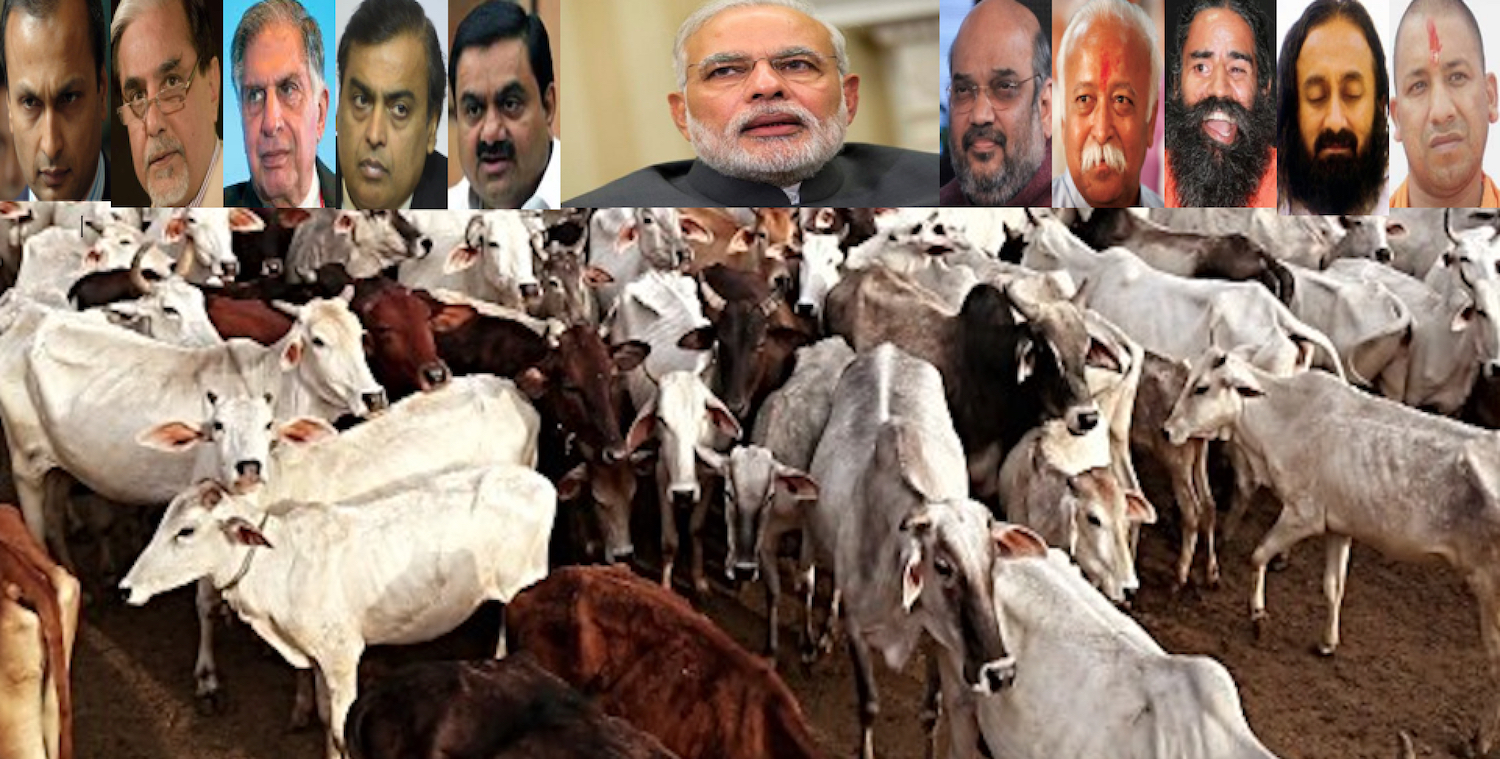
     Modi aka BJP is paving the way for its handlers like Adani, Ambani, Tata and other foreign MNC’s to control the meat and animal hide trade that is worth Billions of Dollars. UP slaughterhouses alone employ 25 lac people with a turnover of Rs. 15,000.00 crore, the highest producer of meat in India. The meat industry is likely to grow at a compound growth rate of 8.4% over the next five years. The processed meat industry is growing even much faster, at about 20%. The meat export from India is about $4.5 billion and raw hide to leather goods is another $5.5 billion. About 22 million people are in the workforce and the meat export industry is expected to grow 50% in 5 years. Beside that 70% of Indians are non-vegetarians. Domestic per capita meat consumption in India is very low — around 5 kg as compared to the world average of 47 kg. With rising incomes between 2003 and 2012, their meat consumption rose by 6.3% a year. It is expected to rise by another 3.5% a year between 2013 and 2022.

     Apart from 73.7 lakh tons of meat in 2016-17, India also produced 108 lakh tons of fisheries in 2015-16 ranking 2nd after China. India is the number One the and largest exporter of shrimp fish in the world. This industry is growing at a robust pace of 8% per annum. The business is valued at Rs. 1 Lakh Crore and employs about 150 lakh people. Andhra Pradesh occupies the first place, West Bengal 2nd and Modi’s Gujarat at 3rd place in fish production in India.

     The demonetization was also done for these very influential people so that they can control food business worth billions that is traditionally run on cash basis by the informal sector. On top of that to pave the way for billions of dollars that can be made in transaction fees in the guise of digital money from the less fortunate and financially most vulnerable people of Indian society. Rich have credit cards; they don’t pay any fees to use it; rather they are rewarded with points and cash back for its use; it is the merchant that pays the fees for accepting it. The poor has to get a “Pre-Paid Debit Card” for a fee with a monthly maintenance fee and fee for loading money; one of the biggest Ponzi schemes ever invented by the American Financial Industry to loot the poor.

     Coming to Team Modi & Hinduwadi’s understanding of Hinduism, its history, its writing on eating meat and views of various learned scholars, all of them are a very big disappointment. Team Modi should do some soul searching why Atal Behari Bajpai avoided the trap of cow laid by the bogus Hindutva supporters that has no love for their own 50 crore (500 million) extremely poor Hindus living a miserable life.

     According to Sanskrit Scholar Rajani K Dixit, “there is no such thing as Holy Cow in the Vedas”. The Vedas consider bovines important for milk, beef, agriculture and transport but not divine or holy. The word ‘Aghnyaa’ applies only to a milch cow because it is not economical to kill it. A Vaisha cow is meant for beef, and especially reserved to an extent for Brahmins only. Atharva 12.4(13) tells us that in case a Brahmin begs for a cow from a non-Brahmin, “even if that person has a beef-dinner at his house, he has to select another cow to slaughter for his own dinner, than the one that is asked for”. The word ‘Aghnyaa’ (not to be killed) coined by Rigveda for young milch cows was the main cause of the Hindu misunderstanding that cows or bovines are not to be slaughtered.

     The Rigveda has never used the word ‘mother’ for a cow. There is no punishment recommended for a cow slaughterer even if someone kills a young milch cow. Beef-eating is also not taboo. Beef parties are not only allowed but highly appreciated, and a person who cooks beef for his guests is praised by the term ‘Atithi-gva’ ‘one who offers beef to guests’.           

     Ritual sacrifice of a bull is a must in worship to God Indra. Beef parties also seem a regular affair in weddings (RV 10.85). Cows are not sacred and beef is not forbidden to Hindus. Here is a line from a verse ascribed to god Savita, the presiding deity of the Gayatri Mantra, describing a dinner party he is hosting: “At night we are going to kill cows” (RV.10.85(19). RV 10.89 (14) mentions “cows for food, laying scattered on the grounds of a slaughter house”. Mark that the author does not use the word ‘animals’ but ‘cows’, showing that beef was the most popular item, and the cow the most slaughtered animal. RV 10.95(6) says that “old cows which do not give milk” are “only fit to be cooked”. It further states that “useless cows ….are taken to be cooked, but never milch cows”. It is clear that slaughter houses are not banned, beef is allowed and useless bovines are allowed to be slaughtered in Hinduism.

     Aadi Shankaracharya born in 788 CE in Kerala: in his commentary on Brahadaranyako Upanishad 6/4/18 says: ’Odaan’ rice mixed with meat is called ‘maansodan’ on being asked whose meat it should be, he answers ‘Uksha’ is used for an ox, which is capable to produce semen. Currently 72 communities including some upper caste Hindus in Kerala prefer beef to the mutton and some prefer it because it is cheaper than mutton.

     Hinduisms great propagator Swami Vivekaanand said: “You will be surprised to know that according to ancient Hindu rite and rituals, a man cannot be a good Hindu who does not eat beef “. (The complete works of Swami Vivekanand vol :3/5/36)

     Vinayak Damodar Savarkar, the Hindutva Icon and Icon of Hindu religious & political parties including BJP, espoused his views in Vidnyan Nishta Nibandh, that the cow, like the peepal tree, should be cared for, as something useful to humans, which meant eating it as well if need be. He insisted that a superstitious mindset towards cows would ruin India’s intellect and that cows should be protected for their economic use to man, and not because of their ‘divinity’. Attributing religious qualities to it gives it a godly status. Such a superstitious mindset destroys the nation’s intellect. “When humanitarian interests are not served and in fact harmed by the cow and when humanism is shamed, self-defeating extreme cow protection should be rejected.”              

    Every now and then, an admirer of Savarkar raises the topic. “Can anyone imagine that the ‘Father of Hindutva’ advocated beef-eating (in special circumstances), rejected the divinity of the Vedas, denounced the sanctity of the caste system and launched a virulent attack on the hypocrisy of the priests?” wrote Ved Pratap Vaidik, a journalist close to several Hindutva figures. “Incidentally, Savarkar was a beef-eater,” wrote Varsha Bhonsle on Savarkar’s birth anniversary, February 26, in 1998. “For he was, above all else, a rationalist – a true Hindu – and eons ahead of contemporary Hindutvawadis.” (“Why is the Cow a Political Animal?” S. Joshi)

    Mahatma Gandhi was approached for total ban on Cow Slaughter in India. His reply was, “I have been long pledged to serve the cow but how can my religion also be the religion of the rest of the Indians? It will mean coercion against those Indians who are not Hindus. The assumption of the Hindus that India now has become the land of the Hindus is erroneous. India belongs to all who live here. Earlier on 25th July 1947 he also said that “The Hindu religion prohibited cow slaughter for the Hindus, not for the world. The religious prohibition came from within. Any imposition from without meant compulsion. Such compulsion was repugnant to religion.”

     A Brahmin’s Cow Tales by D. N. Jha, a high cast Brahmin himself. The cow as a sacred animal, Jha believes, did not really gain currency until Dayanand Saraswati’s cow protection movement in the 19th century”. The cow became a tool of mass political mobilization with the organized cow-protection movement,” the historian points out. “The killing of cows stopped gradually with the agrarian society and caste rigidity. The Brahmins found it convenient to say that those who ate beef were untouchable. But they themselves continued to consume it, recommending it for occasions such as shraadh. The beef-eating habits of Indians which existed in Rig Vedic times and continued till the 19th century and after, despite repeated Brahminical injunctions against cow-killing. That ancient Hindus, including Brahmins, were beef-eaters, willing to incur the minor penalty that an agrarian society began imposing on cow-killers, and that this fondness for cattle meat had nothing to do with Islam or Christianity.       

     For those who blame Muslims for the practice of Cow slaughter in India.  Babar’s first act after conquering Delhi was to forbid the killing of cows. They must read Babar’s Directives (Wasiyyat namd-i-majchfi) a secret testament to his son Humayun and his future generations. For the stability of the Empire, O my son!, “The realm of Hindustan is full of diverse creeds. Praise be to God, the Righteous, the Glorious, the Highest, that He hath granted unto thee the Empire of it. It is but proper that thou, with heart cleansed of all religious bigotry, should dispense justice according to the tenets of each community.’ “And in particular refrain from the sacrifice of cow, for that way lies the conquest of the hearts of the people of Hindustan; and the subjects of the realm will, through royal favour, be devoted to thee. And the temples and abodes of worship of every community under Imperial sway, you should not damage. Dispense justice so that the sovereign may be happy with the subjects and likewise the subjects with their sovereign. The progress of Islam is better by the sword of kindness, not by the sword of oppression.” (Abstracted from the 1936 book The Mughal Empire From Babar To Aurangzeb, by SM Jaffar of Peshawar. It mentions that “the original document is in Persian and is treasured in the Hamida Library at Bhopal as one of its heirlooms.”)

    The British Origin of Cow-Slaughter in India (published 2002) by Gandhian historian Dharampal. His book draws from official documents to show that the riots of 1880-1894 were not the obvious Hindu-Muslim conflagration they were made out to be. The book cites accounts of how “many prominent Muslims as well as the Parsis and Sikhs actively participated in the (cow protection) movement.” Dharampal wrote that large-scale cow slaughter was not the handiwork of Muslims who came to India from central and western Asia. “The question of the sacrifice of a cow did not arise as the land where Islam arose did not have many cows.”

    Mughals were habituated to the meat of goats and mutton, sacrificing camels on the occasion of festivals like Eid or for large feasts, the book says. Dharampal rues the lack of research on cow killing between 1200 and 1700, when a series of Muslim kings ruled over a large part of India. But he goes on to show that systematic slaughter of cattle began in India with the East India Company establishing itself. The British, unlike the central and west Asians, were habituated to beef.  The first slaughterhouse in India was built in Calcutta (now Kolkata) in 1760 by Robert Clive, then Governor of Bengal. It could kill 30,000 animals per day. Several more slaughterhouses were set up in various parts of the country by the Commissariat Wing of the three British armies of Bengal, Madras and Bombay Presidencies. A total of 350 slaughterhouses were constructed by 1910.

     Nitya Sambamurti Ghotge, a veterinary surgeon who heads Anthra, a group in Pune that has worked with rural livestock rearers since 1992. Laws against cow slaughter and Trade Rules will only criminalize the livestock trade, not protect the animals, said Ghotge. Only the smugglers and the law enforcement officials will benefit from the ban on cow slaughter, not the poor farmers or the livestock. Like the agriculture scientist Ramanjaneyulu, Ghotge holds that the cow protection laws are unjust; it is about powerful urban people outsourcing the burden of cow protection on the rural poor, she said.

    As for the BJP’s claim that “cow is the only divine animal that exhales oxygen”, no living being other than plants exhale oxygen is also a myth. Animals, however, exhale unused oxygen, as lungs cannot process all the oxygen that is inhaled. According to the 2006 FAO report, the livestock sector accounts for 9 per cent of carbon dioxide derived from human-related activities, but produces a much larger share of even more harmful greenhouse gases.

     Team Modi is least concerned about the millions of Indians- Hindus as well as non-Hindus employed directly and indirectly in the cattle trade. The millions especially children and elderly that depend on bovine meat as the cheapest source of protein. In the name of misguided Hindutva they are imposing their personal believes on the cattle breeders, traders, farmers and bovine meat eaters without considering the economic realities. There was a time when the owner could get Rs 12,000.00 to Rs. 15,000.00 for the unproductive animal from a slaughterhouse, now that has been reduced to Zero by the Gau Rakshaks/cow vigilantes. Rs 2,500.00-3,000.0 per month is the cost just to keep the animal alive for 8-10 years after the end of its economic utility. If the 10 million or so cattle that possibly end up at the abattoir every year are not culled, farmers will simply stop caring for them and let them loose in towns and cities. It will cost upward of Rs 22,000 crore to take care of them. And since the 10 million-plus will keep adding each year, till they die in their natural course, these costs would only keep on mounting up every year.  Just in the 4th year the cost could be more than Rs. 88,000.00 crore. In BJP ruled state Rajasthan the state government is providing Rs 70.00/day for cow and Rs 35/day for calf and at the same time it is providing Rs. 25.63/person on welfare schemes in the state. Under Modi, India has become an international joke where cow is more valuable than human beings.

    (The author is a New Jersey based community activist and a regular commentator on burning issues. He can be reached at davemakkar@yahoo.com)


                                (The Indian Panorama invites comments on the article)


  • China bears heavy responsibility for Liu Xiaobo’s death Nobel committee

    China bears heavy responsibility for Liu Xiaobo’s death Nobel committee

    OSLO (TIP): The Norwegian Nobel Committee said on Thursday that China bears a “heavy responsibility” for the “premature” death+ of 2010 Peace Prize winner Liu Xiaobo.

    The prominent democracy advocate, 61, died while still in custody following a battle with cancer. Officials ignored international pleas to let him spend his final days free and abroad. Germany and the US had offered to take him in for treatment.

    “We find it deeply disturbing that Liu Xiaobo was not transferred to a facility where he could receive adequate medical treatment before he became terminally ill ,” Berit Reiss-Andersen, who chairs the Norwegian Nobel Committee, said in a statement. “The Chinese government bears heavy responsibility for his premature death.”

    Liu was transferred from prison to a heavily guarded hospital to be treated for late-stage liver cancer more than a month ago. (AFP)

  • China detains 35 Japanese for alleged telephone fraud

    China detains 35 Japanese for alleged telephone fraud

    TOKYO (TIP): Chinese authorities have detained 35 Japanese nationals in the southeastern province of Fujian for alleged fraud, the Japanese foreign ministry said on Wednesday, in what was probably one of the worst cases of telephone scams targeting the elderly.

    Phone-based fraud targeting senior citizens is widespread in Japan, with an impostor, usually posing as a child or grandchild desperately in need of cash, asking an elderly person to make a bank transfer or hand money to a friend or colleague. “We were informed that local authorities notified Japanese consulate general in Guangzhou on July 3 that they had taken 35 Japanese nationals into criminal custody on suspicion of fraud,” a foreign ministry official, who asked not to be identified, told Reuters.

    The official declined to give further details because of the investigation being conducted by Chinese authorities.

    In Beijing, Chinese Foreign Ministry spokesman Geng Shuang said China had informed Japan about the 35 people detained on June 30 on suspicion of fraud.

    He gave no other details. The Nikkei business daily said the Japanese nationals were accused of involvement in telephone scams targeting residents of Chiba prefecture east of Tokyo, the Japanese capital.

    The group is the largest Japanese telephone fraud group discovered to be operating in China so far, in terms of the numbers detained, the Nikkei said.

    Such groups have increasingly been making calls from China in recent years to evade crackdowns by Japanese authorities, the paper added.

    The detained Japanese nationals were alleged to have played the role of callers in the fraud, it said, adding that it was up to Chinese authorities to decide whether to hand them over to Japan. (AP)

  • Chinese aircraft carrier sails into Hong Kong on maiden visit

    Chinese aircraft carrier sails into Hong Kong on maiden visit

    “I think Liaoning’s visit definitely gives the central government a chance to display its military power. It’s quite a positive and smart strategy to step up publicity overall,” said Sean Moran, a tourist from the United States, as the ship passed behind him on a blustery morning.

    HONG KONG (TIP): China’s first aircraft carrier sailed into Hong Kong waters on Friday in the latest show of the country’s growing military might at a time of heightened regional tensions.

    Tourists and residents gathered early to catch a glimpse of the massive carrier on its maiden visit to Hong Kong, part of celebrations marking 20 years since the handover of the city from British to Chinese rule.

    The Liaoning was accompanied by several other naval ships from its strike group, with jet fighters and helicopters visible on the flight deck alongside hundreds of crew dressed in white uniforms.

    “The Liaoning’s visit shows that China is a militarily superior country,” said Jack Chan, a retired businessman, who was watching the aircraft carrier from an oceanfront park.

    Thousands of Hong Kong residents queued for hours on Monday, many unsuccessfully, for 2,000 tickets allowing access to the vessel this weekend. Even though the former Russian naval ship remains a training vessel for China’s rapidly modernizing navy, its missions through tense regional seas have been closely followed in Hong Kong, which is more used to hosting US carriers and other foreign warships.

    “I think Liaoning’s visit definitely gives the central government a chance to display its military power. It’s quite a positive and smart strategy to step up publicity overall,” said Sean Moran, a tourist from the United States, as the ship passed behind him on a blustery morning.

    US consulate officials said that they have yet to be invited on board the Liaoning. The US navy often hosts the People’s Liberation Army (PLA) on ships visiting Hong Kong, sometimes flying local military chiefs to aircraft carriers.

    The Liaoning’s most recent drills at the weekend included operations in the Taiwan Strait that were closely monitored by Taiwan’s military given recent tensions with Beijing, which regards the island as a breakaway province.

    With its Soviet-era takeoff ramp distinguishing it from the ordinary Hong Kong traffic of container ships and bulk cargo vessels, the 55,000-tonne Liaoning steamed down the congested East Lamma channel shortly after dawn. Significantly smaller than the US carriers that have long stopped in Hong Kong, the Liaoning started life as one of the Soviet Union’s last carriers under construction, before being sold by Ukraine as a stripped down hulk to private Chinese interests in 1998.

    The vessel was later refitted in a northern Chinese shipyard in what was seen by foreign military analysts as a key early test of China’s naval modernization.

    The Liaoning began sea trials as China’s first aircraft carrier in 2011 and has more recently conducted fully integrated drills with its complement of J-15 jet fighters and a variety of support ships. (Reuters)

  • Officials say 76 police officers hurt in clashes with anti-G20 protesters

    Officials say 76 police officers hurt in clashes with anti-G20 protesters

    HAMBURG (TIP): At least 76 police officers were hurt on Thursday in clashes with anti-G20 protesters in Hamburg, German authorities said, as a demonstration dubbed “Welcome to Hell” erupted in violence shortly after it began.

    “Police are still being attacked,” said a spokesman for Hamburg’s police force, adding that most of the officers hurt sustained light injuries.

    Demonstrations turned violent late Thursday, as German police clashed with a group of masked anti-capitalist activists hurling bottles and stones.

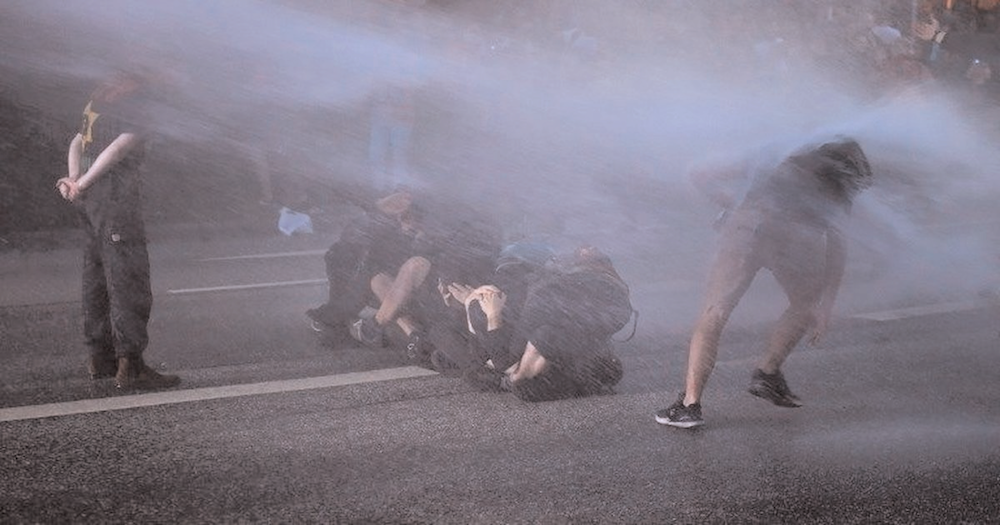
    What should have been a peaceful march by around 12,000 people in Hamburg protesting against globalisation was halted as police used water cannon and tear gas to disperse around 1,000 far-left militants.

    Police called with loudspeakers on protestors to remove their masks but this was ignored and after more objects were thrown, authorities decided to separate them from the other protestors, police said on Twitter.

    “Unfortunately it has come to the first clashes. We are implementing corresponding measures,” read another tweet.

    Protesters were seen scrambling to leave the scene, while others defiantly stood in the way of water cannon trucks as they moved in surrounded by riot police with helmets and batons.

    Police tweeted a photo of a car and flames and said shop windows were smashed. The main “Welcome to Hell” march was then called off but thousands of people remained as night fell and demonstrators engaged in smaller skirmishes in the back streets of Germany’s second city, AFP correspondents said.

    Up to 100,000 demonstrators are expected before and during the two-day Group of 20 meeting gathering Trump, Russia’s Vladimir Putin and Xi Jinping of China starting on Friday.

    There were 20,000 police on standby together with armoured vehicles, helicopters and surveillance drones. A holding centre for detainees has been set up in a former hardware store with space for 400 people.

    “War, climate change, exploitation are the result of the capitalist system that the G20 stands for and which 20,000 police are here to defend,” demonstrator Georg Ismail told AFP.

    Major events like the G20 have in recent years usually been held in remote locations, but Germany was forced by its logistical demands to host it in a large city with a big venue and dozens of hotels.

    Hamburg is desperate to avoid a rerun of the kind of major clashes seen at the 2001 G8 summit in Genoa or the Frankfurt opening of the new European Central Bank building in 2015.

    In Hamburg, some 30 demonstrations have been announced, organised by anti-globalisation activists and environmentalists, trade unions, students and Church groups.

    “Welcome to Hell” organiser Andreas Blechschmidt said the motto is “a combative message… but it’s also meant to symbolise that G20 policies worldwide are responsible for hellish conditions like hunger, war and the climate disaster”.

    The main focus of attention inside the G20 venue on the first day of the summit on Friday will be Trump’s first face-to-face meeting with Putin. Speaking in the Polish capital earlier on Thursday in front of 10,000 people, Trump didn’t mince his words about Moscow.

    “We urge Russia to cease its destabilising activities in Ukraine and elsewhere, and its support for hostile regimes — including Syria and Iran — and to instead join the community of responsible nations in our fight against common enemies and in defence of civilisation itself,” he said.

    Arriving in Hamburg later Thursday, Trump headed to talks with German Chancellor Angela Merkel, who has vowed to defend the 2015 Paris climate accord despite the US leader’s decision to withdraw.

    Merkel said before meeting the US president that Trump was facing isolation within the G20 over the issue — one of several topics where the new US leader is likely to clash with his fellow leaders. (Reuters)

  • Ten killed and dozens hurt in Bangladesh garment factory blast

    Ten killed and dozens hurt in Bangladesh garment factory blast

    DHAKA (TIP): A boiler has exploded at a Bangladeshi garment factory killing 10 people and injuring dozens, fire officials said on July 2, the latest mishap to hit one of the world’s biggest garment producers.

    The accident happened late on Monday at a plant of Multifabs Limited, a Bangladeshi company on the outskirts of the capital, Dhaka, a fire official said.

    The firm supplies knitted apparel to clients in Sweden, Denmark, Germany, Russia, Spain, Netherlands and Britain, including to Littlewoods, one of Britain’s oldest retail brands, according to its website.

    “Nine people were killed in the blast and one died in hospital,” fire service official Palash Chandra Modak said. The company said the plant was functioning well and the boiler had just been serviced.

    “This was an accident. Everything was fine,” Mahiuddin Faruqui, company chairman and managing director told Reuters. “The boiler was running well. After servicing when workers were trying to restart it, it went off.” Bangladesh’s garment-making industry, the biggest in the world after China’s, employs four million people and generates 80 percent of its export earnings.

    Multifabs started operating in 1992, and reached $70 million in exports in 2016, supplying European brands such as fashion chain Lindex, which is part of Finnish retailer Stockmann and Aldi, Faruqui said. (Reuters)

  • China court sentences fugitive tycoon’s staff

    China court sentences fugitive tycoon’s staff

    BEIJING TIP: A court in northern China has sentenced three employees working for fugitive real estate billionaire Guo Wengui, who has been locked in a high-stakes political feud with the ruling Communist Party.

    The Dalian Xigang People’s Court on Friday announced prison terms of less than three years for three employees who prosecutors said were ordered by Guo to falsify financial documents to obtain loans from a state bank.

    Guo’s development firm Beijing Pangu Investment Co. was also fined $36 million. Guo fled China and now lives in a $68 million apartment overlooking New York’s Central Park. He has cultivated a vast social media following and vowed to expose sensitive information concerning top party officials unless the government frees his employees and family members held in China. (AP)

  • Chinese military base likely in Pakistan: Beijing hits out at Pentagon report, says remarks ‘irresponsible’

    Chinese military base likely in Pakistan: Beijing hits out at Pentagon report, says remarks ‘irresponsible’

    BEIJING (TIP): Beijing says it is “firmly opposed” to a Pentagon report that highlighted China’s construction of military facilities on man-made islands in the disputed South China Sea and speculated that Beijing would likely build more bases overseas.

    The annual report made “irresponsible remarks on China’s national defence development and reasonable actions in defending our territorial sovereignty and security interests in disregard of the facts,” foreign ministry spokeswoman Hua Chunying told reporters on Wednesday. “China is firmly opposed to that,” Hua said, adding that her government was a force for safeguarding peace and stability in the Asia-Pacific region and the world.

    While Hua declined to comment on possible overseas bases, she said China and Pakistan – one of the countries considered most likely to host a Chinese military presence+ – were close friends that conduct mutually beneficial cooperation in a variety of fields.

    China is now building its first overseas base in Djibouti, which it says will help facilitate its participation in anti-piracy patrols in the Gulf of Aden and UN peacekeeping operations in the region. The base is near Camp Lemonnier, the US base in the Horn of Africa nation, although American military leaders have said they don’t see it as threatening US operations.

    “China most likely will seek to establish additional military bases in countries with which it has a longstanding friendly relationship and similar strategic interests, such as Pakistan, and in which there is a precedent for hosting foreign militaries,” the Pentagon report said. “This initiative, along with regular naval vessel visits to foreign ports, both reflects and amplifies China’s growing influence, extending the reach of its armed forces.”

    The assessment also focused on the military buildup in the Spratly Islands in the South China Sea,which China claims virtually in its entirety. It said that as of late last year, China was building 24 fighter-sized hangars, fixed-weapons positions, barracks, administration buildings and communication facilities on each of the three largest outposts – Fiery Cross, Subi and Mischief Reefs. Each has runways that are at least 2,700 meters (8,800 feet) long.

    China claims the bases are there to improve navigation safety and assistance for fishermen. But it also says they help reinforce China’s sovereignty claims and that China is fully entitled to provide them with defensive capabilities.

    “That we develop national defence is to safeguard China’s independent sovereignty and territorial integrity. It is a legitimate right of a sovereign state,” Hua said, without mentioning the islands directly.

    While China objects vocally to US naval operations+ in the South China Sea, it is eager not to be seen as a threat, and its criticism of the annual Pentagon assessment is part of a drive to avoid being perceived as attempting to seize the mantle as the region’s dominant military force. It has also engaged in a series of dialogues and exchanges with the US military, although the two continue to view each other warily. “We hope the US side will put aside the Cold War mentality, view China’s military development in an objective and rational manner, and take concrete actions to maintain steady growth of the military relationship between the two countries,” Hua said. ( AP)

  • Army ready for wars on two-and-a-half fronts: Gen Rawat

    Army ready for wars on two-and-a-half fronts: Gen Rawat

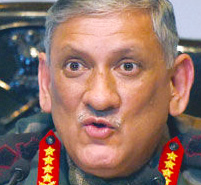
    NEW DELHI (TIP): Chief of Army Staff General Bipin Rawat has said the Indian Army is prepared to face external as well as internal threats to the country. “The Indian Army is completely ready for a two-and-a-half front war,” said Rawat.

    The Army chief added that though India is ready for a multi-front war, there are effective mechanisms to defuse an adverse situation. “Even the Prime Minister has said that for the last forty years not even a single bullet has been fired on the Indo-China border,” said General Rawat. He also said that a new strike unit, 17 Strike Corps, is being raised specifically for mountain warfare.

    When asked about the delay in its raising, the Army chief said a process as complex as this takes time. “It is being raised from scratch. The recruitment is going on.

  • SCO SUMMIT- PM Modi meets China’s Xi Jinping to repair ties

    SCO SUMMIT- PM Modi meets China’s Xi Jinping to repair ties

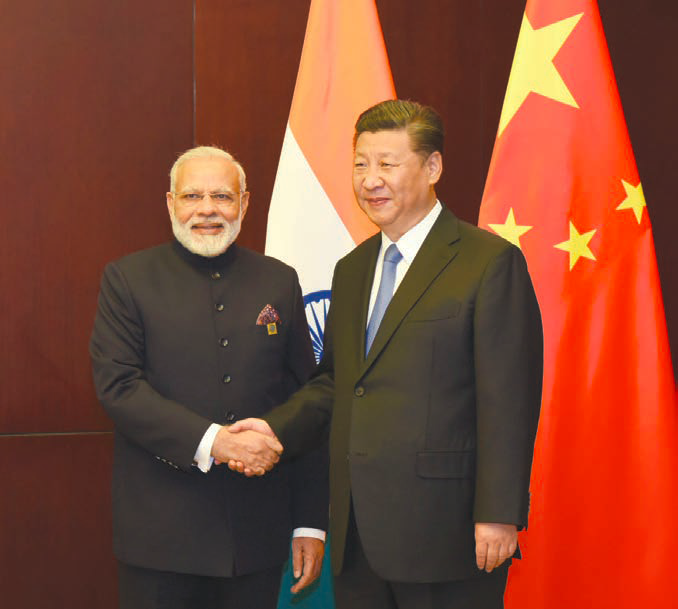
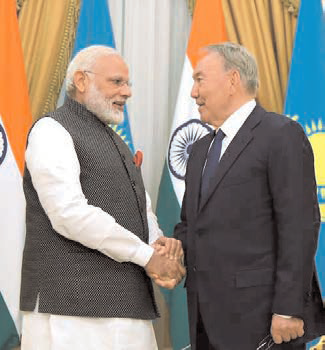
    ASTANA (TIP): Prime Minister Narendra Modi and Chinese President Xi Jinping met here on June 9 on the sidelines of the SCO summit, seen as an effort to repair ties hit by growing differences between the two countries over a host of issues, including the China- Pakistan Economic Corridor and NSG.

    It is the first between the two leaders after India boycotted the high-profile Belt and Road Forum held in Beijing last month in which 29 world leaders took part.

    India abstained from the summit to highlight its concerns over the US$ 50 billion China Pakistan Economic Corridor, which is part of the Belt and Road Initiative (BRI) and passes through Gilgit and Baltistan in Pakistan-occupied Kashmir (PoK).

    Prime Minister Modi and Xi are here to attend the annual summit of the Shanghai Cooperation Organisation (SCO). “PM @narendramodi meets President of China #XiJinping on margins of SCO Summit in Astana,” External Affairs Ministry Spokesperson Gopal Baglay tweeted.

    China is vocal about its stand to block India’s admission into the 48-member Nuclear Suppliers Group (NSG). It had also stalled India’s move to list JeM chief Masood Azhar as a global terrorist by the UN. After Astana, Modi and Xi are also expected to cross paths at the G20 summit to be held next month in Hamburg, Germany followed by Brazil, Russia, India, China, South Africa (BRICS) summit to be held in Xiamen, China in September.

    Modi also met Uzbek President Shavkat Mirziyoyev on the sidelines of the SCO. “Taking forward #IndiaUzbekistan coop’n. PM @narendramodi meets President Shavkat Mirziyoyev of Uzbekistan on the sidelines of SCO Summit,” Baglay tweeted.

    Source: PTI

  • US says China likely to build military base in Pakistan

    US says China likely to build military base in Pakistan

    WASHINGTON (TIP): A Pentagon report released on June 3 singled out Pakistan as a possible location for a future Chinese military base, as it forecast that Beijing would likely build more bases overseas after establishing a facility in the African nation of Djibouti. The prediction came in a 97- page annual report to Congress that saw advances throughout the Chinese military in 2016, funded by robust defense spending that the Pentagon estimated exceeded $180 billion.

    That is higher than China’s official defense budget figure of 954.35 billion yuan ($140.4 billion). Chinese leaders, the US report said, appeared committed to defense spending hikes for the “foreseeable future,” even as economic growth slows. The report repeatedly cited China’s construction of its first overseas naval base in Djibouti, which is already home to a key US military base and is strategically located at the southern entrance to the Red Sea on the route to the Suez Canal.

    “China most likely will seek to establish additional military bases in countries+ with which it has a longstanding friendly relationship and similar strategic interests, such as Pakistan,” the report said.

    Djibouti’s position on the northwestern edge of the Indian Ocean has fueled worries in India that it would become another of China’s ‘string of pearls’ of military alliances and assets ringing India, including Bangladesh, Myanmar and Sri Lanka.

    The report did not address India’s potential reaction to a Chinese base in Pakistan. But Pakistan, the US report noted, was already the primary market in the Asian-Pacific region for Chinese arms exports. That region accounted for $9 billion of the more than $20 billion in Chinese arms exports from 2011 to 2015.

    Last year, China signed an agreement with Pakistan for the sale of eight submarines+ . Quantum satellite, cyber hacks :

    The Pentagon report flagged Chinese military advances, including in space and at sea. It cited China’s 2016 launch of the first experimental quantum communications satellite, acknowledging that it represented a “notable advance in cryptography research.” As in past years, the Pentagon renewed its concerns about cyber spying, saying US government-owned computers were again targeted by China based intrusions through 2016.

    (AP)

  • US doesn’t need India, France, China telling it what to do: Nikki Haley

    US doesn’t need India, France, China telling it what to do: Nikki Haley

    WASHINGTON (TIP): The US does not need India, China and France telling it what to do on the issue of Paris Climate agreement, American Ambassador to the UN Nikki Haley has said, strongly supporting the controversial decision of President Donald Trump to withdraw from the landmark accord.

    Trump last week withdrew the US, the second largest polluter after China, from the Paris Agreement. He said that India would get billions of dollars for meeting its commitment under the 2015 Paris Agreement along with China and gain a financial advantage over the US.

    He had put the US in league with two other nations – Syria and Nicaragua – who have not signed onto the deal agreed by over 190 other nations. “I think the rest of the world would like to tell us how to manage our own environment and I think that anybody in America can tell you that we’re best to decide what America should do.We don’t need India and France and China telling us what they think we should do,” Indian-American Haley was quoted as saying by CBS News.

    Responding to a question on global reaction to Trump’s decision, Haley said countries should continue doing what’s in their best interest. “They should continue doing what’s in the best interest. And if the Paris agreement was something that works for them, that they can achieve, they should do that,” Haley said.

    Haley defended Trump’s decision saying business could not be run under the kind of regulations imposed by the Paris Climate deal. “There’s a reason that President Obama didn’t go through the Senate to get this cleared, because he couldn’t. The regulations were unattainable. I mean you could not actually have a business run under the regulations that we had,” she said.

    She said that the US is conscious about the environment and it will continue to do its part in protecting climate change. “We know that there are issues with the environment. We know that we have to be conscious of it. But we can’t sit there and have Angela Merkel telling us to worry about Africa. She should continue doing her part. We’re going to continue doing our part. We’re going to continue encouraging other countries to do what they think is in the best interests of them. But American sovereignty matters,” Haley said.

    The top American diplomat said that Trump believes the climate is changing, and he does know that pollutants are a part of that equation. “He believes that climate is changing and he believes pollutants are part of that equation. He is absolutely intent on making sure that we have clean air, clean water, that he makes sure that we’re doing everything we can to keep America’s moral compass in the world when it comes to the environment,” she said.

    “We’ve done that in the past.We’ll do it in the future. It’s what the US does. It’s what we’ll continue to do,” she added.

    (PTI)

  • US might take the hard option in Afghanistan

    US might take the hard option in Afghanistan

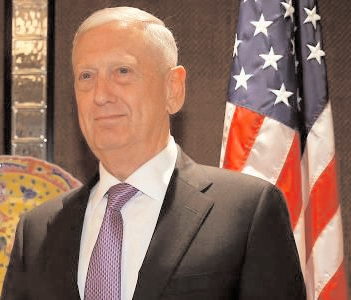
    KABUL (TIP): The US official policy on supporting a “peace process” in Afghanistan may change. In remarks at Canberra, US defence secretary James Mattis gave clear indication that the US may not give Taliban the space for a political “solution” in Afghanistan. The message from Rex Tillerson secretary of state and Mattis is the same – Taliban is a terror group, and they will be tackled militarily.

    Mattis said, “we’re up against an enemy that knows that they cannot win at the ballot box, and you think – we have to sometimes remind ourselves of that reality. That’s why they use bombs because ballots would ensure they never had a role to play…”

    Tillerson continued, “our commitment to Afghanistan is to ensure that it never becomes a safe haven for terrorists to launch attacks against the civilized world or against any other part of the world or any of their neighbors.”

    Thus far, the US has been pushing the Afghan government to set up a peace process with the Taliban, as the only way to end the war. Although the official US review of its Afghanistan policy is still pending, the remarks are a strong signal that the US may turn up the military heat on the Taliban. Certainly, there is no more the oft-repeated line that the US believes “there is no military solution” to the Afghan crisis.

    This used to be the line used by both former secretaries of state Hillary Clinton and John Kerry. That gave the Pakistanis the opportunity to set up all manner of arrangements starting with the Qatar process run by Taliban leader Tayyab Agha, who was quickly discredited. This was followed by the ill fated QCG between the US, China,

    Afghanistan and Pakistan which ended with two things: the announcement that Taliban leader Mullah Omar had died over two years prior, and the elevation of Sirajuddin Haqqani as deputy chief of Taliban, effectively joining the ISI supported Haqqani network with the Taliban. In more recent months, Russia and Iran have both joined the fray, this time using ISIS as a reason for bringing Taliban into the mainstream and power structure in Kabul.

    The US accuses Russia of supplying weapons to Taliban. But the horrific attacks in recent weeks by the Haqqani network appears to have made up US minds on how not to look for peace in Afghanistan. While the dilemma in Washington about another troop surge remains, it’s also clear that the US may step in to prevent Russia and Iran from becoming players in this particular conflict.

    The recent US MOAB (mother-of-allbombs)+ drop in Nangarhar has been widely seen as a signal for North Korea. But could there be a possibility of it being used again in Afghanistan, against the Taliban?

    (PTI)

  • Islamic State claims it killed two Chinese in Pakistan

    Islamic State claims it killed two Chinese in Pakistan

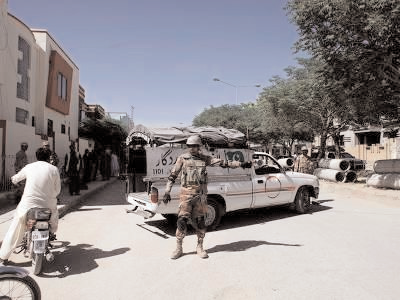
    CAIRO/QUETTA (TIP): Islamic State has killed two Chinese teachers it kidnapped in Pakistan’s southwestern Balochistan province last month, the militant group’s Amaq news agency said on June 8, in a blow to Islamabad’s efforts to safeguard Chinese workers. China’s foreign ministry said it was “gravely concerned” about the report and working to verify the information.

    Armed men pretending to be policemen kidnapped the two language teachers in the provincial capital, Quetta, on May 24. The kidnapping was a rare security incident involving Chinese nationals in Pakistan, where Beijing has pledged $57 billion for its “Belt and Road” plan.

    “Islamic State fighters killed two Chinese people they had been holding in Balochistan province, southwest Pakistan,” Amaq said. A Balochistan government spokesman said officials were in the process of confirming “whether the report is true”. China’s foreign ministry said it noted the report and expressed “grave concern”. “We have been trying to rescue the two kidnapped hostages over the past days,” the ministry said in a short statement.

    “The Chinese side is working to learn about and verify relevant information through various channels, including working with Pakistani authorities,” it said. “The Chinese side is firmly opposed to the acts of kidnapping civilians in any form, as well as terrorism and extreme violence in any form.”

    There was no immediate comment from Pakistan’s interior ministry or its foreign office. Islamic State, which controls some territory in neighbouring Afghanistan, has struggled to establish a presence in Pakistan. But it has claimed several major attacks, including one on the deputy chairman of the Senate last month in Balochistan, in which 25 people were killed.

    Earlier on Thursday, Pakistan’s military published details of a three-day raid on a militant hideout in a cave not far from Quetta, saying it had killed 12 “hardcore terrorists” from a banned local Islamist group and prevented Islamic State from gaining a “foothold” in Balochistan.

    China’s ambassador to Pakistan and other officials have often urged Islamabad to improve security, especially in Balochistan, where China is building a new port and funding roads to link its western regions with the Arabian Sea.

    The numbers of Pakistanis studying Mandarin has skyrocketed since 2014, when President Xi Jinping signed off on the China-Pakistan Economic Corridor, pledging to invest $57 billion in Pakistani road, rail and power infrastructure. Security in Balochistan has improved in recent years.

    However, separatists, who view the project as a ruse to steal natural resources, killed 10 Pakistani workers building a road near the new port of Gwadar this month, a key part of the economic corridor.

    China has also expressed concern about militants in Pakistan linking up with what China views as separatists in the far western Chinese region of Xinjiang, where hundreds have been killed in violence in recent years.

    (Reuters)

  • Fighting Terrorism is at the Top of the Agenda at the SCO Summit

    Fighting Terrorism is at the Top of the Agenda at the SCO Summit

    In the capital of Kazakhstan, Astana, a meeting of the defense ministers of the member countries of the Shanghai Cooperation Organization (SCO) was held on June 7. At the meeting, the members of the delegations made a number of statements concerning both the situation in Syria and the fight international terrorism in general.

    First of all, all the representatives agreed that Indian and Pakistani membership that will become true tomorrow, June 8, will enhance SCO’s security capabilities. Referring to international problems, the SCO participants concurred that the terrorism in a short time turned into the biggest threat to the global security. At the same time, all the members of the delegations noticed that the situation is aggravating with every passing day by numerous local conflicts in the world and by inability of the Western countries to overcome differences, to form a common and united front against this evil and to work together to build a bastion against terrorism.

    In this regard, the Syrian issue has become a key topic of the agenda during the meeting. The SCO-countries gave the highest priority to the question. A detailed briefing session was held for new Member States (India and Pakistan) on the common attitude of the participating countries to the key crisis in the Middle East. As it was noted at the meeting, it is in the Syrian Arab Republic the main forces of the Islamic State are concentrated. It was also stated that the Syrian Arab army coordinating its activities in order to ensure the success operations undermined in the end the potential of the IS fighters and Syria has been “at the forefront of fighting international terrorism” for a long time.

    Special attention was paid to the creation of de-escalation areas in Syria, which could contribute to ending the civil war and thus intensifying efforts to combat ISIS and Al-Nusra. The representatives of SCO-Member countries also noticed that practical steps are being taken to implement the agreements reached at the moment. The priority tasks, namely ensuring the monitoring of all the commitments undertaken, as well as creating conditions for the restoration of the destroyed infrastructure were also highlighted.

    The countries of the Shanghai Cooperation Organization agreed to provide support to each other in Syria and to exchange military experience in conducting counter-terrorism operations. Interaction within the SCO in the future was decided to focus on identifying and anticipating any terrorist activities.

    Inside Syria Media Center’ experts reasonably assume that the Member states will need to create joint effective managing tools to stop penetration of terrorism and radicalism into the SCO’s area of responsibility. A fair guess would be that the special attention would be paid to an operative exchange of the information available on the activities of terrorist groups.

    Such a summit is clearly useful for Syria from the point of view of practicality. People in Syria hope the talks will equip the SCO-members better to meet the challenges of terrorism. Syria needs support to be able to tackle the difficulties and to take the steps necessary for a just and lasting peace.

    SUMMARY: To be noted is that the Shanghai Cooperation Organization (SCO), or Shanghai Pact, is a Eurasian political, economic, and military organization which was founded in 1996 in Shanghai by the leaders of China, Kazakhstan, Kyrgyzstan, Russia, Tajikistan, and Uzbekistan. These countries, except Uzbekistan, had been members of the Shanghai Five, founded in 1996; after the inclusion of Uzbekistan in 2001, the members renamed the organization. On 10 July 2015, the SCO decided to admit India and Pakistan as full members. India and Pakistan signed the memorandum of obligations on 24 June 2016 at Tashkent, thereby starting the formal process of joining the SCO as the full members. Now in Astana the countries are going to become full members.

    The meeting of the SCO-defense ministers takes place once a year and the heads of the military departments have the opportunity both to share their views on the events taking place in the world and to work out a common strategy. In addition, it is possible to hold bilateral meetings to discuss in detail the plans of military cooperation on the margins of the meeting.

  • Modi at Astana: Apart from SCO membership, nothing much to come of summit

    Modi at Astana: Apart from SCO membership, nothing much to come of summit

    By KC Singh

    “Indo-Pak relations have a more complex pathology for their downward spiral. Modi came to power wanting to break the old cycle of talks and terror. He chose theatrical and personalized engagement with Sharif to leap over the complexities constricting a Pakistani leader, ranging from his relations with the army to pressure by jehadis with vote banks, and finally, his own credibility after the Panama Papers revelations”, says the author.

    Prime Minister Narendra Modi, from May 29 to June 3, careened through Germany, Spain, Russia and France. The world has changed so dramatically in the three years he has held office that he was literally on a new pilgrimage. There is a law of diminishing returns in diplomacy. For instance, if you do not finalize a free trade agreement with the EU, the bilateral investment treaties having lapsed, their excitement about India begins to abate.

    Putin seemed to toy with Modi, realizing that in a Trumpian world Indian strategic options had narrowed. He was not aligning against China and Pakistan. In fact, keeping Modi beside him during his interview with Megyn Kelly, whom Trump detests and who has traded CNN for NBC, Putin caused embarrassment to the Indian guest when questions on Trump campaign links to Russia were answered contemptuously.

    PM Modi now heads to the Shanghai Cooperation Organization (SCO) Summit in Astana, Kazakhstan on June 8-9, where India and Pakistan are to be admitted as full members. Also attending are the Chinese President Xi Jinping and Pakistan PM Nawaz Sharif. India’s diplomatic relations with both nations are currently strained. The media in Delhi enquired logically whether a meeting with Sharif was imminent. A follow-up question would be, what about an interaction with President Xi?

    External Affairs Minister Sushma Swaraj, having recovered from renal transplant, definitively ruled out one with Sharif.

    The reason is self-evident as a series of episodes have hardened national positions, thus narrowing the space for engagement with both neighbors, in closer concert today than ever before.

    Taking China first, it has persisted in opposing India’s membership of the NSG and stymied Masood Azhar’s listing by the UNSC committee. Even more provocatively, it finalized CPEC, traversing the disputed region of Gilgit-Baltistan, despite Indian objections. Then adding insult to injury, it included it in its OBOR meeting agenda in Beijing on May 14. It is an ambitious multi-trillion dollar connectivity initiative covering 68 countries, amounting to 40 per cent of global GDP. India declined to attend, citing breach of its sovereignty, besides casting doubts on its economic viability.

    Almost predictably, two Chinese helicopters intruded into Indian airspace in the western sector and Chinese spokesman surmised that recent developments have made border resolution more difficult. India had earlier upped the ante by allowing the Dalai Lama to tour Arunachal Pradesh, with full fanfare, including a visit to the Tawang monastery.

    Henry Kissinger opines in his book, On China, that the Chinese stratagem for dispute resolution has been to escalate the issue first, and then seek resolution. China should, by that logic, be seeking to de-escalate as it needs the Indian market and Xi faces a vital party congress later this year, and thus should not want tension with India to worsen. On the other hand, China has managed to assuage Donald Trump and thus dodged a trade or currency war, at least for the moment. Perhaps Modi-Xi need to share a swing in Astana, like in Ahmedabad, for a frank exchange.

    Indo-Pak relations have a more complex pathology for their downward spiral. Modi came to power wanting to break the old cycle of talks and terror.

    He chose theatrical and personalized engagement with Sharif to leap over the complexities constricting a Pakistani leader, ranging from his relations with the army to pressure by jehadis with vote banks, and finally, his own credibility after the Panama Papers revelations. When dealing with a leader with encumbrances, though keen to improve relations, a long game must be played, as in the short-run, he will be unable to deliver. Contrariwise, those opposed to normalization with India, except on their terms, will rush to sabotage engagement. By bringing the red-lines to the fences of army camps, breaching which triggers a stand-off with Pakistan, the control transfers to spoilers who can get a fidayeen to pull the trigger and disrupt engagement.

    Simultaneously, the politics in the Valley has derailed. Adopting a militaristic and jingoistic approach, including first backing the use of pellet guns, and now human shield, on the pretext of Army and security forces being above debate, may consolidate a domestic vote bank, but ignores domestic law and international humanitarian norms. At any rate, it even betrays ignorance of the counterinsurgency doctrine which rests on winning the confidence of the people to isolate mischief-makers.

    Thus, as the Indian and Pakistani leaders descend on Astana, both have new constraints. Modi cannot engage Sharif unless the Kulbhushan Jadhav case can be resolved. Coincidently, the next ICJ hearing is the day the SCO Summit opens, making it hardly conducive to political engagement. Pakistan would also be watching closely the latest Gulf developments where the ‘Sunni allies’ it hobnobbed with at the Riyadh summit are now pillorying Sunni Qatar simply because it rejected the anti-Iran tirade. Turkey has quietly thrown its weight behind Qatar. Iran, with which Qatar is bound by the joint ownership of the world’s largest gas field that literally links them below the Gulf waters, would be keeping all options open. Pakistan is caught in the middle.

    The joker in the pack, as occurring more and more frequently, is Trump. Not content to let events play out he tweeted: ‘There can no longer be funding of Radical Ideology. Leaders pointed to Qatar- look!’ As events in the western neighborhood of India and Pakistan increase tension, Modi needs to rebalance his domestic politics and neighborhood policy.

    At home in the face of slowing economy, now that even government’s figures show the debilitating effect of demonetization, social unrest and vigilantism, farmers’ protests turning violent and jobless tepid growth, he needs to change the ways of his government. The unleashing of the CBI against a television channel does not indicate self-confidence. Similarly, abroad, many old assumptions are passé. He needs diplomacy, not militarism; genuine nationalism, not jingoism; social cohesion, not majoritarian rabble-rousing; contemporary vision, not mythological mumbo-jumbo.

    (The author is a former Secretary, Ministry of External Affairs, Government of India)


  • NOTE BAN ALONE NOT TO BLAME FOR GROWTH SLUMP, SAYS JAITLEY

    NOTE BAN ALONE NOT TO BLAME FOR GROWTH SLUMP, SAYS JAITLEY

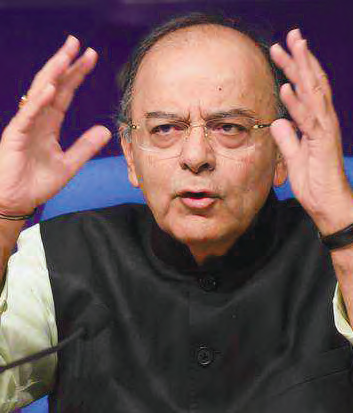
    NEW DELHI (TIP): Finance Minister Arun Jaitley has said demonetisation alone was not responsible for the fall in the GDP growth in the fourth quarter and said 7-8% growth in the current global context is “reasonable by Indian standards”.

    The Finance Minister blamed cumulative factors for the fall in growth, including the weak global economic scenario and slowdown in global economy even prior to the demonetisation. The fourth quarter number of 6.1% surprised economists who said the note ban has hurt growth and India lost the tag of the fastest-growing economy to China in the March quarter which pulled down the 2016-17 expansion to 7.1%.

    The Finance Minister said demonetisation has established a ‘new normal’. It has helped the government to promote digitisation of transactions, increased the base of taxpayers and sent a strong message that it is no longer safe to deal in cash.

    Jaitley said the slowdown in the fourth quarter was due to both domestic and global factors. “There are several factors which can contribute to GDP in a particular quarter. There was some slowdown visible given the global and domestic situation even prior to demonetisation last year,” Jaitley said while addressing a press conference on completion of three years of the Modi government.

    After the third quarter GDP numbers of 7% were announced, the government had maintained that claims of a slowdown due to demonetisation are exaggerated. With growth slipping to 6.1% after the government has made many structural reforms would be cause for worry in the third year of the government.

    “I do believe that in the current global situation a 7-8% growth, which is at the moment Indian normal, is fairly reasonable by Indian standards and good by global standards”. Sticking to the GST implementation deadline of July 1, the Finance Minister said there is a state of preparedness and GST itself will boost growth.

    However, several analysts say there will be a blip again in growth after GST is rolled out and while it would lead to creation of an integrated market, a major fallout will be the shift of trade and market share from the unorganised sector to the organised sector leading to job losses.

    On the proposed privatisation of Air India, the Finance Minister said the Niti Aayog has already given its recommendations to the Civil Aviation Ministry to explore various options. “It is for the Civil Aviation Ministry to explore various options,” he added. Oil companies’ merger issue is also being looked at by the ministry concerned, he added.

    Source: The Tribune

  • US missile interceptor test a threat to China: Experts

    US missile interceptor test a threat to China: Experts

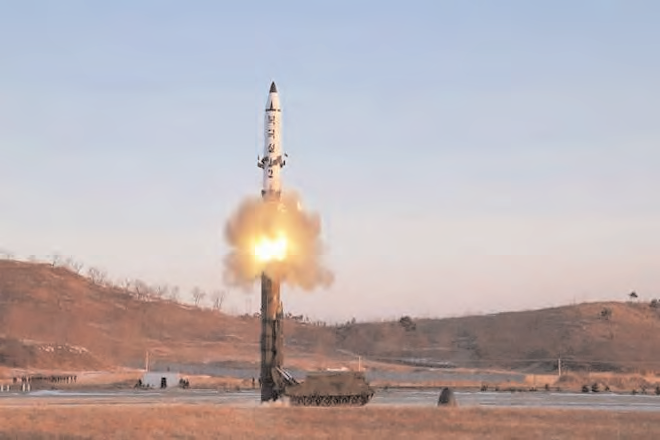
    BEIJING (TIP): The successful test of a US missile interceptor has sparked concerns in China as experts said it will break the strategic balance with other nuclear powers and signals preparations for military action against nuclear-armed North Korea The US has successfully tested a mock intercontinental ballistic missile (ICBM) using its own upgraded long-range interceptor warhead.

    “This test is similar to actual combat because it used X-band radar to track and lock on to the target – an ICBM – by itself. In the past, the US used a medium-range missile and the defence system had the data and information about the target before the test,” Yang Chengjun, a senior military strategist on missile studies from the PLA Rocket Force, told the Global Times.

    Officials said the US interceptor missile travelled at 27,040km per hour and hit its target over the Pacific Ocean. The test came a day after North Korea tested its ninth ballistic missile this year, which travelled 450 kms before splashing down in the Sea of Japan. Pentagon spokesperson Navy Captain Jeff Davis said the test had been planned for some time and was not timed specifically as a response to North Korea. “In a broad sense, North Korea is one of the reasons why we have this capability,” he said in a statement.

    Yang said the US test indicates it is preparing for military action as tensions in Northeast Asia increased. However, North Korea’s test only proves that it has mediumrange missiles, not ICBMs, so the US’ missile defence system is targeting nuclear powers like China and Russia, which could launch ICBMs to strike US territory, Yang said.

    The US interceptor has an uneven track record, having succeeded nine times out of 17 attempts against missiles in tests since 1999, although the most recent test in June 2014 was a success, state-run Xinhua news agency reported.

    The US has 26 interceptors based at Fort Greely in Alaska and four at Vandenberg Air Force Base. Last week, the Pentagon presented its 2018 budget to Congress, proposing spending $7.9 billion on missile defence, including $1.5 billion for the ground-based mid- course defence programme.

    “The balance between nuclear armed countries is based on ‘Mutual Assured Destruction’ (MAD), and the development of missile defence systems is for the US to seek absolute security. But it’s actually damaging the balance and it will surely bring about an arms race among nuclear armed countries,” Chu Yin, an associate professor at the University of International Relations said. “China also has its missile defence system, with technology very similar to the US’, but the system is not as comprehensive as the US system,” Yang noted.

    China has already exercised about the US deployment of THAAD (Terminal High Altitude Area Defence) interceptor missiles in South Korea to ward off to counter missile threats from North Korea as its radars provide a deep look into Chinese territory, specially its missile activities. (PTI)

  • EU leader urges Trump to stay in Paris climate deal

    EU leader urges Trump to stay in Paris climate deal

    BRUSSELS (TIP): European Council President Donald Tusk made a personal appeal June 1 to US President Donald Trump not to pull Washington out of the Paris climate agreement.

    Tusk warned Trump on Twitter against such a move as he prepared to host an EU-China summit Friday designed to fill the void on climate if the US withdraws from the landmark 2015 pact.

    “@realDonaldTrump please don’t change the (political) climate for the worse,” Tusk said after Trump tweeted he would make his final decision at 1900 GMT.

    Tusk will join Jean-Claude Juncker, president of the executive European Commission, in meeting Chinese Prime Minister Li Keqiang at the summit on Friday. Li pledged to “steadfastly” implement the Paris pact as he held talks with German Chancellor Angela Merkel before travelling later Thursday to Brussels for informal talks.

    The European Union and Chinese leaders will throw their full weight behind implementing all aspects of the Paris agreement, regardless of US participation, according to a draft statement expected to be published June 2. (PTI)

  • China, Europe take lead on climate as world waits on Trump

    China, Europe take lead on climate as world waits on Trump

    BERLIN (TIP): China and Europe took the lead on the Paris climate accord on June 1, as fears grew that US President Donald Trump would pull Washington out of the landmark deal.

    After a day of rumours about the Republican leader’s plans, with some aides reportedly saying a withdrawal was likely and others saying no decision had been taken, Trump said he was ready to make his stance known.

    “I will be announcing my decision on Paris Accord, Thursday at 3:00 P.M. The White House Rose Garden. MAKE AMERICA GREAT AGAIN!” the US leader said in a tweet, punctuating the post with his campaign slogan.

    Hours ahead of his 1900 GMT announcement, the world’s biggest carbon emitter China pledged to stay the course on implementing the 2015 accord. Premier Li Keqiang said it was in China’s own interest to do so, and urged other countries to do likewise. “China will continue to implement promises made in the Paris Agreement, to move towards the 2030 goal step by step steadfastly,” Li said in a Berlin joint press conference with German Chancellor Angela Merkel.

    “But of course, we also hope to do this in cooperation with others,” added Li, as Merkel hailed China’s pledge. China has been investing billions in clean energy infrastructure, as its leaders battle to clear up the notorious choking pollution enveloping its biggest cities, including Beijing.

    Li, who was due to travel to Brussels for a summit with the European Union later Thursday, was expected to stress the same message there. China and the US are responsible for some 40 percent of the world’s emissions and experts have warned that it is vital for both to remain in the Paris agreement if it is to have any chance of succeeding.

    The leader of Asia’s other behemoth, Indian Prime Minister Narendra Modi, had said Tuesday, also in Berlin, that failing to act on climate change would be “morally criminal”.

    Trump raised alarm bells when he refused to sign up to a pledge on the deal at last week’s G7 meeting in Italy. Merkel on Saturday labelled the result of the “six against one” discussion “very difficult, not to say very unsatisfactory”.

    With media reports swirling that Trump had decided to pull Washington out of the accord, America’s international allies and Trump’s domestic opponents have lashed out at the billionaire.

    The White House did not confirm those reports, and it was unclear whether Trump would fully scrap US participation, merely water down US emissions objectives — or surprise everyone with a decision to follow the status quo. (AFP)