Sri Lanka refuses permission for Chinese submarine to dock at Colombo port: Sources
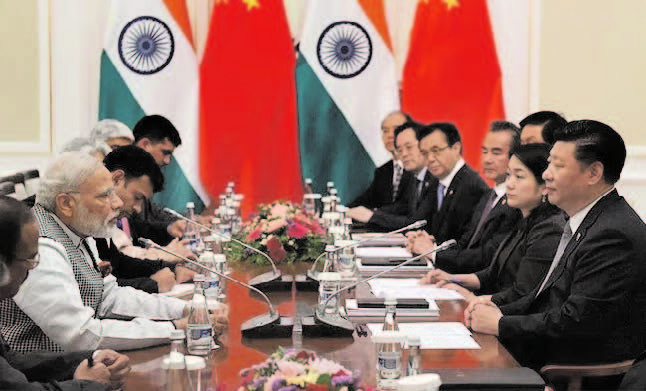
COLOMBO: Sri Lanka has rejected China’s request to dock one of its submarines in Colombo this month, two senior government officials said on Thursday as Prime Minister Narendra Modi landed in the island nation.
Sri Lanka last allowed a Chinese submarine to dock+ in the capital of Colombo in October 2014, a move that triggered fierce opposition from India, which worries about growing Chinese activity in a country it has long viewed as part of its area of influence. Prime Minister Narendra Modi arrived in Sri Lanka on Thursday for a two-day official visit+ . A senior Sri Lankan government official said China’s request to dock one of its submarines in Colombo this month had been rejected. He said Sri Lanka was “unlikely” to agree to China’s request to dock the submarine at any time, given India’s concerns. The official asked not to be named because of the sensitivity of the matter.
The second official, at the defence ministry, also said China’s request to dock this month had been rejected but that a decision on a further docking had been postponed.
“It might happen later,” the second official said, adding that China had requested approval to use the port around May 16 “sometime back”. (Reuters)
BEIJING (TIP): China vowed to remain a good neighbour to North Korea on May 4, despite a rare and stinging critique in Pyongyang’s state media of its main diplomatic protector and economic benefactor.
Beijing offered a measured response to a signed commentary carried by the Korean Central News Agency (KCNA), which lashed out at China and said it should be grateful to Pyongyang for its protection.
The bylined article warned of of “grave consequences” if North Korea’s patience is tested further.
China’s Global Times newspaper retorted that the nuclear-armed North was in the grip of “some form of irrational logic” over its weapons programmes.
But Chinese foreign ministry spokesperson Geng Shuang took a conciliatory tone when asked about KCNA’s commentary at a press briefing, saying Beijing has a consistent position of “developing good neighbourly and friendly cooperation” with North Korea.
Geng, however, also said China was “firmly committed” to the denuclearisation of the Korean peninsula through dialogue and consultation.
Beijing and Pyongyang have a relationship forged in the blood of the Korean War, and the Asian giant remains its wayward neighbour’s main provider of aid and trade.
But ties have begun to fray in recent years, with China increasingly exasperated by the North’s nuclear antics and fearful of a regional crisis. North Korean leader Kim Jong-Un is yet to visit Beijing, more than five years after taking power.
The media spat is a sign of the level to which ties between the two have deteriorated. KCNA regularly carries vivid denunciations of the US, Japan, and the South Korean authorities, but it is rare for it to turn its ire on China.
Beijing regularly calls for parties to avoid raising tensions — remarks that can apply to both Washington and Pyongyang — and in February it announced the suspension of coal imports from the North for the rest of the year, a crucial foreign currency earner for the authorities.
Chinese state-run media have called for harsher sanctions against the North in the event of a fresh atomic test, urged Pyongyang to “avoid making mistakes”, and spoken of the need for it to abandon its nuclear programmes.
The KCNA commentary denounced the People’s Daily, the official mouthpiece of the Chinese Communist party, and the Global Times, which sometimes reflects the thinking of the leadership, as having “raised lame excuses for the base acts of dancing to the tune of the US”.
Chinese suggestions that the North give up its weapons crossed a “red line” and were “ego-driven theory based on big-power chauvinism” said the article, bylined “Kim Chol” — believed to be a pseudonym. “The DPRK will never beg for the maintenance of friendship with China, risking its nuclear programme which is as precious as its own life,” it said, referring to the North by its official name, the Democratic People’s Republic of Korea.
Pyongyang had acted as a buffer between Beijing and Washington since the Korean War in the 1950s and “contributed to protecting peace and security of China”, it said, adding that its ally should “thank the DPRK for it”.
Beijing should not try to test the limits of the North’s patience, it said, warning: “China had better ponder over the grave consequences to be entailed by its reckless act of chopping down the pillar of the DPRK-China relations.”
In its response Thursday, the Global Times — which can sometimes stridently espouse what it sees as China’s interests — dismissed the KCNA article as “nothing more than a hyper-aggressive piece completely filled with nationalistic passion”.
“Pyongyang obviously is grappling with some form of irrational logic over its nuclear programme,” it added.
Beijing “should also make Pyongyang aware that it will react in unprecedented fashion if Pyongyang conducts another nuclear test”, it said.
“The more editorials KCNA publishes, the better Chinese society will be able to understand how Pyongyang thinks, and how hard it is to solve this nuclear issue,” the Global Times said. (AFP)
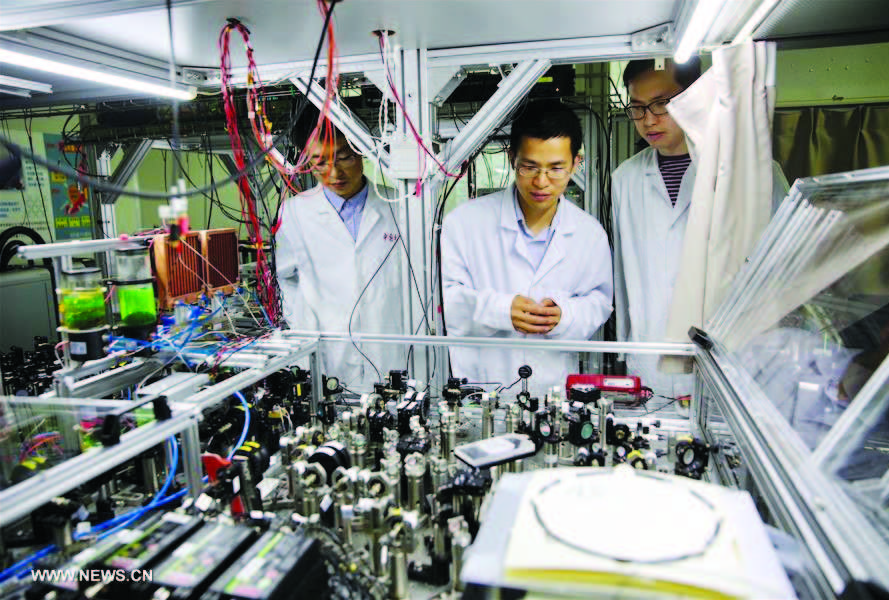
BEIJING (TIP): Chinese scientists have built the world’s first quantum computing machine that goes beyond the early conventional or classical computers, paving way to the realisation of quantum computing.
Scientists announced their achievement at the Shanghai Institute for Advanced Studies of University of Science and Technology of China on Wednesday, Xinhua news agency reported.
They believe quantum computing could in some ways dwarf the processing power of supercomputers. One analogy to explain the concept of quantum computing is that it is like being able to read all the books in a library at the same time, whereas conventional computing is like having to read them one after another.
Pan Jianwei, an academician of the Chinese Academy of Sciences and a leading quantum physicist, said quantum computing exploits the fundamental quantum superposition principle to enable ultra-fast parallel calculation and simulation capabilities.
In normal silicon computer chips, data is rendered in one of two states: 0 or 1. However, in quantum computers, data could exist in both states simultaneously, holding exponentially more information.
The computing power of a quantum computer grows exponentially with the number of quantum bits that can be manipulated. This could effectively solve large-scale computation problems that are beyond the ability of current classical computers, Pan said.
Due to the enormous potential of quantum computing, Europe and the US are actively collaborating in their research. High-tech companies, such as Google, Microsoft and IBM, also have massive interests in quantum computing research.
The research team is exploring three technical routes: systems based on single photons, ultra-cold atoms and superconducting circuits.
Pan explained that manipulation of multi-particle entanglement is the core of quantum computing technology and has been the focus of international competition in quantum computing research. In the photonic system, his team has achieved the first 5, 6, 8 and 10 entangled photons in the world and is at the forefront of developments. Pan said quantum computers could, in principle, solve certain problems faster than classical computers.
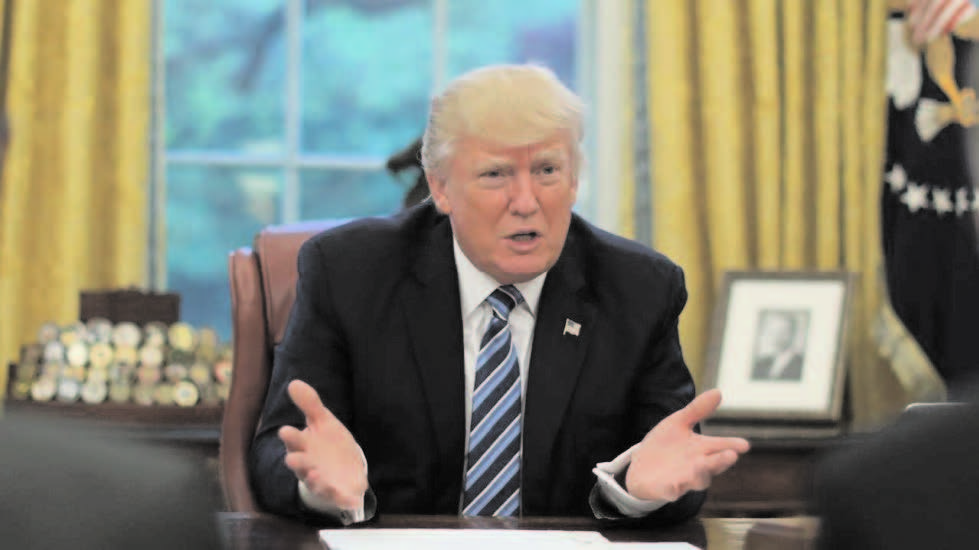
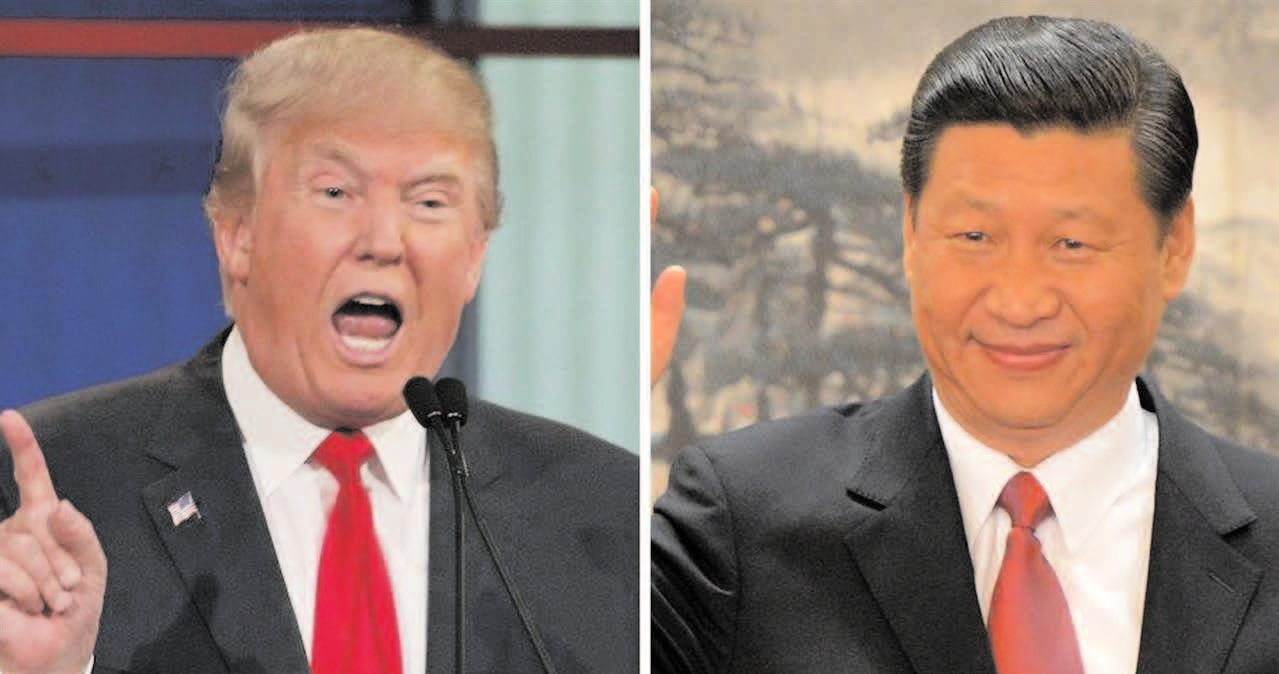
WASHINGTON (TIP): US President Donald Trump said on April 27 a major conflict with North Korea is possible in the standoff over its nuclear and missile programs, but he would prefer a diplomatic outcome to the dispute.
“There is a chance that we could end up having a major, major conflict with North Korea. Absolutely,” Trump told Reuters in an Oval Office interview ahead of his 100th day in office on Saturday.
Nonetheless, Trump said he wanted to peacefully resolve a crisis that has bedeviled multiple US presidents, a path that he and his administration are emphasizing by preparing a variety of new economic sanctions while not taking the military option off the table.
“We’d love to solve things diplomatically but it’s very difficult,” he said.
In other highlights of the 42-minute interview, Trump was cool to speaking again with Taiwan’s president after an earlier telephone call with her angered China. He also said he wanted South Korea to pay the cost of the US THAAD anti-missile defense system, which he estimated at $1 billion. He said he intended to renegotiate or terminate a US free trade pact with South Korea because of a deep trade deficit with Seoul.Trump said he was considering adding stops to Israel and Saudi Arabia to a Europe trip next month, emphasizing he wanted to see an Israeli-Palestinian peace. Trump said North Korea was his biggest global challenge. He lavished praise on Chinese President Xi Jinping for Chinese assistance in trying to rein in Pyongyang. The two leaders met in Florida earlier this month. “I believe he is trying very hard. He certainly doesn’t want to see turmoil and death. He doesn’t want to see it. He is a good man. He is a very good man and I got to know him very well.
“With that being said, he loves China and he loves the people of China. I know he would like to be able to do something, perhaps it’s possible that he can’t,” Trump said.
‘I hope he’s rational’ : Trump spoke just a day after he and his top national security advisers briefed US lawmakers on the North Korean threat and one day before Secretary of State Rex Tillerson will press the United Nations Security Council on sanctions to further isolate Pyongyang over its nuclear and missile programs.
The Trump administration on Wednesday declared North Korea “an urgent national security threat and top foreign policy priority.” It said it was focusing on economic and diplomatic pressure, including Chinese cooperation in containing its defiant neighbor and ally, and remained open to negotiations.
US officials said military strikes remained an option but played down the prospect, though the administration has sent an aircraft carrier and a nuclear-powered submarine to the region in a show of force. Any direct US military action would run the risk of massive North Korean retaliation and huge casualties in Japan and South Korea and among US forces in both countries.
Trump, asked if he considered North Korean leader Kim Jong Un to be rational, said he was operating from the assumption that he is rational. He noted that Kim had taken over his country at an early age.
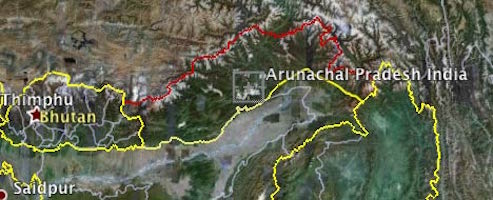
BEIJING (TIP): China has released “standardised” names of six towns of Arunachal Pradesh in Mandarin Chinese and Tibetan languages to buttress its claim over what it regards as “South Tibet”.
The ministry tried to explain that it was a routine administrative work and part of an ongoing census on names of localities. But a Chinese expert, Xiong Kunxin, a professor of ethnic studies at the Minzu University of China in Beijing, contradicted the foreign ministry saying that the renaming exercise was aimed to “reaffirm Chinese sovereignty” over the area that belongs to India.
The ministry of civil affairs in Beijing issued an order on April 14 saying that, “The official names of the six places using the Roman alphabet are Wo’gyainling, Mila Ri, Qoidengarbo Ri, Mainquka, Bumo La and Namkapub Ri”. It did not give the existing names of the six towns in Arunachal Pradesh.
China had used a similar ploy naming islands in South China Sea or pulling out ancient records showing old Chinese names of islands to support its claims over the sea areas, and fight back similar claims from other countries including Vietnam, Indonesia and Philippines. China also began announcing weather forecasts of the disputed area to prove that they are part of Chinese territory.
The new names will be shown in the international diplomatic arena as proof of China’s claims, informed sources said. China might even pull out old maps and records to show that these names existed for hundreds of years. At present, it has scant historical record to support its claims besides the fact that the 6th Dalai Lama was born in Tawang in Arunachal Pradesh, and the Tawang monastery was linked to monasteries in China in the past.
“The standardization came amid China’s growing understanding and recognition of the geography in South Tibet. Naming the places is a step to reaffirm China’s territorial sovereignty to South Tibet,” the state backed Global Times quoted Xiong in an article on April 20, 2017.(PTI)
NEW DELHI (TIP): India on Thursday dismissed China’s recent move to rename six places in Arunachal Pradesh and thus, to tacitly assert its claim on the state.
New Delhi reiterated that Arunachal Pradesh was an integral part of India and China’s move to rename some places in the state would not alter the facts on the ground.
“Assigning invented names to the towns of your neighbour does not make illegal territorial claims legal. Arunachal Pradesh is and will always be an integral part of India,” official spokesperson of the Ministry of External Affairs Gopal Baglay told journalists in New Delhi.
The Ministry of Civil Affairs of the Chinese Government had “standardised in Chinese characters, Tibetan and Roman alphabets, the names of six places in South Tibet, which India calls ‘Arunachal Pradesh’, in accordance with the regulations of the state council”, the Global Times, a state-run newspaper of the communist country, reported earlier this week.
“The official names of the six places using the Roman alphabet are Wo’gyainling, Mila Ri, Qoidêngarbo Ri, Mainquka, Bümo La and Namkapub Ri,” the report stated.
‘Arunachal is integral part’
Arunachal Pradesh is an integral part of India and China has no business on it, said Union Information and Broadcasting Minister M Venkaiah Naidu here on Thursday,
“If you look at history, Arunachal Pradesh is with India. India is a sovereign country and there is an elected government in Arunachal Pradesh. There is no dispute in it,” Naidu said.
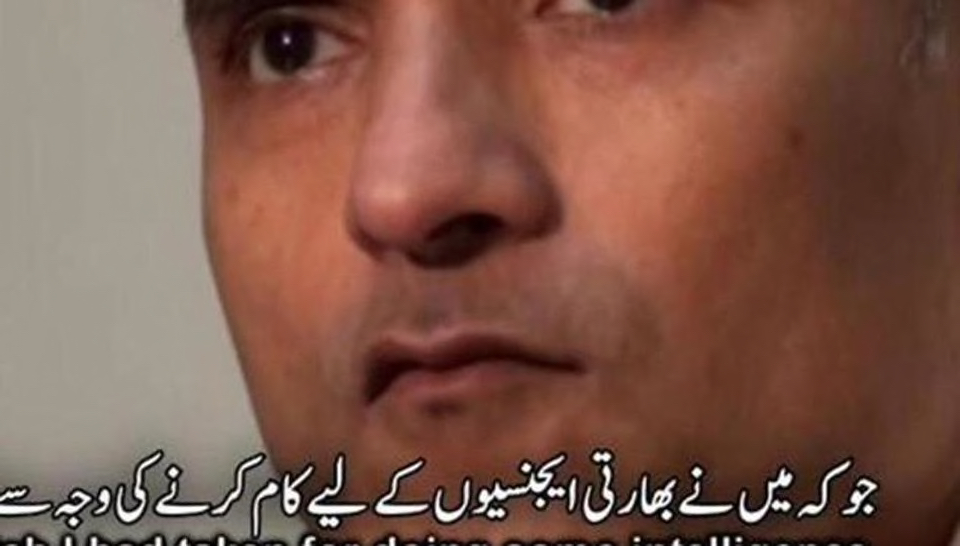
NEW DELHI (TIP): Pakistan Army’s decision to execute alleged Indian spy Kulbhushan Jadhav seems to have found little support globally. Not only has Amnesty International slammed the decision but also the civil rights groups within Pakistan.
Top US think-tanks have questioned the secrecy of trial and the US NSA visit here next weekend is expected to see some plain speak by India on its ties with Pakistan, hinted people familiar with the developments.
Neighbouring Iran, from where Jadhav has been doing business for over a decade, had earlier snubbed Islamabad for its attempt to drive a wedge between New Delhi and Tehran using the so called “spy card”.
Iran has not supported Pakistan in the ongoing episode. “The death sentence given to Kulbushan Jadhav shows yet again how Pakistan’s military court system rides roughshod over international standards,” said Biraj Patnaik, South Asia director of Amnesty International.
“What the Pakistan Army has done is to embarrass both the Sharif and the Modi governments,” said a civil activist from Pakistan. Yet another Pak activist described the decision of the military court as a sham and Pakistan military may be using this to seek concessions from Delhi after feeling the pressure over India’s growing support in West Asia and strong opposition to the China-Pakistan-Economic-Corridor.
Officials also referred to the successful visit of Bangladesh PM Sheih Hasina and momentum in BIMSTEC process as factors that have further isolated Pakistan within the South Asian region. There is also an opinion that China may have influenced Pak decision after the Dalai Lama’s visit to Arunachal.
“Jingoism may work for domestic electoral cycles, but can be dangerous internationally. Confronting the Sino-Pak combine, assuming Trump as a credible pro-India counterweight, is risky at best. Pliny the Elder’s advice to avoid ‘brutum fulmen’ or ‘senseless thunderbolt’ is perennially sound. PM Modi needs to send his ‘Rasgotra’ to Pakistan and avoid public fist-clenching”, says the author – KC Singh.
Harold Wilson’s quip that a week is a long time in politics comes to mind reviewing last fortnight’s developments. The US rained missiles on Syrian air base at Shayrat, near Qoms, in retaliation for the alleged Syrian use of sarin gas, notified as a chemical weapon, against civilians in Khan Sheikhoun. Pakistan upped the ante sentencing to death, for espionage and terrorism, Kulbhushan Jadhav, a former Indian Naval officer, allegedly apprehended in Balochistan. India ignored Chinese threats over the Dalai Lama visiting Tawang, which has the second holiest Buddhist monastery after Lhasa, and the birthplace of the sixth Dalai Lama.
Taking them serially, Trump’s decision to punish Syria’s Assad regime surprised both his “Alt-right” allies, who felt betrayed by his neo-interventionism, as too his critics in own party and among Democrats, who were elated. Trump was recanting from his election rhetoric of distancing the US from geopolitical cesspools. He perhaps had multiple motives. He was able to jettison charges of cosiness, if not actual complicity, between the Russian government and his election campaign. It is speculated that the US gave Russians a heads-up to avoid direct conflict by ensuring no Russian lives were lost. Careful target selection by avoiding living quarters and attacking in the dead of night, when plane hangars were unmanned, also had the same objective.
Chinese President Xi Jinping did not get the same courtesy as Trump, having ordered the Tomahawks fired, sat down for dinner with him at his Mar-a-Lago resort in Florida, informing him of the decision only post meal. Trump thus altered the dynamics between Xi and himself, demonstrating the resolve to defend the global order, which his withdrawal from the Trans-Pacific Partnership (TPP), flip-flop on ‘one-China’ policy and election rhetoric, urging isolationism, seemed to question. Xi swallowed the embarrassment but the Chinese media — after he left the US — lambasted the breach of Syrian sovereignty.
Analysts are wondering if this was a mere knee-jerk reaction, or the first move towards replacing the Assad regime. If the latter is true, there is yet no evidence that Russia is ready to abandon the Iran-Assad-Hezbollah alliance sine qua non to re-balance the Shia alliance. In any case, to force a ceasefire and realign half-a-dozen Sunni groups which oppose the Assad regime and hold parts of Syrian territory, ranging from effective Kurds — whose success Turkey resists — to Al Qaida associates and the IS, would be impossible without an international force, ideally with the UN Security Council imprimatur and the US and NATO participation. But such a force would be an anathema to Russia and China. Clearly, the generals manning critical positions in the Trump administration are finally getting to influence policy choices.
Prime Minister Nawaz Sharif Of Pakistan
This may not augur well for India-Pakistan relations as Pakistan gets emboldened the minute it gets access to influential US presidential aides. Trump’s revision of the Obama doctrine to use the Shias, led by Iran, to counter the IS by attempting to separate Russia from the Shia alliance has resurrected the demoralized Sunni brigade, led by Saudi Arabia. Pakistan allowing its former army chief Gen Raheel Sharif to head the Sunni alliance forces conducting operations in Oman indicates re-convergence of Pakistani, GCC and US interests.
That leads to the next issue of Pakistan suddenly pronouncing the death sentence on Kulbhushan Jadhav. The Indian public reaction and uproar in Parliament is perfect reading by Pakistan to get Indian attention. The exact motive is difficult to decipher at present, but may be multi-fold. It could have been triggered by a former Pakistan ISI officer going missing in Nepal, allegedly abducted by India. The desire to exploit the spring offensive by protesters in the Kashmir valley, whose protests have seen unprecedented success by forcing the negation of the electoral process, is a perennial factor. The Central government’s inability to understand this dynamic is inexplicable, particularly that the rise of Yogis as commissars will feed the paranoia of the Muslim majority in a sensitive state and that an alliance with the BJP has rendered the PDP politically irrelevant in the Valley. The Pakistan army may also have concluded that PM Nawaz Sharif is vulnerable to indictment in the Panama Papers case and political instability seems real. Finally, after the initial trepidation about how Trump led to the detention of Hafiz Saeed in a fit of delayed contrition, Pakistan now has a measure of Trump the interventionist, at whose court Pakistan will present itself as the nuclear weapon-wielding mercenary.
Finally, the Indian decision to test China by a more forward policy is laudable, but the timing may be inappropriate if it is based on the assumption of continued US assessment that a stronger India was in US interests to balance a rising China. This has been the US assumption since after the initial brouhaha over Indian nuclear tests of 1998. Although the Trump-Xi summit in Florida was overshadowed by the Syrian imbroglio, the two leaders seem to have bought time to negotiate differences over imbalanced trade, North Korea and South China Sea, etc. The statement by US ambassador to UN Nikki Haley about US mediation in India-Pakistan dispute raises questions whether Pakistan is really as isolated as the BJP claims.
Finally, the Indian reaction to the Kulbhushan episode, with External Affairs Minister Sushma Swaraj promising all in India’s power, is hyperbolic. Hostage takers are best dealt with by quiet threats, which should be credible, and carrots that are tangible. By minimizing Indo-Pak contact there are few carrots that India holds. The only credible threat, short of a war, can be that abducting each other’s citizens and conducting mock trials is letting security agencies override diplomacy. Former foreign secretary MK Rasgotra recalls calling on President Zia-ul-Haq to convey Indira Gandhi’s message that if Pakistan did not stop abetting the hijacking of planes — which was assuming epidemic proportions in the early 1980s — India would do likewise. The gambit worked as differential of power between the two states had not yet been levelled by Pakistan possessing nuclear weapons.
Jingoism may work for domestic electoral cycles, but can be dangerous internationally. Confronting the Sino-Pak combine, assuming Trump as a credible pro-India counterweight, is risky at best. Pliny the Elder’s advice to avoid ‘brutum fulmen’ or ‘senseless thunderbolt’ is perennially sound. PM Modi needs to send his ‘Rasgotra’ to Pakistan and avoid public fist-clenching.
(The author is a former Secretary, Ministry of External Affairs, Government of India)
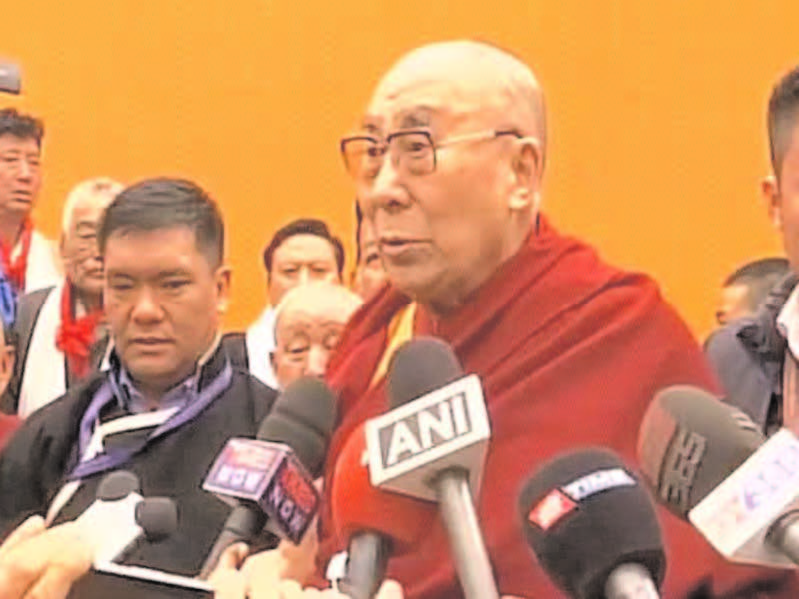
BEIJING (TIP): Chinese foreign ministry said on Thursday that the Dalai Lama visit to Arunachal Pradesh has “fueled tensions” between China and India.
“By inviting and approving the Dalai Lama to visit disputed areas between China and India, India has damaged our interests and the India-China relationship and it has fueled tensions,” ministry spokesperson, Hua Chunying, said. China was “opposed to attempts by the relevant country (referring to India) to arrange a platform for the Dalai Lama to conduct anti-China activities,” she said.
There were also signs that a section of the Communist Party and the official media has stepped up pressure on the government to take action against India for allowing the Dalai Lama to visit Arunachal Pradesh.
A senior Communist official, Zhu Weiqun, said that India is losing its dignity by encouraging the Tibetan leader, whom he accused of trying to split up China. “India is losing its dignity as a big power by playing around with such a figure,” Zhu, who heads the Ethnic and Religious Affairs Committee of the National Committee of the Chinese People’s Political Consultative Conference, said.
It is rare for a sitting Communist official to comment on China’s relationship with other countries, which is an area left to the foreign ministry. Beijing based China Daily, which usually refrains from taking aggressive stance against India. (TOI)
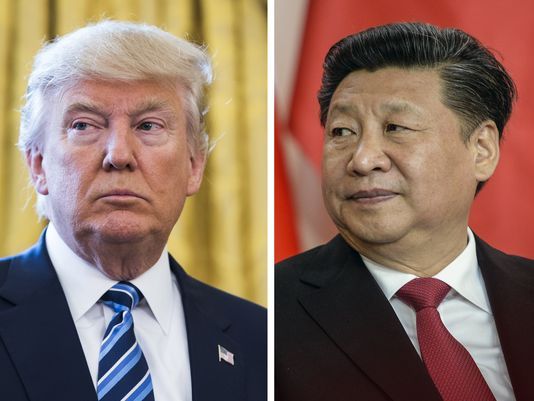
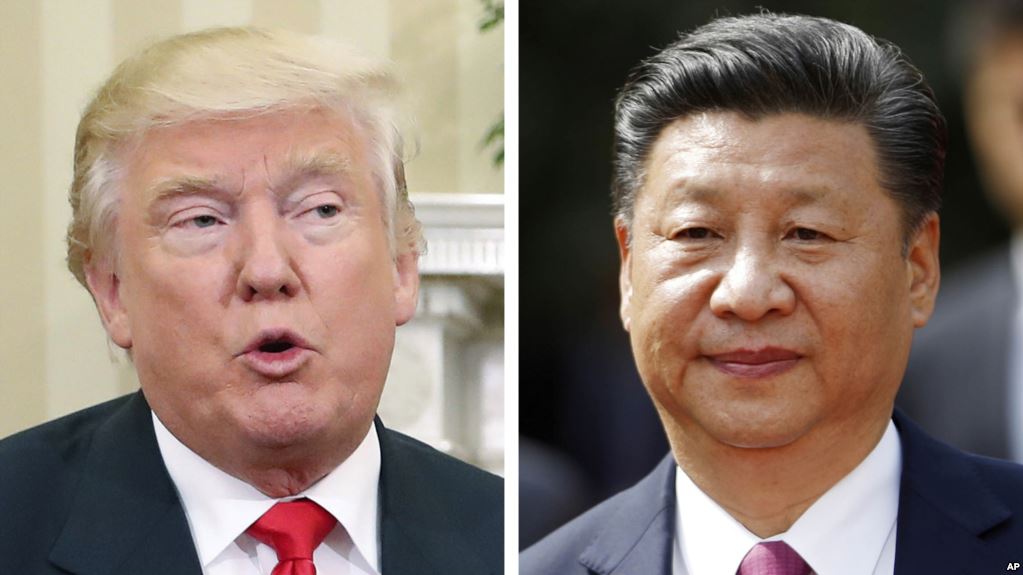
WASHINGTON (TIP): US President Donald Trump will host his Chinese counterpart Xi Jinping on April 6-7 next week at his Mara-a-Lago resort in Florida, the White House announced March 30.
The engagement — the first between the two leaders after a torrid US election campaign during which Trump repeatedly attacked China on various issues — will provide the first clue about how the new administration will handle major global powers, particularly potential adversaries.
Leaders from nearly a dozen countries, including Ireland and Denmark have breezed through Washington in the nearly ten weeks since President Trump took over.
But few are so protocol- and optics-conscious as the establishments in Beijing and New Delhi, the latter of whom will watch the Xi visit keenly to read the tea-leaves about the new establishment’s Asia outlook in preparing for Prime Minister Modi’s visit to US that is expected to follow soon. (AFP)
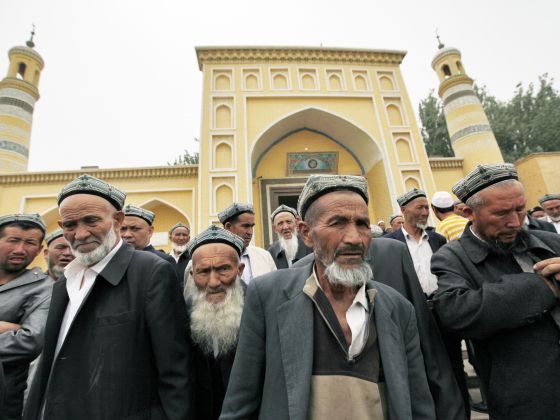
BEIJING (TIP): China will step up a campaign against religious extremism in the far western region of Xinjiang on March 25 by implementing measures, including prohibiting “abnormal” beards, the wearing of veils in public places and the refusal to watch state television.
Hundreds have died in recent years in Xinjiang, home to the Muslim Uighur people, in unrest blamed by Beijing on Islamist militants and separatists, though rights groups say the violence is more a reaction to repressive Chinese policies.
The government denies committing abuses in Xinjiang and insists the legal, cultural and religious rights of Uig hurs, a Turkic ethnic group, are fully protected.
While China officially guarantees freedom of religion, authorities have taken steps in the past few years to tackle what it sees as a rise in religious extremism. New legislation passed on Wednesday, widens existing rules and will come into effect on April 1.
Workers in public spaces will be required to “dissuade” those who fully cover their bodies, including veiling their faces, from entering, and to report them to the police, the rules state. It will be banned to “reject or refuse radio, television and other public facilities and services”, marrying using religious rather than legal procedures and “using the name of Halal to meddle in the secular life of others”. “Parents should use good moral conduct to influence their children, educate them to revere science, pursue culture, uphold ethnic unity and refuse and oppose extre mism,” the rules say . The document also bans not allowing children to attend regular school, not abiding by family planning policies, deliberately damaging legal documents and “abnormal growing of beards”.
While Uighurs have traditionally practiced a more relaxed form of Islam, the popularity of veils for women has grown in recent years in what experts say is an expression of opposition to Chinese controls.
Chinese President Xi Jinping called for a “great wall of iron” to safeguard Xinjiang during the annual meeting of the parliament earlier this month.
BEIJING (TIP): China is putting pressure on India to participate in an international conference on its One Belt, One Road or Silk Road programme next May after realizing that showcasing the China-Pakistan Economic Corridor (CPEC) would not be enough to sell the OBOR idea.
This is evident from several comments from Chinese officials and experts about the Indian reluctance to join the OBOR program that involves creating road, rail and port infrastructure connecting China to the world.
A Chinese expert has now accused India of taking a “biased view” of the OBOR program. The expert, Lin Minwang of the Institute of International Studies at Shaghai’s Fudan University, even tried to shame India by citing some reports about Russia expressing interest in it.
“New Delhi may also feel embarrassed as Moscow has actively responded to the Belt and Road (OBOR) initiative and will build an economic corridor with China and Mongolia,” Lin said adding, “Since the beginning of this year, there have been reports on Russia and Iran seeking to join the China-Pakistan Economic Corridor (CPEC), which will likely put India in a more awkward position”.
However, Russia has not sanctioned any specific programme for connecting with OBOR apart from making a few statements about its interests.
China expects heads of at least 20 countries to participate in the OBOR conference, when it will try to persuade governments in Asia and Europe to join the programme. Beijing desperately wants India to participate because that would make it attractive to other South Asian countries.
China is sore because India’s reluctance has made it difficult for China to extend the OBOR network to Nepal, Bangladesh, Sri Lanka and Myanmar. But Lin maintained that these countries are also interested in joining the program.
He said, “Beijing has expressed, on various occasions, its anticipation to see New Delhi join the grand project and to make concerted effort with India in building economic corridors involving China, India, Sri Lanka, Nepal, Bangladesh, and Myanmar.”
Writing in the state-backed Global Times, Lin said that “other smaller states in South Asia have shown interest toward the One Belt, One Road initiative. India is definitely reluctant to see itself being left out of all these economic cooperation projects between China and other South Asian nations. Whether to continue to boycott or join the Belt and Road remains a conundrum for New Delhi.”
On its part, India has pointed out that China is building infrastructure projects in the disputed Pakistan Occupied Kashmir, and thus hurting its interest in the name of China Pakistan Economic Corridor and OBOR. New Delhi cannot join a program that hurts Indian territorial interests.
“The official reason why the Indian government rejected the offer to join the initiative is that it is designed to pass Kashmir, a disputed area between India and Pakistan. However, it is just an unfounded excuse as Beijing has been maintaining a consistent position on the Kashmir issue, which has never changed,” said Lin.
He seemed to suggest that India should accept Beijing’s oral assurances in the face of mounting evidence of China creating infrastructure and legitimizing Pakistan’s claim over POK.
Washington: US universities have registered a hefty drop in the number of applications from Indian students amid a spate of hate crimes and fear about potential changes to visa policies by the Trump administration, found a survey. According to the preliminary results of the survey of more than 250 American colleges and universities conducted by six top American higher education groups, students from India this fall registered a 26 per cent decline in undergraduate applications and 15 per cent decline has been reported in graduate applications.
The full version of the ‘Open Doors 2016’ report is slated to be released later this week. These higher educational institutions reported a drop of an average of 40 per cent application from international students.
The report said that India and China currently make up 47 per cent of US international student enrollment, with almost half a million Indian and Chinese students studying in the US.
China reported a drop of 25 per cent application in undergraduate studies and 32 per cent from graduate studies, said the survey report.
The survey was conducted jointly by American Association of Collegiate Registrars and Admissions Officers, the Institute of International Education, Association of International Educators, the National Association for College Admission Counseling (NACAC) and its focus subgroup International Association for College Admission Counseling (ACAC).
The most frequently noted concerns of international students and their families, as reported by institution-based professionals, include perception of a rise in student visa denials at US embassies and consulates in China, India and Nepal and perception that the climate in the US is now less welcoming to individuals from other countries.
It also includes concerns that benefits and restrictions around visas could change, especially around the ability to travel, re-entry after travel, and employment opportunities and concerns that the Executive Order travel ban might expand to include additional countries.
“I’d say the rhetoric and actual executive orders are definitely having a chilling effect on decisions by current applicants/admitted students, and by extension are likely to affect future applicants as well,” Wim Wiewel, Portland State’s president, who was recently in India told Inside Higher Education.
“India’s demonetisation policy and the weakness of the value of the rupee against the dollar,” are other factors according to Wiewel, the news report said.
The Portland University has registered 27 per cent drop in the number of Indian students this fall.
“However, we were struck by how much US higher education is still considered the holy grail, and that especially in the southern half of India almost every middle class family seems to have a relative in the US… Thus, if nothing too bad happens in the future we will recover from this, but people are watching,” he noted.
A lot of universities are concerned about declines in master’s students from India, John J Wood, the senior associate vice provost for international education, at the State University of New York at Buffalo, was quoted as saying by Inside Higher Education.
“A lot of the master’s students coming from India are ultimately hoping to get on the job market here through OPT (Optional Practical Training) and eventually H-1B,” Wood said.
The optional practical training programme allows international students to work for one to three years on their student visas after graduation.
“There’s a lot of fear and anxiety about potential changes to H-1B and/or OPT that would limit their opportunities. Making the decision to invest in a master’s program when the uncertainty on the other end is there is an issue for a lot of students in India,” he was quoted as saying by the report.
Recent killing of an Indian engineer in Kansas and other hate crime is another factor that would have an impact on application of students from India, Woo said.
“Those events affect us, whether we like it or not. The impact is not just going to be on Indian nationals. It could impact other students from other countries who may now be concerned about coming,” Ahmad Ezzeddine, associate vice president for educational outreach and international programs, at Wayne State University, told a media outlet that focuses on higher education.
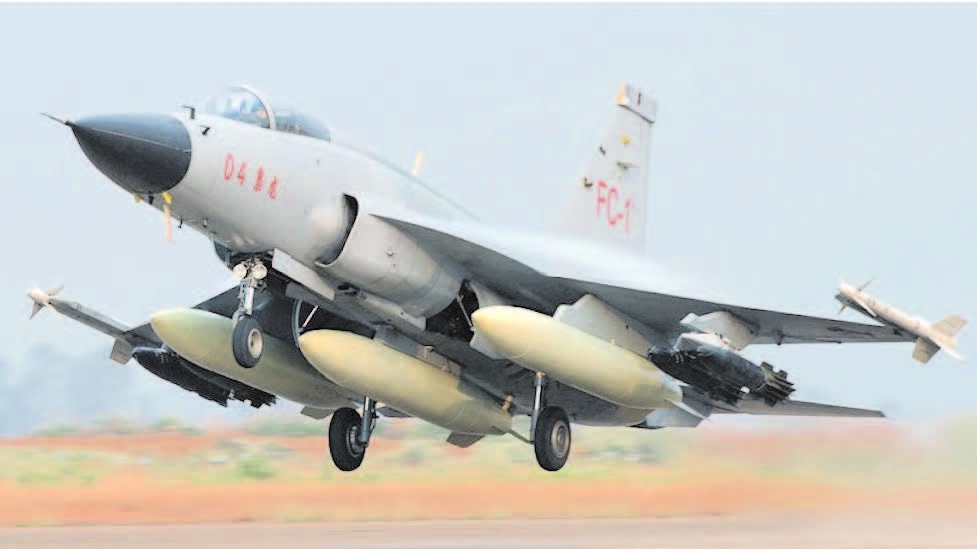
ISLAMABAD (TIP): : In what will come as bad news for India, ‘all-weather friends’ China and Pakistan are set to not just increase weapons exchanges, the former is also expected to ‘authorise’ the latter to produce ballistic, cruise, anti-aircraft and anti-ship missiles, and battle tanks, China’s state-run media reported on March 16.
The weapons exchanges include the mass production of FC-1 Xiaolong, a lightweight and multi-role combat aircraft developed jointly by the two countries, reported Global Times, the Chinese Communist Party’s news outlet. The two sides also agreed to strengthen anti-terrorism cooperation and strike terrorist forces including China’s insurgent East Turkestan Islamic Movement.
These were the outcomes of yesterday’s meeting in Beijing between Pakistan’s army chief+ Qamar Bajwa and a top Chinese military official, Fang Fenghui. In exchange for Beijing’s largesse, Islamabad agreed to ensure the safety of the China-Pakistan Economic Corridor (CPEC)+ .
“Pakistan and China enjoy a special friendly relationship with each other and have a common destiny,” Bajwa reportedly said at the meeting, according to a statement on the website of China’s defence ministry.
Pakistan has deployed more than 15,000 troops to protect CPEC+ and the country’s navy has raised a security contingent to protect the Gwadar Port, said Masood Khalid, Pakistan’s Ambassador to China, at a news conference on Tuesday, according to Global Times. The Port is a key CPEC project.
“As Pakistan faces frequent threats from terrorist forces such as the Taliban and al-Qaeda, military support is necessary to ensure a safe environment for the regions where there is huge investment from China”, said Song Zhongping, a military expert who has served in the Chinese army, to Global Times.
Pakistan’s Bajwa is reported to have said the country’s army is willing to “deepen the cooperation with the Chinese army and fully support the Quadrilateral Cooperation and Coordination Mechanism in Counter Terrorism by Afghanistan-China-Pakistan-Tajikistan Armed Forces.” (PTI)
China’s Foreign Minister Wang Yi has come up with the idea of extending the remit of BRICS by inviting other developing countries under a new banner, BRICS Plus.
Addressing his annual press conference on Wednesday on the sidelines of the National People’s Congress, the Chinese parliament, Wang said China would “explore modalities for BRICS-plus, to hold outreach dialogues with other major developing countries”.
“We hope to establish extensive partnerships and widen our circle of friends to turn it into the most impactful platform for South-South cooperation,” he said. China, which is the rotating president of BRICS this year, will host the next summit in September.
Analysts said China is trying to expand its influence by inviting its allies, and the move might result in the dilution of role played by India and other countries in BRICS. The club has five countries-Brazil, Russia, India, China and South Africa.
“India would be the worst affected among BRICS partners. After expansion, the organization would lose its focus and coherence on development issues and become more like a political platform for China,” Mohan Malik, professor at the Asia-Pacific Center for Security Studies at Honolulu in US, told TNN.
China may invite pro-Beijing countries like Pakistan, Sri Lanka and Mexico to join, Malik said. China may be trying to turn BRICS into a China centric organization along the lines of Shanghai Cooperation Organization, he said.
“At the 2016 BRICS summit in Goa, Beijing was successful in thwarting India’s attempts to isolate and condemn its ally Pakistan over cross-border terrorism,” Malik pointed out.
“The BRICS Plus concept would nip in the bud any future attempts at isolating China and its friends,” he said.
The Chinese foreign minister said China’s goal is to strengthen the BRICS partnership. It planned to introduce a system of stand-alone meeting of foreign ministers, hold sports and cultural events among BRICS countries.
“As President Xi put it, BRICS are like five fingers each with their own strength but when we come together we are a fist that can punch. When we stay united we won’t lose lustre but will shine more brightly,” he said.
The premier said that, “BRICS countries represent emerging economies,” he said. “Over the years, their fortunes may have risen or fallen, and each faces challenges.”
Analysts said China might find it difficult to obtain India’s approval to the idea of BRICS Plus.
“India surely will not be interested in expansion at this time,” Swaran Singh, professor at at the School of International Studies in Jawaharlal Nehru University told TNN. “BRICS will be focussed on consolidating at this time,” he said pointing to political instability in Brazil, economic slowdown in South Africa, and difficult relationship between India and China. Singh said India would avoid taking any decisive political positions because it is still analyzing the Donald Trump presidency in the U.S.
One of China’s goals is to extend the One Belt One Road+ to countries like India which has been reluctant to participate enthusiastically. Beijing is holding a forum on the Silk Road program in May.
“With protectionism and unilateralism on the rise, the Belt and Road will find common cause where all countries roll up their sleeves and pitch in together. We will help rebalance globalisation,” Wang said. (TNN)
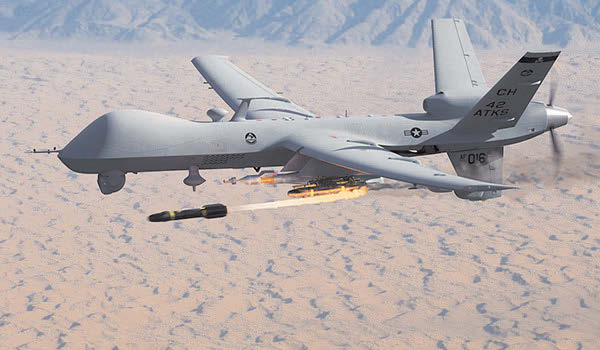
BEIJING (TIP): China’s largest missile maker is developing military drones with stealth abilities that can evade anti-aircraft weapons, the official China Daily said on Thursday, in another advance for the country’s ambitious military modernisation programme.
“Drones have become an indispensable weapon in modern warfare because they can play an important role in high-resolution reconnaissance, long-distance precision strikes, anti-submarine operations and aerial combat,” Wei Yiyin, deputy general manager of China Aerospace Science and Industry Corp, told the English language newspaper.
Insisting it has no hostile intent, China is investing billions of dollars to update ageing equipment and develop new weapons, including stealth fighters and aircraft carriers.
Its heavy defence spending, however, has unnerved a region already on guard over Beijing’s more assertive approach to disputes in the South and East China Seas and over self-ruled Taiwan, claimed by China as a wayward province. Wei told the newspaper his company was also developing near-space and long-range endurance drones.
The paper described China Aerospace Science and Industry Corp as the country’s sole producer of cruise missiles, and said the drones also resembled cruise missiles.
China has stepped up research into military drones, hoping to take market share from the United States and Israel with its cheaper technology and willingness to sell to countries that Western states are reluctant to deal with.(Reuters)
China wants India and other BRICS countries to accept its idea of “cyber sovereignity” that would allow each country to govern the cyber space in the manner they want without facing interference from other countries. Beijing plans to move a proposal for cross-border agreement on the issue at the next BRICS summit, which China will host, later this year.
“As BRICS host this year, China stands ready to work together with Russia and other BRICS partners”, Long Zhou, Coordinator, Cyber affairs division of the Chinese Foreign Ministry, told journalist today after releasing a white paper on international cooperation in the cyber space. China is due to host BRICS summit later this year.
The idea of “cyber sovereignity” flies against calls for Internet freedom in China, which has banned international sites like Goggle, Facebook and Twitter besides scores of foreign media sites. It is encouraging Chinese versions of these sites like Baidu and Sina Weibo, to operate in China which has the world’s highest Internet connectivity+ .
India may be reluctant to accept the Chinese model because much of the Indian IT industry is linked to western markets, where the Internet is largely free.
The agreement that China is pushing among members of BRICS and SCO (Shanghai Cooperation Agreement), smacks of a pact against what it regards as western hegemony over the Internet world.
China, Russia and Central Asian counties are members of SCO. India and Pakistan which have observer status, are expected to be made a fulfleged member of SCO soon.
China is trying to persuade world governments and international agencies including the United Nations to accept the principal of “cyber sovereignity” that allows each country to govern the Internet in the manner it wants to without interference from other governments. Long said Beijing was trying to extend the existing principal on land, air and sea soverignity, which is recognized by the UN, to the cyber world because the problems and situations are similar.
Chinese officials maintain that the internet is free in China, and only a small section of websites that “undermine” the country’s national interests are banned. But officials did not explain how these international sites hurt China’s national interests.
“The Chinese Internet is fully open,” said Wang Jianchao, International Cooperation Department of the Cyberspace Administration of China. “As long as they comply with Chinese laws and regulations+ , refrain from undermining China’s national interests and interests of Chinese consumers, all Internet companies are welcome in China.”
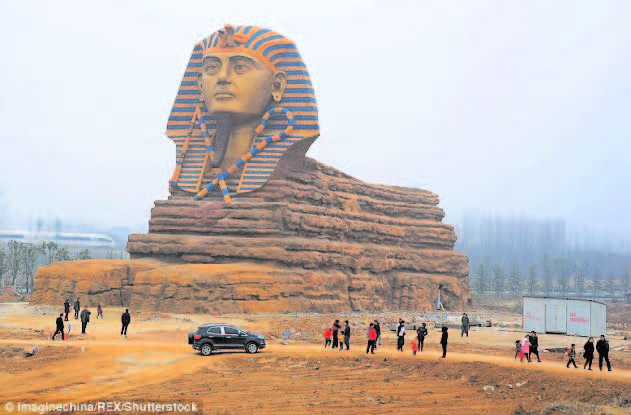
China has at least 10 White Houses, four Arcs de Triomphe, a couple of Great Sphinxes and at least one Eiffel Tower. Now a version of London’s Tower Bridge in the eastern Chinese city of Suzhou has rekindled a debate over China’s rush to copy foreign landmarks. This week, photos of the bridge were posted online by news outlets. One headline proclaimed: “Suzhou’s Amazing ‘London Tower Bridge’: Even More Magnificent Than the Real One.”
Indeed. Suzhou’s urban planners had clearly stepped up their game. The bridge, completed in 2012, has four towers — compared with the two spanning the Thames in London.
Suzhou has joined the scramble of Chinese cities in recent years to erect clones of famous foreign structures. Not everyone approves. Online comments about the Suzhou bridge have been scathing. “Piracy!” wrote one.
“Embarrassing,” wrote another. Li Yingwu, of the OAD architecture firm in Beijing, called the bridge outright plagiarism. “I was really surprised that it got built in Suzhou, because it has preserved its culture really well,” Li said. “It shows that local officials lack confidence in their own culture.”
A report on JSChina.com.cn, a news site of the Jiangsu provincial government, read, “We don’t have any reason to give a thumbs-up to the replicated iconic building.” The copy, it said, would impede the promotion of Chinese culture. According to Cheng Taining, an architect at the Chinese Academy of Engineering, many officials see foreign designs as shortcuts to achieve modernity and worldliness.
The criticism Suzhou bridge has been receiving is in line with President Xi Jinping’s calls for a greater emphasis on China’s cultural legacy. In December, at the Association of Literature and Art and the Chinese Writers’ Association, Xi called on artists to “consolidate confidence in Chinese culture.”
The version of the Tower Bridge is one of 56 copycat bridges in Suzhou.
Others include versions of the Sydney Harbor Bridge in Australia and the Alexandre III Bridge in Paris. The structures were in a bid to brand Xiangcheng district as an international trade and finance centre. (TNN)
China’s Foreign Ministry on Wednesday warned Washington against challenging its sovereignty, responding to reports the United States was planning fresh naval
patrols in the disputed South China Sea. On Sunday, the Navy Times reported that US Navy and Pacific Command leaders were considering freedom of navigation patrols in the busy waterway by the San Diego-based Carl Vinson carrier strike group, citing unnamed defence officials.
Chinese Foreign Ministry spokesman Geng Shuang said tension in the South China Sea had stabilised due to the hard work between China and Southeast Asia countries, and urged foreign nations including the US to respect this.
“We urge the US not to take any actions that challenge China’s sovereignty and security,” Geng told a regular news briefing on Wednesday.
The United States last conducted a freedom of navigation operation in the area in October, when it sailed the guided-missile destroyer USS Decatur near the Paracel Islands and within waters claimed by China.
Dave Bennett, a spokesman for Carrier Strike Group One, said it did not discuss future operations of its units. “The Carl Vinson Strike Group is on a regularly scheduled Western Pacific deployment as part of the US Pacific Fleet-led initiative to extend the command and control functions of the US 3rd Fleet,” he said.
“US Navy aircraft carrier strike groups have patrolled the Indo-Asia-Pacific regularly and routinely for more than 70 years,” he said.
China lays claim to almost all of the resource-rich South China Sea, through which about $5 trillion worth of trade passes each year. Brunei, Malaysia, the Philippines, Taiwan and Vietnam also claim parts of the waters that command strategic sea lanes and have rich fishing grounds, along with oil and gas deposits. The United States has criticised Beijing’s construction of man-made islands and build-up of military facilities in the sea, and expressed concern they could be used to restrict free movement.
China will delay a planned $1.1 billion investment in a port on its modern-day “Silk Road” until Sri Lanka clears legal and political obstacles+ to a related project, sources familiar with the talks said, piling more pressure on the island nation.
Heavily indebted Sri Lanka needs the money, but payment for China’s interests in Hambantota port could be delayed by several weeks or months, the sources added.
After signing an agreement last December, state-run China Merchants Port Holdings had been expected to buy an 80 per cent stake in the southern port before an initial target date of January 7.
Beijing also has a separate understanding with Colombo to develop a 15,000-acre industrial zone in the same area, a deal that Sri Lanka was hoping to finalize later.
But Colombo’s plans to sell the stake and acquire land for the industrial zone have run into stiff domestic opposition, backed by trade unions and former President Mahinda Rajapaksa.
A legislator close to Rajapaksa is also challenging the government’s plans in court.
Now Beijing has linked the signing of the port deal with an agreement to develop the industrial zone, saying it would hold off on both until Colombo resolved domestic issues, officials on both sides of the talks said.
“China has said that when they start the port, they want the land also,” Sri Lankan Finance Minister Ravi Karunanayake said, although he added that China had not made it a precondition.
Yi Xianliang, Chinese ambassador to Sri Lanka, said the two deals were related.
“If we just have the port and no industrial zone, what is the use of the port? So you must have the port and you must have the industrial zone,” he said.
A source familiar with China’s thinking said it may wait until May, when Sri Lankan Prime Minister Ranil Wickremesinghe visits Beijing, to sign both deals. The Chinese foreign ministry did not respond to a request for comment. The previously unreported setback for Sri Lanka suggests Beijing is digging in its heels as it negotiates its global “One Belt, One Road” initiative to open up new land and sea routes for Chinese goods. (Reuters)
WASHINGTON (TIP) – Since his election in November, President Trump has challenged Beijing over several issues and, most controversially, upended decades of diplomatic protocol by questioning the longstanding US policy towards Taiwan.
In the call, the two leaders discussed “numerous topics,” and Trump committed to honoring the “One China” policy at Xi’s request.
China views Taiwan as a renegade province and, since 1979, the US has acknowledged Beijing’s claim that Taiwan is part of China, with US-China relations governed by the set of protocols known as the “One China” policy.
Prior to taking office, Trump had caused ructions in the US-Sino relationship by taking a phone call from Taiwan’s leader Tsai Ing-wen and, in a January interview in The Wall Street Journal, he said, “Everything is under negotiation, including ‘One China.’”
Thursday’s call was described as “extremely cordial,” and the readout released by the White House said “representatives of the United States and China will engage in discussions and negotiations on various issues of mutual interest.” The two leaders also extended invitations to meet in their respective countries.
BEIJING (TIP): China has reportedly tested a new version of a missile that can carry up to 10 nuclear warheads, signalling a major shift in its nuclear capability as Beijing gears up for a possible military showdown with the US under Trump Presidency.
The flight test of the DF-5C missile was carried out last month using 10 multiple independently targetable reentry vehicles, or MIRVs, the Washington Free Beacon reported.
The test of the inert warheads was monitored closely by US intelligence agencies, said two officials familiar with reports of the missile test.
The Dongfeng-5C missile, carrying 10 dummy warheads, was launched from the Taiyuan Space Launch Centre in Shanxi province, and flew to a desert in western China, the report said.
The missile is a new variant of the DF-5, an intercontinental ballistic missile that first went into service in the early 1980’s.
“The [Defence Department] routinely monitors Chinese military developments and accounts for PLA capabilities in our defence plans,” Pentagon spokesman Commander Gary Ross was quoted as saying by the report.
For decades, the US has put the estimated number of warheads in China’s nuclear arsenal at about 250.
But the report suggested that the latest test with 10 warheads meant the actual number could be larger.
China also began adding warheads to older DF-5 missiles in February last year, according to US intelligence agencies.
US defence officials have previously warned that China’s rapid development of long-range ballistic missiles, coupled with a lack of transparency about its nuclear capabilities, could bring uncertainty to stability in the region.
The timing of the test coincided with the election of Donald Trump as US President who signalled a tougher stance against China over a range of issues, from the trade deficit to Beijing’s military build-up in the disputed South China Sea.
Chinese military expert from an institute affiliated with the People’s Liberation Army+ , (PLA) said a new test would not have been aimed at Trump. (PTI)
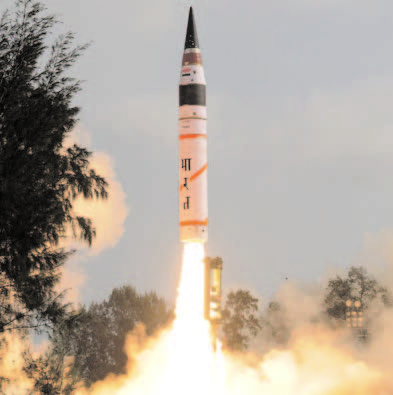
When India first tested its three-stage Intercontinental Ballistic Missile Agni V on April 20, 2012, China’s reaction was remarkably restrained. “China and India are both emerging powers.
We are not rivals, but cooperative partners. We should cherish the hard-earned momentum of cooperation,” Liu Weimin, China’s foreign ministry spokesperson, said, adding that “the two countries have a sound relationship. During the (recent) 4th BRICS meeting, the leadership of the two countries agreed on a consensus to further strengthen cooperation.” Even the normally aggressive Chinese government mouthpiece, The Global Times, was relatively restrained, asserting: “India should not overestimate its strength. Even if it has missiles that could reach most parts of China that does not mean it will gain anything from being arrogant during disputes with China. India should be clear that China’s nuclear power is stronger and more reliable. For the foreseeable future, India would stand no chance in an overall arms race with China.”
When India conducted the fourth and final pre-operational test of Agni V on December 26, 2016, China’s reaction the next day was belligerent and hostile. The Chinese foreign ministry spokesperson, Hu Chunying, referred to the UN Security Council Resolution 1172 of June 6, 1998, issued after nuclear tests by India and Pakistan. The resolution called on India and Pakistan to immediately stop their nuclear weapons development programs; to refrain from weaponization and the deployment of nuclear weapons; to cease the development of ballistic missiles capable of delivering nuclear weapons and end any further production of fissile material for nuclear weapons. Hu also asked India to spell out its “intentions”. China seemed to have forgotten that the Security Council Resolution Hu referred to was a “Chapter 6” resolution, which was not binding on India. The reaction of The Global Times was vicious. Referring disparagingly to India’s economic potential and pointedly equating India with Pakistan, it observed: “Currently, there is a vast disparity in power between the two countries and India knows what it would mean, if it poses a nuclear threat to China.” Responding to China’s assertion that India’s missile program adversely affected nuclear stability in South Asia, India’s spokesman Vikas Swarup noted: “India’s strategic autonomy and growing engagement contribute to strategic stability.”
There are a number of reasons for the change in the Chinese reactions to Agni V missile tests between 2012 and 2016.
China militarily seized the Scarborough Shoal, located within the Exclusive Economic Zone of the Philippines, in 2012. It thereafter, contemptuously rejected a verdict of the UN tribunal which declared its maritime boundary claims along its so-called “Nine Dotted Line” as a violation of international law. The tribunal thereby held China’s territorial claims on Vietnam, the Philippines, Indonesia, Malaysia and Brunei, as similarly being in violation of international law. China has, in the meantime, converted a large number of rocks across the South China Sea into islands, where it has based missiles, armed personnel and military aircraft, using its military might.
The Obama Administration took virtually no action in response to Chinese belligerence against the Philippines – a longtime military ally. Worse still, the US recently acquiesced in the seizure of one of its unmanned underwater vehicles close to the Philippines. Chinese belligerence is paying off. President Duterte of the Philippines has quietly acquiesced to Beijing’s territorial demands. ASEAN countries like Malaysia, Brunei, Thailand and Cambodia are following suit. Myanmar is being pressured by China, by permitting Chinese territory to be used by armed ethnic groups from Myanmar’s bordering Shan and Kachin states.
It is clear that a belligerent China is no longer prepared to tolerate any challenges to its dominance and hegemony across Asia. Agni IV, currently operational, with a range of 4,000 km, can hit targets in southern China, while Agni V, with a range of 5,500-8000 km, can hit even at the farthest points in China. The submarine-launched Sagarika missile, currently operational, has a range of 750 km. Its variants – under development -can hit across China from the Bay of Bengal. China, in turn, has transferred the designs and knowhow of the Shaheen range of missiles to Pakistan. These missiles can hit targets across India. Moreover, Karachi and Gwadar will be used, not only to base the eight submarines China is supplying to Pakistan, but also serve as bases for Chinese nuclear and conventional submarines that are now venturing increasingly into the Indian Ocean. The range of missiles being developed by India clearly signals to China that it will find any effort to use Pakistan as a nuclear proxy against India very costly and perhaps unaffordable. Agni V is virtually invulnerable as it is mobile and housed in canisters.
New Delhi needs to be far more active in insisting that a comprehensive nuclear dialogue with China is essential for strategic stability across Asia. China is loathe to enter into such a dialogue as it evidently wishes to not formally accord recognition to India’s nuclear weapons status, even as it peddles nuclear weapons and ballistic missile designs and materials to Pakistan, while helping Pakistan to develop both uranium and plutonium-based nuclear weapons. These transfers to Pakistan are in total disregard of China’s responsibilities under the nuclear Non-Proliferation Treaty. India has been far too defensive and avoided exposing the Sino-Pakistan nuclear/missile nexus in important world capitals, notably Washington, London, Paris, Moscow and Tokyo. A far more determined effort on this score would be necessary once the Trump Administration assumes office and settles down to looking at the world.
Within Asia, Chinese hubris and arrogance would need far closer consultations and dialogue with countries like Japan, Vietnam and Indonesia. There appears to be a sentiment growing slowly in Tokyo that in the face of Chinese territorial and geopolitical ambitions, Japan should review its nuclear policies. The incoming Trump Administration has also indicated that allies like Japan need to do more to defend themselves, rather than depend excessively on the US. A nuclear-armed Japan can certainly play a key role in moderating Chinese behavior and hubris. This is an issue that needs to be looked at carefully. All this has to be combined with a vigorous dialogue with China, which includes maintenance of peace and tranquility along our borders, expanding equitable trade and economic ties and promoting peace and stability across the entire Indo-Pacific Region.
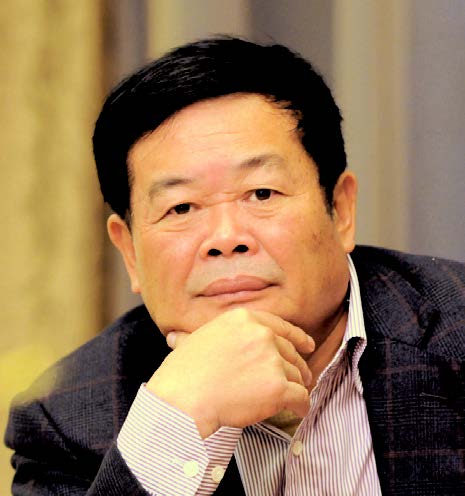
SHANGHAI (TIP): A Chinese auto glass tycoon has caused a stir by shifting part of his empire to the United States and setting up a factory in Ohio, citing high taxes and soaring labour costs at home.
Cao Dewang’s $600-million investment comes after Donald Trump threatened to declare Beijing a currency manipulator and slap 45 percent punitive tariffs on Cao Dewang Chinese imports to protect American jobs.
The 70-year-old tycoon’s decision to open a glass factory in the eastern American state of Ohio in October – a rare case of jobs being exported from China to the US – triggered an outpouring of criticism on social media.
The phrase “Cao Dewang has escaped” became a hot topic, generating nearly 10 million views on the Twitter-like Weibo microblog and many comments urging China to “not let Cao Dewang run away”.
Cao’s Fuyao Glass Industry Group – a supplier to big names including Volkswagen and General Motors – claims to be the biggest exporter of auto glass in the world, reporting 2.6 billion yuan ($370 million) profits last year.
Cao defended himself in an interview with the Beijing News Wednesday, saying he “did not run and will not run. The centre of my business is in China because I’m Chinese”.
“I’m a business man and I’m doing business in the US,” he said. “I’m merely reminding the government” that taxes and labour costs are too high.
In an interview with the state-owned China Business News last week, Cao said the country was home to the
“world’s highest taxes” and that the manufacturing industry suffered under taxes 35 per cent higher than those imposed by the US.
Cao is a high-school dropout who began building his fortune as a salesman for a local glassmaker.
The Fuyao group owns production lines in nearly a dozen Chinese cities including the capital Beijing and the commercial hub Shanghai. It also has a factory in Russia, according to its website.
Defending Cao’s remarks, the Communist Party mouthpiece the People’s Daily said Thursday that the fact that “entrepreneurs dare to raise problems means (they) still hold confidence in China’s economy”.
Cao’s comments reflect “strong personal feelings” but they touch on “some of the deep conflicts and problems in China’s economy”, it said. Source: AFP
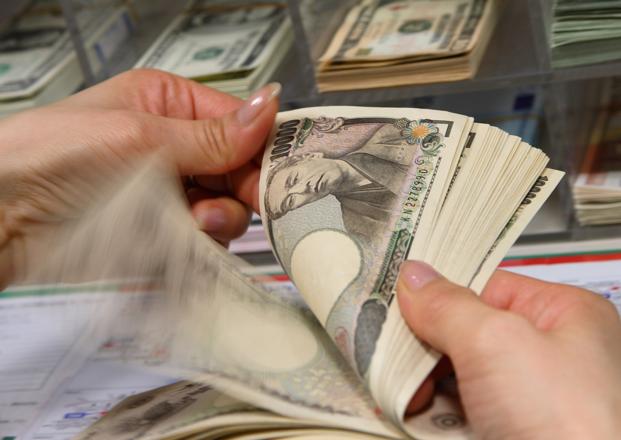
BEIJING (TIP): China’s central bank set the value of the yuan at the currency’s lowest level against the US dollar in more than eight years on Friday.
The “parity rate” for the yuan, also known as the “renminbi”, or people’s money, was set at 6.9168, its lowest level since June 2008. It was at 6.9184 by midday.
The US dollar has surged against other currencies since Donald Trump won the November 8 presidential election. By midday, the dollar was trading at 113.67 yen, its highest level in eight months against the Japanese currency.
Trump has threatened to seek to penalize China and Japan for manipulating their currencies to gain a foreign exchange advantage for their exporters.
China’s Foreign Exchange Trading System allows the yuan to rise or fall a maximum of 2 per cent against its parity rate, which is based on a weighted average of prices offered by market makers before trading starts each day.
Trump has adopted a more aggressive stance toward China on trade, threatening to use sanctions to win back a competitive trade advantage for the United States. Chinese officials have warned Beijing could challenge such moves at the World Trade Organization.
In trade talks in Washington earlier this week, Zhang Xiangchen, China’s deputy trade representative, disputed the idea that China keeps its currency artificially low. Many economists also agree that China no longer manipulates its currency.
Signup to our Newsletter!
Don’t miss out on all the happenings around the world