Tag: Christmas

  • Christmas : From sacred birth to global celebration

    Christmas : From sacred birth to global celebration

    Christmas, celebrated each year on December 25, is today one of the most widely observed festivals in the world. It is both a deeply sacred religious occasion for Christians and a global cultural event embraced far beyond church walls. Yet the Christmas we recognize today-with decorated trees, gift exchanges, carols, Santa Claus, and festive cheer-is the result of centuries of evolution, shaped by ancient pagan festivals, early Christian theology, medieval customs, literature, and modern commercial culture.
    To understand Christmas fully, one must look beyond the nativity scene and trace the layers of history, belief, and human storytelling that gradually shaped the festival into what it is today.
    How Did Christmas Begin?
    In its earliest centuries, Christianity did not celebrate the birth of Jesus. Early Christians were far more focused on Easter, commemorating the resurrection, which they viewed as the central event of Christian faith. Birthdays, in fact, were not widely celebrated in ancient Jewish and early Christian traditions.
    The first recorded celebration of Christmas as the birth of Christ appears in Rome in the 4th century CE, during a time when Christianity was transitioning from a persecuted faith to the official religion of the Roman Empire. As the Church sought to establish a structured liturgical calendar, the idea of commemorating Jesus’ birth gradually gained importance.
    By the mid-300s CE, December 25 began to be observed as the Feast of the Nativity, laying the foundation for what would eventually become Christmas.
    Saturnalia and the Pagan Influence on Christmas
    One of the most significant influences on Christmas comes from Saturnalia, an ancient Roman festival held in mid-December in honour of Saturn, the god of agriculture. Saturnalia was marked by feasting, gift-giving, role reversals, public merriment, and widespread celebration-a joyful break from social norms.
    During Saturnalia:
    – Homes were decorated with greenery and lights
    – Gifts were exchanged
    – Public revelry was encouraged
    – Masters and servants symbolically reversed roles
    As Christianity spread through the Roman world, Church leaders faced a practical challenge: how to introduce Christian observances without alienating populations deeply attached to existing traditions. Rather than abolish popular festivals, the Church often reframed them, assigning new Christian meaning to familiar customs.
    Placing Christmas in late December allowed Christian leaders to absorb and transform Saturnalia’s celebratory spirit, redirecting attention from pagan gods to the birth of Christ. Many elements now associated with Christmas-festivity, generosity, communal meals-echo these ancient winter celebrations.
    Is Christmas Really the Day Jesus Was Born?
    The short answer is: probably not.
    The Bible does not specify an exact date for Jesus’ birth. In fact, clues within the Gospel narratives-such as shepherds tending flocks outdoors at night-suggest a springtime birth rather than mid-winter, as December nights in Judea would have been too cold for grazing.
    Several alternative dates were proposed by early Christian scholars, including March and September. December 25 appears to have been chosen symbolically rather than historically.
    Some historians believe the date aligned with:
    – The Roman festival of Sol Invictus (the Unconquered Sun)
    – The winter solstice, symbolising light overcoming darkness
    – The belief that Jesus was conceived on March 25, making December 25 nine months later
    Thus, Christmas became less about historical precision and more about theological symbolism-celebrating Christ as the “Light of the World” entering a darkened world.
    The Middle Ages: Christmas
    Becomes a Popular Festival
    By the Middle Ages, Christmas had firmly taken root across Europe. It became a twelve-day festival, running from December 25 to January 6 (Epiphany). Feasts, plays, church services, and community gatherings dominated the season.
    Medieval Christmas traditions included:
    – Mystery plays depicting the Nativity
    – Caroling, originally communal singing
    – Yule logs, inherited from Norse winter customs
    – Lavish feasts for both nobles and commoners
    However, Christmas was not always universally embraced. During the 17th century, Puritans in England and colonial America viewed Christmas as excessive and unbiblical. In some places, celebrations were even banned. It would take time-and cultural transformation-for Christmas to regain its widespread popularity.
    ‘A Christmas Carol’: The Story That Changed Christmas
    Few works have shaped modern Christmas more than Charles Dickens’ *A Christmas Carol*, published in 1843. At a time when industrialisation had deepened social inequality, Dickens reimagined Christmas as a season of compassion, generosity, and moral renewal.
    The story of Ebenezer Scrooge, transformed from miser to benefactor, reframed Christmas not merely as a religious holiday but as a time for:
    – Caring for the poor
    – Strengthening family bonds
    – Practising kindness and forgiveness

    Dickens’ vision deeply influenced Victorian society and helped redefine Christmas as a warm, family-centred festival. Many traditions we associate with Christmas today-festive meals, goodwill, charitable giving-owe much to the moral tone set by ‘A Christmas Carol’.
    Who Invented Santa Claus? The Making of a Global Icon
    Santa Claus, perhaps the most recognisable symbol of Christmas today, did not emerge fully formed. He is the product of centuries of myth-making and cultural blending.
    His origins lie with Saint Nicholas, a 4th-century Christian bishop from Myra (modern-day Turkey), known for secret gift-giving and compassion for children and the poor. Over time, Dutch settlers in America brought stories of Sinterklaas, which gradually merged with local traditions.
    In the 19th century:
    – The poem “A Visit from St. Nicholas” (1823) popularised Santa as a jolly gift-giver arriving by sleigh
    – Illustrator Thomas Nast gave Santa his familiar appearance
    – Coca-Cola advertisements in the 20th century cemented the red-suited, white-bearded image globally
    Thus, Santa Claus evolved from a Christian saint into a universal symbol of generosity and joy.
    The Christmas Tree and Other Traditions
    The Christmas tree, now central to celebrations, has roots in Germanic pagan traditions, where evergreen trees symbolised life during winter. By the 16th century, decorated trees were part of German Christmas customs and later spread across Europe and America.
    Other traditions include:
    – Gift-giving, linked to the Magi and Saturnalia
    – Carols, evolving from medieval hymns
    – Lights, symbolising hope and divine presence
    – Festive meals, reinforcing community and abundance
    Each tradition reflects layers of history rather than a single origin.
    Christmas in the Modern World
    Today, Christmas is celebrated across continents, often adapted to local cultures. In some countries it remains deeply religious; in others it is largely secular. It has also become a major commercial season, prompting debates about materialism versus meaning.
    Yet, at its core, Christmas continues to carry a powerful message-hope, renewal, generosity, and togetherness. Christmas did not begin on a single night in Bethlehem, nor was it shaped by one tradition alone. It is the result of faith meeting history, belief meeting culture, and ancient customs meeting modern life.
    From Saturnalia to Saint Nicholas, from Dickens to Santa Claus, Christmas has continually reinvented itself-while preserving its central spirit. That enduring adaptability may explain why, after two millennia, Christmas remains not just a holiday, but a shared human celebration.
    Christmas Around the World: How Cultures Across Continents Celebrate the Season
    From midnight masses in Europe to beachside festivities in the Southern Hemisphere, from solemn religious observances to vibrant folk customs, Christmas reflects the cultural soul of each society it touches. What unites these varied traditions is a shared emphasis on family, generosity, light, and renewal, even as climate, history, and local customs shape the way the season unfolds.
    Europe: Where Many Christmas Traditions Took Shape
    In the United Kingdom, Christmas is deeply influenced by Victorian-era traditions popularised by Charles Dickens. Homes are decorated with holly, mistletoe, and Christmas trees, while carol singing remains a cherished custom. The traditional Christmas meal includes roast turkey, stuffing, roast potatoes, and Christmas pudding, often served with brandy butter.
    The Queen’s (now King’s) Christmas message, broadcast annually, is a modern tradition that reflects on national life and shared values. Boxing Day, celebrated on December 26, continues the festive spirit with family gatherings and sporting events.
    Germany: Advent, Markets and the Christmas Tree
    Germany is widely regarded as the birthplace of many modern Christmas customs. The Advent calendar and Advent wreath originate here, marking the countdown to Christmas. German towns are famous for their Weihnachtsmärkte (Christmas markets), where stalls sell mulled wine (Glühwein), gingerbread (Lebkuchen), and handcrafted ornaments.
    The tradition of decorating a Christmas tree began in Germany in the 16th century and later spread worldwide. Christmas Eve is often the main celebration, when families exchange gifts and attend church services.
    France: Midnight Mass and Réveillon
    In France, Christmas blends elegance with devotion. Many families attend Midnight Mass before returning home for le réveillon, a long, elaborate late-night feast featuring oysters, foie gras, roast meats, and fine desserts. In Provence, the tradition of thirteen desserts symbolises Jesus and the twelve apostles. Nativity scenes, known as crèches, are common in homes and churches, reflecting France’s strong cultural connection to the story of Christ’s birth.
    Italy: Faith at the Heart of Christmas
    In Italy, Christmas remains deeply religious. Nativity scenes (*presepi*) are central, sometimes more important than Christmas trees. The Vatican’s Midnight Mass, led by the Pope, is watched by millions worldwide.
    Children often receive gifts not from Santa Claus but from La Befana, a folkloric figure who delivers presents on Epiphany (January 6), extending the festive season beyond Christmas Day.
    United States: A Cultural Melting Pot
    Christmas in the United States reflects the country’s diversity. Traditions include decorated trees, gift exchanges, stockings, and Santa Claus, alongside church services and family meals. Popular foods vary by region, but roast turkey, ham, and pies are common.
    Public displays, Christmas movies, and commercial celebrations play a major role, while December 25 has been a federal holiday since 1870. Despite its commercialisation, Christmas remains a time for charity, volunteering, and family gatherings.
    Mexico: Posadas and Community Faith
    In Mexico, Christmas is celebrated through Las Posadas, a nine-day re-enactment of Mary and Joseph’s search for shelter. Each evening involves prayer, songs, and communal feasts. Christmas Eve (Nochebuena) is the main event, marked by midnight Mass and family celebrations. Traditional foods include tamales, bacalao (salted cod), and ponche, a warm fruit drink. Piñatas shaped like stars symbolise the triumph of good over evil.
    Brazil: Christmas in Summer
    In Brazil, Christmas arrives in the height of summer. Celebrations often extend outdoors, with fireworks and open-air feasts. Many families attend Missa do Galo (Rooster’s Mass) at midnight on Christmas Eve.
    Festive meals include tropical fruits alongside traditional dishes. Cities like Rio de Janeiro feature massive floating Christmas trees and elaborate light displays.
    Africa: Faith, Music and Community
    In Ethiopia, Christmas-known as Genna-is celebrated on January 7, following the Orthodox calendar. The day begins with long church services and fasting, followed by communal meals. Traditional white garments and processions highlight the deeply spiritual nature of the celebration.
    Nigeria and Ghana: Joyful Worship and Togetherness
    In many African countries, Christmas is marked by lively church services, music, dance, and extended family gatherings. Urban residents often travel back to their hometowns, making Christmas a major period of reunions.
    Asia: Faith, Festivals and Cultural Adaptation
    The Philippines celebrates Christmas longer than any other country, beginning as early as September. The season peaks with Simbang Gabi, a series of dawn Masses leading up to Christmas Day.
    Festivities centre on family, food, and faith, with colourful parol lanterns symbolising the Star of Bethlehem.
    India: Regional Diversity and Harmony
    In India, Christmas is celebrated by Christian communities across states such as Goa, Kerala, and the Northeast. Churches host midnight Mass, homes are decorated with stars and cribs, and festive foods vary regionally. In many cities, Christmas has also become a broader cultural celebration, marked by markets, decorations, and shared goodwill across communities.
    Japan: A Secular Celebration of Togetherness
    In Japan, Christmas is largely secular and commercial. It is seen as a time for couples rather than families. A uniquely Japanese tradition involves eating fried chicken, popularised by marketing campaigns in the 1970s.
    Australia and NZ: A Summer Christmas
    In Australia and New Zealand, Christmas falls during summer. Celebrations often involve barbecues, beach outings, and outdoor lunches. Traditional Christmas foods are adapted to the climate, with seafood and cold desserts replacing heavy roasts. Carols by Candlelight events reflect the blend of tradition and modern lifestyle. Christmas is celebrated in churches and homes, in snow-covered villages and sunlit beaches, in solemn silence and joyful song. While traditions differ widely, the heart of Christmas remains constant-a celebration of hd human connection.

  • A Christmas Wish for a World at Peace

    A Christmas Wish for a World at Peace

    By Prof. Indrajit S. Saluja

    As the world prepares to merrily celebrate Christmas on December 25, with carols, candles, gifts and gatherings my kids have been so enthusiastic about, my thoughts drift, inevitably and uneasily, to people across continents who will mark this season not with joy, but with fear, deprivation and grief. When one surveys the globe today, a grim common thread binds distant lands and diverse societies: conflict. It manifests in many forms—economic, political, ethnic, ideological and military—but its consequences are uniformly cruel. Peace, despite humanity’s bitter experiences, continues to elude us.

    History offers no shortage of warnings. The twentieth century alone witnessed two World Wars whose scale and savagery reshaped the world. World War I, sparked by nationalism, imperial rivalries and diplomatic failure, left nearly 20 million dead and shattered empires. Instead of ushering in lasting peace, it sowed the seeds of resentment and economic despair that gave rise to fascism and World War II. That second conflagration, the most destructive in human history, claimed over 60 million lives, devastated Europe and Asia, and culminated in the nuclear annihilation of Hiroshima and Nagasaki, grim reminders of humanity’s capacity for self-destruction.

    In the aftermath of World War II, leaders vowed “never again.” Institutions such as the United Nations were created to resolve disputes through dialogue, not arms. Yet the decades that followed tell a sobering story. The Cold War divided the world into hostile blocs, bringing proxy wars in Korea, Vietnam, Afghanistan, Africa and Latin America. While nuclear deterrence prevented direct confrontation between superpowers, millions perished in regional conflicts fueled by ideological rivalry.

    The end of the Cold War briefly raised hopes for a “peace dividend.” Instead, the world entered a new phase of instability. Ethnic conflicts tore apart Yugoslavia. Genocide scarred Rwanda. The Middle East remained trapped in cycles of war and retaliation. The US-led interventions in Iraq and Afghanistan, launched in the name of security and democracy, produced long wars whose human and economic costs far outweighed their gains. Terrorism emerged as a global threat, feeding on unresolved grievances and failed states.

    Today, conflict has returned with alarming intensity to Europe itself, a continent that once prided itself on having learned the lessons of history. The war between Russia and Ukraine has inflicted immense suffering on ordinary people: cities reduced to rubble, millions displaced, families torn apart, and an entire generation growing up amid sirens and uncertainty. Whatever the geopolitical arguments advanced by either side, the human cost is undeniable and indefensible.

    This is not an isolated tragedy. From Gaza to Sudan, from the Sahel to Myanmar, violence continues to uproot lives. Economic conflict, too, is pervasive: trade wars, sanctions, debt crises and widening inequality pit nations and classes against one another. Even societies not directly at war feel the consequences through inflation, refugee flows, energy shortages and a growing sense of global insecurity.

    One might ask: how, after centuries of bloodshed, does humanity still fail to learn? Part of the answer lies in the persistence of ego, power politics and short-term thinking among leaders. War is often justified in the language of national interest, honor or security, yet it is invariably paid for by civilians. Children lose schools, the sick lose hospitals, and the poor lose whatever fragile stability they possess. Reconstruction takes decades; trauma lasts generations.

    Christmas, at its core, is a celebration of peace, compassion and goodwill. The image of a child born in a manger has endured precisely because it speaks to humility and humanity, not conquest. At this moment, therefore, it is worth articulating a simple, perhaps unfashionable wish: that this Christmas brings wisdom to leaders who command armies and shape destinies.

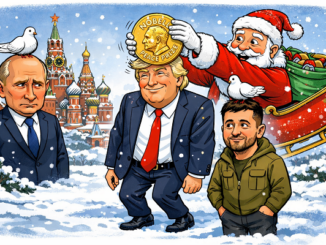
    In particular, one hopes that Russia’s President Vladimir Putin and Ukraine’s President Volodymyr Zelensky pause, even briefly, to reflect not on strategy or prestige, but on their people, the soldiers in trenches, the civilians in bomb shelters, the parents who bury their children. History will not judge them by how long they fought, but by whether they found the courage to stop.

    Peace, contrary to popular belief, is not weakness. It requires moral strength to shed ego, to compromise, and to accept that no victory built on ruins can truly be called a triumph. Europe learned this lesson after 1945; it must not be forgotten now.

    In this context, any genuine effort toward peace deserves encouragement, regardless of who undertakes it. If President Donald Trump seeks to play a role in ending the conflict, one can only wish him success. The world has seen enough failed wars and broken promises. A negotiated settlement, however imperfect, is infinitely preferable to endless bloodshed. If peace were to come to a ravaged region through such efforts, it would indeed be a gift worthy of global recognition.

    One might even indulge in a Christmas metaphor: Santa Claus, bearer of goodwill, presenting the Nobel Peace Prize not as a personal accolade, but as a symbol of what humanity values most, the saving of lives. Such symbolism matters, because it reminds leaders that history honors peacemakers long after warriors are forgotten.

    Ultimately, however, responsibility does not rest with leaders alone. Citizens, media and institutions must resist the idea that war is something normal. We must question narratives that glorify violence and demand accountability for decisions that destroy futures. Future generations will inherit the world we leave behind. They should not look back on us as idiotic warmongers who knew the costs of conflict yet chose it anyway.

    As candles are lit this Christmas, let them illuminate not just homes, but consciences. Let the season renew our collective commitment to dialogue over destruction, empathy over enmity, and peace over pride. For without peace, no celebration—Christmas or otherwise—can ever be complete.

    Merry Christmas, and may it bring the world closer to the peace it so desperately deserves!

  • Christmas

    Christmas

    Christmas, Christian festival celebrating the birth of Jesus. The English term Christmas (“mass on Christ’s day”) is of fairly recent origin. The earlier term Yule may have derived from the Germanic jol or the Anglo-Saxon geol, which referred to the feast of the winter solstice. The corresponding terms in other languages—Navidad in Spanish, Natale in Italian, Noël in French—all probably denote nativity. The German word Weihnachten denotes “hallowed night.” Since the early 20th century, Christmas has also been a secular family holiday, observed by Christians and non-Christians alike, devoid of Christian elements, and marked by an increasingly elaborate exchange of gifts. In this secular Christmas celebration, a mythical figure named Santa Claus plays the pivotal role. Christmas is celebrated on Sunday, December 25, 2022.

    Origin

    The early Christian community distinguished between the identification of the date of Jesus’ birth and the liturgical celebration of that event. The actual observance of the day of Jesus’ birth was long in coming. In particular, during the first two centuries of Christianity there was strong opposition to recognizing birthdays of martyrs or, for that matter, of Jesus. Numerous Church Fathers offered sarcastic comments about the pagan custom of celebrating birthdays when, in fact, saints and martyrs should be honoured on the days of their martyrdom—their true “birthdays,” from the church’s perspective.

    The precise origin of assigning December 25 as the birth date of Jesus is unclear. The New Testament provides no clues in this regard. December 25 was first identified as the date of Jesus’ birth by Sextus Julius Africanus in 221 and later became the universally accepted date. One widespread explanation of the origin of this date is that December 25 was the Christianizing of the dies solis invicti nati (“day of the birth of the unconquered sun”), a popular holiday in the Roman Empire that celebrated the winter solstice as a symbol of the resurgence of the sun, the casting away of winter and the heralding of the rebirth of spring and summer. Indeed, after December 25 had become widely accepted as the date of Jesus’ birth, Christian writers frequently made the connection between the rebirth of the sun and the birth of the Son. One of the difficulties with this view is that it suggests a nonchalant willingness on the part of the Christian church to appropriate a pagan festival when the early church was so intent on distinguishing itself categorically from pagan beliefs and practices.

    A second view suggests that December 25 became the date of Jesus’ birth by a priori reasoning that identified the spring equinox as the date of the creation of the world and the fourth day of creation, when the light was created, as the day of Jesus’ conception (i.e., March 25). December 25, nine months later, then became the date of Jesus’ birth. For a long time the celebration of Jesus’ birth was observed in conjunction with his baptism, celebrated January 6.

    Christmas began to be widely celebrated with a specific liturgy in the 9th century but did not attain the liturgical importance of either Good Friday or Easter, the other two major Christian holidays. Roman Catholic churches celebrate the first Christmas mass at midnight, and Protestant churches have increasingly held Christmas candlelight services late on the evening of December 24. A special service of “lessons and carols” intertwines Christmas carols with Scripture readings narrating salvation history from the Fall in the Garden of Eden to the coming of Christ. The service, inaugurated by E.W. Benson and adopted at the University of Cambridge, has become widely popular.

    Christmas tree

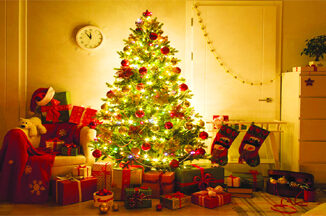
    Christmas tree, an evergreen tree, often a pine, spruce, or fir, decorated with lights and ornaments as a part of Christmas festivities. Christmas trees can be fresh-cut, potted, or artificial and are used as both indoor and outdoor decorations. While the trees are traditionally associated with Christian symbolism, their modern use is largely secular. Many families place presents around an indoor Christmas tree to be opened on Christmas Eve or Christmas Day.

    The use of evergreen trees, wreaths, and garlands to symbolize eternal life was a custom of the ancient Egyptians, Chinese, and Hebrews. Tree worship was common among the pagan Europeans and survived their conversion to Christianity in the Scandinavian customs of decorating the house and barn with evergreens at the New Year to scare away the Devil and of setting up a tree for the birds during Christmastime. It survived further in the custom, also observed in Germany, of placing a Yule tree at an entrance or inside the house during the midwinter holidays.

    Santa Claus

    Santa Claus, legendary figure who is the traditional patron of Christmas in the United States and other countries, bringing gifts to children. His popular image is based on traditions associated with Saint Nicholas, a 4th-century Christian saint. Father Christmas fills the role in many European countries. The Dutch are credited with transporting the legend of Saint Nicholas (Sinterklaas) to New Amsterdam (now New York City), along with the custom of giving gifts and sweets to children on his feast day, December 6. The current depiction of Santa Claus is based on images drawn by cartoonist Thomas Nast for Harper’s Weekly beginning in 1863. Nast’s Santa owed much to the description given in the poem “A Visit from St. Nicholas” (also known as “’Twas the Night Before Christmas”), first published in 1823. The image was further defined by the popular Santa Claus advertisements created for the Coca-Cola Company from 1931 by illustrator Haddon Sundblum. Sundblum’s Santa was a portly white-bearded gentleman dressed in a red suit with a black belt and white fur trim, black boots, and a soft red cap.

    Santa Claus is said to live at the North Pole with his wife, where he spends the year making toys with the help of his elves. There he receives letters from children asking for Christmas gifts. On Christmas Eve he loads his sleigh with toys and flies around the world, drawn by eight reindeer, stopping at each child’s house; he slides down the chimney and leaves the gifts, refreshing himself with the milk and cookies left for him by the household’s children.

  • Eid ul Fitr is the prime festival of 1.8 billion Muslims across the world. We wish our readers a happy and festive Eid.

    By Mike Ghouse

    Eid Mubarak

    Eid means festivity and celebration. It is a joyful moment for Muslims to observe 30 days of fasting of every aspect of human life. They abstain from thinking, saying, doing bad things that hurt fellow humans, and abstaining from any intake of food or liquids from sun-up to sun-down. It is time to celebrate a successful month of training in becoming an excellent disciplined human being.

    It is purifying oneself bodily by getting rid of the toxins and spiritually by shedding the arrogance and feeling as equals with fellow humans. Spirituality is not wearing certain clothes but feeling that we are merely a speck in the universe; we simply one in 8 billion people. It is a great feeling to have. Humility builds bridges among fellow humans, and arrogance destroys.

    Festivals are expressions of joy. Religious societies have designed the festivities to bring people together. Holi, Diwali, Ramadan, Bakrid, Christmas, Easter, Paryushana, Rosh Hashana, and Jayanthies. Then we have the civil society festivities, designed for the same purpose as the New Year, July 4th, Thanksgiving, and so many other days. In India, we celebrated all festivals together, and I hope that tradition begins here in the diaspora communities.


    When we live as neighbors or live in the same town, we might as well learn about each other. The best way to build secure, cohesive societies is for its members to understand each other’s sorrows and joys, and festivities and commemorations. It is this good feeling that Muslims celebrate or reward themselves on Eid.


    This year, the Indian Muslims have much more to feel good about being a good caring human being. My Hindu friend today pointed out that the Sikhs and Muslims trained to serve fellow humans. He said it is in-built in them; they don’t need the Gurdwara or the Mosque to organize things for them.

    A few of them gather on their own and serve fellow humans. Since covid started taking tolls on human life, Muslims in India have taken the responsibility to perform the last rites of dead bodies of Hindus and others, as the families of the deceased persons did not want to touch or be near them. There are thousands of such cases, including a few BJP leaders who died; a few examples are here in this link. https://gooddeeds.info/category/funerals/ and https://Youtube.com/GoodDeedsbyMuslims.

     Eid Begins with Chand Raat.

    The moon cycle is 28, 29, or 30 days. After observing 28 days of fasting, Muslims will start looking for the appearance of the moon. Once it is spotted – Chand Raat and festivities begin, shops open up, and people go on a buying frenzy. It is like shopping for Diwali or Christmas at the last minute. It is a joyous moment.

    Also, most of the perishable items for cooking had to be purchased a day earlier, determined by moon sighting. It is a tradition as refrigeration was not available in South Asia until 50 years ago. Nasa predicts the moon sighting accurately, but tradition is tradition (the song in the movie Fiddler on the roof).

    I am sharing the practice in South Asia: India, Pakistan, Bangladesh, Maldives, Nepal, and Sri Lanka with some variations.

     Mehendi

     Women and girls gather up from the neighborhood and do the Mehendi/Henna on their hands and feet. The men and boys will have few spots on their hands. It is not a religious thing but a part of the culture.

    Eid Day 

     One of the first things Muslims do is meet their obligation towards needy fellow humans and pay their dues.

    New Clothes

    Wearing new clothes is always a celebration, particularly for children. It is one reason people donate to families in advance so the have-nots can also feel the festival. Eid multiplies when everyone around you is happy, and it behooves us to ensure that it happens.


    Fitra 

    Before the Eid gathering (usually) around 9 AM, every Muslim who possesses food and funds over their needs donates to charity to help the needy. It is called Fitra or Fitrana. It is about $5 in the United States, and you can multiply that by 3 million going into the pot for the deserving. There is no ceiling to give, but one must give. That is how we help the needy. But most people pay it out much earlier.

    Zakat 

    It is an obligation one has towards fellow humans to donate a specific portion of his/her wealth to the needy. The customary practice is 2.5% on capital assets and a higher amount on precious metals and livestock. The funds usually go to Bait-ul Maal, an organization set up to receive such funds, and you can give directly to any family or charity. Baitul Maal distributes the funds to life-sustaining, educational and humanitarian aid to the underserved populations. Prophet Muhammad (PBUH) said, “Let the left hand not know what the right hand gives.” Its profound wisdom is that don’t boast or brag about your giving, and let the receiver of the charity not be humiliated or lose his freedom in your presence to speak up if he/she differs from you. Such is the emphasis placed on giving and liberty.

    Breakfast

    Each family has a different practice. Rotis and Kuftas were a tradition in my home; it was usually a lighter breakfast compared to the lunch.


    Eid gathering

    Practices vary, first in my town and Bangalore and then the patterns in the United States.

    Around 9 AM, Muslims of the town gather at the Mosque and then March to the Eid-Gah, which is about a mile reciting “God is great and thank him.” Eid-Gah is a place built to pray in large numbers, and it is usually at the edge of a Khabrastan (cemetery). In Dallas, Louisville, and other Cities, they rent the convention center to accommodate the large gathering.

    Eid Prayers

    Time to gather up for the prayers. The Imam or the guest speaker gives a short sermon reminding Muslims of their duties to fellow humans and congratulating them for being good Muslims – aka Good citizens. Namaz follows the speech ending with the words Eid Mubarak.


    Hugging 

    It is time to put our difference and hug each other. It is three hugs, and my interpretation for each hug is the non-verbal “forgive me,” “I forgive you,” and “Let’s start with a clean slate.” After the hugs, you feel purged from ill-will towards the other, and it is also a time to make up with the people you carried the burden of ill-will. By now, you have purified yourselves from ill-will, malice, jealousy, and other things that are negative thoughts about fellow humans. Eid is celebration and happiness.

    Khabrastan/Cemetery

    One of Muslims’ most beautiful inclusive prayers is to ask the creator to forgive all the dead and the alive humans and shower them with His peace and blessings. The Eid-Gah in my home town is attached to the Khabrastan. We visited each grave of the family and friends and collectively prayed for all people. In the US, we can recite the same prayer from wherever we are. It is also time to seek forgiveness from those you were rude to and said the wrong thing.

    Real happiness comes from repentance and forgiveness. It releases one from the built-in known and unknown tensions.

    Edi 

    When you reach home, the family earner gifts the other members with cash. When I was a kid, my father gave me 4 Annas (like 1/4th of a Rupee), my cousin Munawar and I dashed to the store behind our home and bought an Orange Soda each, and that was our joy!

    Eid Lunch 

    You visit families and friends and, in each place, taste a little bit of food. Every home is an open house for much of the afternoon. You can taste such a wide variety of foods! Eid Mubarak! Ramadan Mubarak, Happy Eid, Eid Blessings are the different phrases to wish your friends.

    Time to thank the men and women in the uniform.

    When you see a policeman, fireman, and those who serve in the army, navy, air force, marines, and others, please express your gratitude to them to ensure our safety and protect our freedoms. They put their life at risk for us. I had a beautiful experience in Louisville. I thanked the police officer at the convention center as I entered the facility and showed him my thank you note. He was excited and asked me to forward the email, and after the Eid prayer, he told me that he had shared it with the entire police department in Louisville with an appreciation for Muslims.

    (The author is a public speaker, author, commentator and an interfaith wedding officiant. He is the founder and president of the Center for Pluralism and offers pluralistic solutions on issues of the day to the media and the policymakers. More about him at www.TheGhouseDiary.com)

  • Perspective : Christmas Musings…..

    Perspective : Christmas Musings…..

    I was merely happy to be invited to the ‘Holiday Party’ organized by the South Asian Community in Queens. However, I have learned that the main purpose of the gathering was to honor the newly appointed Consul General Sandeep Chakraborty of India and introduce him to various elected officials from Queens, New York. The program ran in typical Indian style, with as many of the community leaders jockeying for VIP seats and later on putting up a brave struggle to position themselves for a celebrity photo for their next Facebook post.

    These politicos in New York City appear to show very little respect for the South Asian Community. To them, we are an ATM they could push a button and get their so-called campaign contributions. They seem to be quite confident as well that we are ‘simple-minded’ and would go away happily after an embrace and a Selfie shoot for the next edition of one of those Indian weekly newspapers.

    I wonder why the South Asian Community, probably the largest concentration anywhere in the U.S. has so far failed to get a footing in the mainstream politics in New York City! Indians who live even in the old Confederacy seem to have more success than their peers who live in the most liberal city in the U.S.

    I had long wanted to vent this long and boiling frustration within me to somebody when Professor Saluja, the emcee for the evening, informed me that I would have an opportunity to say few words at the function felicitating the Chief Guest before all those public officials from the Queens. However, it never came to pass, and they simply had too many speakers who paid the bill, they said!

    However, I had an opportunity to speak to Ms. Letitia James, the Public Advocate for the New York City Council. I tried to make my case and requested her to help appropriate one city council seat, probably District 23, for an Asian Indian if not a South Asian. She tried to convince me that we have to come together and fight the election. I responded to her stating that we are quite observant of the dynamics and unless Democratic Party officially put their weight behind a South Asian, the effort will be futile! We have indeed learned how the single-party system in New York is lately reduced into machine politics and unless you are in it, ‘you ain’t going anywhere’!

    As I sat there listening to speaker after speaker greeting the audience, not a single one uttered the word “Merry Christmas”. A number of them were eager to say “Happy Hannukah’, that was mostly addressed to the visiting Jewish public officials. Anyway, we could confirm by now that ‘Merry Christmas’ has become a toxic greeting phrase in New York.  As a Christian who is sitting there, probably one of the few in the audience, my mind wandered back to the younger days of growing up in Kerala, India where we all greeted each other with ‘Merry Christmas’ for the simple reason for the season.

    Upon my return that evening home, Gujarat poll results started coming in. Congress has indeed outperformed all the expectations and appeared to have thoroughly thrashed the much-heralded exit poll results. However, people of Gujarat still handed BJP another term despite becoming miserable and more impoverished through their demonetization policies as well as the messy GST implementation. The verdict sends a clear message to the world that hate and bigotry trumps over economic troubles and personal misery!

    Opening up the Internet browser the following day, I am once again reminded that this is not a season of peace and goodwill toward men as right-wing fringe groups have threatened to disrupt Christmas and New Year celebrations in some Uttar Pradesh towns. A series of warnings have come from these groups just days after an alleged attack on priests in a Madhya Pradesh town. In Aligarh, a group called the Hindu Jagran Manch has warned schools against celebrating Christmas, saying they could do so “at their own risk”.

    In 2014, Prime Minister Narendra Modi had declared that December 25, Christmas Day, would be observed as Good Governance day. India has a history of 2000 years of Christianity that was long before even England embraced that religion. Why then this alienation of a religious group in India that has contributed much to the educational and social development of the poor and the downtrodden! However, it is quite impressive to note that as the first generation Indians to the US, we are already lobbying to make Diwali a holiday in New York City!

    By this time you may have heard about the decimation of ISIS and its Caliphate in Syria and Iraq. Recently, Iraqi forces with overwhelming support from U.S. Airforce have retaken the city of Mosul. ISIS has pushed Iraq’s religious minorities to the edge of extinction. However, the sad story of one Christian family brings the ugly face of religious discrimination home to us all.

    The story is told as follows:  A family of four lived in a small village about sixteen miles outside of Mosul. Shortly after the Islamic State took over, the father, a construction worker, took his wife of twenty-eight years to Mosul to continue her breast cancer treatments. But at the hospital, a guard refused to allow the man’s wife to enter because they were Christians. He told her that to continue receiving medical care, she would have to convert to Islam. She refused and the couple was forced to return to their village. Ten days later she died with her husband and sons at her bedside.

    As we are on the threshold of a new year, the human effort to bring peace and security appear to be is as elusive as ever! Will the year 2018 bring us a ray of hope?

    (The author is chairman, INOC USA).

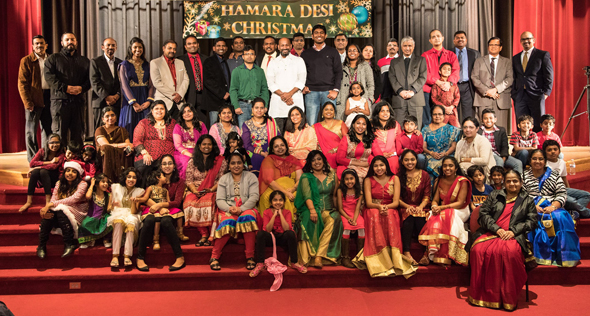
  • Indian Americans Celebrate 10th Hamara Desi Christmas

    Indian Americans Celebrate 10th Hamara Desi Christmas

    HOUSTON, TX (TIP):  Houston’s one and only Indian Christmas celebration was hosted last Saturday, December 16, at the Stafford Civic Center.

    This year it was a sold-out event and as always, the auditorium was packed, and the audiences were treated to an awe-inspiring program by the Houston Indian Fellowship team.

    The Houston Indian Fellowship (HIF), a group of Indians from across the metropolitan Houston area, conduct an annual Christmas Celebration to share with joy and cheer, the true meaning of Christmas to Houstonians from different walks of faith, religion, and social status.  This year during the Christmas event HIF conducted spelling bee competition in addition to the usual painting competition.

    The admission for the event was free, and it was followed by complimentary dinner for all the attendees.  The dinner was catered by Amma’s Kitchen.

    HIF, by hosting events like these, strives to bring Christmas cheer to people from different faiths and regions of India.

    The MCs Sharon Samuel and John Jeevarajan hosted this year’s event with elegance. They were engaging, entertaining, and kept the audience feeling at home.

    Dr. Robello Samuel, President of HIF kicked off this year’s event with a welcome speech and spoke briefly about the history of Hamara Desi Christmas.

    This year’s celebration included a variety of dances from different parts of India, all presented professionally to an awestruck audience.

    This year HIF also introduced their very own production ‘The Birth of A Savior’ A screen and staged play retelling the life of Jesus, from His birth to resurrection.

    The stage was overflowing with vibrant colors as costumes from different parts of India were used for the variety of dances enriching and bringing to life our very own culture several thousand miles away.

    Deepak Israel, Secretary of Houston Indian Fellowship awarded the winners of the painting competition. Dr. Sushma of Spring Medical awarded the winners of Spelling bee competition. Tablets were given to the first prize winners in each category and the second prize winners were given a gift card.

    Finally, the HIF children performed a Christmas Carol medley of Angels we have heard on high, Away in a manger, O come all ye faithful and Feliz Navi dad, as others in the audience joined Santa and the HIF team in wishing everyone a merry Christmas.

    The audience was raving about the event. “Wow! This is the best organized Desi event I have been to in the Houston area! Well organized and well catered event. The programs were crisp, clear and very professional.”

    Sheena Reuben, one of the coordinators of the event said “Christmas is the season of love, peace and Joy. Nothing gives us more joy than preparing for this Christmas event for the South Asian community in Houston. She further added that when we see that the audience thoroughly enjoy the show it gives us the reason to do better and more shows in the coming years.”

    Deepak Israel, of HIF proudly stated, “This event brings an opportunity to bring our own south Asian culture to be enjoyed thousands of miles away here in Houston. With the help of the many volunteers we plan on bringing more competitions and dances to the event. More importantly it is a free event accessible for everyone, so we can all share the Christmas spirit with joy!”

    Dr. Robello Samuel, of HIF, said “Seeing the spirit of Christmas freely shared with free food, dances, plays and competitions gives me great satisfaction as that is the whole idea behind the celebration!”

    The University of Houston students along with several other families and friends helped behind the scenes activities– all of which helped make this celebration a memorable one. (Source: indoamerican-news.com)


  • A Christmas Party in Edison

    A Christmas Party in Edison

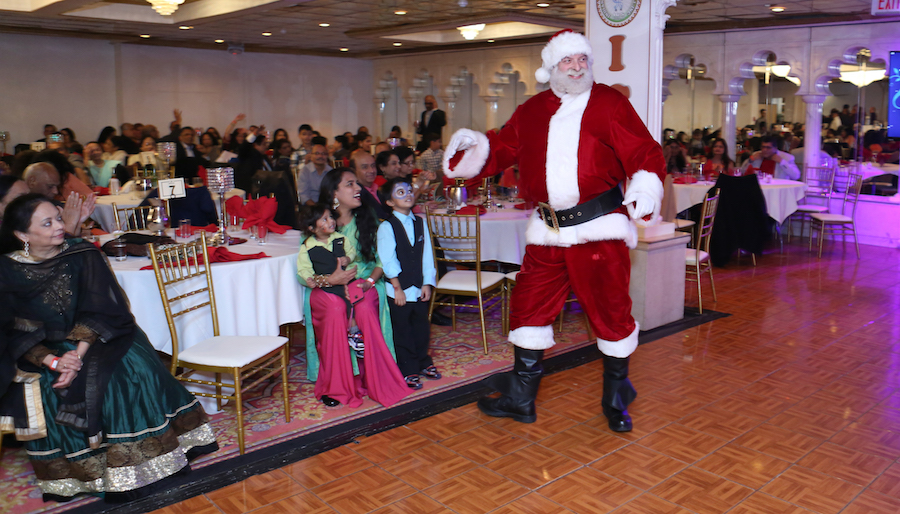
    Santa obliges by posing for a photograph with a section of the gathering
    Photos / Gunjesh Desai

    Indian Culture Society of New Jersey Inc organized Christmas Party on Dec 9th, 2017 at Akbar Restaurant in Edison NJ