Tag: Climate Change

  • What’s Brewing in Indian Startups-Fresh Insights into a Booming Ecosystem!

    What’s Brewing in Indian Startups-Fresh Insights into a Booming Ecosystem!

    How often do we stop to ask what’s really happening with Indian startups today? For many of us, whether living in India or part of the diaspora abroad, these ventures are more than business, they are stories of innovation, risk, and cultural pride. With global eyes on India’s tech explosion, the pulse of Indian entrepreneurship races faster than ever. This blog explores Indian startups news through a fresh lens, weaving in vibrant threads of the food and culture of Indian diaspora to offer an engaging and relatable narrative for our community.

    The Current Landscape of Indian Startups

    India’s startup ecosystem has been nothing short of a revolution. According to a 2025 report by NASSCOM, India hosts over 110,000 startups, employing millions and attracting record funding worth over $50 billion. These numbers symbolize more than scale, they reflect a vibrant imagination tackling everything from fintech to health tech, edtech to sustainable innovations. For us, reading Indian startups news isn’t just about companies; it’s about tapping into the pulse of modern India, dynamic, youthful, and determined.

    Amid this, we find startups led by women entrepreneurs, second-generation NRIs, and fresh graduates, highlighting a diverse range of voices and visions. Their innovations offer pathways not only for financial success but also for social impact, raising the bar for what business can be.

    From Idea to Impact: Inspiring Startup Journeys

    Every startup has a story, and many narratives resonate particularly with our diaspora readers. Take Byju’s, a beacon in edtech, which began in a small classroom and now educates tens of millions globally. Or Zomato, which originated as a food guide and became a global restaurant discovery platform.

    Closer to home, startups founded by Indian diaspora members are making waves internationally. These stories are more than business wins; they are tales of perseverance, cultural bridges, and the spirit of “Make in India” evolving into “Innovate for All.” When we hear such success stories, it’s easy to feel inspired and part of a collective pride.

    How Startups Reflect the Food and Culture of Indian Diaspora

    What’s fascinating about many Indian startups is their rootedness in the food and culture of Indian diaspora. From subscription-based spice boxes that bring authentic masalas to American kitchens, to apps showcasing regional recipes and culinary traditions, these startups preserve and reinvent heritage in accessible new formats.

    Fashion, wellness, and entertainment startups also amplify cultural expression by melding tradition with contemporary needs. This fusion echoes our diaspora’s own balancing act, honoring roots while adapting to new worlds. In essence, startups are not only economic engines but cultural ambassadors.

    The Role of Technology and Investment Trends

    Technology is the driving force behind India’s startup rise, but investment hangs tightly on its wings. Venture capital in India has grown tenfold over the past decade, with leading investors like Sequoia and Tiger Global fueling innovation. The ecosystem encourages bold ideas, rapid scaling, and international outreach.

    Government initiatives like Startup India continue to provide support, simplifying processes and granting incentives. Meanwhile, increasing digital adoption, 150 million new internet users expected in 2025 alone (IAMAI report), creates fertile ground for tech-driven ventures.

    These trends shape what we see reported in Indian startups news, showing a promising horizon for entrepreneurs and investors alike.

    Where Indian Startups Are Heading: Predictions and Potentials

    Looking forward, emerging sectors like green energy, health tech, and AI promise to fuel the next wave of startups. Global collaborations will likely deepen, leveraging diaspora networks to expand innovation hubs.

    Experts speculate a rise in impact investing, with startups addressing climate change and social equality gaining prominence. The startup economy is morphing into a smarter, more inclusive ecosystem that is as much about values as valuation.

    For all of us watching and participating from afar or near, this evolving landscape offers ample reasons to stay optimistic and engaged.

    Indian Panorama-Your Insider to Innovation Stories

    At Indian Panorama, we see ourselves as your front-row seat to the startup stage, bringing you stories that go beyond numbers to capture the spirit and grit powering Indian entrepreneurship globally. We blend business insights with cultural narratives so that every reading connects on both professional and emotional levels.

    Whether you’re a budding entrepreneur, a student hungry for inspiration, or simply a proud member of the Indian diaspora, we weave these stories to keep you informed, motivated, and connected. Our shared journey is colorful, challenging, and deeply rewarding, just like the startups we celebrate.

    Let’s innovate, inspire, and grow together, with Indian Panorama lighting the way.

    People Also Ask

    Q1: What sectors are booming in the Indian startup ecosystem?
    Edtech, fintech, health tech, and sustainability are leading sectors.

    Q2: How do Indian diaspora startups contribute globally?
    By bringing cultural insights and technological innovation to international markets.

    Q3: What government support exists for Indian startups?
    Programs like Startup India offer funding, mentorship, and regulatory ease.

    Q4: How does the food culture influence Indian startups?
    Many startups innovate around spices, cuisine delivery, and culinary education.

    Q5: Where can I stay updated on Indian startups news?
    Indian Panorama offers reliable, timely news and inspiring success stories.

  • Malaysia’s PM Anwar Ibrahim calls BRICS a ‘cohesive force within the Global South,’ pledges green agenda for ASEAN

    Malaysia’s PM Anwar Ibrahim calls BRICS a ‘cohesive force within the Global South,’ pledges green agenda for ASEAN

    Kuala Lumpur (TIP): Malaysian Prime Minister Anwar Ibrahim has described BRICS as a “new initiative that represents a cohesive force within the Global South,” highlighting the group’s potential to enhance cooperation among emerging economies in an interview with TV BRICS.
    Anwar underlined Malaysia’s commitment to strengthening ASEAN’s regional and global engagement as the country prepares to assume the ASEAN Chairmanship in 2025.

    He stressed the importance of revitalising key dialogue platforms such as ASEAN+3 and the East Asia Summit, calling them “neutral and constructive spaces” where major powers can engage in dialogue, cooperation, and conflict resolution amid increasing geopolitical uncertainty.
    “We must ensure inclusivity and sustainability in ASEAN’s development so that no member nation is left behind,” the Prime Minister said, highlighting Malaysia’s focus on equitable growth and regional solidarity.
    On environmental priorities, Anwar reiterated Malaysia’s commitment to championing the green agenda within ASEAN. “Addressing climate change and promoting sustainable development are critical priorities for us,” he said.
    The Prime Minister emphasised Malaysia’s leadership role in accelerating cooperation on environmental issues across ASEAN member states, aiming to build a more resilient and sustainable region.
    Regarding Malaysia’s decision to join BRICS, Anwar said, “BRICS is not just an economic bloc but a transformative platform that can reshape global governance and foster solidarity among emerging economies.”
    He views BRICS as a crucial force to amplify the voice and interests of the Global South on the international stage.
    As ASEAN Chair in 2025, Malaysia intends to use its platform to promote peace, stability, and inclusivity in the region while expanding ASEAN’s global partnerships. “Our goal is to strengthen ASEAN’s role as a driver of regional cooperation and a bridge to the wider world,” Anwar said.
    Malaysia’s proactive stance on inclusivity, sustainability, and regional cooperation reflects its broader vision for a just and balanced international order.
    The story has come from a syndicated feed and has not been edited by the Tribune Staff.) (ANI)

  • Uttarakhand forest funds spent on iPhones: CAG

    Dehradun (TIP)- Funds meant for compensatory afforestation in Uttarakhand were diverted to buying iPhones, kitchen appliances, building renovation, even fighting court cases, the Comptroller and Auditor General (CAG) has said in its report.
    The CAG report for the year ended 31 March 2022 covers the period 2019-22 on the “Functioning of Compensatory Afforestation Fund Management and Planning Authority” (CAMPA) in Uttarakhand and was submitted in the state assembly on Thursday. CAMPA comes under the Union environment, forest and climate change ministry.
    The report pointed out that “at the divisional level, ?13.86 crore were diverted/ expended on inadmissible activities. This included renovation of forest department buildings and purchases of iPhones and computers.
    The report does not provide a break-up. State forest minister Subodh Uniyal said, “The matter related to the functioning of CAMPA funds concerns the period between 2019-22. CAG report has raised some issues with regard to some issues like the diversion of funds. I have directed the principal secretary forest department to investigate the matter”
    The Compensatory Afforestation Fund Management and Planning Authority, helps manage funds collected from developers who convert forest land to non-forest uses. The money usually goes toward afforestation and regeneration activities.
    The report also expressed its concern at the overall low average survival percentage of plantations, at 33.51%, lower than the 60-65% mandated by Forest Research Institute (FRI), Dehradun.
    The report also said that forest land worth over 188.62 hectares was diverted for non-forest purposes (road work) in 52 cases in Uttarakhand without any permission. “ Further, the forest divisions did not take any cognizance of unauthorized use of forest land in these cases and did not book these as cases of forest offence”, it added.
    According to Forest Conservation Act guidelines, no work on forest land can be started unless the order of diversion of forest land is given by the competent authority.

  • Natural disasters that rocked the world in 2024

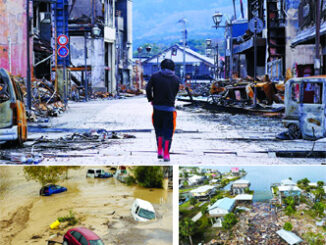
    Natural disasters that rocked the world in 2024

    The year 2024 has seen a horrifying variety of natural disasters resulting in tragic deaths and destruction that have shocked the world. Events, including everything from earthquakes to hurricanes and landslides, have left in their wake grieving survivors and destroyed homes and livelihoods. Of course, natural disasters have afflicted humanity since the dawn of time—but now we have a sinister extra factor to contend with: climate change.
    Noto Earthquake
    A powerful earthquake struck on New Year’s Day, heralding a disastrous start to 2024 for the people of the Noto Peninsula in western Japan. NASA’s Earth Observatory reported, “The 7.5 magnitude main shock was followed by dozens of strong aftershocks in the following minutes, hours, and days.” The principal quake struck at 4:10 in the afternoon.Just to make a bad situation worse, there was heavy snowfall in the immediate aftermath of the earthquake and the resulting fires, hampering rescue efforts. NASA geophysicist Eric Fielding said that some areas of the Noto Peninsula were lifted as much as 13 feet (4 meters). Around 84,000 homes were damaged, leaving a repair bill that may be as high as $17.6 billion, with 14,000 people directly affected by the destruction. And grimly, 281 people lost their lives, with many more badly injured.
    Spain Floods
    On October 29, as much as 20 inches (51 cm) of rain fell on the southeastern Spanish province of Valencia in just eight hours. Unsurprisingly, this massive deluge resulted in flash floods and devastating destruction. The city of Valencia, which lies on the Mediterranean coast, and the surrounding towns and farmland were heavily flooded, and a total of 216 people died, almost half of them over the age of 70. The rain turned streets into rivers, and cars were tossed aside as if they were toys.NASA’s Earth Observatory reports that the exceptionally high levels of rainfall “came from a high-altitude low-pressure weather system that became isolated from the jet stream.” This happened when a cold front collided with warm air over the Mediterranean. In the aftermath of the floods, public outrage at a perceived lack of warning and poor response from rescue services spilled over into angry demonstrations. When King Felipe VI and Queen Letizia visited Valencia, angry survivors pelted the royal couple with mud as they toured the streets.
    Uganda Garbage Landslide
    The Kiteezi garbage dump, clearly visible on Google Maps satellite view, is the only place to dispose of garbage in Uganda’s capital city, Kampala. The satellite pictures also reveal the fact that there are homes nestled cheek-by-jowl with the festering mountain of trash, which covers a 36-acre site in the city. Some of the residents of those homes were the victims of a garbage landslide in August when torrential rain caused a substantial portion of the trash mountain to collapse.Around 1,000 people were forced to leave their homes, but it turns out that by escaping with their lives, they were the fortunate ones, even though many lost everything. Meanwhile, rescuers dug their way through tons of garbage in a desperate effort to locate survivors. A few days after the Kiteezi disaster, the Kampala police announced a confirmed death toll of 35, with 28 people still unaccounted for.
    Hurricane Helene
    Helene, the deadliest hurricane since Katrina 20 years ago, swept in from the Atlantic in late September, making landfall in Florida. From there, it worked its way across Georgia, both Carolinas, Virginia, Tennessee, and Alabama. As it tracked across the southeastern states, it left a terrible trail of destruction in its wake. Rescue and recovery efforts continued for days after Helene had completed its bout of devastation.More than a week after the hurricane had blown through, the Associated Press reported that more than 230 people had lost their lives in the fearful storm. Those who survived Helene had to cope with widespread power outages, intense flooding, and massive destruction of infrastructure. North Carolina’s Governor Roy Cooper highlighted the ferocious strength of Helene, saying, “We knew storms could cause damage, but we weren’t expecting the magnitude of this one – water raging in rivers all over in a way we’ve never seen before.”
    Wayanad Landslide
    In July, it was the Wayanad district in India’s Kerala region on the country’s southwestern coast that experienced just how devastating the forces of nature can be. Torrential rain, 22 inches (56 cm) in two days, caused landslides, and by early August, the grim death toll had risen to 392, with 150 people reported as being missing. The casualties came in small villages on steep hillsides where many of the inhabitants worked on local tea plantations.The Hindu website told the tragic story of two of the villages that were engulfed by the landslide, Mundakkai and Chooralmala, both places previously best known for their “scenic landscapes and waterfalls.” However, in the massive landslide, which originated in a nearby mountaintop and barreled some 5 miles (8 km) down the course of the Iruvaniphuza River, these two villages were virtually wiped out. Weeks later, the gruesome task of identifying bodies continued, with some of the dead only identified with the use of DNA testing.
    Indonesian Volcano
    Volcanic Mount Lewotobi Laki-Laki on Indonesia’s Flores Island erupted in early November, sending hot ash soaring 6,500 feet (1,981 meters) into the skies. A flow of deadly lava and cascading rocks hit villages on the mountain’s slopes, about 2 miles (3.2 km) from the eruption. The Indonesian Center for Volcanology and Geological Disaster Mitigation called for a complete evacuation for all those living within a four-mile radius of Mount Lewotobi Laki-Laki “due to the ejection of incandescent material.” The evacuation came after ten people had already lost their lives.BBC News reported that a video shot by people at the scene of the eruption showed survivors “covered in volcanic ash, rock showers and homes ablaze, as well as the scorched aftermath of the disruption.” In fact, there had been considerable advance warning of a likely eruption as Mount Lewotobi Laki-Laki had been emitting clouds of smoke and ash since December 2023. As a result, many people had previously left the area or the casualty level would almost certainly have been higher.
    Typhoon Yagi
    Typhoon Yagi raged across several Asian countries in early September, including Laos, Thailand, and Myanmar, but Vietnam was the worst affected country. The overall death toll of Yagi was 600, with 42 fatalities in Thailand, 242 in Myanmar, and 300 in Vietnam. The majority of the casualties were caused by flash floods and landslides resulting from the extreme rainfall that Yagi brought to the region. The Center for Disaster Philanthropy (CDP) reported that there were “still people missing who are presumed dead.”CDP cited the case of one especially tragic incident in the Vietnamese village of Lang Nu in Lao Cai province. There, the torrential rain caused a landslide, which overwhelmed the hamlet’s population of 158. At least 48 of the villagers lost their lives, while a further 17 were injured. Some 39 were missing and assumed to be dead, so that less than half the people of the village had survived to tell the horrifying tale. As well as a high death toll overall, Vietnam also suffered the destruction of around 237,000 homes.
    Drought in Zambia
    A severe drought got underway in the African nation of Zambia in January 2024, and the following month, the African country’s president, Hakainde Hichilema, declared an official national disaster. The United Nations has said that the landlocked South African nation experienced the worst water shortage during the growing season in three decades. This has caused food shortages in Zambia, but it’s not just the agricultural sector that has been damaged.Up to 80% of Zambia’s electric power is generated by one hydroelectric scheme, the Kariba Dam, with its mighty 420-foot (128-meter) wall creating the world’s largest man-made lake. But thanks to the drought, water levels have fallen too low to power the turbines fully, severely curtailing the electricity supply. In November, the Guardian reported that the drought continued with no sign of rains, and that meant the Kariba generator might have to close altogether. Already, Zambians are reduced to just three hours of electricity each day.
    Ethiopian Landslide
    It was on July 21 and 22 that two massive landslides, triggered by torrential rainfall, engulfed several Ethiopian villages in the Gofa Zone region. Within a couple of days of the catastrophe, the death toll stood at 257, with the UN warning that the total number of fatalities was likely to increase to perhaps as high as 500. Some 15,000 people were evacuated from the Kencho Shacha Gozdi district as further landslips were a distinct possibility. Harrowing reports emerged of survivors desperately digging through deep mud with their bare hands in an effort to find those buried by the disastrous landslides. Speaking to Agence France-Presse, survivor Tseganesh Obole told how she and her six children had been buried in the mud. Although she had escaped with two of her youngsters, a distraught Tseganesh explained that “four of my children died and remained buried.”
    Las Vegas Heat Wave
    Las Vegas residents know that summer inevitably brings high temperatures that can be hard to bear. But the heatwave that baked the city in 2024 was way beyond normal. During the three summer months—June, July, and August—the average daily temperature was 96.2°F (35.7°C), the hottest summer Las Vegas has experienced since records began in 1937. Weather service meteorologist Morgan Stessman told the Las Vegas Review-Journal that, “We blew [the summer] record out of the water.”In December, the Las Vegas Review-Journal reported that the Clark County coroner’s office had confirmed that 491 deaths could be attributed to the exceptionally hot summer, up from 309 heat fatalities in 2023. Grimly, the coroner’s office also pointed out that nearly all of those killed by heat and aged under 40 had a contributing cause of death of drug or alcohol abuse.

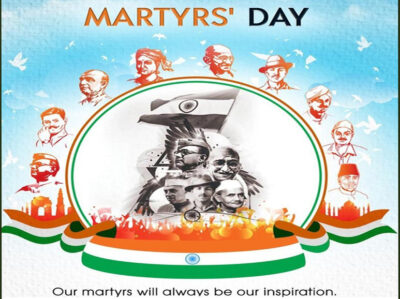
  • “ON THIS MARTYRS’ DAY WE NEED TO MAKE SURE THAT FURTHER SACRIFICES ARE NOT NEEDED”

    “ON THIS MARTYRS’ DAY WE NEED TO MAKE SURE THAT FURTHER SACRIFICES ARE NOT NEEDED”

    By VK Raju

    Though I was giving a positive message to readers of The Indian Panorama on January 1, 2024, we cannot ignore that over 30 live global conflicts are going on. Millions are displaced; International law is disregarded with impunity as criminal networks profit from division and violence. Terrorists and tyrants are increasing by the day.

    Added to this state of world affairs, there are five significant and huge problems the world is facing.

    1. Climate change and biodiversity loss
    2. Poverty,
    3. Water scarcity
    4. Poor support of health and education,
    5. Eroding international peace and security.

    United Nations (UN) is only truly universal global organization in spite of many critics

    Today, global issues transcend national boundaries and cannot be resolved by any one country acting on its own. In addition to its initial goals of safeguarding peace, protecting human rights, establishing the framework for international justice and promoting economic and social progress, in the 8 decades since its creation, the United Nations had added on new challenges, such as AIDS, big data, and climate change.

    While conflict resolution and peace keeping continue to be among its most visible efforts, the UN is also engaged in a wide array of activities with an objective to improve people’s lives around the world.

    Climate Change

    CLIMATE CHANGE: This is one of the major challenges of our times from shifting with weather patterns that threaten food production, to rising sea levels that increase the risk of catastrophic flooding, The impact of climate change is global in scope and unprecedented in scale.

    Poverty

    POVERTY: At the current rate of progress, the world is unlikely to meet the global goal of ending extreme poverty by 2030, and estimates suggest that nearly 600,000,000 people will still be living in extreme poverty by the end of the decade.

    HEALTH and EDUCATION: A lack of access to education is a large pillar of gender inequality across the world. People with more education are more likely to learn about health and health risks. People with more education live longer, healthier lives than those with fewer years of schooling. Horace Mann (1848)

    succinctly stated” education, then beyond all other divides of human origin, is a great equalizer of conditions of men – the balance wheel of a social machinery.”  This goes double for women who often make up more than half of the work force in many developing countries.

    WATER: Freshwater sustains human life and is vital for human health. It is important to note that there is enough freshwater on the planet for everyone. However, due to bad economics and poor infrastructure, millions of people, (mostly children) die from diseases associated with inadequate access to water, sanitation and hygiene.

    Yet 2.1 trillion gallons (30%) of global water is wasted every year, due to leaks or inefficient usage. Israel reuses  85% of its water ranking as the number one country to do so across the globe.

    Conflicts

    INTERNATIONAL PEACE and SECURITY: Saving succeeding generations from the scourge of war was the main motivation for creating the United Nations, whose founders lived through the devastation of two world wars. There were 110 million people forcibly displaced worldwide at the end of June 2023.

    Are we losing?  

    We could say humanity is winning more than losing – BUT WHERE WE ARE LOSING IS VERY SERIOUS.

    Do we have a solution?

    Yes.

    It will require collaborative efforts among governments, international organizations, universities, NGOs, and creative individuals. World affairs sometimes are depressing but collectively we can overcome them.

    What we need is political will, professional will, and people’s will. We need real collaboration with trust.

    I would like to end this brief article on enormous problems of the world, with a quote from Dr. Arnold Toynbee.

    It is already becoming clear that a chapter which had a western beginning will have to have an Indian ending, if it is not to end in the self-destruction of the human race… at this supremely dangerous moment in human history, the only way of salvation for mankind is the Indian way—emperor Ashoka’s and Mahatma Gandhi’s principle of non-violence, and Sri Ramakrishna’s testimony to the harmony of religions. Here we have an attitude and spirit that can make it possible for the human race to grow together into a single family– and in the atomic age, this is the only alternative to destroying ourselves. 

    (VK Raju is an eminent Ophthalmologist and author. He is founder and President of the Eye Foundation of America which is working for a world without childhood blindness)

  • Moving Beyond Conflict to Champion Democracy

    • By Prof. Indrajit S Saluja

    In a world fraught with complexities and challenges, America finds itself entangled in a web of conflicts, many of which stem from its role as a global watchdog of democracy. The burden of policing democracy abroad, coupled with the responsibility to protect friendly nations facing hostility, has led to a drain on American resources and an ever-mounting national debt. As taxpayers watch their hard-earned money fuel these conflicts, the question arises: Isn’t it time for America to mature from its cowboy culture and assume the role of a responsible father figure on the world stage?

    The cost of interventions abroad is steep. American taxpayers foot the bill for military engagements and aid packages to bolster democratic allies. Meanwhile, the national debt balloons, burdening future generations with the weight of fiscal irresponsibility. Despite these mounting costs, politicians often pay lip service to the ideals of democracy while failing to embody them in practice. It’s a cycle that perpetuates itself, with conflicts begetting more conflicts, and the true essence of democracy often lost amidst the chaos.

    Yet, amidst these challenges, there lies an opportunity for America to redefine its role on the world stage. Instead of resorting to cowboy diplomacy characterized by unilateral action and military might, America can choose to lead by example, embodying the values it purports to champion. By prioritizing diplomacy, dialogue, and collaboration, America can foster a global community grounded in mutual respect, understanding, and cooperation.

    America must recognize that true leadership is not about dominance or control but about fostering a sense of shared responsibility and collective action. By working alongside other nations and international organizations, America can leverage its influence to address global challenges such as climate change, poverty, and inequality. In doing so, America can demonstrate that democracy is not just a political system but a way of life rooted in empathy, compassion, and solidarity.

    At its core, the essence of democracy lies in the belief that all individuals are entitled to certain inalienable rights and freedoms. It is a belief that transcends borders and ideologies, uniting people from diverse backgrounds in pursuit of a common goal: a world where liberty, life, prosperity, and peace prevail. As America navigates the complexities of the modern world, it must remain steadfast in its commitment to these values, serving as a beacon of hope and inspiration for generations to come.

    America stands at a crossroads, faced with the choice of perpetuating a cycle of conflict and division or charting a new course towards peace and prosperity. By embracing its role as a responsible father figure on the world stage, America can usher in a new era of global cooperation and collaboration. Let us seize this opportunity to lead by example, championing democracy not just in word but indeed, and paving the way for a brighter future for all.

  • India flags US envoy’s visit to Pakistan occupied Kashmir: ‘Respect our sovereignty’

    India flags US envoy’s visit to Pakistan occupied Kashmir: ‘Respect our sovereignty’

    New Delhi (TIP)- India has conveyed its “concerns” to Washington on the US Ambassador to Pakistan’s visit to Gilgit and Baltistan, which India considers to be part of Pakistan-occupied Kashmir (PoK). “I think our position on the status of the entire Union Territory of Jammu and Kashmir being an integral part of India is well known. We would urge the international community to respect our sovereignty and territorial integrity. We have raised our concerns about that visit by the US Ambassador to Pakistan with the US side,” the Ministry of External Affairs’ official spokesperson, Arindam Bagchi, said while responding to questions at the weekly briefing on Thursday, October 5.
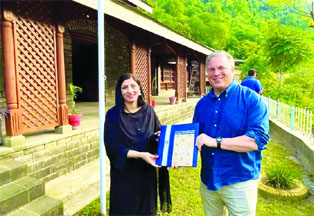
    The US Ambassador to Pakistan, Donald Blome, travelled to Gilgit and Hunza valleys in the third week of September; the visit was flagged by Opposition parties in Pakistan. The American Embassy in Islamabad said the purpose of his visit was to “explore opportunities for strengthening the region’s climate resilience”. According to Pakistan newspaper, Dawn, the spokesperson of the US Embassy in Islamabad, Jonathan Lalley, said that Pakistan was among the most vulnerable countries with regard to climate change.
    After Blome’s six-day visit, Pakistan’s Opposition leaders had said “the mysterious activities” of the US Ambassador in the region had raised questions, adding that the Gilgit Baltistan government was not aware of his visit.
    After the matter became public, the US Ambassador to India, Eric Garcetti, was asked for comments. “It’s not my place to react to the US Ambassador in Pakistan but he’s been before and we obviously had part of our delegation in Jammu and Kashmir during the G20 as well,” Garcetti said.
    When the MEA spokesperson was asked about Garcetti’s comments, he replied: “We don’t think the two situations are equal”. Source: Indian Express

  • For an expanse of blue, with air so clean 

    For an expanse of blue, with air so clean 

    On International Day of Clean Air for Blue Skies (September 7), there is urgent need to address risks posed by pollution

    • By Benno Boer, Srishti Kumar, Neha Midha

    “The world is not just grappling with climate change, but also with another silent killer — air pollution. Global health statistics reveal a disturbing scenario with lung cancer claiming 10 million deaths worldwide in 2020, as stated in the World Health Organization (WHO) factsheet published in 2023. This could soar by another 3.2 million by 2050 according to a report, ‘Mapping of global, regional and national incidence, mortality and mortality-to-incidence ratio of lung cancer in 2020 and 2050’, by the Indian National Institute of Health. South Asia, home to two billion people, is also home to nine of the world’s 10 most polluted cities, including Delhi, where the air quality continues to pose a perilous long-term threat putting its inhabitants at risk each day. While policy measures have led to statistical improvements in the Air Quality Index (AQI), the health risks associated with Delhi’s polluted air persist. Delhi is knocked to its knees every winter facing hazardous levels of air pollution.”

    Youngsters around the world are taking charge of environmental advocacy, running marathons, and tracking real time data of air quality, creating environmental awareness. But the absence of a specific Sustainable Development Goal (SDG) for ‘Clean Air to Breathe’ indicates a lack of global attention.

    Dr. Benno Boer

    According to UN Secretary-General António Guterres, the earth has entered the era of global boiling. Scorching heatwaves, devastating floods and erratic weather patterns are stark reminders for an urgent need to address the triple-planetary crisis of biodiversity loss, climate change and pollution.

    The world is not just grappling with climate change, but also with another silent killer — air pollution. Global health statistics reveal a disturbing scenario with lung cancer claiming 10 million deaths worldwide in 2020, as stated in the World Health Organization (WHO) factsheet published in 2023. This could soar by another 3.2 million by 2050 according to a report, ‘Mapping of global, regional and national incidence, mortality and mortality-to-incidence ratio of lung cancer in 2020 and 2050’, by the Indian National Institute of Health. South Asia, home to two billion people, is also home to nine of the world’s 10 most polluted cities, including Delhi, where the air quality continues to pose a perilous long-term threat putting its inhabitants at risk each day. While policy measures have led to statistical improvements in the Air Quality Index (AQI), the health risks associated with Delhi’s polluted air persist. Delhi is knocked to its knees every winter facing hazardous levels of air pollution.

    Lung cancer, cardiovascular disorders, respiratory ailments, and mental health issues continue to destroy lives. Delhi’s air, a lethal mix of SO2 (sulphur dioxide) and NOX (nitrogen oxides), along with high particulate matter concentrations (2.5 or even 10µg/m3), carbon monoxide and ozone, deprive over 30 million residents of their human right to breathe clean air.

    The air pollution toll is troublesome especially for immunocompromised individuals, pregnant women, children, and the elderly. As per a Lancet Report, 1.67 million pollution-related deaths were attributed to air pollution in India in 2019, accounting for a staggering 17.8% of the total deaths in the country.

    Efforts to combat this crisis are already being made. State governments, research institutions, and NGOs are pioneering solutions such as the PUSA Decomposer, developed by the Indian Agricultural Research Institute (IARI), employing biotechnology to address agricultural pollution. State-level policies such as GRAP 3 (Graded Rapid Action Plan), monitoring air quality in hotspots, and establishing Green War Rooms, have shown some potential. Many innovative startups involving young entrepreneurs are turning agricultural waste into valuable products.

    Viable solutions

    Acknowledging the existence of air pollution remains the primary step towards solutions. Next comes a debate on viable solutions and actions, many of which are already known. Eventually, these best practices need to be implemented. Without implementation, the best laid out plans will not lead to any improvement. Globally, cities such as Ljubljana (Slovenia), Accra (Ghana), Seville (Spain), Bogota (Colombia), Medellin (Colombia), epitomize the power of prioritizing human health and environmental sustainability. Car-free zones, green spaces, smart urban designs, electrified public transportation, nature-based solutions, and innovative biotechnology demonstrate positive results. China’s shift to clean energy and e-mobility after battling severe pollution, Indonesia’s project on ‘Carbon Efficient Farming’ assessing biomass to reduce CO2 emissions, Thailand and Vietnam undertaking measures to reduce open straw burning, are all gleams of hope.

    UNESCO’s initiatives to combat air pollution include implementing an internal carbon tax on all flight tickets, and investing in emission reduction measures. The World Air Quality Project allows residents to make informed decisions by real time Air Quality data. In collaboration with UNEP, environmentally conscious practices have been introduced such as digital working via the ‘Virtual Meetings’ project. Clean-Air-For-Schools is spreading education among all for clean air. Other laudable activities include switching to electric vehicles, replacing lighting systems to greener LED arrangements, implementing solar powered offices, protecting historical sites by developing strategies to curb air pollution, and effective green solutions ( urban forests, parks, green corridors).

    Youngsters around the world are taking charge of environmental advocacy, running marathons, and tracking real time data of air quality, creating environmental awareness. But the absence of a specific Sustainable Development Goal (SDG) for ‘Clean Air to Breathe’ indicates a lack of global attention.

    However, in 2019, laying emphasis on the interest of the international community for clean air, and the need to improve air quality, the UN General Assembly decided to designate September 7 as the International Day of Clean Air for Blue Skies. Nevertheless, clean air remains a long stride in many mega-cities and other places. We hope that a concerted action to systematically improve the air quality including in Delhi will receive priority attention. The problem has been caused by people, so it should be people who will find and apply solutions, supported by innovative adequate air quality policies and action plans. As we inhale the consequences of our actions, the ultimate question beckons: are we the torchbearers of change for the future of our planet or will we be silent bystanders who let pollution script a tragic ending?

    (Benno Böer is the Chief of the Natural Sciences Unit, UNESCO Multisectoral Regional Office for Bangladesh, Bhutan, India, Maldives, Nepal and Sri Lanka. Neha Midha is the National Programme Officer, UNESCO Multisectoral Regional Office for Bangladesh, Bhutan, India, Maldives, Nepal and Sri Lanka. Srishti Kumar is a UNESCO Natural Sciences Intern. UNESCO is a member of Team UN in India, together helping deliver on the Sustainable Development Goals)

  • Parliament of the World’s Religions 2023 impels faiths toward activism

    Parliament of the World’s Religions 2023 impels faiths toward activism

    Jesse Jackson is honored.
    The Sikh community served the langar ( free lunch) to all convention attendees over 5 days.
    Author at the Mormons’ booth.
    • By Parveen Chopra

    CHICAGO (TIP): Parliament of the World’s Religions (PoWR) 2023 convened in Chicago from August 14-18 under the chairmanship of an Indian American, Nitin Ajmera, tried to propel faith groups towards activism. The title makes the focus clear: ‘A Call to Conscience: Defending Freedom & Human Rights’.

    Knowing that PoWR has emerged as the biggest interfaith movement in the world, they are pushing for faith groups to get involved in global issues like social justice and climate action. Quite a few symposiums scheduled for the 5-day event had these themes. The presence of Black Lives Matter in the exhibition area also made a point.

    When queried, Nitin Ajmera, a Jain CPA from Plainview, NY, explained to me, “Our pressing problems are not about respecting each other’s religion anymore. What we are now striving for is how our faith and religious groups support solutions to global problems. What are we going to do about climate change that is going to make our lives difficult in 30 to 50 years? What are we going to do about issues like inequality?”.

    However, Eric Lawson, senior leader of Brahma Kumaris, who is a regular at PoWRs, is unsure of the Parliament’s transition away from reflection, introversion, and qualities of meditation.

    PoWR, as we know, was revived in 1993, a century after its first convening in Chicago in 1893, made famous by the electric speech by Swami Vivekananda that became an important contact between the East and the West.

    According to the organizers, over 6,500 people from 95 countries belonging to over 200 religious-spiritual groups ranging from Buddhists to Zoroastrians attended the massive event at the McCormick Place convention center in the Windy City. An estimated 500 people flew in from India. The diversity of humankind and the bonhomie witnessed among people, many wearing their colorful ethnic attires was worth a watch.

    The convention was opened by the Mayor of Chicago, Brandon Johnson. US ambassador-at-large for religious freedom, Rashad Husain, said the US strives to protect religious freedom for all everywhere in the world. Dignitaries who sent video messages included UN Secretary-General António Guterres, former Speaker Nancy Pelosi, and US Senator Dick Durbin.

    Religious leaders who graced the convention included Cardinal Blasé J. Cupich from Chicago, Swami Ishatmananda of Vedanta Society – Chicago, and Bhai Mohinder Singh, Chairman of Nishkam Sewak Jatha, UK.

    The Parade of Faiths on August 13 which preceded the Parliament, was a colorful affair with hundreds of people from different faith groups based in Chicago marching near the convention venue. The Sikh group was visibly the largest. The Sikh community also served the langar lunch for all convention attendees over 5 days. The community raised half a million dollars for the purpose, an insider shared, adding that local trade unions resisted the free meals inside the venue, so they had to pitch tents outside for langar.

    At the parade, I spotted Hindu spiritual guru Amma Sri Karunamayi ensconced in a ceremonial horse-driven carriage, and Jain guru Acharya Lokesh Muni.

    With over 600 breakout panels and workshops, it was hard to decide which ones to attend. You also needed many hours to browse at the 200 booths in the exhibition hall, to gawk at the art exhibits, or to walk the labyrinth. I made it a point to attend the soul-satisfying Sacred Music Night on August 17, where the wheelchair-bound civil rights icon Jesse Jackson was honored.

    (Parveen Chopra, founder of ALotusInTheMud.com, attended the Parliament of the World’s Religions )

  • MESSAGE- Dr. V.K . Raju

    Dr. V.K . Raju
    President, Eye Foundation of America

    America and India were both British colonies. America got its independence in 1776, and India got its 170+ years later. America the most powerful democracy and India the most populous democracy .
    Both countries are continuously working towards keeping their widely varying citizenship, heading in the same direction successfully. Today conflicts are on the rise everywhere and nuclear arsenals are swelling
    Millions are displaced, international law is disregarded with impunity , as criminal and terrorist networks profit from the division and violence. This is the situation the world finds itself in today .
    The reason for these conflicts is territorial disputes . Regional tensions, high level corruption and dwindling resources due to climate change have also contributed to conflicts.
    Dr Arnold Toynbee ‘s quote is very appropriate today.
    “It is already becoming clear that a chapter which had a western beginning will have to have an Indian ending if it is not to end in the self-destruction of the human race… At this supremely dangerous moment in human history, the only way of salvation for mankind is the Indian way. Emperor Ashoka and Mahatma Gandhi’s principle of nonviolence and Shri Ramakrishna’s testimony to the harmony of religions ; here we have an attitude and spirit that can make it possible for the human race to grow together into a single family —and in atomic Age, this is the only alternative to destroying ourselves .
    What we need is true friendship (MAITRI) between the most powerful democracy and the most populous democracy.

    Both countries are continuously working towards keeping their widely varying citizenship, heading in the same direction successfully.
    Thank you.

  • PM Modi in US- A major leap forward for India-US ties?

    PM Modi in US- A major leap forward for India-US ties?

    By Suhasini Haidar

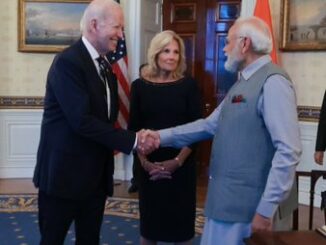
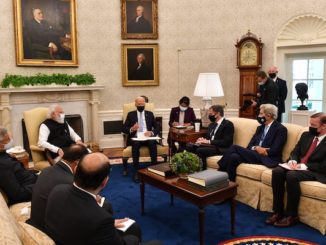
    This week we are looking at Prime Minister Narendra Modi’s visit to Washington, which saw US President Joseph Biden roll out the red carpet for him. PM Modi’s visit included a private dinner at the White House, a ceremonial welcome, a state banquet, an address to the US Congress joint session and lunch at the State Department.

    PM Modi is the third international leader, after French President Macron and South Korean President Yoon Suk Yeol to be invited as a State guest to the Biden White House. He is also the third Indian leader to be invited as a State visitor to Washington. In 2009,  Prime Minister Manmohan Singh was invited by President Barack Obama,  and  in 1963,  President Sarvepalli Radhakrishnan was invited by President John F Kennedy.

    “Decades from now — decades from now, people will look back and say the Quad bent the arc of history toward “global good,” as the Prime Minister describes it. Together, India and the United States are working closely on everything from ending poverty and expanding access to healthcare to addressing climate change to tackling food and energy insecurity stoked by Russia’s unprovoked war on Ukraine,” U.S President Joe Biden said.

    “We were strangers in defense cooperation at the turn of the century. Now, the United States has become one of our most important defense partners. Today India and the US are working together, in space and in the seas, in science and in semi-conductors, in start-ups and sustainability, in tech and in trade, in farming and finance, in art and artificial intelligence, in energy and education, in healthcare and humanitarian efforts, PM Narendra Modi said.

     High-Tech partnership

    1. The big deal announced during this visit was the MoU for a co-production deal between GE and HAL to manufacture GE-F414 jet engines in India for Tejas Light Combat Aircraft
    1. Semiconductor supply chains: Micron Technology will invest $800 million toward a new $2.75 billion semiconductor assembly and test facility in Gujarat- the Indian Semiconductor mission will fund the rest of the project
    1. Under the newly launched Initiative on Critical and Emerging Technology (iCET), a number of innovation partnerships, also on India and the United States have established a Joint Indo-U.S. Quantum Coordination Mechanism to facilitate joint research looking at Quantum, Advanced Computing, and Artificial Intelligence
    1. India to join the 11-nation minerals security partnership (msp) meant to reduce dependence on China for critical minerals

    Defense cooperation

    1. India will buy 16 Drones- armed MQ-9B SeaGuardian UAVs.
    1. The US Navy has concluded a Master Ship Repair Agreement (MSRA) with Larsen and Toubro Shipyard in Kattupalli (Chennai) and is finalizing agreements with Mazagon Dock Limited (Mumbai) and Goa Shipyard (Goa).
    2. Placing Indian liaison officers at 3 US commands
    3. Launch of India-U.S. Defense Acceleration Ecosystem (INDUS-X)— between private defense industries in US and India

    Space cooperation:

    1. India signed the Artemis Accords, joining 26 other countries working on exploration of the Moon, Mars, and beyond.
    1. NASA will provide advanced training to Indian Space Research Organization (ISRO) astronauts with the goal of launching a joint effort to the International Space Station in 2024.
    1. NASA and the ISRO are developing a strategic framework for human spaceflight cooperation by the end of 2023

    Trade and Consular issues

    1. Resolution of six of seven outstanding WTO disputes between the two countries through mutually agreed solutions, market access
    2. India to set up consulate in Seattle, 2 other US cities. US to set up new consulates in Ahmedabad and Bengaluru
    3. Relaxation in H1B visa norms for in country renewal and more availability of visas

    The broad geopolitical takeaways of the Modi visit

    1. Reaffirmation of India-US strategic ties, also within Quad and the Indo-Pacific, although no specific messaging on China.
    1. High technology partnerships will drive the next phase of the relationship, just as the nuclear deal, or the defense agreements, or the search for an FTA once did. In particular, the Jet engine deal if it goes through could pave the way for more technology transfer that has thus far eluded the relationship
    1. Leadership level summits and meetings continue to ensure India-US ties grow year on year as they have over the past two decades. Biden will visit India for the G20 summit in September, and there’s speculation PM Modi will be invited to California for the APEC summit in November, where leaders of 21 countries including US and China will meet.

    Reading the fine print- the left-outs

    1. The big-ticket item on this visit- for the GE F414 jet engines to be co-produced in India still has a long regulatory road ahead- a manufacturing license agreement has now been submitted for Congressional Notification. US Congress will need to clear the deal on two counts of Export Administration Regulations (EAR) and International Traffic in Arms Regulations (ITAR). Questions are still open on just how much technology will actually be transferred- and whether India will accept conditions attached to that….some of the reasons previous attempts on jet engine tech transfer, as the two countries attempted from 2010-2019 under DTTI, failed.
    1. Indian regulations have similarly held up the Indo US nuclear deal between Nuclear Power Corporation of India Limited (NPCIL) and Westinghouse Electric Company (WEC) for the construction of six nuclear reactors in Kovvada, Andhra Pradesh. 8 years after Modi-Obama announced the nuclear deal is done, and worked a way around the CLNDA, there’s still no techno-commercial offer. ‘
    1. The Biden administration has made it clear it has no interest in continuing the Trump-era FTA talks, and the Modi government has made it clear it still expects the Biden administration to restore India’s GSP status for exports. But no movement during this visit
    1. The big ticket deal from 2019 on an Indian investment in a US LNG plant- specifically the $2.5 bn planned by Petronet in Tellurian’s Driftwood LNG project- has not been revived, nor was any announcement made on GAIL India’s plans to invest in US LNG plants.
    1. India and US agreed to disagree, but differences over the Russian war in Ukraine remained- while Biden referred to what he called Russia’s brutal war on two occasions, PM Modi didn’t, nor did the Joint statement reflect it.
    1. Human Rights-this remains as prickly an issue as it was in 2014, when PM Modi visited India for the first time after his visa was revoked in 2005. Ahead of this visit as many as 75 members of the US Congress wrote to President Biden demanding that he raise concerns over human rights and democracy in India publicly, which he did not.

    And former President Obama said this in an interview that released the same day as the State visit:

    “I think it is true that if the President meets with Prime Minister Modi, then the protection of the Muslim minority in a majority Hindu India, that’s something worth mentioning. Because, and by the way, if I had a conversation with Prime Minister Modi, who I know Well, part of my argument would be that if you do not protect the rights of ethnic minorities in India, then there is a strong possibility, and at some point, starts pulling apart. And we’ve seen what happens when you start getting those kinds of large internal conflicts”

    When asked at a rare press event with – where he answered a few questions from the media, here’s what PM Modi said

    “We have proven that democracy can deliver, and there is no discrimination in India on the issues of cast, creed, religion”

    World View Take

    Quite aside from the moment at hand, the underlying logic for India-US relations, especially between its people has always been strong- and is the reason relations remained close despite cold war tensions. PM Modi’s state visit to Washington is one more step in ties that have grown year on year over 2 decades and are poised to take the next leap on technology transfer. When it comes to questions over Indian democracy, that are internal to India, PM Modi made a rare exception in taking questions in the US, but it is the answers he gives to Indians in India on democratic freedoms that will actually count.

  • Jay Mandal

    More worried today than in last 50 years

    (As told by Jay Mandal to Priyanka Khanna)

    Asked to put my thoughts together about India, my home country, and global affairs – I simply could not get myself to see the silver lining.

    Those who know me, know that I am rarely downcast. And when I managed to circumvent the world on a rickety bicycle, traversing the length and breadth of 154 countries back in 1970s  and 1980s, I developed a deep sense of hopefulness for the human race. So often I had no place to sleep in the 17 years that I rode my cycle solo but somehow, I always found food and water to sustain me even in God forsaken places.

    And I did grow more hopeful than most people when I was helped by perfect strangers on countless occasions, survived accidents, even facing wild elephants in southern Africa that few feel were survivable, besides facing the full fury of nature during my cycling days. So, when I ended my tour and began covering Indian and global affairs from my base in New York, I did so through my lenses and with the heart of a survivor.

    But after spending the year 2021 waiting for the promised recovery post the COVID-19 pandemic, the year 2022 made me truly sad. Starting from revelations of how deep corruption is steeped in the State where I come from – West Bengal – to Russia’s war on Ukraine, the state of women in Afghanistan, Iran and so many other places, to the lack of specific actions against Climate Change – which is already a reality and not a possibility – left me wondering if I have seen any similarly bad phase while chronologizing global and Indian affairs over the last five decades.

    I have covered the UN and the White House here in the US just as well as I have witnessed history in the making at 7 Racecourse in Lutyens’ Delhi for half-a-century, but I haven’t heard so much collective bad news from all corners of the world in such a short time.

    What bewilders me more is that the pandemic showed us the importance of working together swiftly to contain a contagious pathogen. Yet, the hope that coming out of 2020 we will learn lessons and work more closely together seems dashed. Yes, there is a lot of good that is happening as well but on the whole I feel this year we had more misses than hits.

    Beyond the more obvious attention-grabbing headlines, this year saw collapse of entire economies  right at India’s southern Island Nation of Sri Lanka as well as global tensions raising over Algeria, Belarus, Morocco, Turkey, Taiwan, South China Sea, Korean peninsula, Gaza, Iran’s nuclear programme, the opening up of Arctic routes, the escalation of tensions in India’s own backyard with Pakistan and China and of course the ongoing global trade wars.

    While India has actually done very well on many fronts in 2022, did well on Sri Lanka front, is now on at the helms of the influential G20 and is set to become the most populous country in the world in 2023, I am entering 2023 worrisome and apprehensive. My only hope really is that this too shall pass so I end by wishing for more consensuses in Indian and global affairs.

    (Jay Mandal is a Veteran photo-journalist and world Traveler)

  • SOUTH ASIAN HOUSE PARTNERS WITH SXSW @ 2023 FEST

    Founders of SAH
    (Left to Right) – Jitin Hingorani, Monika Samtani, Rohi Mirza Pandya & Kirtana Banskota. (Photo: Satwic Mudigulam)

    By Mabel Pais

    South Asian House (SAH), for the first time, partners with South By South West® (SXSW®) Film Fest 2023, a Festival held for 37 years. SAH will convene at Fourth and Co. in the iconic Warehouse District of downtown Austin, six blocks from SXSW® event headquarters.

    There will be two full days of programming on March 11 and 12, 2023 of this innovative initiative to highlight, recognize, and appreciate South Asians from seven countries – India, Nepal, Pakistan, Bangladesh, Sri Lanka, Bhutan, and Maldives – as well as accomplished members of the diaspora.

    Programs will range from panel discussions on women in film, business tech, and climate change to curated sets of live and electronic music to a Reel Deal session, Comedy Hour, Industry Leadership Sessions, Mental Health Corner, Queer/Dalit Visual Art NFTs, and Desi Drag Brunch to a red carpet, awards ceremony on Oscar® Sunday recognizing South Asian Trailblazers in Cinema.

    The initiative is the brainchild of veteran producers, curators, and programmers Rohi Mirza Pandya (Box Office Guru Media & Desipina), Monika Samtani (Ms. Media & The Fem Word), Jitin Hingorani (Jingo Media & DFW South Asian Film Festival), and Kirtana Banskota (Banskota Productions & Nepal America Film Society).

    Follow @southasianhouse on Instagram or sign up to receive updates through the website, southasianhouse.com.

    (Mabel Pais writes on The Arts and Entertainment, Social Issues, Health & Wellness, Cuisine and Spirituality)

  • Death toll from Pakistan floods reaches 1,186

    Death toll from Pakistan floods reaches 1,186

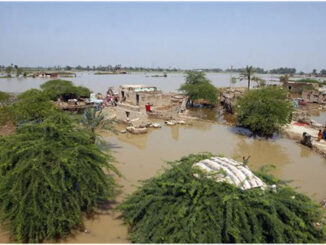
    Islamabad  (TIP): The death toll from flash floods triggered by record monsoon rains across much of Pakistan reached 1,186 on September 1, as authorities scrambled to provide relief materials to tens of thousands of affected people. Record monsoon rains in the last three decades triggered floods which inundated one third of the country, including most of Balochistan and Sindh provinces.

    “So far 1,186 people have died and 4,896 injured while 5,063 kms of roads damaged, 1,172,549 houses partially or completely destroyed and 733,488 livestock killed,” said the National Disaster Management Authority (NDMA), the main body dealing with calamities.

    On Thursday, the army said that some 50,000 people have been evacuated since rescue efforts began.

    Foreign Office spokesperson AsimIftikhar Ahmed said that more than 33 million people have been affected due to “colossal scale of devastation”.

    During a media briefing here, he said Pakistan mounted coordinated rescue and relief operations mobilising all possible resources but the sheer scale of the calamity “stretched our resources and capacities to the limit, thus necessitating support from the international community”.

    The cash-strapped Pakistan government on Tuesday teamed up with the United Nations to issue a flash appeal for USD 160 million to deal with the disaster in the country that has become the “ground zero” of global warming.

    “The Flash Appeal launch was well attended by Member States both in Islamabad and Geneva, Heads of UN agencies in Pakistan, representatives of international organizations, among others. Participants offered condolences and expressions of solidarity, and assured continued support for Pakistan,” the spokesman said.

    He also said that Pakistan faced a “climate-induced calamity” because the monsoons were not ordinary, “as the UNSG termed them ‘monsoons on steroid’.” UN Secretary-General Antonio Guterres will be visiting Pakistan on September 9-10 on an important visit to “express solidarity and international community’s support for Pakistan at this difficult time,” he said.

    Talking about the outpouring of relief supplies, he said till last night, Pakistan received flood relief goods through 21 flights notably from Turkey, UAE and China.

    He said a large number of countries and international organisations pledged to support and are extending cash or in-kind assistance including Australia, Azerbaijan, Canada, China, EU, France, Iran, Japan, Kazakhstan, Kuwait, New Zealand, Norway, Palestine, Qatar, South Korea, Saudi Arabia, Singapore, Turkiye, the UAE, United Kingdom, the United States, Uzbekistan, along with various international organisations including World Bank, Asian Development Bank and other UN Agencies. He said Pakistan on Wednesday signed the Green Framework Engagement Agreement with Denmark in Copenhagen, which marks the first step in creating stronger collaboration in areas such as climate change mitigation and adaptation, and a just and sustainable green transition.

    Separately, Prime Minister Shehbaz Sharif while addressing lawmakers of his Pakistan Muslim League-Nawaz asked them to visit the flood victims with relief goods. The prime minister said that he had never seen such a calamity before. “Water has wreaked havoc everywhere,” he said.

    He also asked Finance Minister Miftah Ismail to devise a plan to give relief to the flood-affected people with electricity bills. Army chief General Qamar JavedBajwa visited the Rohjan area of Punjab and met flood victims whom he assured that the Pakistan Army will help them to overcome their problems in these difficult times, the army said.

    He also directed ground troops to “take this responsibility as a noble cause and spare no effort to lessen the burden of flood-affected brothers and sisters”.

    Advisor to the Prime Minister on Kashmir and Gilgit-Baltistan Affairs Qamar Zaman Kaira said that Prime Minister Sharif would visit Gilgit-Baltistan on Friday and announce a relief package for the flood victims.

    Separately, the United Nations International Children’s Emergency Fund (Unicef) said in a statement that more than three million children were in need of humanitarian assistance in Pakistan and at increased risk of waterborne diseases, drowning and malnutrition due to flooding.

    “These floods have already taken a devastating toll on children and families, and the situation could become even worse,” the statement quoted Unicef representative in Pakistan Abdullah Fadil as saying.

    To add to worries, the Pakistan Meteorological Department (PMD) has forecast more rain in September, saying that La Nina conditions — responsible for recent spells of flood-triggering deluge in the country — would persist in September but become less intense.

    “Tendency for normal to above normal precipitation is likely over the country during September,” the Met Office said, predicting above-normal rainfall in northeastern Punjab and Sindh. (PTI)

  • HRWFF RETURNS WITH 33RD EDITION

    By Mabel Pais

    The Human Rights Watch Film Festival (HRWFF), now in its 33rd year, will present a hybrid full edition of 10 groundbreaking new films, available both in-person and online nationwide in the U.S., from May 20 to 26, 2022.

    For the first time in two years, the New York festival will be back with a full program of in-person screenings at Film at Lincoln Center and IFC Center, with in-depth discussions with filmmakers, film participants, activists and Human Rights Watch researchers. The festival will continue to offer the opportunity to watch all 10 new films online across the U.S. with a full digital edition of the film festival.

    This year’s edition highlights activism and features courageous individuals around the world standing up to powerful forces and demanding change. John Biaggi, Director of the Human Rights Watch Film Festival, said, “We are thrilled to be back in theaters after two years away, bringing our audience a full slate of powerful films tackling urgent human rights issues including China, Russia, the climate crisis and reproductive rights.” Lesli Klainberg, President of Film at Lincoln Center said, “History has shown that film not only empowers understanding, but also ignites urgent public dialogues about how to help the most vulnerable.” John Vanco, Senior Vice President and General Manager at IFC Center said, “IFC Center is proud to continue our partnership with the Human Rights Watch Film Festival and support their mission to use cinema to shine a light on important issues.”

    FILM LINEUP

    REBELLION – OPENING NIGHT

    U.S. Premiere

    Dirs: Maia Kenworthy & Elena Sanchez Bellot l 2021 l UK, Poland l Eng l Doc l 1h 22m

    Opening Film (Photo / www.ff.hrw.org, 2022.)

    “Rebellion” brings viewers behind-the-scenes with Extinction Rebellion (XR), as the group confronts the climate emergency – reminding the world there is no time to wait. Emerging as action on climate change dangerously slipped from the political agenda, XR took bold steps to break through the deadlock: mass civil disobedience. It worked. “Rebellion” reminds viewers to question white Western environmentalism and push back against a fight that ignores structural racism and oppression.

    In-person screening:

    Friday, May 20, 7:00pm, Film at Lincoln Center, Walter Reade Theater

    THE JANES – CLOSING NIGHT

    Dirs: Tia Lessin & Emma Pildes l 2022 l USA l Eng l Doc l 1h 41m

    Grand Jury Prize Documentary Nominee, Sundance Festival, 2022

    Closing Film. (Photo / www.ff.hrw.org, 2022.)

    Seven women were part of a clandestine network that built an underground service for women seeking safe, affordable abortions in the pre-Roe v. Wade era. They called themselves “The Janes.” This galvanizing documentary tells the story of the past and, potentially, the future.

    In-person screening:

    Thursday, May 26, 7:00pm, IFC Center

    CLARISSA’S BATTLE         

    World Premiere

    Dir: Tamara Perkins l 2022 l USA l Eng l Doc l 1h 30m

    Single mother and organizer Clarissa Doutherd is building a powerful coalition of parents fighting for childcare and early education funds, from her own experience of losing childcare and becoming unhoused, desperately needed by low-and middle-income parents and children across the United States. “Clarissa’s Battle” offers an insight into an erupting movement, as communities across the country follow Clarissa’s successes, setbacks and indomitable resilience.

    In-person screenings:

    Saturday, May 21, 8:00pm, Film at Lincoln Center, Elinor Bunin Munroe Film Center

    Sunday, May 22, 5:15pm, Film at Lincoln Center, Elinor Bunin Munroe Film Center

    DELIKADO          

    New York Premiere

    Dir: Karl Malakunas l 2022 l Philippines, Hong Kong, Australia, USA, UK l Eng, Filipino l Doc l 1h 34m

    Official Selection, Hot Docs 2022

    A small network of environmental crusaders, Bobby, Tata and Nieves – a charismatic lawyer, a former illegal logger and a fearless politician – are three magnetic leaders fighting to stop corporations and governments seeking to plunder increasingly valuable natural resources in Palawan in the Philippines.

    In-person screenings:

    Sunday, May 22, 8:00pm, Film at Lincoln Center, Elinor Bunin Munroe Film Center

    Tuesday, May 24, 9:00pm, IFC Center

    ETERNAL SPRING     

    U.S. Premiere

    Dir: Jason Loftus l 2022 l Canada l Eng, Mandarin Chinese l Doc l 1h 26m

    In March 2002, members of the outlawed spiritual group Falun Gong hijacked a state TV station in China. Their goal was to counter the government narrative about their practice. In the aftermath, police raids sweep Changchun City, and comic book illustrator, Daxiong (Justice League, Star Wars), a Falun Gong practitioner, is forced to flee.

    In-person screenings:

    Monday, May 23, 6:15pm, Film at Lincoln Center, Elinor Bunin Munroe Film Center

    Tuesday, May 24, 6:30pm, IFC Center

    MIDWIVES     

    New York Premiere

    Dir: Snow Hnin Ei Hlaing l 2022 l Myanmar, Germany, Canada l Rohingya, Rakhine, Burmese l Doc l 1h 31m

    Winner, World Cinema Documentary Special Jury Award: Excellence in Verité Filmmaking, Sundance 2022

    Hla is a Buddhist and the owner of an under-resourced medical clinic in western Myanmar, where the Rohingya (a Muslim minority community) are persecuted and denied basic rights. Nyo is a Rohingya and an apprentice midwife who acts as assistant and translator at the clinic. Risking her own safety daily by helping Muslim patients, she is determined to become a steady healthcare provider and resource for the families who desperately need her.

    In-person screenings:

    Saturday, May 21, 5:15pm, Film at Lincoln Center, Elinor Bunin Munroe Film Center

    Monday, May 23, 6:30pm, IFC Center

    THE NEW GREATNESS CASE

    World Premiere

    Dir: Anna Shishova l 2022 l Finland, Croatia, Norway l Russian l Doc l 1h 32m

    In “The New Greatness Case” with hidden camera footage, and an intimate relationship with the protagonists, the director, Anna Shishova, shows the complete repression of present-day Russia, and how young, free-thinking people are seen as a threat to the government.

    In-person screenings:

    Tuesday, May 24, 9:00pm, Film at Lincoln Center, Elinor Bunin Munroe Film Center

    Wednesday, May 25, 6:30pm, IFC Center

    NO U-TURN

    New York Premiere

    Dir: Ike Nnaebue l 2022 l France, Nigeria, South Africa, Germany l Eng, Igbo, French, Nigerian Pidgin l Doc l 1h 34m

    Special Mention, Documentary Award, Berlinale 2022

    In his first documentary, “No U-Turn,” Nigerian director Ike Nnaebue retraces the life-changing journey he made over 20 years ago. Overlaid with a powerful poetic commentary, this self-reflective travelog hints at the deep longing of an entire generation for a better life.

    In-person screenings:

    Tuesday, May 24, 6:15pm, Film at Lincoln Center, Elinor Bunin Munroe Film Center

    Wednesday, May 25, 9:00pm, IFC Center

    UP TO G-CUP

    World Premiere

    Dir: Jacqueline van Vugt l 2022 l Netherlands l Kurdish, Arabic l Doc l 1h 20m

    Northern Iraq’s first lingerie store not only sells underwear, but also acts as a meeting place where women connect to their bodies and sensuality after overcoming the traumas of oppression, war, and conservative morality. Director Jacqueline van Vugt captures intimate stories about love, sex, shame, and war.

    In-person screenings:

    Monday, May 23, 9:00pm, IFC Center

    Wednesday, May 25, 9:00pm, Film at Lincoln Center, Elinor Bunin Munroe Film Center

    YOU RESEMBLE ME

    New York Premiere

    Dir: Dina Amer l 2021 l  France,Egypt,USA l Arabic, French l Drama l 1h 31m

    Who was Hasna Aït Boulahcen? After the November 2015 Paris bombings, she was labelled “Europe’s first female suicide bomber.” Director Dina Amer, in this nuanced drama shows what happens when society fails to protect a child, and how discrimination, poverty, and abuse facing young people can allow radicalization to plant roots and grow, with devastating impact on the wider community.

    Digital Screenings:

    DIGITAL SCREENINGS for each film are available to watch at your own pace, any time between May 20-26, 2022 on the festival’s digital streaming platform.

    TICKETS

    TICKETS can be purchased at the IFC Center, Film at Lincoln Center and Human Rights Watch. In-Theater tickets are available online or at the Film at Lincoln Center (FLC) and the IFC box offices. For individual film tickets or a Festival Pass at a discounted price, visit ff.hrw.org/newyork, filmlinc.org or ifccenter.com. The entire Festival can be rented on the festival streaming site May 20, 9 a.m. EDT until May 26, 11:59 PST. For more information and accessibility options for each digital presentation, visit ff.hrw.org.

    HUMAN RIGHTS WATCH FILM FESTIVAL

    For Details and Program updates, visit ff.hrw.org. For more information and accessibility options for each digital presentation, visit ff.hrw.org.

    FESTIVAL IN-PERSON SAFETY PROTOCOLS

    For Festival disclaimers, and other Safety Protocols, visit ff.hrw.org

    (Mabel Pais writes on Social Issues, The Arts and Entertainment, Cuisine, Health & Wellness and Spirituality)

  • The world in 2022: Another year of living dangerously

    The world in 2022: Another year of living dangerously

    On the brink of a new year, the world faces a daunting array of challenges: the resurgent Covid-19 pandemic, the climate emergency, the struggle between democracy and authoritarianism, humanitarian crises, mass migration, and trans-national terrorism. There is the risk of new inter-state conflicts, exacerbated by the breakdown of the rules-based international order, and the spread of lethal autonomous weapons. All in all, for most people on Earth – and a handful in space – 2022 will be another year of living dangerously.

    Middle East

    Events in the Middle East will make global headlines again in 2022 – but for positive as well as negative reasons. A cause for optimism is football’s World Cup, which kicks off in Qatar in November. It’s the first time an Arab or a Muslim country has hosted the tournament. It is expected to provide a major fillip for the Gulf region in terms of future business and tourism – and, possibly, more open, progressive forms of governance.

    But the choice of Qatar, overshadowed by allegations of corruption, was controversial from the start. Its human rights record will come under increased scrutiny. Its treatment of low-paid migrant workers is another flashpoint. The Guardian revealed that at least 6,500 workers have died since Qatar got the nod from Fifa in 2010, killed while building seven new stadiums, roads and hotels, and a new airport.

    Concerns will also persist about Qatar’s illiberal attitude to free speech and women’s and LGBTQ+ rights in a country where it remains dangerous to openly criticise the government and where homosexuality is illegal. But analysts suggest most fans will not focus on these issues, which could make Qatar 2022 the most successful example of “sports-washing” to date.

    More familiar subjects will otherwise dominate the regional agenda. Foremost is the question of whether Israel and/or the US will take new military and/or economic steps to curb Iran’s attempts, which Tehran denies, to acquire capability to build nuclear weapons. Israel has been threatening air strikes if slow-moving talks to revive the 2015 nuclear deal fail. Even football fans could not ignore a war in the Gulf.

    Attention will focus on Turkey’s authoritarian president, Recep Tayyip Erdogan, whose neo-Islamist AKP party will mark 20 years in power in 2022. Erdogan’s rule has grown increasingly oppressive at home, while his aggressive foreign policy, rows with the EU and US, on-off collusion with Russia over Syria and chronic economic mismanagement could have unpredictable consequences.

    Other hotspots are likely to be Lebanon – tottering on the verge of becoming a failed state like war-torn Yemen – and ever-chaotic Libya. Close attention should also be paid to Palestine, where the unpopular president, Mahmoud Abbas’s postponement of elections, Israeli settler violence and West Bank land-grabs, and the lack of an active peace process all loom large.

    Asia Pacific

    The eyes of the world will be on China at the beginning and the end of the year, and quite possibly in the intervening period as well. The Winter Olympics open in Beijing in February. But the crucial question, for sports fans, of who tops the medals table may be overshadowed by diplomatic boycotts by the US, UK and other countries in protest at China’s serial human rights abuses. They fear the Games may become a Chinese Communist party propaganda exercise.

    The CCP’s 20th national congress, due towards the end of the year, will be the other headline-grabber. President Xi Jinping is hoping to secure an unprecedented third five-year term, which, if achieved, would confirm his position as China’s most powerful leader since Mao Zedong. There will also be jostling for senior positions in the Politburo and Politburo standing committee. It will not necessarily all go Xi’s way.

    Western analysts differ sharply over how secure Xi’s position truly is. A slowing economy, a debt crisis, an ageing population, huge environmental and climate-related challenges, and US-led attempts to “contain” China by signing up neighbouring countries are all putting pressure on Xi. Yet, as matters stand, 2022 is likely to see ongoing, bullish attempts to expand China’s global economic and geopolitical influence. A military attack on Taiwan, which Xi has vowed to re-conquer by any or all means, could change everything.

    India, China’s biggest regional competitor, may continue to punch below its weight on the world stage. In what could be a symbolically important moment, its total population could soon match or exceed China’s 1.41 billion, according to some estimates. Yet at the same time, Indian birth rates and average family sizes are falling. Not so symbolic, and more dangerous, are unresolved Himalayan border disputes between these two giant neighbours, which led to violence in 2020-21 and reflect a broader deterioration in bilateral relations.

    The popularity of Narendra Modi, India’s authoritarian prime minister, has taken a dive of late, due to the pandemic and a sluggish economy. He was forced into an embarrassing U-turn on farm “reform” and is accused of using terrorism laws to silence critics. His BJP party will try to regain lost ground in a string of state elections in 2022. Modi’s policy of stronger ties with the west, exemplified by the Quad alliance (India, the US, Japan, Australia), will likely be reinforced, adding to China’s discomfort.

    Elsewhere in Asia, violent repression in Myanmar and the desperate plight of the Afghan people following the Taliban takeover will likely provoke more western hand-wringing than concrete action. Afghanistan totters on the brink of disaster. “We’re looking at 23 million people marching towards starvation,” says David Beasley of the World Food Programme. “The next six months are going to be catastrophic.”

    North Korea’s nuclear brinkmanship may bring a showdown as Kim Jong-un’s paranoid regime sends mixed signals about war and peace. The Philippines will elect a new president; the foul-mouthed incumbent, Rodrigo Duterte, is limited to a single term. Unfortunately this is not the case with Scott Morrison, who will seek re-election as Australia’s prime minister.

    Europe

    It will be a critical year for Europe as the EU and national leaders grapple with tense internal and external divisions, the social and economic impact of the unending pandemic, migration and the newly reinforced challenges, post-Cop26, posed by net zero emissions targets.

    More fundamentally, Europe must decide whether it wants to be taken seriously as a global actor, or will surrender its international influence to China, the US and malign regimes such as Vladimir Putin’s Russia.

    The tone may be set by spring elections in France and Hungary, where rightwing populist forces are again pushing divisive agendas. Viktor Orbán, the authoritarian Hungarian leader who has made a mockery of the EU over rule of law, democracy and free speech issues, will face a united opposition for the first time. His fate will be watched closely in Poland, the Czech Republic, Slovenia and other EU member states where reactionary far-right parties flourish.

    Emmanuel Macron, the neo-Gaullist centrist who came from nowhere in 2017, will ask French voters for a second term in preference to his avowedly racist, Islamophobic rivals, Marine Le Pen and Éric Zemmour. Polls put him ahead, although he also faces what could be a strong challenge from the centre-right Republicans, whose candidate, Valérie Pécresse, is the first woman to lead the conservatives. With the left in disarray, the election could radicalise France in reactionary ways. Elections are also due in Sweden, Serbia and Austria.

    Germany’s new SPD-led coalition government will come under close scrutiny as it attempts to do things differently after the long years of Angela Merkel’s reign. Despite some conciliatory pledges, friction will be hard to avoid with the European Commission, led by Merkel ally Ursula von der Leyen, and with France and other southern EU members over budgetary policy and debt. France assumes the EU presidency in January and Macron will try to advance his ideas about common defence and security policy – what he calls “strategic autonomy”.

    Macron’s belief that Europe must stand up for itself in a hostile world will be put to the test on a range of fronts, notably Ukraine. Analysts suggest rising Russian military pressure, including a large border troop build-up and a threat to deploy nuclear missiles, could lead to renewed conflict early in the year as Nato hangs back.

    Other trigger issues include Belarus’s weaponising of migration (and the continuing absence of a humane pan-European migration policy) and brewing separatist trouble in Bosnia-Herzegovina and the Balkans. The EU is planning a China summit, but there is no consensus over how to balance business and human rights. In isolated, increasingly impoverished Britain, Brexit buyers’ remorse looks certain to intensify.

    Relations with the US, which takes a dim view of European autonomy but appears ambivalent over Ukraine, may prove tense at times. Nato, its credibility damaged post-Afghanistan, faces a difficult year as it seeks a new secretary-general. Smart money says a woman could get the top job for the first time. The former UK prime minister Theresa May has been mentioned – but the French will not want a Brit.

    South America

    The struggle to defeat Jair Bolsonaro, Brazil’s notorious rightwing president, in national elections due in October looks set to produce an epic battle with international ramifications. Inside Brazil, Bolsonaro has been widely condemned for his lethally negligent handling of the Covid pandemic. Over half a million Brazilians have died, more than in any country bar the US. Beyond Brazil, Bolsonaro is reviled for his climate change denial and the accelerated destruction of the Amazon rainforest.

    Opinion polls show that, should he stand, Luiz Inácio Lula da Silva, the former president who was jailed and then cleared on corruption charges, would easily beat Bolsonaro. But that assumes a fair fight. Concern is growing that American supporters of Donald Trump are coaching the Bolsonaro camp on how to steal an election or mount a coup to overturn the result, as Trump tried and failed to do in Washington a year ago. Fears grow that Trump-style electoral subversion may find more emulators around the world.

    Surveys in Europe suggest support for rightwing populist-nationalist politicians is waning, but that may not be the case in South America, outside Brazil, and other parts of the developing world in 2022. Populism feeds off the gap between corrupt “elites” and so-called “ordinary people”, and in many poorer countries, that gap, measured in wealth and power, is growing. In Cuba, Nicaragua, Haiti and Venezuela, supposed champions of the people have become their oppressors, and this phenomenon looks set to continue. In Chile, the presidential election’s first round produced strong support for José Antonio Kast, a hard-right Pinochet apologist, though he was ultimately defeated by Gabriel Boric, a leftist former student leader, who will become the country’s youngest leader after storming to a resounding victory in a run-off.

    Argentina’s president, Alberto Fernández, faces a different kind of problem in what looks like a tough year ahead, after elections in which his Peronists, one of the world’s oldest populist parties, lost their majority in Congress for the first time in nearly 40 years. Mexico’s president, Andrés Manuel López Obrador, will face ongoing tensions with the US over trade, drugs and migration from Central America. But at least he no longer has to put up with Trump’s insults – for now.

    North America

    All eyes will be on the campaign for November’s mid-term elections when the Democrats will attempt to fend off a Republican bid to re-take control of the Senate and House of Representatives. The results will inevitably be viewed as a referendum on Joe Biden’s presidency. If the GOP does well in the battleground states, Donald Trump – who still falsely claims to have won the 2020 election – will almost certainly decide to run for a second term in 2024.

    Certain issues will have nationwide resonance: in particular, progress (or otherwise) in stemming the pandemic and ongoing anti-vax resistance; the economy, with prices and interest rates set to rise; and divisive social issues such as migration, race and abortion rights, with the supreme court predicted to overrule or seriously weaken provisions of the landmark 1973 Roe v Wade decision.

    The Democrats’ biggest problem in 2022 may be internal party divisions. The split between so-called progressives and moderates, especially in the Senate, undermined Biden’s signature social care and infrastructure spending bills, which were watered down. Some of the focus will be on Biden himself: whether he will run again in 2024, his age (he will be 80 in November), his mental agility and his ability to deliver his agenda. His mid-December minus-7 approval rating may prove hard to turn around.

    Also under the microscope is Kamala Harris, the vice-president, who is said to be unsettled and under-performing – at least by those with an interest is destabilising the White House. Pete Buttigieg, the transportation secretary who sought the Democratic nomination in 2020, is a man to watch, as a possible replacement for Harris or even for Biden, should the president settle for one term.

    Concern has grown, meanwhile, over whether the mid-terms will be free and fair, given extraordinary efforts by Republican state legislators to make it harder to vote and even harder for opponents to win gerrymandered congressional districts and precincts with in-built GOP majorities. One survey estimates Republicans will flip at least five House seats thanks to redrawn, absurdly distorted voting maps. This could be enough to assure a Republican House majority before voting even begins.

    Pressure from would-be Central American migrants on the southern US border will likely be a running story in 2022 – a problem Harris, who was tasked with dealing with it, has fumbled so far. She and Biden are accused of continuing Trump’s harsh policies. Belief in Biden’s competence has also been undermined by the chaotic Afghan withdrawal, which felt to many like a Vietnam-scale humiliation.

    Another big foreign policy setback or overseas conflagration – such as a Russian land-grab in Ukraine, direct Chinese aggression against Taiwan or an Israel-Iran conflict – has potential to suck in US forces and wreck Biden’s presidency.

    In Canada, Prime Minister Justin Trudeau is expected to push new policy initiatives on affordable childcare and housing after winning re-election in September. But in 2021’s snap election his Liberals attracted the smallest share of the popular vote of any winning party in history, suggesting the Trudeau magic is wearing thin. Disputes swirl over alleged corruption, pandemic management, trade with the US and carbon reduction policy.

    Africa

    As befits this giant continent, some of 2022’s biggest themes will play out across Africa. Among the most striking is the fraught question of whether Africans, still largely unvaccinated, will pay a huge, avoidable price for the developed world’s monopolising of vaccines, its reluctance to distribute surpluses and share patents – and from the pandemic’s myriad, knock-on health and economic impacts.

    This question in turn raises another: will such selfishness rebound on the wealthy north, as former UK prime minister Gordon Brown has repeatedly warned? The sudden spread of Omicron, first identified in South Africa, suggests more Covid variants could emerge in 2022. Yet once again, the response of developed countries may be to focus on domestic protection, not international cooperation. The course of the global pandemic in 2022 – both in terms of the threat to health and economic prosperity – is ultimately unknowable. But in many African countries, with relatively young populations less vulnerable to severe Covid harms, the bigger problem may be the negative impact on management of other diseases.

    It’s estimated 25 million people in Africa will live with HIV-Aids in 2022. Malaria claims almost 400,000 lives in a typical year. Treatment of these diseases, and others such as TB and diabetes, may deteriorate further as a result of Covid-related strains on healthcare systems.

    Replacing the Middle East, Africa has become the new ground zero for international terrorism, at least in the view of many analysts. This trend looks set to continue in 2022. The countries of the Sahel, in particular, have seen an upsurge of radical Islamist groups, mostly home-grown, yet often professing allegiance to global networks such as al-Qaida and Islamic State.

                    Source: Theguardian.com

  • Disasters that rocked India

    Disasters that rocked India

    While India was already battling with the COVID-19 pandemic this year, climate change-induced natural disasters like floods, cyclones have also been making lives miserable for people in India and sometimes even life-threatening. A flashback at the natural disasters that hit different parts of India this year.

    Tamil Nadu floods

    The Indian Meteorological Department (IMD) had predicted heavy rainfall in parts of Tamil Nadu, and it came true from November 1. The flooding was caused by extremely heavy downpours, killing at least 41 people.

    Several red alerts were issued for many areas in Tamil Nadu, including Cuddalore, Sivaganga, Ramanathapuram, Karaikal, Tiruvallur, Chennai, Kanchipuram, Chengalpattu, Viluppuram, and Tiruvannamalai for November 10-11. Over 11,000 were displaced due to the incessant rainfall.

    Maharashtra floods

    Starting on 22 July, Maharashtra saw heavy rainfall in many of its western districts and recorded the highest rainfall in the month of July in 40 years.

    Around 251 people died and over 100 were missing due to floods and landslides in Maharashtra.

    Its neighbouring state Goa also witnessed the worst floods in decades.

    Kerala floods

    Between October 12 and 20, after heavy rains caused rivers to overflow, cutting off towns and villages, 42 people died and 217 houses were destroyed. Out of the 42 people who lost their lives in the floods, five were children.

    Kottayam and Idukki were two of the worst affected districts in the state, where days of heavy rainfall had caused deadly landslides.

    Cyclone Tauktae

    It was a powerful, deadly and damaging tropical cyclone in the Arabian Sea that became the strongest tropical cyclone to make landfall in the Indian state of Gujarat since the 1998 Gujarat cyclone and one of the strongest tropical cyclones to ever affect the west coast of India.

    Started on May 14, the storm displaced over 200,000 people in Gujarat and killed 174 people with 80 people still missing.

    Tauktae brought heavy rainfall and flash floods to areas along the coast of Kerala and Lakshadweep. There were reports of heavy rain in the states of Goa, Karnataka and Maharashtra as well.

    Cyclone Yaas

    It was a relatively strong and very damaging tropical cyclone that made landfall in Odisha and brought significant impact to West Bengal in May. Yaas formed from a tropical disturbance that the Indian Meteorological Department first monitored on May 23.

    Around 20 people across India and Bangladesh died due to the cyclone and West Bengal was one of the most impacted states in India due to Yaas, with a loss of approximately $2.76 billion, according to several media reports.

    Cyclone Gulab

    The third storm in India that impacted eastern India, was formed on September 24 in Bay of Bengal. On September 26, Gulab made landfall in India’s Andhra Pradesh, but weakened over land. The storm overall brought heavy rains and strong winds throughout India and the Middle East, killing at least 39 people.

    Over 30,000 individuals were evacuated into safety as a result of the cyclone. This number further increased to 46,075 people as the storm further moved inland.

    Assam earthquake

    On April 28, a 6.4 magnitude earthquake jolted Assam. The quake resulted in two fatalities and at least 12 people were injured. The quake struck at a depth of 34 kilometres and 140 kilometres north of Guwahati.

    The earthquake occurred as a result of oblique-slip faulting at a shallow depth just at the foothills of the Himalayas. Analysis by India’s National Centre for Seismology revealed that the earthquake involved a slip along the Kopili Fault, near the Main Frontal Thrust.

    Uttarakhand floods

    At least 54 people died in various incidents triggered by heavy rains and subsequent flash floods in Uttarakhand in October this year.

    Melting glaciers

    In February, a ferocious flash flood hurtled down a remote Himalayan valley, sweeping away homes, a hydro plant and around 200 people. Only 60 bodies have been found.

    The flash floods in Uttarakhand was due to the collapse of a hanging glacier, initial observations by scientists at the Wadia Institute of Himalayan Geology suggests. A hanging glacier is a body of ice that breaks off abruptly at the edge of a precipice or steep slope.

    Experts believe the cause was a massive chunk of a glacier — 15 football fields long and five across — breaking off high in the mountains.

    In the Himalayas, about 10,000 glaciers are receding at a rate of 30 to 60 metres (100 to 200 feet) per decade as global temperatures rise. In 2013, a flash flood in the same area killed 6,000 people.

  • Indian American Felicia Singh in historic battle in Queens Council District 32

    Indian American Felicia Singh in historic battle in Queens Council District 32

    QUEENS, NY (TIP): Felicia Singh, the first Guyanese and Punjabi person to win the Democratic Party primary in Queens Council District 32, is joining the battle for the prestigious seat to center equity and justice in the community. She will square off with Queens Republican Party Chairwoman Joann Ariola on Nov. 2 in the district which includes parts of the Rockaway peninsula, Howard Beach, Belle Harbor, Woodhaven, and South Ozone Park. Kenichi Wilson, chair of Queens Community Board 9, is also running on the Community First line. The growing South Asian and Indo-Caribbean population in the district has been largely excluded from local politics, Singh, a teacher told the local City Limits, and has not benefited from the status quo. “A lot of our community members have felt erased in the way that they’ve received services from the city,” she was quoted as saying.

    “The thing that I envision the most about winning this election and what I hope we’re able to give back to our community is centering equity and justice in District 32.” The election for District 32, one of the most contentious races on the November general election ballot, is set to be “historic.”

    “No matter what the outcome is in the 32nd, a woman will be going from the 32nd to City Hall,” Ariola, who is from Howard Beach, told City Limits.

    “I’m running in one of the most competitive general elections in the city,” Singh, who has netted endorsements from both the New York Working Families Party, the Sunrise Movement, and many labor unions, was quoted as saying in a recent interview. “In fact, it’s probably more competitive than the mayoral election.”

    Democrats still heavily outnumber Republicans in Queens, with 807,187 active members across the borough.

    And Singh, a lifelong resident of Ozone Park who would be the first South Asian representative in the Council, has pulled in more in contributions, campaign finance records show, with $74,965. Ariola has raised $43,231.

    Several weeks ahead of the start of early voting, both candidates said they are focused on what is at stake: An ethnically and culturally diverse district, one uniquely vulnerable to the accelerating impacts of climate change. Affordable housing, education, infrastructure and resiliency are critical voter concerns, both agreed, according to City Limits. The two lifelong residents of the district differ on their priorities, however.

    Singh has backed reallocating at least $1 billion from the NYPD, money to be redistributed to “social services, youth development, and ensuring every person has a safe and dignified place to live.”

    Ariola, on the other hand, said that public safety is one of the most important issues facing the district.

    “One of the other differences between my opponent and myself, is that I’m more community-based and motivated when choosing a position on a particular issue, where my opponent really kind of follows the leader on the movement,” she said.

    Ariola has also criticized Singh’s support of extending municipal voting privileges to lawful permanent residents who live in the city, calling Singh, who testified in support of the measure, a “radical.”

    “Voting is a sacred right that must remain tied to citizenship,” Ariola said in a Sept. 21 press release. “This bill would chip away at the value of citizenship and the incentive for new Americans to make the commitment to become citizens. Not surprisingly, my radical opponent wants this and testified in favor of it in the Council hearing.”

    Singh called Ariola’s “radical” comments “ironic.” “What’s heartbreaking about what my opponent said about non-citizens, and calling me a ‘radical,’ is that she goes to spaces where non-citizens celebrate, and pray, and live and have small businesses,” Singh said. “And she asks them for their vote. And that is heartbreaking to me, and actually disrespectful, because now she’s calling me a radical for wanting those same people to support her, to be able to participate in municipal elections. So, it’s ironic and hypocritical.”

    “I’m the first Guyanese and Punjabi person to win the Democratic primary for City Council,” Singh added. “Our communities have run before but we’ve never won a primary. This is a really huge race in so many ways.”

    (Source: City Limits)


  • Modi holds first bilateral meeting with President Biden; discusses Indo-Pacific, climate and COVID

    Modi holds first bilateral meeting with President Biden; discusses Indo-Pacific, climate and COVID

    US – India relationship is destined to be “stronger, closer and tighter”, says Bide

    TIP Special Correspondent

    WASHINGTON, DC (TIP): Prime Minister Narendra Modi on Friday, September 24, described as “outstanding” his first bilateral meeting with US President Joe Biden who said the Indo-US relationship is destined to be “stronger, closer and tighter” as the two leaders discussed a wide range of issues, including combating COVID-19, climate change, trade and the Indo-Pacific. President Biden, who welcomed Prime Minister Modi in the Oval Office of the White House said that today they are starting a new chapter in US-India relationship.

    Observing that he has long believed that the US, India relationship can help them solve global challenges, Biden in his opening remarks before a battery of India and American media said they are now “are launching a new chapter in history of India US ties, taking on some of the toughest challenges we face together.”

    And this starts with a shared commitment to end COVID-19, he said. Prime Minister Modi, who is visiting the US for the 7th time after assuming office in 2014, described Friday’s bilateral meeting with Biden that lasted more than 60 minutes as “important” as they’re meeting at the start of the third decade of this century.

    “Your leadership will certainly play an important role in how this decade is shaped. The seeds have been sown for an even stronger friendship between India and the US,” Prime Minister Modi told Biden.

    “Had an outstanding meeting with @POTUS @JoeBiden. His leadership on critical global issues is commendable. We discussed how India and USA will further scale-up cooperation in different spheres and work together to overcome key challenges like COVID-19 and climate change,” Modi tweeted after the meeting. Biden said the relationship between India and the US, the largest democracies in the world, is “destined to be stronger, closer and tighter.” “I’ve long believed that the US-India relationship can help us solve a lot of global challenges. In fact, back in 2006, I had said that by 2020 India and the US will be among the closest nations in the world,” Biden told Modi. “Today, we’re launching a new chapter in the history of US-India ties, taking on some of the toughest challenges we face together, starting with a shared commitment,” he said.

    Biden said he and Prime Minister Modi would talk about what more they can do to fight COVID-19, take on the climate challenge that the world face, and ensure stability in the Indo-Pacific, including with their quiet partners.

    India, the US and several other world powers have been talking about the need to ensure a free, open and thriving Indo-Pacific in the backdrop of China’s rising military maneuvering in the region.

    “Of course, our partnership is more than just what we do. It’s about who we are in our shared responsibility to uphold democratic values, our joint commitment to diversity, and it’s about family ties, including four million Indian-Americans make the United States, stronger every single day,” he said.

    Noting that the world would celebrate Mahatma Gandhi’s birthday next week, Biden said, “We’re all reminded that his message of non-violence, respect, tolerance, matters today maybe more than ever had.”

    On this, Modi said, “Gandhi Ji spoke about trusteeship, a concept which is very important for our planet in the times to come.” Noting that trade will be an important factor in the Indo-US ties in the coming decade, the Prime Minister said that there is much to be done in the area.

    Modi said this decade will be shaped by talent and people-to-people linkages. “I am glad the Indian diaspora is making an active contribution towards the US’ progress.” He said that technology is becoming a driving force. “We have to utilize our talents to leverage technology for greater global good.”

    Modi recalled his interactions with Biden in 2014 and 2016, saying “that time you had shared your vision for ties between India and US. I am glad to see you are working to realize this vision.”

    He said that each of the subjects mentioned by the president are crucial for the India-US friendship. “His efforts on COVID-19, mitigating climate change and the Quad are noteworthy,” Modi added.

    “This morning I’m hosting Indian Prime Minister Narendra Modi at the White House for a bilateral meeting. I look forward to strengthening the deep ties between our two nations, working to uphold a free and open Indo-Pacific, and tackling everything from COVID-19 to climate change,” President Biden had tweeted minutes before the meeting. While the two leaders have met earlier when Biden was the Vice President of the country, this is for the first time that Biden is meeting Modi after he became the 46th president of the US in January.

    Both Biden and Prime Minister Modi have spoken over the phone multiple times and have attended a few virtual summits, including that of the Quad in March hosted by the US president. The last telephone conversation between them took place on April 26.

    Spokesperson of the Ministry of External Affairs Arindam Bagchi said that India US relationship is a partnership of trust. “Globally we will make a difference!” he tweeted.

    “Vibrant discussions between” Modi and Biden. “Joseph Biden on global, regional & bilateral issues. An expansive agenda including defense, security, health, education, trade, IT, economic, Science and Technology energy and People to People ties,” Bagchi said. The Prime Minister also signed the visitor book in the Roosevelt Room of the White House. “Registering the spirit of India United States friendship in ink,” the spokesperson tweeted. The Indian delegation included S Jaishankar, Minister of External Affairs; Ajit Doval, National Security Advisor; Harsh Vardhan Shringla, Foreign Secretary and Taranjit Singh Sandhu, India’s Ambassador to the United States.

    The American delegation included Antony Blinken, Secretary of State; Jake Sullivan, National Security Advisor; John Kerry, Special Presidential Envoy for Climate; Kurt Campbell, Deputy Assistant to the President and Coordinator for Indo-Pacific Affairs; Donald Lu, Assistant Secretary of State for South and Central Asian Affairs and Sumona Guha, Special Assistant to the President & Senior Director for South Asia at National Security Council.

    Visit www.theindianpanorama.news for more stories on PM Modi’s US visit


  • India must commit to net zero emissions

    India must commit to net zero emissions

    The country will need to take a stand on climate change action or risk being cast globally as an outlier

    By Patrick Suckling

    “The transition of the global economy to net zero emissions is the biggest commercial opportunity in history. In just the energy sector alone, an estimated $1.6 to $3.8 trillion of investment is required every year until 2050. China gets this, which is why it is investing heavily in gaining an advantage in the technologies of the new economy, be it renewable energy and storage, electric and hydrogen transport, low emissions industry, green cities or sustainable agriculture. India needs to be riding this wave.”

    Yet, in the end, India’s tryst with destiny rests in its own remarkable hands, as it always has been. In a land where the earth is called mother, and Mahatma Gandhi, major religions and the Constitution enshrine environmental care, commitment to net zero emissions by 2050 should almost be foretold. The world hopes we will see it soon.

    India is at the risk of being cast globally as an outlier on climate action, with a negative fallout. With over 50% of the global economy already committed to net zero emissions by 2050 — and China committing to be so before 2060 — this is not where you want to be.

    The pace and scale of climate action is only set to increase, with the recent Intergovernmental Panel on Climate Change (IPCC) report unequivocal on the need for urgent and stronger responses. Events around the world underline the point — towns washed away in Germany, subways turned into storm water drains in China, forests fried in the United States and so many more lives lost to flooding in India.

    Massive opportunities

    It is not only governments that are increasing climate action. The business world is too, not just to protect themselves against the risks of climate change but also to take advantage of the massive opportunities arising as the global economy shifts to net zero emissions. Last year, investors injected over $500 billion into climate transition. In my country, Australia, the number of major companies that have put in place a target of reaching net zero emissions by 2050 has more than trebled in the past year.

    The United Nations Climate Change Conference (COP26) in November in Glasgow is shaping up to be the most important climate meeting since the Paris Agreement in 2015. It is squarely focused on supercharging global ambition and action on climate change, as all countries, including India, agreed to do in the historic Paris Agreement.

    Over 100 countries have already committed to net zero emissions by 2050, with more expected at COP26. Two key holdouts are India and Australia. In the case of my country, under mounting pressure at home and internationally, the government is moving toward such an announcement and I am confident they will do so by or at COP26.

    I am not so confident about India. From what I hear through networks from my time as the Australian High Commissioner to India and as Australia’s Ambassador for the Environment, India is resolutely not committing to net zero by 2050, including on the basis that as a developing country, it needs to see significant support from developed countries for climate action as part of making any such commitment.

    Perhaps this is negotiating tactics. Either way, I fear India may shoot itself in the foot by resisting net zero by 2050.

    First, India itself has a national interest in ambitious global and national climate action. Like Australia, it is among the most vulnerable countries to climate change and, therefore, should be among the more active against the threats. India faces harmful impacts related to sea level rise, heat stress, drought, water stress and flooding, biodiversity and natural disasters. Climate change is not coming — it is here.

    Second, as a rising power, India naturally seeks stronger influence globally. Being an outlier on the global challenge facing our generation does not support this aim. India is already the third largest emitter in the world and is set to be the largest as the United States, China, and the European Union are all now signed up to net zero.

    This will become a significant drag on India’s international diplomacy. This applies not just to key relationships like with the U.S., where President Joe Biden’s administration is mainstreaming climate action into its economic, foreign and security policy, but also with much of the Group of 77 (G77) states, who are increasingly concerned to see climate action, and in multilateral groupings such as the United Nations and ASEAN-APEC.

    Finally, as the famous phrase goes, “it’s the economy, stupid”. There is no longer a trade-off between reducing emissions and economic growth. For example, the U.K. has reduced emissions over 40% and grown its economy over 70% since 1990. Solar energy costs have fallen 90% in recent years, providing the cheapest electricity in India ever seen. Also, given the negative impacts, addressing climate change in India’s economic development is now central to success, not an added luxury to consider. For example, agricultural policy that does not consider adaptive approaches to maximize productivity in the face of increased flooding and drought due to climate change is derelict.

    The report also said that if climate change is addressed and acted upon boldly and rapidly in the next decade, average global temperature rises can be limited to around 1.5° Celsius by 2050. File photo

    The transition of the global economy to net zero emissions is the biggest commercial opportunity in history. In just the energy sector alone, an estimated $1.6 to $3.8 trillion of investment is required every year until 2050. China gets this, which is why it is investing heavily in gaining an advantage in the technologies of the new economy, be it renewable energy and storage, electric and hydrogen transport, low emissions industry, green cities or sustainable agriculture. India needs to be riding this wave.

    It is not as if India is at a standing start. It is set to significantly exceed its Paris Agreement commitment of reducing the emissions intensity of its GDP by 33-35% below 2005 levels by 2030, providing ready room for higher ambition. India is impressing the world with its leading roll-out of renewable energy and target for 450GW by 2030, linked to its leadership on the International Solar Alliance and recent national hydrogen strategy. Indian corporates are also stepping up, with the Tata Group winning awards on sustainability, Mahindra committing to net zero by 2040 and Reliance by 2035. There is plenty on which to build.

    A low-carbon future through sector-led change

    And India should not be expected to build alone. India’s national interests on climate action are now engaged in ways that go significantly beyond waiting for donor support to drive ambition, notwithstanding reasonable arguments about historical responsibility, per capita emissions and equity. With growing wealth and stature, India is increasingly disinclined toward handouts. But that does not mean well-targeted donor investments and international partnerships should not be a factor in raising India’s climate ambition. In fact, they should be, as it is more and more obvious that the world needs to work together for success.

    This could come in many guises, from stronger political engagement and dialogue to policy support in areas of mutual challenge such as energy policy, carbon markets and post-COVID green economic recovery. Practical support and cooperation in areas like rolling out renewable energy and integrating it with the national grid, zero emissions transport, decarbonizing hard to abate sectors like steel, cement and chemicals and decarbonizing agriculture offer significant scope to raise ambition. As does working with India on innovative green financing for decarbonizing investments, including using donor support to mobilize private sector finance, green bonds and climate transition funds. Whichever it is, they need to be lasting partnerships that deliver results.

    Yet, in the end, India’s tryst with destiny rests in its own remarkable hands, as it always has been. In a land where the earth is called mother, and Mahatma Gandhi, major religions and the Constitution enshrine environmental care, commitment to net zero emissions by 2050 should almost be foretold. The world hopes we will see it soon.

    (Patrick Suckling was Australia’s High Commissioner to India and Ambassador for the Environment. He is a senior fellow at the Asia Society Policy Institute (ASPI) and senior partner in Pollination, a specialist climate advisory and investment firm. This oped draws from his recent paper for ASPI on Catalysing India’s Climate Ambition)

  • Biden reassures US allies in calls with leaders of Japan, South Korea, Australia

    Biden reassures US allies in calls with leaders of Japan, South Korea, Australia

    NEW YORK (TIP): In their first calls with Joe Biden since the U.S. election, the leaders of Japan, South Korea and Australia on Thursday reaffirmed plans to form close ties with the president-elect to tackle issues including climate change and regional security.

    The three key Asian allies – Japanese Prime Minister Yoshihide Suga, South Korean President Moon Jae-in and Australian Prime Minister Scott Morrison – join other global leaders in recognizing the Democratic challenger’s Nov. 3 victory over incumbent Donald Trump, who has so far refused to concede.

    Biden’s projected win comes against a backdrop of China’s growing military and economic assertiveness in the region, and after years of sometimes tumultuous relations between Asian allies and the United States under Trump over issues including trade, defense and the environment.

    All sides expressed their determination to strengthen bilateral ties as well as tackle global issues such as the coronavirus pandemic and climate change, Biden’s office said.Japan’s Suga said he spoke with Biden by telephone and confirmed the importance of bilateral ties. “President-elect Biden said that he looks forward to strengthening the U.S.-Japan alliance and working together on achieving a free and open Indo-Pacific,” Suga said to reporters, in separate comments made at the Prime Minister’s Office.

    Many world leaders including United Kingdom, France and Germany as well as others have already congratulated Biden for his win, while China and Russia have so far held off.

    SECURITY AND PROSPERITY

    Biden on Wednesday named Ron Klain as his White House chief of staff, his first major appointment as he builds his administration. Anthony Blinken, a diplomat and longtime confidant of Biden is seen as a likely pick for Secretary of State or National Security Adviser, both key roles for Asian allies.

    Speaking to South Korea’s Moon, Biden reaffirmed the U.S. commitment to defend South Korea, highlighting the Asian ally as a “lynchpin of the security and prosperity of the Indo-Pacific region,” Moon’s spokesman Kang Min-seok said.

    “President Moon asked for close cooperation for the forward-looking development of the bilateral alliance, and the denuclearization and peace on the Korean peninsula,” Kang told a briefing. “President-elect Biden said he would closely cooperate to resolve the North Korean nuclear issue.” Trump and North Korean leader Kim Jong Un vowed to work towards denuclearization at their unprecedented summit in 2018, but little progress has been made since their second summit and working-level talks collapsed last year.

    While Biden has said he would not meet with Kim without preconditions, he has also said he would embrace “principled diplomacy” with North Korea.

    South Korean officials are also hopeful that Biden will quickly resolve a drawn-out, multi-billion-dollar dispute with Washington over the cost of thousands of U.S. troops on the peninsula. Tackling the global coronavirus pandemic and climate change were key themes in Biden’s calls with all three leaders, readouts from Biden’s office showed.

    Australia’s Morrison said he spoke with Biden about emission reduction technology, though a target for zero net emissions by 2050 was not discussed.

    “I raised with the president-elect the similarity between the president-elect’s comments and policies regarding emissions reduction technologies that we needed to achieve that, and we look forward to working on those issues,” Morrison told reporters in Canberra. Both Moon and Suga said they agreed to arrange summits with the new president shortly after his inauguration in January.

    Biden will also face the challenge of managing unresolved political and economic disputes between South Korea and Japan, which have threatened a military intelligence-sharing arrangement and complicated U.S. efforts to counter China.

    (Agencies)

  • Biden will prioritize defense and security partnership with India, says Obama-era official

    Biden will prioritize defense and security partnership with India, says Obama-era official

    WASHINGTON (TIP): US President-elect Joe Biden was an early supporter of the India-US relationship and his administration will continue to prioritize the defense and security partnership with New Delhi, a key area which has progressed during Donald Trump’s tenure as president, a senior official from the Barrack Obama-era administration has said. The US media has projected Biden as the winner of the 2020 presidential election. However, incumbent Trump is yet to concede defeat, vowing to mount legal fights in several key battleground states. There is much speculation on how the India-US relationship will shape during Biden’s time in the White house.

    “Based on the priorities articulated already by President-elect Biden, I would anticipate that the Biden-Harris administration will continue to place a high priority on the defense and security relationship with India, the major area that has advanced during the Trump administration,” Alyssa Ayres Senior fellow for India, Pakistan, and South Asia at the Council on Foreign Relations (CFR) told PTI.

    Author of ‘Our Time Has Come: How India is Making Its Place in the World,’ Ayres had served as deputy assistant secretary of state for South Asia from 2010 to 2013.Former vice president Biden was an early supporter of the US-India relationship, she said, adding that the president-elect, 15 years ago, viewed the US and India as “the two closest nations in the world”.

    Biden had even championed the civil nuclear agreement with India in Congress, Ayres recalled.Biden’s election campaign website speaks on partnering with India to support rules-based international order in the Indo-Pacific region.

    Biden’s global priorities on fighting the coronavirus pandemic and tackling climate change will necessitate close cooperation with India, Ayres said.

    “I’ve seen a lot of attention in the Indian media to the question of whether President-elect Biden will criticize India on questions of democracy and human rights — he has stated that he has concerns, and given his decades of diplomatic experience would be likely to convey his views privately — but I’ve seen little on the question of climate change and clean energy,” Ayres said in response to a question.Ayres expects clean energy and climate cooperation to return to the forefront of the agenda during the Biden administration as was the case during Barrack Obama’s term.“We can see the catastrophic effects of climate change before us. Our country is on fire, and our coasts regularly hit by hurricanes, while India battles floods, drought, and extreme weather events; and we cannot solve this without dramatically scaling up clean energy,” she said.

    “India has emerged as a global leader in solar (power) and it will be in all of our collective interest to renew cooperation on this area (which) the Trump administration set aside,” Ayres said.

    Originally trained as a cultural historian, Ayres has carried out research in India-Pakistan geopolitics.

    Before serving in the Obama administration, Ayres was founding director of the India and South Asia practice at McLarty Associates, a Washington-based international strategic advisory firm, from 2008 to 2010.

    From 2007 to 2008, she served as special assistant to the undersecretary of state for political affairs as a CFR international affairs fellow.

    Prior to that she worked in the non-profit sector at the University of Pennsylvania’s Center for the Advanced Study of India and at the Asia Society in New York.

    (Source: PTI)

  • Indian Americans named to Biden’s Agency Review Teams 

    Indian Americans named to Biden’s Agency Review Teams 

    WASHINGTON (TIP): US President-elect Joe Biden has named more than 20 Indian Americans as members, including three as team leads, to his agency review teams (ARTs) that are responsible for evaluating the operations of the key federal agencies in the current administration to ensure smooth transfer of power. Biden’s transition team said this is one of the most diverse agency review teams in presidential transition history.

    Days after he named former surgeon general Vivek Murthy to co-chair a task force to address the critical  coronavirus pandemic issue, Biden rolled out several agency review teams (ARTs) with at least three Indian Americans as leads. Arun Majumdar of Stanford University heads the Department of Energy transition team; Rahul Gupta of March of Dimes heads the Office of National Drug Policy team; Kiran Ahuja of Philanthropy Northwest heads Office of Personnel Management team. There are at least 20 other Indian Americans in ARTs relating to the Departments of State, Commerce, Education, Energy, Health and Human Services, Justice, Labor, and the Federal Reserve. The Biden transition team said the ARTs have been rolled out “to ensure a smooth transfer of power, and preparing for President-elect Biden and Vice President-elect Harris and their cabinet to hit the ground running on Day One.”

    These teams, it said, have been crafted to ensure they not only reflect the values and priorities of the incoming administration, “but reflect the diversity of perspectives crucial for addressing America’s most urgent and complex challenges.”

    Other Indian Americans on the ARTs include Puneet Talwar for State Department, Pav Singh for National Security Council and Office of Science and Technology and Arun Venkatraman for Department of Commerce and USTR.

    Pravina Raghavan and Atman Trivedi have been named for Department of Commerce; Shital Shah for Department of Education; R. Ramesh and Rama Zakaria for the Department of Energy; Subhasri Ramanathan for the Department of Homeland Security; Raj De for Department of Justice; and Seema Nanda and Raj Nayak for Department of Labor.

    Reena Aggarwal, and Satyam Khanna have been named for Federal Reserve, Banking and Securities Regulators; Bhavya Lal for NASA; Dilpreet Sidhu for National Security Council, Divya Kumaraiah for Office of Management and Budget; Kumar Chandran for Department of Agriculture; and Aneesh Chopra for US Postal Service. Almost all of them are volunteers.

    The transition team also disclosed that during calls from several foreign leaders including French President Emmanuel Macron, German Chancellor Angela Merkel and British  Prime Minister Boris Johnson, Biden told them that “America is going to be back. We’re going to be back in the game.”

    Biden’s transition team said this is one of the most diverse agency review teams in presidential transition history.

    More than half of the review team members are women, and approximately 40 per cent represent communities historically underrepresented in the federal government, including people of color, people who identify as LGBTQ+, and people with disabilities.

    These teams are composed of highly experienced and talented professionals with deep backgrounds in crucial policy areas across the federal government.

    “Our nation is grappling with a pandemic, an economic crisis, urgent calls for racial justice, and the existential threat of climate change,” said Senator Ted Kaufman, Co-Chair, Biden-Harris Transition.

    “We must be prepared for a seamless transfer of knowledge to the incoming administration to protect our interests at home and abroad. The agency review process will help lay the foundation for meeting these challenges on Day One,” he said. “The work of the agency review teams is critical for protecting national security, addressing the ongoing public health crisis, and demonstrating that America remains the beacon of democracy for the world,” Kaufman said. Biden announced the ARTs even as President Donald Trump has declined to concede the election and the General Services Administration has so far denied access to the President-elect’s transition team.

    Once the GSA Administrator ascertains the results of the election, the review teams will meet with former agency officials and experts who closely follow federal agencies, and with officials from think tanks, labor groups, trade associations, and other nonprofits.

    Many of the ART members have had long careers in the federal agencies they will now help prepare for the incoming Biden-Harris administration, the transition said.

  • Biden likely to give India more strategic space

    Biden likely to give India more strategic space

    Biden has said that he would constitute a united front of the US, its allies and partners to ‘confront China’s abusive behavior and human rights violations’ and ‘place US back at the head of the table’ to mobilize collective action on global threats. Germany, France and the European Union have welcomed Biden’s election promise to work on issues like China’s unfair trade practices and other challenges.

    By Yogesh Gupta

    Joseph  Biden Jr. will soon take over as the 46th President of the United States. There is some consternation as many critics are not sure how the Joe Biden-Kamala Harris duo will react to the human rights situation, particularly in Kashmir. Also, that he will be ‘soft’ on China which may recoil on India in its current military confrontation with that country. Biden is a seasoned and skillful politician, who for decades has served on the Senate Foreign Relations Committee, including as its chair. Second, he is calm, contemplative and a team leader who will listen to and go by the professional advice of the US establishment — including the State, Defense, National and Homeland Security, CIA, Trade and other departments. His long innings as the Vice President in two terms of President Obama unambiguously authenticate this view.

    In an article, Why America must lead again, in the Foreign Affairs journal in March this year, Biden wrote that President Trump had diminished the credibility and influence of the US by abdicating the American leadership, indulging in ill-advised trade wars which had hurt its own consumers and undermining and abandoning its allies which are America’s biggest strength.

    The post-COVID-19 world will be very different from 2016 when the Obama-Biden duo left. China’s economy has made huge strides during this period. However, much of China’s economic growth is based on extensive use of unfair trade practices, including denial of market access, stealing of foreign technologies, subsidies to its state-owned industries and others.

    China’s swift growth has been accompanied by massive modernization of its military, including manufacture of fifth generation of fighter and stealth aircraft, long- and medium-range missiles, hypersonic and artificial intelligence (AI)-based weapons, destroyers and aircraft carriers.

    Similarly, China has made considerable progress in other emerging technologies like 5G, quantum computing, new materials, robotics and space weapons. The rapidly growing China is now challenging the economic and military pre-eminence of the US in Asia. It has launched aggression against a number of countries allied or getting closer to the US such as India, Taiwan, Vietnam, Australia and others and is trying to divide the transatlantic alliance.

    Biden has said that he would constitute a “united front of the US, its allies and partners to confront China’s abusive behavior and human rights violations” and “place US back at the head of the table” to mobilize collective action on global threats. “When we join together with fellow democracies, our strength more than doubles. China can’t afford to ignore more than half the global economy,” he argued. Germany, France and leaders of the European Union have welcomed Biden’s election promising to work together on China and other challenges.

    Though the aggressive rhetoric of Trump administration may change as Biden seeks China’s collaboration on climate change, non-proliferation and control of infectious diseases, the US and its allies will take collective action against China’s unfair trade policies, as per the Biden team. The US sanctions on export of sensitive technologies to China are likely to continue. In his earlier avatars, Biden played an important role in the passage of the Indo-US Civil Nuclear Deal in the Congress (2005) and later when the Obama administration declared India as a ‘major defense partner’ (2016). With the signing of Logistics Exchange Memorandum of Agreement (LEMOA), Communications Compatibility and Security Agreement (COMCASA) and Basic Exchange and Cooperation Agreement for Geo-spatial Cooperation (BECA) recently, India has established close linkages with the US security architecture. Its large growing economy, professional armed forces and stout determination to resist China have augmented its strategic value. In its pursuit of multipolar world, India can play a critical role in checking the growth of China’s hegemony and its domination of Asia.

    Biden made it clear in his Foreign Affairs essay that he would “fortify the USA’s collective capabilities with democratic friends by reinvesting in its treaty alliances with Australia, Japan, South Korea and deepening partnerships from India to Indonesia to advance shared values in a region that will determine the USA’s future.”

    Biden has promised to invest in improving America’s competitiveness, pull down trade barriers, resist the slide towards protectionism and give more emphasis to fair trade. Given the rising trade deficit and unemployment in the US, it is likely that there will be some tough negotiations with India on issues such as high tariffs, market access, levy of taxes on US technological giants like Amazon and Google, but in an amicable manner without resorting to threats and tariffs.

    On issues relating to immigration, H1B visas and the studies of Indian students in US universities, Biden is likely to be more positive though keeping in view unemployment in his own country.Some Biden advisers have stated that he would raise human rights issues with India like Obama. This will be more in the nature of a dialogue among friendly states and would not be the main driver of his overall policy given New Delhi’s sensitivities and the importance attached to strategic issues confronting the two countries.

    Biden has stated that his administration would stand with India against the threats it faces from its own region and along its borders. Given the above template, it is likely that India would find greater resonance on Pakistan’s support of terrorism, a continued US role in the fight against terror groups in Afghanistan and on resuming a nuclear deal with Iran.

    Similarly, his stand on re-joining the Paris climate change agreement, convening a summit of democracies to discuss issues of common interest, meetings of major carbon emitters to reduce harmful emissions and control of infectious diseases would be of considerable interest to India. Summing up, India is likely to get more strategic space and a greater sympathetic understanding of its concerns from the Biden administration than that of President Trump.

    (The author is a former ambassador)

  • Biden, Harris are in

    • Change of guard augurs well for the US, the world at large

    The tortuous 2020 United States presidential poll process finally comes to an end, throwing up results that are singular in every which way one looks at them: the oldest President-elect; the first woman, the first person of colour and of Asian descent as Vice President-elect; and an outgoing President who refuses to concede his defeat and instead proclaims that the election is not over yet. These results reflect an America that is deeply divided over race, prejudice and privilege. Yet, Joseph Biden’s hard-fought victory and the unprecedented success of Kamala Harris, the daughter of a first-generation immigrant, have made America great again, reaffirming that the nation’s soul is intact.

    Compassion for less-fortunate people regardless of race, decency in public conduct, and modesty in speech have come back to being fashionable in the White House, and that is a matter of great relief; and all the more welcome if it sets off a global trend as most things American do. The governance of a global superpower cannot be left to reality TV celebrities and tycoons with a shady family. With experienced US politicians back at the helm, climate change, the Taliban imbroglio, religious radicalism in Europe and the emerging Chinese threat to world order ought to get a balanced and studied response instead of tweets-as-diktats. Meanwhile, the transition could be anything but smooth with the bad loser, Donald Trump, contesting the results in courts in an attempt to de-legitimize the mandate and derail Biden’s plans to create a bipartisan administration. Meanwhile, India will now have to think twice about global opprobrium before brazening out human rights violations with a Democratic regime, which is sensitive towards the anxieties of minorities. It is no secret that Trump’s reaction to Chinese aggression in Ladakh had helped India argue its case strongly at international forums and foster closer military ties with US’ allies through the Quad. Hence, it is legitimate for Indians to believe that a Vice President, who understands Asia better, will bring India and the US closer, while fastening our bilateral bonds and India’s role in its neighborhood.

    (Tribune, India)