Tag: CNN

  • Former CNN Anchor Don Lemon Arrested

    Former CNN Anchor Don Lemon Arrested

    MINNESOTA(TIP): The Trump administration charged former CNN anchor Don Lemon and eight others with civil rights violations, after he and other reporters covered a protest at a church where an ICE official is a pastor. The journalist’s lawyer said he was taken into custody in Los Angeles overnight, adding that his work covering the protest “was no different to what he has always done.” He faces two charges of conspiracy to deprive rights and interfering with First Amendment rights, a Department of Homeland Security spokesperson told AFP, referencing the constitutional protection for freedom of expression, including religion.

    Political figures and media advocates condemned Lemon’s arrest, with Democratic House Minority Leader Hakeem Jeffries calling for his immediate release.

    “This is an egregious attack on the First Amendment and on journalists’ ability to do their work,” said Committee to Protect Journalists CEO Jodie Ginsberg.

    Lemon was released from custody after a short court hearing in Los Angeles, media reported. His next hearing is in Minneapolis on February 9.

  • When the Fourth Pillar Is Shackled: Don Lemon’s Arrest and the Alarming Erosion of American Democracy

    When the Fourth Pillar Is Shackled: Don Lemon’s Arrest and the Alarming Erosion of American Democracy

    By Prof. Indrajit S Saluja
    By Prof. Indrajit S Saluja

    The arrest of Don Lemon, a former CNN anchor and one of the most recognizable faces of American broadcast journalism, is far more than an isolated legal episode involving an individual reporter. It is a moment of deep national reckoning. It forces Americans to confront an uncomfortable but unavoidable question: Is the United States drifting away from its foundational commitment to free speech and press freedom?

    In a democracy, free speech is not merely a right, it is the very strength of the nation. The Founding Fathers understood this with remarkable clarity. That is why the First Amendment to the United States Constitution, adopted in 1791, begins not with conditional language but with an unequivocal command: “Congress shall make no law… abridging the freedom of speech, or of the press.” These words were written not to protect agreeable speech, but to safeguard dissent, criticism, and voices that question those in power.

    The arrest of a journalist in this context—particularly one engaged in reporting on public protest—cuts to the heart of that constitutional promise.

    Journalists as the Conscience Keepers of the Nation

    In every functioning democracy, journalists serve as the conscience keepers of society. They are entrusted with the responsibility of informing the public, scrutinizing authority, exposing injustice, and amplifying voices that would otherwise remain unheard. This role is neither optional nor ornamental. It is essential.

    A free press does not exist to please governments. It exists to question them.

    When journalists analyze policies, investigate abuses, or report from sites of protest and dissent, they do so in service of the people. That is precisely why the media has often been described as the Fourth Pillar of democracy—standing alongside the Legislature, the Executive, and the Judiciary as a guardian of accountability. When that fourth pillar is weakened or intimidated, the entire democratic structure begins to wobble.

    The criminalization of journalistic work, whether overt or veiled in legal technicalities, sends a dangerous signal. It tells reporters that certain subjects are best avoided, that certain truths come with a cost, and that dissent may invite punishment. The chilling effect of such actions spreads far beyond one individual. It seeps into newsrooms, editorial meetings, and ultimately into public discourse itself.

    Free Speech Muzzled: The First Sign of Fascist Drift

    History offers sobering lessons. Democracies rarely collapse overnight. They erode gradually—through the normalization of extraordinary measures, through the selective application of law, and through the steady silencing of critical voices. One of the earliest and most reliable indicators of authoritarianism is the suppression of free speech, especially the silencing of independent media.

    When an administration begins to view journalists not as watchdogs but as adversaries to be subdued, alarm bells must ring. When the machinery of the state is turned against the press, the danger is no longer hypothetical, it is real and immediate.

    The arrest of a journalist for doing his professional duty fits a troubling global pattern. Around the world, authoritarian regimes routinely cloak repression in the language of law and order, public safety, or national interest. Democracies must be held to a higher standard. When America, the nation that once lectured the world on press freedom—begins to resemble those it once criticized, the consequences are profound.

    Trump’s Second Term and the Shadow of Authoritarianism

    The second term of President Donald Trump has been marked by an unmistakable hardening of attitudes toward dissent, criticism, and institutional independence. While the rhetoric of “law and order” is invoked frequently, its application has too often appeared selective and politically charged.

    Domestically, America has witnessed increasing pressure on the media, legal harassment of critics, and an atmosphere in which journalists are portrayed as enemies rather than participants in a democratic system. Internationally, the United States has displayed a troubling tendency toward bullying—coercing allies, undermining international institutions, and favoring forceful unilateralism over diplomacy and consensus.

    Such behavior is not merely unbecoming of a democratic leader; it is dangerous to the democratic fabric itself. America has long been regarded as the epitome of the free world beacon whose moral authority rested not on military might alone, but on its constitutional values. When those values are compromised, America’s global standing weakens, and its credibility erodes.

    Why This Moment Demands Vigilance from Citizens 

    The Founding Fathers did not design democracy as a self-sustaining machine. They assumed vigilance. They expected citizens to guard their rights zealously, to challenge overreach, and to resist the concentration of unchecked power.

    What is at stake today is not only the freedom of one journalist, but the future of free expression in the United States. If journalists can be arrested for covering protests, if commentary can be reframed as criminality, then the boundaries of permissible speech will continue to shrink.

    Americans must remember that rights lost are rarely regained easily. Silence today becomes precedent tomorrow.

    This vigilance must extend beyond partisan loyalties. The defense of free speech cannot depend on whether one agrees with the speaker. The First Amendment protects conservatives and liberals, critics and supporters alike. Once its protections are weakened for one group, they are weakened for all.

    The Danger of Normalizing Repression

    Perhaps the greatest danger lies not in any single arrest, but in the temptation to normalize it. Democracies die not only through coups and revolutions, but through apathy—when citizens accept the unacceptable as routine.

    When journalists are arrested and the public shrugs, democracy suffers quietly but deeply. When fear replaces debate, when caution replaces courage, the marketplace of ideas begins to close. And when that happens, the nation envisioned by America’s Founding Fathers—bold, free, argumentative, self-correcting—begins to fade.

    The United States was imagined as a republic where power fears the people, not the other way around. Any administration that seeks to invert that relationship undermines the republic itself.

    It Must Stop—Before the Damage Is Irreversible

    The arrest of Don Lemon should serve as a wake-up call. It must compel Americans to ask whether the country is still faithful to its constitutional soul. Free speech is not an inconvenience to be managed; it is the lifeblood of democracy.

    The intimidation of the press, the silencing of dissent, and the misuse of state power against journalists are hallmarks of authoritarian regimes—not of free societies. If America is to remain true to its founding ideals, such tendencies must be confronted and reversed.

    This is a moment for citizens, lawmakers, judges, and institutions to reaffirm that no administration, no matter how powerful, stands above the Constitution. The freedoms guaranteed by the First Amendment are not gifts from the government; they are inalienable rights entrusted to the people.

    For the sake of this generation—and those yet to come—this slide toward repression must stop. Now. God Bless America!

  • The Trump Administration’s Attacks on Freedom of Speech and the Threat to American Democracy

    By Prof. Indrajit S Saluja
    By Prof. Indrajit S Saluja

    The First Amendment of the U.S. Constitution explicitly protects the freedom of speech, ensuring that individuals, journalists, and critics can express their views without fear of government retaliation. However, during the Trump administration, there were numerous instances where these rights came under attack, raising concerns about the erosion of democracy in America. If such actions continue unchecked, the country may find itself slipping further towards oligarchy or even, as some fear, authoritarian rule.

    One of the most glaring examples of the Trump administration’s assault on free speech was its relentless attack on the press. Trump labeled the media as the “enemy of the people,” a term historically associated with authoritarian regimes that seek to delegitimize critical reporting. By constantly branding news outlets like CNN, The New York Times, and The Washington Post as “fake news,” Trump attempted to discredit investigative journalism that exposed corruption and wrongdoing within his administration. His administration even barred certain journalists from press briefings, an unprecedented move that restricted their ability to report on government actions.

    The White House also made direct efforts to stifle critical voices. In 2018, the administration revoked the press pass of CNN’s Jim Acosta after a heated exchange during a press conference. This action was widely condemned as an abuse of power, and a federal judge later ordered the White House to restore Acosta’s credentials. Similarly, Trump’s administration sought to silence whistleblowers who exposed misconduct, including intelligence officials who raised concerns about the Ukraine scandal, which ultimately led to Trump’s first impeachment.

    Trump’s approach to social media was another battleground for free speech. While he frequently used Twitter as a tool to spread misinformation and attack critics, he also attempted to suppress dissenting voices. A federal court ruled that Trump violated the First Amendment when he blocked critics on Twitter, as his account was deemed a public forum. Despite this ruling, his administration continued to promote online censorship in ways that served its political interests.

    Another major concern was the use of federal power to suppress protests. The Black Lives Matter (BLM) protests of 2020 saw some of the most aggressive crackdowns on free speech and peaceful assembly in modern U.S. history. In Washington, D.C., Trump ordered federal officers to forcibly clear Lafayette Square of peaceful demonstrators so he could stage a photo-op in front of a church. The use of tear gas, rubber bullets, and military force against protesters was condemned globally as an authoritarian tactic.

    The Trump administration also targeted government employees and agencies that spoke out against its policies. For instance, the Centers for Disease Control and Prevention (CDC) and other health agencies faced political pressure to downplay the COVID-19 pandemic, leading to censorship of scientific information. Dr. Anthony Fauci, a key expert on infectious diseases, was attacked and undermined for contradicting Trump’s false claims about the virus.

    The Trump administration’s threatened deportation of Mahmoud Khalil, a recent graduate of Columbia University’s School of International and Public Affairs, seems to reflect a dangerous disregard for freedom of expression – a blatant example of official censorship to curb criticism of Israel.

    Khalil holds a green card, giving him permanent residence status, and is married to a US citizen. They are expecting their first child soon. Immigration agents arrested him last week in his university housing and sent him for detention from New York City to Louisiana. He had been a leader of protests against Israeli war crimes in Gaza.

    These actions represent a dangerous trend: a government that seeks to suppress dissent, delegitimize the press, and use state power to silence critics is not a government committed to democracy. Such an approach aligns more with oligarchic rule, where a few powerful individuals control the state and restrict the rights of ordinary citizens. If left unchecked, this pattern of repression could pave the way for a leader who disregards democratic norms entirely and seeks to consolidate power indefinitely.

    A democracy cannot function without an informed public, a free press, and open discourse. The U.S. must take proactive steps to safeguard these principles. Stronger protections for journalists, legal measures to prevent government overreach, and public vigilance against authoritarian tendencies are necessary to ensure that America does not drift further toward oligarchy or, worse, dictatorship. The warning signs have already appeared, and history has shown that once democratic freedoms are lost, they are difficult to restore. The time to act is now.

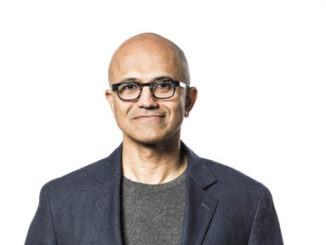
  • Indian American Satya Nadela of Microsoft  is CNN Business’ CEO of the Year

    Indian American Satya Nadela of Microsoft is CNN Business’ CEO of the Year

    NEW YORK (TIP) It was the year of artificial intelligence, and no Big Tech company leaned into the trend like Microsoft.
    In 2023, the company’s CEO Satya Nadella made a multi-billion dollar investment in AI, commercialized and added AI tools like ChatGPT into its suite of products before rivals, and stunned industry onlookers with his ability to handle a crisis quickly, calmly and thoughtfully.
    Under his leadership, the company is re-emerging as a tech innovator after years of riding the success of Windows. Wall Street has noticed, too: Microsoft’s stock is up 55% this year.
    That’s why CNN Business’ staff chose Nadella as the CEO of the Year, beating out other contenders including Chase CEO Jamie Dimon, OpenAI CEO Sam Altman and Nvidia CEO Jensen Huang.
    “There’s no question 2023 was the year of AI,” Nadella told CNN in an emailed response. “We’re no longer just talking about innovation in the abstract; we’re seeing real product-making, deployment and productivity gains. At the end of the day, though, this innovation will only be useful if it’s empowering all of us in our careers, in our communities, in our countries.”
    Since 2018, the CNN Business’ team of writers and editors have met at the end of each year to select one person whose executive performance stood out. The process is admittedly subjective — we choose someone based on criteria that shifts year to year.
    Maybe the company’s stock outperformed its rivals. Maybe the CEO righted the ship after a messy product launch or the company developed a lifesaving vaccine that altered the course of human history.
    This year’s CEO of the Year is once again a man, indicative of a larger representative problem in corporate America’s top positions. About 10% of CEOs at Fortune 500 companies are women, according to Fortune. But our aim has never been to endorse any one executive over another. Rather, we hold a mirror up to the business world and tell a story about what we see. (We also considered non-CEO leaders, and chose Taylor Swift as our business leader of the year.) For 2023, Nadella’s decisions have heavily impacted and influenced the direction of AI, the most significant innovation to come from Silicon Valley in decades.
    As Gil Luria, a senior research analyst at wealth management firm DA Davidson, puts it: “His ability to steer the aircraft carrier that is Microsoft into this new era has been nothing short of remarkable.”
    Changing the narrative
    Nadella’s background doesn’t entirely fit the Ivy League dropout archetype of Silicon Valley. Born in India, Nadella came to the US in the late 1980s to pursue a master’s in computer science at the University of Wisconsin-Milwaukee, later receiving an MBA from the University of Chicago Booth School of Business.

    Nadella’s standout performance is a culmination of his work from prior years. He joined the company in 1992 as an engineer, at a time Microsoft was characterized by regulators as a monopoly.

    When he was promoted to CEO nearly 10 years ago, Microsoft had developed a reputation for being slow to adapt to major trends, such as mobile. Fast forward to now and tech companies are lining up to partner with Microsoft and align with its mission to commercialize artificial intelligence for the masses.

    In Nadella’s 2017 book, “Hit Refresh: The Quest to Rediscover Microsoft’s Soul and Imagine a Better Future for Everyone,” he wrote about his experience reworking everything internally, team by team and product by product, so Microsoft would be better set up for employees to collaborate with others.

    He also worked to soften and revitalize Microsoft’s image. As far back as 2016, the company partnered with OpenAI — a then-emerging company with new AI tools — and allowed them to operate the technology on its Azure cloud servers in exchange for access to those tools.

    But after a massive $13 billion investment in OpenAI earlier this year, following the viral launch of ChatGPT in November 2022, Microsoft rolled out AI-powered versions of its flagship products, such as Word, PowerPoint and Excel, breathing new life into otherwise dulled software. Nadella’s push to commercialize these tools quickly gave it a head start against competitors such as Google and Amazon, who were working on similar technologies, and helped ignite an arms race across the industry.

    Now as more companies, from Instacart to Snapchat, add ChatGPT and other OpenAI technologies to their own services, Microsoft’s cloud business is poised for deeper growth. Microsoft has reported strong Azure growth over the last three quarters.

    Nadella’s remarkable moment
    While Nadella had an impressive year across the board, his leadership shined even brighter during the string of events that followed the surprising ousting of OpenAI’s Altman, the Friday afternoon before Thanksgiving week.

    The timing was noteworthy too: Just four days before, Nadella joined Altman on stage at OpenAI’s first developer conference to discuss the future of artificial intelligence and their partnership together.

    The executives represented one of the most dynamic and key relationships in the tech industry, not only of the year but in years: Altman had clearly emerged as the face of the generative AI movement, and Nadella was one of the most powerful tech leaders funding the development of these tools.

    “You guys have built something magical,” said Nadella at the time. “It’s been fantastic for us.”

    But despite his long-standing relationship with OpenAI, Nadella reportedly found out about Altman’s removal from the company “just before” OpenAI released a statement, rendering Microsoft with no control over the situation. The company in a statement said an internal investigation found that Altman was not always truthful with the board. Microsoft’s stock sank in response, perhaps because OpenAI was to serve as a linchpin to their plans to expand AI across its products. “It was not a good look for Microsoft,” Luria said.

    Nadella swiftly picked up the phone and offered to hire Altman at Microsoft to lead a new AI research lab, along with one of the co-founders, Greg Brockman, and any of the 700 Open AI employees who wanted to leave the company.

    He also spoke to some OpenAI board members — the people who initially kept him out of the loop — and was able to get them on board with a solution that would be favorable to Microsoft, according to Luria.

    Altman ultimately returned to OpenAI, with a new board intact.

    “He turned what looked like a bad and embarrassing situation into a way to improve Microsoft’s standing with this very important partner,” Luria added. “What we saw from Mr. Nadella is an interpersonal skill you don’t always find with CEOs, who can be visionaries and luminaries and great at product, but aren’t necessarily able to pick up a phone, talk to people and get them to see things your way.”

    As Fred Havemeyer, a senior enterprise software analyst at the Macquarie financial services firm, said in a letter to investors, “Mr. Nadella may have pulled off his own coup, acquiring the most important part of OpenAI — its ambitious talent.” By Monday morning, Microsoft was in better shape than they were a week before. Its stock reached a record that day; shares rose 2.1% to an all-time high close of $377.44, beating the previous record of $376.17.

    What’s ahead
    According to Stuart Carlaw, chief research officer at ABI Research, Nadella’s successful year can be largely attributed to the fact that he’s remained extremely “focused.” “His approach to the mechanics of leadership remains people driven,” Carlaw said. “He understands that people drive outcomes, and remained true to that ethic in the way he dealt with Sam Altman and the wider OpenAI team.”

    Nadella also narrows in on where he wants to spend his energy. “He hasn’t been on a scattergun spree of investment ever since he took the reins,” Carlaw said. “He has been very focused on accretive areas that take the Microsoft brand forward.”

    Takeshi Numoto, Microsoft’s chief marketing officer who has been employed in various roles at the company for 25 years, said he felt an internal culture shift this year, saying the company feels “fresh” and “energizing.”

    “There is a sense that we are contributing to building the next wave of computing broadly for the world, and doing so thoughtfully,” he said.

    Nadella told CNN he indeed remains “focused” on empowering both people and organizations to achieve more, as it continues to make and deploy new products.

    “That’s our mission at Microsoft … and what we continue to focus on as we look to 2024 and beyond,” he said. “Just imagine if 8 billion people had access to a personalized tutor, a doctor that provided them medical guidance, a mentor that gave advice for anything they needed. I believe all that’s within reach. It’s about making the impossible possible.” The biggest challenge, however, is if Nadella can take Microsoft to the next level by making these AI-powered products profitable.

    “You are only as good as your last results release,” Carlaw said. “[But] he is not the only one facing this dilemma.”

  • New York nurses strike ends after tentative deal reached with hospitals

    New York nurses strike ends after tentative deal reached with hospitals

    NEW YORK (TIP): A nurses strike at two private New York City hospital systems has come to an end after 7,000 nurses spent three days on the picket line. CNN has reported that the New York State Nurses Association union reached tentative deals with Mount Sinai Health System and Montefiore Health System, which operates three hospitals in the Bronx that had been struck. The nurses had been arguing that immense staffing shortages have caused widespread burnout, hindering their ability to properly care for their patients.

    The union said the deal will provide enforceable “safe staffing ratios” for all inpatient units at Mount Sinai and Montefiore, “so that there will always be enough nurses at the bedside to provide safe patient care, not just on paper.” At Montefiore, the hospital agreed to financial penalties for failing to comply with agreed-upon staffing levels in all units.

    Montefiore said the agreement also includes 170 new nursing positions, a 19% increase in pay over the three year life of the contract, lifetime health coverage for eligible retirees and adding “significantly more nurses” in the ER.

    The deals were announced in the early hours Thursday morning, January 12 at 3 a.m. ET for Montefiore and about 30 minutes later at Mount Sinai. The nurses returned to the job for the 7 a.m. ET shift Thursday, and Montefiore Medical Center said all surgeries and procedures and outpatient appointments for Thursday and after will proceed as scheduled. Nurses will need to vote to approve the deal before it is finalized. But the union said the tentative deal will help put more nurses to work and allow patients to receive better care. “Through our unity and by putting it all on the line, we won enforceable safe staffing ratios at both Montefiore and Mount Sinai where nurses went on strike for patient care,” the nurses’ union said in a statement. “Today, we can return to work with our heads held high, knowing that our victory means safer care for our patients and more sustainable jobs for our profession.”

    Mount Sinai called the agreement “fair and responsible.”

    “Our proposed agreement is similar to those between NYSNA and eight other New York City hospitals,” Mount Sinai said in a statement. “It is fair and responsible, and it puts patients first.”

    “From the outset, we came to the table committed to bargaining in good faith and addressing the issues that were priorities for our nursing staff,” Montefiore said in a statement. “We know this strike impacted everyone — not just our nurses — and we were committed to coming to a resolution as soon as possible to minimize disruption to patient care.”

    The hospitals had stayed open during the three-day strike, using higher-cost temporary nursing services to provide care, and transferring other employees to take care of non-medical nursing duties. They had also diverted and transferred some patients to other hospitals and postponed some elective procedures.

    The striking nurses have said they are working long hours in unsafe conditions without enough pay — a refrain echoed by several other nurses strikes across the country over the past year. They said the hours and the stress of having too many patients to care for is driving away nurses and creating a worsening crisis in staffing and patient care.

    The union representing the nurses had reached tentative agreements offering the same 19% pay hikes at other New York hospitals, avoiding strikes by about 9,000 other nurses spread across seven hospitals in the city. But the nurses at the hospitals that went on strike said the pay raises weren’t the main problem, that the more severe staffing shortages at Mount Sinai and Montefiore needed to be addressed before a deal could be reached. Both hospitals had criticized the union for going on strike rather than accepting offers they described as similar to those the union accepted at other hospitals in the city.

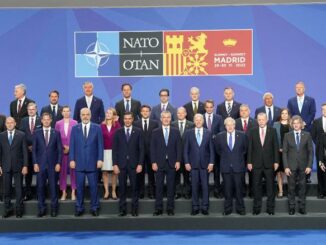
  • NATO formally invites Finland and Sweden to join alliance

    NATO formally invites Finland and Sweden to join alliance

    MADRID (TIP): NATO formalized its invitation to Sweden and Finland to join its alliance Wednesday, June 29, a historic expansion of the defense bloc that directly undercuts Russian President Vladimir Putin’s aims as his war in Ukraine grinds ahead, according to CNN. The group collectively decided to approve countries’ applications to join after Turkey dropped its objections Tuesday, paving the way for NATO’s most consequential enlargement in decades. “The accession of Finland and Sweden will make them safer, NATO stronger, and the Euro-Atlantic area more secure. The security of Finland and Sweden is of direct importance to the Alliance, including during the accession process,” the statement said.

    The decision will now go to the 30 member states’ parliaments and legislatures for final ratification. NATO’s leaders said they expected the process to move quickly, allowing for an unprecedentedly swift accession and a show of unity against Putin. The leaders entered Wednesday’s talks propelled by a diplomatic victory after Turkey dropped its objections to the two nations joining NATO, setting the stage for the two longtime neutral countries to enter the defensive bloc. NATO chief Jens Stoltenberg called the formal invitation from the alliance to Sweden and Finland to join the defense bloc a “historic decision.”

    “The agreement concluded last night by Turkey, Finland and Sweden paved the way for this decision,” the secretary general said in a news conference. He recounted how two rounds of talks were held by senior officials in Brussels under his auspices in the advance of Monday’s consequential meeting between Finnish President Sauli Niinistö, Swedish Prime Minister Magdalena Andersson and Turkish President Recep Tayyip Erdoğan. Turkey agreed on Tuesday to drop its objections to their membership bids, removing a major hurdle to them joining NATO.

    The expansion vote, paired with substantial new commitments bolstering NATO’s force posture in Europe, combined to make this week’s summit in Madrid one of the most productive in recent memory. The outcome is exactly what Putin was hoping to fend off when he invaded Ukraine more than four months ago. “I said Putin’s looking for the Finlandization of Europe. He’s going to get the NATOization of Europe. And that is exactly what he didn’t want, but exactly what needs to be done to guarantee security for Europe. And I think it’s necessary,” US President Joe Biden said when he arrived at the summit site in Madrid. Biden and fellow NATO leaders assembled in the Spanish capital to unveil a significant strengthening of forces along the alliance’s eastern flank as Russia’s war in Ukraine shows no signs of slowing.

    Speaking alongside Stoltenberg, Biden listed new troop movements, equipment shipments and military installations meant to demonstrate the importance of security in the face of Moscow’s aggression.

    “The United States and our allies, we are going to step up — we are stepping up. We’re proving that NATO is more needed now than it ever has been and is as important as it ever has been,” Biden said.

    He said the US would establish a permanent headquarters for the Fifth Army Corps in Poland, maintain an extra rotational brigade of 3,000 troops in Romania, enhance rotational deployments to the Baltic states, send two more F-35 fighter jet squadrons to the United Kingdom and station additional air defense and other capabilities in Germany and Italy.

    “Together with our allies, we are going to make sure that NATO is ready to meet threats from all directions — across every domain, land, air and the sea,” Biden said.

    The United States did not convey to Russia its plans to bolster its force posture in Europe ahead of time.

    “There has been no communication with Moscow about these changes nor is there a requirement to do that,” John Kirby, the NSC coordinator for strategic communications, said after Biden announced the series of measures.

    A second official told reporters the announcements did not violate any agreements between Russia and NATO, which stipulate parameters for positioning troops in Europe. “The decision to permanently forward station the Five Corps headquarters forward command post does not, you know, is consistent with that commitment and our understanding of the NATO Russia founding act,” said Celeste Wallander, United States assistant secretary of defense for international affairs.

    Zelensky asks what Ukraine has to do to join NATO

    Yet even if Putin’s aims have backfired and the conflict grinds on, momentum is favoring Russia at the moment. That has left Biden and fellow western leaders this week searching for ways to alter the trajectory of the war.

    Despite enthusiasm at the summit for NATO’s two newest members, another leader — Ukraine’s President Volodymyr Zelensky — voiced frustration that his country’s NATO ambitions have been ignored, despite coming under siege by Russia.

    Addressing the NATO summit in Madrid virtually, Zelensky asked rhetorically, “Has Ukraine not paid enough” to join the alliance and review its open-door policy. “Is our contribution to the defense of both Europe and the whole civilization still insufficient?” he asked. “What else is needed then?”

    Ukraine has sought unsuccessfully to join NATO for years, hampered by concerns over provoking Russia and other issues related to its governance practices. Speaking after Zelensky’s address, Stoltenberg said the alliance welcomed the speech.

    “Ukraine can count on us for as long as it takes,” Stoltenberg stressed to journalists. He commended Zelensky’s “leadership and courage” and called the Ukrainian leader “an inspiration to us all.”

    Already this week, the US and European nations have slapped new rounds of sanctions on Moscow, banned new imports of its gold and agreed to limit the price of its oil. New rounds of security assistance, including a US-provided missile defense system, have been added to the queue of artillery and ammunition flowing in Ukraine.

    Whether any of that is enough to fundamentally alter the way the war is going remains to be seen. Zelensky told leaders attending the G7 summit in Germany he wanted their help staging a major initiative to win the war by the end of the year.

    Leaders worry the growing cost of the war, seen in rising gas and food prices, could lead to diminished support for Ukraine in the months ahead. A few have warned that fatigue is setting in, adding to the growing concerns that the alliance could fracture.

    “When we agreed we were going to respond, we acknowledged there was going to be some costs to our people, our imposition of sanctions on Russia. But our people have stood together. They’ve stood up and they’ve stood strong,” Biden said Tuesday when he was meeting with King Felipe VI at the Royal Palace in Madrid. It was during that meeting Biden received word Turkey was dropping its objections to Finland and Sweden’s applications to join NATO, ending a months-long standoff with NATO’s most challenging member. In order to get the deal struck before the summit, Biden dangled the prospect of a formal bilateral meeting with Erdoğan in a phone call on Tuesday morning. The leaders will meet Wednesday to discuss the myriad issues that have caused the relationship between Washington and Ankara to sour over the past several years.

    Biden also met jointly with Japan’s Prime Minister and South Korea’s President to focus on the threat from North Korea. Prime Minister Fumio Kishida and President Yoon Suk Yeol are invited guests of the NATO summit, but their countries’ ties have deteriorated recently amid disputes over wartime histories, making the joint meeting with Biden a rarity.

  • Remains of British journalist found in Amazon, police name new suspect

    Remains of British journalist found in Amazon, police name new suspect

    Sao Paulo (TIP): A forensic exam carried out on human remains found in the Amazon rainforest confirmed on June 18 that they belonged to British journalist Dom Phillips, Brazil’s federal police said, adding that a search was underway for a man suspected of involvement in his killing. The remains of a second person, believed to be that of indigenous expert Bruno Pereira, were still under analysis, a report by CNN Brasil said earlier on Friday.

    Pereira and Phillips vanished on June 5 in the remote Javari Valley bordering Peru and Colombia. Earlier this week, police recovered human remains from a grave in the jungle where they were led by a fisherman, Amarildo da Costa Oliveira, who confessed to killing the two men. Phillips, a freelance reporter who had written for the Guardian and the Washington Post, was doing research for a book on the trip with Pereira, a former head of isolated and recently contacted tribes at federal indigenous affairs agency Funai.

    Police said their investigation suggested there were more individuals involved beyond Oliveira and that they were now looking for a man named Jeferson da Silva Lima.

    He is the third suspect named by police after Oliveira and his brother, Oseney da Costa, who was taken into custody this week.

    “There is an arrest warrant issued by the State Court of Atalaia do Norte against Jeferson da Silva Lima, aka ‘Pelado da Dinha’, who has not been located at this time,” police said.

    “The investigations indicate that the killers acted alone, with no bosses or criminal organization behind the crime.” Local indigenous group Univaja, however, which played a leading role in the search, said: “The cruelty of the crime makes clear that Pereira and Phillips crossed paths with a powerful criminal organization that tried at all costs to cover its tracks during the investigation.”

    It said it had informed the federal police numerous times since late 2021 that there was an organized crime group operating in the Javari Valley.

    INA, a union representing workers at Funai, shared that view.

    “We all know that violence in the Javari Valley is linked to a wide chain of organized crime,” it said in a separate statement. Police said they were still searching for the boat Phillips and Pereira were traveling in when they were last seen alive. U.S. State Department spokesman Ned Price on Friday called for “accountability and justice,” saying that Phillips and Pereira were murdered for supporting conservation of the rainforest and native peoples.

    “Our condolences to the families of Dom Phillips and Bruno Pereira… We must collectively strengthen efforts to protect environmental defenders and journalists,” Price said on Twitter.  (Reuters)

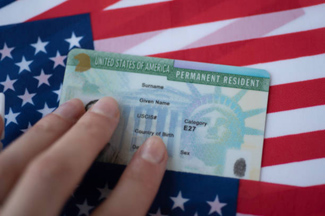
  • US Presidential commission votes to process all green card applications within 6 months

    US Presidential commission votes to process all green card applications within 6 months

    WASHINGTON, D.C. (TIP): A presidential advisory commission has unanimously voted to recommend President Joe Biden to process all applications for green cards or permanent residency within six months. To be sent to the White House now for approval, recommendations of the President’s Advisory Commission on Asian Americans, Native Hawaiians, and Pacific Islanders (PACAANHPI) if adopted is likely to bring cheers to the hundreds and thousands of Indian Americans and those waiting, some for even for decades, for a Green Card.

    A proposal in this regard was moved by eminent Indian American community leader Ajay Jain Bhutoria during the meeting of the PACAANHPI, during which all its 25 commissioners unanimously approved it.

    The proceedings of the meeting here in the national capital was webcast live last week.

    To reduce, pending green card backlog, the advisory commission recommended US Citizenship and Immigration Services (USCIS) to review their processes, systems, policies and establish new internal cycle time goals by streamlining processes, removing redundant steps if any, automating any manual approvals, improving their internal dashboards and reporting system and enhancing policies.

    The recommendations aim to reduce the cycle time for processing all forms related to family based green card application, DACA renewals, all other green card applications within six months and issue adjudicate decisions within six months of application received by it.

    The commission recommended National Visa Center (NVC) State Department facility to hire additional officers to increase their capacity to process green card applications interviews by 100 per cent in three months from August 2022, and to increase Green card applications visa interviews and adjudicate decisions by 150 per cent – up from capacity of 32,439 in April 2022 — by April 2023.

    “Thereafter Green Card visa interviews and visa processing timeline should be a maximum of six months,” it said.

    Aimed at making it easier for the immigrants to stay and work in the country, the commission recommended that USCIS should review requests for work permits, travel documents and temporary status extensions or changes within three months and adjudicate decisions.

    Only 65,452 family preference green cards were issued in fiscal 2021 out of the annual 226,000 green cards available, leaving hundreds of thousands of green cards unused (with many likely to be permanently wasted in the future), and keeping many more families needlessly separated.

    There were 421,358 pending interviews in April compared to 436,700 in March, said the policy paper by Bhutoria.

    Noting that while the US population has grown substantially in recent decades, the immigration system has not changed to keep pace, he said. The annual levels of immigration were established in the early 1990s and have remained largely unchanged since, he said.

    To make matters worse, the method used to calculate the annual number of employment-and-family-based immigration is deeply flawed, and has led to family-based immigration levels being set at their absolute minimum every year for the past 20 years, while hundreds of thousands of green cards for family members go wasted, never used by any individuals, when they could be used to reunite families instead, Bhutoria said.

    “The extraordinary wait time for a green card to be available causes significant hardship for American families forced to wait decades to reunite with their loved ones, even though those individuals are already qualified to immigrate right now. “Family separation takes a terrible emotional toll on families, and it imposes clear logistical, economic, and emotional hardships on families, and the growing nature of the backlogs makes the process uncertain and future planning impossible,” he said. Among other things, the commission also recommended USCIS to expand premium processing to additional employment-based green card applications, all work permit petitions, and temporary immigration status extension requests, allowing applicants to pay $2,500 to have their cases adjudicated within 45 days in a phased approach.

    (Source: PTI)

  • CDC moves 22 new destinations into its highest-risk level for travel

    CDC moves 22 new destinations into its highest-risk level for travel

    WASHINGTON, D.C. (TIP): The US Centers for Disease Control and Prevention moved a whopping 22 nations into its highest-risk travel category for Covid-19 on Tuesday, January 18. By contrast, it moved only two nations to Level 4, or “very high” risk, last week, according to a CNN report. Adding to the impact: The CDC also moved 22 additional  nations to its Level 3 category, which is considered “high” risk for Covid-19.

    Among the nations moved to Level 4 this week were Argentina and Australia, which have maintained some of the strictest borders controls during most of the pandemic. The CDC places a destination at Level 4 when more than 500 cases per 100,000 residents are registered in the past 28 days. The CDC advises travelers to avoid travel to Level 4 countries. Egypt, where the Giza Pyramids are a huge tourist draw, moved into the CDC’s highest-risk category for travel on Tuesday.

    The 22 new destinations, with at least one entry from every continent but Antarctica, at Level 4 are:

    • Albania
    • Argentina
    • Australia
    • Bahamas
    • Bahrain
    • Bermuda
    • Bolivia
    • British Virgin Islands
    • Cape Verde
    • Egypt
    • Grenada
    • Guyana
    • Israel
    • Panama
    • Qatar
    • Saint Kitts and Nevis
    • Saint Lucia
    • São Tomé and Príncipe
    • Sint Maarten
    • Suriname
    • Turks and Caicos Islands
    • Uruguay
  • Trump DC hotel incurred more than $70 million in losses while Trump was president, documents show

    Trump DC hotel incurred more than $70 million in losses while Trump was president, documents show

    WASHINGTON, DC (TIP): Former President Donald Trump racked up more than $70 million in losses over a four-year period from his Washington, DC, hotel, while publicly claiming that the hotel was making more than tens of millions of dollars, according to documents released by the House Oversight Committee, says CNN. It’s the first time that congressional investigators have reviewed and released details of the former president’s financial information. The Manhattan district attorney and New York attorney general investigators have reviewed Trump’s financials, but none of that has been made public.

    Trump’s income from the Trump International Hotel reported in public financial disclosures dating from 2016 to 2020 totaled more than $156 million, the committee said Friday.

    But in that four-year period, Trump’s DC hotel actually suffered a net loss of more than $70 million while he was president and had to be loaned more than $27 million from one of Trump’s holding companies, DJT Holdings LLC, from 2017 to 2020, according to hotel financial statements the committee obtained.

    More than $24 million was not repaid and was instead converted to capital contributions, the committee said. The documents include details that Congress chased for years during Trump’s presidency, specifically information about foreign payments to Trump businesses, over which House Democrats unsuccessfully sued for under the emoluments clause of the Constitution. The emoluments clause, an anti-corruption provision written by the nation’s founders, said Congress should be able to approve any gifts to officeholders from foreign governments. But despite the House’s years-long interest in an autopsy of Trump’s finances, congressional approval of foreign payments the Trump Organization took in never happened.

    The committee also claimed that General Services Administration documents showed that Trump received “undisclosed preferential treatment” from Deutsche Bank on a $170 million construction loan.

    The terms of the loan required the Trump Hotel to start repayments on the principal in 2018, but the terms were revised that year to allow the Trump Hotel to defer those payments by six years.

    In July, the GSA turned over documents that included Trump Hotel’s audited financial statements from 2014 through 2020 prepared by Weiser Mazars LLC, Trump’s accounting firm and three years’ worth of Trump’s statements of financial condition compiled by Mazars.

    Various House committees have also been pursuing Trump’s tax returns and other financial documents from Mazars USA and Deutsche Bank for years, unsuccessfully.

    The documents released Friday raise “troubling questions” about the lease with the General Services Administration and the “agency’s ability to manage the former President’s conflicts of interest during his term in office when he was effectively on both sides of the contract, as landlord and tenant,” the Oversight Committee’s Democratic chair Carolyn Maloney wrote in a letter Friday to the GSA.

    The committee is also requesting that the GSA produce more documents by the end of two weeks.

    The GSA, which manages federal buildings and land, awarded the lease for the Old Post Office building in 2012. Trump opened the hotel in 2016, when he was the Republican nominee for President.

    Since then, the Oversight Committee has been investigating conflicts of interest regarding GSA’s management of the Trump hotel lease.

    When he took office, Trump resigned from his companies but transferred his assets to a trust run by his sons, allowing him to still benefit financially from the DC hotel and his other businesses.

    In 2019, the inspector general of the GSA said the agency “ignored the Constitution” when deciding to maintain the lease of the building to the hotel after Trump was elected to the White House.

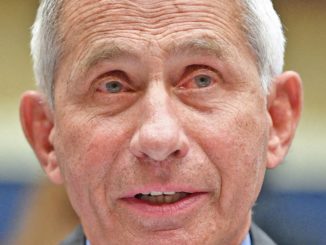
  • White House defends Dr Fauci over lab leak emails

    White House defends Dr Fauci over lab leak emails

    WASHINGTON (TIP): The White House has defended the president’s top coronavirus adviser, Dr Anthony Fauci, amid scrutiny of his recently released work emails. Dr Fauci has been the face of the nation’s Covid-19 response, drawing both praise and criticism.

    “I’m very confident in Dr Fauci,” President Joe Biden said on Friday, June 4.

    But emails have raised questions on whether he backed Chinese denials of the theory that Covid-19 leaked from a lab in Wuhan.

    A trove of Dr Fauci’s emails covering the onset of the coronavirus outbreak were released this week to media under a freedom of information request.

    Why are people talking about Dr Fauci’s emails?

    In one email sent last April, an executive at a health charity thanked Dr Fauci for publicly stating that scientific evidence does not support the lab-leak theory.

    In an interview with CNN, Dr Fauci said the email had been taken out of context by critics and he had an “open mind” about the origin of the virus.

    In his defense, White House press secretary Jen Psaki said Dr Fauci had been an “undeniable asset”.

    In a daily press briefing on Thursday, she said: “The president and the administration feel that Dr Fauci has played an incredible role in getting the pandemic under control, being a voice to the public throughout the course of this pandemic.”

    Mr Biden reiterated his support after delivering remarks on Friday, when a reporter asked if he still had confidence in the infectious disease chief.

    There is no proof Covid-19 came from a lab, but Mr Biden has ordered a review into the matter that angered China, which has rejected the theory. Chinese authorities linked early Covid-19 cases to a seafood market in Wuhan, leading scientists to theorise the virus first passed to humans from animals.

    But recent US media reports have suggested growing evidence the virus could instead have emerged from a lab in Wuhan, perhaps through an accidental leak.

    What did Fauci tell CNN?

    On Thursday, Dr Fauci maintained there was nothing untoward in an email exchange between himself and an executive from a medical non-profit organization that helped fund research at a diseases institute in Wuhan, the Chinese city where Covid-19 was first reported.

    The NIH, which is a US public health agency, gave $600,000 (£425,000) to the Wuhan Institute of Virology from 2014-19 via a grant to the New York-based non-profit group EcoHealth Alliance, for the purpose of researching bat coronaviruses.

    Peter Daszak, head of EcoHealth Alliance, emailed Dr Fauci in April 2020, praising him as “brave” for seeking to debunk the lab leak theory. “Many thanks for your kind note,” Dr Fauci replied. Dr Fauci told CNN on Thursday, June 3, it was “nonsense” to infer from the email any cozy relationship between himself and the figures behind the Wuhan lab research. “You can misconstrue it however you want,” he said, “that email was from a person to me saying ‘thank you’ for whatever it is he thought I said, and I said that I think the most likely origin is a jumping of species. I still do think it is, at the same time as I’m keeping an open mind that it might be a lab leak.”

    He added: “The idea I think is quite farfetched that the Chinese deliberately engineered something so that they could kill themselves as well as other people. I think that’s a bit far out.”

    The face of America’s fight against Covid-19

    Allies of the US National Institutes of Health (NIH) infectious disease specialist say Dr Fauci’s messages show nothing more than a dedicated public servant navigating the early days of a once-in-a-century pandemic.

    But conservative critics are suggesting Dr Fauci may have engaged in a cover-up, and even claim he perjured himself in testimony to Congress.

    How has the lab leak theory gathered pace?

    According to an investigation in Vanity Fair magazine published on Thursday, Department of State officials discussed the origins of coronavirus at a meeting on 9 December 2020.

    They were told not to explore claims about gain-of-function experiments at the Wuhan lab to avoid attracting unwelcome attention to US government funding of such research, reports Vanity Fair.

    Gain-of-function studies involve altering pathogens to make them more transmissible in order to learn more about how they might mutate.

    The Wall Street Journal reported last month that three employees at the Wuhan Institute of Virology fell ill and were admitted to hospital in November 2019, just before the first reported Covid-19 cases.

    Days later, President Biden instructed US spy agencies to conduct a 90-day review into whether the virus could have emerged from a Chinese lab.

    His administration had previously deferred to the World Health Organization for answers on how the pandemic began.

    Why the lab-leak theory is being taken seriously

    “I would like to see the medical records of the three people who are reported to have got sick in 2019,” Dr Fauci told the Financial Times on Thursday. “Did they really get sick, and if so, what did they get sick with?”

    He called on China to also release the medical records of six miners who fell ill after entering a bat cave in 2012 in China’s Yunnan province.

    Three miners died, and Chinese researchers later visited the cave to take samples from the bats.

    “It is entirely conceivable that the origins of Sars-Cov-2 was in that cave and either started spreading naturally or went through the lab,” he said. Dr Robert Redfield, who led the Centers for Disease Control and Prevention during the Trump administration, told Vanity Fair that he received death threats from fellow scientists when he backed the Wuhan lab leak theory last spring. “I was threatened and ostracized because I proposed another hypothesis,” Dr Redfield said. “I expected it from politicians. I didn’t expect it from science.”

    What has Fauci previously said about the lab leak?

    During congressional testimony on 12 May, Dr Fauci emphatically denied the US had ever funded controversial gain of function research at the Wuhan lab. During a subsequent Senate hearing on 26 May, Senator John Kennedy, a Louisiana Republican, asked how Dr Fauci could be sure that Wuhan scientists did not use the money for gain-of-function research.

    “You never know,” Dr Fauci conceded, while adding that he believed the Chinese researchers were “trustworthy”.

    What’s the other political reaction?

    Former President Donald Trump – widely vilified last year when he raised the possibility that Covid-19 came from the Wuhan lab – said on Thursday that Dr Fauci had a lot of questions to answer.

    “What did Dr Fauci know about ‘gain of function’ research, and when did he know it?” Mr Trump wrote in a statement.

    He added: “China should pay Ten Trillion Dollars to America, and the World, for the death and destruction they have caused!”

    The same day, House of Representatives deputy Republican leader Steve Scalise demanded in a letter that Dr Fauci testify before Congress on the “US government’s role in funding research that may have contributed to the development of the novel coronavirus”.

    China’s foreign ministry last week dismissed the Wuhan lab leak theory as “extremely impossible”.

    Covid-19 is known to have infected some 172 million people, killing more than 3.5 million.

    (Source: BBC)

  • Happy Vaisakhi

    Nothing could give us a greater pleasure than to present an edition with great reading. Here we are with Vaisakhi special edition which is dedicated to farmers in India who are protesting against the Farm Laws enacted by Modi government in June 2020 and demanding their repeal.

    What is the issue? Well, it is a question of perception. The government claims the laws will protect the interests of the farmers, helping them to double their income, and also getting freedom from an exploitative system.

    The farmers, on the other hand, see in the laws, an attempt to ultimately render them landless, turn them into laborers for the big businesses, and impoverish them.

    Both sides have lined up economists and agricultural experts to support their claims. Government of India, with its vast resources to reach out to people have taken no chances in trying to convince Indians and the world of the utility of the enacted laws. The Indian media, believed to be pro-Modi, has been at pains to explain the laws to people. Indian missions abroad have been doing the same. They were tasked with reaching out to lawmakers in countries like the US, the UK and Canada, which have sizeable population of Indians, to reach out to lawmakers to convince them that the laws were in favor of the farmers, and that the protest of the farmers was unwarranted. They did it to prevent these lawmakersfrom taking up the cause of the farmers. But, in the process, it helped internationalize the issue, which has assumed enormous proportions now, being viewed as a movement to save democracy. Several lawmakers in the US, the UK, and Canada have expressed their concern at the violation of basic human rights of farmers in India.

    Here are two such letters.

    We are carrying in this edition a few articles by eminent and well-informed people which analyze the various aspects of the issue. We hope, readers will have a clearer view of the laws and the protest, which, in fact, probably no side wants.

    However, we cannot but express concern at the apathy of the Indian government to the bread givers of the nation. Without going into the facts and the figures here, which readers will find in plenty in the articles in this edition, it would do well to remind ourselves that a democratic government is for the people. And, here we are, stonewalled by a government which does not believe in listening to people. Farmers have been protesting against the government’s farm laws for around 10 months now, first, in their states, and, for the last around five months at Delhi borders, in Haryana and Uttar Pradesh, in inclement weathers and the severe cold winter season, during which more than 350 persons lost their lives.

    The government barricaded the protest area at Singhu border, which restricted free movement of people and stopped movement of vehicles; hindered supplies of essential articles, cut off internet, water and electricity supply, and even allowed BJP cadres to attack the protesters in the makeshift camps. On top of it, the goons who attacked were never apprehended; rather, the victims were charged with criminal assault. Videos and photographs available reveal the true story, as against the narrative of the government and the authorities. What an abdication of government duty to protect people and do justice!

    Well, all this happens in a conflict. But the question is: Is demanding justice a conflict with the elected, chosen government? Is asking for ones’ rights sedition?

    No, my friends, we ought to respect the common man who, in fact, is the MASTER. A government is there to serve people who have elected them. People have chosen them to work for them, according to the Constitution. Because billions cannot be directly governing, the concept of democracy has a few chosen by billions managing the affairs of the nation for the good of the people.

    We believe, Mr. Modi will find time from the unending election campaigns, to consider thereal vital issue of saving the country’s economy, agriculture, and the future of the farmers, and above all, ensuring the human rights of the people are not trampled underfoot.

    There will be no better Vaisakhi gift for all Indians and friends of India than a resolution of the contentious issue, NOW.

     Happy Vaisakhi!!

  • Nuclear-powered rockets could take crewed mission to Mars in 3 months

    Nuclear-powered rockets could take crewed mission to Mars in 3 months

    A nuclear-powered rocket could get a crewed mission to Mars in just under three months, according to a report on CNN. NASA’s plan is to get human to Mars by the year 2035, but there are several challenges to the trip. The biggest being the time it would take to get to the red planet. A prolonged trip would also mean increased exposure to space radiation, which can seriously impact the health of astronauts on the mission. Now, Ultra Safe Nuclear Technologies (USNC-Tech), a Seattle-based company, has come up with a design of a spacecraft that will use nuclear-powered rockets to shorten the trip. Currently, NASA’s goal for a one-way trip to Mars is around five to nine months.

    But switching to a nuclear thermal propulsion (NTP) engine does come with its own risks, though USNC-Tech claims to have made it safe for the crew. According to Michael Eades, the director of engineering USNC-Tech, the rocket has been designed in such a way that it will store liquid propellants between the “engine and the crew area” and block out the radioactive particles to ensure the crew does not get exposed to radiation during the flight.

    Jeff Sheehy, chief engineer of NASA’s Space Technology Mission Directorate told CNN that NTP rockets will “double the miles per gallon” meaning a round trip would be possible in less than two years.

    But there are challenges. One is finding uranium fuel that can withstand high temperatures inside a nuclear thermal engine, according to the report. However, the company claims to solve the problem by developing a fuel that will be able to work in temperatures as high as over 2,400 degree celsius. The fuel comprises of a material known as silicon carbide which is frequently used in tank armour. It is capable of preventing radioactive products from leaking from the reactor by forming a gas-tight barrier.

    Further, the report adds that the nuclear rockets will not lift off from Earth like other thermal-engine powered rockets. They will be taken to space by a regular rocket that would take it into Earth’s orbit and that’s when the nuclear-powered spacecraft will lift off. And in case something goes wrong and the rocket explodes, USNC-Tech said the pieces of the nuclear reactor would not land on Earth or any other planet as they cannot move in vacuum.

  • At least 6 dead in 133 car pile-upin Dallas-Fort Worth area due to winter storms

    At least 6 dead in 133 car pile-upin Dallas-Fort Worth area due to winter storms

    • At least nine people have died in car crashes as of Thursday, Feb 11 evening due to winter storms across the Dallas-Fort Worth area of Texas, according to a count by CNN.

    FORT WORTH, TX (TIP): A 133-car pileup on Interstate 35 West in Fort Worth on Thursday, Feb 11, left at least six people dead, according to Fort Worth Police Chief Neil Noakes. The pileup was reported around 6 a.m. CT and spanned roughly a mile. The incident was one of several reported in the Dallas-Fort Worth and Austin areas during dicey weather conditions Thursday, Feb 11, that included freezing rain and accumulating ice.

    65 people sought treatment after Fort Worth pileup

    At least 65 people have sought medical treatment at local hospitals following Thursday’s pileup in Fort Worth, Fire Chief Jim Davis said in a Thursday afternoon news conference. Numerous patients were treated and released on the scene, said Matt Zavadsky, spokesman for the MedStar ambulance service. While there were 65 patients who sought medical care, “that number is likely to continue to increase,” Zavadsky added. All victims on scene were adults, Zavadsky said.

    Davis said 36 people were transported from the scene of the accident. Also injured were four officers, three of whom were involved in the crash as they were heading to work. One was injured while working the scene, according to Noakes, the police chief.

    Three victims taken to hospital in critical condition, Zavadsky said. Shelter buses arrived for victims who were not transported from the scene. The pileup was over a 1.5-mile area, requiring multiple sectors to be set up including extrication, triage, treatment and transport, Davis said.

    Many people were trapped in their vehicles, requiring hydraulic equipment to free them, according to Davis. More than 80 police units responded, including the special events unit, which is meant to respond to large-scale incidents, he said. Zavadsky said 13 ambulances were at the scene along with critical care paramedics and supervisor units.

    (Source: CNN)

  • Indian American Rahul Dubey Hailed as ‘Hero’ after Sheltering Protesters in DC

    Indian American Rahul Dubey Hailed as ‘Hero’ after Sheltering Protesters in DC

    WASHINGTON (TIP): Indian American Rahul Dubey emerged as an overnight hero in the US after he opened doors to people, who were protesting against George Floyd death, after a tear gas attack by police in Washington D.C on June 1 night.

    According to a report by The New York Times, Dubey, who works in health care, opened the door as soon as he heard the flash bang and the thudding of shields and called for people to come in. A “tsunami” of demonstrators came barreling through his front door seeking shelter, he said, and protesters began scattering to all three floors of his home.

    Dubey told CNN affiliate WJLA that he was on his stoop and had let some of the protesters charge their phones inside and use his bathroom before police moved in. “There was a big bang and there was spray that my eyes started burning, screaming like I’ve never heard before, and I’ve described it as a ‘human tsunami’ is the best I could see for about a quarter of a block coming down the street,” he told WJLA.

    He said he was yelling “get in, get into the house” for about 10 minutes. Dubey told WJLA that about 70 protesters got inside and it was “pandemonium and mayhem” for about an hour and a half while they tried to settle in and help people who’d been pepper sprayed. The protesters left Dubey’s home when the district’s new curfew ended at 6 am.

    The incident has turned Dubey into a local hero with a massive outpouring of praise on social media. He, however, told The New York Times, he does not think what he did was anything special. “If it is, we have a ton of work to do in this country”, he said.