Tag: COUNTER TERRORISM

  • The terror Frankenstein: ISI-nurtured terror groups have come to haunt Pakistan

    The terror Frankenstein: ISI-nurtured terror groups have come to haunt Pakistan

    With Pakistan on the back foot, the time has come for New Delhi to make use of the aversion for jihadi groups in Pakistan over the Sehwan outrage. A carefully crafted approach to relations with Pakistan needs to be adopted. New Delhi should remain firm on issues of terrorism by reiterating that there can be no question of reverting to business as usual till our concerns on Pakistan-sponsored terrorism in India and Afghanistan are addressed”, says the author – G Parthasarathy.

    Pakistan’s founder Muhammad Ali Jinnah, an Ismaili Shia by birth, proudly proclaimed, just prior to Pakistan’s independence, that the country he founded on the basis of religion would not discriminate against any of its citizens on the basis of religion. While the eastern half of his country was divided on the basis of ethnicity in 1971, what remains of what he initially called a “moth-eaten” Pakistan, is now finding that religion could indeed tear the country apart. Born into a Shia family, Jinnah could well be regarded as a “kaffir” by many in today’s Pakistan. Extremist Wahhabi-oriented groups, who since the days of Gen Zia-ul-Haq have received extensive support from the army, regularly target and kill those who are Shias, or even Sunnis, who are Sufi in orientation.

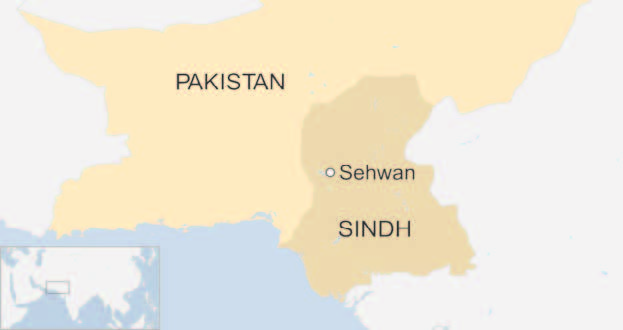
    The most revered Sufi shrine in Pakistan, where thousands of people of all sects and religions congregate and worship, is the shrine of Lal Shahbaz Qalandar at Sehwan, in northern Sindh. The shrine, built in 1356, was established in memory of the 13th century Sufi, Saint Syed Usman Marwandi, popularly known as Lal Shahbaz Qalandar, whose ancestors were devotees of the Imam Hussein, the Prophet’s grandson. Reza Shah Pahlavi, the last Shah of Iran, donated the shrine’s gold-plated main gate. For today’s jihadis in Pakistan, especially from groups like the Jaish-e-Mohammed, the Lashkar-e-Jhangvi and the Tehrik-e-Taliban Pakistan (TTP), that have received, or continue to receive ISI support, Sufi shrines are heretical, with its worshipers fit targets for elimination. This is precisely what happened on February 16, when a fanatical suicide bomber entered the shrine in the midst of prayers and triggered explosives, killing 88 devotees and wounding over 250.

    Not surprisingly, Pakistan reacted by passing the blame to others for its incredible follies in strengthening “militant Islam”, ever since the days of the anti-Soviet jihad. This policy was followed by its backing of the Taliban in Afghanistan and the use of its “non-state actors” for its jihad in J&K and elsewhere in India. The TTP was a tool of the ISI used to wage jihad against the Americans and pro-government forces in Afghanistan, post 9/11. The situation in Pakistan changed when the army, led by the ubiquitous Gen Raheel Sharif, saw the TTP establishing a presence over large areas beyond its traditional habitat and launched large-scale operations against it. This was done without General Sharif’s bothering to secure parliamentary approval. These operations led to escalating violence and displacement of nearly a million Pashtuns from their tribal homes, with many seeking refuge in Afghanistan. Thus, while the ISI continues to back the Afghan Taliban, the army is bogged down in a continuing conflict with the TTP, some of whose cadres operate across the disputed Durand Line, separating Pakistan and Afghanistan.

    The fact that Pakistan is still living in a world of delusion was evident from the reaction both by the government and the army chief, Gen Qamar Javed Bajwa, to the Sehwan attack. In an effort to establish that no Pakistani groups were involved, the ISIS and then an allegedly Afghanistan-based group – Jamat-ul-Ahrar – were blamed by Pakistan for the outrage. Indiscriminate attacks against alleged terrorist locations in Punjab, Sindh and Balochistan immediately followed the attack. Over 100 alleged “terrorists” were killed within hours, with the army also mounting attacks on alleged terrorist “hideouts” along the border. Officials from the Afghan embassy in Islamabad were summoned to the army’s GHQ and given a list of 76 “terrorists” said to be living in Afghanistan.

    General Bajwa also called the American commander in Afghanistan, Gen John Nicholson, warning that continuing attacks across the border were testing Pakistan’s policy of “cross-border restraint”. PM Nawaz Sharif’s adviser, Sartaj Aziz, spoke in similar terms to Afghanistan’s National Security Adviser Hanif Atmar. A logical question would be whether Pakistan has done anything to prevent its jihadis, including the Taliban, LeT and the Jaish-e-Mohammed, crossing the Durand Line, the LoC in Kashmir, or the International Border with India? Is it not a fact that groups once nurtured by the ISI are executing terrorist attacks within Pakistan?

    With Pakistan on the back foot, the time has come for New Delhi to make use of the aversion for jihadi groups in Pakistan over the Sehwan outrage. A carefully crafted approach to relations with Pakistan needs to be adopted. New Delhi should remain firm on issues of terrorism by reiterating that there can be no question of reverting to business as usual till our concerns on Pakistan-sponsored terrorism in India and Afghanistan are addressed. The cross-LoC strikes in September last year have set the precedent for India to appropriately respond to attacks on its soil by crossing established borders. Pakistan should be left in no doubt that it can no longer take Indian forbearance for granted.

    The recent invitations to India and Iran from Russia to attend talks in Moscow, along with China, Pakistan and Afghanistan, on promoting political reconciliation in Afghanistan suggest that there is growing realization that appeasing Pakistan on any proposed “Afghan led” peace process is counterproductive. India would do well to use these developments for stepping up economic and military assistance to Afghanistan and expediting the operationalization of the Chabahar Port. Moreover, it would only be logical for adequate time to be given to the Trump administration to evolve its policies on dealing with Pakistan-sponsored terrorism in Afghanistan and India.

    Pakistan should be reminded that it has not fulfilled its commitment made by PM Sharif at Ufa for talks between DGMOs of the two armies to address issues of cross-border terrorism. The growing sentiments in Pakistan against the attack on its most revered Sufi shrine should be taken note of. The existing agreements with Pakistan on group tourism and visits to shrines could be utilized to promote visits of Pakistani pilgrims to Sufi shrines in India, together with visits by musical troupes devoted to Sufi music. New Delhi has done well to facilitate participation by Indian writers in the Karachi Literary Festival. Reaching out to people getting disillusioned with Wahhabi extremism and violence in Pakistan, while standing firm on terrorism, enhances our credibility internationally.

    (The author is a career diplomat. He was High Commissioner of India to Pakistan in 1998-2000)

  • Pakistan’s Karachi is Anti-India Hub for Jihadis ~ International Crisis Group

    Pakistan’s Karachi is Anti-India Hub for Jihadis ~ International Crisis Group

    In a major setback to Pakistan’s claim making efforts against use of it terrain for terror activities, a Brussels based think-tank, International Crisis Group has deemed port city Karachi as the hub of anti-India Jihadist groups.

    The report also said that these groups and criminals often enjoy support of Pakistan Army.

    Pakistan port city of Karachi is a hub of anti-India jihadist groups and criminals who often enjoy the support of the Pakistani army, says a report released by the Brussels-based think tank, International Crisis Group.

    Terrorist groups like Lashkar-e-Taiba, its parent organisation Jamaat-ud-Dawa, Maulana Masood Azhar led Jaish-e-Mohammad and anti-Shia group Lashkar-e-Jhangvi have umbilical links with Karachi’s large, well-resourced madrassas, claimed the report.

    It also says that Pakistan’s most dangerous groups actively contest Karachi’s turf and resources. These outfits operate madrassas and charity fronts with no hindrance from Pakistani law enforcement authorities.

    ICG’s report titled “Pakistan: Stoking the fire in Karachi”, talks about how ethnic, political and sectarian rivalries and a jihadist influx are turning the largest and wealthiest city of Pakistan, into a pressure cooker.

    It mentioned that during a crackdown on jihadists and criminal gangs, Pakistan Rangers have spared many areas in Karachi and its outskirts of the city, known as the redoubts of “good” jihadists like LeT-JuD and Jaish-e-Mohammed.

  • Resetting ties: Pakistan may appoint new India envoy

    Resetting ties: Pakistan may appoint new India envoy

    NEW DELHI (TIP): India and Pakistan are likely to press the reset button in bilateral relations with Islamabad looking to appoint a new high commissioner to India, top diplomatic sources said.

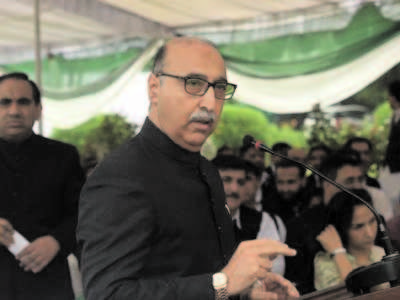
    Pakistan’s high commissioner to India Abdul Basit will complete three years here next month and he has been recalled in yet another sign that Pakistan PM Nawaz Sharif is in complete control of foreign policy.

    “Pakistan will announce the name of the new high commissioner in a few days,” said a diplomatic source on condition of anonymity.

    One of the names being considered is that of Sohail Mahmood, a career diplomat of 1985 batch. He has earlier served in Washington, New York and Ankara. Basit was said to be a certainty for the position of Pakistan’s foreign secretary but was pipped by Tehmina Janjua, Pakistan’s permanent representative to the UN in Geneva.

    Janjua is said to be the choice of Pakistan PM Nawaz Sharif. The fact that Basit was seen as taking a hawkish position on most contentious issues with India is said to have gone against him in Islamabad’s choice of foreign secretary.

    Sharif in the past few months, or more specifically since the retirement of former army chief Raheel Sharif, has been keen to reach out to India. This has reflected in some of the steps taken by his government, including the release of Indian fishermen in December on his birthday and later also in the release again of an Indian soldier who was said to have “inadvertently” crossed over into Pakistan territory the day India carried out its surgical strikes across LoC.

    While the house arrest of JuD chief Hafiz Saeed probably has more to do with the change in US administration, the timing has only lent credence to the perception that Sharif is serious about improving ties with India. As has been reported earlier by this newspaper from Islamabad, the fact that Sharif could conveniently ignore Basit’s claim to the foreign secretary’s post only shows his growing clout after the departure of Raheel Sharif. (PTI)

  • Pakistan to file FIR against Hafiz Saeed

    Pakistan to file FIR against Hafiz Saeed

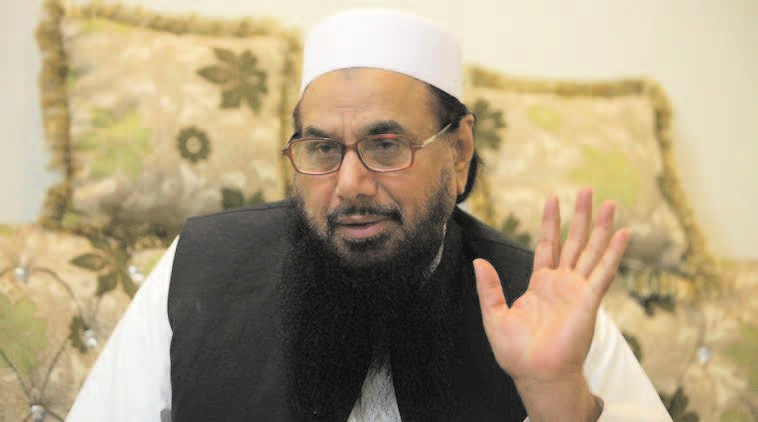
    A top official of the Pakistan government said on Wednesday that an FIR would soon be lodged against Jamaat-ud-Dawa (JuD) chief Hafiz Muhammad Saeed, currently in house arrest under an anti-terrorism law.

    The crackdown on the Mumbai attack mastermind and others was described as “cowardly” by assorted terror and militant groups, with Hizbul Mujahideen chief Syed Salahuddin saying it was “painful”. Minister Khurram Dastagir Khan said all state institutions were on board before action was taken against Saeed, adding, “The charges against him will be known in a few days.”

    Punjab law minister Rana Sanaullah said more activists of JuD and its front Falaha-i-Insaaniyat (FIF) would be booked soon. “We’re monitoring the activities of JuD and FIF workers. More activists will be detained under the fourth schedule of the anti-terrorism law,” Sanaullah said, telling reporters that Saeed’s Kashmir policy was at variance with Pakistan’s. “We won’t compromise on our national interest. Our policy on Kashmir is different from JuD’s,” the minister said.

    Syed Salahuddin issued a statement saying the arrest not only sent “a negative and disappointing message” to the people in “India-held Kashmir”, but also showed “Pakistan’s weak role in the ongoing freedom struggle” of Kashmiris. He urged the Pakistani government to revoke the detention, which led to a few pro-JuD demonstrations in Muzaffarabad in Pakistan Occupied Kashmir.

    “Kashmir’s freedom movement demands the Pakistani leadership rise above compulsions and fears and take a firm position. Saeed has always called the international community to break its criminal silence on Kashmir,” said Salahuddin, who also heads the United Jihad Council (UJC), a conglomerate of 12 terror groups.

    Pakistan army, which allegedly used Saeed and his militant outfits for years as proxies against India, has said his arrest was in national interest. October last, the Sharif government had informed the military leadership of Pakistan’s growing international isolation over failure to curb terrorists, and sought consensus on several key actions against non-state actors. Foreign secretary Aizaz Ahmed Chaudhry had then said that the principal international demands were for action against Masood Azhar and Jaish-e-Mohmmad, Hafiz Saeed and Lashkar-e-Taiba, and the Haqqani network.

  • ISIS social-media channels distributed a holiday attack list of churches in the US

    ISIS social-media channels distributed a holiday attack list of churches in the US

    NEW YORK (TIP): The Islamic State published the names and addresses of thousands of churches in the United States and called on its adherents to attack them during the holiday season, according to a message posted late-night Wednesday, December 21, in the group’s “Secrets of Jihadis” social media group.

    A user going by the name of “Abu Marya al-Iraqi” posted an Arabic-language message calling “for bloody celebrations in the Christian New Year” and announced the group’s plans to utilize its network of lone wolf attackers to “turn the Christian New Year into a bloody horror movie.”

    The series of messages appeared in a pro-ISIS group on Telegram, which also provides manuals for the use and preparations of weapons and explosives for aspiring assailants. The information, distributed in a number of posts, was all previously available online and includes a public directory of churches across all 50 states. (Vocativ does not publish specific information found in lists like these.)

    In another group post, a member summoned “the sons of Islam” to target “churches, well-known hotels, crowded coffee shops, streets, markets and public places,” and shared a list of addresses in the United States, as well as in Canada, France and the Netherlands.

    In New York, security measures have been heightened in view of the threat.

  • Indian American Balwinder Singh pleads guilty to Khalistan terror movement involvement

    Indian American Balwinder Singh pleads guilty to Khalistan terror movement involvement

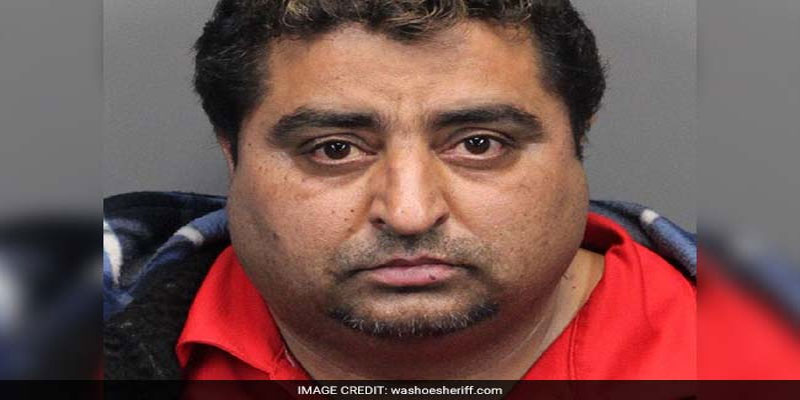
    NEW YORK (TIP):  42 Year old Balwinder Singh, a resident of Nevada, pleaded guilty before US District Judge Larry Hicks to one count of conspiracy to provide material support to terrorists, knowing and intending that such support would be used to carry out terrorist attacks overseas, Acting Assistant Attorney General for National Security Mary McCord said, November 29.

    “Singh attempted to provide material support and resources to terrorists to create violence and disruption abroad,” McCord said.

    “Identifying, thwarting and holding accountable individuals who pursue international terrorism is a top priority of the Department of Justice,” she said.

    A citizen of India and permanent US resident, Singh went by the aliases of “Jhaji”, “Happy” and “Baljit Singh” and has been detained and charged since his arrest in December 2013.

    He faces the statutory maximum penalty of 15 years in prison and deportation following his release. His sentencing was set for February 27.

    His indictment says that Singh obtained asylum in San Francisco using a false identity.

    According to the court filed documents and admissions made in connection with the plea agreement, between September and December 2013, Singh conspired with others to support terrorist attacks in India as part of a movement to create an independent Sikh state.

    Singh communicated with co-conspirators by telephone to discuss these plans and agreed to provide material support by facilitating a co-conspirator’s travel to and within South Asia, providing funding and materials necessary to carry out an overseas attack.

    In October 2013, Singh and the co-conspirators agreed that one of them would travel to India in 2013 and carry out “likely an assassination or maiming of an Indian governmental official.” The final target would be determined after the co-conspirator arrived in South Asia.

    Singh purchased two sets of night-vision goggles, gave them to a co-conspirator who was going to carry out the planned attack.

    In December 2013, the co-conspirator attempted to board a flight from the San Francisco International Airport to Thailand in order to carry out the attack, but was prohibited by the US law enforcement from boarding the flight.

    As a result, the planned attack was never executed.

    After this, Singh and his co-conspirators continued to discuss and plan terror attack in India until he was arrested.

    The defense attorney noted that a clause in the plea agreement would allow Singh to ask to be sent to a third country, not India, under the US Convention Against Torture.


  • Zakir Naik plays victim, dubs IRF ban ‘communal move’

    Zakir Naik plays victim, dubs IRF ban ‘communal move’

    MUMBAI (TIP): Controversial televangelist Zakir Naik has called the ban on his NGO Islamic Research Foundation (IRF)+ “a communal decision”. In a letter released on Friday through his spokesperson, his second since being accused of radicalising one of the perpetrators of the July 1 Dhaka cafe attack, Naik said IRF was banned without any agency questioning him.

    “…not a single time was I questioned or given a chance to explain,” he writes. “Their agenda is open and clear: implicate me by hook or by crook.”

    “The decision to ban IRF was taken in the middle of the demonetisation+ fiasco, as the country reeled under the self-imposed cash crunch. I won’t be surprised if this ban was meant to distract media from what was going on in the country.” Recently, the government banned IRF under the Unlawful Activities (Prevention) Act, froze the bank account of Islamic International School, while NIA has asked banks to freeze accounts of Naik, IRF and associate companies.

    Playing the Muslim victimhood card, Naik said IRF was slapped with UAPA because “the name of the religion has been made synonymous with violence”.

    Naik, like in his previous letter sent on September 10, alleged it was Indian Muslims who were under attack. “It is an attack on whom I represent, the Indian Muslims.”

    Naik, however, expressed his faith in the Indian judiciary. A source said Naik wrote this letter from an African country which he is touring currently.

  • EIGHT YEARS AFTER 26/11, RAILWAYS AND COAST REMAIN VULNERABLE

    EIGHT YEARS AFTER 26/11, RAILWAYS AND COAST REMAIN VULNERABLE

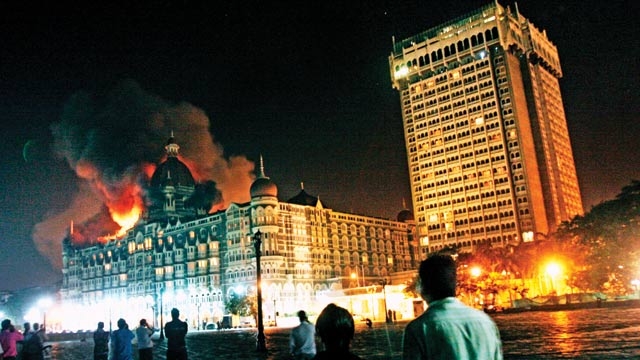
    MUMBAI (TIP): Eight years after the November 26, 2008 Mumbai terror attacks, in which 164 people were killed and about 308 injured, the railways and coastal areas remain vulnerable. The strengthening of the intelligence and counter-intelligence apparatus and training of police personnel, especially  constables attached to the anti-terrorism cells, is yet to gather momentum. The cells were set up in over 100 police stations across Greater Mumbai. The nation observes the 8th anniversary of the attacks on Saturday.

    A two-member committee headed by former Governor and Union Home Secretary R D Pradhan had been appointed to examine the government’s response to terror attacks. Among other things, the committee had suggested steps to strengthen coastal security through better monitoring and modernisation of police with automatic arms and ammunition.

    While the government has undertaken to set up 12 coastal police stations, in a bid to strengthen the coastal security, as on date only two are operational –one in the island city the other in the western suburbs. However, both lack infrastructure. Besides, the establishment of police chowkies still remains on the paper while the development of a jetty has been caught in red tape. Of the 30-plus speed boats, some are either anchored at the bay and or can otherwise not be used by security personnel to conduct vigils, for want of adequate fuel.

    Security at the Mumbai railway stations and key junctions have been caught in administrative and policy logjams. More than seven million commuters travel on central, western and harbour railway lines, but deployment of adequate security personnel has yet to happen.

    State Anti-Terrorism Squad chief Atulchandra Kulkarni informs that the implementation of the Ram Pradhan committee report is being made in phases. “A lot of changes have been made in the functioning of the ATS and its jurisdiction. ATS units are functional in all key regions of the state. The police force is equipped with modern arms and weapons,” he says.

    Further, a state home department official said chief minister Devendra Fadnavis recently launched Mumbai’s city-wide CCTV network, which is expected to strengthen the surveillance system stronger. A total of 4,717 CCTV cameras across 1,510 locations, covering almost 80 per cent of the city have been installed. Apart from fixed cameras, five  mobile surveillance vans will also start patrolling the city. The project had been proposed during the NCP-Congress regime, on a recommendation of the Ram Pradhan Committee report but it was delayed because private sector companies did not submit tenders despite bids being invited four times. Security expert Shirish Inamdar says the installation of CCTV cameras is not adequate and upgradation of intelligence machinery is need of the hour. “Higher level and lower level police personnel should interact with each other on a regular basis and those assigned with the job of intelligence gathering should be further trained. Though anti-terror cells have been established in every police station in Greater Mumbai, the personnel deployed there lack adequate training in intelligence and counter-terrorism. Adequate attention needs to be paid on this aspect,” he says. Source: Business Standard

  • Pakistan is damaging itself by fighting against India: PM

    Pakistan is damaging itself by fighting against India: PM

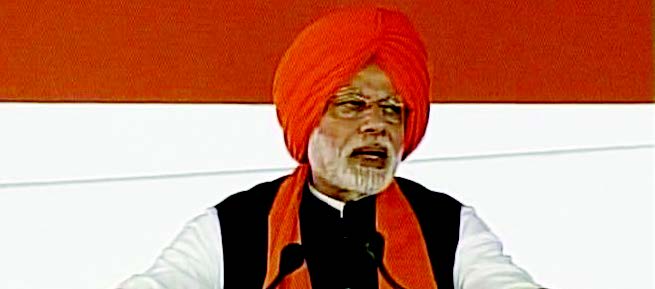
    BATHINDA (TIP): Prime Minister Narendra Modi today said Pakistan was yet to settle from the setback of surgical strikes and was damaging itself by fighting against India.

    “Earlier, soldiers were unable to show their valor despite having the strength. But now Pakistan has seen strength of our brave soldiers after they carried out surgical strikes in 250-km area across the LoC,” Modi said while addressing a public rally.

    He said there were tremors across the border after these strikes and they have not yet settled.

    Reaching out to Pakistani public, Modi said, “125 crore Indians eyes were wet with tears after killing of school kids in Peshawar. Every Indian felt the pain of Pakistani.”

    Reiterating that Pakistani public should ask their rulers that fight should be against black money and corruption rather than fighting any country, Modi said,

    “By fighting against India they (Pakistan) are damaging themselves and killing innocents also.” “Pakistani people also want freedom from poverty. For the sake of political benefits this atmosphere has been created by them,” he added. Modi was speaking at the foundation stone laying ceremony of AIIMS in Bathinda.

  • Arrest of 4 thwarted ‘imminent’ terror attack in France: Officials

    Arrest of 4 thwarted ‘imminent’ terror attack in France: Officials

    PARIS (TIP): Four long-time friends in their 30s, living in the same French city and communicating through a closed phone line, were planning a terror attack in France as early as next week on orders from an Islamic State group member in Iraq or Syria, Paris prosecutor Francois Molins said on Nov 26.

    The ‘commando’ of four arrested on Sunday in the eastern city of Strasbourg plotted to carry out an attack on Dec. 1, but investigators have not yet determined “the specific chosen target among all those considered by the group,” Molins said.

    A fifth suspect was arrested in the southern city of Marseille at the same time as the Strasbourg suspects. Molins told reporters that suspect was not in direct touch with the other four, but was ‘given guidance remotely’ from the same IS member.

    The prosecutor didn’t name any targets, but security was tightened this week at the Paris headquarters of France’s criminal investigations police, reportedly among the locations studied. French President Francois Hollande said a “large-scale attack” was thwarted.

    The night they were arrested, two of the Strasbourg group had just downloaded the Periscope application, which allows people to stream live on Internet with a cell phone. The app activity suggests they were preparing an “imminent” attack, Molins said.

    The four Strasbourg suspects also were in possession of guns and ammunition, he said. Among the weapons seized during home searches were two handguns, two automatic rifles, several cartridge clips and dozens of cartridges of different calibers.

    Investigators also found instructions for a money transfer, GPS coordinates and detailed explanations for obtaining more weapons on one suspect’s USB stick.

    All five men had a “clear will to find and to identify targets to commit an act in the very short term,” Molins said.

    In addition, the five “had common instructions to obtain weapons, instructions given by a person from the Iraqi-Syrian zone through encrypted applications popular among terrorists,” he said.

    Investigators recovered a notebook that contained 12 pages of writing that referred to an armed jihad, death in martyrdom and Abu Bakr al-Baghdadi, the Islamic State group leader, the prosecutor said. (AFP)

  • One by one, ISIS social media experts are killed as result of FBI program

    One by one, ISIS social media experts are killed as result of FBI program

    WASHINGTON (TIP): In the summer of 2015, armed US drones over eastern Syria stalked Junaid Hussain, an influential hacker and recruiter for the Islamic State.

    For weeks, Hussain was careful to keep his young stepson by his side, and the drones held their fire. But late one night, Hussain left an internet cafe alone, and minutes later a Hellfire missile killed him as he walked between two buildings in Raqqa, Syria, the Islamic State’s de facto capital.

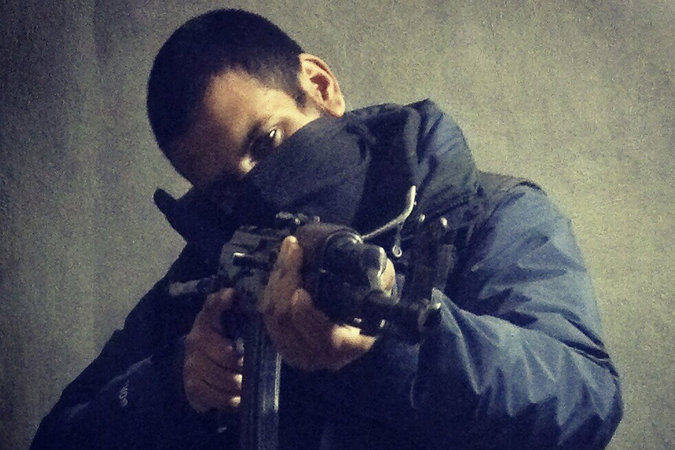
    Hussain, 21, from Birmingham, England, was a leader of a band of English-speaking computer specialists who had given a far-reaching megaphone to Islamic State propaganda and exhorted online followers to carry out attacks in the West. One by one, US and allied forces have killed the most important of roughly a dozen members of the cell, which the FBI calls “the Legion,” as part of a secretive campaign that has largely silenced a powerful voice that led to a surge of counterterrorism activity across the US in 2015 as young men and women came under the influence of its propaganda.

    US military, intelligence and law enforcement officials acknowledge that the Islamic State still retains a sophisticated social media arm that could still inspire attacks like those in San Bernardino, California, and in Orlando, Florida, and remains a potent foe suspected of maintaining clandestine cells in Europe. But they point to the coordinated effort against the Legion as evidence of the success the US has had in reducing the Islamic State’s ability to direct, enable or inspire attacks against the West.

    Initially the threat posed by the Legion was primarily seen as a problem for law enforcement officials. But as the threat worsened last year, and the FBI stepped up the monitoring of terrorism suspects around the country, the bureau pressed the military to focus on the group, according to current and former US officials.

    While US and British forces conducted a series of drone strikes on members of the group, the FBI sifted through thousands of the Legion’s followers on social media to figure out who had actually been inspired to take action. In the last two years, it has arrested nearly 100 people in cases involving the terrorist group.

    Several of the arrests were of people who had direct contact with the Legion. Many of the others were “folks who first came on our radar because we became aware of them” through their connections with Hussain and Reyaad Khan, also a British citizen, who was another leader of the group, according to Andrew McCabe, deputy director of the FBI.

    Hussain wore a number of hats, including that of a hacker. He was linked to the release of personal information on more than 1,300 US military and government employees. In March 2015, his group posted the names and addresses of service members with instructions: “Kill them in their own lands, behead them in their own homes, stab them to death as they walk their streets thinking they are safe.”

    More important were Hussain’s efforts as an online recruiter. According to court records, Hussain communicated with at least four men in four states, imploring them to initiate attacks or help spread the Islamic State’s message. (PTI)

  • Three soldiers killed in LoC attack, body of one mutilated

    Three soldiers killed in LoC attack, body of one mutilated

    A counter-infiltration patrol party of the Indian Army was ambushed by Pakistani terrorists ahead of the fencing along the Line of Control in the forest belt in Machhil sector in Kupwara district on Tuesday, an Army officer said.

    Srinagar/Jammu: In a cross-LoC attack by suspected Pakistani terrorists, three Indian soldiers were on Tuesday killed, with body of one of them being mutilated in second such incident in less than a month, triggering outrage in India.

    The ambush on an army patrol took place in Machhil sector of Kashmir, following which the Indian Army vowed heavy “retribution”.

    “A counter-infiltration patrol party of the Indian Army was ambushed by terrorists ahead of the fencing along LoC in forest belt in Machhil sector in Kupwara district today,” a senior Army officer said.Three soldiers were killed in the attack, he said, adding the body of one of them was mutilated.

    Earlier, Army’s Northern Command spokesman tweeted, “3 soldiers killed in action on LC (Line of Control) in Machhal. Body of one soldier mutilated.” He said the “retribution will be heavy for this cowardly act.”

    A Defence spokesman said heavy cross-Line of Control shelling was going on at four places in Machhil sector from 3.30 pm.

    “Around 1530 hour, heavy cross-LoC shelling has started from both sides at Dana Machhil, Ashni, Ringsar and Ringsar Payeen in Machhil sector of Kupwara district,” he said. He did not give any further details. This is the second such incident of mutilation of the body of an Indian soldier in the same sector since October 28.

    On that day, terrorists, aided by the cover fire by Pakistani Army, had crossed the Line of Control and killed an Indian army jawan and mutilated his body in the Macchil sector. One attacker was killed in that incident.

    In June 2008, a soldier of the 2/8 Gorkha Rifles lost his way and was captured by a Pakistani Border Action Team (BAT) in Kel sector. His body was found beheaded after a few days.

  • Pak army resorts to firing along LoC in Pallanwala sector

    Pak army resorts to firing along LoC in Pallanwala sector

    JAMMU (TIP): Pakistani troops resorted to firing along the Line of Control (LOC) in the Pallanwala sector of the Jammu district on Nov 17 evening prompting the army to give a “befitting response”.

    “Pakistan army resorted to unprovoked ceasefire violation in the Pallanwala sector at 1915 hours today, using automatic weapons and mortars.

    “The same is being responded to befittingly by own troops”, a Defence spokesperson said.

    Pakistani troops on Tuesday had targeted Indian posts with heavy firing and shelling for four hours along the LoC in Rajouri in Jammu and Kashmir, forcing Indian troops to retaliate.

    On Monday, Pakistani troops resorted to shelling and firing on Indian posts in four sectors along the LoC in Pallanwala sector of Jammu, Sunderbani and Naushera sectors of Rajouri and Khadi sector of Poonch district, in which two persons including a jawan were injured.

    Pakistan on Monday said seven of its soldiers were killed in firing by Indian troops across the LoC.

    The 2003 India-Pakistan ceasefire agreement has virtually become redundant with a whopping 286 incidents of firing and shelling along LoC and IB in Jammu and Kashmir by Pakistani troops that resulted in death of 26 people, including 14 security personnel, since the surgical strike on terrorist launch pads in PoK.

  • Indian-Origin Sentenced To Prison For Helping ISIS in Chicago

    Indian-Origin Sentenced To Prison For Helping ISIS in Chicago

    An Indian American man who tried to go to Syria with his teenaged brother and sister to join the ISIS terror organisation has been sentenced in Chicago to 40 months in prison.

    Mohammed Hazra Khan, 21, became on Friday the first person of Indian origin to be convicted and sentenced in the US for ISIS connections.

    The sentencing hits the news just after the victory of Republican Presidential candidate Donald Trump, who had called for intensive investigation of Muslim immigrants and, controversially, suggesting that if necessary their immigration should be stopped temporarily till a mechanism for heightened scrutiny was in place.

    Federal Judge John J Tharp sentenced Khan, who had admitted in court last year to the charges of providing support to the ISIS and trying to go abroad to join it, Mary B McCord, the Acting Assistant Attorney General for National Security, said in a statement.

    The judge in the Northern Illinois federal court also ordered that for 20 years after his release, Khan should undergo intensive supervision that includes “violent extremism counselling” and a mental health treatment programme, she added.

    Khan was arrested by anti-terrorism officers two years ago while trying to leave the US from Chicago’s O’Hare Airport, she said. He was 19 years old at the time of his arrest.

    Khan’s brother, who was 16 years old in 2014, and sister, who was 17, were also stopped at the airport but did not face any charges and were let go after officials questioned them.

    Khan is an American citizen born in New York. But his family had immigrated from India and lived in the Chicago area, The Chicago Tribune reported quoting his lawyer Thomas Anthony Durkin.

    In a Tribune picture taken outside the courtroom, Khan’s mother, Zarine, was seen wearing a hijab and his father, Shafi, a long beard. The newspaper said that Khan wore a skullcap inside the court.

    ABC News reported that last year, his mother had publicly asked ISIS leaders to “leave our children alone” and asserted: “The venom spewed by these groups and the violence committed by them find no support in the Quran and are completely at odds with our Islamic faith.”

    Durkin told the judge that Khan did not intend to wage war against the US but was naive and only wanted to join an Islamic caliphate and live according to Muslim doctrine, according to the Tribune.

    Tharp did not buy the argument. The Tribune reported that the judge said: “Mr. Khan set off to join and aid a terrorist organization that believes it is appropriate, indeed believes it is holy, to kill anyone who disagrees with its religious dogma.”

    Tharp referred to the behaviour of ISIS and told Khan that “instead of a public beheading, you have been given a public trial,” ABC News reported.

    Khan could have been sentenced to 15 years, but the prosecutors asked for only five years because he had cooperated in other prosecutions and the judge gave the even more lenient sentence of 40 months.

    With the two years he spent in custody and remission for good behaviour, he would eligible to be free to join college next year, ABC News said.

    The Tribune said that according to prosecutors, Khan helped with investigations against an ISIS terrorist and recruiters and had also offered to testify against a British ISIS recruiter, Mizanur Rahman.

  • 5 Islamic State suspects arrested in Germany

    5 Islamic State suspects arrested in Germany

    BERLIN (TIP): German authorities arrested five men Nov 9 on allegations they aided the Islamic State group in Germany by recruiting members and providing financial and logistical help.

    The federal prosecutor’s office said in a statement that the men were arrested on suspicion of supporting a terrorist organization. The arrests were made in a series of raids in the western state of North Rhine-Westphalia and the northern state of Lower Saxony.

    The country’s justice minister, Heiko Maas, called the arrests “an important blow to the extremist scene in Germany.

    Interior Minister Thomas de Maiziere said it was critical to prevent people from becoming “so radicalized that they are in danger of becoming terrorists.”

    “We don’t want terrorism to take place in Germany,” he said. “We don’t want terrorism to be exported from Germany.”

    One of the raids was in the Lower Saxony city of Hildesheim, which is a known center for ultraconservative Muslims known as Salafists and where a mosque was raided during the summer.

    The prosecutor’s office, which handles all terrorism cases, said the suspects weren’t known to have links to IS suspect Jaber Albakr, who killed himself in prison in October two days after being arrested on suspicion of plotting to attack a Berlin airport with homemade explosives.

    The five men are suspected of recruiting young Muslims in Germany, and raising funds to send them to Syria to join IS, prosecutors said. They’re also accused of providing logistical support for the trips.

    One of the suspects, a 32-year-old Iraqi citizen identified as Ahmad Abdulaziz Abdullah A., who also goes by the alias of Abu Walaa, is accused of being the ringleader of the group. He openly supported the IS group, attended several extremist events as a speaker and approved the departure of those willing to go to Syria, prosecutors said.

    Two other suspects, identified as 50-year-old Turkish citizen Hasan C. and 36-year-old German-Serbian citizen Boban S., were in charge of teaching Arabic and “radical Islamic content” to recruits. (AP)


  • 5 dead after tram derails in London

    5 dead after tram derails in London

    LONDON (TIP): Five people were killed and more than 50 injured when a tram derailed in south London during an early morning rainstorm Nov 9, police said.

    Emergency workers were still at the scene of the derailment in Croydon more than six hours after the crash, trying to free two people trapped in the wreckage of the two-carriage tram that tipped on its side next to an underpass. It appeared to have come off the rails on a bend.

    British Transport Police said they had arrested a man _ reportedly the tram’s driver _ and rail accident investigators were probing the cause of the derailment.

    The force said that “five people have sadly died following this incident,” and more than 50 others were taken to local hospitals with injuries.

    Liam Lehane of the London Ambulance Service described many of those hurt as “walking wounded” but said others suffered serious injuries.

    London’s fire department said eight fire engines and four specialist rescue units were at the scene. The rescue units, which are used in complex incidents, are equipped with heavy lifting and cutting tools, together with longer duration breathing apparatus and floodlighting.

    Emergency services called to the Sandilands tram stop at around 6:10 a.m. “I heard a massive crash at about 6.15 a.m., then heard shouting, then the emergency services arrived,” said resident Hannah Collier, 23. “They started bringing up the casualties, some very seriously injured.”

    Fire Brigade station manager Joe Kenny said “firefighters have released a number of people and two people remain trapped.” The British capital’s only tram network operates in the southern end of the city, serving 27 million passengers in the last year. (AP)


  • US warns its citizens in India of IS attack

    US warns its citizens in India of IS attack

    WASHINGTON (TIP): The enhanced threat perception India currently faces could affect foreign visitor inflow as the peak travel season begins in the country. The US Embassy in New Delhi issued on Nov 2 a terror alert for its citizens in India, warning of increased threat of Westerners being targeted in India.

    Titled ‘security message for US citizens’, the alert says: “The US Embassy warns of an increased threat to places in India frequented by Westerners, such as religious sites, markets and festival venues. All US citizens are reminded to maintain a high level of vigilance and take appropriate steps to increase their security awareness.”

    The embassy has also mentioned increased risk from “ISIL aka Da’esh” (Islamic State terror group) and asked its citizens to refer to the “worldwide caution” issued by the US state department less than two months ago.

    Regarding India specifically, the US state department caution issued on September 9, 2016, says: “India continues to experience terrorist and insurgent activities which may affect US citizens directly or indirectly. Anti-western terrorist groups active in India include Islamist extremist groups such as Harkat-ul-Jihad-i-Islami, Harakat ul-Mujahidin, Indian Mujahideen, Jaish-e-Mohammed, and Lashkar-e-Taiba.”

    The caution was issued nine days before the Uri attack and since then India is on the highest possible alert. The US embassy warning comes at a time when inbound tourism season is starting. “The heightened tensions between India and Pakistan; the war-like situation on the line of control in Kashmir and overall enhanced security across India.

    (PTI)

  • Pak freezes accounts of 5,100 terror suspects, including JeM Chief

    Pak freezes accounts of 5,100 terror suspects, including JeM Chief

    Islamabad, Oct 24 (TIP) : Pakistani authorities have frozen multiple bank accounts of suspects whose names were listed in the Fourth Schedule under the Anti-Terrorism Act, 1997.

    These accounts carried net amount worth over Rs 400 million, revealed the officials, adding that names of around 1,200 suspects whose accounts were frozen by the State Bank of Pakistan (SBP) were listed in category ‘A*’ of the ATA, 1997, a term used for terrorists put on exceptional risk or high risk.

    The name of Jaish-e-Muhammad (JeM) chief Masood Azhar has also been included in the list’s top suspects whose accounts were frozen by the SBP, officials of the Ministry of Interior and SBP said.

    Masood Azhar’s name was also listed in category ‘A*’ of the 4th Schedule, revealed the officials who sought anonymity on the gravity of the issue. It happened since the government put the JeM chief under “protective custody” of security agencies after terrorists attacked the Pathankot Airbase, part of the Western Air Command of the Indian Air Force, they further revealed.

    “Following a request of the Ministry of Interior, we have frozen accounts of all top suspected terrorists, including Masood Azhar, son of Allah Bux,” confirmed a senior official of the SBP who is part of a team monitoring the progress pertaining to this matter.

    The interior ministry sent three different lists of thousands of suspects, including kingpins of some proscribed organisations, The News quoted the official as saying.

    Around 1,200 suspects whose accounts were frozen by SBP were listed in category A of the Anti-Terrorism Act, 1997, a term used for terrorists put on exceptional risk or high risk, the paper reported.

    Azhar has been included in the lists top suspects whose accounts were frozen by the SBP, said officials of the Ministry of Interior and SBP.

    After the attack on the airbase in Pathankot in January, India had in February written to the UN calling for immediate action to list Azhar under the UN Sanctions Committee.

    The National Counterterrorism Authority (Nacta) sent around 5,500 names to the SBP earlier this month, they said.

    National Coordinator Nacta Ihsan Ghani confirmed that over 5,000 accounts of suspects have been frozen by the SBP.

    “These accounts hold net amount worth Rs 400 million,” he said. About Azhars accounts, Ghani said he would revert with latest updates later this week.

    “More than 3,078 accounts of suspects whose accounts were frozen belonged to Khyber Pakhtunkhwa and Fata, 1,443 from Punjab, 226 from Sindh, 193 from Balochistan, 106 from Gilgit-Baltistan and 27 from the Islamabad Capital Territory,” the paper said, adding that 26 suspects belonged to Pakistan-occupied Kashmir.

    Accounts of other suspects such as cleric of Islamabad?s Lal Masjid Maulana Aziz, Ahle Sunnat Wal Jamaat leaders Maulvi Ahmed Ludhianvi and Aurangzeb Faroogi, Matiur Rehman of al-Qaeda, Mansoor alias Ibrahim of Tehreek-e-Taliban and Qari Ehsan alias Ustad Huzaifa and Ramzan Mengal of Lashkar-e- Jhangvi were also frozen, the paper added.

  • Forces moving ‘faster than expected’ on Mosul: Iraq PM

    Forces moving ‘faster than expected’ on Mosul: Iraq PM

    PARIS (TI): Iraqi forces are “advancing faster than expected” in a major offensive to recapture Mosul from Islamic State jihadists, Iraqi Prime Minister Haider al-Abadi said on Oct 20.

    “We are advancing faster than we had expected and planned,” Abadi said, speaking on a videoconference link to an international meeting cohosted by France and Iraq on the future of Mosul following the start of the offensive this week.

    French Defence Minister Jean-Yves Le Drian had warned on Tuesday that the battle to retake Iraq’s second-biggest city could take “months”.

    French President Francois Hollande told today’s meeting that the jihadists were already fleeing to Raqa, their stronghold in neighbouring Syria.

    “We can’t afford mistakes in the pursuit of the terrorists who are already leaving Mosul for Raqa,” Hollande said, adding: “We cannot allow those who were in Mosul to evaporate.”

    The long-awaited offensive on Mosul was launched on Monday, with some 30,000 troops involved in Iraq’s largest military operation since the pullout of US troops in 2011.

    Representatives from around 20 countries including the US, Turkey, Gulf states and EU member states are attending the Paris meeting co-chaired by French Foreign Minister Jean-Marc Ayrault and his Iraqi counterpart Ibrahim al-Jaafari.

    Today’s talks come ahead of a meeting in Paris next Tuesday of the coalition’s defence ministers to assess progress in the Mosul offensive. US Defence Secretary Ashton Carter will be among 13 ministers at the talks, an aide to Le Drian said. (AFP)

  • Russia extends Aleppo truce by 24 hours: Defence minister

    Russia extends Aleppo truce by 24 hours: Defence minister

    MOSCOW (TIP): Russia’s defence minister said Oct 20 that Moscow was extending a “humanitarian pause” in Aleppo scheduled to end at 1600 GMT by a further day.

    On the order of President Vladimir Putin, “a decision was made to extend the ‘humanitarian pause’ by 24 hours,” minister Sergei Shoigu said in a statement, adding that Syrian authorities had agreed to the extension.

    Shoigu did not specify when the extended truce would end. The UN said earlier it had received a pledge from Moscow to extend it until Saturday.

    Russia, facing growing criticism of the brutal Moscow-backed assault on the city, said this week that its forces and Syrian regime troops would briefly halt fire in Aleppo on Thursday.

    Moscow said Tuesday that Russian and Syrian warplanes had stopped bombing Aleppo to pave the way for the humanitarian truce.

    The Russian defence ministry has said the ceasefire would enable civilians and armed rebels to leave the city’s rebel-held east through six corridors.

    After Syria talks with the French and German leaders, Putin said Thursday that Russia intended to extend the halt in its air strikes against Aleppo “as far as possible.”

    The UN said it hoped to carry out the first medical evacuations from Aleppo on Friday, after having received clearance from all warring parties and a pledge from Russia to extend the truce until Saturday.

    The West has accused Moscow of perpetrating potential war crimes in Aleppo through indiscriminate bombing to support Syrian government efforts to retake total control over the city. (PTI)

  • Pakistan warns of action if India breaches Indus Water Treaty

    Pakistan warns of action if India breaches Indus Water Treaty

    ISLAMABAD (TIP): Pakistan on October 20 warned of “appropriate action” if India violates the Indus Water Treaty and said it is closely monitoring the situation, amid reports that New Delhi may revisit the key water sharing accord+ .

    “Appropriate action will be taken in line with the Treaty in case of any violation by India,” Foreign Office (FO) spokesperson Nafees Zakaria said at the weekly briefing.

    Pakistan was keeping a close eye on the situation, Radio Pakistan quoted him as saying.

    Zakaria’s remarks come amid reports that India may review the 56-year-old Indus Water Treaty+ .

    He said that India is making “desperate attempts” to divert attention from the ” atrocities and human right violations+ ” being committed in Kashmir.

    He said Pakistan is highlighting Indian brutalities in Kashmir at world fora and there has been “very substantive outcome” of these efforts but the international community remains concerned about the situation.

    Responding to a question, he claimed that India violated ceasefire on the Line of Control for more than 90 times this year.

    The notion of isolating Pakistan is “ridiculous”, Zakaria said, adding that India’s “negative attitude” has been exposed which is the biggest hurdle in the way of regional development and prosperity.

    He also termed the Indian treatment to the Pakistani artistes as “very disappointing and highly regrettable” as he deplored India’s decision to “use SAARC for its political ambition”, according to the report.

    Zakaria also referred to a media report quoting US Republican presidential candidate Donald Trump, who described tensions between India and Pakistan as a “very, very hot tinderbox” and offered to be “the mediator or arbitrator”.

    Zakaria noted that though Pakistan does not comment on media reports usually, in this case it welcomed the mediation offer. (PTI)

  • Pentagon confronts a new threat from ISIS: Exploding drones

    Pentagon confronts a new threat from ISIS: Exploding drones

    WASHINGTON (TIP): Kurdish forces fighting the Islamic State in northern Iraq last week shot down a small drone the size of a model airplane. They believed it was like the dozens of drones the terrorist organization had been flying for reconnaissance in the area, and they transported it back to their outpost to examine it.

    But as they were taking it apart, it blew up, killing two Kurdish fighters in what is believed to be one of the first times the Islamic State has successfully used a drone with explosives to kill troops on the battlefield.

    In the past month, the Islamic State has tried to use small drones to launch attacks at least two other times, prompting US commanders in Iraq to issue a warning to forces fighting the group to treat any type of small flying aircraft as a potential explosive device.

    The Islamic State has used surveillance drones on the battlefield for some time, but the attacks — all targeting Iraqi troops — have highlighted its success in adapting readily accessible technology into a potentially effective new weapon. US advisers say drones could be deployed against coalition forces by the terrorist group in the battle in Mosul. For some US military analysts and drone experts, the episodes confirmed their view that the Pentagon — which is still struggling to come up with ways to bring down drones — was slow to anticipate that militants would turn drones into weapons.

    “We should have been ready for this, and we weren’t,” said PW Singer, a specialist on robotic weaponry at New America, a think tank in Washington.

    Military officials said that the Pentagon has dedicated significant resources to stopping drones but that few Iraqi and Kurdish units have been provided with the sophisticated devices that US troops have to disarm them. The officials said they have ordered the Pentagon agency in charge of dealing with explosive devices — known as the Joint Improvised-Threat Defeat Organization — to study ways to thwart hostile drones. This summer, the Pentagon requested an additional $20 million from Congress to help address the problem.

    In recent months, the CIA and the Defense Intelligence Agency both rushed to complete classified assessments about the Islamic State’s drone use. And the secretary of the Army, Eric Fanning, recently assigned a special office he had created to respond to emerging threats and to study how to stop drones. Unlike the US military, which flies drones as large as small passenger planes that need to take off and land on a runway, the Islamic State is using simpler, commercially available drones such as the DJI Phantom, which can be purchased on Amazon. The group attaches small explosive devices to them, essentially making them remotely piloted bombs.

    “This is an enemy that learns as it goes along,” said Lt. Gen. Sean MacFarland, the top US military commander in Iraq until August. Of the three known drone attacks in Iraq, only the one involving the Kurdish soldiers caused casualties. “The explosive device inside was disguised as a battery — there was a very small amount of explosives in it, but it was enough to go off and kill them,” said a senior US official who had been provided with a detailed report on the episode.

  • Tulsi Gabbard Slams Pakistan For Supporting Terror Outfits

    Tulsi Gabbard Slams Pakistan For Supporting Terror Outfits

    Washington:  An influential American lawmaker slammed Pakistan for continuing to provide “tacit and overt” support for terrorism and allowing terror outfits access into India as she pledged to work with other Congressional colleagues to cut back assistance to the country.

    Tulsi Gabbard, the first Hindu lawmaker in the US House of Representatives, said Pakistan has “continued to allow terrorist organisations to operate within their borders, moving across borders and unchecked, allowing access into India”.

    She said the recent terrorist attack in Uri which killed 19 Indian soldiers is deeply troubling.

    “People within the Pakistani government continue to provide tacit and overt support for terrorism. This is not new – this pattern of attacks has been occurring now for the past 15 years, and it must end.”

    “That’s why I’ve continued working in Congress to cut back US assistance for Pakistan and increase pressure on Pakistan to stop this violence. In the past, the US government took steps to increase pressure on Pakistan, and it’s time to revisit that approach,” Ms Gabbard, a two-term Congresswoman from Hawaii, said in a statement.

    She said the Pakistan government must fully cooperate in the investigation of these attacks, take clear, verifiable actions to put an immediate stop to these cross border attacks, and prosecute all those responsible.

    “We stand in solidarity with India in the face of these attacks and will continue to work together in this fight against terrorism,” she said.

  • India will seal its border with Pakistan by the end of 2018: Rajnath Singh

    India will seal its border with Pakistan by the end of 2018: Rajnath Singh

    Following the Uri attacks, the tension between India and Pakistan have worsened and India is upfront to seal the Indo-Pak border to safeguard the interest of India and the lives of its defense personnel.

    “The MHA (Ministry of Home Affairs) has set a target to seal the Indo-Pakistan border by December 2018. The action plan is time bound.” Said India’s Home Minister, Rajnath Singh.

    The Home Minister told that there will be proper monitoring of the action plan and he will ensure nothing goes against the plan to seal the Indo-Pak border by Dec 21, 2018.

    “There is a new concept keeping in mind border security, which is the border security grid. Border security related stakeholders will be part of it. In the meeting, the state governments gave their suggestions and based on this the border security grid will be given final shape,” Singh added on his meeting to focus on monitoring mechanism and to complete the plan within the deadline

    Carefully monitoring will be done at riverine locations such as Sir Creek and advanced technological solutions will be introduced to sealing the border and halt terror activities that keeps brewing on the different side of the border.

    Punjab’s Deputy Chief Minster brought attention to the land of famers across the border, and the problem of drugs and arm smuggling that’s weakening Punjab’s youth and damaging the entire image of the state.

    On the other side, Rajasthan CM Vasundra Raje also drew attention to some serious issues including one integrated Check Post to establish at Muunabao to provide more security and protection in case of emergency.

    The aftermath of Uri and Baramulla attack will lead to serious consequences because India is not in the mood to stay silent.

    Mr. Singh requested all the citizens to have faith in the armed forces that’s safeguarding the nation with their lives on the stake.

  • China wants to Talk on NSG, but opposed to UN ban on Masood Azhar

    China wants to Talk on NSG, but opposed to UN ban on Masood Azhar

    Ahead of President Xi Jinping’s visit to India, China on Monday said it is “ready” for talks with India on its entry into the Nuclear Suppliers Group (NSG), but defended extending a hold on India’s bid for a UN ban on JeM chief Masood Azhar, saying Beijing is opposed to anyone making “political gains in the name of counter-terrorism”.

    Briefing media here on Xi’s visit to India this week to take part in the BRICS Summit in Goa, China’s Vice Foreign Minister Li Baodong again harped on the need to build consensus over the admission of new members in the 48-member NSG.

    Asked if any progress on the issue of India’s admission into NSG can be expected in the meeting between Xi and Prime Minister Narendra Modi on the sidelines of the BRICS Summit, Li said NSG rules stipulate consensus among the members to admit new ones.

    “These rules are not to be decided by China alone. On the issue, China and India have maintained good communication and we are ready to continue consultations with India to build consensus and we also hope India can go to other members of the NSG as well,” Li said replying to a question on China’s reservations on India’s admission to the elite nuclear trading club.

    “In this aspect, we are also ready for discussions with India to explore possibilities but things need to be in keeping up with procedures, norms and regulations of the NSG. On this issue, China position is consistent. That is why China has often said international law must be observed,” he said.

    Xi will travel to Goa to attend the BRICS Summit scheduled to be held on October 15-16. The BRICS grouping consists of Brazil, Russia, India, China and South Africa.

    While India has blamed one country, without naming China, for stalling its membership in the NSG, both the countries held talks recently to iron out differences.

    After talks with India, China also has held similar talks with Pakistan, which also applied for membership in the influential grouping.

    Replying to a question on criticism about China’s move to stall India’s bid for a UN ban on Azhar – head of Pakistan-based terrorist group Jaish-e-Muhammad, Li sought to justify Beijing’s recent technical hold in the matter, saying: “China is opposed to all forms of terrorism.”

    “There should be no double standards on counter- terrorism. Nor should one pursue own political gains in the name of counter-terrorism,” he said in a veiled reference to India, which is pressing for the UN ban against Azhar over his role in the Pathankot terror attack.

    China had announced the extension of its “technical hold” on India’s bid to get Azhar designated as a terrorist by the UN on October 1, days before it was to expire. The hold can continue for upto three months more.

    During today’s briefing, Li said counter-terrorism cooperation will figure in the BRICS Summit.

    “On counter-terrorism, it is an important area for cooperation among BRICS members for political security.

    Cooperation on this front will enhance BRICS communication and coordination and will contribute to world peace and security. That is quite obvious,” he said.

    He said BRICS Foreign Ministers reached agreement on counter-terrorism during their meeting on the margins of the UN General Assembly last month.

    “We hope and believe that this Goa summit will build on the past consensus and continue to strengthen cooperation in counter-terrorism and other issues of political security and contribute to world peace and security,” he said. —PTI