Tag: COUNTER TERRORISM

  • Pakistan army beefs up positions along LoC: Intel

    Pakistan army beefs up positions along LoC: Intel

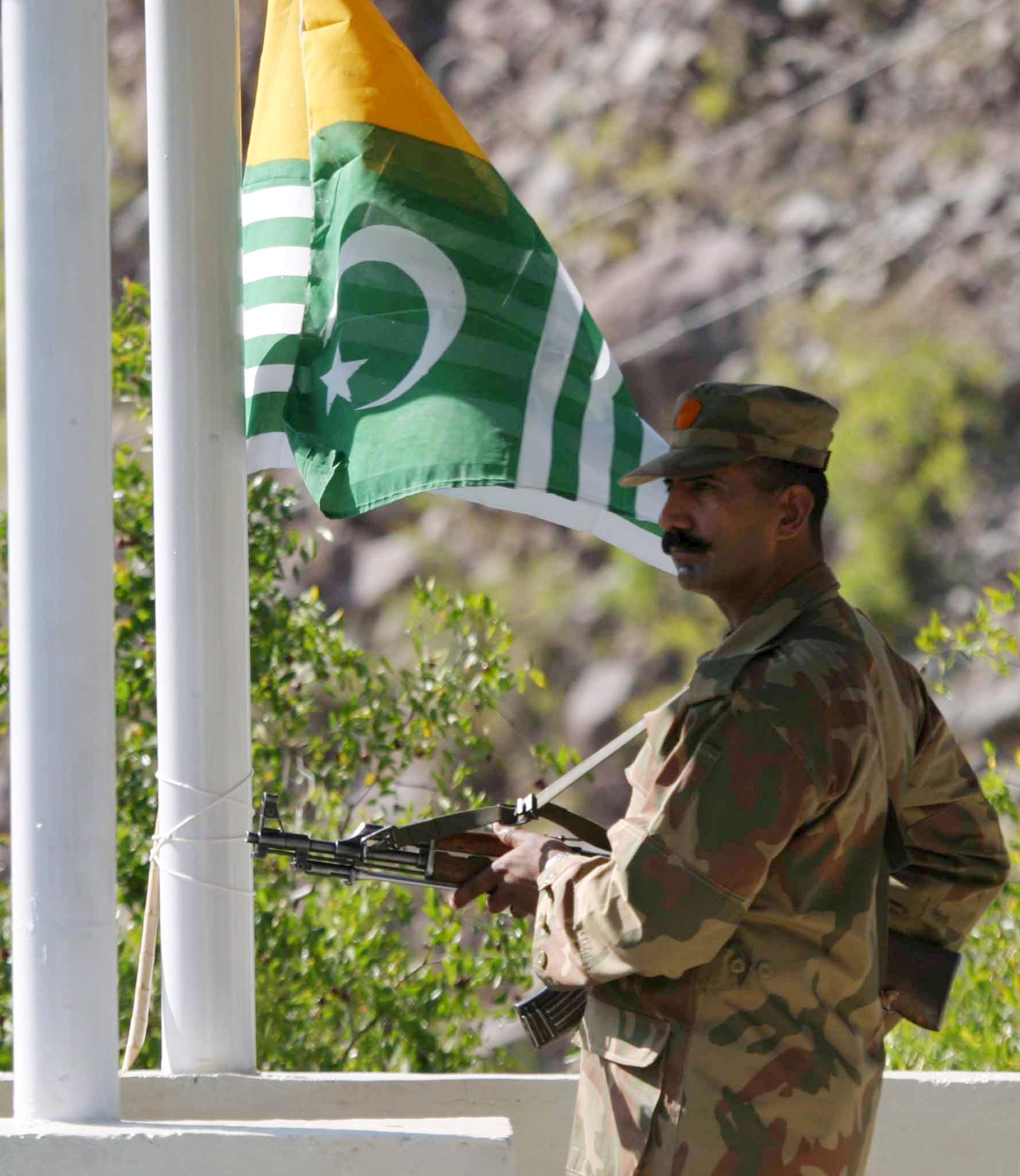
    NEW DELHI (TIP): Intelligence reports indicate that the Pakistan Army has beefed up its positions all along the Line of Control (LoC). More troops have been inducted in the area north of Sialkot and heavy artillery guns have been moved into the theatre this week in what is an apparent reaction to India’s cross-LoC strike of September 29.

    The intelligence assessment, top sources have revealed, is that Pakistan’s additional deployment is to prevent any cross-LoC strike by the Indian Army in the near future. Pakistan’s aggressive LoC posture has been reported to the highest levels of Modi government, and counter-measures have been initiated.

    “The Army is also strengthening its defences in cities like Muzaffarabad and other important towns in PoK as well as major cities like Lahore,” said a senior official.

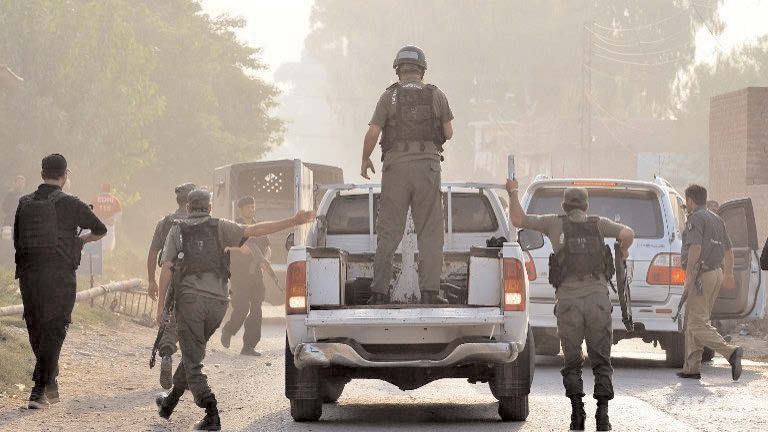
    Meanwhile, two global positioning system (GPS) sets, two wireless sets with code sheets of the kind used by Muridke-based Lashkar-e-Taiba (LeT) terror group has been recovered from bodies of three terrorists who were killed when they tried to attack a Rashtriya Rifles camp in Handwara in Kashmir.

    Top sources said that Pakistan violated ceasefire at five places on the LoC using area weapons and mortars to target Indian positions.

  • CHINA WANTS ACTION ON GLOBAL TERRORISTS BUT NO UN BAN ON MASOOD AZHAR

    CHINA WANTS ACTION ON GLOBAL TERRORISTS BUT NO UN BAN ON MASOOD AZHAR

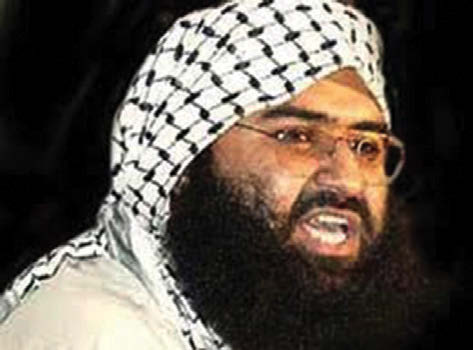
    BEIJING: Days after extending its blockade on India’s move to impose a UN ban on Pakistan-based JeM chief+ Masood Azhar, China on Wednesday called for a stronger global response to curb cross-border movement of foreign terrorists.

    Speaking at a meeting on counter-terrorism in New York, Wu Haitao, China’s deputy permanent representative to the UN said frequent cross-border flow of foreign terrorist fighters has caused ever greater harm to international security and stability, state-run Xinhua news agency reported.

    The report defined foreign terrorist fighters as individuals who travel to a state other than their states of residence or nationality for the purpose of participating in terrorist acts.

    “The UN and the relevant international agencies should set up counter-terrorism data bases as soon as possible and share intelligence so as to create conditions for effectively curbing the cross-border movement of foreign terrorist fighters,” he said.

    Wu’s speech against the cross border movement for foreign fighters followed Beijing extending the “technical hold”+ on India’s pending petition to ban Azhar for his involvement in the Pathankot terrorist attack.

    Announcing the extension of the technical hold on October 1, Chinese Foreign Ministry spokesman, said,

    “China always maintains that on the listing matter, the 1267 Committee should stick to the principles of objectivity, impartiality and professionalism, base its judgments on solid evidence and decide upon consensus among the members of the Security Council”.

    China, a veto-wielding member+ had put a technical hold on the move to impose a ban on Azhar six months ago in the 1267 Committee of the UN Security Council (UNSC) comprising of 15 members of the council including the five permanent members.

    China was the lone country which put the technical hold at the last minute which drew strong criticism from India+.

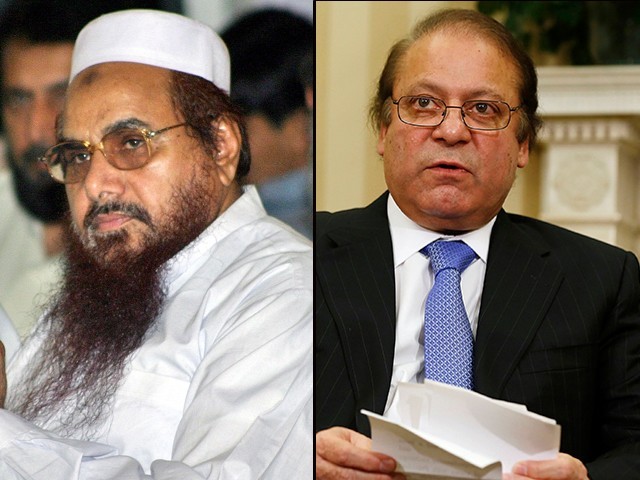
    However China’s stand against movement for foreign terrorists could raise eyebrows in Pakistan as both Azhar and Lashkar-e-Taiba chief Hafiz Saeed are Pakistanis.

    India has been highlighting the cross-border terror threat emanating from Pakistan and tensions between New Delhi and Islamabad are on the rise since last month’s Uri attack in Jammu and Kashmir which killed 19 Indian soldiers.

    Last month, India and China held their first counter-terrorism dialogue.

  • Online Petition to Declare Pakistan a Terrorist State Shut Down

    Online Petition to Declare Pakistan a Terrorist State Shut Down

    NEW YORK (TIP): In an unexplained move, The White House has abruptly shut down the online petition that asked it to designate Pakistan a state sponsor of terrorism on suspicion of fraud. The White House officials have not explained the kind of suspected “fraud” that shut down the petition.

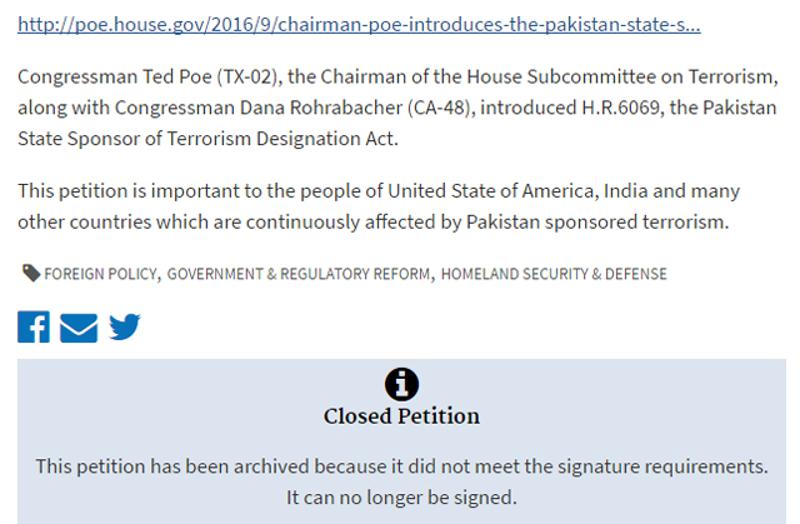
    In a blurb headlined, ‘Closed Petition’ (Bottom), the White House’s ‘We the People’ web page, which hosts the initiative inviting petitions to the administration, said on Monday, “This petition has been archived because it did not meet the signature requirements. It can no longer be signed.”

    The petition had, until October 21, to gather 100,000 signatures to merit a response from the White House under the rules of the programme, which it had already collected, and several times more. At closure, the petition had 625,723 signatures.

    The first petition seeking the Pakistan designation was started by an individual known by initials ‘RG’ on September 21, the day after Republican congressmen Ted Poe and Dana Rohrabacher introduced a legislation in the House of Representatives demanding Pakistan be designated a state sponsor of terrorism.

    Citing the legislation in the petition, the sponsor wrote, it (designating Pakistan a state sponsor of terrorism) was “important to the people of United State of America, India and many other countries which are continuously affected by Pakistan sponsored terrorism”.

    Anyone can start a petition after opening an account — just a name and email would do. (This reporter opened an account on Monday, and it took barely a few minutes.) But you don’t need one to merely sign an ongoing petition.

    Under the terms of participations, every individual is allowed only one email account, whether the intention is merely to sign or start a petition. The individual must be over 13 (as the general age-bar for starting an email account)—and cannot sign the same petition more than once.

    An official, though, when asked if signatories must be based in the US or be US citizens, said they can be “anyone provided they follow terms of service”.

    The We the People page said “The White House may disable user accounts, remove associated signatures and remove petitions created or signed by users that it has reasonable belief do not satisfy the above rules.”

    That seems to be what happened to the petition, which had generated considerable amount of excitement in the Indian American community. It was no different back in India, with signatures coming at a phenomenal speed, raising talk of a record turnout.

    The petition seeking a “terrorist state” designation for India was slow in comparison, collecting 66,000 signatures till late Monday evening. Starting on September 27, it needed roughly 34,000 more to get a response from the White house.

    It accused India of waging a “proxy war” against Pakistan especially in “the province of Balochistan, Federally Administrated Tribal Areas and Metropolitan City of Karachi”, and urged the White House to declare India a “terrorist state”.

    Online Petition to Declare Pakistan a Terrorist State Shut Down

  • Row over surgical strikes deepens

    Row over surgical strikes deepens

    NEW DELHI (TIP): The army has handed over video evidence of its September 29 surgical strikes on terrorist launchpads in Pakistan-occupied Kashmir but the government doesn’t see the need to make them public, two senior ministers said.

    Meanwhile, Prime Minister Narendra Modi has asked his ministers not to indulge in chest-thumping over the raid, sources said, adding the army, too, is not in favor of making public the details of the sensitive operation.

    Urban development minister Venkaiah Naidu rejected the opposition’s demand for proof of the strikes, saying any further discussions would be an “insult” to the army. “There is no need to respond to such irresponsible comments and demands. Fortunately, the Congress has also realized its mistake and distanced itself from the comments of its leaders,” Naidu told mediapersons a day after he said that the proof would be presented at an appropriate time.

    Defense minister Manohar Parrikar has also concurred with the army. Parrikar and National Security Advisor Ajit Doval were shown unedited footage of the September 29 operation on October 1, followed by a presentation of an edited version the next day by the Director General of Military Operations (DGMO).

    After seeing the visuals, Parrikar conveyed to the Prime Minister that he was satisfied and felt there was no need to release the footage.

    “The opposition should understand the difference between a covert and overt strike. And it is not incumbent on the Indian army to release video footage every time they do their duty,” a senior official said on conditions of anonymity.

    South Block sources said there was no need to rub Pakistan’s nose in the dirt after the successful surgical strike.

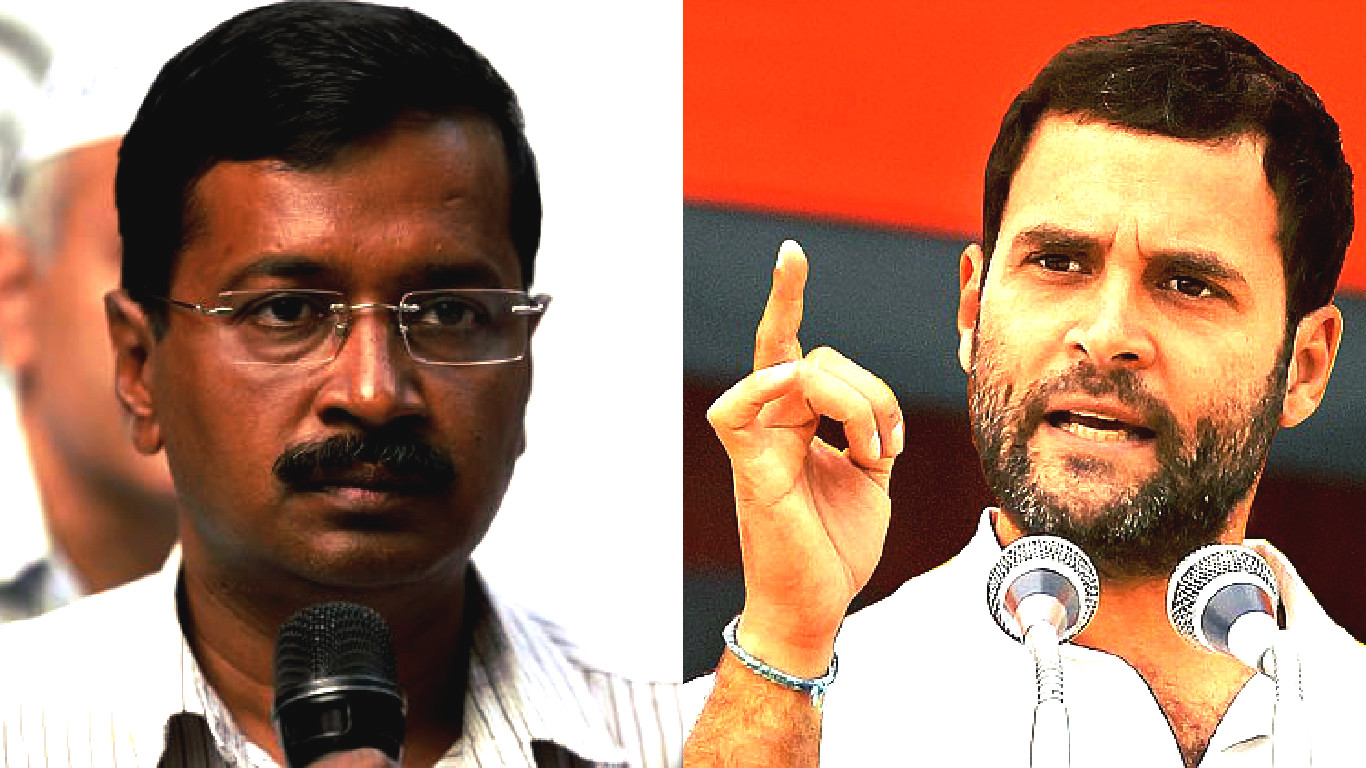
    Delhi chief minister Arvind Kejriwal and a section of Congress leaders have been calling for evidence, couching it as a must to debunk “Pakistan propaganda” that the raid was nothing but cross-border fighting.

    Several ministers had taken on the opposition for “questioning” army’s courage in demanding evidence for the raid. “I don’t think any Indian citizen has got any doubt… It would be an insult to the army if we further discuss,” Naidu said. “Only Pakistan is saying something because they have to say something. They are not in a position to conduct funeral or last rites of their own citizens…This is their culture.”

    Sources in the army said the force was not in favor of releasing the evidence though the final decision lay with the government. The army would like to keep under wraps the tactics of its special forces.

    The army, they said, was proud of its apolitical and secular credentials and didn’t want to be dragged into political wrangling.

    Nawaz Sharif warns Pak army not to shield militants

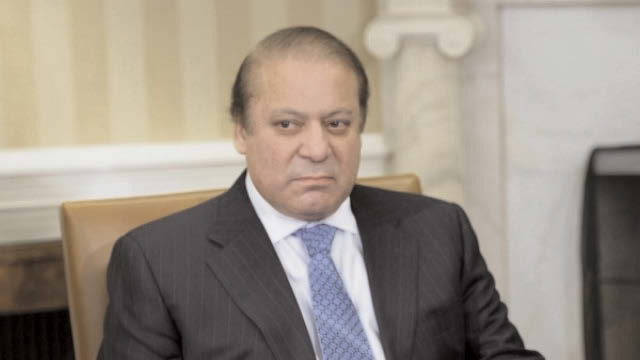
    nawaz-sharif-warns-pak-army-not-to-shield-militantsISLAMABAD (TIP): Facing international isolation, Pakistan prime minister Nawaz Sharif has warned the powerful military not to shield banned militant groups and has directed authorities to conclude the Pathankot terror attack probe and the 2008 Mumbai attack trial, a leading Pakistani daily reported on October 6.

    Sharif’s orders came after a series of meetings between military and civilian leaders, Dawn newspaper said. The government delivered a “blunt, orchestrated and unprecedented warning” to the military leadership and sought consensus on several key actions, including action against banned militant groups, the paper quoted unnamed individuals, who were involved in the meetings.

    However, the spokesman of Pakistan Prime Minister’s Office strongly rejected the Dawn report. “The spokesman has termed the contents of the story not only speculative but misleading and factually incorrect. It is an amalgamation of fiction and half truths which too are invariably reported out of context,” an official statement said.

    “The fact that the report itself states that none of the attributed statements were confirmed by the individuals mentioned in the story, clearly makes it an example of irresponsible reporting,” it said. The PMO spokesman said, “It is imperative that those demanding the right to information at par with the international best practices, also act in a manner which is at par with international reporting norms and standards.”

    The Pakistan Foreign Office termed the report as “speculative”. Asked about the report, Pakistan foreign office spokesman Nafees Zakaria said, “The story you are referring to is purely speculative and as the author himself acknowledged that ‘none of the attributed statements were confirmed by the individuals mentioned’.”

  • Nawaz Sharif warns Pak army not to shield militants

    Nawaz Sharif warns Pak army not to shield militants

    ISLAMABAD (TIP): Facing international isolation, Pakistan prime minister Nawaz Sharif has warned the powerful military not to shield banned militant groups and has directed authorities to conclude the Pathankot terror attack probe and the 2008 Mumbai attack trial, a leading Pakistani daily reported on October 6.

    Sharif’s orders came after a series of meetings between military and civilian leaders, Dawn newspaper said. The government delivered a “blunt, orchestrated and unprecedented warning” to the military leadership and sought consensus on several key actions, including action against banned militant groups, the paper quoted unnamed individuals, who were involved in the meetings.

    However, the spokesman of Pakistan Prime Minister’s Office strongly rejected the Dawn report. “The spokesman has termed the contents of the story not only speculative but misleading and factually incorrect. It is an amalgamation of fiction and half truths which too are invariably reported out of context,” an official statement said.

    “The fact that the report itself states that none of the attributed statements were confirmed by the individuals mentioned in the story, clearly makes it an example of irresponsible reporting,” it said. The PMO spokesman said, “It is imperative that those demanding the right to information at par with the international best practices, also act in a manner which is at par with international reporting norms and standards.”

    The Pakistan Foreign Office termed the report as “speculative”. Asked about the report, Pakistan foreign office spokesman Nafees Zakaria said, “The story you are referring to is purely speculative and as the author himself acknowledged that ‘none of the attributed statements were confirmed by the individuals mentioned’.”

  • Pak, India NSAs resume Talks, agree to reduce tension: Sartaj Aziz

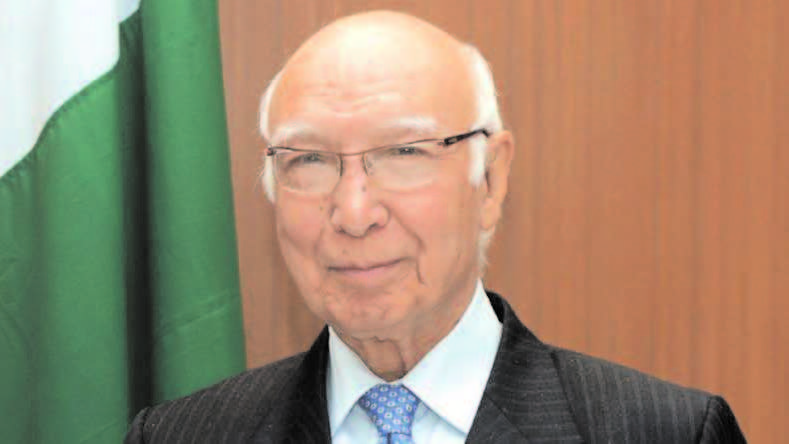
    Pak, India NSAs resume Talks, agree to reduce tension: Sartaj Aziz

    Islamabad, Oct 3; Pakistan and India have agreed to reduce tensions after their National Security Advisors spoke over phone, top Pakistani diplomat Sartaj Aziz said today about the first such contact after the Uri attack and Indias retaliatory surgical strikes on terror launch pads across the LoC, reports PTI.

    Aziz said a contact was established between Indias NSA Ajit Doval and his Pakistani counterpart Nasir Janjua after recent tension between the two countries on the Line of Control (LoC).

    They agreed to reduce tensions on the LoC, Aziz said about the contact between the two NSAs for the first time after the September 18 Uri terror attack by Pakistani militants that soured ties.

    “Pakistan wants to reduce tensions on LoC and focus on Kashmir,” Geo News quoted him as saying.

    He said that India wants to divert the worlds attention from Kashmir by escalating tensions.

    Last week, Indian Army carried out surgical strikes on seven terror launch pads across the LoC in Pakistan-occupied Kashmir, inflicting heavy casualties on terrorists waiting to sneak into India.

    The surgical strikes came days after Pakistani terrorists stormed an Army camp in Kashmirs Uri, killing 19 soldiers.

    Pakistan has denied that the surgical strikes took place on Thursday and have called it “cross-border” firing.

    Talking about Sharifs recent US visit, Aziz said the Prime Minister had explained to the world leaders that incidents of border tensions would continue between both countries without the resolution of Kashmir dispute.

  • Sheikh Hasina declares Pakistan a ‘defeated force’

    Sheikh Hasina declares Pakistan a ‘defeated force’

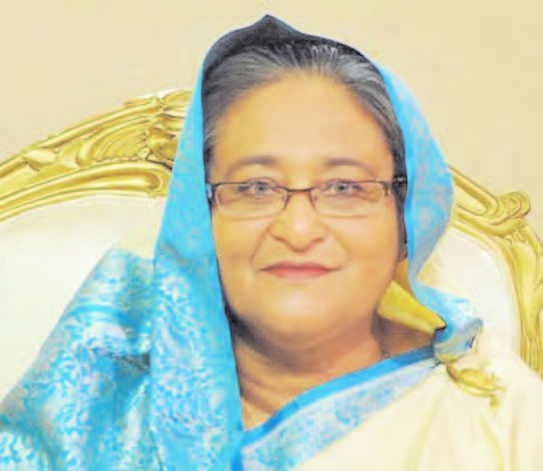
    DHAKA: Terming Pakistan a “defeated force”, Prime Minister Sheikh Hasina on Sunday said Islamabad’s protests over recent execution of a 1971 war crimes convict prompted Bangladesh to pull out of the SAARC Summit.

    “Pakistan is a defeated force. We defeated them in our Liberation War (in 1971), as a defeated force they can tell many things which matters little to us… Pakistan’s view is nothing but the aspersion of a defeated party, which people of Bangladesh should consider in that manner,” she said.

    {dfp_html}

    Pakistan’s protests over recent executions of a 1971 war crimes’ convict prompted Bangladesh to take the decision not to join the 19th SAARC summit to be held in Islamabad, Hasina said at a press meet here, a day after returning from New York where she attended the UN General Assembly.

    “The diplomatic ties will be there… we will face them (Pakistan) diplomatically,” the Prime Minister said.

    She asked Bangladeshis to think about the relationship of “cohorts and patrons” of perpetrators of 1971 war crimes against humanity who carried out genocides siding with Pakistani troops during the Liberation war, in an oblique reference to main opposition Bangladesh Nationalist Party (BNP) led by former prime minister Khaleda Zia.

    “BNP’s founder General Ziaur Rahman rehabilitated them (war criminals) after 1975… She (Zia) rewarded the (now executed) war criminals making them ministers in her cabinet. Before severing diplomatic relation with Pakistan, people of Bangladesh should consider cutting off links with their local cohorts and boycott them in the social and political arena,” Hasina said.

    Asked what is her government’s stand on the escalating tensions between India and Pakistan, Hasina said the situation “concerns us”.

    “We do not want any tension, war-like situation… in that case we will also be affected and our development of the region will be disrupted. What we sincerely expect is the two countries will settle their issues through dialogue bilaterally,” she said.

    Ties between Bangladesh and Pakistan witnessed strain after Dhaka initiated the trial of Bangladeshi perpetrators of 1971 war crimes in 2010 in line with Hasina’s electoral pledges, with Islamabad repeatedly condemning the trials.

    In the latest such incident, Pakistan reacted to execution of a business tycoon and Jamaat-e-Islami leader Mir Quasem Ali last month saying “the act of suppressing the opposition, through ‘flawed trials’, is completely against the spirit of democracy”, angering Dhaka.

    Bangladesh so far carried out judicial execution of six condemned war criminals, five being leaders of Jamaat which was opposed to the 1971 independence.

    The 19th SAARC Summit was postponed after the pull-out by India, Bangladesh, Bhutan and Afghanistan indirectly blaming Pakistan for creating an environment which was not right for the success of the meet. Later, Sri Lanka also pulled out of the summit which was scheduled for November 9-10 in Islamabad.

  • China rescues JeM chief Masood Azhar at UN; Motive unknown!!!

    China rescues JeM chief Masood Azhar at UN; Motive unknown!!!

    China once again blocked India’s bid at United Nations to get Pakistan-based JeM chief Masood Azhar designated as a terrorist.

    However, the government sources say that India will continue with its effort to ban Masood Azhar.

    China’s technical hold was set to lapse on Monday, and had it not raised further objection, the resolution designating Azhar as a terrorist would have been passed automatically. The hold has now been extended and it can continue for upto three months more.

    “Terrorism is like a poisonous snake, which has always bitten the ones underplaying it. China should take a lesson from history,” said BJP National Secretary Shrikant Sharma.

    Stating that China has had taken pro-Pakistan stance in the past as well, former RAW officer Col RSN Singh urged Indians to not worry.

    On March 31 this year, China, a veto-wielding permanent member of the UN Security Council, had blocked India’s move to put a ban on the JeM leader and Pathankot terror attack mastermind under the Sanctions Committee of the Council. China was the only member in the 15-nation UN organ to put a hold on India’s application with all other 14 members of the Council supporting New Delhi’s bid to place Azhar on the 1267 sanctions list that would subject him to an assets freeze and travel ban.

  • Pakistan police indicted in New Human Rights Watch Report for torture, extrajudicial killings

    Pakistan police indicted in New Human Rights Watch Report for torture, extrajudicial killings

    Police are responsible for custodial torture and other serious human rights violations, a new report by Human Rights Watch has said. The report comes amid growing allegations of rights abuses by Pakistan’s army.

    The document released on Monday detailed problems faced by the police in reprimanding criminals and human rights violations by law enforcers in Pakistan. “Public surveys and reports of government accountability and redress institutions show that the police are one of the most widely feared, complained against, and least trusted government institutions in Pakistan,” the report said.

    There were several reported cases of police killing criminal suspects outside the legal system, torturing detainees for confession and harassing and demanding money from individuals wanting to file criminal cases.

    Fake encounters and torture

    Several officers spoke to Human Rights Watch, admitting that the force undertook fake “encounter killings,” in which police staged an armed exchange to kill suspects. These operations were often launched because of pressure from a local landowner or other influential people.

    According to the Human Rights Commission of Pakistan, over 2,000 people were killed in 2015 in armed encounters with the police. Most of these incidents took place in the province of Punjab. HRW quoted a police officer as saying that an “encounter killing is a way of ensuring that a known criminal does not escape justice because of lack of evidence and witnesses.”

    HRW also discovered that custodial beatings with batons and strips of leather, sexual violence, and forcing criminals to witness torture were commonly used by police. Suspects were tortured “to obtain confessions or other information, to coerce bribes or because of pressure from local politicians or landowners.”

    Poor, women at a disadvantage

    Members of downtrodden sections of Pakistani society also raised concerns with HRW about not being able to file a report with the police because of its “financial cost,” which referred to bribe-taking or the fear of harassment or threat.

    Female victims of sexual assault found it particularly difficult to report the crime committed against them because of “misogynist and biased attitude” of state institutions, the report said. In many cases, women who were sexually attacked were often blamed for bringing it upon themselves.

    Problems faced by the police

    Police said that maintaining law and order was an arduous task in the country, considering threats posed by armed extremist groups, local drug wars and land-grabbing. Insufficient infrastructure, lack of financial resources and interference from external sources contributed to the force’s performance.

    “Elite elements within Pakistani society – be they politicians, landowners or members of civil and military bureaucracy – exercised outsized and improper control over law enforcement,” the report’s authors wrote. Appointments to important positions were also made on the basis of “political” links.

    The report demanded that the government introduce effective systems to ensure police accountability and redress people’s grievances. The government also needed to remove laws that increased the police’s tendency towards impunity.

    The latest allegations come as Pakistan’s military is accused of massive rights violations in the southwestern province of Balochistan, where many people have gone missing amid a government crackdown on insurgents.

  • ‘Pakistan WEAK,’ admits Former President Pervez Musharraf

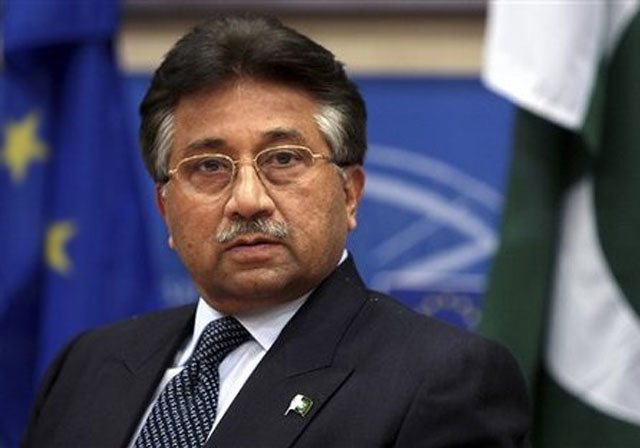
    ‘Pakistan WEAK,’ admits Former President Pervez Musharraf

    As the world unites against Islamabad terror agenda following the Uri terror attack, former Pakistan President Pervez Musharraf admitted that Pakistan has been isolated globally.

    He went on to blame PM Nawaz Sharif for his “wrong policies” that have tarnished Pakistan’s image.

    While Islamabad is getting marginalized globally, Musharraf added that Prime Minister Sharif is getting no love from his countrymen either. The former President said that anger against Pakistan is growing every day.

    “These things happen when we are internally weak, when external policies are not good, when there is mismanagement then such things happen. These are our weaknesses, said former Pakistan President Pervez Musharraf.

    Additionally, Musharraf accepted the fact that India is garnering more support and growing stronger than Pakistan internationally. He warned the Sharif administration of serious consequences if the country doesn’t counter India’s growing support across the globe.

    Talking about Pakistan-US relationship, Musharraf revealed that it has turned sour over the past few years. And, immediate measures need to be taken.

    “Our relations with America during my regime do not exist anymore. America is upset with us. Under such circumstances, a nation becomes weak. It becomes internationally weak,” said Musharraf.

    The comments from Pervez Musharraf came in after Pakistan-sponsored terrorists carried out attacks in Uri and Baramulla, and India intensified its military and diplomatic offensive against Pakistan.

  • Pakistan: A headache for the rest of the world

    Pakistan: A headache for the rest of the world

    One by one, countries of the world are isolating Pakistan for its terror-backing agenda and its inability to act against terror havens it harbours on its soil.

    From an online petition to brand it as a terror state and multiple warnings to act against terror to Six major nations boycotting the SAARC summit to be held in Islamabad, Pakistan is facing the heat from across the globe.

    Isolated Nawaz’s speech at UNGA
    As Paistan faces isolation, Pakistani Prime Minister Nawaz Sharif during his speech at the 71st United Nations General Assembly played the victim card calling ‘Pakistan a victim of terrorism’. Pakistani Prime Minister further called the Hizbul Mujahideen commander Burhan Wani as a ‘young leader’.

    UN General Secretary snubs Pak, no Kashmir mention
    UN Secretary-General Ban Ki-moon today made no reference to Kashmir and the situation in the Valley in his last address, despite Pakistan Prime Minister Nawaz Sharif’s repeated calls to the world body to help resolve the Kashmir issue between India and Pakistan.

    Bill in US Congress to label Pak a ‘terror state’
    Pakistan which is already facing an inevitable global isolation after the Indian army confirmed Pakistan’s involvement in the Uri attack in Kashmir, the nation was faced with yet another snub when two powerful American lawmakers introduced a bill in the US House of Representatives to designate Pakistan ‘a state sponsor of terrorism’.

    US Secretary of State asks Pak to limit N-programme
    Not only has Pakistan faced global isolation but has also received a ‘warning’ from the United States asking it to ‘exercise restraint in its nuclear ambitions’.

    Petition against Pakistan on UK Parliament website
    A petition has been put up on the official UK Parliament website, strongly condemning Pakistan for providing safe havens to terrorists. With over 14,000 signatures till date, the petition is already eligible for a response from the government.

    Hillary Clinton raises questions of the safety of Pakistan’s N-programme
    Democratic presidential nominee Hillary Clinton has expressed concern over the possibility of Pakistan’s nuclear weapons falling into the hands of extremists, which she said was “a threatening scenario”, according to an American media report. “Pakistan is running full speed to develop tactical nukes in their continuing hostility with India. But we live in fear that they’re going to have a coup; that jihadists are going to take over the government, they’re going to get access to nuclear weapons, and you’ll have suicide nuclear bombers. So, this could not be a more threatening scenario,” an American daily quoted Clinton as saying.

    The SAARC Effect

    Bangladesh

    Besides India, three other SAARC members – Bangladesh, Bhutan and Afghanistan – have pulled out of the summit, indirectly blaming Pakistan for creating an environment which is not right for the successful holding of the meet.

    “Bangladesh  remains steadfast in its commitment to regional cooperation, connectivity and contacts but believes that these can only go forward in a more congenial atmosphere. In view of the above, Bangladesh is unable to participate in the proposed Summit in Islamabad,” a statement by Bangladesh declared.

    Afghanistan

    Afghanistan has supported the surgical strikes conducted by the Indian army on terror launch pads across the Line of Control.

    “We feel the pain as similar way as India does. Nobody should allow any state to use itself as safe havens for terrorists. We need to ask ourselves what motivates certain circles in Pakistan who could tolerate the policy of violence in the shield of political objectives,” Afghanistan Envoy Shaida Mohammad Abdali said.

    Following India’s stand, Afghanistan too has pulled out of the SAARC summit to be held in Islamabad stating that the atmosphere is not conducive enough to hold the summit.

    Sri Lanka

    Sri Lanka pulled out of 19th SAARC Summit in Islamabad, becoming the fifth country to back India after India decided to boycott the summit.

    “Sri Lanka regrets that the prevailing environment in the region is not conducive for holding the 19th SAARC Summit in Islamabad. Sri Lanka condemns terrorism in all its forms and manifestations, and stresses in this regard, the need to deal with the issue of terrorism in the region in a decisive manner,” Sri Lanka said today in a statement.

    Maldives

    Maldives Government has condemned the Uri terrorist’s terror attack recently and wants a conductive atmosphere for SAARC summit to happen. The island nation also said that SAARC can happen only with unanimity among all members.  Maldives Government sources have told TIMES NOW that they support India’s initiative on counter terrorism.

    Nepal

    After six nations pulled out of the SAARC Summit, Nepal on Sunday released a statement postponing the 19th summit to be held at Islamabad on November 9-10, 2016.

    “Nepal regrets that regional environment is not conducive to host the 19th SAARC Summit scheduled for 9 and 10 November 2016 in Islamabad. The host country, Pakistan, has informed the Chair of SAARC of the postponement of the 19’h SAARC Summit,” the statement from Nepal Foreign Ministry said.

    Nepal has also said that SAARC member states must ensure that their respective territories are not used by terrorists for cross border terrorism.

    Comment by KB – Special to The Indian Panorama (Bangalore): Pakistan must wake up and see how the world relates terrorism with Pakistan.

    Pakistan’s state policy of mayhem has clearly torn apart the foundations on which Jinah had build Pakistan.


    There is no conspiracy to defame Pakistan by any country including India and one has to see Pakistan’s bigotry, doublespeak, intolerance and hypocrisy in all aspects of its existence: Religious, social, political as well as intellectual to realise Pakistan is reaping what it sow.


  • India ‘launches surgical strikes against militants’ in POK: Uri avenged

    India ‘launches surgical strikes against militants’ in POK: Uri avenged

    NEW DELHI (TIP): Mounting a swift counter-terror operation across the Line of Control in Jammu and Kashmir, the Indian Army announced, September 29 that it had neutralized terrorists waiting to infiltrate. The brave military man oeuvre has been hailed across the country.

    The operation was aimed at preventing attacks being planned by Pakistan-based militants, a senior army official said.He said “significant casualties have been caused to the terrorists and those who are trying to support them”.

    At a joint press briefing by the army and the foreign ministry, officials said the “motive of the operation was to hit out at terrorists who were planning to infiltrate into our territory”.

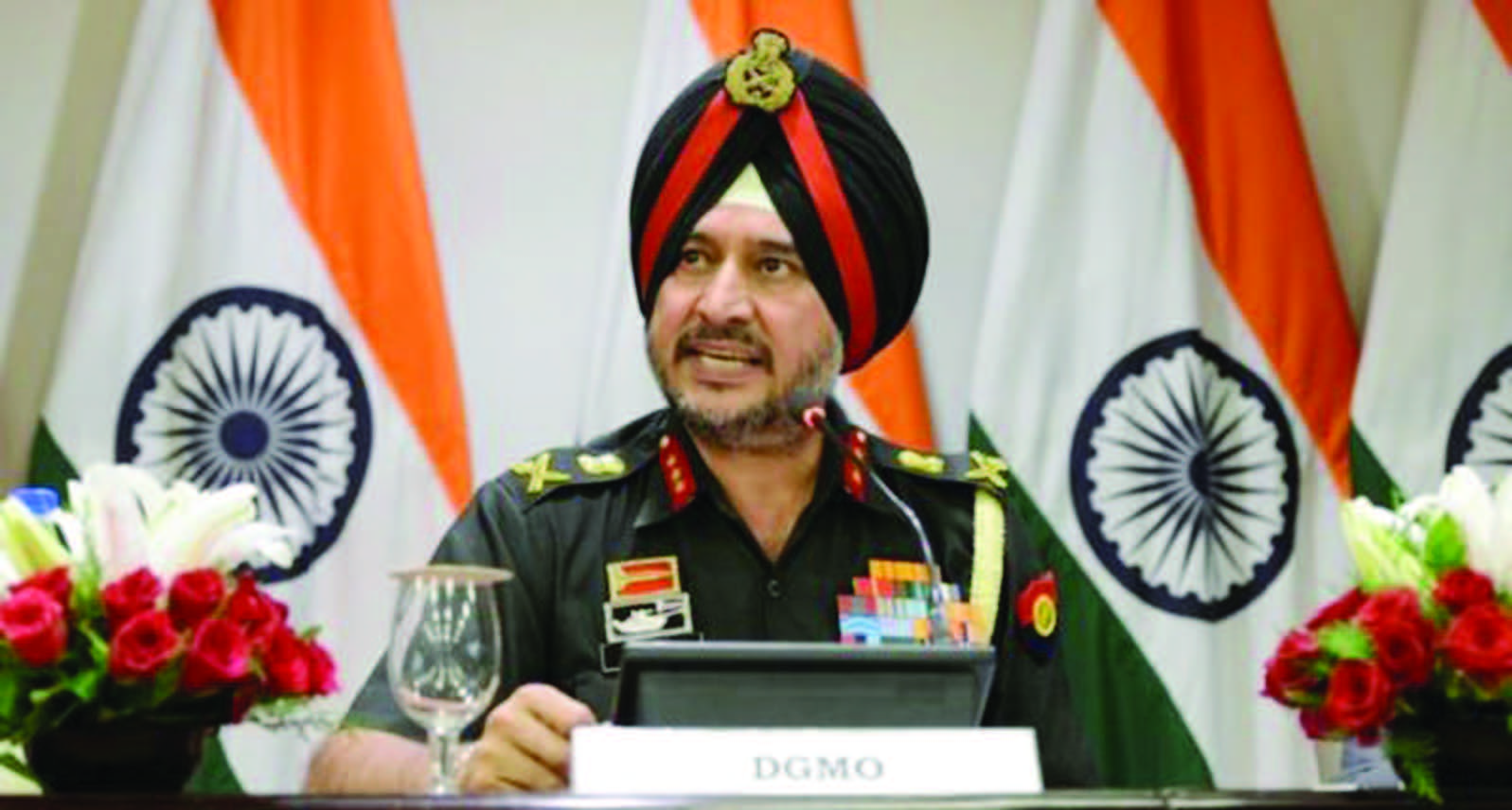
    India’s Director General of Military Operations, Lt Gen Ranbir Singh, also blamed Pakistan for “being unable to control terror activities in territories under its control”.

    “Based on receiving specific and credible inputs that some terrorist teams had positioned themselves at launch pads along the Line of Control to carry out infiltration and conduct terrorist strikes inside Jammu and Kashmir and in various metros in other states, the Indian army conducted surgical strikes at several of these launch pads to pre-empt infiltration by terrorists,” a statement said.

    It said the “surgical strikes” had caused “significant damage to terrorists”.

    The Press Trust of India quoted sources saying the operation took place between midnight and 04:30 local time on Thursday, September 29, that it was a combination of helicopter and ground forces, and seven militant “launch pads” had been targeted.

    Some unconfirmed Indian media reports said more than 30 militants had been killed in the operation.

    The entire operation was monitored for the entire night by Defence Minister Manohar Parrikar, Army chief General Dalbir Singh Suhag, and National Security Advisor Ajit Doval from the Army headquarters in New Delhi.

    Narendra Modi’s BJP government swept to power promising a tough line on Pakistan, so it has been under tremendous pressure to retaliate after the 18 September attack on the army base in Uri in Indian-administered Kashmir. The raid was the deadliest of its kind for years.

    “I assure the nation that those behind this despicable attack will not go unpunished,” Mr. Modi declared just hours after the base was attacked.

    There was also much talk of whether India should continue with its doctrine of “strategic restraint” against Pakistan.

    The response in India has been predictably supportive of the army. The Indian Panorama received reports of ecstatic celebrations of the Indian military strike in various parts of India. All political parties, regardless of differences with the ruling BJP have expressed total approval of the military action. That is the strength of democracy in India.

    Pakistan prime minister, Nawaz Sharif, criticized the “unprovoked and naked aggression of Indian forces” and said his military was capable of thwarting “any evil design to undermine the sovereignty of Pakistan”.

    Islamabad says India’s stance is a “blatant attempt” to deflect attention from human rights abuses in the region.

    Meanwhile, nations across the world are watching the situation. Britain on Thursday asked India and Pakistan to exercise restraint in the wake of surgical strikes by Indian troops across the Line of Control, while China said it was in touch with both countries to reduce tensions.

    A spokeswoman for Britain’s Foreign Office said: “We are monitoring the situation closely following reports of strikes carried out by the Indian Army over the LoC in Kashmir. We call on both sides to exercise restraint and to open dialogue.”

    In Beijing, foreign ministry spokesman Geng Shuang told a media briefing that China was in “communication with both sides through different channels” and hoped Indian and Pakistan “can enhance communication, properly deal with differences and work jointly to maintain peace and security”.

    Shuang was responding to questions on whether tensions between India and Pakistan after the terror attack in Uri had figured in the first anti-terror dialogue between New Delhi and Beijing earlier this week.

    A foreign ministry statement issued on Wednesday had said China values Pakistan’s position on Kashmir but hopes Islamabad and New Delhi will resolve the issue through dialogue and “maintain regional peace and stability by joint efforts”.

    India has “all legal and internationally accepted rights” to respond to any attack on her sovereignty and territory, Iqbal Chowdhury, advisor to Bangladesh Prime Minister Sheikh Hasina, said after the surgical strikes.

    Chowdhury said there had been a “violation from the other side andBangladesh always believes that any aggression or attack on the sovereignty…and legal right of a country is not acceptable”. He appealed for “restraint” from all sides to ensure peace in the region.

    There was no immediate reaction from the US to the surgical strikes. Hours before India announced it had carried out the strikes, US National Security Advisor Susan Rice called on Pakistan to “combat and delegitimize” terror groups operating from its soil, including Jaish-e-Muhammad, which Indian blamed for the attack in Uri that killed 18 soldiers.

    Rice condemned the “cross-border attack” on an Indian Army camp in Uri and highlighted the “danger that cross-border terrorism poses to the region” during a phone call to her Indian counterpart Ajit Doval. She said the US expects Pakistan to take “effective action to combat and delegitimize United Nations-designated terrorist individuals and entities, including Lashkar-e-Taiba, Jaish-e-Muhammad, and their affiliates”.

    This was seen as a major snub for Pakistan after Prime Minister Nawaz Sharif’s attack on India in his speech at the UN General Assembly.

    “It were as if Rice was rebutting Sharif here,” said an Indian diplomat obviously pleased with the US response, which some in India had perceived as insipid so far, given the context of terrorism being a shared challenge.

    Rice’s comments were also seen as significant against the backdrop of the foreign policy crisis in South Asia over India’s boycott of the South Asian Association for Regional Cooperation (Saarc) Summit in Islamabad.

    Rice’s remarks, reaffirming President Barack Obama’s “commitment to redouble our efforts to bring to justice the perpetrators of terrorism throughout the world”, were seen as an endorsement of India’s position. The US had not named Pakistan in its first reaction to the Uri attack.

    The statement also tapped into a growing sense of dissatisfaction and frustration with Pakistan, a non-NATO ally and a major beneficiary of US financial aid and arms supplies.


  • India Responds with Surgical Strikes Across Line Of Control in PoK on Terror Camps

    India Responds with Surgical Strikes Across Line Of Control in PoK on Terror Camps

    In a direct action on rising terror attacks launched from Pakistan into Indian Kashmir, The army has carried out surgical strikes in Pakistan occupied Kashmir to prevent Pakistani terrorists who had “positioned themselves at launch pads with the aim to carry out strikes in Jammu and Kashmir and other metros,” said the army today, Sep 29.

    “India conducted surgical strikes last night across the LoC to safeguard our nation, the Defence Ministry said on Thursday. Significant casualties have been caused to terrorists and those trying to shield them. We don’t have a plan to further conduct such strikes. India has spoken to Pakistan,” DGMO Lt Gen Ranbir Singh said while addressing the media.

    “There were launch pads at the LoC where terrorists were present waiting to infiltrate the nation and attack areas in Kashmir and metros across the country,” the DGMO said. No Indian casualties occurred during the surgical strikes that were carried out last night by the Indian Army.

    “We have recovered items including GPS which have Pakistani markings. Captured terrorists hailing from PoK or Pakistan have confessed to their training in Pakistan or in Pakistan controlled region,” Singh said.

    “I spoke to the Pak DGMO, shared our concerns and told him that we conducted surgical strikes last night: DGMO Singh said.

    The army also said Pakistan was informed – in keeping with protocol – of the cross-border strike and that the action came after escalating violations of the 2003 ceasefire. The army added that recently captured terrorists have confessed to their training and arming in Pakistan and Global Positioning Systems recovered from them further established their firm Pakistani connect.

    A surgical strike is “a calculated maneuver to ensure you deliver maximum damage which gives a big surprise to your adversary,” explained former air chief Fali Major, praising last night’s operation for its execution.

    PM Narendra Modi had informed President Pranab Mukherjee, Vice President and former Prime Minister Mahmohan Singh on the surgical strikes. Jammu and Kashmir Governor and CM Mehbooba Mufti have also been informed about the surgical strike.

    The press conference was jointly conducted by the Ministry of External Affairs and the Ministry of Defence.

    Meanwhile, Pakistan, in a statement issued has said: At least two Army men were killed as Indian and Pakistani troops exchanged fire over the Line of Control in “Azad Jammu and Kashmir”. The exchange of fire began at 2:30am, ISPR said, and continued till 8:00am. “Pakistani troops befittingly responded to Indian unprovoked firing on the LoC in Bhimber, Hotspring Kel and Lipa sectors,” the statement said.

  • Pakistan constitutes team to probe links to Pathankot attack

    Pakistan constitutes team to probe links to Pathankot attack

    ISLAMABAD (TIP): Pakistan on Wednesday set up a Joint Investigation Team (JIT) comprising security and military officials to probe whether any Pakistani individual or organization was involved in the Pathankot terror attack in India.

    The JIT was set up following an order of Prime Minister Nawaz Sharif to ensure a thorough and fair probe by Pakistan.

    According to an official of the Prime Minister’s Office, the JIT would be led by Additional IG Counter Terrorism Department (CTD) Punjab, Rai Tahir.

    Other members of the team are Director, Intelligence Bureau (IB) Lahore Azeem Arshad, Additional Inspector General, Counter Terrorism Department (CTD) Khyber Pakhtunkhwa Salahuddin Khan, Director, Federal Investigation Agency (FIA) Lahore, Usman Anwar, Brigadier Noman Saeed, ISI, and Lt Col Irfan Mirza, Military Intelligence (MI). The team will investigate the involvement of any individual or organization from Pakistan in the Pathankot airbase attack on January 2 in which seven Indian security personnel were killed.

  • Pakistan cracks down on terror

    Pakistan cracks down on terror

    LAHORE:With ties between extremists and Islamabad on the decline, militants are now faced with a more resolved and committed effort to eliminate them.

    The recent revelations that the San Bernardino shooters had extremist ties to Pakistan might appear to confirm the narrative that Pakistan is consumed by a downward spiral of extremist violence.

    But over the past year, it has quietly made some important, costly, and under-appreciated strides in its counter-militancy efforts.

    Individually, none are groundbreaking, but together they point in a more promising direction for Pakistani society, regional stability, and the U.S.-Pakistan relationship.

    First, the Pakistani army has pursued more comprehensive military operations in tribal areas than initially expected. Although it has not directly targeted the Haqqani Network as the United States hoped, Pakistan has actively targeted a wide array of militant groups, not just the Pakistani Taliban (TTP).

    Also Read: Two professors arrested at Punjab University for ‘terrorist links’

    Second, Pakistani security forces have expanded their counter-militancy operations, not only against assets once under state purview that have now turned rogue, but also against a wider range of sectarian militant groups. Pakistan adopted a strategy of leadership targeting, or “decapitation,” against the once formidable Lashkar-e-Jhangvi (LeJ), a sectarian militant group with strong links to the Sunni extremist political group, Ahle Sunnat Wal Jamaat. Over the past year, LeJ leadership — once described as “untouchable” and “invincible” — has been systematically wiped out in a series of extrajudicial killings, possibly because it was drifting toward the Islamic State.

    The counter-sectarian campaign could expand beyond LeJ. The Pak Institute for Peace Studies (PIPS) estimates that the state has conducted 20 major search operations that have netted nearly 100 key leaders from the militant-linked Ahle Sunnat Wal Jamaat. Chipping away at sectarian groups is important, because they feed other militant organizations like al Qaeda, TTP, Jaish-e-Mohammed, and Lashkar-e-Taiba (LeT).

    Third, Islamabad has augmented the military’s kinetic actions by denying extremist and militant groups the social space they have utilized and operated in for decades. It has begun to seriously enforce regulations on hate speech, on the misuse of mosque loudspeakers or amplifiers to prevent public incitement, and on weapons sales. Tempering sectarian mobilization with these tools was not new, but its enforcement is.

    Finally, the Pakistan Electronic Media Regulatory Authority prohibited media coverage of banned organizations, specifically LeT and Jamaat-ud-Dawa, though there appears to be confusion and bureaucratic infighting over this judgment. Even critics of government shortcomings acknowledge “the space for pro-extremist mindset has gradually shrunk.”

    Also Read: Two professors arrested at Punjab University for ‘terrorist links’

  • Paris Exposes the Limitations of the West’s Approach  to Counter Terrorism

    Paris Exposes the Limitations of the West’s Approach to Counter Terrorism

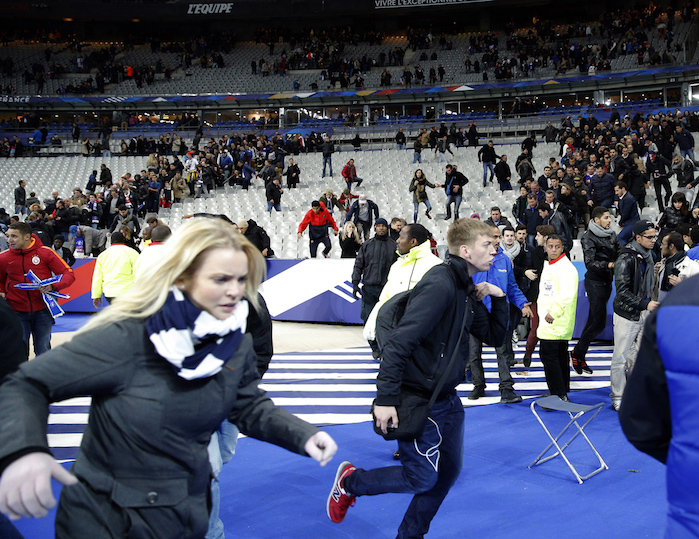
    The ‘notion’ of Critical Infrastructure Protection (CIP) has taken a beating after the November 13, 2015 terrorist attacks in Paris. CIP is about protecting vital infrastructure, which, if attacked, would have deleterious consequences for the state and society. Such infrastructure includes essential services on which the population depends heavily for various routine but essential activities like managing water and electric supply, maintenance of rail and airline networks, etc. For the last couple of years many states have placed a major emphasis upon CIP and have made significant investments to ensure that the architecture for CIP gets appropriately established. However, the recent attacks in Paris and the nature of targets selected there by the terrorists indicate that the ‘process’ behind identifying what is Critical Infrastructure has limitations and terrorists could select many more targets that are outwardly not Critical.

    The idea of CIP could be said to have begun when US President Bill Clinton issued Presidential Decision Directive [PDD]-63 in May 1998 to set up a national program of ‘Critical Infrastructure Protection’. Europe too views CIP as an important instrument and has in place the ‘European Program for Critical Infrastructure Protection’ (EPCIP). For its part, India has the ‘National Critical Information Infrastructure Protection Centre’ (NCIPC), which essentially handles cyber security related issues.

    The terrorist attacks in Paris and prior to that in Mumbai (26/11) demonstrate that terrorists are not concentrating on Critical Infrastructure as a target of choice. Instead, they are targeting places where they can inflict maximum damage to human life as well as garner wide publicity. This is, however, not to argue that Critical Infrastructure has lost its relevance as a ‘rewarding’ terror target. Perhaps realizing that such targets are difficult to attack owing to security measures put in place, terrorists seem to have shifted their attention to softer targets.

    This raises some basic questions: Are global powers unable to visualize the probable patterns of terrorism? Are the tools used by them to handle current asymmetric threats appropriate? Are attacks like those in Paris exposing the limitations of the existing preparedness and response mechanisms?

    It is well-known that ‘terrorists have to be lucky only once but the state has to be vigilant all the time’. The successes achieved by intelligence agencies are normally not known but their one odd failure has large-scale ramifications. Also, policing or military measures are unlikely to eradicate terrorism and the solution has to be political, economic and socio-cultural. Zero terrorism is not an achievable objective. However, all this should not justify the failures of security agencies at Paris or Mumbai. The success of terrorists indicates policy and policing failure at both tactical and strategic levels.

    Against the backdrop of the Paris attacks, there is a need to introspect about the effectiveness of the approaches adopted by major states to counter terrorism. It could be broadly argued that the ‘Global War on Terror’ being a US construct, the global response also has a US bias. States are mostly building their respective policy structures based on the US ‘interpretation and response’ to this challenge.

    As a result, CIP became a buzzword and the idea spread globally owing to the degree of emphasis given to it by the US and the EU. Post 9/11, many terrorism experts ‘mushroomed’ and some ended up converting the issue into an academic debate. This led to non-specialists influencing major policy decisions. Various forecasting and modeling techniques borrowed from military studies, management and economics were used to analyze terrorism. Multiple justifications were offered to understand the ‘method behind the madness’ for various acts of terrorism. Theoretical conceptualizations were evolved to ‘situate’ terrorism under preconceived ‘formats’.

    None of this appears to have helped to stem terrorism as is evident from the continuing activities of ISIS, Boko Haram, Al Qaeda, and Talban during the last decade and a half. The Paris attacks only reinforces the case for states to recalibrate their approaches to intelligence gathering, data interpretation and policy response. Analysts need to recognize that the use of smart language and analyses based on Cold War era theories are unlikely to offer appropriate solutions to current problems. For example, the ‘game of chicken’ metaphor used to explain how people avoid a potentially fatal head-on collision may not hold good in the scenario of a suicide terrorist who is ready to die for a cause.

    Post 26/11, it appears that India is essentially following the Western model to counter terror-related challenges. The Paris attacks show that such models have limitations. India is often criticized for lacking in ‘Strategic Thought’. However, states that are lauded for their ‘Strategic Thought’ have only faced failures from Vietnam to Iraq to Afghanistan to Syria. The Paris attacks should make India think for itself.

  • India-Pakistan talks under a cloud

    India-Pakistan talks under a cloud

    The proposed talks between the National Security Advisors of India and Pakistan this Sunday, which were decided at a meeting between Prime Minister Narendra Modi and his Pakistan counterpart Nawaz Sharif in Ufa, have come under a cloud due to a variety of reasons.

    Both India and Pakistan have been exchanging skirmishes along the Line of Control and these increased sharply on the Independence Day of India. Both sides have been reporting several civilian casualties and there is yet no indication of a slow down in the exchange of fire. Also there had been terrorist attacks that have emanated from Pakistan in Gurdaspur and Udhampur. A Pakistani national was also caught alive near Udhampur and his parents have owned him despite the fact that Pakistan had denied that he was its citizen.

    But besides the escalating violence along the LoC and the terrorist attacks, what may put the talks in to jeopardy is the insistence of Pakistanis to invite Hurriyat leaders for a reception being held by the Pakistan High Commissioner in honor of the visiting NSA Sartaj Aziz on August 23. Last year the government had called off talks between the foreign secretaries of the two countries for precisely the reason that Pakistan High Commission had invited Hurriyat leaders for talks prior to the meeting scheduled to take place in Islamabad on August 25.

    Though there is no official word from the External Affairs ministry, sources say that the government was closely “monitoring” the situation and that the talks may be called off if Pakistan insists on hosting the Hurriyat leaders before the two NSAs meet. India sees the invitation to the Hurriyat leaders as the defiant attitude of Pakistan and a provocation to call off the talks.

    Pakistan High Commission has, however, defended the invitation and has said that there was nothing “unusual” in calling the Hurriyat leaders for a meeting with the Pakistan NSA. “it is part of our consultation with the relevant stakeholders as we discuss the resolution of the Kashmir issue”, a spokesman of the High Commission said.

    It may be remembered that the Pakistan Prime Minister had received a hostile reaction to his joint statement with the Indian Prime Minister because of the absence of the ‘K’ word in the statement.

    On its part Pakistan plans to bring to the table its grievances against India including the issue of bail granted to the main accused in the Samjhauta blast case and India’s alleged interference and encouragement to militants in FATA and Balochistan.

    Pakistan army chief General Raheel Sharif and Director General of ISI Lt Gen Rizwan Akhtar met Prime Minister Nawaz Sharif earlier this week to discuss the issues to be taken up at the NSA level meeting. It was decided at the meeting that Indian Intelligence Agency RAW’s alleged interference in Pakistan would be among the top agenda items during the talks besides the ceasefire violations along the LoC. A Pakistani newspaper reported that Pakistan will stress on laying out a counter terrorism mechanism during the talks.

    Hurriyat leaders Syed Ali Shah Geelani and Mirwaiz Umar Farooq have confirmed that they had received the invitation from the Pakistan High Commission and stressed that they would go for the meeting. They insisted that it was not a formal dialogue but only a consultation process and said they would tell the Pakistan NSA about the current situation in Kashmir. Geelani said they would urge Pakistan to maintain continuity and stability on its Kashmir policy. “We willl also tell him that Pakistan should use its diplomatic channels to project the Kashmir issue more forcefully and effectively”.

    The two countries hardened their stand on Thursday, August 20, with Pakistan canceling Commonwealth Speakers’ conference because India insisted that the Speaker of JK Assembly should be invited otherwise it shall boycott the conference. On the other hand India placed Hurriyat leader Geelani under House arrest. Some other leaders were also taken in custody but within two hours of their detention, they were let off.

    Anything can happen between now when we are going in to publication and the next few hours.

  • Indian faces up to 10 yrs in China jail for ‘terror links’

    Indian faces up to 10 yrs in China jail for ‘terror links’

    BEIJING (TIP): The Chinese authorities informed the Indian embassy on July 16 that the Indian detainee held for “links to terror group” along with eight others was being charged for violating criminal laws that could result in jail sentence of three to 10 years. The charges include distributing videos and material related to terrorism and involvement in terrorist activities, sources said.

    The Indian in the group was identified as Rajiv Mohan Kulshrestha by the Gift of Givers Foundation, the NGO that had organized the excursion, and Indian officials are expected to meet him after the formalities related to consular access. The embassy has sought and obtained consular access to provide Kulshrestha with a lawyer.

    Shameel Joosub, relative of three of the detained tourists, said officials of the South African embassy in Beijing, who visited the detainees, confirmed that they were watching videos of the 12th century Mongol king, Genghis Khan.

    There is an ongoing dispute between China and Mongolia about Khan’s origins, with China saying he belonged to its Inner Mongolia province, and Mongolia claiming him as its own.

    “The embassy went down to Ordos and they established they were saying they watched propaganda videos, not Islamic videos, in their hotel room. We know they were watching a Genghis Khan documentary. We’re not sure where it came from,” Joosub told a South African publication. Under Chinese law on counter-terrorism, watching videos on terrorism can result in law violation and legal action, Global Times newspaper quoted Li Wei, an expert on counter terrorism, as saying.

    Chinese authorities often detain and arrest people in Xinjiang province, which is the site of major terrorist activities, for watching videos related to terrorism.

    “From what the embassy guys tell us, who were the only ones allowed to see them, they didn’t watch anything funny. They’re not sure why they’re being held,” Joosub said. Six Britons deported early on Thursday reached UK. The five South Africans are expected to return home on Friday. The British govern ment has sought clarification from Chinese authorities about the reasons for the detention, a report from London said.

    The other detainees include five South Africans and three Britons, while six other British nationals were deported, the British embassy in Beijing confirmed.

  • US disputes Amnesty report on drones

    US disputes Amnesty report on drones

    WASHINGTON (TIP): The US has disputed a recent report by a prominent human rights group that by using drones it has acted contrary to international law.

    The United States “takes extraordinary care” to make sure that its counter terrorism actions are in accordance with all applicable domestic and international law, and that they are consistent with US values and policy, state department spokeswoman Jen Psaki told reporters.

    The state department, she said, has completed the review of the recently released report of London-based Amnesty International on use of drones in Pakistan, which according to it was in violation of international law. The state department also disputed the figures of civilian casualties by the Amnesty report, which Psaki said was on a very higher side.

    “To the extent that these reports claim that the US has acted contrary to international law, we would strongly disagree. We have repeatedly emphasised the extraordinary care we take to make sure counter terrorism actions are in accordance with all applicable law,” Psaki said.

    “When there are indications that civilian deaths may have occurred, intelligence analysts draw on a large body of information, including human intelligence, signals intelligence, media reports, and surveillance footage to help us make informed determinations about whether civilians were, in fact, killed or injured,” she said. “Substantial information concerning US counterterrorism strikes is collected, obviously, through a variety of methods,” she added.

  • U.S. to extend help to India in facing new security challenges

    U.S. to extend help to India in facing new security challenges

    WASHINGTON (TIP): Three months after the U.S.-India Homeland Security Dialogue in Washington, India is all set to send its officers to various agencies across American federal organizations to sharpen their skills and acquire new ones to fight terrorism. Indian officials and security officers would soon be visiting the U.S. for training in an array of courses – from cyber security, megacity policing and forensics, to critical infrastructure protection, financial terrorism and anti-terrorism intelligence.

    The U.S. government has agreed to give Indian officers access to its specialized agencies under the Department of Homeland Security, particularly the Georgia-headquartered Federal Law Enforcement Training Centers (FLETC), to help them deal with the changing face of international terrorism. “The dialogue between Union Home Minister Sushilkumar Shinde and U.S. Secretary of Homeland Security Janet Napolitano in Washington in May this year paved the way for this cooperation… Through these specialized training programs, India will gradually build an army of experts who can handle new technologies and mechanism to deal with various kinds of terrorism and antinational activities,” a senior Home Ministry official told The Hindu.

    The U.S. Department of Homeland Security, created after the 9/11 terror attack, along with the FLETC has fashioned several advanced courses. “We have identified around a dozen departments and organizations whose officials would take part in these programs… The U.S. has also agreed to help us in creating specialized training institutions to develop skills in various anti-terrorism measures. Sharing of technology for technical surveillance, capacity building and technology development will also be a part of the U.S.- India cooperation,” the official said. Broadly, the U.S. programs will deal with four aspects of terrorism – ‘Global supply chain, transportation, port, border and maritime security,’ ‘Megacity policing and sharing of information among federal, State and local partners,’ ‘Illicit finance, smuggling of cash, financial fraud and counterfeiting,’ and ‘Cyber security and critical infrastructure protection.’

    Indian officials who will participate in these programs will be drawn from various law enforcement agencies and government departments, including the National Security Council Secretariat, the National Investigation Agency, the Intelligence Bureau, the National Technical Research Organization, the Central Bureau of Investigation, the paramilitary and State police forces, the Customs, the Narcotics Control Bureau (NCB), the Enforcement Directorate, the Directorate of Revenue Intelligence (DRI), the Ministry of Telecom and Information Technology, the Coast Guard and the Bureau of Civil Aviation Security. “The list of training programs include ‘Land Transportation Anti-terrorism’; ‘Weapons of Mass Destruction’; ‘Seaport Security’; ‘International Border Interdiction Training’ and ‘International Sea Interdiction Training’ to check smuggling and trafficking; ‘Handling of equipment for screening men against radiological, chemical and explosive materials’ and ‘Handling of intrusive detection at airports and seaports.’ The NCB and the DRI officials will be trained on detection of narcotic drugs, currency, arms and ammunition and other contraband through canine squads. There is also a plan to set up a Customs Canine Training Academy,” the official said.

    Megacity policing With the growing population in cities and increasing threat perception, the U.S. has also offered India to help develop the concept of megacity policing, a step it has been promoting since the 9/11 attacks. “An advance course in surveillance, control room design and its operation by various security agencies and police authorities are key elements of this concept. A high-level workshop is being planned for senior police and intelligence officers from both sides in megacity policing. Similarly, various agencies involved in emergency services will also be trained on public safety and crisis management, while specialized Operation Security for Public Safety Agencies Counter Terrorism Training Program and Critical Incident Response Training Program jointly by the FLETC and the U.S. Border and Custom Protection are also being planned,” the official said.

    Another area of focus would be in cyber security and critical infrastructure protection, where training modules would comprise best practices in cyber security and cyber forensics, advance course in technical surveillance counter measures, control systems security program for endto- end network and systems security for servers, routers, switches, transmission and all information and communication technology (ICT) hubs and facilities. An ambitious collaboration plan for setting up an advance institute for master trainers in the area of encryption/decryption was also in the pipeline. For critical infrastructure protection, the programs planned are for sectors like ICT; oil and energy; telecom; banking and financial services; civil aviation and transport where technocrats and officials from concerned ministries will be trained.

  • Gujarat, Bihar, Tripura, Chhattisgarh Cms Oppose National Counter Terrorism Centre

    Gujarat, Bihar, Tripura, Chhattisgarh Cms Oppose National Counter Terrorism Centre

    NEW DELHI (TIP) Chief ministers belonging to parties not partners or allies of the ruling UPA alliance at the centre on June 5 expressed strong reservations over the proposed National Counter Terrorism Centre (NCTC), arguing that the mooted set-up was against the principle of federalism. Many chief ministers of opposition parties also pointed out that Naxalism was one of the biggest security threats facing the country. Gujarat chief minister Narendra Modi said: “On the NCTC, I think the new draft circulated has taken into consideration some of the concerns raised by the states.

    However, even on the new draft, some concerns remain. We have strong reservations about the proposed structure and functioning of the NCTC.” He said: “The proposed structure of the NCTC is not in congruence with the principles of federalism and the clear division of powers between the union and the states as envisaged under the constitution, as it essentially creates a federal police, a concept totally alien to our country”. Bihar chief minister Nitish Kumar stuck to the apprehensions he had expressed on the NCTC last year.

    “I had expressed serious apprehensions about the structure, powers and functions of the proposed NCTC. The draft order still suffers from several serious flaws,” he said at the Chief Ministers’ Conference on internal security here. Tripura chief minister Manik Sarkar said: “The state government fully appreciates the need for an effective mechanism for sharing intelligence between the centre and the states. However, the state government had expressed opposition to the manner in which the Ministry of Home Affairs had sought to set up the NCTC”.

    The chief ministers identified Naxal violence as one of the biggest security threats facing the country. Nitish Kumar said: “We are all aware that tackling the problem of Left-wing extremism is the acute need of the hour. Recent incidents have raised grim challenges. The complicated and widespread problem of LWE defies easy and superficial solutions that are often applied or prescribed for it”. “…it warrants a multi-disciplinary, multi-departmental and holistic approach,” he said. Chhattisgarh chief minister Raman Singh said: “Naxalism is the biggest threat to internal security.

    It is not just Chhattisgarh’s problem, but that of several states. It requires a single national policy to tackle this menace.” “We have always adopted the combined strategy of security and development to fight against Naxalism and we have worked continuously on both aspects. I firmly believe that Naxalism is a direct threat to the nation. To fight it, we have to put up a nationally united front and strong national policy,” he said.

    Modi claimed that the equitable distribution of benefits of development and progress to remote parts of his state had frustrated the designs of Left-wing extremist organisations in Gujarat, but the unveiling of an urban plan by the CPI (Maoist) was a matter of serious concern. “The spread of the benefits of development and economic progress to even the remotest parts of the state and a pervasive sense of socio-economic well-being have been the prime factors which have repeatedly and resolutely frustrated the designs of left-wing extremist organisations trying to enter Gujarat,” he said. “I would like to express my very serious concerns about the unveiling of the urban plan by the CPI (Maoist), which is a very innovative shift of strategy,” he said.

  • India’s Home Minister Shinde holds talks with US Officials

    India’s Home Minister Shinde holds talks with US Officials

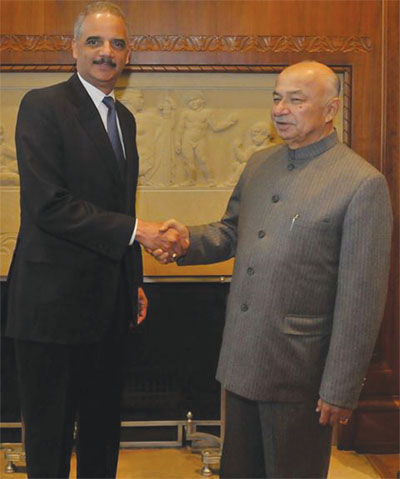
    WASHINGTON (TIP): India’s Home Minister Sushil Kumar Shinde, on an official visit to the United States, continued dialogue in to another day on May 21 with senior US Government leaders including Secretary for Homeland Security Janet Napolitano, Attorney General Eric Holder and FBI Director Robert Muller, a press release issued by Embassy of India in Washington said. Minister Shinde and Secretary Napolitano convened the second round of the Homeland Security Dialogue, which last met in New Delhi in May 2011.

    The two leaders emphasized that cooperation between India and the United States in securing the two nations was a key pillar of the India-US Global Strategic Partnership. They recognized that such cooperation was imperative, in view of commonality of the threats that confront the two countries. They welcomed progress made over the recent past in developing practical steps to enhance the security of the citizens of the two countries, and to prevent the misuse of increasinglyinterconnected global financial, transportation and communication systems.

    They agreed to enhance cooperation in capacity building programs and to identify technologies and equipment which may be useful for Indian law enforcement agencies to source in the United States. Minister Shinde and Secretary Napolitano received reports from the six sub-groups that constitute the Homeland Security Dialogue, and welcomed the fact that progress was being achieved in substantive terms.

    They applauded the fact that specific cooperation programs were identified and emphasized the need for results from the Homeland Security Dialogue. Minister Shinde invited Secretary Napolitano to visit India in 2014 to co- Chair the next round of the Dialogue, and the two sides agreed to carry out a review of the process a few months before that, under the stewardship of India’s Home Secretary and the US Deputy Secretary of the Department of Homeland Security. In the afternoon of May 21, Minister Shinde had a meeting with Attorney General Eric Holder.

    The two leaders recognized the compelling reasons for closer cooperation between India and the United States based on the larger strategic objective underlined by President Barack Obama and Prime Minister Manmohan Singh during the President’s State Visit to India in November 2010.

    Minister Shinde and Attorney General Holder agreed that the Ministry of Home Affairs and the Department of Justice should work together institutionally, so as to ensure the best possible outcomes within the laws of the two countries, to address pending issues relating to extradition, execution of Letters Rogatory and Red Corner Notices, as well as other areas of cooperation in law enforcement, counter terrorism and judicial processes.

    In the Home Minister’s meeting with FBI Director Muller, the two sides reviewed areas of cooperation and issues of interest. The FBI and Indian agencies have remained in close contact, and it was agreed that the process of inter-agency cooperation would be developed further, in this context. After the completion of his official meetings, Home Minister Shinde and senior members of his delegation left for a day-visit to Boston to have a detailed briefing of the investigations that resulted in the successful investigation of the April 15 Boston Marathon bombing. Later, after a day’s sojourn in New York, the Minister was to leave for India.

  • US Senate confirms Brennan as CIA director

    US Senate confirms Brennan as CIA director

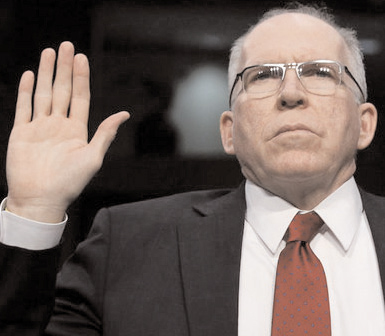
    WASHINGTON (TIP): The US Senate has confirmed John Brennan as the next director of Central Intelligence Agency (CIA). Currently the counter terrorism adviser to the US President Barack Obama, Brennan was nominated by a vote of 63 to 34 on Thursday. The vote was delayed by a 13-hour long filibuster by Republican Senator Rand Paul of Connecticut in pursuit of more information about the administration’s domestic drone policy.

    Welcoming the nomination, Obama said that the Senate has recognised Brennan’s qualities and determination to keep US safe along with his commitment to work with Congress and build relationships with foreign partners. “With John’s 25 years of experience at the agency, our extraordinary men and women of the CIA will be led by one of their own. I am especially appreciative to Michael Morell for being such an outstanding acting director and for agreeing to continue his service as deputy director,” he said.

    He added that the timely accurate intelligence is absolutely critical to disrupting terrorist attacks, dismantling al-Qaida along with its affiliates and meeting the broad array of security challenges that we face as a nation. “John’s leadership and our dedicated intelligence professionals will be essential in these efforts. I am deeply grateful to John and his family for their continued service to our nation,” he said.

    The vote on confirmation was moved through the Senate as Paul lifted his filibuster after receiving response to his question from the attorney general, Eric Holder. “Does the president have the authority to use a weaponised drone to kill an American not engaged in combat on American soil? The answer to that question is no,” according to Holder’s letter to Senator Rand Paul. “This is a major victory for American civil liberties and ensures the protection of our basic Constitutional rights. We have separation of powers to protect our rights. That’s what government was organised to do and Constitution was put in place to do,” Paul said.

  • India pushes for ‘zero tolerance agenda’ towards terrorism at UN

    India pushes for ‘zero tolerance agenda’ towards terrorism at UN

    NEW YORK (TIP): India will ask all member states to ensure ‘zero tolerance’ policy towards terrorism at the 67th United Nations General Assembly being held in New York. Foreign Secretary of India, Mr. Ranjan Mathai said that India will ask all the UN members to take measures to prevent and combat terrorism in all its forms and manifestations. Mr. Mathai was addressing a press conference at the Permanent Mission of India in Midtown, New York City on September 26.

    Mr. Mathai also said that India proposes to focus on the implementation of a ‘proactive campaign’ against terrorism and work towards an early adoption of a Comprehensive Convention on International Terrorism wing.

    India currently chairs the UN Security Council’s Committee on Counter Terrorism and the committee is due to meet in November 2012 to discuss the issue of terrorist financing. India will also take adequate measures to combat piracy off the coast of Somalia. Also being the Chairman of the Contact Group on piracy off the Coast of Somalia (CGPCS), India will address the UN with concerns and highlight progress regarding this issue.

    Other Plans

    At the 67th UNGA, India will also consolidate the progress achieved till date in the process of Security Council reforms. Mr. Mathai said that India will engage members to negotiate the expansion of Security Council in both Permanent and Non-Permanent membership categories.

    India will also continue its commitment to universal, non-discriminatory nuclear disarmament, which will be carried out in a “time-bound manner, added Mr. Mathai.

    During the UNGA session, India would actively pursue measures aimed at strengthening multilateralism while ensuring that the interests and concerns of the developing world form the basis of these endeavours.

    “We will be proactive on the evolution of the sustainable development goals in an inter-governmental process visualised at Rio+20 ensuring the primacy of development and addressing environmental and social concerns of developing countries,” said Mr. Mathai.

    Kashmir issue

    Pakistan’s President Asif Ali Zardari brought up the issue of Kashmir at the 67th UNGA and reportedly said that the people of Kashmir have ‘peacefully chosen their destiny’ and that ‘it remains a symbol of failures than the strengths of the UN system’. Mr. Mathai responded to this remark saying that India has always maintained that Kashmir is an internal matter.

    He also added, “We have seen the reference to Jammu and Kashmir in the statement of the Pakistan president. Our principled position on the issue has been consistent and is well known.”
    India’s Permanent Representative to the United Nations Ambassador Hardip Singh Puri and Ambassador Navtej Sarna, Additional Secretary, Ministry of External Affairs were also present at the press conference