Tag: Covaxin

  • Covaxin booster enhances antibody response against Covid variants including Omicron: Study

    Covaxin booster enhances antibody response against Covid variants including Omicron: Study

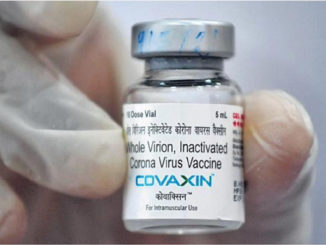
    A booster dose of Covaxin administered six months after the two dose primary vaccination has shown elevated immune responses against SARS-CoV-2 variants of concern including Omicron and protection from severe disease, a study by ICMR and Bharat Biotech has found. The emergence of Omicron with at least 30 mutations within most vaccines’ target region — the spike protein — raised an alarm about its immune escape from vaccine-induced neutralising antibodies, thereby leading to increased transmissibility and causing breakthrough and reinfection, senior scientist at the National Institute of Virology (NIV) in Pune, Dr Pragya Yadav, told PTI.

    Additionally, reports of waning of antibody responses against the emerging variants of concern (VoCs) of virus for other approved vaccines have raised concern globally, she said.

    As a part of the study the antibody responses in sera of 51 participants who received two doses of Covaxin collected six months post second dose and 28 days after receiving a third (booster) dose (given on day 215th post second dose) and its impact against the Omicron VoC was evaluated.

    The study by the Indian Council of Medical Research (ICMR) and Covaxin manufacturer Bharat Biotech was conducted in January and the findings were published in the Journal of Travel Medicine on March 24.

    “The antibody response was higher for participants administered with booster doses for B.1 and the VoCs — Delta, Beta and Omicron variants,” Dr Gajanan Sakpal, another senior scientist at the NIV, said.

    This indicates that the booster dose of Covaxin robustly triggered neutralising antibody responses and efficiently neutralised the multiple variants of SARS-CoV-2, Sakpal said.

    “We conclude that the neutralising antibody responses were significantly elevated after third dose of BBV152/Covaxin against the homologous B.1 (19.11 fold) and other heterologous strains (16.51 fold), Beta (14.70 fold) and Omicron (18.53 fold) VoCs, providing assurance of a protective immune response of booster in recipients,” the study stated.        Source: PTI

  • Covaxin to get WHO nod soon? Chief scientist says trial data ‘looks good’

    Covaxin to get WHO nod soon? Chief scientist says trial data ‘looks good’

    New Delhi (TIP): In what potentially comes as a piece of good news for Hyderabad-based vaccine manufacturer Bharat Biotech, the World Health Organization (WHO) has indicated that it might just provide its much-awaited approval to Covaxin, the company’s indigenous jab against the coronavirus disease (Covid-19). Soumya Swaminathan, the chief scientist at WHO, told a Mumbai-based news organisation that the final phase trial data for Covaxin “looks good” and meets the safety profile of the international public health agency so far. The pre-submission meeting between Bharat Biotech and WHO was held on June 23, Swaminathan told CNBC TV-18 in an interview, adding that the data packet is currently being assembled. She noted that although Covaxin’s efficacy against the Delta variant of Covid-19 is a bit low, it is still not bad, while the overall efficacy is “quite high.”

    Bharat Biotech finally made public its findings from the Phase-3 efficacy analysis of Covaxin last Saturday, where it claimed an overall efficacy of 77.8% against symptomatic Covid-19 patients. The pre-print data from “India’s largest efficacy trial” showed that Covaxin demonstrates 93.4% effectiveness against severe symptomatic Covid-19 cases. On the other hand, Covaxin provides 65.2% protection against the B.1.617.2 (Delta) strain, currently the most predominant Covid-19 variant in India, it said.

    The World Health Organization keeps a close watch on all the vaccines which are on the pipeline for emergency listing, Swaminathan said, adding that the agency is awaiting more data for a final say on the matter.

    Speaking on the Covid-19 situation in India, the WHO chief scientist said that the government should focus on primary immunisation of at least 60-70% of its population. The focus should not be on booster shots but on broadening the scope of primary vaccination, she said. Only after a sizeable population has been vaccinated can India draw inspiration from countries like the United Kingdom, which have moved on to focusing on booster doses.

    Most of the world, except some districts in the United States, has recently seen a spurt in Covid-19 cases while there has been no reduction in the death toll, Swaminathan noted.

                    Source: HT

  • Bharat Biotech says completed final analysis for Covaxin, claims 77.8% efficacy

    Bharat Biotech says completed final analysis for Covaxin, claims 77.8% efficacy

    New Delhi (TIP): Hyderabad-based Bharat Biotech on Friday, July 2, said that it has completed the final Phase-3 analysis for Covaxin, its indigenous vaccine against the coronavirus disease (Covid-19). Citing pre-print data from “India’s largest efficacy trial”, the pharmaceutical claimed that an overall efficacy of 77.8% against symptomatic Covid-19 patients has been found in Covaxin.

    Elaborating on its findings from the efficacy analysis, Bharat Biotech added that Covaxin also demonstrates 93.4% effectiveness against severe symptomatic Covid-19 cases. On the other hand, Covaxin provides 65.2% protection against the B.1.617.2 (Delta) strain, currently the most predominant Covid-19 variant in India, it said.

    Against asymptomatic Covid-19 patients, Covaxin provides an efficacy of 63.6%, Bharat Biotech said at the conclusion of its Phase-3 efficacy trial.

    The Covaxin Phase-3 analysis, published on the medRxiv pre-print server, was reportedly conducted across 25 hospitals in India as trial sites. The large-scale final analysis deployed a double-blind, randomised, multi-center clinical trial, using a sponsor-supplied randomisation scheme where volunteers received two intramuscular doses of either the Covid-19 vaccine or a placebo — four weeks apart. It consisted of 25,800 volunteers from the age group of 18 to 98 years, the report said.

    The vaccine was approved for emergency use in the Indian population in January, and the Hyderabad-based company had then said it would release phase III data by March. The release was since pushed back on several occasions. It had earlier shared the data with Indian drug regulators, however, the data regarding the multiple analyses had not been released until now.

    Earlier, Bharat Biotech’s US partner Ocugen had reported similar findings regarding Covaxin, adding that adverse events reported in the study were low. Only 12.4% of the subjects experienced commonly known side-effects, it said. Both adverse events and severe adverse events reported in the vaccine group were found at similar rates to the placebo group, the company added.

    Covaxin, along with the Oxford University-Astrazeneca shot, has been used since the beginning of India’s nationwide vaccine drive against the viral disease on January 16. Russia’s Sputnik V was given emergency use authorisation (EUA) in April, while US pharmaceutical firm Moderna’s mRNA-based vaccine on Tuesday received approval to be used.                 Source: PTI

  • 3 lakh healthcare workers to get Covid vaccine on January 16

    3 lakh healthcare workers to get Covid vaccine on January 16

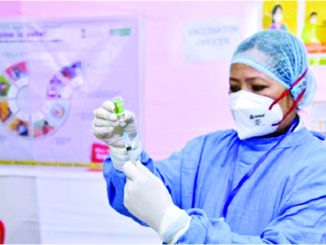
    New Delhi (TIP): Around 3 lakh healthcare workers will be inoculated at 2,934 sites across the country on the first day of the massive nationwide COVID-19 vaccination drive which is set to begin from January 16, official sources said.

    Each vaccination session will cater to a maximum of 100 beneficiaries and the Union Health Ministry has advised states not to organise “unreasonable numbers of vaccination per site per day”. “States have been advised to organise vaccination sessions taking into account 10 per cent reserve/wastage doses and an average of 100 vaccinations per session each day. “Therefore, any undue haste on the part of states to organise unreasonable numbers of vaccination per site per day is not advised,” the ministry said on Wednesday. It also said that states and UTs have also been advised to increase the number of vaccination session sites that would be operational every day in a progressive manner as the vaccination process stabilises and moves forward. “Around 3 lakh frontline healthcare workers will be inoculated at 2,934 sites across the country on the first day of January 16,” a source said. The government on Tuesday, Jan 12,  hinted that vaccine recipients, for now, will not have the option to choose from the two vaccines—Oxford COVID-19 vaccine, Covishield, manufactured by Serum Institute of India (SII) and indigenously developed Covaxin of Bharat Biotech—that have been approved for restricted emergency use in India. According to the Health Ministry getting vaccinated for COVID-19 will be voluntary.  Union Health Secretary Rajesh Bhushan had said on Tuesday, “At many places in the world more than one vaccine is being administered. But, presently, in no country vaccine recipients have the option of choosing the shots.”   According to the government, the shots will be offered first to an estimated one crore healthcare workers, and around two crore frontline workers, and then to persons above 50 years of age, followed by persons younger than 50 years of age with associated comorbidities. The cost of vaccination of healthcare and frontline workers will be borne by the central government, officials had said. All 1.65 crore doses of COVID-19 vaccines—1.1 crore of Covishield and 55 lakh of Covaxin—procured by the Centre have been allocated to all states and UTs in proportion to their healthcare workers database, it said. According to official sources, most of the 1.1 crore Covishield doses from Pune-based SII have been shipped to 60 consignee points across India from where they will be sent to smaller centres.

    Of the 55 lakh doses of indigenously developed Covaxin of Bharat Biotech ordered by the Centre, the first tranche of 2.4 lakh doses has been dispatched to 12 states.

    Covaxin has been sent to 12 sites—one each in Ganavaram, Guwahati, Patna, Delhi, Kurukshetra, Bengaluru, Pune, Bhubaneswar, Jaipur, Chennai, Lucknow and Hyderabad, an official source said.

    Covaxin has been developed by Bharat Biotech in collaboration with the Indian Council of Medical Research (ICMR).

    Health Ministry officials said that there will be a gap of 28 days between two doses of COVID-19 vaccines and its effectiveness can be seen only after 14 days, and urged people to keep following COVID appropriate behaviour.

    The ministry, which has listed series of frequently asked questions (FAQs) on COVID-19 vaccine, also stated that it was advisable to receive a complete schedule of the anti-coronavirus vaccine irrespective of the past history of coronavirus infection as this will help in developing a strong immune response against the disease. On whether a person with an active COVID-19 infection is vaccinated, AIIMS Director Dr Randeep Guleria said a person with active and symptomatic COVID-19 infection may increase the risk of spreading the same to others at the vaccination site and thus infected individuals should defer vaccination for at least 14 days after the symptoms are resolved.

    Elaborating on the possible side-effects of COVID-19 vaccine, Guleria said that as is true for other vaccines, some will have some degree of side effects in some individuals which could be in form of mild fever, pain at the site of injection, body ache, etc. States have been asked to making arrangements to deal with any COVID-19 vaccine-related side effects as one of the measures towards safe vaccine delivery.

                    Source: PTI