Tag: CPM

  • From Principled Left to Power Without Purpose: The CPM’s Crisis in Kerala

    From Principled Left to Power Without Purpose: The CPM’s Crisis in Kerala

    By George Abraham

    The people of Kerala have spoken decisively in the recent Panchayat and Municipal elections, delivering a clear rebuke to the corrupt and authoritarian style of governance under Pinarayi Vijayan and his close coterie within the CPM. As one surveys the damage inflicted on a party that was once a credible voice for the poor and the disadvantaged, it is evident how far it has fallen and reduced to an empty shell, stripped of ideological coherence and moral authority.

    It is therefore worth revisiting whether the CPM’s past misjudgments continue to haunt it today, accelerating its steady decline and pushing the party toward political irrelevance. Once a formidable force in West Bengal since Independence, the CPM governed the state uninterrupted for 34 years. The turning point came during the final phase of its rule, when land acquisition controversy severely undermined its credibility. The violence in Nandigram proved to be a fatal blow, exposing a governance model increasingly associated with intimidation, favoritism, and corruption at both local and state levels.

    At the national level, the CPM remained a powerhouse even as the UPA-1 wrested power from the NDA in 2004. Together, the CPI and CPM commanded more than 61 seats in the Lok Sabha. With such significant representation, the Left could have demanded key portfolios in the Manmohan Singh cabinet, strengthening its national influence while delivering transformative projects to its strongholds in West Bengal and Kerala. Instead, the party squandered this historic opportunity by staying on the sidelines and ultimately withdrawing support from the government over the Indo–U.S. Civil Nuclear Agreement, a landmark deal that legitimized India’s entry into the global nuclear order.

    Prakash Karat, then General Secretary of the CPM, will likely be remembered as one of the principal architects of the party’s marginalization in national politics, having presided over decisions that sacrificed strategic influence at the altar of ideological rigidity. His insistence on party discipline culminated in the unfortunate and widely criticized action against a leader of immense stature, the then Speaker of the Lok Sabha, Mr. Somnath Chatterjee, an episode many viewed as a display of political arrogance that further eroded the party’s credibility. What we are witnessing today appears to be a continuation of that decline, now unfolding under the stewardship of Pinarayi Vijayan, with the CPM steadily losing its remaining footholds and diminishing its relevance in contemporary Indian politics.

    The Pinarayi Vijayan regime is not only eroding the party’s legacy as a populist force but is also widely perceived as one of the most corrupt administrations in Kerala’s history. It is a striking paradox that a leader who rose from modest beginnings is now seen as embracing luxury and fostering a culture of nepotism. Power is widely believed to be heavily centralized in the Chief Minister’s Office, with cabinet ministers and party functionaries frequently sidelined, thereby weakening collective decision-making. Critics further argue that transparency and accountability have been severely compromised, and that dissent or questioning of authority is met with little tolerance, marking a sharp departure from the Left’s traditional democratic ethos.

    Over time, a series of controversies have significantly dented the public image of the Pinarayi Vijayan administration. The gold smuggling case, which involved individuals with alleged links to the Chief Minister’s Office, raised serious questions about oversight and accountability. The LIFE Mission controversy further called attention to possible procedural violations, while irregularities in cooperative banks—allegedly involving party cadres—have reinforced perceptions of entrenched corruption within the system.

    Adding to these concerns, T. Veena, the Chief Minister’s daughter, has been named in an ongoing corporate fraud case linked to Cochin Minerals and Rutile Limited (CMRL). The Serious Fraud Investigation Office (SFIO) has alleged that Veena and her firm, Exalogic Solutions, received approximately ₹2.7 crore from CMRL without providing corresponding services, amounting to alleged fraudulent payments under the Companies Act. The Enforcement Directorate has also reportedly registered a case under the Prevention of Money Laundering Act (PMLA) in connection with these transactions. These matters remain under investigation.

    Equally troubling for the people of Kerala is what critics describe as economic mismanagement by the current government. Rising public debt and increasing dependence on borrowing point to a growing fiscal strain. The administration is accused of showing limited regard for fiscal discipline and offering little clarity on sustainable revenue generation. Despite repeated announcements of memoranda of understanding (MoUs), private investment, outside the consumer sector, has remained limited, resulting in inadequate job creation and continued migration of young Keralites in search of better opportunities elsewhere.
    Over the years, the CPM has been the principal nemesis of the BJP in Kerala, with youth cadres from both sides frequently engaging in violent clashes that have tragically resulted in loss of life. The CPM also positioned itself as the foremost proponent and defender of secularism, often castigating the Congress for what it perceived as ideological laxity. CPM leaders routinely and vociferously criticized the BJP’s policies and its Hindutva-driven politics.

    However, what has unfolded during the Pinarayi Vijayan regime has given rise to troubling accusations and narratives suggesting informal or tactical understandings, and even collaboration between the CPM and the BJP. Despite multiple corruption allegations involving Pinarayi Vijayan and his family, the BJP has adopted a noticeably soft approach, raising serious questions among political observers. Even the long-pending Lavalin case involving Pinarayi Vijayan has been deferred repeatedly, not at the behest of the defense but reportedly at the request of the prosecution. These developments prompt an uncomfortable question: whether knowingly or otherwise, the CPM has aligned itself with the BJP’s broader objective of creating a Congress-mukt Bharat.
    Such short-sightedness is deeply concerning. History shows that the BJP has consistently absorbed or marginalized its partners once it secures a foothold. A compromised and vulnerable Pinarayi Vijayan thus becomes a liability for Kerala, a complacent collaborator who risks opening the door for the BJP to inject communal poison into a state long known for its social harmony. Reports of closed-door meetings between CPM and BJP leaders have further fueled these suspicions. There is widespread speculation that vote transfers or tacit understandings may emerge in the upcoming Assembly elections, serving the interests of both parties. Similar patterns have been observed in West Bengal, where historical accounts from local and panchayat elections describe tactical cooperation between BJP and CPM workers at the grassroots level to counter the Trinamool Congress.
    Until now, BJP’s failure to gain a strong foothold in Kerala has largely been due to a vigilant electorate that instinctively shifts support between the UDF and the LDF whenever communal politics appears to gain ground. This delicate voter equilibrium, however, is being severely undermined by the CPM’s alleged attempts to protect the private interests of the Vijayan family.
    Pinarayi Vijayan and the present CPM leadership have strayed far from the values and principles upheld by stalwarts such as E. M. S. Namboothiripad and A. K. Gopalan, leaders who dedicated their lives selflessly to the upliftment of the poor and the marginalized without seeking personal gain. While I am not an admirer of communist philosophy, I have always respected those leaders for their idealism, personal sacrifice, and moral integrity, which deserve universal admiration. Pinarayi Vijayan, however, has rewritten that script, sacrificing ideological purity for personal and political survival, pushing the party toward irrelevance and plunging the state into deep uncertainty.

    The CPM today stands at a crossroads. Socialism in its classical form has failed across much of the world, and in Kerala the party appears increasingly devoid of a coherent political philosophy. Instead, it seems intent on perpetuating power through policies that erode the state’s financial stability, disturb social peace, and foster opportunistic alliances with communal forces for short-term gains, often accompanied by reckless populism and vote-oriented freebies.

    The verdict delivered by the people of Kerala in recent local body elections is not merely an electoral setback; it is a moral indictment. The people of Kerala are no longer blind to these ploys. History offers the CPM a sobering lesson. In West Bengal, prolonged rule bred arrogance, intolerance of dissent, and ultimately collapse. In national politics, ideological inflexibility squandered historic opportunities and hastened marginalization. Kerala now stands at a similar inflection point. The persistence of alleged compromises, whether ideological, ethical, or tactical, threatens not only the party’s future but also the delicate secular and social fabric of the state.
    (George Abraham is a former chief technology officer, United Nations. He is Vice-Chair of IOCUSA. He can be reached at gta777@gmail.com

  • Elections 2024: Tight race in Thiruvananthapuram: Tharoor is expected to prevail

    Elections 2024: Tight race in Thiruvananthapuram: Tharoor is expected to prevail

    Keralites are a competent electorate who can distinguish the wolves in Sheep’s clothing. Ultimately, common sense will reign, and Tharoor is expected to prevail.

    By George Abraham

    Following Tharoor behind his constituency ‘Paryadanam’ motorcade this time around evoked some earlier memories in me when he first ran for Parliament in 2009. At that point in time, there was novelty and simple curiosity about his candidature, always with a throng of people eagerly waiting to see him at every junction. Mothers with a child on their shoulders used to run up to the side of the road from their nearby houses to have a glimpse of him. Hence, times have changed, and Tharoor is now a familiar face and known quantity in the Thiruvananthapuram Lok Sabha constituency. Therefore, it has its pluses and minuses.
    On the plus side, he can boast about his accomplishments on behalf of the constituents and his staunch defense of the Constitution and pluralistic principles; however, on the negative side, he is put on the radar for how his efforts have borne fruition for the people who have voted for him. That has always been a haunting dilemma for any incumbent. Tharoor has exemplified himself in Parliament and championed himself as a great critic of Modi’s policies and a powerful advocate for democracy and inclusiveness.
    However, when I survey the ground realities at play, one thing becomes quite clear: the Kerala electorate is no longer satisfied with simple explanations from the politicians but rather ready to take on politicians on complex issues for honest answers. A good example is the Vizhinjam port development and related issues. When Tharoor campaigned for the first time, one of the popular demands from influential circles was to get involved and make that a reality. He has succeeded in just doing that. He also publicly stated that when there was no bidder for the port development, he appealed personally to Adani to submit his bid. However, what that development entailed, or its aftermath and consequences, still needed to be fully grasped. Today, the coastal community is up in arms not only on the coastal erosions due to the development but also on the failures to rehabilitate those who were displaced because of it. Therefore, Vizhinjam is a two-edged sword that could come back and haunt Tharoor as he seeks another mandate.
    The ongoing war between Israelis and Palestinians evokes strong reactions from the Muslim community in Kerala. In Kerala’s political landscape today, the party in power and the Muslim community in particular are more vocal about what happened in Gaza, though justified, than what happened in Manipur, India. Many would dismiss Manipur as a fight between two tribes. Is it so? If that argument holds true, why, then, in a battle between Meiteis (mostly Hindus) and Kukis (mostly Christians), 249 Churches belonging to Meiteis Christians were destroyed in the first few days of fighting? In an era of sound bites, nobody seems to pay that much attention to those details!

    However, the world knows about Tharoor’s work with the Palestinians and where he stands firm behind the cause of a two-state solution. Yet, his statement critical of terrorist acts by Hamas that initiated the current fight is viewed unfavorably by a segment of the Muslim community. The CPM in Kerala, which is busy courting even the extreme elements to stay in power, suddenly found a weapon against Tharoor and that he is against the Palestinian cause. One has to wait and see whether that strategy will peel away some votes in that community. There is little doubt that a more significant vote share for CPI will only benefit the BJP candidate.

    Author ( extreme left) with Shashi Tharoor and others on campaign trail

    The third most common complaint I have heard from the party workers is accessibility. Undoubtedly, his staff could have done a better job as Tharoor is one of the busiest souls in the country, and there is great demand for his appearances and speeches in addition to his practical work in Parliament. One of the coastal area’s social activists told me that Mr. Tharoor failed to talk about rehabilitating the displaced people from the Oki Disaster. Upon my query to verify the complaint, the Tharoor office has sent me several documents with his statements raising his concerns, especially in Parliament. The media did not properly carry his statements in Lok Sabha. His office should have correctly translated or propagated many of these exchanges in English.
    However, more than anything else, the elephant in the room is the CPM and their role in this fight. To those astute observers of Kerala politics, the reason for BJP’s perennial failure to get a foothold in Kerala is apparent. In any election cycle, when a BJP candidate closes in on either UDF or LDF ones, many voters will switch their votes to deny the BJP the victory. The question is, will it happen this time around? Although UDF and LDF may want to state that the fight is between them, the reality in Thiruvananthapuram is quite different. Armed with tons of money, Rajiv Chandrasekhar, the BJP candidate, is said to be ready to buy anything and everything. There are even allegations that some of the resources might have been diverted to activists from various parties and even minority religious leaders. However, the real worry for the Tharoor campaign must be whether there is any behind-the-scenes understanding between BJP and CPM.
    The world knows about all the allegations of corruption by Pinarayi Vijayan and his family members. While Modi’s ED is busy arresting and jailing opposition leaders and other opponents of the current regime across the country, how does the Chief Minister of Kerala go scot-free? Even the Delhi CM Kejriwal is in prison without any substantial evidence of wrongdoing, yet, there is hardly any investigation into the gold smuggling, Life mission, Cochin Minerals payments, and so forth by the famed Agencies, let alone the Lavalin case being postponed multiple times upon the request from the prosecution’s side. The BJP government keeps contending that specialized agencies are only doing their jobs. If so, how would they justify their inactions in this regard?
    In the same way, Vigilance in the state is not doing any better either, having failed to find the source of the three crores of rupees of black money recovered during the last election cycle allegedly from people with links to the BJP. All of these spark suspicion that there is an underlying agreement between BJP and CPM. The question then is, what is the deal here? Is there a quid-pro-quo in the works for the CPM finally to enable the BJP to open an account for the Lok Sabha from Kerala? Only time will tell.
    Despite all the advantages of money and power, Rajeev Chandrasekhar is proving himself a dud. He is unwilling to debate Tharoor, although he is touted here as yet another ‘global citizen’ with a great background. When a reporter asked Chandrasekhar what he has done for Karnataka as their Rajya Sabha MP, in addition to showing his ignorance of an ongoing project, he not only fumbled but dismissed it as an out-of-state question while repeatedly accusing Tharoor of not doing enough in TVM. Chandrashekar made his early riches primarily through his in-law’s company, BPL. A report available in the public domain states, “Before Chandrasekhar sold his BPL stake, his father-in-law took him to court for mismanagement of the company and discrepancies in the shareholding pattern in 2004 and filed petition to restrain Chandrasekhar from selling or transferring BPL Mobiles without his consent.”
    Now, we know that on his nomination form, he listed his total assets as around 28 crore rupees and a taxable income of Rs. 680. Video circulating on social media details his holdings in various entities, including shell companies abroad. In those reports, it is estimated that he is said to be worth around 7500 Crores. He could legally justify it all through ‘smart’ accounting for tax purposes. However, the very fact the Modi administration, which once proclaimed to bring all black money back to India, has just crowned someone as a candidate who possesses excellent expertise as to how to hide his assets. They are some of the champions of nationalism who constantly lecture ordinary people like us about patriotism, duty, and honor to the country. If these allegations are proven correct, it is fraudulent misrepresentation while deceiving the voters in Thiruvananthapuram by not telling the truth. Moreover, It is indeed an integrity issue, and whether the voters want to be represented by such a character come April 26.
    Another challenging issue for the Tharoor campaign is how to counter a BJP narrative that is undoubtedly taking a perch in the minds of this constituency’s elites and the upper middle class. According to several people I talked to, the conversation goes like this: ‘Modi is going to win anyway, Congress has no future, if Chandrasekhar wins, he might do something for Thiruvananthapuram’! There is very little doubt that people are being brainwashed about the inevitable victory of Modi through their effective propaganda network. The upper echelons of society all over India do not care, as they have no stakes in this election. Nevertheless, the Tharoor campaign needs to respond to this very quickly before it gains any more momentum.

    Author joins in door-to-door campaigning

    There is little doubt that some disgruntled Congressmen and jealous leaders are in the Tharoor camp. To them, a Tharoor defeat or his banishment from the political arena is welcome, and many empires/endeavors have failed not due to external threats but because of the conflicts within. Those elements could come through the front door, and not only would they end up wreaking havoc, but they would also be capable of giving a devastating blow to the leadership. That may explain why a couple of Tharoor’s ‘Paryadanams’ were marred by some dissenting voices and shouting slogans in trying to create a stir. Many of them, like in the media, may allegedly be bought off and become tools in the hands of the BJP.
    Despite all the hurdles, the people of Thiruvananthapuram will choose to preserve the Constitution and our way of life. Keralites are a competent electorate who can distinguish the wolves in Sheep’s clothing. Ultimately, common sense will reign, and Tharoor is expected to prevail.

  • With an Eye on 2024, 19 Opposition parties decide to hold nationwide protest

    With an Eye on 2024, 19 Opposition parties decide to hold nationwide protest

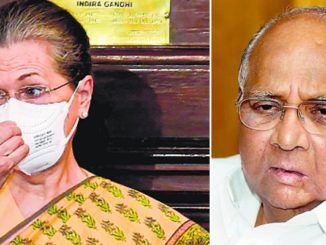
    NEW DELHI (TIP): Leaders of 19 Opposition parties, on August 20,2021 announced a joint agitation plan from September 20 to 30 after Congress president Sonia Gandhi urged them to rise above political compulsions to defeat the BJP in the 2024 Lok Sabha elections.

    It’s time to rise above political compulsions — Sonia Gandhi, Congress

    All secular, democratic forces must join hands — Sharad Pawar, NCP

    Mamata proposes core committee to steer fight against BJP

    Tejaswi Yadav seeks ‘driving seat’ for regional parties

    In a signed statement, Opposition stalwarts, including NCP’s Sharad Pawar, TMC’s Mamata Banerjee, DMK’s MK Stalin, Shiv Sena’s Uddhav Thackeray and JMM’s Hemant Soren, called upon the people of India to defend “the secular, democratic, republican order with all their might”.

    11 demands

    • Augment production and ensure free vaccination
    • Give Rs7,500 a month to families outside income tax bracket
    • Reduce prices of fuel
    • Repeal three farm laws & guarantee MSP to farmers
    • Pegasus probe under SC
    • Release political prisoners, including those in Bhima Koregaon case, anti-CAA protests
    • Restore J&K’s full statehood
    • Stop, reverse privatization
    • Revive MSMEs
    • Expand MGNREGA

    Jabs for teachers, pupils

    “Save India today, so that we can change it for a better tomorrow,” they said listing 11 demands, including restoration of full statehood and elections in Jammu and Kashmir, repeal of three farm laws and institution of an SC-led inquiry into the Pegasus snooping row.

    The statement followed a major Opposition outreach in which Sonia Gandhi said, “Our ultimate goal is the 2024 Lok Sabha poll for which we have to begin planning systematically with the single-minded objective of giving to our country a government that believes in the values of the freedom movement and in the principles and provisions of our Constitution. This is a challenge, but together we can and must rise to it because there is simply no alternative to working cohesively together. We all have our compulsions, but clearly, a time has come when the interests of our nation demand that we rise above them.”

    Bengal CM Mamata Banerjee proposed the formation of a core group of Opposition leaders to chalk out joint programs. The like-minded parties “needed to unite to defeat the BJP”, she said.

    The meeting was attended by leaders of the TMC, NCP, DMK, Shiv Sena, JMM, CPI, CPM, NC, RJD, AIUDF, VCK, Loktantrik Janta Dal, JDS, RLD, RSP, Kerala Congress Mani, PDP and IUML. The BSP, AAP and SP skipped the event, but the Congress claimed SP chief Akhilesh Yadav had intimated about his absence.

    In the meeting, symbolically organized on the birth anniversary of her husband and late Prime Minister Rajiv Gandhi, Sonia blamed the government for the recent Parliament washout.

    (Agencies)