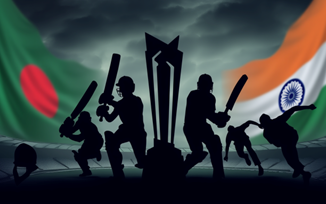
Tag: Cricket

  • Inderjit Singh Bindra, a multifaceted bureaucrat who built Punjab, cricket and sports

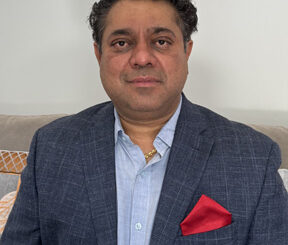
    Inderjit Singh Bindra, IAS Retd. and a former BCCI president has passed away aged 84 in New Delhi. Prabhjot Singh, a former Sports editor with The Tribune who has had a long association with Mr. Bindra pays him his tribute. 

    Inderjit Singh Bindra, the visionary administrator who transformed Indian Cricket and Punjab’s sports landscape passed away at 84 in New Delhi.

    He was not only a doyen of Indian cricket, an administrator par excellence who commanded respect across multiple institutional domains, but also a gentleman, a keen golfer, a wonderful human being, and a trustworthy friend whose prime love was sports.

    Inderjit Bindra and cricket were like two sides of a coin. No history of this modern-day sport would ever be considered complete without a substantial recognition of the immense contribution of this rarest of rare bureaucrats who served the Punjab Government after joining his parent cadre in 1966. (He had a brief stint as an IPS officer before getting into the elite service.)

    He was a bureaucrat with a difference. Known for his quick decisions, he belonged to the rare band of civil servants who left little or no pendency files at the end of the day. In his death, Punjab has lost one of its illustrious sons, an administrator par excellence and a custodian of institutional integrity.

    I had a very long association with him. When the Punjab Cricket Association Stadium (PCA stadium) was coming up, I used to accompany him on his evening “inspection-cum-evaluation” walk around the complex. He would follow the progress meticulously and hold regular meetings with both the architect and the construction company. No Deadlines were compromised.

    He always took his criticism well. As captain of the Chandigarh Golf Club, he ordered the chopping off of the green tops of most of the trees. I came out with a front-page story in The Tribune, “Killing trees for their sport.” The next morning, when he called me, I told him that my respect notwithstanding, his action of wreaking havoc with the ecology could not be ignored in the public interest. He, instead of getting agitated, agreed with me to admit that it was a “wrong decision” and “chopping off green tops could have been avoided.” He kept his promise throughout, even while the PCA Stadium was being constructed. He was a regular at the golf club, where his immediate playmates used to be flying Sikh Milkha Singh and bureaucrat RS Mann. He was one of the first few to use a cart on the course.

    Better known as a cricket administrator, he not only transformed a mediocre Punjab team into prestigious national Ranji Trophy champions but also brought the sleepy township of Sahibzada Ajit Singh Nagar—Mohali—on the world map with one of the best cricket stadiums, the PCA Stadium. In fact, if Punjab could renovate, upgrade, and modernize its sports infrastructure after the reorganization of the state in 1966, it was all because of his astute planning and farsightedness.

    Not many would know about his love for sports other than cricket.  Convinced that the public sector undertakings have a social role to play, he conceived, planned, and raised a hockey team in the public sector. Led by then Olympian—now an MLA from Jalandhar Cantonment—Pargat Singh and coached by international Sukhvir Singh Grewal, the team under the banner of Punjab Alkalis and Chemicals brought laurels to the state by winning several prestigious tournaments. His experiment of using public sector undertakings for checking sports drain from the state did not survive for long. The Alkalis team was disbanded after he was shifted from the Industries Department. This team had given Punjab and the country several outstanding players, most of whom later got absorbed into the Punjab police.

    Inderjit Singh Bindra belonged to a vanishing category: the senior administrator who commanded respect across multiple institutional domains and whose work transcended the narrow bounds of his formal portfolio. Few civil servants transition successfully into sports administration at such rarefied levels; fewer still leave an indelible institutional legacy in both spheres.

    KBS Sidhu, also a retired civil servant, while paying tribute to his senior colleague, wrote that Punjab has lost not merely a cricket administrator but a custodian of institutional integrity. India has lost a figure whose strategic vision helped position the nation as a cricketing superpower. And the broader world of cricket governance has lost one of its architects—a man whose tenure in positions of authority coincided with cricket’s globalization and the assertion of non-Anglo spheres of influence over the sport’s direction.

    “Bindra’s death marks the conclusion of an extraordinary institutional career spanning more than four decades, during which he moved seamlessly between the senior echelons of the civil service and cricket administration, bringing to both spheres a rare combination of decisive leadership, legal acumen, and entrepreneurial vision,” wrote KBS Sidhu.

    “My memories of Mr Bindra are still vivid and fresh in my mind. It was he who got the infamous Chaura Bazar of Ludhiana cleared of its encroachments. He refused to bow under any pressure,” recalls Dronacharya hockey coach Baldev Singh of Ludhiana, who incidentally figures in the list of recipients of Padam Shri this year.

    During his career as a civil servant, Inderjit Bindra held several prestigious positions, including as Deputy Commissioner of Ludhiana from 1972 to 1974 and Patiala from 1975 to 1975, during which he established a reputation for swift, legally sound decision-making and administrative efficacy.

    When the Rajiv-Longowal accord was reached in 1985, wherein a provision was made to transfer the administrative control of Chandigarh to Punjab, Inderjit Bindra’s reputation as administrator par excellence made him the automatic choice for the position of Administrator of Chandigarh. Not only the merger of Chandigarh, but the whole accord was subsequently cold-shouldered.

    He was a bureaucrat who remained glued to the happenings in the state. Between 1982 and 1987, when Punjab was going through its critically turbulent times, he was positioned as Special Secretary to the President of India, Giani Zail Singh.

    He probably had the first-hand account of events leading to both Operation Blue Star (June 1984) and the subsequent assassination of the then Prime Minister Indira Gandhi (October 1984), as he played a delicate balancing act between the president and the new prime minister, Rajiv Gandhi, while the country witnessed unprecedented violence, the worst after the 1947 partition. The violence was heaped on a minority to which he and the president belonged. At this crucial juncture, Inderjit Bindra played the role expected of a mature bureaucrat to maintain the institutional equilibrium so that constitutional propriety and political stability were not impacted by the rising tensions and sectarian violence.

    Coming to his passion, cricket, Inderjit Bindra set for himself the arduous task of reviving and rejuvenating the game in the state. He not only brought together some of the promising youngsters after some stalwarts like Bishan Singh Bedi, the Amarnath brothers, and Madan Lal had packed their bags and moved to Delhi and other cricketing centers, but he also tried to rectify the poor institutional management and the absence of competitive infrastructure. He initially built a team with MP Pandov and GS Walia as his working hands.

    In 1978, he formally took over as president of the Punjab Cricket Association. Punjab started quickly ascending on the national scene and climaxed in 1992-93 when the state won for the first time the prestigious Ranji Trophy title. A state that was still then known for its supremacy in hockey, football, athletics, and other sports had arrived on the cricket scene as well.

    Besides upgrading the existing infrastructure, including Gandhi Park in Amritsar and Burlton Park in Jalandhar, the PCA sent money for modernizing its infrastructure; it was his vision that saw the Punjab Cricket Association coming up with a world-class facility at Mohali. As a tribute to his yeoman service to the game, the PCA stadium was named after him after he formally retired from his active association with the administration of the game in that state in 2014.

    Inderjit Bindra is credited with marketing sport in a big way. It was he who roped in big companies for the live telecast of the game at various levels. Beyond tournament hosting, Bindra played a pivotal role in television rights monetization. He recognized, with prescient clarity, that satellite television represented an unprecedented revenue opportunity for Indian cricket. His tenure as president (1993-96) marked a period of administrative and financial rejuvenation of the BCCI that made it the cash-rich sports body of the country.  It was he who played a stellar role in pulling the World Cup Cricket out of England to bring it to India and South Asia through the 1987 Reliance Cup. In 1996, it was India, Pakistan, and Sri Lanka that played joint host to the World Cup, all because of his coordination and efforts.

    He never worked for honors and awards. Commitment and perfection were his passions, as he was a man who never compromised and always stood by people he liked and admired.

    (Prabhjot Singh is a Toronto-based senior journalist. For a better part of his journalistic career, he worked at The Tribune, Chandigarh, from where he retired as Sports Editor of the publication)

  • The Indian Panorama Chief Editor Prof. Indrajit S. Saluja spoke  with Saurin Parikh, President of the Federation of Indian Associations (FIA), on the forthcoming  43rd India Day Parade in New York, August 17, 2025

    The Indian Panorama Chief Editor Prof. Indrajit S. Saluja spoke with Saurin Parikh, President of the Federation of Indian Associations (FIA), on the forthcoming 43rd India Day Parade in New York, August 17, 2025

    Saurin  Parikh, President of FIA, originally from Gujarat, highlighted the theme “Survey Bhavantu Sukhina” emphasizing unity and happiness. The parade will feature 35 floats representing diverse faiths and cultures, including “Hindu, Muslim, Sikh, Isai, and Jainism”. Celebrities Rashmika Mandanna and Vijay Deverakonda will serve as grand marshals. Local politicians, including Mayor Eric Adams, have confirmed participation. Cultural programs, a street fair, and a cricket-playing area will accompany the parade. FIA has 1,800 volunteers and 10 city agencies involved in the planning.

    Here are excerpts from the conversation.

    TIP : Good morning, Mr. Parikh. Before we talk about the parade, I’d like our readers to know  about you personally. Could you tell us about your background—where you are from, your education, and your family?

    SP: First of all, Professor Saluja, I would like to thank you and The Indian Panorama for your continuous support over the years in highlighting and promoting the India Day Parade. This is a massive annual event that FIA organizes, and it is heartening to see your newspaper cover it year after year.

    As for myself, I am originally from Gujarat, India. I was born and raised there before immigrating to the United States at the age of 20. I am a licensed civil engineer by profession, and I have been actively involved with the FIA for the past 15 years. This year, I have the privilege of serving as the President of the FIA Executive Committee for 2025.

    TIP: And your family?

    SP: My father was a banker with Bank of Baroda in India before we immigrated. After coming to the U.S., he worked for the State Bank of India for about 15 years. My mother was a social worker back in India. Both my parents were deeply committed to community service, and they were my earliest role models in working for the community selflessly.

    TIP: Are you married?

    SP: Yes, I am married. I have a wonderful wife and am the proud father of twin daughters. They are the joy of my life.

    TIP: Let’s talk about the big event. Is this the 43rd India Day Parade?

    SP: Yes, it is. This is the 43rd India Day Parade in New York City—organized by FIA since its inception.

    TIP: Every new FIA president tries to bring in something fresh and exciting. What is your vision for this year’s parade?

    SP: That’s a very  good  question. For any incoming president, the challenge is not just to maintain tradition but to improve upon the previous year’s achievements.

    After much thought, we have chosen this year’s theme as “Sarve Bhavantu Sukhinah”—a Sanskrit phrase meaning “May All Be Happy”. It’s a message of universal well-being, unity, and harmony. In a world currently plagued by wars, terrorism, and division, our goal is to unite all faiths and communities and encourage people to spread happiness. Happiness grows when it is shared.

    To put this theme into action, my team and I, along with the Board of Trustees Chairman and my Executive Committee, reached out to leaders of various faiths—Hindu, Muslim, Sikh, Christian, and Jain. We met them individually, participated in their community events, and invited them to be part of the parade.

    For the first time in FIA history, we will have floats representing all these faiths marching side by side. Out of the 35 floats confirmed, a substantial number will reflect this diversity, alongside marching groups representing different Indian states, cultures, and ethnicities.

    TIP: Our readers always want to know about star attractions. Who are your celebrity grand marshals this year?

    SP: This year, we are delighted to have two prominent stars from the Indian film industry—Rashmika Mandanna, currently one of Bollywood’s most sought-after actresses, and Vijay Deverakonda, a hugely popular actor from the South Indian film industry who has also made a mark in Bollywood. Their presence will add glamour and draw a massive crowd.

    TIP: And what about political dignitaries?

    SP: We have invited governors, senators, mayors, and other elected officials from across the United States. Mayor Eric Adams of New York City has confirmed his participation. We will also have several U.S. Congress members, New Jersey mayors, and, we hope, a few senators, whose confirmations are pending.

    TIP: Apart from the parade itself, what other attractions have you planned?

    SP: Alongside the parade on Madison Avenue, there will be cultural performances at Madison Avenue and East 25th Street—featuring Indian classical, folk, and Bollywood dance presented by talented kids  from schools in  the tri-state area.

    We will also have a Street Fair on East 26th Street between Madison and Park Avenues. Visitors will find Indian and international cuisines, vendor booths showcasing products and services, and even giveaways at various stalls.

    This year, a unique addition is a cricket playing area organized by our title sponsor, CricMax. We will build a safety-enclosed cricket cage right on the streets of New York, where people can enjoy playing with a softball. It’s symbolic of our effort to promote cricket in America, which has been gaining popularity, especially after the T20 World Cup matches were hosted in New York earlier this year.

    TIP: The parade is the centerpiece, but FIA also organizes other events during this period. Could you tell us about them?

    SP: Yes. On August 15, we will participate in the Empire State Building Lighting Ceremony, where the iconic skyscraper will be lit in the Indian tricolor. This partnership has been ongoing for over a decade, and it is always an emotional and proud moment for the Indian community here.

    On August 16, we will host the Flag Hoisting Ceremony at Times Square—a tradition we began during COVID-19 when large gatherings were not permitted. It became so popular that we continued with it. This year’s flag hoisting will be at 10:30 a.m. and is open to the public.

    We also host a Gala Dinner to thank our volunteers, sponsors, and supporters. This year, it will be held at Cipriani’s on Wall Street—one of New York’s most elegant venues—and it is already sold out.

    TIP: Organizing the largest India Day Parade outside India must require enormous effort. Who would you like to acknowledge?

    SP: You are absolutely right—it is a gigantic undertaking. The parade involves 1,800 volunteers, numerous committee members, and collaboration with 10 city agencies to secure permits and ensure smooth execution. Planning begins almost a year in advance.

    I am deeply grateful to our Board of Trustees, comprised of past presidents whose experience is invaluable. Our sponsors deserve special thanks—without their financial and moral support, this event would not be possible.

    I especially acknowledge our title sponsor CricMax, along with other major supporters such as X-RAY Group, TEK Group, Wenzel Foundation, Mehta Foundation, ICICI Bank, State Bank of India, Bank of Baroda, Bank of India, and our media partners—including The Indian Panorama.

    TIP: Finally, what is your message to our readers?

    SP: I invite each and every member of the community to come and be part of this grand celebration of India’s 79th Independence Day. The parade will be held on Sunday, August 17, starting at noon, on Madison Avenue at 38th Street in Manhattan.

    Come with your families, bring your friends, wave the tricolor, and let’s celebrate our heritage with pride. I promise that you will experience the joy and emotion of seeing Mother India honored in the heart of New York City.

    TIP: Thank you, Mr. Parikh, for speaking with The Indian Panorama. We wish you and the FIA a very successful 43rd India Day Parade.

    SP: Thank you, Professor Saluja. I look forward to seeing all your readers at the parade. Jai Hind!

  • Landmark events that made headlines in 2024

    Landmark events that made headlines in 2024

    From national politics and international affairs to environmental concerns and advances in science and technology, here are the top issues that captured everyone’s attention this year

    The year 2024 has been a whirlwind of significant events across the globe, spanning politics, science, technology, culture, and natural phenomena. From breakthroughs in artificial intelligence to groundbreaking diplomatic agreements, here’s an in-depth look at the events that shaped the world in 2024.
    Iran-Israel Conflict
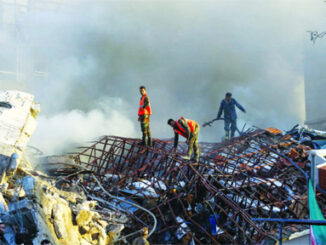
    On April 14, Iran launched hundreds of drones and missiles towards Israel in retaliation for an Israeli attack on its consulate that occurred in Damascus, Syria, on April 2. This attack became the immediate cause of the escalating conflict between Iran and Israel.
    Although Iran and Israel have a long history of bitter conflict and covert military actions against each other, this was the first time Iran has launched a direct attack of this scale aimed at targets within Israel.
    Heatwaves
    Higher daily peak temperatures and longer, more intense heatwaves are becoming increasingly common worldwide. This summer, India also experienced the impact of more frequent heatwaves, which have had devastating effects on human health and the environment.
    According to the India Meteorological Department (IMD)- A heatwave is a period of abnormally high temperatures, more than the normal maximum temperature that occurs during the summer season in the North-Western parts of India. Heatwaves typically occur between March and June, and in some rare cases even extend till July. The extreme temperatures and resultant atmospheric conditions adversely affect people living in these regions as they cause physiological stress, sometimes resulting in death.
    Misuse of Deepfakes
    In the General Elections of 2024, the widespread misuse of deepfakes significantly complicated the battle against misinformation. A deepfake video featuring actors Ranveer Singh and Aamir Khan purportedly endorsing a particular political party went viral during the elections. Earlier, a video that supposedly shows actress Rashmika Mandanna entering an elevator sparked a major controversy online. What initially appeared to be genuine was, in fact, a deepfake of the actress. The original video featured a British Indian girl, whose face was morphed to replace Mandanna’s.
    Deepfakes constitute fake content — often in the form of videos but also other media formats such as pictures or audio — created using powerful artificial intelligence (AI) tools. It is an amalgamation of the words “deep learning” and “fake” and it means fabricated videos generated from existing face-swapping techniques and technology.
    They are called deepfakes because they use deep learning technology, a branch of machine learning that applies neural net simulation to massive data sets, to create fake content. It employs a branch of artificial intelligence where if a computer is fed enough data, it can generate fakes that behave much like a real person.
    Bangladesh Political Upheaval
    The political upheaval in Bangladesh in August 2024 resulted in the ouster of former Prime Minister Sheikh Hasina and the establishment of an interim government led by Nobel laureate Muhammad Yunus. This event is considered a significant turning point in Bangladesh’s history and has introduced new dynamics in regional politics.
    India and Bangladesh share a unique relationship rooted in a common cultural heritage, shared principles, and values. However, recent regime changes in Bangladesh are affecting this relationship, particularly with the rising concern over atrocities against Hindus in Bangladesh, which has become a significant challenge in their bilateral relations.
    India-Canada Diplomatic Row
    In mid-October 2024, the sharp escalation of the diplomatic row between India and Canada, a first-of-its-kind situation in India’s diplomatic relations with the West, raised concerns about potential ripple effects in a range of areas, including trade and people-to-people ties.
    Notably, the diplomatic tension between India and Canada escalated on October 14, when India ordered the expulsion of six Canadian diplomats while also announcing its decision to withdraw the Indian High Commissioner to Canada and “other targeted diplomats,” citing security concerns after Ottawa identified them as “persons of interest” in its investigation into the killing of Khalistan separatist Hardeep Singh Nijjar.
    The bilateral ties between India and Canada are long-standing and significant. Canada is home to a high percentage of Sikhs. However, the two countries’ bilateral relations have been affected by various issues, such as Khalistani separatism and Canada’s position on human rights in India. These issues have led to increased tensions and have impacted diplomatic interactions.
    Political Upheaval in Syria
    The Syrian civil war saw major developments in December this year. The government of President Bashar al-Assad, who has ruled the Middle Eastern country since 2000, faced sudden and intense attacks from the rebel group Hayat Tahrir al-Sham. On December 8, the group reached the capital, Damascus, and celebrated the fall of Assad’s regime.
    Notably, New Delhi was preparing to revive its political and economic ties with Damascus late last month. On November 29, India and Syria held Foreign Office Consultations in New Delhi. India has been a keen developmental partner for Syria and is also actively involved in the capacity-building of the Syrian youth
    The Syrian civil war began around the “Arab Spring” of 2010, dubbed so as many countries in the Middle East and North Africa saw uprisings against authoritarian governments that had been in power for decades. Foreign governments, such as the United States and Russia, also engaged with the conflict based on their respective strategic interests.
    The Arab Spring also echoed in street protests in Syria. But Assad put it down with force unleashing a harsh crackdown on those opposing the regime. This set off a civil war, with the US backing the rebels while Russia, Iran and Hezbollah backing Assad.
    One Nation, One Election Debate
    The discussion on simultaneous elections has been a prominent topic throughout the year. Recently, the Union Cabinet approved the Constitution (One Hundred and Twenty-Ninth Amendment) Bill, 2024, along with the Union Territories Laws (Amendment Bill), 2024. This has reignited the debate over “One Nation One Election” (ONOE). Some believe that simultaneous elections would benefit the citizens, while others argue that it would undermine the basic structure of the Constitution of India.
    Notably, the high-level committee headed by former President Ram Nath Kovind has recommended that the government take a “one-time transitory measure”, which would require the Union government to identify an “appointed date” immediately after a Lok Sabha election and all state assemblies that go to poll after the said date would have their terms expire with the Parliament.
    Simultaneous elections, popularly referred to as “One Nation, One Election”, means holding elections to Lok Sabha, all state Legislative Assemblies, and urban and rural local bodies (municipalities and panchayats) at the same time. Currently, all these elections are held independently of one another, following timelines dictated by the terms of every individual elected body.
    Trump comes back to power
    Donald Trump won the election in the US to become the 47th President of the United States of America. Trump got 312 electoral college votes, while his rival, Kamala Harris from the Democratic Party could manage only 226. Trump’s victory in the US is likely to ensure the revival of ‘America First’ as well as America pulling back from several international organisations, which Trump thinks drain American taxpayers’ money.
    PM Modi gets third consecutive term
    In India, Narendra Modi’s Bharatiya Janata Party (BJP) won the general elections for the third consecutive term, defeating the alliance, dubbed INDIA. The election victory of PM Modi is slated to propel India towards strategic autonomy, meaning India will be able to make decisions that are best suited to its national interests, regardless of what major powers in the world want India to do.
    South Korean President imposes emergency, impeached
    South Korean President Yoon Suk Yeol declared an “emergency martial law” on December 3, accusing the opposition of controlling the parliament; however, within some hours, it was lifted. Following this, the South Korean leader was impeached by the parliament. Notably, the president had survived the first vote after members of his ruling People Power Party boycotted the vote.
    German chancellor loses confidence vote
    German Chancellor Olaf Scholz lost a confidence vote in the Bundestag, the German federal parliament. Scholz got only 207 in the 733-seat lower house against 394 voting against him while 116 abstained. The no confidence vote followed after the chancellor fired his finance minister in a long-running dispute over how to revitalise Germany’s stagnant economy. This saw Scholz’s three-party government collapsing in Germany.
    Labour Party wins in the UK
    UK’s Labour Party won the election in the UK on July 5TH, which dramatically reshaped the political landscape in the country. Keir Starmer became the Prime Minister defeating the Conservative Party’s Rishi Sunak, ending the Tories’ 14-year continued control of the British parliament.
    India-China reach border consensus
    In October, both India and China confirmed that they reached an agreement to end the standoff between both the Asian giants. After the Galwan clash in 2020, the agreement melted the ice as relations between both countries stooped to very low. In December, China and India reached a six-point consensus to address border issues during crucial talks between National Security Advisor (NSA) Ajit Doval and Foreign Minister Wang Yi.
    Vladimir Putin gets presidency again
    In Russia, Vladimir Putin cemented his position by winning the election. Putin will leave Josef Stalin behind if he completes his current six-year term. Putin got 87 per cent of the total votes polled.
    Five nations join BRICS
    Egypt, Ethiopia, Iran, Saudi Arabia, and the United Arab Emirates joined BRICS in 2024. This will see a major portion of the world get represented in one of the most prominent non-western groups.
    Bitcoin’s meteoric rise
    Bitcoin’s meteoric rise to over $100,000 is reminiscent of previous post-election surges. Notably, the cryptocurrency had already hit $81,000 shortly after Donald Trump’s victory in the US presidential elections earlier this year. Historically, Bitcoin’s price has shown a pattern of significant gains following the US presidential elections, which often coincide with its halving cycles – events that reduce its supply and drive up prices.
    Pakistan general election
    Pakistan also went to the polling booths in 2024, in February, to elect members of the 16th National Assembly. But the election was anything but fair. Pakistan Tehreek-e-Insaf (PTI), led by Imran Khan, was not allowed to contest the elections, due to which its leaders appeared as independent candidates on the ballot.
    Despite this and alleged rigging by the military, PTI-backed independents defied the odds and emerged as the largest bloc. However, they were not allowed to form the government, and a last-minute coalition of PML-N, PPP, MQM and others was given the green light.

    Vinesh Phogat’s Olympic Disqualification
    Indian wrestler Vinesh Phogat was disqualified from the Paris 2024 Olympics after being found 100 grams overweight for the women’s 50kg category just before her gold medal bout. After defeating top contenders, including defending Olympic champion Yui Susaki, Phogat was on the cusp of gold, only to see her dreams shattered at the mandatory weigh-in.
    This disqualification ended her bid to become the first Indian woman to win an Olympic gold in wrestling. Despite an appeal to the Court of Arbitration for Sport, the decision stood, leaving India reeling from a missed Olympic medal. A dejected Phogat soon announced her retirement, marking a tragic conclusion to her career.
    India’s Triumph in the T20 World Cup
    India clinched their second T20 World Cup title after a 17-year hiatus, defeating South Africa by seven runs in a thrilling final. Captain Rohit Sharma made history by becoming the first-ever captain to win 50 T20Is, further solidifying his legacy in the sport.
    Expansion of Cricket in the United States
    The 2024 T20 World Cup featured matches in the United States, including a high-profile India vs. Pakistan game held at a pop-up stadium in Long Island. This initiative was part of the ICC’s broader strategy to globalize cricket and tap into new markets, marking a pivotal moment in the sport’s history.
    Typhoon Yagi (Enteng)
    In early September, Typhoon Yagi struck parts of East Asia, leading to approximately 844 deaths. The typhoon brought torrential rains and strong winds, causing severe flooding and landslides.
    Enga Landslide in Papua New Guinea
    On May 24, a catastrophic landslide in the Enga Province of Papua New Guinea resulted in a tragic loss of life, with estimates ranging from 670 to over 2,000 fatalities. The disaster buried entire villages, making rescue operations challenging.

  • Women’s T20 World Cup: Deepti, Richa shine as India beat West Indies by 6 wickets

    Women’s T20 World Cup: Deepti, Richa shine as India beat West Indies by 6 wickets

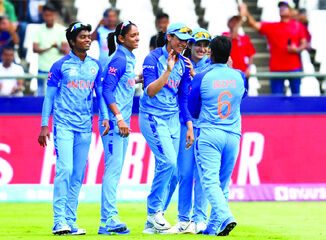
    Cape Town (TIP)- Deepti Sharma shone with the ball before Richa Ghosh led India to a six-wicket win over West Indies in their Women’s T20 World Cup Group 2 match here on Wednesday, February 15.
    Deepti spun a web around the West Indies batters to restrict them to 118 for six after being asked to bowl.
    The seasoned off-spinner (3/15) picked three wickets to become the first Indian to get to 100 women’s T20I wickets. Ghosh (44 not out) and captain Harmanpreet Kaur (33) then put up a vital 72-run stand to take India to their second victory of the tournament with 11 balls to spare.
    Needing less than run a ball, India were off to an electric start with openers Shafali Verma (28) and Smriti Madhana (10) taking the team total to 31 in four overs on the back of six fours.
    But India lost the momentum as slow bowling did the trick for West Indies.
    Mandhana missed off-spinner Karishma Ramharack’s (2/14) ball completely, resulting in an easy stumping for wicketkeeper Rasha Williams.
    Last game match-winner Jemimah Rodrigues (1) became Hayley Matthews (1/12) first and only victim of the day as the skipper took a stellar catch of her own bowling.
    After two low-scoring overs, Shafali tried to up the ante only to be caught at long leg and West Indies picked three wickets in quick succession.
    Harmanpreet took her time to settle down before hitting back-to-back fours off Afy Fletcher (0/24) in the ninth over. The India skipper’s knock came off 42 balls with the help of three boundaries.
    Ghosh did what she does best—finish the game.
    The youngster hit five fours, including one to finish off the match in her unbeaten 32-ball innings. She took India to 119 for 4 in 18.1 overs. Earlier, Pooja Vastrakar (1/21), opening with the new ball, gave India the early breakthrough, getting rid of the dangerous Hayley Matthew (2), striking on her very first ball.
    The West Indies skipper was done in by the extra bounce as Richa Ghosh completed a regulation catch.
    Pooja continued to put pressure on the West Indies, bowling a wicket maiden. Shemaine Campbelle (30) hit West Indies’ first boundary in the third over, slapping a Renuka Singh (1/22) delivery past square leg.
    The introduction of spin led to West Indies collecting 12 runs, including two fours from Rajeshwari Gayakwad’s over.
    West Indies were 53 for 1 at the halfway mark. Campbelle and Stefanie Taylor (42) steadied the West Indies innings as they slowly but steadily stitched a 73-run partnership. The two shared nine boundaries between them.
    However, twin strikes from the ever-reliable Deepti led to a mini batting collapse. The off-spinner first punished Campbelle for going for a reverse sweep with Smriti Mandhana completing a lovely catch at short third. Source: PTI

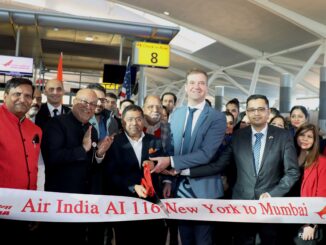
  • Air India relaunches direct flight from New York to Mumbai from JFK Airport, New York

    Air India relaunches direct flight from New York to Mumbai from JFK Airport, New York

    Lighting of the lamp. Ambassador Randhir Kumar Jaiswal, Consul General of India at New York lights the lamp . (Photo:Vijay Shah)
    Mr. Roel Huinink, CEO, JFK Airport lights the lamp. (Photo : Vijay Shah)

    I.S. Saluja with Vijay Shah

    NEW YORK (TIP): Tata Air India, on February 14, relaunched from JFK airport the direct flight from New York to Mumbai. Impressive ceremonies, from seeking Lord Ganesha’s blessings to the beat of the Maharashtrian Dhol Tasha, to exquisite dances, with the usual ribbon cutting, lamp lighting to cutting of the cake, marked the festive occasion. Ambassador Randhir Kumar Jaiswal, Consul General of India at New York who was the chief guest, cut the ribbon to inaugurate the relaunch ceremonies in the presence of Mr. Roel Huinink, CEO JFK Airport, Mr. Sunil Daware, Regional Manager (Americas) Air India, Mr. Girish Salian, Air India Manager at JFK, Capt. Shomu Sinha, Amarjit Singh, Deputy Manager, JFK, community leaders and Air India staff.

    Speaking on the occasion, Ambassador Randhir Kumar Jaiswal thanked the Tata Group-who now owned Air India for relaunching the direct flight from New York to Mumbai which he said, will help the passengers to save time and experience less travel fatigue.

    Mr. Sunil Daware, Regional Manager, Americas, Air India lights the lamp. (Photo : Vijay Shah)
    Air India New York to Mumbai flight crew poses for a photograph. (Photo : Vijay Shah)

    Mr. Sunil Daware gave a brief history of Air India. The airline came into being in 1932. Bharat Ratna J.R.D Tata founded the airline which was acquired by Government of Indian 1953. It is after 70 years that Air India came back to Tata Group on 27th, January 2022 . Tata Group now fully owns Air India. In order to strengthen the fleet, Tata Group has announced purchase of 470 aircraft with Airbus and Boeing, including 260 widebody planes, the largest order ever. Mr. Daware said that soon more direct flights on various routes will be added.”

    Mr. Roel Huinink said that Air India will now increase traffic at JFK Airport since direct flights are going to be added for convenience of travelers. He appreciated the Indian community which he said is very diverse and courageous.

    Ambassador Jaiswal, Mr Daware, Mr. Huinink, Capt. Shomu Sinha, Mr. Amarjit Singh, the Air India staff and a few community leaders joined in cake cutting, followed by a breakfast.

    The Maharashtra Dhol Tasha celebrating the occasion.(Photo : Vijay Shah)
    One of the dance groups. (Photo : Vijay Shah)
    Ambassador Jaiswal presenting Air India Star award for excellent services to Amarjit Singh, Air India Manager at the JFK airport. (Photo : Vijay Shah)
    Time to cut the cake and celebrate the relaunch of the flight. (Photo : Vijay Shah)
    The check-in time. (Photo: Vijay Shah)
  • Tax ‘surveys’ at BBC offices conclude after 60 hours

    Tax ‘surveys’ at BBC offices conclude after 60 hours

    NEW DELHI (TIP): Amid the Income Tax ‘surveys’ at BBC offices that concluded on Thursday, Union Law Minister Kiren Rijiju hit out at those criticizing the move, saying some people trusted foreign news outlets but not Indian investigative agencies, a TNS report says. Sharing an opinion piece by former Prasar Bharti CEO Shashi Shekhar Vempati, who argued that the outrage over the BBC tax ‘survey’ was misplaced, he said: “These people trust foreign news agencies but they won’t trust Indian agencies. They swear by the BBC but they won’t believe Indian courts. They’ll even abuse the Supreme Court if one adverse judgment is passed,” he tweeted.

    The operation, that began at the BBC offices in Delhi and Mumbai at 11.30 am on Tuesday, February 14, ended just after 10 pm on Thursday, February 16, clocking about 60 hours. The ‘surveys’ were carried out to look into issues related to international taxation and transfer pricing of BBC subsidiary companies. The survey teams, which sought answers on financial transactions, the company’s structure and other details, copied data from electronic gadgets to collect evidence, officials said. Opposition parties have denounced the action against the London-based broadcaster calling it “political vendetta” while questioning the timing — weeks after the BBC had aired a two-part documentary on the Prime Minister and the 2002 Gujarat riots.

    Meanwhile, there has been no official statement from the Income Tax Department so far.
    (Source: TNS)

  • India organizes special exhibition on millets at UN headquarters

    India organizes special exhibition on millets at UN headquarters

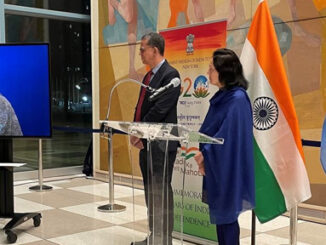
    UNITED NATIONS (TIP): India has organized a special exhibition on the millets at the UN headquarters in New York to commemorate the ‘International Year of Millets 2023’. The focus of the exhibition launched on Tuesday, February 14, by India’s Permanent Mission to the UN was on the different kinds of millets grown in India, their nutritional value and health benefits, including information on calorific content. The exhibition was attended by over a hundred delegates from the UN member states and senior UN officials.

    In her brief remarks, India’s Permanent Representative to the United Nations Ruchira Kamboj shared the reasons why India pursued making 2023 the International Year of Millets (IYM) and how millets were an important solution in the collective march towards the Sustainable Development Goals (SDGs).

    This was followed by a launch video on the IYM and a special address by Deputy Secretary-General Amina Mohammed. The Co-Founder and Director of MRIDA Group, Arun Nagpal, shared his experiences on his journey with millets from the farm to the table. This was followed by a special address by the Chef de Cabinet of the UN Secretary-General Earle Courtenay Rattray, after which the exhibition was officially opened.

    Millet-based savories were the other attraction for the guests to taste, while millet grains were also placed on display. The United Nations was treated to a sensory blend of seeing, touching, tasting, and learning about millets.

    The millet exhibition will be on display at the United Nations General Assembly Delegates Entrance Exhibition area from 14-17 February 2023, a media release said.

    The year 2023 has been designated as the ‘International Year of Millets’ after a proposal for it was brought forward by India and endorsed by Members of the UN’s Food and Agriculture Organization (FAO) Governing Bodies, as well as by the 75th Session of the UN General Assembly.

    Millets were among the first crops to be domesticated in India with several evidence of its consumption during the Indus valley civilization. Being grown in more than 130 countries at present, millet is considered a traditional food for more than half a billion people across Asia and Africa.

    In India, millets are primarily a Kharif crop, requiring less water and agricultural inputs than other similar staples. Millets are important by virtue of their mammoth potential to generate livelihoods, increase farmers’ income and ensure food and nutritional security all over the world.
    (Source: PTI)

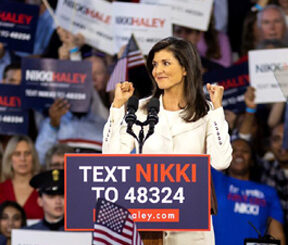
  • Indian-American Republican leader Nikki Haley formally launched her 2024 presidential bid

    Indian-American Republican leader Nikki Haley formally launched her 2024 presidential bid

    CHARLESTON, SC (TIP): Pitching for a strong and proud America, Indian-origin Republican leader Nikki Haley formally launched her 2024 presidential bid on Wednesday, casting herself as a younger and fresher alternative to the 20th century politicians like her one-time boss and former president Donald Trump.
    Haley, 51, is the two-term Governor of South Carolina and the former US Ambassador to the United Nations.
    Addressing her enthusiastic supporters at a well-attended event here in South Carolina, she declared: “For a strong America… For a proud America… I am running for President of the United States of America!”.
    “When America is distracted, the world is less safe… And today, our enemies think the American era has passed. They’re wrong. America is not past its prime. It’s just that our politicians are past theirs! “We won’t win the fight for the 21st Century if we keep trusting politicians from the 20th Century. And so, I have an announcement to make. I stand before you as the daughter of immigrants – as a proud wife of a combat veteran – and as the mom of two amazing children,” she said at the event with a huge ‘NikkiHaley For President’ backdrop.
    Her formal declaration means she will be the first contender to join the contest against her former 76-year-old boss Trump, who announced his third bid for the White House late last year.
    Before entering the presidential ballot, Haley has to win the Republican Party’s presidential primary which will start in January next year.
    The next US presidential election is scheduled to be held on November 5, 2024.
    US President Joe Biden, a Democrat, has not yet indicated if he will seek reelection.
    Biden, 80, is the oldest sitting US president.
    “We’re ready to move past the stale ideas and faded names of the past… And we are more than ready for a new generation to lead us into the future!” Haley said.
    Haley launched a scathing attack on Biden and Vice President Kamala Harris, who is also of Indian origin.
    “On Biden and Harris’s watch, a self-loathing has swept our country,” she alleged. “They have us spiraling toward socialism, with a new trillion-dollar spending bill every few months, and a national debt over 30 trillion dollars,” she said.
    “Make no mistake: This is not the America I will leave to my children! We must stop socialism, before it’s too late. It’s weakening America from within,” said Haley, who if elected would be the first Indian-American and first woman to be elected US president.
    Haley was born Nimrata Nikki Randhawa in Bamberg, South Carolina in 1972 to Sikh parents Ajit Singh Randhawa and Raj Kaur Randhawa, who emigrated from Punjab to Canada and then to the US in the 1960s.
    She is the third Indian-American to run for the US presidency in three consecutive election cycles.
    Bobby Jindal ran in 2016 and Vice President Kamala Harris in 2020.
    She is the second woman of color to ever seek the Republican Party’s nomination for the White House.
    The first was Angel Joy Chavis Rocker, a school counsellor from Florida, who entered the 2000 presidential race, becoming the first African-American to do so.
    Haley, in her speech, said real national unity comes from boldly proclaiming national purpose, asserting that “America is not a racist country”.
    “My purpose is to save our country from the downward spiral of socialism and defeatism. I aim to move America upward toward freedom and strength,” she said.
    At 39, she was the youngest governor in the US when she took office in January 2011, and made history as South Carolina’s first female governor. She was also the state’s first Indian-American governor and would go on to serve for two terms. From January 2017 to December 2018, she served as the 29th US ambassador to the United Nations. “I have a particular message for my fellow Republicans. We’ve lost the popular vote in seven of the last eight presidential elections. Our cause is right, but we have failed to win the confidence of a majority of Americans. Well, that ends today,” she said.
    “If you’re tired of losing, then put your trust in a new generation. And if you want to win – not just as a party, but as a country – then stand with me!” she added.
    Haley had famously said previously that she would not challenge Trump if he ran again, before changing her stance, arguing the US needs to look towards a different path.
    “It’s time for a new generation. It’s time for new leadership. And it’s time to take our country back. America is worth the fight — and we’re just getting started,” she tweeted last month.
    In an interview with Fox News last month, she said the US needs a “new leader” who can take the country in a new direction. “We cannot have another term of Joe Biden. And we have to remember, too, we have lost the last seven out of eight popular votes for president. It is time that we get a Republican in there that can lead and can win a general election,” she had said.
    The top pro-Trump super PAC acknowledged on Tuesday former ambassador Haley’s presidential campaign announcement, dismissing her as a “career politician.”
    Make America Great Again Inc. executive and former Trump spokesman Taylor Budowich released a statement on behalf of the super PAC mocking Haley and her presidential bid.
    “Nikki Haley is just another career politician,” Budowich said.
    “She started out as a Never Trumper before resigning to serve in the Trump admin. She then resigned early to go rake in money on corporate boards,” Budowich was quoted as saying by Fox News.
    (Source: PTI)

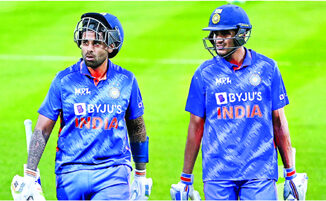
  • Suryakumar Yadav continues to lead ICC T20 batting chart, Shubman Gill achieves career-best position

    Suryakumar Yadav continues to lead ICC T20 batting chart, Shubman Gill achieves career-best position

    Dubai (TIP)- India’s Suryakumar Yadav remained static at the top spot, while compatriot Shubman Gill shot up to a career-best 30th position in the batting chart of the ICC Men’s T20I Player Rankings released on Wednesday, February 8. Surya continues to lead the batting list with 906 rating points.

    Gill achieved a career-best position after smashing a match-winning century against New Zealand in the third and final T20I in Ahmedabad recently.

    Gill’s 126 not out off 63 balls that contributed to India’s huge 168-run victory and helped the home team seal the series 2-1 lifted him an incredible 168 slots.

    The 23-year-old, who has now slammed centuries in all three formats of the game, is ranked sixth in ODIs and 62nd in Tests.

    Besides, Virat Kohli has dropped a rung to the 15th position among batters, while KL Rahul slid two places (27th) and skipper Rohit Sharma was further behind in the 29th spot.

    Young left-handed wicket-keeper batter Ishan Kishan has also dropped three places to 48th.

    No Indian bowler, however, features in the top 10 T20 bowlers’ list.

    But left-arm pacer Arshdeep Singh moved eight slots to reach a career-best 13th position after finishing with two for 16 in Ahmedabad.

    Bhuvneshwar Kumar dropped a place to 21st, while Ravichandran Ashwin and Axar Patel are static at 29th and 30th spots, respectively.

    All-rounder Hardik Pandya, who grabbed four for 16 and smashed a 17-ball 30, has progressed in all three lists.

    He has moved up from 53rd to 50th among batters, 66th to 46th among bowlers and is in second place among all-rounders, only a couple of rating points behind Bangladesh’s Shakib Al Hassan.

    Source: PTI

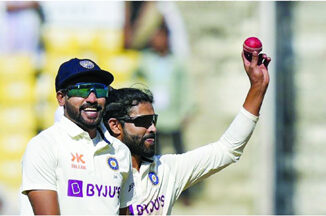
  • Jadeja makes heroic comeback, takes 11th five-wicket haul

    Jadeja makes heroic comeback, takes 11th five-wicket haul

    Nagpur (TIP)- India all-rounder Ravindra Jadeja on Thursday, February 9,  bagged a five-wicket haul in the first innings of the ongoing first Test against Australia in Nagpur. Returning to the team after a long injury lay-off, Jadeja scalped his 11th Test five-for to put India in a commanding positions. Jadeja returned figures of five for 42 as Australia were bowled out for a paltry total of 177 in the first innings after opting to bat first at the Vidarbha Cricket Association Stadium. Resuming play at tea on 174/8, Jadeja and Ashwin struck in quick succession as India bowled out Australia for cheap.

    Jadeja was the wrecker-in-chief during the second session as he broke the 82-run stand between Steve Smith (37) and Marnus Labuschagne (49) before trapping Matt Renshaw and Todd Murphy.

    Jadeja (5/47) then trapped Peter Handscomb (31) in the final session of the day as Australia were bowled out in 63.5 overs.

    Alex Carrey scored a 33-ball 36 before veteran off-spinner Ravichandran Ashwin (3/42), who was the other wicket-taker for India in the second session, ended his stay in the middle.

    Earlier, pacers Mohammed Shami (1/18) and Mohammed Siraj (1/30) dealt early blows to the visitors, removing openers Usman Khwaja (1) and David Warner (1) within the first three overs.

    Australia, led by Pat Cummins, dropped left-hander Travis Head and gave off-spinner Todd Murphy his international debut.

    Rohit Sharma’s India handed Test caps to Twenty20 sensation Suryakumar Yadav and wicketkeeper Srikar Bharat.

    India eye a fourth straight Border-Gavaskar Trophy win over Australia. They also eye a place in the World Test Championship (WTC) final.

    Jadeja applies ‘ointment on sore finger’, triggers debate

    Ravindra Jadeja drew attention not only for demolishing Australia with his fifer on the opening day of the first Test but also for applying something on his spinning finger, triggering a debate on what it was.

    A video made way to social media, showing Jadeja receiving something from his teammate Mohammed Siraj and then applying and rubbing that on his left index finger, something that had Australian media and a former player interested.

    When a fan shared the footage with former Australia captain Tim Paine, he replied, “interesting”.

    However, a BCCI source told PTI that it was an “ointment for pain relief for the sore finger”.

    David Warner and Steve Smith, who are part of the visiting side, served bans for their role in the ball-tampering scandal in 2018 in South Africa.

  • Assassination attempts are nothing new to politics in South Asia

    Assassination attempts are nothing new to politics in South Asia

    “India, too, had its share of political assassinations. Two of Indian Prime Ministers, Indira Gandhi, and her son, Rajiv Gandhi, were assassinated while in power. Similarly,  Chief Minister Beant Singh was killed outside his fortified Punjab Civil Secretariat office. Before him, Punjab’s Finance Minister Balwant Singh, too, was ambushed and killed in a terrorist attack in Chandigarh.” 

    Difference of opinion is an accepted aspect of a democratic process. But extending this differentiation of opinion to liquidation is extremely deplorable. Unfortunately, political assassinations have refused elimination as democracies, both controlled and liberal, face new  and uphill challenges.

    By Prabhjot Singh

    When an attempt on the life of former Pakistan Prime Minister Imran Khan was made on Thursday, October 27, it was a revival of an unfortunate and  gory aspect of Pakistan’s recent political history. After Pakistan came into existence in 1947, similar attempts, including a few fatal, have dotted the history of this trouble-torn nation. Cricketer-turned politician Imran Khan was shot in the shin  during his anti-government protest last Thursday. Imran Khan’s convoy was  attacked in the east of the country in what his aides said was a  clear attempt on the life of the immediate past  Prime Minister of Pakistan. Pakistan has a long history of political coups and unrest. Rawalpindi has been notorious for its history of political assassinations. At least two former Prime Ministers had been assassinated on the streets of this twin city of capital Islamabad. It all started in 1951 when the country’s first Prime Minister Liaquat Ali Khan, after the 1947 partition of India, was shot dead at a political rally in Rawalpindi.

    Another Prime Minister to be assassinated during a political event  in Rawalpindi was none other than Benazir Bhutto.

    Two-time Prime Minister Benazir Bhutto was assassinated in a gun and bomb attack after holding an election rally in Rawalpindi. A few months before her death, she had survived a suicide bomb assassination attempt in Karachi, where at least 139 people were killed. It was  one of Pakistan’s deadliest attacks at a political rally.

    In 1988 Military ruler President Mohammad Zia ul Haq was killed  in an air crash. He was travelling in a Hercules C-130 aircraft that crashed in mysterious circumstances. Several conspiracy theories shrouded the crash. Some of these theorists suggested a case of mangoes being loaded in the plane shortly before its take-off. The box of mangoes was suspected to  contain a timer device that released gas to knock out the cockpit crew. Besides attempted political assassinations, Pakistan’s history is also dotted by political bosses abandoning country’s shores after being thrown out of power.

    Former army chief-turned President Pervez Musharraf annexed power in a bloodless coup. He was sworn in as president and head of state in June 2001. He resigned in 2008 and Asif Ali Zardari, Benazir Bhutto’s husband, succeeded him  as president.

    Zulfiqar Ali Bhutto, the father of Benazir who was elected as Prime Minister in 1970, was hanged  following  conviction that remained mired in controversies.

    In 1977, Zia ul Haq seized power after a coup against the Bhutto government. He put Bhutto under house arrest, imposed martial law, suspended the constitution and put a blanket ban on political parties. It was not the first military coup in Pakistan.

    Pakistan’s first military coup was in 1958 when  Governor-General Sikander Mirza enforced martial law with General Ayyub Khan as chief martial law administrator. Ayyub Khan later assumed the presidency and sacked Mirza, who  later exiled as was subsequently done by Parvez Musharraf and Nawaz Sharif.

    India, too, had its share of political assassinations. Two of Indian Prime Ministers, Indira Gandhi, and her son, Rajiv Gandhi, were assassinated while in power. Similarly,  Chief Minister Beant Singh was killed outside his fortified Punjab Civil Secretariat office. Before him, Punjab’s Finance Minister Balwant Singh, too, was ambushed and killed in a terrorist attack in Chandigarh.

    Difference of opinion is an accepted aspect of a democratic process. But extending this differentiation of opinion to liquidation is extremely deplorable. Unfortunately, political assassinations have refused elimination as democracies, both controlled and liberal, face new  and uphill challenges.

    Tail piece : Now when Imran Khan is in the news again, it may not be way off  the context to recall my interaction with him (that appeared in The Tribune) during the 1989 World Cup Cricket Tournament:

    My piece: On meeting a Sikh journalist

    On professional assignments outside Chandigarh, whenever I introduce myself as Prabhjot Singh from The Tribune, the question comes to me: “Are you from Punjabi Tribune?” Perhaps implying thereby that a Sikh cannot write: English. I often laugh away such queries. There could be many reasons for such a question. There were not many Sikhs who took to newspaper reporting, especially as Staff Correspondents of The Tribune.

    I had gone to Pakistan to cover the World Cricket Tournament for the Reliance Cup. Accompanied by other Indian and foreign journalists. I went to the National Stadium at Lahore on the eve of Pakistan’s match against England.

    Pakistani players were at the nets.

    We were engrossed in a discussion when I found someone touching my shoulder. I looked back. It was none other than Pakistan’s freak leg spinner, Abdul Qadir. “Sardarji, sada kaptan tuhanu bulanda je” (Sardarji, our skipper is calling you), said Abdul Qadir, pointing towards the Pakistani tent where Imran Khan sat in a chair.

    I told Qadir that I would come in a few minutes.

    Imran Khan was all smiles as he admired me from head to toe. He enquired: “Sardarji, Punjabon aye ho?” (Sardarji, have you come from (East) Punjab?)

    “Ji”, I replied.

    “Match dekhan aye ho ke ghuman phiran aye ho?” (Have you come to watch matches or for sightseeing?)

    “Matchan layi aya haan”. (I have come for the matches).

    “Ki kam karde ho?” (What do you do?)

    “Main ik akhbar wich kam karda haan”. (I work on a newspaper).

    “Aacha; tusee taan te pher ik sahafi ho?” (I see, then you are a journalist), he said, and started laughing. He hugged me and said: “Kasam Khuda di aaj main pehli var koi Sikh sahafi takya je”. (By God, I have seen a Sikh journalist for the first time).

    “Sikh lok te vaise ve kaat hi cricket khed de ne. Par Sikh Sahafi dekh ke tan barri hairangi hoi je. Koi sewa hoi taan dasna”, he said. (Not many Sikhs play cricket.

    But seeing a Sikh journalist is a greater surprise. Let me know if I can be of any help.)

    Afterwards, throughout the tournament, whenever Imran Khan would see me he would wave and shout; “Sardarji, Sat Sri Akal.”

    (Prabhjot Singh is a veteran journalist with over three decades of experience covering a wide spectrum of subjects and stories. He has covered  Punjab and Sikh affairs for more than three decades besides covering seven Olympics and several major sporting events and hosting TV shows. For more in-depth analysis please visit probingeye.com  or follow him on Twitter.com/probingeye)

  • ‘Mankading’ moved to ‘run out’ from ‘unfair play’, use of saliva on ball banned

    LONDON (TIP): Custodian of cricket laws, the Marylebone Cricket Club (MCC), has decided to move the law relating to run-outs at non-striker’s end from its “unfair play” section besides completely banning the use of saliva to shine the ball in amendments to its 2022 code that will come into effect in October. Run-outs at non-striker’s end when batters back up too far have often triggered heated debates on the spirit of the game and several players like India’s premier off-spinner Ravichandran Ashwin have advocated for it as a fair mode of dismissal. “Law 41.16 – running out the non-striker – has been moved from Law 41 (Unfair play) to Law 38 (Run out). The wording of the Law remains the same,” the MCC said in a media statement late on Tuesday. It was in 1948 when the dismissal first came to be known. Indian legend Vinoo Mankad ran out Australian wicketkeeper Bill Brown at the non-striker’s end after duly warning him for backing up too far. The Australian media dubbed it as ‘Mankading’, a name that stuck in popular parlance but was vehemently opposed by legends like Sunil Gavaskar for being “disrespectful” towards Mankad. The MCC also said that using saliva to shine the ball would be treated as an unfair practice.

  • India in history this Week-December 10 to December 16, 2021

    India in history this Week-December 10 to December 16, 2021

    10 DECEMBER

    1878       The freedom fighter leader G. Rajagopalachari was born.

    1878       Birth of Muhammad Ali Johar, one of the founders of Jamia Millia Islamia in Rampur.

    2001       Dada Muni, one of the stalwarts of Indian cinema, said goodbye to the world.

    1992       The first hovercraft service of the country was started in Gujarat.

    1998       Amartya Sen was awarded the Nobel Prize for Economics in Stockholm.

    11 DECEMBER

    1911       Dilip Kumar, one of the greatest actors of Indian cinema, was born.

    1935       Former President of the country Pranab Mukherjee was born in Birbhum in West Bengal.

    1969       Vishwanath Anand, the emperor of chess, was born.

    2011       Pandit Ravi Shankar died.

    1845       First Anglo-Sikh War: The Sikh army crossed the Sutlej River in Punjab.

    1858       Bankim Chandra Chattopadhyay and Yadunath Bose became the first Bachelor of Arts subjects from the University of Calcutta.

    1946       Rajendra Prasad was appointed the President of the Constituent Assembly.

    1967       In western India, a magnitude 6.5 earthquake killed 170 people.

    1687       The East India Company formed a municipal corporation in Madras (India).

    12 DECEMBER

    1911       The capital of India was shifted from Calcutta to Delhi.

    1971       All the facilities provided to the former kings by the Indian Parliament were canceled.

    1992       Giant Buddha statue was installed in Hyderabad’s Hussain Sagar lake.

    1996       Signing of 30-year treaty on the sharing of Ganga water between India and Bangladesh.

    2001       India gave two cheetah helicopters and weapons to Nepal.

    1964       Famous Hindi poet and litterateur Maithilesharan Gupta died.

    13 DECEMBER

    1232       Iltutmish, the ruler of the Ghulam dynasty, captured Gwalior.

    2001       The Indian Parliament was attacked by terrorists.

    1921       The Banaras Hindu University was inaugurated by the ‘Prince of Wales’.

    1955       India and the Soviet Union accepted the Panchsheel agreement.

    1961       Mansoor Ali Khan Pataudi started his Test match career against England in Delhi.

    1998       Mahatma Ramchandra Veer was awarded the “Bhai Hanuman Prasad Poddar Rashtra Seva” award from the Bada Bazaar Library in Kolkata.

    2008       For the fifth phase of Jammu and Kashmir, 57% polling was held in 11 assembly constituencies.

    2012       In the final match of the blind Twenty20 World Cup, the Indian cricket team defeated Pakistan by 30 runs to take the title of world winner.

    1955       Former Chief Minister of Goa Manohar Parrikar was born.

    2000       Former captain of the Indian cricket team, Vijay Samuel Hazare became the first person to receive the ‘Castrol Lifetime Achievement Award’.

    14 DECEMBER

    1924       Director, producer, showman Raj Kapoor was born.

    1901       Mahatma Gandhi reached Rajkot via Porbandar.

    1960       The Organization for Economic Cooperation and Development (OECD) was established.

    2005       11 Hindus are condemned with life imprisonment for their involvement in the killing of Muslims in the 2002 Gujarat violence.

    2011       Poisonous liquor banned in India kills 166 people in West Bengal.

    15 DECEMBER

    1950       The iron man Sardar Vallabhbhai Patel died.

    1749       Chhatrapati Shivaji’s grandson Shahu died.

    1953       India’s S. Vijayalakshmi Pandit was elected the first woman president of the eighth session of the United Nations General Assembly.

    1991       Filmmaker Satyajit Ray was awarded a Special Oscar for his achievements in the cinema world.

    16 DECEMBER

    1985       The country’s first fast breeder nuclear react started functioning in Kalpakkam.

    1971       Bangladesh separated from Pakistan and became an independent nation after agreeing to a cease-fire between India and Pakistan.

    1993       ‘Education for all’ conference starts in New Delhi.

    2004       Doordarshan’s free to air DTH service ‘DD Direct +; Was launched by the Prime Minister.

    1903       The Taj Mahal Palace Hotel in Mumbai was opened for guests.

    2012       In New Delhi, a woman was gang-raped in a bus, leading to public protests against the Government of India and the Government of Delhi.

    1937       Hawa Singh, one of the best boxers in India, was born.

  • India in history this Week-November 5 to November 11, 2021

    India in history this Week-November 5 to November 11, 2021

    05 NOVEMBER

    1556       In the second battle of Panipat, the Mughal ruler Akbar defeated Hemu.

    1920       Indian Red Cross Society was established.

    1961       India’s first Prime Minister Jawaharlal Nehru visited New York.

    2001       India and Russia rejected the Taliban’s participation in the Afghan government.

    1870       The great freedom fighter Chittaranjan Das was born.

    06 NOVEMBER

    1763       The British army defeated Meerkasim and captured Patna.

    1913       Mahatma Gandhi led ‘The Great March’ against apartheid policies in South Africa.

    1998       India’s proposal for ceasefire in Siachen rejected by Pakistan

    1943       During the Second World War, Japan handed over Netaji Subhash Chandra Bose to the Andaman and Nicobar Islands.

    1962       National Defense Council was established.

    2000       Jyoti Basu stepped down after being Chief Minister of West Bengal for 23 consecutive years.

    07 NOVEMBER

    1858       Bipin Chandra Pal, the great revolutionary who fought against the British, was born on 7 November.

    1862       Bahadur Shah II, the last ruler of the Mughal Sultanate, died in Rangoon.

    1876       Bankim Chandra Chattopadhyay composed the song Vande Mataram in a village called Kantal Pada in Bengal.

    1888       Renowned scientist Chandrashekhar Venkata Raman was born.

    2006       India and ASEAN agreed to create a fund for the development of science and technology.

    2008       The famous poet Rahman Rahi of Kashmir was conferred with the Jnanpith Award.

    1711       The ship of the Dutch East India Company sank all of the 300 crew.

    1978       Indira Gandhi was re-elected to the Indian Parliament.

    08 NOVEMBER

    1661       Sikh religious teacher Har Rai died.

    2008       India’s first unmanned space mission Chandrayaan-1 reached the lunar orbit.

    2016       Prime Minister Narendra Modi announced demonetisation and 500,1000 notes were discontinued. After that, new 2000 notes were issued.

    1999       Rahul Dravid and Sachin Tendulkar set a world record by sharing 331 runs in a one-day cricket match.

    2005       Criticized the terrorist actions of Palestinian organizations in India and the repression of Israel.

    1627       The Mughal ruler Jahangir died.

    1920       India’s famous Kathak dancer Sitara Devi was born.

    09 NOVEMBER

    1236       The Mughal ruler Ruknuddin Firoz Shah was assassinated.

    1270       The great saint Namdev was born.

    1947       Junagadh state merged into India.

    1960       First Indian Air Force Chief Subroto Mukherjee died.

    2000       Uttarakhand was carved out of Uttar Pradesh and made a new state.

    10 NOVEMBER

    2001       Indian Prime Minister Atal Bihari Vajpayee addressed the United Nations General Assembly.

    2013       The famous Rajasthani language litterateur Vijaydan Detha passed away.

    1978       Rohini Khandilkar became the first woman to win the National Chess Championship.

    2008       India won the Border-Gavaskar Trophy by defeating Australia 2–0.

    2008       Giving strategic depth to India-Qatar relations, the two countries signed the Defense and Security Agreement.

    11 NOVEMBER

    1888       Freedom fighter Maulana Abul Kalam Azad was born in Saudi Arabia.

    1973       The first international postage exhibition started in New Delhi.

    1889       Freedom fighter Jamnalal Bajaj was born in 1889.

    1943       Indian nuclear scientist Anil Kakodkar was born in 1943.

  • Hockey turnaround heralds a new dawn

    Hockey turnaround heralds a new dawn

    By Yogendra Yadav

    Hockey of the 1970s and cricket till the 1980s represented the pride of the underdog, the hesitant entrant on the world stage. Mass hysteria around cricket today is the cultural carrier of boorishness, its outward confidence barely masking the hollowness inside. The resurgence of Indian hockey assures me that another deeper and positive nationalism still lives inside us. It may have been overshadowed, but it is not erased from our national consciousness.

    The resurgence of Indian hockey in this context assures me that another deeper and positive nationalism still lives inside us. It may have been overshadowed, but it is not erased from our national consciousness

     I am not a morning person. But Tuesday, August 3 morning was different. I was up early, as was the entire family, for the India-Belgium match in the Olympic hockey semi-final. The game moved us, like millions of Indian fans, from ecstasy to anxiety, and pain. The Indian men’s team was outplayed, yet this defeat did not leave us humiliated, it did not erase the earlier joy of watching that brilliant solo goal against Britain by Hardik Singh. Or the sheer pride of the Chak De moment when our women’s hockey team defeated Australia.

    It took me back nearly half a century ago, to my school days. The only claim to fame of my school, SGN Khalsa Higher Secondary School, Sri Ganganagar, with a preponderance of rural Sikh boys, was its sports prowess. In those days, 6-8 members of Rajasthan’s playing XI used to be from my school. My college, SGN Khalsa College, enjoyed the same reputation in hockey and athletics. I played hockey, never went beyond the school’s Team C, but was enough to be selected for AIR’s panel of hockey commentators for the Asian Games in 1982.

    Like everyone around me, I was an avid hockey fan then. Indian hockey was past its golden era, but not out of international reckoning. We had only heard about Dhyan Chand, but his son Ashok Kumar was our hero. I did not know much about Balbir Singh, but I remember how awestruck I was when I got to shake hands with Ajit Pal Singh, the legendary center-half. The defining moment of hockey glory was the last-minute goal by Aslam Sher Khan in the semi-final of the Kuala Lumpur World Cup in 1975 that India went on to win. There was no television in my town then. The pleasure of hockey came through Jasdev Singh’s radio commentary. You had to add visuals, action and colors on your own. For my generation then, Indian hockey team was the flag-bearer of our national pride. It wasn’t a safe bet, yet worth it.

    Like most of my friends, my passion for hockey quietly gave way to cricket. It began with the visit of Clive Lloyd’s team to India in the winter of 1974-75, a series in which Gordon Greenidge, Vivian Richards and Andy Roberts made their debut. My personal favorites were G. Viswanath, Brijesh Patel, and of course, BS Chandrasekhar, all from Karnataka. India lost the series, but not its pride. The introduction of astroturf in the 1976 Olympics had begun a steep and irreversible decline of Indian hockey, notwithstanding the facile gold in the 1980 Moscow Olympics. It coincided with the rise of cricket, leading up to the dream victory in the 1983 World Cup.

    Some friends came together to form a local cricket team, grandly named the Eleven Star Club. The new APMC yard, not yet inaugurated, was our cricket ground. TV had just entered my town, though not my home. Its five-meter-high antenna, the new symbol of social status, was more likely to catch Lahore TV station than our own Doordarshan’s signal from Amritsar. Cricket stars — I had added Kapil Dev to the list now — were the new national heroes. India was still an underdog, with an occasional upset that uplifted our pride. When India was not playing, I was happy to support West Indies or Pakistan and admire Vivian Richards or Zaheer Abbas. That was the heyday of Third World solidarity and the Non-aligned Movement.

    For nearly two decades after, I lost touch with the world of sports. Professional passions overshadowed my occasional interest in cricket. Hockey was a faint memory. Lagaan tickled but failed to rekindle my interest in cricket. Chak De! India did bring tears, but for a world that did not exist anymore.

    By the time my sports fanatic son reconnected me to that world a few years ago, cricket was a new game. Twenty20 has changed the format and the pace, even for Test cricket. Thankfully, I don’t look down upon these changes. I love T20 matches. Who wouldn’t enjoy a feast of sixers? I marvel at how a format designed for batsmen is now dominated by bowlers. I am truly in awe of the talent pool that Indian cricket is now.

    Yet, I don’t feel a thing. Cricket is now an extension of the entertainment industry. I cannot bear to read about the players’ auction. I fail to connect IPL teams to the cities and regions they supposedly represent. I know we are the hub of international cricket, but that does not add in any way to my national self-esteem. I see and hear India fans, within and outside the country, with face paints and T-shirts, but I cannot tell them from English football fans. I simply cannot join their roar. The victory in the 2007 T20 World Cup did not mean what the triumph in the 1983 cricket World Cup or the 1975 hockey World Cup meant.

    I felt something similar with our hockey teams in the Olympics this time. No doubt, hockey too has changed: the four-quarter format, the pace of the game, and the new set of rules. Yet it is the same game. The Indian women’s hockey team’s victory over Australia the other day tugged at my heart the same way as the victory of Ajit Pal Singh’s team did 46 years ago. The stories of women hockey players are not dissimilar to the stories of Indian hockey in the 1970s. I don’t care if they don’t win any Olympic medals. For me, even in their defeat, the women and men of Indian hockey are the new national icons.

    My story is not quite my story. It is very much the story of a generation that saw the transition from a thick yet porous post-colonial nationalism to the hard, flat and thin ultra-nationalism so typical of our times. Hockey of the 1970s and cricket till the 1980s represented the pride of the underdog, the hesitant entrant on the world stage. Mass hysteria around cricket today is the cultural carrier of boorishness, its outward confidence barely masking the hollowness inside. Ashis Nandy, who wrote a story of politics of colonialism around cricket, reminded us: “Cricket heroes have become, for the increasingly uprooted, humiliated, decultured Indian, the ultimate remedy for all the failures — moral, economic and political — of the country.” The resurgence of Indian hockey in this context assures me that another deeper and positive nationalism still lives inside us. It may have been overshadowed, but it is not erased from our national consciousness. Or am I dreaming?

    (The author is National President, Swaraj India)

    (First published in The Tribune)


  • Indian-origin Punjabi taxi driver’s son makes it to Australia T20I team

    Indian-origin Punjabi taxi driver’s son makes it to Australia T20I team

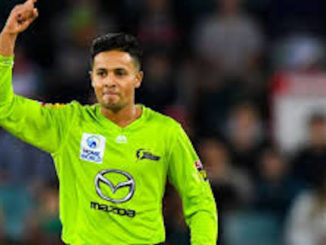
    MELBOURNE (TIP): Teenaged leg-spinner Tanveer Sangha, son of an Indian-origin taxi driver in Australia, has been named in Australia’s T20 squad for the upcoming five-match series in New Zealand.

    Sangha, who represented Australia at the under-19 World Cup just 12 months ago, is son of Sydney-based Joga, who had migrated from Rahimpur Kala Sanghian, a village near Jalandhar in Punjab, in 1997.

    Sangha, 19, has been in great form in the Big Bash League 10 regular season.

    Playing for Sydney Thunder, he scalped 21 wickets at an impressive average of 16.66.

    Former Australia captain Ricky Ponting had also called for Sangha’s inclusion in the national side.

    “He’s a young bloke who looks like he’s pretty confident and in control of what he’s doing, and he bowls proper good balls so he might be someone they’d look to get into the system,” Ponting told cricket.com.au

    “It’s a hard one for young leg-spinners, because they come along quickly and everyone’s excited by how good they might be, quite often they’re introduced early and they can have a few setbacks after that. But they might have to think about that,” he said.

    Sangha was Australia’s leading wicket taker in the under-19 World Cup last year. He scalped 15 wickets in the six matches in the tournament held in South Africa.

    Before Tanveer, Gurinder Sandhu was the other Indian-origin player to have played for Australia national team.

    The five-match series between Australia and New Zealand will start from February 22.


  • Sadhguru, Shankar Mahadevan, Kapil Dev, Preity Zinta at AAPI Convention

    Sadhguru, Shankar Mahadevan, Kapil Dev, Preity Zinta at AAPI Convention

    ATLANTA (TIP): Over 2,000 delegates from across the nation are attending the 37th annual convention organized by The American Association of Physicians of Indian Origin (AAPI) from July 3rd to July 7th, 2019 at the fabulous and world-famous Omni Atlanta at CNN Center and Georgia World Congress Center, Atlanta, Georgia.

    Dr. Naresh Parikh, President of AAPI, says, “The 37th Annual AAPI Convention & Scientific Assembly  offers an intimate setting that  facilitate our ability to convey cutting-edge research and CME, promote personal, professional and business relationships, and display ethnic items. The convention is filled with cutting-edge CMEs, product theaters, women’s forum, great entertainment from Bollywood and local talent and lot more.”

    It’s a well-known fact that physicians of Indian origin excel in their respective areas of work and continue to play key roles in patient care, administration, academics and medical research. In order to cater to its diversity of medical specialties, AAPI continues to use a multi-disciplinary conference format.

    Sadhguru, recognized around the world for his pioneering efforts to nurture global harmony, will lead an Isha Foundation Spiritual Forum during the Convention. some of the major themes as part of the CME sessions include: Pursuit of Happiness In Medicine; Burnout Prevention and Wellness in Physicians; Easy Life of a Hospitalist: An Illusion; and, Meditation and Mindfulness.

    Shankar Mahadevan, the popular award-winning Bollywood playback singer is all set to take the delegates by storm during the Convention. Shankar Mahadevan and his troupe will perform live at the much anticipated AAPI’s annual convention enthralling over 2,000 delegates from across the nation, who are expected to attend the Convention.

    Golf With Cricket Star Kapil Dev is another major attraction. Kapil Dev, the popular cricket star who won India the World Cup will be the keynote speaker at the convention. In addition, he will play Gold with AAPI members and will sign a coffee table book on Sikhism – ‘WE THE SIKHS’, by the legendary cricket star.

    Preity Zinta, the famous Bollywood actor will be the keynote speaker at the much-anticipated Women’s Forum, which has come to be a popular agenda item at every convention.

    In addition, there will be, for the first time a Youth Public Speaking Competition and the much anticipated and appreciated “AAPI Has Got Talent” where the AAPI members showcase their talents before their colleagues.

    The Organizing committeeContinuing Medical Education and non-CME seminars by experts in their fields will provide comprehensive and current reviews and guidelines for the diagnosis and treatment of various disease states to reduce morbidity and mortality and achieve cost effective quality care outcomes. At the end of the activity, it is expected that attendees will gain an understanding of the causation, diagnosis and the best clinical practices for the management of the diverse group of diseases discussed during this program.

    Dr. Hemant Yagnick, Academic Chair for the Convention, says, “Medical specialty representation includes pediatrics, psychiatry, anesthesiology/pain management, cardiology, family medicine, obstetrics and gynecology, oncology, gastroenterology pathology, endocrinology, nephrology, rheumatology along with many other fields.”

    The annual convention this year is being organized by AAPI’s Atlanta Chapter, headed by Dr. Sreeni Gangasani. “The convention team is working incredibly hard to provide a delightful 4 days of events packed with educational CME credits, world-class entertainment, leadership seminars, networking opportunities, exhibits, and more,” Dr. Gangasani added. “This meeting offers a rich educational program featuring the latest scientific research and advances in clinical practice. In addition, physicians and healthcare professionals from across the country will convene to develop health policy agendas and encourage legislative priorities for the upcoming year.”

    As though responding to the growing need: “Physician, heal thyself,” especially when there are growing signs of burn out among physicians, AAPI is focusing on themes such as how to take care of self and find satisfaction and happiness in the challenging situations they are in, while serving hundreds of patients everyday of their dedicated and noble profession.

    Accordingly, some of the major themes as part of the CME sessions include: Pursuit of Happiness In Medicine; Burnout Prevention and Wellness in Physicians; Easy Life of a Hospitalist: An Illusion; and, Meditation and Mindfulness. Other themes at the CME include: Combining Ancient Sciences and Modern Medicine in the Prevention of Cardiovascular Diseases; Mysteries of Type 2 Diabetes in South Asians – the Unresolved Questions; and, Cardio-oncology: Clinical Practice and Echocardiography.

    “Many of the physicians who will attend this convention have excelled in different specialties and subspecialties and occupy high positions as faculty members of medical schools, heads of departments, and executives of hospital staff. The AAPI Convention offers an opportunity to meet directly with these physicians who are leaders in their fields and play an integral part in the decision-making process regarding new products and services,” Dr. Suresh Reddy, President-Elect of AAPI, added.

    Dr. Raghu Lolabhattu, Co-Chair Convention and Convention Alumni Chair, said, “AAPI Convention is just around the corner, almost less than a month. As a Co-chair of the Convention, on behalf of our President Dr. Naresh Parikh, Convention Chair Dr. Sreeni Gangasani and our hard-working Convention team I would like to invite each and every one to the great gala. Our team is working relentlessly with a great enthusiasm to make this event a most successful one and I assure that you will have great time and would go home with wonderful memories.

    The 37th annual AAPI Convention, while providing physicians of Indian origin an opportunity to come together in an atmosphere of collegiality, it will enable them to retrace and appreciate their common roots, culture and the bond that unites them as members of this large professional community.  Giving them a platform to celebrate their accomplishments, the annual convention to be attended by nearly 2,000 physicians of Indian origin, it will also provide a forum to renew their professional commitment through continuing medical educations activities.

    The annual convention this year is being organized by AAPI’s Atlanta Chapter. In addition to offering over 12 hours of cutting-edge CMEs to the physicians, CEOs Forum, fabulous entertainment, and women’s leadership forum. The convention will be addressed by senior world leaders, including US Senators, Presidential candidates, Nobel Laureates, Governors, Congressmen, and celebrities from the Hollywood and Bollywood world.

    “Having Sadhguru at the Convention with his unique ability to make the ancient yogic sciences relevant to contemporary minds, and act as a bridge to the deeper dimensions of life, will make the convention and the delegates from across the nation richer, in so many ways,” said Dr. Anupama Gorimukala, Secretary of AAPI. “His approach does not ascribe to any belief system but offers methods for self-transformation that are both proven and powerful,” Dr. Anupama Gorimukala, Secretary of AAPI,  added.

    The convention venue is one of the best ever one has seen with tons of local attractions. Several sightseeing places like CNN tower, Coca-Cola museum, Mercedes Benz sports Arena and many other attractions are within five minutes’ walk.

    “The 2019 AAPI Annual Convention & Scientific Assembly offers an exciting venue to interact with leading physicians, health professionals, academicians, and scientists of Indian origin,” says Dr. Sudhakar Jonnalagadda, Vice President of AAPI. “Physicians and healthcare professionals from across the country will convene and participate in the scholarly exchange of medical advances, to develop health policy agendas, and to encourage legislative priorities in the coming year.”

    Dr. Manoj Shah, Convention Treasurer says, Guests will be treated to true Southern hospitality in one of the country’s fastest growing cities—bustling with restaurants, night life, shopping and more. We look forward to welcoming you and your family and thank you for your support in making this convention a great success.”

    AAPI organization is a dynamic body, spearheading legislative agendas and influencing the advancement of medical care not only in the US, but internationally. AAPI’s impact is seen in areas such as advocating for the increasing physician work force, participating in national health initiatives such as obesity prevention, and investing in global health education. Whether practicing in medically underserved areas such as inner cities and rural communities or participating in cutting edge research & academics, Indian physicians form an impressive group.

    Almost 10%-12% of medical students entering US schools are of Indian origin. Headquartered in Oak Brook, Illinois, AAPI represents the interests of over nearly 100,000 physicians, medical students and residents of Indian heritage in the United States. It is the largest ethnic medical organization in the nation.

    “The 2019 AAPI Annual Convention & Scientific Assembly offers an exciting venue to interact with leading physicians, health professionals, academicians, and scientists of Indian origin. Physicians and healthcare professionals from across the country will convene and participate in the scholarly exchange of medical advances, to develop health policy agendas, and to encourage legislative priorities in the coming year. We look forward to seeing you in Atlanta, GA!” says Dr. Naresh Parekh. For more details and registration for the convention, please visit:  www.aapiconvention.org and www.aapiusa.org

  • InstaReM Partners with The ROOT Academy (R66T Academy)

    InstaReM Partners with The ROOT Academy (R66T Academy)

    SINGAPORE / LONDON (TIP):  InstaReM, a leading digital cross-border money transfer & payments service provider with presence across Southeast Asia, Europe and the Americas, has announced a partnership with The Root Academy (R66T Academy), the cricket coaching academy founded by the family of the England test cricket captain, Joe Root.

    The partnership – which is being announced as the Cricket World Cup tournament enters in an exciting phase – enables InstaReM customers to get an exclusive 30% discount off fees at The R66T Academy training camps throughout the world when they send their next money transfer abroad via the InstaReM website or app.

    InstaReM’s digital cross-border payments solutions stops its customers around the world from getting caught out from hidden fees, and now its customers can stop getting caught out at the crease. The Root Academy partnership gives InstaReM’s cricket-loving customers an opportunity to learn the art, science and craft of cricket from those who know it the best.

    Announcing the partnership, Prajit Nanu, co-founder and CEO of InstaReM, and a cricketing enthusiast, said, “Nothing connects nationalities like a sport. Cricket, which has English roots, is extremely popular in Australia-New Zealand, Southeast Asia, and more countries in Europe, Africa and Caribbean have started experiencing the thrill of the sport with the newer formats of the game. As a global payments fintech with global presence, we are delighted to partner with the R66T Academy, the gold standard in high-quality cricket coaching, to offer discounted programs in the finer aspects of cricketing to the enthusiasts from any part of the world.” 

    Joe Root, the co-founder of the R66T Academy and the current captain of the English Cricket Test Team said, “We are pleased to partner with InstaReM Money Transfer to offer an exclusive discount on our cricket training camps. The Root Academy is our commitment to unlocking the cricketing talent of tomorrow. Alongside InstaReM, we aim to reach even more cricket fans around the world, offering high-class learning experiences that change the game. We’re up to change the game with InstaReM and the Root academy.”

    The R66T Academy aims to encourage people to play more cricket, while preparing and empowering youngsters and teams to succeed at their highest level. Training camps are led by Shaun Siegert, the head coach of The R66T Academy and mentor/ coach of international cricketers like Joe Root, Jason Roy, Monty Panesar, Liam Plunkett, Sam Billings & many more. The R66T academy training camps are available to children up to 18 years – and with InstaReM’s exclusive offer, adults are also eligible to participate, subject to availability and schedules.

     For more information, visit https://www.therootacademy.co.uk/

    (Based on a press release)

  • Captain Virat Kohli reveals a lot without saying anything

    Captain Virat Kohli reveals a lot without saying anything

    MUMBAI (TIP): The Indian cricket community were waiting for a reaction from skipper Virat Kohli on Anil Kumble’s resignation as coach for the last 48 hours.

    Well, they didn’t get the reaction they wanted. But, they got a lot more. By afternoon, it had emerged that Kohli had deleted the tweet in which he had welcomed Kumble on June 23 last year. In that tweet, Kohli wrote, “Heartiest welcome to @anilkumble1074 Sir. Look forward to your tenure with us. Great things in store for Indian cricket with you.”

    By evening, as time came to address the prematch press conference at Port of Spain, ahead of India’s limited overs series comprising five ODIs and 1 T20 against West In dies, which begins on Friday, Kohli was in the mood to give the media enough scope for a juicy story if they were prepared to read between the lines.

    He highlighted the respect that he and the rest of the Indian team has for Kumble but offered little dope on what transpired between him and the legendary leggie that led to Indian cricket’s second most infamous coach captain rift. No prizes for guessing the first one. After asking the customary token question of how relaxing it would be for the team to play in the scenic islands of the Caribbean and hearing Kohli answer it articulately, the media quickly got to the point. Kohli was more cautious in dealing with the query than he was while dealing with Mohammad Amir in the Champions Trophy final. Asked to comment on Kumble’s resignation letter, Kohli said, “Obviously, he has reacted and it’s his opinion, which I respect,” Kohli said on the eve of the first ODI and highlighted his great feats for Team India.

    “I have total respect for Anil bhai as a cricketer and what he has achieved for the nation (It took exactly a year for Sir to become bhai). All the years he has played, there is no taking away from that aspect of him at all. And we all respect him totally.”

    Total respect for him as a cricketer? Does it mean he and the rest of the team did not respect his credentials as a man-manager and coach? Didn’t we say read between the lines? Wait, there was more come to come. In a veiled dig at the former coach, Kohli chose his own way to give a parting shot and spoke about the importance of maintaining the sanctity of the dressing room. Again, it seemed to be a dig that he was choosing to do something which the coach had not.

    “His resignation is something that has happened right after the Champions Trophy. I addressed 11 pressers in the Champions Trophy but did not speak on it. We have created a culture over the last three or four years that whatever happens in the change room, we’ve tried to maintain the sanctity of the change room throughout. For us that is paramount. I’ve always respected that and we have continued to maintain that as well,” he stressed.

    He was emphatic about not making the details of the discussions between him and Kumble, public. “What happens in the change room is sacred and private to us. That is something that I would not express in detail in a public space. His point of view is out there and we respect that decision.”

    For the record, he also revealed that Ajinkya Rahane who did not get to play a single game in the Champions Trophy will open with Shikhar Dhawan and the importance of identifying a pool of 25 players for the 2019 World Cup.

    Kohli also said that the team had learnt from the defeat in the Champions Trophy final to Pakistan on Sunday. “We learn from every loss,” Kohli stressed and added that the team learns from victories too.

    India and the West Indies last played an ODI in Perth at the World Cup in 2015 and India won that game with ease. (PTI)

  • KUMBLE SET FOR BITTER EXIT AFTER CHAMPIONS TROPHY

    KUMBLE SET FOR BITTER EXIT AFTER CHAMPIONS TROPHY

    MUMBAI (TIP): Anil Kumble appears to have decided to walk away as India coach at the end of the ICC Champions Trophy campaign when his one year contract will come to an end.

    With reports of major differences between Kumble and skipper Virat Kohli having marred the build-up to India’s opening match against archrivals Pakistan at Edgbaston, Birmingham on Sunday, there were indications that efforts for any patch up had not borne fruit.

    Although the BCCI has given Kumble direct entry while seeking applications for a new coach, it was learnt on Friday that the BCCI may not renew the contract of India’s leading Test bowler despite his doing an excellent job since taking over as India coach in July 2016.

    It is understood that given the current mood within the team, Kumble may even opt out of the race at the end of India’s campaign in the tournament in UK. According to sources, after failing in the initial bid to bring about a patch up between Kohli and Kumble, effort currently is on by the BCCI officials in England and the Cricket Advisory Committee (Sachin Tendulkar, Sourav Ganguly and VVS Laxman) to keep Kumble and skipper Kohli on the same page till the tournament is over, and ensure the two handle the issue in a professional manner.

    Ramchandra Guha, who resigned from the COA on Thursday, was scathing in his remark with the way Kohli-Kumble issue was handled. The Indian coach-captain saga has been the talking point in the team’s preparation for the crucial ICC Champions Trophy.

  • Indians unhappy with Edgbaston practice facility

    Indians unhappy with Edgbaston practice facility

    BIRMINGHAM (TIP): The Indian cricket team was unhappy with the practice facilities at Edgbaston, with both coach Anil Kumble and skipper Virat Kohli expressing their displeasure to the local authorities.

    It was India’s first training day in Birmingham, and they were allocated a practice arena adjacent to the main stadium. However both Kohli and Kumble were unhappy as the arena was small. And because of that, the fast bowlers could not bowl from their full run-up.

    It was learnt that the likes of Umesh Yadav, Mohammed Shami and Hardik Pandya, all of whom have about 30-yard run-up, couldn’t bowl full tilt at the nets.

    This irked the captain and the coach, and they conveyed their displeasure through manager Kapil Malhotra to sort the issue out with Warwickshire (local county) authorities.

    Apparently, the Indian team wanted to practise at the main arena but were denied a chance as Australia and New Zealand, who have a match tomorrow, were given access to the main ground.

    The Pakistan team also practised at the same ground but since they have been camping in Birmingham for the past week, they have had access to the main practice arena.

    India will only get a feel of the main turf on Saturday, prior to their marquee clash with Pakistan.

    Source: PTI

  • SEHWAG TOP NAME FOR INDIA

    SEHWAG TOP NAME FOR INDIA

    NEW DELHI (TIP): Former cricketer Virender Sehwag on Friday became the most notable applicant for the Indian cricket team’s chief coach’s post, which would be technically vacant when Anil Kumble’s term comes to an end after the Champions Trophy. While Kumble is an automatic entry into the process, the others in the fray are Australian Tom Moody and Englishman Richard Pybus, who has coached Pakistan earlier.

    The two Indians among applicants are former fast bowler Dodda Ganesh and former India A coach Lalchand Rajput. Moody and Rajput had applied for the chief coach’s job last year also but it was Kumble, who got the nod. However, the entry of Sehwag — considered one among India’s greatest-ever game changers — makes the battle for the position very interesting.

    One of India’s biggest match-winners and a part of two- time World Cup winning team, Sehwag played 104 Tests and 251 ODIs for India scoring 8,586 and 8,273 runs respectively.

    While he doesn’t have any prior coaching experience apart from mentoring IPL franchise Kings XI Punjab recently, it was the BCCI top brass that convinced him to apply for the post.

    It’s the same kind of scenario when Ravi Shastri seemed all set to be retained as coach and Kumble was asked to throw his hat in the ring at the eleventh hour. The BCCI joint secretary Amitabh Chaudhary today on record denied any rift between Kumble and captain Virat Kohli.

    However, the fact that a player of Sehwag’s stature has applied gives enough indication that everything is not right in the Indian dressing room.

    Sehwag will only apply when he knows that he is a serious contender for the top job. It will be interesting if Kumble finally appears for the interview knowing that Sehwag had applied for the post.

    However many in BCCI feel that Sehwag,who is also a social media sensation, may demand an astronomical salary and then Moody, who gave a good presentation last time also, could come into the fray.

    Source: PTI

  • Afghanistan blames Haqqani network, ISI for Kabul blast

    Afghanistan blames Haqqani network, ISI for Kabul blast

    KABUL/ISLAMABAD (TIP): The Afghan intelligence service, the National Directorate of Security (NDS), said on Thursday that early findings showed the Haqqani network with the assistance of Pakistan’s ISI carried out the attack in Kabul that killed at least 90 people.

    “These terrorists once again proved they don’t represent any religion and they only carry out such coward attacks to please their Pakistani masters which is against all Islamic and human rights principals,” the NDS said in a statement on Thursday.

    The Haqqani network has carried out a number of kidnappings and attacks against US interests in Afghanistan.

    The group is also blamed for several deadly attacks against Indian interests in Afghanistan, including the 2008 bombing of the Indian mission in Kabul that killed 58 people.

    Afghanistan cancels Pakistan games after Kabul attack Afghanistan also cancelled proposed home and away cricket fixtures with Pakistan after the Kabul bombing.

    Pakistan were set to play their first Twenty20 match in Kabul later this year in what was seen as an opportunity for the neighbours to ease tensions over border skirmishes and alleged proxy warfare.

    The Kabul match, set for July or August, would have been followed by a fixture in Pakistan and a full series at an unspecified date.

    But the Afghanistan Cricket Board issued a strongly worded statement late on Wednesday, cancelling the matches in light of a truck bombing in the city’s diplomatic quarter that killed at least 90 people.

    No group has claimed responsibility for Wednesday’s attack, although the Taliban has denied involvement.

    “The ACB hereby cancel all kinds of cricket matches and initial mutual relationship agreement with the Pakistan Cricket Board,” the Afghan board said on its Facebook page. “No agreement of friendly matches and mutual relationship agreement is possible with a country where terrorists are housed and provided safe havens.” The development leaves Pakistan’s cricketers even more isolated in the region.

    Pakistan rejects Afghan allegations Pakistan, however, strongly rejected as “baseless” the Afghan allegations that ISI was in any way involved in the Kabul attack. “The accusatory approach is unhelpful towards efforts to peace,” Pakistan’s Foreign Office (FO) spokesman Nafees Zakaria said during the weekly media briefing on Thursday. Zakaria said Pakistan suffered due to terrorism and has the highest stakes in Afghan peace and stability. “Our commitment to peace in Afghanistan is based on sincerity and is beyond any doubt,” he added. Zakaria said that it was highly disappointing that certain elements in Afghanistan were damaging relations between the two neighbours. (agencies)

  • Arjun Rampal joins CRY America to amplify the voices of underprivileged children

    Arjun Rampal joins CRY America to amplify the voices of underprivileged children

    NEW YORK (TIP): CRY (Child Rights & You) America Inc, a non-profit that works towards ensuring underprivileged children their basic rights, is hosting their Annual Gala Dinners across New York, Bay Area, Orange County, & Houston to create an opportunity to bring concerned people together for the cause of children’s rights.

    This year, the CRY Gala Dinner in New York is being organized on Friday, June 9, 2017 at the Taj Pierre Hotel. First ever dinners are being organized in Bay Area on June 3 & Orange County on June 4, 2017. Celebrity guest Indian actor Arjun Rampal joins CRY America to support the cause & amplify the voices of underprivileged children. Speakers include Arjun Rampal, Shefali Sunderlal, President of CRY America and Dr. Rolee Singh, Program Director of Shambhunath Singh Research Foundation (SRF).

    Apart from raising awareness for this worthy cause, plans include a live auction. Auction items featured are generous donations such as cricket bats autographed by Saurav Ganguly & Virender Sehwag, paintings by noted Indian artists Ramkumar, Badri Narayan, JMS Mani, Vrindavan Solanki, Anuradha Thakur, Vasudev, Vaikuntam, Joydeep Chatterjee, Vani Chawla and fashion ensembles by Ritu Kumar, Abu Jani- Sandeep Khosla, JJ Valaya, Manish Malhotra, Neeta Lulla, Tarun Tahiliani and an evening clutch by Sabyasachi.

    Historic American Memorabilia up for auction such as a baseball signed by Barack Obama, Beatles Album autographed by Paul McCartney and Ringo Star, Apollo 11 Photograph autographed by Neil Armstrong, Buzz Aldrin and Michael Collins, will go a long way in raising funds for CRY Projects across India.

    Shefali Sunderlal, President says “CRY America believes that “YOU” have the power to change children’s futures and your support allows us to ensure that thousands of children are able to go to sleep educated, healthy and protected.Your participation in events like the CRY Gala Dinners is needed today, more than ever.” She appealed for people to join CRY America as donors, volunteers and supporters.