Tag: Cricket

  • World Cup 2015 India fixtures – Schedule of matches

    World Cup 2015 India fixtures – Schedule of matches

    Below is the quick look on the upcoming matches in the World Cup 2015 for India

    DATE AND TIME
    • Sun Feb 15 (50 ovs)14:00 local (03:30 GMT | 09:00 IST) – India Won
      4th Match, Pool B – India v Pakistan Adelaide Oval  
    • Sun Feb 22 (50 ovs)14:30 local (03:30 GMT | 09:00 IST)
      13th Match, Pool B – India v South Africa Melbourne Cricket Ground
    • Sat Feb 28 (50 ovs)14:30 local (06:30 GMT | 12:00 IST)
      21st Match, Pool B – India v United Arab Emirates Western Australia Cricket Association Ground, Perth
    • Fri Mar 6 (50 ovs)14:30 local (06:30 GMT | 12:00 IST)
      28th Match, Pool B – India v West Indies Western Australia Cricket Association Ground, Perth 
    • Tue Mar 10 (50 ovs)14:00 local (01:00 GMT | 06:30 IST)
      34th Match, Pool B – India v Ireland Seddon Park, Hamilton 
    • Sat Mar 14 (50 ovs)14:00 local (01:00 GMT | 06:30 IST)
      39th Match, Pool B – India v Zimbabwe Eden Park, Auckland 
       
  • WORLD CUP: CHRISTCHURCH WELCOMES THE WORLD

    WORLD CUP: CHRISTCHURCH WELCOMES THE WORLD

    CHRISTCHURCH (TIP): The traffic stopped all around the city and everyone on the streets looked up at the night sky which was bathed in a riot of colours.

    As fireworks lit the skyline, the Kiwi leg of the 2015 World Cup was officially thrown open and this southern city of New Zealand, which has turned a disaster into an opportunity, embraced it with open arms.

    The opening ceremony wasn’t about grandeur or glamour quotient, it was purely about bringing the cricket world together in a city which is still trying to come to terms with the earthquake which ripped it apart four years back.

    The beautiful Hagley Park was thrown open to the public for a party and how well they responded! The twilight sky , the chilly breeze, the aroma of delicious fried lamb and the flowing beer – the setting couldn’t have been more exciting and enchanting.

    There was a crowd of close to 20,000 but there was no jostling for space, no frisking of the police, no long queues – the opening ceremony was all about welcoming the world home.

    indigenous Maori tradition wasn’t forgotten; constant references to the worldbeating rugby team kept coming up, but space was made for every participating nation.

    “You can have every nation, but the maximum colour is invariably India’s,” Emma, a New Zealand tourism volunteer said, just as the Indian performance got over.

    New Zealand Cricket came up with an interesting idea of setting up platforms for all the seven hosting cities and there was an ambassador for each. There couldn’t have been anyone better than Richard Hadlee to be Christchurch’s ambassador and the greatest New Zealand cricketer of all times thanked ICC for allocating the opening game to Christchurch.

    “This generation of cricketers is far better than we were. The game has gone to a different level and we can expect a fantastic World Cup,” Hadlee said.

    The four teams currently in the country -New Zealand, Sri Lanka, South Africa and Zimbabwe – were all represented by their captains. The Kiwis and the Lankans of course had the full squad on the stage.

    The mike moved on from one skipper to the other and all of them spoke about their teams and the chances. While McCullum spoke about keeping the consistency going, De Villiers said he wouldn’t mind breaking his own ODI world record of scoring the fastest ODI century.

  • No Tendulkar gives Pakistan World Cup hope against India

    No Tendulkar gives Pakistan World Cup hope against India

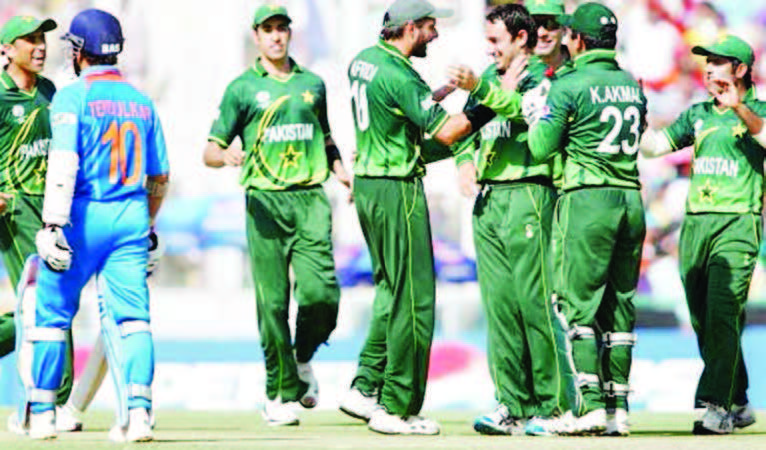
    NEW DELHI (TIP): India go into the World Cup without the reassuring presence of retired batting superstar Sachin Tendulkar for the first time since 1992, which surely must bring relief to arch-rivals Pakistan.


    Pakistan have lost all their five World Cup meetings against India and Tendulkar, who featured in all of them, proved a stumbling block on at least four occasions.


    India and Pakistan face each other in a high-voltage clash at the Adelaide Oval on February 15 to kickstart their campaigns in the 2015 edition of cricket’s showpiece event.


    Tendulkar, who retired in 2013 as the world’s leading run-getter in both Test and one-day cricket, added colour to the World Cup, both literally and metaphorically.


    Coloured clothing was introduced to the World Cup when Tendulkar made his tournament debut in Australia and New Zealand in 1992 after the first four editions were played in whites.

  • TOO MANY HOLES IN 2015 ODI WORLD CUP FORMAT

    TOO MANY HOLES IN 2015 ODI WORLD CUP FORMAT

    NEW DELHI (TIP): A close look at the format of the 2015 ODI World Cup shows a series of lacunae. Much of the tournament will be played for largely inconsequential games. That apart, the teams playing the last group games will enjoy unfair advantage over their rivals.

    Here’s a more detailed analysis of the format:.
    How and why the pool stage is of little importance

    The teams are divided into two groups of seven countries each. In Pool A, there’s Australia, England, Sri Lanka, New Zealand, Bangladesh, Afghanistan and Scotland. In Pool B, we have South Africa, India, Pakistan, West Indies, Zimbabwe, Ireland and UAE. All teams play each other in their respective groups. Four teams from both pools proceed to the quarters.

    Obviously, the tournament has been designed to ensure that the big guns don’t get knocked out early.

    Take India, for instance. Even if the Men in Blue lose three of the six group games to South Africa, Pakistan and West Indies, they can still qualify for the quarters by defeating the minnows: Zimbabwe, UAE and Ireland. The same is true for the other three biggies. An upset can never be ruled out in ODI cricket but can you imagine any of the four minnows totalling more points at the end of the group stage than the Big Boys?

    It’s a similar story in Pool A too. Bangladesh might pull off the odd upset butlack the muscle to finish among the top four. Few would wager a bet on Australia, England, Sri Lanka and New Zealand not making to the next stage. One wonders if the early exit of cash-cow India and Pakistan in 2007 has something to do with this format. The truth is that for the top eight teams, the real tournament begins only at the knock-out stage starting on March 18. That’s almost five weeks after the 2015 ODI World Cup commences on Feb 14. Wow!

    What’s the incentive to win a game or top the group?

    There is one motivation, though, for every team to win every match at the group stage. As per rules, “If a quarterfinal is tied, abandoned or if the match is a no result, then the team that finished in the higher position in the Pool stage shall proceed to the semifinals.” Similarly, “if a semifinal is tied, abandoned or if the match is a no result, then the team that finished higher in the Pool stage shall proceed to the final.”

    The possibility of an abandoned tie cannot be entirely ruled out. In 1992, rain played a key role in South Africa’s tragic exit. A Super Six format after the group stage, as in 1999 and 2003, could have created a far more competitive event.

    Unfair advantage to teams playing last game at the group stage

    Since all teams are not playing the last group game on the same day, it is entirely possible that those playing the last group match can plan who they are going to face. For example, Pakistan are scheduled to play the last match in Group B (Match No. 42) against Ireland. The 1992 champions will know the number of points and run rates of their rivals before they step on the field. It is possible for them to play the game accordingly and choose a rival of their choice in the next stage. At the moment, this seems to be a trivial point. On March 17, it could become a major talking point, if the points tally and run rates of top teams in Group B run close. Football has eliminated such a possibility by playing all last group games together. Cricket is yet to learn.

    The real World Cup begins only in the knock-out stage

    That’s when the first two quarterfinalists meet on March 18 in Sydney. The seven games – four quarters, two semis and one final – played over the next 12 days is all that really matters in terms of consequence. This is a format dark horses will love. The larger question, therefore, is: why such an elaborate tamasha over six weeks?

    Even the football World Cup involving 32 countries and 64 games is held over a month. Why does a World Cup involving just 14 countries and 49 games need six weeks?

  • MS DHONI EXUDES GUARDED OPTIMISM ON WORLD CUP CHANCES

    MS DHONI EXUDES GUARDED OPTIMISM ON WORLD CUP CHANCES

    MELBOURNE (TIP): Mahendra Singh Dhoni made his first media appearance since quitting the Test captaincy a fortnight ago. The occasion was the unveiling of India’s new ODI jersey for the World Cup, which the team will also be wearing during the tri-series.

    Looking refreshed after a break of over a week and the eventful Test series behind him, the limited overs skipper was back to his calm, controlled self, answering queries with guarded optimism.

    Obviously the question uppermost on everybody’s mind was about the mood in the Indian camp after the jersey changed from white to blue, with Dhoni back at the helm.

    In reply, Dhoni launched into a monologue: “There are very few people who get the opportunity to represent the country in any game. We feel so blessed. It is such an honour and a matter of pride,” he said.

    He then paused for breath, and added, “But yes, in the ODIs Team India has been identified as “Men in Blue’ and it does inspire us to do better once we are in it. That does not mean we do not give our best in Test matches. It is just the ODI format… we are a better team at the moment and hope to do better than what we have been doing for the last couple of years.”

    Once that formality was out of the way, obviously, the next question was about India’s chances at the World Cup. Dhoni was asked if the Indian team’s high point would come at the MCG, which will host the World Cup final on March 29. He promptly replied: “The triumph at Wankhede four years ago was in familiar, home conditions. Here the conditions are very different. There are many factors that will determine who wins the World Cup. I think most of the top teams are playing good cricket right now. So it will all depend on who plays better on a given day.” It was obvious Dhoni was not promising the moon to the Indian fans. He clearly wants to keep the pressure of being the defending champions and one of the World Cup favourites off the team’s shoulders, especially in the light of the recent Test series loss and the tough conditions they will encounter during the World Cup both here and in New Zealand.

    Dhoni believes that the tri-series would give the think-tank the opportunity to gauge the form and fitness of the players in the mix and said, “We hope to get our combination right before the World Cup. Many players were sitting idle till now and the tri-series will give them and the others the chance to get into the ODI groove.”

    At the unveiling of India’s new jersey, standing on the podium to Dhoin’s right was Test captain and ODI deputy, Virat Kohli. Typically, he looked a bit too serious for the occasion, seeming all ready to take the battle to the rival camp.

    He forthrightly said, “It would be great to win the World Cup back-to-back. We have a plan in place and we have a vision. We will be working hard over the next two months to fulfill that goal. It would be such a great milestone for the Men in Blue to be on top of the world again.”

    Kohli said that he was confident of taking his Test form into the tri-series and into the World Cup. “I have really enjoyed the conditions here and hopefully we will get similar wickets in NZ too. I hope to continue my good run and help the team achieve its goal.”

    Standing next to him was Ajinkya Rahane, another batsman who did exceedingly well in the Test series. Rahane said he was hopeful of providing solidity to the batting line-up in the ODIs too.

    “I have no issues with the format. I think I can contribute to the team’s cause as I like playing in these conditions. It is good that we have got used to the pitches here and can carry our form into the ODIs.”

    Besides Dhoni, Kohli and Rahane, Ravichandran Ashwin, Rohit Sharma, Ravindra Jadeja, Umesh Yadav and Shikhar Dhawan were on the podium.

  • GUTSY VIRAT KOHLI CREATES NEW RECORDS IN SYDNEY TEST

    GUTSY VIRAT KOHLI CREATES NEW RECORDS IN SYDNEY TEST

    SYDNEY (TIP): Newly-appointed captain Virat Kohli became the highest Indian run getter in a Test series in Australia after notching up an unbeaten 140 in the fourth and final cricket match of the ongoing series here on January 8.

    Kohli surpassed the earlier record of batting legend Rahul Dravid who scored 619 runs from eight innings in the 2003-04 tour of Australia.

    The 26-year-old Kohli, who came into this match with an aggregate of 499 runs, has now totaled 639 from seven innings.

    Kohli, who struck his fourth ton of the series and 10th overall in his 33rd Test, is now the only cricketer ever to have scored a century each in his first three innings as captain of a side. Australian Greg Chappell had scored a century each in his first two innings as skipper against the West Indies at Brisbane in 1975.

    He also became the first Indian batsman after Sunil Gavaskar (in 1971 and 1978-79 versus West Indies) to score four centuries in a Test series.

    The feisty batsman, who made his Test debut in 2011 against the West Indies, also became the first overseas batsman since Herbert Sutcliffe
    (1924-25) and Walter Hammond (1928-29) to score four hundreds in a Test series in Australia.

  • Cricketer turned politician Imran Khan marries  former BBC journalist

    Cricketer turned politician Imran Khan marries former BBC journalist

    ISLMABAD (TIP): Pakistan’s most famous former sports star turned politician Imran Khan remarried on Thursday, January 8, in a low-key ceremony attended by a handful of friends.

    Despite repeated rumors of Imran Khan’s nuptials there had been no official confirmation he would marry former BBC journalist Reham Khan until a few pictures of the pared-down ceremony flashed across the nation’s TV screens.

    Earlier in the day one studio discussion speculated on the outfit Reham, a former BBC weather and regional news presenter, might wear.

    In the end she confounded the fashion pundits with a white embroidered traditional lehengha. Pictures from the ceremony at Imran Khan’s hilltop pile outside Islamabad showed a stiff and unsmiling politician wearing a cream, silk sherwani.

    The need for restraint comes as the country continues to recover from the December Taliban massacre of more than 130 schoolboys in Peshawar, the capital of the province controlled by the Pakistan Tehreek-e-Insaf (PTI), the party Khan founded and leads. The attack, which has been described as “Pakistan’s 9/11”, has put the country on a war footing with militant groups. The government has taken dramatic steps, including the scrapping of a death penalty moratorium and amending the constitution to allow military courts to try civilians.

    Absent from the tiny ceremony were key members of the family, who have expressed their displeasure at the union. “We are basically boycotting it,” said a relative who did not wish to be named. “The family only hoped that he married a good person and we don’t believe she is. He is an icon and he deserves much better.”

    In recent days Reham Khan has endured social media abuse after pictures and videos from her career as a BBC presenter circulated online. Her on-screen appearances in skirts and moderately revealing outfits were never going to go down well in some quarters of the conservative country.

    Earlier in the week Khan flew to London to inform his two teenage sons about the marriage. On his return he told a press conference “marriage is not a crime” but that his children were his “first priority”.

    Whether or not his sons gave him their blessing, Khan’s relatives in Pakistan remain angry.

    “No one in the family is happy with this soap opera,” said the relative who did not want to be named. “His hardcore supporters in the party are also disappointed because there is a myth about him that he left his family in order to save Pakistan.

    “They didn’t care about his playboy past because they said at least he is honest and sacrificed his family for his country. And now he is starting a new one.”

  • Hockey players’  behaviour can affect cricket ties with India: PCB chief

    Hockey players’ behaviour can affect cricket ties with India: PCB chief

    KARACHI (TIP): The chairman of the Pakistan Cricket Board (PCB) Shaharyar Khan has said that the recent incident in India involving the national hockey team players can have adverse effects on the cricketing ties between the two countries.

    Khan, who had served as High Commissioner in New Delhi, felt that while political and diplomatic relations between the two countries remained tense on a regular basis the Indian media and public had also developed negative feelings about Pakistan after the incident in the Champions Trophy hockey tournament.

    “Yes it could have adverse effects and it could affect any chances of our players being invited for the Indian Premier League,” Khan told ‘Geo Super’ channel.

    The Indian hockey body lashed out at the Pakistani players after their celebrations went over the top following their victory over the hosts in the semifinal of the tournament last week.

    Khan said even in most difficult situations the relations between Pakistan and Indian cricket boards had remained cordial.

    “What had happened left its negative impact but so far we have good relations with the Indian board,” he added.

    He felt the bail granted on Thursday to Abdul Rehman Lakhvi in the Mumbai terror attacks case will also lead to negative reactions in India about Pakistan.

    “We are maintaining good relations with the Indian board even at the ICC level and we are looking forward to hosting India in the bilateral series next year in UAE,” the PCB chief said.

    Asked about the delay in issuance of visa to Pakistan’s Mohammad Hafeez to fly to Chennai for his bowling action test, Khan said efforts were being made at the highest level to get the visa as soon as possible.

    “There has been a delay but I have spoken to our High Commissioner in India and hopefully Hafeez will be able to proceed to Chennai soon. As soon as the visa comes we will send him because the bowling centre in Chennai is accredited by the ICC,” he noted.

  • OMANI FISHERMAN LOSES APPEAL FOR MOLESTATION OF INDIAN BOY

    OMANI FISHERMAN LOSES APPEAL FOR MOLESTATION OF INDIAN BOY

    DUBAI (TIP): A 62-year-old Omani fisherman has lost his appeal against a 27-month jail term for attempting to molest a nine-year-old Indian school boy here. The incident happened in May when the Omani national only identified as ‘M A’ was drunk and was found luring the minor with two Dirham and juice. The boy was then spotted by two Bangladeshi cleaners who then rushed after him and saved the boy from being abused. “I went to play cricket with my friends. The defendant came after five minutes and offered me a cold drink, but I refused. He gave me two Dirham … then he hugged and kissed me. When I refused to go with him, he pulled me by the arm,” said the boy. “He forced me into a building’s elevator and forced me to do something bad but I refused. Then two men came and stopped the defendant,” the boy was quoted as saying to Gulf News. The Bangladeshi cleaner said they felt something was not right when they noticed the elderly man pushing the boy into the building. “We searched for the boy everywhere, until we found him on the rooftop room and rescued the boy,” the cleaners said. The Dubai appeal court rejected M A’s appeal and upheld imprisonment against him of two years for sexually abusing the boy and three months for getting drunk.

  • Phillip Hughes funeral: Australian cricketer gets emotional send-off

    Phillip Hughes funeral: Australian cricketer gets emotional send-off

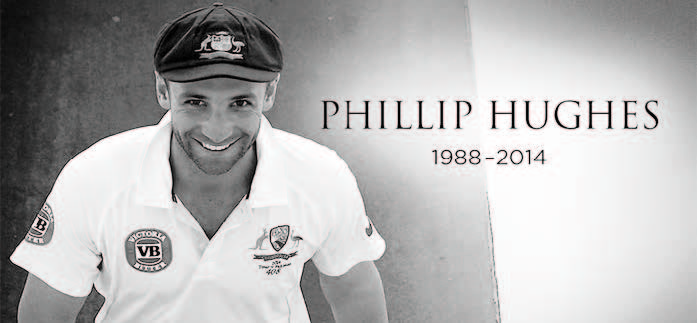
    AUSTRALIA CRICKET CAPTAIN MICHAEL CLARKE BROKE DOWN IN TEARS AS HE PAID TRIBUTE TO FRIEND AND TEAM-MATE PHILLIP HUGHES AT THE BATSMAN’S FUNERAL.

    MACKSVILLE (TIP): Hughes, 25, died last week after being hit by a ball during a match in Sydney. His death stunned Australia and the funeral was broadcast live to millions of people on national television and on big screens in major cities. Around 5,000 people attended the service in Hughes’s home town of Macksville, New South Wales.

    12

    The service was also shown at the Sydney Cricket Ground, where Hughes suffered the injury during a state match on Tuesday, 25 November. He died two days later. During the 80-minute service, Clarke said: “Phillip’s spirit, which is now part of our game forever, will act as a custodian of the sport we all love. “We must listen to it.We must cherish it.We must learn from it.We must dig in and get through to tea. And we must play on. “So rest in peace my little brother.

    13

    I will see you out in the middle.” Around 1,000 people attended the funeral at Macksville High School, which Hughes attended, as thousands more watched on screens in the baking heat outside. Joining the parents of Hughes, Greg and Virginia, and his siblings, Jason and Megan, were Clarke and Sean Abbott, the bowler whose delivery caused the fatal injury to Hughes. Former Australia internationals Shane Warne, Glenn McGrath, Ricky Ponting, Adam Gilchrist, Steve Waugh and Justin Langer were also among the mourners.

    They were joined by Australian Prime Minister Tony Abbott and cricketing legends from around the world, including former New Zealand all-rounder Sir Richard Hadlee and West Indies batsman Brian Lara. Cricket Australia chief executive James Sutherland told mourners: “I imagine Phillip has already taken guard up there and is currently flaying his trademark cut shot behind point. “Cricket’s heart has been pierced with pain, but it will never stop beating.


    19

    Phillip Hughes… forever unconquered on 63.” Jason and Megan Hughes also read letters to their brother. “I couldn’t have asked for a better little brother,” said Jason. “From a very young age, you were destined to be our rock star. “I miss you, I’m so proud of you and thank you again for all the memories. I’ll love you now and forever.” Megan added: “I want to thank you for being the most amazing brother I could ask for. You have certainly changed the way I look at and appreciate life.

    I will certainly take every opportunity that comes by.” Hughes, who would have been 26 on 30 November, was in line for a possible recall to the Australia Test side for the forthcoming series against India – which was rescheduled following his death. The left-handed batsman, who also played for English counties Hampshire, Middlesex and Worcestershire, had already played 26 Tests for his country, after making his Test debut at the age of 20 against South Africa in 2009.

    The number 63 – the runs he had scored when he was fatally injured – has become inextricably linked with Hughes, as has the social media campaign that urged people to remember the batsman by placing cricket bats outside homes, workplaces and at sports grounds. Macksville, with a population of just 2,500, lies on Australia’s east coast in the state of New South Wales.

    Father Michael Alcock told mourners: “We gather to celebrate his 26 years of life. That is what we are doing here this afternoon. “To those both near and far whom his life has touched, we pray that today we will feel some consolation as we celebrate his life.” Among those to send their condolence messages was West Indies great Sir Viv Richards, who tweeted: “My heart goes out to the family, friends & the people of Macksville honouring their favourite son Phillip today. Viv.” The service opened with the song Forever Young and closed with Elton John’s Don’t Let the Sun Go Down on Me.

    The local community also took part in a public procession that followed the hearse at the conclusion of the service. Following the ceremony, Prime Minister Abbott wrote on Twitter: “A sad, poignant, beautiful service to celebrate the life of Phillip Hughes today in Macksville,” adding the hashtag ‘RIP Phillip Hughes’. Former Australia batsman Damien Martyn tweeted: “Such a beautiful service. Forever remembered and never forgotten…”

    Phil Mercer, BBC News in Macksville

    “The feeling here was one of extreme sadness, but it was also pretty uplifting. As the priest said at the start of the service, this was an occasion also to celebrate 26 years of life. One thing everyone had in common today is that they were struck by just how much emotion was swirling around this town. It’s safe to say this little town has put on a remarkable display, as world cricket says a final goodbye to Phillip Hughes.”

  • A TRIBUTE TO PHIL HUGHES PHIL HUGHES’ PASSING AWAY A reminder of life’s uncertainty

    A TRIBUTE TO PHIL HUGHES PHIL HUGHES’ PASSING AWAY A reminder of life’s uncertainty

    You didn’t have to know Australian batsman Phil Hughes to be shaken by the news of his death after a twoday battle in hospital upon being hit by a cricket ball in a Sheffield Shield game at the Sydney Cricket Ground. The world of cricket – players, coaches and other support staff, match officials, administrators, media persons and fans alike – will be united in grief. Over the past two days, there was hope that the kiss of life that Dr Orchard gave Hughes on the hallowed cricket pitch on Tuesday would have worked in his favour.

    There was expectation that Hughes’ will to battle for life would be as strong as the determination that fetched him two hundreds in just his second Test. There was faith that the doctors would help him pull through. It took but a moment – and a text message from a friend in Australia – for those positive emotions, fuelled by an outpouring of prayers by the cricket world at large, to change to shock. Of course, the wise have told us that death is the most certain event in one’s life. But such philosophy is of little consolation when the end comes as an accident with tragic overtones.

    More so, if the victim is in the flush of youth. Surely, 25 is no age to die. Surely, a blow received on the cricket field is not a reason to be dead. There is no doubt that Hughes’ death will cloud the impending Test series between Australia and India. You can expect players from both sides to have a grave demeanour for quite some time. As we pick up the pieces and try to move on, the players will be the most challenged by paradoxical needs to be aggressive and yet sombre; combative and yet intensely serious. We have seen the spectre of death loom over cricket and the world of sport -New Zealand left Sri Lanka because of a bomb blast outside the team hotel in Colombo in 1987. England played in Mumbai in 1993 weeks after serial bomb blasts. Six years ago, England returned after a short break caused by a terrorist attack in Mumbai.

    Other grim memories come flooding back.

    A strange scorecard entry: ‘Abdul Aziz absent dead’ from the Qaid-E-Azam Trophy final in Karachi in 1959. The decline of Hyderabad batsman CL Jaikumar after what seemed to be a good start to a first-class career after he was felled by a Robin Singh bouncer in a 1990 Ranji Trophy game in which he had made 169 in the first innings and was on 42 in the second. But the worst recall is that of former India opener Raman Lamba’s death in February 1998. One can feel the shivers down the spine when thinking of a dark, cold, rainy night when Lamba’s body was brought to Delhi from Dhaka.

    Instead of walking through the arrival hall, he returned in a coffin in the cargo terminal with a few family and friends in attendance. Hughes’ death has lessons, not the least being the establishment of emergency response teams at venues. Perhaps, with greater monies coming in to cricket, the international centres should go beyond from having an ambulance on stand-by to exploring possibilities of instituting a medical centre within the premises so that no time is lost in providing the best aid to an injured player. May the world of cricket grieve together as one but long may the game remain beautiful as we have known it.

    For it is but a reflection of the lives we live, a heady mix of pain and pleasure, agony and ecstasy, joyous and grim and all that lies between. But, above all, may Phillip Joel Hughes’ soul find lasting peace

  • Hughes earned our respect: Kallis

    Hughes earned our respect: Kallis

    NEW DELHI (TIP): Phil Hughes’ tragic death on Thursday has left a huge void, according to Jacques Kallis, who believes the Australia and New South Wales batsman has left a legacy that will act as reminder to treat cricket with utmost respect. In a touching tribute published on the Cricket Australia website, the retired South African allrounder recalled his first-hand impression of watching Hughes bat. “Everything in the cricket world has been put into perspective by the death of Philip Hughes and nothing else feels very important at the moment. Like hundreds of thousands who support and follow the game, my thoughts are also with his family,” wrote Kallis. “It may be true that, as batsmen, we know and understand the risks we take in facing fast bowling but that is no consolation when someone loses their life. It is not something we are accustomed to in cricket and that makes it even harder to come to terms with. “Like millions of other people I will never forget the name ‘Phillip Hughes’, and neither will the game as a whole.

  • Hafeez dedicates knock to Hughes

    Hafeez dedicates knock to Hughes

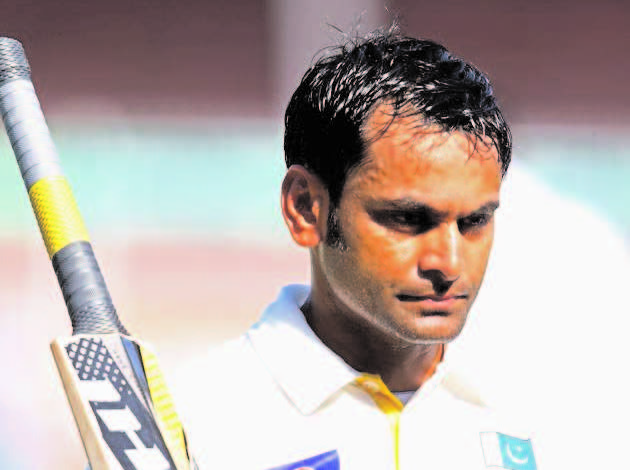
    SHARJAH (TIP): The atmosphere was one where all the players out in the middle took things one at a time without any loud appeals and bouncers, especially the New Zealand side. Pakistan’s Mohammed Hafeez who missed out on his first double ton in Test cricket was his usual calm self and dedicated his highest Test score to Phil Hughes, who passed away in Sydney on Thursday after being hit by a bouncer during a Sheffield Shield game on Tuesday. “The mood was really depressing and while batting, thoughts of Phil going through those moments came to my mind, in fact all our minds. I just took it one ball at a time and I would like to dedicate my highest Test score to Phil Hughes,” said Hafeez, shortly after the end of the second day’s play in Sharjah. Hafeez continued: “There is no doubt that the innings played by [Brendon] McCullum was outstanding. He just put the entire pressure on us. And to be honest, our spinners also did not bowl that well today.

  • Hughes family wants first Test to go ahead

    Hughes family wants first Test to go ahead

    ADELAIDE (TIP): Phillip Hughes’ family would like the Test match between Australia and India starting on December 04 in Brisbane to go ahead. In a statement read out by South Australian Cricket Association CEO Keith Bradshaw, Hughes’ family was keen for the Test to be played. Hughes died on Thursday at Sydney’s St. Vincent hospital after suffering a blow on the back on the head from a Sean Abbott bouncer.

    Speaking to the media at The Adelaide Oval, Bradshaw said the SACA is fully supporting the family and they have extended help to the South Australian team players and the staff. “In regard to the Test match, (I can) only (speak) in terms of what I’ve heard, which is that the Hughes family are keen for that to go ahead,” Bradshaw said. The SACA CEO spoke about the contribution of Hughes for South Australia. “There were many stories that emerged of Phillip’s feats on the field, and those stand for themselves and have been reported.

    There are also many stories about his love for cricket, and I would like to mention his remarkable performance too, off the field; in the short time that he was with us here in South Australia, he attended hundreds of clinics where he coached many of our children. He loved doing that, he had a real passion for that, and I have to say that the children loved him too. They looked up to him, and he was their hero, and he will live on in their minds, as he will in ours, forever,” Bradshaw said. Bradshaw announced that South Australian grade cricket will not be played this weekend. “Cricket, everything else is just secondary at the moment to caring for our players, the family, and all those people that have been involved,” he said.

  • GAVASKAR DENIES questioning Srinivasan’s silence on match-fixing

    GAVASKAR DENIES questioning Srinivasan’s silence on match-fixing

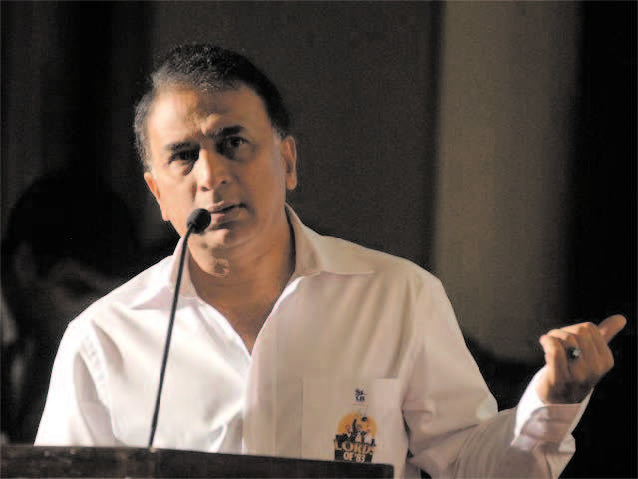
    NEW DELHI (TIP): Former India captain Sunil Gavaskar on November 20 expressed surprise at the “fabricated stories” about him questioning N Srinivasan’s silence in the match-fixing scandal while reacting to the Mudgal Committee report. Gavaskar was quoted in media reports as having said in Melbourne that Srinivasan needs to explain why he didn’t act against players if he knew their involvement in match-fixing, but the former captain stated that the report was not “based on what has actually been said”. “It was a memorable evening and the euphoria was still there next morning till I was jolted by totally erroneous headlines attributed to me about my reactions to Justice Mudgal report.

    I spoke to several channels about significance and honour of the evening and even accommodated questions on just released Justice Mudgal report, though it had nothing to do with the event at the MCG,” Gavaskar said. Gavaskar was in Australia at the invitation of Prime Minister Narendra Modi to attend a special reception at the Melbourne Cricket Ground, which was hosted by his Australian counterpart Tony Abbot. “To wake up the next day to read fabricated headlines and stories was galling indeed. I did express my views that there should be zero tolerance with those involved in matchfixing. I do understand the need for sensational headlines and stories to attract eyeballs but surely they should be based on what has actually been said. It spoilt what had been an extremely memorable three days Down Under,” he said.

  • Escalating tension is not good for either country

    Escalating tension is not good for either country

    While there will be no open war between India and Pakistan in the normally understood sense, this does not prevent Pakistan from activating its tools of terror

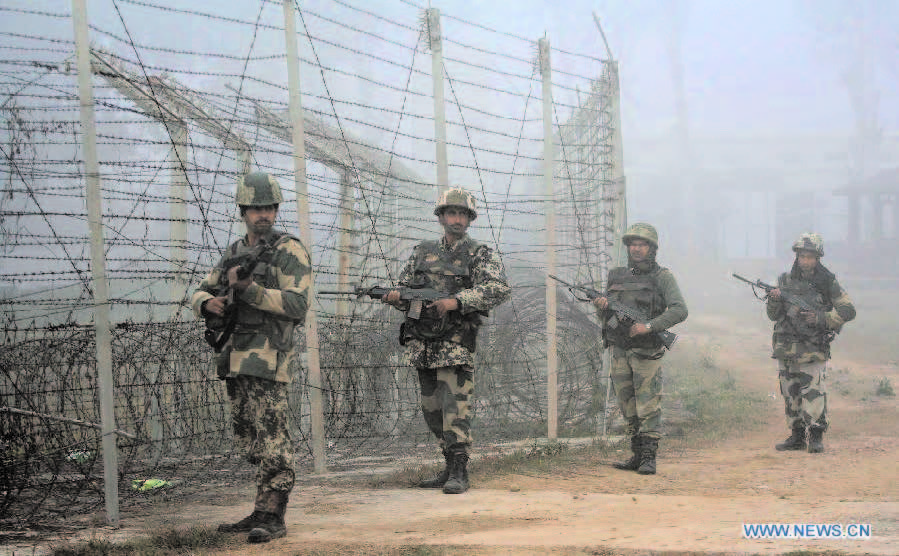
    There has been an escalation of tension between India and Pakistan in the recent few days. The Line of Control (LoC) has witnessed serious exchange of fire at the border for nearly a fortnight. Prime Minister Narendra Modi referred to the border firing in one of his election rallies in Maharashtra. Modi said that Pakistan was getting the befitting lesson and it would not dare to open fire on the border.

    It may be recalled that the cease-fire agreement between India and Pakistan came into effect in November 2003. Thereafter there had been periodic fire from Pakistan side, which had to be routinely returned by the Indian forces posted at the LoC. Union Home Minister, Rajnath Singh made a statement that Pakistan should understand that times have changed in India, an obvious reference to Bharatiya Janata Party under Narendra Modi coming to power at the centre with majority of its own.

    Reverting to the situation on the LoC, the Border Security Force (BSF) was handling the situation on the international border and it was BSF which was doing the firing across the LoC in Poonch, R.S. Pura and Arnia sectors. Reports say that instructions to Director General BSF, D.K. Pathak went out from the National Security Adviser Ajit Doval, who was in direct touch with DG, BSF over the period of 5 days in the first half of October 2014. The BSF reportedly fired more than 10,000 mortar shells, not to speak of countless ammunition, leading to an unprecedented situation in the border.

    Pakistan reported that 2 civilians were killed and about 100 injured on their side and also that scores of villages witnessed vacating of houses by the civilians moving away from the border. The former Chief of BSF E.N. Rammohan commented that earlier the exchange of fire was confined to LMGs and MMGs and now, mortars are being used which spelt danger to civilian lives who lived within 5000 meters range. He went on to comment, “civilians dying like this is absolutely absurd”.

    An analyst had written that the flare up on the border came at the height of campaigning for Assembly elections in Maharashtra and Haryana when Modi referred to Pakistan being taught lesson at a public rally in Maharashtra on October 9. A BSF Commandant said, “I am very proud, nobody, not even Indian Army has fired as much as we have into Pakistan since 1971 war. There were no restrictions this time and we kept on firing. Even the Army cannot boast of so much. At least no Army infantry battalion had fired mortars.”

    In Pakistan, Prime Minister, Nawaz Sharif was a worried man and he summoned all the senior army officers for taking stock of the situation. Nawaz Sharif also dispatched his trusted adviser Shahryar Khan to Delhi for back channel work and to bring out normalcy on the border. Khan is the President of the Pakistan Cricket Control Board and his visit to India was ostensibly to discuss cricket fixtures with India, did not go much beyond that level, since no senior Indian back channel representative met him during his stay in Delhi.

    Prime Minister Narendra Modi, meanwhile held a meeting attended by all senior Army commanders. Prime Minister Modi said that India had to be prepared for a changing world which demanded new thinking on economic, diplomatic and security policies. He asked them to be fully prepared for any eventuality. He also said that security challenges would be more unpredictable and invisible. On the Pakistan side, the Army Chief Gen. Raheel Sharif said at the Military Academy on October 18, that Pakistani forces are fully capable of meeting any external threat and that any aggression against Pakistan would get a befitting response.

    The Pakistani Army chief also digressed to the subject of Kashmir and said that the people of Kashmir should be allowed to decide their fate in the light of UN Resolutions. The growing tension between India and Pakistan had not escaped the attention of foreign observers. The Australian scholar Christopher Snedden, who has specialized on the subject of Kashmir and teaches at the Asia Pacific Centre for Security Studies, Honolulu, has commented that India’s new belligerence towards Pakistan is unhelpful and cited the cancellation of talks by the Indian Foreign Secretary with her counterpart in Pakistan over the Pakistan Ambassador’s meeting with Kashmiri separatists. Snedden went on to say that such meetings had routinely taken place in the past.

    Pakistan Prime Minister, Nawaz Sharif had attended Modi’s oath taking ceremony as the Prime Minister of India in New Delhi, on May 16, 2014, which he did ignoring the advice of the armed forces and hardliners, who were against his visiting India for the occasion. The border tensions and the disproportionate level of Indian reaction would lead to Pakistan analyzing and reviewing various options to retaliate against India. While there would not be any serious flare up between Indian and Pakistani forces in any sector. Pakistan Army Chief and the ISI Chief of Pakistan would be seriously exploring multiple ways of hurting India.

    At the diplomatic level, Pakistan had activated its diplomatic representative to brief UN members on the unfulfilled UN resolution for holding plebiscite in Kashmir for ascertaining views of the Kashmiri people regarding their options between India and Pakistan.

    While there will be no open war between India and Pakistan in the normally understood sense, that does not prevent Pakistan from activating its tools of terror like Lashkar-e-Toiba and Jaish-e-Mohammed in carrying out serious attacks within India. The National Security Guard (NSG) Chief J.N. Choudhury had warned on October 16 that the Al Qaeda and the ISIS may join hands with terror groups like Indian Mujahideen and carry out multicity multiple attacks in the country at the time of their choosing. Terror organizations like Lashkar-e- Toiba and Jaish-e- Muhammed will also be carried along in their dastardly scheme.

    The tensions between the two countries have to be seriously examined and ways and means to bring back normalcy should be worked out and implemented. India stands to lose much more if terrorist organizations are deployed in various cities in the country at a time of Pakistan’s choice. As this possibility is strong, this needs to be given serious consideration. Now that Prime Minister Narendra Modi has demonstrated his strength once again by decisively winning the elections in Maharashtra and Haryana, it is time for him to turn to the important issue of easing tensions between India and Pakistan.

    There was no meeting between Prime Ministers of India and Pakistan during the UN session in October as Modi was not interested in meeting with his Pakistani counterpart. The next opportunity comes up in November during the SAARC meeting in Nepal. It is hoped that the two Prime Ministers will have one to one meeting, with or without officials and work out a road map for future course of action.

  • Fadnavis to be sworn in as Maharashtra CM, October 31; Sena to boycott ceremony

    Fadnavis to be sworn in as Maharashtra CM, October 31; Sena to boycott ceremony

    MUMBAI (TIP): Bharatiya Janata Party leader Devendra Fadnavis will be sworn in as Maharashtra chief minister on Friday, October 31 at Wankhede stadium in Mumbai. The mega ceremony is likely to be attended by Prime Minister Narendra Modi and several VVIPs. As such, a thick security blanket has been thrown in and around Wankhede Stadium.But even as the BJP is getting ready for its moment of glory at the iconic Wankhede stadium, it’s former ally Shiv Sena will be conspicuous by its absence. As the party did not find any place in the government, sources said the Sena has already made up its mind to sit in the opposition.

    It is likely to announce its leader of opposition in the next few days. Names of senior leaders Ravindra Waikar, Dr Auti and Eknath Shinde are also doing the rounds. Sena leader Vinayak Raut said, “The party will not attend the swearing-in ceremony. The situation created is humiliating.” Senior BJP leader Rajiv Pratap Rudy said that Sena chief Uddhav Thackeray should attend the ceremony. “The BJP will go in to swearing-in ceremony with small cabinet. I don’t know whether Uddhav is coming or not but he should come.”

    More than 2,500 security personnel are being deployed in and around the iconic and sprawling cricket ground in South Mumbai. Over 1,100 traffic policemen will ensure smooth movement of VIP and VVIP vehicles around the stadium and along the roads leading to the venue from domestic airport. The stadium, hosting the first open air oath-taking ceremony, has been declared a no flying zone, police said. Under the supervision of Police Commissioner Rakesh Maria, about 2,500 security personnel, including members from Mumbai Police, Special Protection Group (SPG) and Quick Response Teams, will maintain a strict vigil during the highprofile event, said Joint Commissioner of Police (Law and Order) Dhananjay Kamalakar.

  • Too much cricket hampering Indian pacers: TINU YOHANNAN

    Too much cricket hampering Indian pacers: TINU YOHANNAN

    KOCHI (TIP): Tinu Yohannan, the former India international turned bowling coach of Kerala’s Ranji Trophy team, feels that the current crop of Indian fast bowlers face an increased risk of burn-out owing to the amount of cricket being played, and that they need more time to recover in order to perform well.

    “Sincerely, there is too much of cricket being played now, and the load on the fast bowlers is a bit high. Recovery is a big factor for any athlete and for a fast bowler it is very important and we need to give time for recovery,” said Yohannan on the sidelines of the first ODI between India and West Indies.

    The 35-year-old, who represented India in three Tests and three ODIs during the 2001-02 season, felt that the amount of travel involved was also hampering the players’ recovery time and stressed on the need to provide fast bowlers enough time should between tours.

    “More travel, more practice keeps them tired and I think that is why we need to take care of our fast bowlers really well and give them enough time to recover from one tour before playing the other,” said Yohannan. “That is what I like to see. They should use the recovery period to train hard and get back into top fitness and come back and perform well. I think that is the key.”

    Yohannan, who took 114 first-class wickets for Kerala, is now focused on getting the state team ready for the upcoming domestic season and said he was exited about with the young fast bowlers. “It is a very good to get the opportunity and work with the boys. I have seen a lot of promise and watching them from the outside for last four five years, the way the bunch has been playing, especially the fast bowling department, am excited, seeing the talent available to work with,” he said.

  • Afridi vows to lead by example, hails PCB

    Afridi vows to lead by example, hails PCB

    KARACHI (TIP): Newly appointed Pakistan twenty20 skipper Shahid Afridi has hailed the decision of the Pakistan Cricket Board (PCB) to appoint him as captain until the 2016 World T20 event. The outspoken and flamboyant allrounder said that making him captain until 2016 would ensure they were no problems within the team. “By doing this the board has sent out a clear message to the other players that who is your leader for the next two years,” Afridi said on Geo Super channel.

    “It is a good decision because it will discourage an environment where they are always some players who have pretensions to the captaincy and they start becoming ambitious and create a uncomfortable environment in the dressing room,” he said candidly. Afridi who has played 381 one-day internationals and 74 T20 matches for his country said his main job was to blend the team into a fighting unit.

    “And you need a cohesive environment to do this,” he said. Ironically, before the PCB announced Afridi as the national T20 captain once again after he was sacked as captain in 2011, some of the players including Umar Gul, Ahmed Shehzad, Umar Akmal had no issues proclaiming they were ready for the challenge if asked to captain the side. Afridi said a captain could only be successful if one led by example. “I can’t expect others to dive around in the field if I don’t do it myself it is as simple as that.

  • Strauss: Axing Cook before World Cup 2015 not right

    Strauss: Axing Cook before World Cup 2015 not right

    BIRMINGHAM (TIP): Former England skipper Andrew Strauss on September 3 said that sacking Alastair Cook as captain before the 2015 World Cup is not an answer to English cricket team’s one-day woes. The Cook-led England team has lost six out of last seven one-day series. England’s only win was in New Zealand in February last year. “I don’t think the right answer is to just discard him as captain before the World Cup – it’s too close to that event now; you’ve got to stick with him but he’s got to find a way of resurrecting his form and setting the tone,” Strauss was quoted as saying by Sky Sports.

    Strauss feels Cook, who is averaging just 24 against India after three innings in the five-match ODI series, can turn things around in the onedayers, just as he did during the Test series, where he led England to a 3-1 victory over the current World Champions. “It’s going to take someone to say: ‘Listen, this isn’t a sinking ship – I’m going to rectify things’ and Cook has got a massive role to play yet again.

    We’ve been on his case all summer but he’s got to lead from the front with the bat,” said the former captain.”He turned it around in the Test series by taking a bit of pressure off himself and saying: ‘Listen, I’m trying as hard as I can – I’ve just got to go out and see ball, hit ball’,” he added. Strauss also said Cook must work on his strong areas to come out of this lean phase. “I think that’s what we need to see from him a little bit more in one-day cricket – reacting to the ball coming down at him.

    He knows where his strong areas are and it’s about committing to them, but at the moment he doesn’t look in great form.” The 37-year-old felt it was important for Cook to get back to form, so that other players could also gain confidence. “He is very much part of the solution. If he can get himself back on board then – as happened in the Test series – the other players take confidence.”They think: ‘The captain’s not under so much pressure, so we’re under less pressure ourselves and can go out and play in a more positive manner’,” explained Strauss.

  • Raja Natwarlal

    Raja Natwarlal

    Cast: Emraan Hashmi, Humaima Malick, Paresh Rawal,
    Kay Kay Menon, Deepak Tijori
    Direction: Kunal Deshmukh
    Genre: Thriller
    Duration: 2 hours 21 minutes

    STORY: Small-time con-man Raja wants to take revenge on big-time criminal Vardha – will swindler-guru Yogi help or double-cross him?

    REVIEW: Raja Natwarlal is a golden-hearted con for it leaves you smiling at its tricks, despite obvious flaws. Raja (Emraan) and partner Raghav (Deepak) pull off small confidence tricks in an appealing Mumbai of clattering trains, fragrant Iranis and gleaming dance bars. Raja loves dancer Zia (Humaima) and is set to marry after he persuades Raghav to steal 80 lakhs – which belong to big-time swindler Vardha (Kay Kay), who makes Raghav pay with his life.

    Raja’s determined to take revenge but he needs the guru of crooks, Yogi (Paresh), to guide him. Will Yogi agree – and will Raja win? With its twisting story, good-looking frames and zingy acting, Raja Natwarlal keeps you entertained. Paresh Rawal stands out as Yogi, short-tempered, foul-mouthed and shrewd, a malicious mentor – “Kheenche hue kaan se mila hua gyaan hamesha yaad rehta hai” – wincing as he mentions “a very sweet boy”, the fine actor displaying the flair of an old lion that eats bottles of rum.

    Kay Kay matches with his Vardha, a savage in a suit, oil-slick and lean, desperately keen on acquiring a cricket team, ready to bludgeon his way towards this. And Emraan convinces too, Raja both swaggering and vulnerable, a hero who smiles shyly, then kisses on the mouth (although pecks on the cheek can get more passionate than the demure caresses here). Pakistani actor Humaima presents a graceful Zia, her role relatively slender but including chest-thumping numbers like ‘Mere hothon ke namak-pare’, which will have your inner tapori tapping her feet. The plot travels from Mumbai to Dharamshala and Cape Town but director Kunal Deshmukh retains firm control.

    The story packs in paisa, pyaar, confidence, over-confidence, chummas, chases, corrupt cops, cricket associations, surprises and some rather nice songs – but keeps its weight under control. Despite flaws – like how a don like Vardha doesn’t know the face of a man he’s seeking, who’s now persuading him to buy a nonexistent team – Raja Natwarlal wins you over by the sassy swagger of its tricks, its hit-men and ‘HDMC Bank’, its tongue lodged firmly in its cheek.

  • Bolt to visit India – to play cricket with Yuvraj

    Bolt to visit India – to play cricket with Yuvraj

    Jamaican sprint superstar Usain Bolt will make his first trip to India next week to play cricket against India’s World Cup hero Yuvraj Singh, organisers said on Tuesday. The cricket face-off — titled ‘Bolt and Yuvi – Battle of the Legends’ — is being organised by sportswear giants Puma and will take place at the Chinnaswamy stadium in Bangalore on September 2.

    The format and details of the game have not been revealed. “Puma brings Usain Bolt down for a one-of-a-kind cricket face-off between two sporting legends,” the organisers said in a media release. “For the first time ever, watch the fastest man on earth challenge Yuvraj Singh to an exclusive cricket showdown.” Bolt, 28, a six-time Olympic gold medallist and world record holder in both the 100m and 200m, is an ardent cricket fan who in the past has expressed a desire to play in the Indian Premier League.

    Yuvraj, a left-handed all-rounder who is not part of the Indian team currently touring England, was man of the tournament when Mahendra Singh Dhoni’s men won the World Cup in Mumbai in 2011. The Athletics Federation of India (AFI) said it had no role in Bolt’s brief visit to the country. “Both Bolt and Yuvraj are brand ambassadors of the sponsors, we are not involved in this programme,” an AFI official said.

  • INDIA ROAR BACK TO FORM IN FAMILIAR FORMAT

    INDIA ROAR BACK TO FORM IN FAMILIAR FORMAT

    Raina’s 100 and Jadeja’s 4 for 28 set up a massive 133-run win over England in the 2nd ODI.

    India 304 for 6 (Raina 100, Dhoni 52, Rohit 52, Woakes 4-52) beat England 161 (Jadeja 4-28) by 133 runs

    CARDIFF (TIP): The Tests have departed into the folder marked “Red Ball Disasters”; India’s intention is now to stage a party to help them forget what has gone before. One game into the Royal London ODI series, the outlook has been transformed. They look empowered again. Raina made precisely 100 of 75 balls. (AP)Raina made precisely 100 of 75 balls. (AP)Suresh Raina, ignored for the Test series, had the undamaged mindset to fill the role of party compere as he played with an exuberance rarely seen from India during their mauling in the Test series, proceeding with a cheerful vigour to make 100 from 75 balls, his first ODI century for four years.


    England’s response was dire, resulting in their second-heaviest defeat against India, in terms of runs. They can console themselves that people tend to lose interest when games are decided by Duckworth-Lewis calculations, but a passing stranger wandering down the banks of the Taff and armed only with an abacus could have concluded that this was a trouncing. India have happy memories of Cardiff: they have made 300-plus here three times, the only side to do so, and beat South Africa and Sri Lanka here during their Champions Trophy success last summer.


    England did not get a look in as Ravindra Jadeja, whose leftarm spin has repeatedly tormented them in the limited-overs game, just needed to turn in a routine shift to yield 4 for 28. At the end, Ravi Shastri, imposed for the series as emergency team director, applauded seriously and shook hands with men in suits. With ODIs predominating in the months ahead, England have a much-anticipated chance to develop a new brand of one-day cricket. On this evidence, they should call it “Careworn”. Faced by a slightly rejigged target of 295 in 47 overs, they survived the new ball convincingly enough – 54 on the board by the 11th over – but then five wickets tumbled for 31 in 12 overs as all their old doubts resurfaced.


    Alastair Cook cobbled together some sort of form during the Test series to protect his captaincy but that is a long way removed from discovering the dash needed in the oneday game. He played in Alex Hales’ shadow, making 19 in 33 balls, before he fell lbw to Mohammed Shami, manufacturing a leg-side shot. Ian Bell’s leave alone saw him bowled second ball later in the over. No immediate retort then from the top-order players who Graeme Swann, a former team-mate has said will leave England’s World Cup challenge stillborn.


    Batting under the lights looked a more onerous proposition than when Raina sallied forth earlier in the day, particularly when Bhuvneshwar Kumar brought one back to bowl Joe Root, but it was England’s deficiencies against spin bowling in midinnings that were most galling for them as a deteriorating position left them unwilling to hit through the infield. Hales had unfurled some flowing off-side drives – his trademark – during a debut innings of 40, but a top-edged sweep against Jadeja silenced him. Jadeja’s extra bounce also fooled Jos Buttler into poking a furtive catch into the off side.


    With light drizzle in the air, Eoin Morgan’s stretching sweep at R Ashwin lobbed to deep square leg. For England, the collapse could hardly have been more disheartening. Up on a rainspattered balcony, the coach Peter Moores checked his notes and Cook checked his fingernails. Neither offered a solution. At least Ben Stokes, whose average of 1.8 in his last 10 England innings was barely credible, could find a score of 23 faintly consoling. And James Tredwell hit his first ODI six – off Jadeja, too. Driftwood in a sea of despond. There were also troubles for England with the ball.


    Chris Jordan delivered 12 wides in a return of 0 for 73, five of them in a single Powerplay over, as a lack of rhythm that had been apparent during the Test series turned into something more ghoulish in the 50-over format. Jordan, shaking his head and perspiring heavily, looked perplexed. It was another bad moment on that England balcony as David Saker, the bowling coach, scratched his teeth in concern. But it was Raina, carefree even by his standards, who smash-and-grabbed the match for India.


    This was his first ODI hundred for 95 innings, stretching back to a tri-nation tournament in Bangladesh, when he made 106 against Sri Lanka in Dhaka in 2010. England’s quartet of right-arm pace bowlers offered an unvaried challenge, although the offspinner Tredwell had a rewarding outing considering his difficult season during which he was loaned out by Kent to Sussex. He was dismissed the ball after he had reached his century, making room to flay Chris Woakes through the off side but picking out James Anderson on the cover boundary. Woakes, despite conceding 20 from one over as Raina took charge, somehow returned 4 for 52.


    Raina, unsurprisingly considering his lack of cricket, had a few streaky moments early on. Early boundaries included an unattractive leg-side swipe at Tredwell and an uncertain edge against Anderson, and he was fortunate to escape Tredwell’s lbw appeal on 17 but, as the floodlights cut through a murky South Wales day, he became electrified. England conceded 62 in the Powerplay between 35 and 40 overs – 42 of them in 16 balls to Raina. He withdrew his front leg to loft Woakes straight for six and then top-edge over the ropes to assert that his luck was in. For Virat Kohli, though, there was no release from a miserable summer.


    After an unproductive Test series, in which he made only 134 runs at 13.40, the opportunity beckoned for Kohli to reassert himself in the one-day series, but he fell third ball for nought as he tried to come down the pitch to crash Woakes over the off side and plopped the ball into the hands of Cook at mid-off. India began nervously.


    It took only two deliveries for them to be reminded of their deficiencies in the Test series as Anderson curved an outswinger past Rohit Sharma’s outside edge. Rohit and Shikhar Dhawan twice survived after running mix-ups; Woakes had Dhawan caught at the wicket. But Rohit found an ally in Ajinkya Rahane in a third-wicket stand of 91 in 16 as England’s back-up seamers failed to maintain the pressure on the sort of dibblydobbly day that would have made Ravi Bopara, a controversial omission from England’s squad, a useful man to have around.

  • Pakistan crisis puts army back in the driving seat

    Pakistan crisis puts army back in the driving seat

    ISLAMABAD (TIP): As tens of thousands of protesters advanced on the Pakistani capital last week to demand his resignation, Prime Minister Nawaz Sharif dispatched two emissaries to consult with the army chief. He wanted to know if the military was quietly engineering the twin protest movements by cricket star-turned-politician Imran Khan and activist cleric Tahir ul-Qadri, or if, perhaps, it was preparing to stage a coup.

    According to a government insider with a firsthand account of the meeting, Sharif’s envoys returned with good news and bad: there will be no coup, but if he wants his government to survive, from now on it will have to “share space with the army”. Even if, as seems likely, the Khan and Qadri protests eventually fizzle out due to a lack of overt support from the military, the prime minister will emerge weakened from the crisis.

    The army may have saved his skin, but its price will be subservience to the generals on issues he wanted to handle himself — from the fight against the Taliban to relations with arch foe India and Pakistan’s role in neighbouring, post-NATO Afghanistan. “The biggest loser will be Nawaz, cut down to size both by puny political rivals and the powerful army,” said a government minister who asked not to be named. “From this moment on, he’ll always be looking over his shoulder.” A year ago, few would have predicted that Sharif would be in such trouble: back then, he had just swept to power for a third time in a milestone poll that marked nuclear-armed Pakistan’s first transition from one elected government to another.

    But in the months that followed, Sharif — who had crossed swords with the army in the past — moved to enhance the clout of the civilian government in a country that has been ruled by the military for more than half of its turbulent history. He irked the generals by putting former military head Pervez Musharraf, who had abruptly ended his last stint as prime minister in a 1999 coup, on trial for treason. Sharif also opposed a military offensive to crush Taliban insurgents, sided with a media group that had accused the military of shooting one of its journalists and sought reconciliation with India, the perceived threat that the army uses to justify its huge budget and national importance.

  • ‘My role is to oversee everything’ – Shastri

    ‘My role is to oversee everything’ – Shastri

    NEW DELHI (TIP): Former India allrounder Ravi Shastri, the newly appointed team director for the ODI series in England, has said that though he will be in charge of the team, head coach Duncan Fletcher has not been sidelined. “My role is to oversee everything. All of them report to me,” Shastri told ESPNcricinfo in an interview where he expanded on his role.

    The decision by the BCCI to bring in Shastri along with the three Indian assistants – Sanjay Bangar (batting), B Arun (bowling) and R Sridhar (fielding) – and “give a break” to fielding coach Trevor Penney and bowling coach Joe Dawes ignited speculation about Fletcher’s future. But Shastri emphasised that Fletcher would not be sidelined. “Absolutely not. He stays as the head coach. And these two (Bangar and Arun) will be his assistants.

    I am there to oversee.” Immediately after the BCCI made public his appointment on Tuesday morning, Shastri went to the team hotel in London where he had a two-hour chat with both MS Dhoni and Fletcher to chalk out plans for the fivematch ODI series which starts in Bristol on Monday. “We had a chat about where things are at the moment and how things have to be addressed. And how important communication will be.” Shastri has been blunt in his assessments in the wake of India’s 3-1 defeat against England in the five-match Test series. Although he picked inexperience as the deciding factor behind India’s defeat he described the team’s performance as “spineless”. “On this tour I saw India’s greatest ever overseas win I have seen.

    I know it because I have never seen a track like that and with this kind of inexperienced side, for them to pull it off… Then I also saw some spineless cricket over the last three Tests matches. Spineless means stomach for a fight. People would have accepted 3-1 if there was a little more fight.” Shastri said that it was painful to watch batsmen not learning from their mistakes during the series.

    “My only disappointment was players at times making the same mistake,” Shastri said. “That disappointed me. Everyone makes a mistake, but you want to try something different.” In his newspaper column, published the day after the Oval defeat, Shastri wrote: “Five sessions and not five days have been enough to nail them. But move on we must. Sit back and watch if these glam boys are ready for penance.” Asked who exactly were his targets, Shastri revealed it was the top-order pair of Cheteshwar Pujara and Virat Kohli.

    “I was hard on Pujara and Kohli specifically because they came here with big reputations. And they have been brought down to earth with their techniques being found out against the moving ball. And there is nothing wrong in that, it has happened to the biggest players. Now the true test of their character will be: how they bounce back. I have absolutely no doubt that not only will they bounce back, they will excel very, very soon.”