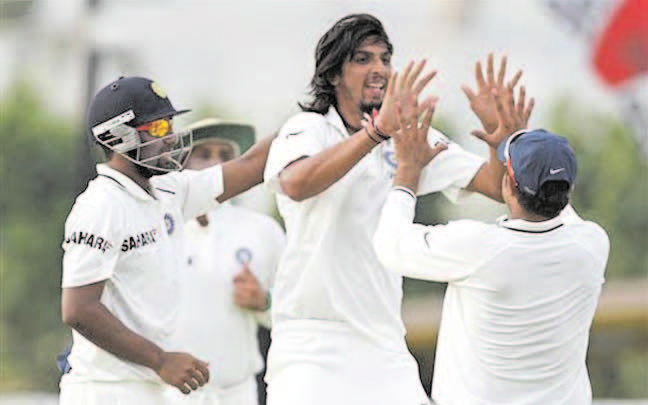
NEW DELH (TIP)I: With only a day remaining to send entries for the Incheon Asian Games, the Olympic Council of Asia (OCA) as well as the Indian Olympic Association (IOA) on Wednesday said they would make a last-ditch effort to ensure the Indian cricket teams’ participation at the Games. The Board of Control for Cricket in India did not field both the men’s and women’s cricket teams at the Guangzhou Games four years ago and it is unlikely they would send teams to the Incheon Games starting next month.
But the Indian Olympic bosses are optimistic that they might be able to convince BCCI in time. “The deadline for sending entries is August 15. I will talk to BCCI bosses tomorrow and request them to send the teams to Incheon. From an Indian fan’s point of view, the cricket team’s participation would make the Games more attractive,” IOC secretary general Rajeev Mehta told TOI. “If they can, we have a good chance to add to our medals tally there,” he added.
According to a list on the Asian Cricket Council website, Sri Lanka and Bangladesh are the two Test-playing nations which will feature in the men’s competition to be played in the Twenty20 format. If India were to send a team, it would be a second-string side as the Incheon dates (Sep 19-Oct 4) clash with Champions League T20 (Sep 13-Oct 4) where four IPL teams will figure.
The women’s team for the event includes Pakistan, Sri Lanka and Bangladesh. “The OCA has always insisted on including cricket in the Games. China are playing cricket so are some other countries. So if India can field their teams, it would help the game popularise in the region,” OCA secretary general Randhir Singh said. “I feel they should send their full-strength teams as the Asian Games is a major event for the region.
I think IOA should convince the BCCI as well as the International Cricket Council (ICC) to make India play,” he added. ICC president N Srinivasan has already made it clear that there was reluctance on part of many cricket boards on joining the Olympic bandwagon.
Tag: Cricket
-

SRINIVASAN TAKES OVER AS CHAIRMAN OF ICC
MUMBAI (TIP): India’s N. Srinivasan was confirmed as chairman of the International Cricket Council (ICC) in Melbourne on Thursday, giving the 69-year-old industrialist the most powerful role in the governing body’s restructured organisation. Srinivasan, who emerged as the leading candidate to become ICC chairman in February, will assume office almost immediately after the governing body rubber-stamped constitutional changes at its annual conference being held this week in Australia.
“It is an honour to be confirmed as the Chairman of the International Cricket Council,” Srinivasan said in a statement after the 52-member full council approved amendments which, to many observers, give India, England and Australia virtual control of the sport. Often described as the most powerful man in cricket, Srinivasan became the Board Of Control For Cricket In India (BCCI) president in 2011 but was ordered to step aside in March to ensure a fair investigation into an illegal betting scandal during last year’s Indian Premier League involving his son-in-law.
The Chennai-native was also accused of having a conflict of interest due to his India Cements company owning a franchise in the lucrative Twenty20 league. Those controversies have led to some criticism of his appointment with one official of a now unrecognised unit within the Indian cricket board urging the country’s Supreme Court to bar Srinivasan from taking over as ICC chief.
-

South Asian Community meets with Police Chiefs of Stamford, Norwalk and Darien on Burglaries in the Community
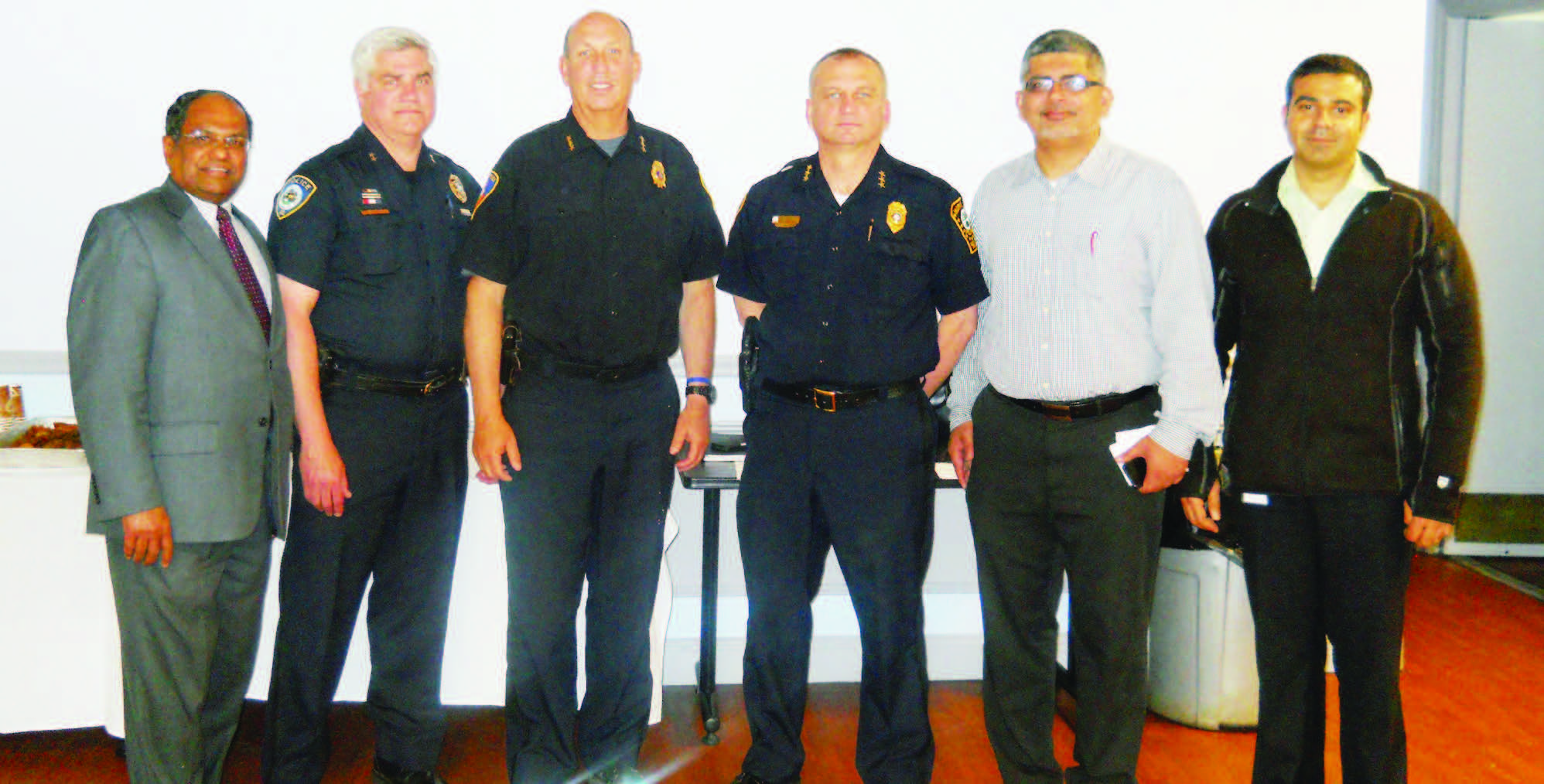
STAMFORD, CT (TIP): The Police Chiefs of Stamford, Norwalk and Darien, May 1, met with the South Asian Community in the lower Fairfield County to address community’s concerns of increased burglaries along with other issues of security and safety.
It was organized by the Stamford Cricket Club, the Connecticut Chapter of the Global Organization of People of Indian Origin (GOPIO-CT) and Shaheen Cricket Club at Belltown Fire Station in Stamford on May 1st. Stamford Police Chief Jonathan Fontneau, Norwalk Police Chief Thomas Kulhawik and Darien Police Chief Duane Lovello along their detectives addressed many of the concerns pertaining to the South Asian community.
-

Going Beyond Death With Real Love
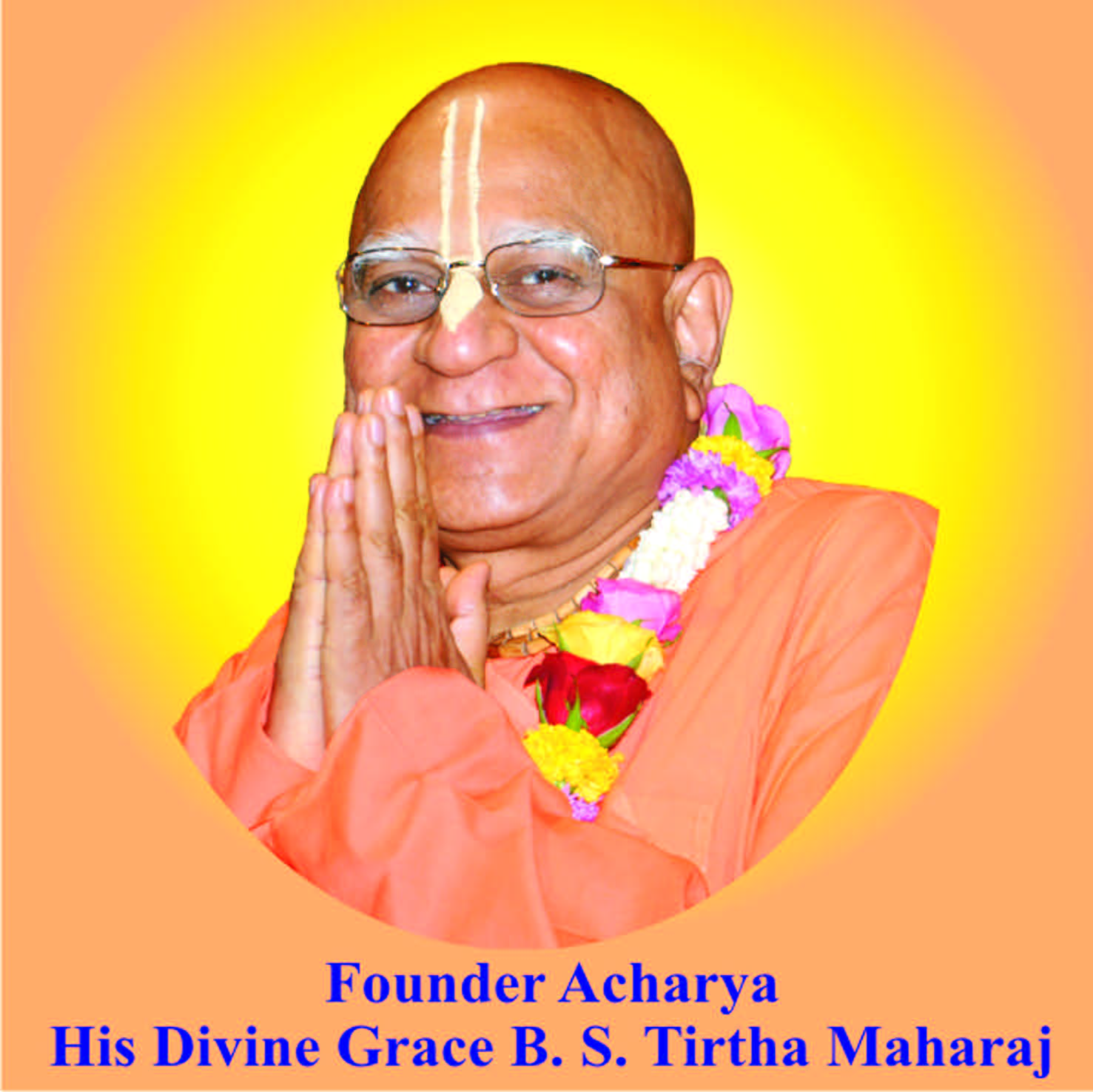
By His Divine Grace B. S. Tirtha Maharaj
The fear of death haunts many people. So they want to escape death and avoid facing it or even thinking about it. Unless and until one develops real love for the Supreme Lord Krishna, a human being cannot avoid or escape death. Like animals, humans too have to take birth repeatedly and die. The transcendental love for God, in the form of the Supreme Lord Krishna, is the real love. Once a person cultivates love for the Supreme Lord Krishna in this birth he/she becomes liberated and after leaving this body lives eternally in the spiritual abode by continuing the loving service to the lord.
This is confirmed by the Supreme Lord Krishna in the Gita (15.6) yat gatva na nivartante tad dhama parmam mama, having attained that abode of mine, they do not return to this world. Here is a real life story that confirms this truth.
During the last summer at dusk on a sultry Monday, a young man in his late twenties literally barged into my room where I was chanting my twenty first round of ‘Hare Krishna’ maha mantra on my beads. From his dress, he looked a typical commercial sector executive in Mumbai. “Will you kindly initiate me into the chanting of Hare Krishna maha mantra Swamiji?” asked the young visitor even before I could offer him a seat. I glanced at him, and by now, he was sitting on the floor. I was trying to gauge the reason for his request for initiation into the spiritual practice because I wondered about this sudden request by a stranger.
Was it due to an emotional outburst or was it based on philosophical conviction? I was trying to assess. Curious why this man had come to me for spiritual initiation, I said, “It is not normally for a person of your status and stature to opt for a spiritual life. How come you have developed interest at this stage?” Sensing my curiosity, the visitor introduced himself properly. He started a long story, “In my early childhood I saw my grand parents die. Later, I also witnessed the death of my parents.
After some months, I participated in the funeral ceremony of my elder sister. Soon after, I was informed of my brother’s passing away. All these happened suddenly and unexpectedly within a few years with brief intervals. Before I could recover from one tragedy, another hit me. These disasters left a horrendous impact on my young mind. Death is the cruelest misfortune that does not spare anyone. Death makes no distinction and in most cases, it is painful and shocking. After seeing so many dear ones vanishing into thin oblivion, never to be seen again, the message of death always created in me an unprecedented panic of hideous proportions.
At the same time, a strong desire arose in me to defeat death. I said to myself, ‘I want to live.” As I entered my teenage years, I was present at a crematorium tragically observing my uncle’s body being consumed by flames in the presence of all my family members. I was wondering why no one is making an attempt stop it, to check the cruel hands of death. Some one in the funeral group said, “There is nothing as sure as death.” I tried my best to not to permit this unpleasant statement to penetrate into the recess of my heart, but it, nevertheless, did. This rather permeated my whole self.
“No, I don’t want to die, I want to live!” I shouted. My outburst got lost in the incomprehensible cacophony that prevailed in the mourning crowd. Later one evening, when I returned home from my school, I saw there was an eerie silence. Once again, the news was negative. The impact of the news of death of some close relative numbed my mind. It was a sheer torture for me and hardly could anyone could ease my sad feelings. There arose an insatiable urge to explore an unquenchable thirst and constantly increasing curiosity coupled with innate motivation to learn and unravel the mystery of death.
News of death always traumatised me. Hearing the news, the relatives and friends simply mourn, place wreaths on the dead bodies, and express some platitudes in appreciation of the deceased. They mechanically utter a few words of consolation to the close relatives and dutifully attend the services conducted in memory of the departed as a mere formality. Nothing more. My mind rebelled and revolted against the indifference exhibited by the people around. As I gradually became an adolescent, the tragedy centered around death and left an indelible imprint on my mind during formative years.
It still remains powerful. Once I was commuting in an overcrowded suburban train in Mumbai. Suddenly the speeding train came to a screeching halt. Somebody announced that a passenger standing at the open doorstep fell off the train due to his loose grip and died instantly. No one can escape the vicious grip of death. It proves its unrestricted capability to strike anyone anywhere. Amidst all uncertainties, the only certainty is death, I now realized.
I saw the arrival of an ambulance and the removal of the dead body of the person who boarded the train with me just a few minutes ago. Although I was in tears, no one besides me seemed to be affected. There was a pronounced indifference. Being saved from any inordinate delay due to the sad accident,my copassengers, on the contrary, heaved a sigh of relief when the train moved on, but my thoughts refused to.
By now, as a fully grown up young man, with buoyant optimism that someone must be able to challenge death, I flipped through science journals, diligently perused daily newspapers carefully avoiding the obituary columns, studied with interest many overseas periodicals and concentrated with unfailing regularity on ‘Research and Development’ magazines. But different studies of such voluminous writings with a meticulous mind only pathetically revealed to me that many men of great intellect as well as research scientists are simply wasting their time.
The taxpayers money in is spent on some useless topics of this temporal world of uncertainties. They are the least interested in detailed research about death which can imperceptibly deal a sudden blow on them and put a stop to their current foolish and fanciful endeavours. I understand that all these fools are only interested in ephemeral projects and not in the eternal enlightenment.
As I grew up, I saw the various media prominently projecting news of death.
● Nine killed in a car bomb blast
● Earthquakes claim 5100 lives
● Boat capsizes and 252 feared drowned.
● Building collapses, 81 instantly dead
● 112 burnt alive in communal clash
● A major air-crash- all passengers and the crew killed
● 210 lost lives in train accident
● A whole village wiped out in flood
● 30 people declared dead due to food poisoning 6 picnickers drowned
● 22 killed in police firing so far.
● 63 mercilessly massacred by terrorists.This apart, due to personal rivalry and religious hostility, once I personally happened to see dead bodies strewn around street corners. I was prepared to learn but had no one to teach me. I was looking for directions but had no guide. I was groping in darkness but no one to show me light. One day, I saw BHAGAVAT GITA lying on a book shelf. It seemed unattended since the time the shelf was installed, it suddenly attracted my attention. I pulled it out of the shelf as irreverently as I would, any novel.
I started gave it a cursory glance and lo! I found one of the important characters of this book Arjuna, five thousand years ago, was in a similar predicament like me. Before he started to fight the battle of ‘Kurukshetra’, Arjuna suddenly realized that the death of all his kith and kin on both sides was inevitable. The very thought scared him. Although a great warrior belonging to Kshatriya clan known for a sense of imperturbability even in the midst of a grave crisis, Arjuna was shaken out of his existence.
Just after reading a couple of pages about Arjuna’s urge to run away from the battlefield, I impatiently shoved the book back on to the shelf as indifferently as I had picked it up. Recently, I was passing through a narrow side street in south Mumbai, when I was hurriedly taking a turn near a temple. Walking very close, I heard through loudspeakers someone saying, “You shall never die”. I could not move any further. I stood still. “You can conquer death”, the voice roared. I could not believe this.
Conquering death? Is there a way? I was more stunned than surprised. The speech was emanating from the temple, I made sure. The excruciating experience that I went through all these years literally pushed me toward the temple threshold. The next moment, I found myself sitting with the rest of the motely crowd on the floor surrounding an elderly person in saffron robe sitting on a slightly raised platform. In front of him at some distance, there were elegantly dressed, aesthetically decorated deities of Shri Radha and Shri Krishna. The temple hall looked pleasant and inviting with fragrance of jasmine flowers and the aroma of incense sticks.
I looked at the speaker. His face was completely serene reflecting the composure of his mind. There was Vaishnava clay marking on his broad forehead. I never came across such a face shining brilliantly in my entire life. His very presence had such a purifying effect that I was instantly relieved of the pain in my heart. He continued with his discourse, ‘na mriyate kadachit’ will never die at anytime. These words were just like honey pouring into my ears.

‘Nityah’ eternal and ‘Shashvatah’ everlasting, he emphatically expressed. Needless to say these words gladdened my heart further. Alas! At least here is someone who has challenged death. He knows the method, I said to myself. Swamiji quoted various instances where people defied death. At the last moment, at the time of death, Ajamila chanted the Holy Name of the Supreme Lord Narayana when the servants of Yama, the superintendent of death, came to take him away forcefully. At that very moment, a confidential associate of the Lord appeared and forbade them from doing so. Ajamila was saved from death.
Then he also spoke of a saintly king called ‘Khatvanga’ who having assisted demigod Indra of heavens in his battle against demons successfully, wanting to return to his kingdom on the planet earth, came to know from Indra that only a few moments of his life were left. Immediately chanting the Holy Name of Supreme Lord Shri Krishna, the saintly king returned to the spiritual abode, Shri Vaikuntha.
He also explained in great details about the incident of the ‘curse to die’ of Parikshit Maharaja and that he was finally advised while concluding seven days narration of Shrimad Bhagavatam by his spiritual teacher Shrila Shukadeva. Swamiji’s rhetorical gesture was very forceful and impressive. He said, tvam tu rajan marisyeti pasu-buddhim imam jahi na jatah prag abhuto dya deha-vat tvam na nanksyasi “O King, give up the animal mentality of thinking, “I am going to die”. Unlike the body, you have not taken birth. There was not a time in the past when you did not exist, and you are not about to be destroyed”.
It is only the animals who become scared of death. Hence they have intense spirit in them for self-defence. This is because they have no spiritual conception. They have absolutely no idea beyond the gross physical bodies they possess. You are not an animal. You should be free from this anxiety.
Swamiji explained further citing verses from the second chapter of Gita.(2.11, 12, 13 & 2.22) asocyan anvasocas tvam prajna vadams ca bhasase gatasun agatasums ca nanusocanti panditah) na tv evaham jatu nasam na tvam name janadhipah na caiva na bhavisyamah sarve vayam atah param dehino smin yatha dehe kaumaram yauvanam jara tatha dehantara- praptir dhiras tatra na muhyati vasamsi jirnani yatha vihaya navani grhnati naro parani tatha sarirani vihaya jirnany anyani samyati navani dehi “The Supreme Personality of Godhead said: While speaking wise words, you are mourning for what is not worthy of grief.
Those who are wise lament neither for the living nor for the dead. Never was there a time when I did not exist, nor you, nor all these kings; nor in the future shall any of us cease to be. As the embodied soul continuously passes, in this body, from boyhood to youth to old age, the soul similarly passes into another body at death. A sober person is not bewildered by such a change. As a person puts on new garments, giving up old ones, the soul similarly accepts new material bodies, giving up the old and useless ones. Arjuna, try to understand this, thus spoke Krishna,” said the Swamiji in his thundering voice.
It reminded me immediately about the book ‘Gita’ lying in my book-shelf. Swamiji was speaking from this book. He further continued, “You should all read Gita at least.” Then he spoke about the glory of Gita.(12.5.2) sarvopanisado gavo, dogdha gopalanandanah partho vatsah sudhir bhokta, dugdham gitamrtam mahat “The crest-jewels of the Vedas, the Upanishads, are like a cow, and the milker of the cow is Lord Shri Krishna, the son of Nanda Maharaja. Arjuna is the calf, the nectar of the Gita is the milk, and the virtuous devotees are the drinkers and enjoyers of the milk.” While concluding, Swamiji spoke with anguish about the current social trend of general apathy towards spiritual learning and how that is ruining the whole human society.
In India, it is generally seen that people in their seventies suffering from rheumatic pain and gout trouble often express a desire to visit far flung holy places. After a couple of cataract operations, many senior citizens suddenly develop desire to have ‘darshan’ of deities in temples situated at distant sites of pilgrimage. Persons who are paralytic and bed ridden show misplaced enthusiasm for spiritual initiation at a time when their minds suffer from dementia.
Such old and infirm people tend to become religious because they can see death coming nearer every day. What is the use of taking to religion when one is afflicted with physical debility and mental derangement? Spiritual pursuits, on the contrary, demand agile physique and a clear mind. It is astonishing as to how such an attitude came to prevail for a very long time in India which boasts of spiritual supremacy over the rest of the world by the virtue of having nurtured and nourished a civilization based on the teachings of the Vedas, an ageless scripture of India. It is all the more amazing when we view this from the worldly perspective.
These days we see boys aged six or seven practising cricket batting and bowling. Children of this age group attempt to learn swimming and bicycle riding, among other sports, pastimes and hobbies. But when it comes to adopting a religious way of life or taking to devotional service to God, we prefer ripe old age of invalidity.What a paradox! In Shrimad Bhagavatam, it is said, ‘kaumara achared prajyah..’, spiritual practices in terms of devotional service to Shri Vishnu or Shri Krishna should be imparted to one in the early childhood, that is because the child’s mind is uncontaminated by the subject matters of this physical world and free from craving for any material enjoyment due to undeveloped physical senses.
We often come across people saying, “We shall take to bhakti or any spiritual practices after we fulfill our family obligations and duties”. This never happens. Even if it does in some cases, whatever they do at the tail end of their lives will be nothing more than a mere formality. This tendency of according the least priority to regular and meaningful spiritual practices is widely prevalent. Many people entertain a wrong notion that making perfunctory visits to temples on important festive occasions in itself constitutes devotion. Thus the discourse came to an end. Kirtans began.
I rushed back home. That very night I started reading the Gita. In just seven days I finished the entire scripture thoroughly assimilating the essence of the teachings. I became fully convinced that I am not the physical body but an eternal spirit soul part and parcel of Krishna and to attain the eternal residence in the spiritual planet ‘Krishna Loka’ and this should be the only goal of life. To achieve this, one should be able remember Krishna at the time of death.
The only positive method to ensure this remembrance is to chant the Holy Names of the Supreme Lord on a regular basis as concluded by the eighteen thousandth verse of Shrimad Bhagavatam (12.13.23) “. Nama sankritanam yasya sarva-papa pranasanam Pranamo duhkha-samanas tam namami Harim param “I offer my respectful obeisances to the Supreme Lord, Hari; the congregational chanting of whose holy names destroys all sinful reactions, and the offering obeisances unto who relieves all material suffering.”
Thus he ended his narration. On the next Janamasthmi festival, I initiated him into chanting of Hari Nama as well as Gayatri Mantra as he was eligible for this.With his new name, he became known as Vraja Vallabha Dasa. He started chanting one hundred thousand Holy Names daily. On the following Radha Asthmi festival, I expected to him visit us, but I was told that he never turned up. I personally telephoned him the next day only to be told by his brother that Vraja Vallabha Dasa left his body on Radha Asthmi due to a massive heart attack and that he was chanting at the time of leaving his body.
What a glorious death! We are sure he has now joined the group of cowherd boys in the eternal abode of Krishna Loka to directly engage in transcendental loving service of the Supreme Lord. He wanted to live. He lives for ever. He died only to live eternally.
-

Srinivasan removed as BCCI chief: Gavaskar is the interim President
NEW DELHI (TIP): The Supreme Court of India, on March 28, removed N. Srinivasan as BCCI chief and asked Sunil Gavaskar to take charge as an interim president for the duration of IPL 7. The Supreme Court said Sunil Gavaskar will be the interim president of BCCI only for managing affairs of the IPL. It also asked Gavaskar to get out of contractual obligations with BCCI for commentary.
The court also said that IPL matches of season 7 to go on as per schedule and it is not going to stop any team or player to participate in IPL. The court said Gavaskar will be compensated for the job of interim president by BCCI. However, BCCI on Friday told Supreme Court that Indian team skipper Mahendra Singh Dhoni never made a statement that Gurunath Meiyappan was just a cricket enthusiast.
Pushed to the brink following the Supreme Court’s sweeping proposals to clean up the game, a beleaguered BCCI president N. Srinivasan found himself under intense pressure to step down with senior administrators and former players asking him to abide by the apex court’s suggestions. Srinivasan spent most part of the day at home in Chennai on Thursday having telephonic conferences with his legal experts and his close confidants in the BCCI but continued to maintain a stoic silence on the developments.
In a huge jolt for the Tamil Nadu strongman, the Supreme Court on Thursday, March 27, proposed the replacement of Srinivasan by former captain Sunil Gavaskar and suspension of franchises Chennai Super Kings and Rajasthan Royals from IPL 7 till the pendency of the betting and spot fixing case. The apex court also proposed to pass an order barring India Cements officials from getting involved with the functioning of BCCI. Soon after the court’s proposals, more pressure was put on Srinivasan to voluntarily step down from the president’s post with legends of the game like Rahul Dravid, Anil Kumble, Bishan Singh Bedi and Kris Srikkanth asking him to abide by the apex court’s suggestions. BCCI vice-president Ravi Sawant, former secretary Niranjan Shah and former treasurer Ajay Shirke were among the administrators who urged him to quit in the interest of Indian cricket.
-

Going Beyond Death With Real Love
The fear of death haunts many people. So they want to escape death and avoid facing it or even thinking about it. Unless and until one develops real love for the Supreme Lord Krishna, a human being cannot avoid or escape death. Like animals, humans too have to take birth repeatedly and die. The transcendental love for God, in the form of the Supreme Lord Krishna, is the real love. Once a person cultivates love for the Supreme Lord Krishna in this birth he/she becomes liberated and after leaving this body lives eternally in the spiritual abode by continuing the loving service to the lord.
This is confirmed by the Supreme Lord Krishna in the Gita (15.6) yat gatva na nivartante tad dhama parmam mama, having attained that abode of mine, they do not return to this world. Here is a real life story that confirms this truth.
During the last summer at dusk on a sultry Monday, a young man in his late twenties literally barged into my room where I was chanting my twenty first round of ‘Hare Krishna’ maha mantra on my beads. From his dress, he looked a typical commercial sector executive in Mumbai. “Will you kindly initiate me into the chanting of Hare Krishna maha mantra Swamiji?” asked the young visitor even before I could offer him a seat. I glanced at him, and by now, he was sitting on the floor.
I was trying to gauge the reason for his request for initiation into the spiritual practice because I wondered about this sudden request by a stranger.Was it due to an emotional outburst or was it based on philosophical conviction? I was trying to assess. Curious why this man had come to me for spiritual initiation, I said, “It is not normally for a person of your status and stature to opt for a spiritual life. How come you have developed interest at this stage?” Sensing my curiosity, the visitor introduced himself properly. He started a long story, “In my early childhood I saw my grand parents die. Later, I also witnessed the death of my parents. After some months, I participated in the funeral ceremony of my elder sister.
Soon after, I was informed of my brother’s passing away. All these happened suddenly and unexpectedly within a few years with brief intervals. Before I could recover from one tragedy, another hit me. These disasters left a horrendous impact on my young mind. Death is the cruelest misfortune that does not spare anyone. Death makes no distinction and in most cases, it is painful and shocking. After seeing so many dear ones vanishing into thin oblivion, never to be seen again, the message of death always created in me an unprecedented panic of hideous proportions.
At the same time, a strong desire arose in me to defeat death. I said to myself, ‘I want to live.” As I entered my teenage years, I was present at a crematorium tragically observing my uncle’s body being consumed by flames in the presence of all my family members. I was wondering why no one is making an attempt stop it, to check the cruel hands of death. Some one in the funeral group said, “There is nothing as sure as death.” I tried my best to not to permit this unpleasant statement to penetrate into the recess of my heart, but it, nevertheless, did. This rather permeated my whole self. “No, I don’t want to die, I want to live!” I shouted. My outburst got lost in the incomprehensible cacophony that prevailed in the mourning crowd. Later one evening, when I returned home from my school, I saw there was an eerie silence. Once again, the news was negative.
The impact of the news of death of some close relative numbed my mind. It was a sheer torture for me and hardly could anyone could ease my sad feelings. There arose an insatiable urge to explore an unquenchable thirst and constantly increasing curiosity coupled with innate motivation to learn and unravel the mystery of death. News of death always traumatised me. Hearing the news, the relatives and friends simply mourn, place wreaths on the dead bodies, and express some platitudes in appreciation of the deceased. They mechanically utter a few words of consolation to the close relatives and dutifully attend the services conducted in memory of the departed as a mere formality. Nothing more. My mind rebelled and revolted against the indifference exhibited by the people around. As I gradually became an adolescent, the tragedy centered around death and left an indelible imprint on my mind during formative years. It still remains powerful.
Once I was commuting in an overcrowded suburban train in Mumbai. Suddenly the speeding train came to a screeching halt. Somebody announced that a passenger standing at the open doorstep fell off the train due to his loose grip and died instantly. No one can escape the vicious grip of death. It proves its unrestricted capability to strike anyone anywhere. Amidst all uncertainties, the only certainty is death, I now realized. I saw the arrival of an ambulance and the removal of the dead body of the person who boarded the train with me just a few minutes ago. Although I was in tears, no one besides me seemed to be affected. There was a pronounced indifference. Being saved from any inordinate delay due to the sad accident,my copassengers, on the contrary, heaved a sigh of relief when the train moved on, but my thoughts refused to.

By now, as a fully grown up young man, with buoyant optimism that someone must be able to challenge death, I flipped through science journals, diligently perused daily newspapers carefully avoiding the obituary columns, studied with interest many overseas periodicals and concentrated with unfailing regularity on ‘Research and Development’ magazines. But different studies of such voluminous writings with a meticulous mind only pathetically revealed to me that many men of great intellect as well as research scientists are simply wasting their time. The taxpayers money in is spent on some useless topics of this temporal world of uncertainties. They are the least interested in detailed research about death which can imperceptibly deal a sudden blow on them and put a stop to their current foolish and fanciful endeavours. I understand that all these fools are only interested in ephemeral projects and not in the eternal enlightenment.
As I grew up, I saw the various media prominently projecting news of death.
● Nine killed in a car bomb blast
● Earthquakes claim 5100 lives
● Boat capsizes and 252 feared drowned.
● Building collapses, 81 instantly dead
● 112 burnt alive in communal clash
● A major air-crash- all passengers and the crew killed
● 210 lost lives in train accident
● A whole village wiped out in flood
● 30 people declared dead due to food poisoning
● 6 picnickers drowned
● 22 killed in police firing so far.
● 63 mercilessly massacred by terroristsThis apart, due to personal rivalry and religious hostility, once I personally happened to see dead bodies strewn around street corners. I was prepared to learn but had no one to teach me. I was looking for directions but had no guide. I was groping in darkness but no one to show me light. One day, I saw BHAGAVAT GITA lying on a book shelf. It seemed unattended since the time the shelf was installed, it suddenly attracted my attention. I pulled it out of the shelf as irreverently as I would, any novel. I started gave it a cursory glance and lo! I found one of the important characters of this book Arjuna, five thousand years ago, was in a similar predicament like me. Before he started to fight the battle of ‘Kurukshetra’, Arjuna suddenly realized that the death of all his kith and kin on both sides was inevitable.
The very thought scared him. Although a great warrior belonging to Kshatriya clan known for a sense of imperturbability even in the midst of a grave crisis, Arjuna was shaken out of his existence. Just after reading a couple of pages about Arjuna’s urge to run away from the battlefield, I impatiently shoved the book back on to the shelf as indifferently as I had picked it up. Recently, I was passing through a narrow side street in south Mumbai, when I was hurriedly taking a turn near a temple. Walking very close, I heard through loudspeakers someone saying, “You shall never die”. I could not move any further. I stood still. “You can conquer death”, the voice roared. I could not believe this. Conquering death? Is there a way? I was more stunned than surprised. The speech was emanating from the temple, I made sure.
The excruciating experience that I went through all these years literally pushed me toward the temple threshold. The next moment, I found myself sitting with the rest of the motely crowd on the floor surrounding an elderly person in saffron robe sitting on a slightly raised platform. In front of him at some distance, there were elegantly dressed, aesthetically decorated deities of Shri Radha and Shri Krishna. The temple hall looked pleasant and inviting with fragrance of jasmine flowers and the aroma of incense sticks. I looked at the speaker. His face was completely serene reflecting the composure of his mind. There was Vaishnava clay marking on his broad forehead. I never came across such a face shining brilliantly in my entire life. His very presence had such a purifying effect that I was instantly relieved of the pain in my heart. He continued with his discourse, ‘na mriyate kadachit’ will never die at anytime. These words were just like honey pouring into my ears. ‘Nityah’ eternal and ‘Shashvatah’ everlasting, he emphatically expressed. Needless to say these words gladdened my heart further.
Alas! At least here is someone who has challenged death. He knows the method, I said to myself. Swamiji quoted various instances where people defied death. At the last moment, at the time of death, Ajamila chanted the Holy Name of the Supreme Lord Narayana when the servants of Yama, the superintendent of death, came to take him away forcefully. At that very moment, a confidential associate of the Lord appeared and forbade them from doing so. Ajamila was saved from death. Then he also spoke of a saintly king called ‘Khatvanga’ who having assisted demigod Indra of heavens in his battle against demons successfully, wanting to return to his kingdom on the planet earth, came to know from Indra that only a few moments of his life were left. Immediately chanting the Holy Name of Supreme Lord Shri Krishna, the saintly king returned to the spiritual abode, Shri Vaikuntha. He also explained in great details about the incident of the ‘curse to die’ of Parikshit Maharaja and that he was finally advised while concluding seven days narration of Shrimad Bhagavatam by his spiritual teacher Shrila Shukadeva. Swamiji’s rhetorical gesture was very forceful and impressive. He said,
tvam tu rajan marisyeti pasu-buddhim imam jahi na jatah prag abhuto dya deha-vat tvam na nanksyasi
“O King, give up the animal mentality of thinking, “I am going to die”. Unlike the body, you have not taken birth. There was not a time in the past when you did not exist, and you are not about to be destroyed”. It is only the animals who become scared of death. Hence they have intense spirit in them for self-defence. This is because they have no spiritual conception. They have absolutely no idea beyond the gross physical bodies they possess. You are not an animal. You should be free from this anxiety. Swamiji explained further citing verses from the second chapter of Gita.(2.11, 12, 13 & 2.22)
asocyan anvasocas tvam prajna vadams ca bhasase gatasun agatasums ca nanusocanti panditah) na tv evaham jatu nasam na tvam name janadhipah na caiva na bhavisyamah sarve vayam atah param dehino smin yatha dehe kaumaram yauvanam jara tatha dehantara- praptir dhiras tatra na muhyati vasamsi jirnani yatha vihaya navani grhnati naro parani tatha sarirani vihaya jirnany anyani samyati navani dehi
The Supreme Personality of Godhead said: While speaking wise words, you are mourning for what is not worthy of grief. Those who are wise lament neither for the living nor for the dead. Never was there a time when I did not exist, nor you, nor all these kings; nor in the future shall any of us cease to be. As the embodied soul continuously passes, in this body, from boyhood to youth to old age, the soul similarly passes into another body at death. A sober person is not bewildered by such a change. As a person puts on new garments, giving up old ones, the soul similarly accepts new material bodies, giving up the old and useless ones. Arjuna, try to understand this, thus spoke Krishna,” said the Swamiji in his thundering voice. It reminded me immediately about the book ‘Gita’ lying in my book-shelf. Swamiji was speaking from this book. He further continued, “You should all read Gita at least.” Then he spoke about the glory of Gita.(12.5.2)
sarvopanisado gavo, dogdha gopalanandanah partho vatsah sudhir bhokta, dugdham gitamrtam mahat
“The crest-jewels of the Vedas, the Upanishads, are like a cow, and the milker of the cow is Lord Shri Krishna, the son of Nanda Maharaja. Arjuna is the calf, the nectar of the Gita is the milk, and the virtuous devotees are the drinkers and enjoyers of the milk.” While concluding, Swamiji spoke with anguish about the current social trend of general apathy towards spiritual learning and how that is ruining the whole human society. In India, it is generally seen that people in their seventies suffering from rheumatic pain and gout trouble often express a desire to visit far flung holy places. After a couple of cataract operations, many senior citizens suddenly develop desire to have ‘darshan’ of deities in temples situated at distant sites of pilgrimage. Persons who are paralytic and bed ridden show misplaced enthusiasm for spiritual initiation at a time when their minds suffer from dementia.
Such old and infirm people tend to become religious because they can see death coming nearer every day. What is the use of taking to religion when one is afflicted with physical debility and mental derangement? Spiritual pursuits, on the contrary, demand agile physique and a clear mind. It is astonishing as to how such an attitude came to prevail for a very long time in India which boasts of spiritual supremacy over the rest of the world by the virtue of having nurtured and nourished a civilization based on the teachings of the Vedas, an ageless scripture of India. It is all the more amazing when we view this from the worldly perspective. These days we see boys aged six or seven practising cricket batting and bowling. Children of this age group attempt to learn swimming and bicycle riding, among other sports, pastimes and hobbies.
But when it comes to adopting a religious way of life or taking to devotional service to God, we prefer ripe old age of invalidity.What a paradox! In Shrimad Bhagavatam, it is said, ‘kaumara achared prajyah..’, spiritual practices in terms of devotional service to Shri Vishnu or Shri Krishna should be imparted to one in the early childhood, that is because the child’s mind is uncontaminated by the subject matters of this physical world and free from craving for any material enjoyment due to undeveloped physical senses. We often come across people saying, “We shall take to bhakti or any spiritual practices after we fulfill our family obligations and duties”. This never happens. Even if it does in some cases, whatever they do at the tail end of their lives will be nothing more than a mere formality.
This tendency of according the least priority to regular and meaningful spiritual practices is widely prevalent. Many people entertain a wrong notion that making perfunctory visits to temples on important festive occasions in itself constitutes devotion. Thus the discourse came to an end. Kirtans began. I rushed back home. That very night I started reading the Gita. In just seven days I finished the entire scripture thoroughly assimilating the essence of the teachings. I became fully convinced that I am not the physical body but an eternal spirit soul part and parcel of Krishna and to attain the eternal residence in the spiritual planet ‘Krishna Loka’ and this should be the only goal of life. To achieve this, one should be able remember Krishna at the time of death. The only positive method to ensure this remembrance is to chant the Holy Names of the Supreme Lord on a regular basis as concluded by the eighteen thousandth verse of Shrimad Bhagavatam (12.13.23) “.
Nama sankritanam yasya sarva-papa pranasanam Pranamo duhkha-samanas tam namami Harim param
“I offer my respectful obeisances to the Supreme Lord, Hari; the congregational chanting of whose holy names destroys all sinful reactions, and the offering obeisances unto who relieves all material suffering.” Thus he ended his narration. On the next Janamasthmi festival, I initiated him into chanting of Hari Nama as well as Gayatri Mantra as he was eligible for this.With his new name, he became known as Vraja Vallabha Dasa. He started chanting one hundred thousand Holy Names daily. On the following Radha Asthmi festival, I expected to him visit us, but I was told that he never turned up. I personally telephoned him the next day only to be told by his brother that Vraja Vallabha Dasa left his body on Radha Asthmi due to a massive heart attack and that he was chanting at the time of leaving his body. What a glorious death! We are sure he has now joined the group of cowherd boys in the eternal abode of Krishna Loka to directly engage in transcendental loving service of the Supreme Lord. He wanted to live. He lives for ever. He died only to live eternally.
-

Going Beyond Death With Real Love
By His Divine Grace B. S. Tirtha Maharaj
The fear of death haunts many people. So they want to escape death and avoid facing it or even thinking about it. Unless and until one develops real love for the Supreme Lord Krishna, a human being cannot avoid or escape death. Like animals, humans too have to take birth repeatedly and die. The transcendental love for God, in the form of the Supreme Lord Krishna, is the real love. Once a person cultivates love for the Supreme Lord Krishna in this birth he/she becomes liberated and after leaving this body lives eternally in the spiritual abode by continuing the loving service to the lord.
This is confirmed by the Supreme Lord Krishna in the Gita (15.6) yat gatva na nivartante tad dhama parmam mama, having attained that abode of mine, they do not return to this world. Here is a real life story that confirms this truth.
During the last summer at dusk on a sultry Monday, a young man in his late twenties literally barged into my room where I was chanting my twenty first round of ‘Hare Krishna’ maha mantra on my beads. From his dress, he looked a typical commercial sector executive in Mumbai. “Will you kindly initiate me into the chanting of Hare Krishna maha mantra Swamiji?” asked the young visitor even before I could offer him a seat. I glanced at him, and by now, he was sitting on the floor. I was trying to gauge the reason for his request for initiation into the spiritual practice because I wondered about this sudden request by a stranger.Was it due to an emotional outburst or was it based on philosophical conviction? I was trying to assess.
Curious why this man had come to me for spiritual initiation, I said, “It is not normally for a person of your status and stature to opt for a spiritual life. How come you have developed interest at this stage?” Sensing my curiosity, the visitor introduced himself properly. He started a long story, “In my early childhood I saw my grand parents die. Later, I also witnessed the death of my parents. After some months, I participated in the funeral ceremony of my elder sister. Soon after, I was informed of my brother’s passing away. All these happened suddenly and unexpectedly within a few years with brief intervals. Before I could recover from one tragedy, another hit me. These disasters left a horrendous impact on my young mind.
Death is the cruelest misfortune that does not spare anyone. Death makes no distinction and in most cases, it is painful and shocking. After seeing so many dear ones vanishing into thin oblivion, never to be seen again, the message of death always created in me an unprecedented panic of hideous proportions. At the same time, a strong desire arose in me to defeat death. I said to myself, ‘I want to live.” As I entered my teenage years, I was present at a crematorium tragically observing my uncle’s body being consumed by flames in the presence of all my family members. I was wondering why no one is making an attempt stop it, to check the cruel hands of death. Some one in the funeral group said, “There is nothing as sure as death.” I tried my best to not to permit this unpleasant statement to penetrate into the recess of my heart, but it, nevertheless, did.
This rather permeated my whole self. “No, I don’t want to die, I want to live!” I shouted. My outburst got lost in the incomprehensible cacophony that prevailed in the mourning crowd. Later one evening, when I returned home from my school, I saw there was an eerie silence. Once again, the news was negative. The impact of the news of death of some close relative numbed my mind. It was a sheer torture for me and hardly could anyone could ease my sad feelings. There arose an insatiable urge to explore an unquenchable thirst and constantly increasing curiosity coupled with innate motivation to learn and unravel the mystery of death. News of death always traumatised me. Hearing the news, the relatives and friends simply mourn, place wreaths on the dead bodies, and express some platitudes in appreciation of the deceased.
They mechanically utter a few words of consolation to the close relatives and dutifully attend the services conducted in memory of the departed as a mere formality. Nothing more. My mind rebelled and revolted against the indifference exhibited by the people around. As I gradually became an adolescent, the tragedy centered around death and left an indelible imprint on my mind during formative years. It still remains powerful. Once I was commuting in an overcrowded suburban train in Mumbai. Suddenly the speeding train came to a screeching halt. Somebody announced that a passenger standing at the open doorstep fell off the train due to his loose grip and died instantly. No one can escape the vicious grip of death. It proves its unrestricted capability to strike anyone anywhere. Amidst all uncertainties, the only certainty is death, I now realized. I saw the arrival of an ambulance and the removal of the dead body of the person who boarded the train with me just a few minutes ago.
Although I was in tears, no one besides me seemed to be affected. There was a pronounced indifference. Being saved from any inordinate delay due to the sad accident,my copassengers, on the contrary, heaved a sigh of relief when the train moved on, but my thoughts refused to. By now, as a fully grown up young man, with buoyant optimism that someone must be able to challenge death, I flipped through science journals, diligently perused daily newspapers carefully avoiding the obituary columns, studied with interest many overseas periodicals and concentrated with unfailing regularity on ‘Research and Development’ magazines. But different studies of such voluminous writings with a meticulous mind only pathetically revealed to me that many men of great intellect as well as research scientists are simply wasting their time. The taxpayers money in is spent on some useless topics of this temporal world of uncertainties. They are the least interested in detailed research about death which can imperceptibly deal a sudden blow on them and put a stop to their current foolish and fanciful endeavours. I understand that all these fools are only interested in ephemeral projects and not in the eternal enlightenment.
As I grew up, I saw the various media prominently projecting news of death.
● Nine killed in a car bomb blast
● Earthquakes claim 5100 lives
● Boat capsizes and 252 feared drowned.
● Building collapses, 81 instantly dead
● 112 burnt alive in communal clash
● A major air-crash- all passengers and the crew killed
● 210 lost lives in train accident
● A whole village wiped out in flood
● 30 people declared dead due to food poisoning
● 6 picnickers drowned
● 22 killed in police firing so far.
● 63 mercilessly massacred by terrorists.

This apart, due to personal rivalry and religious hostility, once I personally happened to see dead bodies strewn around street corners. I was prepared to learn but had no one to teach me. I was looking for directions but had no guide. I was groping in darkness but no one to show me light. One day, I saw BHAGAVAT GITA lying on a book shelf. It seemed unattended since the time the shelf was installed, it suddenly attracted my attention. I pulled it out of the shelf as irreverently as I would, any novel. I started gave it a cursory glance and lo! I found one of the important characters of this book Arjuna, five thousand years ago, was in a similar predicament like me. Before he started to fight the battle of ‘Kurukshetra’, Arjuna suddenly realized that the death of all his kith and kin on both sides was inevitable.
The very thought scared him. Although a great warrior belonging to Kshatriya clan known for a sense of imperturbability even in the midst of a grave crisis, Arjuna was shaken out of his existence. Just after reading a couple of pages about Arjuna’s urge to run away from the battlefield, I impatiently shoved the book back on to the shelf as indifferently as I had picked it up. Recently, I was passing through a narrow side street in south Mumbai, when I was hurriedly taking a turn near a temple. Walking very close, I heard through loudspeakers someone saying, “You shall never die”. I could not move any further. I stood still. “You can conquer death”, the voice roared. I could not believe this. Conquering death? Is there a way? I was more stunned than surprised. The speech was emanating from the temple, I made sure. The excruciating experience that I went through all these years literally pushed me toward the temple threshold.
The next moment, I found myself sitting with the rest of the motely crowd on the floor surrounding an elderly person in saffron robe sitting on a slightly raised platform. In front of him at some distance, there were elegantly dressed, aesthetically decorated deities of Shri Radha and Shri Krishna. The temple hall looked pleasant and inviting with fragrance of jasmine flowers and the aroma of incense sticks. I looked at the speaker. His face was completely serene reflecting the composure of his mind. There was Vaishnava clay marking on his broad forehead. I never came across such a face shining brilliantly in my entire life. His very presence had such a purifying effect that I was instantly relieved of the pain in my heart. He continued with his discourse, ‘na mriyate kadachit’ will never die at anytime. These words were just like honey pouring into my ears. ‘Nityah’ eternal and ‘Shashvatah’ everlasting, he emphatically expressed. Needless to say these words gladdened my heart further. Alas! At least here is someone who has challenged death. He knows the method, I said to myself.
Swamiji quoted various instances where people defied death. At the last moment, at the time of death, Ajamila chanted the Holy Name of the Supreme Lord Narayana when the servants of Yama, the superintendent of death, came to take him away forcefully. At that very moment, a confidential associate of the Lord appeared and forbade them from doing so. Ajamila was saved from death. Then he also spoke of a saintly king called ‘Khatvanga’ who having assisted demigod Indra of heavens in his battle against demons successfully, wanting to return to his kingdom on the planet earth, came to know from Indra that only a few moments of his life were left. Immediately chanting the Holy Name of Supreme Lord Shri Krishna, the saintly king returned to the spiritual abode, Shri Vaikuntha. He also explained in great details about the incident of the ‘curse to die’ of Parikshit Maharaja and that he was finally advised while concluding seven days narration of Shrimad Bhagavatam by his spiritual teacher Shrila Shukadeva. Swamiji’s rhetorical gesture was very forceful and impressive. He said, tvam tu rajan marisyeti pasu-buddhim imam jahi na jatah prag abhuto dya deha-vat tvam na nanksyasi
“O King, give up the animal mentality of thinking, “I am going to die”. Unlike the body, you have not taken birth. There was not a time in the past when you did not exist, and you are not about to be destroyed”. It is only the animals who become scared of death. Hence they have intense spirit in them for self-defence. This is because they have no spiritual conception. They have absolutely no idea beyond the gross physical bodies they possess. You are not an animal. You should be free from this anxiety. Swamiji explained further citing verses from the second chapter of Gita.(2.11, 12, 13 & 2.22)
asocyan anvasocas tvam prajna vadams ca bhasase gatasun agatasums ca nanusocanti panditah) na tv evaham jatu nasam na tvam name janadhipah na caiva na bhavisyamah sarve vayam atah param dehino smin yatha dehe kaumaram yauvanam jara tatha dehantara- praptir dhiras tatra na muhyati vasamsi jirnani yatha vihaya navani grhnati naro parani tatha sarirani vihaya jirnany anyani samyati navani dehi“The Supreme Personality of Godhead said: While speaking wise words, you are mourning for what is not worthy of grief. Those who are wise lament neither for the living nor for the dead. Never was there a time when I did not exist, nor you, nor all these kings; nor in the future shall any of us cease to be. As the embodied soul continuously passes, in this body, from boyhood to youth to old age, the soul similarly passes into another body at death. A sober person is not bewildered by such a change. As a person puts on new garments, giving up old ones, the soul similarly accepts new material bodies, giving up the old and useless ones. Arjuna, try to understand this, thus spoke Krishna,” said the Swamiji in his thundering voice. It reminded me immediately about the book ‘Gita’ lying in my book-shelf. Swamiji was speaking from this book. He further continued, “You should all read Gita at least.” Then he spoke about the glory of Gita.(12.5.2)
sarvopanisado gavo, dogdha gopalanandanah partho vatsah sudhir bhokta, dugdham gitamrtam mahat
“The crest-jewels of the Vedas, the Upanishads, are like a cow, and the milker of the cow is Lord Shri Krishna, the son of Nanda Maharaja. Arjuna is the calf, the nectar of the Gita is the milk, and the virtuous devotees are the drinkers and enjoyers of the milk.” While concluding, Swamiji spoke with anguish about the current social trend of general apathy towards spiritual learning and how that is ruining the whole human society. In India, it is generally seen that people in their seventies suffering from rheumatic pain and gout trouble often express a desire to visit far flung holy places. After a couple of cataract operations, many senior citizens suddenly develop desire to have ‘darshan’ of deities in temples situated at distant sites of pilgrimage. Persons who are paralytic and bed ridden show misplaced enthusiasm for spiritual initiation at a time when their minds suffer from dementia.
Such old and infirm people tend to become religious because they can see death coming nearer every day. What is the use of taking to religion when one is afflicted with physical debility and mental derangement? Spiritual pursuits, on the contrary, demand agile physique and a clear mind. It is astonishing as to how such an attitude came to prevail for a very long time in India which boasts of spiritual supremacy over the rest of the world by the virtue of having nurtured and nourished a civilization based on the teachings of the Vedas, an ageless scripture of India. It is all the more amazing when we view this from the worldly perspective. These days we see boys aged six or seven practising cricket batting and bowling. Children of this age group attempt to learn swimming and bicycle riding, among other sports, pastimes and hobbies. But when it comes to adopting a religious way of life or taking to devotional service to God, we prefer ripe old age of invalidity.
What a paradox! In Shrimad Bhagavatam, it is said, ‘kaumara achared prajyah..’, spiritual practices in terms of devotional service to Shri Vishnu or Shri Krishna should be imparted to one in the early childhood, that is because the child’s mind is uncontaminated by the subject matters of this physical world and free from craving for any material enjoyment due to undeveloped physical senses. We often come across people saying, “We shall take to bhakti or any spiritual practices after we fulfill our family obligations and duties”. This never happens. Even if it does in some cases, whatever they do at the tail end of their lives will be nothing more than a mere formality. This tendency of according the least priority to regular and meaningful spiritual practices is widely prevalent.
Many people entertain a wrong notion that making perfunctory visits to temples on important festive occasions in itself constitutes devotion. Thus the discourse came to an end. Kirtans began. I rushed back home. That very night I started reading the Gita. In just seven days I finished the entire scripture thoroughly assimilating the essence of the teachings. I became fully convinced that I am not the physical body but an eternal spirit soul part and parcel of Krishna and to attain the eternal residence in the spiritual planet ‘Krishna Loka’ and this should be the only goal of life. To achieve this, one should be able remember Krishna at the time of death. The only positive method to ensure this remembrance is to chant the Holy Names of the Supreme Lord on a regular basis as concluded by the eighteen thousandth verse of Shrimad Bhagavatam (12.13.23) “.
Nama sankritanam yasya sarva-papa pranasanam Pranamo duhkha-samanas tam namami Harim param
“I offer my respectful obeisances to the Supreme Lord, Hari; the congregational chanting of whose holy names destroys all sinful reactions, and the offering obeisances unto who relieves all material suffering.” Thus he ended his narration. On the next Janamasthmi festival, I initiated him into chanting of Hari Nama as well as Gayatri Mantra as he was eligible for this.With his new name, he became known as Vraja Vallabha Dasa. He started chanting one hundred thousand Holy Names daily. On the following Radha Asthmi festival, I expected to him visit us, but I was told that he never turned up. I personally telephoned him the next day only to be told by his brother that Vraja Vallabha Dasa left his body on Radha Asthmi due to a massive heart attack and that he was chanting at the time of leaving his body. What a glorious death! We are sure he has now joined the group of cowherd boys in the eternal abode of Krishna Loka to directly engage in transcendental loving service of the Supreme Lord. He wanted to live. He lives for ever. He died only to live eternally.
-

Fundraising dinner with Cricketer Robin Singh
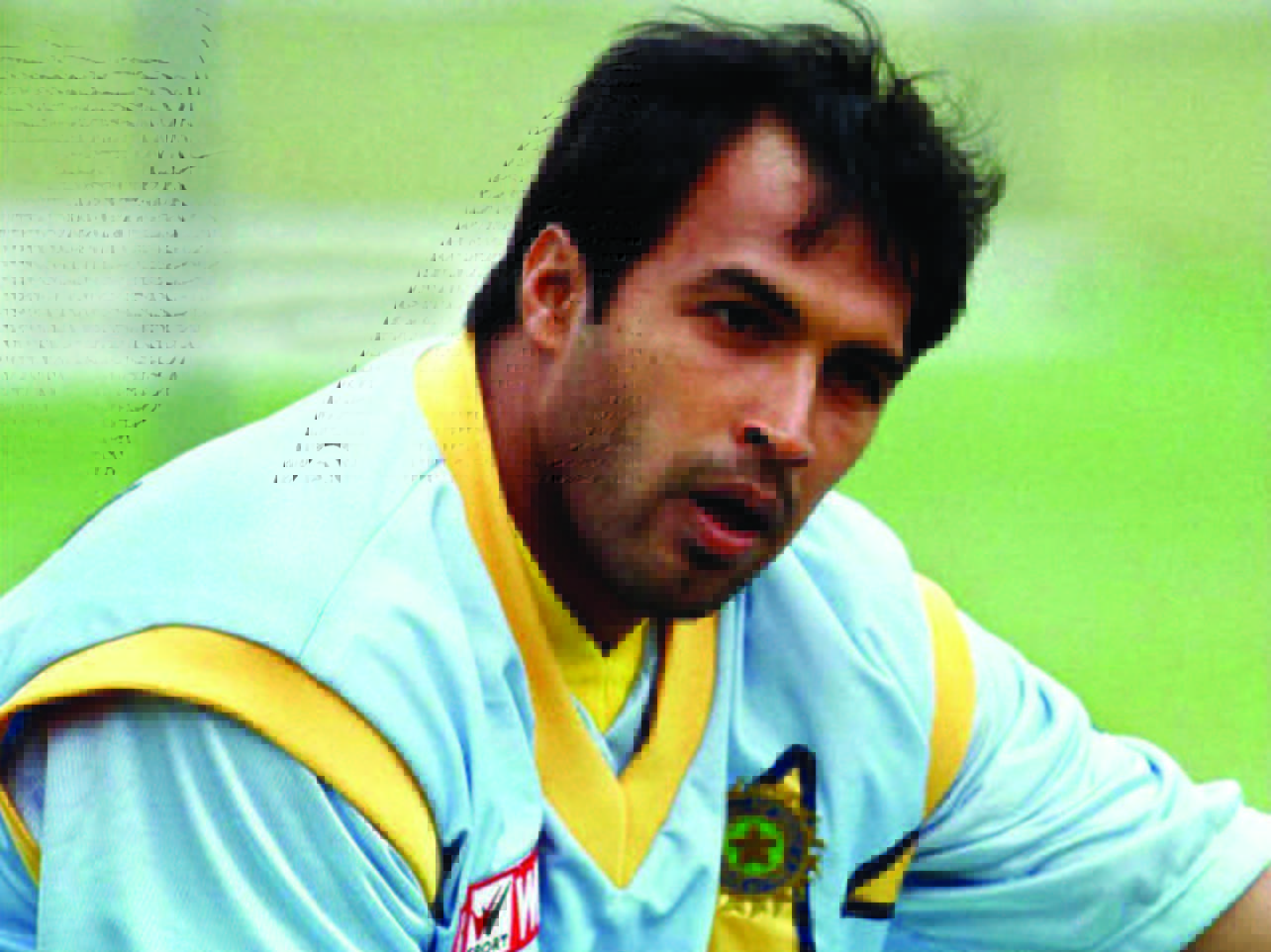
DALLAS (TIP): NTCA (North Texas Cricket Association) Youth Program, in collaboration with Texas Cricket Academy founded by former international Cricket player T. Kumaran, have cordially invited all for a fundraising dinner with Mr. Robin Singh, former India player, USA National Cricket Team Coach and IPL Mumbai Indians Assistant Coach.
Mr. Robin Singh is in Dallas to conduct an Elite Youth Cricket Coaching Camp, organized by the NTCA Youth Program and the Texas Cricket Academy. NTCA Youth program has more than 50 players from the ages of 7 to 15 playing at various levels of competitive Cricket.
The USACA Central West Regional Under 15 team is captained by NTCA Youth Program member Karthik S, and had 5 other players from the program in the team. The team was Runners Up at the Regional Tournament held in Los Angeles, CA, and will play Nationals in San Francisco in June, 2014.
This event will allow the attendees to meet and greet Robin Singh, take pictures and autographs, and also contribute towards setting up a strong foundation for Youth Cricket in DFW, and USA. The fundraising dinner is scheduled for Sunday, March 9th, 2014 at 7 PM at Ruchi Palace, 3128 E Trinity Mills Rd, Carrollton, TX 75006 (Tel: (972) 818-9588).
The price is $25/person. Children 5 & under attend free. Live musical entertainment. All proceeds from this event will go towards supporting the Elite Youth Cricket Camp and other initiatives under NTCA Youth Program. For further information and tickets, please email to NTCAYouth@RuchiPalace.Com or call Ruchi Palace at (972) 818-9588 and make reservations.
-

TV Asia – the Exclusive Broadcast partner of American College Cricket- ties up with ESPN3
EDISON, NJ (TIP): TV Asia – the Exclusive Broadcast partner of American College Cricket – is pleased to announce an agreement with ESPN3 that will deliver the American College Cricket National Championship Finals live on Sunday March 16, 2014 from the magnificent Broward County Stadium in Fort Lauderdale, Florida.
The Finals will also be carried live on TV Asia nationally on Dish Satellite, Dish World and on Cable where TV Asia is carried on their systems. Cricket fans will now have an opportunity to watch American College Cricket in the US online via WatchESPN.com and on smartphones and tablets via the WatchESPN app. Additionally, it can be streamed on televisions through ESPN on Xbox LIVE by Gold members, Apple TV and Roku.
TV Asia has been airing 60 hours of American College Cricket over 2 years and in keeping with its mission of local relevancy has been investing and building American College Cricket brand identity and awareness with Presenting Sponsors Coca Cola. “ESPN3 continues to build its position as a leader in delivering premier events from the world’s second most popular sport in the US,” said Jason Bernstein, Senior Director of Programming and Acquisitions, ESPN.
“By carrying the American College Cricket National Championship Finals, we are able to deliver the sport nationally across a variety of platforms that are easily accessible to this passionate and fast growing fan base.” “TV Asia is committed to highlighting South Asian achievers and role models in the US and Canada in sports, arts, business and cultural spheres and will continue to invest in our South Asian community,” stated H.R. Shah, Chairman TV Asia.
“TV Asia is the leading South Asian TV Channel specializing in locally relevant programs and engagement with the community nationally,” stated Lal Dadlaney, SVPBusiness & Operations TV Asia. “We are delighted to work with ESPN3 to scale and add validity to American College Cricket.” American College Cricket founder & President Lloyd Jodah stated: “All American College Cricket members – including the student leaders who believed in the vision and came to the first American College Cricket Championship in March 2009 – who helped us start the clubs and get them to the Nationals these past 5 years as well as all of our players, thank TV Asia for its strong belief in and commitment to us these past two and a half years.
We look forward to working with ESPN3 through our partnership with TV Asia.” About ESPN3 ESPN3 is ESPN’s live multi-screen sports network, a destination that delivers thousands of exclusive sports events annually. It is accessible online at WatchESPN.com, on smartphones and tablets via the WatchESPN app and streamed on televisions through ESPN on Xbox LIVE to Gold members, Apple TV and Roku. The network is currently available to more than 85 million homes at no additional cost to fans who receive their high-speed Internet connection or video subscription from an affiliated service provider.
The network is also available at no cost to approximately 21 million U.S. college students and U.S.-based military personnel via computers, smartphones and tablets connected to oncampus educational and on-base military broadband and Wi-Fi networks. About TV Asia TV Asia is a New Jersey based Pay TV Channel available in USA in HD on Dish Satellite Channel 700, Dish World IPTV and in SD on major Cable systems such as Comcast Xfinity, Time Warner, Cablevision etc including Verizon FIOS & AT & T U Verse. In Canada we are on Rogers Cable Toronto and Bell IPTV.
TV Asia is celebrating 20 years in United States and engages in dialogue via outreach programs with the community and is the Voice and Mirror of the South Asian Community in North America. For further information visit www.tvasiausa.com and www.YouTube.com/tvasiausa for program schedules as well as updates and short videos and on Facebook www.facebook.com/tvasiausa and stay connected to TV Asia. About American College Cricket American College Cricket was founded in October 2008 by Lloyd Jodah and has developed clubs in over 70 member colleges all over the USA & Canada.
Starting with a National Championship in March 2009 played for the Shiv Chanderpaul Trophy, American College Cricket developed Regional Championships in the Fall semester, and a Home & Away season year round. The organization has been featured in major media such as the NY Times, Washington Post, Boston Globe, NY Daily News and many others and played a role in the National Baseball Hall of Fame Exhibition: Swinging Away – How Cricket & Baseball Connect”. for further information visit: Face book :https://www.facebook.com/ CollegeCricket?ref=br_rs Twitter: @CollegeCricketU Website: www.Americancollegecricket.com For further media info contact: Pradeep Hegde Vice President.
-

Youth Cricket Turns the Corner in the Central West Region
DALLAS (TIP): Cricket has been growing quietly in the Central West region of the USA over last several years. During the President’s day long weekend, February 15th and 16th, Youth Cricket showed its influence and potential at the Regional Youth Cricket Camp held at Lewisville, TX. Over 60 kids ages 7 to 15 with skill levels of Beginner to Advanced, from Dallas, Austin and Oklahoma came together for two days to continue to hone their skills in all aspects of the game.

Picked up young to train in to accomplished cricketers
United Youth Cricket Club (https://www.facebook.com/ unitedyouthcricket) was established in 2010 to promote cricket within the community through a fun, familyoriented, professionally coached program for aspiring boys and girls from cricketing and non-cricketing backgrounds. It has three levels in its Cricket Program – “Colts”, the beginners, “Cubs”, intermediate level ages 12 and under, and “Tigers”, advanced ages 13 and over. The United Youth Program has partnered with Thiru Kumaran, a former international Cricket Player, who has brought his vast experience in coaching to the Club. Mr. Kumaran, known to the children as Coach Kenny, has put tremendous emphasis on technical correctness, fitness and teamwork.

Fielding is as important as batting or bowling. Players being trained in fielding
During the two days, there was a cricket match for the Tigers, fitness and fielding sessions for the Tigers and Cubs, game simulations for the Cubs, and a training session as well as game for the Colts. Delicious Pizza and Vegetarian Biryani, along with dozens of doting parents, siblings and pets made the entire atmosphere look like a large picnic. The event was supported by many volunteer parents who are the core of the leading youth Cricket Program in the region. Earlier, United Youth launched its 2014 campaign by taking its message across the DFW Metroplex via Radio, flyers and personal outreach. United also extended the hand of partnership to Youth Cricket groups in Arkansas and Austin, creating what is expected to become a regional youth league. United Youth Cricket Club is a member of North Texas Cricket Association (NTCA).
For further information, please contact Praful Mainker, NTCA Youth Coordinator, at
Praful.Mainker@gmail.com (or)
Rajesh CV, ICC Certified Coach,
United Youth Cricket Volunteer:
cricketforyouth@gmail.com