Tag: CSIR

  • Khorana & Indian Science

    Khorana & Indian Science

    Real tribute to the Nobel Laureate would be to encourage young scientists and research

    By Dinesh C. Sharma

    The birth centenary of Nobel laureate Har Gobind Khoranais an occasion to recall the pioneering contributions he made to the fields of chemical biology and genetics and their continuing relevance. The centenary has brought into focus the lesser-known scientific legacy of undivided Punjab which was the birthplace of three Nobel laureates — Subrahmanyan Chandrasekhar, Abdus Salam and Khorana. The state also produced several other scientists like Shanti Swarup Bhatnagar, Ruchi Ram Sahni and Yash Pal. It is a shared legacy of the subcontinent that needs to be celebrated.

    The New Year has begun with a significant event on India’s science calendar — the birth centenary of Nobel laureate Har Gobind Khorana. It is an occasion to recall the pioneering contributions he made to the fields of chemical biology and genetics and their continuing relevance. The centenary has brought into focus the lesser-known scientific legacy of undivided Punjab which was the birthplace of three Nobel laureates — Subrahmanyan Chandrasekhar, Abdus Salam and Khorana. The state also produced several other scientists like Shanti Swarup Bhatnagar, Ruchi Ram Sahni and Yash Pal. It is a shared legacy of the subcontinent that needs to be celebrated. Larger issues relating to hierarchy, academic freedom, inadequate thrust on research and research-industry collaboration need to be addressed.

    Amidst the celebrations have surfaced stories about how Khorana failed to get a job after he returned to India in 1949 with a doctorate from the University of Liverpool and post-doctoral research experience at the Swiss Federal Institute of Technology, and that he was forced to return to Europe. Though the phrase ‘brain drain’ was not in vogue then, Khorana’s could be the most celebrated case of the phenomenon, in retrospect.

    Khorana was among the earliest products of the exercise to boost modern higher education in India, initiated by Sir Ardeshir Dalal, head of Planning and Development in the Viceroy’s Executive Council appointed in 1944. Dalal found that existing educational institutions were not capable of producing manpower necessary for developing an industrial base in India. It was his idea that India needed MIT-like technology universities. For the short term, he drew up a scheme, Government of India Fellowship Programme, to sponsor higher education of Indian students in Europe and America. Among the first set of students to benefit from this scheme was Khorana who had just finished post-graduation in chemistry from Punjab University in Lahore. Several generations of Indian students got this scholarship which was continued after Independence as well, and upon return to India they were deployed to work in scientific institutions and industry.

    At the time Khorana was beginning a career in science in the post-war world, scientific research in the newly Independent India was just getting organized. The Indian Agricultural Research Institute — where he was seeking an appointment — was far from being a vibrant research outfit. The facilities for basic research were lacking, as pointed out by several visiting scientists. For example, Kenneth V Thimann of Harvard University, who was in India to address the Indian Science Congress in 1957, wrote to PM Nehru: ‘Numerous young PhDs have gone abroad to receive some training in some aspect of modern plant physiology, but too often they return to a heavy schedule of teaching and a laboratory whose equipment can only be described as medieval.’

    The Council of Scientific & Industrial Research (CSIR) — founded to meet the war exigencies in the 1940s — was being shaped to serve the needs of an aspiring nation. The overhaul of other colonial-era research councils such as agriculture and medical research councils was yet to begin. The work on a spate of new educational and research institutions meant there was a clamor for resources. The scientific community and the government were still debating the division of resources for utilitarian research meant for nation-building and basic research. Foreign exchange crunch meant scientists either had to fabricate instrumentation on their own or look for aid from UN agencies or foreign governments. Dollars needed for subscriptions to scientific journals had to be justified to the Reserve Bank of India.

    This answers if Khorana could have achieved in India what he did in universities in Europe and North America had he been employed in any Indian laboratory in the 1940s.

    In the early 1960s, Khorana moved from Vancouver to the University of Wisconsin at Madison to become co-director of the Institute for Enzyme Research where he did his path-breaking work on the synthesis of proteins. In India, biochemistry research then was just taking shape and the discourse centered on establishing a National Biological Laboratory on the lines of the National Physical Laboratory (NPL) and the National Chemical Laboratory (NCL) under the CSIR. The UGC was trying to figure out ways to promote biochemistry education and research in universities. Dr Pushpa Mittra Bhargava, then a young biochemist at the Regional Research Laboratory at Hyderabad, was prodded by his mentor Dr Syed Husain Zaheer to organize a group of biochemists to chalk out research agenda in this new field. The group met informally in January 1960 in Khandala – at a villa owned by writer Mulk Raj Anand who happened to be a close friend of Zaheer. Independent of this initiative, Dr Obaid Siddiqi networked with international groups to shape the Molecular Biology Group at the Tata Institute of Fundamental Research (TIFR). Siddiqi’s brainstorming sessions became famous as the Mahabaleshwar Seminars in modern biology, while Bhargava’s initiative continued as ‘Guha Research Conference’.

    Khorana was not directly involved in such efforts to promote biochemistry research and education in India but he was in touch with members of these groups, such as Dr GP Talwar at the AIIMS and Zaheer at the CSIR. Bhargava also interacted with Khorana at the famous Gordon Research Conference on Nucleic Acids in 1964, in which the who’s who of modern biology were present. Khorana was the vice-chairman of this landmark meeting where several past and future Nobel laureates were present.

    Scientific research in India has come a long way from the time of Khorana not finding suitable research opening in Indian laboratories in the late 1940s. The research infrastructure in Indian laboratories is no more ‘medieval’ as described by visiting scientists in the 1950s. Access to scientific knowledge is just a click away. Research funding is growing and multiple channels of funding are available. But larger issues relating to hierarchy, academic freedom, inadequate thrust on research in universities, research-industry collaboration etc., remain not fully addressed. A real tribute to Khorana would be to correct some of these imbalances to encourage fundamental research and provide opportunities to young scientists in emerging areas of new biology.

    (The author is a Science Commentator with The Tribune, India)

  • Lucknow Woman Scientist Plays a Key Role in Launching of Ten Billion Dollar NASA’s Webb Space Telescope

    Lucknow Woman Scientist Plays a Key Role in Launching of Ten Billion Dollar NASA’s Webb Space Telescope

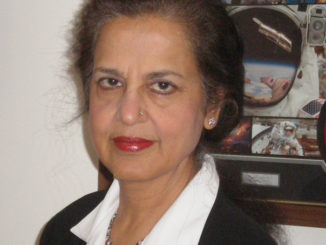
    WASHINGTON, D.C. (TIP): “What are the odds of a girl child born in the newly formed Republic of India to become a Program Scientist at NASA,” said Dr. Hashima Hasan reminiscing about her early school days during a recent NASA podcast interview. The words of her Class VI teacher in Loreto Convent, Lucknow, that they could do anything if worked hard made a big impact on her. Loreto Convent—an educational institution established in 1872 for girls—had recently allowed girls to take science subjects for their studies. She took the challenge and got interested in science. She was inspired by the scientific career of her great-uncle, Dr. Husain Zaheer, who was the Director-General of India’s Council of Scientific and Industrial Research (CSIR), and later her aunt Dr. Najma Zaheer, a renowned biological scientist. Hashima recalled that her mother had unwavering faith in her capabilities and she encouraged her to pursue her ambitions. The inspiration to pursue space science was born when, in 1957, her grandmother gathered the entire family in the backyard of her home in the early dawn to watch Sputnik pass by. It was very fascinating to see the Sputnik in the clear sky.

    Hashima completed a B.Sc. degree at Lucknow University, securing the fifth position, and went on to Aligarh Muslim University (AMU) and obtained an M.Sc. (Physics) degree securing first place and a gold medal. She started a Ph. D. program under the tutelage of the legendary Dr. Zillur Rahman Khan. After completing the pre-requisite degree of M. Phil., she took the bold step of applying to the University of Oxford. With encouragement from Dr. Rais Ahmad, Head, Department of Physics, she applied and received a Commonwealth Scholarship and joined the University of Oxford, U.K. Three years later, with a D.Phil. (Theoretical Nuclear Physics) in hand, she returned to India as a post-doctoral scholar at the Tata Institute of Fundamental Research (TIFR), Bombay. With scholars like Dr. J. V. Narlikar, and Dr. Obaid Siddiqi, TIFR was a haven of intellectual thought. After two intense years at TIFR, she secured a faculty position at the Physics Department, University of Poona, Pune. She was the only non-Marathi-speaking faculty member. The atmosphere at Poona University was welcoming, respectful, academic, idyllic, and she enjoyed teaching the post-graduate students.

    Her life took an important turn when her family arranged her marriage and she moved to Raleigh, NC, joining her husband, Dr. Aftab Ansari. She pursued her passion for Nuclear Physics at Duke University, Durham NC, switching gears two years later to Atmospheric Science when she was awarded a Resident Research Associateship by the U.S. National Research Council.

    A year later, they were back in India, this time with an infant son. Her first experience as a working mother came when she started research in Nuclear Physics at the Bhabha Atomic Research Center, Mumbai. When they returned to the USA with their second son, her journey took a turn towards NASA.

    Arriving in Baltimore, she sought research opportunities and was hired by the newly formed Space Telescope Science Institute to write the simulation software for the optics of the soon-to-be-launched Hubble Space Telescope and its science instruments. Never one to turn down a challenge, she once again switched gears from Nuclear Physics – this time towards optics and astronomy.

    Little did she know that within a few years she would be using her software to analyze the optical error of the Hubble mirror and would be assigned the responsibility of keeping Hubble in the best focus till a fix was designed.

    Once Hubble was repaired after the first servicing mission, she took advantage of an opportunity at NASA Headquarters, Washington DC, to work as a Senior Scientist. Thus started her career in science management. There was never a dull moment at NASA Headquarters. Every second keeps one intellectually on the edge – whether it is involved in the strategic planning for the next flight mission; the solicitation, review, and selection of new technology, research program, payloads on sounding rockets and balloons; the next Explorer mission; direction of the data archives; or management of advisory committees and communication with educators and the public.

    Hashima has managed every aspect of Astrophysics during her 27 years+ services at NASA Headquarters. One of her significant responsibilities is that of the Deputy Program Scientist, James Webb Space Telescope (JWST), a successor to the Hubble Space Telescope. Her responsibilities included oversight during the mission development phase to make sure that the science requirements were being met, and the best science observation program selected for the operation phase. She is currently serving as a spokesperson for JWST to the media and delivering invited talks to school students.

    After many years of hard work with its partners, the European Space Agency, and the Canadian Space Agency, NASA launched JSWT from the European spaceport of Kourou in French Guiana on 25th December 2021. The telescope equipped with multiple instruments will be positioned at a spot called Lagrange Point 2, 1.5million km from earth or more than four times beyond the moon. Its mission stretches from five to 15 years. As Deputy Program Scientist for the JWST, she was part of the team on board when the world’s largest and most powerful telescope was launched. This was an exhilarating moment for her, the entire JWST team, and indeed the entire world. Once in operation, JWST will show the wonders of the Universe never seen before. The world is eagerly waiting for those first science images. Hashima is gazing at the night skies at her home in the USA with the same wonder that she gazed at it as a little girl in Lucknow – it is the same sky with the same mysteries waiting for all of us to discover.

    A few selected videos.

    https://www.bhaskar.com/international/news/james-webb-spaDce-telescope-news-and-updates-worlds-most-powerful-space-telescope-is-ready-to-launch-129239575.html?media=1

    https://m-timesofindia-com.cdn.ampproject.org/c/s/m.timesofindia.com/city/mumbai/touch-of-india-

    AMU Alumna Dr Hashima Hasan plays a key role in the launch of NASA telescope