Tag: Cuba

  • Supreme Court lets Trump end humanitarian parole for 5,00,000 people from 4 countries

    Supreme Court lets Trump end humanitarian parole for 5,00,000 people from 4 countries

    WASHINGTON, D.C. (TIP): The Supreme Court on Friday (May 30, 2025) again cleared the way for the Trump administration to strip temporary legal protections from hundreds of thousands of immigrants, pushing the total number of people who could be newly exposed to deportation to nearly 1 million.

    The justices lifted a lower-court order that kept humanitarian parole protections in place for more than 5,00,000 migrants from four countries: Cuba, Haiti, Nicaragua and Venezuela.

    The court has also allowed the administration to revoke temporary legal status from about 3,50,000 Venezuelan migrants in another case.

    Republican President Donald Trump promised on the campaign trail to deport millions of people, and in office has sought to dismantle Biden administration policies that created ways for migrants to live legally in the U.S.

    His administration filed an emergency appeal to the Supreme Court after a federal judge in Boston blocked the administration’s push to end the programme.

    The Justice Department argues that the protections were always meant to be temporary, and the Department of Homeland Security has the power to revoke them without court interference. The administration says Mr. Biden granted the parole en masse, and the law doesn’t require ending it on an individual basis.

    The Trump administration’s decision was the first-ever mass revocation of humanitarian parole, attorneys for the migrants said. They called the Trump administration’s moves “the largest mass illegalization event in modern American history.” The case is the latest in a string of emergency appeals the administration has made to the Supreme Court, many of them related to immigration.

    The court has sided against Mr. Trump in other cases, including slowing his efforts to swiftly deport Venezuelans accused of being gang members to a prison in El Salvador under an 18th century wartime law called the Alien Enemies Act.
    (Agencies)

  • U.S. Supreme Court could block Trump’s birthright citizenship order but limit nationwide injunctions

    U.S. Supreme Court could block Trump’s birthright citizenship order but limit nationwide injunctions

    The U.S. top court debates Trump’s birthright citizenship restrictions, nationwide injunctions, and potential impact on immigration laws

    WASHINGTON, D.C. (TIP): The U.S. Supreme Court seemed intent on Thursday, May 15, 2025, on maintaining a block on President Donald Trump’s restrictions on birthright citizenship while looking for a way to scale back nationwide court orders.

    It was unclear what such a decision might look like, but a majority of the court expressed concerns about would happen if the Trump administration were allowed, even temporarily, to deny citizenship to children born to people who are in the United States illegally.

    The justices heard arguments in the Trump administration’s emergency appeals over lower court orders that have kept the citizenship restrictions on hold across the country.

    Nationwide injunctions have emerged as an important check on Mr. Trump’s efforts to remake the government and a source of mounting frustration to the Republican president and his allies.

    Judges have issued 40 nationwide injunctions since Mr. Trump began his second term in January, Solicitor General D. John Sauer told the court at the start of more than two hours of arguments.

    Birthright citizenship is among several issues, many related to immigration, that the administration has asked the court to address on an emergency basis.

    The justices also are considering the Trump administration’s pleas to end humanitarian parole for more than 500,000 people from Cuba, Haiti, Nicaragua and Venezuela and to strip other temporary legal protections from another 350,000 Venezuelans. The administration remains locked in legal battles over its efforts to swiftly deport people accused of being gang members to a prison in El Salvador under an 18th century wartime law called the Alien Enemies Act. Mr. Trump signed an executive order on the first day of his second term that would deny citizenship to children who are born to people who are in the country illegally or temporarily.

    The order conflicts with a Supreme Court decision from 1898 that held that the Citizenship Clause of the 14th Amendment made citizens of all children born on U.S. soil, with narrow exceptions that are not at issue in this case.

    States, immigrants and rights group sued almost immediately, and lower courts quickly barred enforcement of the order while the lawsuits proceed.The current fight is o ver the rules that apply while the lawsuits go forward.

    The court’s liberal justices seemed firmly in support of the lower court rulings that found the changes to citizenship that Mr. Trump wants to make would upset the settled understanding of birthright citizenship that has existed for more than 125 years.

    Birthright citizenship is an odd case to use to scale back nationwide injunctions, Justice Elena Kagan said. “Every court has ruled against you,” she told Sauer.

    If the government wins on today’s arguments, it could still enforce the order against people who haven’t sued, Kagan said. “All of those individuals are going to win. And the ones who can’t afford to go to court, they’re the ones who are going to lose,” she said.

    Justice Ketanji Brown Jackson described the administration’s approach as “catch me if you can,” forcing everyone to file suit to get “the government to stop violating people’s rights.”

    Several conservative justices who might be open to limiting nationwide injunctions also wanted to know the practical effects of such a decision as well as how quickly the court could reach a final decision on the Trump executive order.

    Is Trump’s order on birthright citizenship constitutional? | Explained

    Justice Brett Kavanaugh pressed Sauer with a series of questions about how the federal government might enforce Mr. Trump’s order.

    “What do hospitals do with a newborn? What do states do with a newborn?” he said.

    Sauer said they wouldn’t necessarily do anything different, but the government might figure out ways to reject documentation with “the wrong designation of citizenship.”

    Kavanaugh continued to push for clearer answers, pointing out that the executive order gave the government only about 30 days to develop a policy. “You think they can get it together in time?” he said.

    The Trump administration, like the Biden administration before it, has complained that judges are overreaching by issuing orders that apply to everyone instead of just the parties before the court.

    Picking up on that theme, Justice Samuel Alito said he meant no disrespect to the nation’s district judges when he opined that they sometimes suffer from an “occupational disease which is the disease of thinking that ‘I am right and I can do whatever I want’.” But Justice Sonia Sotomayor was among several justices who raised the confusing patchwork of rules that would result if the court orders were narrowed and new restrictions on citizenship could temporarily take effect in more than half the country.

    Some children might be “stateless,” Sotomayor said, because they’d be denied citizenship in the U.S. as well as the countries their parents fled to avoid persecution.

    22 States sue to stop Trump’s order blocking birthright citizenship

    New Jersey Solicitor General Jeremy Feigenbaum, representing 22 states that sued, said citizenship could “turn on and off” for children crossing the Delaware River between Camden, New Jersey, where affected children would be citizens, and Philadelphia, where they wouldn’t be. Pennsylvania is not part of the lawsuit.

    One possible solution for the court might be to find a way to replace nationwide injunctions with certification of a class action, a lawsuit in which individuals serve as representatives of a much larger group of similarly situated people. Such a case could be filed and acted upon quickly and might even apply nationwide.

    But under questioning from Justice Amy Coney Barrett and others, Sauer said the Trump administration could well oppose such a lawsuit or potentially try to slow down class actions.

    Supreme Court arguments over emergency appeals are rare. The justices almost always deal with the underlying substance of a dispute. But the administration didn’t ask the court to take on the larger issue now and, if the court sides with the administration over nationwide injunctions, it’s unclear how long inconsistent rules on citizenship would apply to children born in the United States.

    A decision is expected by the end of June.
    (Agencies)

  • CIFF MARKS 18TH EDITION

    Weckuwapok (The Approaching Dawn) (Photo: pointsnorthinstitute.org)By Mabel Pais

    Featuring

    • SHAUNAK SEN’S All That Breathes
    • GEETA GANDBHIR & SAM POLLARD’S Lowndes County And The Road To Black Power
    • NEHAL VYAS’S Dapaan
    • SOHIL VAIDYA’S Murmurs Of The Jungle
    • SHRUTIMAN DEORI’S My Courtyard (Ne Sotal)
    • KAVITA PILLAI’s Weckuwapok (The Approaching Dawn)

    The Camden International Film Festival (CIFF) for its 18th edition presents feature and short films and documentaries. The festival takes place in person from September 15-18 at venues in Camden and Rockland, Maine, and online from September 15-25 for audiences across North America.

    A program of the Points North Institute, CIFF remains widely recognized as a major platform championing the next generation of nonfiction storytellers and one of the hottest documentary and industry festivals on the festival and awards calendars. This year’s edition is the most international and formally adventurous to date and includes 34 features and 37 short films from over 41 countries. Over 60% of the entire program is directed or co-directed by BIPOC filmmakers and this is the 6th consecutive program the festival has reached gender parity within the program and across all competitions. Nearly half of the feature program will be US or North American premieres, including several new titles fresh from Venice, Locarno, and TIFF premieres, alongside award-winning films from Sundance, Rotterdam, Cannes, and Visions du Reel.

    This year’s program celebrates the diversity of voices and forms in documentary and cinematic nonfiction,” says Ben Fowlie, Executive and Artistic Director of the Points North Institute, and Founder of the Camden International Film Festival. “These films help us make sense of an ever-changing world, and do everything we expect from great art – they ask provocative questions and interrogate the form. This year’s program emphasizes the international that represents the ‘I’ in CIFF, and reminds us time and again of the limitless creative potential and potency of the documentary form. Just as we have been for each of the past seventeen years, we are grateful to the filmmakers who have made these works of art and shared these stories.”

    CIFF 2022 FEATURES

    5 DREAMERS AND THE HORSE

    Dirs: Aren Malakyan & Vahagn Khachatryan | Armenia, Georgia, Germany |

    US Premiere

    A COMPASSIONATE SPY 

    Dir: Steve James | USA, United Kingdom

    AFTER SHERMAN

    Dir: Jon-Sesrie Goff | USA

    ALL OF OUR HEARTBEATS ARE CONNECTED THROUGH EXPLODING STARS

    Dir: Jennifer Rainsford | US Premiere

    ALL THAT BREATHES

    Dir: Shaunak Sen | India, USA, UK

    BURIAL

    Dir: Emilija Škarnulytė | Lithuania, Norway | US Premiere

    COWBOY POETS

    Dir: Mike Day | UK, Scotland, US | World Premiere

    CROWS ARE WHITE

    Dir: Ahsen Nadeem | Japan, Ireland, USA

    DAY AFTER…

    Dir: Kamar Ahmad Simon | Bangladesh, France, Norway

    DESCENDANT

    Dir: Margaret Brown | USA

    DETOURS

    Dir: Ekaterina Selenkina | Russia, Netherlands | US Premiere

    DOS ESTACIONES

    Dir: Juan Pablo González | México, with France, USA

    EAMI

    Dir: Paz Encina | Paraguay, Argentina, Mexico, USA, Germany, France, The Netherlands | North American Premiere

    FORAGERS

    Dir: Jumana Manna | Palestine | North American Premiere

    GEOGRAPHIES OF SOLITUDE

    Dir: Jacquelyn Mills | Canada

    Dir: Carlos Pardo Ros | Spain | North American Premiere

    HERBARIA

    Dir: Leandro Listorti | Argentina, Germany | North American Premiere

    I DIDN’T SEE YOU THERE

    Dir: Reid Davenport | USA

    IN HER HANDS

    Dirs: Tamana Ayazi, Marcel Mettelsiefen | USA, Afghanistan | US Premiere

    IT IS NIGHT IN AMERICA (É Noite na América)

    Dir: Ana Vaz | Italy, Brazil, France | North American Premiere

    LOWNDES COUNTY AND THE ROAD TO BLACK POWER

    Dirs: Geeta Gandbhir, Sam Pollard | USA

    MATTER OUT OF PLACE

    Dir: Nikolaus Geyrhalter | Austria | North American Premiere

    MY IMAGINARY COUNTRY (Mi País Imaginario)

    Dir: Patricio Gúzman | Chile, France | Sneak Preview

    NOTHING LASTS FOREVER

    Dir: Jason Kohn | USA

    POLARIS

    Dir: Ainara Vera | Greenland, France | North American Premiere

    REWIND & PLAY

    Alain Gomis | France, Germany

    All That Breathes. (Photo: pointsnorthinstitute.org)

    Dir: Chris Smith | USA

    SUBJECT

    Dir: Jennifer Tiexiera, Camilla Hall | USA

    TERRANOVA

    Dirs: Alejandro Alonso & Alejandro Pérez | Cuba | North American Premiere

    THE AFTERLIGHT

    Dir: Charlie Shackleton | UK

    THE TERRITORY

    Dir: Alex Pritz | Brazil, Denmark, USA

    THIS MUCH WE KNOW

    Dir: Lily Frances Henderson | USA | World Premiere

    WHAT WE LEAVE BEHIND (LO QUE DEJAMOS ATRÁS)

    Dir: Iliana Sosa | USA, Mexico

    CIFF 2022 SHORTS

    ARALKUM

    Dirs: Daniel Asadi Faezi, Mila Zhluktenko | Germany, Uzbekistan |

    North American Premiere

    THE ARK

    Dir: Amira Louadah | Algeria, France | North American Premiere

    THE ARTISTS

    Dirs: Noah David Smith, Elizabeth L. Smith | USA | World Premiere

    BELONGINGS

    Dir: Alex Coppola | USA

    BIGGER ON THE INSIDE

    Dir: Angelo Madsen Minax | USA | Sneak Preview

    BRAVE

    Wilmarc Val | France | US Premiere

    CALL ME JONATHAN

    Dir: Bárbara Lago | Argentina | US Premiere

    CONGRESS OF IDLING PERSONS

    Dir: Bassem Saad | Lebanon, Germany

    CONSTANT

    Dir: Beny Wagner, Sasha Litvintseva | Germany, United Kingdom

    DAPAAN

    Dapaan. (Photo: pointsnorthinstitute.org)

    Dir: Nehal Vyas | USA

    DEERFOOT OF THE DIAMOND 

    Dir: Lance Edmands | USA | World Premiere

    ECHOLOCATION

    Dir: Nadia Shihab | USA

    EVERYTHING WRONG AND NOWHERE TO GO

    Dir: Sindha Agha | USA, United Kingdom | World Premiere

    THE FAMILY STATEMENT

    Dir: Grace Harper, Kate Stonehill | USA

    FIRE IN THE SEA

    Dir: Sebastián Zanzottera | Argentina | North American Premiere

    THE FLAGMAKERS

    Dirs: Cynthia Wade, Sharon Liese | USA | World Premiere

    LA FRONTIÉRE (THE BORDER)

    Dirs: Katy Haas, Megan Ruffe | USA, Canada | Sneak Preview

    HANDBOOK

    Dir: Pavel Mozhar | Germany, Belarus

    IRANI BAG

    Dir: Maryam Tafakory | Iran, Singapore, United Kingdom

    LA FRONTIÉRE

    Dirs: Katy Haas & Megan Ruffe | USA |  work in progress

    LIFE WITHOUT DREAMS

    Dir: Jessica Bardsley | USA, France

    LUNGTA

    Dir: Alexandra Cuesta | Mexico, Ecuador | North American Premiere

    MASKS

    Dir: Olivier Smolders | Belgium | North American Premiere

    MOUNE 

    Dir: Maxime Jean-Baptiste | Belgium, French Guiana, France

    MURMURS OF THE JUNGLE

    Dir: Sohil Vaidya | India

    MY COURTYARD (NE SOTAL)

    Dir: Shrutiman Deori | India | North American Premiere

    NAZARBAZI

    Dir: Maryam Tafakory | Iran

    ONE SURVIVES BY HIDING

    Dir: Esy Casey | USA, Philippines

    PACAMAN

    Dir: Dalissa Montes de Oca | Dominican Republic

    PARADISO, XXXI, 108

    Dir: Kamal Aljafari | Palestine, Germany | North American Premiere

    SEASICK

    Dir: João Vieira Torres | Brazil, France | North American Premiere

    SOLASTALGIA

    Dir: Violeta Mora | Cuba, Honduras | North American Premiere

    SOMEBODY’S HERO

    Dir: Morgan Myer | USA

    THE SOWER OF STARS (EL SEMBRADOR DE ESTRELLAS)

    Dir: Lois Patiño | Spain | US Premiere

    SUBTOTALS

    Dir: Mohammadreza Farzad | Poland, Germany, Iran | North American Premier

    SWERVE

    Dir: Lynne Sachs | USA

    UNSINKABLE SHIP

    Dir: Lamia Lazrak, Josie Colt | USA | North American Premier

    WECKUWAPOK (THE APPROACHING DAWN)

    Dirs: Jacob Bearchum, Taylor Hensel, Adam Mazo, Chris Newell, Roger Paul, Kavita Pillay, Tracy Rector, and Lauren Stevens | USA

    WECKUWAPASIHIT (THOSE TO COME) Weckuwapasihtit (Those Yet to Come)

    Weckuwapok (The Approaching Dawn) (Photo: pointsnorthinstitute.org)

    Dir: Geo Neptune, Brianna Smith | USA

    WHEN THE LAPD BLOWS UP YOUR NEIGHBORHOOD

    Dir: Nathan Truesdell | USA

    TICKETS

    For Tickets and Passes, visit pointsnorthinstitute.org/ciff/box-office

    Online registration for pass holders began on September 1. General tickets for screenings will open on September 8.

    POINTS NORTH INSTITUTE

    To learn about the Points North Institute, visit pointsnorthinstitute.org.

    (Mabel Pais writes on Social Issues, The Arts and Entertainment, Health & Wellness, Cuisine and Spirituality.)

  • The world in 2022: Another year of living dangerously

    The world in 2022: Another year of living dangerously

    On the brink of a new year, the world faces a daunting array of challenges: the resurgent Covid-19 pandemic, the climate emergency, the struggle between democracy and authoritarianism, humanitarian crises, mass migration, and trans-national terrorism. There is the risk of new inter-state conflicts, exacerbated by the breakdown of the rules-based international order, and the spread of lethal autonomous weapons. All in all, for most people on Earth – and a handful in space – 2022 will be another year of living dangerously.

    Middle East

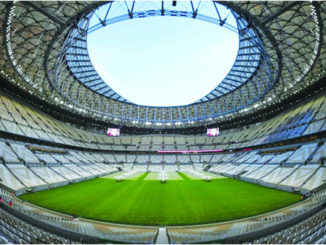
    Events in the Middle East will make global headlines again in 2022 – but for positive as well as negative reasons. A cause for optimism is football’s World Cup, which kicks off in Qatar in November. It’s the first time an Arab or a Muslim country has hosted the tournament. It is expected to provide a major fillip for the Gulf region in terms of future business and tourism – and, possibly, more open, progressive forms of governance.

    But the choice of Qatar, overshadowed by allegations of corruption, was controversial from the start. Its human rights record will come under increased scrutiny. Its treatment of low-paid migrant workers is another flashpoint. The Guardian revealed that at least 6,500 workers have died since Qatar got the nod from Fifa in 2010, killed while building seven new stadiums, roads and hotels, and a new airport.

    Concerns will also persist about Qatar’s illiberal attitude to free speech and women’s and LGBTQ+ rights in a country where it remains dangerous to openly criticise the government and where homosexuality is illegal. But analysts suggest most fans will not focus on these issues, which could make Qatar 2022 the most successful example of “sports-washing” to date.

    More familiar subjects will otherwise dominate the regional agenda. Foremost is the question of whether Israel and/or the US will take new military and/or economic steps to curb Iran’s attempts, which Tehran denies, to acquire capability to build nuclear weapons. Israel has been threatening air strikes if slow-moving talks to revive the 2015 nuclear deal fail. Even football fans could not ignore a war in the Gulf.

    Attention will focus on Turkey’s authoritarian president, Recep Tayyip Erdogan, whose neo-Islamist AKP party will mark 20 years in power in 2022. Erdogan’s rule has grown increasingly oppressive at home, while his aggressive foreign policy, rows with the EU and US, on-off collusion with Russia over Syria and chronic economic mismanagement could have unpredictable consequences.

    Other hotspots are likely to be Lebanon – tottering on the verge of becoming a failed state like war-torn Yemen – and ever-chaotic Libya. Close attention should also be paid to Palestine, where the unpopular president, Mahmoud Abbas’s postponement of elections, Israeli settler violence and West Bank land-grabs, and the lack of an active peace process all loom large.

    Asia Pacific

    The eyes of the world will be on China at the beginning and the end of the year, and quite possibly in the intervening period as well. The Winter Olympics open in Beijing in February. But the crucial question, for sports fans, of who tops the medals table may be overshadowed by diplomatic boycotts by the US, UK and other countries in protest at China’s serial human rights abuses. They fear the Games may become a Chinese Communist party propaganda exercise.

    The CCP’s 20th national congress, due towards the end of the year, will be the other headline-grabber. President Xi Jinping is hoping to secure an unprecedented third five-year term, which, if achieved, would confirm his position as China’s most powerful leader since Mao Zedong. There will also be jostling for senior positions in the Politburo and Politburo standing committee. It will not necessarily all go Xi’s way.

    Western analysts differ sharply over how secure Xi’s position truly is. A slowing economy, a debt crisis, an ageing population, huge environmental and climate-related challenges, and US-led attempts to “contain” China by signing up neighbouring countries are all putting pressure on Xi. Yet, as matters stand, 2022 is likely to see ongoing, bullish attempts to expand China’s global economic and geopolitical influence. A military attack on Taiwan, which Xi has vowed to re-conquer by any or all means, could change everything.

    India, China’s biggest regional competitor, may continue to punch below its weight on the world stage. In what could be a symbolically important moment, its total population could soon match or exceed China’s 1.41 billion, according to some estimates. Yet at the same time, Indian birth rates and average family sizes are falling. Not so symbolic, and more dangerous, are unresolved Himalayan border disputes between these two giant neighbours, which led to violence in 2020-21 and reflect a broader deterioration in bilateral relations.

    The popularity of Narendra Modi, India’s authoritarian prime minister, has taken a dive of late, due to the pandemic and a sluggish economy. He was forced into an embarrassing U-turn on farm “reform” and is accused of using terrorism laws to silence critics. His BJP party will try to regain lost ground in a string of state elections in 2022. Modi’s policy of stronger ties with the west, exemplified by the Quad alliance (India, the US, Japan, Australia), will likely be reinforced, adding to China’s discomfort.

    Elsewhere in Asia, violent repression in Myanmar and the desperate plight of the Afghan people following the Taliban takeover will likely provoke more western hand-wringing than concrete action. Afghanistan totters on the brink of disaster. “We’re looking at 23 million people marching towards starvation,” says David Beasley of the World Food Programme. “The next six months are going to be catastrophic.”

    North Korea’s nuclear brinkmanship may bring a showdown as Kim Jong-un’s paranoid regime sends mixed signals about war and peace. The Philippines will elect a new president; the foul-mouthed incumbent, Rodrigo Duterte, is limited to a single term. Unfortunately this is not the case with Scott Morrison, who will seek re-election as Australia’s prime minister.

    Europe

    It will be a critical year for Europe as the EU and national leaders grapple with tense internal and external divisions, the social and economic impact of the unending pandemic, migration and the newly reinforced challenges, post-Cop26, posed by net zero emissions targets.

    More fundamentally, Europe must decide whether it wants to be taken seriously as a global actor, or will surrender its international influence to China, the US and malign regimes such as Vladimir Putin’s Russia.

    The tone may be set by spring elections in France and Hungary, where rightwing populist forces are again pushing divisive agendas. Viktor Orbán, the authoritarian Hungarian leader who has made a mockery of the EU over rule of law, democracy and free speech issues, will face a united opposition for the first time. His fate will be watched closely in Poland, the Czech Republic, Slovenia and other EU member states where reactionary far-right parties flourish.

    Emmanuel Macron, the neo-Gaullist centrist who came from nowhere in 2017, will ask French voters for a second term in preference to his avowedly racist, Islamophobic rivals, Marine Le Pen and Éric Zemmour. Polls put him ahead, although he also faces what could be a strong challenge from the centre-right Republicans, whose candidate, Valérie Pécresse, is the first woman to lead the conservatives. With the left in disarray, the election could radicalise France in reactionary ways. Elections are also due in Sweden, Serbia and Austria.

    Germany’s new SPD-led coalition government will come under close scrutiny as it attempts to do things differently after the long years of Angela Merkel’s reign. Despite some conciliatory pledges, friction will be hard to avoid with the European Commission, led by Merkel ally Ursula von der Leyen, and with France and other southern EU members over budgetary policy and debt. France assumes the EU presidency in January and Macron will try to advance his ideas about common defence and security policy – what he calls “strategic autonomy”.

    Macron’s belief that Europe must stand up for itself in a hostile world will be put to the test on a range of fronts, notably Ukraine. Analysts suggest rising Russian military pressure, including a large border troop build-up and a threat to deploy nuclear missiles, could lead to renewed conflict early in the year as Nato hangs back.

    Other trigger issues include Belarus’s weaponising of migration (and the continuing absence of a humane pan-European migration policy) and brewing separatist trouble in Bosnia-Herzegovina and the Balkans. The EU is planning a China summit, but there is no consensus over how to balance business and human rights. In isolated, increasingly impoverished Britain, Brexit buyers’ remorse looks certain to intensify.

    Relations with the US, which takes a dim view of European autonomy but appears ambivalent over Ukraine, may prove tense at times. Nato, its credibility damaged post-Afghanistan, faces a difficult year as it seeks a new secretary-general. Smart money says a woman could get the top job for the first time. The former UK prime minister Theresa May has been mentioned – but the French will not want a Brit.

    South America

    The struggle to defeat Jair Bolsonaro, Brazil’s notorious rightwing president, in national elections due in October looks set to produce an epic battle with international ramifications. Inside Brazil, Bolsonaro has been widely condemned for his lethally negligent handling of the Covid pandemic. Over half a million Brazilians have died, more than in any country bar the US. Beyond Brazil, Bolsonaro is reviled for his climate change denial and the accelerated destruction of the Amazon rainforest.

    Opinion polls show that, should he stand, Luiz Inácio Lula da Silva, the former president who was jailed and then cleared on corruption charges, would easily beat Bolsonaro. But that assumes a fair fight. Concern is growing that American supporters of Donald Trump are coaching the Bolsonaro camp on how to steal an election or mount a coup to overturn the result, as Trump tried and failed to do in Washington a year ago. Fears grow that Trump-style electoral subversion may find more emulators around the world.

    Surveys in Europe suggest support for rightwing populist-nationalist politicians is waning, but that may not be the case in South America, outside Brazil, and other parts of the developing world in 2022. Populism feeds off the gap between corrupt “elites” and so-called “ordinary people”, and in many poorer countries, that gap, measured in wealth and power, is growing. In Cuba, Nicaragua, Haiti and Venezuela, supposed champions of the people have become their oppressors, and this phenomenon looks set to continue. In Chile, the presidential election’s first round produced strong support for José Antonio Kast, a hard-right Pinochet apologist, though he was ultimately defeated by Gabriel Boric, a leftist former student leader, who will become the country’s youngest leader after storming to a resounding victory in a run-off.

    Argentina’s president, Alberto Fernández, faces a different kind of problem in what looks like a tough year ahead, after elections in which his Peronists, one of the world’s oldest populist parties, lost their majority in Congress for the first time in nearly 40 years. Mexico’s president, Andrés Manuel López Obrador, will face ongoing tensions with the US over trade, drugs and migration from Central America. But at least he no longer has to put up with Trump’s insults – for now.

    North America

    All eyes will be on the campaign for November’s mid-term elections when the Democrats will attempt to fend off a Republican bid to re-take control of the Senate and House of Representatives. The results will inevitably be viewed as a referendum on Joe Biden’s presidency. If the GOP does well in the battleground states, Donald Trump – who still falsely claims to have won the 2020 election – will almost certainly decide to run for a second term in 2024.

    Certain issues will have nationwide resonance: in particular, progress (or otherwise) in stemming the pandemic and ongoing anti-vax resistance; the economy, with prices and interest rates set to rise; and divisive social issues such as migration, race and abortion rights, with the supreme court predicted to overrule or seriously weaken provisions of the landmark 1973 Roe v Wade decision.

    The Democrats’ biggest problem in 2022 may be internal party divisions. The split between so-called progressives and moderates, especially in the Senate, undermined Biden’s signature social care and infrastructure spending bills, which were watered down. Some of the focus will be on Biden himself: whether he will run again in 2024, his age (he will be 80 in November), his mental agility and his ability to deliver his agenda. His mid-December minus-7 approval rating may prove hard to turn around.

    Also under the microscope is Kamala Harris, the vice-president, who is said to be unsettled and under-performing – at least by those with an interest is destabilising the White House. Pete Buttigieg, the transportation secretary who sought the Democratic nomination in 2020, is a man to watch, as a possible replacement for Harris or even for Biden, should the president settle for one term.

    Concern has grown, meanwhile, over whether the mid-terms will be free and fair, given extraordinary efforts by Republican state legislators to make it harder to vote and even harder for opponents to win gerrymandered congressional districts and precincts with in-built GOP majorities. One survey estimates Republicans will flip at least five House seats thanks to redrawn, absurdly distorted voting maps. This could be enough to assure a Republican House majority before voting even begins.

    Pressure from would-be Central American migrants on the southern US border will likely be a running story in 2022 – a problem Harris, who was tasked with dealing with it, has fumbled so far. She and Biden are accused of continuing Trump’s harsh policies. Belief in Biden’s competence has also been undermined by the chaotic Afghan withdrawal, which felt to many like a Vietnam-scale humiliation.

    Another big foreign policy setback or overseas conflagration – such as a Russian land-grab in Ukraine, direct Chinese aggression against Taiwan or an Israel-Iran conflict – has potential to suck in US forces and wreck Biden’s presidency.

    In Canada, Prime Minister Justin Trudeau is expected to push new policy initiatives on affordable childcare and housing after winning re-election in September. But in 2021’s snap election his Liberals attracted the smallest share of the popular vote of any winning party in history, suggesting the Trudeau magic is wearing thin. Disputes swirl over alleged corruption, pandemic management, trade with the US and carbon reduction policy.

    Africa

    As befits this giant continent, some of 2022’s biggest themes will play out across Africa. Among the most striking is the fraught question of whether Africans, still largely unvaccinated, will pay a huge, avoidable price for the developed world’s monopolising of vaccines, its reluctance to distribute surpluses and share patents – and from the pandemic’s myriad, knock-on health and economic impacts.

    This question in turn raises another: will such selfishness rebound on the wealthy north, as former UK prime minister Gordon Brown has repeatedly warned? The sudden spread of Omicron, first identified in South Africa, suggests more Covid variants could emerge in 2022. Yet once again, the response of developed countries may be to focus on domestic protection, not international cooperation. The course of the global pandemic in 2022 – both in terms of the threat to health and economic prosperity – is ultimately unknowable. But in many African countries, with relatively young populations less vulnerable to severe Covid harms, the bigger problem may be the negative impact on management of other diseases.

    It’s estimated 25 million people in Africa will live with HIV-Aids in 2022. Malaria claims almost 400,000 lives in a typical year. Treatment of these diseases, and others such as TB and diabetes, may deteriorate further as a result of Covid-related strains on healthcare systems.

    Replacing the Middle East, Africa has become the new ground zero for international terrorism, at least in the view of many analysts. This trend looks set to continue in 2022. The countries of the Sahel, in particular, have seen an upsurge of radical Islamist groups, mostly home-grown, yet often professing allegiance to global networks such as al-Qaida and Islamic State.

                    Source: Theguardian.com

  • Trump to announce plan to stop cash flow to Cuban military

    Trump to announce plan to stop cash flow to Cuban military

    WASHINGTON (TIP): Stopping short of a complete turnabout, President Donald Trump is expected today to announce a revised Cuba policy aimed at stopping the flow of US cash to the country’s military and security services while maintaining diplomatic relations and allowing US airlines and cruise ships to continue service to the island.

    In a speech today at a Miami theater associated with Cuban exiles, Trump will cast the policy moves as fulfillment of a promise he made during last year’s presidential campaign to reverse then-President Barack Obama’s diplomatic reengagement with the island after decades of estrangement.

    Senior White House officials who briefed reporters on Thursday on the coming announcement said Obama’s overtures had enriched Cuba’s military while repression increased on the island.

    The officials spoke on condition of anonymity to discuss the policy before Trump announces it, despite the president’s regular criticism of the use of anonymous sources. The moves to be announced by Trump are only a partial reversal of Obama’s policies, however. And they will saddle the US government with the complicated task of policing US travel to Cuba to make sure there are no transactions with the military-linked conglomerate that runs much of the Cuban economy.

    By restricting individual US travel to Cuba, the new policy also risks cutting off a major source of income for Cuba’s private business sector, which the policy is meant to support. Under the expected changes, the US will ban American financial transactions with the dozens of enterprises run by the military-linked corporation GAESA, which operates dozens of hotels, tour buses, restaurants and other facilities.

    Most US travelers to Cuba will again be required to visit the island as part of organized tour groups run by American companies. The rules also require a daylong schedule of activities designed to expose the travelers to ordinary Cubans. But because Cuban rules requires tour groups to have government guides and use state-run tour buses, the requirement has given the Cuban government near-total control of travelers’ itineraries and funneled much of their spending to state enterprises.

    Obama eliminated the tour requirement, allowing tens of thousands of Americans to book solo trips and spend their money with individual bed-and-breakfast owners, restaurants and taxi drivers.

    The US Embassy in Havana, which reopened in August 2015, will remain as a full-fledged diplomatic outpost. Trump isn’t overturning Obama’s decision to end the “wet foot, dry foot” policy that allowed most Cuban migrants who made it onto US soil to stay and eventually become legal permanent residents.

    Also not expected are any changes to US regulations governing what items Americans can bring back from Cuba, including the rum and cigars produced by state-run enterprises. (AP)

  • Cuba’s iconic leader Fidel Castro dies aged 90

    Cuba’s iconic leader Fidel Castro dies aged 90

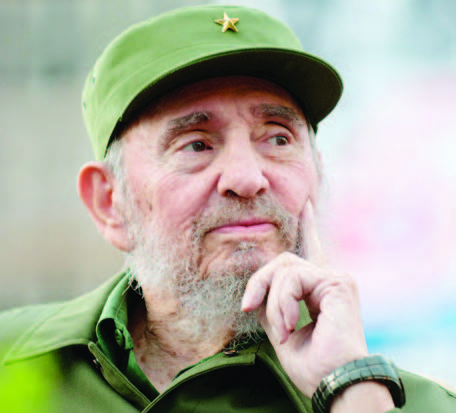
    NEW YORK (TIP): Fidel Castro, Cuba’s former president and leader of the Communist revolution, has died aged 90, state TV has announced. It provided no further details.

    Fidel Castro ruled Cuba as a one-party state for almost half a century before handing over the powers to his brother Raul in 2008. His supporters praised him as a man who had given Cuba back to the people. But his opponents accused him of brutally suppressing opposition. In April, Fidel Castro gave a rare speech on the final day of the country’s Communist Party congress.

    He acknowledged his advanced age but said Cuban communist concepts were still valid and the Cuban people “will be victorious”. “I’ll soon be 90,” the former president said, adding that this was “something I’d never imagined”.

    “Soon I’ll be like all the others, “to all our turn must come,” Fidel Castro said.

    A Timeline

    1926: Born in the south-eastern Oriente Province of Cuba

    1953: Imprisoned after leading an unsuccessful rising against Batista’s regime

    1955: Released from prison under an amnesty deal

    1956: With Che Guevara, begins a guerrilla war against the government

    1959: Defeats Batista, sworn in as prime minister of Cuba

    1960: Fights off CIA-sponsored Bay of Pigs invasion by Cuban exiles

    1962: Sparks Cuban missile crisis by agreeing that USSR can deploy nuclear missiles in Cuba

    1976: Elected president by Cuba’s National Assembly

    1992: Reaches an agreement with US over Cuban refugees

    2008: Stands down as president of Cuba due to health issues

    (Source: BBC)

  • Pentagon looking for new site for Guantanamo prisoners

    Pentagon looking for new site for Guantanamo prisoners

    MIAMI (TIP): A team of Pentagon officials began scouting sites in Colorado on Tuesday as potential alternatives to hold prisoners from Guantanamo Bay as part of the long-stalled effort to close the controversial detention center on the US base in Cuba.

    The team planned to assess facilities at the Federal Correctional Complex in Florence and the state penitentiary in Canon City as alternatives for a “limited” number of detainees from Guantanamo, said Navy Cmdr. Gary Ross, a Pentagon spokesman. They are looking at what changes would be needed to the facilities in Colorado to detain the prisoners and to hold proceedings for those facing trial by military commission, Ross said.

    The Pentagon team also has also surveyed the Disciplinary Barracks at Fort Leavenworth, Kansas, and the Naval Consolidated Brig in Charleston, South Carolina. President Barack Obama has sought to close Guantanamo since taking office but has been thwarted by Congress, which has banned transferring prisoners to the U.S. and placed restrictions on sending them abroad.

    The Obama administration is seeking to lift the ban but faces opposition in Congress, including from members opposed to moving prisoners to their districts. Human rights groups and detainee advocates say they also object to continuing to hold prisoners indefinitely without charge at any location.

  • US in talks with Pakistan over capping its nuke range

    US in talks with Pakistan over capping its nuke range

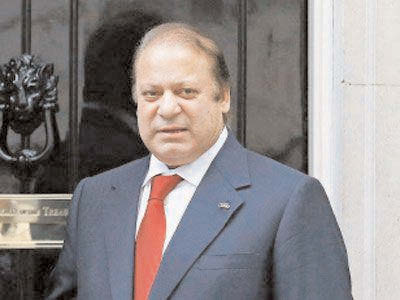
    WASHINGTON (TIP): The Obama administration is exploring a possible civilian nuclear deal with Pakistan ahead of Prime Minister Nawaz Sharif’s visit to Washington later this month, a Washington Post columnist has reported, citing a sole source “familiar with the talks” who said Islamabad has been asked to consider “brackets” relating to the deal.

    Brackets, in diplomatic parlance, are numerous alternative formulations that are negotiated towards an eventual agreement. According to the report, the deal centers around a civilian nuclear agreement similar to the one the United States arrived at with India, in exchange for a Pakistani commitment that would “restrict its nuclear program to weapons and delivery systems that are appropriate to its actual defense needs against India’s nuclear threat.”

    Pakistan might, for example, agree not to deploy missiles capable of reaching beyond a certain range, the report said, citing the source, who indicated that the US might support an eventual waiver for Pakistan by the 48-nation Nuclear Suppliers Group (NSG), the same way it has done for India.

    The Obama administration said it was in “regular contact” with the Government of Pakistan on “a range of issues” as it prepared for the visit on October 22 of Prime Minister Sharif, but declined comment on the specifics of the discussions.

    “The United States urges all nuclear-capable states, including Pakistan, to exercise restraint regarding nuclear weapons and missile capabilities. We encourage efforts to strengthen safety and security measures and continue to hold regular discussions with Pakistan on a range of global issues, including nuclear security, counterterrorism, and international norms,” an administration spokesperson said in a tacit acknowledgement that some sort of dialogue is taking place on the nuclear issue.

    Successive US administrations both under Presidents Bush and President Obama, have knocked down the idea of a deal for Pakistan like the one Washington arrived at with India, saying the background and circumstances surrounding the US-India civilian nuclear agreement was entirely different, and pointing to Pakistan’s record of nuclear proliferation.

    However, President Obama’s recent track record vis-a-vis Iran and Cuba, both regarded for a long time as outlaw nations, suggests there may be some substance to a nuclear outreach towards Pakistan. There is also less pathology about Pakistan in Washington’s official circles, where many veterans have a romanticized recall of Islamabad’s role in the Cold War when it offered its services to Washington, for a price. The strategy helped Pakistan circumvent nuclear non-proliferation roadblocks that the US all too readily winked at.

    In recent months, Pakistan has tried to project itself as a responsible nuclear power, although some of its politicians and generals reflexively brandish the country’s nuclear weapons to assure themselves and their constituents about security against India. “We are a nuclear-armed country and we know how to defend ourselves,” Pakistan’s National Security Advisor Sartaj Aziz boasted recently in a suo motu assertion although no one had talked of a nuclear war.

    While a few regional experts have floated the idea of a nuclear deal for Pakistan in the past, most analysts are aghast at the prospect. It will be “sheer madness wrapped in folly,” said Sumit Ganguly, a South Asia scholar at Indiana University, among several experts who have critiqued Washington frequent free passes to a country that has a reckless history of nuclear proliferation and home-grown terrorism.

    The WaPo report however conceded that inasmuch as Pakistan prizes its nuclear program, “negotiations would be slow and difficult, and it’s not clear that Islamabad would be willing to accept the limitations that would be required.” But, it said, the issue is being discussed quietly in the run-up to Prime Minister Nawaz Sharif’s visit to Washington on October 22.

  • US-Pakistan Nuclear Deal | India is the check to Pakistan, Donald Trump declares

    US-Pakistan Nuclear Deal | India is the check to Pakistan, Donald Trump declares

    WASHINGTON: The Obama administration is exploring a possible civilian nuclear deal with Pakistan ahead of Prime Minister Nawaz Sharif’s visit to Washington later this month, if media reports are to be believed.

    One of Washington’s well-briefed columnists, David Ignatius, has revealed this week the outlines of a nuclear agreement that the US is said to be negotiating with Pakistan. These talks could be at the top of US President Barack Obama’s agenda with Pakistan.

    In a Washington Post column on Wednesday, Ignatius says the US is ready to lift international restrictions against civilian nuclear commerce with Pakistan in return for significant voluntary restraints on its nuclear weapons programme.

    According to the report, the deal centers around a civilian nuclear agreement similar to the one the United States arrived at with India, in exchange for a Pakistani commitment that would “restrict its nuclear program to weapons and delivery systems that are appropriate to its actual defense needs against India’s nuclear threat.”

    Pakistan might, for example, agree not to deploy missiles capable of reaching beyond a certain range, the report said, citing the source, who indicated that the US might support an eventual waiver for Pakistan by the 48-nation Nuclear Suppliers Group (NSG), the same way it has done for India.

    The Obama administration said it was in “regular contact” with the Government of Pakistan on “a range of issues” as it prepared for the visit on October 22 of Prime Minister Sharif, but declined comment on the specifics of the discussions.

    “The United States urges all nuclear-capable states, including Pakistan, to exercise restraint regarding nuclear weapons and missile capabilities. We encourage efforts to strengthen safety and security measures and continue to hold regular discussions with Pakistan on a range of global issues, including nuclear security, counterterrorism, and international norms,” an administration spokesperson said in a tacit acknowledgement that some sort of dialogue is taking place on the nuclear issue.

    Successive US administrations both under Presidents Bush and President Obama, have knocked down the idea of a deal for Pakistan like the one Washington arrived at with India, saying the background and circumstances surrounding the US-India civilian nuclear agreement was entirely different, and pointing to Pakistan’s record of nuclear proliferation.

    In 10 years, Pakistan will have largest N-stockpile after US and Russia, report suggests

    However, President Obama’s recent track record vis-a-vis Iran and Cuba, both regarded for a long time as outlaw nations, suggests there may be some substance to a nuclear outreach towards Pakistan. There is also less pathology about Pakistan in Washington’s official circles, where many veterans have a romanticized recall of Islamabad’s role in the Cold War when it offered its services to Washington, for a price. The strategy helped Pakistan circumvent nuclear non-proliferation roadblocks that the US all too readily winked at.

    In recent months, Pakistan has tried to project itself as a responsible nuclear power, although some of its politicians and generals reflexively brandish the country’s nuclear weapons to assure themselves and their constituents about security against India. “We are a nuclear-armed country and we know how to defend ourselves,” Pakistan’s National Security Advisor Sartaj Aziz boasted recently in a suo motu assertion although no one had talked of a nuclear war.

    While a few regional experts have floated the idea of a nuclear deal for Pakistan in the past, most analysts are aghast at the prospect. It will be “sheer madness wrapped in folly,” said Sumit Ganguly, a South Asia scholar at Indiana University, among several experts who have critiqued Washington frequent free passes to a country that has a reckless history of nuclear proliferation and home-grown terrorism.

    The WaPo report however conceded that inasmuch as Pakistan prizes its nuclear program, “negotiations would be slow and difficult, and it’s not clear that Islamabad would be willing to accept the limitations that would be required.” But, it said, the issue is being discussed quietly in the run-up to Prime Minister Nawaz Sharif’s visit to Washington on October 22.


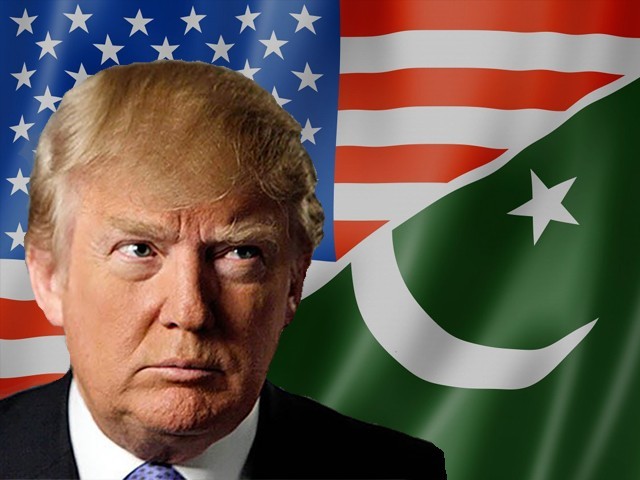
    On an American radio show, Republican presidential hopeful Donald Trump called Pakistan “probably the most dangerous” country in the world today, adding that the only country that can “check” Pakistan is India.

    Pakistan is “a serious problem” because they have nuclear weapons that work and “a lot of them”, just like North Korea and its “mad man”, Trump explained.

    It wasn’t enough that he clubbed Pakistan with North Korea. “India is the check to Pakistan,” continued Trump, adding insult to Pakistan’s injury. “You have to get India involved … They have their own nukes and have a very powerful army. They seem to be the real check … I think we have to deal very closely with India to deal with it (Pakistan),” said Trump, about his foreign policy goals.

  • Cuba dissidents won’t attend US Embassy event

    Cuba dissidents won’t attend US Embassy event

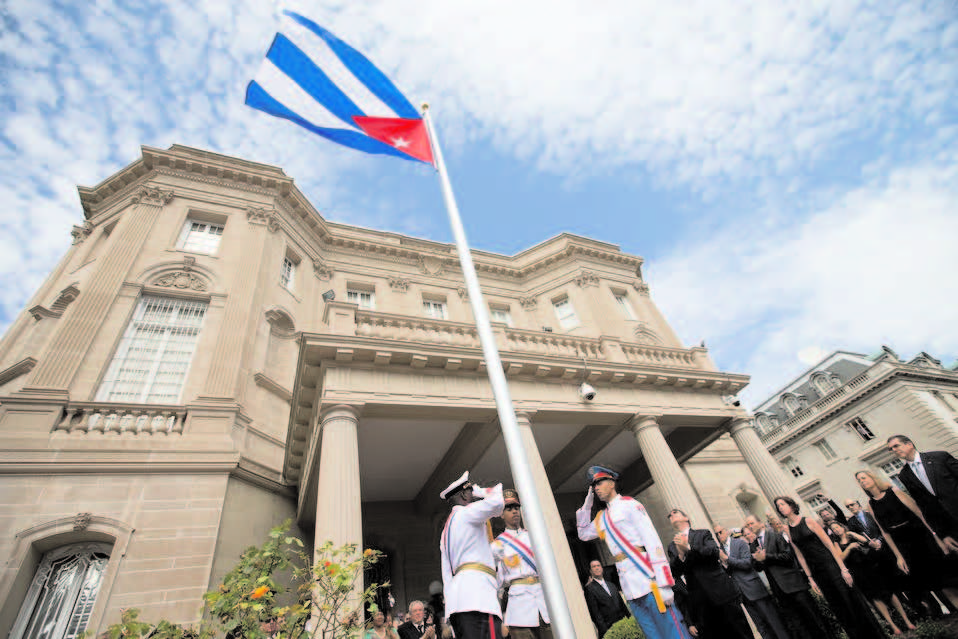
    WASHINGTON (TIP): Cuban dissidents, so long the center of US policy toward the island, won’t be invited to Secretary of State John Kerry’s historic flag-raising at the US Embassy in Havana on Friday, vividly illustrating how US policy is shifting focus to its single-party government. Kerry intends to meet more quietly with prominent activists later in the day, officials said.The Cuban government labels its domestic opponents as traitorous US mercenaries. As the two countries have moved to restore relations, Cuba has almost entirely stopped meeting with American politicians who visit dissidents during trips to Havana.

    That presented a quandary for US officials organizing the ceremony on Friday to mark the reopening of the embassy on Havana’s historic waterfront. Inviting dissidents would risk a boycott by Cuban officials including those who negotiated with the US after Presidents Barack Obama and Raul Castro declared detente on Dec. 17. Excluding dissidents would certainly provoke fierce criticism from opponents of Obama’s new policy, including Cuban-American Republican presidential candidate Marco Rubio.

    Officials familiar with the plans for Kerry’s visit, the first by a sitting U.S. secretary of state to Cuba since World War II, told The Associated Press that a compromise was in the works. The dissidents won’t be invited to the embassy event, but a small group will meet with Kerry at the U.S. chief of mission’s home in the afternoon, where a lower-key, flag-raising ceremony is scheduled.

    “That is a government-to-government moment, with very limited space, by the way, which is why we’re having the reception later in the day at which we can have a cross-section of civil society including some dissidents,” Kerry told the Telemundo network Wednesday evening.

    “The message is, No. 1, that we believe our engaging in direct diplomatic relations with the Cuban government being there, being able to interact with the people of Cuba, will in fact, help the people of Cuba,” he said.

    The dissidents’ presence at the embassy would have risked setting back the new spirit of cooperation the U.S. hopes to engender, according to the officials, who weren’t authorized to speak publicly about internal planning and demanded anonymity. But not meeting them at all, they said, would send an equally bad signal.

    “It wouldn’t be surprising if North American diplomats prioritize contacts with the Cuban government,” said Elizardo Sanchez, head of the Cuban Commission on Human Rights and National Reconciliation, a relatively moderate dissident group. “If we show up, they leave.”

    The Obama administration says it is normalizing ties with Cuba after more than 50 years of hostility failed to shake the communist state’s hold on power. It argues that dealing directly with Cuba over issues ranging from human rights to trade is far likelier to produce democratic and free-market reforms over the long term.

    Key dissidents told the AP late Tuesday that they had not received invitations to any of Friday’s events.

    Dissident Yoani Sanchez’s online newspaper 14ymedio has received no credential for the U.S. Embassy event, said editor Reinaldo Escobar, who is married to Sanchez.”The right thing to do would be to invite us and hear us out despite the fact that we don’t agree with the new U.S. policy,” said Antonio Rodiles, head of the dissident group Estado de SATS.

    In a statement Wednesday, Rubio called the embassy omissions “a slap in the face” to Cuba’s democracy activists.

    “Cuban dissidents are the legitimate representatives of the Cuban people and it is they who deserve America’s red carpet treatment, not Castro regime officials,” Rubio said.

    The cautious approach is consistent with how Obama has handled the question of support for dissidents since he and Castro announced a prisoner swap in December and their intention to create a broader improvement in relations. The process has resulted in unilateral steps by Obama to ease the economic embargo on Cuba and last month’s formal upgrading of both countries’ interests sections into full-fledged embassies.

    When senior diplomat Roberta Jacobson held talks in Havana in January, she met several government critics at the end of her historic trip but was restrained in her criticism of the government. Since then, American politicians have flooded Havana to see the sights, meet the country’s new entrepreneurs and discuss possibly ending the U.S. embargo with leaders of the communist government.

  • Indian Americans Preet Bharara & Rakesh Khurana honored with Carnegie’s ‘Great Immigrant’ award

    Indian Americans Preet Bharara & Rakesh Khurana honored with Carnegie’s ‘Great Immigrant’ award

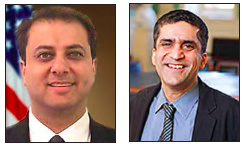
    NEW YORK (TIP): The Carnegie Corporation has announced the 2015 “Great Immigrant”: The Pride of America” awardees. These are the individuals who have helped advance and enlighten our society, culture, and economy. Preet Bharara, U.S. Attorney, Southern District of New York is among 38 eminent personalities selected as 2015 ‘Great Immigrant’ honorees, on the eve of the nation’s birthday on July 4th by Carnegie Corporation.

    The other Indian American awardee, Rakesh Khurana is the Marvin Bower Professor of Leadership Development at Harvard Business School (HBS), professor of sociology in the Faculty of Arts and Sciences (FAS), and co-master of Cabot House and dean of Harvard College.

    “Our founder, Andrew Carnegie, came to this country as the son of impoverished immigrants and grew up to become one of the greatest contributors to American industry and philanthropy,” said Vartan Gregorian, President of the Corporation. “His devotion to U.S. democracy stemmed from his conviction that the new infusion of talent that immigrants bring to our country keeps American society vibrant.”

    The 38 Great Immigrants honored this year come from more than 30 countries around the world and represent leadership in a wide range of professions.

    They include:

    • Preet Bharara S. Attorney, Southern District of New York (India)
    • Geraldine Brooks Pulitzer Prize-winning Author, Journalist (Australia)
    • Thomas Campbell Director and CEO, The Metropolitan Museum of Art (England)
    • Rabia Chaudry Attorney, Civil Rights Activist (Pakistan)
    • Mica Ertegun Interior Designer (Romania)
    • Stanley Fischer Economist; Vice Chair, Board of Governors, Federal Reserve System (Israel)
    • Jonathan Hunt Fox News, Chief Correspondent (Canada)
    • Malek Jandali Composer, Pianist (Syria)
    • Rakesh Khurana Professor, Dean, Harvard College (India)
    • Marie-Josée Kravis Economist, Philanthropist (Canada)
    • Nastia Liukin Olympic Medal-winning Gymnast (Russia)
    • Bette Bao Lord Author, Human Rights Advocate, Philanthropist (China)
    • Ali Malekzadeh President, Roosevelt University, Chicago (Iran)
    • Silvio Micali Turing Award-winning Professor of Computer Engineering (Italy)
    • Lorne Michaels Peabody Award-winning TV Producer (Canada)
    • Franziska Michor Vilcek Prize-winning Professor, Computational Biology (Austria)
    • Anchee Min Author (China)
    • Sharmin Mossavar-Rahmani Philanthropist; Chief Investment Officer, Private Wealth Management Group, Goldman Sachs (Iran)
    • Firouz Naderi Director, Solar System Exploration, NASA Jet Propulsion Laboratory (Iran)
    • Azar Nafisi Author, Scholar (Iran)
    • Craig Nevill-Manning Engineering Director, Google (New Zealand)
    • Maria Otero U.S. Under Secretary of State for Civilian Security, Democracy, and Human Rights (Bolivia)
    • Eddie Pérez Bullpen Coach, Atlanta Braves (Venezuela)
    • Ilana Rovner Judge, U.S. Court of Appeals, Seventh Circuit (Latvia)
    • Arturo Sandoval Grammy Award-winning Jazz Trumpeter (Cuba)
    • Madhulika Sikka Vice President, Executive Editor, .Mic (India)
    • Thomas C. Südhof Nobel Prize-winning Neuroscientist (Germany)
    • Antonio M. TagubaS. Army Major General, Retired (Philippines)
    • Ann Telnaes Pulitzer Prize-winning Political Cartoonist (Sweden)
    • Thalía Singer, Actress (Mexico)
    • Tuyen Tran Vilcek Prize-winning Fashion Designer (Vietnam)
    • Abraham Verghese Physician, Professor, Author (Ethiopia)
    • Eugene Volokh Professor, Legal Scholar, Blogger (Ukraine)
    • Arieh Warshel Nobel Prize-winning Biochemist (Israel)
    • Raffi Yessayan Judge, Massachusetts Superior Court (Lebanon)
  • US UNVEILS NEW TRAVEL AND TRADE RULES ON CUBA

    US UNVEILS NEW TRAVEL AND TRADE RULES ON CUBA

    WASHINGTON (TIP): The United States rolled out a sweeping set of measures on January 15 to significantly ease the half-century-old embargo against Cuba, opening up the country to expanded travel, trade and financial activities.

    Defying hardline critics in Congress, President Barack Obama made good on a commitment he made a month ago to begin loosening some US economic sanctions against the communist-ruled island as part of an effort to end decades of hostility.

    The treasury and commerce departments issued a package of new rules that will allow US exports of telecommunications, agricultural and construction equipment, permit expanded travel to Cuba and authorize some kinds of banking relations.

    It was the first tangible US step to implement the changes Obama pledged on December 17 when he and Cuban President Raul Castro announced plans to restore diplomatic relations between the old Cold War foes.

    “Today’s announcement takes us one step closer to replacing out-of-date policies that were not working and puts in place a policy that helps promote political and economic freedom for the Cuban people,” US treasury secretary Jacob Lew said in a statement. The new regulations, which take effect on Friday, will allow Americans to travel to Cuba for any of a dozen specific reasons, including family visits, education and religion, without first obtaining a special license from the US government, as was the case.

    Though general tourism will still be banned, those US travelers who do visit will be allowed to bring back small amounts of the Cuban cigars that are highly rated by aficionados.

  • Crucial spy in Cuba paid a heavy Cold War price

    Crucial spy in Cuba paid a heavy Cold War price

    WASHINGTON (TIP): He was, in many ways, a perfect spy — a man so important to Cuba’s intelligence apparatus that the information he gave to the Central Intelligence Agency paid dividends long after Cuban authorities arrested him and threw him in prison for nearly two decades.

    Rolando Sarraff Trujillo has now been released from prison and flown out of Cuba as part of the swap for three Cuban spies imprisoned in the United States that President Obama announced Wednesday.

    Mr Obama did not give Mr Sarraff’s name, but several current and former American officials identified him and discussed some of the information he gave to the CIA while burrowed deep inside Cuba’s Directorate of Intelligence.

    Mr Sarraff’s story is a chapter in a spy vs. spy drama between the United States and Cuba that played on long after the end of the Cold War and years after Cuba ceased to be a serious threat to the United States. The story — at this point — remains just a sketchy outline, with Mr Sarraff hidden from public view and his work for the CIA still classified.
    The spy games between the two countries lost their urgency after the fall of the Soviet Union, but the spies have stuck to their roles for more than two decades: pilfering documents, breaking codes and enticing government officials to betray their countries. “There were a number of people in the Cuban government who were valuable to the U.S., just as there were a number of people in the U.S. government who were helpful to the Cubans,” said Jerry Komisar, who ran C.I.A. clandestine operations in Cuba during the 1990s.

    With Wednesday’s exchange of imprisoned spies and the leaders of the United States and Cuba talking in a substantive way for the first time in more than 50 years, some people who were part of the spy games between the two countries now wonder just how much it was worth it.

    In retrospect, Mr Komisar said, there was little need for American intelligence services to devote so much attention to Cuba — a country with a decrepit military that he said posed no strategic threat to the United States since the Soviet Union pulled its missiles off the island in 1962.

    After decades of cloak-and-dagger activities between the two countries, he said, it turned out to be “a draw.”

    “You have to ask yourself, ‘To what end?’ ” he said.

    Before he was arrested in November 1995, Mr Sarraff worked in the cryptology section of Cuba’s Directorate of Intelligence and was an expert on the codes used by Cuban spies in the United States to communicate with Havana. According to members of his family, he had studied journalism at the University of Havana and had the rank of first lieutenant at the intelligence directorate.

    It is not clear when Mr Sarraff, now 51, began working for the CIA Chris Simmons, who was the chief of a Cuban counterintelligence unit for the

    Defense Intelligence Agency from 1996 to 2004, said that he worked with another man — Jose Cohen, one of Mr Sarraff’s childhood friends — to pass encryption information to the C.I.A. that led to the arrest of a number of Cuban agents operating in the United States.

    Mr Simmons said that Cuba’s spy service regularly communicated with its agents in America using encrypted messages sent over shortwave radio. After Mr Sarraff helped the United States crack the codes, he said, the FBI was able to arrest Cuban spies years after Mr Sarraff was discovered and put in prison in Cuba.

    “When Roly was providing information, he was giving us insights about where there were weaknesses in the Cuban encryption system,” Mr Simmons said.

    Cuban authorities arrested Mr Sarraff in November 1995 and put him on trial for espionage, revealing state secrets and other acts against state security. According to one senior American official, the Cuban government learned of his plans to defect when he was on assignment in a third country and recalled him to Cuba and put him in jail.

    According to members of Mr Sarraff’s family, he went to work one day in 1995 and never came home. Cuban officials told the family for more than a week that Mr Sarraff was on a job in the country’s interior and would be back soon.

    He was sentenced to 25 years in prison. Mr Simmons, the former D.I.A. officer, said he believed that the reason Mr Sarraff was not executed was because his parents were officials in the Cuban government. “He has always maintained his innocence” his sister, Vilma Sarraff, said by telephone from Spain. She said that Mr Sarraff’s daughter was 7 when he was arrested.

  • Pope Benedict helped free American from Cuba

    Pope Benedict helped free American from Cuba

    VATICAN CITY (TIP): Pope Francis rightly got credit for helping bring the US and Cuba together and free US government subcontractor Alan Gross. But it was actually Francis’ predecessor, Emeritus Pope Benedict XVI, who made the first high-level Vatican manoeuver to release Gross, spurred in part by an unlikely group of papal lobbyists.

    The American Jewish Committee was one of several Jewish groups that approached the Vatican in the months before Benedict’s March 2012 visit to Cuba to ask that the German pontiff raise the issue on humanitarian grounds with President Raul Castro, The Associated Press has learned.

    “I was told to rest assured that it would be and that it was raised,” the AJC’s Rabbi David Rosen told the AP on Thursday.

    An official familiar with the Holy See’s diplomacy confirmed that Benedict did indeed discuss the Gross case with Castro during their March 27, 2012, meeting in Havana. That encounter, followed a day later by a tete-a-tete between Benedict and Fidel Castro, came exactly two years before Francis and President Barack Obama discussed the Gross detention at the Vatican.

    Soon thereafter, Francis wrote letters to both Obama and Castro, asking them to resolve the “humanitarian questions of common concern, including the situation of some prisoners,” and offering up the Vatican as a facilitator to seal the deal to restore relations, the Vatican said December 17.

    The negotiations were concluded at the Vatican in October in the presence of Francis’ top diplomat, Cardinal Pietro Parolin, who until 2013 was the Vatican’s ambassador to Cuba’s top ally, Venezuela.

    Gross was released Wednesday and returned home to the US in a prisoner swap for three Cubans held as spies, part of an historic decision to normalize diplomatic ties severed during a half-century of Cold War acrimony.

  • Why did I quit being a Republican?

    Why did I quit being a Republican?

    It is one of the most difficult decisions of my life to quit being a Republican. The more people I talk to, the more confident I feel that the GOP has completely lost its anchor values it was built upon, and the extremists have crept in and ruined it beyond repair. I have written over a hundred pieces about this, and all of them are listed in the links at www.TheGhousediary.com and http://CenterforAmericanPolitics.blogspot.com Finally, I have chosen to go independent.

    I am an American, and my loyalty is to America, and not the party. I am neither a Republican nor will be a Democrat. There are enough independents out there who choose the candidates based on the good they can do for America, all of America and not just a segment of America, I would rather be free than bounded by party politics. As an independent, I will be voting for Wendy Davis (D), Alameel (D), Marchant (R) and will be selective with local candidates.

    Why did I choose to go independent?

    I have been debating about remaining with Republican party ever since Bush and his cronies lied to the American Public about WMD, and in the process terrorized and killed nearly half a million innocent Iraqi’s and Afghans. If an individual wraps bombs to his waist and kills a bus load of people, we rightfully call him a terrorist; however, if a head of a democratic nation wraps missiles on our jets and bombs hundreds of thousands of people, we let him hide behind the word “war”, as if it makes him less of a terrorist.” It went in a different direction. The debates in mid-term 2006 elections and again in 2008 were shameful. There was no Republican in the forefront who would talk about peace – everyone was eager to bomb and terrorize others; it was sickening to hear McCain, Romney and the other insignificant men and women in the Presidential debates.

    They wanted Americans to support them based on hating and harming someone or the other, it was demoralizing to hear them all. How can we fall for such stupidity, have we lost our ability to see through the destruction they were causing to America? Millions of Americans lost their jobs causing thousands of divorces, home and business foreclosures, people lost insurance and several died for lack of it.

    Half a million innocent foreigners were massacred for no good reason, and thousands of women were put on the street to sell flesh. Thanks to the immorality caused by our president. Middle East was a pretty stable region except the Israel Palestine conflict – the Bush invasion gave birth to every damned conflict and evil we see including the ISIS. The Nation had a surplus when Clinton left, and in 8 years Bush screwed America by piling up $10 billion in budget deficit. Yuck, there was no accountability for the wrong doing.

    I shudder at the thought of Romney Presidency, he was too eager to Bomb Iran, too anxious to please his buddies Netanyahu and McCain. Of course he had nothing to lose and does not give a flip about the 47% of the Americans. He would have completed the destruction of America that Bush had left unfinished. There would have been massive unemployment, divorces, home and business foreclosures, increased crime rate and an unbearable budget deficit.

    Yet there was no significant dissent among Republicans, what do I take – that Republicans are war mongers? They are a bunch of gutless obedient conformists, and I am not and don’t belong there. I was sick of being a lone ranger in peace meetings, interfaith meetings and other community service meetings, peace talks are anathema to them and rarely do you find them in peace meetings. They don’t know nothing about biology or mathematics or polls and have made the dumbest remarks about these issues.

    They are opposed to same sex marriages – opposed to women making their own decisions about abortion. Do they know the meaning of liberty? I mean the hot heads representing the party, and not the good for nothing conformists. The turning point was when Republicans voted against equal pay for women. That is gutsy and hope the women will remember that. They claim to stick to the constitution which is the biggest joke of the century and goes to prove their hypocrisy. Facebook is loaded with their bigotry- check out the postings of Republicans undermining the president in discreet language.

    This week, they are showing their loyalty to a foreign leader over our president, that is disgustingly unpatriotic. Shame on them. This president has pulled the nation from the doldrums, despite the blatant opposition of Mitch McConnell and ugly acts of Ted Cruz and his racist father, blatantly going against him by declaring that he will oppose every bill Obama proposes and shutting down the government.

    Did any of the Republicans question that racist father Cruz who wanted to send Obama to Kenya; did anyone tell him to go to Cuba instead? Shame on us to a give a pass to these radicals. Thank God for Obama, gas prices are down and the average service person can afford to pay for a tank full of Gas. Unemployment will be low and by the time Obama is done he would have fully restored the economic prosperity that Americans enjoyed during the Clinton era, to be continued by another Clinton.

    Obama will also leave a legacy of updated roads and bridges to last for two more decades. We have to be open to immigration; this nation was built on immigrants. Sometimes the stinky Republican attitudes ( if the majority of Republicans did not approve that attitude, they did not condemn it either) and demonstrators at the border makes me wish, that the Native Americans had put an electric fence around America to prevent Columbus and his hordes from illegally entering America. Most of the mistakes made by our government are when the house, senate and the administration are all from the same party.

    If we can wise up for the sake of America, and give the Senate to Democrats and house to Republicans, but not give them big majorities, the SOB’s will become arrogant. Let them fight over the bills, debate extensively than slam dunk with a majority or go against each other. At the end, they will make good decisions for America with the checks and balances we build, it is in our hands. Finally, I have chosen to go independent. I am an American, and my loyalty is to America, and not the party.

    I am neither a Republican nor will be a Democrat. There are enough independents out there who choose the candidates based on the good they can do for America, all of America and not just a segment of America, I would rather be free than bounded by party politics. As an independent, I will be voting for Wendy Davis (D), Alameel (D), Marchant (R) and will be selective with local candidates. References, links to my articles on Obama, Romney, and some of the many stupid things Republicans have said will all be at : http://centerforamericanpolitics.blogspot.com/ and www.TheGhousediary.com

    THINGS REPUBLICANS HAVE SAID ARE HARD TO DIGEST

    ● “I think the right approach is to accept this horribly created – in the sense of rape – but nevertheless a gift in a very broken way, the gift of human life, and accept what God has given to you… rape victims should make the best of a bad situation.” Rick Santorum
    ● “Some girls rape easy.” Roge Rivard
    ● “If it’s a legitimate rape, the female body has ways of shutting that whole thing down” Todd Akin
    ● “As president, I will create 12 million new jobs.” -and within 45 minutes he said this, “Government does not create jobs. Government does not create jobs.” – Mitt Romney
    ● “White men who are in male-only clubs are going to do great in my presidency,” according to an audio recording of his comments provided to CNN. […]”Lindsey Graham,
    ● “I know the human being and fish can coexist peacefully.” ~ George W. Bush
    ● “Carbon dioxide is portrayed as harmful. But there isn’t even one study that can be produced that shows that carbon dioxide is a harmful gas.” ~ Rep. Michele Bachmann
    ● “Feminism was established so as to allow unattractive women easier access to the mainstream of society.” ~ Rush Limbaugh
    ● “I went to a number of women’s groups and said: ‘Can you help us find folks,’ and they brought us whole binders full of women.” ~ Mitt Romney
    ● “The feminist agenda is not about equal rights for women. It is about a socialist, anti-family political movement that encourages women to leave their husbands, kill their children, practice witchcraft, destroy capitalism and become lesbians.” ~ Pat Robertson ( do you remember a similar statement from a Saudi Cleric? He thought if women drive, they would become Lesbians – How stupid are these guys!
    ● “If this were a dictatorship, it’d be a heck of a lot easier, just so long as I’m the dictator.” ~ George W. Bush
    ● “Abortion Leads To Cancer, Birth Defects, And Everything Else” – Richard Burgess
    ● “Evolution Is (Still) Out To Get Jesus” – Marco Rubio
    ● “Good Christians, like slaves and soldiers, ask no questions.” ~ Jerry Falwell
    ● “How did [the Holocaust] happen? Because God allowed it to happen… because God said, ‘My top priority for the Jewish people is to get them to come back to the land of Israel.’ Hagee
    ● http://www.addictinginfo.org/ 2012/12/16/60-ridiculously-stupidrepublican- quotes/
    ● http://www.politicususa.com/ 2012/12/29/top-ten-dumbest-republicanquotes- 2012.html
    ● http://www.uselections.com/tx/tx.htm
    ● http://www.politics1.com/tx.htm –
    ● Quiz- How Republican or Democrat are you?
    ● http://www.isidewith.com/political-quiz

    Mike GhouseMike Ghouse : The author is a community consultant, social scientist, thinker, writer, news maker, and a speaker on Pluralism, Interfaith, Islam, politics, terrorism, human rights, India, Israel-Palestine and foreign policy.

  • Fund to fight Ebola has $100,000 in bank: UN chief

    Fund to fight Ebola has $100,000 in bank: UN chief

    UNITED NATIONS (TIP): Secretary general Ban Kimoon said that a trust fund he launched to provide fast and flexible funding for the fight against Ebola has only $100,000 in the bank. UN spokesman Stephane Dujarric said the trust fund is part of a nearly $1 billion U.N. appeal for humanitarian needs in Liberia, Sierra Leone and Guinea, the three countries hardest-hit by the deadly virus.

    Secretary-General Ban urged the international community to respond to the appeal immediately, which he said will enable the United Nations “to get ahead of the curve and meet our target of reducing the rate of transmission by Dec. 1.” The World Health Organization said Thursday that the Ebola death toll will reach more than 4,500 this week, from among 9,000 people infected by the deadly disease. It has projected that there could be between 5,000 and 10,000 new cases a week in early December without urgent action.

    Dujarric said donors may choose to give directly to a UN agency or a specific country, or they may channel their contribution through the trust fund which will allow the UN to allocate the funds where they are most urgently required at the time. The secretary-general said the trust fund had received about $20 million, but the United Nations later clarified that the $20 million has been pledged, and only $100,000 has actually been received. As of Thursday, Dujarric said the wider $1 billion UN appeal had received $376 million in pledges, about 38% of the amount sought. “Ebola is a huge and urgent global problem that demands a huge and urgent global response,” Ban told reporters.

    He said dozens of countries “are showing their solidarity,” singling out the US, Britain, France, Canada, Germany, Poland, Japan, South Korea, Cuba and China. But he said it’s time that countries that have “the capacity” — which he didn’t identify — provide support. The secretary general said he liked the idea of greater public support for the fight against Ebola, including the possibility of a fundraising concert promoted by someone like U2 singer Bono.

  • India holds its ground, WTO fails to reach $1 trillion deal on customs rules

    India holds its ground, WTO fails to reach $1 trillion deal on customs rules

    GENEVA (TIP): The World Trade Organization failed on July 31 to reach a deal to standardise customs rules, which would have been the first failed global trade reform in two decades but was blocked by India’s demands for concessions on agricultural stockpiling. “We have not been able to find a solution that would allow us to bridge that gap,” WTO director-general Roberto Azevedo told trade diplomats in Geneva just two hours before the final deadline for a deal. “Of course it is true that everything remains in play until midnight, but at present there is no workable solution on the table, and I have no indication that one will be forthcoming.”

    The deadline passed without a breakthrough. WTO ministers had already agreed the global reform of customs procedures known as “trade facilitation” last December, but it needed to be put into the WTO rule book by July 31. Most diplomats saw that as rubberstamping a unique success in the WTO’s 19 year history, which according to some estimates would add $1 trillion and 21 million jobs to the world economy, so they were shocked when India unveiled its veto.

    Trade experts say on Thursday’s failure is likely to end the era of trying to cobble together global trade agreements and to accelerate efforts by smaller groups of likeminded nations to liberalise trade among themselves. India has been vocal in opposing such moves, making its veto even more surprising. “Today’s developments suggest that there is little hope for truly global trade talks to take place,” said Jake Colvin at the National Foreign Trade Council, a leading US business group.

    “The vast majority of countries who understand the importance of modernizing trade rules and keeping their promises will have to pick up the pieces and figure out how to move forward.” Some nations have already discussed a plan to exclude India from the agreement and push ahead regardless, and the International Chamber of Commerce urged officials to “make it happen.” “Our message is clear. Get back to the table, save this deal and get the multilateral trade agenda back on the road to completion sooner rather than later,” ICC secretary general John Danilovich said.

    US secretary of state John Kerry, on a visit to New Delhi, had earlier said he was hopeful that differences between India and much of the rest of the world could be resolved. But after Azevedo’s speech, US ambassador to the WTO Michael Punke was downbeat. “We’re obviously sad and disappointed that a very small handful of countries were unwilling to keep their commitments from the December conference in Bali, and we agree with the Director- General that that action has put this institution on very uncertain new ground,” Punke told reporters.

    India had insisted that, in exchange for signing the trade facilitation agreement, it must see more progress on a parallel pact giving it more freedom to subsidise and stockpile food grains than is allowed by WTO rules. It got support from Cuba, Venezuela and Bolivia. India’s new nationalist government has insisted that a permanent agreement on its subsidised food stockpiling must be in place at the same time as the trade facilitation deal, well ahead of a 2017 target set last December in Bali. Kerry, whose visit to India was aimed at revitalising bilateral ties but was overshadowed by the standoff, said the United States understood India’s position that it needs to provide food security for its poor but India would lose out if it refused to maintained its veto.

    Deal without India?
    Diplomats say India could technically attract a trade dispute if it caused the deal to collapse, although nobody wanted to threaten legal action at this stage. The summer break will give diplomats time to mull options, including moving ahead without India. Technical details would still have to be ironed out, but there was a “credible core group” that would be ready to start talking about a such a deal in September, a source involved in the discussions said.

    “What began as a murmur has become a much more active discussion in Geneva and I think that there are a lot of members in town right now that have reached the reluctant conclusion that that may be the only way to go,” he said. An Australian trade official with knowledge of the talks said a group of countries including the United States, European Union, Australia, Japan, Canada and Norway began discussing the possibility in Geneva on Wednesday afternoon. New Delhi cannot be deliberately excluded, since that would mean other countries slowing down containers destined for India, but if it becomes a “free-rider” it will add another nail in the coffin of attempts to hammer out global trade reform.

    Trade diplomats had previously said they were reluctant to consider the idea of the allbut- India option, but momentum behind the trade facilitation pace means it may be hard to stop. Many countries, including China and Brazil, have already notified the WTO of steps they plan to take to implement the customs accord immediately. Other nations have begun bringing the rules into domestic law, and the WTO has set up a funding mechanism to assist.

    But WTO head Azevedo said he feared that while major economies had options open to them, the poorest would be left behind. “If the system fails to function properly then the smallest nations will be the biggest losers,” he said. “It would be a tragic outcome for those economies — and therefore a tragic outcome for us all.”

  • American who hijacked jet to Cuba in the 1980s gets 20 years in prison

    American who hijacked jet to Cuba in the 1980s gets 20 years in prison

    MIAMI(TIP): An American who returned from Cuba decades after hijacking a jetliner to the communist island was sentenced on Thursday to 20 years in US prison but will be eligible for early release on parole, an acknowledgement by prosecutors of the years he spent behind bars in Cuba. US district judge K Michael Moore imposed the sentence on Thursday on William Potts Jr, 57, for the 1984 hijacking of the Piedmont Airlines flight en route from New York to Miami. Potts pleaded guilty to a kidnapping charge, which was substituted by prosecutors for a previous air piracy charge that would have required Potts to serve a minimum of 20 years.

    This way, Potts should get out on parole after serving almost seven years, or one-third of the overall sentence. Assistant US attorney Maria Medetis said that was the government’s way of giving Potts credit for 13 years he served in Cuba — the Combinado del Este Prison near Havana that Potts’ lawyer, Robert Berube, described as a “hellhole”. “He did an unbelievable amount of time in a very bad place,” Berube said. Potts apologized in court and said he is no longer the self-described angry black militant, calling himself “Lt Spartacus,” who claimed in a note to a flight attendant that he planned to blow up the flight unless it was diverted to Cuba.

    Potts returned to the US last year hoping to resolve the case so he could spend time with his two children, who moved from Cuba to this country earlier. “I changed a long time ago, not just because I’m here before you,” Potts told the judge. “I promise you’ll never regret this if you give me a chance.” Moore, who could have put Potts behind bars for life, said prosecutors made a major concession by filing the reduced charge to give Potts a relatively light sentence. “This is a changed defendant and a remorseful defendant,” Moore said.

    Parole has been abolished in the federal system, but it still applies for Potts because his crime was committed so long ago. Potts was arrested by Cuban authorities as soon as the Piedmont Airlines jetliner landed in Cuba in March 1984. He was sentenced to 15 years behind bars, ultimately serving 13 years before his release. In previous interviews, Potts said he thought he’d be welcomed as a hero and given training as a guerrilla. After his release, he lived quietly east of Havana until last year when he decided to return to the US to resolve the charges here.”I hoped that we could work this out. That’s why I came back of my own accord,” Potts said in court. “Your honor, I didn’t get away with anything.”

  • Colombia, ELN guerrillas launch peace process

    Colombia, ELN guerrillas launch peace process

    BOGOTA (TIP): Colombia’s government and the country’s second largest guerrilla group, the National Liberation Army, announced Tuesday they have opened peace talks, with a tense presidential election just days away. In a joint statement released by the government, the two sides said they have been holding exploratory talks since January “with the objective of agreeing on the agenda and design of the process to make viable the end of the conflict and build the peace.”

    The government already is in the midst of peace talks with the Revolutionary Armed Forces of Colombia (FARC), Colombia’s largest rebel group, which were launched in November 2012. No date or place was given for the next set of talks with the National Liberation Army, or ELN, though Ecuador’s president Rafael Correa said Tuesday his country was ready to “provide the facilities.” President Juan Manuel Santos said they would be no different than those being held with the FARC.

    The process would involve the laying down of arms, an agenda with specific points, and talks held outside the country, he said. “The political responsibility for this new peace effort falls exclusively on my shoulders and on no one else’s,” Santos said. “A peace process that includes both the FARC and the ELN is the best guarantee … that this conflict is ended for good, and that it will never be repeated.”

    The joint statement said the two sides have agreed to discuss the victims of the conflict and the rebel group’s “participation in society.” “The rest will have to be agreed on” at a later time, the statement said. UN chief Ban Ki-moon said he welcomed the start of talks with the ELN. “Combined with the progress already achieved in the ongoing talks with the Revolutionary Armed Forces of Colombia (FARC), the Secretary- General hopes that this new development will contribute to ending the hemisphere’s longest armed conflict and to building sustainable peace for the Colombian people,” he said in a statement.

    The surprise announcement comes as Santos, who is seeking a second term, finds himself in a close run-off election on Sunday. Opposition candidate Oscar Ivan Zuluaga has made the peace talks the main point of contention in the race. He called the timing of the announcement of talks with the ELN “suspicious,” saying it showed the “desperate attitude” of the government to influence voters.

    The FARC, meanwhile, welcomed the ELN’s talks with the government, calling the announcement “very important news for peace.” “We consider them (the talks) positive and we hope that they proceed in a spirit of peace and not in an electoral spirit,” FARC negotiator Andres Paris told AFP in Havana. Both sets of talks aim to end a leftist insurgency that has afflicted Colombia for half a century, claiming the lives of more than 220,000 people and uprooting another five million. The FARC has between 7,000 and 8,000 fighters, according to the army. The ELN has another 2,000 or so combatants under arms. As in the talks with the FARC, several countries will act as guarantors of the peace process, including Cuba, Chile, Ecuador, Norway and Venezuela.

    “The message is one of a new opportunity, a historic event,” said Fabrizio Hochschild, the head of the UN delegation in Colombia. “It’s very important because it completes the panorama of peace,” said Jorge Alberto Restrepo, an analyst with the Colombian think tank Cerac. “One could not have an internal conflict that is resolved with the FARC but continues with the ELN.”

    It is the third attempt at a negotiated peace with the ELN, after two failed efforts under the governments of Cesar Gaviria (1990-1994) and Alvaro Uribe (2002-2010). After the government embarked on peace talks with the FARC — their fourth attempt — the ELN’s leadership said it was ready to join the peace process. Operating mainly in the north of the country along the border with Venezuela, the ELN recently focused on fighting “the looting of natural resources” by multinational companies. It has pursued a campaign of sabotage against oil and mining installations, and has taken engineers and other workers hostage. Unlike the FARC, the ELN has not publicly.

  • Time to start new US-Cuba relations: US commerce chief

    Time to start new US-Cuba relations: US commerce chief

    HAVANA (TIP): The head of the US chamber of commerce said on May 20 the time had come to start a new chapter in relations between Cuba and the United States. “For too long, the relationship between our nations has been defined by our differences and shackled by our past,” Thomas Donohue said on a visit to the communist-run country.

    “It does not have to be that way. It’s time to begin a new chapter in US-Cuban relations. And the time to begin is now.” Washington has had an economic embargo clamped on Cuba since 1962, and the two have never moved off a cold war footing in their ties.

  • Cuban musician Juan Formell of Los Van Van dies

    Cuban musician Juan Formell of Los Van Van dies

    HAVANA (TIP): Cuban musician Juan Formell, who for more than four decades was the driving force behind the big band salsa orchestra Los Van Van, died May 1. He was 71. An anchor on Cuban state television said Formell passed “suddenly” but did not give a cause of death.

    Formell received a Latin Grammy in 2013 for excellence, on top of another one in 1999 recognizing the album “Llego … Los Van Van.” “My life has been entirely dedicated to music and only makes sense when people make it theirs and enjoy it,” he said upon receiving the award last year.

    Born Juan Climaco Formell Cortina on Aug. 2, 1942, he was a band director, bassist, composer, singer and producer over the course of his long career. Slender and quick to smile, Formell first learned music at the feet of his father, Francisco, a flautist and pianist. As a young man he joined various important musical groups, collaborating with Guillermo Rubalcaba, Carlos Faxas’ orchestra and the Reve group in 1967, where he made significant contributions such as the use of the electric bass and keyboards.

    In 1969, he created Los Van Van, which became Cuba’s most famous big band orchestra and whose danceable tunes attracted a wide following on the island and overseas. The lyrics of his songs told the social history of the island and reflected Cubans’ joys and concerns, always with a sense of humor and a picaresque touch. Formell also set poems by the poet Nicolas Guillen to music and composed scores for the theater and cinema. Many Cuban big bands that followed were heavily influenced by his sound.

  • US secretly created ‘Cuban Twitter’ to stir unrest

    US secretly created ‘Cuban Twitter’ to stir unrest

    WASHINGTON (TIP): In July 2010, Joe McSpedon, a US government official, flew to Barcelona to put the final touches on a secret plan to build a social media project aimed at undermining Cuba’s communist government. McSpedon and his team of high-tech contractors had come in from Costa Rica and Nicaragua,Washington and Denver.

    Their mission — to launch a messaging network that could reach hundreds of thousands of Cubans. To hide the network from the Cuban government, they would set up a byzantine system of front companies using a Cayman Islands bank account, and recruit unsuspecting executives who would not be told of the company’s ties to the US government. McSpedon didn’t work for the CIA.

    This was a programme paid for and run by the US Agency for International Development, best known for overseeing billions of dollars in US humanitarian aid. According to documents obtained by Associated Press and multiple interviews with people involved in the project, the plan was to develop a bare-bones “Cuban Twitter,” using cellphone text messaging to evade Cuba’s strict control of information and its stranglehold restrictions over the Internet.

    In a play on Twitter, it was called ZunZuneo — slang for a Cuban hummingbird’s tweet. Documents show the US government planned to build a subscriber base through “non-controversial content”— news messages on soccer, music, and hurricane updates. Later when the network reached a critical mass of subscribers, perhaps hundreds of thousands, operators would introduce political content aimed at inspiring Cubans to organize “smart mobs” — mass gatherings called at a moment’s notice that might trigger a Cuban Spring, or, as one USAID document put it, “renegotiate the balance of power between the state and society.”

    At its peak, the project drew in more than 40,000 Cubans to share news and exchange opinions. But its subscribers were never aware it was created by the US government, or that American contractors were gathering their private data in the hope that it might be used for political purposes. “There will be absolutely no mention of United States government involvement,” according to a 2010 memo from Mobile Accord, one of the project’s contractors. “This is absolutely crucial for the long-term success of the service and to ensure the success of the mission.”

    The programme’s legality is unclear — US law requires that any covert action by a federal agency must have a presidential authorization. Officials at USAID would not say who had approved the programme or whether the White House was aware of it. McSpedon, the most senior official named in the documents obtained by the AP, is a mid-level manager who declined to comment. USAID spokesman Matt Herrick said the agency is proud of its Cuba programmes and noted that congressional investigators reviewed them last year and found them to be consistent with US law. “USAID is a development agency, not an intelligence agency, and we work all over the world to help people exercise their fundamental rights and freedoms, and give them access to tools to improve their lives and connect with the outside world,” he said.

    “In the implementation,” he added, “has the government taken steps to be discreet in nonpermissive environments? Of course. That’s how you protect the practitioners and the public. In hostile environments, we often take steps to protect the partners we’re working with on the ground. This is not unique to Cuba.” But the ZunZuneo programme muddies those claims, a sensitive issue for its mission to promote democracy and deliver aid to the world’s poor and vulnerable — which requires the trust of foreign governments.

    “On the face of it there are several aspects about this that are troubling,” said Sen Patrick Leahy, D-Vt. and chairman of the Appropriations Committee’s State Department and foreign operations subcommittee. “There is the risk to young, unsuspecting Cuban cellphone users who had no idea this was a US government-funded activity. There is the clandestine nature of the programme that was not disclosed to the appropriations subcommittee with oversight responsibility.

    And there is the disturbing fact that it apparently activated shortly after Alan Gross, a USAID subcontractor who was sent to Cuba to help provide citizens access to the Internet, was arrested.” Associated Press obtained more than 1,000 pages of documents about the project’s development. The AP independently verified the project’s scope and details in the documents — such as federal contract numbers and names of job candidates — through publicly available databases, government sources and interviews with those directly involved in ZunZuneo.

  • 2013 — THE DEAR DEPARTED

    2013 — THE DEAR DEPARTED

    Renowned film actor Farooq Sheikh passed away on December 28 following a massive heart attack in Dubai. The 64-year-old actor was last seen in Club 60, released earlier this month. Sheikh was best known for his roles in Satyajit Ray’s Shatranj Ke Khiladi, Sai Paranjpe’s Chashme Baddoor and Sagar Sarhadi’s Bazaar.


    6
    PETER O’TOOLE

    Peter O’Toole was an Irish actor. Often called the Hamlet of his generation. Nominated for eight Academy Awards for Best Actor in his lifetime. Some of his well-known works include ‘Lawrence of Arabia’, ‘Venus’ and ‘The Stunt Man’. Died on December 14.


    5
    VIDYA CHARAN SHUKLA

    Vidya Charan Shukla, Former Union Cabinet minister and Congress leader. Close aide of Indira Gandhi. Critically injured in Maoist attack in Chhattisgarh on May 25. Succumbed to his injuries on June 11.


    4
    TARLA DALAL

    Tarla Dalal, one of India’s most celebrated chefs and prolific cookbook writers. Died on November 6.


    3
    SYD FIELD

    Syd Field was an American screenwriting guru. Died on November 17.


    2
    SRIKANTA DATTA WODEYAR

    Scion of the erstwhile Mysore royal family, former Congress MP from the Mysore constituency and also a fashion designer. Died on December 10.

    SIR JOHN TAVENER
    Famous British composer. Some of his wellknown works include ‘Song for Athene’ and ‘The Whale’. Died on November 12.

    SIR ANTHONY CARO
    Widely regarded as the greatest British sculptor of his generation and worked as an assistant to Henry Moore in the 1950s. Died on October 23.


    1
    SHAMSHAD BEGUM

    She was one of the first playback singers in the Hindi film industry. Died on April 23.

    SHAKUNTALA DEVI
    Known for her mathematical prowess and the ability to compute complex equations mentally. Died on April 21.

    SEAMUS HEANEY
    One of the world’s best-known poets and winner of the 1995 Nobel Prize for literature. Died on August 30.


    5
    SANDEEP ACHARYA

    Winner of second season of Indian Idol. Died on December 15.


    14
    RITUPARNO GHOSH

    National Award winner filmmaker. His widely acclaimed films include ‘Unishe April’, ‘Dahan’, ‘Asukh’, ‘Chokher Bali’, ‘Raincoat’, ‘Bariwali’, ‘Antarmahal’ and ‘Noukadubi’. Died on May 30.

    RAY PRICE
    Famous American singer and guitarist. Some of his well-known works include ‘Night Life’, ‘Release Me’ and ‘Crazy Arms’. Died on December 16.

    RAJENDRA YADAV
    Noted Hindi author and a pioneer of the literary movement ‘Nayi Kahani’. Died on October 28.


    3
    PRAN

    Appeared in over 350 films. His widely acclaimed films include ‘Madhumati’, ‘Ram Aur Shyam’, ‘Don’, ‘Zanjeer’ and ‘Upkar’. Winner of Padma Bhushan and Dadasaheb Phalke Award. Died on July 12.

    Hugo Chavez (March 5)
    Venezuelan President Hugo Chavez died after a two-year battle with cancer, ending 14 years of tumultuous rule that made the socialist leader a hero for the poor but a hate figure to his opponents. The flamboyant 58-year-old had undergone four operations in Cuba for a cancer that was first detected in his pelvic region in mid-2011. His last surgery was on December 11, 2012 and he had not been seen in public since.


    2
    Margaret Thatcher (April 8)

    Britain’s first woman Prime Minister Margaret Thatcher, known as the Iron Lady, passed away in April this year following a stroke at the age of 87. Thatcher’s three terms as Prime Minister brought enormous change to the UK.

    ABIR GOSWAMI (MAY 30)
    Television actor Abir Goswami, who acted in Hindi films such as ‘Khakee, Lakshya’ and ‘Darna Mana Hai’, died at the age of 37 following a heart attack.. Abir Goswami had acted in TV serials like ‘Kkusum, Yahan Main Ghar Ghar Kheli, Hotel Kingston’ and ‘Pyar Ka Dard Hai’. Abir was diagnosed with lymphoma in May 2012 and had unndergone surgery.

    JIAH KHAN (JUNE 3)
    The 25-year-old actress, best remembered as the ‘Nishabd’ girl, was found hanging at her flat in suburban Mumbai this year. A six-page suicide note was discovered by Jiah Khan’s mother a few days after her death. In the note Jiah wrote about her relationship with Suraj Pancholi, that landed the budding actor in jail. After spending over 20 days in jail, Suraj was released on bail. While the police claimed it was a case of suicide, Jiah’s mother Rabiya Khan alleged that it was not suicide and sought police to probe the angle of murder.

    CORY MONTEITH (JULY 13)
    ‘Glee’ star Cory Monteith died of intravenous heroin use combined with the ingestion of alcohol in his hotel room in Vancouver. Monteith became famous as Finn Hudson with the success of Fox’s musical series since its launch in 2009. He was dating Lea Michele, who also played his onscreen love interest in the series and supported his decision to get into rehab.

    MANNA DEY (OCTOBER 24)
    Legendary playback singer Manna Dey died at a city hospital in October after prolonged illness. Manna Dey, 94, who was admitted to Narayana Hrudayalaya five months ago for respiratory problems, died of cardiac arrest. He was born as Prabodh Chandra Dey but was popularly known as Manna Dey. Manna Dey then began his journey in Bollywood as an assistant music director in 1942 when he accompanied Krishna Chandra Dey to Mumbai (then Bombay). During his lifespan, the legendary singer received Dadasaheb Phalke Award and National Film Award for Best Male Playback Singer.

    RESHMA (NOVEMBER 3)
    Legendary Pakistani folk singer Reshma, who mesmerised music lovers in the Indian subcontinent with soulful rendition of songs like ‘Lambi Judai’ and ‘Dama Dam Mast Kalandar’ in her trademark rustic voice, died in Lahore on after a prolonged battle with throat cancer.

    PAUL WALKER (NOVEMBER 30)
    The star of the ‘Fast & Furious’ movie series died in a tragic car crash this November. The horrifying car crash killed Walker and his friend in north of Los Angeles. Walker, 40, was working on ‘Fast & Furious 7’ at the time of his death. He also starred in the suspense drama, ‘Hours’, which is set for release this month.


    1
    NELSON MANDELA (DEC 5)

    Anti-Apartheid leader and former President of South Africa Nelson Mandela died at his Johannesburg home after a prolonged lung infection. He was born on 18th July 1918 in a small village of Mvezo which was then a part of South Africa’s Cape Town province. He was given the forename Rolihlahla which basically means ‘troublemaker’. Mandela’s name was going to have a huge effect on him in the future as he would go onto create enormous trouble for the ruling racist regime in South Africa.

    DAVID COLEMAN (DEC 21)
    British sports broadcaster David Coleman, who covered 11 Summer Olympics for the BBC and six football World Cups, died at the age of 87. Coleman retired from the BBC in 2000 after covering the Sydney Olympics. He became the first broadcaster to receive an Olympic Order medal to recognize his contribution to the Olympic movement.

    MIKHAIL KALASHNIKOV (DECEMBER 23)
    Mikhail Kalashnikov, the designer of famed Russian AK-47 assault rifle, passed away in his home city of Izhevsk, an industrial town. Kalashnikov was the carnage of World War II, when Nazi Germany overran much of the Soviet Union, which altered his course and made his name as well-known for bloodshed as Smith, Wesson and Colt. The distinctive shape of the gun, often called “a Kalashnikov,” appeared on revolutionary flags and adorns memorabilia

  • Hugo Chavez (March 5)

    Hugo Chavez (March 5)

    Venezuelan President Hugo Chavez died after a two-year battle with cancer, ending 14 years of tumultuous rule that made the socialist leader a hero for the poor but a hate figure to his opponents. The flamboyant 58-year-old had undergone four operations in Cuba for a cancer that was first detected in his pelvic region in mid-2011. His last surgery was on December 11, 2012 and he had not been seen in public since.

  • Bolt made to work for 100m win at Weltklasse

    Bolt made to work for 100m win at Weltklasse

    ZURICH (TIP): Usain Bolt considered it his worst race of the season, yet he still won the 100 meters at the Weltklasse Diamond League meeting in 9.90 seconds. The world and Olympic champion had the slowest reaction out of the starting blocks, and was led deep into the race on August 29 (Thursday) by fellow Jamaican Nickel Ashmeade. Bolt got down to work and muscled through the slight headwind to hit the front at the 85-meter mark. Ashmeade clocked 9.94 for second place, and Justin Gatlin of the United States was third in 9.96 “That was the worst race of the season,” said Bolt, who timed 9.95 when losing to Gatlin in Rome in June.

    “The longer the season goes, the worse my style gets. This race, it was really hard. I was a little sore. It’s time to get home now.” With a parade of new world champions in action, the sold-out Zurich stadium fell silent to watch Ukrainian high jumper Bohdan Bondarenko’s latest attempt to break the 20-year-old world record of 2.45 meters set by Javier Sotomayor of Cuba. But Bondarenko crashed through the bar at 2.46. He’d earlier won the event with a clearance at 2.33. In a stirring women’s 5,000 meters duel between Ethiopian greats, Meseret Defar surged past Tirunesh Dibaba in the final straight. Still, Bolt was the main attraction as usual and put on a typical pre-race act for the crowd, taking center stage seconds after Bondarenko’s record attempt.

    The sprinting superstar pressed his hands together in a prayer-like pose, head bowed before breaking into karate-style moves. He bowed again as the camera moved along the line. On a cool evening, Bolt labored at the start and a rare defeat seemed possible at halfway. “The more I run, the worse my reaction time gets,” Bolt acknowledged. “My coach (Glen Mills) knows that when it comes to the end of the season, I am not the perfect athlete.” Yet Bolt allowed himself a smile on crossing the finish, looking across to Ashmeade two lanes on his left and world silver medalist Gatlin two to his right. Like Bolt, Shelly-Ann Fraser- Pryce of Jamaica completed the sprint gold triple of 100, 200 and 4×100 relay this month at the world championships in Moscow. She won a low-key 200 in 22.40 on Thursday. For once, distance runners took the spotlight with a rare Defar vs.

    Dibaba clash outside a major championship. Dibaba, the world and Olympic champion at 10,000, forced a frontrunning pace at the bell, with world and Olympic 5,000 champion Defar poised on her shoulder entering the final straight. Defar passed her great rival with 70 meters to go and extended her lead all the way to the finish, crossing in 14 minutes 32.83 seconds. Dibaba timed 14:34.82. “On the last 100 meters, I am going to 100 percent,” Defar said. The stellar lineup helped pull American Jenny Simpson through to a personal best time of 14:56.26 in seventh place. Americans David Oliver, LaShawn Merritt and Nick Symmonds ran to victories in the 110-meter hurdles, 400 and 800, respectively. World champion Oliver was a clear winner in 13.12 in the hurdles, and Symmonds clocked 1:43.57 in the 800, just two-hundredths outside his season’s best set when taking silver in Moscow. Merritt timed 44.13 to win after holding off a strong challenge from Olympic champion Kirani James of Grenada.

    In the 1,500, world champion Asbel Kiprop placed only sixth, with Kenya compatriot Silas Kiplagat winning in 3:30.97. World champions Eunice Jepkoech Sum of Kenya and Zuzana Hejnova of the Czech Republic sustained their winning form: Jepkoech Sum clocked 1:58.82 in the women’s 800 and Hejnova took the 400 hurdles in 53.32 and completed her Diamond League season unbeaten. Caster Semenya of South Africa, the 2009 world champion, was a distant seventh though ran her season’s best time of 2:01.83. The surprise long jump winner was Zarck Visser of South Africa, only weeks after failing to qualify for the final in Moscow. He won with a personal best leap of 8.32, and world champion Aleksandr Menkov of Russia was sixth, at 7.94. Dwight Phillips, the 2004 Athens Olympics gold medalist and four-time world champion, leaped 7.53 to place eighth in his final event before retiring. “Hopefully I left a great legacy like other big long jumpers like Carl Lewis,” the 35-year-old Phillips said. In shot put events staged Wednesday at Zurich’s central rail station, world and Olympic champion Valerie Adams of New Zealand set a world-leading mark of 20.98 meters to win the women’s event. With a winning mark of 22.03, Ryan Whiting of the US also earned the diamond on offer as season-long champion.