Category: culture and literature

  • CARDIOTHORACIC SURGEON-TURNED -PIONEER-COMEDIAN CATERS TO HEALTHY LIVING

    CARDIOTHORACIC SURGEON-TURNED -PIONEER-COMEDIAN CATERS TO HEALTHY LIVING

    By Mabel Pais

    Pioneering Egyptian comedian Bassem Youssef, is set to perform his English-language solo show, ‘The Middle Beast,’ at the New Jersey Performing Arts Center (NJPAC) on Friday, February 16th, at 7:00 p.m. & 9:30 p.m.

    You’re guaranteed to laugh all night long!

    Dubbed the Jon Stewart of the Arab World, cardiac surgeon Bassem Youssef hosted the popular TV show Al Bernameg – the first political satire show in the Middle East. Originally a 5-minute presentation on YouTube, Al Bernameg became the first online-to-TV conversion in the Middle East and the most-watched performance across the region, with 30 million viewers every week and over a million subscribers to its YouTube channel.

    In recognition of his success, Youssef was named among Time Magazine’s most influential list for 2013 – under the “Pioneers” category, was awarded the International Press Freedom Award by the Committee to Protect Journalists (CPJ), and was chosen by Foreign Policy magazine as one of the global thinkers during the same year.

    Youssef currently performs his one-person show, THE MIDDLE BEAST, around the globe. The first title in Bassem’s children’s book series, ‘The Magical Reality of Nadia,’ was published by Scholastic on February 2nd, 2021, and is currently being developed as an animated series. Bassem can be seen in MO (Netflix), RAMY (Hulu), LIONESS (Paramount+) and UPLOAD (Amazon). Learn more at bassemyoussef.xyz.

    TICKETS

    To see Bassem Youssef perform, visit njpac.org or the NJPAC Box Office or call 888. GO.NJPAC (888.466.5722).

    The New Jersey Performing Arts Center (NJPAC)

    Follow NJPAC Online:

    Website:     njpac.org

    Twitter:      @NJPAC

    Instagram:    @NJPAC

    Hashtag:     #NJPAC

    Facebook:     facebook.com/NJPAC

    YouTube:      NJPACtv

    Follow NJPAC’s Standing in Solidarity Series Online:

    Website: njpac.org/takeastand

    Hashtag: #NJPACTakeAStand

    Youtube: Standing in Solidarity playlist

    ———————————————-

    FAMILIES CELEBRATE LUNAR NEW YEAR MARKING REUNION AND REBIRTH

    Lunar Year at BCM (Photo / Courtesy brooklynkids.org)

    By Mabel Pais

    The Brooklyn Children’s Museum (BCM) invites families to celebrate the Year of the Dragon on Sunday, February 11. The museum is located at 145 Brooklyn Avenue, Brooklyn, NY 11213. The event takes place from 10 a.m. to 5 p.m.

    Visitors will learn about the traditions of Lunar New Year through live music, dance performances, and kung fu workshops with the New York Chinese Cultural Center, storytelling with authors Michele Wong McSween and Yobe Qiu, calligraphy workshops with artist Nelson Leung, and a lion dance parade led by the Chinatown Community Young Lions.

    “We look forward to our Lunar New Year celebration every year, as do our visitors,” says BCM President and CEO Atiba T. Edwards. “Lunar New Year is a time of joy and renewal, celebrated by diverse communities across Asia and by millions of Asian Americans here in our city. This year New York declared that Lunar New Year will become an official public school holiday, and we invite families and caregivers to bring their children to the Museum to experience the vibrant traditions of this holiday through incredible live performances and hands-on activities. The Year of the Dragon and the dragon are the embodiment of progress and success, which feels very fitting for the future we all want to create and be part of creating.”

    This year’s festival features programs that include: 

    Intro to Kung Fu

    Get an up-close demonstration of kung fu, presented by martial artists from the New York Chinese Cultural Center. Following the presentation visitors are invited to take part in a hands-on workshop that introduces kung fu and teaches basic stances, strikes, and other techniques.

    The Story of Lunar New Year

    Join the New York Chinese Cultural Center in BCM’s auditorium to discover the traditions of Lunar New Year. This 30-minute program features a variety of performances including a youth choir, Chinese folk music, and classical dance pieces.

    Traditional Lion Dance

    Gather in the BCM lobby to participate in a traditional lion dance to bring luck in the new year. Performers from the Chinatown Community Young Lions will lead this parade with full-scale, authentic lion dance costumes!

    Storytelling with author Yobe Qiu

    Meet author Yobe Qiu and participate in an interactive reading of Yobe’s book, ‘Our Lunar New Year.’ This program includes an introduction to Lunar New Year traditions and customs, followed by a 30-minute fan painting and lantern-making workshop.

    Storytelling with author Michele Wong McSween

    Hear stories read aloud by children’s book author Michele Wong McSween! This program will include a mini mandarin lesson and an interactive reading of Michele’s book ‘Gordon & Li Li: Celebrate Chinese New Year.’

    Calligraphy Workshop

    BCM invites visitors to its ColorLab Art Studio to learn about and create your own Chinese calligraphy using brush and ink. Artist Nelson Leung will share his work, guide the project, and explain the significance of Chinese calligraphy.

    Scales of a Dragon

    What’s your wish for the New Year? Contribute to a community art project by writing your hopes and goals down on a paper ‘scale,’ then adding it to BCM’s Big Dragon along the ColorLab Art Studio wall.

    Note: All programs are subject to change.

    TICKETS

    To purchase tickets, visit brooklynkids.org/programs/lunar-new-year.

    Lunar New Year

    Lunar New Year is a holiday that celebrates the beginning of the New Year on the traditional Chinese calendar. While based on the Chinese calendar, Lunar New Year is also celebrated in Korea, Singapore, Mongolia, Tibet, Vietnam, and in Asian communities worldwide.

    The Chinese calendar is on a 12-year cycle, with each year linked to one of a dozen animals — the rat, ox, tiger, rabbit, dragon, snake, horse, goat, monkey, rooster, dog and pig. Vietnam is the only country that celebrates the year of the cat. This year, BCM is excited to celebrate the Year of the Dragon.

    Lunar New Year is seen as a time of reunion and rebirth, marking the end of winter and the start of spring. Homes are thoroughly cleaned to sweep away old ill fortune to make room for coming good luck, and fireworks are set off to ward off evil monsters and bad luck. Celebrants decorate their homes and wear outfits using the colors red and gold, which symbolize good fortune.

    Brooklyn Children’s Museum

    For more information, visit brooklynkids.org.

    (Mabel Pais writes on Social Issues, Spirituality, The Arts and Entertainment, Education, Cuisine, Health & Wellness, and Business)

  • GROUNDBREAKING EVENT HIGHLIGHTING THE ARCHITECT OF THE NEW BJP

    GROUNDBREAKING EVENT HIGHLIGHTING THE ARCHITECT OF THE NEW BJP

    By Mabel Pais

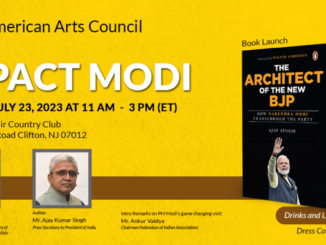
    Impact Modi: a groundbreaking event dedicated to igniting change and transformation, takes place on Sunday, July 23, 2023 at the prestigious Upper Montclair Country Club, 177 Hepburn Rd Clifton NJ 07012. With a focus on empowering individuals and driving positive social impact, this event aims to inspire attendees to become agents of change in their communities. Impact Modi brings together veteran journalist and author Mr. Ajay Singh in conversation with Mr. Vikram J. Singh, former deputy assistant secretary of Defense for South and Southeast Asia. to discuss his book, ‘The Architect of the New BJP: How Narendra Modi Transformed The Party.’

    Anil Bansal, IAAC Board Member, stated, “Prime Minister Narendra Modi is acknowledged as a global phenomenon who has propelled India on the world stage as a major force for good. The program features two leading commentators who will provide deep insights into the man, his mission, and what his long-term impact on Indian polity will be.”

    Nirmal Mattoo, IAAC Chairman, commented, “Vikram Singh has occupied the highest offices in the US at a policy level dealing with security, defense, and aerospace. He will share his insights as to what the agreement between the US and India really means to both countries and people.”

    FOR ATTENDEES

    Attendees at the event will have the unique opportunity to engage in thought-provoking discussions. Whether one is an aspiring social entrepreneur, a corporate professional seeking purpose-driven initiatives, or simply an individual passionate about creating a better world, Impact Modi offers invaluable insights to learn, connect, and collaborate.

    THE BOOK

    In less than forty years of its existence, the Bharatiya Janata Party (BJP) has become the world’s largest political party and continues to go from strength to strength in Indian politics. Although its historic rise may seem organic to some, there is much internal deliberation and planning that has aided the growth of this 180-million-member organization.

    ‘The Architect of the New BJP’ uses in-depth research and concrete examples to explain how the BJP has transformed over the decades. It reveals lesser-known contributions, like Prime Minister Narendra Modi’s experiments with traditional methods of party-building, his keen eye for detail and the different innovative methodologies to expand the party. Ajay Singh not only examines the past of the party, including the vision of its founders, but also provides a glimpse into the future of the party. Based on extensive interviews with many party workers, leaders and observers, this is the story of how the veterans of this cadre-based party, appreciating its limitations, developed a unique Indian model that eventually transformed the BJP into the election-winning machine it is today.

    REGISTRATION & BOOK SIGNING

    To register and secure a spot, visit eventbrite.com/e/impact-modi-registration-675033672887

    Register early to avoid disappointment. Book sales will not happen, so bring your book if you’d like it signed.

    Club Dress Code Policy

    Appropriate denim attire includes jeans/ pants, jackets, proper length shorts, skirts, skorts, capris, and dresses. Denim must be neat and free of any rips, stains and excess wear. UMCC does not allow cut-offs, overalls, baggy jeans, bleached/acid washed or torn denim.

    Gentlemen must wear a collared shirt tucked in anytime on Club property, which must remain tucked in at all times. Please note the following clothing is prohibited at all times: shirts with slogans/pictures, hats/visors (in any active dining area and in Clubhouse), cargo shorts/pants, jogging/sweat shirts/suits, tee/athletic shirts.

    Jackets are required for all “Holiday” Events. Members are responsible to ensure their Guests comply with the UMCC Dress Code at all times. Children 14 years of age and older are subject to the UMCC Dress code. Children under 14 years of age should be appropriately dressed.

    The Indo-American Arts Council (IAAC):

    The IAAC supports all the artistic disciplines in classical, fusion, folk and innovative forms influenced by the arts of India. We work cooperatively with colleagues around the U.S. to broaden our collective audiences and to create a network for shared information, resources and funding. Its focus is to help artists and art organizations in North America as well as to facilitate artists from India to exhibit, perform and produce their work here. For more information, visit iaac.us.

    (Mabel Pais writes on Business, Spirituality, Health & Wellness, Social Issues, Education, Cuisine, and The Arts and Entertainment)

  • NORTH 2 SHORE FESTIVAL EXPANDS TO SECOND CITY

    NORTH 2 SHORE FESTIVAL EXPANDS TO SECOND CITY

    By Mabel Pais

    TOO BIG FOR ONE CITY.

    TOO BIG FOR ONE WEEKEND.

    THE FESTIVAL ONLY NEW JERSEY COULD CREATE:

    NORTH TO SHORE June 2023

    NJPAC produces first-of-its-kind celebration of music, technology, comedy, and film over three jam-packed weekends in June 2023

    Watch the promo video – youtu.be/u8o8pcvbspA

    With the astounding success of the first week of the North to Shore Festival on which New Jersey embarked, Asbury Park will continue the celebrations in the second week: June 14-18.

    The NJPAC-produced June mega-festival continues to showcase theatricals, comedy performances, visual arts exhibits and workshops, hip hop concerts, spoken word poetry readings, dance performances, storytelling events, fashion shows, street fairs and more added to expanding calendar of events.

    Hundreds of New Jersey artists will take center stage at more than 60 new events added to the lineup of the inaugural North to Shore Festival, the three-city, three-weekend summer celebration of the arts, film and tech slated for June 2023.

    An extraordinarily diverse roster of artists who’ve built their creative careers in three of the state’s most iconic and culture-rich cities — Newark, Asbury Park and Atlantic City — will perform thanks to grants from the North to Shore Festival.  This unprecedented festival is designed to illuminate the breadth of New Jersey’s cultural offerings and provide a unique window into the thriving arts scenes in each city.

    Dozens of North to Shore grants have been awarded to artists and groups in each city to enable them to bring this spectacular tapestry to life on each weekend of the festival.

    Listen to the announcements of the Governor & First Lady Tammy Murthy: youtu.be/yJtrwwZnJU0

    Governor Phil Murphy and First Lady Tammy Murphy took the stage at NJPAC’s Prudential Hall, in March this year, alongside NJPAC President and CEO John Schreiber, Newark Mayor Ras J. Baraka, Asbury Park Mayor John Moor, and Atlantic City Mayor Marty Small to announce the North to Shore Festival, an extraordinary three-city celebration of arts and technology launched on June 7.

    This inaugural, month-long festival showcases the talent, diversity and creativity this great state has to offer. Hosted by three incredible and unique cities, Atlantic City (June 7–11), Asbury Park (June 14–18) and Newark (June 21–25), the North to Shore Festival brings together 50+ venues for an unprecedented celebration of Jersey-wide excellence, aligned with Governor Phil Murphy and First Lady Tammy Murphy’s vision for a festival worthy of the Garden State’s legacy in the arts and innovation.

    “Today, we are thrilled to announce North to Shore — New Jersey’s first multi-city festival celebrating the very best of music, comedy, film, and technology,” said Governor Phil Murphy.

     “This superstar event, held over three weekends in June, will attract folks from all over, creating another great reason for tourists to visit the Garden State as well as opportunities for local businesses in three of our iconic cities to shine. These festivals will generate economic activity and have a significant impact on our region and we look forward to shining a light on the diversity, creativity, and energy that makes New Jersey unique this summer.”

    “Beyond our global superstar headliners, North to Shore will also showcase the headliners of tomorrow. From producers to artists, filmmakers to comedians, this month-long celebration will also serve as an opportunity to elevate dozens of local performers and talent,” said First Lady Tammy Murphy. “We look forward to sharing New Jersey’s exceptional culture with the rest of the country and enjoying a festival that will undoubtedly be like no other.”

    Asbury Park (June 14 – 18)

    Partner Venues:

    Asbury Park Library

    Turf Club

    Springwood Ave Park

    McLoones Supper Club

    Robinson’s Ale House

    Stone Pony Summer Stage

    Asbury Lanes

    The House of Independents

    The Wonder Bar

    6/14 – Brian Fallon w/ Donovan Woods – The Stone Pony

    Brian Fallon of Gaslight Anthem 

    June 14, 2023 – Stone Pony Summer Stage

    NJ’s Brian Fallon of The Gaslight Anthem strips it down this summer with an intimate singer/songwriter performance showcasing the joy of living in the moment

    6/14 – Sensational Soul Cruisers – The Wonder Bar

    6/15 – TechUnited:NJ BetterCapital Conference – Asbury Lanes

    TechUnited: BetterCapital Conference

    Thursday June 15, 2023 – Asbury Lanes

    Celebrate and explore technology with other top innovators at the TechUnited: BetterCapital Conference on June 15 at Asbury Lanes.

    6/15 – TechUnited:NJ Catalyst Awards – Asbury Lanes

    TechUnited: Catalyst Awards

    Thursday June 15, 2023 – Asbury Lanes

    Celebrate entrepreneurs at the Catalyst Awards Ceremony June 15 in Asbury Park with North2Shore

    6/15 – Dentist with Special Guests Little Hag and Low Light – The Wonder Bar

    6/16 – Vintage Turf Club Show – The Turf Club/AP African-American Music Project

    6/16 – Demi Lovato – Stone Pony Summer Stage

    Demi Lovato

    June 16, 2023 – Stone Pony Summer Stage

    Get ready for pop-rock powerhouse Demi Lovato to bring the house down with raw honesty and pure passion this summer.

    6/16 – Brick and Mortar – House of Independents

    6/16 – Nicole Atkins – The Wonder Bar

    Nicole Atkins

    June 16, 2023 – The Wonder Bar

    Shore native Nicole Atkins brings her unique fusion of Broadway theatricality, classic rock, 60s psychedelia + plenty of soul to the stage this summer.

    6/17 – The B-52’s – Stone Pony Summer Stage

    The B-52’s 

    June 17, 2023 – Stone Pony Summer Stage

    American new wave sensation The B-52s are bringing their pop music lovefest to the Summer Stage.

    6/17 – The Haunting w/ Echo Plum + Surf Haven – House of Independents

    6/17 – The Smithereens with Marshall Crenshaw – The Wonder Bar

    The Smithereens with Marshall Crenshaw

    June 17, 2023 – The Wonder Bar

    The Smithereens and Marshall Crenshaw bring catchy 1960s-influenced pop-rock tunes with attitude to the Jersey Shore.

    6/18 – Clarence Clemons Celebration: Jarod Clemons and the Late Nights – The Wonder Bar

    Clarence Clemons Celebration

    June 18, 2023 – The Wonder Bar

    Jarod Clemons youngest son of legendary E Street Band saxophonist Clarence Clemons hosts this special celebration with his band “The Late Nights”,  one of the brightest lights on the current Asbury Park music scene!

    ADDITIONAL EVENTS

    Westside Wednesday

    June 14, 2023 – Asbury Park Library

    An Evening of Springwood Ave. Art (featuring Turf Club Photography Collection) Presented by The Turf Club/Asbury Park African American Music Project.

    Sensational Soul Cruisers

    June 14, 2023 – Wonder Bar

    When you want to shake your groove thing, New Jersey’s own Sensational Soul Cruisers is just the ticket.

    Dentist/Little Hag/Low Light

    June 15, 2023 – The Wonder Bar

    It’s a three-in-one as Dentist, Little Hag, and Low Light share a bill to rock Asbury Park at The Wonder Bar for N2S.

    Brick and Mortar

    June 16, 2023 – The House of Independents

    Don’t miss the sick beats, brilliant tunes + off-the-hook performances by Jersey’s own Brick + Mortar.

    Vintage Turf Club Show

    June 16, 2023 – Turf Club

    The Turf Club is back and ready for rejuvenation. Celebrate the West Side of Asbury Park with Asbury Park African American Music Project.

    Old School Dance party featuring the Bouie Brothers Disco Dance Party

    June 17-18, 2023 – Springwood Avenue Park

    Shake your groove thing at the Old School Dance Party featuring the Bouie Brothers Disco, presented by The Turf Club/Asbury Park African American Music Project.

    North2Shore:

    For the latest updates and new concert listings, visit northtoshore.com 

    @north2shore

    The New Jersey Performing Arts Center (NJPAC)

    Learn more at NJPAC.org.

    (Mabel Pais writes on The Arts and Entertainment, Social Issues, Health & Wellness, Education, Cuisine, Spirituality, and Business)

  • THE SINGING DIVA SHARES AN INTIMATE EVENING WITH US

    Audra McDonald. (Credit/ audramcdonald.com)

    By Mabel Pais

    The New Jersey Performing Arts Center (NJPAC) welcomes you for an intimate evening with the singing diva, AUDRA MCDONALD, at Newark, N.J, on Saturday, April 29, 2023 at 7:30 PM.

    A MUST SEE FOR EVERY AUDRA FAN!

    Six TONY® awards, Two GRAMMY® awards, One EMMY® award winning STAR!!!

    Audra McDonald. (Credit/ audramcdonald.com)

    AUDRA MCDONALD is unparalleled in the breadth and versatility of her singer and actress artistry. Blessed with a luminous soprano and an incomparable gift for dramatic truth-telling, she is as much at home on Broadway and opera stages as she is in roles on film and television. With six Tony Awards, two Grammy Awards (both stemming from her LA Opera debut in ‘Rise and Fall of the City of Mahogany’), an Emmy Award, and a long list of other accolades to her name, she is among today’s most highly regarded performers. In addition to her theatrical work, she has a significant career as a concert and recording artist, regularly appearing on the world’s great stages.

    Audra McDonald is perhaps the most astounding performer of our lifetimes—a once-in-a-century artist with a miracle of a voice. To hear her live is to hear “singing” invented right before you. It’s no surprise this Tony-winning actor of all time (with six awards) and the only person to ever win in all four acting categories. Her list of unforgettable performances spans Broadway (Carousel, Master Class, Ragtime, A Raisin in the Sun, The Gershwins’ Porgy and Bess, Lady Day at Emerson’s Bar & Grill, Shuffle Along); solo albums (Way Back to Paradise, How Glory Goes, Happy Songs, Build a Bridge, Go Back Home, Sing Happy); and TV and film (The Good Fight, The Gilded Age, Beauty, and the Beast, Respect).

    Acclaimed by The New York Times as a “one-of-a-kind musical super-talent,” Audra McDonald was named one of Time magazine’s 100 most influential people of 2015. She received a 2015 National Medal of Arts — America’s highest honor for achievement in the arts — from President Barack Obama. In addition to her work on stage and screen, she is noted as a passionate advocate for equal rights, LGBTQ causes, and underprivileged youth. She is currently starring in the CBS All Access drama The Good Fight. To learn more, visit AudraMcDonald.com.

    TICKETS

    Tickets to see Audra McDonald are available at NJPAC.org or in person at the NJPAC Box Office, 1 Center Street in Newark, N.J. or by calling 888. GO.NJPAC (888.466.5722).

    The New Jersey Performing Arts Center (NJPAC)

    Follow NJPAC Online:

    Website:     njpac.org

    Twitter:      @NJPAC

    Instagram:    @NJPAC

    Hashtag:     #NJPAC

    Facebook:     facebook.com/NJPAC

    YouTube:     NJPACtv

    Follow NJPAC’s Standing in Solidarity Series Online:

    Website:     njpac.org/takeastand

    Hashtag:       #NJPACTakeAStand

    Youtube:       Standing in Solidarity playlist

    (Mabel Pais writes on Social Issues, The Arts and Entertainment, Health & Wellness, Cuisine and Spirituality)

     ——————————————————

    BCM-NY HOSTS EID-AL-FITR CELEBRATIONS

    By Mabel Pais

    The Brooklyn Children’s Museum (BCM) hosts Celebrate Eid al-Fitr (brooklynkids.org/programs/eid/) on Sunday, April 23, a fun-filled festival of food, music, dance, and art that will take place from 11 am to 4 pm.

    Council member Shahana Hanif at BCM. (Credit : brooklynkids.org)
    Brooklyn Kids in a class. (Credit / brooklynkids.org)

    Eid al-Fitr marks the end of the holy month of Ramadan and the month-long dawn-to-sunset fasting. Traditionally, people celebrate the holiday by gathering with family and friends, exchanging gifts, and greeting one another. At Brooklyn Children’s Museum, visitors will learn the story of Eid al-Fitr, enjoy hands-on activities, and celebrate cultural traditions from across the Muslim world with Council Member Shahana Hanif and various cultural partners, artists, and performers.

    Visitors will learn about Halal food and spices and receive a recipe to take home from the Arab-American Family Support Center; participate in a South Asian food workshop and art-making station with APNA Brooklyn Community Center; enjoy delicious food from South Asian and Turkish food vendors throughout the day, organized by APNA and the Turkish Cultural Center (TCC); join interactive drumming performances and enjoy storytelling through puppetry led by The Culture Tree; move along to the rhythms of the Bangladesh Institute for Performing Arts with dance and music presentations that share traditional instruments, including tabla and harmonium; and get creative with art activities that include making a water marbling painting with TCC, designing crescent moons in BCM’s ColorLab art studio, and getting one’s hands painted at the popular Henna station!

    “I am overjoyed to be joining the Brooklyn Children’s Museum once again for their Eid celebration,” says Council Member Shahana Hanif. “It has been a true privilege to work with this important Brooklyn institution to create an inclusive and family-focused celebration. I applaud BCM’s proactive efforts to welcome children and families in an opportunity to learn about this important Muslim holiday celebrated by thousands across our City. I extend my gratitude to the BCM staff, community partners, and volunteers for making this event thoughtful and possible!”

    “We’re thrilled to collaborate with Council Member Shahana Hanif and our amazing cultural partners to create a truly inclusive and engaging Eid al-Fitr celebration at Brooklyn Children’s Museum,” says Stephanie Hill Wilchfort, President and CEO of Brooklyn Children’s Museum. “Working alongside such a diverse and dedicated group of organizations is an incredible opportunity, and we look forward to sharing this special day with families from all backgrounds.”

    TICKETS

    Tickets to Celebrate Eid al-Fitr (BrooklynKids.org) are available for general admission, discounted for grandparents, and free for children under one year of age. General admission tickets include access to all special programs and Museum exhibits. To purchase tickets, visit www.brooklynkids.org/eid.

    Shahana Hanif

    Shahana Hanif represents the 39th Council District, which includes parts of Kensington, Borough Park, Windsor Terrace, Park Slope, Gowanus, Carroll Gardens, Cobble Hill, and the Columbia Waterfront. Born and raised in District 39 to Bangladeshi immigrant parents, Shahana has spent her life fighting for working-class families and a city rooted in care, equity, and justice for all. Learn more about Councilperson Hanif at council.nyc.gov/district-39.

    The Turkish Cultural Center

    Learn more at turkishculturalcenter.org.

    The Culture Tree

    Learn more at theculturetree.com.

    The Bangladesh Institute of Performing Arts

    Learn more at bipainc.com.

    APNA Brooklyn Community Center

    Learn more at apnabrooklyn.com.

    The Arab-American Family Support Center

    Learn more at aafscny.org.

    The Brooklyn Children’s Museum

    Inspired by the energy and diversity of the borough, Brooklyn Children’s Museum creates experiences that ignite curiosity, celebrate identity and cultivate joyful learning. Founded in 1899 as the world’s first children’s museum, Brooklyn Children’s Museum (BCM) is New York City’s largest cultural institution designed especially for families. Proudly based in Crown Heights, Brooklyn, BCM serves 300,000 children and caregivers annually with exhibits and programs grounded in the visual arts, music and performance, natural science, and world cultures. For more information, visit brooklynkids.org.

    (Mabel Pais writes on Social Issues, The Arts and Entertainment, Health & Wellness, Cuisine and Spirituality)

  • INDO-AMERICAN DESIGNS THE ONE-MINUTE SAREE BRAND

    • By Mabel Pais

    Calling All “I-Love-Wearing-Saree” Women!
    Do you wish to wear the elegance of the Indian saree without the draping hassle?
    Indo-American Sasha Revankar has found the answer.

    One Minute Saree. (Credit : oneminutesaree.com)
    Sasha Revankar. (Credit : oneminutesaree.com)

    Asia’s largest and most prominent showcase for young designers, India Beach Fashion Week (IBFW), has selected only ONE Indian American brand for its 2023 runway show on Goa’s private Divar Island on February 13 and 14, 2023. ‘One Minute Saree,’ a direct-to-consumer, online saree brand founded by Indo-American Sasha Revankar (originally from Goa) in early 2022, will unveil its eclectic collection on a fashion ramp for the first time at IBFW on Valentine’s Day 2023.

    Rooted in tradition but crafted for the modern woman, ‘One Minute Saree’ is the fashion revolution for which the next generation of Indophiles has been awaiting. The desire to embody celeb-like grace in stunning sarees at weddings without the fear of tripping over a long pallu or sporting uneven pleats is an all-too-real fear for any millennial. ‘One Minute Saree’ ends the saree enthusiast’s draping woes with custom-stitched, pre-draped sarees that perfectly fit each time and leave wearers feeling as immaculate as they look, all under one minute!

    Founded by sheer necessity, Revankar says: “After having been a bit traumatized from the experience of wearing a saree to a wedding while handling two little kids in 2018, I had basically given up on the idea of ever putting one on again. Even though I spent an hour perfecting my drape, the saree repeatedly came loose throughout the evening. It was a bit disheartening because I love the concept of a saree for the tradition and elegance it represents, but it was just too complicated, especially for someone living in the States – and where would I even go to buy a petticoat!”

    Enter – ONE MINUTE SAREE! It is not a skirt or dress-type saree; it is still a wraparound cloth that fits adjustable sizes and maintains the flow and drape of the garment. Unlike other options, the goal is to stay true to the authenticity of sarees such as the traditional Nivi Sarees, Gujarati Sarees, and Kanjivaram Sarees, with inclusive sizes for all body types from extra small to extra-large.

    The founders of India Beach Fashion Week had never seen a more practical way to wear a saree, and for this reason, they decided to include the line in their destination-wedding-themed fashion show. “We have always believed in the power of the young and the bold and have created a niche in the fashion segment since 2015. This season, IBFW positions itself as a platform for the daring fashion enthusiasts, entrepreneurs, designers, content creators, artists, fresh graduates, and early innovators who are changing the world with their creative outlook, vision, design aesthetics, and technology on a daily basis. ‘One Minute Saree’ is exactly the kind of avant-garde game-changer that will excite fashionistas and claim its rightful space in the millennial market,” said co-founders Pallav Ojha and Neha Asthana Ojha. The brand will present 14 looks on the runway on February 14th (Valentine’s Day) in Goa, and founder Revankar will also participate in a panel discussion on the Future of Indian Fashion for a Global Marketplace. For more information and to order your own piece from the collection, visit oneminutesaree.com.

    —————————————————–

    NIMBUS DANCE MAKES AN OFFER YOU CANNOT REFUSE

    Nimbus Dance students
    (Inset): Samuel Pott. (Credit : oneminutesaree.com)

    By Mabel Pais 

    Interested in learning dance that integrates attention to a range of movement styles including contemporary dance, ballet, somatic work and dance theater?

    You are invited for a free hybrid contemporary dance class with Samuel Pott, founding artistic director of Nimbus Dance. Don’t miss this special opportunity to learn from one of New Jersey’s leading choreographers.

    Samuel Pott, founding artistic director of contemporary dance company Nimbus, teaches two master classes featuring choreography from his company’s repertory. Pott will teach two master classes, for beginners and intermediate/advanced dancers, featuring choreography from his company’s repertory. Each class integrates Nimbus’ principles and approach to movement, which include attention to detail, partnering, self-awareness and technique. During each class, Pott will guide dancers through a floor warm-up, improvisational exercises and choreographed sequences representing a range of movement styles including contemporary dance, ballet, somatic work and dance theater.

    The intermediate/advanced class will be held from 12 – 1:30PM, followed by the beginner class at 2 – 3:30PM, at Nimbus Arts Center in Jersey City. You may also choose to tune in to either class virtually. Don’t miss this special opportunity to learn from one of New Jersey’s leading choreographers on February 18!

    SCHEDULE

    Sat, Feb 18 @ 12 & 2PM
    Hybrid (In-person and virtual)
    Nimbus Arts Center
    329 Warren St, Jersey City, NJ 07302

    2 classes:
    1 Intermediate/Advanced class – 12 PM – 1:30 PM

    VIRTUAL RSVP: njpac.tfaforms.net/145?id=a2F8X000008za2wUAA

    IN-PERSON RSVP: njpac.tfaforms.net/145?id=a2F8X000008za2WUAQ

    1 Beginner Class 2:00 PM – 3:30 PM

    VIRTUAL RSVP: njpac.tfaforms.net/145?id=a2F8X000008zaUQUAY

    IN-PERSON RSVP: njpac.tfaforms.net/145?id=a2F8X000008zaTSUAY

    In person classes will take place at Nimbus Arts Center. To learn more and for directions to Nimbus, visit nimbusdance.org.

    Samuel Pott

    Samuel Pott, founding artistic director of contemporary dance company Nimbus, teaches two master classes featuring choreography from his company’s repertory. Each class integrates Nimbus principles and approach to movement, these include attention to detail, partnering, self-awareness and technique. During the one hour and a half class, Pott will guide dancers through a floor warm-up, improvisational exercises and choreographed sequences representing a range of movement styles including contemporary dance, ballet, somatic work and dance theater.

    ————————————————————-

    RESTORED FILM COMES TO USA
    By Mabel Pais

    IRREVERSIBLE: STRAIGHT CUT
    Dir/Writ: Gaspar Noé l 2020 l 1h 26m l French w/Eng Subs

    One night. An unforgivable act. A tale told in reverse.

    Gaspar Noé’s infamous director’s re-cut has taken the notorious revenge film and ‘re-reversed’ it so that it now plays in chronological order. A restored version of the original film will play concurrently in select cities, and makes for an interesting double feature.

    Nearly 20 years after the original film’s release, Noé world premiered IRREVERSIBLE: STRAIGHT CUT at the Venice Film Festival in 2019, and this release marks the U.S. theatrical premiere of his radically revised director’s re-cut.

    Now available for the first time theatrically in the U.S., IRREVERSIBLE: STRAIGHT CUT – along with a restored original version in both digital and a new 35mm print format – provides an opportunity to see Noé’s potent account of humanity at its worst from multiple perspectives, and the unshakable understanding that time, indeed, reveals all things.

    Not for the faint of heart, easily offended, or anyone with photosensitivity, this is Noé’s dark masterpiece, now in reverse and ‘re-reversed’ versions.

    Watch the Trailer: vimeo.com/756509485/281f38e5f8

    Release: Runs Feb 10-16 at the IFC Center, New York City and Landmark’s Nuart Theatre (Los Angeles, CA). Learn more at alteredinnocence.net/irreversible.

    (Mabel Pais writes on The Arts and Entertainment, Social Issues, Health & Wellness, Cuisine and Spirituality)

  • Nobel Laureates

    Carolyn Bertozzi, Morten Meldal, Barry Sharpless win 2022 Nobel Prize in Chemistry

    Carolyn Bertozzi, Morten Meldal, and Barry Sharpless won the 2022 Nobel Prize in Chemistry for the development of click chemistry and bioorthogonal chemistry. While Barry Sharpless and Morten Meldal laid the foundation for a functional form of chemistry click chemistry in which molecular building blocks snap together quickly and efficiently. Carolyn Bertozzi took it to a new dimension and started utilising it in living organisms. “This year’s Prize in Chemistry deals with not overcomplicating matters, instead working with what is easy and simple. Functional molecules can be built even by taking a straightforward route,” said Johan Aqvist, Chair of the Nobel Committee for Chemistry. The Chemistry Nobel is awarded by the Royal Swedish Academy of Sciences as per the will of Alfred Nobel. So far, the committee has chosen 113 laureates in the field, of which seven have been women. Meanwhile, 25 chemistry prizes have been shared by two laureates.

    Frederick Sanger is the only person to have won the Chemistry prize twice, in 1958 and in 1980. The Nobel Committee in 2021 awarded the top award jointly to Benjamin List and David MacMillan for their development of a precise new tool for molecular construction: organocatalysis. The tool has had a great impact on pharmaceutical research and has made chemistry greener. The Chemistry announcement comes a day after the Academy announced the Physics Nobel, which has been given to Alain Aspect, John F. Clauser, and Anton Zeilinger for their experiments with entangled photons, establishing the violation of Bell inequalities and pioneering quantum information science. The three laureates conducted groundbreaking experiments using entangled quantum states, where two particles behave like a single unit even when they are separated.

    3 scientists share Nobel Prize in Physics

    Three scientists jointly won this year’s Nobel Prize in physics Tuesday, October 4,  for proving that tiny particles could retain a connection with each other even when separated, a phenomenon once doubted but now being explored for potential real-world applications such as encrypting information. Frenchman Alain Aspect, American John F. Clauser and Austrian Anton Zeilinger were cited by the Royal Swedish Academy of Sciences for experiments proving the “totally crazy” field of quantum entanglements to be all too real. They demonstrated that unseen particles, such as photons, can be linked, or “entangled,” with each other even when they are separated by large distances. It all goes back to a feature of the universe that even baffled Albert Einstein and connects matter and light in a tangled, chaotic way.

    Bits of information or matter that used to be next to each other even though they are now separated have a connection or relationship—something that can conceivably help encrypt information or even teleport. A Chinese satellite now demonstrates this and potentially lightning fast quantum computers, still at the small and not quite useful stage, also rely on this entanglement. Others are even hoping to use it in superconducting material.

    Svante Pääbo awarded Nobel Prize in medicine

    The Nobel Prizes 2022 for medicine or physiology was awarded to Swedish geneticist Svante Pääbo. Svante Pääbo was given the award “for his discoveries concerning the genomes of extinct hominins and human evolution,” the Nobel Prize committee. Considered the most prestigious prize in the scientific world, it is awarded by the Nobel Assembly of Sweden’s Karolinska Institute and is worth 10 million Swedish crowns ($900,357).

    Through his pioneering research, Svante Pääbo accomplished something seemingly impossible: sequencing the genome of the Neanderthal, an extinct relative of present-day humans. He also made the sensational discovery of a previously unknown hominin, Denisova. Importantly, Pääbo also found that gene transfer had occurred from these now extinct hominins to Homo sapiens following the migration out of Africa around 70,000 years ago. This ancient flow of genes to present-day humans has physiological relevance today, for example affecting how our immune system reacts to infections.

    In 1990, Pääbo was recruited to the University of Munich, where, as a newly appointed Professor, he continued his work on archaic DNA. He decided to analyze DNA from Neanderthal mitochondria – organelles in cells that contain their own DNA. The mitochondrial genome is small and contains only a fraction of the genetic information in the cell, but it is present in thousands of copies, increasing the chance of success.

    Svante Pääbo (born 20 April 1955) is a Swedish geneticist specialising in the field of evolutionary genetics and a Nobel prize laureate. As one of the founders of paleogenetics, he has worked extensively on the Neanderthal genome. He was appointed director of the Department of Genetics at the Max Planck Institute for Evolutionary Anthropology in Leipzig, Germany in 1997. He is also a professor at Okinawa Institute of Science and Technology, Japan.

    French author Annie Ernaux wins Nobel Prize in Literature

    French author Annie Ernaux has won the 2022 Nobel Prize in literature “for the courage and clinical acuity with which she uncovers the roots, estrangements and collective restraints of personal memory.” Annie Ernaux was born in 1940 and grew up in the small town of Yvetot in Normandy. “Annie Ernaux’s debut was Les armoires vides (1974; Cleaned Out, 1990), and already in this work she started her investigation of her Norman background, but it was her fourth book, La place (1983; A Man’s Place, 1992), that delivered her literary breakthrough,” The Swedish Academy said in a statement.

    “In her writing, Ernaux consistently and from different angles, examines a life marked by strong disparities regarding gender, language and class. Her path to authorship was long and arduous,” the statement further read. Ernaux’s famous works include A Woman’s Story, A Man’s Place, Simple Passion, Cleaned Out and L’occupation.

  • Book Review

    Parikarma (108 pages)

    Genre: Fiction

    Baldev Singh Grewal, Author

    Baldev Singh Grewal’s Parikarma (108 pages), originally written in Punjabi has been translated into Shahmukhi with the title  Twaaf, and in Hindi with the title Parikrama. The work of fiction is part of the syllabus  of Post graduate course  in Punjabi in Kurukshetra University and Chaudhary Devi Lal University, Sirsa, Haryana. The original Punjabi version has seen three reprints. Baldev Singh Grewal is a senior New York-based author who has a number of novels to his credit. His novella “Twaaf”, transliterated from Gurmukhi into Arabic-based Shahmukhi script by Ziaullah Zaheer Sara, has been published by Sanjh Publications, Lahore.

    The original title “Parikarma” meaning circumambulation has been changed into Twaaf which has the same meaning but is more familiar with the readers on this side of the border. It’s a story of a village, of an extended family, to be exact, narrated in the first person singular. Old debate whether first person singular is more suitable or third person singular for fiction is still inconclusive. Both have successfully been employed by writers. In the novel in question, the first person singular is the narrator through and through and doesn’t seem jarring. His tone and tenor engage you and create a sense of intimacy with the non-judgmental account of his life.

    The author’s use of flashback as a literary technique seems effective. The entire story is told in flashback, rather in a series of flashbacks. Reverie, visitation from the past, imaginings and actual happenings intermingle but in no way interrupt the smooth flow of the narrative. The major characters in the story are a father and his son, a mother and a young woman and her husband. Son, the main protagonist, falls in love with a girl in the village. The son’s father in cahoots with the girl’s father bribes the area police who pick him and severely torture him as a dangerous Naxalite in a fake case. The girl is married off against her will to the father’s nephew who is impotent but violent in his sexual behavior. The husband in what one should call his impotent rage commits suicide. The father holds his son responsible for the tragic event and banishes him from the home. The son goes to the USA and now after forty years has come back to his home which is no more than a ruin guarded by a locked gate. What remains of the past is an old weather-beaten mango tree. The story is remarkable for some unremarkable reasons; a ruthless patriarch in connivance with the girl’s father deprives his son of happy future life and ends up unjustly supporting his sister’s family which leads to the destruction of his own nuclear family. Baldev Singh perhaps subtly tries to debunk the myth of moribund patriarchy by showing what it is; odious and repressive. The narrative is simply gripping as it’s familiarly unfamiliar and unfamiliarly familiar. Don’t miss it. — soofi01@hotmail.com

    (Dawn, Karachi. February 7th, 2022)

  • Vaisakhi: The harvest festival

    Vaisakhi: The harvest festival

    Vaisakhi, also known as Baisakhi, is a harvest festival celebrated in India and in parts of the world largely by the Sikh community. The day holds great significance and is celebrated as Sikh New Year, based on the solar calendar. This year, it will be celebrated on April 14, a Thursday.

    History and significance

    For the Sikh community, Baisakhi is not only a harvest festival, but also a religious one. On March 30, 1699, on Vaisakhi, Guru Gobind Singh established the Khalsa, which is the ‘pure’ Sikh community. On this day, the Guru asked people to sacrifice their life for the Lord.

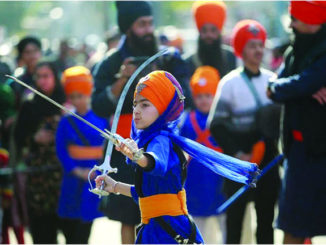
    Five people volunteered and they later came to be known as ‘panj piaras‘.Sikhs visit gurudwaras on the day of Baisakhi, and in Punjab, specifically, langars are organised at various places. Traditionally, kada prasad (wheat halwa) is served.People wear new, colourful clothes and in the evenings, perform bhangra (Punjabi folk dance). Processions of nagar kirtans are also carried out, which involve singing and chanting from the holy book, Guru Granth Sahib. Other than Punjab, the festival is also celebrated in other states, like in Haryana, where a Baisakhi Fair is organised.

    Celebrations

    People of Punjab celebrate the festival of Baisakhi with exuberance and devotion. As the festival has tremendous importance in Sikh religion, major activities of the day are organized in Gurdwaras. People wake up early to prepare for the day. Many also take bath in the holy river to mark the auspicious occasion. After getting ready people pay a visit to their neighbourdood gurdwara and take part in the special prayer meeting organized for the day. At the end of the Baisakhi ardas, congregates receive specially prepared Kara prasad or sweetened semolina. This is followed by a guru ka langar or community lunch. Later, during the day people of Sikh faith take out a Baisakhi procession under the leadership of Panj piaras. The procession moves through the major localities of the city amidst the rendition of devotional songs by the participating men, women and children. Mock duels, bhangra and gidda performances make the procession joyous and colorful.

    Celebrations by Farmers

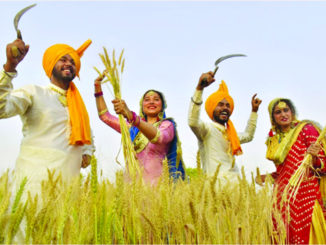
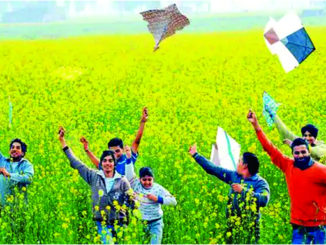
    For the large farming community of Punjab and Haryana, Baisakhi marks a New Year’s time as it is time to harvest rabi crop. On Baisakhi, farmers thank god for the bountiful crop and pray for good times ahead. People buy new clothes and make merry by singing, dancing and enjoying the best of festive food. Cries of “Jatta aai Baisakhi”, rent the skies as gaily men and women break into the bhangra and gidda dance to express their joy. Everyday farming scenes of sowing, harvesting, winnowing and gathering of crops are expressed through zestful movements of the body to the accompaniment of ballads and dhol music. In several villages of Punjab Baisakhi Fairs are organized where besides other recreational activities, wrestling bouts are also held.

    History

    Baisakhi or Vaisakhi Festival is celebrated as the Sikh New Year and the founding of the Khalsa Panth. History of Baisakhi traces its origin from the Baisakhi Day celebrations of 1699 organized by the Tenth Sikh Guru, Guru Gobind Singh to form Khalsa – Brotherhood of Saint Soldiers to fight against tyranny and oppression.

    Story of Baisakhi

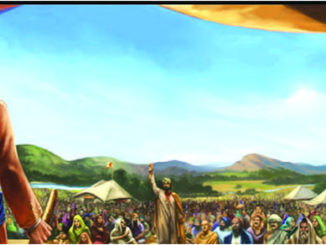
    The story of Baisakhi Festival began with the martyrdom of Guru Teg Bahadur, the ninth Sikh Guru who was publicly beheaded by the Aurungzeb, the Mughal ruler. Aurungzeb wanted to spread Islam in India and Guru Tegh Bahadur stood up for the rights of Hindus and Sikhs and the Mughals therefore saw him as a threat. After the death of Guru Teg Bahadur, his son, Guru Gobind Singh became the next Guru of the Sikhs. Guru Gobind Singh wished to instill courage and strength to sacrifice among his fellow men. To fulfil his dream, Guru Gobind Singh called on the historic Baisakhi Day congregation of Sikhs at Keshgarh Sahib near Anandpur on March 30, 1699.When thousands of people assembled for Guru’s blessing, Guru Gobind Singh came out of the tent carrying an unsheathed sword. He gave a powerful speech to infuse courage amongst fellowmen. At the end of the speech he said that every great deed was preceded by equally great sacrifice and demanded that anyone prepared to give his life come forward. On the Guru’s third call, a young man offered himself. The Guru took the man inside a tent and reappeared alone with a bloodied sword. Guru Gobind Singh asked for another volunteer. This was repeated another four times until a total of five Sikhs had gone into the tent with the Guru. Everyone present was worried and though that Guru Gobind Singh has killed five Sikhs. At this point Guru presented all the five men before the people. Every one present was surprised to see all five men alive and wearing turbans and saffron-coloured garments. These five men were called Panj Piara or ‘Beloved Five’ by the Guru.The Guru blessed them with a Pahul ceremony. In an iron vessel, the Guru stirred with a sword called Khanda Sahib, the batasha that his wife, Mata Sundari Ji had put into water.

    The congregation recited verses from scriptures as the Guru performed the sacred ceremony. The water was now considered the sacred nectar of immortality called amrit. It was first given to the five volunteers, then drunk by the guru and later distributed amongst the crowd. With this ceremony, all those present, irrespective of caste or creed, became members of the Khalsa Pantha (the Order of the Pure Ones). The Guru regarded the Panch Piaras as the first members of the Khalsa and the embodiment of the Guru himself. With the constitution of the Panj Pyare the high and low castes were amalgamated into one as among the original Panj Pyare, there was one Khatri, shopkeeper; one Jat, farmer; one Chhimba, calico printer; one Ghumar, water-carrier; and one Nai, a barber. The Guru gave the surname of Singh (Lion) to every Sikh and also took the name for himself. From Guru Gobind Rai he became Guru Gobind Singh. This was seen as a great step in national integration because society at that time was divided on the basis of religion, caste and social status. Guru Gobind Singh also bestowed on Khalsa, the unique Sikh identity. He directed Sikhs to wear five K’s: Kesh or long hair, Kangha or comb, Kripan or dagger, Kachha or shorts and a Kara or bracelet. Guru Gobind Singh also discontinued the tradition of Gurus and asked all Sikhs to accept the Grantha Sahib as their eternal guide. He urged them to come to him with their hair and beard unshorn to get baptized by the sword.

    What Rituals Are Performed

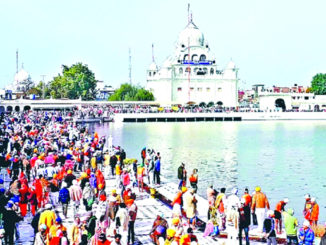
    In the morning, Sikhs visit the gurudwara (temple) to attend special payers. Most Sikhs strive to visit the revered Golden Temple in Amritsar or Anandpur Sahib, where the Khalsa was pronounced. The Granth Sahib, or Holy Scripture, is bathed with milk and water, placed on a throne, and read. Karah prasad (sacred pudding made from butter, sugar and flour) is distributed.

    In the afternoon, the Granth Sahib is taken out during a procession, accompanied by music, singing, chanting, and performances. Sikhs also offer also kar serva by helping in the daily chores of the gurudwaras. This is a traditional symbol of humanity for all Sikhs.

  • THE NEWARK ARTS FEST ELEBRATES LEGENDARY WARWICK’S “CREATIVE RESILIENCE”

    “Dionne: Queen of Twitter,” 2021 (Photo / Beau McCall)

    By Mabel Pais

    The Newark Arts celebrates its 20th Newark Arts Festival this fall with a headline exhibit honoring legendary entertainer and New Jersey native Dionne Warwick – “Dionne Warwick: Queen of Twitter.” The exhibit will debut on Wednesday, October 6, 2021, from 6-9 PM ET in a pop-up gallery at the Hahne & Co., 609 Broad St, Newark, NJ 07102. The Festival’s opening night reception includes the debut of our headline pop-up exhibition, “Dionne Warwick: Queen of Twitter.” The exhibition features specially commissioned artwork inspired by the humorous, sassy, profound, and inspirational tweets by Ms. Warwick. Plus, rarely seen archival material will be on display including items from Ms. Warwick’s personal collection.

    THE EXHIBITION

    “Dionne Warwick: Queen of Twitter” is an art exhibition inspired by a single Twitter account user: @DionneWarwick. In 2020, the legendary entertainer’s account went viral and was covered by major media outlets. Her commentary–on everything from perplexing celebrity stage names (yes, we’re looking at you, The Weeknd and Chance the Rapper) to social justice issues–has offered laughs, wisdom, and comfort for an intergenerational audience during the Covid-19 pandemic and civil unrest.

    In this exhibition, artists have created specially commissioned works referencing the humorous, sassy, profound, and inspirational tweets by Ms. Warwick. The works range from site-specific installations to mixed media pieces exploring Ms. Warwick’s social justice and spiritual background and that sharp wit that makes her everyone’s favorite “Auntie.” Accompanying these works is an intimate selection of archival material spotlighting her illustrious and groundbreaking career.

    Collectively, the artwork and archival materials celebrate Ms Warwick’s creative resilience. The latter is defined within the context of this exhibition as the ability to creatively use the arts and social media to surmount life’s obstacles and imagine a better future. Throughout her career and via her online presence, Ms. Warwick has consistently demonstrated the power of creative resilience to uplift, educate, and unite people during challenging times. Thus, making her a true Queen.

    Featured Artists: Lavett Ballard, Pamela Council, Jo-El Lopez, Beau McCall, Dianne Smith, Felandus Thames

    Featured Private Collections: Dionne Warwick, Souleo

    SCHEDULE

    More theatre, music, dance and visual art events to be added daily…check out at #NAF2021

    For a schedule of events, visit newarkartsfestival.com/events

    For schedule updates, visit newarkartsfestival.com/events/a-z/entry/21595

    To RSVP, visit newarkartsfestival.com/rsvp

    COVID SAFETY PROTOCOLS

    A vaccination card or negative Covid test taken within 72 hours of arrival at the exhibit at 609 Broad Street is required. Masks and Social Distancing are required.

    ———————————-

    POLARIS LAUNCHES FIRST BIPOC FREE CHANNEL

    By Mabel Pais

    Polaris Delivers Meaningful Content Created By BIPOC To Millions of Households

    POLARIS launches its first free ad-supported streaming TV channel (FAST). The 100% black-owned television, digital and social media platform debuts on VIZIO’s SmartCast platform. Created by digital media pioneer and legendary journalist, Rahman J. Dukes, Polaris exists to uncover and share stories created by Black, Indigenous, and People of Color (BIPOC) and authentically share Hip-Hop and Black culture with the world. With guidance from the Polaris board, iconic media personality Sway Calloway (MTV) and music historian Shaheem Reid, Polaris delivers a superior viewing experience through authentic, meaningful content that channels the spirit of African culture and music.

    Polaris will officially debut in October exclusively to VIZIO SmartCast users on WatchFree+, VIZIO’s free streaming service.

    “Working with Polaris, we are bringing to market a channel that celebrates black culture and delivers unique entertainment experiences to SmartCast users,” said Steve DeMain, VP Engagement at VIZIO. “We are excited to partner with these legendary creators to deliver a channel exclusive to SmartCast audiences.”

     “Partnering with VIZIO to launch Polaris is a historical step in getting the stories of Black and BIPOC storytellers out there in an authentic way, something we’ve prided ourselves in for the past two decades,” said Rahman J. Dukes, Principal Chairman and Founder of Polaris. “Polaris aims to be a beacon of inspiration for the culture, and VIZIO will allow our curated content to truly be that beacon, and help us deliver authentic programming to millions of households.”

    VIZIO SmartCast viewers soon have around-the-clock access to authentic programming from Polaris, including:

    • The Daily Check In — In this flagship show, music historian Shaheem Reid delves into the hottest entertainment topics of the day with notable celebrities and media personalities.
    • BridgeBizness — In this sports-centric show, well-respected journalist Sway Calloway and media personality Horse will host an interview style show featuring special guests and celebrities.
    • Method To The Madness — An episodic series that documents the early stages of Method Man’s career during his meteoric rise to the top of the rap game.
    • 9BLOCC — A music video countdown show fused with social media commentary that highlights up and coming artists.

    VIZIO

    Founded and headquartered in Orange County, California, the mission at VIZIO Holding Corp. is to deliver immersive entertainment and compelling lifestyle enhancements that make their products the center of the connected home. They are driving the future of televisions through their integrated platform of cutting-edge Smart TVs and powerful SmartCast™ operating system.

    VIZIO provides convenient access to on-screen apps like Apple TV+, BET+, Disney+, HBO Max, Hulu, Netflix, Paramount+, Peacock, Prime Video and YouTube.TV. It also includes support for Apple AirPlay 2 & Chromecast built-in, allowing viewers to stream, control, and share content from their phone, tablet, or laptop directly onto the big screen. VIZIO SmartCast is continuously enhancing the platform with new features and content, so users have endless entertainment options, all while staying healthy and safe in their homes.

    To learn more, visit VIZIO.com. Follow VIZIO on Facebook, Twitter, and Instagram.

    POLARIS & RAHMAN J. DUKES

    (left to right): Sway Calloway, Rahman J. Dukes, Shaheem Reid
    (Photo / Gtorres Media)

     Rooted at the intersection of Black culture, entertainment and technology, Polaris aims to revolutionize content consumption across TV, digital and social platforms. The 100% Black-owned multimedia entertainment brand is driven by a commitment to illuminate the culture with premium, cross-generational content and programming that entertains, educates, inspires and uplifts. Airing on WatchFree+, VIZIO’s free streaming service, Polaris’ 24-hour streaming channel will uncover narratives created by BIPOC (Black, Indigenous, and People of Color) storytellers, empower emerging content creators and collaborate with some of hip-hop’s finest. At the helm of Polaris is its chairman and founder, esteemed TV industry veteran, Rahman J. Dukes. A former executive at MTV and REVOLT TV, the behind-the-scenes power-player, has developed and produced game-changing and thought-provoking content across platforms for almost two decades.

    For more information, and Watch Polaris. Follow Polaris on Twitter.

    Follow Rahman J. Dukes at instagram.com/rahmandukes.

    (Mabel Pais writes on Social Issues, The Arts and Entertainment, Spirituality, and Health & Wellness)

  • History this week: July 9-15

    July 9

    July 9, 1868 – The 14th Amendment to the U.S. Constitution was ratified. The Amendment defined U.S. citizenship and prohibited individual States from abridging the rights of any American citizen without due process and equal protection under the law. The Amendment also barred individuals involved in rebellion against the U.S. from holding public office.

    July 10

    July 10, 1943 – The Allied invasion of Italy began with an attack on the island of Sicily. The British entry into Syracuse was the first Allied success in Europe. General Dwight D. Eisenhower labeled the invasion “the first page in the liberation of the European Continent.”

    July 10, 1973 – The Bahamas gained their independence after 250 years as a British Crown Colony.

    July 10, 1991 – Boris Yeltsin took the oath of office, becoming the first popularly elected president in Russia’s thousand-year history.

    Birthday – Theologian and founder of Presbyterianism, John Calvin (1509-1564) was born in Noyon, France.

    Birthday – American artist James Whistler (1834-1903) was born in Lowell, Mass. He is best remembered for his portrait Whistler’s Mother.


    Birthday – French author Marcel Proust (1871-1922) was born near Paris. “Happiness,” he wrote in The Past Recaptured, “is beneficial for the body but it is grief that develops the powers of the mind.”

    Birthday

    Arthur Ashe.

    Tennis player Arthur Ashe (1943-1993) was born in Richmond, Virginia. He won a total of 33 titles including the U.S. men’s singles championship and U.S. Open in 1968 and the men’s singles at Wimbledon in 1975. As a pioneering African American athlete, he fought against racism and stereotyping and was arrested numerous times while protesting. In 1992, he announced he had likely contracted HIV through a transfusion during heart surgery. He then began a $5 million fundraising effort on behalf of the Arthur Ashe Foundation for the Defeat of AIDS and campaigned for public awareness regarding the dreaded disease. He died from pneumonia in New York, February 6, 1993.

    July 11

    Birthday – John Quincy Adams (1767-1848) the 6th U.S. President, and son of the 2nd President, John Adams, was born in Braintree, Massachusetts. After serving just one term as President, he served 17 years as a member of Congress. He died in 1848 while in the House of Representatives in the same room in which he had taken the presidential Oath of Office. He was the first president whose father had also been president.

    July 12

    July 12, 1943 – During World War II, in the Battle of Kursk, the largest tank battle in history took place outside the small village of Prohorovka, Russia. About nine hundred Russian tanks attacked an equal number of German tanks fighting at close range. When Hitler ordered a cease-fire, 300 German tanks remained strewn over the battlefield.

    July 12, 1994 – Germany’s Constitutional Court ended the ban on sending German troops to fight outside the country. The ban had been in effect since the end of World War II. The ruling allowed German troops to join in United Nations and NATO peace-keeping missions. On July 14, German military units marched in Bastille Day celebrations in Paris, the first appearance of German troops there since World War II.

    Birthday – British pottery designer Josiah Wedgwood (1730-1795) was born in Burslem, Staffordshire, England.

    Birthday

    Henry David Thoreau

    American philosopher Henry David Thoreau (1817-1862) was born in Concord, Massachusetts. At Walden Pond he wrote, “I frequently tramped eight or ten miles through the deepest snow to keep an appointment with a beech tree, or a yellow birch, or an old acquaintance among the pines.”

    July 13

    July 13, 1787 – Congress enacted the Northwest Ordinance establishing formal procedures for transforming territories into states. It provided for the eventual establishment of three to five states in the area north of the Ohio River, to be considered equal with the original 13. The Ordinance included a Bill of Rights that guaranteed freedom of religion, the right to trial by jury, public education and a ban on slavery in the Northwest.

    July 14

    July 14, 1789 – The fall of the Bastille occurred at the beginning of the French Revolution.

    July 14, 1791 – In England, the Birmingham riot occurred on the second anniversary of the fall of the Bastille. Mob rule lasted for three days, targeting controversial scientist and theologian Joseph Priestly’s home and laboratory as well as the homes of his friends. Priestly, who had expressed support for the American and French revolutions, fled to London with his family and later moved to America.

    Birthday – American folk singer and social activist Woody Guthrie (1912-1967) was born in Okemah, Oklahoma. Best known for This Land Is Your Land, Union Maid, and Hard Traveling.

    Birthday

    Gerald R. Ford 

    Gerald R. Ford, the 38th U.S. President was born in Omaha, Nebraska, July 14, 1913 (as Leslie King). In 1973, he was appointed vice president following the resignation of Spiro T. Agnew. He became president on August 9, 1974, following the resignation of Richard M. Nixon. He was the first non-elected vice president and non-elected president of the U.S.

    July 15

    July 15, 1918 – During the Battle of the Marne in World War I, German General Erich Ludendorff launched Germany’s fifth, and last, offensive to break through the Chateau-Thierry salient. However, the Germans were stopped by American, British and Italian divisions. On July 18, General Foch, Commander-in-Chief of the Allied troops, launched a massive counter-offensive. The Germans began a retreat lasting four months until they requested an armistice in November.

    Birthday – Dutch painter Rembrandt van Rijn (1606-1669) was born in Leiden, Holland. Best known for The Night Watch and many portraits and self-portraits.

    Birthday – The first American saint, Frances Xavier Cabrini (1850-1917) was born in Lombardy, Italy. She was the founder of the Missionary Sisters of the Sacred Heart of Jesus and established Catholic schools, orphanages, convents and hospitals. She was canonized, July 7, 1946, by Pope Pius XII.

  • US History This Week -July 2 -8, 2021

    US History This Week -July 2 -8, 2021

    History of a nation is probably one of the most important aspects of a nation’s life.  History is the best educator and also the most important index of human mind. It is a record of human achievements and failures; of humanity and inhumanity of human beings; of the beauty and the ugliness of human life. Never to be ignored, history remains the best friend of a person, a community and a nation. Let us know our history.

    In commemoration of the 4th of July, The Indian Panorama will bring toreaders, beginning July 2, 2021, the significant events from the US History, week after weeks.

    July 2

    July 2, 1776 – The Continental Congress in Philadelphia adopted the following resolution, originally introduced on June 7, by Richard Henry Lee of Virginia: “Resolved, That these United Colonies are, and of right ought to be, free and independent States, that they are absolved from all allegiance to the British Crown, and that all political connection between them and the State of Great Britain is, and ought to be, totally dissolved. That it is expedient forthwith to take the most effectual measures for forming foreign Alliances. That a plan of confederation be prepared and transmitted to the respective Colonies for their consideration and approbation.”

    July 2, 1788 – Congress announced the United States Constitution had been ratified by the required nine states and that a committee had been appointed to make preparations for the new American government.

    July 2, 1881 – President James A. Garfield was shot and mortally wounded as he entered a railway station in Washington, D.C. He died on September 19th.

    July 2, 1917 – A race riot occurred in St. Louis, Missouri, resulting in an estimated 75 African Americans killed and hundreds injured. To protest the violence against blacks, W.E.B. DuBois and James Weldon Johnson later led a silent march down Fifth Avenue in New York.

    July 2, 1964 – President Lyndon B. Johnson signed the Civil Rights Act of 1964, prohibiting discrimination on the basis of race in public accommodations, publicly owned or operated facilities, employment and union membership and in voter registration. The Act allowed for cutoff of Federal funds in places where discrimination remained.

    Birthday – The first African American on the U.S. Supreme Court, Thurgood Marshall (1908-1993) was born in Baltimore, Maryland. Nominated by President Johnson, he began his 24-year career on the High Court in 1967.

    July 3

    July 3, 1775 – During the American Revolution, George Washington took command of the Continental Army at Cambridge, Massachusetts.

    July 3, 1976 – The raid on Entebbe airport in Uganda occurred as an Israeli commando unit rescued 103 hostages on a hijacked Air France airliner. The jet had been en route from Tel Aviv to Paris when it was hijacked by pro-Palestinian guerrillas. Three hostages, seven hijackers and twenty Ugandan soldiers were killed during the rescue.

    July 3, 1988 – Iran Air Flight 655 was destroyed while flying over the Persian Gulf after the U.S. Navy Warship Vincennes fired two surface-to-air missiles, killing all 290 passengers aboard. A subsequent U.S. military inquiry cited stress related human failure for the mistaken identification of the civilian airbus as an enemy F-14 fighter jet.

    July 4

    The Declaration of Independence was approved by the Continental Congress on July 4, 1776itter

    July 4, 1776 – The Declaration of Independence was approved by the Continental Congress.

    July 4, 1863- Vicksburg, the last Confederate stronghold on the Mississippi River, surrendered to General Grant and the Army of the West after a six-week siege. With the Union in control of the Mississippi, the Confederacy was effectively split in two, cut off from its western allies.

    July 4, 1882 – The “Last Great Buffalo Hunt” began on Indian reservation lands near Hettinger, North Dakota as 2,000 Teton Sioux Indians in full hunting regalia killed about 5,000 buffalo. By this time, most of the estimated 60-75 million buffalo in America had been killed by white hunters who usually took the hides and left the meat to rot. By 1883, the last of the free-ranging buffalo were gone.

    Birthday – Novelist and short-story writer Nathaniel Hawthorne (1804-1864) was born in Salem, Massachusetts. His works included The Scarlet Letter, The House of the Seven Gables and The Blithedale Romance.

    Birthday – Song writer Stephen Foster (1826-1864) was born in Lawrenceville, Pennsylvania. Among his nearly 200 songs were Oh! Susanna, Camptown Races, Swanee River, Jeanie with the Light Brown Hair, and Beautiful Dreamer. He died in poverty at Bellevue Hospital in New York.

    Birthday – Calvin Coolidge (1872-1933) the 30th U.S. President was born in Plymouth, Vermont. He became President on August 3, 1923, after the death of Warren G. Harding. In 1924, Coolidge was elected President but did not run for re-election in 1928.

    July 5

    July 5, 1775- The Continental Congress adopted the Olive Branch Petition expressing hope for a reconciliation with Britain. However, King George III refused even to look at the petition and instead issued a proclamation declaring the colonists to be in a state of open rebellion.

    Birthday – Civil War Admiral David Farragut (1801-1870) was born near Knoxville, Tennessee. He is best remembered for his yelling “Damn the torpedoes, full speed ahead!” during an attack on his fleet by the Confederates.

    Birthday – Promoter and showman P.T. Barnum (1810-1891) was born in Bethel, Connecticut. His American Museum opened in 1842, exhibiting unusual acts such as the Feejee Mermaid, Siamese Twins Chang and Eng, and General Tom Thumb. In 1871, Barnum opened “The Greatest Show on Earth” in Brooklyn, New York. He later merged with rival J.A. Bailey to form the Barnum and Bailey Circus.

    Birthday – Cecil J. Rhodes (1853-1902) was born at Bishop’s Stortford, Hertfordshire, England. As a South African millionaire and politician, he was said to have once controlled 90 percent of the world’s diamond production. His will established the Rhodes Scholarships at Oxford University for young scholars aged 18-25. Rhodesia was also named for him.

    July 6

    Louis Pasteur gave the first successful anti-rabies inoculation to a boy who had been bitten by an infected dog on July 6, 1885

    July 6, 1885 – Louis Pasteur gave the first successful anti-rabies inoculation to a boy who had been bitten by an infected dog.

    Birthday – Revolutionary War Naval Officer John Paul Jones (1747-1792) was born in Kirkbean, Scotland. He is best remembered for responding “I have not yet begun to fight!” to British opponents seeking his surrender during a naval battle.

    July 7

    July 7, 1898 – President William McKinley signed a resolution annexing Hawaii. In 1900, Congress made Hawaii an incorporated territory of the U.S., which it remained until becoming a state in 1959.

    Birthday – Baseball pitcher Leroy R. (Satchel) Paige (1906-1982) was born in Mobile, Alabama. Following a career in the Negro Leagues, he became, at age 42, the first African American pitcher in the American League. He was inducted into the Baseball Hall of Fame in 1971.

    July 8

    July 8, 1776 – The first public reading of the Declaration of Independence occurred as Colonel John Nixon read it to an assembled crowd in Philadelphia.

    July 8, 1943 – During the Nazi occupation of France, Resistance leader Jean Moulin died following his arrest and subsequent torture by the Gestapo. He had been sent by the Allies into France in 1942 to unite the fledgling Underground movement. In June of 1943, he was arrested in Lyon, tortured for eleven days but betrayed no one. He died aboard a train while being transferred to a concentration camp.

    Nelson Rockefeller (1908-1979) was born in Bar Harbor, Maine.

    Birthday – Nelson Rockefeller (1908-1979) was born in Bar Harbor, Maine. He served as Governor of New York from 1958 to 1973. He became vice-president under Gerald Ford in 1974, serving until January 20, 1977.

    (Source: The History Place)

  • Yoga: Its origin, history and development

    Yoga: Its origin, history and development

    Yoga is essentially a spiritual discipline based on an extremely subtle science, which focuses on bringing harmony between mind and body. It is an art and scince of healthy living. The word ‘Yoga’ is derived from the Sanskrit root ‘Yuj’, meaning ‘to join’ or ‘to yoke’ or ‘to unite’.

    As per Yogic scriptures the practice of Yoga leads to the union of individual consciousness with that of the Universal Consciousness, indicating a perfect harmony between the mind and body, Man & Nature. According to modern scientists, everything in the universe is just a manifestation of the same quantum firmament. One who experiences this oneness of existence is said to be in yoga, and is termed as a yogi, having attained to a state of freedom referred to as mukti, nirvana or moksha.

    Thus the aim of Yoga is Self-realization, to overcome all kinds of sufferings leading to ‘the state of liberation’ (Moksha) or ‘freedom’ (Kaivalya). Living with freedom in all walks of life, health and harmony shall be the main objectives of Yoga practice.”Yoga” also refers to an inner science comprising of a variety of methods through which human beings can realize this union and achieve mastery over their destiny.Yoga, being widely considered as an ‘immortal cultural outcome’ of Indus Saraswati Valley civilization – dating back to 2700 B.C., has proved itself catering to both material and spiritual upliftment of humanity.Basic humane values are the very identity of Yoga Sadhana.

    A Brief History

    The practice of Yoga is believed to have started with the very dawn of civilization. The science of yoga has its origin thousands of years ago, long before the first religions or belief systems were born. In the yogic lore, Shiva is seen as the first yogi or Adiyogi, and the first Guru or Adi Guru.

    Several Thousand years ago, on the banks of the lake Kantisarovar in the Himalayas, Adiyogi poured his profound knowledge into the legendary Saptarishis or “seven sages”. The sages carried this powerful yogic science to different parts of the world, including Asia, the Middle East, Northern Africa and South America. Interestingly, modern scholars have noted and marvelled at the close parallels found between ancient cultures across the globe. However, it was in India that the yogic system found its fullest expression. Agastya, the Saptarishi who travelled across the Indian subcontinent, crafted this culture around a core yogic way of life.

    The Number of seals and fossil remains of Indus Saraswati valley civilization with Yogic motives and figures performing Yoga Sadhana suggest the presence of Yoga in ancient India. The phallic symbols, seals of idols of mother Goddess are suggestive of Tantra Yoga. Presence of Yoga is available in folk traditions, Indus valley civilization, Vedic and Upanishadic heritage, Buddhist and Jain traditions, Darshanas, epics of Mahabharat and Ramayana, theistic traditions of Shaivas, Vaishnavas, and Tantric traditions. In addition, there was a primordial or pure Yoga which has been manifested in mystical traditions of South Asia. This was the time when Yoga was being practised under the direct guidance of Guru and its spritual value was given special importance. It was a part of Upasana and yoga sadhana was inbuilt in their rituals. Sun was given highest importance during the vedic period. The practice of ‘Surya namaskara’ may have been invented later due to this influence. Pranayama was a part of daily ritual and to offer the oblation. Though Yoga was being practiced in the pre-Vedic period, the great Sage Maharshi Patanjali systematized and codified the then existing practices of Yoga, its meaning and its related knowledge through his Yoga Sutras. After Patanjali, many Sages and Yoga Masters contributed greatly for the preservation and development of the field through their well documented practices and literature.

    Historical evidences of the existence of Yoga were seen in the pre-Vedic period (2700 B.C.), and thereafter till Patanjali’s period. The main sources, from which we get the information about Yoga practices and the related literature during this period, are available in Vedas (4), Upanishads(108), Smritis, teachings of Buddhism, Jainism, Panini, Epics (2), Puranas (18) etc.

    Tentatively, the period between 500 BC – 800 A.D. is considered as the Classical period which is also considered as the most fertile and prominent period in the history and development of Yoga. During this period, commentaries of Vyasa on Yoga Sutras and Bhagawadgita etc. came into existence.This period can be mainly dedicated to two great religious teachers of India –Mahavir and Buddha. The concept of Five great vows – Pancha mahavrata- by Mahavir and Ashta Magga or eightfold path by Buddha – can be well considered as early nature of Yoga sadhana.

    We find its more explicit explanation in Bhagawadgita which has elaborately presented the concept of Gyan yoga, Bhakti yoga and Karma Yoga. These three types of yoga are still the highest example of human wisdom and and even to day people find peace by following the methods as shown in Gita. Patanjali’s yoga sutra besides containing various aspects of yoga, is mainly identified with eight fold path of Yoga.

    The very important commentary on Yoga sutra by Vyasa was also written. During this very period the aspect of mind was given importance and it was clearly brought out through Yoga sadhana, Mind and body both can be brought under control to experience equanimity.The period between 800 A.D. – 1700 A.D. has been recognized as the Post Classical period wherein the teachings of great Acharyatrayas-Adi Shankracharya, Ramanujacharya, Madhavacharya-were prominent during this period. The teachings of Suradasa, Tulasidasa, Purandardasa, Mirabai were the great contributors during this period. The Natha Yogis of Hathayoga Tradition like Matsyendaranatha, Gorkshanatha, Cauranginatha, Swatmaram Suri, Gheranda, Shrinivasa Bhatt are some of the great personalities who popularized the Hatha Yoga practices during this period.

    The period between 1700 – 1900 A.D. is considered as Modern period in which the great Yogacharyas- Ramana Maharshi, Ramakrishna Paramhansa, Paramhansa Yogananda, Vivekananda etc. have contributed for the development of Raja Yoga.This was the period when Vedanta, Bhakti yoga, Nathayoga or Hatha-yoga flourished. The Shadanga-yoga of Gorakshashatakam, Chaturanga-yoga of Hathayogapradipika, Saptanga-yoga of Gheranda Samhita, were the main tenents of Hatha-yoga.

    Now in the contemporary times, everybody has conviction about yoga practices towards the preservation, maintenance and promotion of health. Yoga has spread all over the world by the teachings of great personalities like Swami Shivananda, Shri T.Krishnamacharya, Swami Kuvalayananda, Shri Yogendara, Swami Rama, Sri Aurobindo, Maharshi Mahesh Yogi, Acharya Rajanish, Pattabhijois, BKS. Iyengar, Swami Satyananda Sarasvati and the like.

              The author, Dr. Ishwar V. Basavaraddi, is the Director of Morarji Desai National Institute of Yoga

  • Rising trend of turban-tying among Sikh girls

    Rising trend of turban-tying among Sikh girls

    By Dr. Assa Singh Ghuman

    Turban perhaps is the only item of the human attire which has many folds of history and mystery underneath its layers. It had attained hundreds of connotations and interpretations as far as its styles, colours, names, shapes and sizes are concerned.  It had acquired protective, decorative, cultural, religious, ethical, nationaland professional symbolism. It had “kingly” as well “raggly” status in different times of history in the different regions. In many cultures, it became symbolic of temporal authority while in some others it attained the spiritual aura, and thus signified power. From “murasa”(muVwsw) it progressed to be the base of kingly crown and empirical regalia in many cultures of Asia and Africa. It adorned the authoritative and spiritual heads with different namessuch as turban, turbante, dulband, pheta, pag, pagree, sapha, dastaar, cheera, dumala etc. etc. The nomenclature is basically embedded in Persian as it is considered that turban started from Arab countries.Clothing has always been the identifier of the different groups comprising any individual society, turban happened to be the prominent one. It has been a distinctive signifierin the sign systems of different societies from primitive to ultra-modern times. According to The Encyclopaedia of Sikhism, “As a form of head dress, it is of Semitic origin and was an essential part of the Israeli High Priest’s uniform in Moses’day,1300 BC, as stated in the Old Testament (Exodus,28:4).  In India, it is to be seen as worn by men depicted in the Ajanta caves (200 B.C.) and on the Sanchi Gateway (150BC)”.

    This happened in India duringthe Moghul period that the turban became a symbol of royalty and with that came the bigotry also to issue the dictates by the ruling class that Hindus were not allowed to wear turbans nor werethey allowed to ride the horses, which in fact was considered the privilege of the ruling class only. As a matter of tradition all the Sikh Gurus, like all the Pandits and other seers ofthe Hindu religion, used to adorn distinctive turbans. When this significant item of dress was banned in the later part of the 17th century along with the other draconian policies towards the mission of Sikhism, Guru Gobind Singh took the cudgels against this injustice and religious bigotry. In 1699, when he initiated the Sikhs into the new fold of Khalsa and brought about a great transformation, turban became an inseparable part of the Khalsa as it was ordained that the Sikhs must keep the Kes (hair) intact and unshorn. Turban became Dastar in Sikh language and literature.  “Saabat surat dastaar sira” became the benchmark of the Khalsa. Though turban, basically symbolized masculinity and martiality, yet Khalsa never discouraged the women from being turbaned. Mai Bhago is a glaring example of the Dastaardhari Sighani, who had all the masculine propensities and Guru Ji showered all the blessings on her. Even some paintings painted by some Britishers in 17th and 18th century show Sikh women in traditional Nihang dastaars on their heads.

    However, most of the Sikh women in Punjab and other states of India continued to observe their Sikh religion with their chunis or dupattas on their heads, even after being Amritdhari. It was Akhand Kirtani Jatha which started initiating the Sikh women in Khalsa fold,which emphasized the strict discipline of the Rehat and ordained the female Sikh initiates to have jura and turban. Both men and women started adorning dumalas over their heads to cover their unshorn hair, keski being the smaller turban under the bigger one. It is to be observed that Sikhs don’t just tie the turban or wear the turban, they adorn it or don it: auh dsqwr bMnHdy nhIN, dsqwr sjwauNdy hn[

    Anyhow, many of the unmarried girls who used to get into such type of observances, have to face a peer pressure from the society as it was considered something queer for girls to wear the turban and lose the feminine look.It happened under the impact of the globality only that the Sikh girls started daring the peer and queer pressure. The 21st century has witnessed a rising graph as far as the trend of turban tying in Sikh girls and women is concerned. The graph is still going up. It has happened because of many factors happening around, among them the most important ones being sense of equality, individual identity, Sikh essentialism, post-colonial choice and being fashionable. In Europe and America, turban got very popular among women in the last two decades in fashion and modelling.  Its position with the diasporic Sikh girls is altogether different who wear it for religious considerations.The girls who have started doning dastaars in daily routine prefer domalas which has almost become a distinguishable iconic mark of female Sikhism as no other community in the world other than Sikhs wear domalas. These girls with domalas have a strong will to have equality, feminine identity and women empowerment. There is a long list of such Amritdhari successful Sikh girls who have achieved the echelons of empowerment. Many of them had to fight with the law of those lands where they are living to get the turban allowed on official duties. Turban proved to be a challenge for them.

    Palbinder Kaur, wearing a domala, has achieved the list of “first” by becoming the first Amritdhari turbaned Judge of a supreme court in Canada. Prior to that she was a human rights activist. Simerpal Kaur has become the first Amritdhari Sikh woman who serves in Australian police with her domala. Arpinder Kaur has registered her name as the first ever turbaned Sikh woman to be a pilot in United States. Similarly, Sukhdeep Kaur is the first female Sikh prison officer in Hong Kong. Twenty-two-year-old Gursoch Kaur has become the first turban-wearing Sikh woman in New York Police Department. All of them, including a number of others, scattered all over the globe, have been steadfast in performing their duties with turbanas their head gear because of their religiosity and spirituality. Yet it is not true of all the girls wearing turban in Punjab or even abroad. Many of the girls are adorning turban just as a matter of fashion.  At global level, turban-tying is a trend among Muslim as well as European women. As turban has got respectability and acceptability, more girls in Indian Punjab now feel comfortable with this head dress. The concept of being beautiful has changed. Many girls with domala turban on their heads appear more beautiful and handsome with their cherubish cheeky faces. Media has also started encouraging them to wear turbans, as this progression from Phulkari to Domalla is very interesting, catchy and attractive. Suchgirls with turban on their heads have become smarter by not having chuni or dupatta which had been a big nuisance, particularly for the working women, managing its loose ends all the time. Nevertheless, the Amritdhari Sikh girls are seen having dupatta also alongwith the domala for keeping the modesty of covering their bust.

    Turban is being used as accessory by the fashionable ones also to symbolize empowerment, equality and self-expression but it is primarily sartorial trend, not a religious practice. In India the girls have started donning the traditional safa alongwith other baratis in Rajasthan, Maharashtra etc. It is not now a symbol of religious integrity and “izat”, as the traditional male turban used to have. It is more a fashion, a fun or a fad to look different from others, to be photo genic. There is nothing new and unique in this trend. In fact, it is the revival of the earlier trends of wearing exotic head-dress by European women as evening dress or as party wear. The first documentation of the turban being worn as a fashion accessory was seen in the iconic Dutch painting “Girl with a Pearl Earring”, painted by Vermeer in 1665. There have been revivals of turban-trend time to time from 15 century to 19th century. It was revived in 1910s-20s by fashion designer Paul Poiret. In the last two decades of 21st century, turban has again gathered popularityin fashion prades on the ramps. However, the latest trends are being frowned at by the clergyand the elders because now the turbans being worn by the showbiz beauties (many of them are morally controversial), are more of religious styles rather than the traditional draped variations or head wraps. This mixing up of the religious symbolism to be sexy and seductive is being disliked by the Sikh elders also.

    To conclude, we can safely observe that the girls or women who are donning turban might be doing it for hundreds of reasons, but one thing is crystal clear that the turban on the head of a Sikh female doesn’t always signify being fundamentalist or spiritualist or religious in Sikhism.

    (The author is a retired college Principal. He has written hundreds of articles about Punjabi culture and Sikh history in Punjabi as well as in English. Out of 12 books published so far, Dastan-e-Dastar, Balhari Kudrat Wasiya and Katak Ke Vaisakh? Ke Dovein? have been well received by the Punjabi readers.  The fourth edition of Dastan-e- Dastaar is being awaited. To pen down write-ups of Dastaardhari “firsts” at National and International level is his first love.

  • Vaisakhi: History and significance of harvest festival

    Vaisakhi: History and significance of harvest festival

    Baisakhi (also called Vaisakhi) is a harvest festival which is celebrated on the thirteenth day of April according to the solar calendar. This day marks the beginning of the Hindu solar new year. In fact this day is celebrated all over the country as new year day under different names. It is celebrated in North India, particularly in Punjab and Haryana, when the rabi crop is ready for harvesting. It usually falls on April 13, falling on April 14 once every thirty-six years. It coincides with ‘Rongali Bihu’ in Assam, ‘Naba Barsha’ in Bengal, Puthandu in Tamil Nadu and ‘Pooram Vishu’ in Kerala.

    Significance of Vaisakhi

    Baisakhi has a special meaning for the Sikhs. Baisakhi Festival is celebrated as the Sikh New Year and the founding of the Khalsa Panth. On this day in 1699, their tenth Guru Gobind Singh organized the order of the Khalsa and administered amrit (nectar) to his first batch of five disciples making them Singhs, a martial community. Again, on this day in 1875, Swami Dayanand Saraswati founded the Arya Samaj-a reformed sect of Hindus who are devoted to the Vedas for spiritual guidance and have discarded idol worship. This day is once again of immense religious import to the Buddhists because Gautama Buddha attained enlightenment and Nirvana on this auspicious day.

    Celebrations

    Festival of Baisakhi is celebrated with lot of joy and enthusiasm in the northern state of Punjab and Haryana. The farmers perform their own prayers and rejoice. For on this day, they commence cutting their harvest. Dressed in their typical folk attire, both men and women, celebrate the day with Bhangra and Gidda. Sweets are distributed, old enmities are forgiven and life is full of joy, merriment and everyone seems to belong.

    Fairs are organized at various places in Punjab, where besides other recreational activities, wrestling bouts are also held. The occasion is celebrated with great gusto at Talwandi Sabo, where Guru Gobind Singh stayed for nine months and completed the recompilation of the Guru Granth Sahib.

    The Sikhs celebrate this day by visiting gurdwaras and distributing kada prasad. Processions led by the Panj Piaras or the five religious men are taken out. Kirtans and recital of passages from the Granth Sahib are also organized in gurdwaras, where people line up to receive the delicious prasad and perform kar sewa-that is, offering help in the daily chores of the gurdwara. \

    The real celebrations are in the villages of Punjab when the crop is harvested. In Anandpur Sahib (the birth place of Khalsa) Baisakhi meals are organized in large numbers.

    Legends of Vaisakhi

    There are various legends associated with the colourful and vibrant festival of Vaisakhi. A study of these interesting legends of Vaisakhi reveal that the day of Vaisakhi is significant not just for Sikhs but also for Hindus and Buddhists alike. Besides, it is joyous to note that as a harvest festival, people of all communities in Punjab celebrate Vaisakhi in a harmonious manner.

    Vaisakhi Fairs

    Colouful Vaisakhi Fairs are organized at several places in Punjab to mark the harvest festival of Vaisakhi. Performance of bhangra and gidda dance besides other recreational activities make Vaisakhi melas a major crowd puller. People also indulge in shopping and eating spree in the numerous stalls set up in the fairs.

    Day to receive Guru’s blessings

    According to a popular legend in Sikhism, it was on the day of Vaisakhi in 1567 that Guru Amar Das had first institutionalized Vaisakhi as one of the special days when all Sikhs would gather to receive the guru’s blessings at Goindwal.

    Regional celebrations

    The auspicious day of Baisakhi is celebrated all over India though under different names and with different set of rituals. People of Assam celebrate it as Rongali Bihu. The Rongali Bihu marks the agricultural New Year at the advent of seeding time and is celebrated as the Festival of Merriment.

    Bihar celebrates a festival in Vaishakha (April) and Kartika (November) in honour of the Sun God, Surya, at a place called Surajpur-Baragaon. This is essentially a village where, according to an ancient practice, people bathe in the temple tank and pay obeisance to the Sun God while offering flowers and water from the sacred river Ganga.

    In West Bengal celebrate it as Naba Barsha. Naba Barsha is the celebration of Bengali New Year !! Naba Barsha in Bengal marks the first day of Baisakh. On this day people take a ritual bath in the Ganga and bedeck their houses with rangoli (floral patterns) drawn on the entrance of their homes with a paste made of rice powder.

    Kerala celebrates it as Vishu. In Kerala, it’s New Year time too. The Kerala New Year is conspicuous for an exchange of gifts and for alms-giving, while Tamil Nadu celebrates it as Puthandu, the tamil new year ceremonial processions are taken out, with richly caparisoned elephants swinging along to the beat of drums.

    While in Kashmir, a ceremonial bath and general festivity mark Baisakhi while in Himachal Pradesh devotees flock to the temple of Jwalamukhi and take a holy dip in the Hot Springs.

  • Vaisakhi special- Creation of the Khalsa

    Vaisakhi special- Creation of the Khalsa

    Khalsa, (Punjabi: “the Pure”) the purified and reconstituted Sikh community instituted by Guru Gobind Singh on March 30, 1699 (Vaisakhi Day; Khalsa Sikhs celebrate the birth of the order on April 13 of each year). His declaration had three dimensions: it redefined the concept of authority within the Sikh community; it introduced a new initiation ceremony and code of conduct; and it provided the community with a new religious and political vision. Khalsa is used to denote both the body of initiated Sikhs and the community of all Sikhs.

    The early Sikh community had been shaped by three levels of authority: the masands (“Guru’s deputies”) were responsible for local congregations; the Guru was the active central authority; and the revealed word as recorded in Sikh scriptural text served as the symbolic base. With the establishment of the Khalsa, the authority of the masands was eliminated. They were expected either to become members of the community on a par with all others or to leave the fold.

    Gobind Singh also introduced a new initation rite. More commonly called amrit pahul (“the nectar ceremony”) but also known as khande ki pahul (literally, “ceremony of the double-edged sword”), it was centred on a belief in the transformative power of the revealed word. The word was recited while water for initiation was stirred with a double-edged sword. Every Sikh who underwent the ceremony became a member of the Khalsa, was assigned the name Singh (“Lion”), and was expected to observe a rigorous code of conduct (rahit) symbolized by the wearing of five items: kes (long hair), kangha (a comb), kachha (a pair of shorts), karha (a steel bracelet), and kirpan (a sword). The names of these items begin with the Punjabi letter k and thus came to be known as the five Ks. The Singhs were also expected to forswear tobacco, alcohol, and certain types of meat.

    In its third aspect the Khalsa embodied a concrete political agenda: the pledge to realize the rule of the Sikh community (Khalsa Raj, “kingdom of God”) in  Punjab. These three interlocking dimensions have made the institution of the Khalsa perhaps the most powerful force in shaping Sikh identity during the past three centuries.

    Initially a male institution, it is now open to women (who take the name Kaur (Princess) as well.

    On Vaisakhi day in  1699, Sikhs from far and near had gathered together at Anandpur Sahib to celebrate the New Year. However, the gathering was a bit different that day. This year Guru Gobind Rai had sent a message that every Sikh who could afford to come, must come to the annual fair. They should come to Anandpur with their hair and beard uncut; and that they should wear turbans instead of caps or scarves.

    By noon, well over twenty thousand Sikhs (eighty thousand by one estimate) had assembled in the fair ground at Anandpur to participate int he festivals of the Baisakhi Day. Everybody was excited and looked forward to meeting the Guru as if tis unusual ‘message’ was especially sent for him. Also, there was a large and richly festooned tent pitched on a hillock overlooking the extensive fair grounds.

    It was afternoon. Word went round that the Guru was in the marquee and he would be coming out soon to meet his Sikhs. All eyes were turned towards the tent and everyone was waiting patiently for Guru’s Darshan (appearance) and to receive his blessings. But it took a little longer than expected.

    At last their patience was rewarded. Guru Gobind came out of the tend clad in a strangely coloured uniform. It was saffron coloured from top to toe with a blue waist band. There was a long sword hanging from his left side. He walked briskly and came to a specially erected platfrom near the tent. The skies were clear and bright; and the Guru seemed to be standing so near, although he was actually at some distance from the people in the back. He had a strange smile on his face. Suddenly he stopped staring at the crowd, he pulled his sword out and raised it high with his right hand. There were a million voices and then a sudden hush.

    Now, like a thunder, the Guru spoke, “My dear Sikhs, I am glad to see so many of you here today. Today I have planned to offer you something special. but for this I need your help. Indeed, I need your head. I need the head of a Sikh who claims his faith in me.”

    There was a deadly silence all around. Everybody was too stunned to walk away or even whisper. Then the Guru flashed his sword again, raised his voice and repeated, “My Sikhs, I want a head and nothing less than a head. If anyone among you claims to be a true Sikh, then come forward and prove it.” He looked so fierce and blood thirsty.

    Before he had finished his last sentence, a tall lean Sikh was already moving forward towards the Guru on the platform. His name waas Daya Ram and he was from Lahore. Reaching the Guru, he folded his hands, bent his head forward and said, “O, Lord, the true Guru, I claim to be your humble Sikh. My head is ready for you. Please take it.”

    Hurriedly, the Guru held him by the arm and led him into the tent. Soon after the crowd inside heard the sound of a sword striking a body. They then heard a voice, Waheguru and then a loud thud. Then they saw the Guru coming out of the tent, looking even more fierce. Fresh blood dripped down his sword. The crowd was truly horrified. Nobody needed to be told what had happened inside the tent.

    Once again the Guru stood on the platform. Once again he raised his sword and addressed the crowd, “Well, my Sikhs! I want a second Sikh who would willingly offer his head to me.” This new demand made the people even more scared. But they dare not ask or challenge the Guru for his seemingly wrongful act. However, as he was repeating his strange call, another Sikh began to move forward. His name was Dharam Das, and he was from Delhi.

    Dharam Das stood before the Guru and said in a humble voice, “O, my true king, I offer my head to you, please take it, it is yours.” Now the Guru seemed pleased as he quickly took him inside the tent. This time again, the crowd heard a voice saying Waheguru and then a loud thud.Everyone gasped. They were sure that Dharam Das, too, had been put to death.

    Again the Guru emerged from the tent with a sword drenched in blood. He looked as fierce as before. With a terrifying look in his eyes he agains shouted to the crowd, “Come, come my Sikhs, who comes next. I still want some more. Now I want a third head. I want a Sikh who has faith in me.”

    The people were terrified. They thought perhaps the Guru had gone mad. He was asking too much. Now they were no longer spell bound by the events which had taken place just before. They could think. They began to move; they whispered with each other. They began to slip away from the crowd. Some just fled for their lives. In the meantime another Sikh named Mohkam Chand had reached the Guru on the platform. He was from Dwarka. With folded hands he requested the Guru to accept his head. The Guru did not wait or waste a minute, and did the same as he had done with the other two.

    For the fourth time, the Guru stood before the crowd and repeated his demand for yet another head. Now the crowd was even more restless. Some people were slinking away but most stood their ground. They all were really scared, and it did not take long before they saw yet another Sikh on the platform offering his head to the Guru. His name was Sahib Chand and he was from Bihar. The Guru dealt with him in the same way as with the other three before him.

    The crowd was getting thinner every moment. By the time the Guru came back and asked for a fifth head, only the very faithful had stayed behind. But there seemed to be no shortage of volunteers. Soon, another Sikh named Himmat Rai moved forward. He was, at once, led to the tent, but this time the Guru did not return quickly. The people outside began to wonder. Their horror began to change into hope. At least the Guru had stopped asking for more heads. They waited nervously and prayed ‘Waheguru’.

    Then the Guru appeared. He was followed by five other men. They, too, were dressed in saffron colour, with blue scarved tied round their waists and turbans. They looked very much like the Guru himself. All stood on the platform facing the crowd. Their faces beamed with joy and satisfaction.

    As soon as the people near them recognised that they were the same Sikhs who they thought had been killed by the Guru, they immediately started cheering them and saluted them with loud shouts of ‘Sat Siri Akal!’ Soon everybody joined in, and the whole atmosphere was vibrant with the deafening sounds Sat Siri Akal. Many people who had left the fair ground in fear and disappointment heard these cheers and rushed back to see what was happening. They could not believe their eyes. Everything had happened so fast. They could not understand. ‘Had the dead been brought back to life?’

    When the cheering crowd had stopped, the Guru spoke to the crowd, “My dear Sikhs; we all remember that when Guru Nanak gave a test to his Sikhs only one passed it. His name was Lehna, who then became Guru Angad. Now two hundred years after the first test, I have given you another final test. However this test was not for Guruship, but for the ‘nationhood’. I call it the Khalsa, the brotherhood of the pure at heart. You have witnessed the birth of the Khalsa. These Sikhs standing beside me are my Panj Piaray (five beloved ones). Each of them is a saint and a soldier in one. These five Sikhs are dedicated and daring enough to lead; and strong enough to support the edifice of the Khalsa.”

  • Earthx Film 2021

    By Mabel Pais

    EarthxFilm’s 5th edition

    Anjali Nayar’s “District 15” among them

    Hybrid Screenings

    April 16-25, 2021

    EarthxFilm, in this year’s hybrid edition of the Dallas-based Environmental-Focused film festival, has ten days and nights of drive-in, outdoor and online screenings.

    The Festival continues its mission to showcase films and emerging media that explore science, conservation, climate change, and the environment while honoring the heroes working to protect our planet. EarthxFilm aims to turn awareness into action through education, art, and media.

    For updates regarding panels, music presentations, youth films, EarthXR and more, visit earthxfilm.org

    EarthxFilm 2021 Film Lineup

    OPENING NIGHT

    “PLAYING WITH SHARKS” – DRIVE-IN PRESENTATION

    DIR: Sally Aitken l Australia l 1h 35m

    “Playing With Sharks” captures Valerie Taylor’s enduring life-long passion to explore the beauty of sharks – forming a sought-after underwater cinematography team with her husband, Ron, and even shooting the real sharks in “Jaws.”

    Now in her 80s, Taylor reflects on her lifelong journey with the sea while sumptuous, remastered 16mm footage transports us to the mysterious deep and testifies to the richness of the ocean as it once was.

    If a Tree Falls: A Story of the Earth Liberation Front (2011)

    – VIRTUAL PRESENTATION

    DIR: Marshall Curry l USA l 1h 15m

    “If a Tree Falls: A Story of the Earth Liberation Front” explores two of America’s most pressing issues — environmentalism and terrorism — by lifting the veil on a radical environmental group the FBI calls America’s “number one domestic terrorism threat.” Daniel McGowan, a former member of the Earth Liberation Front, faces life in prison for two multimillion-dollar arsons against Oregon timber companies. What turned this working-class kid from Queens into an eco-warrior?

    CLOSING NIGHT

    “IF A TREE FALLS”: A Story of the Earth Liberation Front – 2011

    – DRIVE-IN PRESENTATION

    DIR: Marshall Curry l USA l 1h 15m

    If a Tree Falls: A Story of the Earth Liberation Front (see Opening Night for description).

    “Percy Vs Goliath” –VIRTUAL PRESENTATION

    DIR: Clark Johnson l USA l 2h

    “Percy Vs Goliath” follows events from a 1998 lawsuit where small-town farmer Percy Schmeiser challenges a major conglomerate when the company’s genetically modified (GMO) canola is discovered in the 70-year-old farmer’s crops. As he speaks out against the company’s business practices, he realizes he is representing thousands of other disenfranchised farmers around the world fighting the same battle. Suddenly, he becomes an unsuspecting folk hero in a desperate war to protect farmers’ rights and the world’s food supply against what they see as corporate greed.

    FEATURE FILMS

    “2040”

    DIR: Damon Gameau l USA l 1h 31m

    A scene from “2040” (Photo : Courtesy WildWorksPR)

     “2040” by award-winning director Damon Gameau embarks on a journey to explore what the future could look like by that year if we simply embraced the best solutions already available to us to improve our planet and shifted them rapidly into the mainstream. Structured as a visual letter to his 4-year-old daughter, Damon blends traditional documentary with dramatized sequences and high-end visual effects to create a vision board of how these solutions could regenerate the world for future generations.

    “Entangled”

    DIR: David Abel l USA l 1h 15m

    “Entangled” is an award-winning, feature-length film about how climate change has accelerated a collision between the nation’s most valuable fishery, one of the world’s most endangered species, and a federal agency mandated to protect both. The film won a 2020 Jackson Wild award, known as the Oscars of nature films. It also won Best Feature Film at the Water Docs Film Festival.

    “Making A Mountain”

    DIRS: Rikke Selin Fokdal & Kaspar Astrup Schröder l Denmark l 51m

    Following the process of a visionary project that combines waste management and

    infrastructure with spectacular architecture and a recreational urban space. Bjarke Ingels’ prestigious project Amager Hill – the waste-to-energy plant with a ski slope on top.

    “Okavango: River of Dreams”

    DIRS: Beverly & Dereck Joubert l Austria l 1h 34m

    Drawing on Dante’s “Divine Comedy”, the story is told as a journey from Purgatory into Paradise, a quest for truth, for the soul of this river, the Okavango in Botswana, seeing those who use her, as well as those who are victim to the changes she brings, used by her. It is also a symbol of hope against a backdrop of climate change that threatens every pristine landscape in the world.

    “The Last Horns Of Africa”

    DIR: Garth de Bruno Austin l South Africa l 1h 37m

    “The Last Horns of Africa,” with unprecedented access, is a gripping and intimate look at the current rhino poaching war raging across Africa. The film follows the covert operation endeavors of two conservation heroes who put their lives on the line to bring down South Africa’s most notorious rhino poaching syndicates.

    “There Is a Place On Earth”

    DIR: Ellen van den Honert l Netherlands l 1h 13m

    “There Is a Place On Earth” by Dutch Filmmaker Ellen van den Honert takes us on a beautiful and poetic journey around the world where we meet artists/conservationists who share extraordinary creative work and a commitment to the environment. In the process we experience a unique, intuitive connection to the wild – and the necessity to protect it.

    “Trans Pecos”

    DIR: Nicol Ragland l USA l 1h 4m

    “Trans Pecos” is a timely intervention weaving together the issues of land and water rights. It is a cautionary tale meant to inspire people from every walk of life to take action and work toward change that can happen if informed citizens and those in power hold oil and gas companies accountable.

    “We Are as Gods”

    DIR: Jason Sussberg & David Alvarado l Russia/USA l 1h 30m

    “We are as gods and might as well get good at it.” This is the audacious opening line of the Whole Earth Catalog, a compendium of wonderful tools compiled by counterculture legend Stewart Brand: a psychedelic experimenter, cyberspace pioneer, and environmentalist. Today, Stewart is using biotech to resurrect extinct species. He and a team of scientists travel to Siberia to collect ancient DNA in an effort to make a hybrid Woolly Mammoth.

    “Youth V Gov”

    DIR: Christi Cooper l USA l 1h 30m

    A scene from “Youth V Gov” (Photo:CourtesyWildWorksPR.)

    “Youth V Gov” is the story of America’s youth taking on the world’s most powerful government. Armed with a wealth of evidence, twenty-one courageous leaders file a ground-breaking lawsuit against the U.S. government, asserting it has willfully acted over six decades to create the climate crisis, thus endangering their constitutional rights to life, liberty, and property. If these young people are successful, they will not only make history, they will change the future.

    SHORT FILMS

    There are 18 short films from 3 minutes to 40 minutes in length. US Director Anjali Nayar’s “District 15” is among them. For more information, visit earthxfilm.org

    ABOUT EarthxFilm

    EarthxFilm showcases films and emerging media that explore conservation, climate change, and the environment while honoring the heroes working to protect our planet. Their mission is to turn awareness into action through art and media and achieve their goals by partnering with top environmental, film, and entertainment organizations across the globe. EarthxFilm presents year-round programs culminating in a 10-day festival, April 16 – 25, 2021.

    ABOUT EarthX

    To learn about EarthX, visit www.EarthX.org or follow them on @earthxorg on Instagram, Twitter, and Facebook.

    (Mabel Pais writes on Social Issues, The Arts and Entertainment, Spirituality, and Health & Wellness)

  • Rainbow shades of Holi in Rajasthan desert 

    Rainbow shades of Holi in Rajasthan desert 

    By Dr Yash Goyal

    TIP Representative at Jaipur

    Geographically, in the largest desert of the country, not only the ‘dialect’ (dialect/language) changes on every twenty ‘Kos’ (less than Km), but also the manner and ritual of celebrating the Teej-Tyohar (festivals). Holi Dahan and Dhulandi have their own adventures in India after Deepotsav. There was a period of playing Holi in Rajasthan against the background of the kings, which is changing with the times today.

    The people living in the cities may be seen in the colors of Holi, but the ancestral customs which are prevailing in the rural area, they look very seductive and amazing. The enthusiasm and mutual love of the villagers in celebrating Holi with their splashes of color and their unique way attracts not only the city dwellers but also foreign guests so much that in many places they are also seen in Holi. After Agra, Rajasthan is also the main tourist destination of foreigners.

    In this vast region, the festival of Holi is celebrated somewhere with splashes of color, while in the districts of Barmer and Dungarpur, the stones of Holi are enjoyed. LathmarHoli in Barmer, Pali and Mewar in Karauli and Bharatpur, MurdaRide in Bhilwara, Chang and Gidar dance in Shekhawati, Kodamar in Ganganagar, Gota Gar in Bhinmal, Kando (cow dung) rod in Dungarpur, Holi of flowers in Govind-Devji temple in Jaipur, cutting of strings in Bikaner, clothes-tearing in Pushkar and the riot of Hela Khayal in Lalsot (Dausa) are also popular and include their own history to celebrate this colorful festival.

    Although this festival is of brotherhood and harmony, but Muslim families of Gulabinagri make ‘Gulal Gota’ for Hindus. To play Holi from the four-year-old ‘Gulal Gota’, people still go to the narrow streets of Manihars-Ka-Rasta in the four walls of Jaipur. The ball is dried by the ladies with their fingers in the lokh (resins used in the bangle) in a slow flame, giving it the shape of a ball and taping it.

    Since the forts in Rajasthan are still there, where the descendants of the erstwhile kings, living in heritage palaces and princely states, keep the tradition of Holika Dahan and Dhulandi alive even today, which attracts the residents of small towns even today. There was an old time when it was a pleasure to celebrate Teej festival among the kings and queens. In Jaipur’s City Palace, where many people came into active politics, and even today Diya Kumari is BJP’s MP from Rajsamand, this trend has been made alive.

    Before Independence then, first of all, the Raj family’s Holi celebrations at the City Palace. After this, Holi Dahan would take place in other mohallas of the city. Citizens (subjects) used to race to light the Holi of their neighborhood with the spark of fire / upleap of Holi, which was lit in the City Palace. Then Holi would have a beautiful atmosphere of Nandotsav in the city. The Maharaja visited Govinddev Maharaj in the morning and came out to celebrate Holi Day. The music of Janani Diyodhi and City Palace would be accompanied by sajtis, mujra and mands, and saffron with saffron.

    Jitendra Singh Shekhawat, the iconic historian and journalist of the ‘Heritage Window’, says that for the Maharaja Holi Day at Chandramhal’s Jayanivas Bagh on Dhulandi in the City Palace, there was a buzz of music after colors, gulal and dolchiis. Later the court of the Maharaja was used. In this royal procession, the feudatories of the princely state of Jaipur, Umrao, Nawab, Nagar Seth, Tajimi Sardar, and would be special guests of the country and abroad, who honored him by presenting him an eyeful after playing Holi with the court. In the royal dress of Phaganis Safa, Jodhpuri Achkan and Churidar Pajama, the Maharaja used to lift his hose pipe and show it colors. There were drums, Shehnai ringing at the door. Dholania sings songs of Holi.

    The pranksters used to display their art, causing fountains of laughter to erupt. In addition to liquor made of saffron, grapes, raisins, pistachios, there were also jams of foreign liquor. Gulal was also offered as a gift in small skins. Only kings could go to see the game of holi of queens in Janani Deodhi.

    The era changed but the former royal family recites the history of wet and dry colors in a pool of water, with former guests celebrating Holi at the City Palace. Now these Rangotsavs organize event management on one theme. Jaipur is also called Chhoti Kashi because of Govinddevji Maharaj. That is why the historical Holi culture is still prevalent here. In the courtyard of the temple of Govinddevji, women, men and big and small devotees spend hours in Holi in the flowers of Holi and get lost in Radha-Govind.

    There are also many types of Ras Leela during the Holi and Shitala Ashtami of Lalsot in Dausa district in Jaipur division, ‘Hela Khayal Dangal’ is also an important occasion for all the castes (Gurjars, Meena especially) to be threaded in the same color. In this, the legislators and ministers of the ruling and opposition also openly enhance the dignity of the ceremony. In the 10 to 20 congregations of the pro-opposition, the men squarely sing sarcasm on political-socio-business issues. Let us sing whatever thought comes to mind immediately. A second sarcasm is carried out amidst the banging of the dhol-nagade-other folk instrument that the participants listeners are enchanted and throw colors of Holi. There is also special food and drink. This riot lasts for 36 to 72 hours continuously. The city of Lalsot is covered in a hue and cry of color.

    The Chaugan Stadium in Gulabi Nagar and the Rajasthan Tourism Department in Khasakothi also organize Dhulandi festivities for foreigners with invites and focal points of foreign tourist attractions. Before Holi in Bharatpur, the Firangi in Braj Holi festival is seen with Indian colors.

    Playing ‘cloth tearing’ Holi of Indian tourists with foreigners in Brahma’s city of Pushkar has also gained a lot of fame. Under the prior permission and supervision of the police and the district administration, the cloth tearing celebrations are celebrated at the Varah Ghat Chowk and the Trans Party is celebrated. Varaha is an incarnation of Lord Vishnu. In this, the participants tore each other’s clothes decently. But there is no indecency or physical vulgarity in him. Women and men have different enclosures for those who get drenched in the colors of Holi. It is not allowed to bring any kind of liquor and drugs here.

    Stoning during Holi from Barmer has also been prevalent in history since the beginning of the last century. The festival of Holi was played with joy and affection amidst the killing of mutual stones, keeping away mutual disharmony, antipathy, enmity. This love of Holi was played between two parties and two mohallas. The people of both the parties had already collected stone shelves on the high roofs of their houses, shops, religious establishments, and the way the shield is used in the war to avoid this, people like iron. Tagari vomited and attacked each other. Some people were also injured. This practice of Holi is still heard in this district. By the way, the Holi of these stones started celebrating slowly with dust and mud. Children also enjoy raining dust on passers-by. Holi is celebrated in all areas of the country, but due to a belief in the tribal villages of Rajasthan, there is bloodshed on the occasion of Holi.

     Due to this strange recognition of the tribal dominated area of Banswara and Dungarpur districts of Rajasthan, many people are injured every year on Holi. Ambulance 108 is placed on the occasion of Holi in Bhiluda and Ramgarh villages of Dungarpur. Many people reach the hospital here. People have collected stones. This game starts from the night after Holika Dahan and runs till Dhundi. In the atmosphere, drums and Chang are played to fill the heroic juices. People call this Holi as Holi of Raad, Rada or enmity. If the elders of the tribal area believe that the cause of the stone-pelting Holi, then the king here had killed a Patidar caste person on the day of Holi centuries ago. The wife of the deceased got sati with her corpse in her lap and cursed while dying has collected stones This game starts from the night after Holika Dahan and runs till Dhulndi. In the atmosphere, drums and Chang are played to fill the heroic juices. People call this Holi as Holi of Raad, Rada or enmity. If the elders of the tribal area believe that the cause of the stone-pelting Holi, then the king here had killed a Patidar caste person on the day of Holi centuries ago. The wife of the deceased got sati with her corpse in her lap and cursed while dying Has gone. He said that if human blood does not fall here on the day of Holi, then natural calamity will come. Only due to this belief, Holi is played here every year on the occasion of Holi.

    In Bhilwara of Mewar region, stones are also sung, the Murday (effigy) ride from the mansion of Chittorgarh, non-dance in Pali, Dandi-non dance in Marwar and singing with phag songs, and Dewar-Bhabhi in Sriganganagar. The beach-whipped Holi is very popular.

    (Yash Goyal recently wrote the article inHindi for Dainik Tribune, and translated in English for TIP with original pictures obtained from professional photojournalists)

  • Significance of Holi

    Significance of Holi

    In spite of being such a colorful and gay festival, there are various aspects of Holi which makes it so significant for our lives. Though they might not be so apparent but a closer look and a little thought will reveal the significance of Holi in more ways than meets the eyes. Ranging from socio-cultural, religious to biological there is every reason why we must heartily enjoy the festival and cherish the reasons for its celebrations.

    So when, its time for Holi, please don’t hold yourself back and enjoy the festival to the hilt by participating with full enthusiasm in every small tradition related to the festival.

    Mythological Significance

    Holi gets us close to our religion and our mythology as it is essentially the celebration of various legends associated with the festival.

    Foremost is the legend of Prahlad and Hiranyakshyap. The legend says there once lived a devil and powerful king, Hiranyakshyap who considered himself a god and wanted everybody to worship him. To his great ire, his son, Prahlad began to worship, Lord Vishnu. To get rid of his son, Hiranyakshyap asked his sister, Holika to enter a blazing fire with Prahlad in her lap, as she had a boon to enter fire unscathed. Legend has it that Prahlad was saved for his extreme devotion for the lord while Holika paid a price for her sinister desire. The tradition of burning Holika or the ‘Holika dahan’ comes mainly from this legend.

    Holi also celebrates the legend of Radha and Krishna which describes the extreme delight, Krishna took in applying colour on Radha and other gopis. This prank of Krishna later, became a trend and a part of the Holi festivities.

    Mythology also states that Holi is the celebration of death of Ogress Pootana who tried to kill infant, Krishna by feeding poisonous milk to it.

    Another legend of Holi which is extremely popular in Southern India is that of Lord Shiva and Kaamadeva. According to the legend, people in south celebrate the sacrifice of Lord of Passion Kaamadeva who risked his life to revoke Lord Shiva from meditation and save the world.

    Also, popular is the legend of Ogress Dhundhi who used to trouble children in the kingdom of Raghu and was ultimately chased away by the pranks of the children on the day of Holi. Showing their belief in the legend, children till date play pranks and hurl abuses at the time of Holika Dahan.

    Cultural Significance

    Celebration of the various legends associated with Holi reassure the people of the power of the truth as the moral of all these legends is the ultimate victory of good over evil. The legend of Hiranyakashyap and Prahlad also points to the fact that extreme devotion to god pays as god always takes his true devotee in his shelter.

    All these legends help the people to follow a good conduct in their lives and believe in the virtue of being truthful. This is extremely important in the modern day society when so many people resort to evil practices for small gains and torture one who is honest. Holi helps the people to believe in the virtue of being truthful and honest and also to fight away the evil.

    Besides, Holi is celebrated at a time of the year when the fields are in full bloom and people are expecting a good harvest. This gives a people a good reason to rejoice, make merry and submerge themselves in the spirit of Holi.

    Social Significance

    Holi helps to bring the society together and strengthen the secular fabric of our country. For, the festival is celebrated by non-Hindus also as everybody like to be a part of such a colouful and joyous festival.

    Also, the tradition of the Holi is that even the enemies turn friends on Holi and forget any feeling of hardship that may be present. Besides, on this day people do not differentiate between the rich and poor and everybody celebrate the festival together with a spirit of bonhomie and brotherhood.

    In the evening people visit friends and relatives and exchange gifts, sweets and greetings. This helps in revatalising relationships and strengthening emotional bonds between people.

    Biological Significance

    It is interesting to note that the festival of Holi is significant for our lives and body in many other ways than providing joy and fun.

    We also need to thank our forefathers who started the trend of celebrating Holi at such a scientifically accurate time. And, also for incorporating so much fun in the festival.

    As Holi comes at a time of the year when people have a tendency to feel sleepy and lazy. This is natural for the body to experiences some tardiness due to the change from the cold to the heat in the atmosphere. To counteract this tardiness of the body, people sing loudly or even speak loudly. Their movements are brisk and their music is loud. All of this helps to rejuvenate the system of the human body.

    Besides, the colours when sprayed on the body have a great impact on it. Biologists believe the liquid dye or Abeer penetrates the body and enters into the pores. It has the effect of strengthening the ions in the body and adds health and beauty to it.

    There is yet another scientific reason for celebrating the Holi, this however pertains to the tradition of Holika Dahan. The mutation period of winter and spring, induces the growth of bacteria in the atmosphere as well as in the body. When Holika is burnt, temperature rises to about 145 degrees Fahrenhiet. Following the tradition when people perform Parikrima (circumambulation or going around) around the fire, the heat from the fire kills the bacteria in the body thus, cleansing it.

    The way Holi is celebrated in south, the festival also promotes good health. For, the day after the burning of Holika people put ash (Vibhuti) on their forehead and they would mix Chandan (sandalpaste) with the young leaves and flowers of the Mango tree and consume it to promote good health.

    Some also believe that play with colours help to promote good health as colours are said to have great impact on our body and our health. Western-Physicians and doctors believe that for a healthy body, colours too have an important place besides the other vital elements. Deficiency of a particular colour in our body causes ailment, which can be cured only after supplementing the body with that particular colour.

    People also clean-up their houses on Holi which helps in clearing up the dust and mess in the house and get rid of mosquitoes and others pests. A clean house generally makes the residents feel good and generate positive energies.

  • Holi: Let the color shower joy

    Holi: Let the color shower joy

    Holi is an ancient festival of India and was originally known as ‘Holika’. The festivals finds a detailed description in early religious works such as Jaimini’s Purvamimamsa-Sutras and Kathaka-Grhya-Sutras. Historians also believe that Holi was celebrated by all Aryans but more so in the Eastern part of India.

    It is said that Holi existed several centuries before Christ. However, the meaning of the festival is believed to have changed over the years. Earlier it was a special rite performed by married women for the happiness and well-being of their families and the full moon (Raka) was worshiped.

    This year, Holi falls on  Monday, March 29, while Holika Dahan is on Sunday, March 28.

    Calculating the Day of Holi

    There are two ways of reckoning a lunar month- ‘purnimanta’ and ‘amanta’. In the former, the first day starts after the full moon; and in the latter, after the new moon. Though the amanta reckoning is more common now, the purnimanta was very much in vogue in the earlier days.

    According to this purnimanta reckoning, Phalguna purnima was the last day of the year and the new year heralding the Vasanta-ritu (with spring starting from next day). Thus the full moon festival of Holika gradually became a festival of merrymaking, announcing the commencement of the spring season. This perhaps explains the other names of this festival – Vasanta-Mahotsava and Kama-Mahotsava.

    Reference in Ancient Texts

    and Inscriptions

    Besides having a detailed description in the Vedas and Puranas such as Narad Purana and Bhavishya Purana, the festival of Holi finds a mention in Jaimini Mimansa. A stone incription belonging to 300 BC found at Ramgarh in the province of Vindhya has mention of Holikotsav on it. King Harsha, too has mentioned about holikotsav in his work Ratnavali that was written during the 7th century. The famous Muslim tourist – Ulbaruni too has mentioned about holikotsav in his historical memories. Other Muslim writers of that period have mentioned, that holikotsav were not only celebrated by the Hindus but also by the Muslims.

    Reference in Ancient Paintings and Murals

    The festival of Holi also finds a reference in the sculptures on walls of old temples. A 16th century panel sculpted in a temple at Hampi, capital of Vijayanagar, shows a joyous scene of Holi. The painting depicts a Prince and his Princess standing amidst maids waiting with syringes or pichkaris to drench the Royal couple in coloured water.

    A 16th century Ahmednagar painting is on the theme of Vasanta Ragini – spring song or music. It shows a royal couple sitting on a grand swing, while maidens are playing music and spraying colors with pichkaris.

    There are a lot of other paintings and murals in the temples of medieval India which provide a pictoral description of Holi. For instance, a Mewar painting (circa 1755) shows the Maharana with his courtiers. While the ruler is bestowing gifts on some people, a merry dance is on, and in the center is a tank filled with colored water. Also, a Bundi miniature shows a king seated on a tusker and from a balcony above some damsels are showering gulal (colored powders) on him.

    Legends and Mythology

    In some parts of India, specially in Bengal and Orissa, Holi Purnima is also celebrated as the birthday of Shri Chaitanya Mahaprabhu (A.D. 1486-1533). However, the literal meaning of the word ‘Holi’ is ‘burning’. There are various legends to explain the meaning of this word, most prominent of all is the legend associated with demon king Hiranyakashyap.

    Hiranyakashyap wanted everybody in his kingdom to worship only him but to his great disappointment, his son, Prahlad became an ardent devotee of Lord Naarayana. Hiaranyakashyap commanded his sister, Holika to enter a blazing fire with Prahlad in her lap. Holika had a boon whereby she could enter fire without any damage on herself. However, she was not aware that the boon worked only when she enters the fire alone. As a result she paid a price for her sinister desires, while Prahlad was saved by the grace of the god for his extreme devotion. The festival, therefore, celebrates the victory of good over evil and also the triumph of devotion.

    Legend of Lord Krishna is also associated with play with colors as the Lord started the tradition of play with colours by applying colour on his beloved Radha and other gopis. Gradually, the play gained popularity with the people and became a tradition.

    There are also a few other legends associated with the festival – like the legend of Shiva and Kaamadeva and those of Ogress Dhundhi and Pootana. All depict triumph of good over evil – lending a philosophy to the festival.

  • Indian Dhoad Gypsies enthral audience in 140 nations

    Indian Dhoad Gypsies enthral audience in 140 nations

    Rahis Bharti becomes global ambassador glorifying Rajasthani folk music, culture 

    Artists and organizers at a performance.
    Colossal crowds at a Dhoad Gypsies show.

    By Dr Yash Goyal

    JAIPUR (TIP): It is difficult to imagine even today that a middle class young boy from a tiny rural village and was playing ‘Tabla and Harmonium’ with his father and grandparents in Pink City’s walled streets, would be one day a Global Ambassador on his passion to make a group of ‘Dhoad Gypsies’.

    Such a talented Rahis Bharti from a family having ancestral classical instruments and traditional background from Rajasthan’s Sikar district has now world’s top Dhoad Gypsies’ icon and group director for a batch of 100 artists representing various folk domains in last two decades in 140 countries.

    Dhoad Gypsies is a group of 16 artists band including brass band, acoustic musicians, singers, female dancers, acrobats, and fire eater.

    The Romani (Roma) people, colloquially known as Gypsies, are the quintessential example of nomadic ethnic group that has settled in multitude of locations, yet maintain a relatively cohesive collective Identity.  Romani culture can provide a window into the importance, hardship and rewards of embracing and contributing to a collective humanity, while preserving and celebrating cultural distinctiveness.

    Roma (Gypsies) originated in the Punjab region of northern India as a nomadic people and entered Europe between the 8th and 10th centuries C.E. They were called Gypsies because European mistakenly believed they came from Egypt. This minority is made up of distinct group called ‘tribes’ or ‘nations’. The Romani people also referred to depending on the sub-group as Roma, Sinti or Sindhi or Kale are an Eurasian ethnic group, who live primarily in Europe. They originated in Indian subcontinent and left sometime between the 1st Century AD -2nd Century AD, as traders and settled in Roman Egypt eventually settling in Europe, the Byzantine Empire, according to one of the history records put on Google.

    Performing a collection of classical and folk song, music and dance, the Dhoad Gypsies of Rajasthan celebrate a culture that many believe is the ancestral origin of Romani. The ancient musical and oral heritage serves to entertain, on the one hand, and preserve and propagate history and its lessons, on the other hand.

    The troupe enthralled the audience with their performance of traditional and spiritual Rajasthani folk music and semi-classical North Indian compositions.

    Rahis Bharti is truly the ambassador for India’s thousands year old Indian culture and heritage, especially glorifying the valour, folk music and dance of Rajasthan, a citation from Embassy of India in Paris states.

     His work is commendable in the way he uses traditional songs, music, dances and drums that depict societal mores and ethics, such as birth, marriage and harvest celebrations, another award’s citation claimed.

    He has internationally become an icon who gives the experience of new era Rajasthan. He and group’s presentation integrate various academic areas such as Geography and social studies. Dhoad offers a totally unique, dynamic and multicultural educational assembly of its artists in own way.

    Last year when Corona-19 Pandemic broke out, Rahis was in France and had a plan to hold his grand shows in USA specially in New York, and Mexico. When interacted with TIP in Covid hit 2020-March, he was very optimistic that the dreaded disease would stop later but unfortunately the viral disease is still spreading with newer strains even after one year.  Rahis with his active team had to return India in January 2021 and he is again looking for a brighter future of Dhoad gypsies to gain cultural platforms.

    “Sole purpose of all my national and international shows is to engage with the audience and make them understand, learn and live the rich culture and tradition of India specially Rajasthan”, Rahis told TIP over a cup of tea at Coffee House in Jawahar Kala Kendra recently.

    Rahis, who began his classical career by playing ‘Tabla’, a pair of twin hand drums, and Harmonium (melodeon/reed organ/pump organ) with his father and grandparents at the age of 10 years is now the Director knowing a couple of foreign languages besides English, Hindi and Urdu.

    With an impeccable record of lighting up the name of India worldwide in the field of cultural music, distinguished musician and artistic director Rahis, 40 years, has dedicated his life to promote Rajasthani music across globe.

    In his vibrant journey, Rahis has performed in over 2500 concerts and shows in more than 110 countries and was also invited to educational hubs such as national schools, colleges, and universities in many countries including USA, Holland, Belgium, France and Norway where lakhs of foreign students learned about Indian art and culture. This is an un-parallel feat that reflects his authenticity and credibility.

    He who founded ‘Dhoad Gypsies of Rajasthan’ claims that he has developed penchant for rich art, culture and folk music of Rajasthan since his childhood days, therefore I left my home located in “Nahari Ka Naka” in Jaipur’s walled city with a mere a pocket money and had gone to France by managing some hard cash 20 years ago where I worked hard and had begun individual performances to earn livelihood.

    Having a series of awards and honours to his Dhoad Gypsies, Rahis is recognised by UNESCO as the ‘Cultural Ambassador of Rajasthan’ in Japan 2019 for his outstanding contribution towards building bridges between India and other countries. Once Dhoad has performed in the welcome ceremony of PM Narendra Modi in Paris in 2015 and in Queen Elizabeth II’s Diamond Jubilee celebration in London. Rahis has created history when he performed in Disneyland Parish where an audience of more than 5 million witnessed Indian music and dance performances. His team performed there for continuous 4 months.

    He has a got a talent creating various programmes performed by legendary Bollywood Masala Orchestra, Spirit of India, Jaipur Maharaja Brass Band and Chalaang—drummers of India.

    Wearing a simple long Pathan type Kurta and Pyajama when met this TIP Correspondent, Rahis says his group designed unique culture by making many collaborations such as with: Queen of Gypsies, Esma Redzepova—Macedonia, Romano Drom—Hungary, Orchestra di Piazza Vittorio—Italy, Cheikh sedi Bemol—Algeria, Mathieu Chedid—France, Warsaw Village Band—Polland, LP the Pop Rock Star from USA and Carmin Belgodere—Corsica.

    His group has an unending list of performances globally and awards including Silicon Valley Global Organisation Community Award in USA: 2015, The Fryderyk Award (Polish Grammy) Poland in 2016, CID Section of Japan, UNESCO award for Cultural Ambassador of Rajasthan in Tokyo Japan in 2019, and a few awards and felicitation in India.

  • Basant Panchmi

    Basant Panchmi

    Basant Panchmi, also known as Vasant Panchmi, is a Hindu festival that marks the arrival of spring. It is celebrated on the fifth day of the month of Magh according to Hindu calendar. In 2021, it is falling on 16th February. The festival is also referred to as Saraswati Puja in many parts of the country and involves worshipping Goddess Saraswati. People dress in yellow, as the colour is considered auspicious and also represents the mustard fields of Punjab and Haryana. As Saraswati is worshipped as the goddess of knowledge, wisdom, art and culture, children are encouraged to write their first words in front of her idol, to seek her blessings.

    Basant Panchami is  denoted as Saraswati Puja by the Hindus in India. It is believed that on this day, Goddess Saraswati, the goddess of art, crafts and knowledge was born. She conferred upon humanity the greatest wealth that a human being can ever ask for, the gift of Knowledge. The Hindu mythology popularizes Goddess Saraswati as the immaculate power who bestows upon the worthy with the wealth of knowledge. The color white is associated with the goddess of knowledge as it is the symbol of peace and serenity.

    Images of goddess Saraswati with white adornments, sitting on a white lotus flower which blooms in a wide stretch of water are quite commonly seen on this day. Goddess Saraswati or Maa Saraswati, as called by the people of West Bengal, is worshipped on this auspicious day by the worshippers who are themselves clad in the color yellow, the color of spring. Prasad is offered to the goddess and later the same is distributed among the worshippers. The popular festival is related to the goddess of knowledge; hence, children are initiated towards learning and gaining knowledge. This is significant because it is the birth day of goddess Saraswati. As the river Saraswati is associated with the goddess, rituals are performed on the banks of this holy river. Offerings are made but no sacrifices are conducted. Vegetarian food is cooked and had on this day and people abstain from non-vegetarian food. Goddess Saraswati is supposed to be the goddess of art, literature and speech too; hence, hymns are written and sung in praise of the goddess on Basant Panchami. Whenever a new teaching institution is started, goddess Saraswati is worshipped.

    A school is considered to be the temple of learning and hence, a temple of the goddess itself. Schools and colleges organize special functions and cultural activities on this particular day and devote these to goddess Saraswati. Students offer a lot of flowers to the image of Saraswati. They keep all their study materials like books, articles, instruments of music and arts, earthen inkpots and bamboo quills in front of the deity. No one reads anything on this day; it is a way to show their reverence to the deity of knowledge. Most Hindu communities celebrate this festival with great pomp and show as this is the time of the year when goddess Saraswati is remembered by its followers.

    Significance

    This day falls on the fifth day of the Hindu month of Magh, which is also the first day of spring. Goddess Saraswati denotes serenity and calmness. She is generally shown seated on a white lotus, wearing a pure white silk sari and holding a book in her lower left hand.

    The eyes of the goddess are full of compassion. Her four hands denote four facets of human personality namely mind, intellect, alertness and ego. The lotus on her hand symbolizes true knowledge. Her ride is a white swan which is known for its peculiar capability of separating water from the milk. The swan indicates that we should have the ability to discriminate the bad from the good.

    Devotees visit temples which are filled with various types of religious activities. Yellow color is given prominence on this day and people dress up in yellow garments and perform rituals. Yellow represents spiritual knowledge, increasing the significance of the festival. People eat yellow sweets and distribute the same among friends and relatives. People feed Brahmans on this occasion and also perform Pitra- Tarpan, the traditional ancestral worship.

    Basant Panchami is the day when children are taught their first words, making it an auspicious occasion which marks the beginning of their learning process. On this day, schools and colleges organize special worships for goddess Saraswati. Traditionally children place their books on the altar, at the goddess’s feet. No one is allowed to touch the books during this period as they believe that goddess Saraswati is blessing the books. Devotees believe that worshipping of goddess Saraswati will lead to spiritual enlightenment. It is generally said that there is no comparison between a king and a learned person as the king is honored only in his land but a learned person is respected everywhere.

    Saintly and learned people who are inclined towards spirituality know the importance of worshipping goddess Saraswati. Other activities performed on this day include worshipping of Kamadeva, the God of Love. On this occasion, people offers prayers to the Sun God and the deities associated with Ganges. The festivities of Basant Panchami include kite flying and a kite festival is observed in Ferozepur, Punjab. Basant Panchami marks the arrival of spring and can be noted from the colored blooms in trees and crops. This is the period when mango flowers start blossoming on trees, representing the beginning of a new life. Basant Panchami spiritually signifies that the days of ignorance and gloom are over and the period of joy and spiritual awakening has begun.

    Kite Festival

    The festival of Basant Panchami is celebrated to welcome the season of spring, a season when the earth replenishes itself. Spring also denotes pleasant weather, during which calm wind whistles in your ear and caresses your face with its light cool touch. It is the season when the weather is neither hot nor cold, when the wind has a cooling effect but not the kind to chill your bones. This kind of weather reminds you of a number of things including Basant Panchami, the primary festival of this season. It is one of the most colorful and wonderful festivals of this effervescent nation and is celebrated on the fifth day of the Indian month of Magh. The festival brings in a number of colors in the form of colorful attires.Being the color of spring, yellow gets into vogue as it also denotes prosperity, happiness, intellect and energy. Flying kites is a sport much popular in India. In a clear and pleasant weather, you will see plenty of kites in the sky. Being a part of Basant Panchami, kite flying competitions take place during this festival. Fighter kites were designed in India and Pakistan for decades.

    Ferozepur, a small town in Punjab, is famous for this sport and a number of children including both girls and boys purchase kites and fly them. Popular among adults too, they get on to their building’s terrace along with the children, play songs at high volume and dance with the rhythm while flying kites.

  • Jaipur Literature Festival Goes Virtual from February 19

    Jaipur Literature Festival Goes Virtual from February 19

    Dr. Yash Goyal

    The world-famous Jaipur Literature Festival (JLf) this year not only rescheduled its date but is also going with a stellar online programme, spread over 10 days, for its 14th edition between 19th and 28th February 2021. The ‘greatest literary show on Earth’ returns in a virtual avatar, featuring a spectacular line-up of speakers from across the world, consisting of writers, poets, playwrights, thinkers, politicians, journalists, cultural icons and recipients of major literary awards including the Man Booker, the Pulitzer, JCB Prize for Literature, Commonwealth, European Union Prize, the DSC Prize for South Asian Literature, PEN Award for Poetry in Translation etc.

    Facing the strict Corona-19 guidelines, author and Festival Co-Director Namita Gokhale said, “It’s been a joyous challenge to work on the programming for Jaipur Literature Festival 2021. We look at our transformative times and try to understand the future through the lens of the present and the past.  Our hybrid digital outreach has opened up a new universe of possibilities. I’m excited at having Italian astrophysicist and writer Carlo Rovelli in conversation with Professor Priyamvada Natarajan, on Nagarjuna, Sunyata, and Stardust. Winner of the 2020 Booker prize, Douglas Stuart, speaks of his award-winning debut novel. We rediscover Emperor Ashoka’s ancient edicts through music with T.M. Krishna.”

    Some highlights from the programme include Glasgow-born author Douglas Stuart whose 2020 Booker Prize-winning debut novel Shuggie Bain evokes the essence of addiction, parenthood, courage and love.

    Celebrated American linguist, philosopher, cognitive scientist, historian, social critic, and political activist Noam Chomsky’s latest book, Requiem for the American Dream: The 10 Principles of Concentration of Wealth & Power, sharply questions the utopian idea of neoliberalism and the consequences of markets dictating all aspects of society. Covering the ongoing pandemic, doctors and co-authors RandeepGuleria, Chandrakant Lahariya and Gagandeep Kang will discuss their exciting new project in conversation with award-winning journalist Maya Mirchandani.

    During the Festival, award-winning Irish writer Colm Tóibín will take us through the rhythm and roots of his writing process and celebrated career.

    Marina Wheeler, a Queen’s Counsel in England, opens the portals of memory as the daughter of a woman traumatized by the Partition of 1947 that divided British India into Pakistan and India.

    Acclaimed author and historian Vincent Brown’s groundbreaking geopolitical thriller Tacky′s Revolt: The Story of an Atlantic Slave War takes on the Atlantic slave trade with a subversive and powerful reconstruction of the history of insurgency, rebellion, victory and defeat.

    Journalist and writer George Packer’s Our Man: Richard Holbrooke and the End of the American Century is an enduring account of the force behind the Dayton Accords which famously ended the Balkan wars.

    Sanjoy K. Roy, Managing Director of Teamwork Arts, producer of the Jaipur Literature Festival, said, “A year after the world was felled by the pandemic, we have persevered and shown that human endurance can and will prevail, fueled by knowledge and information, empathy and the right to justice. The Jaipur Literature Festival is representative of these ideals and will continue to be a platform to celebrate the joy of knowledge.”

    For more information about the festival, please email to jlf@teamworkarts.com

    www.jaipurliteraturefestival.org

     (Dr. Yash Goyal is Foreign Correspondent for The Indian Panorama, based in Jaipur, India. He has been a correspondent with the Tribune.  He can be reached at tribune.yg@gmail.com )

  • STATE OF THE REPUBLIC- Milestones that made us

    STATE OF THE REPUBLIC- Milestones that made us

    Celebrating the successes in the ongoing process of building a nation—in education, livelihood and healthcare.

    Literacy

    At Independence, India inherited a legacy of large-scale illiteracy and the lack of proper provisions for education. In 1951, about 19 percent of Indians were literate. In 2020, the average literacy rate in India stands at 74 percent. The National Literacy Mission (NLM), launched in 1988, included adult education (considered part of primary education) as one of its key components. In 2016, Kerala became the first state to achieve 100 percent primary education, and has the country’s highest literacy rate, at 93.91 percent.

    Industrial Development

    In 1951, factories employed just 2.5 percent of India’s total workforce, with cotton and jute textiles being the main two industries. Basic and capital goods industries had to be established at a large scale to create a strong base for industrial development, which was the key to alleviating poverty, raising incomes, and engaging labour. The first three Five-Year Plans laid the ground for investments in iron and steel, coal, heavy engineering, machine building, heavy chemicals and cement industries.

    Abolishing Zamindari System

    India’s feudal set-up had severely affected its social fabric: Land ownership was concentrated among a select few, while landless and bonded labourers struggled to make ends meet. In 1949, the first important agrarian reform was to abolish the zamindari system, and tenants became, in most cases, owners of the land they cultivated. The abolition process was started long before the Constitution was enacted, but several states introduced the abolition Bills by 1949.

    Cooperative Dairy Movement

    India’s White Revolution, based on Gujarat’s ‘Anand model’—where thousands of rural milk cooperatives covering 80,000 villages and over 10 million farmers came up—is one of India’s most celebrated success stories in development. It not only laid the foundation for self-sufficiency in milk production, but provides for about a third of Indian rural incomes and drives rural nutrition, employment and women’s empowerment.

    Eradication of Polio

    Till as recently as 2009, India was home to more than 60 percent of the world’s polio cases. Challenges posed by a large population and tropical climate were compounded by difficult geographical terrains. With the joint efforts of the government and partners of the Global Polio Eradication Initiative, notably the World Health Organization, Rotary International and Unicef, annual vaccinations of all children under the age of five have ensured that India has not had a single case of the wild polio virus since 2011.

    Setting Up the IITs

    The creation of institutions of technical higher education was essential for the development of a skilled workforce in the fields of engineering and technology. The government established the first Indian Institute of Technology (IIT) in Kharagpur, West Bengal, in 1951. The Institutes of Technology Act, 1961, created a unique framework for the funding, administration and academic development of the IITs. Within a decade, four more IITs were established in Bombay, Madras, Kanpur and Delhi to meet the growing technological demands of the planned economy.

    Rural Employment Guarantee

    The Mahatma Gandhi National Rural Employment Guarantee Act (MGNREGA) was launched in February 2006, in Anantapur district of Andhra Pradesh. It covered 200 of the country’s most backward districts, and was later expanded to cover all rural districts. The scheme provides at least 100 days (in a fiscal year) of guaranteed wage employment to every rural household, and aims to enhance livelihood security for the rural poor.

    It also aims to build sustainable infrastructure through rural development, such as water conservation, flood prevention and afforestation.

    Mid-Day Meal Scheme

    The Mid-Day Meal Scheme was started to reduce school dropout rates and to combat under-nutrition among poor children. In late 2001, the Supreme Court directed all states to implement the scheme by providing students in government and government-assisted primary schools with one meal every day, for a minimum of 200 days. By 2006, the scheme was near universal in all states, and provides lunch to about 120 million children. It is the world’s largest school meal program.

    Generic Drug Manufacturing

    By 2017, the pharmaceutical industry in India was valued at $33 billion, with generic drugs accounting for 20 percent of global exports share in terms of volume. This made India the largest provider of generic medicines in the world. Despite large players like Piramal, Torrent, Cipla, Sun Pharma, Aurobindo,

    Dr Reddy’s and Glenmark, the industry remains highly fragmented, with more than 10,000 companies. India’s pharma exports grew by 11 percent in FY19, one of its highest growth rates in the last decade.

    NGOs’ Advocacy In Education

    A significant phenomenon has been the contributions of non-government organisations (NGOs) in grassroots educational work. They have also contributed to national educational debates and helped make access and quality of education a prominent public issue. For instance, in 2005, Pratham did pioneering work in testing the learning achievements of elementary-school-age children in 509 districts, and produced a public report in 2006. This brought the issue of low learning levels and low schooling quality into the public realm.

    Groundwater Management

    Successive crop failures in the arid Deccan plateau and groundwater depletion prompted the Food and Agriculture Organization to work with farmers’ collectives and launch the Andhra Pradesh Farmer Managed Groundwater Systems project in 2004. It brought together over 30,000 farmers from 638 villages, who were taught to make optimal use of rain, groundwater, canal and waste water; grow water-saving rice varieties and crop diversification; manage sub-surface water and reclaim land lost to salinity. Maharashtra now has similar projects, along with Gujarat, Odisha and Tamil Nadu.

    The Rise of Information Technology

    The IT industry was freed from the Licence Raj, thanks to policy measures of the mid-1980s. As Indian companies found clients in the US, and the world over, it provided manpower and expertise at a fraction of the cost. The phenomenon of jobs in other countries being outsourced to Indian IT majors even led to the creation of a new word—Bangalored. The nearly $200 billion Indian IT services industry now has a total workforce of 4.36 million.

    The Gig Economy

    The rise of startups and the boom of app-based platforms in India have given rise to a new ecosystem of employment outside the formal employer-employee relationship. While the gig economy has been popular among blue-collar workers—delivery personnel and taxi drivers, for instance—there is huge potential for white-collar workers as well, due to increasing demand from industries that require project-specific consultants. India constitutes about 40 percent of the freelance jobs offered globally, with 15 million skilled professionals fuelling the ever-increasing demand for contract-based jobs.

  • Pongal: The harvest festival of South India

    Pongal: The harvest festival of South India

    Pongal is one of the most popular harvest festivals of South India, mainly of Tamil Nadu. Pongal falls in the mid-January every year and marks the auspicious beginning of Uttarayan – sun’s journey northwards. Pongal festival lasts for four days. This four days long festival of Tamil Nadu is celebrated for showing gratitude to nature. The literal meaning of Pongal is “spilling over” and it had been named so, because of the tradition of boiling rice in a pot until it starts overflowing. Other traditions of the celebration include drawing of Kolam, swinging & cooking of delicious Pongal.
    History of Pongal
    Pongal is an ancient festival of people in South India particularly Tamils. The history of the festival can be traced back to the Sangam Age i.e. 200 B.C. To 300 A.D. Although, Pongal originated as a Dravidian Harvest festival and has a mention in Sanskrit Puranas, historians identify the festival with the Thai Un and Thai Niradal which are believed to have been celebrated during the Sangam Age.
    Observance of Pongal During the Sangam Era (Thai Niradal)
    The celebrations of Sangam Era led to today’s Pongal celebrations. As part of the festivities, maidens of the Sangam era observed ‘Pavai Nonbu’ at the time of Thai Niradal which was a major festival during the reign of the Pallavas (4th to 8th Century AD). It was observed during the Tamil month of Margazhi (December-January).During this festival young girls prayed for rain and prosperity of the country. Throughout the month, they avoided milk and milk products. They would not oil their hair and refrained from using harsh words while speaking. Women used to bath early in the morning. They worshiped the idol of Goddess Katyayani, which would be carved out of wet sand. They ended their penance on the first day of the month of Thai (January-February). This penance was to bring abundant rains to flourish the paddy. These traditions and customs of ancient times gave rise to Pongal celebrations.
    Andal’s Tiruppavai and Manickavachakar’s Tiruvembavai vividly describe the festival of Thai Niradal and the ritual of observing Pavai Nonbu. According to an inscription found in the Veeraraghava temple at Tiruvallur, the Chola King Kiluttunga used to gift lands to the temple specially for the Pongal celebrations.
    Legends of Pongal
    Some legendary stories are also associated with Pongal festival celebrations. The two most popular legends of Pongal are stories related to Lord Shiva and Lord Indra.
    According to a legend, once Shiva asked his bull, Basava, to go to the earth and ask the mortals to have an oil massage and bath every day and to eat once a month. Inadvertently, Basava announced that everyone should eat daily and have an oil bath once a month. This mistake enraged Shiva who then cursed Basava, banishing him to live on the earth forever. He would have to plough the fields and help people produce more food. Thus the association of this day with cattle.
    Another legend of Lord Indra and Lord Krishna also led to Pongal celebrations. It is said when Lord Krishna were in his childhood, he decided to teach a lesson to Lord Indra who became arrogant after becoming the king of all deities. Lord Krishna asked all the cowherds to stop worshiping Lord Indra. This angered Lord Indra and sent forth his clouds for thunder-storms and 3 days continuous rains. Lord Krishna lifted Mount Govardhan to save all the humans. Later, Lord Indra realized his mistake and divine power of Krishna.
    Pongal Celebrations
    According to Hindu mythology, this is when the day of the gods begins, after a six-month long night. The festival is spread over three days and is the most important and most fervently-celebrated harvest festival of South India. A special puja is performed on the first day of Pongal before the cutting of the paddy. Farmers worship the sun and the earth by anointing their ploughs and sickles with sandal wood paste. It is with these consecrated tools that the newly-harvested rice is cut.
    Each of the three days are marked by different festivities. The first day, Bhogi Pongal, is a day for the family. Surya Pongal, the second day, is dedicated to the worship of Surya, the Sun God. Boiled milk and jaggery is offered to the Sun God. The third day of Pongal, Mattu Pongal, is for worship of the cattle known as Mattu. Cattle are bathed, their horns polished and painted in bright colors, and garlands of flowers placed around their necks. The Pongal that has been offered to the Gods is then given to cattle and birds to eat.
    FOUR DAYS OF PONGAL
    Bogi Festival
    Bogi festival or Bhogi is the first day of Pongal and is celebrated in honor of Lord Indra, “the God of Clouds and Rains”. Lord Indra is worshiped for the abundance of harvest, thereby bringing plenty and prosperity to the land. Thus, this day is also known as Indran. On Bhogi all people clean out their homes from top to bottom, and collect all unwanted goods. This day is meant for domestic activities and of being together with the family members.
    All the houses from the richest to the humblest are thoroughly scrubbed and whitewashed. Homes are cleaned and decorated with “Kolam” – floor designs drawn in the white paste of newly harvested rice with outlines of red mud. Often pumpkin flowers are set into cow-dung balls and placed among the patterns. Fresh harvest of rice, turmeric and sugarcane is brought in from the field as preparation for the following day.
    A special puja is performed on the first day of Pongal before the cutting of paddy. Farmers worship the sun and the earth by anointing their ploughs and sickles with sandalwood paste. It is with these consecrated tools that the newly-harvested rice is cut.
    Mattu Pongal
    The third day of Pongal is dedicated to cattle and is called Mattu Pongal. People offer prayers to the bulls, cows and other farm animals. Cows and bulls have always held a special place in India. Cows give nourishing milk while bulls and oxen help plough the fields. Thus, Maatu Pongal is a day when cattle are given a well deserved day of rest and are given pride of place. Therefore the farmers honor their cattle friends by celebrating it as a day of thanks-giving to them.
    On this day, Lord Ganesh and Goddess Parvati are worshiped and Pongal is offered to them in the ‘puja’. According to a legend, once Shiva asked his bull, Basava, to go to the earth and ask the mortals to have an oil massage and bath every day and to eat once a month. Inadvertently, Basava announced that everyone should eat daily and have an oil bath once a month. This mistake enraged Shiva who then cursed Basava, banishing him to live on the earth forever. He would have to plough the fields and help people produce more food. Thus the association of this day with cattle.
    Surya Pongal
    The second day of Pongal is known as ‘Surya Pongal’ and is dedicated to the Sun God. It is the day on which the celebration actually begins and is also the first day of the Tamil month Thai. On this day the granaries are full, the sun shines brightly, trees are in full bloom, bird-songs resound in the air and hearts overflow with happiness that get translated into colorful and joyous celebrations.
    Thiruvalluvar Day / Kanum Pongal
    The fourth day of the three-day Pongal celebrations is called Kaanum Pongal. In few places this day is also known as Karinaal or Thiruvalluvar Day. It is dedicated to the sun god, Surya and has its roots in ancient Brahminical tradition. Since Pongal is a rural, agrarian based festival that celebrates the harvests, the sun is a vital part of the proceedings. This is because the Sun is the symbol of life on Earth. Without the Sun, crops cannot sprout and grow. Without the Sun, harvests will not be plentiful.

  • Maghi Mela

    Maghi Mela

    Maghi is the occassion when Sikhs commemorate the sacrifice of forty Sikhs, who fought for Guru Gobind Singh, the tenth Sikh master.
    Maghi, Makara Sankranti, the first day of the month of Magh. The eve of Maghi is the common Indian festival of Lohri when bonfires are lit in Hindu homes to greet the birth of sons in the families and alms are distributed. In the morning, people go out for an early-hour dip in nearby tanks.
    For Sikhs, Maghi means primarily the festival at Muktsar, a district town of the Punjab, in commemoration of the heroic fight of the Chali Mukte, literally, the Forty Liberated Ones, who laid down their lives warding off an attack by an imperial army marching in pursuit of Guru Gobind Singh.
    The action took place near a pool of water, Khidrane di Dhab, on 29 December 1705. The bodies were cremated the following day, the first of Magh (hence the name of the festival), which now falls usually on the 13th of January. Following the custom of the Sikhs to observe their anniversaries of happy and tragic events alike, Maghi is celebrated with end-to-end recital of the Guru Granth Sahib and religious divans in almost all gurdwaras.
    Significance
    The day of Maghi is observed to honour the heroic fight of the Chali Mukte, or the Forty Liberated Ones, who sacrificed their own lives defending an attack by the imperial army marching in pursuit of Guru Gobind Singh. The action took place near a pool of water, Khidrane di Dhab, on 29 December 1705.
    Celebration
    Sikhs celebrate the Maghi with an end to end recital of the holy Guru Granth Sahib and religious rituals in all the Sikh Gurudwaras. On the eve of Maghi falls the common Indian festival called the Lohri when bonfires are lighted in Hindu homes and alms are also distributed. . however The largest assembly, however, takes place at Muktsar (Punjab) where big fairs are organized and pilgrims take a holy dip in the sacred waters of sarovar and also visit several shrines. A mahala or big march of pilgrims from the main shrine to gurdwara Tibbi Sahib, sacred to Guru Gobind Singh, concludes the three-day celebration.