Tag: D.Y. Chandrachud

  • Saints, Sadhvis, and the State: How Political Hinduism is Rewriting India’s Democracy

    Saints, Sadhvis, and the State: How Political Hinduism is Rewriting India’s Democracy

    The danger is no longer in the future—it’s already here. As rituals replace reason, and holy men replace elected representatives in moral authority, India risks becoming a de facto Hindu nation in all but name.

    By Dave Makkar

    India has long been a land of saints and sages—a civilization nurtured by its spiritual heritage. But today, the sacred and the secular are merging in unprecedented ways. Gurus, babas, sadhvis, and self-styled godmen—once relegated to the spiritual margins—have become central actors in the political theater of the world’s largest democracy.

    No longer just spiritual guides, these religious figures now wield real influence over public policy, elections, state institutions, and even India’s international diplomacy. From the dusty ashrams of Uttar Pradesh to the plush auditoriums of Davos, India’s holy men and women are reshaping the contours of power.

    Back in 2009, scholar Meera Nanda sounded the alarm in The God Market, warning that Hindu nationalism’s “tolerant façade” was cracking under the weight of growing intolerance cloaked in religiosity. Over a decade later, her warnings have proved eerily prescient.

    From Ashrams to Assemblies: The Historical Arc

    Religion and politics have always intersected in India, but the last three decades have seen that relationship transform into an institutionalized axis of power. In the 1970s, Swami Dhirendra Brahmachari’s influence over Indira Gandhi was well-known. But it was the 1990s Ram Janmabhoomi movement that marked a seismic shift.

    Sadhvi Ritambhara, Uma Bharti, and other saffron-robed leaders emerged as the religious vanguard of an increasingly politicized Hindu nationalism. The campaign to build a Ram temple in Ayodhya was not just about reclaiming a religious site—it was about defining Indian identity in Hindu terms.

    What followed was a surge in the visibility and power of godmen and godwomen. Liberalization, satellite TV, and later social media provided them platforms to build empires. Baba Ramdev turned yoga into a billion-dollar business and nationalist brand. Sri Sri Ravi Shankar exported “peace” and “well-being” while acquiring prime real estate from the state. Sadhguru Jaggi Vasudev reinvented mysticism as eco-conscious modernity. This was the birth of a new market—what Nanda aptly called “The God Market.”

    The Political Power of Godman

    Godmen today are more than spiritual advisors—they are kingmakers. Their massive followings are political capital, often mobilized to sway elections and public opinion. In return, they are offered state protection, land, and legitimacy.

    The most striking case is that of Yogi Adityanath—a former mahant (head priest) of the Gorakhnath Math, now serving as the saffron-clad Chief Minister of Uttar Pradesh. His rise reflects a new archetype in Indian politics: the monk-politician. Adityanath’s rhetoric blends religious symbolism with hardline nationalism, making him a formidable figure both within and outside the BJP. Despite past criminal charges ranging from incitement to attempted murder, his ascent to power saw most cases against him quietly vanish.

    Another key figure is Uma Bharti, who became the first sadhvi to head a state government in 2003 when she became Chief Minister of Madhya Pradesh. Though forced to resign over pending legal issues, she returned to national politics as a union minister, proving that saffron-robed politicians are no longer fringe—they are the mainstream.

    The pantheon is ever-growing. Alongside established figures like Ramdev and Sri Sri, new spiritual celebrities have emerged:

    • Dhirendra Shastri of Bageshwar Dham draws tens of thousands to his events, claiming supernatural powers and publicly blessing political leaders.
    • Sadhvi Prachi, linked with the Vishwa Hindu Parishad, regularly makes headlines for incendiary, ultra-nationalist speeches.
    • Jaggi Vasudev (Sadhguru) mixes yoga and ecological activism with sharp political alignments—often soft-selling state narratives as spiritual truths.
    • Swami Avdheshanand Giri of Juna Akhara plays a key mobilizing role in religious mega-events like the Kumbh Mela.
    • Even controversial figures like Radhe Maa and Nirmal Baba have acquired cult-like followings. Meanwhile, Gurmeet Ram Rahim Singh, despite being jailed for rape and murder, continues to influence politics in Haryana, Punjab, and Rajasthan—parties openly courted his support before elections.

    This new crop of spiritual leaders is media-savvy, multilingual, and politically plugged in. Many enjoy celebrity status, giving interviews on primetime television, hobnobbing with politicians, and drawing larger crowds than mainstream political rallies.

    The most disturbing trend is the seepage of Hindu rituals and symbolism into the core of India’s secular institutions. The line separating state and faith is no longer blurred—it is being actively erased.

    In the Armed Forces, warships and aircraft are inaugurated with Vedic chants and coconut-breaking ceremonies. Senior officers, in full uniform, have been seen visiting ashrams and performing religious rituals.

    In the Judiciary, judges—including those in the Supreme Court—have publicly participated in temple inaugurations and religious functions. In 2023, Chief Justice D.Y. Chandrachud hosted PM Modi for a Ganesh Puja at his residence, sparking concerns about impartiality.

    In Education, BJP-ruled states have mandated rituals like Surya Namaskar, Vedic chants, and Sanskrit prayers in public schools, pushing a Hindu-centric cultural curriculum.

    In Governance, state events increasingly begin with Hindu rituals. When PM Modi laid the foundation stone for the new Parliament building in 2020 and inaugurated it in 2023, the ceremonies were led exclusively by Hindu priests—no interfaith representation, no secular symbolism.

    These acts are not symbolic anomalies—they represent a calculated positioning of Hinduism as the de facto national religion, in stark contrast to the constitutional promise of secularism.

    The Triumph of Faith over Reason

    India now boasts over 3.01 million places of worship—more than double the number of schools and nearly 40 times the number of hospitals. That statistic alone is staggering. The country has roughly one shrine for every 450 people, yet only 1.5 hospital beds per 1,000 people. The message is clear: while spiritual infrastructure flourishes, healthcare and education suffer.

    Over 50% of domestic tourism is religious in nature. Temples, pilgrimages, and spiritual festivals dominate travel patterns. And yet, rationalist voices who question blind faith are marginalized, often at great personal risk.

    Prominent rationalists and activists—Narendra Dabholkar, Govind Pansare, and M.M. Kalburgi—were assassinated in chillingly similar patterns, allegedly by extremist Hindutva groups. Their deaths underscored a rising tide of intolerance against those challenging superstition and theocratic dominance.

    Chief Minister Yogi Adityanath at the Virat Sant Sammelan in Prayagraj. (File Photo : X/@myogiadityanath)

    What we are witnessing is not just the rise of a few influential religious figures. It is the structural entrenchment of political Hinduism—a transformation of India’s secular democracy into a religio-political state.

    The paradox is cruel: Hindu nationalism claims to be uniquely tolerant, yet its triumphalist form has fueled growing intolerance toward minorities, dissenters, and secular values. Victims of communal violence frequently find justice elusive. Critics of religious extremism are labeled anti-national or worse.

    As Meera Nanda argues, the corporate-temple-state nexus is real—and growing. Religious organizations receive land, tax exemptions, media amplification, and legal immunity in ways no secular entity can rival. Hindu religiosity is now part of the “official culture,” often even in states where the BJP is not in power.

    India today stands at a profound crossroads. The rise of godmen and sadhvis is not simply a cultural trend—it’s a redefinition of what the Indian state stands for.

    The critical questions are not just legal or political—they are civilizational:

    Can the constitutional ideal of secularism survive in a country where religious symbolism dominates public life?

    Can rationalist thought and scientific temper find space in a society overwhelmed by spiritual consumerism?

    Can social justice movements take on not only caste and class hierarchies but also the growing hold of blind religiosity on the popular imagination?

    These are not abstract questions. The answers will shape India’s future—whether it remains a secular, pluralist democracy or slides into a soft theocracy powered by saffron robes and loudspeakers.

    The danger is no longer in the future—it’s already here. As rituals replace reason, and holy men replace elected representatives in moral authority, India risks becoming a de facto Hindu nation in all but name.

    This is not about religion versus irreligion. It is about power masquerading as piety. It is about a state that now bends before spiritual entrepreneurs while rational voices are silenced, exiled—or worse.

    India’s battle today is not just political—it is a battle of ideas, of what kind of republic the nation wants to be. And whether that republic still has room for dissent, diversity, and democracy. 

    If not, the gods may indeed have won—but the people may have lost the Republic.

    References Used:

    • Bose, S. (2019). The yogic empire: Baba Ramdev, Patanjali and the making of modern India. HarperCollins.
    • Economic Times. (2016, January 12). Madhya Pradesh introduces Surya Namaskar in schools. The Economic Times. https://economictimes.indiatimes.com
    • Government of India. (2011). Cultural infrastructure report: Census of India 2011. Office of the Registrar General & Census Commissioner, Ministry of Home Affairs.
    • Malhotra, Inder (2001). Indira Gandhi: A political biography. Penguin Books.
    • Hindustan Times. (2015, June 10). Sadhvi Prachi stirs controversy with provocative remarks. Hindustan Times. https://www.hindustantimes.com
    • Indian Express. (2021, November 21). INS Visakhapatnam commissioned with Vedic rituals. The Indian Express. https://indianexpress.com
    • Jaffrelot, C. (2007). Hindu nationalism: A reader. Princeton University Press.
    • Jaffrelot, C. (2021). Modi’s India: Hindu nationalism and the rise of ethnic democracy. Princeton University Press.
    • Ministry of Tourism. (2022). India tourism statistics 2022. Government of India. https://tourism.gov.in
    • Nanda, Meera (2009). The god market: How globalization is making India more Hindu. Random House India.
    • The Hindu. (2005, February 14). Art of Living ashram given 99 acres of land. The Hindu. https://www.thehindu.com
    • The Print. (2023, January 25). Bageshwar Dham’s Dhirendra Shastri and the politics of faith. The Print. https://theprint.in
    • Times of India. (2020, March 2). Sadhguru on nationalism, ecology and spirituality. The Times of India. https://timesofindia.indiatimes.com
    • The Wire. (2019, October 5). Should judges attend religious ceremonies? The Wire. https://thewire.in

    (Dave Makkar is a social activist. He can be reached at davemakkar@yahoo.com)

  • It is for historians to dig for tell-tale remains, not bigots

    It is for historians to dig for tell-tale remains, not bigots

    It is unfortunate that judicial misdirection is stirring up the retaliatory instincts of people fed on the falsehoods of manufactured history

    By P.D.T. Achary

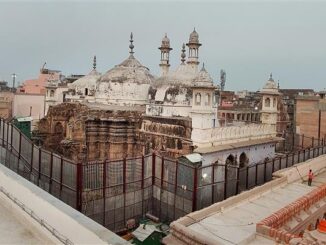
    Normally, digging at historic sites is done by an archaeologist and historians in search of a lost civilization or an ancient city or some signs of mythological events. But nowhere in the world, in the modern age, is an excavation done underneath a place of worship of one religion to find the remains of a place of worship of another religion. While digging in search of historical facts is a secular act, and is done using internationally recognized scientific methods, digging to establish the presence of a place of worship of one religion in a place of worship of another religion is, clearly, a non-secular act. Therefore, it is absolutely puzzling why the former Chief Justice of India (CJI), D.Y. Chandrachud found nothing objectionable or illegal in a survey in a place of worship of a particular religion by another religious group. In his oral observation, the former CJI, said, in 2022 (he was the CJI then), “a survey may not necessarily fall foul of the Places of Worship Act.” He made this tricky observation in the Gyanvapi mosque case.

    Clarity in the Act, yet challenged
    The Places of Worship (Special Provisions) Act was enacted by Parliament in 1991 in the background of a strident movement by Ram Janmabhoomi supporters which heightened communal tensions in Ayodhya and many other parts of north India. The government of the day apprehended the imminent outbreak of violence in different parts of the country due to the raising of claims over the places of worship of a particular minority community. This Act bars the conversion of places of worship of any religious community into a place of worship of a different religious community. It declares that the religious character of a place of worship existing on the 15th day of August 1947, shall continue to be the same as it existed on that day.

    The Act further provides that any suit and appeal seeking to convert the religious character of a place of worship existing on 15th August, 1947 pending before any court or tribunal shall abate on the commencement of the Act. It also states that no suit or appeal relating to this matter shall lie in any court after the commencement of the Act, and any suit alleging that the religious character of a place of worship has been converted after 15th August 1947 will be determined in terms of this Act.

    But the constitutionality of this Act is under challenge in the Supreme Court of India. A petition was filed in 2020 challenging the constitutional validity of the Act on the grounds that the date of August 15, 1947 was fixed arbitrarily and that this Act takes away judicial review.

    The contention that the date of August 15, 1947 was arbitrarily fixed in the Act to prevent the conversion of a place of worship is a specious one. This is the day when the transfer of power from the British government to the Indian government took place. Naturally, this was the earliest date the government could think of for the purpose of this Act. In any case, the Government of India could not have chosen April 21, 1526 when Babur defeated Ibrahim Lodhi in the battle of Panipat and captured Delhi and Agra and laid the foundation of the Mughal empire. Nor could it have chosen, arbitrarily, a later date and kept the field open for a set of religious fanatics to make reckless claims on the places of worship of another religion. Therefore, by all accounts, the date chosen by Parliament in this enactment was the most reasonable one.

    The second ground cited in the petition is that the Act takes away judicial review which is a part of the basic structure of the Constitution of India and any enactment which alters it is unconstitutional. This contention, needless to say, is without any merit. The Act declares that from the commencement of the Act, all pending suits, appeal or proceedings seeking to convert a place of worship of one religion existing as on August 15, 1947 into that of another religion or altering the religious character of a place of worship shall abate. It is the legislative policy of the government to declare through a law that certain types of suits shall abate under certain circumstances. It is not the same as stating that “no court shall have any jurisdiction in respect of any suit arising from the place of worship of any religion”. The latter legislative assertion can be interpreted as an exclusion of judicial review which would, no doubt, be unconstitutional. But that is not the case here.

    On the lower courts
    Subsequent to the above quoted observation of the former CJI, lower courts in the State of Uttar Pradesh are ordering surveys in mosques to determine their religious character with great alacrity. It has led to violence in Sambhal in Uttar Pradesh in which some lives were lost. The lower courts do not seem to have bothered to check whether it was an order of the Supreme Court or a mere observation of the CJI during the hearing. The fact is that such observations from the Bench have no significance as those are not a part of any judgment of the Court.

    Besides, it is a matter of common logic that when the law has barred any kind of conversion of the religious character of a place of worship as it existed on August 15, 1947, then what is the relevance of ordering or carrying out a survey to determine its character? Legally, its character is what existed on the date as above. So, where is the need for a fresh survey?

    A close reading of the provisions of the Act would reveal that what has been prohibited is not merely the act of conversion but also fresh surveys to establish the religious character of a place of worship. As that stands settled, any attempt to resurrect the dispute and get an order from the court would be clearly in violation of the Act.

    The Places of Worship Act 1991 has been hailed as a law which protects secularism in the Ayodhya judgment of the Supreme Court. Wisely, the Court has now put a blanket ban on all litigations relating to the places of worship till it finally determines the issue of the constitutionality of the Act.

    Protection of a fundamental right
    Quite apart from the issue of constitutionality or otherwise of the Places of Worship Act, a religious denomination has the fundamental right, under Article 26, to manage its own affairs in matters of religion. Worshipping in a mosque or a church is a matter of religion and any kind of interference by any outsider in that place of worship can be treated as a violation of the fundamental right of that religious denomination. The court, while ordering a survey of such a place of worship, is in fact committing a violation of Article 26 of the Constitution. The object of this Article is to protect the right conferred on a religious denomination. So, even if the Act was not in existence, a survey or excavation in a place of worship being used by a religious denomination for the purpose of finding out the religious character of that place would be a violation of Article 26.

    It is possible that beneath some mosques lie remains of temples. And beneath the remains of temples there may be the remains of Buddha or Jain viharas. History has sequestered in the womb of earth these tell-tale remains for an archaeologist and a historian to chronicle the history of this nation, and not for bigots to kindle revanchism and poison the minds of generations of unwary people. It is a great pity that judicial misdirection is refiring the retaliatory instincts of people fed on the falsehoods of manufactured history.

    (P.D.T. Achary is a former Secretary General of the Lok Sabha)