Tag: Dalip Singh Saund

  • The Sikh Community Itches to Empower Itself

    By Prof. I.S. Saluja

    Though a mere drop in the ocean, the Sikh community in the US, numbering around 280,000, according to The World Religion Database at Boston University, has made its presence felt in the country. The community which began trickling into the US at the beginning of the century started to pour after 70’s, with trouble brewing in their home e State of Punjab in India. In the 80’s the Sikhs came in torrents in the US after the genocide of the community in the wake of the killing of the then Prime Minister Indira Gandhi.

    They came, they saw, they conquered. Their immediate concern was having food at the table. In the last about 50 years, every Sikh who came to the US is in a position to claim that he enjoys a certain amount of financial security. Their next generation started getting education here. With a certain amount of financial security rose a desire to empower themselves through the political processes. They began to know and mix with the people of their community who were already involved in whatever way in the political processes.

    However, the community organizations remained the first love. It was through the community organizations that many moved on to participate in the political process. The community has understood that real empowerment can come only when they have political power. They have also been reminded that back in 1955 one of them was elected the first Sikh Congressman. Dalip Singh Saund is remembered with reverence as a role model for the community.

    Dalip Singh Saund was the first Sikh and first Indian American elected to Congress.

    Since the time of Congressman Saund, a number of Sikhs have entered politics. But never before now, there ever was such an impressive gallery of the Sikhs taking part in electoral politics. I am not going to span the entire nation. I am inclined to confine myself to New York City where we are going to have the civic elections in November this year. The primaries a few days away will decide the fate of many aspiring candidates to various offices.

    I spoke with a number of people from different walks of life about this newfound love for politics. To the question “why so many Sikhs, particularly the young ones, now aspire for political positions, the answer invariably was that they want to empower themselves; they want to be heard; they want a pie of the political cake. Most said that the economic prosperity has no meaning until they are politically empowered. For the November 2021 cycle New York City elections, we have quite a few Sikhs in the fray. They all are for City council.

    Harpreet Singh Toor

    For City Council District 23, we have two Sikhs. One is Harpreet Singh Toor, a senior community leader and a politician with a long standing. Having worked in City administration and with elected representatives, he has come to acquire a good understanding of various aspects of working on administration and political fronts.

    Jaslin Kaur

    Another candidate is Jaslin Kaur, a spirited young lady who is seeking to draw strength from the younger generation.

    Amit Singh Bagga

    Amit Singh Bagga is a Sikh candidate for Council District 26. He is pitted against 14 candidates, including Asians and South Asians.

    Japneet Singh

    Japnit Singh, a young Sikh is one of the 2 candidates in City Council District 28 where Adrienne Adams is a sitting council member.

    Felicia Singh

    Another young Sikh lady Felicia Singh is pitted against 5 others in City council District 32.

    However, I have also wondered why the Sikh Community has so far failed to get a strong footing in the mainstream politics in the Northeast U.S.

    Raghbir Singh Subhanpur

    I asked the question to Mr. Raghbir Singh Subhanpur, a prominent businessman of Queens and President of Shiromani Akali Dal, America. He said, “There may be manifold reasons for that predicament. The first generation that came ashore to this great country focused on their economic well-being. We have come from an environment where there were shortages, joblessness, and heightened competition for basic human needs. Therefore, upon arrival, we have dug in focusing on our self-improvement by attaining educational qualifications, professional jobs, Houses, providing top-notch education to our children, and the time left was used for religious services or cultural expressions. Our economic insecurity became an obstacle to any progress in the political arena.”

    “In addition, for the same reason as I stated above, we pushed our children to take up professions that have job security in fields such as Medicine, Engineering, or Information Technology. Political Science or International Relations were mostly shunned in favor of subjects that would reward a higher paycheck after graduation. Those who studied Law preferred to join a successful law firm or practice outside in a lucrative real estate business.  Let us look at the composition of the forces at play at the higher echelons of power in the U.S. It consisted primarily of two groups: Lawyers and Businessmen (CEOs with MBAs from prestigious Institutions). Almost fifty percent of those running USA Inc. come from the top 15 Colleges or Universities in this country. In the final analysis, most of our young people ended up in professions that supported the Enterprise from behind rather than leading up in the front.”

    “At the end of the day, Sikhs must come together to succeed”, said Mr. Raghbir Singh Subhanpur,

    (The author is Chief Editor of The Indian Panorama)

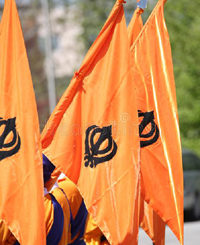
  • Remembering the Sikh heroes: bearers of Nishaan Sahib Insignia’

    Remembering the Sikh heroes: bearers of Nishaan Sahib Insignia’

    By Amarjit Singh Anand

    “During the current global pandemic, the Divine Guru’s teachings of compassionate sharing, came to the fore, when millions of people were served with edibles, medicines, clothing, shelter and all essential services. As a collective, during the unprecedented lockdown, several governments officially requested the Sikhs to prepare food in Gurdwaras, to be served to individuals, as well as to be sent to hospitals and other institutions for the old and the infirm, orphans, and economically weaker sections.”

    Battle of Saragarhi,12 September 1897 when 21 Sikh soldiers fought 12,000 Afghan tribesmen.
    Serving free food during a calamity.

    Truth, contentment and kindness are the GUIDING LIGHTS that bless and prod the Sikhs towards living a Divine life, fighting invaders and tyrannical oppressive regimes, for the protection of the weak and the meek teeming millions.

    During these five centuries, hundreds of thousands of Sikh Martyrs have performed the supreme sacrifice of life, as defenders of Freedom of Religion, as protectors of their motherland, as saviors of the honor of women and as helpers of the oppressed classes.

     The Sikhs, whether in India or while living as law-abiding citizens and contributing significantly to the economic growth of their adopted nations of abode, have maintained strong connections with their land of origin. The foreign exchange remittances, to India, from the Sikhs are exemplary, in rejuvenating the Indian economy.  Wherever the Sikhs reside, they assimilate extraordinarily well, in the mainstream life of any nation, culturally, politically, socially, economically, lending a spiritual and ethically sublime touch to all that they are involved in or are called upon to do.   ALL the Role-Model Sikhs must utilize the affluence and influence, with an ever-enhanced sense and degree of responsibility towards the “good of all”. Material growth must be tempered with spiritual elevation and evolution.

    The global community of the Sikhs is built on the spiritually strong edifice of “treating death as a reality, verily as life”. Sikh role-models, globally, are the insignia bearers of Sikhism.

    The history of Sikhism starts from the Blessed Advent of Sree Guru Nanak Sahib, in circa 1469, in Talwandi region, then part of a much larger India. His Tenets include Truthful living, humility, liberty, equality, justice, compassion, honest earning, serving the needy selflessly and protecting the weak and the meek. All this, he said would be tantamount to a Divine Life and real, true, actual worship and attainment of God and fulfillment of the purpose of human-birth.

    For over a thousand years, this region was invaded by a small bunch of horse-rider marauders, from Mongolia, Persia, Afghanistan, and the like. Taimur, Ghazni, Ghori, Nadir Shah, Abdali are only a few of those invaders, who plundered Hindu Temples, looted gold, took women and children as slaves, killed everyone who crossed their path.

    And then appeared a man on earth, the likes of whom are seen, once in a millennium. Guru Nanak Sahib Jee confronted Babur, an invader who established his empire on Indian soil. Guru Nanak Ji’s Divine ambrosial words were adequate to transform a ruthless mass-murderer into one who fell at the Guru’s feet, pledging to rule with justice. Babur sought a boon of ruling for several generations and Guru Nanak Sahib Jee granted it and it came to fruition for seven generations, exactly during the lifetime of ten Divine Gurus.

    The Divine Preceptor of ONENESS of humanity traversed 27,000 miles, across various continents, in 25 years of his 70 years’ sojourn on this planet, during which he reformed several tyrannical rulers, vociferously advocated human rights and women’s rights, brought about social revolution, by speaking out against slavish mentality, superstitious belief system, hollow ritualistic practices, religious bigotry and suppression of the downtrodden social and economic classes.

    Guru Nanak Ji was the pioneer, enunciating the cause of Inter-Religious Peace and Harmony. Guru Arjan Sahib and Guru Tegh Bahadur Sahib attained martyrdom for the cause of Freedom of Religion and Interfaith acceptance and harmonious coexistence. Guru Gobind Singh Sahib, tenth Spiritual Master, sacrificed his entire family including four sons, all under 17, fighting the tyrannical regimes, bent upon annihilating the Freedom of Religion, Culture and Traditions. Martyrs include Bhai Mani Singh, Baba Deep Singh (valiant warrior) Bhai Taru Singh, Bhai Dayal Das, Bhai Mati Das, Bhai Jati Das, Bhai Sati Das.

    At this juncture, it is paramount to remember the supreme sacrifices made by noteworthy Hindu and Muslim supporters of the Gurus and Sikhs. They are Rai Bular Bhatti, Bhai Mardana ji, Sain Mian Mir, Pir Budhan Shah, Pir Bhikhan Shah, Raja Dewan Todar Mal, Moti Ram Mehra, Nawab Sher Khan of Malerkotla, Dr. Sir Gokul Chand Narang, Daulat Rai, Rabindra Nath Thakur (Tagore) Sri Aurobindo Ghosh.

    During these five centuries, hundreds of thousands of Sikh Martyrs have performed the supreme sacrifice of life, as defenders of Freedom of Religion, as protectors of their motherland, as saviors of the honor of women and as helpers of the oppressed classes. They have been in the forefront against marauding invaders and the oppressive British regime. The maximum number of those exiled from India or those executed by the British, after fake trials, were Sikhs.

    Illustrious Martyrs include Bhagat Singh, who instilled courage in the masses by kissing the gallows, as a reward for serving the cause of India’s freedom. Udham Singh, avenged the Jallianwala Bagh massacre perpetrated by the British, after twenty-one years, and was also hanged. Udham Singh, Kartar Singh Sarabha,

    Maharaja Ranjit Singh reigned over the Khalsa Empire for almost 50 years and his legendary General Hari Singh Uppal ‘Nalwa’ conquered regions in Afghanistan. Baba Banda Singh Bahadur established the first Sikh kingdom. Bhagel Singh, Jassa Singh Ahluwalia and Jassa Singh Ramgarhia are the valiant Generals, who vanquished Delhi (under Mughal Empire) Several notables include Nawab Kapur Singh, Akaali Phoola Singh ji. Maharaja Ripudaman Singh of Nabha, one of the few rulers of princely states who dared to defy the British, continues to inspire generations. Lieutenant General Harbaksh Singh (Vir Chakra) commanded the Indian Army and played a key role during the Indo-Pakistani War of 1965. For his role in the war, he was awarded the Padma Vibhushan.

    General Mohan Singh and Colonel Gurbaksh Singh Dhillon of the Indian National Army which fought the British colonial rulers.

    Hardit Singh Malik (CIE OBE) an Indian civil servant and diplomat. He was the first Indian High Commissioner to Canada, and then Indian Ambassador to France. He was the first Indian to fly as a pilot with the Royal Flying Corps in the First World War. He also played first-class cricket between 1914 and 1930. The role of the Sikhs in the Liberation of France is well recognized.

    Sikh regiments and battalions have served the United Nations Peace-keeping forces, worldwide, whether in war-torn countries or civil-wars, and in regions ravaged by natural calamities as famines, floods, droughts or earthquakes.

    Fighting in the World Wars, as part of the British Indian Army, the highest number of “exceptional gallantry” Awards from the British Empire were bestowed upon the Sikhs.

    The epic battle of Saragarhi witnessed the saga of twenty-one Sikhs attaining martyrdom facing ten thousand ferocious Tribal Afghans is unparalleled in world history.

    Today, the Sikhs reside in several countries and have made a mark for themselves, in various spheres of endeavor.

    The Sikhs, whether in India or while living as law-abiding citizens and contributing significantly to the economic growth of their adopted nations of abode, have maintained strong connections with their land of origin. The foreign exchange remittances, to India, from the Sikhs are exemplary, in rejuvenating the Indian economy.

    Whether the armed forces or politics, science and technology, business or various professions, the arts or sports, Sikhs have excelled unproportionately, in correlation to their very negligible percentage of the world populace.

    Revered Saint Bhagat Pooran Singhji, personally, served the residents in a leprosy-home which he established. Being an epitome of humility and selfless service, he refused to be nominated for the Nobel Prize.

    To name a few luminaries: Dr. Manmohan Singh (Prime Minister of India) Zail Singh (President of India) Air Marshal Arjan Singh, Lt. Gen. Jagjit Singh Aurora (effected the surrender of ninety thousand Pakistan army personnel) Bhai Mohan Singh (industrialist, Founder of Ranbaxy pharmaceuticals) Hukam Singh & Gurdial Singh Dhillon (both Speakers of Lok Sabha) Swaran Singh (Foreign Affairs Minister)

    Literary geniuses include the wise grand old man Baba Buddha Ji (who lived from Guru Nanak Sahib up to 6th Guru Hargobind Sahib) Bhai Gurdas ji, Bhai Vir Singh, Kahan Singh Nabha, Amrita Pritam (poet par excellence) Khushwant Singh, Manjit Tiwana, Surjit Patter.

    Other notables are The ‘Flying-Sikh’ Milkha Singh (Olympian sprinter) Ajaypal Singh Banga (CEO, Mastercard) Dr. Narinder Singh Kampany (inventor of fiber-optics) Capt. Tania Shergill, the youngest Adjutant and the only lady to become the Parade-Adjutant, on India’s Republic Day, 2020.

    Yogi Harbhajan Singh Khalsa was the Preacher of Sikhism in the Western Hemisphere, where the Sikh universal doctrine has been embraced by people from various races and those having different religious and cultural affiliations.

    There are many Sikh parliamentarians in various countries. Gurbax Singh Malhi, elected to the Canadian Parliament in 1992, created history, when laws had to be amended, to accommodate a turban- wearing member to sit in the Parliament. Jagmeet Singh Dhaliwal, political influencer and Tanmanjit Singh Dhesi (UK MP).

    In the scenario of the post 911 tragedy, several Sikhs were murdered and bore the brunt of hate crimes, due to the mistaken-identity syndrome, but succeeded through relentless endeavors, to enhance awareness about the Sikhs.

    During the current global pandemic, the Divine Guru’s teachings of compassionate sharing, came to the fore, when millions of people were served with edibles, medicines, clothing, shelter and all essential services. As a collective, during the unprecedented lockdown, several governments officially requested the Sikhs to prepare food in Gurdwaras, to be served to individuals, as well as to be sent to hospitals and other institutions for the old and the infirm, orphans, and economically weaker sections. And, then, came the farmers agitation, for the restitution of their rights. This peaceful agitation, soon, got transformed into a People’s Protest, gaining momentum with support from all segments of the society.

    Wherever the Sikhs reside, they assimilate extraordinarily well, in the mainstream life of any nation, culturally, politically, socially, economically, lending a spiritual and ethically sublime touch to all that they are involved in or are called upon to do.

    Sree Guru Nanak Sahib, The Divine Preceptor and his nine successors inculcated numerous Divine attributes like truth, humility, wisdom, bravery, perseverance, contentment, compassion, in the Sikhs. The valorous, chivalrous, industrious, Sikhs have, throughout their legendary history of five and a half centuries, been living life, in consonance with the DIVINE Tenets, as espoused by Sree Guru Nanak Sahib, The Exalted and Humble Prophet of ONENESS of humanity.

    Truth, contentment and kindness are the GUIDING LIGHTS that bless and prod the Sikhs towards living a Divine life, fighting invaders and tyrannical oppressive regimes, for the protection of the weak and the meek teeming millions.

    Guru Sahib opines that a Believer, a GOD-conscious aspirant would always practice kindness towards all, not just for friends but also to the soldiers in the enemy rank and file, just as Bhai Kanhaiyaa Jee, who was blessed by Guru Gobind Singh Jee, for performing such unique Divine deed of serving water and providing first-aid on the battlefield, sans any distinction or discrimination, whatsoever.

    The Soul-nurturing act of “GIVING” is a GODLY attribute, signifying GRATITUDE towards the GREATEST GIVER, our Omniscient Creator.

    The Great Gurus instilled the spirit of giving in the Sikhs, in consonance with which, every single Gurdwara provides food to all, irrespective of race, religion, caste, status, to every single person who walks in. At the Sanctum Sanctorum of Sree Harmandir Sahib, volunteers prepare and serve meals for 3000 people every half hour. Many Gurdwaras offer shelter to the visitors and send edibles and medicines to the shelters.

    Several Sikh organizations like Khalsa Aid, United Sikhs, SALDEF and Sikh Coalition are, proactively, engaged in global humanitarian relief endeavors during natural calamities or man-made tragic events. GIVING may include time, emotional support or physical assistance and not, necessarily, monetary help.

    Outside of India, history was made when Dalip Singh Saund was elected as the first US Congressman, of Indian descent. Today, Sikhs adorn the highest offices in Europe, the Americas, Australia, in diverse spheres of endeavor, including diplomatic assignments and parliamentary, administrative and judicial appointments.

    Not to forget the two World Wars and various occasions whereby high-ranking Sikh officers and soldiers have offered their exemplary services as the United Nations Peacekeepers.

    In North America Sikhs have added to the rich tapestry of the fabric of pluralism, as envisaged in the Constitution of the United States of America.

    The leadership role has been bestowed by the Great Guru Sahib, upon each Sikh, more so when The Tenth Spiritual Master, Guru Gobind Singh Jee blessed us with the unique identity of turban and beard, stipulating these as mandatory. This distinct appearance shall, verily, bear a tremendous exemplary impact upon the Sikh youth, motivating them to retain it. Such leadership role falls more upon those who have been blessed with the path-breaking success and accomplishments.

    ALL the Role-Model Sikhs must utilize the affluence and influence, with an ever-enhanced sense and degree of responsibility towards the “good of all”. Material growth must be tempered with spiritual elevation and evolution.

    ONLY then, commands SREE GURU NANAK SAHIB, shall every human attain the objective of a purposeful LIFE, by way of realizing and recognizing THE ALMIGHTY MAJESTY in ALL CREATIONS. “Gobind milan kee eh tairee bariyaa; Awar kaaj tairai kitai na kaam, mil Saadh Sangat bhaj kewal Naam”. The GOLDEN opportunity of human-frame must be availed to envision GOD in ALL. Such WORSHIP, as advised by the Benevolent Guru Sahib, would be acceptable to THE CREATOR. The responsibility to HEAL HUMANITY becomes incumbent upon those who have been blessed with abundance of Divine bounties. We are, all, the insignia bearers of the Vision & Mission of Sree Guru Nanak Sahib, and must continue striving and thriving to work in tandem, traversing the GOLDEN PATHWAY of DIVINITY in HUMANITY.

    (The author is a keen researcher of Sikhism and spirituality. A United Nations Ambassador of Peace, he has written extensively on various aspects of diverse faiths and has actively worked on the interfaith front. He can be reached at amar1ujagar1pritam@gmail.com)