Dave Makkar Social & Political Activist, New Jersey
As India marks 77 years of independence, its democratic foundations face profound erosion. Critics describe a transition to an elected autocracy, sustained by an oligarchy of state-made billionaires. This elite has thrived on acquiring public assets—natural resources, spectrum, infrastructure—at concessional rates, financed by public-sector bank loans.
Social inequality now exceeds British-era levels. Public investment in healthcare, education, and employment remains inadequate, while spending on monumental statues and temples garners focus. Minorities, particularly Muslims and Christians, along with marginalized castes, report escalating persecution.
The nation faces a severe environmental crisis, hosting the world’s highest number of polluted cities and widespread water insecurity. Concurrently, a perceived lack of governmental accountability contrasts with displays of political opulence. The republic stands at a precipice, its democratic promise challenged by centralization of power, rising majoritarianism, and acute socio-economic disparity.
At 77, India no longer functions as a full democracy but as an elected autocracy sustained by an oligarchic alliance. Political power is concentrated, institutions are weakened, and accountability has steadily eroded. India’s billionaires are largely state-made, having accumulated extraordinary wealth through preferential access to public assets—land, natural resources, minerals, oil, gas, spectrum, and infrastructure built with public funds—often acquired at throwaway prices and financed by massive loans from public-sector banks funded by citizens’ savings. Inequality today exceeds even that of the British Raj. Despite this, there is no comparable national investment in education, healthcare, or employment generation; public money flows instead toward grand statues, spectacles, and temple projects. Minorities—especially Muslims and Christians—as well as lower-caste Hindus face open discrimination and violence with little consequence. India hosts some of the world’s most polluted cities, unsafe drinking water, and deep environmental stress. Meanwhile, rulers live in opulence unprecedented even under colonial rule, detached from the lived reality of most citizens.
Even pre-independence India, with 450 million people and 12.6 million square miles, had around 600 princely states.
Modern New Jersey, with 9.3 million people and 8,722 square miles, has 564 princely fiefdoms — each with its own local monarch.
Call it home rule or over-rule, but New Jersey remains a bureaucratic circus running on taxpayers money.
New Jersey & Pennsylvania comparison of spending, tax, and population
At a Glance
New Jersey by Numbers (2025)
Population: ~9.26 million (2024 estimate)
Land Area: 8,722 sq. miles
Municipalities: 564
FY 2025 State Budget: ≈ $56.6 billion
Average Property Tax (2024): Over $10,000 — highest in the U.S.
Licensed Attorneys: 39,311 (≈ 4.23 per 1,000 residents)
Dual-Office Holding: Banned for new officials since 2007 (loopholes remain)
A Tiny State with Too Many Governments
New Jersey is a small state — just 8,722 square miles, smaller than many American counties — yet it manages to support one of the most bureaucratically dense systems on Earth.
With 564 municipalities under 21counties, serving 9.3 million people, every town insists on having its own mayor, council, police department, court, and school district.
The beloved “home rule” system, once a symbol of grassroot democracy, has in practice become a monument to duplication, inefficiency and waste.
💬 New York City serves roughly the same population with one mayor, one police commissioner, and one school system. New Jersey does it with 564.
The result? Sky-high costs. Sky-high taxes. And bottom-shelf results.
A Budget That Outpaces Its Neighbors
For FY 2025, New Jersey enacted a $56.6 billion budget — larger than Pennsylvania’s, even though Pennsylvania has 43% more people and four times the land area.
Average Property Tax (2024): $10,000+
A Decade Ago: ~$7,200
Increase: Nearly 40% in ten years
We pay more, yet get less. Taxes in the Garden State have risen faster than almost anywhere in America.
Education: Spending More, Achieving Less
New Jersey ranks among the top spenders on public education — often over $20,000 per student, compared to the U.S. average of $14,000.
It has 695 Local Educational Agencies (LEAs) managing 2,506 public schools.
Despite this, outcomes remain uneven:
New Jersey ranks among the top spenders with over $20,000 per student, compared to the U.S. average of $14,000.
It maintains 695 Local Educational Agencies (LEAs) to manage 2,506 public schools — a bureaucratic forest of superintendents, consultants, and boards.
Despite this lavish spending, outcomes remain uneven and disappointing.
Many students graduate lacking basic literacy and numeracy.
Our education system mirrors our governance — expensive, layered, and unaccountable.
Lawyers Everywhere, Justice Nowhere
According to the American Bar Association, New Jersey had 39,311 active lawyers in 2024 — about 4.23 per 1,000 residents. That rivals California’ 4.3, a state with four times our population.
For a state this small, the legal saturation is staggering. Litigation seeps into every corner of life — from zoning and education to local governance. We’ve built a culture where bureaucracy thrives on endless lawyering.
For a state this small, the legal saturation is staggering. Litigation seeps into every corner of civic life — from zoning to schools to town hall politics.
We’ve built a state where government thrives not on efficiency, but on endless lawyering and procedural paralysis.
The Double-Dipping Tradition That Refuses to Die
New Jersey outlawed dual-office holding in 2007 — but grandfathered in incumbents who already held multiple posts. The result?
The same old abuse continues under new legal cover.
Example:Nicholas Sacco, North Bergen power broker —
Mayor since 1991
State Senator since 1994
Township Commissioner since 1985
Assistant Superintendent of Schools on top of it all
Few states would allow this concentration of power. In New Jersey, it’s just another Tuesday.
In any other state, this would raise eyebrows and legal challenges.
In New Jersey, it raises pensions.
Why New Jersey Costs So Much
Let’s connect the dots:
564 municipalities
21 counties
Hundreds of overlapping school boards
39,000 lawyers
619,000 government employees
Property taxes exceeding $10,000 per household
Add it up, and you have America’s most expensive and over-governed state.
Let’s have a comparison between New Jersey and Pennsylvania.
Unlike Pennsylvania, where large areas remain unincorporated, every inch of New Jersey is incorporated. Every town has its own mini-bureaucracy — its police, public works, clerk’s office, attorney, and school board.
Some towns have fewer than 1,000 residents — yet still operate as full-fledged municipal governments.
The Township Patchwork
Here’s the municipal breakdown:
30 towns under 1,000 residents
182 towns with 1,000–6,000 residents
115 towns with 6,000–11,000
99 towns with 11,000–21,000
47 towns with 21,000–30,000
39 towns with 40,000–70,000
10 towns between 71,000–110,000
Top Five Cities: Newark, Jersey City, Paterson, Lakewood, Elizabeth
That’s 564 “mini-kingdoms,” each with its own royal court of mayors, clerks, attorneys, and chiefs — funded by the taxpayer.
The Home Rule Illusion
Supporters of “home rule” say it brings government closer to the people. In reality, it brings bureaucracy closer to your wallet.
Each town guards its turf and budget like a feudal estate. What we have is not participatory democracy, but a collection of fiefdoms for politicians and bureaucrats.
Every inch of New Jersey is incorporated. Every square mile is ruled by a mini-bureaucracy — with its own police, attorney, and clerk. Some towns have fewer than 1,000 residents yet operate like full-fledged governments.
This isn’t home rule. It’s job security for politicians and bureaucrats.
As I often say in Hindi:
“Netaji aur Sarkar Chalane Walon ke Liye Rozgar Yojana.”
(A government employment scheme for politicians and bureaucrats.)
Even pre-independence India, with 450 million people and 12.6 million square miles, had around 600 princely states.
Modern New Jersey, with 9.3 million people and 8,722 square miles, has 564 princely fiefdoms — each with its own local monarch.
Call it home rule or over-rule, but New Jersey remains a bureaucratic circus running on taxpayer money.
New Jersey & Pennsylvania comparison of State spending and Taxes
New Jersey vs. Pennsylvania: A Tale of Two States
Metric (2025) New Jersey Pennsylvania
Land Area 8,722 sq mi ~46,055 sq mi
Population 9.26 million 13.25 million
Municipalities 564 Far fewer
State Budget $56.6B ~$47.6B (General Fund)
Avg. Property Tax ~$10,000 ~$4,600
Per Capita Spending ~$11,600 ~$7,200
Dual Office Holding Banned (with loopholes) Rare
Despite being one-fifth the size, New Jersey spends like an empire. Trenton operates a larger budget than its bigger neighbor while delivering no better services — just more layers of officials.
Counties Within Chaos
New Jersey’s 21 counties add yet another layer: each has its own commissioners, sheriff, clerk, and surrogate.
Salem County (population 56,874) — 15 municipalities in 338 sq miles.
Bergen County (population 978,641) — 70 municipalities in just 234 square miles!
That’s bureaucracy on steroids.
The Cost of Keeping 585 Governments Running
According to the Bureau of Labor Statistics (2024):
Government Employees (NJ Total): ~619,000
State Employees: ~152,500
Average Compensation: $63.94/hour (wages + benefits)
That’s roughly $76.7 billion in annual payroll — more than the entire state budget.
Add in 13,000+ elected and appointed officials, whose salaries and benefits push the total cost near $500 million annually.
Add 13,000+ elected and appointed officials, and taxpayers are on the hook for roughly $500 million annually in salaries and benefits just for the rulers.
No wonder residents feel like they’re paying for the privilege of being governed.
New Jerseyans aren’t citizens — they’re the paying customers of a political monopoly.
Democracy or Legalized Extortion?
What we have in New Jersey isn’t functional democracy — it’s a political protection racket.
Residents are treated as the ATM for a bloated, self-replicating system.
This isn’t democracy in action. It’s a legalized extortion — a political protection racket disguised as government.
Pennsylvania shows that larger, more complex states can spend less and deliver more. New Jersey proves that corruption and inefficiency are bipartisan traditions.
Trenton remains the heart of this cartel — where outdated laws protect political dynasties, and public money fuels private ambition. Until someone cuts through this structural fat, we’ll keep paying Cadillac taxes for Chevy-level governance.
……Chevy-level governance — by dishonest, unethical, and immoral politicians hiding behind century-old laws.
A State That Serves Itself
New Jersey is rich, urbanized, and strategically located. Yet, it’s governed by a system that exists to serve itself.
Let’s recap:
$56.6 billion State budget
$76.7 billion in government payroll
$500 million in elected & appointed payroll
564 municipalities
$10,000 average property tax
619,000 total government workers
39,000 lawyers
Rampant legalism and inefficiency
I’ve lived here since 1996 — long enough to conclude that the Garden State’s most reliable crop isn’t tomatoes — it’s bureaucrats and politicians.
Perhaps psychiatrists, not voters, can best explain why New Jerseyans keep tolerating it.
(This article was first published in The Indian Panorama on September 5, 2011, and updated for 2025 with new data and analysis.)
Sadly, political and bureaucratic corruption in New Jersey has only grown more refined — and more shameless.
Compiled and updated by:
Dave Makkar An inmate of the world’s most corrupt state since December 1996
The danger is no longer in the future—it’s already here. As rituals replace reason, and holy men replace elected representatives in moral authority, India risks becoming a de facto Hindu nation in all but name.
By Dave Makkar
India has long been a land of saints and sages—a civilization nurtured by its spiritual heritage. But today, the sacred and the secular are merging in unprecedented ways. Gurus, babas, sadhvis, and self-styled godmen—once relegated to the spiritual margins—have become central actors in the political theater of the world’s largest democracy.
No longer just spiritual guides, these religious figures now wield real influence over public policy, elections, state institutions, and even India’s international diplomacy. From the dusty ashrams of Uttar Pradesh to the plush auditoriums of Davos, India’s holy men and women are reshaping the contours of power.
Back in 2009, scholar Meera Nanda sounded the alarm in The God Market, warning that Hindu nationalism’s “tolerant façade” was cracking under the weight of growing intolerance cloaked in religiosity. Over a decade later, her warnings have proved eerily prescient.
From Ashrams to Assemblies: The Historical Arc
Religion and politics have always intersected in India, but the last three decades have seen that relationship transform into an institutionalized axis of power. In the 1970s, Swami Dhirendra Brahmachari’s influence over Indira Gandhi was well-known. But it was the 1990s Ram Janmabhoomi movement that marked a seismic shift.
Sadhvi Ritambhara, Uma Bharti, and other saffron-robed leaders emerged as the religious vanguard of an increasingly politicized Hindu nationalism. The campaign to build a Ram temple in Ayodhya was not just about reclaiming a religious site—it was about defining Indian identity in Hindu terms.
What followed was a surge in the visibility and power of godmen and godwomen. Liberalization, satellite TV, and later social media provided them platforms to build empires. Baba Ramdev turned yoga into a billion-dollar business and nationalist brand. Sri Sri Ravi Shankar exported “peace” and “well-being” while acquiring prime real estate from the state. Sadhguru Jaggi Vasudev reinvented mysticism as eco-conscious modernity. This was the birth of a new market—what Nanda aptly called “The God Market.”
The Political Power of Godman
Godmen today are more than spiritual advisors—they are kingmakers. Their massive followings are political capital, often mobilized to sway elections and public opinion. In return, they are offered state protection, land, and legitimacy.
The most striking case is that of Yogi Adityanath—a former mahant (head priest) of the Gorakhnath Math, now serving as the saffron-clad Chief Minister of Uttar Pradesh. His rise reflects a new archetype in Indian politics: the monk-politician. Adityanath’s rhetoric blends religious symbolism with hardline nationalism, making him a formidable figure both within and outside the BJP. Despite past criminal charges ranging from incitement to attempted murder, his ascent to power saw most cases against him quietly vanish.
Another key figure is Uma Bharti, who became the first sadhvi to head a state government in 2003 when she became Chief Minister of Madhya Pradesh. Though forced to resign over pending legal issues, she returned to national politics as a union minister, proving that saffron-robed politicians are no longer fringe—they are the mainstream.
The pantheon is ever-growing. Alongside established figures like Ramdev and Sri Sri, new spiritual celebrities have emerged:
Dhirendra Shastri of Bageshwar Dham draws tens of thousands to his events, claiming supernatural powers and publicly blessing political leaders.
Sadhvi Prachi, linked with the Vishwa Hindu Parishad, regularly makes headlines for incendiary, ultra-nationalist speeches.
Jaggi Vasudev (Sadhguru) mixes yoga and ecological activism with sharp political alignments—often soft-selling state narratives as spiritual truths.
Swami Avdheshanand Giri of Juna Akhara plays a key mobilizing role in religious mega-events like the Kumbh Mela.
Even controversial figures like Radhe Maa and Nirmal Baba have acquired cult-like followings. Meanwhile, Gurmeet Ram Rahim Singh, despite being jailed for rape and murder, continues to influence politics in Haryana, Punjab, and Rajasthan—parties openly courted his support before elections.
This new crop of spiritual leaders is media-savvy, multilingual, and politically plugged in. Many enjoy celebrity status, giving interviews on primetime television, hobnobbing with politicians, and drawing larger crowds than mainstream political rallies.
The most disturbing trend is the seepage of Hindu rituals and symbolism into the core of India’s secular institutions. The line separating state and faith is no longer blurred—it is being actively erased.
In the Armed Forces, warships and aircraft are inaugurated with Vedic chants and coconut-breaking ceremonies. Senior officers, in full uniform, have been seen visiting ashrams and performing religious rituals.
In the Judiciary, judges—including those in the Supreme Court—have publicly participated in temple inaugurations and religious functions. In 2023, Chief Justice D.Y. Chandrachud hosted PM Modi for a Ganesh Puja at his residence, sparking concerns about impartiality.
In Education, BJP-ruled states have mandated rituals like Surya Namaskar, Vedic chants, and Sanskrit prayers in public schools, pushing a Hindu-centric cultural curriculum.
In Governance, state events increasingly begin with Hindu rituals. When PM Modi laid the foundation stone for the new Parliament building in 2020 and inaugurated it in 2023, the ceremonies were led exclusively by Hindu priests—no interfaith representation, no secular symbolism.
These acts are not symbolic anomalies—they represent a calculated positioning of Hinduism as the de facto national religion, in stark contrast to the constitutional promise of secularism.
The Triumph of Faith over Reason
India now boasts over 3.01 million places of worship—more than double the number of schools and nearly 40 times the number of hospitals. That statistic alone is staggering. The country has roughly one shrine for every 450 people, yet only 1.5 hospital beds per 1,000 people. The message is clear: while spiritual infrastructure flourishes, healthcare and education suffer.
Over 50% of domestic tourism is religious in nature. Temples, pilgrimages, and spiritual festivals dominate travel patterns. And yet, rationalist voices who question blind faith are marginalized, often at great personal risk.
Prominent rationalists and activists—Narendra Dabholkar, Govind Pansare, and M.M. Kalburgi—were assassinated in chillingly similar patterns, allegedly by extremist Hindutva groups. Their deaths underscored a rising tide of intolerance against those challenging superstition and theocratic dominance.
Chief Minister Yogi Adityanath at the Virat Sant Sammelan in Prayagraj. (File Photo : X/@myogiadityanath)
What we are witnessing is not just the rise of a few influential religious figures. It is the structural entrenchment of political Hinduism—a transformation of India’s secular democracy into a religio-political state.
The paradox is cruel: Hindu nationalism claims to be uniquely tolerant, yet its triumphalist form has fueled growing intolerance toward minorities, dissenters, and secular values. Victims of communal violence frequently find justice elusive. Critics of religious extremism are labeled anti-national or worse.
As Meera Nanda argues, the corporate-temple-state nexus is real—and growing. Religious organizations receive land, tax exemptions, media amplification, and legal immunity in ways no secular entity can rival. Hindu religiosity is now part of the “official culture,” often even in states where the BJP is not in power.
India today stands at a profound crossroads. The rise of godmen and sadhvis is not simply a cultural trend—it’s a redefinition of what the Indian state stands for.
The critical questions are not just legal or political—they are civilizational:
Can the constitutional ideal of secularism survive in a country where religious symbolism dominates public life?
Can rationalist thought and scientific temper find space in a society overwhelmed by spiritual consumerism?
Can social justice movements take on not only caste and class hierarchies but also the growing hold of blind religiosity on the popular imagination?
These are not abstract questions. The answers will shape India’s future—whether it remains a secular, pluralist democracy or slides into a soft theocracy powered by saffron robes and loudspeakers.
The danger is no longer in the future—it’s already here. As rituals replace reason, and holy men replace elected representatives in moral authority, India risks becoming a de facto Hindu nation in all but name.
This is not about religion versus irreligion. It is about power masquerading as piety. It is about a state that now bends before spiritual entrepreneurs while rational voices are silenced, exiled—or worse.
India’s battle today is not just political—it is a battle of ideas, of what kind of republic the nation wants to be. And whether that republic still has room for dissent, diversity, and democracy.
If not, the gods may indeed have won—but the people may have lost the Republic.
References Used:
Bose, S. (2019). The yogic empire: Baba Ramdev, Patanjali and the making of modern India. HarperCollins.
Economic Times. (2016, January 12). Madhya Pradesh introduces Surya Namaskar in schools. The Economic Times. https://economictimes.indiatimes.com
Government of India. (2011). Cultural infrastructure report: Census of India 2011. Office of the Registrar General & Census Commissioner, Ministry of Home Affairs.
Malhotra, Inder (2001). Indira Gandhi: A political biography. Penguin Books.
Hindustan Times. (2015, June 10). Sadhvi Prachi stirs controversy with provocative remarks. Hindustan Times. https://www.hindustantimes.com
Indian Express. (2021, November 21). INS Visakhapatnam commissioned with Vedic rituals. The Indian Express. https://indianexpress.com
Jaffrelot, C. (2007). Hindu nationalism: A reader. Princeton University Press.
Jaffrelot, C. (2021). Modi’s India: Hindu nationalism and the rise of ethnic democracy. Princeton University Press.
Ministry of Tourism. (2022). India tourism statistics 2022. Government of India. https://tourism.gov.in
Nanda, Meera (2009). The god market: How globalization is making India more Hindu. Random House India.
The Hindu. (2005, February 14). Art of Living ashram given 99 acres of land. The Hindu. https://www.thehindu.com
The Print. (2023, January 25). Bageshwar Dham’s Dhirendra Shastri and the politics of faith. The Print. https://theprint.in
Gun control in America has the potential to protect lives, though it remains one of the nation’s most debated issues. The United States suffers more gun-related deaths than most developed nations, including homicides, suicides, and mass shootings. Common-sense measures such as universal background checks, waiting periods, and restrictions on high-capacity or military-style weapons could reduce access to firearms by dangerous individuals, including those with violent histories or severe mental health issues, while preserving the rights of responsible owners. Evidence from countries like Australia and the United Kingdom shows that stronger gun laws can significantly decrease gun violence. Critics argue that criminals often ignore laws, and restrictions could leave law-abiding citizens vulnerable. The challenge is to strike a balance between personal freedom and public safety. By closing loopholes and focusing on prevention, America could reduce gun deaths. Ultimately, the right to live safely should outweigh political gridlock and partisanship. New Jersey
Since seizing real power in 2001 by ousting Keshubhai Patel within his own party, the BJP, Narendra Modi has governed through a calculated mix of deception—relying on fiction, half-truths, strategic omissions, and outright lies to manipulate public perception and evade accountability. This pattern of governance persisted during his tenure as Chief Minister of Gujarat (2001–2014) and has continued unabated since he became Prime Minister in 2014. Modi consistently avoids addressing India’s most pressing challenges—such as the Human Development Index, poverty, hunger and malnutrition, unemployment, rising inequality, corruption, governance failures, political conduct, and public accountability. For him, it is as if these issues simply do not exist.
Modi rose to power by exploiting the aftermath of the 2002 Godhra riots, backed by his robber baron allies—most notably Adani—fueling his ambition to crown himself as the Hindu King of a Hindu Rashtra. Since becoming Prime Minister, he has increasingly acted like a feudal monarch, working to reshape India into a Hindu-first nation where minorities are systematically denied equal rights. From 2015 to 2025, Modi has seized every terror attack—Udhampur, Bijbehara, Baramulla, Pulwama, Reasi, RS Pura, and most recently the April 2025 Pahalgam massacre, where 26 civilians were gunned down—as a political opportunity. Each tragedy became a rallying cry for votes, with Modi portraying himself as the sole protector of India and turning national security crises into campaign slogans. Most troubling is that every military response by Indian armed forces against Pakistan for its role in sponsoring terrorism has been politicized and repackaged as Modi’s personal triumph, allowing him to claim credit for the sacrifices and successes of the armed forces.
Steve Forbes, editor-in-chief of Forbes magazine, sharply criticized Modi’s 2016 demonetization policy—calling it “immoral” and “a massive theft of people’s property without due process,” especially targeting the poor and middle class. He argued it caused immense harm to India’s economy, particularly for the most vulnerable and for small businesses, while failing to curb corruption or black money.
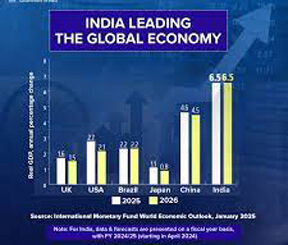
Now, Modi is selling the illusion of prosperity to India’s deprived masses by touting rising GDP figures and selectively quoting institutions like the IMF. What he deliberately omits is that this so-called growth has done little to improve the lives of the millions still surviving on free rations. For them, the benefits of GDP expansion remain a distant mirage. Modi offers no roadmap to transform India into a nation like Japan—where economic growth is coupled with strong governance, universal healthcare, robust social safety nets, and respect for pluralism. Instead, he markets statistics while ignoring the real human costs of inequality, joblessness, and the erosion of democratic institutions.
Here is an analysis of India vs Japan.
India vs. 🇯🇵 Japan: A Comparative Socioeconomic & Governance Analysis
1.Human Development Index (HDI)
India: 0.633 (Rank: 134/193) – Medium human development
Japan: 0.925 (Rank: 19/193) – Very high human development
Japan’s HDI reflects better life expectancy, education, and income levels.
Poverty
India:
~12.9% live in multidimensional poverty (~180 million people)
~3% live in extreme poverty (<$2.15/day)
Japan:
~15% live in relative poverty (low income by Japanese standards)
No extreme poverty by global measures
India battles absolute deprivation; Japan manages income disparity within a developed framework.
Government Food Assistance
India:
Over 800 million people (55% of the population) depend on rationed food under the Public Distribution System (PDS) and NFSA.
Japan:
Only ~2 million (~1.5% of population) receive public welfare or food assistance under the Seikatsu Hogo system
India’s program addresses mass hunger; Japan’s is a safety net for isolated individuals.
Hunger and Malnutrition
India:
224 million people undernourished (Global Hunger Index Rank: 111/125)
High child stunting and wasting rates
Japan:
Negligible hunger; among top 20 in Global Hunger Index
India faces systemic food insecurity; Japan ensures near-universal food sufficiency.
Unemployment
India:
~33–35 million unemployed (~8%); youth unemployment >20%
Over 90% of workforce is informal
Japan:
~1.8 million unemployed (~2.6%)
Formal employment, with labor shortages due to aging population
India’s job market suffers from scale and informality; Japan has fewer workers than jobs.
India grapples with systemic corruption; Japan maintains high administrative integrity.4
Per Capita Income & Living Standards
India: ~$2,700 USD
Japan: ~$42,000 USD
Japan enjoys one of the highest standards of living; India has a growing but unequal economy.
Summary Table
Indicator
India
Japan
HDI
0.633 (Rank 134)
0.925 (Rank 19)
Poverty Rate
12.9% (multi), 3% (extreme)
15% (relative)
Food Assistance
800 million (55% of population)
~2 million (1.5% of population)
Hunger
224 million undernourished
Negligible
Unemployment
~8% (33–35 million)
~2.6% (1.8 million)
Healthcare Spending (% GDP)
~2.1%
~10.9%
Education Spending (% GDP)
~3.0%
~3.5%
Corruption Index (CPI)
39/100 (Rank 93)
73/100 (Rank 16)
Per Capita Income
~$2,700 USD
~$42,000 USD
Political Behavior
Feudal, dynastic, VIP culture
Humble, accountable, resign on scandal
Rural Development
Underdeveloped, poor infrastructure
Modernized, subsidized, aging
Child Care & Early Education
Underfunded, malnutrition persists
High-quality, well-funded, parental support
Before anyone questions the writer’s integrity by arguing that comparing India to Japan is unfair due to population differences, here is a summary comparison between India and China—two nations with comparable populations (~1.4 billion each). This side-by-side comparison across key socioeconomic, governance, and human development indicators addresses and debunks the common excuse propagated by blind religious loyalists of India’s current religious fanatic leadership—that Japan’s success is solely due to its smaller population. India’s lag is not about size, but about vision, leadership, and priorities.
India vs China: Summary Comparison (2024 Data)
Indicator
India
China
Population
~1.43 billion
~1.41 billion
Human Development Index (HDI)
0.633 (Rank 134)
0.788 (Rank 75)
Per Capita Income (USD)
~$2,700
~$13,000
Multidimensional Poverty Rate
~12.9%
<1%
Extreme Poverty (<$2.15/day)
~3%
<0.1%
People on Govt Food Assistance
~800 million (NFSA)
Targeted rural support programs (~300 million benefited historically)
Poverty & Hunger: China has virtually eliminated extreme poverty, while India still struggles with hundreds of millions in deprivation.
Income & Development: China’s per capita income is nearly 5x India’s, with significantly better human development outcomes.
Governance: While China’s system lacks democratic freedoms, its state capacity and delivery mechanisms outperform India’s politically feudal and fragmented administration.
Population Argument: China shows that population is not an excuse. With nearly the same population as India, it has lifted over 800 million people out of poverty in four decades, invested in massive infrastructure, and maintains basic service delivery at a far higher level.
Bottom Line: Time to Reach Japan’s Success
Country
Time to Match Japan’s Per Capita Income
Time to Match HDI (0.9+)
Time to Match Governance/Service Delivery
India
35–50 years (by 2060–2075)
30–40 years
40–50 years (or uncertain)
China
15–20 years (by 2040–2045)
15–20 years
Already close in-service delivery
Summary Table: Time to Catch Up (India to China 2024)
Area
Projected Years Needed
Target Year
Per Capita Income
25–30 years
2049–2054
Human Development Index
15–20 years
2040–2045
Poverty Elimination
20–25 years
2045–2050
Infrastructure & Urbanization
25–30 years
2050–2055
Governance & Service Delivery
30–35 years
2055–2060
Final Thought:
India is 25–35 years behind China in most core development indicators. Closing this gap is possible, but it demands:
Sustained economic growth
Investment in human capital
Strong institutions
A break from patronage politics and state capture
Otherwise, the gap may persist or widen, especially as China advances toward high-income status and India risks stagnating in lower-middle income.
Conclusion
Japan exemplifies a mature, service-oriented, accountable welfare state. India, by contrast, is a rising feudal democracy heading towards elected autocracy promoting majoritarian religious fanatism, grappling with poverty, political feudalism, no accountability for those in power and state created robber barons and resource constraints. While India’s sheer scale poses challenges, Japan’s model offers lessons in integrity, governance, and inclusive public policy.Top of Form
Japan stands as a model of a mature, service-oriented, and accountable welfare state—rooted in integrity, civic discipline, and inclusive public policy. In stark contrast, India today is a rising feudal democracy veering toward an elected autocracy, where majoritarian religious fanaticism is normalized, political feudalism is entrenched, and accountability for those in power is virtually nonexistent. The state has enabled the rise of robber barons while failing to address systemic poverty and resource inequity. While India’s vast scale presents undeniable challenges, it is Japan’s model that offers vital lessons in good governance, institutional ethics, and equitable development.
(Compiled by Dave Makkar from diverse sources on the Internet. Dave Makkar is a social activist and author.)
“Ultimately, America’s intervention reflected a pragmatic blend of nuclear risk management, geopolitical rivalry with China, and economic foresight. By acting decisively, the U.S. not only helped stabilize a volatile region but also reinforced its soft power, blocked adversarial diplomatic moves by Beijing or Moscow, and upheld the credibility of its global defense alliances.”
By Dave Makkar
The Trump administration’s urgency in brokering a ceasefire between India and Pakistan in May 2025 was primarily driven by the imminent threat of nuclear escalation following a major terrorist attack in Indian-administered Kashmir. However, the unexpected performance of Chinese-made J-10C jets against India’s French-made Rafale fighters during the conflict also carried serious strategic implications—particularly for U.S. interests in the Indo-Pacific region.
Primary Reasons for U.S. Urgency in Securing the Ceasefire
Nuclear Flashpoint: Risk of Escalation
India and Pakistan are long-standing nuclear-armed rivals. Any military confrontation—such as the 2019 Balakot airstrike and subsequent aerial skirmishes—raises the specter of nuclear war. In April 2025, after a terrorist attack in Kashmir killed 26 civilians, India launched retaliatory airstrikes. Pakistan responded by downing Indian aircraft and conducting its own strikes. Tensions peaked when India targeted Pakistan’s Nur Khan Air Base, located near its nuclear command center—triggering fears of a nuclear exchange. The Trump administration, led by Secretary of State Marco Rubio and Vice President JD Vance, acted swiftly to de-escalate the crisis, leading to a ceasefire announcement on May 10.
Intelligence Warnings of Imminent Crisis
U.S. intelligence may have detected signs of imminent military escalation—such as troop movements or intelligence chatter about further terrorist plots—necessitating urgent diplomatic intervention to avert full-scale war.
Global Stability and Strategic Interests
A prolonged conflict between two nuclear powers risked destabilizing the broader South Asian region. Spillover effects could impact Afghanistan, Iran, and even areas within China’s strategic orbit. For the U.S., preventing further destabilization was vital to maintaining global order and protecting its broader security agenda.
Protecting Strategic Partnerships
India as a Counterbalance to China: India plays a central role in America’s Indo-Pacific strategy. A protracted war would divert India’s resources away from countering China and could weaken U.S.-India defense and economic cooperation.
Pakistan’s Influence in Afghanistan: Despite rocky relations, Pakistan remains influential in regional counterterrorism efforts and Afghanistan’s stability. U.S. diplomacy aimed to preserve leverage with both nations.
Mitigating Global Economic Fallout
Energy and Trade Routes: South Asia’s proximity to vital maritime lanes—including the Strait of Hormuz—means regional conflict could disrupt oil supplies, spike prices, and hamper global trade.
Economic Interests in India: With significant American investments in India’s tech, defense, and manufacturing sectors (e.g., semiconductors), the U.S. had strong economic incentives to maintain regional stability.
Counterterrorism Concerns
Militant Networks in Pakistan: The U.S. has consistently pressured Pakistan to crack down on groups like Lashkar-e-Taiba and Jaish-e-Mohammed. A ceasefire could allow Islamabad to refocus on dismantling these threats.
Preventing Radicalization: Escalation could fuel extremism, creating operational spaces for groups like ISIS-K and al-Qaeda.
Countering China’s Expanding Influence
Belt and Road Watchdog: China has heavily invested in Pakistan through the China-Pakistan Economic Corridor (CPEC) and is eager to play a larger diplomatic role in South Asia. U.S. mediation helped reassert American diplomatic leadership while countering China’s regional ambitions.
Avoiding a China-Russia Mediation Bloc: Allowing China or Russia to step in as peace brokers would have diminished U.S. influence in the region and altered the diplomatic balance.
Broader Geopolitical Priorities
Focus on Ukraine and Taiwan: With the U.S. already stretched thin managing tensions in Eastern Europe and East Asia, resolving the South Asian crisis quickly helped avoid a third major theater of conflict.
Quad Alliance Stability: A stable India is critical for the continued coherence of the Quad (U.S., India, Japan, Australia), which serves as a counterweight to China in the Indo-Pacific.
Strategic Implications of J-10C Performance
During the aerial engagements, Pakistan reportedly used Chinese-made J-10C jets equipped with PL-15 long-range air-to-air missiles to down Indian Rafale jets. This marked the first real-world combat use of the J-10C, giving China valuable battlefield data on its weapons platforms.
Broader Military and Technological Implications
Perception of Chinese Military Technology: The success of the J-10C against Western aircraft could reshape global perceptions of Chinese military capabilities, particularly in air power.
Impact on Taiwan and Regional Security: Taiwan’s military planners are likely to take note of these developments, especially as China aims to be ready for a possible invasion of Taiwan by 2027.
Arms Market Dynamics: The J-10C’s performance could boost Chinese military exports, challenging U.S. dominance in the arms market and raising concerns for U.S. allies who rely on aircraft like the F-16, F/A-18, or F-35.
Preserving U.S. Arms Market Leadership
The U.S. has vested interests in maintaining the global credibility of its defense technology. The perceived success of the J-10C—and the involvement of Pakistani F-16s (ironically U.S.-supplied)—could influence future arms procurement decisions in countries like Taiwan, Indonesia, and the UAE. A shift toward Chinese systems would weaken U.S. defense partnerships and economic leverage.
While the immediate trigger for the U.S.-brokered ceasefire was the urgent need to prevent nuclear escalation between India and Pakistan, deeper geopolitical and strategic considerations were at play. The strong battlefield showing of Chinese J-10C fighters added urgency and complexity to Washington’s calculus, as it signaled a possible shift in global military balance and regional security dynamics—especially for Taiwan and U.S. allies in Asia.
Ultimately, America’s intervention reflected a pragmatic blend of nuclear risk management, geopolitical rivalry with China, and economic foresight. By acting decisively, the U.S. not only helped stabilize a volatile region but also reinforced its soft power, blocked adversarial diplomatic moves by Beijing or Moscow, and upheld the credibility of its global defense alliances.
(Compiled by Dave Makkar from various sources across the internet)
The ethnic violence that engulfed Manipur in May 2023, pitting the Meitei and Kuki-Zomi communities against each other, has exposed profound systemic failures. Beyond the immediate tragedy, the crisis raises urgent questions about governance, justice, and national unity. The ethnic violence that erupted between the Meitei and Kuki communities, is indeed a stain on the nation’s conscience. Here’s why:
Humanitarian Catastrophe
The toll of the conflict is staggering:
260 fatalities, 1,500 injured, and over 70,000 displaced.
Widespread reports of sexual violence, arson, and targeted killings, including the harrowing video of two Kuki women paraded naked—a moment that sparked national outrage.
Destruction of 250+ religious sites and entire villages, displacing families into overcrowded, under-resourced relief camps.
Despite these horrors, the state and central responses were marked by delays, indifference, and failure to protect vulnerable communities.
Collapse of Governance
The violence revealed a near-total breakdown of constitutional machinery:
Law enforcement bias: Allegations of police inaction or complicity deepened distrust, particularly among Kuki communities.
Segregation: The state fractured into ethnically divided zones—Meitei-dominated valleys and Kuki-Zomi hills—with parallel administrations emerging.
Judicial condemnation: The Supreme Court labeled the violence a “constitutional failure,” mandating a Special Investigation Team (SIT) amid accusations of institutional apathy.
Leadership Vacuum
The crisis underscored alarming political failures:
Delayed response: The Prime Minister broke his silence only after the viral video of women being paraded naked, shook the entire nation. drew national attention, framing his remarks reactively rather than proactively.
Absenteeism: Despite the scale of the crisis, PM Modi has yet to visit Manipur, eroding public trust in the central government’s commitment to reconciliation. The Prime Minister’s absence has not gone unnoticed — it has been a source of anger and disappointment for many in the state and across the country. His lack of engagement is more than a political misstep; it is a moral failure that casts a shadow on the government’s commitment to national unity and equal treatment for all citizens.
State government’s role: Chief Minister N. Biren Singh faced allegations of bias and mishandling, yet the BJP retained him, delaying accountability until Feb. 2025. The “double engine sarkar” (2 Engine Government; Central & State governed by same party BJP) slogan rang hollow as coordination between state and central governments faltered.
Roots of the Conflict
Historical Tensions: Decades of friction between the Meiteis (valley-based, majority Hindu) and Kuki-Zomi tribes (hill-dwelling, predominantly Christian) over land, identity, and political representation.
Trigger: The Meitei demand for Scheduled Tribe (ST) status, opposed by hill tribes fearing marginalization. This is even though In the Imphal Valley of Manipur, most businesses and real estate are predominantly owned and controlled by the Meitei community, which is the largest ethnic group residing in the valley. The Meiteis form the majority population in this central part of the state and have historically been the primary stakeholders in urban and commercial development, especially in Imphal, the capital city. Outsiders can’t buy property or land; they can rent or lease from Meitei’s. The Kuki and Naga communities, while significant in Manipur as a whole, primarily inhabit the hill districts, and own land in those areas due to constitutional protections under Article 371C and related land laws.
Misinformation: Social media amplified hate speech and competing narratives, fueling polarization.
Timeline of a Crisis
Pre-2023: Simmering tensions over ST status demands, land rights, and religious divides.
May 2023: A Tribal Solidarity March in Churachandpur sparked clashes, arson, and mass displacement. Internet shutdowns followed.
May–July 2023: Escalating violence, sexual assaults, and destruction of villages. Security forces criticized for inaction.
August 2023: Supreme Court intervenes; orders SIT.
Truth and Reconciliation: An independent commission to address grievances and foster dialogue.
Justice and Rehabilitation: Compensate victims, rebuild infrastructure, and ensure accountability for atrocities.
Institutional Reform: Strengthen impartial policing and equitable resource allocation.
Political Will: Central leadership must engage directly, prioritizing unity over electoral calculus.
A Mirror to the Nation
Manipur’s tragedy is not an isolated failure but a reflection of deeper fissures: the erosion of trust in institutions, the politicization of identity, and the neglect of marginalized voices. For a nation that celebrates “unity in diversity,” the crisis demands introspection and action. Until accountability replaces apathy, Manipur will remain a dark chapter in India’s story—one that challenges its democratic conscience. It reveals how minorities and marginalized communities can be left behind if vigilance, empathy, and constitutional values are not actively upheld. Calling it a “stain” is not rhetorical—it is a factual indictment of a nation that must do better.
(Compiled by Dave Makkar from various sources on the internet & writings of eminent writers. Dave is a social activist based in New Jersey, US. He can be reached at davemakkar@yahoo.com)
In 2021, Oxfam reported that the top 1% of India’s population held 42.5% of the national wealth, while the bottom 50% held just 2.8%. In 2023, Oxfam report, “Survival of the Richest: The India story”, also says that between 2012-2021, just 5 per cent of Indians own more than 60 per cent of the country’s wealth, while the bottom 50 per cent of the population possess only 3 per cent of the wealth. The combined wealth of India’s 100 richest has touched $660 billion. Oxfam also adds that India has the world’s highest number of poor at 228.9 million.
By Dave Makkar
Since gaining independence in 1947, India has experienced significant economic and infrastructure growth, yet rising inequality has become a persistent issue. While the country suffers from multiple crises such as poverty, hunger, illiteracy, unemployment, health calamities, and inflation, India’s billionaires continue to thrive by stealing public wealth. Besides the business tycoons getting rich, another story of rags to riches involves the politicians and high-ranking bureaucrats of India. They are getting rich by helping the billionaires steal or pay minimum for the public wealth.
India’s elite world-famous Billionaires, part of the 56 million filthy rich Indians, are living side by side with almost a billion poor and treat them as sub- humans who are a burden for the country.
It looks like Indian Leadership- political, religious and business- rather than being ashamed of this, are proud to have more than 800 million Indians living under extreme poverty & inhuman conditions. They have the insanity to say, “India is shining”.
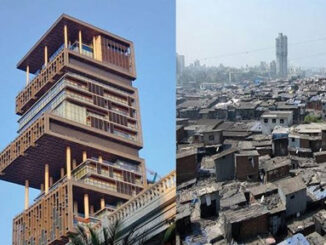
A former diplomat, politician, author and thinker Pavan Varma wrote in his book “Being Indian” that in the Indian elite “there is a remarkable tolerance for inequality, filth and human suffering”. He adds that “concern for the deprived and the suffering is not a prominent feature of the Indian personality. The rich in India have always lived a life quite oblivious to the ocean of poverty around them”. Less than 10-15 minutes from every slum in any major city of India there are very expansive heavily guarded residential areas with houses, rather mini palaces, costing few million dollars to $2 Billion. Mukesh Ambani’s palacial house “Antilia” in Mumbai is one of the most expensive private residences in the world. One city: two universes.
Meanwhile, the poor in India are unable to afford even basic food to survive. In India, approximately 81.35 crore (810.3 million) people are receiving subsidized food under the Pradhan Mantri Garib Kalyan Anna Yojana (PMGKAY), “Prime Minister’s Food Security Scheme for the Poor.” This scheme provides free food grains, including rice, wheat, and coarse grains, to the beneficiaries barely enough just to keep them alive. Each eligible individual receives 5 kg of whole food grains per month, that they have to get it milled except for rice.. The scheme, which started during the COVID-19 pandemic in 2020, has been extended for five more years starting from January 1, 2024. The government has committed to spending approximately Rs. 11.80 lakh crore ($143.90 Billion) over this period to ensure the continued distribution of these food grains. Additionally, under the National Food Security Act (NFSA) of 2013, which forms the basis for many of these subsidies, about 75% of the rural population and 50% of the urban population are legally entitled to receive subsidized food grains at highly reduced prices.
The number of hungry Indians increased to 350 million in 2022 from 190 million in 2018. In 2023, India ranked 111 out of 125 countries on the Global Hunger Index (GHI), with the highest child-wasting rate in the world at 18.7 per cent, reflecting undernutrition and malnutrition. It indicates a “serious” level of hunger in the country. India’s GHI score was 28.7, showing minimal improvement since 2015. In 2014 India used to rank 55th on GHI. According to the Modi government’s own admission in the Supreme Court, widespread hunger resulted in 65 percent of the deaths among children under the age of 5 in 2022. Besides the growing child malnutrition during the Modi decade, India now has the world’s third highest number of children unvaccinated for measles in 2023, with 16 lakhs missing the vaccine, trailing only Nigeria and Democratic Republic of Congo, according to WHO-UNICEF estimates. India is among 10 countries contributing to 55% unvaccinated children globally.
In contrast, in 2024, India’s richest man, Mukesh Ambani, spent an estimated $500 million on the wedding of his younger son Anant with Radhika Merchant. The festivities lasted over six months and were attended by the wealthiest individuals, TV & film celebrities, famous artists, sports celebrities, social media influencers and politicians from around the world and India. This wedding was nothing but a circus with the main performers of course being the Ambani family, supported by Merchant family, Bollywood and Hollywood stars & singers, and watched by the rich business tycoons, CEO’s, famous artists, sports celebrities and politicians including PM Modi of India and the world. The social media influencers were posting 1-1/2 minutes of video showcasing the priced jewels, ultra luxury watches and outfits with price tags flaunted by women of Ambani family and the groom. It is being termed as the most expensive wedding by an individual citizen in the world. At the same time, Ambani’s vulgar display of wealth, unconstitutional power and misuse of his control over state and central governments are seen as an insult to the poor of India.
After independence, India pursued socialist policies aimed at reducing disparities. However, economic liberalization in the 1990s along with legalization and personification of crony capitalism and criminalization of politics, accelerated growth while exacerbating income inequality. Since 2014, under PM Modi, this trend intensified with supersonic speed by setting new records of inequality every day and has fueled wealth accumulation among the rich only. In 1991 there was 1 billionaire, in 2014 that number stood at 56 and as of 2024, India has 271 billionaires, making it the country with the third-highest number of billionaires in the world, after China and the United States (Forbes India), reflecting the concentration of wealth within a small elite group.
Since 2014, Modi’s policies of selling even profit-making public sector units (PSUs), existing public properties/infrastructure like airports, railway stations, and heritage properties like Lal Qila, along with new infrastructure development and digitalization initiatives, have been done at a bargain to his crony capitalist friends. This approach has propelled economic progress by bypassing marginalized communities. The COVID-19 pandemic further deepened the gap, with billionaires’ wealth surging even as millions faced job losses and poverty. Modi’s economic policies promoting business growth, while necessary, have not been accompanied by adequate social safety nets, increased spending on education, employment, affordable healthcare, and affordable housing for the 80% of Indians. This has created widening disparities such as social inequality, education inequality, healthcare inequality, employment inequality and housing inequality, in addition to the burgeoning income/financial inequality.
India’s neighbor China with the same population as India’s has per Capita GDP of $12,720.00 against India’s $2,240.00 and its population has much better standard of living than in India. At present the real rate of 6.1% at which Indian economy is growing will take more than 28.8 years for India to match China’s current per capita GDP. In the 1970s, both China and India shared several similarities, particularly in terms of their economic status and development strategies. China’s economic transformation began in earnest in 1976, that transformed China into the world’s second-largest economy, lifting hundreds of millions of people out of poverty and making it a significant global economic power.
In 2021, Oxfam reported that the top 1% of India’s population held 42.5% of the national wealth, while the bottom 50% held just 2.8%. In 2023, Oxfam report, “Survival of the Richest: The India story”, also says that between 2012-2021, just 5 per cent of Indians own more than 60 per cent of the country’s wealth, while the bottom 50 per cent of the population possess only 3 per cent of the wealth. The combined wealth of India’s 100 richest has touched $660 billion. Oxfam also adds that India has the world’s highest number of poor at 228.9 million.
According to “Income and Wealth Inequality in India, 1922-2023: The Rise of Billionaire Raj” in 2022-23, 22.6% of national income went to just the top 1%, the highest level recorded in our series since 1922, higher than even during the inter-war colonial period”. This monstrous income inequality has reached and even exceeded levels prevailing during the British Colonial Raj. This is the tragedy of an India under the “Billionaire Raj,” governed by “Billionaire’s” appointed Viceroy aka Prime Minister, Narendra Modi.
Oxfam India has said that the failure to tax rich people and corporations fairly exacerbates inequality as governments then resort to taxing the rest of society more. Heavy reliance on consumption taxes increases inequality and is regressive in nature because poor people pay a larger share of their incomes”. The bottom 50 per cent of the population at an All-India level pays six times more on indirect taxation as a percentage of income compared to top 10 per cent, it has said. Of the total taxes collected from these food and non-food items, 64.3 per cent of the total tax is coming from the bottom 50 per cent. A little less than two-thirds of the total GST is coming from the bottom 50 per cent, as per estimates, one-third from middle 40 per cent and only three to four per cent from the top 10 per cent.
To address the severe inequality causing untold miseries to over 70% of Indians, the country must balance growth with inclusive policies that ensure equitable access to resources and opportunities for all citizens, bridging the gap between the affluent and the impoverished. It must address income inequality, social inequality, healthcare inequality, education inequality, gender inequality, and housing inequality before wasting money to boost the personal egos of the current rulers, who only cater to the rich in India. Rather than focusing on bullet trains, temples, statues, and the unnecessary demolition of existing public buildings like the administrative buildings near the old Parliament House to cement his legacy as the maker of a new Hindu India by building a new Parliament and new residences for the Prime Minister, Vice President, and President at a cost of $2.64 billion, Modi should have prioritized educational institutes, hospitals, better public transport, housing for the poor, and better and cheaper rail services for the poor. India can land on the uncharted side of the moon but cannot abolish manual scavenging, which is nothing but the most insulting and heinous practice against human beings. Modi’s ill-conceived logic of creating his legacy with temples and statues to create Hindu supremacy rather a religious divide and infrastructure projects for the rich, has become a symbol of apathy and neglect towards the human sufferings of the poor and the minorities of India.
(Dave Makkar, a social activist, writes on politics and social issues. He is a regular contributor to The Indian Panorama. He can be reached atdavemakkar@yahoo.com)
“Former President Trump’s resounding triumph on Super Tuesday marks a remarkable political comeback following a significant defeat in 2020. This situation draws parallels with the victory of India’s late Prime Minister Indira Gandhi in 1980, after facing a humiliating defeat in 1977. It is crucial to acknowledge, however, that although there may be some general similarities, every political scenario is distinctive, with varying contexts, issues, and political dynamics. Comparisons should be approached with caution, taking into account the specific circumstances surrounding each leader’s political trajectory and resurgence.”
By Dave Makkar
The Super Tuesday primaries represent the most substantial voting day in the United States, second only to the November general elections. Nearly one-third of all delegates for the presidential nominating conventions are up for grabs on Super Tuesday, surpassing any other single day in significance. Consequently, the outcomes on Super Tuesday serve as a robust predictor of the probable presidential nominee for each political party.
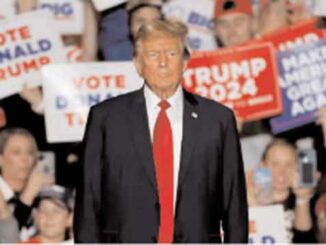
On Super Tuesday, March 3rd, 2024, former President Trump asserted his influence across America by securing victories in 14 out of the 15 states where Republican Presidential Primaries or caucuses took place. He garnered substantial support, polling over 50-60% in several states and even reaching over 70-80% in others. Ambassador Nikki Haley, Trump’s sole opponent, managed to secure the lone liberal state of Vermont, preventing Trump from achieving a clean sweep on Super Tuesday. Notably, Trump’s 11-point win in New Hampshire marked his narrowest victory since the commencement of the primary season in January 2024.
The Associated Press was the sole news reporting agency that declared Trump the winner in 14 states shortly after polls closed. Trump led Haley by a substantial margin of three or four to one in certain places.
India’s Prime Minister Indira Gandhi at an election rally in India in 1980
REPUBLICAN PRESIDENTIAL CONTESTS in 15 States with 854 DELEGATES at stake
State-Run Primaries (13): Alabama (50 Delegates), Arkansas (40), California (169), Colorado (37), Maine (20), Massachusetts (40), Minnesota (39), North Carolina (74), Oklahoma (43), Tennessee (58), Texas (150), Vermont (17), Virginia 48).
Trump, % of votes polled in the winning states: Alabama (83.2%), Alaska (87.6), Arkansas (76.9), California (78.5), Colorado (63.3), Massachusetts (60), Maine (72.8), Minnesota (69.1), North Carolina (73.9), Oklahoma (81.8), Tennessee (77.3), Texas (77.9), Utah (56.4), Virginia (63.1).
Haley, % of votes polled in the winning states: Vermont (50.2)
In the run-up to Super Tuesday, the Delegate Counts for the candidates as follows:
1. Donald Trump: 1,044
2. Nikki Haley: 89
3. Ron DeSantis :9
4. Vivek Ramaswamy : 3
No other candidate managed to secure any delegates. To clinch the Republican nomination, a candidate requires 1,215 delegates. Given the absence of any opposition to former President Trump, it is reasonable to assume that he is the presumptive nominee for the upcoming Presidential Elections in November 2024 for the Republican Party.
If a candidate secures victories in 14 out of 15 states during the Super Tuesday Presidential Primaries, and in several of these states, attains an overwhelming majority, winning over 80% of the votes, it denotes robust and widespread support for that candidate among the voters. This performance suggests a strong appeal and resonance with a diverse range of voters across different states. The high percentage of wins in specific states indicates not only success but also a significant mandate from the electorate in those regions. Such outcomes often position the candidate as a frontrunner and establish a formidable foundation for their campaign as they head into the subsequent stages of the election, potentially ensuring their victory in the general election.
All the pollsters, analytical experts, and mainstream media pundits who had prematurely written obituaries for Presidential Candidate Trump were compelled to retract their statements after the Super Tuesday results. None of these pundits attempted to compose an obituary for Ambassador Haley’s candidacy, funded by Democrats, by drawing parallels to John McCain’s 2012 campaign. Senator McCain sought the presidency based on his qualification of having spent five and a half years as a prisoner of war, a considerable portion of that time in solitary confinement in Vietnam.
Ambassador Haley’s key argument was her relative youth compared to the Democratic and Republican frontrunners. She emphasized her two terms as governor of South Carolina and her role as the Ambassador to the UN in the Trump administration. However, throughout her campaign, she never articulated specific plans detailing how her presidency would differ from those of past presidents. Therefore, there is no reason to express sympathy for Haley’s withdrawal from the race.
Former President Trump’s resounding triumph on Super Tuesday marks a remarkable political comeback following a significant defeat in 2020. This situation draws parallels with the victory of India’s late Prime Minister Indira Gandhi in 1980, after facing a humiliating defeat in 1977. It is crucial to acknowledge, however, that although there may be some general similarities, every political scenario is distinctive, with varying contexts, issues, and political dynamics. Comparisons should be approached with caution, taking into account the specific circumstances surrounding each leader’s political trajectory and resurgence.
However, I can offer some general observations based on historical context:
Charismatic Leadership: Both Donald Trump and Indira Gandhi are known for their charismatic leadership styles. They have the ability to connect with a significant portion of the population and rally support around them.
Populist Appeal: Both leaders had a populist appeal, speaking to the grievances and aspirations of a broad section of the population. They positioned themselves as champions of the common people and tapped into populist sentiments.
Political Resilience: Indira Gandhi faced a significant defeat in the 1977 elections but made a political comeback in 1980. If Trump were to make a political comeback, it would also demonstrate a level of political resilience, overcoming setbacks and regaining popular support.
Political Strategy: Successful comebacks often involve strategic political maneuvers. Both leaders might have employed astute political strategies to rebuild their image, connect with voters, and navigate the political landscape.
Changing Political Context: In both cases, the political context played a crucial role. Indira Gandhi’s return in 1980 was influenced by changing dynamics in Indian politics. Similarly, any potential Trump’s comeback would likely be influenced by the political landscape at the time.
Only time will reveal whether the remarkable momentum garnered by former President Trump in contrast to his rival, the incumbent President Biden, will prove sufficient to secure victory in the November 2024 election. The question lingers: will this momentum propel him to reclaim the presidency of the United States, the most powerful country on Earth, for another four years?
(Dave Makkar is a social activist and a political analyst. He can be reached at davemakkar@yahoo.com)
Ambassador Ruchira Kamboj honors four eminent Indian Americans
Tom Suozzi, Congressman-elect, felicitates The Indian Panorama
Parveen Chopra February 26, 2024 HICKSVILLE, NY (TIP): The Indian Panorama celebrated its 18th year of publication uniquely by hosting a grand Gratitude Gala on February 25 here.
For The Indian Panorama’s Founding Editor and Publisher Prof Indrajit Singh Saluja, it was a double celebration as he also cut a cake for his 80th birthday.
In a busy program, India’s Permanent Representative to the United Nations Ambassador Ruchira Kamboj presided and presented awards to four honorees. Congressman-elect Tom Suozzi dropped by to thank Prof Saluja and the Indian community for their support. The Indian Panorama also lent its platform to launch Blitz India’s US edition.
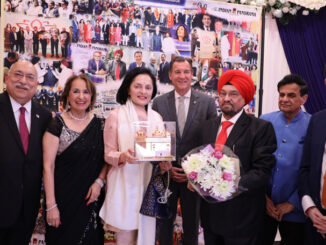
Attorney Ravi Batra introduced Ambassador Kamboj as a giant of a diplomat who has brought India much respect at the United Nations.Ambassador Ruchira Kamboj in her address described the Indian diaspora as the best in the world, and praised Prof. Indrajit Saluja, publisher and chief editor of The Indian Panorama for maintaining the highest standards of journalism.Congressman -elect Tom Suozzi spoke highly of the Indian Americans and characterized the US-India relations as strong and getting stronger.Tom Suozzi was presented a replica of the Golden Temple, the Vatican of the Sikhs. L to R: Ranju Batra, , Sunil Hali, Purnima Desai, , Ambassador Ruchira Kamboj, Tom Suozzi, FIA President Avinash Gupta, GOPIO President Lal Motwani, Prof. Saluja.
Even as Prof Saluja expressed his heartfelt gratitude to the guests present in the chandeliered ballroom of Pearl Banquet Hall, as well as his readers and the Indian community for their loyal support over 18 long years, he chose to honor four eminent Indian Americans at the event. All were honored with a citation scroll, a shawl, and a model of the Golden Temple.
Ambassador Ruchira Kamboj presented to Dr. V.K. Raju, President of the Eye Foundation of America, the lifetime Achievement Honor. L to R: Dr. Leela Raju, Secretary of the Eye Foundation of America, Ambassador Kamboj, Dr. V.K. Raju, Prof. Saluja.
The four honorees are well-known in the community. Dr. V.K. Raju (Life Achievement Honor) is an eminent ophthalmologist who is on a mission to eliminate childhood blindness through his Eye Foundation of America.
Ambassador Ruchira Kamboj congratulating her friend Ranju Batra after honoring her with the Excellence in Promotion of Diplomacy Award. L to R: Deepak Dwivedi, Ambassador Kamboj, Ranju Batra, Abha Bhatnagar, Prof. Saluja.
Ranju Batra (Excellence in Promotion of Diplomacy Award) honors diplomats at the Diwali Stamp – Power of One awards every year after she secured the Diwali Stamp from USPS.
Harry Singh Bolla (Excellence in Entrepreneurship Award) runs a billion-dollar chain of gas stations and has started a charity to support good causes here in New York and India. He could not be present in person to receive the award.
Ambassador Kamboj presented to Purnima Desai the Excellence in Culture Award. L to R: Ms Desai, Ambassador Kamboj, Purnima Desai, Flora Parikh, Jag Kalra.
Purnima Desai (Excellence in Culture Award) is the founder of Shikshayatan Cultural Center and Sriniketan Foundation to encourage and support Indian music and arts through training and events.
They were also presented citations from Nassau County Executive Bruce Blakeman.
Introducing the Chief Guest, Ravi Batra said Ambassador Ruchira Kamboj joined her post when India was already a Member of the UN Security Council and she took it to a higher trajectory.
Ambassador Kamboj in her brief address commended The Indian Panorama for not only being a mirror of the vibrant roots of our culture but also showcasing the journey of the Indian diaspora. She also called the US diaspora the best in the world. She lauded the achievements of the Indian community in the US, describing their journey as nothing short of inspirational. She emphasized the diaspora’s significant role in fostering excellence and innovation globally. Ambassador Kamboj congratulated all the honorees, and in particular, Ranju Batra whom she has come to know well because of her work at the UN. She commended Ranju for creating goodwill and earning a name for her country of origin.
Own Murtajiz Naqvi, Executive Director, Nassau County Office of Asian American Affairs, on behalf of Bruce Blakeman, Nassau County Executive, presents a Citation to Dr. VK Raju (All photos : Mohammed Jaffar-SnapsIndia)
Tom Suozzi (D-NY3) said he sees the US-India relationship as the most important in the next 50 years. “These two will define the long-term global world,” and whether it would abide by the “noble principles” outlined in the constitutions of both countries. While in the US Congress (he took the oath of office on February 28), Suozzi said he would do everything possible to represent the diverse Indian community in his district.
The new Consul General of India in New York, Ambassador Binaya S. Pradhan could not make it because of a conflict in scheduling.
Blitz India Chairman and Editor-in-Chief Deepak Dwivedi and CEO Sandeepp Saxena flew in from New Delhi for the US launch of their news weekly, which is India’s first chronicler of development news. The duo was joined by Prof Saluja and other dignitaries and mediapersons to release printed copies of the paper.
Two more media events followed. Journalists Beyond Borders (JBB), a fraternity organization founded by Prof Saluja in 2022, was formally launched. Local publishers and editors joined in to reveal its logo. Through journalism, JBB aims to protect and promote human rights, human values and world peace. Prof Saluja used the occasion to felicitate his friend Parveen Chopra, Founder and Editor of ALotusInTheMud.com, on the first anniversary of his wellness and spirituality web magazine.
Copies of The Indian Panorama’s 18th year Gratitude Gala souvenir were distributed among the guests. All guests were also gifted a model of the Golden Temple, the Vatican of the Sikhs.
Video messages were screened from Padma Bhushan Sant Chatwal, India’s Ambassador to Guatemala Dr. Manoj Kumar Mohapatra, Emmy-nominated film director and actor Tirlok Malik, and Prabhjot Singh, a senior journalist from Chandigarh.
The standing-room only audience was hooked on to the show, beginning with the very first item when two lithe dancers from Battery Dance took to the floor. The last item was the adrenaline-pumping bhangra dance. In between, dancers trained by Shilpa Jhurani and Rimli Roy showed their classical moves. The artists were profusely applauded by the audience for their mesmerizing performances and thanked by Prof. Saluja.
The guests at the gala included Padma Shri Dr Sudhir Parikh, Chairman and CEO of Parikh Worldwide Media and ITV Gold, who congratulated Prof Saluja for his “great work in the media,” over the 18 years of The Indian Panorama. Dilip Chauhan from NYC Mayor’s office congratulated The Indian Panorama on behalf of Mayor Eric Adams. Zahid Syed, Director, Community Affairs with the Town of Hempstead and Rokeya Akhter, Community Coordinator with Queens District Attorney’s office also graced the occasion.
Bruce Blakeman, Nassau County Executive sent his representative Own Murtajiz Naqvi, Executive Director, Nassau County Office of Asian American Affairs to present Citations to the Honorees- Dr. VK Raju, Ranju Batra, Harry Singh Bolla and Purnima Desai.
Prominent Community organizations were represented: Gobind Munjal and Dr Jagdish Gupta from AIA, Dr Avinash Gupta, Srujal Parikh, and Alok Kumar from FIA-Tristate, Thomas Abraham from GOPIO, Pradeep Tandon from IALI, and George Abraham from IOC-USA, Shiv Dass, President, Jackson Heights Indian Merchants’ Association, besides many others.
Veteran Sikh community leader Master Mohinder Singh, a former president of Gurdwara Sikh Cultural Society, Richmond Hill, and a founder President of Gurdwara Baba Makhan Shah Sikh Center was present with Gurmej Singh, a former president of Gurdwara Baba Makhan Shah Lobana, besides many others from the Sikh community.
The media fraternity stood in solidarity with Prof. Saluja: they included, besides Dr. Parikh, Sunil Hali (Promoter, Radio Zindagi, and Publisher, The Indian Eye), Sharanjit Singh Thind (Editor-Publisher, South Asian Insider), Varinder Bhalla (Publisher, Bollywood Insider).
The evening’s program was ably emceed by Piya Jyoti Kachroo, ITV anchor and producer.
The sumptuous dinner with a top-of-the-shelf bar was enjoyed by the guests. Prof. Saluja expressed his heartfelt thanks to Pearl CEO Gary Sikka and his staff for excellent food and hospitality.
Prominent guests included Arish Sahani, Sudhir Vaishnav, Gobind Bathija, Baldev Singh Grewal, Shiv Dass and Ashok Arora.
Guests came from various parts of the US and even India. They included Bidisha Roy, Assistant Editor of The Indian Panorama (TIP) from Tampa, Florida, Zia Khan, a celebrated photographer who looks after TIP’s Dallas edition, and Parminder Singh Aujla, TIP’s California representative, from Sacramento,
Politician Puneet Ahluwalia came from Virginia, social activist Murtaza from Pennsylvania. Harry Singh Panaser, Mrs. Manjit Kaur Panaser, Harvenderpal Singh, Seema Jagtiani, Nutan Dabholkar, Dave Makkar, Mrs. Rashmi Makkar, Prachi and Surya Makkar, Rimli Roy, Rupinder Singh, and many more from New Jersey.
From India came Arminder Arora and his wife Tript Arora, Sparsh and Bhola.
Those at the event from the electronic media included Pardeep Gill from Global Punjab, Munish Byala, and Gurinder Hothi. Photographers included Mohammed Jaffer, Vijay Shah and Kripa Prasad.
Prof Indrajit Saluja has become synonymous with his weekly newspaper, a labor of love. He is not only an eminent editor but also a well-respected community leader who has forged links across the ethnic, ideological, and political spectrum. His friends from all over the US and even India, supporters, and who’s who of the community wished him a long life on his 80th birthday.
For Prof Saluja, The Indian Panorama is an expression and extension of his love for India as well as a platform to project the rich South Asian culture and how our successful community has made a place in the melting pot of America. A trilingual, he has also helped start newspapers in Hindi and Punjabi.
Started 18 years ago in New York, The Indian Panorama has a Dallas edition.
Indefatigable Prof Saluja’s spirit and intensity of work belie his years. He came to the US over 20 years ago after having a long career as a Professor of English Literature at leading colleges in India. Alongside, he founded a prominent monthly magazine titled ‘Punjab Beat’.
Prof Saluja feels proud that throughout its eventful journey, the Indian Panorama has remained true to its motto, EVER TRUTHFUL”. “This commitment is not just a slogan but a guiding principle, a promise to our readers, and a testament to the collective effort that sustains the publication,” he insists.
Own Murtajiz Naqvi, Executive Director, Nassau County Office of Asian American Affairs, on behalf of Bruce Blakeman, Nassau County Executive, presents a Citation to Ranju Batra.Own Murtajiz Naqvi, Executive Director, Nassau County Office of Asian American Affairs, on behalf of Bruce Blakeman, Nassau County Executive, presents a Citation to Purnima Desai.Blitz India US edition is launched by Ambassador Ruchira Kamboj.Deepak Dwivedi and Prof. Indrajit Saluja present a Citation to Ambassador Ruchira Kamboj.Journalists Beyond Borders, an international organization of Journalists founded by Prof. Indrajit Saluja is formally launched by Ambassador Ruchira Kamboj. Ashok Arora, the International Legal Advisor to The JBB exhibited the JBB logo.Prof, Indrajit Saluja felicitated his friend Parveen Arora on completion of a year of founding of ALotusinTheMud.com
“Fraternity means a sense of common brotherhood of all Indians-of Indians being one people. It is the principle which gives unity and solidarity to social life” – and said what this means is that “if you attack the dignity of an individual – whether on the pretext of their ethnicity or language, religion or caste, sexuality or food habits or beliefs – then you attack the very foundations of India.” – Dr B.R. Ambedkar to the Constituent Assembly in 1949
“Ethnic violence is a regrettable aspect of any society, and it has no place in the teachings of Hinduism. In India, the perpetrators of such violence are using religion to instigate hatred and animosity among different communities. Unfortunately, under Modi their support base has expanded, and the worst is they have the protection from the state and Modi himself. As a Hindu, I condemn such acts and stand in solidarity with those affected by these tragedies. It is essential to remember that the perpetrators of ethnic violence do not represent the vast majority of Hindus who uphold the principles of love and harmony.”
By Dave Makkar
I am a Hindu and was born in India in Dec. 1956 to very religious parents in Delhi. While growing up I started realizing the wholescale corruption in public life, personality cult and few rich families controlling India’s commerce and politics. Since my adulthood, in my opinion India was never a Democracy to start with in 1947, rater it opted to be an elected autocracy by keeping the Moster & Slave, British Governance system. The elected representatives, bureaucracy, judiciary, and few rich families close to politicians has always behaved like master’s and treated the common man as their slaves. On top of that upper class Hindus have always considered themselves to be more superior than a person from other religions as well as low cast Hindus.
All my adulthood I spent fighting Congress rather Elected Aristocracy using the platform of Hindu organizations in the hope one day India will have real Democracy. I suffered financially, emotionally, and physically during the infamous emergency of Indira but that never forced me to stop fighting the Elected Aristocracy aka Congress. I became so disillusioned and decided to leave India in Dec 1996, with a hope that one day I will come back to India again to live with my family in a Democratic India. My hope was shattered by my own idol Atal Bihari Vajpayee of BJP that became Prime Minister of India in 1998. He started favoring Dhirubhai Ambani by selling National assets at throwaway prices and terms detrimental to India to wean him away from funding Congress. After that it was no u turn for India towards real Democracy when I realize BJP is worse than Congress and I took the Citizenship of USA in Nov. 2002.
With the coronation of a known communal and criminal Narendra Modi as Prime Minister of India in 2014; financed by more corrupt and communal business families, now India has reached a point of no return even to the elected aristocracy. Now India in my opinion is an Elected Dictatorship financed and supported by Gangster Capitalist with money stolen from national resources purchased at throwaway prices with the help of leaders like Modi with the public money taken as low interest rate loans from the public banks.
As a proud Hindu, I believe in the values of peace, compassion, tolerance, and coexistence that lie at the core of Hinduism. However, since 2014 under Modi as PM, there have been a steady increase in the instances of ethnic violence against minorities, denial of basic human rights to the critics of Modi regime, the rise of dictatorship, and the propagation of fundamentalist Hindutva ideologies in India. No one including the so-called Hindu billionaires, intellectuals, journalists, and religious leaders have tried to address these issues and make a clear distinction between the true essence of Hinduism and the actions of a few individuals and groups who seek to manipulate it for their own divisive agendas.
The true essence of Hinduism: Hinduism is one of the world’s oldest religions and is known for its diversity and inclusivity. It promotes the idea of “Vasudhaiva Kutumbakam,” which means “the world is one family.” The principles of Hinduism advocate non-violence, respect for all living beings, and the acceptance of different paths to the divine. Hinduism encourages seekers to embrace spirituality and attain self-realization, transcending the barriers of caste, creed, or ethnicity.
Ethnic violence is a regrettable aspect of any society, and it has no place in the teachings of Hinduism. In India, the perpetrators of such violence are using religion to instigate hatred and animosity among different communities. Unfortunately, under Modi their support base has expanded, and the worst is they have the protection from the state and Modi himself. As a Hindu, I condemn such acts and stand in solidarity with those affected by these tragedies. It is essential to remember that the perpetrators of ethnic violence do not represent the vast majority of Hindus who uphold the principles of love and harmony.
The Dangers of Dictatorship: A democratic society is founded on the principles of freedom, equality, and justice for all its citizens. Unfortunately, PM Modi have openly displayed and is practicing authoritarian policies and undermining the democratic, moral and social fabric of India. Hinduism encourages righteous governance and upholds the importance of a leader’s accountability to the people they serve. Dictatorship contradicts the pluralistic values of Hinduism and erodes the democratic rights and freedoms of citizens.
Fundamentalist Hindutva and its Detrimental Impact: Fundamentalist Hindutva is a political ideology that seeks to establish a Hindu-centric nation, promoting the dominance of Hindutva over other religions. This ideology, while claiming to represent Hinduism, actually distorts its essence. True Hinduism celebrates diversity and advocates unity among all faiths. The use of religion for political gains, divisiveness, and discrimination is contrary to the teachings of Hinduism.
Respecting Pluralism and Secularism: The true spirit of India lies in its secular fabric, where people of different religions, languages, and cultures coexist harmoniously. As a Hindu, I believe in promoting interfaith dialogue, understanding, and respect for all religions. Hinduism teaches us to embrace diversity and recognize that different paths can lead to the same ultimate truth.
As a Hindu, I firmly believe in the principles of love, compassion, and tolerance that are the bedrock of Hinduism. It deeply saddens me to witness the rise of ethnic violence, dictatorship, and fundamentalist Hindutva in India. It is essential for every Indian, regardless of their religious affiliations, to come together and reject any form of violence or divisiveness. They must reject divisive and communal leaders like Modi and those who are hurting India in the name of misguided Hindutva that has nothing to do with Hinduism.
Indians must strive to build an India that embraces its pluralism, upholds its democratic values, and respects the diversity of its people. Only by recognizing and celebrating their differences while finding common ground they can create a brighter, more inclusive, and peaceful future for their beloved nation. This India will be a true reflection of the values taught by Hinduism and the essence of its timeless wisdom.
When it comes to foreign relations, America’s policy is never based on “Human Rights Abuse” or “Religious Persecution” in a country. When White House can host Taliban Leaders in the past it makes it less controversial if they host a known communal and a criminal PM of India, Narendra Modi. US Foreign Relations are purely based on “Economics” and dictated by America’s vast Military and Industrial complex and its MNC’s to profit from the sales of their merchandise. India with its border with 2 enemies; China and Pakistan and a middle class of 350-450 million out of 1.425 billion population is a cash cow to sell high profit margin American War Toys, selective technology, Aircrafts, and junk food like Beverages, Burgers, Fries, Shakes, Pizzas in India.
For America there are 2 Indias – one with the middle class that is bigger than its own total population of 330 million, and the other is that they don’t care, with almost 1 billion people. Out of that, according to PM Modi, his government is providing subsidized food to 800 million every month merely to stay alive. This India is living under the very dark and thick smog of hunger, poverty, unemployment, lack of housing, healthcare, education, basic hygiene, drinking water etc. Surprisingly, it is invisible to well to do rich Indians, Indians abroad as well as foreigners. American politicians and Media have never bothered to discuss this India with any Indian PM even if they have an opportunity when they are in America on an “Official State Visit”.
Since 2002 Modi has not held a Press Conference or an interview within or outside India with Indian or Foreign Media. His event managers know money is not an issue; so, they have to create a narrative that looks good to the foreigners and, after editing, it can also be used in election campaigns in India.
Modi is a phony Showman with unlimited funds that he spends lavishly on his personal grooming like customized clothing made of exotic fabrics with most expensive accessories, makeup artist etc. Then he can have well organized high tech public Rallies with hired crowds stretching up to 15-25 kilometers in India. The other trait that he has which no other world leader has, is to organize well attended public events in foreign countries with 20,000 to 50,000 attendees along with top local & national top-ranking politicians including the President or Prime Minister of that country.
The first narrative specially created for American Public, Politicians and Media, after landing in America on 06-20-23, Modi went to pay homage to Mahatma Gandhi near the Indian Embassy i n Washington. For Modi it is a standard ritual; when in a foreign country, he must pretend to honor Mahatma Gandhi. While in India, the same Modi publicly worships Savarkar, a British stooge and his follower Nathuram Godse who killed Mahatma Gandhi!
Just on 06-09-23 in India, Modi’s Minister Giriraj Singh termed Nathuram Godse a ‘sapoot’ (worthy son) of India and said the assassin of Mahatma Gandhi was not an invader like Mughal rulers Babar and Aurangzeb as he was born in India. “If Godse was Gandhi’s assassin, he was also a worthy son of India.” And those who feel happy to call themselves children of Babar cannot be true worthy sons of India,”
But Modi, the man who turned Mahatma Gandhi’s spectacles into a logo for Swachh Bharat (Clean India Mission) by rebranding Nirmal Bharat Abhiyan (Total Sanitation Program started in 1999 by PM Atal Behari Vajpayee of Modi’s BJP), said nothing and takes no action to pull up his Minister Giriraj Singh for praising Mahatma Gandhi’s assassin Nathuram Godse.
Giriraj Singh is still a Minister in the Union Cabinet of Modi. In 2018 Singh was named in a case of grabbing land belonging to a Dalit in his native Bihar. When Modi never terminated him for this case; how you can expect Modi to terminate Singh for merely making a statement against Mahatm a Gandhi, who he also trashes and abuses in all his election rallies. Mahatma Gandhi’s name reminds me of an incident that happened in Howdy Modi, paid & managed by Modi in 2019 in Texas with almost 50,000 attendees. Modi who is used to bashing, rather abusing Father of the Nation Mahatma Gandhi and the first PM Jawahar Lal Nehru in his all-political rallies, was forced to learn history of India and how the foreigners look at India. US House Majority Leader Steny Hoyer said, “India, like America, is proud of its ancient traditions to secure a future according to Gandhi’s teaching and Nehru’s vision of India as a secular democracy where respect for pluralism and human rights safeguard every individual.” He also recalled that Nehru on the eve of Independence had spoken of Gandhi’s ambition “to wipe every tear from every eye” and that “as long as there are tears and suffering, so long our work will not be over.” “In that sense, the work of our country is not over.”
Still the shameless and self-praising Modi lied in 8-10 Indian languages, “All is well in India”. He is “Promoting Transparency, Public Participation , and is anti-corruption” by gutting the Right To Information, turning the CBI & ED into agencies that give Free Ride to the politicians & corporates that are on his side of the political divide and put anyone in jail who opposes Modi! Recently his government brought a Bill in Parliament that to be a Fact Checker you must have government approval. Bravo Modi Ji.
Then on June 21, 2023, Modi created a bigger extravaganza- a narrative – by promoting Yoga in USA to fool the American public. Modi will use this for his re-election campaign that he is the one who got Yoga international recognition and he is the only one who can promote Hindu ideology abroad and can protect Hindus in India.
Entire mainstream Indian Media owned by his billionaire friends who stole public wealth, since Ap ril 2023, is paddling Modi’s USA visit as if no other PM has ever been invited on a state visit to US, or to address the US Congress. PM Manmohan Singh was the first who visited USA on an “Official State Visit”, addressed US Congress and had dinner at the White House in 2009. Jawahar Lal Nehru, Rajiv Gandhi, PV Narasimha Rao, and Atal Behari Vajpayee of Modi’s BJP have also addressed US Congress before Singh & Modi.
It is customary for US President and the foreign leader on Official State Visit to have a joint press conference. First, Modi refused a press conference, and then agreed with a condition that only 2 reporters can ask questions. Modi’s aides insist that social media, which his party’s vast communications apparatus has mastered, has made news conferences redundant.
When questioned about India’s human rights record. Modi said, ‘I’m actually really surprised that people say so,’ he started his answer, then adding, ‘there’s absolutely no discrimination neither on the basis of caste, creed, or age’ or any kind of geographic location.’
Sabrina Siddiqui of the Wall Street asked both leaders about human rights, pointing to Modi that while India has ‘long prided itself as the world’s largest democracy’ a number of human rights groups have said ‘your government has discriminated against religious minorities and sought to silence its critics.’ Modi pushed back telling the journalist, ‘India is indeed a democracy.’
‘Democracy is in our DNA. Democracy is our spirit; democracy runs in our veins. We live democracy and our ancestors have actually put words to this concept and that is in the form of our Constitution,’ Modi continued.
‘Our constitution and our government have always proved that democracy can deliver. And when I say deliver, this is regardless of caste, creed, religion, gender, there’s absolutely no space for discrimination,’ Modi said.
Whereas the fact is under Modi since 2002 as CM of Gujarat and after becoming PM of India in 2014, minorities, namely Muslims, Christians, Sikhs, Buddhist, tribals and dissidents are undergoing intensely antidemocratic censorship, discrimination, and extrajudicial violence and long jail terms under repressive colonial British laws.
In India, Modi is not answerable to anyone including print and TV media on any matter related to the wellbeing of Indians or his anti-minorities policies or his party re-writing Indian history with false narratives. The Media’s job is only to praise Modi 24X7 in every Indian language, trash all the opposition leaders, Islam, Christianity, and other religious minorities including Tribals and Dalits. Neither Modi gives a chance to foreign media to ask him about minorities undergoing religious discrimination, public beatings, and lynchings, nor does he want to answer uncomfortable questions like India slipping to 107 out of 121 countries in UN’s Hunger Index or 132 in Human Development Index, or 135 out of 146 in Gender Gap Index of the World Economic Forum. Thomson Reuters Foundation calls India the world’s most dangerous country for women. Cato Institute, which measures human freedom, downgraded India between 2015 and 2022 from 75 to 112. India ranks 160 out of 180 countries in Press Freedom Index by Reporters Without Boarders in 2022. They cited violence against journalists with an average 3-4 journalists killed in connection with their work every year.
People should know that BJP and Modi’s own Cabinet of Ministers have the most criminals in the current Indian Parliament. Out of 303 BJP MP’s, 116 have criminal records, including one charged with bomb making, a terrorism accused, and 22 are in Modi Cabinet .Out of that number, 16 ministers have serious criminal cases registered against them. Serious criminal cases include terrorism, treason, arson, murder, rape, robbery, burglary, communal disharmony/hate speeches, electoral law violations, and kidnapping, among others.
Unfortunately, of the 539 winning candidates analyzed by the ADR, as many as 233 MPs or 43% have criminal charges. Nearly 29% of the cases are related to rape, murder, attempt to murder or crime against women. “There is an increase of 109% [in 2019] in the number of MPs with declared serious criminal cases since 2009,” it said. If that is the plight of India’s Parliament and government run by criminals; one can for sure say the states must be doing worse than that!
I leave it to the fellow Americans, especially the Indian Americans, to do some serious thinking why America under its morally and ethically corrupt politicians, is supporting foreign leaders who are communal and criminal, like Narendra Modi.
Comments are welcome.
(The author is a social activist, based in New Jersey. He can be reached at davemakkar@yahoo.com)
Glimpses of Lohri celebration hosted by Makkars at their home on January 15
SPRINGFIELD, NJ (TIP): A well-known community activist Dave Makkar and his family hosted a Lohri celebration at their home on January 15. Makkars have been organizing Lohri celebrations for the last 21 years. Dave’s daughter Prachi, and son Surya had their friends from different ethnicities joining them at the celebration.
It was a typical Punjabi Lohri celebration, with Lohri prayers, boliyan, Jago , bhangra , and the universally popular Dhol. And the food was delectable and reminiscent of back home delicacies which the Makkars could make possible on the occasion- Makki ki roti and Sarson ka saag , Dal, sabzi, and a variety of sweets.
Right now, India’s global reputation as a viable Democracy and a Secular nation is under scrutiny as it has descended into a major milestone of steep descent into darkness of bigotry and Islamophobia. Modi that is known to invoke values of pluralism abroad, has remained silent as Indian democracy is humiliated with international backlash. It looks like Modi has successfully externalized his domestic agenda of targeting minorities, especially the 205 million Muslims with impunity and hate speeches, and with official sanctions. Prime example is Anurag Thakur who was elevated from a Junior Minister to Independent Minister after he made a remark in Jan 2020 targeting Muslims for protesting against Citizenship (Amendment) Act, “Desh ke gaddaron ko, goli maaro saalon ko (Shoot the traitors of the country)”
By Dave Makkar
For the first time in the 75 years history of Independent India, the government headed by BJP’s Modi is on the biggest diplomatic firefighting mission of apology to 15 Majority-Muslim nations and 57-member Organization of Islamic Cooperation (OIC) and the Gulf Cooperation Council (GCC) over the derogatory remarks made on Prophet Mohammed by leaders of the ruling BJP. This time it was not just Indian Muslims speaking out and protesting on the streets all across India but on June 5, 2022 the governments of Qatar, Kuwait, Oman, Iran, Saudi Arabia, Jordan, Libya, Turkey, Maldives, Iraq, Indonesia, United Arab Emirates, Bahrain, Pakistan and Malaysia issued stinging statements condemning the comments. Some countries are demanding written apologies besides calling the Indian Ambassadors to register their protest. In some countries, there were massive street protests, and in Qatar, “Boycott India” campaign was also trending on social media.
Dinner to be hosted by Deputy Emir of Qatar for India’s VP Venkaiah Naidu was cancelled. VP Naidu was on a 3-day state visit to Qatar. Qatari Minister of State for Foreign Affairs Al Muraikhi warned in a statement that “insulting remarks would lead to incitement of religious hatred and offend more than 2 billion Muslims around the world.”
In response to this diplomatic row, the Indian embassy in Doha released a statement insisting that the comments were made by “fringe elements” and “do not, in any manner, reflect the views of the Government of India”.
The 57-member OIC . condemned the remarks and said it came in a “context of intensifying hatred and abuse toward Islam in India and systematic practices against Muslims.” OIC also urged the United Nations to take necessary measures to ensure that the rights of minorities are protected in India. The Spokesperson for UN Secretary-General Antonio Guterres has called for a halt to any sort of violence, especially the one based on perceived religious differences and hatred, amidst protests in India over the controversial remarks against the Prophet by two now-suspended BJP leaders.
This gigantic diplomatic backlash comes on the heels of US Secretary of State Antony Blinken naming India while releasing the State Department’s International Religious Freedom Report (USCIRF) on June 2, 2022. Blinken said: “in India, the world’s largest democracy and home to a great diversity of faiths, we have seen rising attacks on people and places of worship.” Rashad Hussain, the Ambassador-at-Large for IRF called out the Indian government officials, who he said are “ignoring or even supporting rising attacks on people and places of worship.” The report also mentioned several Hindu extremist leaders; like Yati Narasinghanand, Maa Annapurna Bharti, Swami Paramatmananda, and BJP’s UP CM Yogi Adityanath, a close ally of PM Modi.
USCIRF has recommended U.S. Government to designate India as a “country of particular concern,” or CPC, for engaging in and tolerating systematic, ongoing, and egregious religious freedom violations, as defined by the International Religious Freedom Act (IRFA); Impose targeted sanctions on individuals and entities responsible for severe violations of religious freedom by freezing those individuals’ or entities’ assets and/or barring their entry into the United States.
“Desh ke gaddaron ko, goli maaro saalon ko (Shoot the traitors of the country)”: Anurag Thakur, Sports Minister of India.
Right now, India’s global reputation as a viable Democracy and a Secular nation is under scrutiny as it has descended into a major milestone of steep descent into darkness of bigotry and Islamophobia. Modi that is known to invoke values of pluralism abroad, has remained silent as Indian democracy is humiliated with international backlash. It looks like Modi has successfully externalized his domestic agenda of targeting minorities, especially the 205 million Muslims with impunity and hate speeches, and with official sanctions. Prime example is Anurag Thakur who was elevated from a Junior Minister to Independent Minister after he made a remark in Jan 2020 targeting Muslims for protesting against Citizenship (Amendment) Act, “Desh ke gaddaron ko, goli maaro saalon ko (Shoot the traitors of the country)”
After assuming power in 2014, Modi has been allowing rather encouraging without punishment; Islamophobic remarks by members of his government, his Party BJP, state governments under BJP, Hindu organizations, Media & educational institutions. In all the BJP ruled states Muslims & Christians are openly being denied basic human rights, right to justice as well as right to worship. Muslims, especially male and female student leaders & activists are maliciously prosecuted under the directions from BJP ruled states or Modi’s central government. They are beaten & lynched in broad daylight. Muslim Houses are demolished in (Israeli style) Collective Punishment for valid protests termed as riots or turned into riots by BJP or RSS or other Hindu organizations or as unauthorized structures even if they are there for 30-40 years & some have government documents. Hindu owned houses with similar or worst status in the same vicinity are left untouched. On social media, female Muslim journalists, activist and social workers have been ferociously trolled and issued threats of the worst kind, including rape. Muslim women have been put up for sale in fake auctions. Islamophobic memes and hashtags, taunting and tainting Muslims in India has become the norm.
Also, since 2014, Islamic structures including Mosques are being targeted under the excuse that they were built 5-9 centuries ago after demolishing Hindu Temples. UNESCO World Heritage Sites like Taj Mahal, Jama Masjid, Qutub Minar etc. are being disputed as built on Hindu temples. BJP ruled Karnataka that is referred as “Silicon Valley of India” has gone one step further and started doing surveys of Christian Churches also to establish if they were built after demolishing Hindu temples. Whereas “The 1991 Act says that a mosque, temple, church or any place of public worship in existence on August 15, 1947, will retain the same religious character that it had on that day – irrespective of its history – and cannot be changed by the courts or the government”.
Fringe elements? Home Minister Amit Shah, Prime Minister Narendra Modi, Chief Minister of UP Yogi Adityanath.
Modi’s government has maintained a studied silence or at the most has always blamed “fringe elements” for such actions. They do not hesitate even to include their own National Spokesperson currently Chairman of Tourism Department, “Sambit Patra as Fringe Element”. All this appears to have emboldened ordinary Hindus to beat Muslims in public, go online and tarnish Muslims with impunity. They publicly cry about being the victim and think they are entitled to revenge for what happened from 7th to 17th century. This itself constitutes a grave danger to the protection of human rights and may lead to further prejudice and marginalization, which will create a cycle of violence and hate against Indian Muslims including public lynching.
Role of Indian Media in spreading Islamophobia in India:
The Godi Media of India
Prime Time debates in India since 2014 have become a platform to encourage Hindu hate mongers to speak ill about other religions. The anchors encourage hatemongering and allow BJP or RSS or other Hindu organizations spokesperson to speak rubbish that is corrupting the moral and social fiber of the society and can incite violence against believers of other religions.
These media houses are called as Modi’s Godi(lapdog), bikau (saleable), dalal(agent) and bharkau(inflammatory) Media This is how a major section of India’s mainstream media is labelled by most Indians, especially Muslims, Christians and low-caste Hindus, opposition parties, as well as ½ a dozen national media — all because of their brazen support for the ruling party BJP, its ideological parent RSS and the government.
Their journalists and anchors routinely engage in spreading hatred towards the country’s 205 million Muslim population and Islam, thus nourishing Islamophobia. They also demonstrate a clear bias against the country’s low-caste Hindus, the poor, and less privileged and weaker sections of society. They openly favor the rich and powerful that owns or finance their channels. Shamelessly they promote Hindutva & Hindu Rashtra– an ideology that seeks to establish the hegemony of Hindus and the Hindu way of life — spearheaded by Rashtriya Swayamsevak Sangh (RSS), its ruling political front Bharatiya Janata Party (BJP). Any criticism of the BJP is narrated as “anti-nationalist” and any individual challenging or demanding answers from the party is labelled “anti-Indian”.
Here is Media ranking in descending order in spreading Islamophobia in India:
Republic TV- co-founded and majority-owner Arnab Goswami is the channel’s editor and news anchor. Known for opinionated reporting in favor of BJP & RSS and their Hindutva-Hindu Rashtra agenda including uncritically reproducing government narratives, avoiding criticism of BJP/RSS figures, and presenting their political opponents in a negative light. He shamelessly shows his bias. He is the King; “No one can beat him in spreading hatred against Muslims and fake news”. On top of that no one can match him in shouting contest.
CNN News 18 owned by Poster Boy of Gangster Capitalism, billionaire Mukesh Ambani. A supporter & 2nd top financier of Modi, RSS, Hindu Rashtra; owns 65 channels: English, Hindi and 14 regional language news, business, entertainment, music, movies, youth, Kids, factual entertainment and shopping channels. Its star news anchor Amish Devgan is a Clone of Republic TV’s Arnab in shouting and arrogance, and routinely indulges in Muslim bashing and spreading fake news.
Aaj Tak – Owned by Arun Purie’s India Today Group, Aaj Tak has three of the worst Islamophobic anchors in the Indian media — Anjana Om Kashyap, Rohit Sardana and Sweta Singh. They are notorious for their vitriolic attacks against Muslims and spreading communal hatred. They routinely indulge in Muslim bashing, while show deferential surrender to anything the BJP does.
India Today (English) Also owned by Purie’s India Today Group with main anchors Rajdeep Sardesai and Rahul Kanwal. Rajdeep is mildly anti-BJP and a bit critical of Modi. Rahul Kanwal in 2020 became a full-time supporter of Modi, BJP & RSS and its ideology after a punishment for being openly critical of Modi.
Wion (World is One News) – operated by Essel Group, owns nearly two dozen Zee channels (some of them merged with Sony TV in Feb. 2022). Its chairman Subhash Chandra was a BJP supported Rajya Sabha MP till June 11, 2022. He has been promoting its Hindutva aka Hindu Rashtra agenda and anti-Muslim tirades. His star prime time news anchor Sudhir Chaudhary was jailed for demanding bribes for not publishing news; is also the editor-in-chief. He is the Hindi version of Republic TV’s Arnab as he openly supports the BJP, RSS and Modi.
Times Now- owned by Pro BJP/RSS Sahu Jain family of Times of India News paper’s Group. Rahul Shivshankar Editor in Chief, Navika Kumar Gp Editor; openly support BJP and RSS by promoting its Hindutva aka Hindu Rashtra and anti-Muslim agenda
India TV – Founder Rajat Sharma and his wife Ritu Dhawan. Rajat was a member of ABVP (Student Wing of RSS) & very close friend of late Arun Jaitley, the most corrupt Modi’s BJP Finance Minister in the history of India. He openly supports BJP and RSS by promoting its Hindutva aka Hindu Rashtra and anti-Muslim agenda.
ABP News – Owned Pro BJP Aveek Sarkar of Anandabazar Patrika Group. It used to be neutral, but it turned pro-BJP a couple of years ago. after the Modi government objected to criticism of the BJP and Baba Ramdev by its star journalists Punya Prasoon Vajpayee and Abhisar Sharma. Both were fired and Rubika Liyaquat joined to replace them to became the commander-in-chief of its news anchors. A Muslim, with angry rhetoric against Muslim leaders and do not allow any criticism of Modi or BJP or RSS or their policies.
Republic Bharat — This sister channel of Republic TV is funded by the BJP and RSS. Its anchor Sucherita Kukreti, a female version of Arnab Goswami in shouting and spitting the venom of hatred against Muslims.
Sudarshan News — Its chairman, Suresh Chavhanke, knowingly disseminates anti-Muslim content and manufactures fake news with communal overtones, which has earned him titles such as “bigot” and “dangerous”. He was a long-term RSS volunteer and associated with ABVP. And prefers that the news programs over his channel be viewed as opinionated campaigns.
News Nation – Deepak Chaurasia, the consulting editor of this channel, which is owned by News Nation Network, is known as a “puppet” of Modi. He always makes fun of all the political parties except the BJP and its allies. He is notorious for his over-the-top coverage of news issues and for being uncritical of the BJP government.
News24 (India) – Owner B.A.G. Films and Media, promoters are Anurradha Prasad, sister of BJP Union Minister R S Prasad, along with her husband, Pro BJP Congress politician Rajeev Shukla.
Ethnic Indian media in USA
Unfortunately, 97% of the Ethnic Indian media in USA are like their counterparts in India. Their anchors are no less than Arnab Goswami or Amish Devgan or Sudhir Chowdhary or Navika Kumar or Anjana Om Kashyap etc. when it comes to spreading Islamophobia and fake news while promoting BJP & RSS’s Hindutva & Hindu Rashtra agenda in USA.
A glance over the few important Islamophobic incidents in last 31/2 years that has led to the unprecedented international outcry against India for the Islamophobic comments made by ruling party BJP’s 2 senior leaders about Prophet Muhammad.
June 2018, Michelin-starred chef Atul Kochar was fired from JW Marriott Marquis, Dubai after he tweeted that followers of Islam had “terrorized” Hindus for 2,000 years.
Sep. 2018 in a public meeting, India’s Home (Interior) Minister Amit Shah compared the illegal Bangladeshi Muslims migrants with “Termites”.
April 2019 Home (Interior) Minister Amit Shah in an election rally again said, “Infiltrators are like termites in the soil of Bengal.” “A Bharatiya Janata Party (BJP) government will pick up infiltrators one by one and throw them into the Bay of Bengal,” referring to illegal Muslim immigrants from neighboring Bangladesh.
April 2019, BJP’s Communal & a Criminal Hindu Priest CM Adityanath Yogi of UP the most populous state of India, spoke about a “green virus” in an election speech in reference to Muslim voters who he said were being wooed by opposition parties. In another election speech he referred Muslims as the “Taliban”
April 2019, BJP MLA Mayankeshwar Singh from UP’s Siddharthnagar in an election speech threatened Muslims with bodily harm for effectively just existing. “If Hindus in Hindustan wake up the beard will be pulled and made into a choti (a tightened braid). If you have to live in Hindustan you have to say ‘Radhe’ (chant Hindu God’s name), else, like those who went to Pakistan during the partition, you can go too… you have no use here,”
Dec 2019, PM Modi made a Islamophobic remark targeting Muslims protesting over Citizenship (Amendment) Act (CAA); “those indulging in arson “can be identified by their clothes”.
Feb. 2020, Modi’s Junior Minister Anurag Thakur while leading a pro CAA and National Register of Citizens (NRC) rally called a slogan, “Desh ke gaddaron ko, goli maaro saalo ko (Shoot the traitors of the country)” targeting the ongoing Muslim women’s 24X7 sit in protest against CAA & NRC at Shaheen Bagh, Delhi. After Thakur’s rally, the city saw deadly communal riots which left 53 dead and 700 injured – majority of them Muslims. Shaheen Bagh protest (Dec 15, 2019 to March 24, 2020) was a peaceful sit-in protest in Delhi lead by women only. Anurag Thakur was rewarded and elevated to a Minister with independent charge in July 2021.
Nov. 9, 2019, Travesty of justice in Babri Masjid vs Ram Janma Bhumi; in a unanimous verdict the Supreme Court of India under CJ Ranjan Gogoi who was retiring on Nov. 17, 2019; awarded the land of disputed Babri Masjid to Hindus. However, the court added that the demolition of the Babri mosque was against the rule of law but do not propose any prosecution for those responsible for the demolition; basically acquitting all the 49 accused high ranking leaders of instigating the mob. Babri Masjid was built in 1528-29 and demolished by the Hindu mob under the top leadership of BJP, RSS, VHP & other militant Hindu organization in 1992. It led to riots in different parts of India that killed nearly 2,000 people. All the Hindu organizations led by BJP had started instigating the Hindus from 1989 to demolish the Mosque by making them believe that the land is the “Birthplace of Lord Ram”. On the other hand, Hindu scriptures say that “Kan Kan mei Vyape hein Ram” meaning “Lord Rama permeates every atom of this universe”. Ever since the Modi-led BJP came to power in 2014, India has seen deepening social and religious divisions. The demand for Ram Janam Bhumi became louder and clearer. Chief Justice Ranjan Gogoi was rewarded by Modi regime in March 2020 by making him Rajya Sabha (Upper House of Parliament) member after awarding a verdict in favor of Hindus in Dec 2019.
April 2020, BJP MP Tejasvi Surya landed in a row for a tweet he had posted in 2015 with an “objectionable and disrespectful” comment about Arab Women. “95 percent Arab women never had orgasms in last few hundred years: Tarek Fatah.” Prominent businesspeople, lawyers and commentators in Dubai and Kuwait condemned his remarks. He deleted the tweet.
April 2020, When Indians living in Dubai began posting anti-Tablighi Jamaat congregation in Delhi as a supper spreader of Covid, Princess Hend Al Qassimi warned that “anyone that is openly racist and discriminatory in the UAE will be fined and made to leave”. Under Modi’s Home Minister Amit Shah, attendees of Tablighi Jamaat congregation in Delhi were accused of spreading the Covid-19 virus. Criminal cases were registered against several attendees including foreign nationals in the courts across India. in August 2020, the Bombay HC quashed three FIRs against 35 petitioners – 29 of them foreign nationals. The court observed: “A political government tries to find the scapegoat when there is pandemic or calamity and the circumstances show that there is probability that these foreigners were chosen to make them scapegoats. Some of the charge sheeted Muslims neither attended the Delhi congregation nor were they inclined to the Tablighi ideology, as evidenced in the case of eight charge sheeted individuals, whose case was dismissed by the Delhi’s Saket district court on 25 August 2020. The SC CJ Sharad Bobde observed “evasiveness” in that the Government of India’s affidavit filed in response to petitions challenging the discriminatory and communal coverage of the Tablighi Jamaat incident by some sections of the media. He termed it as “unnecessary, nonsensical” averments. On 16 December 2020, Chief Metropolitan Magistrate of a Delhi Court, Arun Kumar Garg, acquitted the 36 foreign nationals from 14 countries of all the charges levelled against them.
August 2021, BJP leader and Supreme Court lawyer Ashwini Upadhyay made anti Muslim slogans including calling for Muslims to be murdered, in a rally in favor of the uniform civil code, at Jantar Mantar, Delhi.
Sep. 2021, BJP’s UP CM Adityanath Yogi in a public rally said that prior to his government’s formation in 2017, the ration (subsidized food grains) meant for the poor would get ‘digested’ by those who utter “Abba Jaan” as a communal reference to Muslims. In several parts of India, Muslims use the phrase “Abba Jaan” to refer to their fathers or as an endearment.
Oct. 2021, Uttarakhand BJP president Mandan Kaushik told the media, “Our party line is clear that no [religious] conversion [from Hinduism] will be tolerated.”
November 2021,BJP Leader Ashwini Upadhyay was featured on a panel on the imaginary bogey of ‘thook jihad (spit jihad).’ where he said, these thook (spitting) jihadis are either being taught all this by their parents or at their madrassas (schools).” He even suggested that Muslim men may be mixing other body fluids in the food they prepare for sale to Hindus.
December 2021, Upadhyay was a notable BJP presence at the now-notorious Dharma Sansad which took place at Haridwar. Known Islamophobic Militant Hindu Priest Yati Narsinghanand called Muslims “demons”, threatened to “eliminate” them and said he is striving to create an India “free of Islam”.
Swami Prabodhanand Giri said the country now belongs to Hindus. “This is why, like in Myanmar, the police here, the politicians here, the army and every Hindu must pick up weapons, and we will have to conduct this cleanliness drive,” he said while referring to Muslims. “There is no solution apart from this.”
Maa Annapurna Bharti, alias Pooja Shakun Pandey, “Nothing is possible without weapons. If you want to eliminate their population then kill them. Even if 100 of us are ready to kill 20 lakhs of them (Muslims), then we will be victorious, and go to jail.”
Suresh Chavhanke, owner of Militant Hindu channel “Sudarhan News”, administered an oath to turn India into a Hindu-first country. “We make a resolution until our last breath: We will make India a Hindu nation, and keep it a Hindu-only nation,” he said. “We will fight and die if required, we will kill as well.” He then tweeted a video of the oath to his half a million followers.
The event concluded with an oath-taking which called for the “protection” of the Hindu religion against all those who might pose a threat to it ‘by any means necessary.
Feb. 2022, BJP MLA from UP’s Dumariganj, in a video said, “Since I became an MLA, they (the Muslims) have stopped wearing skull caps. If you vote for me again, they will start wearing tilaks.” Again on February 15, 2022 panel on India TV, he interrupted a Muslim panelist to hurl religious slurs and abuses against him, threatening to feed pig’s milk (derogatory for Muslims) to the panelist, whom he described as a “b*****d dog and an illegitimate child of Hindus”. He was seen in another video threatening Muslims and accused all Hindus who did not vote for him of being Muslims. He said, “Any Hindu who doesn’t vote for me has Miyan (Muslim) blood in his veins. He’s a traitor. He is a b*****d son of Jaichand. He’s a sinner son of his father…I am warning you this time…traitors of Hindu religion will be destroyed.” Further he goes on to threaten Muslims by saying, “Listen Muslims, if any Hindu is insulted and if you look at any Hindu girl, then I’ll get you beaten so much and cut so much…that…”. The latter part of his warning drowns out amidst ‘Jai Shri Ram’ chants.
April 2022, Bihar BJP MLA Haribhushan Thakur Bachaul said that Muslims should be set ablaze just as Hindus burn Ravana effigies during the festival of Dussehra. Earlier in Feb 2022, he had also said that Muslims living in India should be stripped of “Voting Rights” and treated as second-class citizens.
May 2022, 3 BJP MLA’s K.G. Bopaiah, Appachuranjan and Suja Kushalappa from BJP ruled Karnataka state Assembly were present at the “Arms training camp’ organized by the anti-Islam militant Hindu “Bajrang Dal”. A viral video on social media showed youths, appearing to be minors, in possession of airguns, trishuls(Tridents) and other weapons.
May 2022 in BJP ruled MP, a 65-year-old Hindu with cognitive disabilities Bhawarlal Jain, was beaten to death by a BJP worker Dinesh Kushwaha suspecting him to be a Muslim.
NEW DELHI, INDIA – JANUARY 21: BJP candidate from New Delhi Constituency Nupur Sharma arrives at Jamnagar House to file her nominations for the upcoming Delhi Assembly Elections 2015 on January 21, 2015 in New Delhi, India. Polling in Delhi will be held on February 7 and the counting of votes will take place on February 10. (Photo by Saumya Khandelwal/Hindustan Times via Getty Images)
May 27, 2022, BJP National Spokesperson & SC Lawyer Nupur Sharma’s made derogatory and insulting comments against Prophet Mohammad during a debate on Times Now with Anchor Navika Kumar on the dispute over the Gyanvapi mosque. Pro BJP Navika Kumar allowed Sharma to make insulting remarks about the prophet and his marriage. The party’s Delhi media head, Naveen Kumar Jindal, subsequently tweeted another offensive comment about Prophet Muhammad, the most revered figure in Islam. This has incensed Indian Muslims and a week later outraged more than a dozen Islamic nations.
Hindus claim that the Gyanvapi Mosque in the Hindu holy city of Varanasi is built on the ruins of a grand 16th Century Hindu shrine – destroyed in 1669 by Mughal emperor Aurangzeb – and some are now seeking a court’s permission to pray within the mosque complex.
May 27, 2022, Former Karnataka Deputy CM and at present BJP MLA Eshwarappa issued a statement to media that 36,000 temples were destroyed to build mosques over them. He stated that all of them would be reclaimed by Hindus legally.
June 5, 2022, repeat offender for Islamophobic comments including calling for genocide & derogatory comments against the Father of the Nation, Mahatama Gandhi; Maa Annapurna Bharti alias Shakun Pandey inked a letter “with her blood” to India’s President Kovind, asking him to take action against Friday Muslim prayers, which she claims are an “anti-Hindu congregation”. She said, “Friday is not a day for prayers. Instead, it is a day for terrorism. The Friday congregations by Muslims are not for worship but for the genocide of non-Muslims, loot, arson and sexual harassment. Hence, the Akhil Bharat Hindu Mahasabha demands that on Fridays, the entry of Muslims in small mosques should be restricted only to 10 Muslims while 25 Muslims should be allowed in bigger ones.
If all the above Islamophobic actions were done by the “Fringe Elements” then who is promoting and supporting “Islamophobia” in India? The answer is not difficult to find. It is India’s internationally known Hinduwadi and domestically known as Hindu Heart Throb aka Hindu Hriday Samrat aka Hindu King aka Prime Minister Narendra Modi…!! Under parliamentary system fashioned after the Westminster system the prime minister is the presiding and actual head of the government and head/owner of all the departments and executive power. The head of the state, the president in India, holds a largely ceremonial position, although often with reserve powers. In case of current President Kovind, it is a well-known fact that he only speaks the language of PM Modi.
Poster Boys of Gangster Capitalism of India. L to R: Rattan Tata, Mukesh Ambani, and Gautam Adani
The next question is who is financing Islamophobia and Modi that is representing each and every Hindu organization that wants to make India a “Hindu Rashtra” ? The answer is the gangster capitalist of India that is supporting Modi. The current top 3 Poster Boys of Gangster Capitalism of India are Gautam Adani, Mukesh Ambani, and Rattan Tata. Their net worth under Modi’s 8 years rule has gone up by 175% to 350% and now they own all the major industries, including defense and service sector of India.
“Modi’s eminence is due to the surrounding flatness of India”.
Unfortunately, here the flatness means; illiterate, communal & criminal Modi’s high reputation is only because of the terribly low morals, ethics, honesty and talents left in India these days. Since 2014, India under Modi has become a sad story. Over 60% Indians are gladly willing to pay Islamophobic Tax, even if it begets them unemployment, poverty, hunger and even starvation! No one can save a nation in death wish mode.
(Compiled by Devendra Makkar from various internet sources & writings of prominent journalists)
“The criminalization of politics is directly related to “Gangster Capitalism” that is being practiced in India since its independence in 1947. In India, politicians are selected & financed by the “New India Company” – NIC; voters play a part in the charade of voting for them! It was Congress that gave their blessings to the formation of “New India Company” in 1947 to replace “The East India Company” with prominent shareholders of that time like Birlas, Sighania’s etc. The current prominent Shareholders of “New India Company” are namely: Ambani, Adani, Tata, Aggarwals, Jindals, Ruia’s & Fraud Religious Gurus Ram Dev, Ravi Shankar, Jaggi Vasudev with many other major names. NIC along with the Politicians they select; are the termites that have eaten up the public wealth along with the social and moral fiber of India.”
“The irony is that Modi’s BJP rather its parent organizations RSS, Hindu Maha Sabha & VHP etc.were working for British and never participated in the freedom struggle of India. Here Modi is pretending to honor Mahatma Gandi and the same Modi publicly honors his idol Savarkar whose follower Nathuram Godse killed Mahatma Gandhi!”
Since my student days every year on Independence Day, I used to look back and compare the gradual deterioration in the functioning of democracy, erosion in moral and social fiber of the society with the previous year in India.
1990 was a turning point in my life when Chandra Shekhar with with 61 MP’s (out of 525-member lower house) from the breakaway group of Janta Dal was installed Proxy PM with the outside support of 195 Congress MP’s under Rajiv Gandhi & 25 MP’s of splinter groups by toppling the V P Singh government. The entire operation was financed by Dhirubhai Ambani with bribes to every MP because V P Singh government was pursuing money laundering, tax evasion and other wrong doings against Ambani group. Ambani controlled the Proxy PM Chandra Shekhar’s government to get legislations and ordinances passed in to favor his business activities and drop all investigations against his group. That forced me to say publicly that from now onward the likes of Ambani’s can install any one as Proxy PM in India, when ever they feel like. That also forced me to think beyond India; where I can raise my family and teach my children that truth, honesty, ethics and service to mankind must be the foundations of your life. After exploring Europe, Middle East, South Asia & Canada; finally my search ended in 1996 and I permanently migrated to USA.
After Chandra Shekhar, Indians have seen administration after administrations marred in corruption, criminals getting elected to public offices and MLA’s &MPs for sale to the highest bidder; all under the facade of democracy. Since 2014 this deterioration has been so fast that India can no longer be called a democracy and the most pathetic: it is inhibited by the world famous rich, highly educated and intelligent people that do not care about social and moral corruption that has infected every institution of their government while majority of their fellow Indians live subhuman lives in the ocean of poverty and hunger with no basic human rights.
What the Indian’s are celebrating this year and why they are celebrating; only they can explain. Next year, India is going to celebrate 75th anniversary of its Independence on Aug 15, 2022. Modi government started the 75-week of festivities on March 12, 2021 on the 91st anniversary of the historic Dandi Satyagraha/March of March 12, 1930, an act of nonviolent civil disobedienceled by Mahatma Gandhi against British colonial government. The irony is that Modi’s BJP rather its parent organizations RSS, Hindu Maha Sabha & VHP etc. were working for British and never participated in the freedom struggle of India. Here Modi is pretending to honor Mahatma Gandi and the same Modi publicly honors his idol Savarkar whose follower Nathuram Godse killedMahatma Gandhi!
This 75-week long Celebrations has 5 themes “Freedom Struggle, Ideas at 75, Achievements at 75, Actions at 75 and Resolve at 75 that will end on August 15, 2023. Modi who is famous for his Jumla’s aka Election Rhetoric, has no specific plans through these celebrations, to end unemployment, hunger, poverty, corruption, communalism, catechism, crimes against women, plans for better healthcare, better education, support to micro industries and to end boarder disputes with China and Pakistan. These celebrations will be used as Campaign tools for 7 state elections, Vice President, President, Rajya Sabha & Lok Sabha By-Elections in 2022 and 9 state elections in 2023 and off course 2024 General Elections. That tells us Modi is least bothered about the mounting socio economic and border problems. Moreover, these celebrations must be seen in the same context when Modi advanced the Kumbh Mela by one year from usual 12 years to 11 years to manipulate 5 State Elections and UP Panchayat Elections around Kumbh Mela in early 2021. This resulted in humanitarian crisis and almost 5 million covid deaths in India. These deaths are a direct result of Modi’s arrogance, complacency, lack of preparation, fake nationalism, and the criminal neglect of his constitutional duties in handling Covid pandemic in India. I leave it to the readers to assess; what these 75 weeklong celebrations rather US Presidential style lavish political campaign by Modi aka BJP by completely ignoring governance of India and states will bring for common person.
The most disturbing is Modi’s BJP MP’s and his own Cabinet of Ministers have the most criminals in the current Parliament. Out of 303 BJP MP’s, 116 have criminal record including a bomb maker & a terrorism accused and 22 are in Cabinet and out of those 16 ministers have serious criminal cases registered against them. Most pathetic is Home Minister Amit Shah was accused of having orchestrated the extrajudicial killings under CM Modi of Gujarat. Serious criminal cases include terrorism, treason, arson, murder, rape, robbery, burglary, communal disharmony/hate speeches, electoral violations, and kidnapping, among others. Unfortunately, of the 539 winning candidates analyzed by the ADR, as many as 233 MPs or 43% have criminal charges. Nearly 29% of the cases are related to rape, murder, attempt to murder or crime against women. “There is an increase of 109% [in 2019] in the number of MPs with declared serious criminal cases since 2009,” it said. If that is the plight of the India’s Parliament and government run by criminals; one can for sure say the states must be doing worse than this!
The criminalization of politics is directly related to “Gangster Capitalism” that is being practiced in India since its independence in 1947. In India, politicians are selected & financed by the “New India Company” – NIC; voters play a part in the charade of voting for them! It was Congress that gave their blessings to the formation of “New India Company” in 1947 to replace “The East India Company” with prominent shareholders of that time like Birlas, Sighania’s etc. The current prominent Shareholders of “New India Company” are namely: Ambani, Adani, Tata, Aggarwals, Jindals, Ruia’s & Fraud Religious Gurus Ram Dev, Ravi Shankar, Jaggi Vasudev with many other major names. NIC along with the Politicians they select; are the termites that have eaten up the public wealth along with the social and moral fiber of India. They are also responsible for acute poverty, illiteracy, un-employment, communalism, catechism, lack of basic civic & health care services and massive corruption at all levels of governance including judiciary & media in India. The corruption in Media has reached to new level after 2014 that 99% of the Mainstream Media is owned by NIC shareholders and they decide what information is to be released for public consumption and anyone questioning the rulers is an “Anti-National”.
The most dangerous part is that NIC shareholders have no relevant experience or expertise or has ever invented any product or an idea. None of them have any vision for a country of over 1.39 billion people with the majority of them being poor. Their expertise is in how to swindle and scam to get bank funding for their highly cost inflated projects. They buy/lease perpetually, public owned natural wealth like land, oil wells, spectrum, mining rights, airports, railway stations, National Monuments and more at highly undervalued cost & terms that is a fraud on the owners/public. The other expertise they do have is in financing criminal, communal & corrupt politicians with no vision for the country; so that these shareholders can govern India through them. The recent example is coronation of Viceroy Modi first as CM of Gujarat and later as PM of India. Adani and Ambani has prospered the most under Modi; Adani from $70 mil net worth in 1998 is now $62.7 Bil and Ambani who was Congress Party owner turned BJP owner in 2013, his net worth zoomed from $23.6 Bil to $ 84 Bil despite India’s GDP falling from 10% growth to -8% in 2021 amid 45 years high unemployment, poverty and hunger that may lead to humanitarian crisis.
Are Indians proud of this journey of 75 years where hard-core criminals are running their country and enriching themselves and their masters? Are Indians happy and proud of this journey that has corrupted the social and moral fiber of the society?
Does Modi and his Masters; the Shareholders of NIC; have the guts to speak and have honest discussions on the issues raised above with solutions, in public forums?
The ‘Pension subject to future good conduct’ rule must be challenged in the courts and in the interim disregarded with contempt.
By Lt Gen H S Panag (Retd.)
“All major democracies make optimum use of the experience of their retired government officials. While some become part of the government, others contribute by educating the public and throwing up new ideas/suggestions for the consideration of the government. The domain expert keeps a check on a majoritarian government facing a weak opposition by publicly speaking and writing. All governments try to hide failures and scrutiny for inefficiency. With a weak opposition and government-friendly media, the Bharatiya Janata Party dispensation is more worried about the perceived threat from the retired officials with domain expertise than an ill-informed opposition.”
On 31 May2021, the Ministry of Personnel, Public Grievances and Pensions, which is headed by Prime Minister Narendra Modi, issued a gazette notification amending Rule 8 — “Pension subject to future good conduct” — of the Central Civil Services (Pension) Rules 1972. The amendment prohibits retired personnel who have worked in any intelligence or security-related organization included in the Second Schedule of the Right to Information Act 2005 from publication “of any material relating to and including domain of the organization, including any reference or information about any personnel and his designation, and expertise or knowledge gained by virtue of working in that organization”, without prior clearance from the “Head of the Organization”. An undertaking is also supposed to be signed to the effect that any violation of this rule can lead to withholding of pension in full or in part.
There are 26 organizations included in the Second Schedule of the RTI Act, including the Intelligence Bureau, Research & Analysis Wing, Directorate of Revenue Intelligence, Central Bureau of Investigation, Narcotics Control Bureau, Border Security Force, Central Reserve Police Force, Indo-Tibetan Border Police and Central Industrial Security Force. These organizations are excluded from the RTI Act. Ironically, the armed forces, which are responsible for the external and at times internal security, are covered by the Act.
In 2008, Rule 8 was first amended to make more explicit the existing restrictions under the Official Secrets Act by barring retired officials from publishing without prior permission from Head of the Department any sensitive information, the disclosure of which would “prejudicially affect the sovereignty and integrity of India, the security, strategic, scientific or economic interests of the State or relation with a foreign State or which would lead to incitement of an offence.” An undertaking similar to the present amendment was also required to be signed.
The scope of the 31 May amendment is all-encompassing, and its ambiguity leaves it open for vested interpretation and virtually bars retired officers who have served in the above-mentioned organizations from writing or speaking, based on their experience in service or even using the knowledge and expertise acquired after retirement. There is an apprehension that in future, the rules of other government organizations, including the armed forces, may also be amended to incorporate similar provisions.
The motive behind the amendment
All governments are legitimately concerned with safeguarding national security. Almost all countries have laws for the same. However, political dispensations often use these provisions to stifle criticism of the government, particularly by retired government officials who, based on their domain knowledge and experience, enjoy immense credibility with the public.
Originally, Rule 8 allowed withholding/withdrawal of pension or part thereof, permanently/for a specified period if the pensioner was convicted of a serious crime or was found guilty of grave misconduct. “Serious crime” included crime under Official Secrets Act 1923 and “grave misconduct” also covered communication/disclosure of information mentioned in Section 5 of the Act.
There was no requirement of prior permission before publication of any book or article, and prosecution under Official Secrets Act was necessary before any action could be taken. No undertaking was required to be given by the retiree officials. There is no noteworthy case in which this provision was invoked.
The motive behind the 2008 amendment by the UPA and the present amendment by the NDA, was/is to crack down on dissent by retired officials without the due process of law. This, when despite recommendations of the Law Commission and Second Administrative Reforms Commission, no effort has been made to amend the 98-year-old Official Secrets Act to cater for current requirements of national security. The only difference between the two amendments is that the latter makes the rule more absolute by adding the ambiguous rider regarding publication without permission “of any material relating to and including ‘domain of the organization’, including any reference or information about any personnel and his designation, and expertise or knowledge gained by virtue of working in that organization.”
The amendment to Rule 8 is unlikely to withstand the scrutiny of law. The Supreme Court and the high courts have repeatedly upheld the principle that “pension is not a bounty, charity or a gratuitous payment but an indefeasible right of every employee”. The government cannot take away the right merely by giving a show cause notice to a retired official for having used “domain knowledge or expertise” while writing an article/book or speaking at any forum. Any application of this amendment will be thrown out by the courts. No wonder that there has been no known application of the amended rule since 2008. There has been no alarming increase in cases under the Official Secrets Act. Between 2014 and 2019, 50 cases have been filed in the country and none against a government official. And if a government official is actually guilty of violating national security, then is withdrawal of pension an adequate punishment?
What does the government then gain by this amendment? Simple, the new amendment acts as deterrent against criticism by retired officials. Which self-respecting retired government official would like to seek permission from her/his former junior or fight a prolonged legal battle to get his pension restored? The government’s will, thus, prevails not by the wisdom of its decision but by default.
Loss to the nation
All major democracies make optimum use of the experience of their retired government officials. While some become part of the government, others contribute by educating the public and throwing up new ideas/suggestions for the consideration of the government. The domain expert keeps a check on a majoritarian government facing a weak opposition by publicly speaking and writing. All governments try to hide failures and scrutiny for inefficiency. With a weak opposition and government-friendly media, the Bharatiya Janata Party dispensation is more worried about the perceived threat from the retired officials with domain expertise than an ill-informed opposition.
Given the Modi government’s obsession with respect to national security and its lackadaisical performance in its management, it is my view that in the near future, the government will incorporate similar provision in the pension rules of other government departments and the armed forces.
A case in point is the attempt by the Modi government to deny/obfuscate the intelligence failure and the preemptive Chinese intrusions. To date no formal briefing has been given about the actual situation in Eastern Ladakh. Doctored information has been fed to the media through leaks by government/military officials. Three retired defense officers, including the author, brought the real picture before the public through articles and media interviews. All were careful to safeguard operational security. A concerted campaign was launched to discredit these retired officers through government-friendly media and pliant defense analysts until the events overtook their detractors to prove them right. The author extensively used his knowledge of the terrain in Eastern Ladakh to bring the truth before the public. In a similar situation in future, these officers may well be battling in courts to safeguard their pensions.
Imagine a situation that in future when no historical accounts of our wars, counter insurgency/terrorism campaigns and communal riots can be written by retired government and armed forces officers. No retired official will be eligible to head our security related think tanks or speak in international forums about our experience. Despite provision of Section 8(3) of the RTI Act to declassify documents after 20 years, the government never does so except to score political points as in the case of Netaji Files.
The amendment to Rule 8 of Central Civil Services (Pension) Rules 1972 is nothing more than a blatant, overarching and draconian gag order against retired officials to manage the public narrative for political interests under the garb of safeguarding national security.
It safeguards the interests of the political dispensation and not the nation. It must be challenged in the courts and in the interim disregarded with contempt.
(Lt Gen H S Panag PVSM, AVSM (R) served in the Indian Army for 40 years. He was GOC in C Northern Command and Central Command. Post retirement, he was Member of Armed Forces Tribunal)
(Edited by Anurag Chaubey)
(Source: The Print).
Note: Except for the heading edited by The Indian Panorama, the body, as edited by Anurag Chaubey stays intact.
Heading suggestion comes from one of our regular contributors Dave Makkar.
Indians all over the world are concerned with the confrontational situation in India as a result of the Farm Laws enacted by the Modi government. Some well-wishers of India have sent their comments which we are publishing, without editing, below. – EDITOR
Master Mohinder Singh, New York
From the very young age, we have been reading in tax books in school that in rural areas Agriculture is the main profession of almost 80% of the people in rural area. It is overwhelmingly believed that much of the rural economy is based upon the agriculture. If the production of the farmers is bumper than everybody is happy, and all the businesses are flourishing based upon agriculture and people have the feeling good living.
Everybody remembers those days when India is not self-sufficient in food and beg food grain from USA. Punjab farmers were the first who put their hard work and resources to bring the revolution in food production. With the joint efforts of Punjab’s farmers, it brings prosperity in rural areas particularly and the whole of India, in general.
In the present time in spite of the bumper crops produced by the farmers their economic conditions are going worse to worse, due to high cost of the input that is needed to produce crops. The situation is so bad that farmers are killing themselves because they cannot meet their needs with the measure of profit they got by selling their produce. Suffering of the farmers now come to a point at which it become a matter of death or life for them.
In a democratic government it is the prime duty of the government to take care of the primary needs of the people. Governments are answerable to the people. But a new trend comes almost all over the world that they are becoming more considerate to the corporate sector than people who elect them. Honesty and service to the people have been the hall mark of all the political parties and individual leaders to win the election. Now a days,everybody knows that the more money you have the more are your chances to win the election. Political parties have sold their sovereignty to the corporate sector who provide them with money in their election.
Openness is a good idea to bring money into the economy but it has to be governed by rules and regulation that take care of the people of the country. Every new law should be after long discussion of the concerned parties. It should be debated in Parliament and Raj Sabha by all the member of the house irrespective to the party affiliation and consensus should be brought by persuasion, experts help and the concerned peoples to whom it applies. In the period of Corona Pandemic Government passed these laws in hurry and I would say with ill attention and to appease the corporate sector. Corporate sector’s only motiveis to maximize profit. I am of the firm view that Government has cheated farmers and have sole purpose to appease the corporate sector. Government is running away from responsibilities and they want everything to be sold out so that the people do not ask them question what is going on.
This government is so inhuman that they do not have any feeling regarding suffering of the farmers living on the roads in winter and now in scorching heat of the summer. They did not say or show any sympathy for the so many farmers who died in this agitation. Majority of membersof parliament does not give them absolute authority as the old King to do whatever they want. They are dividing the people on the basis of religion, language and region. India is onecountry, and it is my country. I am interested in the wellbeing of all the people. I wish India to be the most prosperous country of the world. I hope and pray for the people of India. This government forget all the other problem faced by the people of India except religion. Religion is my belief; it is my personal liking. Government is no body to suggest me what religion I should believe in. This hate among people will never make us strong as a nation. It will bring anarchy which is not in any way good for all of us. We need more school, universities, research institution, hospitals, housing, employment, justice and above all communal harmony. Use this parliament to improve living standard of the people, make the laws that make life of the people easy and prosperous. Develop infrastructure so that benefits reach to the ordinary people. Let us do something to improve upon environment, bringing technology to the service of the people and more employment so that they can have good quality of life.
In the end I appeal to every player in this situation or associated with this issue even the government to scrape these laws and make new efforts to bring every stake holder to the table and try to make consensus and then make new laws acceptable to all concerned. One thing is very clear, and everybody should understand that farmers need help, they need MSP so that they can make profit, by selling their produce, so that they can live a happy prosperous life in peace.
Dave Makkar, New York
In Nov. 2020 when the protest started senior BJP & Sangh Parivar leaders, their supporters on social media, and pro-Modi media, began blaming the Sikhs, another religious minority of India. They accuse Sikhs of having a Khalistani agenda, a reference to a 1980’s & 90’s Sikh separatist movement in Punjab. When they found general public is not supporting their claims because the protest is spreading across India cutting religious lines; they started calling the Farmers protest of non-farmers than infiltrated by unwanted elements, extremists. Maoist, anti-national and finally jihadis & terrorists. They have also protested, posing as local villagers at different Farmers’ protest sites around Delhi border to violently uproot peaceful protestors. Most of these protestors belonged to Hindu Sena, Hindu Army, Hindu Force and Sudarshan Vahini, ABVP, Bharatiya Janata Yuva Morcha – local Hindutva organizations from Delhi. Some of these protestors were spotted in JMI & JNU university attacks in 2019-2020, Shaheen Bagh attack against peaceful protest against CAA and North-East Delhi large scale anti-Muslim riots both in 2020. They were successful in all of them but failed against Farmers’ protest because of their pan India & International support.
Modi’s farm laws will make majority of the Indian farmers bonded labor of rich corporations. The Indian farmer is refusing to be marginalized any more. Their protest has become an historic & largest ever protest in the world that is being supported by non-farmers in India as well as across the world. It has gained wide international support from Farmer Unions, Labor Unions, Human Rights organizations, Celebrities & Politicians. This protest is joined by millions of farmers across caste, creed, religion and region to fight for their rights and their livelihood. Rather it has become a mass movement to restore Democratic Republic character of the nation that is being eroded under Modi government.
Harry Panaser, New Jersey
The Indian farmers’ protest is an ongoing protest against three farm acts which were passed by the Parliament of India in September 2020 via a voice vote thus ignoring the requests of the opposition for a full vote. The President of India gave his assent by signing the bills on 28 September, thus converting them into acts. The legality of the acts has been questioned since both agriculture and markets come under State list
Farmer unions and their representatives have demanded that the laws be repealed and have stated that they will not accept a compromise. Farmer leaders have welcomed the Supreme Court of India stay order on the implementation of the farm laws but rejected the committee appointed by the Supreme Court. Farmer leaders have also rejected a government proposal, dated 21 January 2021 of suspending the laws for 18 months. Eleven rounds of talks have taken place between the central government and farmers all were inconclusive
The Farmers acts, often called the Farm Bills, have been described as “anti-farmer laws” by many farmer unions, and politicians from the opposition also say it would leave farmers at the “mercy of corporates” The farmers have also demanded the creation of a Minimum Support Price (MSP) bill, to ensure that corporates cannot control the prices. The government, however, maintains that the laws will make it effortless for farmers to sell their produce directly to big buyers, and stated that the protests are based on misinformation.
The Farmers Produce Trade and Commerce (Promotion and Facilitation) Act, 2020; The Farmers (Empowerment and Protection) Agreement of Price Assurance and Farm Services Act, 2020; and The Essential Commodities (Amendment) Act, 2020 are the main issue behind farmers’ protest. The farmers are demanding the scrapping of these laws which were passed in the Monsoon Session of Parliament. The government’s offer to amend these laws have been rejected by over 40 farmer union leaders who have been talking to the government on behalf of thousands of farmers sitting on five different borders with a set of five major demands since November 26, 2020.
Two-thirds of the land holdings in the country are less than one-hectare Other related issues include farmer suicides and the state of the economy in India. India reported a total 296,438 Indian farmers suicides between 1995 and 2015. In 2019, 10,281 people who work in the farming sector committed suicide. The slower growth of Punjab’s economy, particularly its agricultural sector, is believed to have helped fuel the protest.
Former Prime Minister Manmohan Singh, during an interview in 2004, said, “We need a second green revolution, making use of modern advances […] For that we need to revitalize India’s research agricultural system, India’s extension system, India’s credit system. The more we commercialize our agriculture, the more our farmers need access to commercial inputs and that was a modernization of our agriculture credit system. […] There are other rigidities because of the whole marketing regimes set up in the 1930s which prevent our farmers from selling their produce where they get the highest rate of return. It is our intention to remove all those handicaps which come in the way of India realizing its vast potential as one large common market.” On 8 February 2021, in the Rajya Sabha, Prime Minister Modi referenced this interview of Manmohan Singh and said – “Manmohan Singh talked about it but Modi is having to do it now. Be proud”. Prime Minister Modi has referred to the second agricultural revolution in 2015, 2016, and 2017.
Recently I had a privilege to talk to the Consulate General of India, New York, Mr. Randhir Jaiswal, during the discussions on famers issue he gave his candid view and I quote “MSP will stay. The Mandis will not be closed. As far as the contract farming is concerned, there are clear provisions to protect the interests of the farmers. Farmers’ land will not be taken away by anyone for any reason. Buyers cannot make any changes to farmers’land. Land rights of the farmers will be fully protected. The agreement will be for the produce and not for the land. The farmers will have price guarantee for their produce, so they do not have to bother about market risks. Buyers cannot cheat farmers; contractors cannot end agreement without full payment. However, the farmers can walk away from contracts whenever they want. All the rights of the farmers whether it is market risk, price risk or their land ownership, everything is protected. MSP system will continue. In fact, after the farm laws were passed, MSP procurement has not only continued, but it has also increased. Government stands ready to discuss the laws with the farmers clause by clause, while keeping them in abeyance for 12 to 18 months. Government is ready for talks. Dialogue is the way forward”.
Many developing economies reformed their agriculture policies in the 1980s and 1990s to encourage private section participation. Swati Dhingra of the London School of Economics cites the case of Kenya in which their agriculture reforms increased the ease of doing business, however this very increase caused other problems for the farmers. In February 2021, 87 farmers’ unions in the United States wrote a solidarity letter, giving the example of Reagan era farm policies— “Reagan era furthered the farm crisis through deliberate federal policy changes, with systematic erosion of parity prices and other deregulatory efforts.”
As I was putting my pen down, I got a news flash and I quote “the Punjab government on Thursday, April8, agreed to implement the direct bank transfer of MSP to farmers, bypassing the arhtiyas, from the current season saying it was left with “no choice” but to implement the scheme as Centre said it will not lift the grains if the new system was not followed. The move is bound to create ripples among the farmers, the arhtiyas and the political class in the agrarian state, where the commission agents have traditionally been carrying out the procurement for the government agencies. Chief Minister Capt. Amarinder Singh had earlier written to Centre, urging it to let Punjab carry on with the old system of procurement and payment through arhtiyas. In a meeting with the commission agents, he had refused to implement the new system that seeks to bypass the arhtiyas.” – Indian Express.
(This write – up has clips and references from Internet News)
Zinda (Daljinder) Singh, New York
Farmers in America, Europe & India
Let us do an eye-opening comparativestudy of farmers in America, Europe and India.
America (USA)
In 2019, the federal government delivered an extraordinary financial aid package to American Farmers.Farm subsidies jumped to highest level in 14 years, mostly paid without any action by congress.
Farmers got $19 Billion in 2019 and $9 Billion in 2020.
In 2020, American farmers made more profit than ever, and still got aid.
Aid is given so that Farmers keep working hard and bring food for each American and supply to other countries
Europe
Last year all Europe paid $1.12 Billion to Farmers. Spain and France gave additional aid to their Farmers
India
Farmers were given new rules and regulations by ruling party and Prime minister
The new rules remove many of their safeguards. More than 86% of India’s cultivated farmlands controlled by small holders less than 5 Acres
“The Indian Government has left farmers on MERCY of big corporations” Instead providing aid as rest of world is doing to their Farmers
FARMERS CAN NOT BRING THEIR DISPUTES TO COURT
With new rules, it appears that small farmers will become laborers on Farms and big corporations will take over Farming
Just to remind you that in 1965 when India was suffering food shortages and west was not ready to sell food grains to India, Prime Minister Lal Bahadur Shastri ji created the slogan “JaiJawan, Jai Kissan”
Farmers of old Punjab, now many states, produced so much food that India was exporting food.
Farmers were given tax breaks, subsidized fertilizers and sufficient water supply. Now farmer pays for everything
Indian Government should not only repeal new laws but give aid to Indian Farmers,as all other counties are doing.
The Farm Bills are designed to benefit the rich corporations. Farming in India is a Rs 4 Lac Crore Industry that employs 42% of the population. If Modi’s draconian & ill-conceived farm laws are not repealed there will be mass poverty, hunger & unemployment in India.
Except Modi and his supporters, no sane person around the world has ignored that the millions of Farmers are protesting practically all over India since Nov. 2020 against Modi’s anti-farmer laws to favor the rich. This protest is joined by millions of farmers across caste, creed, religion and region to fight for their rights and their livelihood. Rather, it has become a mass movement to restore democratic republic character of the nation that is being eroded under Modi’s watch.
Indian farmers have been exploited for centuries and, even after independence in 1947, the successive regimes never provided them support and facilities that are available to farmers in other democracies of the world. It is a shame that even after 73 years of independence there is hardly any investment made on irrigation and flood control facilities to save farming lands and the farmers. Instead of improvingtheir lot, in 2015, Modi made it easier for politicians and corporate to take over Farmer’s land at throw away prices in his Farmland Acquisition Act. Now he has come up with another scam by calling it ‘Reforms in Agriculture”.
Modi has pushed through what he calls, long pending reforms in agriculture, in the form of three Farm Acts without any due consideration of the ground realities and comments from the stakeholders – the “Indian Farmers”.
(1) The Farmers’ Produce Trade And Commerce (Promotion And Facilitation) Act, 2020
(2) The Farmers (Empowerment And Protection) Agreement On Price Assurance And Farm Services Act, 2020
(3) The Essential Commodities (Amendment) Act, 2020
Farmers are not against private Agriculture Produce Marketing Committee (APMC) aka Mandis. They are mainly fighting for Minimum Support Price (MSP) for their crops and Modi administration does not want to make it mandatory for the private buyer to pay the MSP.
The farmers want that it should be made a criminal offense for the buyer if they pay less than the MSP. The other thing they want is access to Courts in case of dispute in “Contract Farming”. In Modi laws the final decision is with the bureaucrats that can be influenced easily by big Corporates especially when they are running the government by proxy by influencing the Ruling Class of India.
Modi is forgetting that the backbone of economic activities in India is closely linked to development of agriculture and allied sectors for its significant links with food and nutritional security. How can he forget that there are more than 42% Indians directly involved in agriculture?
How can Modi ignore the plight of farmersin Bihar- a State which abolished APMC and madeMSP a talking tool only in 2006 by CM Nitish Kumar supported by his party-theBJP?
Modi has access to a 2019 report authored by a team led by Professor Sanjib Pohit of the National Council of Applied Economics Research (NCAER), which studied in detail, the impact of Bihar’s farm policies on ground. It clearly states that not only did prices of farm produce crash, but unregulated middlemen and traders forced farmers to pay for their crops to be offloaded and sold.
Economist Abdul Qadir said, “Before the scrapping of the APMC Act, farmers would sell their produce to the market committees where minimum price was guaranteed. But after the repeal of this system, they indulged in distress sale lest their produce would go to waste because they had no storage facility.” He further added that farming has turned out to be a non-viable profession in Bihar over time. “Farmers from Bihar have now been working as laborers in Punjab and Haryana.”
Another Economist DM Diwakar,the former director of Patna-based AN Sinha Institute of Social Studiessaid: “The Modi government says the new farm bills won’t adversely impact the farming community. Given the logic, the financial condition of 94 per cent of farmers in Bihar — who didn’t go to mandis or were not covered under minimum support price (MSP) — should have improved in the past 14 years. But their condition has deteriorated.”Paddy was sold for Rs 900-1,000 a quintal in Bihar, almost half the Rs 1,868 fixed by the Centre as MSP. He further alleged, “nearly half the farmers can’t even recover their investments.”
“In 1968-69, wheat was sold at Rs 76 a quintal while the salary of a schoolteacher was Rs 70-80. That meant a teacher would not be able to buy a quintal of wheat from his one-month salary. In the past five decades, a teacher’s salary has climbed to average Rs 70,000, but wheat price is only around Rs 2,000 a quintal.”
Since 2014 PM Modi has been going to every country in the world and telling investors: ‘Come to India, we will give you cheap land and labor’. PM Modi is telling the truth to them after robbing the farmers of their land, the farmers and their family members have no choice but to become cheap laborers for his financial supporters aka MNC’s and local industrial houses.
Modi’s farm laws will make majority of the Indian farmers bonded labor of rich corporations. The Indian farmer is refusing to be marginalized any more. Their protest has become a historic & largest ever protest in the world that is being supported by non-farmers in India as well as across the world. It has gained wide international support from Farmer Unions, Labor Unions, Human Rights organizations, Celebrities & Politicians.
According to Modi & his supporters; there is nothing wrong if only 4-5 Companies, or just Ambani& Adani control the India’s Food Supply Chain.India with 80% poor & 42% population engaged in agriculture, cannot be compared with USA. There are more than 150 million farmers in India that directly own land and use it for farming. The fact is every country supports its farmers. In2019, USA gave $22 billion in subsidies to 1.3% population (2.6 million) employed in agriculture & India gave a paltry $11 billion to42% population (590million), employed in agriculture. On top of that majority of the subsidy went to Corporations for seeds & fertilizers.
Modi & his supporters must stop preaching what is good for USA; when Farming laws are concerned; it is good for India also. If Modi wants to do that then first, he should come up with similar farming subsidies like USA along with Social Safety Net for farmers like Social Security, Medicare, Financial Aid for students, Unemployment, Food Stamps, Rent and Utilities Assistance for the poor families. Modi & his supporters should know that 40 years ago when Farming was opened for Corporates the Social Safety Net was already in place and marginal farmers could find a job in manufacturing. Where are the jobs in India?
Manufacturing generated 17.4 percent of India’s GDP and employed 26.2% of the population whereas Service sector employs 32.3% with a share of 31% in GDP. Agriculture is the Indian economy’s backbone with 19.9% share in GDP and the largest employer. In 2019 India’s Global Share in manufacturing was 3% vs China’s 28.4% being the biggest manufacturing hub in the world. Has Modi done anything to improve Agriculture or Manufacturing or Service Sector? The answer is big “No”. In the last 7 years Modi has done nothing but killed the Indian economy, jobs and the worst is he has been killing the communal harmony of India for a “Hindu Rashtra” that is nothing but a bonehead idea to disintegrate India.
A new Pew Research Center analysis in Feb. 2021 finds that the middle class in India is estimated to have shrunk by 32 million in 2020. Meanwhile, the number of people who are poor in India (with incomes of $2 or less a day) is estimated to have increased by 75 million. Now India has 850 million poor, the largest in the world. 3,700 PhD’s, 28,000 Postgraduates& 50,000 Graduates applied for 62 Peons post in UP, India in Feb. 2021. This is the extent of job crisis in India today that was never seen before since 1950’s.
The demonetization & GST with multiple slabs was done to benefit rich Corporates so that they can control the retail & wholesale food industry. In the same way, theFarm Bills are designed to benefit them. Farming is a Rs 4 Lac Crore Industry that employs 42% of the population. If Modi’s draconian & ill-conceived farm laws are not repealed there will be mass poverty, hunger & unemployment in India.
The American experience of Big Agriculture should be a lesson for India. Did monopoly power reduce food prices in USA? In the past 40 years, average food prices in America have shot up by more than 200%, while the earnings of the bottom 90% have increased by less than 25%. Joe Maxwell, who leads a campaign group called Family Farm Action, said about entrenched rural poverty, child hunger, and food-insecure homes. Not what you’d expect to hear about the most powerful nation. Today, rural America feels abandoned, its dignity stripped away. As we drove home, one thing had become clear to us: far from being a panacea, the opening up of US agriculture, the elimination of MSP-like parity schemes, and the rise of contract farming has been a lose-lose proposition for everybody other than Big Agriculture.
“This is an eye opener for the majority of India’s middle class who are being fed the narrative that “Big Agriculture” is the panacea for Indian farmers’ difficult situation, and especially for small farmers. BJP’s late Arun Jaitley had argued against Congress initiative bringing in corporate investment to farming by quoting American farmers’ plight! Why are we still so adamant to bring in these new farm lawsthat will only bring mass poverty, hunger & unemployment in India?
Modi must answer.
(Compiled & edited by Dave Makkar, from various sources on the internet. The author can be reached at davemakkar@yahoo.com)
“This is an eye opener for the majority of India’s middle class who are being fed the narrative that ‘Big Ag’ is the panacea for Indian farmers difficult situation, and especially for small farmers. I distinctly remember late Arun Jaitley had argued against Congress initiative bring in corporate investment to farming by quoting American farmers’ plight!
Why are we still so adamant to bring in the new farm laws?”
Did monopoly power reduce food prices? In the past 40 years, average food prices in America have shot up by more than 200%, while the earnings of the bottom 90%
have increased by less than 25%. Joe Maxwell, who leads a campaign group called Family Farm Action, told us about entrenched rural poverty, child hunger, and food-insecure homes. Not what you’d expect to hear about the most powerful nation. Today, rural America feels abandoned, its dignity stripped away. As we drove home, one thing had become clear to us: far from being a panacea, the opening up of US agriculture, the elimination of MSP-like parity schemes, and the rise of contract farming has been a lose-lose proposition for everybody other than Big Ag.
India had better learn from American experience.
Dave Makkar
—————————————————————
Across the Midwest, the rise of factory farming is destroying rural communities. And the massive corporations behind this devastation are now eyeing a post-Brexit UK market
Corporate agriculture evolved to take control of the entire production line from “farm to fork”, from the genetics of breeding to wholesalers in the US or far east. As factory farms spread, their demands dictated the workings of slaughterhouses. Smaller abattoirs, which offered choice and competitive prices to family farmers, disappeared, to be replaced by huge operations that were further away and imposed lower prices on small-scale breeders such as the Kalbachs.
“Over time, it has extracted wealth and power from communities. We can see how that has impacted rural main streets. You can see the boarded-up storefronts. You can see the lack of economic opportunity.”
An abandoned farmhouse with graffiti on the front Across the state, farmhouses where generations grew up lie abandoned. Photo / Courtesy Scott Morgan/The Observer
When the vast expanse of rural Iowa was carved up for settlers in the 19th century, it was often divided into 160-acre lots. Four farms made a square mile, with a crisscross of dead-straight roads marking the boundaries like a sprawling chess board.
Within each square, generations of families tended pigs and cattle, grew oats and raised children, with the sons most likely to take over the farm. That is how Barb Kalbach saw the future when she left her family’s land to marry and begin farming with her new husband, Jim, 47 years ago.
“When we very first were married, we had cattle and calves,” she says. “We raised hogs from farrow to finish, and we had corn, beans, hay and oats. So did everyone around us.”
Half a century later, Kalbach surveys the destruction within the section of chessboard she shared with other farms near Dexter in southwestern Iowa. Barb and Jim are the last family still working the land, after their neighbors were picked off by waves of collapsing commodity prices and the rise of factory farming. With that came a vast transfer in wealth as farm profits funneled into corporations or the diminishing number of families that own an increasing share of the land. Rural communities have been hollowed out.
And while the Kalbachs have hung on to their farm, they long ago abandoned livestock and mixed arable farming for the only thing they can make money at any more – growing corn and soya beans to sell to corporate buyers as feed for animals crammed by the thousands into the huge semi-automated sheds that now dominate farming, and the landscape, in large parts of Iowa.
Kalbach comes from five generations of farmers and suspects she may be the last. As she drives the roads around her farmhouse, she ticks off the disappearances.
“That’s the Shoesmiths’ place,” she said. “Two years ago, it had cattle, pigs and pasture.”
Now the land is rented out and is all given over to corn. A little further along, the Watts family’s farmhouse stands empty, its roof falling in. There are a few relics of the old farm at the place that used to be owned by the Williamses – an abandoned hen house and a bit of machinery – but the land is all corn and soya beans. The Denning house, on Walnut Avenue, was bulldozed after the land was sold and rolled into a bigger operation.
It’s a story replicated across America’s Midwest, with the rapid expansion of farming methods at the heart of the row over US attempts to erode Britain’s food standards and lever open access to the UK market as part of a post-Brexit trade deal. Last weekend, the US ambassador to Britain, Woody Johnson, appealed to the UK to embrace US farming, arguing that those who warned against practices such as washing chicken in chlorine had been “deployed” to cast it “in the worst possible light”.
His message was greeted with anger by campaigners. Nick Dearden of Global Justice Now warned: “It is really an animal welfare issue here. If UK farmers want to compete against American imports, they will have to lower their standards or go out of business.” His words would come as no surprise to Rosemary Partridge, who farms in Sac County, western Iowa. She grew up on an Iowa family farm and then moved with her husband in the late 1970s to raise pigs and grow crops.
“In the past 20 years, where I am, independent hog farming just silently disappeared as the corporates came in,” says Partridge. “I live on a hilltop. I can see seven farm families, people my kids went to school with. They’re all gone now. My county has 11 small towns, and it’s almost like I could look back in slow motion and just see the businesses change and disappear. We’ve become poorer. Our communities are basically shattered and in more than just an economic way – in a social way too.”
This collapse has in good part been driven by the rise of concentrated animal feeding operations, or Cafos. In these industrial farming units, pigs, cows and chickens are crammed by the thousand into rows of barns. Many units are semi-automated, with feeding run by computer and the animals watched by video, with periodic visits by workers who drive between several operations.
“That’s how I end up with 40,000 hogs around me,” says Partridge.
Cafos account for only a small proportion of America’s 2 million farms, but they dominate animal production and have an outsize influence on crop growing, particularly in the Midwest.
By one calculation, the US has around 250,000 factory farms of one kind or another. They have their roots in the 1930s, with the mechanization of pig slaughterhouses. By the 1950s, chickens were routinely packed into huge sheds, in appalling conditions.
In the early 1970s, US agriculture secretary Earl Butz pushed the idea of large-scale farming with the mantra “get big or get out”. He wanted to see farmers embrace what he regarded as a more efficient strategy of growing commodity crops, such as corn and soya beans. Some farmers invested heavily in buying land and new machinery to increase production – taking on large amounts of debt to do so.
A decade later, the farm crisis hit as overproduction, the US grain embargo against the Soviet Union and high interest rates dramatically drove up costs and debt for family farms. Land prices collapsed and foreclosures escalated. “Every blow to independent farming made it more of an opportunity for large corporations to come in,” said Partridge. In 1990, small and medium-sized farms accounted for nearly half of all agricultural production in the US. Now it is less than a quarter.
As the medium-sized family farms retreated, the businesses they helped support disappeared. Local seed and equipment suppliers shut up shop because corporations went straight to wholesalers or manufacturers. Demand for local vets collapsed. As those businesses packed up and left, communities shrank. Shops, restaurants and doctors’ surgeries closed. People found they had to drive for an hour or more for medical treatment. Towns and counties began to share ambulances.
Corporate agriculture evolved to take control of the entire production line from “farm to fork”, from the genetics of breeding to wholesalers in the US or far east. As factory farms spread, their demands dictated the workings of slaughterhouses. Smaller abattoirs, which offered choice and competitive prices to family farmers, disappeared, to be replaced by huge operations that were further away and imposed lower prices on small-scale breeders such as the Kalbachs. “By the time you paid to transport them the extra distance, and they were paying you less than they paid the corporations because you weren’t bringing the big numbers, there was really no money in it,” says Kalbach. The buying power of the Cafos also helps drive farmers’ decisions on which crops to grow. With no livestock, the Kalbachs were forced into growing corn and soya beans to sell to factory farms as animal feed or to corporations for ethanol. Iowa is not alone. Missouri, to the south, had 23,000 independent pig farmers in 1985. Today it has just over 2,000. The number of independent cattle farms has fallen by 40% over the same period.
Tim Gibbons of Missouri Rural Crisis Center, a support group for family farmers set up during the 1980s farm crisis, says the cycle of economic shocks has blended with government policies to create a “monopolization of the livestock industry, where a few multinational corporations control a vast majority of the livestock”.
Gibbons explains: “They are vertically integrated, from animal genetics to grocery store. What they charge isn’t based upon what it costs to produce, and it’s not based on supply and demand, because they know what they need to make a profit. What they have done, through government support and taxpayer support, is to intentionally overproduce so that the price stays low, sometimes below the cost of production. That kicks their competition out of the market. Then they become the only player in town.
“Over time, it has extracted wealth and power from communities. We can see how that has impacted rural main streets. You can see the boarded-up storefronts. You can see the lack of economic opportunity.”
Gibbons says that corporations game the system by obtaining low-interest, federally guaranteed loans to build Cafos that then overproduce. But they know the government will buy up the surplus to stabilize prices.
“The system has been set up for the benefit of the factory farm corporations and their shareholders at the expense of family farmers, the real people, our environment, our food system,” he adds.
Semi automated pig barns now dominate large parts of rural Iowa (Photo / Courtesy Scott Morgan/The Observer)
“The thing that is really pervasive about it is that they control the rules of the game because they control the democratic process. It’s a blueprint. We’re paying for our own demise.
“It would be a different argument if it was just based upon inevitability or based on competition. But it’s not based upon competition: it’s based upon squelching competition.”
There are about 70 million pigs in the US at any time, most of them destined for the dinner plate. But one in 10 are breeding sows, and the majority of those are in Cafos. The biggest pig farmer in the country is Virginia-based Smithfield Foods, which has nearly a million sows in the US (and more in Mexico and eastern Europe). Iowa Select Farms has one of the fastest-growing Cafo operations in the country, with 800 farms spread through half of the counties in Iowa. Yet few of the economic benefits spill down to the communities around them. Workers are often poorly paid; many are bussed in. That they often include immigrants has sharpened the criticism from men like Nick Schutt, who used to work at Iowa Select, driving pigs in livestock trucks and handling sows. He says he earned $23,000 a year for 12-hour days and no overtime.
“These companies claim they’re creating all these jobs, but who’s coming? Not people with families who create communities.” Schutt lives in Williams, a small town in central Iowa, which is surrounded by Cafos and currently fighting to keep a big new one out, saying factory farms pollute the environment and depress property values. When the wind blows in the wrong direction, the stench from huge lakes of pig manure wafts across the town.
The high school Nick Schutt attended has closed. His daughter was in the last class to graduate. As Williams declined, the only doctor shut his clinic and left town. Schutt’s mother used to own a restaurant: that closed along with the town’s three grocery stores.
In Blairsburg, seven miles away, pretty much every shop except the post office is gone. The neighboring hamlet of Wilke now consists of three animal sheds on land where dwellings were bulldozed from existence. Two-thirds of the counties in Iowa, almost all of them rural, have seen their populations decline since 2010, according to the US census. North of Williams is a Cafo whose name, Quality Egg, has come to represent the worst of factory farming. In 1988, New York temporarily banned the sale of its eggs after salmonella killed 11 people. In 2017, its former owner, Jack DeCoster, went to prison, along with his son Peter, over a 2010 salmonella outbreak that made tens of thousands sick, left some with permanent injuries and prompted the recall of more than half a billion eggs shipped from Iowa factory farms. Quality Egg pleaded guilty to selling eggs with false expiry dates and to bribing an agriculture department inspector to approve the sale.
DeCoster had a long history of paying fines worth millions of dollars for animal cruelty, falsifying records, swindling contractors and polluting – without much impact on the way he did business. He was found to have made immigrant workers, many of them in the US illegally, live and work in squalid and unsafe conditions. The company paid $1.5m to settle allegations that supervisors at Iowa plants raped female workers.
DeCoster is an extreme case, but around Iowa he’s seen as emblematic of how the industry uses its money and influence to impose its will, including changing planning and environmental regulations. Much of this is the result of agricultural corporations pouring millions into lobbying state governments. But Gibbons says Washington also bears some responsibility. He accuses President Barack Obama’s administration of failing to deliver on promised reforms that would have benefited smaller farmers. It is this, he says, that damaged Obama’s standing among farmers and drove up their support for Donald Trump.
Barb Kalbach is not optimistic about the future. Her son will not be taking over the farm. She hopes the land will stay in the family for at least another generation, but expects it to be rented out and subsumed into some larger operation. But Kalbach fears something bigger than the loss of her own farm. Farmers are ageing and their children either have little interest in working the land or cannot afford the sophisticated equipment needed to compete with corporations.
“Investors buy the land, and they have tractors and combines that you can run by computer,” she said. “They’ll hire somebody to sit in a little office somewhere and run that stuff off the computer and farm the land that way. Now what you’ve done is you have lost the innate knowledge of how to grow food and raise animals. You’ve lost a whole generation of it, probably two. Now we are going to rely on a few corporations to decide who is going to eat and who isn’t. We’re one generation away from that picture right now.”
In Williams, Schutt says he’s seeing a community of owners becoming workers: “It’s going to be like Russia with serfs. If you want to work on a farm, you’ll have to work for them. We’ll give you a job, but you’re going to be working on our terms. We control everything. Small farms can’t survive.”
Kalbach agrees. “I think they’re done,” she said.
(The article authored by Chris McGreal was first published in The Guardian on March 9,2019. It has been republished with the addition of a comment of Dave Makkar)
This past week, states like New York and New Jersey finally decided to accept Trump’s offer of $400 per week in Federal subsidy for every unemployed in their states. They realized, based on the pressure from their residents, that taking $300 or $400 additional was better not only for the unemployed, it was also good for their states’ economies.
When COVID-19 Federal Assistance of $600 per week for unemployed Americans seemed to be in peril because of the Democrat, House Leader Nancy Pelosi and Senator Chuck Schumer, and Republican, Treasury Secretary Steve Mnuchin and White House Chief of Staff Mark Meadows were not coming to a compromise, Trump made his move. On August 8, 2020, he signed four orders to help the working-class families in financial peril.
One of the four orders will allow an assistance of $400 per week for every American on unemployment. The amount of $300 of this will come from the new Federal allocation and $100 from the respective states, drawing on the COVID-19 money already assigned to them.
If the states move fast, Americans will see money in their unemployment benefits soon. While this amount is reduced from the untenable $600 per week, compare it to what the Obama Administration paid during the Great Recession of 2009. It was only $25 per week in Federal assistance to the unemployed; $400 per week by that measure is a very substantial amount.
Another order from Trump is designed to help those who are employed. This gives those making up to $104,000 a year a payroll deduction holiday (Social Security reduction) until December 31, 2020. This will amount to approximately 7% increase in take-home pay for the eligible Americans. The deferred amount will be pardoned by Trump during his second term.
Trump has also signed an executive order that will protect renters from being evicted for the lack of paying rent because the moratorium on evictions that was given during the CARES Act (Coronavirus Aid, Relief, and Economic Security Act) had expired on July 24, 2020. This executive order will protect tenants until December 31, 2020.
The fourth executive order signed by Trump is aimed to help those holding student loans. This order will allow them to defer payments and waive interests on all student loans held by the Department of Education until December 31, 2020.
(The author is Professor of Management, Stillman School of Business, Seton Hall University, South Orange, NJ 07079, USA. He can be reached at Ad.amar@shu.edu)
In 2017, Kamala D. Harris was sworn in as a United States Senator for California, the second African-American woman and first South Asian-American senator in history. She serves on the Homeland Security and Governmental Affairs Committee, the Select Committee on Intelligence, the Committee on the Judiciary, and the Committee on the Budget.
The Democratic presumptive presidential nominee Joe Biden has selected as his running mate for VP, Senator Kamala D. Harris who is of Indian origin (her mother is a Tamilian). Fathered by a black Jamaican, Kamala is black.
The Indian Panorama decided to have the view of readers on her selection as a candidate for the second highest office of the most powerful nation in the world.
It is a mixed bag of approval and disapproval.
Here is what the readers said.
New Jersey based senior journalist Ashok Ojha
“A proud moment awaits all Indian-Americans who might see Democratic candidates, Joe Biden and Kamala Harris, as the winners in the November election. Should they win we will see Kamala Harris, a woman of color and of Indian origin, as the Vice President of USA. If it happens it would be the first time in the history of USA.
The majority of Indian-Americans are of progressive bend that aligns with the personality of Kamala. For this reason alone, majority of Indian Americans may vote for Democrats in the forthcoming presidential election.
Senator Kamala currently serves on the Homeland Security and Governmental Affairs Committee, the Select Committee on Intelligence, the Committee on the Judiciary, and the Committee on the Budget. She possesses all the experiences needed to function as the Vice-President of USA. She has the experience working as a top law enforcement officer since 2003 as California’s Attorney General.
I wish to see Kamala elected as she possesses the kind of character it requires to stand up to the powerful. She resolved to spend her life advocating for those who could not defend themselves.
As the VP of the most powerful nation of the world I expect her to be fair and objective while dealing with India. It would be up to the Indian leader to take advantage of the Vice-Presidential office where someone of Indian origin would be sitting.”
Community activist , Long Island based Real Estate broker Anu Jain
“Kamala Harris is the best choice in the era of Black Lives Matter. As the daughter of immigrants who came to this country as students and became civil rights activists, she is a woman of diversity at a time when we need diverse voices in leadership. Because of her background she understands the tapestry of America. Her experiences and past will inspire Americans.
By selecting Harris, Biden has most definitely made history. As the first Black and first Indian American woman on a national ticket, she is going to be transformational and will energize the base. And, if they win, she will help change the view of women in politics forever. But this election is about one, and only one, person — Donald Trump. Harris’ selection has definitely put Trump’s campaign in a hard spot.”
Morgantown, WV based eminent ophthalmologist Dr. VK Raju
“Yes, we are proud and elated that Kamala Harris is selected to the vice-presidential ticket of the democratic party.
It’s an honor for every one of us. It is a historical and an outstanding achievement and The American dream is quite alive!
In spite of her extraordinary busy schedule, she has written two non-fiction books and one children’s book.
She is tough and tender which is a rare and exceptional quality.
On the other hand, we will be even prouder if we clean up Mata River Ganga. (like they did river Thames.) Today, river Thames is the cleanest river that flows through a major city. This was a major accomplishment considering that fifty years ago, the river was so polluted that it was declared biologically dead. May I add, we will be profoundly proud when we change the life of a young girl in India. Band aid changes will not do; real implementation of the promises of the leaders in public is needed. Then, sky is the limit for India!”
Washington DC based Community activist and promoter of pluralism Mike Ghouse
“Congratulations to Kamala Harris, Joe Biden, and the Democratic Party for selecting the right candidate. Biden made his first right decision by selecting Kamala Harris as his running mate. She will be one of the best VP’s America ever had.
Kamala will change the role of Vice-presidency and be more active in domestic politics, and most certainly, she will not be a docile poodle like Pence. Kamala will stand her ground; we needed a VP who can say no to the president; she will be the one.
Is there an Indian who has not read about Kamala Harris? I have lapped up everything that came across about Kamala. She makes us proud of being an Indian American, she and our Indian American Congressmen give us hope and are the role models for the next generation.
Sen. Harris is progressive and inclusive. She will not buy into the prejudices that hold the nation back. Her intellectualism is a breath of fresh air; indeed, it is worth watching her grill Judge Bret Kavanaugh and attorney general nominee William Barr.
She is the perfect candidate for Vice-president and I will be voting for her and possibly campaign, as I did for Obama. By the way, I am an independent voter.
I have run into her several times in the Hart Senate Building, and her office is the first office as you enter the building. I have given her my book American Muslim Agenda, a book about building a cohesive America.
One of the questions that haunt me is to find out if Kamala Harris had faced exclusion from the Indian American community while growing up, as her father was black. Indian Americans are still struggling with racism, casteism, and prejudices.
Kamala Harris will undoubtedly work for stronger ties with India, provided Modi Bhai gets his act together. She will not tolerate Modi’s hatred for fellow Indians who are Christians and Muslims.
The blind Modi Worshippers will work hard for Trump as their racism aligns with Trumps’. The Good news is they are a few of them, and it will not make a dent.
Kamala owes an apology to the Sikh community for how she opposed the Turbans in the police force while she was the Attorney General of California.
I am not voting for Kamala, because she is of Indian Origin, I have been a fan of hers since I watched her grill Kavanaugh and Barr. She will be a great vice-President.”
New Jersey based businessman and a community activist Dave Makkar
“Kamala Harris has created history by being the 3rd woman , 1st Black & 1st Indian American to be running for Vice President of America. Being an American, I am proud of my country that after electing its first Black President in 2008 we are definitely moving beyond race, religion & gender.
Then as an Indian American, I have mixed feelings for Kamala’s candidacy. She always claims that she & her sister were raised by her mother, who was from India, as Black. That’s the most admirable thing about her for identifying herself with both cultures. The most disturbing well-known fact about her that she used her sexuality to ride to the top in politics. An unfair means to grab power. I don’t care about her sexual preferences but it is unethical & unfair just like the use of money or muscle power to grab power. Lot of male politicians had affairs and mistresses but they never used it to ride to the top. Fair competition is the foundations of democracy. If women rise to the top by sleeping with people in power the democratic system will no longer be supported by people of talent and principles. Such people are flash only with no substance and lack ideological compass. Use of money power, muscle power or sexuality in politics is worst for a country & its citizen. Live example is the plight of Indians currently ruled by politicians with flash only, no substance and total lack of ideological compass. They gained power by using muscle power, money power and religion.
Kamala being an opportunist lacks political ideology, always combine her flash with her killer political instinct. She adopted Bernie Sander’s policies to claim she believes in progressive left policies and then abandoned him to claim she is a moderate when she ran for President!. Even before the first vote was cast for primaries; she abandoned her bid for President after major flip flops in debates. Her flip flops, low poll numbers & even rock bottom Black votes during primaries will be a drag on Biden. Biden who is famous for his gaffes for over 4 decades in Washington; lately his gaffes have become a serious matter of concern about his health. If elected he will be of Regan’s age when he left office. That is a matter of grave concerns; Kamala with hardly any political ideology and stamina for political fights that she can take over as President if the need arises. So the voters should keep all these things in their mind when they will vote to Elect the President of the most cherished and powerful democracy in the world; United States of America!”
Long Island, New York based political analyst and commentator Vibhuti Jha
“Congratulations to Senator Kamala Harris for her nomination to Mr. Biden’s ticket for the position of the Vice President. It’s proverbially known as a position that is a heartbeat away from Presidency! No VP candidate has drawn bigger attention as she has done and there are good reasons to analyze in that regard. She will give a much-needed flamboyance to the Biden campaign and as a former Attorney General of California she brings with her an enormous ability to argue a position as anyone can do. She is the best of all available option except perhaps for Ms. Warren, perhaps.
That said , we Indians need not go mushy or sentimental or emotional about her “Indian” heritage ! She is not an ABCD since she carefully crafted her future as a black woman and her entire political career is woven around the identity of her black color. Her mother is a Tamil Brahmin and that’s where her things Indian ends. What we must bear in mind relates to her position on matters relating to India and that is not a positive given her past statements against laws passed in Indian parliament with overwhelming mandate.
In any case , the position of Vice President is vital in this election given Mr. Biden is almost 78 and thus the VP has to be battle ready from day one. I am of the opinion , that since Mr. Biden is a one term President, he might choose to step down ( for a variety of reasons) mid-way to pave way for the first ever ascent to the Presidency by a woman in America! Highly probable !
Mr. Biden will lose or win based entirely on his performance! His policy pronouncements have been remarkably anti-India and thus , Indians would do well to vote Trump whose policies have been truly pro India. For the first ever time , US and India have taken joint action to hit China for its Wuhan virus and border attacks by banning Chinese app makers. The battle has just begun. Democrats , Biden and his son have had murky financial equations with China !
Beware Indians of the Democrats in this 2020 elections. Do nothing that hurts our country of origin !”
Dr. A. D. Amar , President, Indian-Americans for Trump
“The Kamala Harris selection by Biden to be his running mate has a lot of significance for the Indian-Americans, some positive, some negative. It will excite many Indian-Americans. This is the closest India has come to the Oval Office. With Biden being 77-year old and she 55, there is a very good chance that she could be the president during Biden’s first term, if there is a Biden win.
However, there is a lot of negative in the Indian-Americans for her. Until she was contesting for the President, during the Democratic primary season, she had not associated herself with the Indian-American population. That is why, at a debate podium, questions were raised to her about her being of Indian heritage and hiding it. That opened this issue for her. Several reporters, since, asked her openly about her not espousing her Indian descent. It was only then that she accepted her Indian blood.
I am sure this question will come to haunt her during the presidential campaign. Both Indian-Americans and the Trump-supporting reporters will not let it die. No matter what, this lack of her association with her Indian heritage will have some negative effect on the Indian-American votes for Biden.
This election cycle, the Indian-Americans for Trump has been expecting a big turnout of the Indian-Americans for Trump, some of which will be dampened. Nevertheless, Harris’ selection by Biden will send negative vibes among the black voters. While many of them may not vote for Trump, the lack of enthusiasm for the Biden-Harris ticket will keep them home on the election day.
Nevertheless, Trump will still win hands down. The Indian Americans for Trump will make sure of it.”
Queens, New York based community and political activist Malini Shah
“Kamala Harris is the right choice and would make a great Vice President .She brings with her stability, steadiness and diversity .Very experience and fights for rights of all communities.”
Long Island, New York based veteran community leader Indu Jaiswal
“ I am extremely delighted that Kamala Harris has been nominated by the Democratic Party for Vice President Position. She is of Indian Origin. Hence , she makes all proud. She is a good choice. Wishing her all the best.”
Signup to our Newsletter!
Don’t miss out on all the happenings around the world