Tag: David Cameron

  • British Sikh MPs call for independent probe into UK role in Operation Bluestar

    British Sikh MPs call for independent probe into UK role in Operation Bluestar

    British Sikh Members of Parliament Warinder Juss and Jas Athwal on Thursday reiterated their demand in the UK Parliament for an independent investigation into the involvement of the then Margaret Thatcher-led Conservative government in India’s Operation Blue Star in June 1984.
    Juss, who represents the governing Labour Party in Wolverhampton West in northern England, and Athwal, who is the Labour MP for Ilford South in the east of the country, raised the matter during the “Business of the House” session with the Leader of the House of Commons, Lucy Powell.
    They highlighted the 41st anniversary of the anti-militant Indian military operation at Golden Temple and pointed to Powell’s assurance to their fellow Sikh Labour MP, Tan Dhesi, earlier this year of the “need to get to the bottom of what happened”.
    “Documents revealed in 2014 showed that the Thatcher government had helped their Indian counterpart by providing advice for Operation Blue Star,” said Juss.
    “Since 2014 there have been many calls to establish the extent of the British government’s involvement, and many assurances have been given. Will the Leader of the House give a statement to the House announcing an independent, judge-led public inquiry to, in her own words, get to the bottom of what happened,” he asked.
    Powell responded by acknowledging the concerns of members of the country’s Sikh community but said she did not have an update since the last time the matter was raised in Parliament in early January.
    “When I was asked about this issue previously, I did follow up, and I am sorry to say that I am still waiting,” she said.
    Athwal intervened later during the session to highlight that this week coincides with the anniversary of Operation Blue Star.
    He said: “Some 41 years later, questions about British involvement in the desecration of the holiest Sikh site in Amritsar remain unanswered. Labour promised in its 2017 and 2019 manifestos to hold an inquiry, and the Prime Minister [Keir Starmer] and the Deputy Prime Minister [Angela Rayner] pledged to do so before the last election.
    “Will the Leader of the House allow time for an update from the Foreign Secretary on the progress of implementing that inquiry and ensure that promises made in opposition are fulfilled in government?” Powell reiterated that she understood how important it was for the British Sikh community to see “progress on this issue”.
    “That is the second time that it has been raised with me this morning. I will ensure that the Foreign Secretary [David Lammy] is aware of the concerns being raised again on the Floor of the House and that the update I previously asked for is made available to Members and this House,” she said.
    The first demand for an independent inquiry arose a few years ago when it emerged that British military advice was given to Indian forces prior to Operation Blue Star.
    The then British Prime Minister, David Cameron, had ordered an internal review into this discovery, which led to a statement in Parliament declaring that Britain’s role had been purely “advisory” and the Special Air Service (SAS) advice had “limited impact” on Operation Blue Star in June 1984.
    Source: PTI

  • Ukraine War, Chinese Protest, Imran Khan’s Ouster; top global Events in 2022

    The year 2022 has been a tumultuous one, with many uprisings, new faces coming to prominence and dictators losing hold of power. It has been a year of economic shockers, from the West to the East. Needless to say, it has been a year of clashes and of new alliances.

    This year saw a significant rise of leaders like Ukraine President Zelensky, French President Macron and Chinese leader Xi Jinping. On the other hand, prominent international leaders, considered to have clout, including former US President Trump and Brazilian President Bolsonaro lost their power.

    There were several prominent events which shaped 2022 in their own ways. To name a few, the Ukraine War, Sri Lankan Economic crisis and the unprecedented protests in China defined the year in their unusual ways.

    UKRAINE WAR

    The Russian invasion of Ukraine, which began earlier this year in February, has entered its 300th day this month, proving to be a tough challenge for both Russia and Ukraine. Russian President Vladimir Putin, who began a blitzkrieg assault on Kyiv taking over the eastern and southern part of the country, is now facing challenge to keep the war going amid reports of ailing health and internal strife.

    So far, over 100,000 Russian and 100,000 Ukrainian soldiers have been killed or injured in the war in Ukraine. For the Ukrainians, this winter is going to be tough with Russian attacks on Ukrainian power plans and consecutive Russian missile attacks. However, the war has shaped the hero out of Ukraine’s President Zelensky, who not only stood against the Russian aggression, but also managed to forge a western unity.

    SRI LANKAN CRISIS

    The Sri Lanka protests which started in April had led to the ouster of President Gotabaya Rajapaksa and two-time President and former Prime Minister Mahinda Rajapaksa. The Sri Lankan crisis, which started as a protest in Colombo, spread across the country with the people demanding reforms in the government.

    Ranil Wickremesinghe was elected President through a parliamentary vote, in which the Rajapaksas’ party backed him in July. The government blamed the Covid pandemic, which badly affected Sri Lanka’s tourist trade, and later led to a shortage of fuel and foreign dollars. However, many experts blame President Rajapaksa’s poor economic mismanagement.

    The country continues to remain under crisis with Colombo anticipating the IMF loan to secure the country’s economy.

    OUSTER OF IMRAN KHAN

    Former Pakistan Prime Minister Imran Khan, who came to power in 2018, is the only Pakistani Prime Minister to be ousted in a no-confidence vote in Parliament earlier this year.

    Khan was ousted from power in April after losing a no-confidence vote in his leadership, which he alleged was part of a US-led conspiracy targeting him because of his independent foreign policy decisions on Russia, China, and Afghanistan.

    Since he lost the vote in Parliament, Khan has mobilized mass rallies across the country, whipping up crowds with claims that he was a victim of a conspiracy by his successor, Prime Minister Shahbaz Sharif, and the United States.

    IRAN PROTESTS

    Iran has been rattled by protests over opposition to the mandatory hijab law as thousands of common citizens have taken to the streets.

    Iran has been rocked by protests since September 16, with the death of 22-year-old Mahsa Amini, who died after being detained by the morality police. The protests have since morphed into one of the most serious challenges to Iran’s theocracy installed by the 1979 Islamic Revolution.

    So far, the country’s police have arrested renowned actresses, footballers, actors and influencers for supporting the protests. It has also executed two protestors for participation in the protests.

    RARE PROTEST IN CHINA

    China saw two major developments this year- Xi Jinping becoming President for the third time and rare protests weeks after against tough anti-Covid restrictions.

    In November, thousands of people took to the streets in several major cities across China, including Beijing and Shanghai, to call for an end to lockdowns and greater political freedoms, in a wave of protests not seen since pro-democracy rallies in 1989 were crushed.

    Despite heavy crackdown, surveillance and censorship, the protests expanded into calls for broader political freedom and left a major negative impact on the reputation of Xi and the Party.

    US MIDTERM ELECTIONS

    The midterm elections in the US, which is usually seen as a mandate against the ruling government, failed to make a Republican sweep as the Democrats gained razor-thin control of the Senate, while the Republicans got a narrow margin against the dems in the House of Representatives.

    However, the misterms was special in the sense that it rained down on the ambitions of former President Donald Trump, who was looking forward to run for the second term, his “Make America Great Again” movement and the broader Republican agenda.

    A silver lining which came out of the midterm elections for the Republicans has been the victory of Florida Governor Ron DeSantis. DeSantis is seen as the possible challenger to Trump and a possible source of revival for the GOP.

    Surging inflation, ongoing strikes, economic crisis and war in Europe: the new UK Prime Minister Rishi Sunak faces these major challenges. Sunak came to Power after his predecessor Truss resigned after just 44 days in power.

    After 12 years in power, the Conservative party is more divided than ever. Earlier this year, Boris Johnson had resigned as PM in July after losing the confidence of some 60 ministers.

    Sunak has become the fifth Tory prime minister since 2016 — following David Cameron, Theresa May, Johnson and Truss. The challenges continue to mount for Sunak, who hopes to get his country out of the economic and political mess.

    BOLSONARO’S EXIT

    Brazilian President Jair Bolsonaro, lost election in October in a nail-biting presidential vote count against Luiz Inacio Lula da Silva.

    Almost from the start of his controversial mandate in 2019, Bolsonaro racked up accusations and investigations for everything from spreading disinformation to crimes against humanity. He survived more than 150 impeachment bids — a record.

    Most of these were over his flawed management of the coronavirus pandemic, which claimed the lives of more than 685,000 people in Brazil — the world’s second-highest toll after the United States.

    On January 1, 2023, Bolsonaro’s arch-rival, leftist ex-president Luiz Inacio Lula da Silva will take over the reins once more and Bolsonaro loses his presidential immunity.

    COP27 SUMMIT

    The UN COP27 climate summit in Egypt had some success and some failures. While the summit achieved a landmark deal on funding to help vulnerable countries cope with devastating climate impacts, the talks stalled on key issues and failed to secure commitments to stop greenhouse gas emissions.

    Though the participating nations agreed to contribute to the cost of the harm an overheated planet causes to developing nations, but they concluded the talks without doing anything more to address the burning of fossil fuels, which is the primary cause of these catastrophes.

  • Former British PM Cameron quits Politics, resigns from Parliament

    Former British PM Cameron quits Politics, resigns from Parliament

    Britain’s former Prime Minister David Cameron has resigned his seat in the House of Commons, he told in an interview earlier this week.

    Cameron stepped down as prime minister in June, hours after Britain voted to leave the European Union in a referendum in which he had campaigned to stay in the bloc.

    “The circumstances of my resignation as prime minister and the realities of modern politics make it very difficult to continue (in parliament)… without the risk of becoming a diversion,” Cameron said in a statement.

    “I fully support Theresa May and have every confidence that Britain will thrive under her strong leadership,” the 49-year-old added.

    The former premier was pilloried after the shock referendum defeat.

    “I think everything you do will become a big distraction and a big diversion from what the government needs to do for our country.”

    Cameron’s resignation from parliament is unusually quick — former prime ministers have typically retained their seats for a number of years after leaving the official Downing Street residence.

    May wished Cameron well for the future in a brief statement on Facebook.

    “I was proud to serve in David Cameron’s government — and under his leadership we achieved great things,” the former interior minister wrote.
    – ‘A life outside Westminster’

    The suave Eton-educated Cameron has been MP for Witney in the rural county of Oxfordshire, northwest of London, since 2001.< At the time of his resignation as premier, he insisted he was "keen to continue" as a constituency MP and intended to seek re-election at the next general election, due in 2020. He is not known to have taken on any other roles since stepping down. His media appearances since have been in pictures of him holidaying with his family.

  • UK PM MAY VISITS GERMANY FOR BREXIT TALKS WITH MERKEL

    UK PM MAY VISITS GERMANY FOR BREXIT TALKS WITH MERKEL

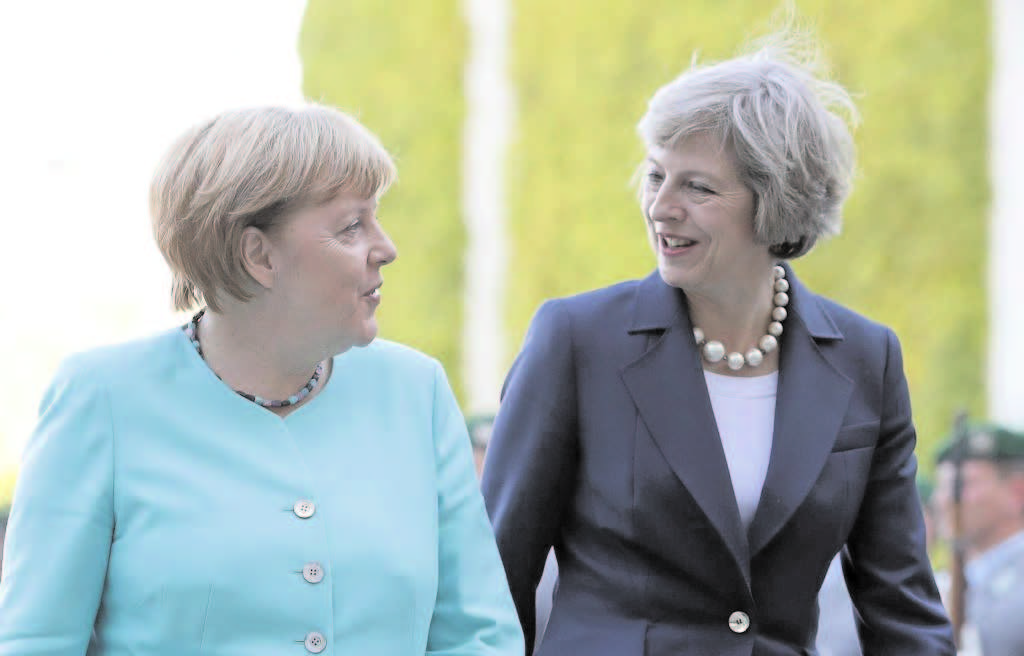
    BERLIN (TIP): Prime Minister Theresa May made her first overseas trip as Britain’s leader on July 20 to meet German Chancellor Angela Merkel, who will be a key figure in negotiating Britain’s exit from the European Union.

    May was greeted by a military band as she arrived at the Chancellery in Berlin for getting-to-know-you talks with the German leader.

    A week ago May replaced David Cameron, who resigned in the wake of Britain’s decision to leave the 28-nation bloc.

    May’s office says the trip, which also includes a visit to French President Francois Hollande, will help forge “the personal relations that will pave the way for open and frank discussions in the months ahead.”

    May is likely to be asked when she will invoke Article 50 of the EU’s constitution, which triggers a two-year process of quitting the bloc. She has said she does not plan to do that before the end of the year, but EU leaders say there can’t be any substantive talks about future relations until Britain does that.

    Merkel’s spokesman Steffen Seibert said talks with Britain over leaving the EU can only begin once Article 50 is activated, and there will be no “pre-negotiations” between Merkel and May.

    May said Wednesday that while she doesn’t underestimate the challenge of negotiating the British exit, she firmly believes “that being able to talk frankly and openly about the issues we face will be an important part of a successful negotiation.”

    The thorniest issue is likely to be the trade-off between access to Europe’s single market _ which the British economy relies on _ and control of immigration. EU leaders are unlikely to give Britain full access to the market unless it accepts the EU principle of free movement of people among member states.

    Facing her first weekly prime minister’s question session in the House of Commons Wednesday, May did not answer directly when asked if Britain would be willing to leave the single market in order to guarantee migration controls.

    She said the referendum result made clear that “people want control of free movement from the European Union.” But, she said, “we must also negotiate the right deal and the best deal on trade in goods and services for the British people.”

    May has also announced that Britain is relinquishing its turn at holding the EU presidency in the second half of 2017.

    May’s office said the prime minister spoke to European Council President Donald Tusk on Tuesday evening and told him Britain would give up the rotating six-month presidency _ held by EU member states in turn _ so it could prioritize exit negotiations.

    After a working dinner with Merkel in Berlin on Wednesday, May will travel to Paris on Thursday to meet Hollande in Paris. As well as talking about the EU, they will discuss counterterrorism cooperation in the wake of last week’s deadly truck attack in Nice.

    May said she wanted to send a message to Britain’s European allies that “these relationships have been vital in the past and they will be vital in the future.”

  • Theresa May’s Challenges

    Theresa May’s Challenges

    Three weeks after a majority of Britons voted in a referendum to leave the European Union, the British political landscape looks entirely different.

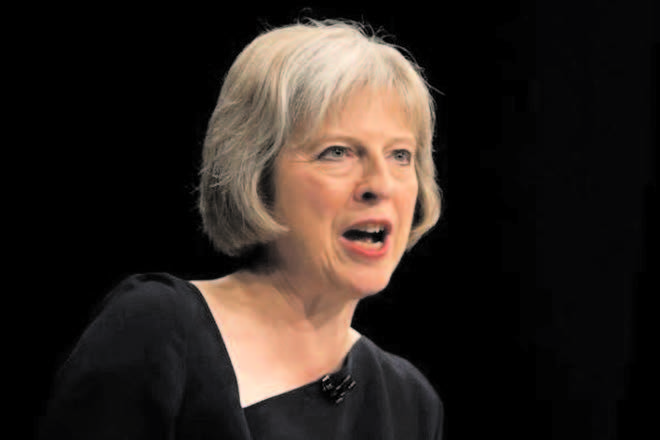
    David Cameron, who called the referendum, is no more the Prime Minister. Boris Johnson, an exit campaigner who was widely expected to replace Mr. Cameron, backed off even before the contest for the new Prime Minister began. Michael Gove, another Brexiteer who entered the race, was rejected by Conservative MPs. Theresa May rose from this post-referendum chaos to become the second woman Prime Minister of the U.K. A seasoned politician with administrative experience, Ms. May’s style of working and policy preferences often invoke comparisons with Margaret Thatcher and Angela Merkel. As Home Secretary for six years, she oversaw Britain’s security services, borders and police forces. Despite her hard-line positions on immigration – at the Home Office she supported a net immigration cap – she chose to back the Remain camp, like Mr. Cameron, during the referendum campaign. This pragmatic Euroscepticism may have helped her win over both the doves and hawks within the Conservative Party.

    That the U.K. has put an end to political uncertainty quicker than expected is good news for both the country and Europe. But the challenges Ms. May faces are unprecedented. The Conservative Party is divided. Legislators and other party leaders may endorse her for now, but going forward she could find it tough to maintain the equilibrium between the centrists and right-wing conservatives. Mr. Cameron’s decision to call the referendum to appease the right-wingers shows how unstable that equilibrium can be. Secondly, the Tories were re-elected last year under Mr. Cameron’s leadership on promises of fixing the country’s economic worries. The Brexit vote has already done damage to the fragile economic recovery. Ms. May’s immediate task would be to restore investor confidence. Thirdly, there is an alarming rise of xenophobia in the U.K. which threatens its social cohesion, which no ruler can ignore. A yet larger challenge for Ms. May would be dealing with the Brexit referendum outcome. Mr. Cameron had promised to trigger Article 50 of the Lisbon treaty if there was a Leave vote. In the event, he did not. None of the Brexiteers managed to succeed him. Ms. May, herself a Remain supporter, faces a difficult situation. If she doesn’t begin the process of taking the U.K. out of the EU, she faces the wrath of Brexiteers within and outside her party. If she invokes Article 50, it could have immediate repercussions for the economy and London’s ties with Scotland. This is a tall order that even Ms. May’s idol, Margaret Thatcher, would have struggled with.

  • Theresa May succeeds David Cameron as British Prime Minister

    Theresa May succeeds David Cameron as British Prime Minister

    LONDON (TIP): In her first public remarks, June 13, the new British Prime Minister Theresa May struck a populist tone, saying she planned to continue predecessor David Cameron’s “true legacy” of social justice.

    The Conservative Party leader spoke directly to the poor, black and white working-class residents as well as women, youth and those with mental health issues, saying, “The government I lead will be driven not by the interests of a privileged few, but by yours.”

    Her party prizes unionism, she said, and not just among England, Wales, Scotland and Northern Ireland, “but between all of our citizens, everyone, whoever we are and wherever we’re from.”

    Cameron has led a one-nation government, and it is in that spirit that I also plan to lead,” she said.

    May wasted no time getting to work, naming six Cabinet members shortly after taking the nation’s helm. Among them were two of her chief rivals in her bid to head the Conservative Party: members of Parliament Boris Johnson and Liam Fox.

    Here is the new Prime Minister’s cabinet 

    Theresa May succeeds David Cameron - listIn his final appearance in Parliament as Prime Minister, Cameron opened with the quip that “apart from one meeting in the afternoon with the Queen, my diary is remarkably light.”

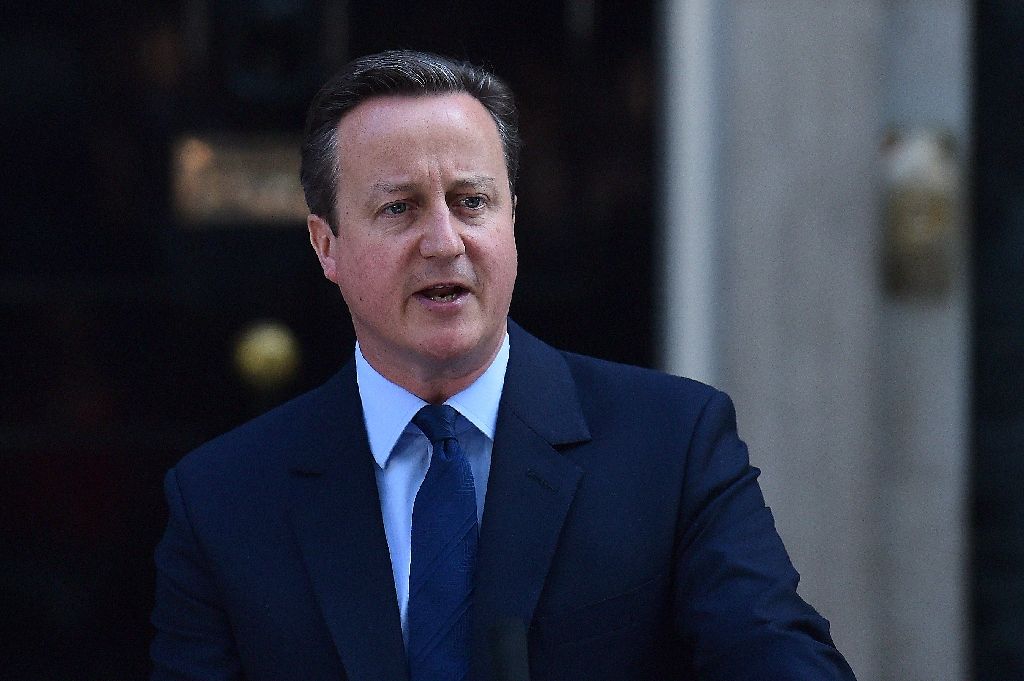
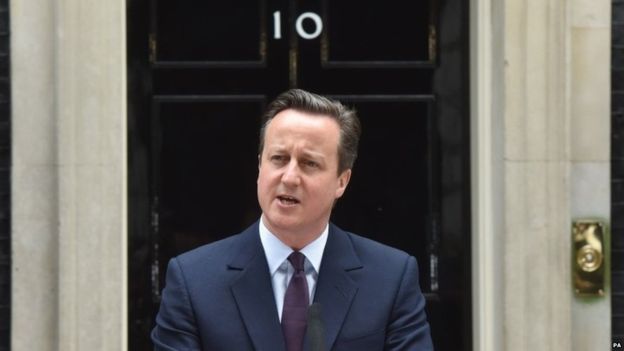
    Before resigning, Cameron delivered remarks outside 10 Downing Street, saying, “It’s not been an easy journey, and of course we’ve not got every decision right, but I do believe that today our country is much stronger.”

    He wished May the best, especially as she negotiates the country’s “Brexit” from the European Union. If he were granted one wish, he said, it would be the “continued success of this great country that I love so very much.” Cameron will continue on as a member of Parliament.

    David Cameron-Brexit forced his exit
    David Cameron-Brexit forced his exit

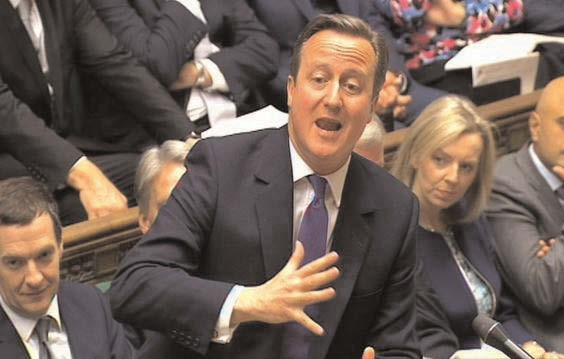
    Earlier Wednesday, Cameron appeared to be in a jovial mood as he told members of Parliament: “I have addressed 5,500 questions from this dispatch box — I’ll leave it to others to decide how many I’ve answered.”

    He held up a photo of himself with Larry the Downing Street cat, saying he loved the “chief mouser” and was sad to be leaving him behind.

    On a more serious note, Cameron said he cared passionately about the UK, adding that “we need to make sure as we leave the EU, how we keep the benefits of the common travel area.”

    Gesturing across the room and up to his wife, Samantha, watching from the gallery, he said: “I will miss the roar of the crowd, I will miss the barbs from the opposition, but I will be willing you on.

    “Nothing is really impossible if you put your mind to it. After all, as I once said, I was the future once.”

  • BREXIT FALLOUT – David Cameron to resign Wednesday as Theresa May takes over

    BREXIT FALLOUT – David Cameron to resign Wednesday as Theresa May takes over

    British Prime Minister David Cameron is expediting his departure from 10 Downing Street, paving the way for Home Secretary Theresa May to take the reins and steer the country out of EU.
    Theresa May promised to build a “better Britain” and to make the UK’s EU exit a “success” after she was announced as the new Tory leader and soon-to-be PM.

    Speaking outside Parliament, Mrs May said she was “honoured and humbled” to succeed David Cameron, after her only rival in the race withdrew on Monday.

    Mr Cameron will tender his resignation to the Queen after PMQs on Wednesday.

    May was officially named Conservative Party leader and successor to Cameron “with immediate effect” Monday, said Graham Brady, chair of the 1922 Committee, a collection of Conservative members of Parliament key to electing the party leader.

    Cameron had already announced he would step down by October after failing to convince the country to remain in the EU in the divisive June 23 referendum that sent shockwaves through Britain’s political establishment.

    But Monday, May’s only remaining rival to replace Cameron — Energy Minister Andrea Leadsom — pulled out of the race following controversy over comments she made about motherhood and leadership.

    Obviously, with these changes, we now don’t need to have a prolonged period of transition. And so tomorrow I will chair my last Cabinet meeting. On Wednesday I will attend the House of Commons for Prime Minister’s questions,” Cameron told reporters Monday outside 10 Downing Street.

    “And then after that I expect to go to the palace and offer my resignation. So we will have a new prime minister in that building behind me by Wednesday evening.”

    The vote between May and Leadsom was supposed to go to the wider Conservative Party of 150,000 people, but being the sole candidate, May sidestepped the party rule.

    Cameron welcomed Leadsom’s decision to drop out of the race and said he was confident May would steer the country in the right direction, calling her strong and competent, and offering her his full support.

  • Blair’s Iraq misadventure

    Blair’s Iraq misadventure

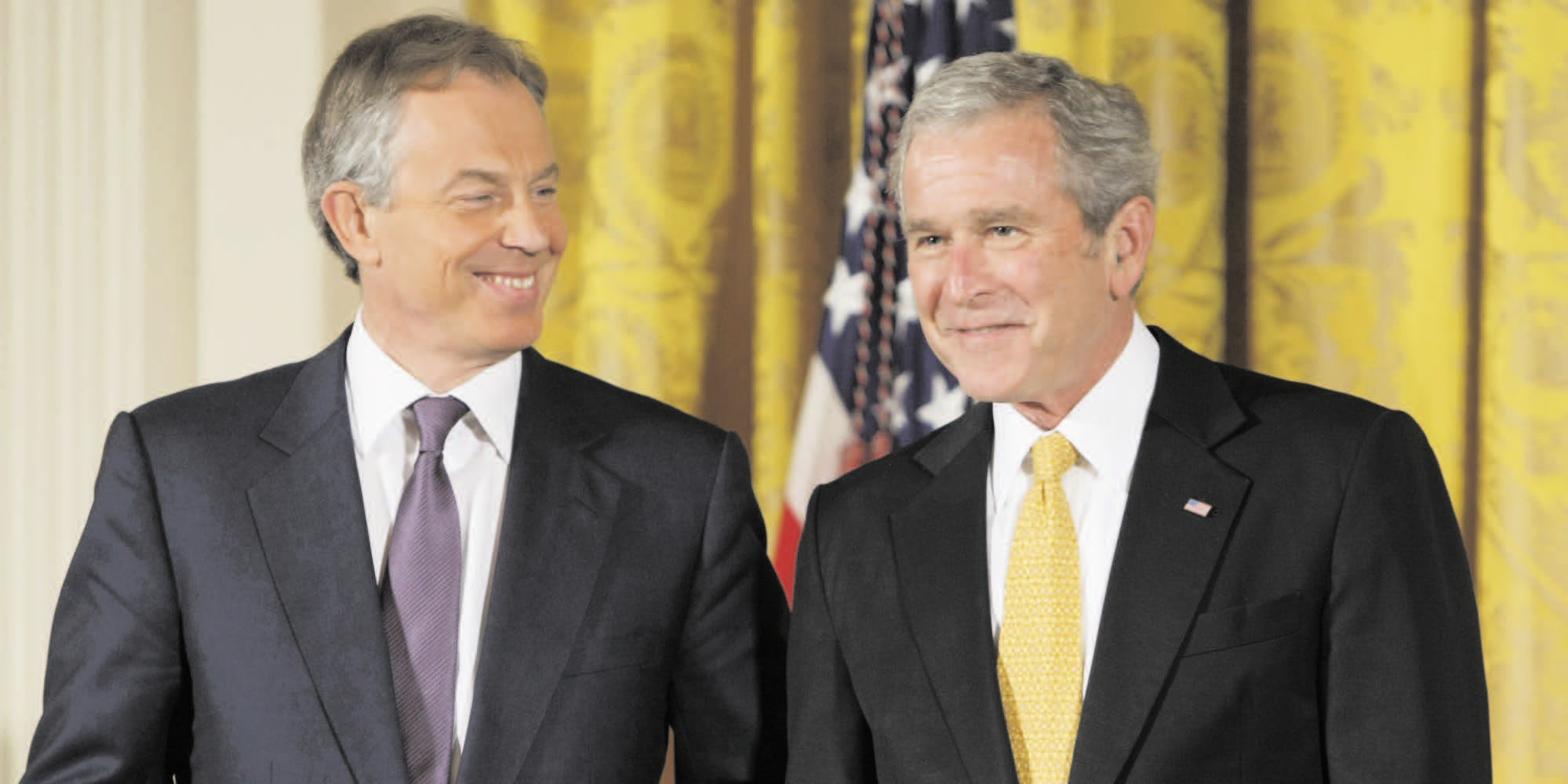
    The invasion was ostensibly on the specious ground of Saddam Hussein possessing weapons of mass destruction, based on conjectures and intelligent reports, in the face of men in the know pleading for patience. President Bush’s decision was part hubris, part spreading the credo of democracy, part a game changer in reordering the affairs of the Middle East.

    Mr. Blair was the enthusiastic young subaltern willing to do the President’s bidding, best summed up in the secret memo he sent the White House, now made public, months before the invasion saying. “I’ll be with you, whatever”. After the UK lost its empire in the post-World War II era, she ruled the world by proxy for decades as the pundit of US administrations in their negotiating the hot spots. But never has this subservient relationship been so frankly acknowledged as in Mr. Blair’s memo.

    Britain, which has just made the fateful decision to leave the EU, is still searching for answers to its role in Europe and the world. In fact, the Brexit decision was born out of nostalgia for a lost empire, and in this contest between the heart and the head, the former won by a narrow margin.

    Sir John’s was an inquiry into the British conduct in the Iraq invasion and war and the exhaustive report, which runs into several volumes, raps Mr. Blair’s conduct hard. But in a sense it is an even greater indictment of the conduct of President Bush who went to war on scant pickings without preparing for administering post-Saddam Iraq substituting bravado for policies on the ground.

    Here lies the American tragedy on the use of unsurpassed power to remake the Middle East after a set of grandiose theories. The world knows how the crumbling Ottoman Empire was divided into spheres of influence between France and Britain 100 years ago in the shape of Sykes-Picot agreement. America entered the scene by appropriating the bulk of the rich oil flows and was happy to support monarchies and dictatorships.

    The US had another interest, to protect Israel. What became known as the Israeli-American lobby and Washington’s geopolitical interests in propping up Israel meant that the usurpers of Palestinian land would never get justice. The Israeli-Palestinian peace agreement celebrated on the lawns of the White House suited Washington’s interests and was a partial one. And Israeli victories in wars with Arabs meant that what the victors won, they would keep. The two-state solution was a sop to Palestinians in the form of a toothless state now superseded by Mr. Benjamin Netanhayu’s relentless march for a Greater Israel.

    To return to Iraq and Mr. Blair’s inglorious role in the invasion, the summary of the report presents a picture of his appropriating cabinet authority, declining to be bound by rigorous legal opinion and perhaps somewhat inebriated by his chummy relations with the occupant of the White House.

    President Bush for his part was riding on his hobbyhorse of going down in history as the maker of a new map of the Middle East. And Paul Bremer, the man he appointed as first Governor of a defeated Iraq, totally misread the situation by excommunicating Saddam’s mainly Sunni army. In combination with the sectarian policies of Iraq’s Nouri al-Maliki, it was a priceless gift of well-trained officers and soldiers thrown into the arms of what became an insurgent force coalescing around the opposition, later to become the Islamic State.

    Apart from the price Mr. Blair will have to pay for his role as Sancho Panza to Mr. Bush, the place Britain has come to occupy as America’s closest ally after the loss of empire needs re-examination. The British Parliament has learned to exercise some control over future military interventions by rejecting one of Prime Minister David Cameron’s military initiatives. But future policy makers must devise new trip wires before automatically following American military interventions. It would indeed appear that a redefinition of the responsibilities of ‘closest ally’ is called for.

    Where does Britain go from here? To begin with, she has to cope with choosing a new prime minister before starting divorce proceedings with the EU, a Herculean task because she does not want to pay the full price for remaining in the single market by allowing the free movement and residency of EU nationals. Immigration was the emotive issue that won the Brexiters their double-edged victory.

    Britons have been reluctant Europeans at the best of times. Now that they are in the process of reclaiming what they view as their full sovereignty, they need to carve out a new role in the new world order. The Japanese, for instance, are already worried that in their search for a role, they might indulge China in helping to rescind the embargo on high-technology arms exports.

    Suggestions that Britain should revive the Commonwealth, a lame horse, are tantamount to barking up the wrong tree. The post-colonial experiment of leading ex-colonies in a totally different age is a non-starter. Those from the colonies who chose to settle in the UK -for instance, the large Indian diaspora -have their links with their original homes but these cannot be translated into a new grouping of political weight in the world. If the Modi government is thinking of playing a leading role in a revived Commonwealth, it would be set on a foolish venture.

    The Chilcot report is a crunch moment for Britain because it illuminates the dilemmas of a once Great Britain that ruled the waves and countries far and wide. Having been reminded of the pitfalls of slavishly following the sole superpower, she has to begin to find a new direction.

  • UK poised to have first woman PM since Margaret Thatcher

    UK poised to have first woman PM since Margaret Thatcher

    LONDON (TIP): Britain is poised to get its first woman Prime Minister in more than a quarter of a century since Margaret Thatcher as the race to succeed David Cameron after the Brexit vote narrowed down on July 7 to home secretary Theresa May and energy minister Andrea Leadsom.

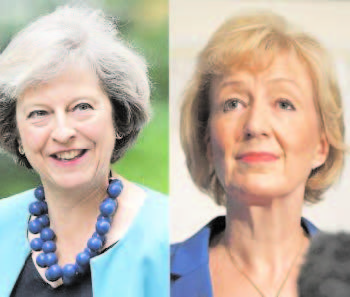
    May will now go head to head with Leadsom in an all-woman contest after justice secretary Michael Gove was eliminated from the Conservative party leadership race with the least votes in the second round of voting today.

    “This vote proves the Conservative party can come together,” May said after she received the backing of 199 Tory MPs compared to Leadsom’s 84 and Gove’s 46.

    May and Leadsom will now begin their campaigns to convince the wider Conservative party membership around the country for a final round of voting with the winner set to be declared on September 9.

    It is now certain that the winner will go on to become Britain’s second female Prime Minister after Margaret Thatcher.

    Today’s results were announced at Westminster by Conservative MP Graham Brady, the chairman of the backbench 1922 Committee.

    There had originally been five contenders to succeed Cameron, who had announced his resignation after Britain voted to leave the European Union (EU) in June 23 referendum.

    The contest now moves to its final stage with the Conservative Party’s 150,000-strong membership deciding between May, a Remain campaigner with a long track record in government, and Leadsom, a strong Brexit campaigner with a background in business by postal ballot.

    The race had thrown up its share of controversies with Gove’s campaign chief, Nick Boles, allegedly texting MPs to vote tactically in favour of his candidate.

    His message read: “What if Theresa stumbles? Are we really confident that the membership won’t vote for a fresh face who shares their attitudes about much of modern life, like they did with IDS [Ian Duncan Smith]?” It triggered a backlash, forcing Boles to apologise and claiming that Gove had no knowledge of his message.

    It had led May to urge her supporters to not vote tactically as she once again called for a “proper contest”.

    The 59-year-old has gradually emerged as the candidate with the most backing among both remain and leave camps within the Tory party, despite having supported Cameron during the EU referendum campaign.

    “Under Theresa’s leadership, the motives of the Conservative Party will never be in any doubt,” said Indian-origin minister Priti Patel, a Brexit supporter who threw her support behind May earlier today.

    (AFP)

  • BREXIT–A “Leave” vote puts UK on the path of disintegration

    BREXIT–A “Leave” vote puts UK on the path of disintegration

    It was certainly a black Friday – not the kind that we are used to after thanksgiving holiday – for the stock markets.

    The reason for that was not some economic news but rather political one: Brexit. It was a vote on the referendum whether to remain in European Union or Leave.

    Right before the referendum vote, there was feeling that pro-EU forces would prevail but the result was quite opposite: the “leave” vote prevailed by 52-48 margin letting loose a political earthquake of magnitude 10.

    The result was clearly seen in the reaction of the stock markets which tumbled across the globe wiping out ‘trillions’ in wealth and investors rushing to the safety of US bonds (which Trump wants to negotiate in order to reduce US debt, if he becomes President, notwithstanding the fact that all US debt is constitutionally guaranteed) and gold.

    Before we delve into what happens next, here is a quick and interesting fact about the vote: those belonging to 18-24 age group voted overwhelmingly to remain in the EU but those in the 65+ age group – the older white generation -voted to leave the EU.

    This brings forth the glaring contrast between the viewpoints of two groups: The age group 18-24 years exhibited more tolerance, inclusiveness of all cultures and more progressive outlook towards the world – just like the view point held by the youth generation in US.

    But those who voted for leaving the EU – a majority of 65+ age group representing a dying generation – exhibited a mindset that is not able to come to terms with the changing society in modern times and wants to cling back to the old times which are crumbling due to technological advances, more tolerant younger generation and globalization of economy. A similar trait is exhibited by the whites in US who are feeling that “their way of life” is under assault.

    The foremost question is: now what happens?

    First possibility is that many nations in EU would also like to have the referendum like UK.

    Denmark had its own referendum last year but it was more towards deciding how much power to give to unelected officials in Brussels.

    Dutch leader Geert Wilders – a firebrand Islamophobe – has already called for having similar referendum to decide about Dutch member ship in EU.

    Then there is Marine Le Pen – a far right French leader – who is widely popular in France and if she becomes President then France could also see something along the lines of UK referendum. Hungary’s Victor Orban is no friend of EU and has also hinted at the referendum.

    If that happens then EU could find itself on the verge of disintegration.

    On the other hand, there is likelihood that UK would be just an anomaly. Other member nations would resolve to make EU a more cohesive force but with reforms that would lessen the authoritarian grip of Brussels on the member nations.

    David Cameron wanted to leave the painful matter of separation to his successor, but EU leaders like Jean-Claude Juncker, Angela Merkel, and Donald Tusk etc. have called for speedy divorce opining that there is no reason to wait for Cameron’s successor.

    Which means EU might decide to make separation for UK as painful as possible – in the areas of trade, immigration etc. – and as an example in order to deter other members who might harbor such notion of referendums.

    UK itself could face the negative reaction to the “leave” vote. There is a possibility that businesses could flee to Ireland or other EU countries triggering job losses and plunging the nation into recession causing untold economic damage.

    Besides that, the question of Scotland’s independence could again come up. Scotland has overwhelmingly voted to remain in the EU but England has opted to leave which would open up Scottish independence question.

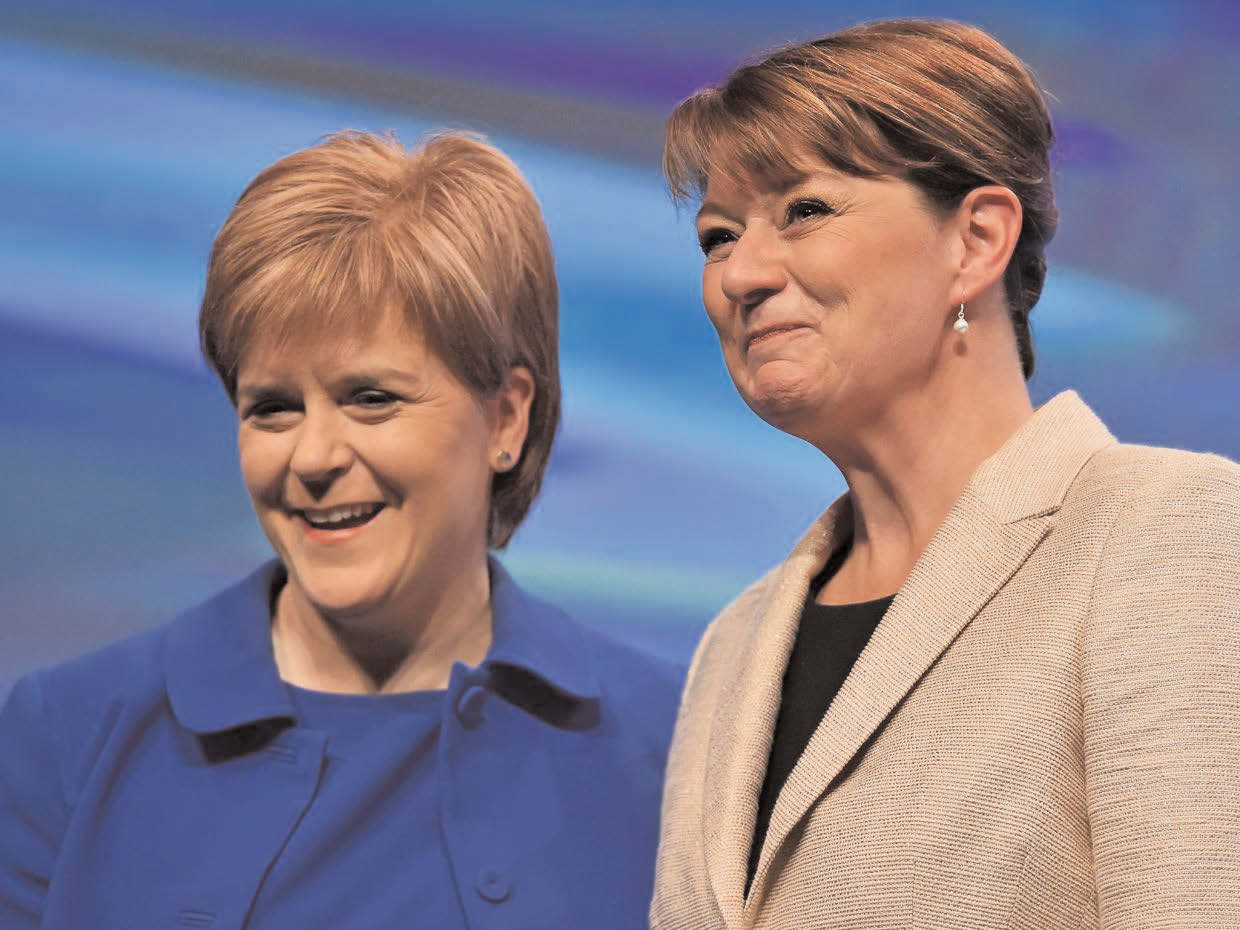
    Scottish Minister Nicola Sturgeon has expressed no confidence in London’s government and hinted that Scottish independence referendum could be in the cards.

    If that happens – a very high probability – then by voting to leave the EU, UK may also have set itself up for disintegration.

    That would be quite ironic.

  • British home minister May launches bid to succeed Cameron

    British home minister May launches bid to succeed Cameron

    LONDON (TIP): Britain’s powerful home secretary Theresa May on June 30 launched her bid to succeed Prime Minister David Cameron, saying the country needs strong proven leadership to negotiate the best possible terms for the UK leaving the EU.

    “My pitch is very simple. I’m Theresa May and I think I’m the best person to be prime minister of this country,” May, who has been the UK’s longest serving home secretary, said at a press conference.

    She underlined that “Brexit means Brexit” as she announced that she will be running for party leadership contest, which is set to conclude by September 9.

    “Our country needs strong proven leadership to negotiate the best possible terms for the UK leaving the EU. Brexit means Brexit. The campaign was fought, the vote was held, turnout was high and the public has given its verdict,” the 59-year-old Conservative party leader said, adding, “We need leadership that can unite our party and our country”.

    Cameron had announced that he would be stepping down after the referendum results in favour of Britain’s exit from the European Union (EU) last week.

    May said that among her first jobs as the prime minister would be to create a new government department responsible for negotiating Britain’s exit from the EU, headed by an MP who campaigned for Britain to leave the EU.

    May, considered as the most powerful Conservative woman since Margaret Thatcher, spoke about invoking Article 50, the formal procedure for leaving the EU, which Cameron has left for his successor to do.

    “Article 50 should not be invoked before the end of the year,” she said.

    She argued that under her leadership the Conservative Party will come back together, not just for Remain or Brexit, but for the whole country.

    “I know I’m not a showy politician…I don’t go drinking in Parliament’s bars. I don’t wear my heart on my sleeve, I just get on with the job in front of me and you can judge me by my record,” May said.

    Calling for an “open contest”, she added: “Whether it’s a woman or a man it’s about the qualities of the people doing the job.”

    Seen as a tough politician for her firm stance on complex issues like immigration, May has strong support within the Conservative party.

    As the leadership contest continues to heat up before the Thursday night deadline for nominations, she is expected to go head to head with former London mayor and Leave campaigner Boris Johnson.

    Justice secretary Michael Gove, who was expected to back the leadership bid of fellow Brexit campaigner Johnson, has thrown his own hat in the ring instead.

    “I wanted to help build a team behind Boris Johnson so that a politician who argued for leaving the European Union could lead us to a better future. But I have come, reluctantly, to the conclusion that Boris cannot provide the leadership or build the team for the task ahead. I have, therefore, decided to put my name forward for the leadership,” Gove said in a statement.

  • Brexit campaign leader Boris Johnson won’t run for leadership of UK’s Conservative Party

    Brexit campaign leader Boris Johnson won’t run for leadership of UK’s Conservative Party

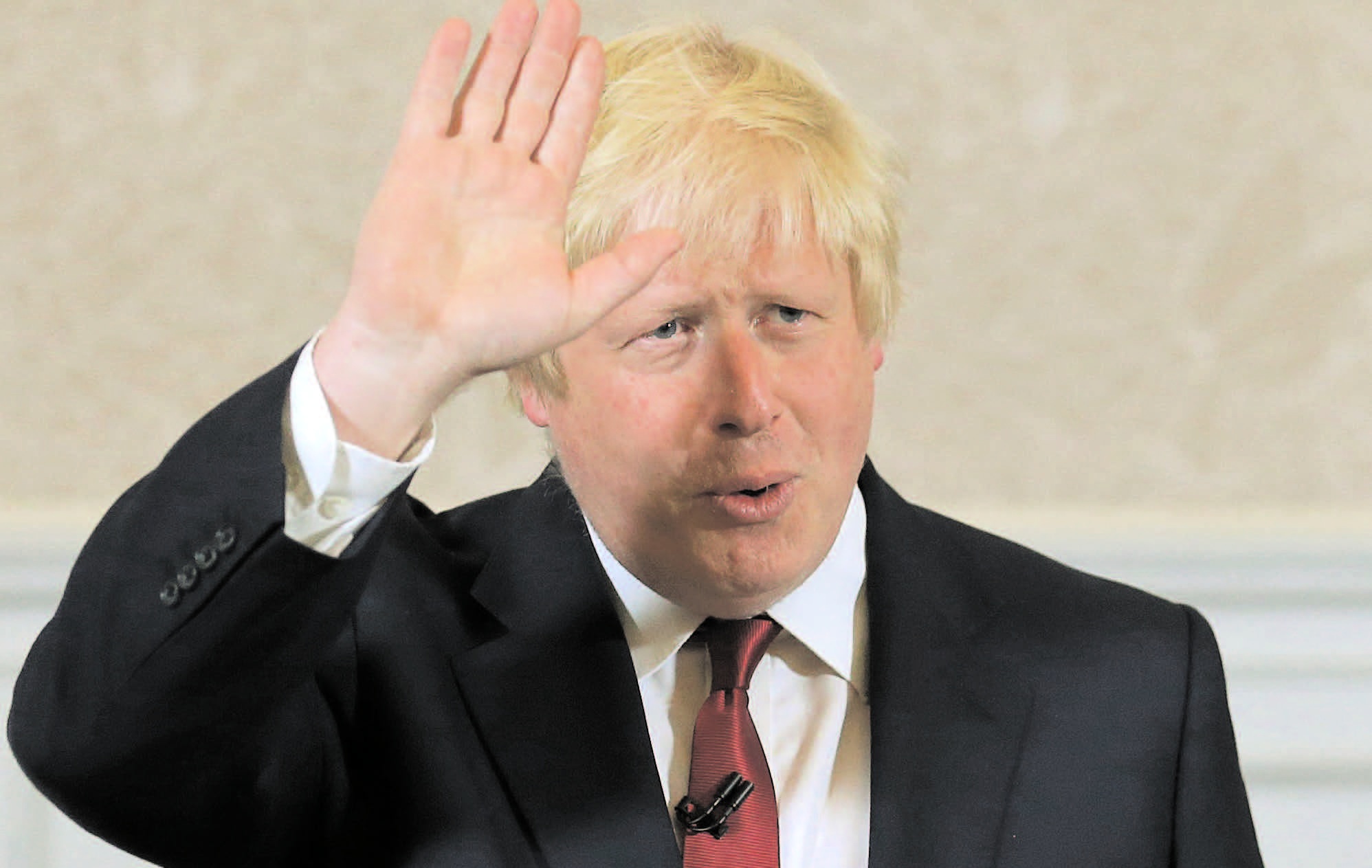
    LONDON (TIP): The race to become Britain’s next prime minister took a dramatic last-minute turn with former London mayor Boris Johnson —considered a frontrunner — ruling himself out of the race after the defection of a key ally on Thursday.

    Johnson, a prominent campaigner for British withdrawal from the European Union, told a news conference that the next Conservative Party leader would have needs to ensure Britain’s standing in the world.

    “Having consulted colleagues and in view of the circumstances in Parliament, I have concluded that person cannot be me,” he said.

    Johnson dropped out after justice secretary Michael Gove, Johnson’s ally in the EU “leave” campaign, astonished the political world by announcing that he was running to succeed Prime Minister David Cameron. Home secretary Theresa May and work and pensions secretary Stephen Crabb are also in the race.

    The winner of the contest, to be announced September 9, will become prime minister and play a vital role shaping the nature of Britain’s relationship with the European Union after last week’s Brexit vote ended the career of Cameron, whose bid to keep Britain in the EU block failed.

    The bookies’ early favorite is May, who is seen by many in the party as a safe pair of hands as the country struggles to disentangle itself from the EU.

    “This is not a normal leadership held under normal circumstances,” May said in a speech Thursday in London. “The result means we face a period of uncertainty we need to address head on.” Although May had offered a tepid endorsement of Britain’s place in the European Union during the referendum campaign, she was clear that the vote would be respected.

  • Donald Trump’s Brexit Speech showed his incompetence

    Donald Trump’s Brexit Speech showed his incompetence

    Donald Trump made the headlines again and this time in Scotland for his bizarre comments on #BREXIT; Below are the excerpts

    QUESTION: How would the Trump administration approach the Brexit, should you be elected president? And Scotland voted 62-38 to remain. Should Scotland leave the U.K., as many people are talking about?

    TRUMP: Yeah. I think I see a big parallel. I think people really — I think people really see a big parallel. A lot of people are talking about that, and not only the United States, but other countries.

    People want to take their country back. They want to have independence, in a sense, and you see it with Europe, all over Europe. You’re going to have more than just — in my opinion, more than what happened last night, you’re going to have, I think many other cases where they want to take their borders back. They want to take their monetary back.

    They want to take a lot of things back. They want to be able to have a country again. So, I think you’re going have this happen more and more. I really believe that, and I think it’s happening in the United States.

    It’s happening by the fact that I’ve done so well in the polls. You look at the recent polling, and you look at the swing states and you see how I’m doing, and I haven’t even started my campaign yet, essentially.

    I mean, we’ve — we’ve done very well. We’re raising a lot of money for the Republican Party. I’m going to be funding a lot myself, but we’re raising a lot of money, John, for the Republican Party. And you’ll see those numbers come out in the next — over the next 30 days, and in particular, 60 days.

    The numbers that were put out last week were a very start — that was a very small of time just to start. But we have raised a lot of money, especially money coming in in small — from small donors. You’ll be amazed when you see the kind of numbers we’re talking about, because we were amazed and I was amazed. But that will be reported fairly soon.

    But I really do see a parallel between what’s happening in the United States and what’s happening here. People want to see borders. They don’t necessarily want people pouring into their country that they don’t know who they are and where they come from. They have no idea.

    And I think, you know, it — not only did it win, but it won by a much bigger margin than people thought it would happen.

    QUESTION: And how would your administration approach the Brexit, and getting the question of Scottish….

    TRUMP: Yeah, you just have to embrace it. It’s will of the people. You know, it’s not a question of approaching it. It’s the will of the people. It’s always the will of the people. Ultimately that wins out.

    QUESTION: And would you like to see — should Scotland leave, sir?

    (CROSSTALK)

    QUESTION: … impact of what is taking operation here in Britain? The markets are…

    TRUMP: Right. Well, nobody knows. Look, if the pound goes down, they’re going to do more business. You know, when the pound goes down, more people are coming to Turnberry, frankly. And the pound has gone down, and let’s see what the impact of that has, but I think places like Scotland and England and different places, in Great Britain, I think you’re going to see a lot of — a lot of activity.

    The pound got high, and people weren’t able to do maybe what they wanted to do, but for traveling and for other things, you know, I think it could very well turn out to be a positive.

    Nobody really knows. You’ll know in five years, you’ll be able to analyze it, and maybe it will take longer than that, but what is known is that they’ve taken back their independence. And that’s a very, very important thing.

    Yeah, Katie?

    (CROSSTALK)

    QUESTION: … momentous — momentous right now, and you are on the world stage. Are you traveling with any of your foreign policy advisers? You knew that this was going to happen today, there was going to be some sort of decision.

    Are you huddling with them to find out what the best way…

    TRUMP: Well, I’ve been in touch with them, but there’s nothing to talk about. You know, I’ve been saying I would prefer what happened. Thing. I thought this would be a good thing, I think it will turn out to be a good thing. Maybe not short term, not, but ultimately I think it will be a good thing.

    And I’ve actually been in touch. And some, by the way, don’t like it, and some do like it. You know, they’re advisers, they’re like everybody else. They probably know less, every one of these advisers.

    Somebody said, “Gee, you should use advisers that have been really hot the last five years.” I said, “Really? I think I want to use ones that haven’t been involved.” Take a look at what has happened in the world.

    Go ahead, Katie.

    QUESTION: A follow up (inaudible). We’ve got a special relationship, U.S. and the U.K. for quite some time now, but with this vote, their standing in the world, their standing in Europe will certainly be diminished, their influence will be diminished.

    Will they still be the first call for you, for the U.S., when seeking help?

    TRUMP: Well — well, I don’t know, first call or second call, they will be a very powerful call, that’s going to be a great relationship. They’ll be great allies, they always have been. And I think zero will change on that score. There has never been a better ally, and I think nothing will change on that score, Katie.

    QUESTION: Mr. Trump — Mr. Trump, do you believe that the U.S. should move immediately to renegotiate trades with the U.K., or like President Obama has said, should the U.K. now move to the back of the line in light of the Brexit vote?

    TRUMP: Well, President Obama did say, I guess that they should move to the back of the line. Now, that wouldn’t happen with me. The U.K. has been such a great ally for so long, they’ll be always at the front of the line. They’ve been amazing allies in good times and in bad times.

    (APPLAUSE)

    And sometimes they make mistakes together, but they — as we know, but always been great allies. So — so, I will tell you, I think that I was very surprised when I heard President Obama say that, and I think he said that because he thought for sure it was going to stay together, but it didn’t stay together.

    And I felt it wouldn’t stay together, and again, I think that’s what’s happening in the United States. It’s not staying together. It’s a really positive force taking place. They want to take their country back. The people want their country back. We don’t want to lose our jobs, we don’t want to lose our borders.

    They want to have wage increases. They haven’t in the United States, folks. For members — and all of my members at Turnberry, I mean, we’ve had hard-working, great people that haven’t were a real wage increase in 18 years. So they’re working harder now and they’re making less money.

    So — go ahead?

    QUESTION: But just — a quick follow-up on that. I mean, the treasury secretary, the Fed chairwoman have both said they expect this, if the Brexit was successful to have a negative impact on the U.S. economy.

    Are you worried about that at all?

    TRUMP: Yeah, Sarah (ph), they don’t know. I mean, look, we’re going to have to see how it plays out.

    What I like is that I love to see people take their country back. And that’s really what’s happening in the United States. And I think you see that. And that’s what’s happening in many other places in the world. They’re tired of it. They want to take their countries back, and you know, this isn’t such a phenomenal — like some people are saying.

    And when people asked me what I thought was going to happen, as you know, I said, “I think they’re going to break way.” And it has turned out that way, and it was little bit surprising, because the polls indicated, probably, that it wouldn’t happen, 80 percent.

    And when I landed this morning, the first thing I asked is that. And I mean it was fairly close, but it wasn’t that close. So we’ll see what happens.

    I think it will be a good thing. You’re taking your country back, you’re going to let people that you want into your country, and people that you don’t want, or people that you don’t think are going to be appropriate for your country, or good for your country, you’re not going to have to take.

    And you know, look, Europe, like the United States, has made tremendous mistakes over the last period of time. You look at Germany, you look at some of the things that are happening. There have been tremendous mistakes that have been made.

    So, I think it’s going to end up being a very good thing, but it will take time.

    (CROSSTALK)

    TRUMP: Yeah, Tom?

    QUESTION: Your campaign has gotten global attention, all over the world people know who Donald Trump is and your campaign for president. Do you think anything you said in the United States influenced voters here in Britain when it comes leaving the E.U.?

    TRUMP: It’s a good question.

    If I said, “Yes, total influence,” — they’ll say, “That’s terrible, his ego is terrible,” right? So I will never say that, Tom. I would like to give you that one, but I can’t say it.

    You know, look, the question was, what do I think? And I gave my opinion a few times over the last few months, but I also said, I really don’t people to listen to it because it’s not me, it’s about them. It’s about them it’s their country.

    My opinion is that what happened should have happened. I think they will end up being strong for it, and they’ll control their country, and they’ll control everything about their country.

    Yes?

    QUESTION: David Cameron said that, “you were wrong when you proposed banning Muslims from entering the U.S. Do you think he got the mood of his country wrong and do you think he was right to resign?

    TRUMP: Well, I like David Cameron and he had a couple of rough statements, but that’s okay.

    I think David Cameron is a good man. He was wrong on this. He didn’t get the mood of his country right. He was surprised. I think he was very surprised to see what happened but he is a good man and he felt that way. And probably did the right thing but we’ll see what happens. I like David Cameron.

    Yes sir?

    QUESTION: BBC news.

    Do you think following your argument about sovereignty, do you think Scotland should have it’s independence? Would you support that?

    TRUMP: Well, that’s up to the people of Scotland. You know, we’ve been through this. And really, again, I leave it up to the people.

    I love the people of Scotland. That’s why I built in Aberdeen in one of the great golf courses of the world. It was up to judge to be the greatest course ever built new. New is being defined as form 1960 to present. You know, we’re very proud of it.

    I’ve gotten to know the people of Scotland so well and you know, through my mother and through everything else. The people of Scotland are amazing people. You know, that question really has to be addressed to the people. It was a very, very close vote.

    I don’t know if people want to go through that again. I was here when people were going through that vote. I didn’t take sides, but I will tell you, it was a nasty period. And I can’t imagine they go through that again, but the people of Scotland may speak differently.

    Yes sir?

    QUESTION: Just on what you said as well about Europe and other countries in Europe. Would you support the breakup of the European Union because that seems to be what would happen?

    TRUMP: Well, it looks like it’s on it’s way. We’ll see what happens.

    I can tell you, I have a lot of friends living in Germany that have always been very proud Germans to a level that you wouldn’t believe. They would be bragging about their country. They would be talking about their country as though there would be no place.

    They’re members of Mar-a-Lago and different places that I have. Now, those same people, some of them are saying they’re leaving Germany, they’re moving. They never even thought of moving but now they’re thinking about moving because of the tremendous influx of people. And you know what’s happening Germany, it’s a real problem.

    These are people that were very proud Germans that were beyond belief, they thought the greatest that there ever was and now they’re talking about leaving Germany. And you see the problems in German. So I could see it happening. I have no opinion really, but I could certainly see it happening.

    I saw this happening. I could read what was happening. And I could see things happening Germany. I hope they straighten the situation because it can really become a nasty — it can be very nasty. What’s going on can be very, very nasty.

    Building safe-zones in Syria, great idea. Building safe zones magnificent, big safe as can be. But when you’re taking them into the United States by the thousands and we don’t know who they are, when you’re taking them into Germany and other countries — all you have to do is look around. Look around the world, see what’s happening? It’s some real problems.

    QUESTION: It is easy for politicians to use immigration to divide an electorate. How does a leader unite people?

    TRUMP: Well, you unite people by having a happy country.

    And when people pour into the country and it doesn’t work, whether it’s because of crime or various other things, you’re not going to be uniting anybody. I just told you about Germany where people want to leave Germany. People there that I would never in a million years say that these people want to leave, but they’re going to be leaving. So you can’t unite a country by forcing things down to peoples’ throat. And that’s what happened here, people are not happy.

    Yes sir?

    QUESTION: Do you think that the referendums (ph) would have a seismic impact on the British economy? Do you intend to steal (ph) that for investments in Scotland? And how to does it feel to be on the sidelines of the news cycle?

    TRUMP: Well, you know, if anything, I have big investments over in Europe.

    I have — as you know, I own Dunebeg in Ireland, which is a phenomenal hotel. It’s one of the most beautiful hotels. It’s one of the most highly rated hotels in all of Europe and it’s got a golf course on this large, five — almost 500-acre parcel of land, on the Atlantic Ocean, and does great.

    I own Turnberry, I own Aberdeen. I’m going to go stop at Aberdeen for a little while; I’m actually leaving — I’ll only be here for one night, because I have to go back and campaign, which I actually love doing, to be honest with you. But I wanted to — really, I wanted to support my children, who have really poured their hearts and souls into this development.

    So — but — but you know, I think you understand. Yes, go ahead.

    QUESTION: Being — being you’re campaigning, a lot of people in the States are saying, did you really have to be here for this, I mean…

    TRUMP: Yeah. Because you know why I’m here? Because I support my children.

    OK, next. Yeah, Tom, go ahead.

    QUESTION: On fund-raising. You mentioned that you paid for Turnberry without any debt.

    TRUMP: Right.

    QUESTION: You — now, you’re a politician. Does it bug you to have to pick up the phone and ask people to donate to your campaign?

    TRUMP: Yeah, I don’t like doing it. I don’t like doing it, Tom.

    I mean, again, I’m an honest politician, probably one of the few. Tom’s asking, does it bother me to — when you’re raising money — and again, Tom, I’m raising this money for the Republican Party. It’s something I’ve never done.

    I’ve always contributed money to lots of people. A lot of campaign contributions over the years. And once I ran, I became like an outsider. But I — no, I don’t like doing that, but I have done it, and we’ve had amazing weeks.

    Last week I was in Houston, as you know. We had tremendous lines. Made a speech also and the lines were — actually on ABC they reported, ABC Local, they followed the lines all the way to the highways. It was actually it’s — I’ve never seen anything like that, and then Dallas where we had a similar thing.

    But we also had fund-raisers and I’ve really never done. You know, I sit with 20 people, and we talk, and they all hand you checks, bing, bing, bing, and they’re checks to the RNC and the Republican Party, and I feel I have an obligation to do that.

    And, Tom, the numbers are going to be, I think quite staggering, especially in July. In fact, Steve Mnuchin is here someplace. Steve?

    Are we doing well, Steve, huh? He’s one of their great financiers of the country, actually, and I chose him, and he — he wanted to do this, and the numbers are staggering.

    Don’t forget, we just sort of started this process a few weeks ago, and the first filing was for a very limited period of time, and it was almost before we started, and — but the numbers are amazing. Actually, the numbers for the small donations, we’ve taken a lot of money otherwise, but the numbers for the small donations are coming in at — I mean, it’s beyond anything what — that we thought.

    You know, the $20, $50 and $100 donations. But we’ll report in June, but especially the July report, I think, will show you some pretty massive numbers.

    (CROSSTALK)

    QUESTION: Mr. Trump, will you go buy (ph) checks? Will you still buy (ph) checks in the campaign?

    TRUMP: I’ll (inaudible) do it. Well, I just did it the other day. I matched. Right? I put up $2 million, and I say, you know, let’s see who’s going to go, and we’ve raised more than $2. But I guess I offered a $2 million incentive for people to put up money. And I don’t know if that was the reason, but we had a tremendous response to that, so.

    (CROSSTALK)

    TRUMP: David?

    QUESTION: I’m David (inaudible) with the…

    TRUMP: I know, David. You don’t even have to say. David, go ahead.

    QUESTION: Back to — back to the Brexit thing. You said that David Cameron maybe misread the mood of his country. Given that President Obama came over here and tried to encourage people to vote remain, and Hillary Clinton has made it clear she preferred they vote remain, what do you think this says about how Hillary Clinton maybe has misread the world, and since she’s a former secretary of state, what does that say about her campaign?

    TRUMP: Well, she has always misread everything.

    (LAUGHTER)

    I mean — no, if you think. She has misread this. And I was surprised that she was so bold and to say — well, the only reason she did it is because Obama wanted it. You know, if Obama wanted it the other way, if he said leave, she would have said leave.

    She does whatever he wants her to. Now, you know why, but that’s okay, we don’t have to get into that. But — but I actually was actually very surprised that President Obama would have come here and he would have been so bold as to tell the people over here what to do, and I think that a lot of people don’t like him and a lot of people voted — I think if he had — if he had not said it, I think your result might have been different.

    But when he said it, people were not happy about it, and I thought it was totally inappropriate. And when I said what I said, I told people, I said, don’t do I’m saying necessarily, do whatever you think, but this was just my opinion.

    He came in and really tried to convince people to stay. And I thought it was inappropriate, and then she doubled down and she did the same thing. And obviously, for the 219th time, they were wrong. They’re always wrong. And that’s the problem with them.

    Yes, sir?

    QUESTION: Mr. Trump, (inaudible) from LBC radio. And Prime Minister David Cameron resigning today. Would you back Boris Johnson as the future prime minister?

    TRUMP: I don’t know him. I don’t know him. I’m sure he’ll be good. He got it right. So that gives him an advantage, but I don’t know him.

    QUESTION: Mr. Trump — Mr. Trump…

    QUESTION: Mr. Trump, since your campaign’s shake-up — I guess it was earlier in the week, I can’t remember what day it is now — we’ve seen a campaign that’s become more focused, more disciplined, more aggressive in rapid response — you, more on point I think that we’ve seen you in the past. Is this the new you?

    TRUMP: I really don’t think so.

    First of all, Corey was fantastic and we did a great job with a some are small group of people. I say this to all the folks here that don’t come from the United States, I ran a campaign in the primaries where we got the largest number of votes in the history of the Republican Party, primary votes. Larger than Ronald Reagan. Larger than Richard Nixon. Larger than Dwight D. Eisenhower, who helped win the World War II. And we ran a very lean campaign, and I had fewer people, and I spent less money and I funded the money myself. I spent $55 million, something like that.

    STAFF: I think it was $45 million.

    TRUMP: And by the way, I’m forced — you know, legally, I have to pay myself back. If I use — this has nothing to do with the campaign. You won’t see this, I’m to support my children. But if I use one of my resorts in the United states and we have a press conference or something, by law, I have to pay myself back. I would like not to. I would like to just say, “use the ballroom, don’t bother with it.” A couple have people said, “pay.” By law you have to pay yourself back.

    I think this — I think that we should have been given credit for, in addition to winning — for winning with less money spent and with the smallest staff. So now we have a staff of 73 people. Hillary has a staff of 900 people. I won and she won. I don’t think that we — I mean, honestly as a businessman, I say, “Wow, he won spending less money and a smaller staff.” See, I view that as an advantage.

    A lot of pundits say, she has a much bigger staff.” I think we’re very nimble. I think we’re very nimble. I think we’re doing well. You’ve seen the polls comes out, they’re very close and very equal. We just had one coming out think from West Virginia where I have a 25-point lead, and North Carolina came out yesterday, a two- point lead. Ohio’s even, Pennsylvania’s even. The national polls are getting very close. I’m spending much less money. She’s spending tremendous amounts of money and we haven’t even started yet. So it’s going to be very interesting because she spent, what was it? $28 million? She spent a lot of money, and we’re even. And that’s a good sign — and I think that’s a good sign.

    When I won New Hampshire I spent a tiny fraction of what other candidates spent, one in particular. I won New Hampshire by a landslide. That person came in seventh. I think, you know, when you can do it on a smaller budget, and with fewer people, that’s the kind of person they want to be the president, because to me that’s a big thing.

    Yes, go ahead, sir?

    QUESTION: Mr. Trump, seven in 10 voters told us in a CNN poll, they want to see you cut ties with your business while you’re running for President.

    TRUMP: I will do that.

    QUESTION: Will you do that while running, though?

    TRUMP: I will do that.

    Well, I don’t think it matters while I’m running. While I’m running it doesn’t matter. Again, I’m here for the sole reason, though I did want to see the job Eric did because if he didn’t do a good job he wouldn’t be standing here. I would give him a hard time. Right? He did a beyond job. Beyond, this is phenomenal.

    And just as you view this great course you have to see the hotel we built. Phenomenal — phenomenal.

    I will absolutely cut ties. You know, the rules are, nobody knows. Okay? It’s never had to — where somebody has this big a business and runs for president and wins. If I win, even though I don’t have to do that I would probably put everything in trust. My children will run it along with my executives. It’s a big company. My children will run it along with my executives, and just do a good job running it.

    Let me tell you, the importance of the opportunity that I may be given is so important and so massive. Making great trade deals with China and with you, folks, by the way, but with China, the numbers are so staggering. When you look at trade deficits of $400 billion and $500 billion a year, the numbers are so staggering and incredible. I wouldn’t even be thinking about the business. I mean, who cars? I would actually say, who cares? I would absolutely — you don’t have to do this but I would most likely put it in a blind trust and they would run it or something.

    QUESTION: I think this is the ninth Trump property we visited during your presidential campaign. Why do you continue having events here?

    TRUMP: My properties — number one, I have the best properties. Okay? You can say that.

    I will say, a lot the of the press has said, “whether you like them or not, there’s no properties like that.” I have the best properties and you don’t get to see that otherwise, but I have the best properties.

    TRUMP: And the other thing is, why should I use somebody else’s properties? Number one, they’re not as good and number two, it’s one of those things. I wish, frankly, I wasn’t forced by law to pay myself back. We’re forced to pay. You do understand that, sir? A couple of people said, “He’s paying to his campaign.” I’m not paying to my campaign.

    I would love to give everything for nothing. By law, I’m forced — whatever the fair market value of a ballroom is, or whatever it may that we use, or an airplane. As an example, if I use an airplane, by law, I have to pay it back. And that’s what I do, and that’s reflected in the filings.

    Jeremy?

    QUESTION: Mr. Trump, there has been a long-standing tradition in American politics that politics stops at the water’s edge. And given your comments about President Obama this morning, it seems you don’t seem to buy into that?

    TRUMP: Well, he — he didn’t stop it at the water’s edge, because he made statements about this incredible part of the world. And that this particular country, and frankly, a large group of countries should do — I mean, he’s — he’s constantly dictating to the world what they should do.

    The world does listen to him. Obviously, you can see that by the vote, but he’s constantly dictating to other countries. So, you know, certainly, it doesn’t stop at the water’s edge with him.

    And you know, very importantly, he got it totally wrong. And he’s embarrassed. I mean, he’s embarrassed by the Supreme Court decision yesterday, which was a real rebuke, and he’s very embarrassed by — he got involved. I don’t know if that was through a friendship with David Cameron. It could have been.

    And I understand friendship, and I can understand why he did it. I can understand that. But I think it’s something he shouldn’t have done. It’s not his country, it’s not his part of the world. He shouldn’t have done it, and I actually think that his recommendation perhaps caused it to fail.

    Okay, one more — one more question.

    (CROSSTALK)

    TRUMP: Yes?

    QUESTION: (Inaudible). How much of the Brexit vote do you think is about economic issues that you’ve been hammering home on the campaign? Low wages, lack of growth in the economy?

    TRUMP: Well, I think a lot of it is, but I think a lot of it’s borders, I think a lot of it is immigration. I think I speak — spoken. I mean, I have so many members here, hundreds and hundreds of members sitting in the back, and I’ve spoken to them and they’re not happy with the people flowing into the country. They don’t want that to happen. And I think that has a lot to do with it.

    I really think the borders, you know, it’s not so different. It’s amazing the way the world is not so different. We’re on the other side of the ocean, but the world is not so different. We’re right over there, you go many, many miles right in that direction.

    And to be honest with you, I think a lot of it has to do with immigration, but I also think a lot of it has to do with the fact that they wanted to be independent. They got tired of seeing stupid decisions, just like the American people are tired of seeing stupid decisions. Whether it’s the Iran deal, whether it’s the border where people just flow across the border like Swiss cheese.

    They’re tired of seeing stupid decisions made. They’re tired of looking at horrible trade deals. And you have bad trade deals here, too. And so, I think — I think that has a lot to do with it.

    QUESTION: Does the Brexit deal (inaudible) your campaign?

    TRUMP: Well, I think the Brexit deal, I think when you talk about leave, you know, I felt, again, knowing the people here very well, but not wanting to get involved, but I felt that that was going to happen. I felt it was going to happen, and there is great similarities between what happened here and my campaign.

    Yeah. People want to take their country back. Okay. Maybe one more question.

    (CROSSTALK)

    QUESTION: (Inaudible) is the timing (inaudible) pretty impeccable.

    TRUMP: Well, I almost delayed this. You know, by the way, they said there were going to be 2,000 protesters. There turned out — we counted them — 43. Forty-three, and they’re way over there. The police did a great job, but there were — it was nothing much to do, frankly.

    There were 43, just on the record, because we heard there were going to be thousands of protesters — 43. And my members are very happy with Donald Trump, I can tell you. Is that a correct statement? They love Donald Trump.

    QUESTION: Mr. Trump…

    TRUMP: So — no, and they love what we’ve done here. And you know, this is a little bit what we’re going to do to the United States. You know, the United States has rotted infrastructure, we have roads that are crumbling.

    I have a friend who’s a trucker, a big trucker, one of the biggest in the world, actually. And he said, he buys these brand-new, magnificent trucks that cost hundreds of thousands of dollars, and he’s never had this problem before. They’re just getting destroyed, because the highways are loaded up with potholes.

    And when you have an 18-wheeler or 16-wheeler, and you have big, massive trucks, and they’re being — you know, going down a highway at 65 miles an hour, and they hit a pothole and they are loaded up with tons of stuff, he said those trucks, no matter how good they are, they get wiped out.

    And that’s what’s happening to our country. And I thin this is sort of a mini example, what we’ve done here. The members love us, Scotland loves us for what we’ve done. The council — our council member here, do we have council members here?

    Yes. The council has been so incredible and you know, it has just been a big love fest. What we do is, the United States needs its infrastructure fixed. You know, the bridges are a disaster. The roads are a disaster.

    TRUMP: My friend told me. He said, he’s never had a problem like this before. He said, you go down the highways in a brand-new truck that costs hundreds of thousands of dollars is virtually it’s destroyed. They have to bring it back and have it rehauled, because they’re hitting potholes all over the place on highways. Our infrastructure is crumbling in the United States.

    And we spent probably, if you add it up now, $4 trillion, maybe more than in the Middle East, and we have a problem.

    QUESTION: The country’s not a golf course.

    TRUMP: It’s not.

  • #Brexit Will Boost India-UK Ties says Priti Patel after Britain decided to quit EU

    #Brexit Will Boost India-UK Ties says Priti Patel after Britain decided to quit EU

    Britain’s senior-most Indian-origin minister Priti Patel, who had campaigned vehemently in favour of Brexit, believes today’s historic referendum result in favour of Britain leaving the European Union (EU) will ultimately be good for India-UK ties.

    Ms Patel, who has a seat in the UK Cabinet as minister for employment and also serves as Prime Minister David Cameron’s Indian Diaspora Champion, is now expected to play an active role on the front-benches of British politics.

    “India is a growing market with the fastest growing working age population of any other major economy – but it is a market that we are forbidden from striking a trade deal with because it is against EU rules…After we Vote Leave, the UK would be free to negotiate its own far-reaching trade deals with India and dozens of other growing economies. It will be a boost to India-UK ties,” she had told PTI ahead of the vote.

    The Gujarati-origin Conservative party minister has also repeatedly made personal references to her own Indian roots on the Vote Leave campaign trail.

    “They (her parents and grandparents) worked hard to give us a good future and play a positive role in British life. But while we remain a member of the EU, the businesses that we have worked hard to establish are at risk from costly red tape and regulations from Brussels.

    “By leaving the EU, we can replace EU red tape with sensible rules that promote the entrepreneurial spirit that we have in abundance.

    We send 350 million pounds a week to Brussels, this is money that could be spent on our priorities like the NHS (National Health Service),” she said, alongside fellow Indian-origin first-time Conservative party MP Rishi Sunak – the son-in-law of Infosys chief Narayana Murthy.

    One of the most contentious issues in the EU debate in the lead up to the in-out referendum has been immigration.

    The 52-48 per cent result in favour of Brexit indicates that the crucial estimate of 16.8 per cent of undecided votes among the 1.2 million Indian-origin electorate of the UK seem to have been won over by at least some of their arguments.

    She had also spearheaded a full-blown curry clash over the “unfair immigration rules” that favour EU migrants over non-EU workers from countries like India.

    “Our curry houses are becoming the victims of the EU’s uncontrolled immigration rules. By voting to leave the EU we can take back control of our immigration policies, save our curry houses and join the rest of the world,” she had said.

    She had been countered by long-serving Indian-origin Labour MP Keith Vaz, who expressed his dismay at the referendum’s final outcome.

    “Frankly, in a thousand years I would never have believed that the British people would have voted this way. I think that they voted emotionally rather than looking at the facts.

    It’ll be catastrophic for our country, for the rest of Europe and indeed the world,” Mr Vaz said.

  • Brexit: UK votes to leave EU in historic referendum

    Brexit: UK votes to leave EU in historic referendum

    LONDON (TIP): The UK has voted to leave the European Union after 43 years in a historic referendum.

    Leave won by 52% to 48% with England and Wales voting strongly for Brexit, while London, Scotland and Northern Ireland backed staying in the EU. Turnout UK-wide was 72%.

    UKIP leader Nigel Farage hailed it as the UK’s “independence day” but the Remain camp called it a “catastrophe”.

    The pound fell to its lowest level against the dollar since 1985 as the markets reacted to the results.

    UKIP leader Nigel Farage - who has campaigned for the past 20 years for Britain to leave the EU - told cheering supporters "this will be a victory for ordinary people, for decent people". British Prime Minister David Cameron who was a votary of Remain has announced he would resign by October.
    UKIP leader Nigel Farage – who has campaigned for the past 20 years for Britain to leave the EU – told cheering supporters “this will be a victory for ordinary people, for decent people”.

    The referendum turnout was 71.8% -with more than 30 million people voting – the highest turnout at a UK election since 1992.

    Wales and the majority of England outside London voted in large numbers for Brexit.

    Labour’s Shadow chancellor John McDonnell said the Bank of England may have to intervene to shore up the pound, which lost 3% within moments of the first result showing a strong result for Leave in Sunderland and fell as much as 6.5% against the euro.

    UKIP leader Nigel Farage – who has campaigned for the past 20 years for Britain to leave the EU – told cheering supporters “this will be a victory for ordinary people, for decent people”.

    Mr. Farage – who predicted a Remain win at the start of the night after polls suggested that would happen – said Thursday 23 June would “go down in history as our independence day”.

    He called on Prime Minister David Cameron, who called the referendum but campaigned passionately for a Remain vote, to quit “immediately”.

    Britain would be the first country to leave the EU since its formation – but a leave vote will not immediately mean Britain ceases to be a member of the 28-nation bloc.

    That process could take a minimum of two years, with Leave campaigners suggesting during the referendum campaign that it should not be completed until 2020 – the date of the next scheduled general election.

    There has been a mixed reaction to Britain’s Leave decision globally. International reaction has been coming in as the UK votes to leave the European Union.

    Martin Schulz, president of the European Parliament: “We respect the result. We have clarity for the UK to go its own way.

    “Now is the time for us to behave seriously and responsibly. David Cameron has his responsibilities for his country, we have our responsibilities for the future of the EU. You can see what is happening to sterling on the markets. I don’t want the same thing to happen to the euro. ”

    Geert Wilders, Dutch Freedom Party leader: “Hurrah for the British! Now it is our turn. Time for a Dutch referendum!”

    Marine Le Pen, leader of the Front National in France: “Victory for freedom! As I have been asking for years, now we need to have the same referendum in France and in the countries of the EU.”

    Malcolm Turnbull, Australian prime minister: “The impact on Australia immediately, directly, from a legal point of view, will be very limited because it will take some years for the United Kingdom to leave the European Union, to negotiate an exit. However, we’ve seen already large falls on stock markets and there will be a degree of uncertainty for some time.”

    Frank-Walter Steinmeier, German foreign minister: “The news from Britain is really sobering. It looks like a sad day for Europe and Britain.”

    As at the time of writing this report there was no comment from Indian leaders.

  • Brexit camp threatens legal action over EU vote extension

    Brexit camp threatens legal action over EU vote extension

    LONDON (TIP): Brexit campaigners accused the government of trying to rig the EU referendum and threatened legal action on June 9 as former London mayor Boris Johnson squared up for the campaign’s first TV debate.

    British MPs prepared to approve emergency legislation to extend voter registration — a move that has infuriated the “Leave” camp because many late requests have been from broadly pro-EU younger voters.

    Arron Banks, co-chairman of the Leave. EU campaign, said it was “a clear attempt to rig the referendum or, at a bare minimum, to load the dice”.

    “It’s a desperate attempt by the establishment to register as many likely Remain voters as possible.

    “We are therefore considering all available legal options with our legal team,” he said.

    The outrage was sparked by a glitch with the government’s main registration website just ahead of a previous deadline of midnight on Tuesday, playing into a heated debate ahead of a knife-edge vote.

    The deadline is now being extended until midnight.

    Education minister and “Remain” supporter Nicky Morgan, said the “Leave” camp was “turning into a bunch of conspiracy theorists”.

    Around 132,000 of the 525,000 people who did successfully register on Tuesday were aged under 25, compared to around 13,000 from the 65-to-74 age group.

    The “Remain” camp got another boost when Conservative MP Sarah Wollaston announced she was switching sides from the “Leave” camp, telling the BBC late Wednesday she was “uncomfortable” about the credibility of their claims about the cost of EU membership.

    Former Conservative prime minister John Major and his erstwhile political rival in the 1990s Tony Blair — were also set to put party politics to one side later on Thursday for a pro-EU rally in Northern Ireland.

    They were expected to warn that “Brexit” could “jeopardise the unity” of the UK, lead to another referendum of Scotland’s future and threaten Northern Ireland’s hard-won truce.

    “Although today Northern Ireland is more stable and more prosperous than ever, that stability is poised on carefully constructed foundations,” Blair was to say. “We are naturally concerned at the prospect of anything that could put those foundations at risk.”

    Scotland’s governing secessionist Scottish National Party has said Britain voting to leave the EU, while a majority of Scots voted to stay in, would trigger a second referendum on independence.

    In Northern Ireland, the Good Friday agreement signed by Blair in 1998 put an end to three decades of mostly sectarian conflict in which some 3,500 people were killed.

    Meanwhile, in a boost for “Leave”, leading businessman Anthony Bamford, chairman of construction machinery firm JCB, came out in support of Brexit, telling his 6,000 employees in a letter they had “very little to fear” from leaving the union.

    “JCB will continue to trade with Europe, irrespective of whether we remain in or leave the UK,” he wrote. “I am very confident we can stand on our own two feet.”

    Former London mayor and leading “Leave” campaigner Boris Johnson will go head-to-head with Scotland First Minister and “Remain” supporter Nicola Sturgeon for a potentially fractious debate later on Thursday.

    The surge in voter registration requests on Tuesday came immediately after a tense TV face-off between Prime Minister David Cameron and anti-EU leader Nigel Farage .

    Cameron fended off hostile questions about high immigration rates of EU workers while Farage was forced to defend himself against charges of racism.

    The WhatUKThinks website’s average of the last six domestic opinion polls puts the “Remain” camp on 51 percent and the “Leave” campaign on 49 percent, but bookmakers still have “Remain” as strong favourite.

    (AFP)

  • High Tea, not Muslim-Ban grudges, needed between London Mayor Sadiq Khan and Donald Trump

    High Tea, not Muslim-Ban grudges, needed between London Mayor Sadiq Khan and Donald Trump

    United States and Great Britain have a Special Relationship that transcends leaders, rhetoric and time.

    Donald Trump has announced an intention to bar Muslims from the United States, with some exceptions, including for the new mayor of London. Both prime minister David Cameron and mayor Khan have objected to the Muslim Ban. Donald Trump has taken umbrage from their opposition, and declared a desire to keep a grudge.

    I suggest instead of grudges, High Tea between Sadiq Kahn & Donald Trump will serve to restore decorum in the comity of nations and respect between the faiths.”

  • London’s newly elected Muslim Mayor Sadiq Khan visits temple in UK, pictures go viral

    London’s newly elected Muslim Mayor Sadiq Khan visits temple in UK, pictures go viral

    Pictures of London’s first Muslim mayor Sadiq Khan’s visit to one of the city’s most famous temples where he performed rituals ahead of his election have gone viral on social media.

    Pictures from the temple visit emerged on social media this week as Khan described the Shri Swaminarayan Mandir in north London’s Neasden as one of his favourites.

    “Shri Swaminarayan Mandir in Neasden is one of my favourite places in London,” the 45-year-old had said on his Facebook post dated May 3, days before his runaway victory in the mayoral elections.

    “As Mayor, I will stand up for London’s Indian community, and strengthen London’s friendship with India. I look forward to leading a trade delegation to India at the earliest opportunity,” Khan said.

    In one of the pictures, Khan, who is son of a Pakistani migrant bus driver, is seen performing “Jalabhishek” or water ritual on a golden idol of Shri Swaminarayan.

    The visit was a clear attempt on his part to stress his message of wanting to be a mayor for “all Londoners”.

    “Let me be very clear, I’m not a Muslim leader or Muslims’ spokesperson, I’m the mayor of London. I speak for all Londoners,” the Labour party politician had told reporters soon after his victory.

    The British capital’s first Muslim mayor, elected by an overwhelming mandate, has criticised British Prime Minister David Cameron’s government and his Conservative party mayoral campaign rival Zac Goldsmith for their divisive election campaign.

    “David Cameron and Zac Goldsmith chose to set out to divide London’s communities in an attempt to win votes in some areas and suppress voters in other parts of the city,” Khan had written in The Observer, in his first article a day after being sworn in as the new mayor on May 9.

    “They used fear and innuendo to try to turn different ethnic and religious groups against each other something straight out of the Donald Trump playbook. Londoners deserved better and I hope it’s something the Conservative party will never try to repeat,” he said.

    Goldsmith’s camp has been criticised for using unpleasant tactics in the campaign, including trying to cash in on Prime Minister Narendra Modi’s popularity among Indian-origin Londoners by issuing leaflets with the message—“Standing up for the British-Indian community”.

    Khan is reportedly planning a visit to India soon, in an attempt to counter this negative messaging and present his secular credentials.

    Khan beat Goldsmith with 57 per cent votes—the largest mandate of any British politician in history—marking the return of Labour rule to the UK capital after eight years. He was officially sworn-in as the new mayor of London at a multi-faith ceremony in Southwark Cathedral here on May 7.

  • Britain to unveil plans to overhaul BBC

    Britain to unveil plans to overhaul BBC

    BEIJING (TIP): The British media is riddled with “barbarians” who would benefit from a lesson in manners from China’s ancient civilisation, a state-run newspaper said May 12 after Queen Elizabeth II called some Chinese officials “very rude”.

    In a rare diplomatic gaffe, the British monarch was caught on camera at a Buckingham Palace garden party making unguarded comments about a state visit last year by President Xi Jinping that drummed up billions in Chinese investment.

    The remarks made headlines worldwide on Wednesday but initially they were largely censored in China, blacked out of BBC World transmissions, according to the British broadcaster.

    The Global Times newspaper, which is close to China’s ruling Communist Party, blamed the British media for blowing the incident out of proportion and fawning over the footage as if it was “the most precious treasure”.

    “The West in modern times has risen to the top and created a brilliant civilisation, but their media is full of reckless ‘gossip fiends’ who bare their fangs and brandish their claws and are very narcissistic, retaining the bad manners of ‘barbarians’,” it said in an editorial.

    “As they experience constant exposure to the 5,000 years of continuous Eastern civilisation, we believe they will make progress” when it comes to manners, it added in the Chinese-language piece, which was not published in English.

    London and Beijing have both proclaimed a new “golden era” of relations between the former imperial power — whose forces repeatedly invaded China in the 19th century — and the rising Asian giant, now the world’s second-largest economy.

    Xi’s trip in October saw a clutch of contracts announced, which Cameron said were worth almost $58 billion. At the time the overseas edition of the People’s Daily, the Communist Party’s official mouthpiece, breathlessly portraying the visit as the start of a beautiful friendship.

    But in her recorded comments the Queen commiserated with a police commander for her “bad luck” in having to oversee security for Xi and his wife.

    Members of the Chinese delegation “were very rude to the ambassador”, the monarch said, exclaiming: “Extraordinary!”

    A columnist at Chinese website “Today’s Headlines” recalled visible mutual discomfort during the three-day sojourn, describing it as “thought-provoking awkwardness” and adding it “primarily arose out of cultural and political differences”.

    On Chinese social media posters decried Britain’s lack of awareness and understanding of Chinese ways, noting “an arrogance which makes them feel they needn’t bother to learn”.

    “Every country’s customs are different, OK – not all people must cater to you,” wrote a commenter on the Twitter-like Sina Weibo.

    Others were ashamed. “We’re already embarrassed by talk about what our average people get up to abroad,” said one. “Being embarrassed by our officials abroad is even worse.”

    The British monarch never expresses overtly political views in public and is known for her discretion, never granting an interview in her 64-year reign.

    But her comments came as British Prime Minister David Cameron was recorded calling Nigeria and Afghanistan “possibly the two most corrupt countries in the world”, heaping scrutiny on the tete-a-tetes of British leadership.

    “Even among Western countries, Britain is most frequently ‘caught with its pants down’ and ‘exposing itself’,” the Global Times editorial said.

    But it added that it would be “unthinkable” for British authorities to have deliberately leaked the royal footage, as “if they had deliberately done so, that would have been truly crude and rude”. The paper shrugged off the Queen’s comments themselves as “not a big deal”, stating: “Chinese diplomats surely also scoff at British bureaucrats in private.” (AFP)

  • Obama’s 3 nation tour to Saudi Arabia, Germany, UK to focus on fight against ISIS and Defense

    Obama’s 3 nation tour to Saudi Arabia, Germany, UK to focus on fight against ISIS and Defense

    WASHINGTON (TIP): President Obama embarked Wednesday, April 20, on a 3 nation tour of Saudi Arabia, Germany and the UK. It is widely believed that Obama’s visit is intended as a damage control exercise in view of his statements on Saudi Arabia and the UK in an interview he gave to The Atlantic magazine.

    Politico says that people who have recently spoken to Saudi officials say Riyadh’s annoyance with Obama has spiked since last month’s publication of a much-discussed Atlantic magazine article on Obama’s worldview, which described the president as “clearly irritated that foreign-policy orthodoxy compels him to treat Saudi Arabia as an ally.”

    Obama also told the magazine that Saudis will need to learn to “share” the Middle East with their archrival, Iran.

    “This is kind of an awkward visit for Obama in the wake of his confessions in The Atlantic,” said David Ottaway, a Middle East scholar at the Wilson Center in Washington. “These are fighting words back in Riyadh, so I’m sure they’re going to ask him about what he means by these comments -and they will defend themselves.”

    The same Atlantic article also caused a fuss in London -hardly a capital accustomed to gibes from Washington -thanks to some less-than-reverential Obama comments about British Prime Minister David Cameron.

    The magazine reported that Obama had recently insisted to Cameron that Britain contribute its “fair share” to NATO’s budget (an agreed-upon minimum of 2 percent of British GDP) or endanger the famed “special relationship” with Washington; Obama partially blamed Cameron for the chaos of post-Qadhafi Libya, saying the British leader became “distracted” by other issues when he should have been playing a leading role in rebuilding the country; and he cited Cameron’s “failure” to win parliamentary approval for action supporting Obama’s 2013 airstrikes in Syria as a key reason why Obama aborted his planned military action.

    Obama officials quickly sought to mitigate the damage, issuing statements and tweets about the value of the “special relationship.” But London wasn’t buying it.

    “Britain’s ‘special relationship’ with the US comes under threat,” declared the Daily Mail. “Obama Savages Cameron on Libya,” blared London’s Independent. “Obama leaves Iraq in a mess, disengages from the Mid East, does nothing in Syria, Libya or Palestine & then blames us. Not much of a legacy,” tweeted Alan Duncan, a senior member of Cameron’s Conservative Party.

    Rhodes noted that, since the “fair share” conversation between Obama and Cameron, the UK has increased its defense spending to 2 percent of GDP, meeting its NATO commitment. He called Britain “the opposite of a ‘free rider,’” a label Obama also seemed to apply to Britain in the article.

    Obama can offer his own views when he holds a Friday news conference with Cameron at 10 Downing Street after lunch with Queen Elizabeth II. Obama is also likely to weigh in – at the news conference and at a town hall with young Britons the next day – on the country’s upcoming referendum on whether to withdraw from the European Union, a proposal that Obama opposes.

  • David Cameron admits he did have a stake in father’s offshore investment fund after Panama Papers leak

    David Cameron admits he did have a stake in father’s offshore investment fund after Panama Papers leak

    LONDON (TIP): David Cameron has admitted he did have a profitable stake in his father’s offshore investment fund, but sold it for around £30,000 before he became Prime Minister.

    The admission comes five days after the leak of a huge cache of documents -dubbed the Panama Papers – detailing the tax affairs of thousands of individuals of worldwide. They revealed that the Prime Minister’s father, Ian Cameron, who passed away in 2010, ran a fund under the name Blairmore Holdings.

    Downing Street staffers initially said that it was a “private matter” whether or not Cameron had benefitted from the fund. They later issued a series of statements denying the Prime Minister currently benefitted from offshore funds, or stood to do so in the future.

    Labour has condemned the way information about Cameron’s financial affairs was revealed with “drip, drip” statements, and the revelations will raise questions about why Cameron did not admit to personally profiting from an offshore fund until five days after the Panama Papers were leaked.

    But in an interview with ITV News, he insisted that it was a “fundamental misconception” that Blairmore Holdings, set up by his father in the 1980s and run from the Bahamas, was set up to avoid tax. He said his father was being “unfairly written about”.

    He said that his and Samantha Cameron’s profit from the scheme was “subject to all the UK taxes in the normal ways”.

    Number 10 said Mr and Mrs Cameron bought their holding in April 1997 for£12,497 and sold it in January 2010 for£31,500.

    A Downing Street source added that no Prime Minister had ever been so open and transparent about their financial affairs. The Camerons decided to sell the stake when it was possible he could become Prime Minister, the source said.

    “I paid income tax on the dividends, but there was a profit on it but it was less than the capital gains tax allowance, so I didn’t pay capital gains tax, but it was subject to all the UK taxes in all the normal ways,” Cameron told ITV.

    “So I want to be as clear as I can about the past, about the present, about the future, because frankly, I don’t have anything to hide.

    “I’m proud of my dad and what he did and the business he established and all the rest of it.

    “I can’t bear to see his name being dragged through the mud, as you can see, and for my own, I chose to take a different path from my father, grandfather and great-grandfather, who were all stockbrokers, and I’ve got nothing to hide in my arrangements and I’m very happy to answer questions about it.”

    Labour’s deputy leader Tom Watson pointed out that Cameron had “previously described the actions of others who invested in these complex schemes as ‘morally wrong’”.

    “I’m sure he will now consider voluntarily paying the money that, in his own words, should morally belong to the Exchequer,” he said.

    On whether Cameron should resign, Watson told Sky News: “I think it’s too early to tell. He may have to resign over this but I think we need to know a lot more about what his financial arrangements have been, why it’s taken three days for him to answer legitimate questions from journalists, why he didn’t come clean when he heralded in the new age of transparency, and what other shareholdings does David Cameron have or has had since he was a Member of Parliament.”

    It was not too early for John Mann, a Labour MP and member of the Treasury Select Committee, who said the Prime Minister should quit. He wrote on his Twitter account: “Cameron has been less than honest. He should resign immediately. Most decent people would expect nothing less.

    “So during the 2010 general election campaign Cameron failed to declare offshore shares. Get out now hypocrite. Cameron has had six years to be honest with Parliament and the people. He failed to do so. Get out now hypocrite…Cameron issue is simple. He covered up and misled. How he got his shares is irrelevant. He has no choice but to resign.”

    Cameron also faced questions after it emerged he personally intervened to try to prevent EU transparency rules affecting offshore tax trusts.

    The Prime Minister was forced to respond after it emerged that he sent a letter to the European Council president Herman van Rompuy in 2013 arguing for trusts to be treated differently from companies in anti-money laundering rules.

  • Corruption, Politics & Cover-ups | The Panama Outbreak

    Corruption, Politics & Cover-ups | The Panama Outbreak

    NEW YORK (TIP): The Panama Papers is a global investigation into the sprawling, secretive industry of offshore that the world’s rich and powerful use to hide assets and skirt rules by setting up front companies in far-flung jurisdictions.

    Based on a trove of more than 11 million leaked files, the investigation exposes a cast of characters and a shadowy industry that uses offshore companies to facilitate bribery, arms deals, tax evasion, financial fraud and drug trafficking. The people it allegedly exposed ranged from political leaders like Russian President Vladmir Putin and Pakistan Prime Minister Nawaz Sharif, President of Argentina, Iceland’s Prime Minister who has since resigned in the wake of disclosures, and the King of Saudi Arabia as well as 500 Indians including Bollywood actors Amitabh Bachchan and Aishwarya Rai Bachchan.

    Eleven million leaked documents held by the Panama-based law firm Mossack Fonseca were passed to German newspaper Sueddeutsche Zeitung, which then shared them with the International Consortium of Investigative Journalists.The ICIJ then worked with journalists from 107 media organizations in 76 countries to analyze the documents for over a year.

    What are the Panama Papers?

    The files show how Mossack Fonseca clients were able to launder money, dodge sanctions and avoid tax.

    In one case, the company offered an American millionaire fake ownership records to hide money from the authorities. This is in direct breach of international regulations designed to stop money laundering and tax evasion.

    It is the biggest leak in history, dwarfing the data released by the Wikileaks organization in 2010. For context, if the amount of data released by Wikileaks was equivalent to the population of San Francisco, the amount of data released in the Panama Papers is the equivalent to that of India.

    What is Mossack Fonesca?

    Mossack Fonseca is the world’s fourth biggest provider of offshore services and its services include incorporating companies in offshore jurisdictions such as the British Virgin Islands. It administers offshore firms for a yearly fee. Other services include wealth management. It has acted for more than 300,000 companies.

    The firm is Panamanian but, according to its website, has a global network with 600 people working in 42 countries. It has franchises around the world, where separately owned affiliates sign up new customers and have exclusive rights to use its brand.

    Mossack Fonseca operates in tax havens including Switzerland, Cyprus and the British Virgin Islands, and in the British crown dependencies Guernsey, Jersey and the Isle of Man.

    More than half of the companies are registered in British-administered tax havens, as well as in the UK itself.

    Who is in the papers?

    There are links to 12 current or former heads of state and government in the data, including dictators accused of looting their own countries.

    More than 60 relatives and associates of heads of state and other politicians are also implicated.

    The files also reveal a suspected billion-dollar money laundering ring involving close associates of Russia’s President, Vladimir Putin.

    Also mentioned are the brother-in-law of China’s President Xi Jinping; Ukraine President Petro Poroshenko; Argentina President Mauricio Macri; the late father of UK Prime Minister David Cameron and three of the four children of Pakistan’s Prime Minister Nawaz Sharif.

    The documents show that Iceland’s Prime Minister, Sigmundur Gunnlaugsson, had an undeclared interest linked to his wife’s wealth. He has now resigned.

    The scandal also touches football’s world governing body, FIFA.

    The leak has also revealed that more than 500 banks, including their subsidiaries and branches, registered nearly 15,600 shell companies with Mossack Fonseca.

    Lenders have denied allegations that they are helping clients to avoid tax by using complicated offshore arrangements.

    How do tax havens work?

    Although there are legitimate ways of using tax havens, most of what has been going on is about hiding the true owners of money, the origin of the money and avoiding paying tax on the money.

    Some of the main allegations center on the creation of shell companies, that have the outward appearance of being legitimate businesses, but are just empty shells. They do nothing but manage money, while hiding who owns it.

    In all, the details of 214,000 entities, including companies, trusts and foundations, were leaked.

    The information in the documents dates back to 1977, and goes up to December last year. Emails make up the largest type of document leaked, but images of contracts and passports were also released.

    How can I read the papers?

    So far, a searchable archive is not available at the moment.

    There is a huge amount of data, and much of it reportedly includes personal information (including passport details), and does not necessarily include those suspected of criminal activity.

    Having said that, there is plenty of information out there.

    The ICIJ has put together a comprehensive list of the main figures implicated here – you can also search by country.

    You can sign up on the ICIJ’s website for any major updates on the Panama Papers here.

    What Next?

    The major data leak triggered a series of probes by various state authorities across the globe.

    After vowing to “vigorously cooperate” with any legal probe, the Panama prosecutors on Monday said, “The facts described in national and international communication media publications under the term ‘Panama Papers’ will be the subject of criminal investigation.”

    The people of Iceland protested to oust their Prime Minister Sigmundur Gunnlaugsson, while China censored the access to sites and media coverage on the Panama Papers after President Xi Jinping was also implicated in the matter.

    India too reacted sharply to the exposè and set up a multi-agency probe group comprising of the Reserve Bank of India and the Central Bureau of Direct Taxes (CBDT) to probe the list of 500 Indians including celebrities and industrialists.

  • Scotland and Wales ‘could form own country’ if Britain votes to leave EU

    Scotland and Wales ‘could form own country’ if Britain votes to leave EU

    WALES (TIP):Scotland and Wales are in preliminary talks to split away from the UK and form a new country if Britain votes to leave the European Union in June.

    The extraordinary proposal has been discussed by members of the Welsh Assembly and Scottish Government, and it is being taken seriously by the UK Government.

    The Independent can reveal the plans today after it was passed redacted documents by a Cabinet Office whistle-blower.

    Under discussion are designs for a bridge or tunnel linking the two countries directly via the Isle of Mann, with the “Celtic Union” among a number of name suggestions that would ultimately be decided at a second referendum.

    Dubbed a “joint cessation”, the plans come amid concerns among Welsh and Scottish leaders that they will be pulled out of the EU against the wishes of their people.

    Downing Street has tasked civil servants with compiling a list of the most dramatic possible outcomes in the event of a British exit.

    Documents leaked from the resulting Cabinet Office committee meeting on “Brexit consequences” suggest David Cameron’s senior advisors are aware of the ongoing behind-the-scenes talks.

    The files include redacted minutes from meetings where the idea of the “new nation” was discussed, as well as a map drawn up by civil servants to show how a proposed direct link between Scotland and Wales would work. They suggest the project would cost around £7 billion, and could be funded at least in part by the EU.

    The Government is understood to be particularly concerned at the prospect of people passing into the new union being required to use passports.

    And the committee also heard from a Bank of England expert who suggested splitting the country in two would result in “a prolonged period of stagnation” for both economies.

    The Independent attempted to acquire details of the proposal through a Freedom of Information request, but this was turned down by Cabinet Office officials.

    Following the refusal, a set of documents was physically removed from Whitehall offices by the whistle-blower.

    The Independent has agreed to protect his identity since the decision to remove official papers may have serious consequences for him. He has fled the country with the aid of transparency campaigners, and is currently safe in an undisclosed location in Moscow.

    The fact that the full extent of consequences for Brexit has been kept under wraps by the Government will raise serious questions for Number 10.

    Despite redactions it seems clear the committee, which has met at least three times in the past month, was preparing to brief ministers about secretive discussions between Welsh Assembly members and MSPs.

    The Scottish National Party has already indicated that a vote to leave the EU would reignite the independence question, assuming that a majority of Scotland’s population votes to remain inside the EU. It is now apparent that Welsh Assembly members are considering similar moves.

    One member is minuted as querying whether cessation by Scotland and Wales would require a name change for the UK, left as an English and Northern Irish rump, including the idea of dropping the “Great” from Great Britain. It is unclear whether Northern Ireland’s Assembly at Stormont has been party to the Scottish and Welsh negotiations.

  • ‘Distracted’ David Cameron helped turn Libya into a ‘mess’, Barack Obama says

    ‘Distracted’ David Cameron helped turn Libya into a ‘mess’, Barack Obama says

    LIBYA (TIP): Barack Obama has accused David Cameron of being “distracted” in the aftermath of the invasion of Libya – contributing to the current deadly “mess” in the north African country.

    In a wide-ranging interview with The Atlantic magazine the US president partly blamed Britain and France’s leaders for the chaotic situation in the country.

    US and British airpower helped oust dictator Muammar Gaddafi from power in 2011 – but an apparent lack of a workable post-conflict planning has seen the Isis militant group take hold in the country’s central costal areas.

    The internationally recognised Libyan government does not now control the capital Tripoli and various Islamist groups and local fighters control scattered regions and municipalities.

    UN attempts last year to form a national unity government re-uniting the country have so far failed.

    The so-called Islamic State controls the central port of Sirte, the birthplace of Muammar Gaddafi and a former hold-out of regime loyalists.

    Obama told the magazine that Cameron had stopped paying attention to the conflict after becoming “distracted by a range of other things”.

    In March 2011 coalition jets started started enforcing a no-fly zone above Libya.

    The no-fly zone intervention came to an end in November 2011, months ahead of the London Olympics and after a summer of rioting in London.

    The president also reportedly told the magazine that in private he referred to the conflict as a “s*** show”

    He also recalled telling Cameron that Britain had to pay its “fair share” on defence spending and meet a 2 per cent Nato spending target.

    Last year a book recounting the recolections of Tory chairman Michael Ancram said the White House had felt “f***ed over” by the PM’s approach to Libya.

    In December 2015, years after the intervention, Cameron told the Spectator magazine that Libya was “better off without Gaddafi”.

    “What we were doing was preventing a mass genocide. Then, as you say, the coalition helped those on the ground to get rid of the Gaddafi regime and it’s very disappointing that there hasn’t been an effective successor regime,” he said.

    “We did a lot to try and help it, I remember taking the Libyan Prime Minister—as then was—to the G8 meeting in Northern Ireland, getting lots of support but the Libyan political leadership up until now—although there have been some good developments overnight—haven’t been able to put together a comprehensive government.”

    With regards to Obama’s comments to the Atlantic, a Downing Street spokesperson said: “I think we would share the President of the United States’ assessment that there are real challenges in Libya, that’s why we are continuing to work hard with our international partners to support a process in Libya that puts in place a government that can bring stability to that country and why we are talking about how we can support such a government in the future.”

  • UK ‘to give France 20 million euros extra’ to stop migrants and refugees reaching England from Calais.

    UK ‘to give France 20 million euros extra’ to stop migrants and refugees reaching England from Calais.

    ENGLAND (TIP): David Cameron is to agree to give an extra 20 million (£15.4 million) to France for policing and dispersing migrants attempting to reach the UK from Calais, a minister has said.

    In a radio interview before a Franco-British summit at Amiens in the Somme, the French Europe minister, Harlem Desir, said the extra funding came on top of previous British spending of 60 million (£47 million).

    In an interview with Radio France Internationale he repeated previous warnings that a Brexit could make it easier for thousands of refugees to reach England by leading France to scrap a treaty currently allowing British immigration checks in Calais and Dunkirk.

    “Inevitably, our ability to continue to work closely with the British on migration and security issues would be easier if they remain within the framework of the European Union,” he said. Mr Desir said that this was not a “threat” or “blackmail” but a recognition of the “practical realities”.

    Earlier, in an interview with the Financial Times, the French economy minister, Emmanuel Macron, suggested that British withdrawal from the EU would bring an end to the 2003 treaty which de facto moves the UK border to the French side of the Channel. This would, in theory, allow illegal migrants to reach Kent before they are stopped.

    “The day this relationship unravels, migrants will no longer be in Calais,” Mr Macron said.

    Mr Desir, the Europe minister, did not go quite so far. He said that the 2003 Le Touquet treaty was “bi-lateral” and therefore nor directly dependent on Britain’s EU membership. France did not want Britain to leave but would obviously find a new way of cooperating with its near neighbour if the Brexit camp won the June referendum.

    “All the same,” he added. “The situation would change. Our present security and migration relationship with Britain is based on our joint membership of European institutions, such as Europol.”

    “Inevitably, our ability to continue to work closely with the British on migration and security issues would be easier if they remain within the framework of the European Union.”

    There is growing pressure from politicians in France for the treaty to be renegotiated. In practical terms, however, French officials recognise that it would not be easy for France to repudiate the Le Touquet arrangements.

    If migrants thought that it was easy to cross the Channel, they would flood to Calais and other Channel ports in even greater numbers. Even if France stopped allowing British officials to check documents on French soil, ferry companies and Eurotunnel would still be obliged to do so. Britain fines travel companies and individual lorry or car drivers Pounds 3,000 for every unauthorised passenger.

    (The Independent)