Tag: Derek Chauvin

  • 4 ex-cops indicted on US civil rights charges in Floyd death

    4 ex-cops indicted on US civil rights charges in Floyd death

    MINNEAPOLIS (TIP): A federal grand jury has indicted the four former Minneapolis police officers involved in George Floyd’s arrest and death, accusing them of violating the Black man’s constitutional rights as he was restrained face-down on the pavement and gasping for air, according to indictments unsealed Friday, May 7.

    The three-count indictment names Derek Chauvin, Thomas Lane, J. Kueng and Tou Thao. Specifically, Chauvin, Thao and Kueng are charged with violating Floyd’s right to be free from unreasonable seizure and excessive force. All four officers are charged for their failure to provide Floyd with medical care. Chauvin was also charged in a second indictment, stemming from the arrest and neck restraint of a 14-year-old boy in 2017.

    Thomas Lane, Tou Thao and J. Kueng appeared via videoconference in US District Court in Minneapolis. Chauvin was not part of the court appearance.

    Chauvin was convicted last month on state charges of murder and manslaughter in Floyd’s death and is in Minnesota’s only maximum-security prison as he awaits sentencing. The other three former officers face a state trial in August, and they are free on bond. They were allowed to remain free after Friday’s federal court appearance.

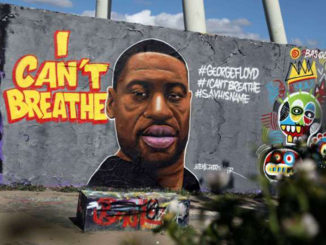
    Floyd, 46, died May 25 after Chauvin pinned him to the ground with a knee on his neck, even as Floyd, who was handcuffed, repeatedly said he couldn’t breathe. Kueng and Lane also helped restrain Floyd — state prosecutors have said Kueng knelt on Floyd’s back and Lane held down Floyd’s legs. State prosecutors say Thao held back bystanders and kept them from intervening during the 9 1/2-minute restraint.

    Chauvin’s attorney, Eric Nelson, argued during his murder trial that Chauvin acted reasonably in the situation and that Floyd died because of underlying health issues and drug use. He has filed a request for a new trial, citing many issues including the judge’s refusal to move the trial due to publicity.

    Nelson had no comment on the federal charges Friday. Messages left with attorneys for two of the other officers were not immediately returned, and an attorney for the fourth officer was getting in an elevator and disconnected when reached by The Associated Press.

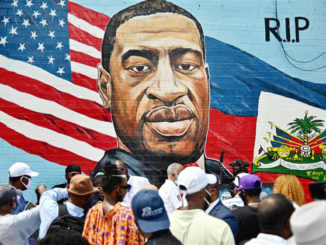
    Floyd’s arrest and death, which a bystander captured on cellphone video, sparked protests nationwide and widespread calls for an end to police brutality and racial inequities.

    (Source: Agencies)

  • The Floyd verdict

    The Floyd verdict

    Mindsets must change to rein in police brutality, racism

    Nine minutes and 29 seconds — that’s how long Derek Chauvin, a White police officer, kept African-American George Floyd pinned under his knee on a pavement in Minneapolis on May 25 last year. Floyd was neither a terrorist nor a killer on the loose. All that he was accused of was using a counterfeit $20 note at a store. Yet, he was choked to death by the cop, with his last words being a desperate plea: ‘I can’t breathe.’ This abominable act of police brutality and racism shamed America and gave a new lease of life to the Black Lives Matter movement. On Tuesday, a federal grand jury found Chauvin guilty on all three counts of Floyd’s murder. Soon after the verdict, President Joe Biden candidly admitted that the killing had ‘ripped the blinders off for the whole world to see the systemic racism’ in the US.

    With Chauvin set to be imprisoned for a long term, justice appears to have been done in the Floyd case, and that too within one year of the incident. But is it the beginning of a new dawn in America, which has a long history of racial inequality and injustice? The House of Representatives has passed the George Floyd Justice in Policing Act, which is aimed at bringing about police reforms in the US, but it is yet to be adopted by the Senate. The biggest challenge is to catalyze a transformation in the hearts and minds of the law enforcers as well as the ordinary people. The recent massacre of Asian-Americans in Indianapolis is a grim reminder of the enormity of the task of changing mindsets. The US case has lessons for India, which is no stranger to police excesses and sectarian intolerance. All the custodial deaths, fake encounters and mob lynchings demonstrate blatant disregard for the rule of law. The frequent cases of instant justice point to the dwindling trust in the judicial system. The police-politician-criminal nexus is taking its toll on the dispensation of justice. What’s needed is earnest introspection, followed by course correction, so as to create an environment in which every Floyd can breathe freely and fearlessly.

    (Tribune, India)