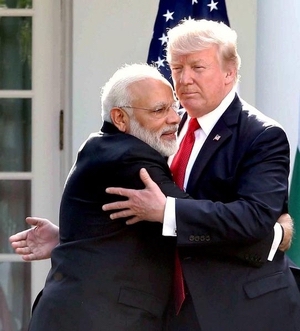
World leaders on Thursday congratulated Prime Minister Narendra Modi for his landslide victory for a second term in office. Congratulatory messages from various parts of the world poured in. While most of them congratulated him over telephone, some leaders took it to social media to extend their greetings.
US President Donald Trump – Congratulations to Prime Minister @NarendraModi and his BJP party on their BIG election victory! Great things are in store for the US-India partnership with the return of PM Modi at the helm. I look forward to continuing our important work together!
Bangladesh PM Sheikh Hasina – The Prime Minister of Bangladesh had initiated the call to Modi to extend her congratulations on the clear mandate given by the people of India to the NDA Government. In doing so, PM Sheikh Hasina became one of the first foreign leaders to congratulate the Prime Minister, thus reflecting the extraordinarily close and cordial ties between India and Bangladesh, and the excellent rapport that the two leaders enjoy.
President of the Russian Federation Vladimir V. Putin – Putin called Modi and congratulated him on his victory in the general elections. President Putin expressed his conviction that the Prime Minister would further strengthen the longstanding friendship between the peoples of both countries and enhance the Special and Privileged Strategic Partnership that bind the two countries together.
French President Emmanuel Macron – President of France congratulated Prime Minister Narendra Modi over telephone, describing him as one of the foremost leaders of the democratic world. President Macron reiterated his invitation to Prime Minister Modi to visit France in August 2019 for a bilateral meeting and also to attend the G7 Summit at Biarritz.
Prime Minister of Nepal, K.P. Sharma Oli – K.P. Sharma Oli called Prime Minister Modi and congratulated him on the electoral victory in the Lok Sabha elections.
Prime Minister of Japan, Shinzo Abe – Shinzo Abe called Narendra Modi and congratulated him for the resounding victory of his party in the 2019 General Elections.
Chinese President Xi Jinping – President of People’s Republic of China, Xi Jinping sent a letter to Prime Minister Modi congratulating him on the electoral victory of National Democratic Alliance under his leadership. In the letter, President Xi noted the great importance he attached to the development of India-China relations and his desire to work with Prime Minister Modi to take the Closer Development Partnership between the two countries to a new height. President Xi also expressed satisfaction at the strong momentum of development in India-China relations in recent years with the joint efforts of both sides.
Israel Prime Minister Benjamin Netanyahu – Benjamin Netanyahu called his Indian counterpart Narendra Modi to personally congratulate him. “Narendra my friend, congratulation, what an enormous victory. I hope, Narendra, that we can see each other soon, as soon as you form a government and as soon as we form a government,” Netanyahu said in a short video clip of the phone call released by the Prime Minister’s Office. “Well, thank you for your congratulations on my victory, but there’s one difference: You don’t need a coalition, I do, and there’s a big difference.”
NEW DELHI(TIP): Finance Minister Arun Jaitley said on Friday, November 2, India would become the world’s fifth largest economy in 2019 and among the top three in the coming years.
Speaking at the ‘Support and Outreach Initiative for the MSME sector’ event here, the minister said since Prime Minister Narendra Modi’s government took over about four years ago, India has moved from the ninth to sixth position in the global economic landscape.
“Next year, India will become the fifth largest economy,” he said, adding he hoped that the country would be among the top three economies of the world in the next few years.
India emerged as the world’s sixth largest economy in 2017, surpassing France, and is likely to go past the United Kingdom, which is at the fifth position, according to an analysis of data compiled by the World Bank.
In 2017, India became the sixth largest economy with a Gross Domestic Product (GDP) of $2.59 trillion, relegating France to the seventh position.
The United Kingdom, which is facing Brexit blues, had a GDP of $2.62 trillion, which is about $25 billion more than that of India, the data showed.
The US is the world’s largest economy with a size of $19.39 trillion, followed by China ($12.23 trillion). Japan ($4.87 trillion) and Germany (USD 3.67 trillion) are at the third and fourth places, respectively.
Referring to India’s significant jump in the World Bank’s ease of doing business index, Jaitley said it has improved 65 notches to the 77th position during the four years of the NDA government.
He said the Prime Minister has set a target of taking India among the top 50 nations in the World Bank’s ease of doing business ranking.
“We are very near the target,” Jaitley said, as he criticized the Congress-led UPA government for “policy paralysis” and “corruption”, which discouraged domestic as well as foreign investors.
He said during the last five years of the UPA government, inflation averaged around 10.4 per cent, whereas all economic parameters are now stable.
Jaitley further said that Aadhaar, which was criticized by the Opposition, has actually helped the government in saving Rs 90,000 crore annually, which is enough to fund four schemes like Ayushman Bharat.
The minister also said the MSME sector has benefited from implementation of GST, under which taxes were reduced on 334 items in the first year of its rollout.
Concrete steps are needed to defuse crises that could disrupt India’s political and social equilibrium
By M.K. Narayanan
“The authorities also need to be aware that as various State elections draw near, newer threats are likely to emerge. Among them are cyber threats. India is possibly the third most vulnerable country today from the point of view of cyberattacks. Many experts are of the view that as the digital economy expands, India will confront the specter of cyberattacks.”
As 2019 and the general election beckon, the situation within the country appears far from reassuring. Several events over the past few months seem to presage that there is worse to follow. Protests and agitations have a life of their own and underestimating their potential could be cause for grief. Hence, it might be worthwhile for the nation’s leaders to pay heed to the ancient Chinese proverb, “the wind sweeping through the tower heralds a storm rising in the mountain” and take anticipatory steps.
Lowdown on internal security
The authorities need to analyze why simultaneous upheavals are taking place on different planes across the country. Each day, a concatenation of events and situations are contributing to feelings of deep unease. Take internal security, for instance. The authorities may claim that the situation is stable, but the daily litany of violence tells a different story. Jammu and Kashmir is a good example where the situation has been steadily deteriorating. The past year has witnessed an increase in casualties, of civilians and security personnel, an upsurge in terrorist violence, a rise in cross-border terrorism and increased infiltration from Pakistan. Despite the surgical strikes by India, a palpable fear syndrome prevails in the areas bordering Pakistan.
Likewise, claims made latterly of the eclipse of the Maoist menace — there are reports of scores of Maoists having been killed in Maharashtra’s Gadchiroli district in end-April — are clearly unconvincing. Maoist violence is not so prevalent in areas where it was once rampant; while the kill-ratio of Maoists to security force personnel appears to have gone in favor of the security forces, the capacity of Maoists in carrying out selective violence has not been significantly blunted, especially in their strongholds in Chhattisgarh, Odisha, Andhra Pradesh, Telangana and Maharashtra. As an ideology-based militant movement, Maoism needs to be countered by a sustained ideological campaign in rural and urban areas, but this is nowhere in evidence.
Next is the growing specter of agrarian unrest. Over the past year, a series of protest movements by farmers have rocked the country. While the causes are varied, the basic issue remains the same, viz. the neglect of farmers and the agrarian community by those in authority. Large-scale protest marches by farmers such as the one in Maharashtra in March, evoke both concern and fear. More protests are in the offing. With cohesive leadership, the current peaceful agrarian protests could attain a dangerous dimension.
Dalit identity and concerns
An even bigger challenge confronts the nation today — on how to deal with the issue of Dalit “self-assertion”. This aspect was clearly manifest during the April 2 Bharat Bandh which was sponsored by different Dalit groups; its pan-India imprint was unprecedented. The bandh was to protest the judgment of the Supreme Court, amending the Scheduled Castes and Schedules Tribes (Prevention of Atrocities) Act. The outburst of violence, which resulted in some casualties and the destruction of property worth crores, went far beyond this aspect. There was and is no mistaking the pent-up resentment or the degree of mistrust.
Anger and resentment have been building up within the Dalit community for quite some time. Growing numbers of atrocities against Dalits in recent years, which thanks to modern communications systems and social media have gained critical publicity, are undoubtedly the root cause of the pent-up anger. Instances in 2016, such as Rohith Vemula’s death at Hyderabad University, and, separately, in Una, have been triggers for the explosion of anger and violence.
However, the recent outburst points to a new brand of Dalit “rejectionist politics” which should be a matter of utmost concern. Appeasement is no longer acceptable. Moderating or repealing cow protection laws will hardly matter or make a difference. More reservation in jobs is unlikely to assuage Dalit concerns. A group of alumni from the Indian Institutes of Technology have given up their jobs to form a political party to fight for the rights of the Scheduled Castes, the Scheduled Tribes and Other Backward Classes.
Violence against children
If the authorities have been found wanting or are being accused of their inept handling of the April 2 agitation, they are now being hauled over the coals for their inability to check the spate of incidents of rape across the country. The brutal assaults on young children have touched a raw nerve. Demands are being made to ensure that crimes of this nature end and that the administration sheds its helplessness and starts taking stringent action.
Today, the place names, Kathua (Jammu) and Unnao (Uttar Pradesh), have become synonymous with the “epidemic” of rapes. But sexual violence still continues despite public outrage and the administration is seen to be helpless in preventing it, which is beginning to create a crisis of confidence in the ability of the administration and the government to deal with the situation. Questions are being asked as the administration is unable to fulfil one of its most basic responsibilities — to protect the honor and the dignity of women and children. Mere condemnation of rape by those in authority will not do.
Cracks in the two pillars
Distinct from these issues, but equally worrisome, is the extent of disruption seen in the functioning of Parliament. A disruption of parliamentary proceedings is not new, but the near total washout of the Budget session has shaken the faith of the nation.
The view from the Treasury Benches that the Opposition is to blame for this has gained little traction. Most people believe that the responsibility to ensure the smooth functioning of Parliament rests equally, if not more, with the ruling dispensation, apart from the Presiding Officers of the two Houses. What the nation is demanding is a resolution of the impasse, and not the assigning of blame. A lack of demonstrable action is only adding to the sense of dismay.
The prevailing dissonance in the higher judiciary, the display of divisions within the highest court of the land, and the charges levelled against the Chief Justice of India by Opposition parties which are seeking his impeachment, are again highly disturbing. There has been no precedent for such a situation. The persistence of such trends is giving rise to serious concerns as to where the nation is headed.
Cyber concerns
The authorities also need to be aware that as various State elections draw near, newer threats are likely to emerge. Among them are cyber threats. India is possibly the third most vulnerable country today from the point of view of cyberattacks. Many experts are of the view that as the digital economy expands, India will confront the specter of cyberattacks. Given that it is already struggling to deal with threats such as ransomware and cryptojacking, India will need to tone up its strategic mindset and increase its homegrown capabilities expeditiously; a devastating cyberattack could undermine public confidence in an election year.
Finally, given the current resurgence in communal and caste aspirations, India cannot afford to overlook the danger of a rise in regional subnationalism, of which there are already some incipient signs. Such tendencies could gain a fillip, if as anticipated, the coming elections witness bitter electoral campaigns based on a variety of considerations that include caste and community.
It is not that solutions for all these problems fall within the purview of the authorities or the government. However, it is in the nature of things that the responsibility for situations tends to devolve on the government. Hence, it is important that the road to 2019 is paved with not only professed good intentions but also concrete steps to mitigate and “defuse” a succession of crises that have the potential to disturb the political and social equilibrium in an election year.
(The author is a former National Security Adviser and a former Governor of West Bengal)
For the first time in 40 years, a British Prime Minister met her Indian counterpart without the overhang, obligations and requirements of the European Union. The Skripal poisoning episode has detracted British domestic attention and muted criticism of their PM Theresa May’s inept handling of Brexit. But there is obviously a different approach. Britain has closed its doors to the kind of liberal immigration Indians have availed of in the past. Instead, Britain seeks improved accessibility of its businesses in India, a copy-paste of the UK-Israel model of tech partnership, lower barriers to commerce in IT, food and drink and life science, and a massive overlay in India of the British National Health Service (NHS) along with its attendant equipment supplier companies.
While the British wait for the barriers to come down or consensus to develop, there is a conscious effort to handhold India’s quest to blend technology with agriculture and medicine. Essentially, London wants to retain its recent trade advantage: the 15 per cent rise in bilateral trade in 2017 was all accounted for by Britain. Clearly, there is a huge dollop of self-interest guiding Britain as it seeks to mould the Commonwealth into a primary tool for engaging with the non-European world. And it doesn’t end at trade. Britain has thrown the baits of a security relationship with a focus on “ensuring freedom of navigation” (the code for anti-China grouping in South China Sea) and assistance in cyber security.
Most of the focus on R&D is ostensibly in keeping with Britain’s claim as India’s second largest research partner. But a closer look shows the plans to invest £400 million by 2021 are spread too thin. London will retain its salience as a global hub of finance but impetus to other ties will rest on British strategic assistance to India as a UNSC member and incubator of high technology. There has been little cause for cheer on those fronts. Britain is attempting a new turn with India. But it needs to be more proactive and less expectant considering that other competing countries can easily top most of these offers.
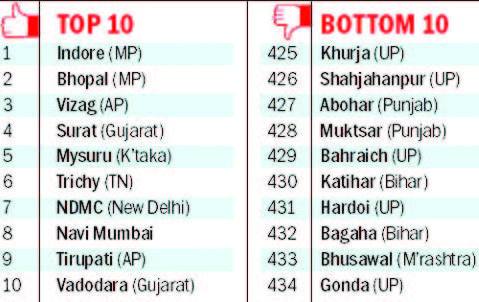
NEW DELHI (TIP): Indore in Madhya Pradesh has emerged as the cleanest city in the country, while Gonda in Uttar Pradesh has been found to be the dirtiest, the government said today.
Bhopal, also in MP, occupies the second best spot among 434 cities and towns, followed by Visakhapatnam in Andhra Pradesh and Surat in Gujarat, Urban Development Minister M Venkaiah Naidu said, announcing the results of an exercise he described as a citizens’ verdict.
UT Chandigarh, which was ranked second in the previous survey, has slipped to the 11 spot.
Overall, 37 lakh people responded to a set of six questions about the city they belonged to in the survey of 434 cities, which account for about 60 per cent of the total urban population in the country. The response of 18 lakh people was taken into consideration for the survey after the elimination of duplicate feedback.
Prime Minister Narendra Modi’s constituency, Varanasi, has soared up the cleanliness scale, occupying the 32nd position in “Swachh Survekshan-2017”, which is part of the Modi government’s flagship Swachh Bharat Abhiyan (SBA) or Clean India Mission. It ranked 65th last year and 418th in 2014.
Mysuru in Karnataka, which bagged the first spot in the last two surveys, has slipped to the fifth position.
“No way it meant that cleanliness has declined in the city or the city government scaled down its efforts… Other cities have scored over Mysuru,” Naidu explained.
Gujarat, with 12 cities in the top 50, has the best score among the states, and Uttar Pradesh, which accounts for half of the 50 dirtiest cities, is at the bottom of the list.
Madhya Pradesh, with 11 cities in the top 50, and Andhra Pradesh, with eight, follow Gujarat.
West Bengal did not take part in the survey. Tiruchirapally in Tamil Nadu is the sixth cleanest city, followed by the New Delhi Municipal Council area of the national capital.
Bhusawal in Maharashtra is the dirtiest after Gonda, the survey states. Bagaha and Katihar (Bihar), Hardoi, Bahraich, Shahjahanpur and Khurja (UP) and Muktsar and Abohar (Punjab) are in the bottom 10.
The Urban Development Ministry had commissioned the survey for 434 cities and towns with a population of 1 lakh and above in January and February this year.
Naidu described Madhya Pradesh, Gujarat, Jharkhand and Chhattisgarh, followed by Andhra Pradesh and Telangana as “Movers and Shakers” for having significantly improved their rankings since 2014.
The first survey in 2014 was launched before the announcement of the SBA in October, 2014. The 2016 survey covered 73 cities with over 10 lakh population each and capital cities.
The minister said all cities surveyed in Madhya Pradesh and Jharkhand had substantially improved their rankings since 2014. Gujarat has done so in every city, barring Rajkot.
Naidu said UP, Bihar, Rajasthan, Punjab and Kerala needed to substantially step up efforts to improve sanitation standards in urban areas.
In Bihar, 19 out of the 27 cities surveyed have ranks beyond 300. The cleanest city — at 147 — is Biharsharif.
In Rajasthan, 18 of 29 cities are ranked beyond 300 with 13 in the bottom 100. Bundi, at 171, is the best ranked city in the state. In Punjab, seven of the 16 cities surveyed figure among the bottom 100, with SAS Nagar at 121 getting the highest rank in the state.
NEW DELHI (TIP): An integrated policy is on the anvil to ramp up infrastructure at a time when India’s revenue receipts are set to touch the Rs 30 lakh-crore mark in the next two years, Union minister Nitin Gadkari said.
“An integrated policy for the sector will be formulated and placed before the nation to bolster its economic growth. Unlike the precedent of working in silos, various ministries like road, port, rail, aviation and shipping would closely coordinate,” said Gadkari, who holds the portfolio of road transport, highways and shipping, after inaugurating the India Integrated Transport and Logistics Summit 2017 here.
The maiden IITL summit saw various government departments come together on a single platform.
Gadkari said such a huge initiative is taken for the first time and various departments will hold meetings to chalk out a policy which could be placed before the Cabinet or the Prime Minister.
This is seen as a step towards realising the Prime Minister’s vision of holistic development as augmenting infrastructure, the topmost priority of the government, will help eradicate poverty.
The minister is optimistic that the three-day summit, which got under way today, would garner Rs 2 lakh crore investment.
The summit is in line with the government’s plans to have an effective multi-modal logistics and transport sector to make Indian economy more competitive.
Claiming that this government is “pro-poor”, the minister added that extensive planning to boost infrastructure will not only reduce the high logistics cost, but realise the dream of double-digit growth soon.
“If we have to wipe out poverty, if we want to achieve double-digit growth, we will have to augment infrastructure in an integrated manner and we are focusing on developing a network of waterways, railways and highways,” Gadkari said.
Terming GST as “a historic decision”, the minister exuded confidence that the major tax reform coupled with demonetisation are bound to give a push to the country’s total revenue receipts.
“Post-demonetisation and GST regime, India’s revenue receipts are likely to touch Rs 28-30 lakh crore in the next two years coupled with steps to strengthen infrastructure,” Gadkari said.
When the NDA government took over in 2014, the revenue receipts read Rs 13 lakh crore, which could scale up to Rs 20 lakh crore during the three years of the present regime, the minister pointed out.
He also touched on employment part, saying holistic development of a massive network of roads, ports, rail and aviation will create more jobs.
His ministry, Gadkari said, is taking the length of National Highways to 2 lakh km soon and is committed to achieving a target of building 40 km of roads a day from the current 23 km.
Thirteen expressways are on the anvil and work has been initiated on five of them with a target of completing the Rs 12,000 crore Eastern Peripheral Expressway by August 15 this year.
NEW DELHI (TIP): The Ministry of Electronics and IT has notified phased manufacturing programme to boost indigenous production of mobile phones by providing tax relief and other incentives on components and accessories used for the devices.
“The Phased Manufacturing Programme has been notified with the objective of substantially increasing the domestic value addition for establishment of a robust Cellular mobile handsets manufacturing eco-system in India,” an official statement said.
The programme will enable the Cellular mobile handset and related sub-assembly and component industry to plan their investments in the sector, it further said.
With the implementation of PMP, the value addition or share of indigenously procured components in manufacturing of feature phones will go up from about 15 to 37 per cent and the same for smart phones will move up from about 10 to 26 per cent.
“This initiative will help in building a robust indigenous mobile manufacturing ecosystem in India, and we believe that it will incentivise large scale manufacturing.
“It is our road map to ensure an increase in the domestic value addition in manufacturing of mobile handsets,” Ministry of Electronics and Information Technology (MeitY) Secretary Aruna Sundararajan said.
The phased manufacturing programme was proposed by a joint panel, Fast Track Task Force, of the industry and the government.
“This programme will be rolled out over a period of time… The focus is to ensure that through appropriate fiscal and financial incentives, indigenous manufacturing of cellular mobile handsets and various sub-assemblies, which go into manufacturing of handsets, can be promoted over a period of time,” the statement said.
The phase-wise programme covers mechanics, die cut parts, microphone and receiver, key pad and USB cable in the current financial year.
It also aims to promote the indigenous manufacturing of populated printed circuit boards, camera modules and connectors in 2018-19, and display assembly, touch panels, vibrator motor and ringer in 2019-20.
“The programme will be extended to parts, sub-parts, inputs for aforesaid sub assemblies as the manufacturing ecosystem evolves over the next few years,” the statement said.
The government is also in process of formulating second phase of PMP which it expects will enhance value addition to 58.3 per cent in feature phones and 39.6 per cent in smartphones.
“PMP-II is currently under preparation by the Fast Track Task Force, set up by MeitY,” the statement said.
Fast Track Task Force Chairman Pankaj Mohindroo said the mobile industry is on a robust path of enterprise creation and developing a world-scale industry.
“We will not get entrapped by protectionism, but will create deep competencies, both cost and skills, which will create a globally benchmarked workforce and complementary industries intertwined with the global mobile phone and component ecosystem equally encouraging global and domestic enterprises,” Mohindroo said.
NEW DELHI (TIP): Indicating that inequality in India is increasing, a UN report released on Thursday said that the richest 1% own 53% of the country’s wealth.
It also said that unlike other countries, development in India is not moving across states.
“In terms of wealth inequality, India is second only to Russia, where the richest 1 percent own 53 percent of the country’s wealth,” said the report ‘The Better Business, Better World’ released here in a two day event of the United Nations Global Compact (UNGC) focussing on how through bold innovation, businesses can create solutions and tap new opportunities found within the 17 Sustainable Development Goals (SDGs).
According to Lise Kingo, CEO and Executive Director of the UNGC, SDGs can open at least $1 trillion of market opportunity for the private sector in India.
“This is out of a total global value of $12 trillion that could be unlocked by sustainable business models in four key areas, food and agriculture, energy, cities and health,” she said. Kingo added that over 72 million new jobs could be created in India by 2030 by adapting a sustainable business model. The report says that to reduce the inequality, India needs a ‘different economic model’ — one that is not only low-carbon but also recognizes poverty, inequality and lack of financial access. Source: IANS
NEW DELHI (TIP): India and the UK are jointly making one of the most powerful engines for fighter jets of the future and the first such engine will be unveiled within a year.
The gas turbine engine, the very latest in technology, is being developed in collaboration between UK’s Rolls Royce and India’s Defence Research and Development Organisation (DRDO) and Gas Turbine and Research Establishment (GTRE), said Stephen Phipson, Head of Defence and Security Organisation, Department of International Trade, UK.
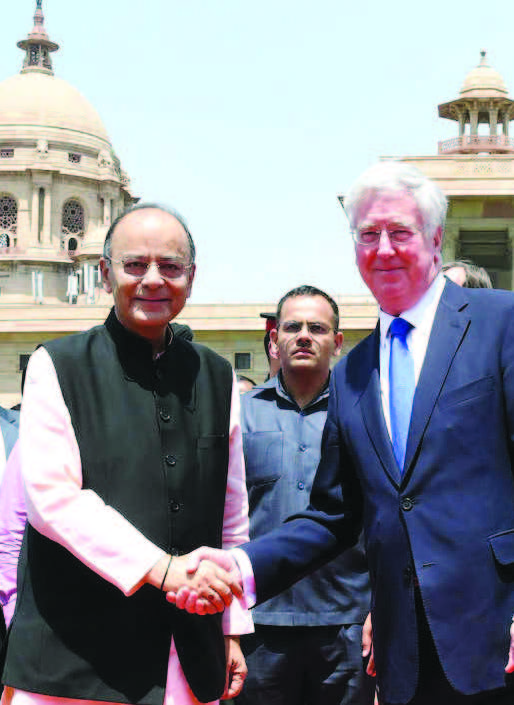
He was interacting with mediapersons along with UK Secretary of State for Defence Sir Michael Fallon here after the India-UK Strategic Defence Dialogue. The UK delegation held talks with the Indian side led by Defence Minister Arun Jaitley.
“This is a very high-thrust engine. It has the highest thrust possible in a jet engine,” said Phipson, who accompanied Sir Fallon at the press briefing. He, however, refused to divulge the details.
Rolls Royce develops engines for leading global plane manufacturers, including military aircraft produced by countries such as the US.
Sir Fallon said the UK and India were looking forward to having a defence and security partnership for a sea-borne aircraft carrier besides extending defence equipment cooperation to enable companies to collaborate on air defence missiles and gas turbine engines.
“We are working on inter-operatability. We can include doctrines and training,” said Lt Gen Mark Poffley, the Deputy Chief of Defence Staff, UK’s Ministry of Defence.
The two countries are looking to hold bilateral exercises in all three domains -Army, Air Force and Navy.
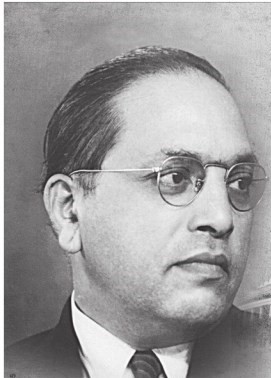
In a speech to the Constituent Assembly in 1949, B.R. Ambedkar stressed on the need to have social democracy, and not only political democracy. He spoke of the need to shun the grammar of anarchy and avoid hero worship of political figures. According to him, in 1950, the Republic will enter a phase of contradictions. In politics, we will have equality and in social and economic life there will be inequality.
On January 26, 1950, India will be an independent country. What would happen to her independence? Will she maintain her independence or will she lose it again? This is the first thought that comes to my mind. It is not that India was never an independent country. The point is that she once lost the independence she had. Will she lose it a second time? It is this thought which makes me most anxious for the future.
What perturbs me greatly is the fact that not only India has once before lost her independence, but she lost it by the infidelity and treachery of some of her own people.
In the invasion of Sindh by Mahommed-Bin-Kasim, the military commanders of King Dahar accepted bribes from the agents of Mahommed-Bin-Kasim and refused to fight on the side of their king. It was Jaichand who invited Mahommed Gohri to invade India and fight against Prithvi Raj and promised him the help of himself and the Solanki kings. When Shivaji was fighting for the liberation of Hindus, the other Maratha noblemen and the Rajput kings were fighting the battle on the side of Moghul Emperors. When the British were trying to destroy the Sikh rulers, Gulab Singh, their principal commander sat silent and did not help to save the Sikh kingdom. In 1857, when a large part of India had declared a War of Independence against the British, the Sikhs stood and watched the event as silent spectators.
Will history repeat itself? It is this thought which fills me with anxiety. This anxiety is deepened by the realisation of the fact that in addition to our old enemies in the form of castes and creeds, we are going to have many political parties with diverse and opposing political creeds. Will Indians place the country above their creed or will they place creed above country? I do not know. But this much is certain that if the parties place creed above country, our independence will be put in jeopardy a second time and probably be lost for ever. This eventuality we must all resolutely guard against. We must be determined to defend our independence with the last drop of our blood.
On January 26, 1950, India would be a democratic country in the sense that India from that day would have a government of the people, by the people and for the people. The same thought comes to my mind. What would happen to her democratic Constitution? Will she be able to maintain it or will she lose it again? This is the second thought that comes to my mind and makes me as anxious as the first.
Democratic system
It is not that India did not know what is democracy. There was a time when India was studded with republics, and even where there were monarchies, they were either elected or limited. They were never absolute. It is not that India did not know Parliaments or parliamentary procedure.
A study of the Buddhist Bhikshu Sanghas discloses that not only there were Parliaments — for the Sanghas were nothing but Parliaments — but the Sanghas knew and observed all the rules of parliamentary procedure known to modern times. They had rules regarding seating arrangements, rules regarding Motions, Resolutions, Quorum, Whip, Counting of Votes, Voting by Ballot, Censure Motion, Regularisation, Res Judicata, etc. Although these rules of parliamentary procedure were applied by the Buddha to the meetings of the Sanghas, he must have borrowed them from the rules of the political assemblies functioning in the country in his time.
This democratic system India lost. Will she lose it a second time? I do not know. But it is quite possible in a country like India — where democracy from its long disuse must be regarded as something quite new — there is danger of democracy giving place to dictatorship. It is quite possible for this new-born democracy to retain its form but give place to dictatorship in fact. If there is a landslide, the danger of the second possibility becoming an actuality is much greater.
Three warnings
If we wish to maintain democracy not merely in form, but also in fact, what must we do?
The first thing in my judgement we must do is to hold fast to constitutional methods of achieving our social and economic objectives. It means we must abandon the bloody methods of revolution. It means that we must abandon the method of civil disobedience, non-cooperation and satyagraha. When there was no way left for constitutional methods for achieving economic and social objectives, there was a great deal of justification for unconstitutional methods. But where constitutional methods are open, there can be no justification for these unconstitutional methods. These methods are nothing but the “Grammar of Anarchy” and the sooner they are abandoned, the better for us.
The second thing we must do is to observe the caution which John Stuart Mill has given to all who are interested in the maintenance of democracy, namely, not “to lay their liberties at the feet of even a great man, or to trust him with power which enable him to subvert their institutions”. There is nothing wrong in being grateful to great men who have rendered life-long services to the country. But there are limits to gratefulness. As has been well said by the Irish Patriot Daniel O’Connel, “No man can be grateful at the cost of his honour, no woman can be grateful at the cost of her chastity and no nation can be grateful at the cost of its liberty”. This caution is far more necessary in the case of India than in the case of any other country. For in India, Bhakti or what may be called the path of devotion or hero-worship, plays a part in its politics unequalled in magnitude by the part it plays in the politics of any other country in the world. Bhakti in religion may be a road to the salvation of the soul. But in politics, Bhakti or hero-worship is a sure road to degradation and to eventual dictatorship.
The third thing we must do is not to be content with mere political democracy. We must make our political democracy a social democracy as well. Political democracy cannot last unless there lies at the base of it social democracy. What does social democracy mean? It means a way of life which recognises liberty, equality and fraternity as the principles of life. These principles of liberty, equality and fraternity are not to be treated as separate items in a trinity. They form a union of trinity in the sense that to divorce one from the other is to defeat the very purpose of democracy.
Liberty cannot be divorced from equality, equality cannot be divorced from liberty. Nor can liberty and equality be divorced from fraternity. Without equality, liberty would produce the supremacy of the few over the many. Equality without liberty would kill individual initiative. Without fraternity, liberty would produce the supremacy of the few over the many. Without fraternity, liberty and equality could not become a natural course of things. It would require a constable to enforce them.
We must begin by acknowledging the fact that there is complete absence of two things in Indian society. One of these is equality. On the social plane, we have in India a society based on the principle of graded inequality. We have a society in which there are some who have immense wealth as against many who live in abject poverty. On January 26, 1950, we are going to enter into a life of contradictions. In politics we will have equality and in social and economic life we will have inequality. In politics, we will be recognising the principle of one man, one vote and one vote, one value. In our social and economic life, we shall, by reason of our social and economic structure, continue to deny the principle of one man, one value. How long shall we continue to live this life of contradictions? How long shall we continue to deny equality in our social and economic life? If we continue to deny it for long, we will do so only by putting our political democracy in peril. We must remove this contradiction at the earliest possible moment or else those who suffer from inequality will blow up the structure of political democracy which this Assembly has so laboriously built up.
The second thing we are wanting in is recognition of the principle of fraternity. What does fraternity mean? Fraternity means a sense of common brotherhood of all Indians — of Indians being one people. It is the principle which gives unity and solidarity to social life. It is a difficult thing to achieve. How difficult it is, can be realised from the story related by James Bryce in his volume on American Commonwealth about the United States of America. The story is — I propose to recount it in the words of Bryce himself:
“Some years ago the American Protestant Episcopal Church was occupied at its triennial Convention in revising its liturgy. It was thought desirable to introduce among the short sentence prayers a prayer for the whole people, and an eminent New England divine proposed the words `O Lord, bless our nation’. Accepted one afternoon, on the spur of the moment, the sentence was brought up next day for reconsideration, when so many objections were raised by the laity to the word ‘nation’ as importing too definite a recognition of national unity, that it was dropped, and instead there were adopted the words `O Lord, bless these United States.” There was so little solidarity in the USA at the time when this incident occurred that the people of America did not think that they were a nation. If the people of the United States could not feel that they were a nation, how difficult it is for Indians to think that they are a nation?
A great delusion
I remember the days when politically minded Indians, resented the expression “the people of India”. They preferred the expression “the Indian nation.” I am of opinion that in believing that we are a nation, we are cherishing a great delusion. How can people divided into several thousands of castes be a nation? The sooner we realise that we are not as yet a nation in the social and psychological sense of the world, the better for us. For then only we shall realise the necessity of becoming a nation and seriously think of ways and means of realising the goal. The realisation of this goal is going to be very difficult — far more difficult than it has been in the United States. The United States has no caste problem. In India there are castes. The castes are anti-national. In the first place because they bring about separation in social life. They are anti-national also because they generate jealousy and antipathy between caste and caste. But we must overcome all these difficulties if we wish to become a nation in reality. For fraternity can be a fact only when there is a nation. Without fraternity, equality and liberty will be no deeper than coats of paint.
These are my reflections about the tasks that lie ahead of us. They may not be very pleasant to some. But there can be no gainsaying that political power in this country has too long been the monopoly of a few and the many are only beasts of burden, but also beasts of prey. This monopoly has not merely deprived them of their chance of betterment, it has sapped them of what may be called the significance of life. These down-trodden classes are tired of being governed. They are impatient to govern themselves. This urge for self-realisation in the down-trodden classes must not be allowed to devolve into a class struggle or class war. It would lead to a division of the House. That would indeed be a day of disaster. For, as has been well said by Abraham Lincoln, “a House divided against itself cannot stand very long”. Therefore the sooner room is made for the realisation of their aspiration, the better for the few, the better for the country, the better for the maintenance for its independence and the better for the continuance of its democratic structure. This can only be done by the establishment of equality and fraternity in all spheres of life. By independence, we have lost the excuse of blaming the British for anything going wrong. If hereafter things go wrong, we will have nobody to blame except ourselves. There is great danger of things going wrong.
Times are fast changing. People including our own are being moved by new ideologies. They are getting tired of Government by the people. They are prepared to have Governments for the people and are indifferent whether it is Government of the people and by the people. If we wish to preserve the Constitution in which we have sought to enshrine the principle of Government of the people, for the people and by the people, let us resolve not to be tardy in the recognition of the evils that lie across our path and which induce people to prefer Government for the people to Government by the people, nor to be weak in our initiative to remove them. That is the only way to serve the country. I know of no better.
British English (Excerpts from the last speech by B.R Ambedkar to the Constituent Assembly on November 25, 1949).
The answers to our problems lie outside the system
What form this revolution will take, and how much time, cannot be predicted, but what certainly can be predicted is that it is coming.
The test of every government is one, and only one: is the standard of living of the masses rising under it? From this standpoint the Modi government, like the previous Manmohan Singh government, is a total failure”, says the author who is a former Judge, Supreme Court of India, and a former Chairman, Press Council of India.
India is inevitably heading for a revolution. Why do I say so? Let me explain. India could potentially be a highly developed country, but is actually a poor and backward country.
It is potentially a highly developed country because it has two of the basic requirements to be a highly developed country-a huge pool of technical talent, and immense natural resources.
This was not the position in 1947 when India became independent. The British policy was broadly to keep India backward, feudal and largely unindustrialised, so that Indian industry may not emerge as a big rival to British industry. So, we were not permitted by our British rulers to set up a heavy industrial base, but were permitted only some light industries like textiles, plantations, etc which, too, for a long time were mainly under British ownership. So, till 1947 we had very few industries and very few engineers
What has happened to the slogan “sab ka saath, sab ka vikas?” It seems it was only a “jumla.”
The position today in 2017 is very different. Today we have a heavy industrial base, and a huge pool of competent engineers, technicians, scientists, managers, etc. Our IT engineers are manning Silicon Valley in California, and American universities are full of our mathematics and science professors.
In addition, we have immense natural wealth. India is not a small country like England or Japan. It is almost a continent.
So, we have all that is required to be a first-rate, modern, highly developed country, like North America or Europe.
And yet the reality is that we are an underdeveloped, poor country, with massive unemployment, malnourishment, lack of healthcare, good education, etc for our masses.
We can consider some facts:
The level of unemployment can be gathered from two facts:
(a) 1 crore youth are entering the Indian job market every year, but only 1.4 lakh jobs are being created annually in the organised sector. So where do the remaining 9.86 million youth go? They become hawkers, street vendors, bouncers, criminals, the girls often become prostitutes, and many end up as suicides.
(b) In 2015, the UP govt. advertised 358 jobs of peons (i.e. class 4 employees) for which there were 23 lakh applications; 250 of the applicants had Ph.D. degrees, 2500 were M.Sc., M.B.A. engineers, etc and all were begging for a peon’s job. Something similar happened when vacancies police constables were advertised in Madhya Pradesh, and peon’s jobs in West Bengal.
Fifty percent of Indian children are malnourished, which is a situation far worse than in sub-Saharan countries of Africa like Somalia.
A UNICEF report says that one out every three malnourished child in the world is an Indian child.
Poor people in India have hardly any access to healthcare. There are no doubt some excellent hospitals in the big cities, but they are exorbitantly expensive. Poor patients simply cannot afford good doctors. AIIMS (All India Institute of Medical Sciences, Delhi) looks like a railway station, with thousands of people sitting there, and no one caring for them, unless they happen to be rich or powerful. So where do the poor people go when they fall sick? They go to quacks. Quackery is rampant in India.
The test of every government is one, and only one: is the standard of living of the masses rising under it? From this standpoint the Modi government, like the previous Manmohan Singh government, is a total failure…
The government spends a huge amount of money on IITs and elite institutions like JNU, but hardly anything for primary schools in villages, where the foundation of knowledge is laid.
Just 57 individuals in India control 70% of India’s wealth.
Far from there being any ‘vikas’, the Indian economy is lying stagnant, with chances of genuine growth remote. Whatever “growth” there has been has only benefited a handful of crony capitalists, but not the Indian masses.
According to Mark Twain, there are three kinds of lies: lies, damned lies, and statistics. Statistics is such a wonderful thing that with its help one can manufacture any figure one wants, like a conjuror pulling a rabbit out of a hat.
The latest figures given by the government of India authorities claiming 7.9% growth in GDP in the last quarter is an excellent example, and reminds one of Lord Haw Haw (William Joyce), or the Nazi propaganda minister, Dr Goebbels, who kept proclaiming on radio to the German people right till the very end that Germany was winning the Second World War, when in fact it was losing.
According to this claim, the Indian economy is the fastest growing economy of the world, outstripping the growth in GDP of the Chinese economy, which grew by only 6.9% in the same period. Evidently, according to this figure, we are heading for an El Dorado sometime in the future, and as Dr Pangloss would say (see Voltaire’s Candide), quoting the German philosopher Leibniz, this is the best of all possible worlds.
But a scrutiny of these figures throws up several doubts. Are the figures true or dressed up, like a Potemkin village? Also, assuming they are true, is this GDP growth benefiting the Indian masses, or only a handful of big businessmen?
Exports have fallen from $187.29 billion in the period April -October 2014, to $156.29 billion in the period April-October 2015-that’s a drop of 17.6%. So, if exports have fallen, and manufacturing has grown by 9%, as claimed by the Union Ministry of Statistics and Programme Implementation, where have the increased quantity of goods manufactured been sold? In the home market?
Apart from a huge pool of technical talent and huge natural resources, there is a third requirement to become a developed country… and that is a modern minded, patriotic political leadership.
But India is a poor country, with 80% people holding little purchasing power. And with the sharp escalation in food prices, real incomes have really gone down.
According to a statement of Raghuram Rajan, the RBI governor, most factories are running at 70% of their capacity, while in 2011-2012 they were running at 80%. This apparently shows manufacturing decline, rather than growth. According to a Business Standard report, corporate profitability is below 1% on an average.
Bad loans by banks continue to mount. According to CARE, non-performing assets during July-September 2015 stood at about ?3.37 lakh crore, an increase of ?71,000 crore. According to a report by Morgan Stanley, the number of stalled projects-the bulk of them in the manufacturing and infrastructure sectors-went up. Small and medium enterprises are having a difficult time trying to survive. The real-estate sector, which provides a lot of jobs, is down in the dumps, with construction of new buildings going down, and the number of unsold homes going up.
An article by Andy Mukherjee published by Reuters states that the GDP growth of the Indian economy is one-third a statistical mirage, and real GDP growth is more likely to be about 5 percent rather than 7.4 percent as claimed by the Indian authorities. Mukherjee says:
“The illusion comes from a recent supposed improvement in the way India calculates its Gross Domestic Product. In theory, Indian authorities claim that Indian GDP is close to international standards. In practice it has become utterly unreliable.”
But just how sluggish is the economy really? Breakingviews tried to answer that question by looking at three indicators: corporate earnings, auto sales and imports of computer software. The logic is straightforward: retained earnings finance new investment projects; auto sales are a proxy for consumer demand; while software imports reflect productivity gains. Mixing the three in a simple index suggests that growth in the most recent quarter was closer to 5 percent.”
But let us assume that the 7.9% figure is correct. The further question that still remains is: is this GDP growth benefiting the Indian masses, or just a handful of big businessmen? Is the rich-poor divide growing? Dilip Shanghvi, Gautam Adani, Mukesh Ambani, Aziz Premji, Pallonji Mistry, etc are worth billions of dollars, while the majority of Indians are struggling to make both ends meet, as prices of food soar.
What has happened to the slogan “sab ka saath, sab ka vikas?” It seems it was only a “jumla.” The communal fire is being stoked again in UP and elsewhere. When there is an economic crisis which the government cannot resolve, it resorts to fascist methods, as happened in Germany and Italy with the rise to power of Hitler and Mussolini.
India stands at the 131st rank in human development out of the approximately 200 countries in the world.
To solve all this, and raise the standard of living of our people-that is what must be the goal of all patriotic modern minded people. We have to create a modern, highly industrialised country in which all our citizens are getting decent lives.
But what has this government done in this direction? The answer is: a big zero, and only jumlas and dramas.
The test of every government or system is one, and only one: is the standard of living of the masses rising under it or not? If not, the government or system is a failure. From this standpoint (and it is the only correct standpoint), the Modi government, like the previous Manmohan Singh government, is a total failure on all fronts.
The interest of our country, and the interest of our politicians are diametrically opposite to each other. How, then, can our country progress?
The question once again naturally arises that when we have all that is required to be a first-rate highly developed country, why is India still poor and backward?
The answer is that apart from a huge pool of technical talent and huge natural resources, there is also a third requirement to become a developed country, which unfortunately we do not have, and that is a modern minded, patriotic political leadership. Let me explain this in some detail.
India borrowed the parliamentary system of democracy from England, and incorporated it into our Constitution. Now parliamentary democracy is based on majority vote, but the truth is that the vast majority of people in India are intellectually very backward, their minds full of casteism, communalism and superstitions. So, when most Indians go to vote they do not see the merit of the candidate (whether they are good people, whether they are educated) but only see their caste or religion (or the party representing a caste or religion). That is why there are so many people with criminal antecedents in our legislatures.
Our cunning politicians take advantage of this, and have learnt the skill of manipulating caste and religious vote banks.
The interest of the nation is to rapidly modernise, for which it is necessary to destroy feudal forces like casteism and communalism. On the other hand, the interest of our politicians is to win the next elections, and for that they have to appeal to, and therefore perpetuate, casteism and communalism, which are feudal forces. Therefore, the interest of our country, and the interest of our politicians are diametrically opposite to each other. How, then, can our country progress?
What form this revolution will take, and how much time, cannot be predicted, but what certainly can be predicted is that it is coming.
Most of the Indian politicians are rogues, rascals, goondas, criminals, scoundrels, looters and gangsters. They have no genuine love for the country, but only seek power and pelf. They are shameless and incorrigible, and cannot be reformed. They are experts in manipulating caste and communal vote banks, and they polarise society by spreading caste and communal hatred. Don’t such people deserve to be treated like the aristocrats in the French Revolution?
It is thus obvious that parliamentary democracy is not suited to India. Our Constitution has exhausted itself, our “democracy” has been hijacked by feudal-minded people, and all our state institutions have become hollow and empty shells.
On the other hand, the socio-economic distress of our people keeps mounting.
I submit that the solutions to the massive problems of India lie outside the system, not within it. No amount of reforms will do, what is now required is a revolution. What form this revolution will take, and how much time, cannot be predicted, but what certainly can be predicted is that it is coming.
It is only after such a revolution, which will be led by some genuinely patriotic, modern-minded persons, that a just social order will be created in India, in which our masses get decent lives, and a high standard of living.
(The article is part of a lecture by the author who is a former Judge of the Supreme Court of India, and a former Chairman of Press Council of India)
NEW DELHI (TIP): Giving strategic interests a further push, the Centre is exploring feasibility to connect Sino-India border district Tawang in Arunachal Pradesh with the railway network.
The Centre has asked Minister of State for Railways Manoj Sinha and Minister of State for Home Affairs Kiren Rijiju, who is also an MP from Arunachal West seat, to explore the feasibility of the rail network in the remote area.
The two ministers will tour the state on Saturday to study the viability of connecting Tawang with Bhalukpong which is the last station of Indian Railways on Assam-Arunachal Pradesh border.
Sinha and Rijiju will be visiting Arunachal Pradesh from April 1 in connection with commencement of final location survey of new broad gauge line connecting Bhalukpong with Tawang which is a distance of 378 kilometres.
It takes 18 hours from Guwahati in Assam to reach Tawang through road. Guwahati is the nearest major city and citizens of Tawang depend on it for any medical emergency.
Other new broad guage railway lines which will be part of the survey will be 249-kilometre North Lakhimpur-Bame -Silapathar which is between Pasighat airport and Rupa in Arunachal Pradesh.
Sinha and Rijiju will also be meeting citizens, elected representatives and senior railway officers during the visit.
Tawang is of immense strategic importance to India as it is located on the Sino-India border and China has been laying claim to it. China claims Arunachal Pradesh as part of Tibet and routinely objects to any visit by top Indian leaders, officials and diplomats to the area. It had recently objected to a proposed visit of the Dalai Lama to Arunachal Pradesh.
The government has said the Dalai Lama is going to visit the state as a religious leader and there is no reason to stop him as his followers are demanding he should come.
Tawang was one of the regions where Indian Army had come under attack from China in the 1962 war.
Ignoring China’s protests, the government had earlier allowed then US ambassador to India Richard Verma and Tibetan spiritual leader Karmapa Ogyen Trinley Dorje’s visit to Arunachal Pradesh last year.
NEW DELHI (TIP): India’s energy muscle was on full display when oil minister Dharmendra Pradhan and power, coal, renewable energy and mines minister Piyush Goyal — who together account for administering nearly a fifth of India’s GDP and are responsible for energising a billion-plus lives — took the stage with International Energy Agency’s executive director Fatih Birol on March 30 (Thursday).
It was a clear signal by the Narendra Modi government that India cannot be ignored any longer and must be heard as the voice of developing economies at the high table of global energy market. A fact duly acknowledged by Birol, when he said, “We can’t talk about the future of the global energy markets without talking with India”.
India has so far been a partner country. The ‘associate’ status will make India part of all meetings and dialogues, allowing an opportunity for it to shape relationships in the global energy market. China, the world’s second-largest oil consumer, has been an associate member since 2015.
The Modi government’s measures to make fuel and electricity accessible and affordable for the vast population, combined with industrialisation through ‘Make in India’ initiative will drive India’s hunger for energy.
“IEA Association will not entail any additional burden or commitment on the government or people of India, but will also help India plan better and serve the needs of its citizens better, ensuring energy security for days and years to come,” Goyal said.
“IEA has helped in promoting understanding of India’s interests and concerns as the third-largest consumer of energy,” Pradhan said urging IEA to anchor dialogue between oil sellers and buyers for evolving a balanced market.
It is for this reason that fielding Pradhan and Goyal becomes significant. Pradhan, besides trying to raise India’s oil security through various policy initiatives, is spearheading ‘Ujjwala’ – a scheme to provide LPG connection free of cost to poor households. This scheme alone has helped increase LPG penetration to 71% households and turned India into the second-largest LPG consumer in domestic sector.
Goyal is tasked with an array of responsibilities — from electrifying every home in the country, ensuring 24X7 quality supply and greening India’s power sector, not to mention bringing in efficiency and transparency.
NEW DELHI (TIP): India and South Korea today agreed to deepen cooperation among their small and medium enterprises through technology transfer, joint ventures, business alliances and facilitation of mutual market access.
Both countries also emphasised on providing support to each other’s startups in accordance with their schemes and programmes.
The Korean side proposed to initiate cooperation for startup companies in India and the Republic of Korea. It proposed to hold a contest to identify startups would be interested to establish themselves in each other’s country.
The decisions were taken at the first Korea-India SME bilateral working group meeting, wherein the Korean delegation led by SME Minister of Small and Medium Business Administration Young-sup Joo met the Indian delegation, led by Union MSME Minister Kalraj Mishra.
The representatives of both the sides briefed about their respective policies for promotion and development of SMEs to have a better understanding of each others policies and identify areas of cooperation.
The parties agreed to implement technology transfers and business match-making through establishment of a technology exchange centre. They also agreed to consider and plan policies aimed at providing support for research and development.
Both sides agreed to form a joint task force to prepare the action plan on this proposal discussed and timelines by the end of 2017. The two leaders agreed for NSIC from Indian side and Small Business Corporation from Korea to Collaborate in SME Cooperation.
It was agreed to hold biannual bilateral working Group meetings headed at appropriate level to discuss and develop cooperation agenda. The outcome of these meetings can be discussed at Ministerial level (once in two years) in India and South Korea alternatively.
NEW DELHI (TIP): Looking to make Aadhaar a more powerful financial tool, the government has instructed all banks across the country to launch Aadhaar Pay by the end of the month. It will facilitate financial transactions by using fingerprints. Reports said the banks would also have to enable ‘Pay to Aadhaar’ facility on the BHIM app by March 31.
SBI and Punjab National Bank have been asked to provide the facility by the end of this week. This feature on BHIM app will help in making payments by simply entering the 12-digit Aadhaar number.
Officials said this move would encourage the use of online payments among the poor and illiterate in rural areas and help the country move forward towards digitisation.
The government has already prodded all banks to move to the Aadhaar Pay platform at the launch of IDFC Aadhaar Pay — the first Aadhaar-linked cashless merchant solution, offered by IDFC Bank Ltd. “All other banks must follow IDFC in adopting this model. If they don’t follow this lead, technology will make them redundant,” said Amitabh Kant, CEO, NITI Aayog.
Aadhaar Pay is a service for merchants which will enable them to receive payments from customers without any physical payment instrument.
The Aadhaar Pay app has to be downloaded by merchants on their phones and linked to an Aadhaar biometric reader. Once the merchant has this infrastructure in place, consumers can start transacting.
To use this service, the customer has to first link his/her bank account to the Aadhaar number. To make a payment, the consumer just has to select the bank’s name and enter the Aadhaar number. The fingerprint is the password to authenticate the transaction.
Aadhaar Pay works on any android-based phone, even a low-cost one, with an attached finger biometric device. A top government official said banks have been directed to take merchants on board for using BHIM, fitted with ‘Pay to Aadhaar’ feature and Aadhaar Pay.
NEW DELHI (TIP): Toyota president Akio Toyoda and Suzuki chairman Osamu Suzuki on Thursday called on Prime Minister Narendra Modi to discuss future technological development and plans for Make in India.
The Toyota-Suzuki business partnership and future technological developments came up for discussion, a PMO release said.
“The partnership is expected to bring together Toyota’s global leadership in technology and manufacturing, with Suzuki’s strength in manufacture of small cars, especially in India. It is expected to enable India to use new technological developments,” it said.
Further, high volumes will enable local manufacture of components required for these technologies.
“Hence, the partnership will promote Make in India, and contribute to employment generation. It also opens up scope for export of new technology cars from India,” the PMO statement said.
Relief for investors in defence, telecom and broadcasting
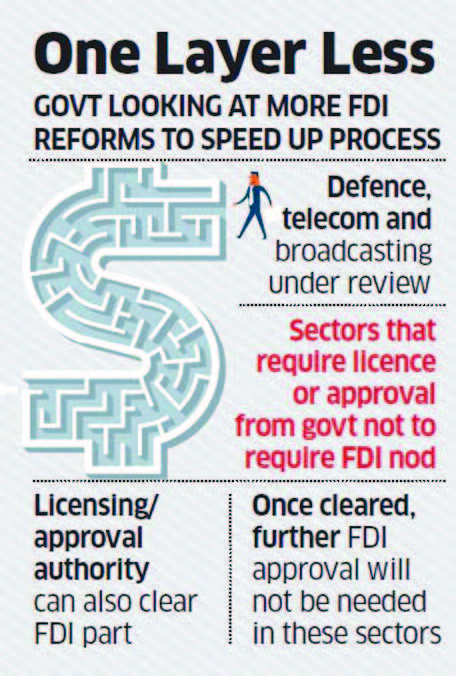
NEW DELHI: India is set to make further changes in its overseas investment regime, scrapping the need for approvals in sectors where licences are also required, such as defence, telecom and broadcasting, eliminating one layer completely from the process.
“Clearance for FDI (foreign direct investment) separately after securing a licence adds another layer of approval from same authorities,” said a senior government official. “Anyone who has gone through one level of scrutiny for licence from the authorities concerned should not need to go through the same checks again.”
Conditions related to FDI can be examined by the licensing authority, the person said. A big-ticket defence order expected to be floated soon should make quick progress once these changes are effected.
Under current rules, investors have to apply for licences in many sectors besides clearances from multiple ministries, including security from home affairs. After securing licences, they are required to apply for approval of foreign investment, if any, which again goes through an inter-ministerial clearance process.
Defence investment, for instance, is subject to industrial licensing under the Industries (Development & Regulation) Act, 1951. The licence is given by Department of Industrial Policy and Promotion in consultation with the ministries of defence, external affairs and home, a process that takes time.
“Why should there be a need for another level of clearance from same authorities?” said the official cited above.
Up to 100% FDI is allowed in defence on a case-to-case basis. India is the world’s biggest importer of defence goods, accounting for 13% of global purchases during 2012-16.
The government is looking to give a push to domestic manufacturing of defence equipment to reduce imports and also create more local jobs. Since 2000, the defence sector has attracted just over $5 million in FDI.
In the case of telecom too, 100% FDI is allowed but subject to licensing by the Department of Telecommunications. Similarly, broadcasting is subject to rules and conditions framed by the ministry of information and broadcasting.
Telecom has been among the biggest recipients of FDI with $24 billion in inflows since 2000, 7.4% of the total.
The government has already announced its intent to scrap the Foreign Investment Promotion Board (FIPB) and leave FDI clearance to the relevant ministries or departments in sectors where government approval is needed. The official cited above said removing the additional clearance could be taken up at the same time.
“Abolition of FIPB will be truly be impactful if government approval is done away with in FDI policy across sectors,” said Akash Gupt, partner, PwC.
“If a licensor would grant FDI approval under licensing requirement but RBI would eventually be monitoring the compliance of same under FEMA (Foreign Exchange Management Act), it would need some consistency and connecting of dots.”
A transition framework for replacing the FIPB process should be in place before the end of the financial year. The departments of industrial policy and promotion and economic affairs have begun consultations on the process.
Keen to attract foreign funds in the country, the government has put a number of sectors on the automatic route.
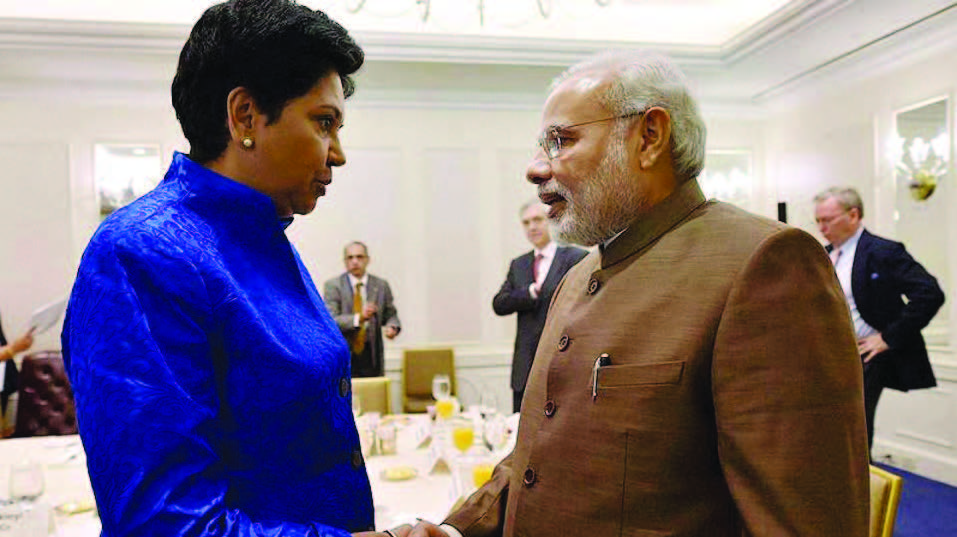
NEW DELHI (TIP): #PepsiCo Chairperson #IndraNooyi today met Prime Minister @NarendraModi and offered the company’s participation in the government’s efforts to deliver on national development goals, especially in supporting farmers.
She also apprised the Prime Minister on how PepsiCo’s new Quaker Oats products that take traditional recipes can contribute to improving health of Indian consumers.
“As I shared with Prime Minister Modi, PepsiCo is well positioned to help the government deliver on the national development goals he has outlined for farmers and supporting their livelihoods,” she said in a statement. Nooyi further said: “The Prime Minister and I had an engaging dialogue on how PepsiCo is making investments to grow, process and use more Indian-grown fruit juice in our sparkling beverages.”
She also said they discussed on how PepsiCo is focusing on new health-oriented products with local recipes. “We also discussed our launch of new Quaker Oats products that take traditional recipes and add in whole grain Quaker Oats to help Indians start their day in a healthy way,” Nooyi added.
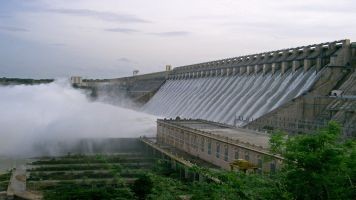
NEW DELHI (TIP): The government on Feb 22 approved a 900 MW hydro power project to be set up in Sankhuwasabha district of Nepal at a cost of Rs 5,723.72 crore.
The decision to approve the Arun-III project was taken at a meeting of the Cabinet Committee on Economic Affairs headed by Prime Minister Narendra Modi here on Wednesday.
“The Cabinet today approved setting up of Arun-III project at an estimated cost of Rs 5,723.72 crore. The project is expected to achieve financial closure by September this year. The projected will be implemented within five years,” power minister Piyush Goyal told reporters at a briefing here.
The project is being implemented by a 100 per cent subsidiary of state-run SJVN Ltd. SJVN Ltd is joint venture between Central and Himachal Pradesh governments with shareholding of 64.46 per cent and 25.51 per cent, respectively. “Union Cabinet has approved the project and its investment. It was awaited. The project is being implemented by 100 per cent subsidiary of SJVN Ltd,” SJVN Ltd chairman and managing director RN Misra said.
The subsidiary SJVN Arun-3 Power Development Company Pvt Ltd (SAPDC) was incorporated and registered on April 25, 2013 as a private limited company under Nepal’s Companies Act.
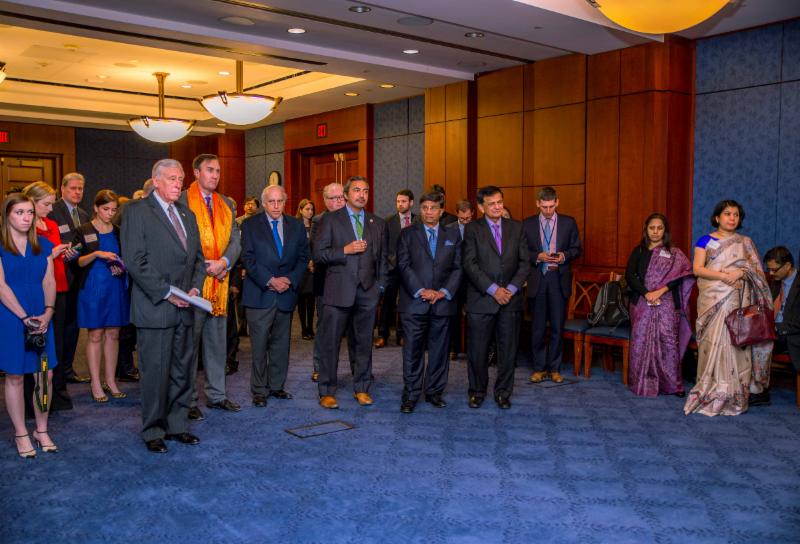
As many as 27 US lawmakers will be visiting India this month in what Indian Ambassador Navtej Sarna regards as “a very important milestone” that is demonstrative of the high degree of American interest in India and the strong bipartisan support for the India-US relationship.
Ambassador of India Navtej Sarna, who hosted a Congressional reception on Tuesday, Feb 14, to celebrate India’s engagement with the 115th US Congress, expressed the hope that the growing engagement would lead to a “more robust economic and commercial cooperation as India retains its spot as the fastest growing major economy”.
The US lawmakers will be travelling as members of two different delegations. One, sponsored by the Aspen Institute, will bring 19 lawmakers of both Republican and Democratic parties from February 20 to 25, with stops in New Delhi and Hyderabad, during which wide-ranging discussions will be held with government officials, politicians, think tanks and non-governmental organisations.
The second one will be a bipartisan Congressional delegation, led by Republican lawmaker Bob Goodlatte, who heads the House Judiciary Committee. This team, which also includes George Holding, the Republican co-chair of the India Caucus, will be visiting New Delhi and Bangalore from February 20 to 23.
House Democratic Whip Steny Hoyer made a strong pitch for enhanced cooperation on security issues between the two big democracies, while Congressman Dana Rohrabacher, Chairman of House Foreign Affairs Sub-committee on Europe, Eurasia and Emerging Threats emphasized the importance of US-India cooperation in addressing the threat arising from extremist radical terrorism. He also spoke of the potential of US companies contributing in the economic transformation of India.
Congressman Pete Olson spoke glowingly of the positive contributions of the Indian-American community in the way of life of Texans. He emphasized the significance of the port of Houston for energy exports.
Indian-American Congressman Ami Bera, Democratic Chair of the House India Caucus said that the increase in number of elected Indian-Americans currently in Congress is a testimony to the remarkable strides that the Indian-American community has made and the growing closeness between the two countries that is based on shared values. He noted that the India Caucus is the largest one on the Hill and his firm belief that the US-India relationship will be a defining one for the 21st century.
HOUSTON, TX (TIP)Houston India conference is hosting first of the series conference on March 24 – 25 in Houston. The Houston India conference is designed to bring various constituencies that have an interest in India together and discuss with them the latest developments and the best practices of doing business in India. The theme of 2017 Conference is “Make in India – The Inside Story“.
Make in India is a major national initiative of the Government of India, designed to foster innovation, enhance skills development, protect intellectual property, build best in class manufacturing infrastructure, facilitate investment and collaboration.
Texas has a large interest in India. India is one of the major business partners for companies in this area. There is a large Indian presence in the educational, medical and research institutes that Houston is renowned for. The GDP of Texas at US$ 1.7 trillion would make it the 10th largest economy in the world, if it were an independent nation. Texas is home to 54 (or 11%) of Fortune 500 companies. The central focus of the Houston India Conference is to share today’s India story with the audience in Texas who are interested in investing in India, by the people who are playing an important role in shaping up the modern India.
The conference has a series of panel discussions on the state of the Indian economy and politics, and to explore India’s growing soft power on the global stage. The panelists are some of the most respected voices, including foreign policy experts, business pioneers, and thought leaders sharing their insights on the unique Indian way of thinking.
The topics of panel discussions are:
Panel 1: Understanding Modern India: Democracy Delivering Growth
Panel 2: Why is India the Fastest Growing Economy in the World and is it Sustainable?
Panel 3: India USA Partnership
Panel 4: Soft Power of India
Prominent speakers include: India’s Ambassador to USA Navtej Sarna, Assistant Secretary of State for South and Central Asian Affairs Nisha Biswal, Foreign Policy Expert Dhruva Jaishankar, and JournalistAshok Malikamong others.
The conference is organized by the Consulate General of India in Houston, India House, University of Houston, US India Skills and Education Council, Asia Society Texas Center, Indo American Chamber of Commerce of Greater Houston and World Affairs Council of Dallas/Fort Worth.
The government of Karnataka said on Thursday it welcomed a proposal from Apple Inc to begin initial manufacturing operations in the state, in a sign the tech company is slowly moving forward with plans to assemble iPhones in the country.
“Apple’s intentions to manufacture in Bengaluru will foster cutting edge technology eco system and supply chain development in the state, which are critical for India to compete globally,” the Karnataka government said in a statement.
A source familiar with the matter told Reuters, however, that no deal, or memorandum of understanding had so far been finalised with the Karnataka government.
Apple has been asking for sops from the Indian government to start making iPhones in the country and as well as its own retail chain.
However, Union finance minister Arun Jaitley in his budget speech announced a record figure of Rs 745 crore under modified special incentive package scheme (MSIPS) to boost electronic manufacturing. In a caveat, the government also has proposed a 2% special additional duty on import of PCBs. PCBs or in simple words printed circuit boards makes up for 20-30% of a smartphone’s cost and is generally imported as India still doesn’t have fabrication units to manufacture them domestically.
The person, who asked not to be named, said if Apple did go ahead with plans to begin assembling the iPhone, it was likely to do so initially at a plant being set up by its Taiwanese manufacturing partner Wistron Corp at Peenya on the outskirts of the tech hub of Bengaluru, Karnataka.
Cupertino, California-based Apple, is keen to assemble its phones in India, one of the world’s fastest growing smartphone markets.
Apple representatives met with central and state government officials in India last week, as it is lobbying hard for a raft of tax and sourcing concessions, before it begins to assemble iPhones in the country.
Following the meetings, Apple said it appreciated the open and constructive dialogue it held with Indian officials, around the expansion of its local operations in the country.
The U.S.-India Business Council (USIBC) commended the 2017 Union Budget presented by Finance Minister Arun Jaitley, saying the budget has a forward-looking outlook and builds off the economic reforms enacted over the last three years of Prime Minister Modi’s government. USIBC feels that the budget deepens the Government’s move towards a digital economy, while remaining committed to attracting foreign investment, increasing infrastructure spending in roads and civil aviation, rationalizing the tax structure, spurring domestic growth while also bringing in rural India into the fold of the digital economy.
USIBC has commended the noteworthy reform measures that have been implemented in the last year including the passage of the Goods and Services Tax (GST), the bankruptcy code, FDIs in several sectors of the economy, and measures for financial inclusion. In light of these reforms, the Council was pleased to note that the budget is a fiscally sound agenda that doubles down on Prime Minister Modi’s stated goals of improving the ease of doing business by reducing red tape, investing in “Skill India”, and attempts to mitigate the negative impact of demonetization.
USIBC President, Dr. Mukesh Aghi said, “At a time of global uncertainty, budgets can be challenging to implement but the Finance Minister has done an admirable job in creating a vision that will propel the domestic economy while remaining cognizant about foreign investors. The industry welcomes positive steps in the affordable housing segment, bringing the ‘Housing for All’ scheme a step closer to reality. Relaxation on long term capital gains and infrastructure status to the segment will boost supply in the market. The Council looks forward to more announcements on liberalization in certain sectors in the near-term.”
Rajiv Khanna, President of India-America Chamber of Commerce described it as a well-balanced budget. “It is a well thought out and a well balanced budget. The fact that the Indian stock market has reacted so positively to the budget speaks for itself”, said Mr. Khanna.
Ron Somers, founder and CEO of India First Group also commended the budget. “I am in complete agreement with Finance Minister Arun Jaitley: when you look around the world today and witness all the retrenchment and chaos underway from Russia to China to Brazil, India stands out as a beacon of stability and predictability,” said Somers.
Karun Rishi, President of USA-India Chamber of Commerce (USAIC) described it as a well-balanced, fiscally cautious budget in the right direction.
The Indian Panorama invited readers to comment on the Indian Union Budget. Most felt it was a soft budget which did not hurt common people much, may be because of the impeding elections in a couple of important state assemblies. Whatever, the consensus was that it was an unexciting, lackluster budget. Here are their comments.
Dr. VK Raju, an eminent eye surgeon based in Morgantown, WV says: “India has had 25 finance ministers since independence in 1947 that have presented and passed in Parliament 83 budgets- both interim and annual so far. Mrs. Indira Gandhi from Indian National Congress, as the Prime Minister of India was the only woman to hold the Finance Portfolio (1970-71). Her critics used to call her “the only man in Indian Cabinet.”
Since our Independence in 1967, we have few islands of excellence in many fields, yet the India we all dream about is far from reality.
The budget can undoubtedly give a shot in the arm to our economy, but consider these:
The human resource is the ultimate resource of a nation.
Water and sanitation are still major problems.
Investment in human development is more productive than investment in physical assets and moreover, it leads to a faster rate of national growth.
Malnutrition in children and 23% of middle school girls dropping out of school because of feminine hygiene issues.
India is a highly developed country with developing country problems. In the west, poverty is relative and in India it is absolute poverty.
Finally see what the great statesman, Nani Palkhivala said, “To my countrymen, who gave unto themselves the constitution but not the ability to keep it. Who inherited a resplendent heritage but not the wisdom to cherish it, who suffer and endure in patience without the perception of their potential. I say, Change the mindset, sky is the limit for India.”
George Abraham, a former Chief Technology Officer at the United Nations and Chairman of INOC (USA) made the following comment.
“I could not bring myself commenting on this budget without mentioning the way Modi Government’s unprecedented rush for submission on the day when one of its longest serving members of Lok Sabha and former Union minister Shri. E. George Abraham Ahamed has passed away. I am saddened by the fact that his memory has been dishonored!
At the outset, I would like to agree with many observers that the budget has some positive elements such as tax deduction for lower-income earners. However, the budget has done very little for the middle class, farmers, daily laborers, self-employed or small and medium businesses who are hit hard by the reckless demonetization policy of this Government. The budget is also appeared to be rushed through for narrow political benefits with an eye on the upcoming state elections.
At this point in time, the economic fundamentals are on a downward trend with fall in demand and fall in consumption with job losses in millions. While the GDP forecast is downgraded to be a percent or lower, there are no new bold initiatives for job creation or very few incentives to promote investment.
Obviously, there is so much emphasis on digitization while not referencing the fact that there are 18,000 villages in India are still without electricity and 47 percent of the population lack any access to a bank account and the Internet is unavailable in the remote areas of the country.
Although the Union budget has made an attempt to deal with political contributions, there would be little accountability without laying a solid groundwork for transparency, disclosures, and penalty.
Finally, though the Prime Minister has characterized MGNREGA as a ‘living monument,’ of Congress failure, the Finance Minister gave it a nudge by allocating 699 crores more than the previous year. It is a clear admission that the MGNREGA is so vital to the rural households across the land, and it would be suicidal for the Modi Government to scuttle it.
In summary, the budget failed either to address the current hardships the lower echelon of the society is facing due to demonetization or putting up bold reforms for incentivizing investment or job creation.”
Anu Jain, a Finance analyst had this to say. “Indian Finance Minister Arun Jaitley has presented the Union Budget for the year 2017-18. It was the first budget in the history of independent India to be presented on February 1
This is his fourth annual budget and the first budget after demonetization. The Union Budget 2017 was broadly focused on 10 broad themes.
They are – Farmers, Rural Population, Youth, Poor and Health Care for the Underprivileged; Infrastructure; Financial Sector for Stronger Institutions; Speedy Accountability; Public Services; Prudent Fiscal Management; Tax Administration for the honest.
“The impact on growth from the governments cash crackdown would wear off soon and called 2017 budget is for the poor”, said Mr. Jaitley. Yet, while vowing prudent fiscal management, Arun Jaitley also raised his 2017-18 federal deficit targets to 3.2 percent of gross domestic product to cover his spending promises. Jaitley said, “As we all see that India as “an engine of global growth” but we should remember risks to its outlook from likely U.S. interest rate hikes rising oil prices and signs that globalization is in retreat”. PM Narendra Modi’s surprise decision last November to scrap high-value banknotes worth 86 percent of India’s cash in circulation has hit consumer demand, disrupted supply chains and hurt capital investments. The worst of the cash crunch is now over. Manufacturing survey showed that business was slowly returning to normal. Still, the finance ministry forecasts that growth could dip to as low as 6.5 percent in the current fiscal year till March, before picking up slightly in the coming fiscal year to between 6.75 and 7.5 percent.
The Income Tax rates have been slashed and that’s certainly a reason for everyone to cheer. Those earning up to Rs 3 lakhs per annum will now be completely exempted from paying tax. Individuals earning between Rs 3 lakhs and Rs 5 lakhs per annum will get a 5% benefit as the tax rate has been slashed from 10% to 5%. Also, people earning higher than Rs 5 lakhs per annum are also eligible for the 5% reduction in income tax and businesses with turnovers of no more than Rs 50 crore get a tax break. This all is healthy to trigger the economy and help everyone especially the middle class and small business.
Government targets to bring almost one crore households out of poverty by 2019. The budget proposes to complete 1 crore houses for those without homes.
Budget has raised the allocation for the “Mahatma Gandhi National Rural Employment Guarantee Act” (MGNREGA) to an all-time high from Rs 37,000 crore to Rs 48,000 crore. This is big hike, and was the highest ever allocation to rural India.
Budget also highlighted that the participation of women in MGNREGA is increased to 55 per cent. In the budget, there is allocation for linking Aadhar to various bank accounts and to health cards for senior citizens. After announcing demonetization, Modi government has been promoting linking of Aadhar numbers to bank accounts and also claims credit for systematization as Aadhar registrations grow.
Railway e-tickets: In a move to encourage the use of services, service tax on railway tickets booked electronically have been pulled back. Currently, a service charge of Rs 20 is levied for sleeper class and Rs 40 for all air conditioned classes per ticket while booking tickets on the IRCTC website.
The continuing theme of attacking black money was evident in the move to ban all cash transactions of over Rs 3 lakh and the attempt to clean up political funding. Parties will now have to disclose the identities of those donating over Rs 2,000, though electoral bonds will be introduced to allow anonymity for clean donors. The government has lined up more incentives for startups. Profit linked deduction will be allowed for three years out of seven instead of three years out of five.
But there is negative impact of budget on LED Lights, Tobacco, Mobile phones etc.
The 2017 India budget looks all round development budget, aimed to take India to growth path, while focusing on helping low and middle income group people including farmers and village folk, the poor and youth – while not unusual, became even more necessary because of the criticism that demonetization had hurt the informal sector and the rural economy. It is first budget which include railway budget too projecting an overall growth of more than 7%.”
Indu Jaiswal, a senior community leaders said: “I think the new budget proposed for 2017 by Mr. Jaitley will definitely benefit the country. Specially encouraging digital payment, transactions at fuel pumps, hospitals and railway stations will help in eliminating cash handling. As we are progressing in the right direction these proposals for upgrading the financial transactions system will help.
We must include all areas of business specially healthcare. Together we will continue to make a difference.
Ashok Ojha, a senior journalist and a promoter of Hindi language in the US opined that the budget might determine the course of movement of Indian economy but doesn’t necessarily reflect the condition of its entire people.
“The presentation of annual budget in the Indian Parliament is a democratic ritual that is supposed to accelerate the growth of Indian economy, which is on upward path since the past decade. The Modi Government has made a wide range of tax concessions aimed at directly assisting the middle class working man save some money every year. In addition to helping the middle class city dweller the annual budget of India also targeted farmers who produce the food for the nation. Helping farmers with varieties of crop loans and insurance policies may go a long way making the farming community prosperous and the country self-sufficient in agriculture.
My sister called me from her village in Buxar district of Bihar. Two decades ago her village lacked even the basic electricity to light her home. She boldly invited me to visit her home where all rooms were fitted with heater and air-conditioning. She said her family agriculture business helped her save enough money to install comfortable living and now we feel that ‘Our living is no less comfortable than that of city dwellers’.
The farming community in India is no doubt prospering, however, the budget failed to take stock of the debt that the rural economy is carrying on its soldiers. We don’t know if the budget is able to protect a debt struck farmer from taking the extreme step of committing suicide.
The budget allocates two months interest free credit for farmers and many other insurance plans. It is hoped that rural India will receive funding to improve crop yield and provide employment to rural population.
The budget might determine the course of movement of Indian economy but doesn’t necessarily reflect the condition of its entire people. Indian boasts of its huge workforce of young people within the age range of 20 to 35, who continue to look for job and with every passing year ejected from various jobs that subscribe age limit for employment. During the past few years the job growth remained very dismal. The education system failed to improve and address the demands of the 21st century. In its new budget proposals the Modi Government promised to set up one hundred skill development centers while institutions of higher education, especially in states like Bihar, continue to be out of tune with the new demands and challenges of 21st century.
The government plans to improve employment opportunities by teaching foreign languages for young people, however, improving the quality of education for Indian languages are on back burners. Of course, the prime minister promised to pay $6,000 for every pregnant woman in rural India, however, hospitals continue to charge hefty amount from patients with serious illnesses. In USA a patient death is the failure of the hospital, in India, it is a normal situation that enables hospital authorities collect their dues before the dead is released for last rites. India seems to become insensitive to rail accidents. One hears stories of rail accidents almost every month. There is no way to know if the provision of Rs. 1,31,000 crores in the national budget will be wisely used to upgrade the system.
I returned to USA after a month-long trip to India, where ATM machines fail to eschew cash, two months after the much hated demonetization of high value Indian currencies. A story goes like this: A Western tourist exchanged his dollar bills into Indian rupees in 500 and 1000 denominations. The same day government of India ordered these currencies invalid. The tourist was visiting India for 40 days. He spent rest of his time in India returning his rupees bills of 500 and 1000 by queuing outside of banks. There are many stories that tell the story of negative impact of demonetization but the government ignored to talk about it in its budget.
The government push to make the country cash less is a dangerous one. The whole world deals in cash, especially for small transactions. If you are forced to get a credit card and use for purchases, you are destined to be drowned in heavy debt very soon. This is the true saga of middle class in developed economies including USA. Indian government promotes the cash less economy that would bring misery over its middle class, the same people who are responsible for improving the Indian economy to more than seven percent growth rate. There is no sign Modi government is capable to force the big industrialist mend their ways of working. Barring a few, no major case of corruption has been unearthed, except the arrests of individuals, who were caught carrying a few lakhs of currencies.
Travelling from Delhi airport to my home in Dwarka I met a number of young people who had left their villages in far flung areas of Bihar and Odisha to drive taxis for living. These young people work for companies like Uber and Ola. Some of them plan to go back to their native village where they would appear for collage examinations. I bet these young people, who are without a pull in Delhi, are destined to continue driving taxis even after they would graduate from colleges.
I travelled to Jaipur to attend the annual literature festival. The festival didn’t charge entry fee for young people who came to listen to authors from all over the world. I could see hundreds of young people, who thronged the venue every afternoon to mingle with friends. I am sure these young people were trying to make a sense of their lives and figure out if there is a future for themselves should they decide to become writers.
During my month long trip to India I found that government offices including banks reverting to old days, when files used to move slowly. Officials talk about government guidelines that must be observed in order to ensure compliances. I visited a number of government offices and banks all of who were not busy working on their laptops. Wi-Fi was not functioning most of the time and many people continued to wait days and weeks for clearance of their files.
All government steps are geared towards winning elections. The ruling Bharatiya Janata Party is facing daunting challenges in five states immediately after the release of the budget. It is quite natural that the concessions declared in the national budget reflect its concern for the common man. How much gain the common man gets due to the new initiatives is something to see in coming months.”
The Indian Panorama will welcome comments on the subject from our wide awake readers.
NEW DELHI(TIP): “Vibrant Gujarat is connecting India to the world,” Resident Commissioner of Gujarat in New Delhi Bharat Lal said. “Our objective is to interact with government officials and the business community during this road show in Canada and USA, to attract investors, scientist, and entrepreneurs from all over the world to come to Gujarat and participate in the Vibrant Gujarat Global Summit 2017,” he said.
“Vibrant Gujarat is the biggest platform for enabling business in India. In the post GST (Goods and Services Tax Bill) scenario, when India becomes ‘One Nation – One Market’, Gujarat holds a unique distinction with favorable geographical location, state-of-the-art infrastructure and sound policies,” he added.
“We have had various meeting with leading companies across USA and had an amazing response. People are very excited about GST. Business industry is bullish they think this is the right time to invest. The Vibrant Gujarat Global Summit, which started in 2003 to rekindle the pace of investments in the state, has since established itself as one of the most important international business events in the country, Bharat Lal told this correspondent.
Vibrant Gujarat Global Summit is an example of the visionary approach of the Government of Gujarat towards inclusive and sustainable development by ensuring policy coherence and effective investment promotion.
Far from the regional investment fair that characterized the first Summit in 2003, the biennial Summit has today become a unique forum for exchanging ideas, sharing knowledge, networking, exploring business opportunities and signing cooperation agreements and partnerships, while setting the policy agenda for meeting some of the current global challenges.
Having successfully organized seven constructive summits, Government of Gujarat, as part of its journey towards sustainable long-term growth and inclusive development is organizing the 8th edition of the Vibrant Gujarat Global Summit from the 10th to 13th of January 2017 at Mahatma Mandir, Gandhinagar. The central focus of the Summit is Sustainable Economic and Social Development.
It will bring together heads of states and governments, ministers, leaders from the corporate world, senior policy makers, heads of international institutions and academia from around the world to further the cause of development and to promote cooperation, he said.
There will be enough opportunity to interact with key policy makers, industry leaders, global thought leaders, regulators and renowned academicians from all over the world. The participants can witness deliberations between sector experts and global luminaries in an array of knowledge seminars during the summit to comprehend evolving global sectoral trends.
The Summit provides platform for SMEs to connect globally with potential partners to explore opportunities of collaboration and partnership networking forums to foster interaction between stakeholders through B2B and B2G meetings in an exhibition spread over 1,25,000 sq.mts with exclusive demo sessions showcasing the latest trends and technology, products and services across sectors. Prime Minister Narendra Modi will inaugurate Global Trade Show by in the presence of Gujarat Chief Minister and MOS (Independent Charge), Commerce & Industries Nirmala Seetharaman. There will be a Global CEO Roundtable chaired by Modi with Select 50 top CEOs. The Vibrant Gujarat Global Summit 2017 is receiving tremendous response in the US, members of a high level state delegation said after meeting senior government officials and CEOs of top tech companies here.
Underlining the rapid economic development that is taking place underPrime Minister Narendra Modi Lal referred to Gujarat as being the driving engine of Indian growth.
“The state accounts for 19 per cent of industrial output, 41 per cent of cargo exports and 10 per cent of India’s manufacturing industries,” he said, adding that Gujarat ranked number one in “ease of doing business”.
The US has agreed to be a partner country in the next edition of the Vibrant Gujarat Summit, the brainchild of Prime Minister Narendra Modi, in January 2017. US Assistant Secretary of State for South and Central Asia Nisha Desai Biswal had conveyed this to Bharat Lal, Resident Commissioner of Gujarat in New Delhi. Biswal recently met with a Gujarat delegation, led by Resident Commissioner Bharat Lal, who was accompanied by Indian Charge d’Affairs Ambassador Taranjit Singh Sandhu in Washington.
The Assistant Secretary praised Resident Commissioner Lal for his efforts to make the state of Gujarat a model of innovation and sustainable economic growth and reform for India.
She also announced US’ intent to participate as a Partner Country in the 2017 Vibrant Gujarat Global Summit, the government of Gujarat’s biennial investors’ summit that brings together global business leaders, investors, corporations, Kerry thought leaders, and policymakers. US Secretary of State John had attended the last Vibrant Gujarat Summit.
Signup to our Newsletter!
Don’t miss out on all the happenings around the world