Tag: Diwali

  • Diwali: The festival of renewal

    Diwali: The festival of renewal

    As the monsoon clouds recede and the air grows crisp, India awakens to the luminous embrace of Diwali-the festival of lights. Streets glow with rows of diyas, homes are adorned with fresh paint and fragrant flowers, and hearts, too, prepare for renewal. While Diwali is often seen as a celebration of prosperity and joy, its deeper essence lies in the renewal of the human spirit-a sacred opportunity to cleanse the mind, forgive the past, and awaken the inner light of consciousness.
    The Light Within: Beyond Lamps and Fireworks
    The outward spectacle of Diwali-its fireworks, sweets, and glittering lamps-symbolizes a greater inner illumination. According to ancient Hindu philosophy, the Deepa or lamp represents the Atman, the inner self. Lighting a diya is not merely a ritual but a meditation-a reminder that every human being carries a divine spark within, a flame that can dispel the darkness of ignorance and ego.
    The Katha Upanishad declares, “The Self is smaller than the smallest and greater than the greatest, hidden in the hearts of all beings.” Diwali, then, becomes a sacred moment to rekindle that awareness-to let the light of understanding and compassion burn brightly against the shadows of anger, greed, and fear.
    Cleansing the Home, Cleansing the Soul
    Every year, as Diwali approaches, homes across India undergo a massive transformation. Dust is swept away, old clutter is discarded, and every corner is scrubbed until it shines. Traditionally, this act of physical cleaning was never just about beautification-it was symbolic of an inward purification.
    To prepare for Diwali is to prepare for Lakshmi, the goddess of wealth and well-being. But Lakshmi’s blessings flow only to spaces-and hearts-that are pure. The cleaning of one’s home mirrors the cleansing of one’s thoughts, attitudes, and memories. It is an invitation to let go of emotional residues-the grudges, regrets, and resentments that dim our spiritual light.
    Forgiveness, therefore, becomes a sacred act of Diwali. To forgive is to sweep the cobwebs from the soul, to make space for peace to dwell.
    The Renewal of Relationships
    In ancient times, Diwali was also the beginning of a new financial year for traders and artisans. Accounts were balanced, debts settled, and old transactions closed with blessings. This practical renewal carried a profound moral lesson: just as one clears financial accounts, one must also clear emotional accounts.
    Diwali invites us to start anew-with our loved ones, friends, and even ourselves. Lighting a lamp together, exchanging sweets, or simply wishing peace upon someone you’ve wronged-all become acts of renewal. In the words of the poet Rabindranath Tagore, “Faith is the bird that feels the light and sings when the dawn is still dark.” Diwali encourages that faith-to rebuild bonds and trust even when life feels uncertain.
    Silence Amidst the Celebration
    While Diwali is marked by joyous noise-the crackle of fireworks, the laughter of families-its true spirit is found in silence. In many traditional households, the night of Amavasya (new moon) is spent in quiet meditation or Lakshmi Puja, invoking not only material wealth but inner prosperity.
    In spiritual traditions, the dark night of Diwali represents the mind shrouded by ignorance. Lighting a lamp within signifies the awakening of wisdom. Saints and sages have long taught that the real Diwali happens when the soul kindles awareness, when compassion replaces judgment, and when humility illuminates pride.
    The Five Lamps of Renewal
    Diwali’s spiritual renewal can be understood through five metaphorical lamps that we light within ourselves:
    – The Lamp of Gratitude – For all that life has given, and for the lessons hidden in what it has taken away.
    – The Lamp of Forgiveness – To release the heavy burden of resentment and restore the heart’s peace.
    – The Lamp of Faith – To trust in the divine order, even in times of darkness and change.
    – The Lamp of Compassion – To extend kindness toward others, seeing the divine spark in every being.
    – The Lamp of Self-Knowledge – To seek the truth of who we are, beyond titles, possessions, and fears.
    When these five lamps are lit, Diwali’s radiance transcends the physical and becomes a living experience of awakening.
    The Inner Lakshmi: Awakening Abundance
    In Hindu philosophy, Goddess Lakshmi is not merely the goddess of material wealth but of Sri-the subtle beauty and grace of life itself. She represents abundance in thought, purity in action, and harmony in the environment. To invoke Lakshmi during Diwali, therefore, is to awaken these qualities within.
    A mind that is generous, a heart that forgives, and a spirit that serves-all these are forms of Lakshmi. True wealth is not measured in gold or possessions but in the lightness of being that comes from a peaceful heart.
    From Darkness to Light: The Eternal Message
    The Upanishadic prayer-“Tamaso m? jyotir gamaya” (Lead me from darkness to light)-encapsulates the essence of Diwali. Darkness, in this context, is not merely the absence of light but the presence of ignorance, ego, and fear. Light is awareness, self-realization, and truth. Every diya we light is a promise-to walk the path of righteousness, to illuminate our surroundings with goodness, and to be bearers of peace in a fragmented world. The act of lighting lamps on the darkest night of the year reminds us that no darkness is ever too deep for light to overcome.
    Diwali for the Modern Soul
    In today’s fast-paced world, Diwali’s message of inner renewal is more relevant than ever. Amid consumerism and digital overload, it offers a pause-a moment to reflect on what truly matters. Whether one spends the evening meditating, volunteering, or simply sitting quietly with family, the essence remains the same: to reconnect with one’s higher self.
    More than a festival, Diwali is a philosophy-a call to awaken, to forgive, to transform. It asks us to light a lamp not only on our doorstep but in our conscience.
    The Light That Never Dies
    When the last firecracker fades and the final lamp flickers out, what remains is the stillness of night-the silence in which the soul can finally listen. That is where Diwali’s true magic lies.
    For the festival of lights is, ultimately, a festival of awakening. A reminder that renewal is not something we seek once a year-it is a continual process of cleansing, forgiving, and becoming. As the lamp burns steadily through the darkness, it whispers an eternal truth: the real Diwali happens not outside, but within.

  • The Light Within and the Darkness We Must Conquer: On Diwali 2025

    By Prof. Indrajit S Saluja
    By Prof. Indrajit S Saluja

    As the fragrance of fresh sweets fills the air, markets dazzle with colors, and homes begin to sparkle with rows of diyas, Indians once again enter their most joyous and spiritually profound season—the festival of lights, Diwali. Scheduled this year for October 20, 2025, Diwali is not merely a cultural celebration; it is a festival that embodies the deepest moral and philosophical truths that have guided Indian civilization for millennia. It is the culmination of the long festive season that begins with Navratri and Dussehra, and it symbolizes the eternal victory of light over darkness, good over evil, and knowledge over ignorance.

    According to Hindu tradition, Diwali commemorates the return of Lord Rama to his kingdom of Ayodhya after a 14-year exile and his victory over Ravana, the ten-headed king of Lanka who had abducted Rama’s wife, Sita. The people of Ayodhya, overjoyed at their beloved prince’s return, lit rows of oil lamps to illuminate the path home—a gesture that became a timeless symbol of welcoming goodness, righteousness, and divine justice back into the world. To this day, millions of Hindus across India and the diaspora reenact this ancient story through the Ramayana, celebrating it with fireworks, the exchange of gifts and sweets, and homes radiant with lights.

    Yet, Diwali is not only an outward festival—it is an inward journey. Its true spirit calls for more than decoration and festivity; it demands reflection, introspection, and renewal. It asks of each of us: What is the Ravana within me?

    For the tale of Rama and Ravana is not only history or mythology—it is also a moral allegory of the human condition. Within each of us, there exists both a Rama and a Ravana—the noble and the ignoble, the compassionate and the cruel, the selfless and the selfish. Every human being is a battlefield between these two forces. To light the lamp of Diwali is, therefore, not only to celebrate Rama’s victory in Ayodhya but also to kindle the flame of righteousness in our own hearts.

    The symbolism of light conquering darkness extends far beyond religion. Light stands for truth, clarity, empathy, and awareness, while darkness represents ignorance, hatred, greed, and prejudice. In a world that is increasingly divided by race, religion, ideology, and economic disparity, Diwali offers a universal message: that humanity’s greatest triumphs come not through violence or domination, but through enlightenment—through the illumination of the mind and spirit.

    The Sikh tradition offers a parallel and profound insight. Sikhs commemorate the same day as Bandi Chhod Divas, marking the return of Guru Hargobind Sahib Ji from imprisonment, where he secured the release of fifty-two Hindu kings unjustly detained by the Mughal emperor Jahangir. It is thus a festival of freedom and compassion, emphasizing that true victory lies not in personal gain but in securing justice and liberty for others. The Sikh teaching, “Man jeete jag jeet”—he who conquers his mind conquers the world—reminds us that the most formidable enemy we face is not outside us but within.

    Indeed, the human mind, if left unchecked, can be the most destructive force in existence. It breeds greed, jealousy, intolerance, and the hunger for power that have led to wars, exploitation, and suffering throughout history. Yet the same mind, when disciplined, guided by conscience and compassion, can be the source of boundless creativity, peace, and love. The battle for the mind, therefore, is the true Kurukshetra of modern life.

    If humanity could collectively conquer this inner demon—this restlessness, anger, and self-centeredness—the world’s most pressing crises would lose their fuel. Conflicts between nations would subside, the cries of the impoverished would lessen, and the exploitation of nature would cease. Diwali, in this sense, becomes not a festival of indulgence, but a call to inner revolution.

    As India and Indians around the world prepare for the celebrations—with bustling bazaars, glowing lanterns, and joyous family gatherings—let us not forget that the essence of the festival lies in light, not merely in illumination. Light is symbolic of truth and consciousness, qualities sorely needed in today’s times of disinformation and moral confusion.

    The fireworks that brighten our skies should remind us of the radiance we must ignite within—the light of understanding and empathy that can outshine the darkness of prejudice and hatred. The exchange of sweets and gifts should reflect the sweetness of genuine goodwill and the generosity of spirit, rather than material display. The cleaning of our homes should be accompanied by the cleansing of our hearts—of grudges, bitterness, and apathy toward the suffering of others.

    In our society today, evil rarely wears the face of Ravana. It is subtler and more pervasive—it takes the form of corruption, inequality, discrimination, and moral apathy. It thrives wherever there is silence in the face of injustice or indifference to human pain. To celebrate Diwali meaningfully, therefore, is to take a stand for truth and compassion in every sphere of life, from our homes to our public institutions.

    In the Northern parts of India, where Diwali festivities reach their grandest scale, the enactments of the Ramayana—called Ramlila—draw thousands of spectators each year. But as we watch Rama’s victory unfold on stage, we must remember that the true Ramlila is played out daily in our own lives. Every moment we choose honesty over deceit, empathy over indifference, forgiveness over revenge, we allow Rama to triumph once again.

    At its heart, Diwali is a festival of hope. In a time when the world seems consumed by wars, environmental crises, and moral decline, its lamps remind us that darkness, however deep, cannot endure when light is kindled. Just as one small flame can ignite countless others, one act of kindness, one word of truth, one moment of courage can transform the moral landscape around us.

    So, as diyas are lit across India and the diaspora this October 20, let each flame be a vow—a vow to banish the darkness within and around us, to rise above selfishness and division, to nurture the divine in ourselves and others. Let Diwali not end with the extinguishing of the lamps, but let it live on in our conduct, in our compassion, and in our conscience.

    May the light of Diwali 2025 dispel not only the night but also the inner shadows that blind humanity to truth and love. May it inspire us to build a world where the light of reason, the warmth of brotherhood, and the radiance of justice burn brightly and eternally.

    For in conquering the darkness within, we achieve what Lord Rama symbolized—the true victory of good over evil, not in myth or memory, but in the living world.

    “Man jeete jag jeet.”
    He who conquers his mind conquers the world.
    Let that be the spirit of this Diwali.
    HAPPY DIWALI!

  • BRUHUD to honor Dr. Varun Jeph at the 16th Annual Deepawali Gala on November 16

    BRUHUD will honor Dr. Varun Jeph, Deputy Consul General of India in New York, for his outstanding service to the Indian diaspora across the 10 U.S. states under the jurisdiction of the Indian Consulate in New York.

    NEW YORK (TIP): BRUHUD, one of the largest organizations for seniors in New York, is set to celebrate its 16th Annual Deepawali Gala on November 16th at the Ganesh Temple Auditorium in Queens, NY. This year’s event will honor Dr. Varun Jeph, Deputy Consul General of India in New York, for his outstanding service to the Indian diaspora across the 10 U.S. states under the jurisdiction of the Indian Consulate in New York.

    Mohan Nannapaneni, founder of Team Aid—a prominent NGO dedicated to assisting with the repatriation of mortal remains from the U.S. to India, will be recognized.

    Mohan Nannapaneni, founder of Team Aid—a prominent NGO dedicated to assisting with the repatriation of mortal remains from the U.S. to India—will also be recognized.

    Prem Bhandari, a distinguished global advocate for the Indian diaspora and Chairman of Jaipur Foot USA will be the Chief Guest.

    The evening’s Chief Guest will be Prem Bhandari, a distinguished global advocate for the Indian diaspora and Chairman of Jaipur Foot USA.

    In a statement released by BRUHUD President Ajay Patel, he highlighted that the organization was founded in 2009 by his late father, Shashikant Patel, with a mission to support and improve the well-being of senior citizens. Shashi Kant Patel pioneered health fairs, seminars, and other initiatives for seniors, establishing a legacy of service and care.

    Ajay Patel also announced that, in memory of his father, BRUHUD will sponsor a free Jaipur Foot camp in Gujarat in the last week of January, providing artificial limb fittings to those in need.

  • Diwali – The Festival of Lights

    Diwali – The Festival of Lights

    The Festival of Lights, Diwali, also known as Deepavali, is the Hindu festival that symbolises the spiritual victory of knowledge over ignorance, good over evil, and light over darkness. It is celebrated in various unique ways across regions of India. Commencing with Dhanteras and concluding with Bhai Dooj, the celebrations span five days. Let’s take a look at significance, history, and some lesser-known facts about the festival.
    History
    According to Hindu belief, Ram, the Prince of Ayodhya, returned home with wife Sita and brother Lakshman after a 14-year exile, having vanquished Ravana, the King of Lanka. To celebrate Ram’s return, the residents of Ayodhya lit rows of lamps on the streets and at every home. This is believed to have initiated the tradition of lighting lamps and celebrating the day as the Festival of Lights. Hindus also worship Ganesha and Lakshmi on this day.
    Significance
    Diwali symbolises the triumph of knowledge over ignorance, good over evil, and light over darkness. The worship of Ganesh and Lakshmi, followed by exchange of presents, is believed to bring peace and prosperity.
    Hindus also consider Deepavali a lucky day that brings luck and wealth. It also signifies a fresh start and is considered an auspicious day to launch new businesses. As people light diyas, candles, and colourful lights to decorate their homes, eat delicious sweets, exchange gifts, and observe customs, the festival also strengthens a sense of community among worshippers.
    Date and Time
    According to the lunisolar Hindu calendar, this festival is celebrated on the 15th day of Kartik, which is the darkest night of the year. This usually falls between mid-October and mid-November of the Gregorian calendar.
    The Amavasya Tithi for Diwali 2024 will start on October 31 at 3:52 PM and end on November 1 at 6:16 PM. Laxmi Puja is to take place between 5:12 PM and 6:16 PM. The BSE and the National Stock Exchange have announced a special one-hour window from 6 PM to 7 PM on November 1 during which token ‘Muhurat trading’ will take place on the bourses.
    The Origin of Diwali
    Historically, the origin of Diwali can be traced back to ancient India, when it was probably an important harvest festival. However, there are various legends pointing to the origin of Diwali or ‘Deepawali.’ Some believe it to be the celebration of the marriage of Lakshmi with Lord Vishnu. Whereas in Bengal the festival is dedicated to the worship of Mother Kali, the dark goddess of strength.
    Lord Ganesha, the elephant-headed God, the symbol of auspiciousness and wisdom, is also worshiped in most Hindu homes on this day.
    In Jainism, Deepawali has an added significance to the great event of Lord Mahavira attaining the eternal bliss of nirvana.
    The return of Lord Rama
    Diwali also commemorates the return of Lord Rama along with Sita and Lakshman from his fourteen year long exile and vanquishing the demon-king Ravana. In joyous celebration of the return of their king, the people of Ayodhya, the Capital of Rama, illuminated the kingdom with earthen diyas (oil lamps) and burst crackers. These Four Days Each day of Diwali has its own tale, legend and myth to tell. The first day of the festival Naraka Chaturdasi marks the vanquishing of the demon Naraka by Lord Krishna and his wife Satyabhama. Amavasya, the second day of Deepawali, marks the worship of Lakshmi, the goddess of wealth in her most benevolent mood, fulfilling the wishes of her devotees.
    The story of Lord Vishnu
    Amavasya also tells the story of Lord Vishnu, who in his dwarf incarnation vanquished the tyrant Bali, and banished him to hell. Bali was allowed to return to earth once a year, to light millions of lamps to dispel the darkness and ignorance, and spread the radiance of love and wisdom. It is on the third day of Deepawali – Kartika Shudda Padyami that Bali steps out of hell and rules the earth according to the boon given by Lord Vishnu. The fourth day is referred to as Yama Dvitiya (also called Bhai Dooj) and on this day sisters invite their brothers to their homes.
    Lights & Firecrackers
    All the simple rituals of Diwali have a significance and a story to tell. The illumination of homes with lights and the skies with firecrackers is an expression of obeisance to the heavens for the attainment of health, wealth, knowledge, peace and prosperity.
    According to one belief, the sound of fire-crackers are an indication of the joy of the people living on earth, making the gods aware of their plentiful state. Still another possible reason has a more scientific basis: the fumes produced by the crackers kill a lot of insects and mosquitoes, found in plenty after the rains.
    The tradition of gambling on Diwali also has a legend behind it. It is believed that on this day, Goddess Parvati played dice with her husband Lord Shiva, and she decreed that whosoever gambled on Diwali night would prosper throughout the ensuing year. Diwali is associated with wealth and prosperity in many ways, and the festival of ‘Dhanteras’ (‘dhan’ = wealth; ‘teras’ = 13th) is celebrated two days before the festival of lights.
    In each legend, myth and story of Deepawali lies the significance of the victory of good over evil; and it is with each Deepawali and the lights that illuminate our homes and hearts, that this simple truth finds new reason and hope.
    From darkness unto light
    The light that empowers us to commit ourselves to good deeds, that which brings us closer to divinity. During Diwali, lights illuminate every corner of India and the scent of incense sticks hangs in the air, mingled with the sounds of fire-crackers, joy, togetherness and hope. Diwali is celebrated around the globe. Outside India, it is more than a Hindu festival, it’s a celebration of South-Asian identities.
    If you are away from the sights and sounds of Diwali, light a diya, sit quietly, shut your eyes, withdraw the senses, concentrate on this supreme light and illuminate the soul.
    5 Days of Diwali 2024
    Day 1: Dhanteras (October 29, 2024)
    The celebrations of Diwali begin on Dhanteras. On this day, people pray for wealth and success and worship Lord Kuber and Goddess Lakshmi. Gold coins, bars, and jewellery are among the new things that devotees buy.
    Day 2: Naraka Chaturdashi or Choti Diwali (October 31, 2024)
    Choti Diwali, or Naraka Chaturdashi is observed on the second day. It honours Lord Krishna’s triumph against the evil Narakasura.
    Day 3: Diwali (October 31, 2024)
    Lord Rama, Mata Sita, and Lakshman return to Ayodhya on Diwali. It also honours the triumph of good over evil. People use lights, colourful rangoli, and clay lamps (diyas) to adorn their homes on this day. In the evening, devotees also conduct Lakshmi and Ganesh Puja.
    Day 4: Govardhan Puja (November 2, 2024)
    Following Diwali, Indians celebrate Govardhan Puja. It is devoted to the worship of the mountain, Govardhan Parvat.
    It is stated that Lord Krishna saved the people of Mathura from Lord Indra by raising the mountain.
    Day 5: Bhai Dooj (November 3, 2024)
    Bhai Dooj, Bhau Beej, or Bhaiya Dooj are the names given to the final day of Diwali celebrations. It honours the unique bond between sisters and brothers. On this day sisters pray for their brothers’ long life and prosperity.

  • CELEBRATE THE FESTIVAL OF LIGHTS IN NYC

    CELEBRATE THE FESTIVAL OF LIGHTS IN NYC

    • By Mabel Pais

    Diwali, the Festival of Lights, one of the major religious festivals in Hinduism is also observed in Jainism, Buddhism and Sikhism. Diwali means “row of lights” in Sanskrit, with a symbolism of the triumph of light over darkness, knowledge over ignorance and hope over despair. The festival will be celebrated in November at various locations in New York City.

    The Brooklyn Children’s Museum (brooklynkids.org) and The South Street Seaport Museum will independently partner with The Culture Tree (theculturetree.com) to celebrate the Festival at their respective locations.

    THE BROOKLYN CHILDREN’S MUSEUM

    The Brooklyn Children’s Museum offers an afternoon of family-friendly activities on Thursday, November 9. The celebration occurs during the Museum’s Amazon Free Hours from 2-5 pm, which continues to take place every Thursday afternoon from 2:00 to 5:00 pm.

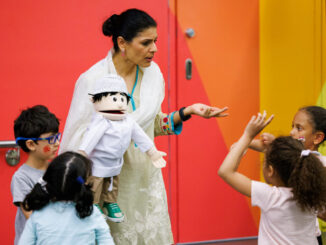
    Through a puppet show presented by The Culture Tree, children will learn the history of Diwali, teaching them the meaning of devotion, love, kindness, and valor. Other activities include story time with author Navina Chhabria, a mithai (Indian sweets) making workshop by Anu Sehgal, and lantern-making in the Museum’s ColorLab art studio. Through these activities, children will learn about Diwali, one of India’s biggest and most important festivals of the year.

    RSVP

    The Museum is open from 10:00 am to 5:00 pm on November 9, and admission is free during Amazon Free Hours, from 2:00 to 5:00 pm. The Diwali celebration takes place from 2-5 pm.  To attend the event, RSVP at brooklynkids.org/events/diwali-at-bcm.

    Brooklyn Children’s Museum

    Learn more at brooklynkids.org.

    SEAPORT MUSEUM

    South Street Seaport Museum. (Photo Credit : Seaport Museum)

    The Festival of lights will be celebrated at the South Street Seaport Museum (southstreetseaportmuseum.org) and on Seaport Square on November 10, 2023!

    From 3–5pm, come aboard the Seaport Museum’s 1885 tall ship Wavertree, where you can make your own decoration inspired by the marigold garlands of Diwali, signifying good fortune and faith in the divine, with a maritime twist. Continue the Seaport Museum’s festivities on Pier 16, where you can decorate your own “diya lamp”—or, in this case, a candle—and then set it afloat in a specially prepared pool to symbolize prosperity in the new year.

    In addition to these free all-ages activities and access to the 1885 tall ship Wavertree, the Seaport Museum is offering free general admission to all current exhibitions on view in the introduction gallery space at 12 Fulton Street. Free timed tickets for a tour of the 1908 lightship Ambrose are also available.

    REGISTRATION

    Pre-registration is encouraged but walk ups will be accommodated as possible. Register at southstreetseaportmuseum.org/diwali.

    EXTENDED CELEBRATION

    From 3–6pm, the celebration expands when The Culture Tree will host an outdoor dance workshop and performances of the garba and dandiya raas, along with traditional rangoli art activities on Seaport Square on Pier 17. You can also indulge in traditional Indian food available for purchase and enjoy a live DJ and a Diwali-themed photo booth.

    PRE-REGISTRATION

    Advance pre-registration for these activities is available separately at theseaport.nyc.

    Extend Your Visit

    Looking to visit earlier in the day on November 10? You are welcome to explore the Seaport Museum from 11am–3pm and take advantage of Pay What You Wish General Admission Museum tickets at seaportmuseum.org/general-admission.

    The Seaport Museum

    Learn more at southstreetseaportmuseum.org

    The Culture Tree

    Learn more about Culture Tree’s multiple Diwali Celebrations in NYC at theculturetree.com. 

    FLUSHING TOWN HALL

    Flushing Town Hall (flushingtownhall.org) is joining the global Diwali celebrations by hosting its 9th Annual Diwali Festival on Sunday November 19th, featuring Kathak dance, Bhangra music, delicious Indian food, art for audiences of all ages and family-friendly activities. The event runs from 12:00 to 4:00 PM at Flushing Town Hall, located at 137-35 Northern Boulevard, Flushing, Queens, New York City.

    (left) Abha Roy, (right) DJ Rekha. (Photo Credit : Flushing Town Hall)

    The fun-filled afternoon features a performance by Kathak classical dancer Abha Roy, her Srijan Dance Company (srijandance.wordpress.com/srijan-dance-center), and special guests, as well as a lively Bhangra dance party with DJ Rekha (djrekha.com) spinning Bollywood-inspired tunes that combine Punjabi music with hip-hop. Guests can also enjoy delicious Indian food and learn new recipes with Chef Nupur Arora and Queens Curry Kitchen (queenscurrykitchen.com), and they can explore beautiful rangoli designs with artist Anju Gupta and Hindi calligraphy, henna hand painting, diya decorating, and more.

    Watch the video – youtu.be/pLtyomsBK6U

    “Festivals like this show what Flushing Town Hall is all about: bringing global culture and music to our global audiences,” says Flushing Town Hall Executive & Artistic Director Ellen Kodadek.

    “The events at Flushing Town Hall celebrating the festivals of the multi-cultural population of Queens are a great occasion for people from different backgrounds to come together and celebrate each other’s cultures,” said Mukund Padmanabhan of Guru Krupa Foundation. “These events are entertaining and informative, and also promote co-existence and peace, and are very much in line with Guru Krupa Foundation values.”

    TICKETS

    For Tickets to attend the event, visit ci.ovationtix.com/35689/performance/11335863

    Flushing Town Hall

    Learn more at flushingtownhall.org.

    (Mabel Pais writes on The Arts and Entertainment, Social Issues, Spirituality, Education, Cuisine, Health & Wellness, and Business)

  • INTERNATIONAL SENSATION SINGER-PERFORMER LIGHTS UP DEBUT DISNEY DIWALI DANCE FEST

    Raghav (Credit : Jashn Productions)

    By Mabel Pais

    Multi-talented singer-performer, Raghav Mathur, internationally & popularly known as Raghav will create magic at the Walt Disney World® Resort this month. He will take center stage as he illuminates the much-anticipated Diwali Dance Fest on Saturday, October 28, 2023 at Orlando, Florida.

    Diwali, the Festival of Lights, is set to illuminate the Walt Disney World®Resort as the sensational performer, Raghav, closes out the highly anticipated Diwali Dance Fest.

    Raghav, the internationally acclaimed singer-songwriter, is renowned for captivating audiences worldwide with his mesmerizing performances and hit singles. Drawing from his rich cultural heritage and infusing modern elements, Raghav will be closing out the 2.5-hour Dance Showcase set to be held at Disney’s Animal Kingdom® Theme Park. Diwali Dance Fest will be the 1st Ever Youth Event Celebration of Diwali at Walt Disney World® Resort! The festival promises to be a magical event filled with vibrant colors, stunning costumes, and incredible performances by dancers from around North America. The event will feature an official parade at Disney Springs®, a dance showcase at Disney’s Animal Kingdom® Theme Park, and a VIP party to follow.

    “We wanted to make sure that the 1st Ever Diwali Dance Festival was going to be a memorable one for all those that will be attending,” said Jeanie Beri, Director of Jashn Productions. When I saw my daughter dancing to Raghav’s new hit “Desperado” I was reminded of myself when he had come out with “Teri Baaton” & “Angel Eyes” some years ago and I said to myself, he’s the perfect fit for our event. We can’t wait to experience the energy he will bring to the Walt Disney World stage.”

    Raghav’s performance will feature a blend of his popular chart-topping hits along with traditional and contemporary dance routines, making it a spectacle that promises to enthrall both Indian and international audiences. With his dynamic stage presence and soulful voice, Raghav is sure to leave a lasting impression, creating cherished memories for attendees of all ages.

    “I’m looking forward to this gig more than any in recent memory, the magic of Diwali combined with Disney magic,” said Raghav. “It’s going to be very special. I’m privileged to have been invited and thank Jashn Productions for both organizing this one-of-a-kind event and thinking of me.”

    TICKETS

    For more information and Tickets, visit shopdiwalidancefest.com

    Jashn Productions

    Jashn Productions (jashnproductions.com) was created by dancers for dancers, bringing mainstream exposure and opportunities for South Asian performing artists. Jashn is led by Jeanie Beri, an award-winning South Asian American dancer with over 35 years of dance training and teaching from her New Jersey-based studio Rhythmic Arts to her various credits including Walt Disney World, NBA, and the Broadway stage! 

    Raghav

    Raghav is an internationally acclaimed singer, songwriter, and dancer known for his fusion of various musical genres and his ability to captivate audiences with his energetic performances. Born in India and raised in Canada, Raghav’s music reflects a diverse cultural background and has garnered him a massive global fanbase.

    ——————————–

    INNOVATIVE MUSICAL THEATER CELEBRATES ANCIENT INDIAN EPIC

    Ram, Laxman, Sita. (Credit : suratifpa.org)

    By Mabel Pais

    ‘Ramaavan – A Musical,’ after a successful NYC debut last year, returns to New York City and Jersey City in October 2023.

    The pathbreaking musical based on the ancient Indian epic ‘Ramayana’ will be performed October 20-22 in Jersey City & October 25-29 in New York City.

    ‘Ramaavan – A Musical’ is an innovative dance and musical theater experience adapted from the celebrated ancient Indian epic ‘The Ramayana,’ that has been loved and revered for centuries.

    The evolving musical, written in English verse, has enthralled audiences of a variety of backgrounds and tastes. They have called Roy’s interpretation of the ancient epic bold, innovative and universal in appeal. The treatment crosses boundaries of race, bias and preconceived societal notions as well as of traditional genres of dance and music in retelling one of India’s greatest epics.

    Founder and Artistic Director of Surati, Rimli Roy says, “I always wanted to bring a uniquely international sensibility to the epic of Ramayana. Finding talent that represented a diverse oeuvre of artistic talent that met my expectations was one of the biggest challenges. All actors are trained dancers and singers who perform live in this show.” “We are very happy and excited to be co-presenting Rimli Roy’s ‘Ramaavan – A Musical.’ Surati’s interpretation of the great Indian epic ‘The Ramayana’ embodies a universality never before seen in other interpretations of the ancient classic. In its diverse cast, inclusion of a wide range of performing art forms, and the message of peace and love inherent within, Surati’s Ramaavan perfectly aligns with the goals and aspirations of IAAC,” said IAAC board member Rajeev Kaul.

    Performers of different races and ethnicities from different backgrounds are cast and accorded the liberties to explore each character through the lens of their own learnings and beliefs. The families shown are multi-racial, the costumes and props are introduced from various sources, and the artisans creating them come from equally wide-ranging societies. The music and dance blend different styles seamlessly to offer an unforgettable experience to the audience. The multi-hued spectacle ranges from ragas of Indian classical music to Hip-Hop, Opera and Jazz; from Bharatanatyam, Odissi and Kathak classical Indian dance to Ballet and Flamenco.

    It is worth noting that the actors come from a wide range of cultural backgrounds and ethnicities, and have traveled from all over the US and India as well. While some of them are familiar with the story of Ramayana and how it is linked to the story of Diwali, many of them heard about it for the first time.

    SCHEDULE

    Oct 20-22: Jersey City

    Margaret Williams Theatre, NJCU, Jersey City, NJ

    Oct 25-29: New York City

    Cullum Theatre, American Theatre for Actors, NYC, NY

    TICKETS

    For more information and Tickets, visit suratifpa.org/ramaavan

    Surati for the Performing Arts

    Learn more about Surati for the Performing Arts at suratifpa.org

    The Indo-American Arts Council

    Learn more at iaac.us

    (Mabel Pais writes on The Arts and Entertainment, Social Issues, Spirituality, Education, Cuisine, Health & Wellness, and Business)

  • Diwali: The Hindu festival of lights

    Diwali: The Hindu festival of lights

    Diwali is India’s most important festival of the year—a time to celebrate the triumph of light over darkness, knowledge over ignorance, and good over evil. Widely observed among more than a billion people from a variety of faiths across India and its diaspora, the five days of Diwali are marked by prayer, feasts, fireworks, family gatherings, and charitable giving. For some, Diwali is also the beginning of a new year.

    But Diwali is perhaps best known as a festival of lights. Derived from the Sanskrit dipavali, which means “row of lights,” Diwali is known for the brightly burning clay lamps that celebrants line up outside their homes.

    In some regions of the country, Diwali is marked as the day when Lord Ram, along with wife Sita and brother Lakshman, returned to Ayodhya after 14 years of exile. Diwali also coincides with Kali Pujo, celebrated across Bengal. Deepavali basically symbolizes the victory of “good over evil, light over darkness and knowledge over ignorance”. And people celebrate this day with much fun and fervor.

    Every year, Diwali falls in the month of Kartika, as per the Hindu lunisolar calendar (which is between mid-October and mid-November).

    Deepavali 2021: Date and time: This year, Diwali will be celebrated on 4th November.

    Diwali celebrations take place over 5 days with each day typically having different rituals and traditions. Below we have listed all the days of Diwali along with their calendar dates and a short description of what happens on each day:

    –              Day 1 — Dhanteras: November 2, 2021 (Tuesday) Dwadashi

    This is the first day of the festival when people clean their homes and prepare for the events ahead. This is also a busy shopping day, when it is considered lucky to go to markets and buy gold or new kitchen items.

    –              Day 2 — Choti Diwali: November 3, 2021 (Wednesday) Trayodashi

    The second day is when people start decorating their homes. Many families will put up string lights and start creating their rangoli, which are intricate designs placed on the floors of homes.

    Check more details about Diwali traditional decorations here.

    –              Day 3 — Diwali and Lakshmi Puja: November 4, 2021 (Thursday) Amavasya

    The most important part of the celebration is the ritual that takes place on this day.

    Clay oil lamps or diyas are lit and rituals worshipping the goddess Lakshmi are performed. The most auspicious time for worship (Puja) is from 6:09pm to 8:04pm. The worshipping can be done at temples or at home by placing a red cloth on the puja chowki (‘worship table’), putting the idol on it, and then offering flowers, fruits (water chestnuts, pomegranate, quince, and coconut) and sweets (notably kesari bhaat — semolina pudding with saffron, nuts, and sugar) to Goddess Lakshmi, then prostrating in front of the idol and joining your palms for prayers.

    On the day of Diwali, families get together to exchange gifts and have a large meal. Many people wear their nicest clothes on this day and say “Happy Diwali” to each other.

    –              Day 4 — Padwa: November 5, 2021 (Friday) Pratipada

    The fourth day of celebrations is dedicated to the love between husband and wife, and men will often buy gifts for their wives. Many businesses open new accounts on this day as it is considered auspicious.

    –              Day 5 — Bhai Duj: November 6, 2021 (Saturday) Dwitiya

    Bhai Duj (Bhaubeej), the last day of celebrations is dedicated to brothers and sisters. To celebrate their bond, sisters perform a special ceremony for their brothers for their protection. Brothers give presents to their sisters.

    The Origin of Diwali

    Historically, the origin of Diwali can be traced back to ancient India, when it was probably an important harvest festival. However, there are various legends pointing to the origin of Diwali or ‘Deepawali.’ Some believe it to be the celebration of the marriage of Lakshmi with Lord Vishnu. Whereas in Bengal the festival is dedicated to the worship of Mother Kali, the dark goddess of strength.

    Lord Ganesha, the elephant-headed God, the symbol of auspiciousness and wisdom, is also worshiped in most Hindu homes on this day.

    In Jainism, Deepawali has an added significance to the great event of Lord Mahavira attaining the eternal bliss of nirvana.

    The return of Lord Rama

    Diwali also commemorates the return of Lord Rama along with Sita and Lakshman from his fourteen year long exile and vanquishing the demon-king Ravana. In joyous celebration of the return of their king, the people of Ayodhya, the Capital of Rama, illuminated the kingdom with earthen diyas (oil lamps) and burst crackers. These Four Days Each day of Diwali has its own tale, legend and myth to tell. The first day of the festival Naraka Chaturdasi marks the vanquishing of the demon Naraka by Lord Krishna and his wife Satyabhama. Amavasya, the second day of Deepawali, marks the worship of Lakshmi, the goddess of wealth in her most benevolent mood, fulfilling the wishes of her devotees.

    The story of Lord Vishnu

    Amavasya also tells the story of Lord Vishnu, who in his dwarf incarnation vanquished the tyrant Bali, and banished him to hell. Bali was allowed to return to earth once a year, to light millions of lamps to dispel the darkness and ignorance, and spread the radiance of love and wisdom. It is on the third day of Deepawali – Kartika Shudda Padyami that Bali steps out of hell and rules the earth according to the boon given by Lord Vishnu. The fourth day is referred to as Yama Dvitiya (also called Bhai Dooj) and on this day sisters invite their brothers to their homes.

    All the simple rituals of Diwali have a significance and a story to tell. The illumination of homes with lights and the skies with firecrackers is an expression of obeisance to the heavens for the attainment of health, wealth, knowledge, peace and prosperity.

    According to one belief, the sound of fire-crackers are an indication of the joy of the people living on earth, making the gods aware of their plentiful state. Still another possible reason has a more scientific basis: the fumes produced by the crackers kill a lot of insects and mosquitoes, found in plenty after the rains.

    The tradition of gambling on Diwali also has a legend behind it. It is believed that on this day, Goddess Parvati played dice with her husband Lord Shiva, and she decreed that whosoever gambled on Diwali night would prosper throughout the ensuing year. Diwali is associated with wealth and prosperity in many ways, and the festival of ‘Dhanteras’ (‘dhan’ = wealth; ‘teras’ = 13th) is celebrated two days before the festival of lights.

    In each legend, myth and story of Deepawali lies the significance of the victory of good over evil; and it is with each Deepawali and the lights that illuminate our homes and hearts, that this simple truth finds new reason and hope.

     From darkness unto light – the light that empowers us to commit ourselves to good deeds, that which brings us closer to divinity. During Diwali, lights illuminate every corner of India and the scent of incense sticks hangs in the air, mingled with the sounds of fire-crackers, joy, togetherness and hope. Diwali is celebrated around the globe. Outside India, it is more than a Hindu festival, it’s a celebration of South-Asian identities.

    If you are away from the sights and sounds of Diwali, light a diya, sit quietly, shut your eyes, withdraw the senses, concentrate on this supreme light and illuminate the soul.

    Significance

    With all the lights and diyas eradicating dark shadows and evil, and all the prayers and love among people create a wonderful atmosphere full of goodness and purity. The festival of Diwali fills everyone’s hearts with an aura of purity and a happy, compassionate mood.

    Diwali is not just the lights, gambling, and fun-filled surprises and gifts; Diwali is also a time to reflect on one’s life, past deeds and making the right changes for the upcoming year.

    Diwali is also a celebration to give and forgive. It is a common practice in Diwali for people to forget and forgive the injustices and grudges. People celebrate with an air of freedom, festivity, and friendliness everywhere.

    Diwali marks the birth of a new and rejuvenated soul. A happy and refreshed mind during Diwali charges up a person to make changes as a healthy, ethical individual, who will be more efficient in their work, and will also be spiritually advanced.

    Diwali is a celebration that unites people from every corner, religion and caste. The simple smile and a kind, accommodating heart melt even the hardest of hearts. It is a time when people mingle about in joy and embrace one another.

    A celebration of prosperity, Diwali gives us the strength and the zeal to carry on with our work and goodwill for the rest of the year and thus, promising us success and prosperity. Thus, people give gifts to employees, family, and friends.

    Most importantly, Diwali illuminates our inner self. The lights of Diwali also signify a time to destroy all our dark desires, dark thoughts, and have a deeper, inner illumination and self-reflection.

    The history of Diwali can be traced back to ancient India, when it most likely began as an important harvest festival. However, there are several legends pointing to the origins of Diwali.

    There are many who believe Diwali to be the celebration to mark the wedding of Lakshmi, the goddess of wealth, with Lord Vishnu. Diwali is probably the commemoration of their blissful marriage. Others think it to be a celebration of Lakshmi’s birthday, as Lakshmi is said to have been born on the new-moon day of Kartik.

    In Bengal, the Deepavali, or Deepabali, is dedicated to the worship of the powerful goddess Kali, the dark goddess of strength. the elephant god Lord Ganesha is also worshipped in some homes on Diwali, because he is a symbol of auspiciousness and wisdom. In certain Jain homes, Diwali has the added significance of marking the great event of Lord Mahavira attaining the eternal bliss called nirvana.

    Diwali is not only important to Hindus, but, has is also celebrated among Jains, Buddhists, and Sikhs. For Hindus, it often signifies the return of Lord Rama to Ayodhya, after his 14 years of exile and victory over Ravana.

    Ram, on that special day, was welcomed to the kingdom of Ayodhya with rows of diyas, lightened throughout the kingdom. Thus, the tradition of lighting oil lamps on Diwali symbolizes the victory of good over evil and freedom from spiritual darkness.

  • How Diwali celebrations have changed over the years

    How Diwali celebrations have changed over the years

    Diwali is undoubtedly the favorite time of the year for most of us. Diwali traditions such as annual cleaning of the house, bursting of crackers and exchanging gifts make the festival special. In this ever-changing world, Diwali celebrations have also changed and have become modernized. While all of us respect the festival with the same feelings, here some ways celebrating Diwali has changed in past few years:

    Updating everything on social media

    No matter what people do, they want everything to be documented on social media. From eating, shopping, bursting crackers to doing Diwali Pooja, everything gets uploaded with proper hashtags now.

    Shopping stores have changed

    Earlier, people used to spend hours in markets trying to find the best gifts for their special ones and now, most of us just go online, type the keywords and order the gifts for our loved ones.

    Eco-Conscious Diwali

    Bursting crackers has become less popular. Today’s generation has become more aware of the harm that firecrackers cause. Things such as ‘green crackers’ are gaining popularity now.

    Celebrating together

    With busy lifestyles, people have found alternatives to coming home on Diwali as video calls have become easier to join in on the family in prayers and all the rituals.

    Changing countdown

    Remember the time when you started counting down the days to Diwali at the end of Dussehra – 20 days away from Vijaya Dashmi was the easy way to remember. Now, we don’t bother with all that, as Diwali countdown begins from the day Flipkart, Amazon or Snapdeal take over your newspaper’s front pages in screaming fonts. Each year, the big billion day online festive sale seems to start earlier than usual. The way things are going, don’t be too surprised if one day Diwali sales start smack in the middle of summer.

    Shrinking bonuses, bloating baksheesh

    Wherever did that big fat bonus that took care of one EMI or helped you plan an extravagant purchase vanish? “Honey, I shrank the bonus,” is the tune corporates sing today, while others do away with cash and give you coupons (which are bound to be lost), or offer to pick up house painting tabs (in a year when you wanted to skip the whitewashing ritual!). Meanwhile, the tribe of ‘baksheesh’ seekers bloats as even random temping helps turn up with bright smiles. The one face you miss, however, is the postman.

    WhatsApp wellwishers

    As telcos smartly hike SMS tariffs on festival days, India seems to en masse move to WhatsApp. On Diwali morning you wake up with 104 alerts – many from unknown souls who blithely assume you know who they are – wishing you Diwali in myriad ways, mainly unoriginal and forwarded. From animated videos, memes, selfies, to inspiring quotes, it’s a day’s job and more to get through the messages, which now start before Dhanteras and drag on through Govardhan Pooja and Bhai Dhooj. Your office gives you one measly day off for the festival, but the well wishers – who more often than not marketers – stalk you all five days, laying out an array of tempting suggestions to part with your money.

    The detox bug

    In the old days you spent hours scrubbing your home and ridding it of junk. Today, you get cleaning services to do that job for you. But wait, it’s not that easy. Once your house is sparkling, you need to detox your mind, body and soul, of course. From spas to spiritual retreats, the SMS offers chase you. But, hello, there is still the online clutter to be attacked – be it on your phone, your laptop, or your social media network (deweeding friends list is an annual Diwali ritual now).

    All wired up

     In the age of convenience, it’s the electric bulb, fairy lights and paper chandeliers that light up Diwali rather than the mud lamps with oil and wicks. From heart shaped bulbs to fruity illuminations, the lights strung over walls balconies make a flashy statement even as flowers vanish from Rangolis replaced by gaudy baubles and stars. Good may still triumph over evil, but good taste too has been vanquished.

  • November 13 New York & Dallas E – Edition

    [vc_row][vc_column][vc_column_text]

    E-Edition

    [/vc_column_text][/vc_column][/vc_row][vc_row][vc_column width=”2/3″][vc_custom_heading text=”Diwali Special Edition” font_container=”tag:h2|text_align:center” google_fonts=”font_family:Istok%20Web%3Aregular%2Citalic%2C700%2C700italic|font_style:700%20bold%20regular%3A700%3Anormal” link=”url:https%3A%2F%2Fwww.theindianpanorama.news%2Fwp-content%2Fuploads%2F2020%2F11%2FTIP-November-13-Dual-Edition.pdf|||”][vc_single_image image=”102518″ img_size=”full” add_caption=”yes” alignment=”center” onclick=”custom_link” link=”https://www.theindianpanorama.news/wp-content/uploads/2020/11/TIP-November-13-Dual-Edition.pdf”][/vc_column][vc_column width=”1/3″][vc_single_image image=”82828″ img_size=”medium” alignment=”center” onclick=”custom_link” link=”https://www.theindianpanorama.news/advertising-media-kit-portal-indian-panorama/”][vc_single_image image=”82829″ img_size=”medium” alignment=”center” onclick=”custom_link” link=”https://www.theindianpanorama.news/advertising-media-kit-portal-indian-panorama/”][/vc_column][/vc_row][vc_row][vc_column width=”2/3″][vc_custom_heading text=”Lead Stories This Week” font_container=”tag:h2|text_align:center” google_fonts=”font_family:Istok%20Web%3Aregular%2Citalic%2C700%2C700italic|font_style:700%20bold%20regular%3A700%3Anormal” link=”url:https%3A%2F%2Fwww.theindianpanorama.news%2F%20|||”][/vc_column][vc_column width=”1/3″][vc_widget_sidebar sidebar_id=”mh-sidebar”][/vc_column][/vc_row]

  • AIA Celebrates Diwali on a luxury boat

    AIA Celebrates Diwali on a luxury boat

    NEW YORK CITY (TIP): Undaunted by the COVID-19, AIA NY celebrated on Sunday October 4th 2020, the 33rd Deepavli festival event at Hudson river in front of South Street Seaport, NYC on a luxury boat with AIA sponsors, media partners and AIA executive members.

    Due to Coronavirus (COVID 19) there were very limited number of invited guests for this event. For the last 32 years, Association of Indians in America (AIA), New York chapter has organized Deepavali festival with sparkling fireworks, classical fusion performances, fashion show, vegan expo, fun-filled children’s activities and booths with a variety of fine cuisine, handicrafts and gift items along with rich and varied works of contemporary Indian artists at South Street Seaport.

    According to Harish Thakkar, President of AIA- NY chapter, Deepavali festival is one of the landmark events of AIA-NY chapter, enjoyed by over 50,000 New Yorkers every year since 1987. Considered by far the largest attraction for Indian Americans from all over the tri-state, Deepavali festival celebrates the tradition of a faraway land in a new world. This celebration has itself become a tradition that unites New York in a world of myths and colors.

    AIA is a grass-roots national organization of Asian-immigrants in the U.S with chapters and membership spread across the nation. It was founded on August 20th, 1967. The New York Chapter was established in 1968 and is well known for its social, cultural and educational activities. AIA represents the hopes and aspirations of those immigrants who are united by their common Indian heritage and American commitment.

    AIA is thankful to its supporters like CheapOair and Qatar Airways, McDonald’s, New York Life, ICICI Bank, all media partners, Sony Entertainment, ITV Gold, TV Asia, Jus Punjabi, South Asian Times, Desi Talk, Indian Panorama, Indian Express and Hum Hindustani “We are grateful to all our sponsors who made this festival a big success for many years” AIA president Harish Thakkar said.

  • Four eminent diplomats honored with 2019 ‘Diwali – Power of One Award’

    UNITED NATIONS (TIP): Four prominent diplomats were honored with ‘The Diwali – Power of One’ award in recognition and celebration of their work, especially at the United Nations, for a secure and peaceful world, at a ceremony

    The diplomats who were honored  with the 2019 Diwali Power of One Award at the United Nations, December 6, included  former foreign minister and Permanent Representative of Kazakhstan to the UN Kairat Abdrakhmanov, former Permanent Representative of Cyprus to the United Nations Nicholas Emiliou, former Chef de Cabinet to the President of the 72nd Session of the UN General Assembly and Permanent Representative of Slovakia to the UN Frantisek Ruzicka and Permanent Representative of Ukraine to the United Nations Volodymyr Yelchenko .

    The awards, which have come to be known as the ‘Oscars of Diplomacy’, were established by the Diwali Foundation USA, Inc in 2017. Diwali Foundation USA, Inc was established in 2017 to promote a “peaceful and consensus-based process to achieve societal good,” as befitting the “high hopes and ideals of humanity enshrined in the United Nations Charter.

    They are awarded to former Permanent Representatives or high-level UN diplomats or those diplomats who will soon finish their tenure at the world organization for working selflessly “to help form a more perfect, peaceful and secure world for all.’ Diwali Foundation USA Chair Ranju Batra said this year’s awardees, all ‘exceptional world class diplomats’, have well-earned the award ‘by their lifetime of principled efforts to help enhance peace and security by their many victories of ‘good’ over ‘evil’ and ‘light’ over ‘darkness’.’ ‘Whatever the UN Charter dreams of, the Diwali Foundation USA’s Power of One awardees have helped to make it a reality,’ she said during the ceremony at the UN’s the Economic and Social Council (ECOSOC) chamber.

    India’s Permanent Representative to the UN Ambassador Syed Akbaruddin, in his remarks at the event, said that as a tribute to the power of one to bring about change, as exemplified by the ‘passionate pursuit” by Batra of the Diwali Forever Stamp in 2016, “we have also celebrated the pursuit of excellence at the UN.’ “We annually honor those who have made exemplary contributions in upholding the values that the United Nations stands for,” he said, congratulating UN colleagues who have stood up for the timeless spirit of Diwali. Noting that Diwali is observed as a floating holiday at the United Nations, with no official meetings scheduled for the day, Akbaruddin said celebration of Diwali at the world organization “has also evolved as an expression of our collective commitment to promote peace, prosperity, justice and dignity for all as enshrined in the UN Charter and Universal Declaration of Human Rights.’ ‘At a more personal level, Diwali is a time to turn inward and introspect. It is a time to rekindle the light of knowledge and truth in our heart and to dispel the dark forces of ignorance,” Akbaruddin said.

    In his message, India’s Consul General in New York Sandeep Chakravorty applauded the efforts of Ranju Batra and eminent Indian-American attorney Ravi Batra ‘for taking the unifying message of Diwali far and wide and for making it truly international.

    The ‘Power of One’ award  institutionalizes the Diwali Stamp effort of Ranju Batra and her partners who worked tirelessly and made it the most popular stamp issued by the US Postal Services, Akbaruddin said.

    Ravi Batra, in his remarks honoring the four awardees, said that “the world needs diplomacy, and excellence in diplomacy can, and does, enhance peace and security by preventing the start of, or bringing to an end, our present-day endless wars.’ Ranju Batra had spearheaded efforts for nearly seven years to get a commemorative ‘Forever Diwali’ stamp issued by the US Postal Service in 2016, reaching out to the Indian American community members and influential lawmakers, garnering support for petitions for the stamp.

    Previous honorees of the award include former Deputy-Executive Director of UN Women Lakshmi Puri, former Permanent Representative of Greece to the UN Catherine Boura, the Permanent Representative of Tunisia to the UN Mohamed Khaled Khiari, former Permanent Representative of Slovenia to the UN Andrej Logar, Azerbaijan’s former envoy to the UN Agshin Mehdiyev, Vietnam’s former Permanent Representative to the UN Nguyen Phuong Nga and Thailand’s former Permanent Representative to the UN Virachai Plasai.

    The co-organizers of the awards this year were the Permanent Missions of Belarus, Georgia and India to the UN, along with 32 co-sponsors, including the Permanent Missions of Albania, Algeria, Armenia, Azerbaijan, Bhutan, Cyprus, Kazakhstan, Kyrgyzstan, Kuwait, Malaysia, Morocco, Oman, Philippines, South Korea, Thailand, Turkey, Viet Nam and the Permanent Observer Mission of State of Palestine.

     (With inputs from PTI )

  • Diwali 2019 Power of One Awards announced

    Diwali 2019 Power of One Awards announced

    NEW YORK (TIP): 2019 “Power of One” Awards have been announced.  The awards this year are cohosted  by the Permanent Missions of Belarus, Georgia and India to the United Nations, and Diwali Foundation USA, Inc.

    The 2019 Exceptional Awardees will be presented on December 6, 2019 ( 4.5.30 PM ) at   ECOSOC COUNCIL CHAMBER, UNITED NATIONS, NEW YORK .                              .

    The recipients of the coveted awards are H.E. Kairat Abdrakhmanov, former Foreign Minister & Permanent Representative of Kazakhstan to the UN; H.E. Nicholas Emiliou, former Permanent Representative of Cyprus to the United Nations, NY; H.E. Frantisek Ruzicka, former CDC to PGA 72 & Permanent Representative of Slovakia to the UN; and  H.E. Volodymyr Yelchenko, Permanent Representative of Ukraine to the United Nations

    The list of speakers at the event includes H.E. Syed Akbaruddin, Permanent Representative of India to the United Nations,  H.E. Kaha Imnadze, Permanent Representative of Georgia to the United Nations,

    H.E. Kairat Umarov, Permanent Representative of Kazakhstan to the United Nations, H.E. Mansour Al-Otaibi, Permanent Representative of Kuwait to the United Nations,   H.E. Omar Hilale, Permanent Representative of Morocco to the United Nations,   H.E. Michal Mlynár, Permanent Representative of Slovakia to the United Nations,  H.E. Darja Bavdaž Kuret, Permanent Representative of Slovenia to the United Nations,  Ms. Ranju Batra, Chair, Diwali Foundation USA, Inc and  Mr. Ravi Batra, Chair, National Advisory Council South Asian Affairs.

    H.E. Valentin Rybakov, Permanent Representative of Belarus to the United Nations will moderate.

    The  event is cosponsored by  the Permanent Missions of Albania, Algeria, Armenia, Azerbaijan, Bulgaria, Cyprus, Dominican Republic, Estonia, Greece, Kazakhstan, Kyrgyzstan, Kuwait, Latvia, Lebanon, Malaysia, Malta, Morocco, Oman, Philippines, Republic of Korea, Romania, Slovakia, Slovenia, South Africa, Tajikistan, Thailand, Ukraine, Uzbekistan, Viet Nam, Permanent Observer of State of Palestine and NY Office – IAEA.

    The “Power of One” Award, aka “Oscars of Diplomacy,” established by Diwali Foundation USA, Inc in 2017, is to celebrate and highlight the important work done in a peaceful manner, especially at the United Nations.

    The inaugural “Power of One” Awards event, held on December 11, 2017 at the UNHQ, recognized some of those honorable individuals. To be eligible for the Award, one has to be a former Permanent Representative or former High-Level member of UN Secretariat, or soon to be “former,” who has toiled selflessly to “help form a more perfect,” peaceful and secure world for all. The 2017 Inaugural Awardees were H.E. Maged Abdelaziz (Egypt), H.E. Ion Botnaru (Moldova), H.E.Lakshmi Puri (India), H.E. Matthew Rycroft (United Kingdom), H.E. Nawaf Salam (Lebanon), and H.E. Yuri Sergeev (Ukraine).


  • Halloween, Diwali celebrated at Lincoln Hospital

    Halloween, Diwali celebrated at Lincoln Hospital

    NEW YORK(TIP): Lincoln Hospital held recently celebrations for Diwali and Halloween. The Halloween celebration took place, fittingly, on Thursday October 31 and was attended by Lincoln patients, nurses and doctors, who all dressed in their Halloween costumes. The Diwali celebration, also known as the South Asian Festival of Lights, was held the following day on Friday, November 1.

    Lincoln Hospital’s pediatric clinic patients with nurses and doctors in Halloween costumes.
    Photo courtesy / NYC Health & Hospitals


  • The Festival of Lights-Diwali- Celebrated at Nassau County

    The Festival of Lights-Diwali- Celebrated at Nassau County

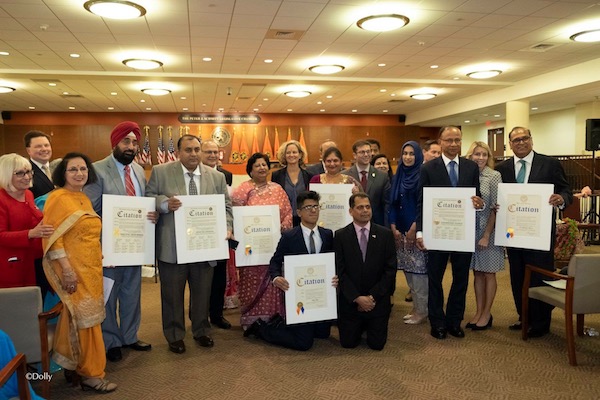
    MINEOLA, NY(TIP):Festival of Lights-Diwali- was celebrated at the Executive and Legislative Chambers of Nassau County, Nov 2. Around 350 guests attended. Dignitaries present included Nassau County Executive Laura Curran, Town of North Hempstead supervisor Judy Bosworth, Councilwoman Anna Kaplan, and Senator Eline Phillips.

    On the occasion,  9 individuals were honored. They included Pinki Jaggi,Vimal Goyal, Krishandra Rudra, Saroj Aery, Pritpal Singh Bindra, Aditya Sehgal, Deepak Bansal ,Kesh Berry and Dr Budhdev Manvar.

    The guests were entertained to an interesting cultural program.

  • Trump praises Indian-American Officials at the Diwali Celebrations in the White House

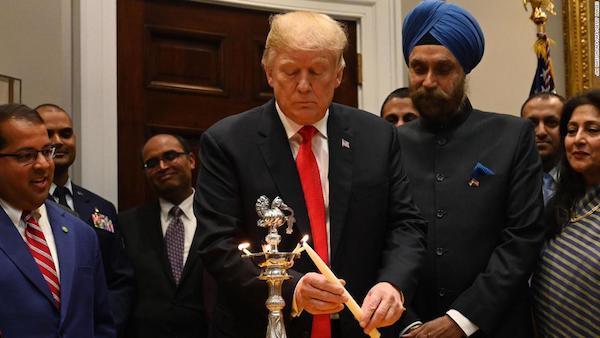
    Trump praises Indian-American Officials at the Diwali Celebrations in the White House

    WASHINGTON(TIP):  Indian Americans were praised by the US President Donald Trump for their “incredible” performance in his administration. Trump has appointed more than two dozen Indian Americans to senior positions since he assumed office in 2017.

    “I’m grateful to have numerous Americans of Indian and Southeast Asian heritage who fulfill critical roles across my administration. And they’ve done an incredible job,” Trump said as he hosted Diwali celebrations in the Roosevelt Room, November 13.

    Except for the former South Carolina Governor Nikki Haley, around two dozen of his top Indian-American lieutenants were present at the celebrations.

    Ms Haley, the first-Indian-American appointed to top Cabinet-level position, resigned last month as the US ambassador to the UN.

    In eight years, former president Barack Obama had appointed more than 50 Indian-Americans to key administration positions, including Raj Shah as United States Agency for International Development administrator; Nisha Desai Biswal as the Assistant Secretary of State for South and Central Asia and Richard Verma as the US Ambassador to India.

    By appointing more than two dozen Indian Americans in key administrative positions, Trump seems to be on the track to breaking the record set by his predecessor.

    “Many of them are here today, including the Chairman of the Federal Communications Commissions, Ajit Pai,” Trump said as he called upon him.

    “Ajit, where’s Ajit? Come here, Ajit. I just didn’t like one decision he made, but that’s all right,” he said as the small audience burst into laughter. “Not even a little bit. But he’s independent,” said the president.

    Seema Verma, who in her capacity as administrator of the Centers of Medicare and Medicaid Services, is playing a key role in healthcare reforms, Trump said.

    “Chairman of the Federal Energy Regulatory Commission, Neil Chatterjee. Where is Neil? Good. Nice to see you,” said the US president indicating that he personally knows each one of these Indian-Americans.

    “The acting administrator of Drug Enforcement, and another person that I’ve become very close to, Uttam Dhillon,” Trump said.


  • Diwali celebrations with diya lights at the New York Empire State Building, Nov 7

    Diwali celebrations with diya lights at the New York Empire State Building, Nov 7

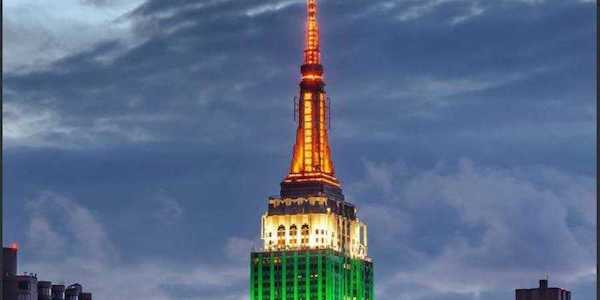
    NEW YORK(TIP): In a historic development, the Federation of Indian Associations (FIA) will celebrate Diwali with diya lights at the iconic Empire State Building in Manhattan, on Wednesday November 7th, 2018.

    The event is being organized by FIA in  cooperation with Empire State Realty Trust. This will be the first time that Diwali celebration up in the sky will be witnessed by thousands of people including tourists from all over the world.

    The organizers, in a press release said, “ We would like to gratefully record here that Empire State Realty Trust and FIA together have already illuminated Empire State Building in each August symbolizing celebration of India’s Independence Day for almost over two decades by selecting vibrant tri-colors on India’s flag – Orange, White and Green. This incredible illumination has won the hearts of growing Indian American community as well as global tourists.

    “These repeated gestures by ESRT indeed helps in spreading ancient Indian Philosophy Vasudhaiva Kutumbakam (The world is one family) and also demonstrates a great harmony in spirit and deeds between the people of world’s largest and oldest democracies in this Nov. 7th Diwali Illumination ceremony. Jay Sean the young popular Indian singer and Miss America 2014 Nina Devuluri with glorify it by their presence and performance besides other invited guests.”

    (Press Release)

  • November 2 New York & Dallas Print Editions

    November 2 New York & Dallas Print Editions

    [vc_row][vc_column][vc_column_text]

    Print Replica ~ Digitally

    E-Editions

    [/vc_column_text][/vc_column][/vc_row][vc_row][vc_column width=”1/3″][vc_custom_heading text=”New York Edition” font_container=”tag:h2|text_align:center” google_fonts=”font_family:Istok%20Web%3Aregular%2Citalic%2C700%2C700italic|font_style:700%20bold%20regular%3A700%3Anormal” link=”url:https%3A%2F%2Fwww.theindianpanorama.news%2Fwp-content%2Fuploads%2F2018%2F11%2FTIP-November-2-NYC.pdf|||”][vc_single_image image=”95197″ img_size=”full” add_caption=”yes” alignment=”center” onclick=”custom_link” link=”https://www.theindianpanorama.news/wp-content/uploads/2018/11/TIP-November-2-NYC.pdf”][/vc_column][vc_column width=”1/3″][vc_custom_heading text=”Dallas,Texas Edition” font_container=”tag:h2|text_align:center” google_fonts=”font_family:Istok%20Web%3Aregular%2Citalic%2C700%2C700italic|font_style:700%20bold%20regular%3A700%3Anormal” link=”url:https%3A%2F%2Fwww.theindianpanorama.news%2Fwp-content%2Fuploads%2F2018%2F11%2FTIP-November-2-Dallas-TX.pdf|||”][vc_single_image image=”95196″ img_size=”full” add_caption=”yes” alignment=”center” onclick=”custom_link” link=”https://www.theindianpanorama.news/wp-content/uploads/2018/11/TIP-November-2-Dallas-TX.pdf”][/vc_column][vc_column width=”1/3″][vc_single_image image=”82828″ img_size=”medium” alignment=”center” onclick=”custom_link” link=”https://www.theindianpanorama.news/advertising-media-kit-portal-indian-panorama/”][vc_single_image image=”82829″ img_size=”medium” alignment=”center” onclick=”custom_link” link=”https://www.theindianpanorama.news/advertising-media-kit-portal-indian-panorama/”][/vc_column][/vc_row][vc_row][vc_column][td_block_ad_box spot_id=”custom_ad_3″][/vc_column][/vc_row][vc_row][vc_column width=”2/3″][vc_custom_heading text=”Lead Stories This Week” font_container=”tag:h2|text_align:center” google_fonts=”font_family:Istok%20Web%3Aregular%2Citalic%2C700%2C700italic|font_style:700%20bold%20regular%3A700%3Anormal” link=”url:https%3A%2F%2Fwww.theindianpanorama.news%2F|||”][td_block_5 limit=”12″][/vc_column][vc_column width=”1/3″][vc_widget_sidebar sidebar_id=”td-default”][/vc_column][/vc_row]

  • DIWALI FESTIVAL AT BAPS HINDU TEMPLE IN MELVILLE, LONG ISLAND

    DIWALI FESTIVAL AT BAPS HINDU TEMPLE IN MELVILLE, LONG ISLAND

    MELVILLE, NY(TIP): On November 8th, the BAPS Shri Swaminarayan Mandir in Melville, New York will be celebrating the Diwali Festival.  The Annakut Thaal will be held at 10:30am, with Murti Darshan from 11am to 7pm, and hourly Aarti starting at 11am and going until 7pm, with dinner to follow. There will be ample parking, so come receive blessings from the Saints for the New Year.  It is a community event to pray, meet and greet and enjoy the food and festivities. So, please come and join us to celebrate our most auspicious holiday, Diwali.

    Diwali, traditionally a five-day celebration of various rituals and Hindu  practices  associated with  each  day, brings  in  the New  Year  for Hindus  and celebrates the triumph of good over evil.  The main celebration is the Annakut  festival.  Annakut, as practiced throughout BAPS Mandirs worldwide, is a unique and awe-inspiring sight of devotion wherein numerous vegetarian food dishes are prepared by devotees and offered to the Mandir’s sacred images. The  events  for children  and  families will  provide  an opportunity  for  community members  to engage with spiritual and cultural themes, thereby bringing positive energy into the New Year, learning  about  scriptural narratives related to  Diwali, and  participating  in rangolis and  other traditional decorations

  • Schools to stay closed in 7 districts of New York state on Diwali day

    Schools to stay closed in 7 districts of New York state on Diwali day

    NEW YORK(TIP): Seven school districts in New York state will reportedly stay closed on November seven, the day of most popular Hindu festival Diwali; while another one has announced “student recess” on November seven.

    Schools in East Meadow School District (Westbury), East Williston Union Free School District (Old Westbury), Half Hollow Hills Central School District (Dix Hills), Herricks Public Schools (New Hyde Park), Hicksville Public Schools (Hicksville), Jericho School District (Jericho), Syosset Central School District (Syosset), will stay closed on November seven (Diwali day); while Port Washington Union Free School District (Port Washington) has announced “student recess” on November seven; reports suggest.

    Hindu statesman Rajan Zed, who has been actively supporting inclusion of Diwali holiday in New York state schools, in a statement, called closing schools on Diwali day by these New York school districts “a step in the positive direction”. He urged all public school districts and private-charter-independent schools in New York state to close on Diwali; as it was important to meet the religious and spiritual needs of Hindu pupils.

    Zed, who is President of Universal Society of Hinduism, indicated that since it was important for Hindu families to celebrate Diwali day together at home with their children; closing schools on Diwali would ensure that and would also display how respectful and accommodating New York schools were to their faith.

    If schools had declared other religious holidays, why not Diwali, Rajan Zed asked. Holidays of all major religions should be honored, and no one should be penalized for practicing their religion, Zed added.

    Zed suggested that all New York state schools, public-private-charter-independent, to seriously look into declaring Diwali as an official holiday, thus recognizing the intersection of spirituality and education. Zed noted that awareness about other religions thus created by such holidays like Diwali would make New York students well-nurtured, well-balanced, and enlightened citizens of tomorrow.

    Rajan Zed urged New York Governor Andrew M. Cuomo, New York State Education Department Board of Regents Chancellor Betty A. Rosa and New York State Commissioner of Education MaryEllen Elia; to work towards adding Diwali as an official holiday in all the 733 public school districts and persuading the private-charter-independent schools to follow.

    Zed states that Hinduism is rich in festivals and religious festivals are very dear and sacred to Hindus. Diwali, the festival of lights, aims at dispelling the darkness and lighting up the lives and symbolizes the victory of good over evil.

    Hinduism is oldest and third largest religion of the world with about 1.1 billion adherents and moksh (liberation) is its ultimate goal. There are about three million Hindus in USA.