Tag: Donald J. Trump

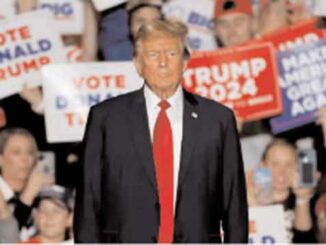
  • Former President Donald J. Trump dominates Super Tuesday

    Former President Donald J. Trump dominates Super Tuesday

    “Former President Trump’s resounding triumph on Super Tuesday marks a remarkable political comeback following a significant defeat in 2020. This situation draws parallels with the victory of India’s late Prime Minister Indira Gandhi in 1980, after facing a humiliating defeat in 1977. It is crucial to acknowledge, however, that although there may be some general similarities, every political scenario is distinctive, with varying contexts, issues, and political dynamics. Comparisons should be approached with caution, taking into account the specific circumstances surrounding each leader’s political trajectory and resurgence.”

    By Dave Makkar

    The Super Tuesday primaries represent the most substantial voting day in the United States, second only to the November general elections. Nearly one-third of all delegates for the presidential nominating conventions are up for grabs on Super Tuesday, surpassing any other single day in significance. Consequently, the outcomes on Super Tuesday serve as a robust predictor of the probable presidential nominee for each political party.

    On Super Tuesday, March 3rd, 2024, former President Trump asserted his influence across America by securing victories in 14 out of the 15 states where Republican Presidential Primaries or caucuses took place. He garnered substantial support, polling over 50-60% in several states and even reaching over 70-80% in others. Ambassador Nikki Haley, Trump’s sole opponent, managed to secure the lone liberal state of Vermont, preventing Trump from achieving a clean sweep on Super Tuesday. Notably, Trump’s 11-point win in New Hampshire marked his narrowest victory since the commencement of the primary season in January 2024.

    The Associated Press was the sole news reporting agency that declared Trump the winner in 14 states shortly after polls closed. Trump led Haley by a substantial margin of three or four to one in certain places.

    India’s Prime Minister Indira Gandhi at an election rally in India in 1980

    REPUBLICAN PRESIDENTIAL CONTESTS in 15 States with 854 DELEGATES at stake

    State-Run Primaries (13): Alabama (50 Delegates), Arkansas (40), California (169), Colorado (37), Maine (20), Massachusetts (40), Minnesota (39), North Carolina (74), Oklahoma (43), Tennessee (58), Texas (150), Vermont (17), Virginia 48).

    Party-Run Presidential Preference Votes and Caucuses (2):  Alaska Caucuses (29 delegates), Utah Caucuses (40)

    Trump, % of votes polled in the winning states: Alabama (83.2%), Alaska (87.6), Arkansas (76.9), California (78.5), Colorado (63.3), Massachusetts (60), Maine (72.8), Minnesota (69.1), North Carolina (73.9), Oklahoma (81.8), Tennessee (77.3), Texas (77.9), Utah (56.4), Virginia (63.1).

    Haley, % of votes polled in the winning states: Vermont (50.2)

    In the run-up to Super Tuesday, the Delegate Counts for the candidates as follows:

    • 1. Donald Trump: 1,044
    • 2. Nikki Haley: 89
    • 3. Ron DeSantis  :9
    • 4. Vivek Ramaswamy : 3

    No other candidate managed to secure any delegates. To clinch the Republican nomination, a candidate requires 1,215 delegates. Given the absence of any opposition to former President Trump, it is reasonable to assume that he is the presumptive nominee for the upcoming Presidential Elections in November 2024 for the Republican Party.

    If a candidate secures victories in 14 out of 15 states during the Super Tuesday Presidential Primaries, and in several of these states, attains an overwhelming majority, winning over 80% of the votes, it denotes robust and widespread support for that candidate among the voters. This performance suggests a strong appeal and resonance with a diverse range of voters across different states. The high percentage of wins in specific states indicates not only success but also a significant mandate from the electorate in those regions. Such outcomes often position the candidate as a frontrunner and establish a formidable foundation for their campaign as they head into the subsequent stages of the election, potentially ensuring their victory in the general election.

    All the pollsters, analytical experts, and mainstream media pundits who had prematurely written obituaries for Presidential Candidate Trump were compelled to retract their statements after the Super Tuesday results. None of these pundits attempted to compose an obituary for Ambassador Haley’s candidacy, funded by Democrats, by drawing parallels to John McCain’s 2012 campaign. Senator McCain sought the presidency based on his qualification of having spent five and a half years as a prisoner of war, a considerable portion of that time in solitary confinement in Vietnam.

    Ambassador Haley’s key argument was her relative youth compared to the Democratic and Republican frontrunners. She emphasized her two terms as governor of South Carolina and her role as the Ambassador to the UN in the Trump administration. However, throughout her campaign, she never articulated specific plans detailing how her presidency would differ from those of past presidents. Therefore, there is no reason to express sympathy for Haley’s withdrawal from the race.

    Former President Trump’s resounding triumph on Super Tuesday marks a remarkable political comeback following a significant defeat in 2020. This situation draws parallels with the victory of India’s late Prime Minister Indira Gandhi in 1980, after facing a humiliating defeat in 1977. It is crucial to acknowledge, however, that although there may be some general similarities, every political scenario is distinctive, with varying contexts, issues, and political dynamics. Comparisons should be approached with caution, taking into account the specific circumstances surrounding each leader’s political trajectory and resurgence.

    However, I can offer some general observations based on historical context:

    • Charismatic Leadership: Both Donald Trump and Indira Gandhi are known for their charismatic leadership styles. They have the ability to connect with a significant portion of the population and rally support around them.
    • Populist Appeal: Both leaders had a populist appeal, speaking to the grievances and aspirations of a broad section of the population. They positioned themselves as champions of the common people and tapped into populist sentiments.
    • Political Resilience: Indira Gandhi faced a significant defeat in the 1977 elections but made a political comeback in 1980. If Trump were to make a political comeback, it would also demonstrate a level of political resilience, overcoming setbacks and regaining popular support.
    • Political Strategy: Successful comebacks often involve strategic political maneuvers. Both leaders might have employed astute political strategies to rebuild their image, connect with voters, and navigate the political landscape.
    • Changing Political Context: In both cases, the political context played a crucial role. Indira Gandhi’s return in 1980 was influenced by changing dynamics in Indian politics. Similarly, any potential Trump’s comeback would likely be influenced by the political landscape at the time.

    Only time will reveal whether the remarkable momentum garnered by former President Trump in contrast to his rival, the incumbent President Biden, will prove sufficient to secure victory in the November 2024 election. The question lingers: will this momentum propel him to reclaim the presidency of the United States, the most powerful country on Earth, for another four years?

    (Dave Makkar is a social activist and a political analyst. He can be reached at davemakkar@yahoo.com)

  • Trump’s Unchallenged Rise: Analyzing His Dominance in the Republican Field

    Trump’s Unchallenged Rise: Analyzing His Dominance in the Republican Field

    By Prof. Indrajit S Saluja

    As the political landscape of the United States gears up for the upcoming 2024 presidential elections, the Republican Party finds itself under the undisputed shadow of one man: Donald J. Trump. The dynamics of the GOP race have proven to be a one-sided affair, with no Republican able to match the charisma and influence that Trump wields. Even formidable contenders like Nikki Haley and long-time adversary Mitch McConnell have had to bow to the overwhelming popularity of the former president.

    The Road to Trump’s Uncontested Dominance:

    The political landscape of the Republican Party has undergone a significant transformation since the tumultuous years of Trump’s presidency. Despite facing impeachment and contentious moments, Trump has retained a formidable grip on the party’s base, solidifying his status as a political force to be reckoned with. The lack of a viable challenger within the GOP has only further highlighted Trump’s influence, and the recent withdrawal of Nikki Haley from the race underscores this dominance.

    Nikki Haley’s Withdrawal:

    Nikki Haley, the former U.S. ambassador to the United Nations, was considered one of the potential challengers to Trump’s hold on the Republican Party. However, her decision to end her campaign reflected the harsh reality that Trump was far ahead in the race. Despite her credentials and experience, Haley recognized the uphill battle she faced against the towering figure of Trump. His loyal following and unmatched popularity within the party made it evident that challenging him would be an arduous task.

    Mitch McConnell’s Endorsement:

    Mitch McConnell, a seasoned politician and a prominent figure within the GOP, has had a tumultuous relationship with Trump. However, even McConnell, known for his strategic political maneuvers, had to concede to the overwhelming support for Trump within the party. His endorsement of Trump highlighted the pragmatic realization that opposing the former president would be futile. McConnell’s move further solidified the perception that Trump is, as of March 8, the de facto choice of Republicans.

    Trump’s Chances of Winning the Republican Nomination:

    Given the current landscape, it seems increasingly likely that Donald Trump will secure the Republican nomination for the 2024 presidential race. The lack of a formidable opponent and the widespread support within the party make Trump the default candidate for Republicans. However, the question remains: What are his chances of winning the presidency if he officially enters the fray?

    Factors Favoring Trump’s Victory:

    Loyal Base: Trump’s unwavering support among the Republican base is a significant advantage. His charisma and connection with his followers have created a fervent and dedicated voter base that remains steadfast in its allegiance.

    Populist Appeal: Trump’s populist appeal resonates with a considerable section of the American electorate. His ‘America First’ approach and promises to prioritize domestic interests strike a chord with many voters who feel disenfranchised by globalization and establishment politics.

    Economic Record: Trump can tout a pre-pandemic strong economy during his presidency. The emphasis on job creation, tax cuts, and deregulation could appeal to voters concerned about economic stability and growth.

    Media Presence: Trump’s ability to dominate media coverage is unparalleled. His provocative statements and unfiltered communication style ensure that he remains in the public eye, a factor that played a significant role in his previous electoral success.

    Fundraising Prowess: Trump has demonstrated a remarkable ability to raise funds, tapping into a network of enthusiastic donors. Financial strength is crucial in modern political campaigns, and Trump’s fundraising prowess gives him a significant advantage.

    Mobilization of Rural and Conservative Voters: Trump has successfully mobilized rural and conservative voters who may feel overlooked by mainstream politics. His focus on issues like gun rights, immigration, and traditional values resonates strongly with these demographics.

    Potential Challenges for Trump:

    Polarization: Trump’s divisive rhetoric has polarized the American electorate. While this approach energizes his base, it also alienates a significant portion of voters who may be crucial in a general election.

    Handling of COVID-19 Pandemic: Criticism of Trump’s handling of the COVID-19 pandemic could be a significant obstacle. While his supporters appreciate his emphasis on economic reopening, opponents may point to perceived missteps in the initial response.

    Legal and Ethical Concerns: Trump’s presidency was marked by legal controversies and ethical concerns. Opposition may leverage these issues to tarnish his image and question his suitability for a second term.

    Age and Health: Trump, born in 1946, would be 78 years old by the time of the 2024 election. Questions about his age and health may arise, especially considering the demands and stress associated with the presidency.

    The Indian Panorama’s Prediction:

    The Indian Panorama, having closely studied the mood of Americans, boldly predicts Donald Trump as the President in 2024. This foresight is grounded in several factors: 

    Historical Precedent: Trump has already demonstrated his ability to defy conventional political wisdom. His unexpected victory in 2016 serves as a precedent for overcoming the odds.

    Populist Appeal: The resonance of Trump’s populist appeal, combined with a lack of a strong, unified opposition within the Republican Party, positions him favorably in the eyes of many voters.

    Party Loyalty: The Republicans’ decision to rally behind Trump, even those who were once critical of him, signifies a unified front that could contribute to a formidable campaign. 

    Public Perception: Trump’s public image, despite controversies, remains resilient among his supporters. His larger-than-life persona continues to captivate a significant portion of the electorate. 

    Policy Continuity: Voters who align with Trump’s policies, especially on issues like immigration, trade, and foreign relations, may see him as a consistent advocate for their values and priorities.

    The dynamics of American politics have always been shaped by the concerns and priorities of the common citizens, and it seems that the everyday struggles of employment, healthcare, education, and social security are taking center stage. In this context, we delve into how Biden’s perceived shortcomings have indirectly contributed to the strengthening of Trump’s position, especially among independent voters who prioritize practical issues over grand geopolitical narratives. 

    Biden’s Lackluster Performance:

    President Joe Biden entered the White House with promises of unity, healing, and an ambitious agenda for the American people. However, as his presidency unfolds, there is a growing sentiment among common Americans that his administration has fallen short in addressing their most pressing concerns. The focus on achieving greatness on the world stage, while commendable, has not resonated strongly with the everyday worries of the average citizen.

    Economic Concerns: One of the primary drivers of discontent is the perceived lack of progress on economic fronts. Despite promises of job creation and economic recovery, many Americans find themselves grappling with concerns about job security, inflation, and rising living costs.

    Healthcare: The global pandemic highlighted the importance of robust healthcare systems. While the Biden administration has made strides in combating COVID-19, concerns remain about the accessibility and affordability of healthcare for all Americans.

    Education: Parents across the nation are concerned about the quality of education their children receive. Debates around school reopenings, remote learning, and educational disparities have heightened these concerns.

    Social Security: The Biden administration’s focus on social justice issues, while crucial, has not entirely alleviated concerns about the broader social security net for the average American. Questions about retirement benefits, affordable housing, and social safety nets persist. 

    Common Americans’ Priorities:

    Amidst the complexities of global geopolitics, the average American’s primary concerns revolve around their immediate well-being and that of their families. The desire for a steady income, access to quality healthcare, opportunities for good education, and the assurance of social security forms the crux of their worries. In this context, the Trump narrative gains traction.

    Steady Income: The promise of economic stability and job growth was a cornerstone of Trump’s previous campaign. Many Americans view Trump as a leader with a business background who can navigate economic challenges effectively.

    Healthcare: Trump’s emphasis on dismantling the Affordable Care Act was a controversial point during his presidency. However, for some Americans, the focus on reducing healthcare costs and increasing choice resonates with their concerns.

    Education: Trump’s advocacy for school choice and local control over education policies appeals to those who believe in a more decentralized approach to improving the education system.

    Social Security: Trump’s approach to economic policies and tax cuts has been viewed by some as a means to stimulate economic growth, potentially benefiting social security programs. 

    Independents: The Deciding Factor:

    While party loyalty remains a powerful force in American politics, the growing number of independent voters presents a unique challenge and opportunity in the 2024 election. Independent voters, not bound by party allegiance, are more likely to prioritize tangible results over political rhetoric. They play a pivotal role in deciding the outcome of an election, especially when party dissatisfaction is evident.

    Trump’s Appeal to Independents:

    Despite legal challenges and controversies surrounding Trump, his appeal to independent voters lies in his reputation as a disruptor. Independents, dissatisfied with the status quo, may be willing to take a chance on a leader who promises a departure from traditional politics. Trump’s track record of challenging established norms and his perceived focus on the everyday concerns of Americans could resonate strongly with this demographic.

    The evolving narrative of the 2024 presidential election reflects a shift in focus from grand geopolitical ambitions to the practical concerns of everyday Americans. While party loyalty remains a driving force, the dissatisfaction with President Biden’s performance has created a space for Donald Trump to reenter the political arena with a strong appeal to independent voters. The concerns of common Americans regarding employment, healthcare, education, and social security have become the focal points, and Trump’s positioning as a candidate who can address these issues has gained traction. As the nation anticipates the unfolding drama of the 2024 election, the dynamics of party politics, independent voter sentiments, and the ability of candidates to connect with the concerns of the average citizen will be decisive factors in shaping the future of the United States.

    (The author can be reached at salujaindra@gmail.com)

  • Hunter Biden Indicted on Tax Charges

    SACRAMENTO (TIP): The special counsel investigating Hunter Biden charged the president’s son late Thursday, December 7, on nine counts stemming from his failure to pay his federal taxes on time on millions in income from foreign businesses, the second indictment against him this year — and the latest development in a case Republicans have made the cornerstone of a possible impeachment of President Biden, The New York Times reported. A grand jury in the Central District of California charged Mr. Biden with three counts each of evasion of a tax assessment, failure to file and pay taxes, and filing a false or fraudulent tax return, according to the 56-page indictment. Mr. Biden “engaged in a four-year scheme to not pay at least $1.4 million in self-assessed federal taxes he owed for tax years 2016 through 2019” wrote the special counsel, David C. Weiss, who first began investigating the president’s son five years ago as the Trump-appointed U.S. attorney for Delaware.

    The charges come after Mr. Biden had appeared this summer to be on the verge of a plea deal that would not have led to jail time and in the view of his lawyer at the time would have granted him immunity for potential crimes stemming from his business dealings. But the deal collapsed at the last minute, and in September he was indicted on separate charges stemming from his failure to acknowledge his drug use when he purchased a handgun in 2018. The new indictment also comes on the cusp of a vote by the Republican-led House to formalize its impeachment inquiry into President Biden, which is based almost entirely on unsubstantiated allegations that he benefited from his son’s lucrative consulting work for companies in Ukraine and China.

    The decision to file criminal charges against the president’s troubled son was an extraordinary step for Mr. Weiss, who was named a special counsel in August by Attorney General Merrick B. Garland after the dramatic last-minute collapse of the plea deal that would have resolved the long-running investigation without Mr. Biden serving any prison time.

    The Hunter Biden case sits at the crowded intersection of America’s colliding political and legal systems. There is now a very real prospect that President Biden’s son will be defending himself in two federal criminal trials during a presidential election year — as former President Donald J. Trump, his father’s likely opponent, confronts two possible trials in his federal documents and election interference cases.

    Republican leaders in the House released draft text of a procedural impeachment resolution against President Biden on Thursday, just hours before word of the new charges started to percolate through official Washington. It is not clear what effect the indictment will have their inquiry.

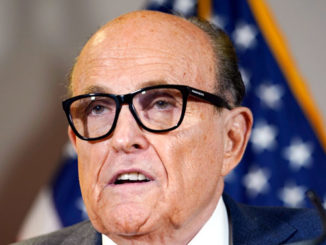
  • Rudy Giuliani’s NY Law License Suspended over Election Claims

    Rudy Giuliani’s NY Law License Suspended over Election Claims

    Attorney Ravi Batra Tweets “Expected and needed. Law abhors lies, and yearns for Truth.”

    NEW YORK CITY (TIP): Former Mayor Rudy Giuliani is suspended from practicing law in New York after court officials found he made numerous “demonstrably false and misleading” claims about the 2020 election. A blistering 33-page decision released Thursday, June 24, bars Giuliani from practicing law “immediately.” It details a trail of outlandish and completely refuted claims Giuliani made on behalf of former President Donald Trump, who sought to overturn his loss in the presidential election. “For the reasons that follow, we conclude that there is uncontroverted evidence that respondent communicated demonstrably false and misleading statements to courts, lawmakers and the public at large in his capacity as lawyer for former President Donald J. Trump and the Trump campaign in connection with Trump’s failed effort at reelection in 2020,” the decision states. “These false statements were made to improperly bolster respondent’s narrative that due to widespread voter fraud, victory in the 2020 United States presidential election was stolen from his client.” The decision reads as a refutation of the so-called “Big Lie” that Trump, not President Joe Biden, would have won the 2020 election if not for massive voter fraud.

    Giuliani, in the days and weeks following the election, spread those false claims far and wide to cast doubt on the legitimacy of Biden’s election, as detailed in the decision. In just one example, Giuliani claimed at various times “that 65,000 or 66,000 or 165,00 [sic] underage voters” illegally voted in the Georgia 2020 election, the decision states. This was debunked by Georgia officials who compared all people who voted in the election to their full birthdays, according to the decision.

    “The audit revealed that there were zero (0) underage voters in the 2020 election,” the decision states. “While a small number of voters (four) had requested a ballot prior to turning 18, they all turned 18 by the time the election was held in November 2020.”

    Giuliani’s claims over the election prompted a disciplinary review by the state’s Attorney Grievance Committee that ultimately led to his suspension. Court officials found Giuliani presented an immediate threat to the public interest, especially as the country is “torn apart” by doubts over the legitimacy of Biden’s election.

    “One only has to look at the ongoing present public discord over the 2020 election, which erupted into violence, insurrection and death on January 6, 2021 at the U.S. Capitol, to understand the extent of the damage that can be done when the public is misled by false information about the elections,” the decision states. “The AGC contends that respondent’s misconduct directly inflamed tensions that bubbled over into the events of January 6, 2021 in this nation’s Capitol. Respondent’s response is that no causal nexus can be shown between his conduct and those events. We need not decide any issue of “causal nexus” to understand that the falsehoods themselves cause harm.”Giuliani’s son Andrew Giuliani blasted the decision in a Twitter video. He didn’t refute the judges’ detailed debunking of his father’s claims, but instead argued the decision itself was a partisan attack.

    “This is going after one of President Trump’s closest allies, that’s exactly what this is,” he said. “And any American that does not believe that they are just biased.”

    By the end, the decision used one of Giuliani’s own statements to justify his suspension.

    “I don’t know what’s more serious than being denied your right to vote in a democracy,” Giuliani said in an election court hearing, according to the decision.

    ” We agree,” the court officials wrote. “It is the very reason why espousing false factual information to large segments of the public as a means of discrediting the rights of legitimate voters is so immediately harmful to it and warrants interim suspension from the practice of law.”

    The Indian Panorama reached out to the eminent attorney Ravi Batra for his comment on the suspension of Giulian’s NY Law license. Mr. Batra shared with the publication his Tweet.

  • TRUMP SHUTS DOWN HIS BLOG AFTER A MONTH BECAUSE SO MANY PEOPLE WERE MAKING FUN OF IT

    TRUMP SHUTS DOWN HIS BLOG AFTER A MONTH BECAUSE SO MANY PEOPLE WERE MAKING FUN OF IT

    WASHINGTON (TIP): Back in March, after Donald Trump was banned from Facebook and Twitter for inciting an insurrection, his spokesperson Jason Miller appeared on Fox News and declared the following: “We’re going to see President Trump returning to social media in probably about two or three months here with his own platform…this is something that I think will be the hottest ticket in social media, it’s going to completely redefine the game, and everybody is going to be waiting and watching to see what exactly President Trump does. But it will be his own platform…. I can’t go much further than what I was able to just share, but I can say that it will be big once he starts. There have been a lot of high-power meetings he’s been having at Mar-a-Lago with some teams of folks who have been coming in, and…it’s not just one company that’s approached the president, there have been numerous companies. But I think the president does know what direction he wants to head here, and this new platform is going to be big and everyone wants him, he’s gonna bring millions and millions, tens of millions of people to this new platform.”

    With a big pitch like that, you might have expected the ex-president to unveil a social network that at least appeared to be more robust than a simple blog on his website but in fact, that’s exactly what Trump’s “return to social media” “with his own platform” entailed. It was called “From the Desk of Donald J. Trump,” and the reason we’re speaking of it in the past tense is because just a month after launching, the ex-president’s blog, where followers could find typically unhinged statements on his burgeoning legal problems, has been shut down. And not just shut down but scrubbed of old posts, depriving supporters of an archive to scroll through during particularly tough times, when they want to be reminded that “almost 75 million” people voted for him (yet he still lost the election).

    Why the sudden departure? While it’s a difficult time for many a media company, according to The Washington Post, Trump closed up shop because so many people were, appropriately, making fun of it. Also, it had almost no readers:

    Trump rolled out the blog last month after being absent from social media since January, but his effort to regain some of the attention he received with his headline-grabbing tweets largely failed. An adviser told The Washington Post’s Josh Dawsey that the former president wanted to open a new “platform” and didn’t like that this platform was being mocked and had so few readers. The individual spoke on the condition of anonymity to talk frankly about Trump’s plans.

    According to Washington Post analysis published last month, posts “From the Desk of Donald J. Trump,” as of mid-May, had been shared to Facebook “on average fewer than 2,000 times a day—a staggering drop from last year, when his Facebook page fielded tens of millions of comments, shares and other interactions every week.” In other words, his blog was a “stone-cold loser,” which you might have thought would translate to hate-clicks but apparently didn’t even do that.

    Of course, ask Miller and this is simply a strategic repositioning and Trump is soon going to be huge again on the internet, or something. In a sad, bullshit statement, he told CNBC: “It was just auxiliary to the broader efforts we have and are working on. Hoping to have more information on the broader efforts soon, but I do not have a precise awareness of timing.”

    As HuffPost noted in its eulogy, “‘From the Desk of Donald J. Trump’ was preceded in death” by many of its siblings: “Trump Airlines, Trump beverages, Trump: The Game, numerous Trump casinos, Trump magazine, Trump Mortgage, Trump Steaks, a Trump travel website, Trump telecom, Trump University, and Trump Vodka.”

    (Source: Vanity Fair)