Tag: Dr. Anthony Fauci

  • The Trump Administration’s Attacks on Freedom of Speech and the Threat to American Democracy

    By Prof. Indrajit S Saluja
    By Prof. Indrajit S Saluja

    The First Amendment of the U.S. Constitution explicitly protects the freedom of speech, ensuring that individuals, journalists, and critics can express their views without fear of government retaliation. However, during the Trump administration, there were numerous instances where these rights came under attack, raising concerns about the erosion of democracy in America. If such actions continue unchecked, the country may find itself slipping further towards oligarchy or even, as some fear, authoritarian rule.

    One of the most glaring examples of the Trump administration’s assault on free speech was its relentless attack on the press. Trump labeled the media as the “enemy of the people,” a term historically associated with authoritarian regimes that seek to delegitimize critical reporting. By constantly branding news outlets like CNN, The New York Times, and The Washington Post as “fake news,” Trump attempted to discredit investigative journalism that exposed corruption and wrongdoing within his administration. His administration even barred certain journalists from press briefings, an unprecedented move that restricted their ability to report on government actions.

    The White House also made direct efforts to stifle critical voices. In 2018, the administration revoked the press pass of CNN’s Jim Acosta after a heated exchange during a press conference. This action was widely condemned as an abuse of power, and a federal judge later ordered the White House to restore Acosta’s credentials. Similarly, Trump’s administration sought to silence whistleblowers who exposed misconduct, including intelligence officials who raised concerns about the Ukraine scandal, which ultimately led to Trump’s first impeachment.

    Trump’s approach to social media was another battleground for free speech. While he frequently used Twitter as a tool to spread misinformation and attack critics, he also attempted to suppress dissenting voices. A federal court ruled that Trump violated the First Amendment when he blocked critics on Twitter, as his account was deemed a public forum. Despite this ruling, his administration continued to promote online censorship in ways that served its political interests.

    Another major concern was the use of federal power to suppress protests. The Black Lives Matter (BLM) protests of 2020 saw some of the most aggressive crackdowns on free speech and peaceful assembly in modern U.S. history. In Washington, D.C., Trump ordered federal officers to forcibly clear Lafayette Square of peaceful demonstrators so he could stage a photo-op in front of a church. The use of tear gas, rubber bullets, and military force against protesters was condemned globally as an authoritarian tactic.

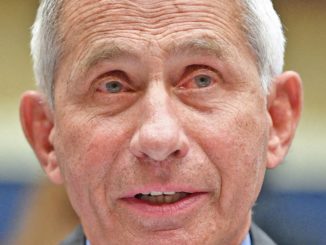
    The Trump administration also targeted government employees and agencies that spoke out against its policies. For instance, the Centers for Disease Control and Prevention (CDC) and other health agencies faced political pressure to downplay the COVID-19 pandemic, leading to censorship of scientific information. Dr. Anthony Fauci, a key expert on infectious diseases, was attacked and undermined for contradicting Trump’s false claims about the virus.

    The Trump administration’s threatened deportation of Mahmoud Khalil, a recent graduate of Columbia University’s School of International and Public Affairs, seems to reflect a dangerous disregard for freedom of expression – a blatant example of official censorship to curb criticism of Israel.

    Khalil holds a green card, giving him permanent residence status, and is married to a US citizen. They are expecting their first child soon. Immigration agents arrested him last week in his university housing and sent him for detention from New York City to Louisiana. He had been a leader of protests against Israeli war crimes in Gaza.

    These actions represent a dangerous trend: a government that seeks to suppress dissent, delegitimize the press, and use state power to silence critics is not a government committed to democracy. Such an approach aligns more with oligarchic rule, where a few powerful individuals control the state and restrict the rights of ordinary citizens. If left unchecked, this pattern of repression could pave the way for a leader who disregards democratic norms entirely and seeks to consolidate power indefinitely.

    A democracy cannot function without an informed public, a free press, and open discourse. The U.S. must take proactive steps to safeguard these principles. Stronger protections for journalists, legal measures to prevent government overreach, and public vigilance against authoritarian tendencies are necessary to ensure that America does not drift further toward oligarchy or, worse, dictatorship. The warning signs have already appeared, and history has shown that once democratic freedoms are lost, they are difficult to restore. The time to act is now.

  • Omicron surge could differ per country: WHO

    Top World Health Organization official says low hospitalization and death rates in South Africa due to the omicron variant cannot be considered a template for how the variant will fare as it surges in other countries.

    Dr. Abdi Mahamud, Covid-19 incident manager at the UN health agency, notes a “decoupling” between case counts and deaths in the country, which first announced the emergence of the fast-spreading new variant.

    He said that in terms of hospitalizations South Africa remains “very low, and the death has remained very, very low.”   But Mahamud says “it cannot be extrapolated from South Africa to other countries, because each is country is unique on its own”.  By its latest count, WHO says 128 countries had confirmed cases of the new variant that first emerged in southern Africa in November, but many other places — which may not have complete testing capabilities — are believed to have it too.

    Mahamud notes that omicron has shown nearly unprecedented transmissibility for a virus.

    He notes a “remarkable increase” in cases in the United States, where “we are seeing more and more hospitalizations coming along”. But he did cite an increasing number of studies showing omicron affects the upper part of the body, whereas other versions devastated lung function and caused severe pneumonia that led to many deaths.

    Mahamud says that could be “good news” but that more studies are needed to get a full picture.

    Hospitalisation figures may better reflect Omicron severity: Fauci

    The number of hospitalisations due to the Omicron variant is a better measure to understand its severity than the traditional case-count of new infections, top US infectious disease expert Dr Anthony Fauci has said. Fauci has joined a growing body of experts who argue that case counts ‘don’t reflect what they used to’, as data suggests Omicron is less severe but more contagious, the Guardian reported.

    However, referring to the Omicron surge in the US as a “tsunami”, Fauci also cautioned the public not to be fooled by preliminary data suggesting the variant lacks the severity of earlier Covid-19 variants, such as Delta.

  • White House defends Dr Fauci over lab leak emails

    White House defends Dr Fauci over lab leak emails

    WASHINGTON (TIP): The White House has defended the president’s top coronavirus adviser, Dr Anthony Fauci, amid scrutiny of his recently released work emails. Dr Fauci has been the face of the nation’s Covid-19 response, drawing both praise and criticism.

    “I’m very confident in Dr Fauci,” President Joe Biden said on Friday, June 4.

    But emails have raised questions on whether he backed Chinese denials of the theory that Covid-19 leaked from a lab in Wuhan.

    A trove of Dr Fauci’s emails covering the onset of the coronavirus outbreak were released this week to media under a freedom of information request.

    Why are people talking about Dr Fauci’s emails?

    In one email sent last April, an executive at a health charity thanked Dr Fauci for publicly stating that scientific evidence does not support the lab-leak theory.

    In an interview with CNN, Dr Fauci said the email had been taken out of context by critics and he had an “open mind” about the origin of the virus.

    In his defense, White House press secretary Jen Psaki said Dr Fauci had been an “undeniable asset”.

    In a daily press briefing on Thursday, she said: “The president and the administration feel that Dr Fauci has played an incredible role in getting the pandemic under control, being a voice to the public throughout the course of this pandemic.”

    Mr Biden reiterated his support after delivering remarks on Friday, when a reporter asked if he still had confidence in the infectious disease chief.

    There is no proof Covid-19 came from a lab, but Mr Biden has ordered a review into the matter that angered China, which has rejected the theory. Chinese authorities linked early Covid-19 cases to a seafood market in Wuhan, leading scientists to theorise the virus first passed to humans from animals.

    But recent US media reports have suggested growing evidence the virus could instead have emerged from a lab in Wuhan, perhaps through an accidental leak.

    What did Fauci tell CNN?

    On Thursday, Dr Fauci maintained there was nothing untoward in an email exchange between himself and an executive from a medical non-profit organization that helped fund research at a diseases institute in Wuhan, the Chinese city where Covid-19 was first reported.

    The NIH, which is a US public health agency, gave $600,000 (£425,000) to the Wuhan Institute of Virology from 2014-19 via a grant to the New York-based non-profit group EcoHealth Alliance, for the purpose of researching bat coronaviruses.

    Peter Daszak, head of EcoHealth Alliance, emailed Dr Fauci in April 2020, praising him as “brave” for seeking to debunk the lab leak theory. “Many thanks for your kind note,” Dr Fauci replied. Dr Fauci told CNN on Thursday, June 3, it was “nonsense” to infer from the email any cozy relationship between himself and the figures behind the Wuhan lab research. “You can misconstrue it however you want,” he said, “that email was from a person to me saying ‘thank you’ for whatever it is he thought I said, and I said that I think the most likely origin is a jumping of species. I still do think it is, at the same time as I’m keeping an open mind that it might be a lab leak.”

    He added: “The idea I think is quite farfetched that the Chinese deliberately engineered something so that they could kill themselves as well as other people. I think that’s a bit far out.”

    The face of America’s fight against Covid-19

    Allies of the US National Institutes of Health (NIH) infectious disease specialist say Dr Fauci’s messages show nothing more than a dedicated public servant navigating the early days of a once-in-a-century pandemic.

    But conservative critics are suggesting Dr Fauci may have engaged in a cover-up, and even claim he perjured himself in testimony to Congress.

    How has the lab leak theory gathered pace?

    According to an investigation in Vanity Fair magazine published on Thursday, Department of State officials discussed the origins of coronavirus at a meeting on 9 December 2020.

    They were told not to explore claims about gain-of-function experiments at the Wuhan lab to avoid attracting unwelcome attention to US government funding of such research, reports Vanity Fair.

    Gain-of-function studies involve altering pathogens to make them more transmissible in order to learn more about how they might mutate.

    The Wall Street Journal reported last month that three employees at the Wuhan Institute of Virology fell ill and were admitted to hospital in November 2019, just before the first reported Covid-19 cases.

    Days later, President Biden instructed US spy agencies to conduct a 90-day review into whether the virus could have emerged from a Chinese lab.

    His administration had previously deferred to the World Health Organization for answers on how the pandemic began.

    Why the lab-leak theory is being taken seriously

    “I would like to see the medical records of the three people who are reported to have got sick in 2019,” Dr Fauci told the Financial Times on Thursday. “Did they really get sick, and if so, what did they get sick with?”

    He called on China to also release the medical records of six miners who fell ill after entering a bat cave in 2012 in China’s Yunnan province.

    Three miners died, and Chinese researchers later visited the cave to take samples from the bats.

    “It is entirely conceivable that the origins of Sars-Cov-2 was in that cave and either started spreading naturally or went through the lab,” he said. Dr Robert Redfield, who led the Centers for Disease Control and Prevention during the Trump administration, told Vanity Fair that he received death threats from fellow scientists when he backed the Wuhan lab leak theory last spring. “I was threatened and ostracized because I proposed another hypothesis,” Dr Redfield said. “I expected it from politicians. I didn’t expect it from science.”

    What has Fauci previously said about the lab leak?

    During congressional testimony on 12 May, Dr Fauci emphatically denied the US had ever funded controversial gain of function research at the Wuhan lab. During a subsequent Senate hearing on 26 May, Senator John Kennedy, a Louisiana Republican, asked how Dr Fauci could be sure that Wuhan scientists did not use the money for gain-of-function research.

    “You never know,” Dr Fauci conceded, while adding that he believed the Chinese researchers were “trustworthy”.

    What’s the other political reaction?

    Former President Donald Trump – widely vilified last year when he raised the possibility that Covid-19 came from the Wuhan lab – said on Thursday that Dr Fauci had a lot of questions to answer.

    “What did Dr Fauci know about ‘gain of function’ research, and when did he know it?” Mr Trump wrote in a statement.

    He added: “China should pay Ten Trillion Dollars to America, and the World, for the death and destruction they have caused!”

    The same day, House of Representatives deputy Republican leader Steve Scalise demanded in a letter that Dr Fauci testify before Congress on the “US government’s role in funding research that may have contributed to the development of the novel coronavirus”.

    China’s foreign ministry last week dismissed the Wuhan lab leak theory as “extremely impossible”.

    Covid-19 is known to have infected some 172 million people, killing more than 3.5 million.

    (Source: BBC)

  • US still ‘knee-deep’ in first wave of coronavirus, says Dr. Fauci

    US still ‘knee-deep’ in first wave of coronavirus, says Dr. Fauci

    Coronavirus  hot spots should pause reopening, not shut down again, recommends infectious diseases expert

    WASHINGTON (TIP): States with spiking coronavirus cases still can contain them by pausing their reopening processes, rather than shutting down a second time, one of the nation’s top infectious disease experts said Thursday, July 9.

    Dr. Anthony Fauci’s comments at an event hosted by The Hill news outlet contrast with what he said a day earlier: that states with a serious coronavirus problem “should seriously look at shutting down.”

    “Rather than think in terms of reverting back down to a complete shutdown, I would think we need to get the states pausing in their opening process,” Fauci, director of the National Institute of Allergy and Infectious Diseases, told The Hill’s Editor-at-Large Steve Clemons on Thursday.

    “If we can do that consistently, I will tell you, almost certainly, you’re going to see a down curve of those infections,” Fauci said.

    On Wednesday, July 8, Fauci told the Wall Street Journal that a second shutdown might be the best move for states struggling with burgeoning coronavirus cases and hospitalizations.

    “I think any state that is having a serious problem, that state should seriously look at shutting down,” Fauci told the newspaper in a podcast.

    He did say Wednesday that simple steps short of full economic lockdowns — controlling crowds, wearing masks and doing a better job at physical distancing — would help.

    The country and some states are setting records for average daily officially reported cases, ICUs in hot spots are reaching capacity, and most states are seeing spikes, recalling the uncertainty of months ago when the virus first broke out.

    Another health expert echoed Fauci’s initial comment about second shutdowns.

    “If you’re not doing the … things we’ve talked about in the past to get this outbreak under control, starting with test and trace … your only option is to shut down,” Dr. Ali Khan, former director of the CDC’s public health preparedness office said.

    Climbing case numbers have motivated many states to pause or roll back plans to reopen economies after widespread shutdowns in the spring.

    The US reached more than 3 million coronavirus cases this week, according to data from Johns Hopkins University. At least 33 states as of Thursday morning have seen an upward trend in average daily cases — an increase of at least 10% — over the last week.

    Some states have recently reported alarming rates at which people are testing positive: 28% in Arizona; 26% in Texas; and 19% in Florida, according to The Covid Tracking Project.

    Previous recommendations for reopening economies, expressed by the CDC, called for test-positivity rates of no greater than 20% just to reach first-phase reopenings, and less than 10% for fuller reopenings.

    The country still is reckoning with job losses from the first stay-at-home orders. Though millions of jobs have come back, 18.1 million Americans currently are on continued unemployment claims, meaning they filed at least two straight weeks, the Department of Labor said Thursday, July 9.

    And more than 3 million Americans appear to have lost jobs that aren’t coming back any time soon, economists say.