The conflicts we have in society, among family members, communities, Republicans, and Democrats, are because we don’t listen to each other. Whether we agree or disagree, at least we must know and value different points of view. We were searching for information about Pluralism and came across the site Center for Pluralism, which defines Pluralism as “Respecting the otherness of the others in religion, politics, society and the workplace.” Jainism calls it Anekantavada – “No-one-perspective-ism,” resisting philosophical dogmatism and recognizing the good qualities of many different points of view. The Quran teaches how to conduct civil dialogue respectfully and never undermines the value of other religions, and it says in verse 109:6, “You have your religion, and I have mine.” Indeed, almost all religions have similar teachings; the analogy would be, “My mother is dear to me as yours is to you” There are no arguments about that, so should be the arguments about religions.
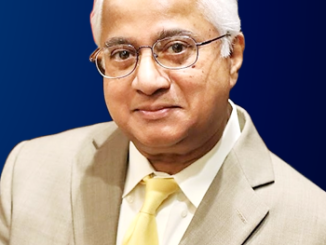
We came across an article, “Poisoning your kids,” and reached out to Dr. Mike Ghouse, founder and the president of the Center for Pluralism. We asked him about how he raised his children. Ghouse said he took his children to different places of worship to familiarize them with other religions and cultures. He did not want his kids to grow up to be bigots. He adds, “If my kids were to run for a public office, they would have a smooth sail, as they are not biased towards any American.”
Ghouse’s daughter asked questions at every place of worship; she would nudge him and ask, “Dad, what are they saying?” Realizing that a six-year-old will not get the whole meaning, he would filter it into a six-year-old’s language and say, “Sweetheart, they are saying God is great, parents are great, and we must thank them for the food, clothes, home, and good life.” This nudging and explaining business went on at every place of worship.
Ghouse continued, “Finally, at the DFW Hindu Temple, Ekta Mandir in Irving, Texas, we were chanting the bhajans in the sanctuary along with some 50 others, the nudging came, and my standard response went out. She screams in the middle of the hall, “Gee, Dad, God can be worshipped in so many different ways,” to thunderous applause. That is Pluralism in religion, as we understand it. Cultural Pluralism got currency after the 9/11 tragedy. When a few troublemakers were throwing epithets at the Sikh Turbans, Muslim women’s Hijab, Arab dresses, and other wears, we did not have the proper education then. Every human being wears something or the other on their head to cover from heat, sandstorms, rain, snow, or for other reasons. The type of cover evolves out of the material availability, environment, and culture. None is inferior or superior. They all serve the intended purpose.
We loved the statement on their site, “If we can learn to respect the otherness of the others and accept the God-given uniqueness to each one of us, then conflicts fade and solutions emerge.”
We asked him where the mingling of races, faiths, and ethnicities would lead to?
Dr. Ghouse replied, “Ten years from now, wherever you go, be it a place of work, worship, playground, school, bus, train, restaurant, theater, or other public gatherings, you will find a display of diversity in every which way. You will also see people of different faiths, races, and ethnicities interacting, working, studying, intermingling, playing, and marrying each other. “These interactions lend to misunderstandings and are bound to create conflicts. As responsible members of the society, we must prevent such conflicts so that each member can live securely with their faith, culture, gender, race, sexual orientation, or ethnicity.”
The website mentions its mission: “The Center for pluralism is committed to building cohesive societies, a society where every human feels secure about one’s uniqueness, whatever that might be.”
By Dr. Mike Ghouse (Photo: courtesy Boston Globe and the Atlantic)
Ramadan is also known as Ramzan in South Asia and Hari Raya Pauso in Indonesia which has the largest Muslim population in the world. Indeed, about 50% of the world’s Muslims (800 million) live in South and Southeast Asia. The Eid (pronounced like Eel with D) also known as festivities will be on Monday, May 2, 2022.
Whether you are an Atheist, Baha’i, Buddhist, Christian, Hindu, Jain, Jewish, Native American, Pagan, Shinto, Sikh, Wicca, Zoroastrian, or from any other tradition, you may feel a sense of connection with the spirit of Ramadan as you read through it.
There is a cause or a causer (Brahma) who created the universe to come into existence, sustain (Vishnu) and recycle (Shiva) it, and the word for that causer is “God” in different languages (or faiths). There (she/ it) cannot be different causers for the same universe. No matter how and what name you call upon him –he is one. The physical aspect of the human journey from the sperm and an egg through death is programmed precisely. The formula is the same for all humans, and there is no such thing as a Christian, Jewish, Hindu, Sikh, or other genes.
When the universe came into being; the two products were Matter and Life. The matter functions precisely as designed, like the Sun, Jupiter, Earth, or the Moon playing their part. On the other hand, humans’ interactions are not pre-programmed; they have complete freedom, guidance (religion), and intelligence to create their balance to live securely and in relative harmony.
Rituals are a part of every Religion
You may note that identical spiritual wisdom emerges in different parts of the world simultaneously. The best example is how a mother figures out what to do with her crying baby in the jungles of Amazon or Hollywood; she knows the child is hungry and needs to be fed.
Rituals are a part of our everyday life – when we get up in the morning, go to the office, have dinner, wear clothes, and go to the gym or visit a place of worship, we follow certain rituals. They are the milestones of our accomplishments in our lives.
They say, beauty is in the eyes of the beholder, and I would say faith is in the heart of the believer, and every religion is dear to its believer. Religion is like a mother who is dear to each one of us.
Religions were established to create cohesive societies where each one of the members of the community feels secure about their faith, race, ethnicity, culture, or other uniqueness. Religion is never the problem; it is the individual who doesn’t get his religion is the problem.
RAMADAN IN THE LIFE OF A MUSLIM
Ramadan is the 9th month of the Muslim calendar, and it begins with the Moon Sighting. Here comes the politics of Ramadan. One group insists that they have to see the Moon themselves, while the other accepts if someone else has seen it. In the United States, most Muslims go by Nasa’s calendar so they can plan the festivities. However, it is a joy to wait and watch for the pencil-thin Moon to appear in the sky. Parents place their kids on their shoulders, and kids get excited to watch that Moon from the top of their parent’s shoulders.
Chandni Raat
When one sees the Moon or hears an announcement, they dash to the marketplace to shop and celebrate. It was initially a South Asian tradition but has become universal. It is like shopping for Dussehra, Rosh Hashanah, Christmas, and other festivities.
Special Ramadan Prayers
Muslims observe diverse practices – Special Prayers called Taraweeh are prayed in the late evening, followed by nightly prayers called Isha. Taraweeh is usually performed in a congregation, generally a Mosque or a large hall. Most Muslims pray, 20 to 22 units of prayers; some pray fewer, and some don’t. They complete reciting 30 chapters of the Quran in 30 days (or 29).
The Night of the Power known as Laylat al Qadr
Laylat al Qadr is also known as Shab-e-Qadr and is considered one of the mighty nights during Ramadan. It was the night God first revealed the words of the Quran and concluded and completed it in the last ten days of Ramadan over 23 years.
Shia Muslims consider the 19th, 21st, or 23rd of Ramadan as the most critical nights, while the Sunnis and Ahmadiyya look up to the odd days in the third part of the month.
A TYPICAL DAY IN THE LIFE OF A MUSLIM (Times are approximate)
4:00 AM
The entire family rises in the morning, and together they prepare the food for Sahri/ Suhoor – the meal before fasting. My family had a routine; I would chop the onions, my sister would flatten the dough to make Rotis (flatbread), one brother would wash the dishes, and the others would sit around and talk. My mother would sit by the stove (Chula), and my father would make sure all the ingredients were available. It is a family affair and brings families closer. I am sure, it is nostalgic to most Muslims. Food habits vary from region to region; we made Rotis (Flatbread) with Subzi and Keema (minced meat) and Rice with Daal (Lentil) or Goat Curry and capped it off with a good cup of tea or lassi. The cut-off time to stop eating is about 30 minutes before sunrise or around 5 AM- depending on time zone to time zone.
5:30 AM
It is time to pray! It is called “Fajr Prayer” the first of the 5 daily prayers. We pray together as a family or go to the mosque if it were near.
6:00 AM
Sleep for a few hours (Ramadan only) and go to work. A few choose to study the Quran in a group called Halaqa. This is a month of reflection and connection with family members.
1:30 PM
The prayer in the afternoon called “Zohar” is followed by the one in the late afternoon”Asr”. One can pray individually, but a congregational prayer is a good option. Remember, it is about bringing the communities together. The Shia Muslims usually combine two prayers and the Sunnis and Ahmadi do it one by one.
6:30 PM – IFTAAR
Iftar is breaking day-long fast.
Sunset – some follow the times prescribed for the evening, and some keep looking at the sky (if it is a clear sky) to see the sunset. I like this ritual, life does not have to be functional or mechanical, it has to be a joy.
A prayer call (Azan) goes out at sunset; while the Sunnis and Ahmadi Muslims take the first bite of the date fruit and sip some water, the Shias will wait until after the prayer.
Since the observers have not had anything to drink or eat for the whole day, they will start with fruits and light snacks and let the stomach get ready for the entire meal after the evening (Maghrib-4th of the 5) prayers. It is a thoughtful process.
Did I tell you Muslims abstain from everything from water, food, ill-talk, ill-thought and ill-conversation, and every temptation that comes their way? Of course, I did. Fasting is a learning process to bring self-discipline. It is suitable for all, particularly for procrastinators, smokers, alcoholics, or any addictions or unpleasant habits.
Iftar Parties
Muslims invite their non-Muslim friends to join them for the Iftar parties. The parties are community-building events. An entire range of foods is available to eat. Indian Muslims offer vegetarian and non-veg foods (Hindu and Jain) to honor their guests. Originally, the Iftar was to help the poor people join the community and be a part of it, but like all other religions, it is for friends, politicians, and community members, you’ll find very few poor people. I wish it changes; they deserve to eat a good meal.
In a given Mosque, you will find Muslims from at least 20 to 30 countries, and as such, the variety of dishes increases by number. Biryani (Vegetarian for Hindu and Jain friends, Goat Biryani for all others) Biryani is the King of South Asian cuisine, and Naan, Keema, Korma, Rooh Afza, Sweet Lassi, Mango Lassi, and Gulab Jamun are on the plates. One universal item consumed worldwide is the dessert made out of vermicelli; the South Asians call it Seviyaan, and the Shir Khurma is very popular it has chipped Almonds, Raisins, crushed cashew nuts, and other dry fruits. I love to drink in a teacup. If you have not tried it, try it once.
Politicians and corporations also organize the Iftar parties. The tradition was started by President Bill Clinton and carried through President Obama, and we hope Biden will re-start it. There is no religious tone to it, it is purely a social and community affair.
LAST DAY OF RAMADAN
On the evening of the 28th or 29th day of Ramadan, everyone is out looking for that Pencil thin Moon again; once an announcement comes out, celebrations begin. Chand Raat (Moon Night) opens up, and people go shopping; it is like shopping on the last day of Christmas, Rosh Hashanah, Diwali, or other festivities. It is a good tradition of excitement and joy for successfully observing the entire month of Ramadan dutifully.
Children and adults paint Mehendi (henna) on their hands with various designs. They look forward to it. Typically, new clothes are worn on Eid (pronounced Eed – like an eel with a D) as our Hindu friends wear on Diwali.
Zakat
Every Muslim takes out 2.5% of his/her wealth and passes it on to the needy. Most people pay in advance, but as usual, some pay on the last day, like we file our IRS tax returns on April 15th. Zakat is one of the five obligatory duties of a Muslim.
Eid- the big celebration
Everyone in the family gets up in the morning, and it is the dawn of a new era. Eat breakfast and go for the mass or congregational prayers, also known as Jamaat. Since a Mosque cannot accommodate all the people in the area, they rent convention halls or big banquet halls. Dallas, Texas is my hometown, and the community rented the Convention Center, where some 20,000 people (some ten years ago) gathered for the congregational prayers. Yelahanka, my town, and perhaps in other places, they all go to the cemetery grounds, where they have a dedicated place made for Namaz (prayers). Generally, the Eid committee arranges the long mats to be spread on the floor, and some people carry their own personal prayer rugs.
It is the day to celebrate and includes forgiving each other and starting afresh by hugging three times. My interpretation of the three hugs is “forgive me,” “I forgive you,” and “Let us forgive each other” and begin the relationship afresh. The Jains say “Michami Dukkadam,” meaning, let’s forgive each other and start the new year with a clean slate. In the late ’70s, Amitabh Bachchan, Rajesh Khanna, Asrani, Mehmood, and other Bollywood actors participated in Eid prayers in Yelahanka, my town of birth, a suburb of Bangalore. Comedian Mehmood lived a mile or two from the grounds and brought those movie stars to the prayers in his tractor. The movie stars enjoyed the different ways one can worship the creator.
Praying for the deceased
It’s like Memorial Day, almost every Muslim visits the cemetery to pray for their loved one buried there. You will always find yourself connected to them. You can pray for them from anywhere, and on this day of joy, you feel their absence even more. Every time I have been to the cemetery, I pray for my parents, family members, and friends, and invariably I cry. I love the Muslim universal prayer, which seeks forgiveness for all humanity and is recited when you depart from the cemetery. It is a good feeling to reflect on life and death, it makes you a better human.
EIDI
It is a gift you generally present to kids and family members as we do during Christmas, Diwali, and other holidays. Traditionally the head of the household, man or woman, presents the gifts to the family members; it is usually cash to spend. During my childhood, my father gave me one Anna (like 25 Paise), my friend and I dashed to the store behind our home and drank Orange Soda which was half Anna. That was the greatest pleasure we had.
Eid Parties
It is usually an open house for families, friends, and community members to visit for lunch. A typical family visits at least three homes and of course the practices vary from Muslim to Muslim. Back in India, and I am sure in other nations, we walked from home to home, but in the US, we drive to at least three homes.
Exceptions:
Fasting is exempt for individuals with diabetes and other difficulties, pregnant women, and even people traveling. If you miss it, you have the option to make it up.
Prophet Muhammad (PBUH) said that God has no need for the hunger or thirst of someone who hurts others, violates their dignity, or usurps their rights. The fasting of the limbs must match the fasting of the stomach. The eyes, ears, tongue, hands, and feet all have their respective fasts to undergo. For example, the tongue’s temptations — lies, backbiting, slander, vulgarity, and senseless argumentation — must be curbed to maintain the integrity of the fast.
The consciousness of behavior and vigilance over action are the most profound dimensions of fasting: the heart’s fasting focuses on the attachment to the divine. Ramadan becomes a source of peace and solace, just as Christmas, Rosh Hashana, or Dussehra go beyond the rituals to bring forth kindness, charity, and caring.
True fasting is self-purification. From this comes a rich inner life that brings about values such as justice, generosity, patience, kindness, forgiveness, mercy, and empathy — values that are indispensable for the community’s success.
Knowing about hunger is different from knowing it. Empathy is not an intellectual equation; it is a human experience. Our hardness of heart often springs from our distance from the human condition of others. The poor, sick, disenfranchised, oppressed — we rarely walk a mile in their shoes, not even a few steps. “Rest assured,” cautioned one teacher, “if you do not taste what it feels like to be hungry, you will not care for those who are.”
Ramadan will come and go with such stealth; what do we value, and why? We can change our habits and customs, including obsessive behavior, in the face of a higher calling.
Fasting imparts a sense of what it means to be truly human. Its observance reflects its universality in Baha’i, Buddhist, Christian, Hindu, Jain, Jewish, Sikh, Zoroastrian, and other faiths. For fasting to be truly universal, its benefits must extend beyond the fraternal ties of Muslims and must extend to forging a common humanity with others. Let the spirit of Ramadan develop an understanding and respect for each one of God’s creations – that is, all of humanity.
The most common greetings of the Ramadan festival are Ramadan Mubarak, Eid Mubarak, and Ramadan Kareem, and then there is variation depending on the language you speak.
(Dr. Mike Ghouse is Social Scientist, Public Speaker, thinker, author, newsmaker, and an Interfaith Wedding Officiant. He is deeply committed to Pluralism in Religion, Politics, Societies, Human rights, and religious freedom. He is the founder and president of the Center for Pluralism, Director at the World Muslim Congress, a think tank, and a wedding officiant at Interfaith Marriages. His new book American Muslim Agenda is available on Amazon, and “Standing up for others” and “Madame President” are coming soon. He is committed to building cohesive societies and offers pluralistic solutions to issues of the day. His mission is to open people’s hearts and minds toward fellow humans. More about him at TheGhouseDiary.com)
14th Annual Couples’ Choice Awards Honor the Top Wedding Vendors Nationwide and Abroad.
Interfaith Marriages Named Winner in 2022 WeddingWire Couples’ Choice Awards®
TIP Bureau
WASHINGTON, D.C. (TIP): Interfaith Marriages was announced as a winner of the 2022 WeddingWire Couples’ Choice Awards®, an accolade representing the top wedding professionals across the board in quality, service, responsiveness, and professionalism reviewed by couples on WeddingWire, a leading wedding vendor marketplace. To determine these distinguished wedding professionals, WeddingWire analyzed reviews within its Vendor Directory across more than 20 service categories—from venues and caterers to florists and photographers—to find the most- and highest-rated vendors of the year. The winners exhibit superior professionalism, responsiveness, service and quality when interacting with the millions of couples who turn to WeddingWire to help with their wedding planning process each month.
Wedding professionals who win WeddingWire Couple’s Choice Awards® are members of WeddingPro, a leading B2B wedding brand. A marketplace and community for wedding professionals, WeddingPro connects businesses with more than 13 million unique monthly visitors who are planning weddings on WeddingWire and The Knot, as well as with hundreds of thousands of pros in the industry. Through its online marketplaces, educational programs and community-building events, WeddingPro is dedicated to helping wedding professionals build relationships with couples and pros that grow their businesses. Interfaith Marriages is honored to be one of the top vendors in Officiant in Washington on WeddingWire. F visit www.weddingwire.com/couples-choice-awards
About Interfaith Marriages
Interfaith Marriages is a wedding officiant service based in Washington, DC. Dr. Mike Ghouse, the company’s owner, is a member of the American Marriage Ministries who specializes in marrying couples of different religions. He adopts an open approach to creating ceremonies by blending each partner’s traditions, whether they are Muslim, Jewish, Christian, Buddhist, Hindu, or non-religious. Mike believes in curating a meaningful experience for all couples who are committed to one another.
Services Offered
Interfaith Marriages is dedicated to curating memorable nuptials that celebrate the love shared between two PRESS RELEASE partners. Mike’s process begins with a consultation where he can learn about the couple and their story, religious backgrounds, and vision for their ceremony. He is happy to incorporate special readings, blessings, or traditions into the nuptials, or create something completely unique. Before the wedding day, the future spouses can finalize any details they would like to include in their service.
Mike Ghouse says: “Marriage is the most important milestone of your love relationship; indeed, it expresses a commitment to the connection between you two. When you take the bold step to become one regardless of your origins, faiths, races, cultures, and ethnicities, you must be appreciated and applauded. You are setting a new standard on how to live-in harmony despite your inherent differences. You are practicing genuine pluralism, i.e., respecting the otherness of the other and accepting the given (God/Nature) uniqueness.
Marriage is a union of two individuals for happiness and harmonious living.
“Every living organism has a built-in GPS that brings two individuals together, and from a religious perspective, it is the creator who puts love between two individuals.
“I am blessed to have officiated secular and religious ceremonies incorporating both the couple’s traditions with their respective input and final approval. Whether it is Jewish-Christian, Hindu-Christian, Bahai-Jewish, Hindu Jewish, Atheist-Jain, or other combinations, the bride and groom and their families feel elated and enjoy the sense of marriage in full.
“As an Indian American, it has been my pleasure to have officiated weddings amongst Hindus, Christians, and Muslims in various combinations. We can customize the wedding with the bride and groom’s input, including their family traditions.”
Congratulations to Interfaith Marriages for winning the award, and we decided to interview the winner and what is behind it. Interfaith marriages are becoming common, people from different faiths are marrying each other, and they are finding it difficult to find clergy to officiate the wedding, as they insist on converting the other. Given this situation, we found it interesting that there are organizations that are officiating such weddings.
We sat down with Dr. Mike Ghouse, the wedding officiant with InterfaithMarriages.org, and had this conversation.
Dr. Mike Ghouse, wedding officiant with Interfaith Marriages.org
How do you get the parents to agree to get their kids married without converting?
Ghouse responded, “As a Pluralist, I believe all religions are beautiful and are designed to create secure societies for every living being. The idea of converting the other assumes that the other’s faith is somehow less than yours, and that is wrong. No faith is superior to the other, each faith does its work for its believer. We talk about the essence of both their faiths and when the parents see the essence is the same but rituals are different, they lean towards the idea of interfaith marriage and we go from there.”
What is your most rewarding wedding?
“The most joyous wedding was in Dallas, Texas, where a Christian father disowned his son for wanting to marry a Hindu girl, he was adamant that the girl convert and the girl did not want to convert. The father had refused to see his son for three months and I gave him a call, gradually we were mitigating his no-way stance to a possibility. After two weeks of conversation, I casually mentioned to him that I will be invoking the name of Jesus at the start of the ceremony and closing it in the name of Jesus. He could not believe it and asked me if I really meant it and I said, I did. I invited him to the wedding, he came, and did not want to come inside, but was peeking from the door. When I closed the ceremony, in the name of Jesus, may you be blessed?” He dashed in the door, gave me a hug, and then hugs his son and the new daughter-in-law. They really started celebrating. I felt so happy. However, they did not pay the honorarium, nor did they pay for the food I had arranged for them.”
Keep up the good work of uniting and bringing happiness into the lives of people. We are all cheerleaders for you. Dr. Mike Ghouse.
(Dr.Mike Ghouse is President of Center For Pluralism and lives in Washington, D.C. He can be reached at (202) 290-3560 (office) and (214) 325-1916 (cell)
More about Dr. Ghoue at www.CenterforPluralism.com )
(Photos : Courtesy Mohammed Akbar and Afzal Usmani)
The Aligarh Alumni Association of Metro-Washington (AAA-DC) organized a picnic on 11th July 2021 at the Black Hill Park, Montgomery County, Maryland. It was an impressive and successful show. The sight of so many friends, long separated by the pandemic, getting together once again after two miserable years, was a pleasant surprise.
Black Hill Park has an interesting history. A group of Union soldiers from California discovered flecks of gold in the sand near their camp at Great Falls while washing their dishes. They did not tell anyone about their find at the time but came back to the area after the war and quietly acquired the land and formed the Maryland Mining Company. The company never found much gold and the property changed hands, and ultimately a family in the late 1940s made it Black Hill Farmland named after the Black Hills of South Dakota, famous for its gold mines in the 1870s. The owner filled in all the holes, except for one, which he turned into a bomb shelter. The local Montgomery County purchased it in 1965 and opened it to the public. The Park has more than 2,000 acres of land for outdoor recreation with spectacular views of Little Seneca Lake from the many picnic shelters, volleyball courts, playgrounds, and trails. There are over 20 miles of hard and natural surface trails for hiking, mountain biking, and horseback riding. This trail includes a fitness station.
The AAA-DC is the first Aligarh Alumni Association in North America. Since 1975, it has been serving the literary, cultural, social needs of the South-Asian community. The association has provided huge financial support for the educational upliftment of the community at the university and various secondary institutions in different parts of the country. During pandemic, it raised a significant amount of money to provide financial help to needy families. It is credited with the establishment of a tradition of annual Mushaira in the continent and almost all iconic poets from the subcontinent, Europe, and North America have graced and participated in its annual mushaira. Even the pandemic could not break the tradition; it organized an international online mushaira, in 2020, using modern audio-visual electronic techniques.
The annual picnic is an eagerly awaited annual event where people drawn from Indian, Pakistani, and Bangladeshi communities get an opportunity to strengthen their bond and enjoy the food, literary exchanges, games, and share information about families. The picnic was not held last year due to pandemic restrictions. Following CDC guidelines, people who were fully vaccinated and deemed to be relatively safe decided to gather for a picnic.
Despite hot weather, more than 90 people came to the picnic and enjoyed the hospitality offered by the association. Children especially were very ecstatic about the newfound freedom to run around. There were limitless supplies of grilled chicken and meat patties, corn on the cob along with several homecooked food dishes, watermelon, ice cream, and of course hot tea.
Professor Indrajit Saluja (Chief Editor, The Indian Panorama) mingled easily with other attendees. He expressed his deep love for two prime universities in India—the Aligarh Muslim University and the Banaras Hindu University, both universities have made great contributions towards the cause of education in India. The Maulana Azad Library is the finest library he had visited in India. Professor Saluja and Bhai H. S. Singh came to the picnic at the invitation of the association.
Dr. Badruddin Khan—a senior Alig came to picnic with his family from New York City to renew their friendship with old friends. Another invited guest, Professor Marghoob Ashraf also expressed his joy by mingling with old friends from the Alig community.
“What a wonderful gathering we had. It was a delight to be there and meeting friends, and of course, enjoyed the delicious food’, said Dr. Mike Ghouse, President of the Center for Pluralism.
Dr. Abu-Saleh Shariff (Executive Secretary, The Justice Sachar Commission) and family, who are relatively new to the town and were impressed with the quality of hospitality, informal atmosphere and friendly culture fostered by the association.
Although Lalit K. Jha (Chief Correspondent, the Press Trust of India)—also an invited guest was late in arrival, he appreciated the warm welcome and personal interactions with other people.
An experienced Aligarh Alumni Association worker from Chicago, Dr. Ateeq Ahmad came to this picnic with his wife (Dr. Hina Nazli) to meet his longtime friends from Aligarh and partake in AAA-DC hospitality.
“I have been coming to AAA-DC picnic regularly and this year’s event was a pleasant surprise, especially encouraging was to see so many younger faces participating enthusiastically,” said Nuzaira Azam-founder-president of the Global Beat Foundation.
Tabish Hasan Khan, a Postdoctoral Research Associate from University of Virginia School of Medicine (Charlottesville) and Dr. Prabhat Pandey (New Jersey) stated that it was their first experience of AAA-DC picnic, and they were impressed with the gathering and high-quality arrangements.
Dr. Badar Shaikh (FDA scientist) enjoyed the delicious BBQ and other food items. “Although we were not members, it sure was a pleasure and refreshing to see many friends and acquaintances after a long shut-in due to pandemic. Our congratulations to organizers for doing an excellent job,” he added.
Many members from other community organizations like the University of Karachi Alumni Association, Indian American Muslim Council, Montgomery County Muslim Council, and Hyderabad Association Metropolitan Washington Area also expressed their joy and the chance to interact freely with attendees.
President Mohammed Akbar welcomed the guests, especially those who had traveled from out of town. Secretary Mohammed Jaweed thanked all guests and the families who brought delicious food and other items to make the event successful. The association expressed deep appreciation to young men who managed grills and did the cooking on-site during this hot weather.
(Report prepared by Zafar Iqbal, Ph.D. He can be reached at raabta.india@gmail.com / (240-328-0162)
Middle East Peace Plan – Justice to Palestinians and Security for Israel
It is time we work for the security of Israel and Justice to the Palestinians. We have to take bold steps to bring about peace in the Middle East.
The United States can become a peacemaker if it votes with the world for the Israeli leaders to act according to the norms established by the United Nations. 191 Countries out of 195 pass resolutions in the United Nations against Israel’s reckless actions, and the United States Vetoes it in the security council. It amounts to slapping hard on the face of 191 (98%) Nations. Israeli leadership (not Israeli people) gets away with the violations that others don’t, resulting in resentment towards Israel.
It is in the interests of Jews around the world to speak up against the conflict between Palestinians and Israelis. Every action taken by Netanyahu provokes the people around the world to be agitated against Israel, which is incorrectly dubbed as Anti-Semitism.
It is disappointing to hear the President and the Secretary of the state justifying the Israeli retaliation against Gazans as “Israel has a right to defend itself,” without giving the same right to Hamas. Had Israeli soldiers not desecrated the Holy Mosque Al-Aqsa, Hamas would not have lobbed the rockets. It pains me to see the Israeli soldiers defile the Mosque and Biden administration justify it.
As an Indian American, I recall the violations by Prime Minister Indira Gandhi by defiling the Sikh Holy Place, the Golden Temple in Amritsar, India. It followed by her assassination leading to the genocide of over 3000 Sikhs in a few days. I feel their pain; hundreds of parents are still waiting for accountability of their children.
Netanyahu is creating anger amongst the Palestinians by his uncouth policies; he is also causing 98% of the world to resent his actions on behalf of the Jewish people.
Long term solutions that will bring security and peace to Israelis and Palestinians.
It is time we bring absolute security to Israel and Justice to the Palestinians. Shame on all of us for dumping our problems onto the next generation as we have done for the past three consecutive generations.
Recognize Hamas as a duly elected government of the people of Gaza. Had President Bush acknowledged their legitimacy and invited them to the conference in Annapolis in 2006 with the Palestinian Authority and Israel, they would have been a part of the team for peace building. Instead, Bush made a big mistake by excluding Hamas, the critical party to the dialogue. They would have been a part of the civil society, and solutions would have come through. We condemned them as a terrorist organization, and they became one. It is time to reverse the course and correct the mistake.
Immediately appoint an Ambassador to establish a US Embassy to Palestine in Gaza or East Jerusalem. Then ask the American Ambassadors to Palestine and Israel to cease the hostilities. It is in our interest to do so. We have lost many nations from our orbit, and we should reverse that before they go into Russian or Chinese influence.
Invite the Israeli, Gazan, and Palestinian leaders to a summit, and do what President Carter successfully did, lock them up (as he did with Begin and Sadat) in a room until they came out with a peace plan.
Get the United Nations to pass a resolution to punish any nation or a group who bombs the civilians or defiles the sanctity of any holy place from here forward. Let’s rebuild a wall around the Al-Aqsa compound and place United Nations forces to protect it until we build cohesive relationships between the residents of Jerusalem.
Rebuild Gaza and invest in their prosperity; they have plenty of talent. When people have hope to live freely, they will become benevolent to the community of nations.
Match the $3.3 Billion in aid to Israel to invest in Palestine and Gaza to rebuild their infrastructure protected by the United States.
References
Ali Velshi of MSNBC – https://m.youtube.com/watch?v=RDIVtKKsPs0