Tag: Dr. Mohapatra

  • A Diplomatic Legacy Rooted in Culture, Commerce, and Compassion

    A Diplomatic Legacy Rooted in Culture, Commerce, and Compassion

    Dr. Manoj Kumar Mohapatra in Conversation with Prof. Indrajit S. Saluja

    Dr. Manoj Kumar Mohapatra, India’s Ambassador to Guatemala, El Salvador, and Honduras, recently made headlines by leading the largest-ever International Day of Yoga event outside India. Over 10,000 participants gathered at Carchá, Guatemala, on June 13, 2025, for a celebration of wellness, unity, and Indian philosophy. Days before concluding his term, Ambassador Mohapatra sat down with Prof. Indrajit S. Saluja, Editor of The Indian Panorama, to reflect on his tenure, the deepening of Indo-Central American relations, and his vision for India’s role in the region.

    Excerpts from the interview.

    TIP: Good morning, Ambassador Mohapatra. Congratulations on organizing a historic yoga event here in Guatemala. With over 10,000 participants and only a small Indian diaspora in the country, it’s astonishing. How did you manage to mobilize such a massive gathering, especially with so many young participants?

    Amb. Dr. Mohapatra: Thank you so much, Professor. We’ve been friends for over a decade, and you’ve seen me work in New York and Washington, D.C. My goal has always been to promote Indian culture globally—and yoga, as a gift of India to the world, is central to that mission.

    A view of the mammoth presence at the Yoga session in Carcha, Guatemala, on June 13, 2025

    Now, regarding the International Day of Yoga in Carchá, our strategy focused on engaging youth. Young people are the future of any nation, and in a country like Guatemala, where awareness of India is still growing, targeting schoolchildren created an organic way to connect with families and communities. This wasn’t just about organizing an event; it was about creating a movement.

    Despite the Indian community here being fewer than 100 families, we intentionally focused on local participation. Our goal has always been people-to-people contact. We wanted Guatemalans to experience Indian culture firsthand. That’s why we worked hard to include school administrations, youth groups, municipal authorities, and the education ministry.

    Addressing the gathering at the Yoga celebrations in Carcha, Ambassador Mohapatra spoke about Yoga as a unifier of body, mind, and soul.

    And it’s been building up. Three years ago, our Holi and Diwali celebrations had around 2,000 participants. Last year, it was 5,000. This year, more than 10,000 came together. It became a regional festival. The enthusiasm of the local people, the support from the government, and the underlying message of this year’s theme—“One World, One Health”—all came together beautifully.

    I believe this was likely the largest International Day of Yoga celebration outside of India.

    TIP: Truly remarkable. It’s not something easily replicated. You’ve clearly established a strong cultural bridge between India and Guatemala. I recall the Holi and Diwali festivals you’ve organized—massive turnouts, enthusiastic local participation.

    Amb.: Absolutely. Beyond Guatemala, I’ve extended this outreach to El Salvador and Honduras as well. Two years ago, we celebrated Holi in San Salvador with over 7,000 people. This year, even with shifting political landscapes, more than 3,000 attended.

    We’ve celebrated everything—from Gandhi Jayanti and Durga Puja to plantation drives under the “Green Earth” initiative. Over 500 children planted saplings last year. We’ve implemented campaigns aligned with India’s national initiatives, such as “Ek Ped Mahakalyanam” and “LiFE Mission,” while always ensuring inclusivity and local participation.

    This year, for example, we took the yoga event 250 kilometers away from the capital to reach communities that would otherwise never interact with India. The idea was to move beyond the capital, beyond our comfort zones.

    I must thank the governments of all three countries, the municipal bodies, and especially the young people. Their response has been heartening.

    TIP: After more than three and a half years in these three countries, how do you look back at your tenure?

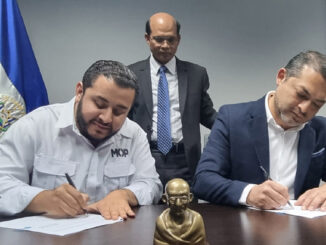
    Ambassador Dr. Mohapatra sharing joyous moments with Romeo Roderiguez, Minister of Public Works, and Mr. Russell Alexander Luther Rodas of Laxmi Capital after signing the MoU.

    Amb.: I see it holistically. Wherever I’m posted, I ask myself: what legacy can I leave in this short time?

    When I arrived, the total bilateral trade between India and the three countries was modest. Today, it exceeds $1 billion. Guatemala alone, with a population of 17 million, is leading among the three—El Salvador has 6.7 million, and Honduras about 10 million.

    We’ve facilitated major Indian investments, especially in renewable energy. One company has established a paper production facility using sugarcane bagasse—environmentally friendly and sustainable. Another entered the vegetable oil industry, and Indian businesses are also active in textiles and digital infrastructure.

    These aren’t short-term deals. They are long-term engagements. Giants like Adani and Reliance are exploring opportunities, and Jio is laying groundwork for telecom infrastructure. India is no longer just a cultural friend—we are becoming an economic partner.

    TIP: What potential do you see for further strengthening these trade relationships?

    Amb.: Immense potential. While India traditionally doesn’t interfere in the internal affairs of other nations, geographical distance and limited awareness about India’s rise remain challenges. But every challenge brings opportunity.

    When I came here from Washington, D.C., I had extensive experience in economic diplomacy. That experience helped me identify strategic sectors and bring in Indian businesses. We organized 30 to 40 B2B meetings annually.

    To guide our work, I introduced the acronym “SPEED”:

    S – Supply Chain Management

    P – Pharmaceuticals

    E – Education

    E – Energy

    D – Digital

    In each of these areas, we’ve seen real results.

    India now supplies up to 30% of the pharmaceutical requirements for these countries. Our energy sector, particularly solar, is competitive. Supply chains are stabilizing post-pandemic. Education and digital infrastructure are next frontiers. And we’re positioning India as a dependable long-term partner.

    Ambassador Mohapatra at the launch of TVS Motors in Guatemala

    TIP: Central America’s economy is closely tied to the United States. Given the evolving U.S. political and economic climate, how can India strengthen its engagement with the region?

    Amb.: That’s an important question. While these countries have historical and trade ties with the U.S., they are now seeking to diversify.

    India’s growth—6.5 to 7.5% consistently—has caught their attention. They want to reduce dependency on a single partner. That helps us. But again, geographical distance is a factor.

    If India and the U.S. can maintain excellent relations across such distance, why not between India and Central America?

    We don’t impose political conditions. Our engagement is apolitical, focused purely on development, commerce, and culture. I believe we’ve succeeded in converting challenges into opportunities.

    TIP: India still has a significant trade imbalance with China. Isn’t it necessary for India to find new markets—like these Central American nations—for its goods?

    Amb.: Absolutely. But trade is never one-sided. For it to be sustainable, it must be mutually beneficial.

    India is one of the largest consumer markets in the world, with over 1.4 billion people. So, while we aim to export, we also import. It’s a two-way street.

    Rather than just selling products, we’re encouraging Indian companies to manufacture locally—particularly in textiles and consumer goods. That way, semi-finished goods from India can be processed here and shipped quickly to the U.S. or other Latin American countries.

    It’s a classic win-win.

    TIP: You’ve worked closely with businesses and governments here. What would you say were your biggest achievements? And were there any regrets or things left unfinished?

    Amb.: I wouldn’t call them failures—perhaps areas needing more time.

    We’ve laid a strong foundation. For instance, the largest investment in Guatemala in recent years is by an Indian company. We’ve created thousands of jobs. A company that had 400 employees now has 1,500. Another in the energy sector is scaling up rapidly.

    India’s presence in sectors like digital infrastructure, textiles, pharmaceuticals, and renewable energy has deepened.

    And on the diplomatic side, Honduras has opened an embassy in New Delhi. That’s a significant milestone.

    I’ve also worked hard to build genuine friendships. I often say these countries are like Lord Hanuman—they don’t always realize their own strength until reminded. My job was to help them see India as a reliable, rising partner.

    TIP: So you’ve built the foundation. Now the next ambassador has a platform to build upon.

    Ambassador Dr. Mohapatra is honored for his instrumental role in strengthening the bonds of friendship and cooperation between India and Guatemala.

    Amb.: Precisely. I arrived during the 50th anniversary of diplomatic ties between India and Guatemala. I leave on the 53rd. Three years may seem short, but we’ve made it count.

    Continuity is key. As T.S. Eliot said, “Time past is present in time future.” I’ve built on the work of my predecessors and laid the groundwork for my successor. That’s how diplomacy should function.

    TIP: You’ve often spoken of “Vasudhaiva Kutumbakam”—the world is one family. That was a powerful message during the yoga session. Would you like to elaborate?

    Amb.: Of course. That phrase isn’t just a slogan—it’s a philosophy that guides all our actions.

    We don’t undertake initiatives for personal or national gain alone. We share knowledge, technology, and experience generously. That’s India’s ethos.

    “Vasudhaiva Kutumbakam” means we see everyone as part of one global family. One sun, one moon, one earth, one health. Our yoga event, the prosthetic limb donation, the medical camps—we did all this to connect people, not to chase headlines.

    I’m proud of how the Indian community, our partners in the U.S., and local authorities came together. That’s what diplomacy is truly about.

    TIP: Thank you so much, Ambassador Mohapatra. Your vision, leadership, and deep sense of service have left a lasting mark. On behalf of The Indian Panorama and all our readers, we wish you continued success wherever you go next.

    Amb.: Thank you, Professor. Your support and that of the Indian diaspora have meant a lot. This isn’t goodbye—it’s just the continuation of a journey. We’ve built a bridge between India and Central America. Now it’s time to walk across it together.

  • CONSTRUCTION OF METRO LINE IN SAN SALVADOR

    CONSTRUCTION OF METRO LINE IN SAN SALVADOR

    GOVERNMENT OF REPUBLIC OF EL SALVADOR AND LAKSHMI CAPITAL SIGN THE MOU

    GUATEMALA CITY (TIP): Over the past decade, India’s remarkable achievements in successful infrastructural development have garnered global attention and inspired Indian companies to venture beyond their conventional roles of manufacturing and exporting finished goods. India’s rapid infrastructural progress serves as a beacon for other nations, with Central American governments eagerly embracing Indian companies to invest in and bolster their own infrastructural projects. Recognizing the strategic significance of the Central American region, companies like SRAM & MRAM have shifted their focus towards engaging in transformative infrastructure endeavors in Guatemala and El Salvador. This shift has led to the investment in ten impactful projects across these nations through their subsidiary, Lakshmi Capital, signaling a new era of collaboration and development.

    Amb Dr Mohapatra sharing some joyous moment with Mr. Romeo Rodríguez, Min Public Works and Mr. Russell Alexander Luther Rodas of Laxmi Capital after signing the MoU.

    In a significant stride toward strengthening infrastructure and economic development in El Salvador, Lakshmi Capital, and the Ministry of Public Works and Transportation of the Republic of El Salvador signed a Memorandum of Understanding in San Salvador on 16 February 2023 for construction of 22 km metro line project in San Salvador. The MoU was signed between Minister Romeo Rodríguez of Ministry of Public Works, Government of Republic of El Salvador and Transportation and Mr. Russell Alexander Luther Rodas of Laxmi Capital in the presence of Ambassador of India in Guatemala, Dr. Manoj Kumar Mohapatra. The metro line project aims to invigorate the economy and modernize transportation infrastructure in the country. Following a comprehensive pre-feasibility study, the decision was made to embark on the creation of a subway system in San Salvador, leveraging international investment for optimal outcomes.

    It is imperative to underscore that the initial proposal, initially spanning 11 kilometers, was subsequently augmented to an impressive 22 kilometers by the El Salvadoran Government. This remarkable expansion stands as a testament to India’s growing reputation globally and steadfast support, alongside the unwavering commitment and enthusiastic dedication showcased by Lakshmi Capital in propelling infrastructure development and fostering sustainable progress in El Salvador.

    The metro line project based on BOT Modal, outlines the Ministry of Public Works and Transportation’s role in providing pre-feasibility analyses, designs, and legal frameworks, while Lakshmi Capital will offer technical expertise and investment mechanisms. The signing ceremony followed a series of meetings convened by the Embassy of India in Guatemala between the Ministry of Public Works and Transportation and Lakshmi Capital, underscoring their shared dedication to the project’s successful execution. Both parties will begin exchanging crucial information, marking the start of the analysis, study, and proposal stages of the initiative.

    Mr. Romeo Rodríguez, Min Public Works and Mr. Russell Alexander Luther Rodas of Laxmi Capital showing the copy of the signed MoU.

    The metro line project stands at the forefront of reshaping transportation infrastructure in El Salvador, presenting Indian companies with a unique opportunity to make a lasting impression in the Central American region. This collaboration resonates with a mutual dedication to fostering economic advancement and sustainable growth. Moreover, this pivotal project serves as a precursor to a multitude of forthcoming endeavors, such as supplying buses, constructing the dry corridor, and implementing a solar power project. Discussions for these ventures are currently at an advanced stage, indicating the potential for additional Memoranda of Understanding to be signed in the near future.

  • Embassy of India in Guatemala Organizes a string of programs to celebrate the 77th Independence Day of India

    Embassy of India in Guatemala Organizes a string of programs to celebrate the 77th Independence Day of India

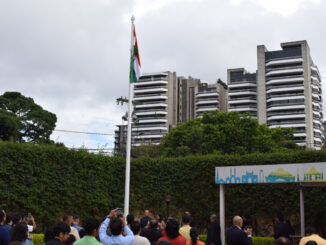
    GUATEMALA CITY (TIP): The Embassy of India in Guatemala celebrated the 77th Independence Day on August 15, 2023, with a fervent spirit of patriotism and unity with the participation of more than 200 Indian community and friends of India. The event commenced with Ambassador Dr. Manoj Kumar Mohapatra unfurling the tricolor Indian flag, a symbol of the nation’s freedom and resilience. The ceremony commenced with the soul-stirring rendition of the National Anthem, echoing through the embassy premises.

    In a poignant homage to the occasion, Ambassador Dr. Mohapatra readout the speech delivered by the Hon’ble President of India on the eve of Independence Day. The highlights of the speech emphasized India’s continued commitment to progress, unity, and inclusiveness. The President’s address underlined the nation’s achievements while acknowledging the importance of fostering harmony and development for all citizens.

    The Ambassador extended heartfelt gratitude to the Indian community for their unwavering support. He expressed his sincere appreciation for their active involvement in various Embassy events and initiatives. Additionally, he conveyed the exciting news of the commencement of Bollywood and Indian classical dance classes at the Embassy. This endeavor aims to celebrate the rich cultural traditions of India and provide a platform for community members to come together and immerse themselves in the joy of dance. The Ambassador’s message underscored the importance of community collaboration and highlighted the Embassy’s commitment to nurturing cultural bonds and fostering a sense of unity among the Indian community.

    Embracing the Panch Pran Pledge, a visionary commitment to India’s future! Five resolutions for 2047 Developing India, eradicating servility, cherishing heritage, nurturing unity, and fulfilling duty.

    A notable highlight of the celebration was the symbolic administration of the “Panch Pran Pledge” by Ambassador Dr. Mohapatra. The “Panch Pran Pledge” urges individuals to channel their efforts into five pivotal resolutions aimed at shaping India’s trajectory over the next 25 years. These resolutions encompass making India a developed nation, eradicating remnants of subjugation, fostering pride in its cultural heritage, fortifying unity, and dutifully fulfilling civic responsibilities. This pledge signifies an ambitious commitment to steer India’s future through resolute dedication. It comprises five core promises, intended to be accomplished by 2047, mirroring the nation’s aspirations for comprehensive advancement. The first pledge ardently underscores the necessity of India’s transformation into a developed nation by 2047, signifying comprehensive growth across all sectors. The second pledge underscores the imperative of discarding all traces of subservience, spotlighting the essence of self-reliance and sovereignty, particularly by eliminating remnants of colonial thinking. The third pledge embraces an embrace of India’s cultural legacy, spotlighting the importance of safeguarding and cherishing its cultural roots. The fourth pledge champions unity’s strength, transcending diversities through harmonious coexistence, while also paying homage to those who safeguarded the nation. Lastly, the fifth pledge emphasizes diligent fulfilment of civic responsibilities, underscoring collective action as pivotal for societal advancement. The “Panch Pran Pledge” encapsulates India’s collective determination to propel the nation towards a future characterized by prosperity, self-esteem, unity, and conscientious citizenship.

    Enthralling cultural performances by the vibrant Indian community members showcased the heart and soul of India’s rich heritage! From soulful songs to mesmerizing dances, their talent ignited patriotism.

    The cultural mosaic of India came alive in the cultural program presented by the Indian community members. Enthusiastic participants showcased their talents through patriotic songs, evocative poems, and spirited dances, embodying the spirit of the nation. The atmosphere reverberated with a sense of pride and belonging, fostering a deep connection among attendees.

    Embassy of India organized Partition Horror Remembrance Day exhibition shedding light on a poignant chapter, reminding us of the importance of unity and understanding.

    In line with the spirit of remembrance, an exhibition titled “Partition Horror Remembrance Day” was organized. This exhibition aimed to raise awareness about the tragic events of India’s partition and pay homage to the sacrifices made during that tumultuous period. It served as a powerful reminder of the importance of unity, harmony, and the pursuit of a peaceful coexistence. The impact of the “Partition Horror Remembrance Day” exhibition was profound, as it allowed attendees to reflect on the lessons learned from history. The exhibition underscored the significance of preserving peace and understanding among diverse communities and the dire consequences of division. It served as a call for unity and tolerance, transcending borders and generations.

    Celebrating creativity and dedication! Honoring the winners of the Yoga My Pride Photography Contest 2023, whose captivating captures truly embodied the essence of yoga’s beauty and spirit.

    The Embassy organized a prize distribution ceremony to honor the winners of the Yoga My Pride Photography Contest 2023. This contest invited individuals to capture the essence of yoga through their camera lenses, celebrating the beauty, serenity, and strength that yoga brings to our lives. The event aimed to promote artistic expression while highlighting the transformative power of yoga. The submitted photographs beautifully depicted moments of yoga practice, meditation, and harmony with nature. The contest not only encouraged creativity but also raised awareness about yoga’s numerous benefits for physical and mental well-being. A committee from the Embassy evaluated the diverse range of entries and selected the deserving winners, who were presented with trophies in recognition of their outstanding contributions to the contest.

    The Embassy actively rallied the Indian community through its diverse social media channels, urging their participation in the noteworthy “Har Ghar Tiranga” campaign initiated by the Government of India. This initiative holds paramount importance as it endeavors to foster a collective sense of national pride and unity. The campaign’s essence lies in urging each Indian household to unfurl the national flag, the Tiranga, a symbol that represents the unity and diversity of our nation. The Embassy extended its support to the Indian community by facilitating the provision of the tricolor flag, enabling households to be part of this movement.

    The Flag Hoisting Celebrations at the Embassy of India, Guatemala, were a heartfelt tribute to the nation’s journey of freedom, resilience, and progress. The event not only rekindled the flames of patriotism but also reinforced the bonds between the Indian community and the host country, Guatemala, fostering an atmosphere of shared values and mutual respect.

    (With inputs from the Embassy of India in Guatemala)