Tag: Economy

  • Ambassador Sandhu Discusses India-Pennsylvania Relationship with Governor Tom Wolf

    Ambassador Sandhu Discusses India-Pennsylvania Relationship with Governor Tom Wolf

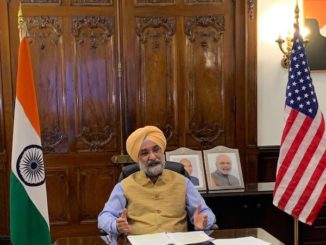
    WASHINGTON (TIP): Ambassador of India to the United States Taranjit Singh Sandhu and Pennsylvania Governor Tom Wolf discussed important areas of the vibrant India-Pennsylvania relationship, encompassing economic and people-to-people ties during a conversation Aug 7.

    Ambassador Sandhu and Governor Wolf discussed the ever-increasing trade and investment complementarities in the India-US relationship and cooperation in the fields of education and healthcare. Ambassador shared with the Governor the latest developments in the Indian healthcare and education sectors, including recent reform initiatives taken by India.

    Both noted the important contributions, especially in economy, of over 200,000 members of the Indian diaspora in Pennsylvania, including those of nearly 10,000 Indian students in Pennsylvania’s higher education institutions. Ambassador highlighted the new opportunities available for investments in India’s higher education sector under the New Education Policy recently announced in India.

    The total trade between India and Pennsylvania has grown to $3.21 billion (2019). Today over 18 Indian companies, with investments of $540 million, are supporting 3,000 jobs in Pennsylvania. Many Pennsylvania based US companies spread across Food Processing, Agriculture, IT, and Chemicals sectors are present in India. Some notable investments include Hershey’s, Kraft Heinz, Unisys, Air Products & Chemicals, FMC among others.

    Indian entrepreneurs and professionals have a significant presence in Pennsylvania in the IT and telecommunications, life sciences and manufacturing sectors. Indian high skilled talent adds to the competitive edge of the U.S. economy.

    Ambassador Sandhu and Governor Wolf agreed to work together to further enhance the India-Pennsylvania relationship.

    (Based on a Press Release)


  • Indian American Nayan Parikh named a member of de Blasio’s real estate reopening council

    Indian American Nayan Parikh named a member of de Blasio’s real estate reopening council

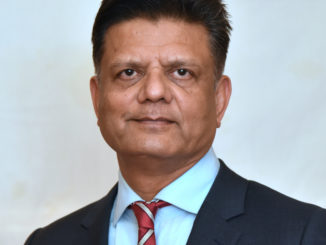
    NEW YORK (TIP): Indian American Nayan Parikh , owner of Ashnu International, Inc. an award winning, premier/MWBE Construction and Management provider to host of Federal, State and City Agencies, Corporations and other industries, is one of the 30 New Yorkers named on Mayor de Blasio’s real estate reopening council. The panel will guide the industry’s economic reboot.

    Nayan Parikh has, over the past fifteen years, continued hard to establish his name within the corridors of Government Agencies and has continued to build his reputation to his expertise in bringing excellent performance to the projects undertaken by his company. He has been the champion in leading many professional and community organizations and continues to give back to the society in many different ways. He has brought new ideas to fruition, both for profit and non-profit organizations. After graduation from college, Nayan began his career as a Civil Engineer in India, before migrating to the USA. In his new homeland, he began his career as an estimator in a small construction company, before quickly finding his own strength to become the founder and Managing Director of Ashnu International, Inc.

    Parikh’s vision, entrepreneurial aptitude, civil engineering background and broad range of expertise have made AIC a name to be envied within the construction industry. His company has credit to many well-known projects including Sandy Repair work at Coney Island, Rockaway Beach, multiple schools renovation for New York City School Construction Authority and Signal Modification at 71st Continental Ave with the Metropolitan Transportation Authority.

    Serving the community comes naturally to Parikh. From his first days of being a new immigrant to this country till now, he has been involved and giving his time, knowledge and wisdom to non-profit organizations, both within the community and professional. Although he is a part of many organizations and affiliations, he takes pride in each and every one and maintains an active leadership role in these organizations. Currently he is the president of the NAMC NY Tri-State Chapter, during his term he would like to bring more project procurement to his local chapter members. From humble beginnings and a minority himself, he understands the struggle to make to make the right connections or get that big break. Parikh isn’t afraid to reach out to make the necessary connection, which is one of his many strengths. Because of this, his network of associations varies in different influencers, who hold his opinion in high regards and has created a foray into creating an outreach program for his chapter members.


  • Future of U.S.  Economy

    Future of U.S. Economy

    By Ven Parmeswaran

    “America’s 20 trillion economy will rebound from third quarter and shock the world in the fourth quarter. The stock market will make a new high this year. Jamie Dimon, chairman of JP Morgan, a staunch Democrat, says U.S. economy will witness “quite rapid recovery” from Coronavirus pandemic”, says the author.


    The stock market is a leading indicator of American economy.  After President Trump was elected in 2016, the Dow Jone’s Average has jumped from 18,000 to almost 30,000.  Because of Coronavirus and subsequent locked-in, the market plunged back to 18,000 by March 23, 2020.  From March 23, 2020 to May 27, 2020, the Dow Jone’s has recovered 7540 points in a matter of two short months.  This kind of rapid recovery has been unprecedented in the history of the stock market.   This is highly remarkable and a very significant factor to gauge future economy.  The NASDAQ dominated by trillion-dollar technology companies (Microsoft, Apple, Amazon, Google) have performed even better than the Dow Jone’s.  The Nasdaq is now only 5% from its all-time high reached in February before the Coronavirus.

    Never before, the stock market has performed breaking all past records.  President Trump and his policies have been credited by the investors and all Americans who have their pension funds invested in the market (401-K).  Once the market performs, nobody can challenge because all Americans believe in higher wages and prosperity.  Americans are wondering how the market could go up so big and so rapidly when the economy has been shut and the unemployment has exceeded historical record of over 20%. How can the market go up when the business of travel, restaurants, retail sales, manufacturing, and others have been stopped because of locked-ins?

    The Federal Reserve cut the interest rate to zero per cent.  The Federal Reserve is an independent agency.  But President Trump pressured its Chairman Powell to lower the interest rate to zero.  Now he has asked him to lower it further into negative interest rate so that it will grow the economy.    The Federal Reserve has flooded the financial markets, commercial and investment banks, asset management firms, and large hedge funds with approximately 7 trillion dollars.  What the Fed has done is unprecedented.  Powell, the Fed Chairman has assured the captains of the industry that the Fed will employ all tools available in its hand to help the economy grow.   With generous tax cuts and heavy deregulations by President Trump, potential for corporate profits have expanded.   In addition, President Trump’s recommendation to the Congress to approve $3 trillion in fiscal support to all Americans, small businesses, and other businesses in distress have helped enormously in recovery of the economy.   Generous unemployment compensation of $1200 per week has created unbelievable security and is perking the economy.

    Americans received $1200 each and the government postponed filing of tax returns to July from April 15.  Proof of climbing retail sales is the result of President Trump’s fiscal support.  President Trump and the Congress are working on issuing second installment of $2000 each to drum up the economy.

    The combined support from the Fed Reserve and the Congress is equal to 50% of America’s annual GDP of 20 trillion dollars.   I would speculate that a substantial amount from this has gone into investing in stocks.  Can we not ask how can the stocks skyrocket like this when the economy has been shut down and more than 40 million are unemployed?    When the real economy is not generating any income based on productivity, how can the stock go up?     President Trump has said that the economy he created is a solid and sound economy.  Therefore, when the locked in is over, the economy will rebound and the stock market will go up like a rocket.  Proof of the pudding lies in the eating of it.  It appears now that President Trump’s prophesies are coming true.

    Has the Fed Chairman Powell succeeded in playing magic?  Or, is this artificial? Who knows?  Let me analyze the comments of some vehement Democrats, economists, and industry captains.

    JPMorgan Chairman, Jamie Dimon, a staunch Democrat and a candidate for the Secretary of the Treasury in Biden administration stated that the government has been pretty responsive, big companies have the means, hope we keep the small companies alive.”  “growing stocks” from the Fed Reserve had helped small business.  He said the U.S. economy could see a rapid recovery in the 3rd quarter.    He said: “you can already see the positive effects of the current opening, at least for the economy.”    The same Jamie Dimon has been highly critical of President Trump just for political purposes.  But when his own company and stocks of major banks and financial firms go up, he cannot but tell the truth.

    Michael Darda, MKM Partners Chief Market Strategist and Chief Economist said: “The market has been making a V-pattern upward and there has been a tremendous amount of skepticism around that but we are just starting now to see some evidence in the data turning some better than expected Housing numbers.  As reopening gets underway, virtually all states now we are starting to see activity bounce off of very low levels.”

    On Wednesday, May 27, the Mortgage Bankers Association reported a sixth straight weekly rise in mortgage applications.  Data released Tuesday showed NEW HOME SALES in April topped estimates.  Sales of new U.S. SINGLE FAMILY HOMES increased by 623,000 in April, beating estimates of 490,000.

    Wharton School of Business Professor Jeremy Siegel told that new stock market highs this year is a ‘REAL POSSIBILITY’.   Absent a second wave of Coronavirus later in the Fall, it is “even a likelihood that we will reach “fresh record highs.”     This kind of over optimism from conservative and liberal economists is unprecedented.

    “One of the unfortunate things about the lockdown is we have actually improved the prospects of the very companies in the stock markets.” Siegel added.     “In fact, given no serious second wave, which could mean just effective therapeutics without even a universal vaccine, my feeling is it is even a likelihood that we will reach fresh record highs.” Siegel said.

    (The author is a former President & CEO, First Asian Securities Corporation, NYC.  His successful trading strategies on the day of 1987 stock market crash was highlighted by the WSJ.  He lives in Scarsdale, N.Y. He can be reached at vpwaren@gmail.com)

  • A plan to revive a broken economy

    A plan to revive a broken economy

    By Jayati Ghosh, Harsh Mander, Prabhat Patnaik
    A combination of wealth and inheritance taxation and getting multinational companies to pay the same effective rate as local companies through a system of unitary taxation will garner substantial public revenue. They will also reduce wealth and income inequalities which have become horrendous. A 2% wealth tax on the top 1% of the population, together with a 33% inheritance tax on the wealth they bequeath every year to their progeny, could finance an increase in government expenditure to the tune of 10% of GDP.

    An estimated 12.2 crore Indians lost their jobs during the coronavirus lockdown in April: CMIE

    There are clear, implementable steps the Centre can take in fiscal terms to revive the economy and support livelihoods

    The Prime Minister has just announced Lockdown 4.0. Despite some resulting increase in economic activity, vast numbers of working people will remain without their regular incomes. He also announced a package of ₹20 lakh crore, but this includes already allocated money of ₹6-lakh crore and monetary policy directives to banks and non-banking financial companies. The announcements by the Finance Minister thus far involve no additional public spending, even though this is urgently required to revive the economy and prevent further contraction. Here we discuss what the government should do immediately in fiscal terms for reviving the economy and supporting livelihoods.

    Food and cash transfers first

    The immediate need is to provide free food and cash transfers to those rendered incomeless. Providing every household with ₹7,000 per month for a period of three months and every individual with 10 kg of free food grains per month for a period of six months is likely to cost around 3% of our GDP (assuming 20% voluntary dropout). This could be financed immediately through larger borrowing by the Centre from the Reserve Bank of India. The required cash and food have to be handed over to State governments to make the actual transfers, along with outstanding Goods and Services Tax compensation.

    This is easily doable for several reasons. First, food grains are plentiful, as the Food Corporation of India had 77 million tons, and rabi procurement could add 40 million tons. Second, because of the lockdown restrictions, the multiplier rounds of such expenditure are heavily truncated at present and would not generate as much demand as in normal times. Third, cash transfers in many spheres will only enable current demand to continue (such as payment of house rent to continue occupancy) and not create any fresh demand. Fourth, when greater normalcy finally allows pent-up demand to surface, output could also expand because of resumed economic activity. Finally, putting money in the hands of the poor is the best stimulus to economic revival, as it creates effective demand and in local markets. Hence, an immediate program of food and cash transfers must command the highest priority.

    Revamp MGNREGA work

    But the post-lockdown world will be different for several reasons. First, millions of migrant workers have endured immense hardships to trudge back home, and are unlikely to return to towns in the foreseeable future. Employment has to be provided to them where they are, for which the Mahatma Gandhi National Rural Employment Guarantee Scheme (MGNREGS) must be expanded greatly and revamped with wage arrears paid immediately. The 100-day limit per household has to go; work has to be provided on demand without any limit to all adults. And permissible work must include not just agricultural and construction work, but work in rural enterprises and in care activities too.

    The revamped MGNREGS could cover wage bills of rural enterprises started by panchayats, along with those of existing rural enterprises, until they can stand on their own feet. This can be an alternative strategy of development, recalling the successful experience of China’s Township and Village Enterprises (TVEs). Public banks could provide credit to such panchayat-owned enterprises and also assume a nurturing role vis-à-vis them.

    The second change is the palpable unsustainability of the earlier globalization, which means that growth in India in the coming days will have to be sustained by the home market. Since the most important determinant of growth of the home market is agricultural growth, this must be urgently boosted.

    The MGNREGS can be used for this, paying wages for land development and farm work for small and medium farmers; apart from government support through remunerative procurement prices, subsidized institutional credit, other input subsidies, and redistribution of unused land with plantations. Agricultural growth in turn can promote rural enterprises, both by creating a demand for their products and by providing inputs for them to process; and both these activities would generate substantial rural employment.

    The Urban focus

    In urban areas, it is absolutely essential to revive the Micro, Small and Medium Enterprises (MSMEs). Simultaneously, the vast numbers of workers who have stayed on in towns have to be provided with employment and income after our proposed cash transfers run out. The best way to overcome both problems would be to introduce an Urban Employment Guarantee Program, to serve diverse groups of the urban unemployed, including the educated unemployed. Urban local bodies must take charge of this program and would need to be revamped for this purpose.

    “Permissible” work under this program should include, for the present, work in the MSMEs. This would ensure labor supply for the MSMEs and also cover their wage bills at the central government’s expense until they re-acquire robustness. It should imaginatively also include care work, including of old, disabled and ailing persons, educational activities, and ensuring public services in slums.

    These measures are in direct contrast to those that seek to entice private investors by easing labor laws. The humanitarian crisis of the lockdown reveals the imperative for more, not less labor protection. Such measures, far from reviving investment or employment, would also further reduce domestic demand.

    96% migrant workers did not get rations from the government, 90% did not receive wages during lockdown: survey

    The ‘care’ economy

    The pandemic has underscored the extreme importance of a public health-care system, and the folly of privatization of essential services. The post-pandemic period must see significant increases in public expenditure on education and health, especially primary and secondary health including for the urban and rural poor.

    The “care economy” provides immense scope for increasing employment. Vacancies in public employment, especially in such activities, must be immediately filled. Anganwadi and Accredited Social Health Activists/workers who provide essential services to the population, including during this pandemic, are paid a pittance and treated with extreme unfairness. We must improve their status, treat them as regular government employees and give them proper remuneration and associated benefits, and greatly expand their coverage in settlements of the urban poor.

    These could easily come within the total package announced by the Prime Minister, which could be financed by printing money. But in the medium term, public revenues must be increased. This is not because there is a shortage of real resources which, therefore, has to be taken from other existing uses through taxation. Rather, since much unutilized capacity exists in the economy, the shortage is not of real resources; the government has to just get command over them.

    A combination of wealth and inheritance taxation and getting multinational companies to pay the same effective rate as local companies through a system of unitary taxation will garner substantial public revenue. They will also reduce wealth and income inequalities which have become horrendous. A 2% wealth tax on the top 1% of the population, together with a 33% inheritance tax on the wealth they bequeath every year to their progeny, could finance an increase in government expenditure to the tune of 10% of GDP.

    It would be argued that this might cause large financial outflows, which the country can ill-afford. Contrarily, even foreign capital is more likely to be attracted to a growing economy than one in sharp decline because of lack of stimulus. Also, a fresh issue of special drawing rights by the International Monetary Fund (which India has surprisingly opposed along with the United States) would provide additional external resources.

    These additional resources, we estimate, would suffice to finance the institution of five universal, justiciable, fundamental economic rights: the right to food, the right to employment, the right to free public health care, the right to free public education and the right to a living old-age pension and disability benefits. The broken economy must be rebuilt in ways to ensure a life of dignity to the most disadvantaged citizen.

    (Prabhat Patnaik is Professor Emeritus, Centre for Economic Studies and Planning, Jawaharlal Nehru University (JNU), New Delhi. Jayati Ghosh is a professor of economics at JNU. Harsh Mander is a human rights worker, writer and teacher)


  • Restarting America

    Restarting America


    It may be accepted that waiting to restart all sectors of the economy simultaneously will  unnecessarily keep some sectors shut that actually can be re-engineered to open  without much further delay.


    America should restart its economy and other operations by mitigating risk and making sure that it is done right to be able to succeed at the effort. While playing safe and delaying it beyond May 2020 may sound like the appropriate step to take, we should also know that it brings with it a loss of about two trillion dollars and a consequential setback worth several trillion dollars more every month. On the other hand, restarting America early may bring the risk of extending the misery due to COVID-19. There is no way to come to an optimized solution to this problem. It will have to be made by guts and appetite for risk-taking. We have to carefully look at several pro and con aspects and decide.

    Restarting the economy would be especially important because some estimates tell us that the effect of coronavirus could hang on until August 2020 or even later. A shutdown of that magnitude no economy will be able to handle. Moreover, some say that coronavirus would come back with an even greater vengeance as cold season returns in the fall. The economy has to be ready to cope with that if it does indeed happen. In fact, the longer the U.S. economy remains in this dormant state, the longer it will need to get restarted, harder to bring it back to its past size and the greater irreparable harm it will cause.

    To restart the economy, we will look at the type of operations deployed for product and service transformation. There are certain operations that are large, both in terms of the size of employment and contribution to the gross domestic product. This list includes businesses such as restaurant, retail, sports and entertainment, education and training, and travel and tourism that can be restarted with proper and careful reconfiguration, adaptation of technology, redesign and/or creative reinventing of their processes, workflows, and scheduling. Their restart can be begun in a matter of weeks.

    We can formulate standards of operating for those large organizations that have more machine and technology interface and reduced human interactions. Such outfits include manufacturing, service processing, fulfillment centers, etc. The restart of these businesses will depend on how soon each of them comes up to these standards.   

    Taking the calculated risk of restarting this economy that had been willfully put to sleep rather than shut down because of an external one-time mishap will be unavoidable. It will have to be woken up with whims, such as presidential or gubernatorial executive orders . The alternative in the form of slower legislative processes will likely cause a long-lasting recession or depression or deep depression, as some are stating.  

    Moreover, no matter when we restart the economy, given the politically ultra-divided America and the anxiety over the upcoming presidential election, opposition to any proposal to restart is bound to be there. That is why, we have to move fast and devise a scheme to open the economy and begin the restarting in weeks rather than months. It may be accepted that waiting to restart all sectors of the economy simultaneously will unnecessarily keep some sectors shut that actually can be reengineered to open without much further delay.

    Utilizing the countrywide state by state and county by county data on coronavirus already collected by the White House, we can sectorize our economy and get what can be started within weeks by presidential order and what will need congressional action. The latter will have to be started soon and completed on an expedited basis.        

    Operations that need longer will be restarted applying science, engineering and technology. Our effort should be to redesign human and machine interactions, human-to-human contacts, and group interfaces, all with the goal to mitigate the risk of any second or later legs of COVID-19. We should also work to adapt and design or redesign technologies, operations, and communication systems for keeping workers safe from all similar communicable diseases. This should also make the companies become even more productive.

    America should use COVID-19 experience as a way to emphasize self-dependence for the production and distribution of all goods, services, processes, and technologies. This experience has taught us that all these are important and not just the essential ones.

    We should also work to make sure that we bring back manufacturing to the USA and place requisite importance on research to help us achieve this self-dependence in an economically competitive way. The White House should continue to exert pressure to make sure that American business invests in the goal of self-dependence. Furthermore, we should make sure that our businesses set research and development intensity to achieve the goal.

    We should also fight COVID-19 worldwide and help other countries restart their economies, replicating what we did to put the world back to work after the two world wars.

    ( A. D. Amar, Ph.D. is Professor of Management at the Stillman School of Business, Seton Hall University, South Orange, NJ 07079 (ad.amar@shu.edu). He was one of the three academics who endorsed Donald Trump for president in 2015, much before the primary elections of 2016. Later, he founded Indian-Americans for Trump 2016, a PAC, registered to promote Trump for president)


  • Senate Majority Passes New York State Budget

    Senate Majority Passes New York State Budget

    Focus on Protecting New Yorkers’ Health and Values & Combating the Coronavirus Pandemic

    “Our state’s financial situation has been thrust into a true economic crisis due to the coronavirus pandemic”, said Senate Majority Leader Andrea Stewart-Cousins.

    ALBANY, NY (TIP): The Senate Majority passed the 2020-2021 State Budget that addresses the needs of New York residents and businesses, especially in light of the ongoing coronavirus pandemic. Despite the anticipated long-term economic problems caused by this crisis, the Senate Majority fought to increase education aid, protect health care spending, and maintain essential services New Yorkers rely on. The enacted State Budget supports struggling taxpayers, farmers and businesses, environmental protection efforts, and local governments as they combat the COVID-19 epidemic.

     “This is not the budget we had hoped to pass at the beginning of Session, or even the budget we had envisioned just a month ago,” Senate Majority Leader Andrea Stewart-Cousins said. “Our state’s financial situation has been thrust into a true economic crisis due to the coronavirus pandemic. Yet even in this crisis we managed to achieve a balanced budget that includes victories for the people of New York. The Senate Majority will continue to fight for our progressive values and priorities in the months ahead.”

     Senate Finance Committee Chair Liz Krueger said, “This budget is a crisis budget. It is not what we expected to be passing when we came to Albany in January, but it is what this moment calls for. Through this budget we will keep New York State solvent and functioning, and meet the needs of the present emergency. In the face of challenges the likes of which our state and our nation have not faced in generations, we will protect New Yorkers’ health, and stand up for New York students, families, and small businesses. But make no mistake – this budget is not the final word. Far from it. When the immediate crisis is over, we must take a hard look at where we stand and how we got here; we must face down the structural flaws and inequities in our society that this crisis has revealed; and we must begin to chart a path for New York in which no one is left behind or sacrificed, in which everyone pitches in their fair share, and in which we make the hard and complex decisions to ensure the future is bright for all New Yorkers.”

    Protecting New Yorkers Health and Health Care Services

    As New York State confronts the coronavirus pandemic, the need to protect health care spending and invest in quality medical services for New Yorkers has never been more essential. To advance those goals, the State Budget passed by the Senate Majority includes:

    • Expanding access to telehealth in the Medicaid program so more New Yorkers can connect with their physical and mental health providers.
    • Tobacco and vaping control regulations, including:

    o  Prohibiting the retail sale of flavored vapor products, unless the product is approved by the Federal Food and Drug Administration through the premarket tobacco product application process;


    ○    Prohibiting the public display of tobacco products, electronic cigarettes, or vapor product advertisements near schools;

    ○     Increasing the general penalties for selling tobacco or vape products to minors;

    ○     Requiring disclosure of ingredients in vape products;

    ○     Regulating dangerous carrier oils that cause vaping illnesses; and

    ○     Creating a new education campaign regarding the dangers of vaping for school aged youth.

    • Designating 13 fentanyl analogs to Schedule I controlled substances to get these drugs off the streets and protect New Yorkers.
    • Authorizing the Department of Financial Services to investigate prescription drug price increases of over 50% and indications of fraud, and creating the Drug Accountability Board to participate in the investigations.
    • Limiting out-of-pocket expenses for a 30-day supply of insulin to be capped at $100.
    • Establishing the Curing Alzheimer’s Health Consortium within SUNY to identify genes that predict an increased risk for developing Alzheimer’s.

     Standing Up for Struggling New Yorkers

    The Senate Majority understands that New Yorkers are struggling due to the ongoing coronavirus pandemic and the economic downturn as businesses work to stay open and pay employees. To help New York taxpayers address this crisis, the 2020-2021 State Budget includes:

    • Providing $200 million in additional support through the Child Care Development Block Grant to assist families affected by the public health emergency.
    • Increasing funding for Unemployment Insurance (UI) Administration by $1.05 billion in anticipation of increased UI claims.
    • Prohibiting gender pricing discrimination, commonly referred to as the ‘Pink Tax.’
    • Ensuring all New York employees have between five to seven days (40 to 56 hours, respectively) of sick leave.
    • Eliminating the current photo identification requirement for public assistance recipients and allowing these New Yorkers to access a free identification card from the state Department of Motor Vehicles.
    • Allowing the State Department of Taxation and Finance to provide the Earned Income Tax Credit to eligible New Yorkers who qualify, but hadn’t applied.
    • Expands prevailing wage requirements to private projects over $5 million paid in whole or partially with public funds as well as projects where public funds make up at least 30 percent of the aggregated total costs, with certain exemptions.

    Investing in New York Students 

    The Senate Majority understands that education is the great equalizer in our society and that every student, regardless of their zip code, deserves access to a world-class education. The Senate Majority fought to restore proposed cuts and maintain funding for New York State schools and education programs, despite the economic downturn and lower anticipated revenue. The 2020-2021 State Budget includes:

    • Providing a $104 million increase in School Aid for a total of $27.9 billion
    • Ensuring every school district is held harmless in Foundation Aid and will receive the same amount as in 2019-20 – a total state-wide investment of $18.4 billion.
    • Providing a $96 million increase for expense-based aids for a total funding level of $8.99 billion
    • Providing $10 million in new funding for student mental health support grants and $1 million for civics curriculum development. Additionally, past years’ competitive grants are maintained, totaling more than $230 million in funding to school districts for programs such as early college high schools, after-school programming, and advanced courses.
    • Authorizing a regional high school in Syracuse, known as the Syracuse Comprehensive Education and Workforce Training Center, to offer a high school curriculum that focuses on science, technology, engineering, arts, and math (STEAM).


    • Establishing a monitor system for the Rochester City School District and directing the State Education Commissioner to designate a monitor whose appointment will last through June 30, 2023. Additionally, spin up aid will be provided to the Rochester City School District to address the district’s $35 million shortfall.


    Boosting Economic Development across New York State:

    The economic fallout from the coronavirus pandemic is harming New York businesses and workers. The Senate Majority has already stepped up to help struggling employees and small businesses impacted by coronavirus quarantines and will continue to support New York job creators. To help grow the economy and rebound from the COVID-19 situation, the 2020-2021 State Budget includes:

    • Extending the application period for START-UP NY for five years to December 2025.
    • The enacted budget provides an additional $4,714,000 for statewide and local economic development programs.
    • Extending the Excelsior Tax Credit Program for 5 years.
    • Making the New York Buy American Act permanent.
    • Expanding the eligibility of the Economic Transformation Facility Redevelopment Program through 2021 to support the economies of communities affected by the closure of certain correctional facilities in 2011.
    • Providing an additional $365,000 Minority and Women-Owned Business Development.


    Protecting New York Communities and Reforming the Criminal Justice System

    Building on the Senate Majority’s historic legislation to protect New York children and communities from the scourge of gun violence, the 2020-2021 State Budget includes provisions to help keep more guns off New York streets. Additionally, as part of the Senate Majority’s ongoing efforts to fix the state’s broken criminal justice system and keep New York communities safe, key provisions were advanced in the Budget to ensure New York continues to serve as a progressive leader to the nation. The 2020-2021 State Budget includes:

    • Improvements to New York’s bail law such as making several high-level offenses now bail eligible including certain sex crimes, high level drug offenses, domestic violence felonies, crimes resulting in a death, and offenses directly related to an individual’s flight risk. The reform proposal also:

    ○    Creates a mechanism to address individuals who repeatedly commit crimes;

    ○    Expands reporting requirements so that the Department of Criminal Justice Services and the Office of Court Administration can better track outcomes of the state’s new bail law; and

    ○   Maintains the existing bail structure where most misdemeanors and non-violent felonies are not bail eligible.

    • Providing $40 million to support the implementation of discovery reforms.
    • The enacted budget establishes two degrees of Domestic Act of Terrorism Motivated by Hate and establishes a Domestic Terrorism Task Force.
    • Barring gun ownership for individuals who commit serious offenses in other states.
    • Empowering law enforcement to seize weapons for at least 48 hours when responding to domestic violence incidents. Law enforcement will be authorized to seize firearms that are in plain view when conducting a lawful search in responding to a domestic violence incident.
    • Keeping guns out of the hands of domestic abusers by ensuring District Attorneys follow current practices and Court Clerks promptly provide information on misdemeanor domestic violence convictions to the State Department of Criminal Justice Services to ensure these offenses are easier to identify on a criminal record for gun background checks.


    Helping New York Farmers and the Agriculture Industry

    The state’s agriculture industry is an essential economic driver, job creator, and source of vital food for millions of people here and throughout the world. To help New York farmers endure the coronavirus pandemic and invest in the future, 2020-21 State Budget includes:

    • Investing $51.8 million in statewide agricultural programs to support New York farmers.
    • Doubling the Child Nutrition Programs discretionary spending limit for school districts from $50,000 to $100,000 so more healthy, New York-grown products can be purchased by schools.
    • Expanding the definition of “immediate family member” in Farm Labor Statutes to clarify that immediate family means third degree of consanguinity and affinity.
    • Increasing the housing development fund for grant limits for the Farmworker Housing Program.

    ○       Increasing loan caps for the Farmworker Housing Project from $100,000 up to $200,000.


    Supporting Local Government and New York Taxpayers

    Local governments have stepped up to work with the State government to address the coronavirus pandemic. The Senate Majority understands that reducing burdens on local governments will help avoid increased taxes on struggling New Yorkers. To support local governments, the 2020-21 State Budget includes:

    • Investing millions of state dollars for municipalities to continue providing essential services to New Yorkers.
    • Allowing for up to 40 years’ maturity for loans helping low-income communities finance water infrastructure improvements.
    • Ensuring pay equity at state and local public authorities.
    • Moving the NYC Housing Vacancy Study to accommodate the Federal Census.


      Protecting New York’s Environment and Natural Resources

    The Senate Majority has been at the forefront of protecting New York State’s environment and natural resources. The 2020-2021 State Budget builds on the historic environmental protection efforts undertaken by the Senate Majority last year, and includes:

    • Authorizing the $3 billion ‘Restore Mother Nature Bond Act’ which includes:

    ○        $1 billion for restoration and flood risk reduction;

    ○        $700 million for climate change mitigation;

    ○        $550 million for open space land conservation and recreation;

    ○        $550 million for water quality improvement and resilient infrastructure; and

    ○        Specific provisions for projects benefiting environmental justice communities

    • Banning polystyrene food packaging and polystyrene packaging peanuts beginning January 1, 2022.
    • Banning high-volume hydraulic fracturing plus imposing a moratorium on applications for gelled propane hydraulic fracturing filed with the Department of Environmental Conservation.
    • Creating a new Office of Renewable Energy Siting, a NYSERDA build-ready program, and an electric power transmission plan to accelerate the development of renewable energy, while ensuring community input and benefits and environmental protections.


     Supporting our Veterans

    The Senate Majority understands the importance of protecting and providing services to over 800,000 veterans in New York State. The 2020-21 State Budget includes:

    • Providing funds for programs that help connect veterans with peers, address PTSD, and transition back to civilian life.
    • Extending the ‘Hire-a-Vet’ tax credit to help incentivize New York businesses to provide good paying jobs for returning veterans.


     Investing in New York Transportation Options

    The Senate Majority understands that investing in New York’s mass transit and public transportation infrastructure is an investment in our state’s future economic success. Maintaining public transportation and state roadways is essential for New Yorkers’ quality of life and the state economy. The 2020-21 State Budget includes:

    • Committing $3 billion to the MTA’s 2020-24 Capital Plan.
    • Providing the State Department of Transportation with $6 billion in capital funds to help ensure vital investments are made to the state’s transportation system.
    • Allocating funds for extreme winter recovery road reconstruction to keep these roads functional so New Yorkers can continue traveling safely.
    • Increasing Statewide Mass Transportation Operating Assistance to support public transit systems across the state.


    ( Follow on Twitter at http://www.twitter.com/NYSenDems

    New York State Senate | senatedemocraticmajority@nysenate.gov | 518-455-2415)

    (Press Release)

  • NPAs continue to bite: Banks have lost Rs 1.76 lakh crore in the last three years

    NPAs continue to bite: Banks have lost Rs 1.76 lakh crore in the last three years

    The RTI replies demonstrate a constant surge in the amount written off by the scheduled commercial banks, which include public sector banks and private banks in the country, since 2014-15.

    While banks claim that the recovery measures continue even after write-offs, sources say not more than 15-20 per cent is recovered.

    In the last three years, Indian banking system has lost Rs 1.76 lakh crore on account of writing off  non-performing loans of 416 defaulters — each owing Rs 100 crore or more.

    On an average, the amount declared as bad loans turns out to be around Rs 424 crore per borrower.

    This the first time data relating to big loans and biggest defaulters –owing at least Rs 100 crore – has come to light.

    The statistics showed that 109 unique borrowers had their loans to the tune of Rs 40,798 crore written off.

    Following a norm issued by the RBI to all the scheduled commercial banks to come clear on the amount to be prudentially written off and set the accounts right, the data has been exclusively accessed by the CNN-News18 by filing a series of RTI applications.

    The RTI replies demonstrate a constant surge in the amount written off by the scheduled commercial banks, which include public sector banks and private banks in the country, since 2014-15.

    Between 2015 and 2018, a total of Rs 2.17 lakh crore were written off as bad debts by the scheduled commercial banks.

    The statistics showed that 109 unique borrowers had their loans to the tune of Rs 40,798 crore written off.

    This number grew to 199 unique borrowers as on March 31, 2016 with a total of Rs 69,976 crore as amount written off.

    The next two years – post demonetization, however, witnessed the sharpest increase in the amount being written off for the borrowers.

    The RBI collects credit information of large borrowers with exposure of Rs 5 crore and above, which contain data on borrowers with amount technically/prudentially written off.

    The number of unique borrowers grew to 343 – an addition of 144 more, i.e. a 72 percent rise in number of such loanees.

    For this period, the amount written off also jumped from Rs 69,926 to Rs 1, 27, 797 crore.

    This amounted to a rise by Rs 57,821 crore as compared to Rs 29,178 of the preceding financial year. It also meant a whopping hike by almost 83 percent in the total amount written off by the scheduled commercial banks in the year immediately following the demonetization.

    The story remained the same for the next financial year.

    As on March 31, 2018, there happened to be 525 unique borrowers – this was an addition of 182 borrowers whose big loans were written off.

    The total amount written off as bad debts shot up from 1.27 lakh crore to Rs 2.17 lakh crore – an increase of Rs 89,324 crore – another huge jump by almost 70 percent.

    The RTI reply pointed out that the data prior to September 2014 for number of write-offs to the tune of at least Rs 100 crore is not available.

    The constant spurt in bad loans has prodded the government into stepping in time and again to bail out banks by recapitalizing them.

    While banks claim that the recovery measures continue even after write-offs, sources say not more than 15-20 per cent is recovered.

    The RBI collects credit information of large borrowers with exposure of Rs 5 crore and above, which contain data on borrowers with amount technically/prudentially written off.

    The information accessed by the CNN-News18 is a first in getting the exact number of unique borrowers in respect of which an amount of Rs 100 crore and above were written off.

    The information also uniquely depicts the pattern between 2014 and 2018 when such numbers grew, especially post demonetization.

    SBI writes off Rs 76,600 crore of 220 defaulters, RTI query reveals

    Similarly, Central Bank of India and Indian Overseas Bank had 4 defaulters each, owing more than Rs 500 crore when their loans were written off.

    The data has been accessed by the CNN-News18 through a series of RTI applications, following the Supreme Court judgments that directed the RBI to disclose relevant information on the NPAs and bad debts under the RTI Act.

     India’s largest bank, State Bank of India (SBI) has written off bad loans worth Rs 76,600 crore of 220 defaulters, who owed more than Rs 100 crore each.

    As on March 31, 2019, the SBI has declared as unrecoverable outstanding worth Rs 37,700 crore that 33 borrowers, with loans of Rs 500 crore and more, owed to it.

    In a first, the latest information, furnished by the RBI to CNN-News18 under the Right To Information Act, has disclosed the bank-wise break up where loans more than Rs 100 crore and Rs 500 crore were written off by the banks as on March 31, 2019.

    A total of Rs 2.75 lakh crore has been written off for entities that borrowed Rs 100 crore or more from scheduled commercial banks. The latest statistics divulge that Rs 67,600 crore were declared as bad debts for those given loans of Rs 500 crore and more.

     As on March 31, 2019, the SBI has declared as unrecoverable outstanding worth Rs 37,700 crore that 33 borrowers, with loans of Rs 500 crore and more, owed to it.

    As many as 980 borrowers have been enlisted by the RBI whose debts of more than Rs 100 crore each had to be written off by the banks. Out of these, 220 accounts – more than one-fifth of the total number – belonged to SBI. An average of Rs 348 crore was waived off in respect of each such account.

    Out of 71 total accounts reported as having defaulted in loans of over and above Rs 500 crore each, SBI’s share turned out to be 33 to 46 per cent of the total.

    Similarly, as on March 31, Punjab National Bank (PNB) had waived off debts of at least Rs 100 crore each in respect of 94 borrowers. The gross amount came out to be Rs 27,024 crore, with an average of Rs 287 crore per account.

    PNB also wrote off loans of Rs 500 crore or more for 12 biggest defaulters, totaling Rs 9,037 crore.

    While SBI and PNB topped the list among the public sector banks, IDBI stood at the top among the private banks. IDBI also came third among all the scheduled commercial banks in declaring bad debts of Rs 100 crore or more.

    IDBI had 71 borrowers of Rs 100 crore and more, with a total outstanding of Rs 26,219 crore written off.

    Canara Bank too had 63 accounts with outstanding of Rs 100 crore and more, and another 7 accounts with borrowings of Rs 500 crore and more, in respect of which loans worth Rs 27,382 crore.

    The list of borrowers with Rs 100 crore and more as outstanding having been declared as bad loans is followed by Bank of India with 56 accounts, Corporation Bank with 50 accounts, Bank of Baroda with 46 accounts and Central Bank of India with 45 accounts.

    Among the private banks, Axis Bank had 43 such borrowers, followed by ICICI Bank having 37 such accounts.

    Similarly, Central Bank of India and Indian Overseas Bank had 4 defaulters each, owing more than Rs 500 crore when their loans were written off.

    The data has been accessed by the CNN-News18 through a series of RTI applications, following the Supreme Court judgments that directed the RBI to disclose relevant information on the NPAs and bad debts under the RTI Act.

    (Source; CNN -News 18)