

New York City proudly calls itself the capital of the world. It is a city of towering skyscrapers, global finance, cultural diversity, and extraordinary human energy. Millions of people walk its streets every day, and visitors from every corner of the globe consider it a symbol of opportunity and modern urban life. Yet beneath the shining skyline lies a troubling reality that residents and motorists confront daily—the deteriorating condition of the city’s roads and the visible decline in urban cleanliness.
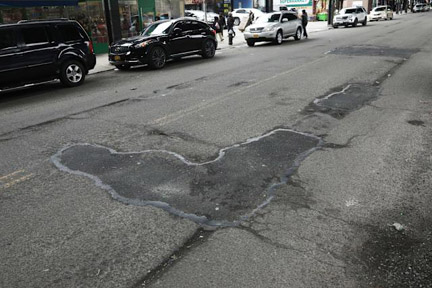
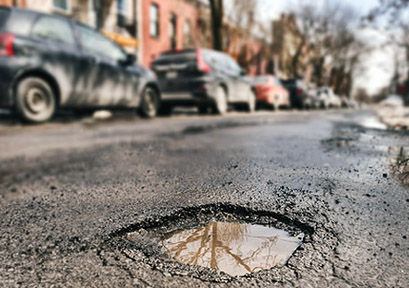
For anyone who drives through New York today, whether in Manhattan, Queens, Brooklyn, or the Bronx, the experience has increasingly become one of frustration. Potholes, cracked asphalt, uneven surfaces, and poorly patched road repairs have turned driving into a constant exercise in caution. Motorists weave from lane to lane trying to avoid deep craters that appear suddenly, sometimes unavoidable in heavy traffic.
This is not simply an inconvenience. It is a problem that has economic, health, and civic consequences.
 Mayor Zohran Mamdani, whose early weeks in office have raised hopes among many New Yorkers, must recognize that maintaining the city’s basic infrastructure is an urgent responsibility. Political ideologies and grand visions have their place in public life, but citizens judge governance by results. Smooth roads and clean streets are among the most visible signs of effective administration.
The financial loss caused by damaged roads is considerable, though it rarely receives the attention it deserves.
Automobile owners often pay a heavy price for driving on poorly maintained streets. Potholes damage tires, bend wheel rims, weaken suspension systems, and strain shock absorbers. Even a single severe impact can result in repairs costing hundreds, sometimes thousands, of dollars.
For professional drivers—taxi operators, ride-share drivers, delivery workers, and truck drivers—the burden is even greater. Their vehicles are not merely means of transportation; they are instruments of livelihood. Each unexpected jolt shortens the life of their vehicles and increases maintenance costs.
In a city where the cost of owning and operating a vehicle is already high, the additional financial strain created by neglected roads becomes a daily source of irritation and hardship.
There is another dimension to this issue that is rarely discussed—the medical consequences.
Orthopedic specialists frequently note that repeated jolts and vibrations caused by driving on rough roads can contribute to spinal strain, back pain, and joint stress. Drivers who spend long hours behind the wheel—particularly taxi and truck drivers—are exposed to these impacts constantly.
Medical studies on whole-body vibration suggest that prolonged exposure to such shocks can aggravate musculoskeletal problems. While potholes may not be the sole cause of these ailments, the relentless pounding experienced on poorly maintained roads certainly worsens them.
If the medical costs associated with back pain treatments, physiotherapy sessions, and lost productivity were calculated, they would likely exceed the cost of maintaining roads properly in the first place.
Good infrastructure is therefore not merely a convenience—it is also a matter of public health.
Cleanliness: Another Concern
The problem of infrastructure neglect is not limited to roads. Cleanliness in many parts of New York City leaves much to be desired.
Nowhere is this more noticeable than in Midtown Manhattan, particularly around Times Square, one of the most visited locations in the world.
Hundreds of thousands of pedestrians pass through Midtown streets every day. On busy days nearly half a million footsteps are recorded in this district alone. Tourists arrive from every continent to witness the spectacle of Times Square and the vibrant life of the city.
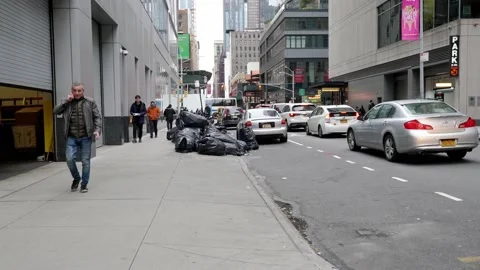 Yet the impression many visitors encounter is sometimes disappointing. Overflowing garbage bags, littered sidewalks, and poorly maintained public spaces often create an image that does not match the prestige of the city.
New York prides itself on being the hub of the universe. But a city that claims such status must maintain the standards expected of a global capital.
Clean streets are not simply about appearance. They reflect civic discipline, public health, and respect for residents and visitors alike.
A Question of Priorities
Cities are complex institutions and managing them is never easy. Budgets are limited and competing demands constantly arise. Yet certain responsibilities are fundamental.
Road maintenance and sanitation fall squarely within those responsibilities.
Every year New Yorkers pay billions of dollars in taxes—city taxes, vehicle registration fees, tolls, and gasoline taxes. In return, they are entitled to expect basic civic services.
Unfortunately, infrastructure maintenance often becomes overshadowed by political debate and ideological agendas. Citizens, however, are less concerned with ideology than with results.
They want roads that do not damage their vehicles.
They want sidewalks that are clean and welcoming.
They want public spaces that reflect the dignity of the city.
Mayor Mamdani has an opportunity to demonstrate that governance can be practical and effective. The people of New York are not asking for miracles; they are asking for competence.
Smooth roads and cleaner streets may not be dramatic achievements, but they are essential indicators of a well-governed city. They improve daily life for millions of residents and enhance the experience of the millions more who visit New York every year.
New York has overcome greater challenges in its history—from financial crises to crime waves and national tragedies. Surely it can overcome potholes and sanitation problems.
What is required is attention, planning, and administrative determination.
Political philosophies may inspire debate, but the true test of leadership lies in delivering tangible improvements. Roads must be repaired. Streets must be cleaned. Infrastructure must be maintained with care.
New Yorkers do not need theories; they need results. Hope you hear me, Mayor Mamdani.

Be the first to comment