In a deeply disturbing move that underscores its increasing disregard for international norms, Israel has launched a full-scale operation to seize control of Gaza City — the most populous urban center in the besieged Palestinian enclave. This act, which comes in the wake of relentless bombardment and months of military siege, flies in the face of multiple United Nations resolutions and violates the basic tenets of international law and human rights. It is an egregious show of military might against a largely defenseless civilian population — a people who have already endured the brunt of a brutal war since October 2023.
According to the United Nations Office for the Coordination of Humanitarian Affairs (OCHA), over 38,000 Palestinians have been killed since the beginning of Israel’s campaign in Gaza, with over 70% of the casualties being women and children. The infrastructure of Gaza lies in ruins: schools, hospitals, and refugee shelters have been bombed indiscriminately. Now, with Israel moving to capture Gaza City completely — purportedly to “eliminate Hamas remnants” — the world is witnessing the final stages of a systematic assault on a city that once housed over 700,000 people.
This assault comes despite United Nations General Assembly resolutions demanding an immediate ceasefire and calling for the protection of civilians. Most notably, UNGA Resolution ES-10/21, passed with overwhelming global support, urged Israel to halt its military actions and allow humanitarian aid to flow freely. Israel has ignored these appeals with impunity, emboldened by the diplomatic cover provided by key Western allies, particularly the United States, which has consistently vetoed any binding Security Council resolution that might hold Israel accountable.
The UN High Commissioner for Human Rights, Volker Türk, has now sounded a chilling warning. In a recent statement, Türk condemned the Israeli move into Gaza City as “a serious escalation with catastrophic consequences for civilians.” He further warned that such actions could amount to war crimes under international humanitarian law, especially given the deliberate targeting of civilian infrastructure and the use of starvation as a method of warfare.
Despite these warnings, the Israeli military presses on, invoking the right to self-defense — a right that cannot, and must not, be twisted into a justification for collective punishment. Gaza has been turned into a graveyard for international law, where the principles of proportionality, distinction, and humanity have been systematically discarded.
The silence and inaction of the global powers in the face of such atrocities is nothing short of shameful. The United Nations was created to represent the collective will of the world’s people, and its repeated resolutions calling for restraint and peace must not be reduced to mere words. If Israel continues to act with impunity, and if the world remains indifferent to the cries of the people of Gaza, then we must question the very moral fabric of the international order.
History will not be kind to those who watched Gaza burn in silence.
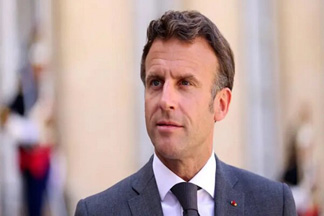
As the fires of war continue to engulf Gaza and the world once again watches in deafening silence, a bold voice has emerged from the very land that gifted humanity the rallying cry of democracy—Liberty, Equality, Fraternity. French President Emmanuel Macron, in a historic declaration, announced that France will formally recognize the State of Palestine at the United Nations General Assembly in September 2025. His words are more than symbolic; they signal a long-overdue stand for justice and a rare assertion of moral courage on the world stage.
This is no ordinary declaration. France is not just another country joining the chorus—it is the birthplace of modern democratic ideals. Macron’s announcement cuts through the noise of diplomatic platitudes and geopolitical hypocrisy, and lands like a thunderclap in an international arena largely paralyzed by fear, favoritism, and false equivalence.
A Century of Denial and Dispossession
The roots of the Palestinian-Israeli conflict run deep. In 1917, the British government issued the Balfour Declaration, supporting a “national home for the Jewish people” in Palestine—then home to a majority Arab population. That was the beginning of a century-long denial of Palestinian self-determination.
In 1948, the State of Israel was established, resulting in the Nakba—the catastrophic displacement of over 700,000 Palestinians, who were forced to flee or were expelled from their homeland. The 1967 Six-Day War saw Israel occupy the West Bank, Gaza Strip, and East Jerusalem, territories considered central to any future Palestinian state. Despite UN Security Council Resolution 242 calling for Israel’s withdrawal, the occupation has only deepened.
Over the decades, countless peace efforts—including the Oslo Accords of the 1990s—have faltered. While Palestinians offered recognition of Israel and pursued diplomacy, Israel, under successive hardline governments, has continued to expand illegal settlements, maintain a brutal blockade on Gaza, and wage recurrent military assaults.
Gaza: From Occupation to Genocide
The ongoing war in Gaza, which erupted yet again in October 2023, has reached horrifying proportions. More than 38,000 Palestinians have been killed, according to the Gaza Health Ministry, the majority being women and children. Over 85% of Gaza’s population has been displaced. Civilian infrastructure—hospitals, schools, even UN shelters—has been systematically destroyed.
Israel’s actions have been condemned by UN agencies, Amnesty International, and Human Rights Watch, with multiple calls for war crimes investigations. Yet, the same powerful nations that once lectured the world on democracy and human rights—chief among them the United States and the United Kingdom—have either blocked resolutions at the UN or sent more weapons to Tel Aviv.
The duplicity is staggering. While Ukraine is rightly supported in resisting Russian occupation, Palestinians asking for freedom are labeled terrorists. This double standard has eroded the credibility of the West’s so-called moral leadership.
A Global Shift in Momentum
President Macron’s declaration comes at a time when international sentiment is rapidly shifting. As of July 2025, 143 out of 193 UN member states have recognized the State of Palestine, including Spain, Norway, Ireland, and much of the Global South. These nations see what millions of people around the world—especially the youth—see: a dispossessed people resisting apartheid, occupation, and annihilation.
Even within the U.S. and Israel, there are growing movements of dissent. Tens of thousands have marched in American cities demanding a ceasefire and justice for Palestinians. Within Israel, families of hostages and progressive voices are challenging the government’s intransigence and warmongering.
Macron’s recognition is therefore not isolated. It is a sign of an emerging global consensus that Palestinian statehood is not a gift to be granted—it is a right long denied.
France’s Historic Role and Responsibility
France’s role in the Middle East has not been without controversy—from its colonial history in the region to its past alignment with certain authoritarian regimes. But in this case, Macron has aligned France with the moral arc of history.
By taking this stand, France reclaims its revolutionary heritage not just in words but in action. It reminds the world that democracy is not about convenience—it’s about courage. Macron’s move may not immediately change the brutal reality in Gaza, but it chips away at the edifice of impunity Israel has enjoyed for too long.
His decision will likely face backlash. There will be pressure from Washington, pushback from Tel Aviv, and shrill accusations from lobby groups. But the tide of history is turning. The more the world waits, the more complicit it becomes in an unfolding genocide.
A Defining Moment for Democracy
Recognition of a Palestinian state is not an act of hostility toward Israel—it is a long-delayed affirmation of justice. It envisions a two-state solution, the only viable path toward lasting peace in the region. Israel, if it is to survive as a democratic state, must end its occupation, cease its apartheid policies, and make peace with the people it has displaced and oppressed.
President Macron’s announcement is a clarion call to the world: to stop watching and start acting. To live up to the very values they profess: democracy, human rights, freedom.
In years to come, this decision may be remembered as a turning point—when a major power broke the silence, rejected complicity, and chose justice over geopolitics. If France succeeds in shepherding a formal UN recognition in September, it will not just elevate the Palestinian cause; it will also restore faith in the global project of democracy, at a time when that very ideal is under siege.
The world has watched too many times as Palestinian lives were reduced to statistics, their suffering dismissed, their aspirations ignored. France, with this courageous stand, has drawn a line in the sand.
Let history record that in 2025, while the bombs still fell on Gaza, a nation stood up and said: Enough!
As the brutal war between Ukraine and Russia enters its fourth year, the world watches with a disturbing mixture of fatigue, apathy, and helplessness. What began in February 2022 as a full-scale invasion by Russia, following years of rising tensions since the 2014 annexation of Crimea, has turned into one of the most destructive conflicts in modern European history. With hundreds of thousands of lives lost, cities leveled, economies shattered, and millions displaced, this is no longer just a war between two nations—it is a moral failure of the entire global order.
Despite promises, posturing, and power games, the war drags on. U.S. President Donald Trump, known for his close relations with Russian President Vladimir Putin during his term from 2017 to 2021, once confidently claimed that if elected again, he could end the Ukraine-Russia war in 24 hours. Six months into his reemergence as the President of America, that promise remains as far from reality as ever. The war continues, and with every passing day, the human cost multiplies.
A History of the Conflict
The roots of the conflict run deep. The 2014 Ukrainian revolution, which ousted the pro-Russian president Viktor Yanukovych, was followed swiftly by Russia’s annexation of Crimea. Putin justified it by citing the protection of ethnic Russians and Russian speakers in Ukraine. This began an 8-year-long simmering conflict in the eastern Donbas region, between Ukrainian forces and Russian-backed separatists. By the time Russia launched its full-scale invasion on February 24, 2022, over 14,000 lives had already been lost in the Donbas.
What followed was even more horrific. Kyiv, Kharkiv, Mariupol, and other Ukrainian cities became battlegrounds. Civilian targets were bombed indiscriminately. The United Nations reports over 30,000 civilian casualties since the war began, though the true numbers may be far higher. Ukraine claims to have lost over 70,000 soldiers; Russia’s losses are estimated at 100,000 or more, although official figures remain secret. Infrastructure worth hundreds of billions of dollars have been reduced to rubble.
The Cost of War
According to the World Bank, Ukraine’s economy contracted by more than 30% in 2022 alone. Agricultural exports—once a cornerstone of its GDP and crucial for global food supplies—were blocked, weaponized, and destroyed. Russia has faced its own challenges. Sanctions imposed by the West—primarily the U.S., the EU, and NATO allies—have hurt the Russian economy, isolating it financially and technologically. Over $300 billion in Russian assets were frozen, and several international corporations exited the Russian market.
But amid all the economic data and geopolitical analysis, the human tragedy remains paramount. Millions of Ukrainians have fled to Europe and North America, creating the largest refugee crisis in Europe since World War II. Children have been killed or orphaned, schools destroyed, hospitals bombed, and entire generations traumatized.
Where Is the Leadership?
Donald Trump’s claim that he could end the war in 24 hours was not without its believers. His relationship with Putin—often criticized as too cozy—was seen by some as a potential diplomatic asset. Trump frequently reminded the world that “Putin respected me” and that “this war would never have happened under my watch.” Whether that’s true or not is now moot.
The reality is that even six months after Trump’s return to political center stage, no roadmap to peace has emerged from his camp. Rhetoric has replaced action. Meanwhile, NATO remains committed to arming Ukraine. The United States alone has committed over $175 billion in military and economic aid to Ukraine since the invasion. Russia, in turn, continues to escalate, receiving arms and drones from Iran and North Korea, while China walks a tightrope between neutrality and quiet support.
President Zelensky of Ukraine, while a symbol of resistance, has also shown a rigid stance, repeatedly insisting on full territorial integrity—including Crimea—as a precondition for negotiations. On the other side, Putin has dug in, justifying his war on claims of NATO encroachment, “denazification,” and the defense of Russian-speaking populations.
The result? A complete diplomatic stalemate, a prolonged proxy war, and ever-growing suffering.
The Silence of the World
Where is the United Nations? Where is the global outrage? Where are the Nobel Peace laureates, the neutral mediators, the humanitarian voices? Aside from resolutions, condemnations, and aid, the world has largely accepted this war as a permanent fixture. This normalization of war is a danger far greater than the weapons being fired.
History will not be kind to the warmongers, nor will it spare the silent. Nations that have egged on the war with weapons and money, without putting equal effort into peacebuilding, must answer for their part. Countries that looked away, too preoccupied with their own affairs, share the guilt. Those who support this war under the guise of strategic necessity must ask themselves: At what human cost?
An Appeal to Trump, Putin, NATO, and the United Nations
Mr. Trump, if you truly believe you can end this war, then now is the time. Use your influence. Speak to your “friend” Putin. Propose a peace framework. Do more than tweet or boast.
President Putin, this war has brought neither glory nor victory. It has brought death, sanctions, isolation, and a wounded economy. If your goal was to reassert Russian pride, this war has undermined it. End it before it becomes your enduring legacy of cruelty.
President Zelensky, while your courage is admirable, peace must not be equated with surrender. Compromise is not betrayal. The longer this war continues, the more your people suffer—and not all of them wish to die for Crimea or Donbas.
To NATO leaders: Arming Ukraine cannot be the only strategy. You have the leverage, the resources, and the diplomatic infrastructure to push for negotiations. Use it.
To the United Nations: Your silence is deafening. Your Charter was built to prevent such wars. What good is a Security Council that cannot secure peace?
The Madness Must End
This war is not heroic. It is not noble. It is not a chessboard for geopolitics. It is madness. It is criminal. And it is avoidable.
In a world facing climate change, poverty, pandemics, and displacement, we cannot afford to let two nations bleed each other—and the rest of us—dry. We must reclaim diplomacy. We must return to humanity. We must stop the missiles, the tanks, the drones—and start talking.
History Is Watching
History will not forgive Putin or Zelensky for perpetuating this war. But it will also not forgive the rest of us—for watching it happen. The warmongers and profiteers will be remembered with shame. But so will the indifferent.
Let this be the moment where leaders rise above ego and revenge. Let this be the moment the world says: enough. For the sake of the children of Ukraine, for the future of Russia, and for the soul of humanity—this war must end. And it must end now.
Let us, the people who love peace, raise our voices louder than the bombs. Let the cries of the innocent awaken the conscience of the powerful. Let the madness stop, before history turns from judge to executioner.
In a harrowing turn of events, Central Texas has been ravaged by flash floods that have claimed dozens of lives, displaced thousands, and caused billions in damage. Cities such as Austin, San Marcos, and surrounding rural counties have borne the brunt of nature’s fury, as rivers swelled beyond capacity and urban drainage systems collapsed under the weight of torrential rains. The catastrophe has not only exposed the terrifying power of a rapidly warming climate but also laid bare the systemic failures of weather forecasting, emergency preparedness, and infrastructure planning.
Storm Warning Ignored
The recent deluge, which dumped nearly 15 inches of rain within a 24-hour period in some areas, was not entirely unforeseen. Meteorologists had tracked a low-pressure system brewing in the Gulf of Mexico for days before it made landfall. Yet, local communities received little more than vague warnings. Emergency alerts were either too late or not alarming enough. The National Weather Service (NWS) had issued a flash flood watch—but not a warning—until water had already begun sweeping away cars and homes.
This raises an uncomfortable question: how did a state as technologically advanced and disaster-prone as Texas fail to mobilize in time?
Part of the blame lies in a chronic underfunding of meteorological services and an over-reliance on outdated radar systems. Many rural counties rely on radar data from towers positioned far from population centers, making it difficult to detect localized cloudbursts in time. Moreover, coordination between federal agencies like the NWS and local emergency management often lacks urgency or clarity. This institutional inertia proved fatal last week, when several small communities were caught completely unaware as floodwaters surged through streets and homes in the early hours of the morning.
Government Inaction
Texas is no stranger to extreme weather—hurricanes, droughts, and floods are part of its climatological reality. Yet, year after year, the state government has failed to adequately invest in climate-resilient infrastructure. Billions of dollars that could have gone toward strengthening levees, modernizing storm drains, and implementing early-warning systems were instead funneled into short-term political pet projects.
Governor Greg Abbott, during a press conference, promised swift federal assistance and announced the deployment of the National Guard. But critics argue that such measures are reactive and not preventive. “We keep treating every natural disaster like a surprise,” said one local city council member from Travis County. “But climate change is here. This isn’t a once-in-a-century event anymore—this is the new normal.”
Local officials have also come under scrutiny. In Hays County, emergency evacuation protocols were unclear and inconsistent. Some neighborhoods received reverse-911 calls hours too late, while others heard nothing at all. Residents were forced to rely on social media and neighbors rather than official channels – a terrifying reality in an era when digital connectivity should enhance emergency response, not replace it.
Lives Lost and Livelihoods Shattered
As of July 11, at least 48 people have been confirmed dead across Central Texas, with dozens still missing. Rescue workers have pulled bodies from submerged cars, collapsed homes, and debris-filled rivers. Entire families have perished in mobile homes swept off their foundations. Emergency shelters are overflowing with people who have lost everything, and many rural hospitals are running on backup generators, overwhelmed by injuries and shortages of staff.
The economic toll is staggering. Preliminary estimates suggest that property damage may exceed $4 billion, including destruction to homes, vehicles, businesses, schools, and public infrastructure. Thousands of acres of farmland have been inundated, destroying crops and livestock, and severely affecting the state’s already fragile agricultural economy.
Small business owners are particularly devastated. “I just finished rebuilding after the 2021 freeze,” said Maria Torres, who owns a bakery in San Marcos. “Now, my entire shop is underwater. Who’s going to help me this time?”
Who is Responsible?
While nature can be capricious, the magnitude of this disaster is not solely a natural phenomenon—it is a manmade failure. Climate experts have long warned that Texas is vulnerable to the increasingly erratic behavior of the jet stream, intensified hurricanes in the Gulf, and unseasonal rainfall due to global warming. But these warnings have largely been ignored by state legislators, many of whom continue to deny the scientific consensus on climate change.
Moreover, Texas’s vaunted independence in energy and infrastructure management has often resulted in a fragmented disaster response framework. The state’s refusal to expand Medicaid or invest in universal health services further burdens vulnerable communities during emergencies. Rural counties, lacking resources and personnel, are often the last to receive aid and the slowest to recover.
Let us Prevent Another Catastrophe
If Texas is to avoid future tragedies of this scale, a radical shift in policy, infrastructure, and public awareness is needed. Here are five key measures that must be implemented immediately:
Investment in Modern Meteorology: Texas must upgrade its weather forecasting infrastructure by investing in high-resolution radar systems and real-time satellite data integration. Enhanced collaboration between federal and state agencies can improve the accuracy and timeliness of flood warnings.
Climate-Resilient Infrastructure: Cities and towns must redesign drainage systems, strengthen levees and embankments, and incorporate permeable surfaces in urban planning to reduce runoff. Building codes need to be revised to ensure homes are flood-resistant, particularly in low-lying and historically vulnerable areas.
Community-Based Early Warning Systems: Local governments should invest in multilingual, real-time notification systems using SMS, social media, and community radio to inform residents of imminent danger. Empowering local leaders and volunteers with training and equipment can bridge the gap in emergency response.
Climate Education and Planning: Public schools should integrate climate education into curricula to foster awareness and preparedness from an early age. Similarly, municipalities should develop and publish climate adaptation plans with input from scientists, engineers, and residents.
A Green Transition: Finally, Texas must acknowledge the climate crisis and take meaningful steps to reduce its carbon footprint. The state, rich in wind and solar potential, should pivot away from fossil fuels and embrace renewable energy as a central pillar of its economy.
The tragedy in Central Texas is not just a natural disaster—it is a collective failure of governance, planning, and vision. As the waters recede and families begin the painful process of recovery, the question remains: will this disaster finally jolt the political leadership into action?
For too long, Texans have been told that resilience means rebuilding after each crisis. But true resilience lies in preventing the next one. Let the tears, the losses, and the shattered lives of July 2025 not be in vain. Let this be a turning point where climate science, government accountability, and human compassion finally converge to protect the people of Texas—not just from floodwaters, but from the flood of negligence that allowed this tragedy to happen.
(Indrajit S. Saluja is Editor of The Indian Panorama)
On this Fourth of July, 2025, Americans celebrate the 249th anniversary of the Declaration of Independence—an extraordinary milestone in human history. As fireworks light the skies and parades roll down Main Streets, this moment also marks the beginning of a year-long journey toward the 250th anniversary of American independence in 2026—a quarter of a millennium since the birth of a bold experiment in liberty, equality, and self-governance.
On July 4, 1776, in Philadelphia, 56 signatories affixed their names to a document that changed the world—the Declaration of Independence. Drafted by Thomas Jefferson and edited by John Adams, Benjamin Franklin, and others, the document proclaimed that “all men are created equal” and are endowed with “unalienable Rights,” among them “Life, Liberty and the pursuit of Happiness.” With that bold stroke, 13 colonies severed ties with the British Crown and gave birth to a republic founded not on ethnicity or religion, but on ideals.
The United States would go on to adopt a Constitution in 1787, creating a system of checks and balances among three coequal branches: the Executive, the Legislature, and the Judiciary. The Bill of Rights, added in 1791, further secured individual liberties: freedom of speech, religion, press, assembly, and due process.
Where Do We Stand in 2025?
Nearly 250 years later, Americans are justly proud of the nation’s accomplishments: a beacon of democracy, a global leader in innovation, and the custodian of a still-powerful vision of freedom and opportunity. But amid the celebrations, there is an undertone of unease. Voices across the political spectrum now ask: Are we still guided by the vision of our Founding Fathers, or have we strayed from the path?
One of the most troubling signs is the perceived erosion of American institutions. The Legislative Branch, designed to represent the will of the people, is increasingly deadlocked. Bipartisanship has all but vanished. According to Pew Research (2024), just 21% of Americans express trust in Congress, down from over 60% in the 1970s.
Judiciary, once a proud symbol of impartiality and reason, is increasingly seen as politicized. The U.S. Supreme Court’s decisions on abortion, voting rights, and gun control have split public opinion sharply along partisan lines. Gallup polling from late 2024 showed only 41% of Americans have confidence in the Court, a historic low.
And the Executive Branch, far from being a steward of national unity, has often acted in self-interest. Successive presidents, from both major parties, have expanded executive powers, frequently sidestepping Congress via executive orders or emergency declarations.
The Statue of Liberty, gifted by France in 1886, still stands tall in New York Harbor, holding her torch aloft. But her promise—the sanctuary for the “huddled masses yearning to breathe free”—feels increasingly hollow. U.S. immigration policies have become more restrictive. The number of refugee admissions has dropped sharply: from 85,000 in 2016 to just 25,000 in 2023, despite growing humanitarian crises worldwide. Meanwhile, civil liberties are under strain. In the name of national security and public safety, surveillance technologies have expanded. Laws curbing protests, tightening voting rules, and limiting free speech on college campuses are growing more common.
Even economic liberty, once considered America’s strong suit, is faltering. Income inequality is at a record high. According to the Congressional Budget Office, the top 1% of earners now hold more than 30% of the nation’s wealth, while nearly 40 million Americans live below the poverty line. The American Dream is no longer a given; for many, it’s a memory.
Is the American Nation Losing Its Compassion?
America has always prided itself as a nation of compassion—evident in its philanthropy, its welcoming of immigrants, its role in rebuilding Europe after WWII, and its commitment to civil rights. But in recent years, critics say, the nation has grown harder, more divided, less empathetic.
A January 2025 poll by the Brookings Institution found that 57% of Americans feel the country has “become more selfish and less community-oriented” than a generation ago. Homelessness has risen in major cities, mental health support remains underfunded, and health care continues to be a struggle for millions, despite being the world’s most expensive system.
Worse, political discourse has become toxic. Social media platforms are battlegrounds of disinformation and vitriol. Civil disagreement has devolved into cultural warfare, making compromise seem like betrayal rather than democracy in action.
Greatness Misunderstood
In recent years, slogans like “Make America Great Again” have animated political movements. But what is greatness? If it is power, America remains unmatched: a military budget of $816 billion (FY2024), more than the next 10 nations combined. If it is wealth, the U.S. GDP of over $28 trillion (as of early 2025) is still the world’s largest.
But if greatness means moral leadership, compassion, unity, innovation with purpose, and global goodwill—then America’s position is more precarious. Once widely admired, the U.S. is now often viewed with skepticism or fear. A 2024 Pew Global Attitudes survey found that favorable views of the United States have declined in major European and Asian democracies, particularly due to perceptions of domestic instability, racial inequality, and inconsistent foreign policy.
So, as we stand at the threshold of America’s 250th birthday, the celebration must not be merely ceremonial. It must be reflective and aspirational. The spirit of 1776 was not static—it was revolutionary. It was meant to evolve, to perfect, to be self-correcting. That’s why the Constitution begins with “We the People”—a mandate for every generation to uphold and renew the social contract.
The founding fathers, though products of their time and flawed in many ways, envisioned a government of laws, not of men. A republic where truth mattered, institutions endured, and power was exercised with humility and restraint.
In his farewell address, George Washington warned against the “spirit of faction” and urged Americans to place national interest above personal or party ambition. Today, those warnings ring louder than ever.
The path forward requires courage—not the kind displayed on battlefields, but in town halls, courtrooms, classrooms, and voting booths. Courage to listen, to compromise, to reform, to dream again.
The next year—leading to the 250th anniversary in 2026—should be a national period of introspection. Civic education must be revived. Electoral reforms must be pursued. Judicial independence must be restored. Compassion must be rekindled.
Only then can we say with honesty that the United States is still a “more perfect union.”
So, congratulations to the free and the brave on this 249th Independence Day. May we celebrate not just with fireworks, but with a fiery determination to live up to the ideals of our forefathers. In trying to become great again, let us not lose the greatness we already have—the greatness of our Constitution, our diversity, our values, and our enduring hope that tomorrow can be better than today.
The American experiment is not over. It is merely at a crossroads. Let us choose the road that leads not backward into fear, but forward into freedom.
In a stunning upset that has sent shockwaves through the American political landscape, 34-year-old Zohran Mamdani, a first-generation Ugandan-Indian-American and Democratic Socialist, emerged victorious in the Democratic primary for Mayor of New York City, defeating political heavyweight and former Governor Andrew Cuomo. Mamdani’s win underscores a significant shift in New York City’s political temperament — one that favors bold rhetoric, grassroots campaigning, and progressive populism over establishment experience and presumed loyalty.
The victory, while shocking to many mainstream analysts, can be understood in light of several converging factors: Mamdani’s energetic, theatrical campaign; a deepening economic crisis among New York City’s working class; demographic realignments; and the complacency of Cuomo’s establishment-driven strategy. The race offers both a warning and a lesson to political veterans who underestimate the power of youth-led movements, economic despair, and the lure of utopian promises in times of hardship.
A Grassroots Movement Fueled by Economic Discontent
Mamdani, who first entered politics in 2020 as a State Assemblyman from Queens, built his mayoral campaign on a highly populist agenda, promising free bus rides citywide, rent stabilization and freezes, and a $30 minimum wage – nearly double the state’s current standard of $17 per hour. For a city in which over 58% of residents are renters, and where one in five lives below the poverty line, such pledges were not just enticing — they were electrifying.
According to data from the NYC Department of Housing Preservation and Development (2024), the average rent for a one-bedroom apartment in New York City had reached $3,300, an 18% increase over the last two years. Meanwhile, inflation-adjusted wages for service sector jobs — which employ a majority of the city’s working poor — had stagnated. In this context, Mamdani’s call for a “City for the Many, Not the Millionaires” struck a resonant chord.
While many critics have dismissed his platform as unrealistic or financially untenable, the political efficacy of his promises was undeniable. Exit polls conducted by Spectrum News found that 72% of Mamdani’s supporters cited his “economic justice proposals” as their primary reason for voting. Among voters under 30, his support was overwhelming, capturing nearly 82% of the demographic, according to a Gotham Trends survey.
An Ethnic and Youth Coalition Built on Identity and Inclusion
Zohran Mamdani’s campaign smartly mobilized the diverse demographics that define New York City. As the son of renowned Indian filmmaker Mira Nair and a Ugandan economist, Mamdani speaks with an authenticity that resonated with immigrant communities. His campaign saw remarkable traction among Muslims, Hispanics, African-Americans, and South Asians, often drawing crowds in Jackson Heights, the Bronx, and Harlem — areas largely ignored by Cuomo’s campaign.
New York City’s Muslim population, estimated at over 800,000, has long felt marginalized by mainstream candidates. Mamdani, who frequently opened his rallies by acknowledging Islamophobia and pledging inclusive governance, earned over 75% of the Muslim vote, according to the Council on American-Islamic Relations (CAIR). Similarly, the Hispanic population — around 29% of NYC’s residents — was energized by Mamdani’s promises of tenant protections and expanded public services.
His rallies often featured street theatre, spoken word poetry, and hip-hop performances — all designed to draw in young and first-time voters. He succeeded. The NYC Board of Elections reported that youth turnout increased by 36% compared to the 2021 primaries, with over 400,000 new voters under the age of 35 participating in the Democratic primary — the highest in over two decades.
Andrew Cuomo entered the race assuming he could coast on his name recognition and gubernatorial experience. A three-term governor and son of former Governor Mario Cuomo, he launched a lackluster campaign heavy on television ads but light on ground-level mobilization. His strategy presumed that traditional Democratic voters would support him by default, especially older and middle-class voters in Brooklyn, Staten Island, and Manhattan.
But this presumption proved fatal. The Cuomo campaign suffered from a glaring disconnect with the electorate’s present-day concerns. It lacked clear solutions to rising costs, growing homelessness, and deteriorating public services. While Cuomo spoke of “restoring competence” and “bringing leadership back,” Mamdani spoke of “bringing justice,” “empowering the forgotten,” and “breaking the politics of the billionaire class.”
In working-class neighborhoods, Mamdani campaign offices outnumbered Cuomo’s by a factor of 5 to 1. Door-to-door canvassing by volunteers — many from the Democratic Socialists of America (DSA), which endorsed Mamdani — created a wave of personal connection that the Cuomo team, reliant on legacy media, failed to match.
The Freebie Effect and the Desperation of the Marginalized
The core of Mamdani’s success was his ability to speak directly to the city’s most economically vulnerable populations. Promises like free citywide buses may raise eyebrows among budget analysts — with the Metropolitan Transportation Authority (MTA) already facing a $1.2 billion shortfall — but to the average New Yorker spending $127 per month on transit, the proposal meant real money in their pockets.
Similarly, the proposal to raise the minimum wage to $30 per hour — though dismissed by economists as potentially inflationary — ignited hope among low-income workers struggling with skyrocketing living costs. With groceries in NYC up 26% since 2022, and childcare costs averaging $21,000 annually per child, the working poor are desperate for immediate relief, not fiscal prudence.
Many analysts are now calling Mamdani’s approach “aspirational populism” — promises made with little clarity on how to fund them, but enough emotional pull to win votes. Indeed, it remains unclear how a Mayor Mamdani could deliver on these pledges. New York City’s annual budget already exceeds $112 billion, and federal aid has been steadily declining since the COVID-19 pandemic. The wealth tax proposals floated by Mamdani — targeting billionaires and luxury real estate — would likely face legal hurdles and resistance from Albany.
But for now, the promises worked — not because voters were naïve, but because they were desperate.
The Symbolism of the Moment
The symbolism of Mamdani’s victory cannot be overstated. A Muslim, South Asian, immigrant-born, openly socialist candidate defeating a scion of New York’s most powerful political family is a dramatic inflection point in the city’s political narrative. It speaks of a generational realignment — where identity, economic pain, and grassroots passion are overtaking legacy and establishment endorsements.
Progressive groups have hailed the victory as a “rebuke of neoliberalism.” Alexandria Ocasio-Cortez, who endorsed Mamdani in the final weeks, tweeted: “This is what people-powered politics looks like. The old guard is collapsing. The future is here.”
What Comes Next?
While Mamdani’s triumph in the primaries is historic, the real test lies ahead. He now faces a likely Republican opponent in the general election, who will almost certainly run a campaign focused on fiscal responsibility, public safety, and the dangers of “socialist excess.” Meanwhile, Mamdani will have to pivot from promises to policy — a far trickier terrain.
The challenge of governance looms large. If he fails to fulfill even a fraction of his pledges, the same energy that powered his campaign may quickly turn into disillusionment. Moreover, he will need to build coalitions within the City Council, negotiate with Albany, and manage a skeptical business community that fears capital flight under his leadership.
Still, for now, Zohran Mamdani has changed the game. He has shown that charisma, conviction, and connection can outmaneuver experience and legacy. In a city where survival is a daily struggle for millions, his utopian campaign gave people a reason to dream again.
How long that dream lasts will depend not on rhetoric, but on reality.
By any measure, the world today stands alarmingly close to the precipice of a global war—arguably the closest it has been since the end of World War II. The escalating Israel-Iran conflict, marked by missile exchanges, covert operations, and diplomatic confrontations, is not merely a regional matter anymore. With major powers now visibly drawn into the conflict zone, what once seemed like a distant standoff in the Middle East now bears the hallmarks of a global crisis in the making.
The recent tit-for-tat attacks between Israel and Iran—culminating in the unprecedented direct missile attack launched by Iran in April 2025 on Israeli territory, followed by Israel’s retaliatory airstrikes deep into Iranian infrastructure—have plunged the region into uncertainty. Israel claims it intercepted 99% of the over 300 drones and missiles launched by Iran, yet the very scale of this attack marks a dangerous escalation. It was the first open Iranian military strike on Israeli soil in history—a sharp departure from the longstanding shadow war the two have fought through proxies.
The principle of “might is right” is again being used with dangerous abandon. In this contest of egos and ideologies, human suffering is tragically incidental. As both sides harden their positions, the death toll rises. Iran’s retaliatory attacks have so far left at least 15 Israeli civilians and soldiers dead. Israeli air raids have reportedly killed over 70 people in Iran and Syria, many of them civilians, including women and children.
The humanitarian costs are devastating. According to the UN Office for the Coordination of Humanitarian Affairs, the conflict has displaced over 120,000 people in the region within weeks. Infrastructure—schools, hospitals, water supplies—has been reduced to rubble. Cultural heritage sites in cities like Isfahan and Aleppo are at risk. The ruins of ancient civilizations may be pulverized under the weight of modern militarism.
Equally troubling is the muted response of the international community. The very countries that once championed the rules-based international order now seem helpless—or indifferent. The U.S. continues its unwavering support for Israel. President Trump’s recent statements warning Iran of “unimaginable consequences” if it harms U.S. assets or allies have only poured fuel on the fire. Iran, already under crushing sanctions, has found a new ally in Russia, which has openly declared its intent to “respond proportionally” if Iran is attacked. China has joined the fray with a sharp condemnation of Israel’s “aggressive actions.”
This geopolitical polarization echoes the pre-World War II alignment of powers. In 1939, a series of alliances, ultimatums, and retaliatory moves pulled much of the globe into war. Today, a similarly combustible lineup is emerging: on one side, the U.S. and Israel; on the other, Iran, Russia, and China. All it would take is one misfired missile, one misinterpreted radar signal, one reckless provocation—and the world could spiral into chaos.
India, with its centuries-old philosophy of Vasudhaiva Kutumbakam—the world is one family—finds itself watching from the sidelines, along with much of the Global South. These words, which once inspired global visions of unity and peace, now feel hollow against the background of bombs and bloodshed. Where is the moral leadership of the world? Where are the voices that once rose in defense of peace, of diplomacy, of the sanctity of human life?
This is not a time for neutrality. It is a time for moral courage. Israel and Iran must be held to account—not for the sake of political point-scoring, but to save what remains of our collective humanity. World leaders must stop enabling belligerent posturing and start enforcing dialogue. The United Nations, long paralyzed by vetoes and political gamesmanship, must assert its relevance or risk becoming a relic of diplomacy.
At the core of this conflict lie wounded histories, unresolved grievances, and power-hungry leaderships more interested in legacy than life. But even amidst such entrenched hostility, diplomacy is not a dead cause. History has shown that enemies can talk. The U.S. and Vietnam did. South and North Korea came to the table. Even the Cold War ended not with bombs, but with handshakes.
There is still time—just enough—to prevent this fire from engulfing the world. The global community must speak with one voice: enough is enough. Let Israel and Iran know that the world is watching—not with indifference, but with the desperate hope that reason might prevail over rage.
For the sake of the children in Tel Aviv and Tehran, for the future of Jerusalem and Isfahan, for the dignity of human life everywhere—let this not be the beginning of World War III. Let it be the end of a dangerous flirtation with annihilation.
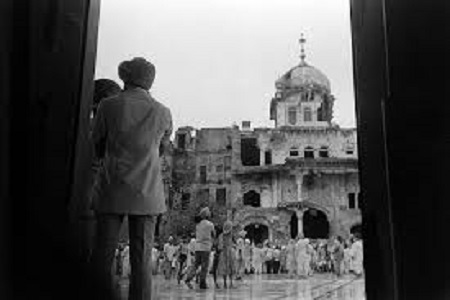
In the summer of 1984, a tragic and defining chapter unfolded in Indian history—Operation Blue Star, a military action ordered by the Indian government under Prime Minister Indira Gandhi, to flush out Sikh militants, including the leader Jarnail Singh Bhindranwale, who had taken refuge in the Golden Temple complex in Amritsar. What was executed as a counterinsurgency operation turned into a national trauma, especially for the Sikh community. Four decades on, its memory remains raw, its pain festering like an open wound.
The operation was launched on June 1, 1984, and reached its devastating peak between June 5 and 8, with the Indian Army storming the holiest shrine of the Sikhs—the Harmandir Sahib, popularly known as the Golden Temple. The timing of the operation—coinciding with the martyrdom anniversary of Guru Arjan Dev, when the temple was thronged with pilgrims—added to the grief and shock experienced by the community.
The Toll: Lives Lost and Sanctity Violated
Official figures of casualties remain controversial. The Indian government at the time claimed around 492 civilian deaths, including militants and pilgrims. However, independent estimates and Sikh organizations argue the number was significantly higher, with figures ranging from 3,000 to 5,000 civilians, many of whom were unarmed worshippers trapped inside the complex. 83 Indian Army personnel also lost their lives, and over 200 were injured.
The damage to the Akal Takht, the highest seat of temporal authority for the Sikhs, was particularly heart-wrenching. The historic structure was reduced to rubble, its walls perforated by bullets, its sanctity desecrated by tanks and artillery fire. Rare manuscripts, scriptures, and artworks were destroyed, a loss that can never be compensated.
The Psychological and Civil Fallout
The immediate aftermath of Operation Blue Star saw Punjab placed under virtual martial law, with strict curfews, mass arrests, and widespread surveillance. Thousands of Sikh youths were detained without charge or trial under preventive detention laws such as the National Security Act and the Armed Forces (Special Powers) Act. Families were broken, civil liberties suspended, and a climate of fear hung over the state for years.
The Sikh community across India and abroad was devastated. The wounds deepened with Operation Woodrose, a lesser-known but equally brutal military campaign in rural Punjab that followed Blue Star, aimed at rooting out “suspected militants.” Thousands of young Sikh men “disappeared” or were extrajudicially killed, their bodies never returned to their families.
Betrayal of a Community
The Sikhs, who make up just about 2% of India’s population, have contributed far beyond their numbers to the defense and development of the nation. They fought valiantly for India’s freedom, and after independence, they stood at the nation’s borders, defending it in every war. Yet in 1984, they were made to feel like outsiders in their own land.
The very sanctum sanctorum of Sikhism was turned into a battlefield by those entrusted with safeguarding the country’s unity and diversity. The barbarity of storming a sacred shrine, especially when peaceful alternatives had not been fully exhausted, felt to many Sikhs like a deliberate provocation, a message that their faith and heritage were dispensable in the pursuit of state power.
Many Sikhs ask, rightly: Would such an operation have been carried out in any other place of worship with similar force and timing? The sense of betrayal remains intense. What compounded the trauma was the lack of accountability, no official apology, and the subsequent anti-Sikh pogroms in November 1984 after Indira Gandhi’s assassination, where thousands more were murdered in cold blood—with state complicity and impunity.
A Memory that Refuses to Fade
For Sikhs around the world, Operation Blue Star is not just history—it is lived memory. It is their Holocaust moment, a violent rupture that has shaped the community’s relationship with the Indian state ever since. Just as the Jewish people have not forgotten the Holocaust, the Sikhs have not forgotten Blue Star. It is their green wound, unhealed and perhaps unhealable.
Memorials in gurdwaras, stories passed from generation to generation, and annual commemorations serve not only as acts of remembrance but as assertions of identity and resistance against forgetting. While governments have changed and political narratives evolved, no amount of time has dulled the pain of watching tanks roll into the most sacred site of Sikhism.
A Call for Justice and Healing
Even today, many Sikhs feel that the state has not adequately acknowledged the enormity of what was done. Truth-telling, accountability, and real justice have been scarce. There is an urgent need for the Indian state to engage in genuine reconciliation, not through token gestures, but through institutional reform, historical honesty, and an apology that truly acknowledges the depth of hurt inflicted.
Operation Blue Star was more than a military operation—it was a violation of trust, a rupture in the secular promise of India. Whether the movement led by Bhindranwale was right or wrong is a debate for historians and political scientists. What is beyond debate is that the handling of the situation was catastrophic, and the brutality inflicted on an entire community has left scars that remain visible even today.
As India celebrates its democratic credentials, it must also confront the ghosts of its past. For the Sikhs, 1984 is not over. It is a continuous echo, a festering sore that demands to be seen, acknowledged, and remembered.
In a nation that has long held aloft the torch of academic freedom, intellectual pursuit, and free speech, recent developments under President Donald Trump’s administration point to a dangerous departure from foundational values. In a series of moves that have alarmed educators, students, and civil rights advocates alike, the administration has taken aim at premier institutions like Harvard and at the student community as a whole — particularly foreign students. The implications are wide-ranging, and they reach deep into the heart of America’s identity as a beacon of liberty and innovation.
President Trump’s repeated rhetorical assaults on Harvard University — once lauded globally for its academic excellence — are not isolated incidents. He has accused elite universities of harboring “radical ideologies,” of being “un-American,” and has suggested that they are breeding grounds for “anti-national sentiment.” This is not just political posturing. These statements are accompanied by real policy decisions: threatened revocation of federal funding, calls for investigations into campus activities, and a chilling climate in which even peaceful student protests are construed as acts of subversion.
By directly targeting educational institutions, the Trump administration is signaling a message that only conformity — not inquiry — will be tolerated. It is a dangerous erosion of the principle that universities must remain independent, critical spaces where ideas — even controversial or unpopular ones — can be debated and examined.
Perhaps even more troubling are the administration’s immigration policies as they pertain to students. The suspension of visa interviews, tightening of F-1 student visa rules, and veiled (and sometimes overt) threats to deport foreign students participating in demonstrations seen as “anti-American” mark a stark deviation from the country’s historical role as a destination for the world’s best and brightest minds.
These moves are not merely bureaucratic adjustments. They are symbolic attacks on global academic mobility. Students from around the world have long brought diversity, intellectual rigor, and fresh perspectives to American campuses. Discouraging their arrival through a climate of suspicion and hostility not only isolates the U.S. academically but also deprives its campuses of the rich, intercultural dialogue that has propelled American innovation in science, medicine, business, and the arts.
The message is loud and clear: dissent is dangerous, and association with perceived dissent may cost you your education, your visa status, and your future.
The effects of these policies are not limited to foreign students. American students are watching, and they are internalizing the growing authoritarian tone from the very top. The atmosphere of fear, censorship, and conditional expression has a detrimental impact on student morale, initiative, and emotional development.
Youth is the age of questioning, of forming opinions, and of charting one’s own course. If students are taught — either directly through policy or indirectly through fear — that expressing disagreement with state policies is punishable or traitorous, they will either withdraw from public discourse altogether or adopt a dangerous conformity that is anathema to true learning and leadership.
We are already seeing signs of self-censorship in classrooms, reduced student participation in activism, and growing mental health concerns among university communities. The long-term consequences for civic engagement, creativity, and critical thinking are grim.
There is an overarching pattern that emerges when we examine this administration’s posture toward education and the youth: disdain for intellectualism, suspicion of diversity, and contempt for dissent.
Whether it’s attempts to revise school curriculums to align with a narrow nationalistic narrative, dismissing climate change as “liberal hysteria” despite scientific consensus, or branding student protests as “riots” and “rebellion,” the message is unmistakable. The administration does not value the independence of mind and spirit that education cultivates. Instead, it favors a docile, uncritical citizenry that is easier to manipulate and control.
This is not merely anti-progress. It is anti-American.
America has long prided itself on being the land of freedom — freedom of religion, speech, thought, and belief. The First Amendment enshrines these values as sacrosanct. Universities are perhaps the most vivid manifestation of this freedom — places where young people are encouraged to challenge assumptions, question authority, and shape a better world.
To stifle that spirit under the guise of national security or ideological purity is to betray the very ethos on which the country was founded. What the Trump administration is attempting to do is not a reform of higher education — it is a redefinition of it, through intimidation and suppression.
If these trends are allowed to continue unchecked, we risk cultivating a generation of youth who are more afraid than inspired, more obedient than original, and more disengaged than committed. We will lose not only our standing as a global educational leader but also the very soul of our democracy.
The attacks on Harvard and other universities, the clampdown on foreign students, and the broader climate of intolerance toward youth expression must be seen for what they are — part of a larger war on knowledge, diversity, and freedom. These are not mere policy missteps; they are existential threats to the future of American education and democracy.
The younger generation deserves a nation that believes in them, nurtures their intellect, respects their voices, and protects their right to question. For the sake of America’s future — and its founding ideals — we must resist this regressive tide with resolve, compassion, and clarity of purpose.
Netanyahu must not be allowed to get away with mass murder
The joint statement by the leaders of Canada, France and the United Kingdom, and announcements by the U.K. and the EU to pause trade talks with Israel are proof that the Netanyahu government is growing more isolated over its brutal campaign on Gaza. Since the ceasefire ended on March 18, over 3,000 residents have been killed in the enclave, according to the Gaza Health Ministry. Israel’s chokehold on aid and humanitarian supplies has pushed thousands to the brink of starvation, a fact that even Donald Trump, President of Israel’s all-time ally, the U.S., referred to during a trip to West Asia last week. Mr. Trump’s decision to skip Israel was seen as a mark of his displeasure with Prime Minister Benjamin Netanyahu’s policy on the issue. Despite the rebukes, Mr. Netanyahu has said Israeli Defence Forces needed to continue to target Hamas operatives in the area, and added that Israel would now re-take full “military control” of the Gaza strip, which the IDF had vacated in 2005. The comments provoked an angry response from the leaders of Canada (Mark Carney), France (Emmanuel Macron), and the U.K. (Keir Starmer), all of whom had pledged their support to Israeli actions in response to the October 7, 2023 terror attacks. They called the level of human suffering in Gaza “intolerable” and Israel’s escalation of bombardment a “disproportionate” response, condemned the Israeli leadership for threatening to evict all Palestinians forcibly from the strip, and recommitted to a “two-state solution” for Israel and Palestine, to be discussed at a United Nations conference in June. Significantly, the three countries even threatened sanctions against Israel. Mr. Netanyahu’s response, to accuse the three leaders of handing Hamas a “huge prize”, and vowing not to stop “until total victory is achieved”, indicates that he still believes that he can continue without being checked.
It is time for the international community to speak up so that Mr. Netanyahu does not think he can get away with what international agencies are calling genocide. New Delhi has notably thus far not issued any statement. This silence may be because of its own preoccupation with Pakistan and due to Israel’s unequivocal support over Operation Sindoor. There is no link or equivalence between the two situations, however. Too many lives have been lost in the incessant bombardment by Israel of an area of two million people. Despite the depredations, Israel has not, with any clarity, met its objectives of bringing back the hostages or of wiping out Hamas’s presence there yet. Mr. Netanyahu has tried to frame his government’s actions as a “war of civilisation over barbarism”, but it is he who must consider how much this direction-less war that appears to punish the weakest and most defenceless the most resembles the latter more than the former, as the numbers of supporters for this war diminish worldwide.
(The Hindu)
A professor’s arrest for posts points to misuse of law against dissent
In an unconscionable act, a professor of political science at Ashoka University, Ali Khan Mahmudabad, was arrested on Sunday by the Haryana Police after two separate first information reports (FIR) were registered against him in Sonipat. These FIRs were over his social media posts in connection with Operation Sindoor. The first message analyzed the strategic reasons for India’s Operation Sindoor as it had to tackle a Pakistan regime — led by the military — that has sought to hide behind non-state actors while promoting terror in India. It also noted how the empanelment of Muslim military officers in India’s press briefings showcased the pluralist vision of the country, even though this was in contrast with the communal reality that Muslims face in many parts of India in recent years. The second post condemned the “blind bloodlust for war” by some netizens following the ceasefire, while arguing that only the world’s military-industrial complex benefited from war and that both Hindu and Islamic scriptures emphasized that patience and restraint are virtues in conflict. There is nothing objectionable in his posts that were lucid and patriotic calls for an inclusive India and evinced an understanding that India has been forced to target terror-hubs in Pakistan by removing the distinction between terrorists and the larger terrorist infrastructure backed by Pakistan’s military regime. The Haryana Police’s move was based on complaints by office-bearers of the Bharatiya Janata Party (BJP)’s Yuva Morcha and the Haryana State Women Commission Chairperson Renu Bhatia, which said that the posts were disparaging to women in uniform and attributed malicious intent to the Indian government. This is plainly false, and there should have been little basis for the Haryana Police to have acted on these complaints, if they had cared to read and understand the clear messages in the posts.
It is also alarming that the arrests have been made on charges that are related to endangering the country’s sovereignty and integrity, and promoting enmity between different groups — akin to the charges of sedition levelled against dissidents in the recent past. Too often, and very wrongly, the charge of sedition has been used by law enforcement agencies across India to quell dissent and the professor’s travails are symptomatic of a pernicious trend in recent years, especially in States ruled by the BJP. His arrest is also a reflection of the worsening state of academic freedoms, where critical understanding and reflections in institutes of higher education on the policies and the actions of the state and governments have been frowned upon and even criminalized in some cases. On Monday, the Supreme Court of India agreed to urgently hear the professor’s case against his arrest. The Court must reiterate the importance of the freedom of expression and come down heavily on law enforcement agencies that misuse powers to slap serious charges related to sedition, on frivolous grounds.
(The Hindu)
President Donald Trump’s recent tour of the Middle East in May 2025 has laid bare the contours of a new U.S. foreign policy—one that unapologetically prioritizes economic interests over traditional diplomatic alliances or democratic advocacy. By focusing his attention on Saudi Arabia, Qatar, and the United Arab Emirates (UAE), Trump signaled not only a departure from the post-WWII American posture of promoting liberal values but also a reconfiguration of geopolitical strategies that places commerce, investment, and military sales at the core of Washington’s engagement with the region.
This shift is neither accidental nor without precedent. It is, in fact, the natural evolution of Trump’s “America First” doctrine—now manifesting itself in the international arena as an aggressive pursuit of economic partnerships designed to bolster domestic growth, secure American industry, and entrench U.S. commercial dominance. But while this transactional approach may yield impressive short-term gains in terms of trade and defense contracts, it also raises critical questions about the ethical and strategic costs of abandoning the values that once underpinned American diplomacy.
Trump’s visit was not one of symbolic diplomacy or subtle statesmanship; it was a high-stakes business tour dressed in presidential protocol. In Riyadh, the President clinched a staggering $600 billion investment package alongside a $142 billion defense deal—underscoring Saudi Arabia’s continued strategic importance to Washington, particularly in the defense and energy sectors.
From Qatar came the announcement of a historic order: 210 Boeing jets, the largest in the company’s history, followed by a bold pledge of $1.2 trillion in U.S.-bound investment. The UAE also made its presence felt, committing over $200 billion in agreements that focus heavily on emerging sectors like artificial intelligence and clean energy—sectors where the U.S. sees both economic opportunity and global leadership potential.
What ties these agreements together is their emphasis on mutual benefit rooted in material exchange. The old model of foreign aid and conditional diplomacy has been replaced by high-value contracts and quid pro quo partnerships, transforming America’s role in the Middle East from that of ideological leader to commercial broker.
At home, the economic dividends are not insignificant. Trump has made job creation and industrial rejuvenation the cornerstone of his presidency, and these agreements—especially those in aerospace, defense, and tech—may well create or sustain hundreds of thousands of American jobs. The optics of revitalizing U.S. manufacturing through foreign capital inflows play directly into Trump’s political narrative ahead of the 2026 midterms and a likely 2028 successor race.
But the implications abroad are more complex.
By cementing deeper economic ties with Saudi Arabia, Qatar, and the UAE, Washington is doubling down on its Gulf alliances, even as its traditional partners—such as Turkey, Egypt, and even Israel—navigate their own recalibrations of foreign policy. This selective partnership risks fragmenting the region’s delicate balance of power. It also signals to allies and adversaries alike that U.S. favor can now be secured through economic alignment, not necessarily shared values.
Perhaps the most alarming aspect of this strategy is its implicit disinterest in the democratic credentials of America’s partners. Saudi Arabia remains mired in controversy over human rights violations, the silencing of dissent, and the murder of journalist Jamal Khashoggi. Qatar and the UAE have also been scrutinized for labor abuses and restrictions on civil liberties. By rewarding these governments with massive economic deals without demanding reforms, the U.S. undermines its moral authority and sends a chilling message: economic utility now trumps ethical governance.
The Gulf nations still hold considerable sway over global energy markets. With closer trade integration, the U.S. could find itself increasingly entangled in oil diplomacy that pits short-term pricing stability against long-term climate commitments. Moreover, if economic leverage becomes the primary currency of bilateral relations, these countries may also gain undue influence over U.S. policy decisions—particularly in times of global energy crises or military conflicts.
There is no denying that Trump’s approach has a clear logic: replace costly foreign entanglements with self-sustaining economic relationships. But such logic may prove short-sighted. Economic partnerships, unlike alliances built on shared democratic ideals or security frameworks, are inherently fragile. They can be renegotiated, revoked, or redirected. Should another global power—say China or Russia—offer more attractive terms to these same Gulf nations, what is to stop them from pivoting away from Washington?
Moreover, in conflating economic might with diplomatic strength, the U.S. risks alienating parts of the world where democratic aspirations remain unfulfilled or under siege. In these places, America’s past support of free media, judicial independence, and civic rights was seen not only as desirable but essential. The new model offers no such hope. It offers capital, contracts, and arms—but little in the way of moral or ideological solidarity.
Trump’s Middle East gambit is a clear indicator of where American foreign policy is headed under his renewed leadership: toward a future where financial transactions eclipse political transformations, and where statecraft becomes synonymous with deal-making. It is a bold vision, but it is also a risky one.
In the immediate term, the optics and economics may favor Trump. With hundreds of billions flowing into U.S. industries, he can rightfully claim to have reinvigorated key sectors of the American economy. But if this economic surge comes at the expense of America’s global credibility, diplomatic trustworthiness, or ethical standing, it may leave a far more dangerous legacy.
America’s greatest strength has never been merely its GDP or its military—it has been its ideals. Those ideals may not always win wars or balance budgets, but they inspire, they lead, and they endure. In treating foreign policy as a balance sheet, President Trump may be winning deals—but he may also be writing off the very values that once made American leadership worth following.
The renewed hostilities between India and Pakistan have once again cast a dark shadow over South Asia. The April 22 massacre of 28 Hindu tourists in Kashmir—allegedly by Pakistan-backed terrorists—has shaken the region and reawakened the ghosts of a tragic past. Once again, we find ourselves trapped in the vicious cycle of violence, retaliation, and brinkmanship. This cycle is not just a South Asian concern—it is a danger to global peace.
In 1947, the partition of British India tore apart a united land of shared heritage, culture, and kinship. India, embracing secularism and pluralism, set out to be a diverse democracy. Pakistan, born as an Islamic republic, built its identity partly in opposition to India. The conflict over Jammu & Kashmir—a Muslim-majority region ruled by a Hindu monarch—ignited the first Indo-Pak war. Two more wars followed, in 1965 and 1971, the latter resulting in the creation of Bangladesh.
Despite international attempts at mediation and decades of diplomacy, Kashmir remains a flashpoint, fueling both nationalistic fervor and militant agendas.
Pakistan’s long-standing policy of backing non-state actors in Kashmir has resulted in years of insurgency and civilian suffering. In 2019, the Indian government revoked Article 370, stripping Jammu & Kashmir of its special status. While seen as a nationalistic victory by many in India, the move provoked discontent among Kashmir’s Muslims and was widely criticized abroad. Pakistan responded with renewed political rhetoric and continued support for terror networks.
Meanwhile, India’s domestic politics have become increasingly polarized, with accusations that the ruling establishment is undermining secularism and marginalizing minorities. This ideological shift has made constructive dialogue with Pakistan nearly impossible.
The April 22 massacre was a heinous act—targeting innocent tourists who had come to experience Kashmir’s natural beauty. The loss of these 28 lives is a stark reminder of how civilians are caught in the crossfire of unresolved political and religious tensions.
India’s response was swift. Precision strikes were launched against known terrorist camps in Pakistan-occupied territory, carefully avoiding civilian and military targets. Yet, Pakistan retaliated, interpreting this as an act of aggression—thus escalating an already volatile situation.
Neither country can afford another war. Pakistan’s economy is in crisis—beset with inflation, debt, and weak governance. Its military obsession has drained public welfare, leaving hospitals under-resourced, schools underfunded, and millions of youth without opportunities.
India, while rising economically, still faces vast internal challenges—poverty, unemployment, malnutrition, and an overburdened healthcare system. A military conflict would drain resources better spent on human development.
The future demands a different vision. India must reclaim its secular, inclusive identity and resist the allure of majoritarian politics. Pakistan must dismantle its terror infrastructure and cease viewing Kashmir solely through a religious and military lens.
The global community must play a more assertive role. The United States, European Union, China, Russia, and key Gulf nations like Saudi Arabia and the UAE must use their influence to urge de-escalation. A peaceful, prosperous South Asia aligns with global security and economic interests.
The citizens of India and Pakistan are not born enemies. They share language, food, music, and deep ancestral ties. It is not the people but the extremists—whether state actors or shadow forces—who perpetuate animosity.
Let the April 22 tragedy serve not as a prelude to more bloodshed, but as a call to conscience. Let it awaken both governments to the futility of violence and the promise of peace. Let this be the moment we choose dialogue over destruction, reconciliation over rivalry.
Only by walking the path of peace can we fulfill the unfinished promise of 1947—a subcontinent where freedom, dignity, and development are the birthright of all.
State surveillance must be subject to systemic checks and supervision and not mirror the nefarious activities of the dark underworld. As a Supreme Court of India Bench pointed out, the question is not whether the state can use spyware, but who could be its legitimate targets. The Bench, during a hearing on the alleged surveillance of politicians, judges, religious leaders, civil servants and journalists by some state entity, was evidently seeking to curtail arbitrary use of the powers and tools of surveillance. The government has neither confirmed nor denied that it uses Pegasus, an Israel-made military grade spyware that is sold only to state agencies, which was used to target a wide range of people. The matter reached the Court after global revelations about the existence and the use of this tool, and it appointed a technical committee whose investigation was constrained by a lack of cooperation from alleged targets and the government. Several high-profile users of the iPhone, the primary target of Pegasus, continued to get security alerts from the manufacturer that they were targets of suspected state surveillance, even as the matter was before the judiciary. States the world over have used extra-legal measures to snoop on targets that tried to firewall their communication using rapidly evolving technologies. Terrorists and other non-state actors, and criminals are using encryption and other advanced technologies to evade detection as they plot to harm the wider society. Without adequate legal and technological wherewithal, the state would be ineffective in dealing with emerging national security threats. In this context, and particularly against the backdrop of the terrorist attack in Pahalgam in Jammu and Kashmir, the Court has framed a relevant question.
The tendency of the government to arbitrarily invoke national security in defense of a brazen denial of due process and transparency in law enforcement has been called out by the Court in the past. There is also the disturbing trend of government actors routinely labelling political opponents as anti-nationals. If the state is to claim more surveillance powers, corresponding and robust guardrails must also be engineered. National security cannot be an excuse for executive arbitrariness and a violation of individual rights and dignity. Protocols that ensure that clearly defined standards and steps are followed in surveillance must be established. Once the security concerns are overcome, and within appropriate timelines, these processes should be subject to oversight by other branches of government and the public at large. At any rate, no state agency can have the authority to interfere in the democratic politics of the country, or stifle dissenting voices and activism. While trying to tackle an uncertain security environment, the compass of India’s constitutional democracy must stay firm.
(The Hindu)
The UN Security Council’s statement on Friday (April 25, 2025) condemning “in the strongest terms” the terrorist attack in Pahalgam, was necessary, but inadequate. According to the statement, which expressed condolences to India, and to Nepal which lost one citizen, the members of the Security Council, that include Pakistan as an elected, non-permanent member this year, “reaffirmed that terrorism in all its forms and manifestations constitutes one of the most serious threats to international peace and security”. The statement also spoke of the need to bring the perpetrators and their sponsors to justice. However, the UNSC did not name The Resistance Front (TRF) that initially claimed responsibility for the attack, and did not refer to the group’s linkages to a UNSC-designated terror outfit, the LeT. Nor did it expressly speak of cooperation with the Government of India, as it had in the past. Finally, the statement made no mention of the terrorists’ intent to target non-Muslims — an abhorrent act aimed at instigating communal tensions. A comparison with previous such statements would make it clear that the language was “watered down” given that Pakistan is a member of the Council (2025-26), and had China’s support. China has in the past sought to veto statements critical of Pakistan. It is also disappointing that the statement, which was negotiated by France’s envoy, the current UNSC President, did not bring stronger inputs from others on the Council including the U.S., Russia and the U.K.
As the government and security forces discuss counter-terror operations within Jammu and Kashmir to apprehend the terrorists and possible military options across the border, India’s next option may be to bring a more strongly worded statement to the UN General Assembly, as various countries have done in the Ukraine and Gaza conflicts. The government would no doubt be preparing to have those terrorists it has identified from the attack and the TRF itself, designated by the UNSC, much the same way as it was able to bring the designation of Pakistan-based Jaish-e-Mohammad chief Masood Azhar as a terrorist after the Pulwama attack. In addition, India could build its case at the Financial Action Task Force, which put Pakistan on a “greylist” from 2012-15 and 2018-22, and revive its plans to pass a Comprehensive Convention on International Terrorism at the United Nations. On the bilateral front, expecting assistance from Pakistan has been a dead-end in the past, despite its promises after Mumbai (2008), Pathankot (2016), and Pulwama(2019). Given the state of bilateral relations and the lack of diplomatic engagement, this is even less likely. Only a multi-pronged effort on the global stage, and the patience it showed with the extradition of Tahawwur Rana from the U.S., will ensure that India is able to follow all the threads in bringing those responsible for this brutal attack to justice and establish a durable peace.
(The Hindu)
The election of Mark Carney as Canada’s Prime Minister offers a much-needed opportunity to reset the strained ties between Ottawa and New Delhi. Relations had hit a nadir under Justin Trudeau, particularly after his 2023 allegations linking Indian agents to the killing of Hardeep Singh Nijjar — claims India strongly denied. The diplomatic fallout severely disrupted political, economic and people-to-people exchanges. Carney’s rise may mark a course correction. Unlike his predecessor, he is pragmatic, globally respected and more measured in tone. His message of ‘Canada Strong, Canada Free’ suggests a desire to reinforce domestic stability while restoring international relationships. That could bode well for India, which is a key trade, strategic and people-link partner. Carney’s experience as a central banker and investment leader with exposure to Indian markets positions him well to re-engage. His stated intent to “rebuild the relationship with India” must translate into action — especially in resuming CEPA trade talks, facilitating student visas and stabilizing immigration policies. Prime Minister Narendra Modi’s congratulatory message to Carney on his election, too, reflects hope for a strengthened partnership.
The uncertainty in recent years has affected thousands of Indian students and immigrants in Canada. Visa delays, post-study work anxieties and a perceived hostile environment have undermined Canada’s image as a welcoming destination. Carney’s administration must act quickly to reassure this vital constituency, which contributes billions to the Canadian economy and adds to its skilled workforce. India, for its part, must be prepared to move beyond recent hostilities. However, it will be watching how Ottawa handles sensitive issues like Khalistani extremism and diaspora-linked radicalism.
With the global order shifting and US politics growing unpredictable, deeper India-Canada engagement in climate action, education and digital innovation can offer stability. Carney’s victory could be the diplomatic opening both nations need — provided neither lets it slip into a missed opportunity.
(Tribune, India)
Pope Francis, born Jorge Mario Bergoglio, passed away on Easter Monday, April 21, 2025, at the age of 88. His death followed a stroke and irreversible heart failure, occurring in his residence at the Vatican’s Casa Santa Marta. His final moments were marked by peace, surrounded by close aides and Cardinal Pietro Parolin, who recited the rosary at his bedside.
Born on December 17, 1936, in Buenos Aires, Argentina, Jorge Mario Bergoglio was the eldest of five children in a family of Italian immigrants. His father, Mario José Bergoglio, was an accountant, and his mother, Regina María Sívori, was a homemaker . After earning a chemical technician’s diploma, he felt a calling to the priesthood and entered the Society of Jesus in 1958. Ordained in 1969, he served as the Jesuit provincial superior in Argentina from 1973 to 1979, emphasizing pastoral care and spiritual guidance. His leadership during Argentina’s turbulent political climate showcased his commitment to social justice and the marginalized.
Appointed Archbishop of Buenos Aires in 1998 and elevated to cardinal in 2001 by Pope John Paul II, Bergoglio became known for his humility and dedication to the poor. On March 13, 2013, following Pope Benedict XVI’s resignation, he was elected as the 266th pope, taking the name Francis in honor of Saint Francis of Assisi. He was the first Jesuit pope, the first from the Americas, and the first non-European pope in over a millennium.
Pope Francis’s tenure was marked by a commitment to inclusivity, humility, and social justice. He chose to reside in the modest Casa Santa Marta rather than the Apostolic Palace, reflecting his desire for a simpler, more accessible papacy . He emphasized the Church’s role in addressing global issues, notably through his 2015 encyclical “Laudato Si’,” which called for urgent action on climate change and environmental stewardship.
Francis sought to make the Church more welcoming to marginalized communities. He opened discussions on allowing priests to bless same-sex couples and reversed bans on transgender individuals serving as godparents or being baptized . While doctrinal teachings remained largely unchanged, his emphasis on empathy and compassion marked a significant tonal shift within the Church.
Recognizing the need for greater female participation, Pope Francis appointed women to key Vatican positions, including Raffaella Petrini as the first female secretary general of the Vatican’s governorate and Simona Brambilla as prefect of the Dicastery for Institutes of Consecrated Life. He also allowed women to vote in synods, signaling a move toward inclusivity, though he stopped short of endorsing female ordination.
Pope Francis’s global influence was profound. He drew massive crowds, such as the six million attendees during his 2015 visit to the Philippines . His advocacy for peace, interfaith dialogue, and the rights of refugees and migrants resonated worldwide. Despite facing criticism from conservative factions, his efforts to modernize the Church and address contemporary issues left an indelible mark.
In his final days, Pope Francis continued to fulfill his duties, delivering an Easter blessing from a wheelchair. He passed away peacefully, as per his wishes, and requested a simple burial at the Basilica of St. Mary Major in Rome, becoming the first pope to be interred outside the Vatican since Pope Leo XIII in 1903.
Pope Francis’s life was a testament to humility, compassion, and a relentless pursuit of justice. His papacy challenged the Church to embrace inclusivity and address the pressing issues of our time. As the world mourns his passing, his legacy endures, inspiring future generations to lead with empathy and courage.
Two issues have returned to dominate American political discourse with renewed vigor—tariffs and immigration. For President Donald Trump and his inner circle of advisors, the latter has once again become a rallying cry. Rhetoric around “protecting American jobs” and “securing our borders” fills the airwaves, but this well-worn political drumbeat continues to ignore an enduring and essential truth: America was built by immigrants—and it still needs them.
Let us not forget that those in power today are descendants of immigrants—many of whom arrived under far more chaotic and desperate circumstances than those they now seek to shut out. The United States of America has never been an island for a single race, religion, or ideology. It is a mosaic, defined by the struggles and triumphs of those who left everything behind to make a new life here. And it is precisely these people—immigrants—who have given America its strength, resilience, and global leadership.
The American story is inseparable from the immigrant story. From the Irish fleeing famine, to Italians seeking work, to Jews escaping persecution, to South Asians, Latin Americans, Africans, and East Asians pursuing the American Dream—the lifeblood of the nation has flowed from across the seas.
Today, immigrants make up nearly 14% of the U.S. population, amounting to over 45 million people, according to the Pew Research Center. Add their U.S.-born children, and the number rises to over 80 million—about one-fourth of the entire population. This is not a fringe demographic. This is America.
Immigrants disproportionately fill essential roles in American society:
Health Care: According to the Migration Policy Institute, immigrants make up 17% of all health care workers, including 28% of physicians and 38% of home health aides.
Agriculture: An estimated 73% of agricultural workers in the U.S. are foreign-born. These are the individuals who pick our fruits and vegetables, often under grueling conditions.
Construction: Roughly 25% of construction laborers are immigrants, keeping our infrastructure standing and expanding.
Technology: In Silicon Valley, over 45% of tech start-ups are founded by immigrants or their children. Think Google (Sergey Brin), Tesla (Elon Musk), and eBay (Pierre Omidyar).
Without immigrants, hospitals would falter, food supply chains would break, infrastructure would stall, and innovation would dry up.
Contrary to populist fear-mongering, immigrants are not a burden on the American economy—they are an asset.
A 2016 study by the National Academies of Sciences, Engineering, and Medicine found that immigration has an overall positive effect on long-term economic growth. First-generation immigrants may consume more public benefits initially, but their children—U.S.-born—contribute more in taxes than they receive in benefits over a lifetime.
Moreover, immigrant-owned businesses employ over 8 million Americans, according to the American Immigration Council. As of 2021, immigrants made up 20% of all entrepreneurs in the country. They are not taking jobs—they are creating them.
The notion that America will benefit by keeping out low-skilled immigrants is equally flawed. A so-called “gold card” system—where only the wealthy or highly educated are admitted—may sound appealing on paper, but who will do the hard, unglamorous work that keeps cities, farms, restaurants, and households running?
It certainly won’t be the financiers or tech moguls. America runs on the labor of millions—often undocumented—who clean hotel rooms, deliver groceries, wash dishes, and build homes. To pretend otherwise is willful blindness.
The irony of current immigration crackdowns is that they are coming at a time when America faces a looming labor shortage.
According to the U.S. Chamber of Commerce, there are more than 9 million job openings across the country with only about 6 million unemployed workers to fill them. The mismatch is even starker in labor-intensive sectors like agriculture, hospitality, elder care, and manufacturing.
As birth rates fall and baby boomers retire, the U.S. needs a replenished workforce. Without immigration, America will not only struggle to fill jobs—it will lose its competitive edge globally. China, India, and the EU are surging ahead in population-driven growth and innovation. America risks falling behind not because it is overrun by immigrants, but because it is turning them away.
Policy debates often reduce immigration to numbers. But immigration is also about people—families, dreams, and sacrifices.
Many of today’s immigrants arrived legally, worked tirelessly, paid taxes, and raised children who are now first responders, soldiers, doctors, and teachers. Yet they are dismissed, criminalized, or detained as if they are a threat.
Take the case of DACA (Deferred Action for Childhood Arrivals), which protects over 600,000 Dreamers—young people brought here as children through no fault of their own. They grew up American, but face constant uncertainty about their status. They are nurses, engineers, and students—yet treated as pawns in political games.
What does it say about us as a nation that we rip apart families, detain asylum seekers, or deny refuge to those fleeing violence, while continuing to benefit from their labor?
It’s not just bad policy—it’s inhumane.
No one disputes that the U.S. immigration system is broken. But the answer is not mass deportations or xenophobic walls. The answer lies in comprehensive, bipartisan immigration reform.
We need:
Pathways to citizenship for undocumented workers who have built lives here.
Fixes to legal immigration channels, which are mired in bureaucracy and long wait times.
Support for asylum seekers and better resources to process cases humanely.
Visa reforms that reflect real labor market needs—especially in agriculture, caregiving, and construction.
Unfortunately, immigration policy has become the political football of our times. Presidents sign executive orders. Courts overturn them. Congress remains gridlocked. Meanwhile, the people—the immigrants—wait in limbo.
Let Congress step up—not as Republicans or Democrats, but as Americans. Let them look beyond short-term politics and see the human and economic reality. Immigration reform is not about “them”—it’s about us.
Will we be the nation that values diversity, hard work, and the contributions of all people? Or will we be a country that closes its doors in fear, and in doing so, turns its back on the very ideals it was founded upon?
President Trump may seek to throw out millions of immigrants—but can America survive without them?
Let us not find out the hard way.
A Nation Built by Immigrants Must Not Be Broken by Intolerance.
America’s greatness does not lie in homogeneity, but in its embrace of diversity. The laborers in the fields, the waiters in the diners, the nurses in the ICUs, and the engineers in Silicon Valley—they are all America.
If we truly want to “Make America Great Again,” we must remember who made America great in the first place—immigrants.
The machinery of immigration needs fixing—but not at the cost of those who keep the machine running.
Immigrants are the Lifeblood of America’s Past, Present, and Future. It is time we honored them—not just in words, but in policy. Time for Congress to act. Time for compassion to trump cruelty. Time to reclaim the soul of America.
Vaisakhi, for centuries, was observed as a traditional harvest festival in Punjab—a celebration of the land’s fertility, the joy of abundance, and the spirit of community. Farmers would come together to give thanks for the bountiful wheat harvest, marking the arrival of the Punjabi new year with vibrant festivities, music, and joy. However, on April 13, 1699, this festival took on a new, transformative meaning—one that would not only change the course of Sikh history but also leave a deep imprint on the spiritual and socio-political fabric of India.
It was on this day that Guru Gobind Singh Ji, the tenth and final human Guru of the Sikhs, created the Khalsa Panth, a distinct spiritual and martial brotherhood committed to defending righteousness and upholding justice. What began as an agrarian festival became a sacred day of awakening, sacrifice, and empowerment. To fully understand the profound significance of this transformation, one must revisit the historical and political context in which the Khalsa was born.
The Political Backdrop: A Land Under Siege
From as early as the 10th century, the Indian subcontinent—particularly the region of Punjab—was subjected to a series of invasions from the northwest. Invaders, mostly from Persia and Central Asia, swept through the land, looting, plundering, and returning to their homelands. But with the arrival of Babur in the early 16th century, the pattern changed. Babur established the Mughal Empire, and unlike earlier invaders, he stayed, expanding his dominion deep into North India, including Delhi and beyond.
As the Mughal Empire consolidated its power, it brought with it a system of governance marked by oppression, religious intolerance, and forced conversions—especially under emperors like Aurangzeb. The Mughal rulers often imposed harsh taxes on non-Muslims, desecrated places of worship, and sought to convert large swathes of the Hindu and Sikh population by coercion or brute force.
The Guru Tradition of Resistance
It was in this hostile environment that the Sikh faith emerged and evolved as a spiritual resistance movement. The Sikh Gurus, beginning with Guru Nanak Dev Ji, opposed tyranny not with arms, but with a powerful message of equality, compassion, and divine justice. Guru Nanak’s teachings transcended caste, creed, and religion. He spoke fearlessly against the injustices of both Hindu orthodoxy and Islamic fanaticism, calling upon the rulers of the time to abandon their oppression.
Over time, as Mughal persecution intensified, the Sikh movement too evolved—from a purely spiritual path to one that embraced the need for self-defense and righteous struggle. The Fifth Guru, Guru Arjan Dev Ji, was the first Sikh martyr. He was arrested and brutally tortured on the orders of Emperor Jahangir for refusing to convert to Islam and for giving voice to the oppressed. His martyrdom marked a turning point in Sikh history.
Later, Guru Tegh Bahadur Ji, the Ninth Guru, made the ultimate sacrifice to protect the religious freedom of the Kashmiri Pandits, who were being forcibly converted by Aurangzeb. Despite having the power to flee or save himself, Guru Tegh Bahadur chose martyrdom—laying down his life not for his own faith, but for the right of others to practice theirs. This powerful stand further embedded the values of dharma (righteousness), freedom, and sacrifice in the Sikh tradition.
Guru Gobind Singh Ji and the Birth of Khalsa
Guru Gobind Singh Ji ascended to the Guruship at the tender age of nine after his father, Guru Tegh Bahadur Ji, was executed. From a young age, he understood that spiritual resistance alone would not suffice in an era of violent persecution. A new kind of disciple was needed—one who combined saintly virtues with warrior courage.
Thus, on Vaisakhi of 1699, in a gathering of thousands at Anandpur Sahib, Guru Gobind Singh Ji issued a divine call. He stood before the congregation, sword in hand, and asked for five volunteers who were willing to give their heads for the cause of faith and justice. One by one, five men stepped forward. To the awe of the gathering, Guru Gobind Singh initiated them into the Khalsa, baptizing them with Amrit (sacred nectar) and giving them a new identity, free from caste, region, or background. These five became known as the Panj Pyare (Five Beloved Ones).
Guru Gobind Singh then performed a revolutionary act—he bowed before the Panj Pyare and asked them to initiate him into the Khalsa, thereby erasing the distinction between Guru and disciple. This act epitomized egalitarianism and humility, core values of the Khalsa.
The Khalsa was given a distinct identity—marked by the Five Ks (Kesh, Kara, Kirpan, Kachera, Kangha)—symbols of purity, discipline, and readiness to serve and protect. The Khalsa were to be fearless, morally upright, and spiritually grounded. They were to rise against injustice, help the downtrodden, and live by the principles of truth and equality.
Khalsa: The Ideal of Sant-Sipahi
Guru Gobind Singh Ji envisioned every Khalsa as a “Sant-Sipahi”—a saint-soldier, someone who cultivates spiritual wisdom while being ever-ready to stand against tyranny. This dual role was revolutionary. In a world divided between ascetics and warriors, Guru Gobind Singh harmonized the two into a powerful force for good. The Khalsa was not to seek war, but never to shirk from it when righteousness was at stake.
This ideal continues to define Sikh identity today. Sikhs across the world are known for their community service, spiritual depth, and courage in defending justice—whether on battlefields, in humanitarian crises, or in everyday acts of kindness.
The Relevance of Vaisakhi Today
In today’s world—scarred by religious intolerance, social injustice, inequality, and authoritarianism—the message of Vaisakhi and the creation of the Khalsa are more relevant than ever. Guru Gobind Singh Ji’s teachings remind us that true power lies not in domination, but in the moral courage to protect the weak and uphold what is right.
Vaisakhi is not just a day of celebration—it is a renewal of commitment to live by the Khalsa ideals of purity in mind, body, and soul. It is a reminder that faith must walk hand in hand with action, that spirituality without compassion is hollow, and that true devotion demands sacrifice.
As we celebrate Vaisakhi today, let us honor not only the joyous spirit of harvest, but the deeper legacy of courage, sacrifice, and spiritual awakening that this day represents. Let us remember the Khalsa as a symbol of unity, equality, and fearless resistance against oppression.
May we draw inspiration from Guru Gobind Singh Ji, the Sant-Sipahi who gave us the Khalsa, and strive to embody his message in our lives. Let us remain ever committed to justice, compassion, and purity, and carry forward the timeless legacy of Vaisakhi—not just in ritual, but in action.
The American democratic experiment, as envisioned by the founding fathers, was predicated on a system of governance rooted in the principle of checks and balances. By distributing power among three co-equal branches—the Executive, the Legislature, and the Judiciary—they sought to protect the nascent republic from the concentration of power that had led to tyranny in the old world. In their wisdom, they foresaw the dangers of an overreaching government and ensured that no single branch could function without being held accountable by the others.
But this balance, once the pride of the American system, now appears dangerously frayed. The second term of President Donald Trump has brought into sharp focus the creeping—and now galloping—centralization of power in the Executive branch. The recent decision by the Trump administration to drop the corruption case against New York City Mayor Eric Adams exemplifies this alarming trend. In doing so, the administration has not only overridden serious investigative processes but also ignored the collective voice of public opinion. The implications of this are profound and deeply troubling.
This isn’t just about one case or one mayor. It is about the slow erosion of democratic norms and the growing tendency of the Executive to function as judge, jury, and kingmaker. A few months ago, The Indian Panorama noted with concern that the United States—often described as the world’s greatest democracy—was increasingly beginning to resemble an oligarchy, one in which power is concentrated in the hands of a few, with minimal regard for transparency, fairness, or the rule of law. That warning rings even louder today.
In democratic societies, the rule of law is paramount. The judiciary serves as the guardian of that law, ensuring that no individual—however powerful—is above it. When the Executive branch interferes with or outright nullifies judicial processes, it undermines the very foundation of democracy. The dropping of serious corruption charges against a political figure—particularly one seen to be close to or useful to the ruling administration—raises disturbing questions. Was the decision based on merit, or was it a politically motivated maneuver aimed at consolidating influence and rewarding loyalty?
It is worth remembering that the charges against Mayor Adams were not trivial. They involved serious allegations of misuse of public funds, campaign finance violations, and unethical associations with foreign entities. Federal investigators had spent months building the case, collecting evidence, and issuing subpoenas. The public, too, had taken note, with numerous editorials, civic organizations, and watchdog groups calling for accountability and a fair trial. Yet, in one sweeping move, the Trump administration’s Department of Justice dropped the charges—without a satisfactory explanation, and certainly without public consultation.
This is not an isolated incident. In recent months, we have witnessed a disturbing pattern: presidential pardons being issued not as acts of mercy or justice, but as political tools. Allies, donors, and former aides—many of them convicted on serious charges—have found themselves the beneficiaries of executive clemency. Meanwhile, critics and whistleblowers face relentless persecution. The message is clear: loyalty is rewarded, dissent is punished.
This weaponization of executive power threatens to fundamentally alter the nature of American democracy. When the President can bypass the judicial process to protect political allies, when legal accountability becomes a matter of partisan convenience, and when public institutions are turned into instruments of personal power, we move from democracy towards autocracy.
The danger is not merely theoretical. History offers grim lessons. Democracies do not fall overnight; they erode slowly, often under the guise of patriotism, strong leadership, or “draining the swamp.” Institutions are hollowed out from within, norms are discarded, and power becomes increasingly centralized. By the time the public awakens to the change, it is often too late.
The Founding Fathers envisioned a government “of the people, by the people, and for the people.” But today, we must ask: whose government is this? When public opinion is ignored, when legal processes are subverted, and when transparency is sacrificed at the altar of partisanship, we risk becoming a government of the few, by the few, and for the few.
Some may argue that the President is acting within his legal authority. Technically, perhaps. But legality is not the same as legitimacy. A president has the legal power to pardon, to appoint judges, and to direct federal prosecutions. But how those powers are exercised determines the moral and democratic legitimacy of the administration. Power wielded without restraint or accountability—even if legal—can still be tyrannical.
In a functioning democracy, the legitimacy of action is derived not just from the Constitution, but from public trust. When that trust is broken—as it has been in the case of the Adams investigation—governance becomes coercive, not consensual.
So where do we go from here?
First, the people must stay vigilant. Democracy is not self-sustaining; it requires constant engagement from its citizens. Silence and apathy are the allies of autocracy. Every time the Executive oversteps, it must be challenged—not only in courtrooms, but in town halls, newsrooms, and in the ballot box.
Second, the media must continue to serve as the fourth estate, holding power to account. In an age of misinformation and manufactured narratives, investigative journalism remains one of the most powerful tools to expose corruption and abuse of power.
Third, institutions must resist co-optation. From federal prosecutors to career civil servants, from judges to election officials, those who serve the public must remember their duty is to the Constitution, not to any political figure.
Lastly, it is up to Congress to reassert its constitutional authority. The legislative branch must no longer be a silent spectator to executive overreach. Through oversight hearings, subpoenas, and legislation, it must reclaim its role as a check on the presidency.
The United States has long stood as a beacon of democracy for the rest of the world. But that reputation is at risk. The dropping of corruption charges against a politically connected mayor may seem like a minor skirmish in the broader political battlefield. In truth, it is a warning flare—a sign that democratic norms are being sacrificed for expediency and control.
The question before us now is stark: Will America wake up to the danger? Or will it continue to drift into complacency, only to awaken one day and find the democratic republic it cherished has quietly given way to oligarchy—or worse, dictatorship?
History is watching. So are the people. The soul of American democracy depends on what we do next.
The AAP government in Punjab has been waging a war on drugs as well as corruption, but it hasn’t put up a strong fight against fiscal indiscipline. Successive governments in the state have been living beyond their means, and the current dispensation is continuing in the same vein as if there is no tomorrow. Punjab is the second-most indebted state (after Arunachal Pradesh) in the country in terms of the debt-to-GSDP (gross state domestic product) ratio. There is nothing surprising or shocking about this dubious distinction. The state finished last among 18 major states on the NITI Aayog’s Fiscal Health Index just two months ago. A similarly grim picture was painted by the Comptroller and Auditor General’s audit report in September last year — the state’s expenditure has been consistently outpacing its revenue receipts.
Things have come to such a pass that fresh loans are being taken not only to repay previous ones but also to meet routine expenses. AAP never tires of blaming the Akali-BJP and Congress governments for the crippling debt burden, but it has added to the mess by offering subsidies and freebies without bothering about the state exchequer’s precarious position. It’s obvious that tough, unpopular decisions have to be taken. Having antagonized the farming community by evicting protesters from Shambhu and Khanauri borders, will AAP go on to withdraw or rationalize free electricity for farmers? And will it also discontinue the freebie being given to domestic power consumers? However, electoral compulsions may prevent the ruling party from taking such drastic steps, even though they may be beneficial for Punjab in the long run.
Neighboring Himachal Pradesh is also facing a financial crisis, despite conscious efforts by the Congress government to tighten its belt. Revenue from the tourism, hydropower and agriculture sectors has been dwarfed by mega borrowings to fund infrastructure projects. Arresting the alarming slide should be a top priority for both Punjab and HP, which can take a cue from Haryana’s reasonably good model to manage debt and generate revenue.
When a comedian’s parody can provoke a police case, vandalism, and political outrage, it says far more about the fragility of those in power than the strength of their positions. In Maharashtra, Kunal Kamra’s satirical jibe — an improvised parody of a film song using the word gaddar (traitor) — has triggered an astonishing overreaction by supporters of Deputy Chief Minister Eknath Shinde. What began as a stand-up joke has now spiraled into a serious assault on freedom of expression, with police FIRs, venue attacks, and even municipal demolitions. Kamra didn’t name anyone. But thin-skinned leaders and their hyper-loyal mobs did the math, and the comedian is now being hunted for hurting the “sentiments” of the politically powerful.
Let’s be clear: this is not about satire crossing a line. This is about politicians who want to abolish the line entirely, placing themselves in a space where laughter is not permitted, criticism is criminalized, and public mockery is treated as treason.
Satire Has Always Made Kings Nervous — And Citizens Brave
Centuries before Kamra stood on a stage in Mumbai, court jesters in medieval Europe were the only ones allowed to speak uncomfortable truths to monarchs — under the guise of comedy. In France, Molière used biting comedies to ridicule hypocrisy and corruption in the 17th century. His plays were so pointed that clergy and aristocrats tried to shut him down. But Louis XIV, to his credit, saw the value of satire and protected him.
Flash forward to the 18th century. The great English satirist Jonathan Swift, in his essay A Modest Proposal, suggested (with brutal irony) that the Irish poor should sell their children as food to the rich. It was shocking — but it was satire. And it laid bare the cruelty of British colonial policy in Ireland more effectively than any official protest.
Even in modern America, late-night comedians like Jon Stewart and John Oliver have often done the job that journalists wouldn’t — exposing hypocrisy, war propaganda, and corporate corruption. Stewart’s takedown of CNN’s Crossfire was so impactful that the show was eventually canceled. Did anyone arrest him? No. The satire forced institutions to reflect and reform.
Satire, in every era, holds up a mirror. And the ones who smash the mirror aren’t protecting society — they’re protecting their image.
Why Indian Politicians Fear the Punchline
In India today, the political class increasingly wants to be treated not as public servants but as sacred cows — revered, untouched, unchallenged. Any attempt to joke about them is treated not as a healthy sign of democratic discourse but as blasphemy.
And this fear of laughter isn’t limited to Maharashtra. Cartoonist Aseem Trivedi was jailed on charges of sedition. Stand-up comics have been targeted, canceled, or investigated for jokes they never even told (as in the case of Munawar Faruqui). Even social media satire now invites FIRs from aggrieved political workers. These are not isolated incidents; they represent a full-blown war on satire.
The irony is that many of these politicians rose to power by mocking others — attacking opponents with slogans, memes, and street plays. But once in power, they want immunity from the very tools they once wielded. The message is clear: you can ridicule, but only if it serves us.
Kamra’s “Crime”: Daring to Joke in Public
Let’s revisit what actually happened. Kamra sings a parody using the word gaddar. Shinde’s followers — seeing themselves in the unnamed figure — vandalize the performance venue. Instead of reining them in, the Mumbai police books Kamra under new criminal laws for “promoting enmity” and defamation. The municipal corporation suddenly finds “unauthorized structures” and demolishes parts of the venue.
This is not law enforcement. This is punishment theatre. This is politics using state machinery to settle personal scores — dressed up as protecting “public sentiment.”
And the most chilling part? The government wants a public apology. Why? Because satire dared to wound pride. This is less about law and more about forced humiliation — the kind of authoritarian reflex you expect from regimes that fear jokes more than they fear corruption.
Democracy Dies When You Can’t Laugh at It
Laughter, especially in hard times, has always been a form of resistance. It relieves pressure. It exposes hypocrisy. It says: I see you, and I’m not afraid to call you out. The moment politicians become immune to satire, they also become immune to accountability.
The Constitution of India guarantees freedom of expression. But today, we live in a country where the right exists only on paper — like a toy gifted to a child, but locked away in a glass box. The Kamra episode is just the latest reminder: if you’re an artist, your right to speak ends where a politician’s ego begins. It doesn’t have to be this way.
India has a long, proud tradition of humor — from Tenali Raman and Birbal to Jaane Bhi Do Yaaro and Political Punch. Satire has always helped us cope, and more importantly, helped us think. If we begin punishing it, we’re not just silencing comedians — we’re silencing citizens.
Let the Politicians Take a Joke
History teaches us that satire doesn’t destroy democracy — it protects it. The French Revolution had its caricatures, the American civil rights movement had its protest songs, and the fight against apartheid had sharp political theatre.
So, here’s some free advice to India’s politicians: learn to take a joke. If you can’t laugh at yourselves, maybe you’re the problem, not the punchline.
Nagpur riots saw the use of a medieval trope to polarize people
There is ample empirical evidence that riots in India are often orchestrated by vested interests and are not spontaneous eruptions of social tensions. It would therefore be inaccurate to attribute the violence in Nagpur, which left dozens injured, solely to rumor-mongering or impulsive reactions. For days since the Budget session began on March 3 in Maharashtra, the ruling right-wing parties have persistently invoked the legacy of Mughal emperor Aurangzeb as a political talking point. That a medieval ruler remains a recurring subject in contemporary political discourse not only highlights the misplaced priorities of governance but also raises suspicions that these controversies are being deliberately manufactured to distract from pressing livelihood issues. The evidence supports this view — Maharashtra, its rural regions in particular, is grappling with inflation, farmer suicides, and economic distress. Yet, instead of addressing these urgent concerns, the political machinery appears focused on stoking public discord through inflammatory rhetoric, manipulating communal loyalties for electoral gains. These tactics were evident during the recent Assembly election campaign, where prominent leaders of the Bharatiya Janata Party (BJP) and its allies repeatedly invoked Aurangzeb as a campaign issue. The intent behind this rhetoric was clear: a dog whistle designed to mobilize the majority community by casting Muslims as inheritors of a long-dead ruler’s legacy. Research indicates that riots are less likely to occur in societies where interfaith civic engagement is strong. The fact that riots erupted in Nagpur — a city with significant political and historical importance — stands as an indictment of the ruling establishment, which claims to represent all communities.
Also, the recent box office success of Chhaava, a film depicting the historical conflict between the Marathas under Chhatrapati Sambhaji and the Mughals under Aurangzeb, has fueled the communal discourse. However, Chief Minister Devendra Fadnavis’s assertion that the film’s popularity triggered the unrest is a convenient deflection — one that absolves the government of responsibility for fostering an atmosphere of hostility through its recurring rhetoric. For Maharashtra to regain its stature as a leader in comprehensive development, its government must shift focus from divisive narratives to real socio-economic challenges. Civil society, too, must push back against communal forces attempting to exploit historical figures for cynical political ends. Only by resisting these polarizing tactics can the State move towards genuine progress.
(The Hindu)
The First Amendment of the U.S. Constitution explicitly protects the freedom of speech, ensuring that individuals, journalists, and critics can express their views without fear of government retaliation. However, during the Trump administration, there were numerous instances where these rights came under attack, raising concerns about the erosion of democracy in America. If such actions continue unchecked, the country may find itself slipping further towards oligarchy or even, as some fear, authoritarian rule.
One of the most glaring examples of the Trump administration’s assault on free speech was its relentless attack on the press. Trump labeled the media as the “enemy of the people,” a term historically associated with authoritarian regimes that seek to delegitimize critical reporting. By constantly branding news outlets like CNN, The New York Times, and The Washington Post as “fake news,” Trump attempted to discredit investigative journalism that exposed corruption and wrongdoing within his administration. His administration even barred certain journalists from press briefings, an unprecedented move that restricted their ability to report on government actions.
The White House also made direct efforts to stifle critical voices. In 2018, the administration revoked the press pass of CNN’s Jim Acosta after a heated exchange during a press conference. This action was widely condemned as an abuse of power, and a federal judge later ordered the White House to restore Acosta’s credentials. Similarly, Trump’s administration sought to silence whistleblowers who exposed misconduct, including intelligence officials who raised concerns about the Ukraine scandal, which ultimately led to Trump’s first impeachment.
Trump’s approach to social media was another battleground for free speech. While he frequently used Twitter as a tool to spread misinformation and attack critics, he also attempted to suppress dissenting voices. A federal court ruled that Trump violated the First Amendment when he blocked critics on Twitter, as his account was deemed a public forum. Despite this ruling, his administration continued to promote online censorship in ways that served its political interests.
Another major concern was the use of federal power to suppress protests. The Black Lives Matter (BLM) protests of 2020 saw some of the most aggressive crackdowns on free speech and peaceful assembly in modern U.S. history. In Washington, D.C., Trump ordered federal officers to forcibly clear Lafayette Square of peaceful demonstrators so he could stage a photo-op in front of a church. The use of tear gas, rubber bullets, and military force against protesters was condemned globally as an authoritarian tactic.
The Trump administration also targeted government employees and agencies that spoke out against its policies. For instance, the Centers for Disease Control and Prevention (CDC) and other health agencies faced political pressure to downplay the COVID-19 pandemic, leading to censorship of scientific information. Dr. Anthony Fauci, a key expert on infectious diseases, was attacked and undermined for contradicting Trump’s false claims about the virus.
The Trump administration’s threatened deportation of Mahmoud Khalil, a recent graduate of Columbia University’s School of International and Public Affairs, seems to reflect a dangerous disregard for freedom of expression – a blatant example of official censorship to curb criticism of Israel.
Khalil holds a green card, giving him permanent residence status, and is married to a US citizen. They are expecting their first child soon. Immigration agents arrested him last week in his university housing and sent him for detention from New York City to Louisiana. He had been a leader of protests against Israeli war crimes in Gaza.
These actions represent a dangerous trend: a government that seeks to suppress dissent, delegitimize the press, and use state power to silence critics is not a government committed to democracy. Such an approach aligns more with oligarchic rule, where a few powerful individuals control the state and restrict the rights of ordinary citizens. If left unchecked, this pattern of repression could pave the way for a leader who disregards democratic norms entirely and seeks to consolidate power indefinitely.
A democracy cannot function without an informed public, a free press, and open discourse. The U.S. must take proactive steps to safeguard these principles. Stronger protections for journalists, legal measures to prevent government overreach, and public vigilance against authoritarian tendencies are necessary to ensure that America does not drift further toward oligarchy or, worse, dictatorship. The warning signs have already appeared, and history has shown that once democratic freedoms are lost, they are difficult to restore. The time to act is now.
The Immigration and Foreigners Bill, 2025, introduced in the Lok Sabha on Tuesday, March 11, reflects the Union Government’s intent to exercise greater control over the entry, exit and stay of foreigners. The proposed legislation, which has been termed by the Opposition as violative of fundamental rights and other constitutional provisions, allows the government to bar foreign nationals from entering or staying in case of threats to India’s security, sovereignty and integrity, besides other grounds. While the Bill is ostensibly aimed at modernizing and consolidating immigration laws — some of which date back to the colonial era — it contains stringent provisions that might deter many tourists and other visitors from coming to India. Refugees will find it even harder to wade through the Indian red tape.
Under the Bill, no warrant is required to arrest a person who enters the country without valid documents; this is applicable even if there is a “reasonable suspicion” that the person does not possess valid papers. Foreign nationals would no longer have the liberty to get themselves registered while entering or exiting India or during the course of their stay; they would have to approach the registration officer concerned promptly upon arrival. Moreover, the Bill places significant obligations on medical and educational institutions to report about foreigners to the registration authorities. This implies that even those who host them might face hassles.
The provision that prohibits foreigners from associating with “persons of a specified description” is suggestive of politically motivated surveillance. A government that projects India as Vishva Bandhu (friend of the world) and claims to be guided by the all-embracing principle of Vasudhaiva Kutumbakam (the world is one family) would be well advised to review a legislation that runs counter to the nation’s global aspirations. There should be no compromise on national security, but potential misuse of the law to impose crippling curbs on foreigners can prove to be a bad advertisement for India.
(Tribune, India)
Signup to our Newsletter!
Don’t miss out on all the happenings around the world