


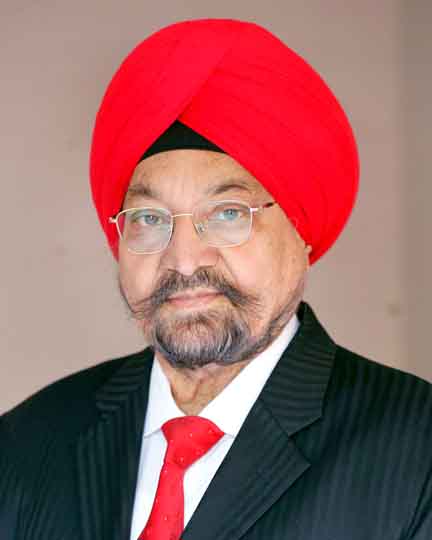
The arrest of Don Lemon, a former CNN anchor and one of the most recognizable faces of American broadcast journalism, is far more than an isolated legal episode involving an individual reporter. It is a moment of deep national reckoning. It forces Americans to confront an uncomfortable but unavoidable question: Is the United States drifting away from its foundational commitment to free speech and press freedom?
In a democracy, free speech is not merely a right, it is the very strength of the nation. The Founding Fathers understood this with remarkable clarity. That is why the First Amendment to the United States Constitution, adopted in 1791, begins not with conditional language but with an unequivocal command: “Congress shall make no law… abridging the freedom of speech, or of the press.” These words were written not to protect agreeable speech, but to safeguard dissent, criticism, and voices that question those in power.
The arrest of a journalist in this context—particularly one engaged in reporting on public protest—cuts to the heart of that constitutional promise.
Journalists as the Conscience Keepers of the Nation
In every functioning democracy, journalists serve as the conscience keepers of society. They are entrusted with the responsibility of informing the public, scrutinizing authority, exposing injustice, and amplifying voices that would otherwise remain unheard. This role is neither optional nor ornamental. It is essential.
A free press does not exist to please governments. It exists to question them.
When journalists analyze policies, investigate abuses, or report from sites of protest and dissent, they do so in service of the people. That is precisely why the media has often been described as the Fourth Pillar of democracy—standing alongside the Legislature, the Executive, and the Judiciary as a guardian of accountability. When that fourth pillar is weakened or intimidated, the entire democratic structure begins to wobble.
The criminalization of journalistic work, whether overt or veiled in legal technicalities, sends a dangerous signal. It tells reporters that certain subjects are best avoided, that certain truths come with a cost, and that dissent may invite punishment. The chilling effect of such actions spreads far beyond one individual. It seeps into newsrooms, editorial meetings, and ultimately into public discourse itself.
Free Speech Muzzled: The First Sign of Fascist Drift
History offers sobering lessons. Democracies rarely collapse overnight. They erode gradually—through the normalization of extraordinary measures, through the selective application of law, and through the steady silencing of critical voices. One of the earliest and most reliable indicators of authoritarianism is the suppression of free speech, especially the silencing of independent media.
When an administration begins to view journalists not as watchdogs but as adversaries to be subdued, alarm bells must ring. When the machinery of the state is turned against the press, the danger is no longer hypothetical, it is real and immediate.
The arrest of a journalist for doing his professional duty fits a troubling global pattern. Around the world, authoritarian regimes routinely cloak repression in the language of law and order, public safety, or national interest. Democracies must be held to a higher standard. When America, the nation that once lectured the world on press freedom—begins to resemble those it once criticized, the consequences are profound.
Trump’s Second Term and the Shadow of Authoritarianism
The second term of President Donald Trump has been marked by an unmistakable hardening of attitudes toward dissent, criticism, and institutional independence. While the rhetoric of “law and order” is invoked frequently, its application has too often appeared selective and politically charged.
Domestically, America has witnessed increasing pressure on the media, legal harassment of critics, and an atmosphere in which journalists are portrayed as enemies rather than participants in a democratic system. Internationally, the United States has displayed a troubling tendency toward bullying—coercing allies, undermining international institutions, and favoring forceful unilateralism over diplomacy and consensus.
Such behavior is not merely unbecoming of a democratic leader; it is dangerous to the democratic fabric itself. America has long been regarded as the epitome of the free world beacon whose moral authority rested not on military might alone, but on its constitutional values. When those values are compromised, America’s global standing weakens, and its credibility erodes.
Why This Moment Demands Vigilance from Citizens
The Founding Fathers did not design democracy as a self-sustaining machine. They assumed vigilance. They expected citizens to guard their rights zealously, to challenge overreach, and to resist the concentration of unchecked power.
What is at stake today is not only the freedom of one journalist, but the future of free expression in the United States. If journalists can be arrested for covering protests, if commentary can be reframed as criminality, then the boundaries of permissible speech will continue to shrink.
Americans must remember that rights lost are rarely regained easily. Silence today becomes precedent tomorrow.
This vigilance must extend beyond partisan loyalties. The defense of free speech cannot depend on whether one agrees with the speaker. The First Amendment protects conservatives and liberals, critics and supporters alike. Once its protections are weakened for one group, they are weakened for all.
The Danger of Normalizing Repression
Perhaps the greatest danger lies not in any single arrest, but in the temptation to normalize it. Democracies die not only through coups and revolutions, but through apathy—when citizens accept the unacceptable as routine.
When journalists are arrested and the public shrugs, democracy suffers quietly but deeply. When fear replaces debate, when caution replaces courage, the marketplace of ideas begins to close. And when that happens, the nation envisioned by America’s Founding Fathers—bold, free, argumentative, self-correcting—begins to fade.
The United States was imagined as a republic where power fears the people, not the other way around. Any administration that seeks to invert that relationship undermines the republic itself.
It Must Stop—Before the Damage Is Irreversible
The arrest of Don Lemon should serve as a wake-up call. It must compel Americans to ask whether the country is still faithful to its constitutional soul. Free speech is not an inconvenience to be managed; it is the lifeblood of democracy.
The intimidation of the press, the silencing of dissent, and the misuse of state power against journalists are hallmarks of authoritarian regimes—not of free societies. If America is to remain true to its founding ideals, such tendencies must be confronted and reversed.
This is a moment for citizens, lawmakers, judges, and institutions to reaffirm that no administration, no matter how powerful, stands above the Constitution. The freedoms guaranteed by the First Amendment are not gifts from the government; they are inalienable rights entrusted to the people.
For the sake of this generation—and those yet to come—this slide toward repression must stop. Now. God Bless America!


USA PHARMACY ONLINE VIAGRA Viagra Online. Canadian Pharmacy. Our price – 0.69$ per pill Viagra.
[url=https://24hourdrugstore.com/]online pharmacies canada[/url]
[url=https://www.canadapharmac.com/]cialis without a prescription[/url]
Herbal Viagra Online – Kamagra UK – Viagra UK – Libido+ – Kamagra
[url=https://www.cialisaonline.com/]cialis online[/url]
[url=https://canadianonlinepharm.com/]canadian pharmacy viagra[/url]
[url=https://cialisweb.com/]no prescription cialis[/url]
[url=http://tobuyviagra.com/]buy viagra free[/url]
[url=http://1mgpharm.com/]levothyroxine without prescription[/url]
[url=https://pharmziprx.com/]canadian pharmacy no prescription[/url]
[url=http://cialiswithoutadoctorseprescription.com/]cialis without a prescription[/url]
[url=https://www.tobuycialis.com/]buy generic cialis online[/url]
[url=http://supremesuppliersindia.com/]supreme suppliers mumbai india[/url]
kPnJGrVpsuCZbuHGgGDq