Tag: Education

  • The Arts are Here to Stay

    The Arts are Here to Stay

    By Carmen Fariña

    When I accepted the job of Chancellor, I knew right away that the arts would be a focal point of my tenure. The arts are not an add-on or simply an extra-curricular activity – a rich arts curriculum strengthens school communities and teaches students skills and passion, cultivates hobbies and can instill confidence and creativity that students will keep with them for the rest of their lives.

    This is evident at PS 111 in Queens. When I visited in September to celebrate the opening of a new cafeteria, I was stopped in my tracks by the sound of students belting at the top of their lungs. I instantly turned around to see where the noise was coming from. As I walked down the hallway, the singing became louder until finally I found the classroom – a group of 25 fourth grade students practicing scales. I interrupted and asked the teacher what they were working on. It was still only the third week of school, but they were already rehearsing for their holiday concert in December. “We have a lot of work to do,” the teacher said with a smile.

    She was right, they had a long way to go. But that didn’t matter, because every student in that classroom was beaming with joy. This was the music teacher’s first year at the school and her class represented the culmination of hard work by the principal, Ms. Jaggon, to revamp the school’s arts instruction.

    Just two years ago, PS 111 was on the State’s list of persistently dangerous schools. The school was also struggling to engage parents and morale was low. Needless to say, a drastic change was needed and the arts have played a critical part in that effort. The school now has a dance teacher and a new dance studio, a visual arts teacher, a music teacher and a theater teacher. Parents are excited to be in the building where student artwork hangs on every wall and a performance or concert happens with great frequency. Most importantly, students have become more confident, motivated and curious to try new things.

    These are the types of investments that we’re seeing schools make in every borough. In fact, over the past two years, school-level spending in the arts has increased by over $45 million. And this year, we have a record high-number of certified arts teachers in our schools – the highest in more than a decade, with nearly 3,000 citywide.

    Schools like PS 111 are the reason this administration invests in the arts each year. Because we know that the arts help strengthen school communities, foster creativity and critical thinking skills and help create an inclusive environment for all students.

    At PS 111, for example, one in five students is an English Language Learners and nearly 40 percent of students have special needs. The arts have played an even more important role in the lives of students like these and their families. This year, we’ve expanded arts programming for ELL students and students with disabilities to nearly 350 schools across the City, more than double the number of schools in 2014-15. These programs also help students learn English and become more confident and expressive.

    When I look at schools like PS 111, I know that our investments in arts go beyond just teaching music, dance, visual arts or theater. Our investments have built stronger ties between families and schools and have opened up new and exciting doors for students, helping them discover passions they never knew they had.

     As we continue to make these investments in the arts, and cultivate partnerships with cultural institutions, I’m also proud that thousands of 7th graders have benefitted from “Teen Thursdays” where they enjoy the incredible museum offerings across our City.  And for the first time, we’re also providing some high schools with additional funding and support so that they can enhance their arts programs and attract more students through competitive auditions. As more schools spend their own resources on the arts programming, it is clear that the arts have become a pillar of instruction in our schools.

    Now, after 52 years of working in New York City schools, I will be retiring in the coming months. It gives me great pride and satisfaction to see this reinvigorated passion for the arts from our youngest learners through high school. The arts are not a frill, and they are here to stay.

    (The author is New York City Schools Chancellor)

  • New Master’s Degree Program in US Targets Teaching of Hindi

    New Master’s Degree Program in US Targets Teaching of Hindi

    Special article on the occasion of celebration of Hindi Day on January 13 at the Indian Consulate in New York

    Over the past decade, there has been an increasing interest in the U.S. in the study of Hindi as an important world language due to India’s emergence as a political and economic power in the global age. This is reflected in the current upward trend in student enrollment at the secondary and post-secondary levels by heritage students (irrespective of their home language, which may be Bengali, Gujarati, Punjabi, etc.) who recognize the growing demand for Hindi-speaking professionals in the business, scientific and health sectors.  Enrollment is also on the rise for non-heritage students who see opportunities for the use of Hindi in the U.S., especially in local businesses in which there are a large concentration of people of Indian origin (hospitality workers, tax accountants, information technology), in addition to law and medical practice, and also worldwide due to India’s economic ties across the globe.

    Given the current trend and future projections for the growth of Hindi (the third most common language other than English spoken in homes in the states), leaders in the Hindi education field recognized the need to build capacity for the teaching of Hindi in the U.S. (where most Hindi teachers lack formal teacher preparation) that would support the training of a “new breed of teachers” prepared to teach Hindi to 21st century digital learners. These teachers would learn about research-based best practices for effective teaching of languages that include language learning in real world contexts and in contemporary learning environments incorporating the use of current and emerging technologies. With well trained teachers, who actively engage students in learning Hindi for meaningful, real world purposes, the vision is to attract yet a greater percentage of students who “value” and wish to further pursue the study of Hindi for its long-term worth in our modern society. (It is well documented that instructional practices influence students’ inclination to study the language and impact efforts to promote the teaching and learning of Hindi).

    ——————————————————————————————————————————-

    New Jersey based Kean University’s program is the only master’s degree program in Hindi and Urdu foreign language pedagogy in the U.S.

    ———————————————————————————————————————-

    A Master’s Degree Program in Hindi and Urdu Language Pedagogy was developed at Kean University with support by federal funding. This program is the only master’s degree program in Hindi and Urdu foreign language pedagogy in the U.S. Although there are domestic institutions of higher education offering undergraduate and graduate degree programs in Hindi and Urdu as foreign languages, none of these institutions offer undergraduate/graduate Hindi/Urdu teacher preparation programs or a concentration in the field of Hindi/Urdu language-specific language pedagogy at the graduate level. Graduate level pedagogy programs are also non-existent in the Hindi/Urdu language field in other countries, including India and Pakistan.  The program builds upon Kean’s well established reputation for teacher education due to its innovative approach to Hindi and Urdu teacher preparation and the potential development of a corpus of research lacking in the field of Hindi/Urdu language pedagogy.

    The first cohort of MA students will graduate from the program in spring 2018.  Applications are currently being accepted for the next cohort of students which begin the program in fall 2018 and are available online at http://grad.kean.edu/masters-programs/hindi-and-urdu-language-pedagogy

     While the application deadline is June 1, 2018, interested individuals are encouraged to apply as early as possible as partial scholarships are available on a limited basis for the first 10 qualified applicants (subject to availability of federal funding on an annual basis).  The program seeks applicants who are Native/Advanced speakers of Hindi or Urdu that reside in the U.S. and possess a Bachelor’s Degree. Applicants should be willing to complete the 2-year 30-credit program which consists of seven online courses and four onsite courses (offered at the Kean University Union Campus for 3-weeks during 2-consecutive summers and include clinical practice). Upon completion of the program, graduates will be able to: teach in private schools and/or government schools, colleges/universities and in heritage language community schools using contemporary research-based best practices in language education; conduct research on second language-specific pedagogy or in the field of Hindi/Urdu Second Language Acquisition leading to a doctoral program; and/or pursue Alternate Route teacher certification options available in NJ and in most states in order to teach in public school settings. For additional information, interested individuals may contact Janis Jensen, Program Director, at jjensen@kean.edu.

    (Janis Jensen is Program Director of STARTALK Language Initiatives at Kean University where she oversees Hindi/Urdu Student Summer Programs and the MA Degree Program in Hindi/Urdu Language Pedagogy.)

  • Chitagam Saluja wins First Place in Business Plan Competition

    Chitagam Saluja wins First Place in Business Plan Competition

    Chitagam S Saluja, 24, doing graduation in Business Management at Nassau County
    Community College, New York, on December 6, won First Place in Business Plan Competition.

    A business plan competition for the Nassau Community College BUS 111 Entrepreneurship classes, similar to the show Shark Tank, was held on Wednesday, December 6, 2017 at 2 p.m.

    One hundred fifty students attended the event and witnessed 12 contestants present their business plan idea before a panel of 12 judges, which were comprised of NCC professors and the President of the Adjunct Faculty Association (AFA), Stefan Krompier. This program is meant to bring out the best in the students to show their growth, creativity and application of the learning goals of the course.

    The AFA awarded certificates and prizes to the top three presentations in the amount of $150 for first place, $100 for second place and $50 for third place. First place award was given to Chitagam Saluja of Hicksville, New York. Professor Phyllis Pace was the instructor and mentor for Chitagam’s Entrepreneurship class. This event offered NCC Business students the opportunity to progress in their future professional entrepreneurial venture.

  • UC San Diego Dedicates New Science Building in Recognition of Tata Family’s Pioneering Philanthropy

    UC San Diego Dedicates New Science Building in Recognition of Tata Family’s Pioneering Philanthropy

    SAN DIEGO, CA (TIP): UC San Diego celebrated the dedication of a new building for the divisions of Biological and Physical Sciences on Sept. 12 with a special announcement. The cutting-edge science building will bear the name Tata Hall for the Sciences, or Tata Hall, in recognition of a $70 million gift from the Tata Trusts, which was committed last year to create the binational Tata Institute for Genetics and Society.

    The Tata Institute for Genetics and Society, established as a collaborative partnership between the university and research operations in India, will occupy the fifth floor of Tata Hall. The institute’s mission is the advancement of global science and technology through socially conscious means to develop solutions to some of the world’s most pressing challenges, from public health to agriculture.

    “It is my privilege to dedicate this building in recognition of the Tata Trusts’ leadership and collaboration with UC San Diego, and the Tata family’s pioneering philanthropy and singular impact to bring about societal change,” said UC San Diego Chancellor Pradeep K. Khosla. “Tata Hall exemplifies UC San Diego’s tradition of non-tradition, inspiring cross-disciplinary collaboration among researchers and the next generation of innovators. This building will embody the spirit of the many shared values of UC San Diego and the Tata Trusts to benefit our global society.”

    Trustees of the Tata Trusts were on hand at the dedication of Tata Hall and participated in the ceremonial signing of a beam that will be incorporated into the construction. The building is slated for completion in 2018.

    “I am very proud of being associated with this great institution,” said Tata Trusts Chairman Ratan N. Tata, who recounted his thoughts from when he first visited UC San Diego. “I realized that here in San Diego, I had seen a gold mine of intellectual capacity and enthusiasm. I kept feeling that there is something happening at UC San Diego that would make a difference in the years ahead. What we are doing is a big thing for mankind in our part of the world … and I look forward to this involvement as just a first part of what we can do together.”

    Further underscoring the growing impact and scope of the Tata Institute for Genetics and Society, UC San Diego also announced the four inaugural chair holders of the Tata Chancellor’s Endowed Professorships. These chairs are the first in a series of 10 endowed faculty chairs that were established by UC San Diego to attract and retain top scientists and faculty focused on research that aligns with the institute’s goals.

  • Indian American Professor Included in All-star Team of Rising Researchers

    Indian American Professor Included in All-star Team of Rising Researchers

    BOSTON (TIP): New Chemical Engineering Professor Ashish Kulkarni of University of Massachusetts at Amherst recently has been included among the so-called “Talented 12”, an international “dream team” of rising all-stars in chemistry, as chosen by Chemical & Engineering News. Dr. Kulkarni’s baseball-card-style photo on the lively Talented 12 webpage nicknamed him the “Cancer Crusher.” He comes to UMass Amherst after serving as an instructor of medicine at Harvard Medical School and an associate bioengineer at Brigham and Women’s Hospital. Kulkarni’s research efforts have been focused on the development of pioneering, structure-activity, relationship-inspired nanomedicine for cancer therapy.

    “Disease develops in our body if there is an imbalance in the immune system,” Kulkarni said in his Chemical & Engineering News profile. “I’m developing dual-function nanoparticles that can allow us not only to create a balance in the immune system but also to monitor whether the drug is working in real time.”

    As Chemical & Engineering News explained its Talented 12: “This team of up-and-comers has big ideas for using chemistry to solve global problems. Welcome to the third annual Talented 12 issue. It took us months of scouring the globe to collect all 12 of the rising stars in chemistry featured here.”

    As a postdoc at Harvard, he designed nanoparticles that could act as cancer immunotherapies; meaning drugs that prompt the immune system to find and attack cancer cells. But, although cancer immunotherapies known as “checkpoint inhibitors” dissipate tumors in many people with cancer, they don’t work for all. Researchers have been searching to find a good diagnostic or biomarker to predict and track people’s responses to the treatments.

    The 36-year-old academic, who completed his undergraduate work at the Institute of Chemical Technology in India before earning his doctorate at the University of Cincinnati, grew up loving cricket. Kulkarni can include his addition to the Talented 12 super team on his list of distinguished awards. Among other honors, he is the recipient of the Hearst Foundation Young Investigator Award, Dana-Farber/Harvard Cancer Center Career Development Award, American Association of Cancer Research Scholar-in-training Award, American Society of Pharmacology and Experimental Therapeutics Young Scientist Award, and the Melanoma Research Alliance Young Investigator Award.

  • Indian American Anantha Chandrakasan takes over as MIT’s Dean of School of Engineering

    Indian American Anantha Chandrakasan takes over as MIT’s Dean of School of Engineering

    BOSTON (TIP): Indian American Anantha P. Chandrakasan, the Vannevar Bush Professor and head of the Department of Electrical Engineering and Computer Science (EECS), has been resumed charge as dean of MIT’s School of Engineering, from July 1.

    During his six-year tenure as head of MIT’s largest academic department, Chandrakasan spearheaded a number of initiatives that opened opportunities for students, postdocs, and faculty to conduct research, explore entrepreneurial projects, and engage with EECS.

    “Anantha balances his intellectual creativity and infectious energy with a remarkable ability to deeply listen to, learn from, and integrate other people’s views into a compelling vision,” MIT President L. Rafael Reif says. “In a time of significant challenges, from new pressures on federal funding to the rising global competition for top engineering talent, I am confident that Anantha will guide the School of Engineering to maintain and enhance its position of leadership. And I believe that in the process he will help make all of MIT stronger, too.”

    Since joining the MIT faculty in 1994, Chandrakasan has produced a significant body of research focused largely on making electronic circuits more energy efficient. His early work on low-power chips for portable computers helped make possible the development of today’s smartphones and other mobile devices. More recently, his research has addressed the challenge of powering even more energy-constrained technologies, such as the “internet of things” that would allow many everyday devices to send and receive data via networked servers while being powered from a tiny energy source.

    In an email today announcing the news to the MIT community, Provost Martin Schmidt described Chandrakasan as “a people-centered and innovative leader.” Schmidt continued, “Having observed Anantha’s collaborative approach to building a shared vision within EECS, I am excited for the opportunities that lie ahead for the School of Engineering.”

    While at the helm of EECS, Chandrakasan launched a number of initiatives on behalf of the department’s students. “That’s what excites me about an administrative job,” he says. “It’s how I can enhance the student and postdoc experience. I want to create exciting opportunities for them, whether that’s in entrepreneurship, research, or maker activities. One of the key things I plan to do as dean is to connect directly with students.”

    Many of these initiatives were themselves designed with student input, including the Advanced Undergraduate Research Opportunities Program, more commonly known as “SuperUROP.” This year-long independent research program, launched in EECS in 2012 and expanded to the whole School of Engineering in 2015, was shaped in response to feedback about why some EECS students were opting out of MIT’s traditional UROP program.

    Chandrakasan also initiated the Rising Stars program in EECS, an annual event that convenes graduate and postdoc women for the purpose of sharing advice about the early stages of an academic career. Another program for EECS postdocs created under his direction, Postdoc6, aims to foster a sense of community for postdocs and help them develop skills that will serve their careers. Chandrakasan also helped create StartMIT, an independent activities period (IAP) class that provides students and postdocs the opportunity to learn from and interact with industrial innovation leaders.

    “I tend to be a people person,” Chandrakasan says. “Of course, data is always important, but it’s not where I start. I’m like the quarterback who throws it up in the end zone. I try things, and some of them don’t work, which I’m totally fine with; other things we try and then refine. But I do a lot of homework, talking to students and faculty, getting feedback, and incorporating them to improve our efforts.”

    “I’m also very passionate about helping our faculty explore new research areas,” says Chandrakasan, who as department head has sought unrestricted grants and other funding to provide faculty with this flexibility. These efforts have enabled several Faculty Research Innovation Fellowships, for midcareer faculty who seek to branch out in new directions.

    Chandrakasan also has a long-standing interest in creating opportunities for innovation outside the lab. He is a board member and chair of the advisory committee dealing with MIT policies for The Engine, a new accelerator launched by MIT last fall to support startup companies working on scientific and technological innovation with the potential for transformative societal impact. In the latter role, he has overseen five working groups consisting of faculty, students, postdocs, and staff with specialized expertise, and created suggestions for how the MIT community can work with The Engine.

    “In building out the concept for The Engine, it was vitally important to make sure it would meet the needs of faculty, student, and alumni entrepreneurs,” says MIT Executive Vice-President and Treasurer Israel Ruiz, who helped spearhead The Engine’s development. “As the faculty lead, Anantha played an indispensable role in gathering feedback from a wide range of voices and transforming it into actionable ideas for how The Engine should work.”

    Online learning is another area of interest for Chandrakasan: “I’m very excited about the whole online arena and how we can use MITx for residential education,” he says. Last fall, EECS and the Office of Digital Learning piloted a full-credit online course for a small cohort of students on campus, who gave the experience strong marks for providing flexibility and reducing stress. “I’m looking forward to working with the other department heads to see how we can get a license to experiment with these new modes of education,” he says.

    Born in Chennai, India, Chandrakasan moved to the United States while in high school. His mother was a biochemist and Fulbright scholar, and he enjoyed spending time in her lab where she conducted research on collagen.

    “I always knew I wanted to be an engineer and a professor,” he says. “My mother really inspired me into an academic career. When I entered graduate school, I knew on day one that I wanted to be academic professor.”

    Chandrakasan earned his bachelor’s (1989), master’s (1990), and doctoral (1994) degrees in electrical engineering and computer science from the University of California at Berkeley — the latter two after being rejected from MIT’s graduate program, he notes with a laugh. After joining the MIT faculty, he was the director of the Microsystems Technology Laboratories (MTL) from 2006 until he became the head of EECS in 2011.

    Chandrakasan is a recipient of awards including the 2009 Semiconductor Industry Association (SIA) University Researcher Award, the 2013 IEEE Donald O. Pederson Award in Solid-State Circuits, an honorary doctorate from KU Leuven in 2016, and the UC Berkeley EE Distinguished Alumni Award. He was also recognized as the author with the highest number of publications in the 60-year history of the IEEE International Solid-State Circuits Conference (ISSCC), the foremost global forum for presentation of advances in solid-state circuits and systems-on-a-chip. Since 2010, he served as the ISSCC Conference Chair. A fellow of IEEE, in 2015 he was elected to the National Academy of Engineering.

  • South Asian Spelling Bee Announces Chicago & Seattle winners

    South Asian Spelling Bee Announces Chicago & Seattle winners

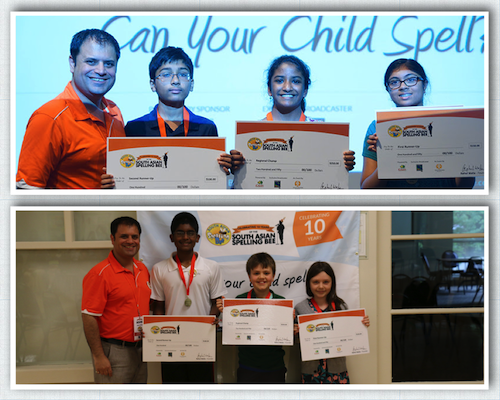
    NEW YORK (TIP): Continuing its quest for the best speller in the community, the 2017 South Asian Spelling Bee (www.SouthAsianSpellingBee.com) traveled to Illinois and Washington with stops in Chicago and Seattle.

    With a huge turnout this year as well, the Bee attracted some top talent as well as young and new spellers that competed for the coveted prizes and titles.

    In the Chicago Regional, Nilla Rajan (12) of Chillicothe, Ohio was the regional champ, Snehal Choudhury (12) of Massillon, Ohio, was the first runner up, and Jashun Paluru (12) of West Lafayette, Indiana, was second runner up.

    In Seattle, Cameron Keith (11) from Longmont, Colorado was named regional champ, Zoe Keith (9) from Longmont, Colorado was first runner up, and Vithul Ravivarma (13) of Sammamish, Washington, was the second runner-up.

    The event is open to children of South Asian descent up to 14 years of age. It will give South Asian children a chance to test their spelling skills in their core peer group. Interested spellers need their parent or guardian to register them online at www.southasianspellingbee.com.

    Organized by Touchdown Media Inc., the South Asian Spelling Bee is celebrating its 10th anniversary this year, with regionals being held in 8 locations across the United States. Apart from Chicago and Seattle, regional centers include Washington, D.C. Metro, Charlotte, Boston, New Jersey, the Bay Area, and Dallas. All events will be free to attend and open to the public. An international regional in Accra, Ghana was conducted earlier this year, from where spellers of South Asian descent will qualify for the finals.

    “For the past nine years, the Bee has consistently provided a firm platform for the community to come together and hone their craft. It’s become a family activity that contributes towards the overall development of the child. We are proud to enter our Tenth consecutive year and look forward to engaging some of these wonderful spellers,” said Rahul Walia, founder of the South Asian Spelling Bee and CEO of Touchdown Media Inc.

    The top two spellers of each regional competition will advance to the finals to be held in New Jersey in August. Champion’s grand prize of $3,000 will be awarded to the winner at the finals.

  • Indian American Sanjeev Kulkarni appointed Dean of the faculty at Princeton University

    Indian American Sanjeev Kulkarni appointed Dean of the faculty at Princeton University

    PRINCETON, NJ (TIP): Sanjeev Kulkarni, dean of the Princeton University Graduate School and a professor of electrical engineering, has been appointed dean of the faculty effective July 1.

    “Sanj Kulkarni has served with distinction as dean of the Graduate School, and I am delighted that he has agreed to take on this new role,” President Christopher L. Eisgrube said. “His own interdisciplinary research, his wide-ranging service to the University and his leadership of the Graduate School have given him a deep appreciation for the values shared throughout our University and the scholarly practices that distinguish our departments. Sanj is a wise counselor and an effective administrator who is dedicated to ensuring our faculty’s quality and well-being. I am confident that he will be an excellent dean of the faculty,” Eisgruber said.

    Kulkarni, who became dean of the Graduate School in April 2014, is an associated faculty member in the Department of Operations Research and Financial Engineering (ORFE) and in the Department of Philosophy.

    “Faculty are the foundation of any great university, and it will be a pleasure and an honor to work with and support Princeton’s outstanding faculty. I look forward to working with scholars, teachers, and researchers across the full range of academic departments and programs at the University,” Kulkarni said.

    As dean of the Graduate School, Kulkarni led the strategic planning Task Force on the Future of the Graduate School, implemented a sixth-year funding program for graduate students in the humanities and social sciences, and with the dean for research implemented tuition matching funds for faculty who support fourth- and fifth-year graduate students on sponsored research.

    Under Kulkarni’s leadership, the Graduate School created an assistant dean position for professional development and developed a number of new programs including the University Administrative Fellows, opportunities for collaborative teaching between Princeton faculty and graduate students, and a partnership with Mercer County Community College to provide teaching opportunities and mentorship for Princeton graduate students.