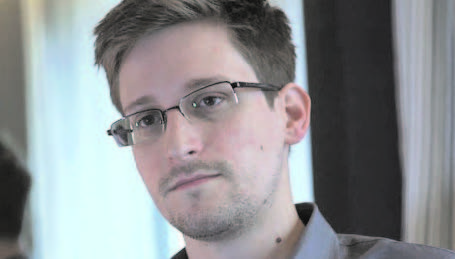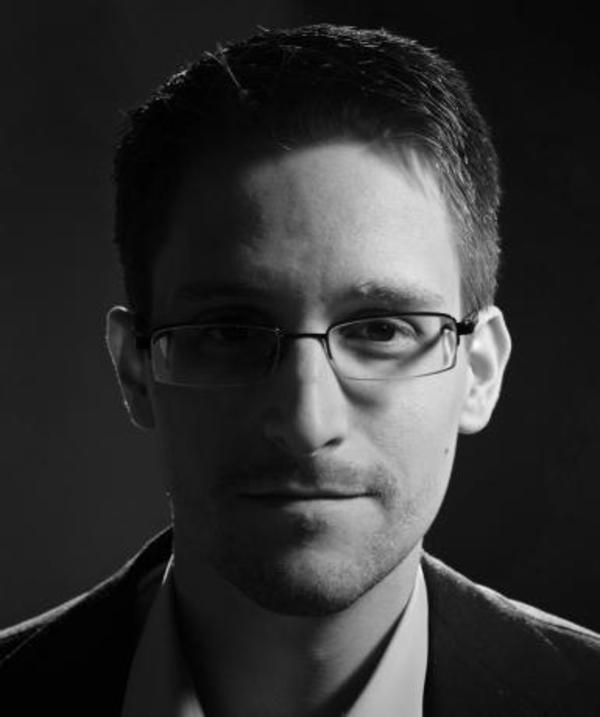
Tag: Edward Snowden

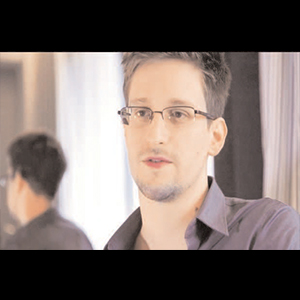
  • Edward Snowden wasn’t a whistleblower: US House panel

    Edward Snowden wasn’t a whistleblower: US House panel

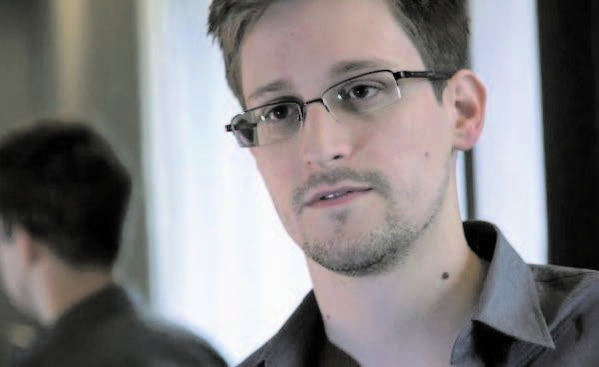
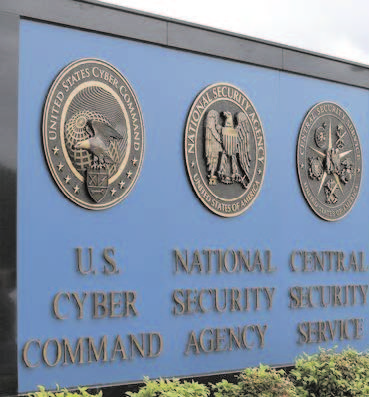
    WASHINGTON (TIP): A US congressional intelligence committee on September 15 issued a scathing report accusing former National Security Agency contractor Edward Snowden of leaking information that “caused tremendous damage” to US. national security, lying about his background and feuding with co-workers.

    In a report endorsed by both its Republican and Democratic leaders, the House intelligence committee said Snowden was “not a whistleblower” as he has claimed.

    Most of the material he stole from the NSA was not about invasions of privacy, but revealed intelligence and defense programs of great interest to America’s foreign adversaries, it said. The committee said that while the “full scope” of damage caused by Snowden’s disclosures remains unknown, a review of materials he allegedly compromised “makes clear that he handed over secrets that protect American troops overseas and secrets that provide vital defenses against terrorists and nation-states.”

    The committee released only a four-page summary of what it said was a 36-page investigative report that remains Top Secret, but the summary contained strong words about Snowden’s actions and background.

    The report contains previously unreported allegations about Snowden and his possible motives for taking government secrets. It alleges that Snowden, who took refuge in Moscow after fleeing to Hong Kong, “was and remains a serial exaggerator and fabricator.”

  • Bin Laden is “Alive and well in the Bahamas”, says Edward Snowden

    Bin Laden is “Alive and well in the Bahamas”, says Edward Snowden

    National Security Agency whistleblower Edward Snowden, has made a new controversial claim, saying that he possessed some classified information proving that Osama Bin Laden is still alive.

    Snowden, who lives as a fugitive in Russia after leaking documents about the NSA’s surveillance programs has made some previously unreported allegations about the famous terrorist, Osama Bin Laden, during an interview with the Moscow Tribune.

    According to him, not only is Bin Laden still alive, but he is living a lavish lifestyle in the Bahamas, thanks to regular payments from the CIA.

    “I have documents showing that Bin Laden is still on the CIA’s payroll,” claims Edward Snowden. “He is still receiving more than $100,000 a month, which are being transferred through some front businesses and organizations, directly to his Nassau bank account. I am not certain where he is now, but in 2013, he was living quietly in his villa with five of his wives and many children.”

    The terrorist leader Osama Bin Laden was supposedly killed by United States Navy SEALs on May 2 2011, is still alive in a luxurious Nassau suburb.

    Mr. Snowden says the CIA orchestrated the fake death of the former leader of Al Qaeda, while he was actually transported with his family in an undisclosed location in the Bahamas.

    “Osama Bin Laden was one of the CIA’s most efficient operatives for a long time,” claims the famous whistleblower. “What kind of message would it send their other operatives if they were to let the SEALs kill him? They organized his fake death with the collaboration of the Pakistani Secret services, and he simply abandoned his cover. Since everyone believes he is dead, nobody’s looking for him, so it was pretty easy to disappear. Without the beard and the military jacket, nobody recognizes him.”

    Mr. Snowden says that the documents proving that Bin Laden is still alive will be integrally reproduced in his new book, expected to be released in September.

    A subject of controversy, Snowden has been variously called a hero, a whistleblower, a dissident, a patriot, and a traitor, for his revelations of thousands of classified documents.

    Edward Snowden was hired by an NSA contractor in 2013 after previous employment with Dell and the CIA. In the month of June of the same year, he revealed thousands of classified NSA documents to journalists.

    The US government filed espionage charges against him shortly after his revelations were made public. He has been living under asylum in Moscow, after fleeing the US for Hong Kong in the wake of the leaks.

    On July 28 2015, the White House has rejected a “We the People” petition of nearly 168,000 signatories, to pardon him.

    (This story has not been edited by TIP and is auto-generated from a syndicated feed.)
  • Edward Snowden: World is rejecting mass surveillance

    Edward Snowden: World is rejecting mass surveillance

    WASHINGTON (TIP): Legislation ending the US government’s bulk collection of telephone data is “a historic victory for the rights of every citizen,” former intelligence analyst Edward Snowden said in a commentary on June 4.

    In the opinion piece, published in several newspapers internationally including The New York Times, Snowden reflected on what he said was a profound shift in the public’s awareness of mass surveillance since his infamous leaks disclosing the extent to which the US government and some partners monitor electronic communications.

    “Ending the mass surveillance of private phone calls under the Patriot Act is a historic victory for the rights of every citizen, but it is only the latest product of a change in global awareness,” he said, referring to this week’s ending of the bulk data collection program under the USA Patriot Act.

    “Since 2013, institutions across Europe have ruled similar laws and operations illegal and imposed new restrictions on future activities. The United Nations declared mass surveillance an unambiguous violation of human rights,” he added.

    The 31-year-old Snowden remains wanted by the United States for espionage following his bombshell leaks that got him branded a traitor in some political quarters and a hero in others.

    The fugitive former National Security Agency worker has been granted temporary residency in Russia.

    Describing his trajectory over the last two years since he made his disclosures to three journalists in a Hong Kong hotel room, Snowden said he was initially concerned no one would even care.

    “Never have I been so grateful to have been so wrong,” he wrote. “Two years on, the difference is profound. In a single month, the NSA’s invasive call-tracking program was declared unlawful by the courts and disowned by Congress.”

    Provisions of the Patriot Act which underpinned US bulk surveillance programs that had been in place since 2001 expired Sunday, and were replaced with the Freedom Act, which ends the data dragnet.

    Snowden added that after a White House-appointed oversight board found the program had not stopped any attacks, “even the president who once defended its propriety and criticized its disclosure has now ordered it terminated.”

    Additionally, Snowden said his disclosures had helped expose technological weaknesses that allowed the government to pry into people’s electronic devices.

    “Technologists have worked tirelessly to re-engineer the security of the devices that surround us, along with the language of the Internet itself,” he said. “Secret flaws in critical infrastructure that had been exploited by governments to facilitate mass surveillance have been detected and corrected.” Still, Snowden cautioned, electronic communication continues to be broadly monitored.

    “Though we have come a long way, the right to privacy — the foundation of the freedoms enshrined in the United States Bill of Rights — remains under threat,” he said.

    “As you read this online, the United States government makes a note.”

  • PAKISTANI-BORN BROTHERS PLEAD GUILTY IN FLORIDA TERROR PLOT

    PAKISTANI-BORN BROTHERS PLEAD GUILTY IN FLORIDA TERROR PLOT

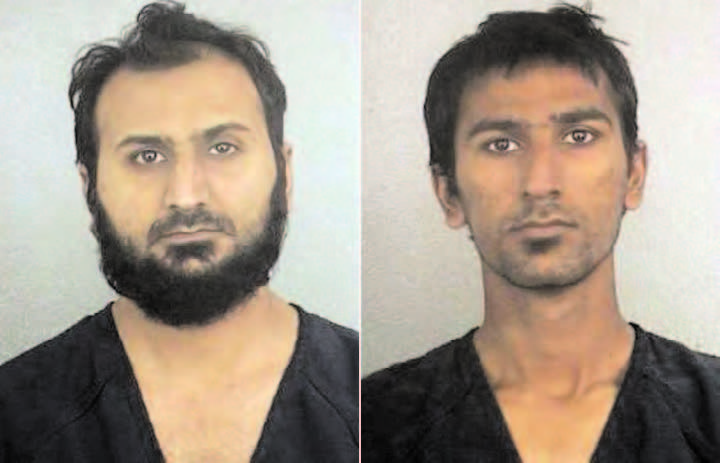
    MIAMI (TIP): Two Pakistani-born brothers pleaded guilty on March 11 to charges of plotting a terrorist explosives attack against New York City landmarks and assaulting two deputy US marshals while in custody.

    The pleas were entered Thursday in Miami federal court by Sheheryar Alam Qazi, 32, and Raees Alam Qazi, 22. The pair has been in federal custody since late November 2012 after Raees Qazi returned from New York by bus following an aborted attack, possibly involving bombs made of common chemicals and Christmas tree lights.

    Assistant US attorney Karen Gilbert, reading from a factual statement signed by both brothers, said Raees Qazi had unsuccessfully attempted to enter Afghanistan to join Islamic extremists while visiting Pakistan in 2011. After that, she said, he decided to become a “lone wolf” who would find a way to attack the US from within.

    In one meeting with a confidential FBI informant, Gilbert said, Raees Qazi said he had been in contact with al-Qaida operatives and added, “the leaders know what they are talking about so when they call on Muslims in the West to stay in the West, there’s a reason for that.” 

    Sheheryar Qazi’s role was to provide financial and emotional support for his younger brother’s quest to launch a terror attack, Gilbert said.

    “Although Sheheryar Alam Qazi likely did not know all the details of the planned operation, he encouraged his brother to succeed in his task,” she said.

    Both brothers were avid followers of lectures by Anwar al-Awlaki, an American-born radical Muslim cleric who was killed by a US drone strike in Yemen in September 2011, according to the statement. Raees Qazi also admitted logging on to Internet sites linked to al-Qaida to research bomb-making techniques and other ways of launching attacks with common items.

    US district Judge Beth Bloom set sentencing June 5 for both men. Raees Qazi faces up to 35 years in prison, while Sheheryar Qazi faces a 20-year maximum. Raees Qazi’s maximum sentence is higher because he pleaded guilty to an additional material support count. Key evidence includes FBI wiretap and other communications intercepts. Earlier in the case, defense lawyers sought access to information about the brothers collected under the once-secret National Security Agency surveillance program revealed by one of its contractors, Edward Snowden.

  • Counterterror snooping foiled US Capitol bomb plot: John Boehner

    Counterterror snooping foiled US Capitol bomb plot: John Boehner

    HERSHEY (TIP): A recently uncovered jihadist-inspired plot by a young American to massacre lawmakers in the US Capitol was discovered thanks to the government’s controversial surveillance programs, House Speaker John Boehner claimed on January 15.

    “We would never have known about this had it not been for the FISA program and our ability to collect information on people who pose an imminent threat,” Boehner told reporters.

    The Foreign Intelligence Surveillance Act allows US spy agencies to conduct electronic espionage internationally as well as on Americans suspected of involvement in terror-related activities.

    It has been embroiled in controversy following revelations in 2013 about the extent of US dragnet surveillance including bulk collection of data on Americans.

    “Our government does not spy on Americans unless there are Americans who are doing things that frankly tip off our law enforcement officials to an imminent threat,” Boehner said at a Republican retreat in Hershey, Pennsylvania.

    “And it was our law enforcement officials and those programs that helped us stop this person before he committed a heinous crime in our nation’s capital.”

    Boehner did not explain what FISA provisions helped foil the plot, saying “we’ll let the whole story roll out.”

    His abridged account differs from public statements by the Justice Department and Federal Bureau of Investigation, which announced Wednesday that an FBI informant and the suspect’s public Twitter account were key to the man’s arrest.

    The Justice Department announced that Ohio man Christopher Cornell, 20, was charged with attempted murder of US officers and employees and possessing a firearm to carry out violent acts.

    It said Cornell this week allegedly made final plans to go to Washington and set off bombs, having purchased two semiautomatic rifles and 600 rounds of ammunition before he was arrested by FBI agents, according to the affidavit. The complaint said Cornell had opened a Twitter account under the pseudonym Raheel Mahrus Ubaydah, and posted messages supporting Islamic State militants.

    “It was far more than just that,” Boehner stressed about the social media connection, without providing details.

    In August, Cornell was approached by an FBI informant, and the suspect told him that he “considered the members of Congress as enemies and that he intended to conduct an attack on the US Capitol,” the complaint said.

    The FBI said he planned to “build, plant and detonate pipe bombs at and near the US Capitol, then use firearms to shoot and kill employees and officials.”

    In June 2013, former national security contractor Edward Snowden revealed the extent to which the National Security Agency scoops up Americans’ telephone data, triggering surveillance reform efforts that are ongoing.

    Boehner’s remarks should buttress arguments of some lawmakers opposed to any major NSA overhaul.
    Critics have deemed FISA, amended after the 9/11 attacks of 2001, too permissive.

    Some of its most controversial elements expire in June, setting up an opportunity for Congress to amend, renew or repeal the legislation.

    The Capitol plot, and last week’s indictment of a bartender who threatened to kill Boehner, has elevated security awareness in Washington.

    Law enforcement “told us on day one it was the most highly targeted terrorist spot in the world, and we’re seeing that play out,” Congressman Jason Chaffetz told reporters.

  • FBI director warns new phone encryption could thwart probes

    FBI director warns new phone encryption could thwart probes

    WASHINGTON (TIP): US FBI director James Comey on October 16 made his strongest comments yet about encryption features built into new cell phones by Google Inc and Apple Inc, warning they could hurt law enforcement efforts to crack homicide and child exploitation cases. Speaking before an audience at the Brookings Institution think tank, Comey said the new phones, which limit the ability for the companies themselves to access data stored on the units, have “the potential to create a black hole for law enforcement.” FBI agents are generally able to access information stored on cell phones with a court order related to a specific investigation that forces the company to retrieve the information.

    But handset makers have marketed more secure cell phones amid concerns of broad government surveillance programs revealed by Edward Snowden, and of hackers who might be able to exploit any vulnerabilities in the security of the phones. In a statement, a Google spokeswoman said the company wanted to provide additional security for its users to protect personal documents but would still work with law enforcement when appropriate. An Apple representative did not immediately respond to a request for comment.

    Comey said FBI agents have come across a growing number of cases for which they believe evidence was in a phone or a laptop that they were unable to crack, though he did not provide specific examples. “If this becomes the norm, I suggest to you that homicide cases could be stalled, suspects walk free, child exploitation not discovered and prosecuted,” he said.

    Comey also urged Congress to update the law that governs law enforcement’s ability to intercept communications, which was enacted two decades ago and does not address some newer technologies. In his speech, he gave examples of cases that agents were able to piece together from evidence contained on cell phones, including against a Louisiana man who was convicted of murdering a 12-year-old boy and a drug trafficking ring in Kansas City.

    The American Civil Liberties Union on Thursday criticized Comey’s remarks, arguing that the law did not force telecommunications companies to build an avenue for decryption into their products. In an interview, ACLU legislative counsel Neema Singh Guliani said it was not clear if FBI agents will be hindered in their investigations through the new encryption since they already have access to other types of information. “A couple of anecdotes from the FBI isn’t enough,” Singh said.

  • Yahoo compelled to release data

    Yahoo compelled to release data

    WASHINGTON (TIP): The Washington Post carried a story by Craig Timberg in its September 11 edition which disclosed the U.S. government threatened to fine Yahoo $250,000 a day in 2008 if it failed to comply with a broad demand to hand over user data that the company believed was unconstitutional, according to court documents unsealed Thursday, September 11, that illuminate how federal officials forced American tech companies to participate in the NSA’s controversial PRISM program.

    The documents, roughly 1,500 pages worth, outline a secret and ultimately unsuccessful legal battle by Yahoo to resist the government’s demands. The company’s loss required Yahoo to become one of the first companies to begin providing information to PRISM, a program that gave the National Security Agency extensive access to records of online communications by users of Yahoo and other U.S.-based technology firms.

    “The released documents underscore how we had to fight every step of the way to challenge the U.S. Government’s surveillance efforts,” said company General Counsel Ron Bell in a Tumblr post published Thursday afternoon. The program, which was discontinued in 2011, was first revealed by former NSA contractor Edward Snowden last year, prompting intense backlash and a wrenching national debate over allegations of overreach in government surveillance.

    Federal Judge William C. Bryson, presiding judge of the Foreign Intelligence Surveillance Court of Review, ordered the documents from the legal battle unsealed on Thursday as part of a broad effort by the court system to declassify the arguments that formed the legal foundation for PRISM. The original order to Yahoo came in 2007 and set off alarms at the company because of the sweep of its requests and its side-stepping of the traditional requirement that each target be subject to court review before surveillance could begin.

    The order, Yahoo officials said, required only that the target be outside of the United States at the time, even if the person was a U.S. citizen. The company challenged the order on constitutional grounds but lost repeatedly, both at the Foreign Intelligence Surveillance Court and an appeals court, the Foreign Intelligence Court of Review. The government requested and obtained permission to share the ruling with other companies as it gradually pressured most of the major players in the American tech industry – including Google, Apple and Facebook – to comply with the data demands.

    The requests concerned not the content of emails but what it called “metadata,” which detailed who users exchange e-mails with and when. It is not known if e-mail collection continues in some other form. The ACLU, which had supported Yahoo’s legal fight in 2008, applauded Thursday’s move to release the documents but said it was long overdue. “The public can’t understand what a law means if it doesn’t know how the courts are interpreting that law,” said Patrick Toomey, a staff attorney with the ACLU’s national Security Project.

  • US intelligence officials looking into suspected new spy leak

    US intelligence officials looking into suspected new spy leak

    WASHINGTON:
    US intelligence officials were considering on Tuesday whether to ask the department of justice to open a criminal investigation into the suspected leak of a classified counter-terrorism document to a website, a US official familiar with the matter said. The intelligence officials were preparing a criminal referral over the publication on “The Intercept” website of a document that provides a statistical breakdown of the types of people whose names and personal information appear on two government data networks listing people with supposed connections to militants, the official said.

    The document was published by The Intercept on Tuesday, but because it was dated August 2013, some US media reports speculate that a second leaker besides former US spy agency contractor Edward Snowden had begun to send classified documents from inside the US intelligence community to the media. An official familiar with the matter said, however, that the government does not know for sure that a second leaker exists. The apparent leak involves information on the Terrorist Identities Datamart Environment database (TIDE) and the Terrorist Screening Database, according to the document.

    The document posted by The Intercept, a multi-coloured graphic classified “secret,” says 680,000 names are “watchlisted” in the Terrorist Screening Database, an unclassified data network which is used to draw up more selective government watchlists. It says 280,000 of the 680,000 people are described by the government as having “no recognized terrorist group affiliation.” Around the same number of people on the list have suspected connections to several specific militant groups, including al-Qaida, Hamas and Hezbollah, it says.

    The graphic says the more selective lists include a “no fly” list totalling 47,000 people who are supposed to be banned from air travel and a further “selectee list” of 16,000 people who are supposed to get extra screening by security personnel before being allowed to board aircraft. The graphic says the screening database is in turn extracted from TIDE, a larger, ultra-classified database which contains 320,000 more names than the unclassified one, as well as raw intelligence information excluded from the screening system.

    Because the graphic carries a “secret” classification, an official said, the agency which generated it, The National Counterterrorism Center, is obliged to consider submitting a referral to the department of justice, which then can decide if a criminal investigation should be opened into the leak. Snowden, who has worked closely with two founders of The Intercept, writer Glenn Greenwald and filmmaker Laura Poitras, left his post as a National Security Agency contractor in Hawaii in May of last year.

    He is not known to have had access to any secret materials since then. Last month, The Intercept, which is financed by eBay founder Pierre Omidyar, also published a lengthy document setting out the criteria and procedures by which names are placed into terrorist watchlist databases. That document was labeled “Unclassified/for official use only/sensitive security information.”

  • Russia gives three-year residence permit to Snowden

    Russia gives three-year residence permit to Snowden

    MOSCOW (TIP): Former US intelligence contractor Edward Snowden, wanted by the United States for leaking extensive secrets of its electronic surveillance programs, has been given a three-year residence permit by Russia, his Russian lawyer told reporters on Thursday, August 7. The announcement comes at a time when Russia’s relations with the West are at Cold Warera lows over Russia’s actions in Ukraine.

    Russia responded to Western sanctions by banning certain food imports from the United States, the European Union, Australia, Canada and Norway on Thursday. The ban has adversely impacted markets in the west. “The decision on the application has been taken and therefore, with effect from August 1, 2014, Edward Snowden has received a three-year residential permit,” Anatoly Kucherena said. “In the future, Edward himself will take a decision on whether to stay on (in Russia) on and get Russian citizenship or leave for the United States.”

    He said Snowden could apply for citizenship after living in Russia for five years, in 2018, but that he had not decided whether he wanted to stay or leave. Kucherena said Snowden was studying Russian and had an IT-related job, but did not provide details. “He is a high-class IT specialist”, he said. He said Snowden’s security was being taken seriously and that he was using private security guards.

    “He leads a rather modest lifestyle, but nevertheless we proceed from the tone of statements that come from the US State Department and other political figures,” he said. “The security issue should not be treated as a secondary one.” Snowden’s place of residence has not been disclosed and few pictures of him have appeared in the media. His lawyer has in the past expressed concerns that he could be at risk, given taken his intelligence background and the outrage over the leaks expressed by US authorities.

    Snowden fled to Hong Kong and then Moscow last year after leaking details of secret state surveillance programs. He spent almost six weeks at Moscow’s Sheremetyevo airport before Russia granted him asylum for a year on Aug. 1, 2013, upsetting Washington, which wants to try him on charges including espionage. Snowden is believed to have taken 1.7 million digital documents with him.

    His leaks revealed massive programs run by the US National Security Agency (NSA) that gathered information on hundreds of millions of Americans’ emails, phone calls and Internet use. He was charged last year in the United States with theft of government property, unauthorized communication of national defense information and willful communication of classified intelligence to an unauthorized person.

  • US snooping on BJP unacceptable, SUSHMA TELLS KERRY

    US snooping on BJP unacceptable, SUSHMA TELLS KERRY

    NEW DELHI (TIP):
    Alarmed by the disclosure last month that US authorities spied on BJP when it was not in power, foreign minister Sushma Swaraj raised the issue with visiting secretary of state John Kerry on July 31 saying this was totally unacceptable to India. India had registered a protest with senior US diplomats after the disclosure which was based on documents provided by whistleblower Edward Snowden but officials said Swaraj took up the issue with Kerry to drive home the point that there was anger in the country over alleged snooping by the National Security Agency (NSA). “I told Secretary Kerry that this was completely unacceptable to us as India and US are friendly countries.

    Friends don’t snoop on each other,” Swaraj told reporters after the 5th India-US strategic dialogue and what was also the first high-level engagement between the two countries after the Narendra Modi government took over. In his response, Kerry sought to assuage India’s concerns as he said President Barack Obama had undertaken a unique and unprecedented exercise to review all intelligence activities carried out by US agencies. He also said the US valued its relations with India and also the partnership between the two countries in counter-terror operations. “We don’t discuss intelligence matter publicly.

    But we value sharing of information regularly on counter-terrorism with India. US President Barack Obama clearly articulated that we fully respect and understand feelings expressed by Indian nationals,” Kerry said. The two leaders discussed all issues cutting across trade, energy, climate change, security and counter-terror operations. On the controversy over India’s stand at WTO over trade facilitation, Kerry expressed hope that a compromise deal would be worked out.

    According to documents leaked by Snowden, BJP figured in the list of non-US political parties — along with Lebanon’s Amal which has links with Hezbollah, Egypt’s Muslim Brotherhood and the Pakistan Peoples Party — which were spied on by the NSA after an official authorization by the US government. In fact, Swaraj’s predecessor Salman Khurshid too had mentioned the issue of snooping on the Indian embassy in the US to Kerry last year but later seemed to defend it saying it was actually not snooping and that such information was used by the US to prevent serious terror strikes.

    It was also discovered last year that India was the fifthmost- tracked country by US agencies which used a clandestine “data-mining programe” to monitor worldwide internet data. A joint statement issued later said that faced with a common threat from terrorism, including in South Asia, the two leaders committed to intensify efforts to “combat terrorism, proliferation of WMDs, nuclear terrorism, cross-border crime and address the misuse of the internet for terrorist purposes, in compliance with respective laws.”

    On terrorism, the two leaders reiterated their condemnation of terrorism in all its forms and reaffirmed their commitment to eliminating terrorist safe havens and infrastructure, and disrupting terrorist networks including al-Qaida and the Lashkar-e-Taiba. “The leaders called for Pakistan to work toward bringing the perpetrators of the November 2008 Mumbai attacks to justice,” said the statement. The two leaders welcomed the continuation of the Counter-Terrorism Joint Working Group process, sustained exchanges of senior experts, and the upcoming meeting of the Working Group in 2014.

  • SNOWDEN SAYS HE WANTS TO RETURN TO US

    SNOWDEN SAYS HE WANTS TO RETURN TO US

    WASHINGTON (TIP): Fugitive selfproclaimed spy Edward Snowden admitted May 27 he wants to return home, as he defended his massive leak of intelligence secrets, saying the abuse of the US Constitution left him no choice. “If I could go any place in the world, that place would be home,” Snowden said almost a year to the day since he revealed a stunning US surveillance dragnet mining data from phones and Internet companies around the world, including Europe.

    “From day one, I said I’m doing this to serve my country. Whether amnesty or clemency is a possibility, that’s for the public to decide,” he told NBC in his first interview with US television since the scandal broke in early June last year. And he sought to defend himself against charges led by the US administration that he is a traitor who endangered lives by revealing the extent of an NSA spying program through the British daily The Guardian. “The reality is the situation determined that this needed to be told to the public.

    You know, the constitution of the United States has been violated on a massive scale.” But top US officials laughed off the idea of a clemency, with Secretary of State John Kerry saying the 30-year-old former CIA employee should “man up” and return to face trial. Kerry’s comments came as Snowden also alleged he was not just a low-level contractor working for the CIA, as the White House has repeatedly insisted.

    “I was trained as a spy in sort of the traditional sense of the word in that I lived and worked undercover overseas — pretending to work in a job that I’m not — and even being assigned a name that was not mine,” he told NBC. Snowden said he had worked covertly as “a technical expert” for the Central Intelligence Agency and the National Security Agency, and as a trainer for the Defense Intelligence Agency.

    “I don’t work with people. I don’t recruit agents. What I do is, I put systems to work for the United States. And I’ve done that at all levels — from the bottom on the ground all the way to the top.” But National Security Advisor Susan Rice swiftly denied his contention, replying “no” when asked by CNN if he had been a highly-trained undercover spy. “Edward Snowden was a contractor working for the NSA and other elements of the intelligence community,” she reiterated, stressing he should return home to face justice. Snowden however blamed the United States for forcing him into exile in Russia after his revelations.

    “The reality is, I never intended to end up in Russia,” he said in the interview recorded clandestinely last week in Moscow. “I had a flight booked to Cuba onwards to Latin America and I was stopped because the United States government decided to revoke my passport and trap me in Moscow Airport,” Snowden told NBC. “So when people ask, ‘Why are you in Russia?’ I say, please, ask the State Department.” But Kerry hit back, saying Snowden should do the patriotic thing and return to the United States to face espionage charges for leaking a trove of classified documents. “This is a man who has betrayed his country,” Kerry told CBS News.

    “He should man up and come back to the US.” “The fact is, he has damaged his country very significantly. I find it sad and disgraceful.” Snowden was granted asylum by Russia in August 2013 after spending weeks holed up in Moscow’s Sheremetyevo Airport after flying in from Hong Kong. Kerry however denied that the State Department had trapped Snowden in Moscow, saying “for a supposedly smart guy, that’s a pretty dumb answer, frankly.”

    “If Mr Snowden wants to come back to the United States today, we’ll have him on a flight today,” Kerry told NBC. The temporary asylum expires August 1 and Snowden said “if the asylum looks like it’s going to run out, then, of course, I would apply for an extension.” Snowden made his revelations three months into a new job with the consulting firm Booz Allen Hamilton as a systems administrator based at the NSA’s threat operations center in Hawaii. He denied he was a traitor, saying he was a patriot and insisting that a year on the administration could not show a single example of someone who had been harmed by his revelations

  • US: House panels approve anti-surveillance bill

    US: House panels approve anti-surveillance bill

    WASHINGTON (TIP): US lawmakers on Thursday advanced a measure that reins in NSA surveillance, signaling final passage of reforms aimed at ending bulk data collection could come quicker than expected.

    Easing what was shaping up to be a showdown between reformers and hawkish National Security Agency reformers, the House Intelligence Committee abandoned its own surveillance bill and unanimously approved the measure that sailed through the House Judiciary Committee on May 7.

    The proposal could soon be brought to the House floor, although no date has been set. It would then go to the Senate, where committees have yet to agree on NSA reform measures. “We look forward to working with the Judiciary Committee, House and Senate leadership, and the White House to address outstanding operational concerns and enact the USA Freedom Act into law this year,” House Intelligence Committee Chairman Mike Rogers and the panel’s top Democrat Dutch Ruppersberger said in a statement.

    The bill would end the practice of scooping up Americans’ telephone metadata — including numbers dialed, duration and times of calls, but not content. The program was disclosed last year by fugitive NSA contractor Edward Snowden. The White House called the bill “a very good step” and hoped to see a House vote “in the near future.” Lawmakers are concerned that US intelligence agencies are also gathering the content of personal email messages, an issue Senator Ron Wyden wants addressed in the final legislation.

    The House measure would boost privacy safeguards by requiring a secret surveillance court to determine that there is “reasonable articulable suspicion” that a person has terror connections before intelligence agencies can pull his or her records from a phone company’s database.

    It would also increase transparency of the secret Foreign Intelligence Surveillance Court, create a panel of legal experts to ensure the FISA court adheres to privacy and constitutional rights and allow communications firms, such as those ordered by the government to hand over data, to release more information about such requests. The proposal is similar to plans laid out by President Barack Obama in March, when he called on Congress to act to end the federal government’s collection and storage of metadata.

  • UK, US spies stored millions of Yahoo webcam images: Report

    UK, US spies stored millions of Yahoo webcam images: Report

    LONDON (TIP): Britain’s communications spy agency GCHQ and the US National Security Agency (NSA) intercepted and stored images from webcams used by millions of Yahoo users, the Guardian newspaper reported on Thursday.

    GCHQ files leaked by former NSA contractor Edward Snowden reportedly revealed how the Optic Nerve programme collected still images of webcam chats regardless of whether individual users were suspects or not. In one six-month period in 2008, the British spy agency collected webcam imagery from more than 1.8 million Yahoo user accounts around the world, the Guardian said.Yahoo, which was apparently chosen because its webcam system was known to be used by GCHQ targets, expressed outrage at the reported surveillance.

    “We were not aware of nor would we condone this reported activity,” a spokeswoman for the US technology firm told AFP in an email statement.”This report, if true, represents a whole new level of violation of our users’ privacy that is completely unacceptable. “We are committed to preserving our users’ trust and security and continue our efforts to expand encryption across all of our services.”Leaked GCHQ documents from 2008 to 2010 explicitly refer to the surveillance programme, although the Guardian said later information suggests it was still active in 2012.

    The data was used for experiments in automated facial recognition, as well as to monitor existing GCHQ targets and discover new ones, the British paper said. The programme reportedly saved one image every five minutes from a webcam user’s feed, partly to comply with human rights legislation and partly to cut down the sheer amount of data being collected.GCHQ analysts were able to search the metadata, such as location and length of webcam chat, and they could view the actual images where the username was similar to a surveillance target.

  • US spied on Merke’s predecessor after he opposed the Iraq war, says report

    US spied on Merke’s predecessor after he opposed the Iraq war, says report

    Snowden’s leaked documents reveal that the US spied on Schroeder for his opposition to the Iraq war.

    WASHINGTON (TIP): American intelligence services had not only spied on German Chancellor Angela Merkel, but also monitored her predecessor Gerhard Schroeder after he opposed the US plans to go to war in Iraq, suggest media reports.

    The Sueddeutsche Zeitung newspaper and the TV channel NDR reported that their investigations based on documents leaked by former National Security Agency (NSA) contractor Edward Snowden showed that Social Democrat (SPD) Chancellor Schroeder was spied on by the NSA at least from 2002. Schroeder, who headed a coalition government with the Green party between 2001 and 2005, was listed under the number 388 in the “National Sigint Requirements List” of the NSA.

    The list contained the names of persons and institutions to be monitored by the spy agency, the reports said. Since a document leaked by Snowden in October revealed that the NSA had eavesdropped on Chancellor Merkel’s mobile phone for several years, there have been speculations that she may not be the only German leader spied on by the NSA.

    The Sueddeutsche Zeitung and NDR said their investigations showed that Schroeder’s phone may have been bugged by the NSA from 2002 and Merkel was spied on by the agency since she began her first term in 2005. US President Barack Obama assured the German chancellor recently that spying on her would not happen again during his presidency and he would not allow US intelligence operations to damage the close friendship and cooperation between the two countries.

    Schroeder’s strong opposition to the Iraq war in 2003 could have made him a target of surveillance by the US intelligence agencies as the US feared a split in the North Atlantic Alliance (NATO), the reports said. Commenting on the revelations, Schroeder said in a statement that when he was in power he “would not have thought about being monitored by American intelligence agencies; now I will not be surprised,” according to the reports.

    Green party parliament member Hans-Christian Stroebele, the only western politician to meet Snowden in Moscow since he was granted a one-year asylum by Russia in August, said he firmly believed that Schroeder and possibly other members of the SPD-Green government were spied on by the NSA. In a TV interview, Stroebele demanded a thorough clarification of the NSA surveillance operations at least since 2002 and an investigation by a German parliamentary inquiry committee, which he expects will be constituted shortly.

  • ‘Russian spy’ tag absurd, I acted alone, Snowden says

    ‘Russian spy’ tag absurd, I acted alone, Snowden says

    WASHINGTON (TIP): Edward Snowden has rejected suggestions he was a Russian spy, saying in remarks published on January 22 that he acted alone in exposing US surveillance programmes.

    “This ‘Russian spy’ push is absurd,” the US fugitive told The New Yorker. In an interview, the magazine said was carried out by “encrypted means” from Moscow, Snowden said he “clearly and unambiguously acted alone, with no assistance from anyone, much less a government.”

    On Sunday two Republican lawmakers had hinted Snowden may’ve acted in concert with a foreign power, possibly Moscow. House Intelligence Committee chairman Mike Rogers, for one, said at a talk show that he didn’t think “it was a gee-whiz luck event that (Snowden) ended up in Moscow under the handling of the FSB” (Russian state security agency).

    Michael McCaul, chairman of House Homeland Security Committee, said he could not say “definitively” that Russia was involved, “but I believe he was cultivated.” Meanwhile, Snowden is standing as a candidate for rector of Glasgow University in Scotland after students nominated him for exposing US intelligence secrets, the university said. agencies

  • Edward Snowden leaks may be ‘lethal’ for troops: US lawmakers

    Edward Snowden leaks may be ‘lethal’ for troops: US lawmakers

    WASHINGTON (TIP): Fugitive intelligence contractor Edward Snowden’s theft of 1.7 million secret documents could potentially put US military forces in “lethal” danger worldwide, American lawmakers warned January 9 citing a confidential Pentagon report. The defense department prepared and sent to prominent members of Congress a classified paper analyzing the potential impact of revelations by the former National Security Agency (NSA) contractor. The report itself was not made public.

    Snowden has disclosed details of US intelligence-gathering operations, but the lawmakers warned that Snowden’s illegal haul includes a large amount of classified military data. “This report confirms my greatest fears — Snowden’s real acts of betrayal place America’s military men and women at greater risk,” House Intelligence Committee chairman Mike Rogers said in a joint statement with top committee Democrat Dutch Ruppersberger.

    The actions by Snowden, who is currently in Moscow where he has found temporary asylum, “are likely to have lethal consequences for our troops in the field,” Rogers added. Snowden and his supporters argue that his revelation of details of secret US programs that hoover up vast amounts of telephone and Internet data on virtually every American was merely a mission to defend civil liberties.

  • British government blocks MPs from quizzing spy chief

    British government blocks MPs from quizzing spy chief

    LONDON (TIP): The British government has blocked a parliamentary panel from questioning the head of domestic spy agency MI5 about the Edward Snowden leaks, the committee chairman said today, branding the decision “not helpful”. MI5 Director General Andrew Parker had been called before the home affairs committee to expand on evidence he gave to lawmakers last month about the intelligence released by the fugitive former US analyst. However, Home Secretary Theresa May, the interior minister, has written to the committee to decline the invitation, saying she did not believe it was “appropriate or necessary”. Prime Minister David Cameron also declined a request to question his national security adviser, Kim Darroch.

    Committee chairman Keith Vaz, a lawmaker with the opposition Labour Party, said he was “disappointed” by the responses, “which are not helpful to the committee’s inquiry into counterterrorism”. He added: “Ministers should take care not to dictate to parliamentary committees which witnesses can be called and for what reasons. “Witnesses, no matter how senior, should not be afraid of answering questions from MPs.” Parker appeared before parliament’s intelligence and security committee (ISC) in November, alongside the chiefs of the MI6 external spy agency and the GCHQ listening agency, for an unprecedented televised grilling. That was sufficient scrutiny, May argued, adding: “I do not believe that it would be appropriate or necessary for the oversight provided by the ISC to be duplicated by another committee.” The spy chiefs made headlines when they claimed that Al-Qaeda and other enemies were “lapping up” Snowden’s revelations about the extent of surveillance by the United States and its allies, and were using them to change the way they operate.

  • Guardian editor to be grilled by UK MPs over Snowden leaks

    Guardian editor to be grilled by UK MPs over Snowden leaks

    LONDON (TIP): The editor of Britain’s Guardian newspaper, Alan Rusbridger, is to appear before lawmakers today to defend his newspaper’s publication of intelligence documents leaked by former US intelligence analyst Edward Snowden. Parliament’s home affairs committee is questioning Rusbridger as part of its investigation into counter- terrorism, amid claims the newspaper endangered national security by publishing details of US and British spying. Britain’s top spy chiefs warned last month that Al-Qaeda and other enemies were “lapping up” Snowden’s revelations and were using them to change the way they operate.

    The Guardian counters that its stories sparked an important debate about intelligence, privacy and freedom of speech. It insists it has handled all the information sensitively. Ahead of the parliamentary hearing, Rusbridger, 59, tweeted a “v nice letter” of support from Carl Bernstein, the veteran US journalist who helped break the Watergate scandal. Bernstein said the hearing appeared to be “an attempt by the highest UK authorities to shift the issue from government policies and excessive government secrecy in the United States and Great Britain to the conduct of the press”.

    “Rather than hauling in journalists for questioning and trying to intimidate them, the (House of) Commons would do well to encourage and join that debate,” he added. The Index on Censorship campaign group raised similar concerns in an open letter to the chairman of the home affairs committee, opposition Labour lawmaker Keith Vaz. “We are concerned that rather than a debate being opened up, the focus has instead been on criticising the Guardian’s work, with even the prime minister threatening to take action against the newspaper if it did not take ‘social responsibility’,” Index chief executive Kirsty Hughes wrote.

  • NSA chief says Snowden leaked up to 2,00,000 secret documents

    NSA chief says Snowden leaked up to 2,00,000 secret documents

    WASHINGTON (TIP): Former US National Security Agency contractor Edward Snowden leaked as many as 200,000 classified US documents to the media, according to little-noticed public remarks by the eavesdropping agency’s chief late last month. In a question-and-answer session following a speech to a foreign affairs group in Baltimore on October 31, NSA director general Keith Alexander was asked by a member of the audience what steps US authorities were taking to stop Snowden from leaking additional information to journalists. “I wish there was a way to prevent it. Snowden has shared somewhere between 50 (thousand) and 200,000 documents with reporters. These will continue to come out,” Alexander said. Alexander added that the documents were “being put out in a way that does the maximum damage to NSA and our nation,” according to a transcript of his talk made available by NSA. US officials briefed on investigations into Snowden’s activities have said privately for months that internal government assessments indicate that the number of classified documents to which Snowden got access as a systems operator at NSA installations ran into the hundreds of thousands.

    Officials said that while investigators now believe they know the range of documents that Snowden accessed, they remain unsure which documents he downloaded for leaking to the media. By comparison, the number of Pentagon and State Department documents leaked to WikiLeaks by a disgruntled US Army private was much larger. The antisecrecy group obtained around 400,000 Pentagon reports on the Iraq war, as well as 250,000 State Department cables and tens of thousands of documents on US operations in Afghanistan. None of the WikiLeaks material was classified higher than “Secret” but many NSA documents leaked by Snowden were marked “Top Secret” or with an even more restrictive “Special Intelligence” stamp. The material includes highly technical details on US and allied eavesdropping activities. Snowden’s revelations, which first surfaced in June, are still causing a headache for the government of President Barack Obama, particularly in its dealing with allies. For example, Germany was outraged by reports that the NSA monitored Chancellor Angela Merkel’s cellphone. Matthew Olsen, director of the National Counterterrorism Center in the Office of the Director of National Intelligence, said Snowden’s leaks were “extremely damaging.” “There is no doubt that those disclosures have made our job harder. We’ve seen that terrorists or adversaries are seeking to learn about the ways that we collect intelligence and seeking to adapt and change the ways that they communicate,” he told a congressional hearing on November 14. In the past few days, US officials say, a panel of former officials and experts set up by Obama to review NSA operations in the wake of Snowden’s disclosures has privately reported interim conclusions to the White House. The group’s final report is due on December 15.

  • US spy chief defends spying on allies

    US spy chief defends spying on allies

    WASHINGTON (TIP): Undeterred by the European backlash, US Director of National Intelligence James Clapper has stoutly defended America’s spying on world leaders, including close allies, commenting other nations are doing much the same. At a Congressional hearing on Tuesday, October 29, when asked whether allies also spied on the United States, Clapper asserted: “Absolutely.” Clapper also defended the domestic surveillance that has drawn flak for sweeping up phone records of millions of Americans, saying it was necessary to protect the country against terrorists. Gen. Keith Alexander, Director of the National Security Agency, which has been at the centre of a major international controversy ever since whistleblower Edward Snowden’s sensational revelations, strongly defended the agency’s far-reaching surveillance operations. But Alexander denied that his agency had swept up millions of phone records of French and Spanish citizens, whose Governments have complained over the issue to Washington. Instead, it was NATO which collected and shared the information with the United States. The Europeans have been unmoved with American explanations thus far. A delegation from European Parliament, currently in Washington, was slated to hold a meeting with a senior official of the National Security Council at the White House on later on Wednesday. Germany has sent a separate team of officials as well.

    European Parliament member Jan Philipp Albrecht told the Voice of America (VOA) that the reports about the eavesdropping Chancellor Merkel were the tipping point, commenting: “Now people are really concerned. They see that it is not any longer connected to a terrorist threat, because Angela Merkel is not a terrorist.” Albrecht held out the threat that unless US effected major changes with Congress passing legislation to balance national security needs with the responsibility to protect basic civil rights, Europe could suspend important trans-Atlantic trade talks. At the House Intelligence Committee hearing on Capitol Hill, Clapper sought to play down the complaints of European allies, suggesting that spying of each other’s leaders has been a long-time practice of intelligence agencies across the world. As one who has worked in intelligence for some 50 years, Clapper said it was “a basic tenet” to collect, whether by spying on communications or through other sources, confidential information about foreign leaders to find out “if what they’re saying gels with what’s actually going on”. Alexander, too, commented that one of the first things he learned in intelligence school was that it would be valuable to learn about the intentions of foreign leaders.

  • US missions in Asia used for spying?

    US missions in Asia used for spying?

    SYDNEY (TIP): China and Southeast Asian governments demanded an explanation from the US and its allies on October 31 following media reports that American and Australian embassies in the region were being used as hubs for Washington’s secret electronic data collection programme.

    The reports come amid an international outcry over allegations that the US has spied on the telephone communications of as many as 35 foreign leaders. A document from NSA leaker Edward Snowden, published this week by German magazine Der Spiegel, describes a signals intelligence programme called “Stateroom” in which US , British, Australian and Canadian embassies secretly house surveillance equipment to collect communications.

    Those countries, along with New Zealand, have an intelligence-sharing agreement known as “Five Eyes.” “China is severely concerned about the reports, and demands a clarification and explanation,” Chinese foreign ministry spokeswoman Hua Chunying said. Australia’s Fairfax media reported on Thursday that the Australian embassies involved are in Jakarta, Bangkok, Hanoi, Beijing and Dili in East Timor; and High Commissions in Kuala Lumpur and Port Moresby, Papua New Guinea.

    The Fairfax report, based on the Der Spiegel document and an interview with an anonymous former intelligence officer, said those embassies are being used to intercept phone calls and internet data across Asia. Indonesia’s foreign minister Marty Natalegawa said his government “cannot accept and strongly protests the news of the existence of wiretapping facilities at the US embassy in Jakarta.

    It should be emphasized that if this is confirmed, such action is not only a breach of security, but also a serious breach of diplomatic norms and ethics, and certainly not in tune with the spirit of friendly relations between nations,” he said. The Snowden document said the surveillance equipment is concealed, including antennas that are “sometimes hidden in false architectural features or roof maintenance sheds.

    Des Ball, a top Australian intelligence expert, said he had personally seen covert antennas in five of the embassies named in the Fairfax report. He declined to go into further detail or specify which embassies those were. But Ball said what Der Spiegel has revealed is hardly surprising or uncommon.

  • Snowden finds job in Russia, to ‘support and develop a major website’

    Snowden finds job in Russia, to ‘support and develop a major website’

    MOSCOW (TIP): US security leaker Edward Snowden is set to start a new job at a major Russian website, three months after the fugitive was given asylum in Russia, his lawyer said on October 31. “Edward Snowden will start working at a big Russian company tomorrow, November 1.

    His job will be to support and develop a major Russian website,” lawyer Anatoly Kucherena told Interfax news agency. Tantalizingly, Kucherena declined to give the name of the company, citing security concerns. Speculation over Snowden’s new employer centred on the Russian equivalent of Facebook, Vkontakte, whose charismatic founder Pavel Durov publicly offered Snowden a post in August. Its press secretary Georgy Lobushkin told RIA Novosti news agency he could not comment.

    Two other major Russian internet companies, Mail.Ru Group and Yandex said they had not hired Snowden, RIA Novosti reported. Snowden received temporary asylum in Russia in August after exposing massive surveillance by the US National Security Agency. Since then he has been living in hiding. His lawyer has said in interviews that the fugitive is running short of money.

    So far a supporters’ website has raised almost $49,000 in donations. Popular Russian website Life News published a photograph on Thursday apparently showing Snowden on a boat trip in central Moscow, without glasses and wearing a cloth cap. The website, which specializes in sensational scoops, said the photograph was taken in September and that it paid the $3,122 for the image sent via its smart phone app.

    The same website earlier this month published a photograph of Snowden pushing a shopping trolley, later confirmed as authentic by his Russian lawyer Anatoly Kucherena. The new photograph is much better quality and taken from a closer angle. It shows the landmark Moscow church of Christ the Saviour in the background and was taken on the Moscow river that flows past the Kremlin. Life News, which has close contacts with law enforcement officials, said the photograph “proves that the former US agent either lives permanently in Moscow or visits regularly.”

  • US Senate panel approves some limits on surveillance

    US Senate panel approves some limits on surveillance

    WASHINGTON (TIP): Leaders of a Senate panel that oversees US intelligence issues said on October 31, it has approved a plan to scale back how many American telephone records the National Security Agency can sweep up. But critics of US surveillance programmes and privacy rights experts said the bill does little, if anything, to end the daily collection of millions of records that has spurred widespread demands for reform. Legislation by the Senate Intelligence Committee, which was approved by an 11-4 vote, would increase congressional and judicial oversight of intelligence activities. It also would create 10-year prison sentences for people who access the classified material without authorization, according to a statement released by committee chairwoman Sen. Dianne Feinstein, a Democrat, and Sen. Saxby Chambliss, the panel’s top Republican. Just how far it would scale back the bulk collection of Americans’ telephone records was unclear. The statement said the plan would ban bulk collection of records “under specific procedures and restrictions.” Chambliss spokeswoman Lauren Claffey said some of the telephone metadata collection would continue, so long as intelligence officials followed rules for how it can be used. Only certain people would have access to the phone data, according to the bill. It also would bar the NSA from obtaining the content of the phone calls.

    The current programme only allows the NSA to collect phone numbers and times of calls and cannot listen in on phone calls without a warrant from a secret court. “The threats we face _ from terrorism, proliferation and cyberattack, among others _ are real, and they will continue,” Feinstein said in the statement. “Intelligence is necessary to protect our national and economic security, as well as to stop attacks against our friends and allies around the world.” She said “more can and should be done” to increase transparency of the surveillance and build public support for privacy protections. But Rep. Adam Schiff, a Democrat who sits on the House Intelligence Committee, said the legislation allows the bulk collection to continue under certain safeguards. He called the safeguards a positive first step but said the NSA should stop sweeping up Americans’ phone records and only obtain those that are connected to a specific terror plot. Privacy advocates who have long called for the end of broad government snooping objected to the bill, which they said would merely legalize the surveillance that the NSA has quietly undertaken since 2006.

    David Segal, executive director of advocacy group Demand Progress, said “Lawmakers must immediately recognize this legislation for the sham that it is _ and reject it outright.” The Senate intelligence bill rivals one put forward earlier this week, by House and Senate judiciary committees, that would eliminate the phone data collection program that was revealed earlier this year in classified documents that were released to the media by NSA leaker Edward Snowden. The dueling legislation means that Congress ultimately will have to decide how broadly the US government can conduct surveillance on its own citizens in the name of protecting Americans from terror threats. Polls indicate that Americans widely oppose the surveillance programme. Meanwhile, the NSA issued a more forceful statement rejecting reports that it illegally collected millions of records from communications links between Yahoo and Google data centers around the world.

  • US monitored the phone calls of 35 world leaders: Report

    US monitored the phone calls of 35 world leaders: Report

    LONDON (TIP): The United States monitored the phone conversations of 35 world leaders according to classified documents leaked by fugitive whistleblower Edward Snowden, Britain’s Guardian newspaper said on Oct 24. Phone numbers were passed on to the US National Security Agency (NSA) by an official in another government department, according to the documents, the Guardian said on its website. It added that staff in the White House, state department and the Pentagon was urged to share the contact details of foreign politicians. The revelations come after Germany demanded answers from Washington over allegations chancellor Angela Merkel’s phone was bugged, the worst spat between the two countries in a decade. The White House did not deny the bugging, saying only it would not happen in future. “In one recent case, a US official provided NSA with 200 phone numbers to 35 world leaders,” reads an excerpt from a confidential memo dated October 2006 which was quoted by the Guardian. The identities of the politicians in question were not revealed. The revelations in the centre-left Guardian suggested that the bugging of world leaders could be more widespread than originally thought, with the issue set to overshadow an EU summit in Brussels. No immediate comment on the report was available from the NSA.

  • Edward Snowden says he took no secret documents to Russia

    Edward Snowden says he took no secret documents to Russia

    WASHINGTON (TIP): US intelligence leaker Edward Snowden says he did not bring any secret documents with him to Russia when he fled there, ensuring Moscow had no access to the files. In an interview with The New York Times published on October 18, Snowden said he gave all the classified papers he had obtained to reporters he met in Hong Kong before flying to Moscow, where he later secured asylum. The former National Security Agency contractor did not take the documents with him “because it wouldn’t serve the public interest,” Snowden told the Times. “What would be the unique value of personally carrying another copy of the materials onward?” Snowden also insisted he was able to protect the documents from China’s spy services because he was familiar with that country’s intelligence capabilities through his work as an NSA contractor. In his job, he had targeted Chinese operations and taught a course on Chinese cyber-counterintelligence.

    “There’s a zero percent chance the Russians or Chinese have received any documents,” he said. The interview took place last week over several days through encrypted online communications. US officials and critics of Snowden have expressed concern that the documents in his possession could have fallen into the hands of Russian, Chinese or other potentially hostile foreign intelligence agencies. Snowden, however, insisted the National Security Agency knew he had not cooperated with Russian or Chinese spies. “NSA has not offered a single example of damage from the leaks. They haven’t said boo about it except ‘we think,’ ‘maybe,’ ‘have to assume’ from anonymous and former officials,” Snowden added. “Not ‘China is going dark.’ Not ‘the Chinese military has shut us out.’” Snowden also said he never considered defecting while in Hong Kong or Russia, where he has been given asylum for one year. Snowden said his decision to leak secret documents evolved gradually, and that his doubts about intelligence agencies dated back to his time working for the CIA in Geneva.

    He said he clashed with a senior manager when he tried to warn the CIA about a vulnerability in its personnel Web applications. The episode convinced him that trying to work through the system would only lead to punishment. The 30-year-old, who faces espionage charges over his bombshell leaks, defended his disclosures as serving the country’s interests by sparking a public debate and informing the public about secret surveillance. “So long as there’s broad support amongst a people, it can be argued there’s a level of legitimacy even to the most invasive and morally wrong program, as it was an informed and willing decision,” Snowden said. “However, programs that are implemented in secret, out of public oversight, lack that legitimacy, and that’s a problem. “It also represents a dangerous normalization of ‘governing in the dark,’ where decisions with enormous public impact occur without any public input.” The NSA was not immediately available to comment on Snowden’s interview.