Tag: European Migrant Crisis

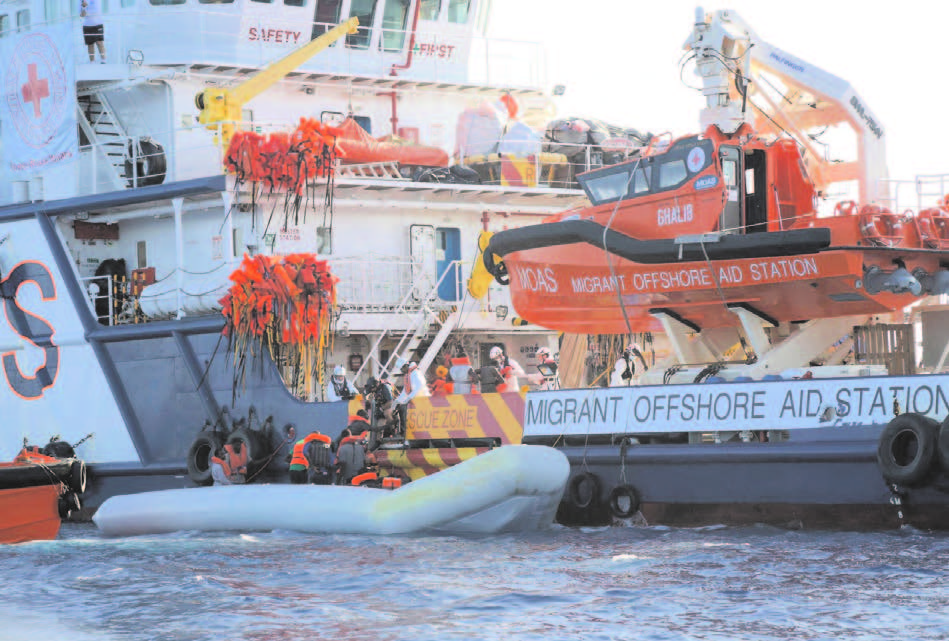
  • Nearly 100 migrants feared missing after boat sinks off Libya: Coastguard

    Nearly 100 migrants feared missing after boat sinks off Libya: Coastguard

    TRIPOLI (TIP): Close to 100 migrants were feared missing after their boat sank off the Libyan coast near Tripoli on Thursday, a coastguard official said.

    Coastguard spokesman Ayoub Qassem said 23 migrants were rescued from the craft off Gargaresh, a western suburb of Tripoli. Survivors said the inflatable boat had set off with about 120 people on board.

    “Some 97 are still missing, including 15 women and children,” Qassem said. “What happened is that the base of the boat got wrecked and the boat had sunk.”

    Libya is the main departure point for migrants hoping to reach Europe by sea, and more than 150,000 have made the crossing from Libya to Italy in each of the past three years. (AP)

  • Germany cracks down on child marriages

    Germany cracks down on child marriages

    BERLIN (TIP): Germany’s cabinet on April 5 moved to ban child marriages after the recent mass refugee influx brought in many couples where one or both partners were aged under 18.

    The new law, set to receive parliamentary approval by July, is seen as a protective move especially for girls by annulling foreign marriages involving minors.

    It will allow youth welfare workers to take into care underaged girls even if they were legally married abroad and, if deemed necessary, separate them from their husbands.

    “Children do not belong in the marriage registry office or the wedding hall,” said Justice Minister Heiko Maas.

    “We must not tolerate any marriages that harm minors in their development.”

    “The underaged must be protected as much as possible,” he added, stressing that no minor must suffer restrictions on their asylum or residential status as a result of the change.

    The age of consent for all marriages in Germany will be raised from 16 to 18 years. Currently in some cases an 18-year-old is allowed to marry a 16-year-old.

    Foreign marriages involving spouses under 16 will be considered invalid, and those involving 16 or 17-year-olds can be annulled by family courts.

    Rare exceptions are possible, for example when one of the spouses suffers from a serious illness — but only if the couple are now both adults and both want to stay married.

    The draft law would also punish with a fine any attempts to marry minors in traditional or religious rather than state ceremonies.

    There were 1,475 married minors registered in Germany last July — 361 of them aged under 14 — according to the latest figures released after a parliamentary request.

    Of these 1,152 were girls, said the interior ministry.

    The largest group, 664 children, came from Syria followed by 157 from Afghanistan, 100 from Iraq, and 65 from Bulgaria.

    The conservative daily Frankfurter Allgemeine Zeitung welcomed the bill, saying that “archaic practises that harm women and children have no place” in Germany.

    The aim was not to “paternalistically spread one’s values or disrespect foreign cultures”, but to enforce “fundamental and, in principle, globally recognised human rights”. The non-profit German Children’s Aid Foundation said it generally welcomed the new draft law as a sign of “progress” but said courts should have latitude in some tricky cases where one spouse is aged 16 or 17.

    These could involve underage couples that have their own children, who could then be considered born out of wedlock and lose certain entitlements and inheritance rights, warned the group’s head, Thomas Krueger.

    In such cases, recognising a marriage involving one 16 or 17-year-old “can be acceptable, for example, if the relationship is proven to be emotionally stable and there is no evidence of compulsion,” he said in a statement.

    “The opinion of the minor is also decisive and must absolutely be taken into account.” (AFP)

  • Refugees in Greece live in ‘appalling conditions’: Amnesty

    Refugees in Greece live in ‘appalling conditions’: Amnesty

    ATHENS (TIP): Most of the roughly 60,000 refugees and other migrants stranded in Greece are living in “appalling conditions” and face “immense and avoidable suffering,” rights group Amnesty International said in a report on Sept 22 slamming Europe’s response to the refugee crisis.

    The group criticized Europe for failing to fulfill commitments to relocate refugees from the countries they entered, saying only 6 percent, about 4,000 people, of the 66,400 relocations promised over two years have taken place. “Our latest research has found that two years into the refugee crisis in Greece, refugees and asylum-seekers in Greece are … living in fear and uncertainty for the future,” Giorgos Kosmopoulos, an Amnesty International researcher on refugees and migrants’ rights, said. “The European Union, a bloc of 500 million people, cannot offer dignified conditions to a number of people that is relatively small.”

    Amnesty called on Greece to improve conditions and on European countries to speed up the relocation process, saying it would take 18 years at the current rate to fulfill their existing pledges.

    After more than a million refugees and migrants reached European countries last year, the EU reached an agreement with Turkey in March to limit the flow.

    Under the deal, people arriving on Greek islands from the Turkish coast face deportation back to Turkey unless they successfully apply for asylum in Greece. The agreement, combined with Balkan border closures, has led to a dramatic fall in the number of people reaching Greece.

    Government figures show 92 people arrived on Greek islands in a 24-hour period on Wednesday and Thursday, compared to the thousands who were arriving each day at this time last year.

    However, the border closures also have trapped tens of thousands of people in Greece. With asylum applications taking months to process, the rate of return to Turkey is low.

    Other European countries, meanwhile, have failed to take in the numbers of refugees they had committed to accept.

  • UN holds first-ever summit on refugees and migrants

    UN holds first-ever summit on refugees and migrants

    UNITED NATIONS: The issue of what to do about the world’s 65.3 million displaced people takes center stage at the United Nations General Assembly when leaders from around the globe converge on New York for the first-ever summit on Addressing Large Movements of Refugees and Migrants.

    With more people forced to flee their homes than at any time since World War II, leaders and diplomats are expected to approve a document aimed at unifying the UN’s 193 member states behind a more coordinated approach that protects the human rights of refugees and migrants.

    “It’s very interesting because if we are able to translate that paper into a response in which many actors are going to participate, we will solve a lot of problems in emergency responses and in long-term refugee situations like the Syrian situation,” Fillipo Grandi, the UN’s High Commissioner for Refugees told reporters.

    That may prove an uphill struggle, however, as the document is not legally binding and comes at a time that refugees and migrants have become a divisive issue in Europe and the United States.

    A number of countries rejected an earlier draft of the agreement that called on nations to resettle 10 percent of the refugee population each year, something that has led a number of human rights groups to criticize the document as a missed opportunity.

    The US and a number of other countries also objected to language in the original draft that said children should never be detained, so the agreement now says children should seldom, if ever, be detained.

    Secretary-General Ban Ki-moon, whose report on refugees and migrants laid the basis for the summit document, said he was aware of the criticism from non-governmental groups.

    “While we all wish it could be a stronger outcome document … all 193 member states had to agree on their commitment. As you will see, my report was a strong one,” Ban said. “I hope that, as the two compacts are adopted over the coming year and a half, some stronger language and commitment and elements from the report will reappear in the course of this negotiation,”.

    First-ever summit on refugees and migrants: Facts

    When and where? The Summit is an all day event on Monday 19 September 2016 at the UNHQ in New York.

    Who is organizing? The High Level summit is being organized by the President of the General Assembly on behalf of Member States.

    In January 2016, the Secretary-General appointed a Special Adviser, Karen AbuZayd, to work with United Nations entities and undertake consultations with Member States and other relevant stakeholders in the lead up to the Summit.

    Participation The Summit will be attended by heads of state and government, Ministers, and leaders from the UN System, civil society, private sector, international organizations, academia, and beyond in alignment with the General Assembly resolution establishing the summit’s modalities.

    Background The UN General Assembly decided to convene a high-level plenary meeting on addressing large movements of refugees and migrants on the 19 September 2016 and requesting UN Secretary-General Ban Ki-moon to prepare a report with recommendations on the issue.

    – With inputs from www.refugeesmigrants.un.org

  • 235,000 Libyan migrants ready to head to Italy: UN

    235,000 Libyan migrants ready to head to Italy: UN

    ROME (TIP): Some 235,000 migrants in Libya are ready to make the dangerous Mediterranean crossing to Italy as soon as the opportunity arises, UN envoy Martin Kobler said in an interview published September 15.

    According to Italy’s interior ministry, nearly 128,400 migrants have arrived via the Mediterranean since the start of the year — which is a five percent jump over the same period in 2015.

    “We have on our lists 235,000 migrants who are just waiting for a good opportunity to depart for Italy, and they will do it,” Kobler told Italian daily La Stampa.

    “Reinforcing security is the most important issue at the moment. If we have a strong and unified army… then the dangers of terrorism and human trafficking will cease,” he added.

    Libya’s UN-backed Government of National Accord based in Tripoli is struggling to assert its authority and has been facing staunch resistance from a rival administration based in the country’s remote east.

    Fighting for control of the nation’s oil assets has renewed fears of a civil war in Libya, which plunged into chaos after the 2011 uprising that toppled and killed dictator Moamer Kadhafi.

    Libya’s 1,770 kilometres (1,100 miles) of coastline have become a popular staging point for migrants seeking to reach Europe.

    Kobler also said the offensive to capture key oil ports by Field Marshal Khalifa Haftar, who supports the rival administration in the country’s east, was “very worrying.”

    “Libya is in need of dialogue, stability and unity. I have contacted general Haftar and I am ready to meet him in order to find a solution allowing for the creation of a single army,” he added.

  • Britain to build 13-foot high wall to stop migrants

    Britain to build 13-foot high wall to stop migrants

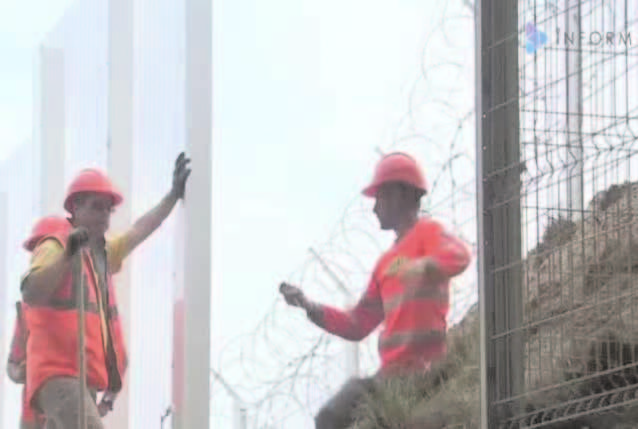
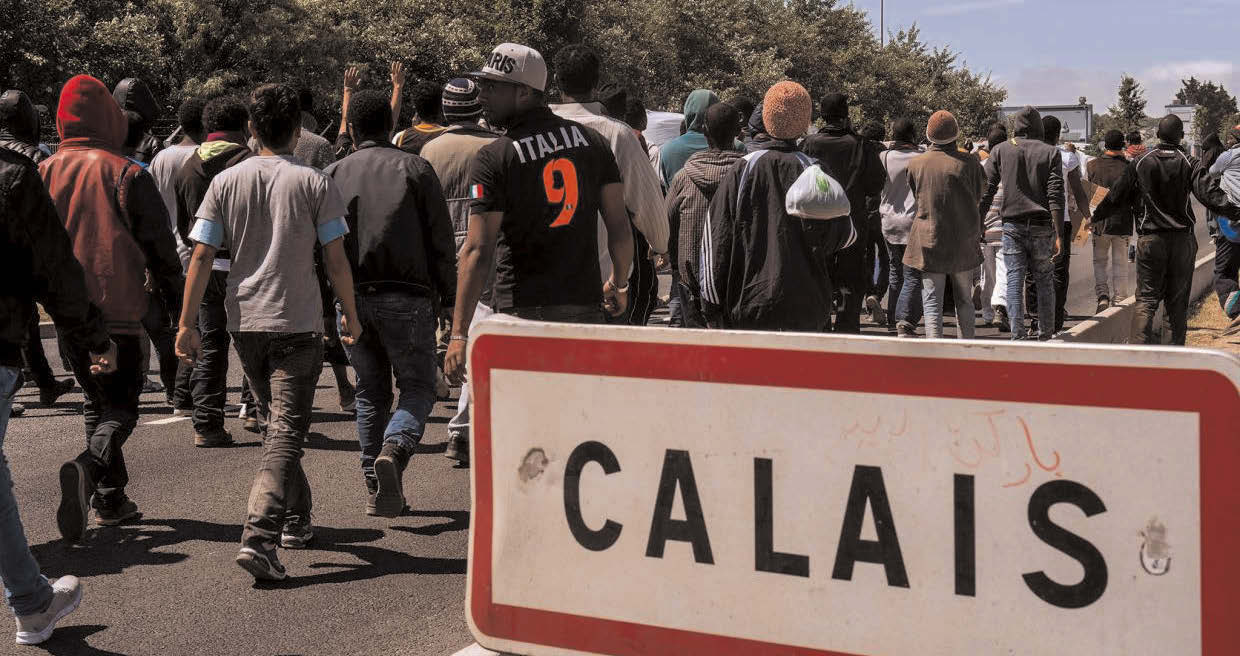
    LONDON (TIP): Britain is to start building a wall in the northern French port of Calais to stop migrants jumping on trucks, under a deal agreed earlier this year, the interior ministry said on sept 7.

    The four-metre (13-foot) high, one-kilometre long barrier will be built on a port approach road starting this month and should be completed by the end of this year, officials said.

    The wall, which will be funded by the British government under an agreement struck at a summit in March, will complement a security fence already put up around the port and entrance to the Channel Tunnel.

    “We are going to start building this big new wall very soon. We’ve done the fence, now we are doing a wall,” junior minister Robert Goodwill told a parliamentary committee on Tuesday.

    The wall, which is expected to cost 2.7 million euros ($3.0 million), will be the latest barrier to go up around Europe as the continent struggles with its biggest migrant influx in decades.

    Hungary has built a reinforced fence on its frontier with Serbia and Austria has announced plans for a massive new fence along its border with Hungary in a bid to shut down the Balkan migrant route.

    Republican White House hopeful Donald Trump has said he plans to build a wall along the border with Mexico funded by the Mexican government if he is elected.

    The wall in Calais was agreed following tens of thousands of attempted Channel crossings last year through trucks boarding ferries and the Eurotunnel. Angry French truckers and farmers blocked the main routes in and out of Calais on Monday to call for the closure of the sprawling “Jungle” migrant camp.

    The Jungle, a squalid camp of tents and makeshift shelters, is home to some 7,000 migrants but charities say the number might be as high as 10,000 after an influx this summer.

    Migrants from the camp sometimes use tree branches to create roadblocks to slow trucks heading for Britain, their destination of choice.

    When the trucks slow down, migrants try to clamber into the trailers to stow away aboard. Drivers say migrants and people trafficking gangs have attacked their vehicles with metal bars.

    The drivers say despite the deployment of 2,100 officers around the port, the police are overstretched and unable to secure the roads.

    French interior minister Bernard Cazeneuve promised during a visit to the Jungle last week to close the camp down “as quickly as possible” but said it would be done in stages.

    (PTI)

  • Turkey will ditch migrant deal if EU breaks promises: Erdogan

    Turkey will ditch migrant deal if EU breaks promises: Erdogan

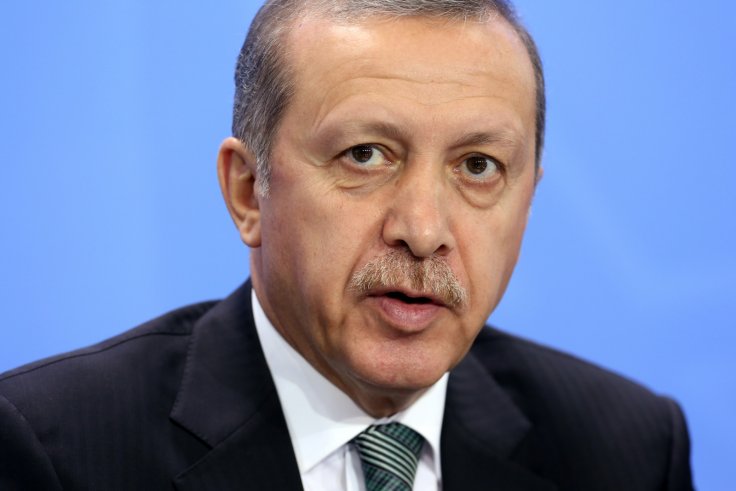
    ISTANBUL (TIP): Turkish President Recep Tayyip Erdogan on Thursday warned the European Union that Ankara would not implement a key deal on reducing the flow of migrants if Brussels fails to fulfil its side of the bargain.

    Erdogan’s typically combative comments indicated that Ankara would not sit still if the EU falls short on a number of promises in the deal, including visa-free travel to Europe for Turks by this summer.

    Meanwhile, the Vatican confirmed that the pope would next week make a brief, unprecedented trip to the Greek island of Lesbos where thousands of migrants are facing potential deportation to Turkey under the deal.

    “There are precise conditions. If the European Union does not take the necessary steps, then Turkey will not implement the agreement,” Erdogan said in a speech at his presidential palace in Ankara.

    The March 18 accord sets out measures for reducing Europe’s worst migration crisis since World War II, including stepped-up checks by Turkey and the shipping back to Turkish territory of migrants who land on the Greek islands.

    In return, Turkey is slated to receive benefits including visa-free travel for its citizens to Europe, promised “at the latest” by June 2016.

    Turkey is also to receive a total of six billion euros in financial aid up to the end of 2018 for the 2.7 million Syrian refugees it is hosting.

    Marc Pierini, visiting scholar at Carnegie Europe, described the visa-free regime as one of the “biggest benefits for Turkey” in the migrant deal.

    He told AFP that Turkey still has to fulfil 72 conditions on its side to gain visa-free travel to Europe’s passport-free Schengen zone and that the move would also have to be approved by EU interior ministers.

    Turkey’s long-stalled accession process to join the EU is also supposed to be re-energised under the deal. But Pierini said there were many conditions still to be fulfilled here.

    “The worst reading of the EU-Turkey deal would be to imagine that Turkey is about to get a ‘discount’ on EU membership conditions just because of the refugees,” he said. Erdogan argued Turkey deserved something in return for its commitment to Syrian refugees, on whom it has spent some $10 billion since the Syrian conflict began in 2011. “Some three million people are being fed on our budget,” the president said.

    “There have been promises but nothing has come for the moment,” he added.

    The first transfer of more 200 migrants from the Greek islands of Lesbos and Chios to Turkey took place on Monday. Officials said Greece was preparing to send around 50 more on Friday unless they applied for asylum at the last minute. German Chancellor Angela Merkel, whose country took in 1.1 million asylum seekers last year, delivered a message of optimism Thursday regarding the migrant crisis.

  • UK ‘to give France 20 million euros extra’ to stop migrants and refugees reaching England from Calais.

    UK ‘to give France 20 million euros extra’ to stop migrants and refugees reaching England from Calais.

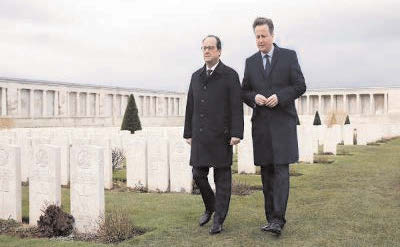
    ENGLAND (TIP): David Cameron is to agree to give an extra 20 million (£15.4 million) to France for policing and dispersing migrants attempting to reach the UK from Calais, a minister has said.

    In a radio interview before a Franco-British summit at Amiens in the Somme, the French Europe minister, Harlem Desir, said the extra funding came on top of previous British spending of 60 million (£47 million).

    In an interview with Radio France Internationale he repeated previous warnings that a Brexit could make it easier for thousands of refugees to reach England by leading France to scrap a treaty currently allowing British immigration checks in Calais and Dunkirk.

    “Inevitably, our ability to continue to work closely with the British on migration and security issues would be easier if they remain within the framework of the European Union,” he said. Mr Desir said that this was not a “threat” or “blackmail” but a recognition of the “practical realities”.

    Earlier, in an interview with the Financial Times, the French economy minister, Emmanuel Macron, suggested that British withdrawal from the EU would bring an end to the 2003 treaty which de facto moves the UK border to the French side of the Channel. This would, in theory, allow illegal migrants to reach Kent before they are stopped.

    “The day this relationship unravels, migrants will no longer be in Calais,” Mr Macron said.

    Mr Desir, the Europe minister, did not go quite so far. He said that the 2003 Le Touquet treaty was “bi-lateral” and therefore nor directly dependent on Britain’s EU membership. France did not want Britain to leave but would obviously find a new way of cooperating with its near neighbour if the Brexit camp won the June referendum.

    “All the same,” he added. “The situation would change. Our present security and migration relationship with Britain is based on our joint membership of European institutions, such as Europol.”

    “Inevitably, our ability to continue to work closely with the British on migration and security issues would be easier if they remain within the framework of the European Union.”

    There is growing pressure from politicians in France for the treaty to be renegotiated. In practical terms, however, French officials recognise that it would not be easy for France to repudiate the Le Touquet arrangements.

    If migrants thought that it was easy to cross the Channel, they would flood to Calais and other Channel ports in even greater numbers. Even if France stopped allowing British officials to check documents on French soil, ferry companies and Eurotunnel would still be obliged to do so. Britain fines travel companies and individual lorry or car drivers Pounds 3,000 for every unauthorised passenger.

    (The Independent)

  • UK records a fall in non-EU migrant arrivals

    UK records a fall in non-EU migrant arrivals

    LONDON (TIP): New figures showing an annual rise in net migration to the UK have provoked fierce debate but many myths persist about the effects of immigration.

    Here are some of the most common misconceptions:

    MYTH 1: Migration is higher than ever before

    Annual net migration actually dipped in the year till September’15 which stands at 3,36,000 as compared to the record-setting figures on the 12 months to June’15 which was 3,23,000.

    Although the latest number is still a rise from 2014, only 2,000 more people immigrated to the UK in the latest period analysed.

    “The latest increase in net migration was not statistically significant compared with 2014,” a spokesperson for the Office for National Statistics (ONS) said.

    “This net increase was the result of a decrease in emigration…and immigration being at a similar level to the previous year.”

    Net migration from the EU, 1,72,000, saw a slight increase on 2014 and the figure for non-EU citizens was also slightly up at 1,91,000.

    In real terms, EU immigration was up from 2,46,000 to 2,57,000, while non-EU immigration was down from 289,000 to 273,000.

    The ONS said the changes were “not statistically significant” for either group, although a 15,000 jump in immigration from countries like Romania and Bulgaria, was notable.

    MYTH 2: The refugee crisis is pushing immigration out of control

    As stated above, the main cause of the rise in net migration is not immigration itself but a drop in emigration.

    Asylum applications also rose for the fifth successive year in the UK according to the ONS, but the increase is negligible in light of the arrival of more than 1 million refugees in Europe.

    The number of applications lodged in the year to September 38,878, an annual increase of 20 per cent, the figure is nowhere near the UK’s 2002 peak of 1,03,000.

    Germany, by contrast, had taken more than 3,53,000 applications in the year to October, while Hungary was on 2,04,000 and Sweden on 94,000.

    The rate of asylum seekers per million people in the UK was 185, lower than Ireland, Iceland and Switzerland.

    Most refugees arriving in Britain last year came from Eritrea, followed by Iran, Pakistan, Sudan and Syria.

    An additional 1,200 Syrians granted humanitarian protection under the Government’s resettlement scheme, which was introduced after David Cameron refused to sign up to EU quotas, were not counted in the figure.

    Rates for granting applications varied widely across different nationals, with almost 90 per cent of Syrians being accepted as refugees compared to just a fifth of Pakistani nationals.

    One of the most frequently raised allegations about immigrants entering the UK is that they aim to exploit the national welfare system, despite numerous studies showing European migrants pay more in taxes than they receive in benefits.

    David Cameron once called public concern about benefits tourism “widespread and understandable” but research has not found a statistical foundation for the fears.

    Recent immigrants have made a net contribution of £20 billion to the UK over the last ten years, according to a UCL study, and foreigners are barred from several types of benefits without having permanent residency in the UK, unlike those on work visas, students and asylum seekers don’t qualify.

    In 2013, a spokesperson for the European Employment Commissioner said the British Government had “completely failed to come up with any specific evidence” to show that its welfare system was being abused and that EU nationals pay more in tax and other contributions than they receive in benefits.

    In that same year, a European Commission report showed that unemployed EU migrants made up less than 5 per cent of migrant claimants across the bloc and that fewer than 38,000 were claiming Jobseeker’s Allowance.

    A leaked Home Office document later admitted that the Government keeps no figures on how many EU nationals claim welfare payments.

    A study by University College London estimated that migrants coming to the UK since 2000 have been 43 per cent less likely to claim benefits or tax credits compared to the British-born workforce. “Immigrants, especially in recent years, tend to be younger and better educated than the UK-born and less likely to be unemployed,” the Centre for Economic Performance at LSE concluded in a separate report.

    MYTH 3: Immigrants are taking our jobs

    The latest ONS statistics show that employment rates for arriving migrants are high.

    Of the 2,90,000 people who immigrated for work in the year to September 2015, almost 60 per cent had already secured a job and the share rose to two thirds for Romanians and Bulgarians.

    Around 1,65,000 EU citizens came to the UK for work-related reasons, with 96,000 arriving to a “definite job” and 69,000 looking for work.

    Around two million non-British EU nationals are currently working in the UK, as well as 1.2 million non-EU nationals and 28.3 million Brits, according to the latest statistics from the Labour Force Survey.

    Visas granted for skilled work and other working visas were on the rise but those for study fell slightly following policy restrictions brought in by the Conservative government.

    But the figures do not necessarily mean new arrivals are “taking British jobs”, experts have cautioned.

    In its 2015 General Election briefing, the Centre for Economic Performance at the London School of Economics observed: “There is still no evidence of an overall negative impact of immigration on jobs, wages, housing or the crowding out of public services.

    Its research found that immigrants tend to be better educated and younger than their UK-born counterparts, while their share of the market for new jobs has remained “broadly the same”.

    Jonathan Portes, the Director of the National Institute of Economic and Social Research, suggested employment fears may stem from the fact that areas with high immigration, such as London, also tend to be where the job market moves more quickly

    “It’s fairly obvious that wages are generally higher and jobs easier to come by in areas of high immigration like London, while many low migration areas have relatively depressed labour markets,” he added.

    “It’strue that, if an immigrant takes a job, then a British worker can’t take that job, but it doesn’t meant he or she won’t find another one that may have been created, directly or indirectly, as a result of immigration.”

    “Any negative impacts on wages of less skilled groups are small. One of the largest impacts of immigration seems to be on public perceptions.”

    MYTH 4: Migration causes crime

    Anti-immigration groups have used fears of criminality as a key focus, particularly following the sex attacks in Cologne and reports of increased crime rates in areas of Europe being directly affected by the refugee crisis.

    A report by LSE in 2013 found that crime actually fell significantly in areas that had experienced mass immigration from eastern Europe, with rates of burglary, vandalism and car theft down since 2004.

    The research concluded that there was “no causal impact of immigration on crime; contrary to the ‘immigration causes crime’ populist view expressed in some media and political debate”.

    Brian Bell, a LSE research fellow, told the Guardian: “The view that foreigners commit more crime is not true. The truth is that immigrants are just like natives: if they have a good job and a good income they don’t commit crime.”

    A 2008 report for the Association of Chief Police Officers found that national crime rates have continued to fall despite rising net migration over a number of years.

    The research found that offending rates among Polish, Romanian and Bulgarian communities were in line with the general population.

    MYTH 5: It puts a strain on public services, hospitals and schools

    UCL’s Centre for Research and Analysis of Migration at University College London found that European immigrants to the UK pay more in taxes than they receive in benefits, effectively subsiding public services.

  • Seven children die after migrant boats sink off Greece

    Seven children die after migrant boats sink off Greece

    ATHENS (TIP): At least seven children died when boats carrying migrants sank off Greece on Wednesday, as rescue workers battled to save more youngsters on the seashore in the latest desperate scenes in Europe’s refugee crisis.

    Three adults also died as four vessels went down on the dangerous sea crossing from Turkey and more than 200 people, many suffering hypothermia, were rescued from one sinking off the north coast of the Greek island of Lesbos.

    Images from Lesbos, a major entry point for the huge flow of migrants trying to get to Europe, showed doctors attempting to revive unconscious children on the island’s shoreline.

    Later in the evening, a drowned woman and the bodies of two children were found floating off the Greek island of Agathonisi, just a few kilometres from the Turkish coast.

    A one-year-old baby remained in a critical condition Wednesday night, according to port police.

    Patrol vessels, fishing boats and even locals on jet skis joined in efforts to search into the night for more survivors in the water, struggling with strong winds.

    Port police said it was not clear how many people might be in the water, with survivors giving a confusing picture of the number of people who were on the boat that capsized off Lesbos.

    The new accidents brought to 39 the number of migrants found dead in Greek waters this month, according to an AFP tally based on data from Greek port police.

    “The priority for Europe must remain the secure resettlement of refugees arriving from their countries of origin,” said Greek shipping minister Thodoris Dritsas in a statement.

    “As long as European nations feed their national egos, smugglers will make enormous sums to the detriment of the lives of refugees,” he added.

    Amnesty International’s Deputy Europe Director Gauri van Gulik said it was “obscene that European leaders allowed such a chain of tragedies on its shores”.

    Since the start of the year, 560,000 migrants and refugees have arrived in Greece by sea, out of over 700,000 who have reached Europe via the Mediterranean, according to the International Organization for Migration (IOM).

    More than 3,200 people have died during these crossings, the IOM says, many of them children.

    Also Wednesday, Europe’s maritime anti-people-smuggling mission, Operation Sophia, rescued about 1,000 migrants from six dinghies and a fishing boat off the Libyan coast, the Italian coastguard said.

    The rescues were carried out by Italian, British, Slovenian and German vessels, it said.

    Operation Sophia, coordinated by Italy, was set up to arrest smugglers and seize their vessels in the Mediterranean as Europe tries to stem the flow of migrants making the perilous sea crossing.

    All the rescued migrants are now headed to Italy, the Italian coastguard said.

    (Source: AFP)

  • Pope calls upon America  to ‘embrace the millions of undocumented Immigrants’

    Pope calls upon America to ‘embrace the millions of undocumented Immigrants’

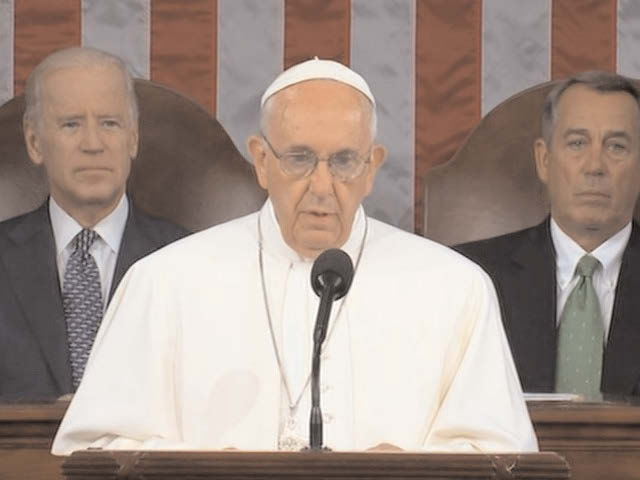
    WASHINGTON (TIP): Pope Francis called upon  America Thursday, September 24 to embrace millions of undocumented immigrants and join a global campaign against climate change and poverty.

    A CNN report says the Pope laid out an implicit counter-argument to some conservatives, including 2016 Republican front-runner Donald Trump, who believes that the more than 10 million undocumented immigrants in the country should be deported. He implied that to do so would repudiate America’s founding purpose as a nation born of immigrants seeking a better life.

    “We, the people of this continent, are not fearful of foreigners, because most of us were once foreigners,” he said, as Vice President Joe Biden and an often tearful Republican House Speaker John Boehner, both Catholics, watched from the dais.

    “I say this to you as the son of immigrants, knowing that so many of you are also descended from immigrants,” Francis told the audience of lawmakers, top military brass, Supreme Court justices and Cabinet members on the floor of the House.

    He made a clear connection between undocumented immigrants in the U.S. and the exodus of Syrians and others into Europe from wars raging in the Middle East.

    “On this continent, too, thousands of persons are led to travel north in search of a better life for themselves and for their loved ones, in search of greater opportunities,” he said of migrants from Central and South America, indicating they needed to be treated as people seeking refuge rather than as exploiting the United States’ porous borders.

    In an apparent rebuke to politicians who have criticized the tide of undocumented immigrants, he continued, “We must not be taken aback by their numbers, but rather view them as persons, seeing their faces and listening to their stories, trying to respond as best we can to their situation.”

    Then, citing Scripture to drive home his argument, Francis said: “Let us remember the Golden Rule: ‘Do unto others as you would have them do to you.’”

    CNN reports that Francis also called for a fairer world economy, the abolition of the death penalty, the protection of ethnic and religious minorities, the outlawing of the global “blood” trade in arms and the protection of the family in a speech sure to please liberals.

    Practicing what he preached, the wildly popular pontiff, who has drawn thousands onto the streets along with blanket media coverage during his U.S. visit, then headed to pray and eat with homeless people and to pose for selfies with his adoring flock.

    The Pope, who was greeted by cheers as he stepped onto the floor of the House of Representatives and received several standing ovations and sustained applause during his address, did not scold lawmakers — his tone was more akin to that of a sermon or a pep talk. But he did not shirk from delivering blunt political messages.

    He called on often warring lawmakers to honor the example of their greatest national heroes, like Martin Luther King, Jr. and Abraham Lincoln.

    Francis appeared to reflect on news coverage of racial violence over the past year and a debate over the place of Muslims in U.S. society that arose in recent weeks.

    Citing Martin Luther King’s “dream of full rights for all their brothers and sisters,” he urged Americans in the 50 minute speech to remember the civil rights icon’s legacy of “liberty in plurality and non-exclusion.”

    Referring to turmoil tearing apart the Middle East, Francis warned the world was increasingly a place of fundamentalism and “brutal atrocities” sometimes committed in the name of religion, but he warned against a simplistic world view pitting good versus evil or “the righteous and the sinners.”

    “We know that in the attempt to be freed of the enemy without, we can be tempted to feed the enemy within,” Francis warned.

    Clearly conscious that many conservatives in Congress are skeptical that mankind is contributing to global warming, he called for a courageous and responsible effort to avert “environmental deterioration caused by human activity” and said Congress had an “important role to play.” He also praised efforts in recent months to
    “help overcome historic differences linked to painful episodes of the past,” a passage that President Barack Obama’s supporters may take as approval of his controversial policies towards Cuba and Iran.

    Amid criticism that he is overly critical of global capitalism and dismisses its place in lifting millions of people out of poverty, Francis acknowledged that “business is a noble vocation, directed to producing wealth and improving the world.”

    But he cautioned that wealth should be shared and geared to “the creation of jobs as an essential part of its service to the common good.”

    He did, however, cut one section of his prepared speech, in which he referred to the Declaration of Independence and said that politics should not be a “slave to the economy and finance.”

    Vatican spokesman Father Lombardi later said the Pope made a “little oversight” and skipped those lines by mistake, with the prepared text of the speech to Congress remaining the official version.

    The Pope also counseled members of the unpopular and divided Congress of the need to move forward together in a generous spirit of fraternity.

    “The challenges facing us today call for a renewal of that spirit of cooperation, which has accomplished so much good throughout the history of the United States,” he said, and called on America to act on his appeals.

    “The complexity, the gravity and the urgency of these challenges demand that we pool our resources and talents and resolve to support one another, with respect for our differences and our convictions of conscience,” he said.

    Francis, who will take part Sunday in a World Meeting of Families in Philadelphia on the last stop of his trip to the United States, also made an oblique reference Thursday to the increasing prevalence of same-sex marriage, which the Supreme Court endorsed nationwide earlier this year.

    “I cannot hide my concern for the family, which is threatened, perhaps as never before, from within and without,” Francis said. “Fundamental relationships are being called into question, as is the very basis of marriage and the family.”

    The Pope drew cheers, especially from the Republican side of the House, when he spoke of the need to “protect and defend human life at every stage of its development,” in a reference to abortion.

    But he earned only a smattering of applause when he said that reverence for life also means supporting the global abolition of the death penalty. Francis threw his weight behind efforts to pass criminal justice reform, saying society “can only benefit from the rehabilitation of those convicted of crimes.”

    There were also signs of a partisan split in the chamber when Francis mentioned global warming and immigration, which Democrats applauded while many Republicans did not.

    But despite the progressive content of his speech, Francis appeared to avoid offending anyone.

    “We found ourselves standing up and sitting down more than what we anticipated,” Republican Sen. Mike Rounds told CNN’s Dana Bash. Former GOP vice presidential nominee Rep. Paul Ryan told CNN that it would be wrong to treat the speech as “a sort of laundry list of policies.”

    Democratic presidential candidate Sen. Bernie Sanders, meanwhile, welcomed the liberal content of an address that he described as dignified and nonpartisan.

    After his speech, Francis appeared on the Speaker’s balcony along with bipartisan leaders of Congress and smiled broadly at the thousands of people gathered below on the National Mall. He singled out children for special mention, and asked even those who had no faith and could not pray to send him good wishes.

    After making brief remarks in Spanish on the balcony, Francis concluded by declaring in English, “God bless America!”

    He then went to St Matthew’s Cathedral to pray with homeless people. He was mobbed by admirers outside, smiling broadly at children and posing for pictures shot on mobile phones, as Secret Service agents and Vatican officials cleared his way through the crowd.

    “In prayer, there are no rich or poor people,” the pontiff said in the church. “There are sons and daughters.” “Today I want to be one with you,” he said. “I need your support, your closeness.”

    Francis later flew out of Joint Base Andrews outside Washington and headed to New York, where he will ride his popemobile through Manhattan and lead evening prayers at St Patrick’s Cathedral before speaking at the United Nations on Friday. He will conclude his six-day visit to the United States in Philadelphia on Sunday.

  • Migrant crisis could damage ‘idea of Europe’, Germany says

    Migrant crisis could damage ‘idea of Europe’, Germany says

    ANKARA/ISTANBUL (TIP): A failure to handle the migrant crisis effectively could adversely affect the “idea of Europe”, Germany’s labour minister said on Thursday, calling for a fairer distribution of refugees within the European Union.

    Speaking at a briefing ahead of the G20 meeting of finance ministers and central bankers in the Turkish capital this week, Andrea Nahles warned that Europe had “come to a crossroads”, and that poor handling of the influx of asylum seekers from countries like Syria was fueling skepticism towards the EU.

    “We need to have more distribution of refugees because we cannot see the end (of the problem) … It would be far easier when we do not have pressure only on Sweden, Germany and Austria,” she said.

    The plight of those either fleeing conflict in their own countries or seeking a better life has created furious debate in Europe, with the flood of new arrivals stretching the EU’s asylum system, as well as relations within the bloc.

    Nahles rejected comments made by Hungarian Prime Minister Viktor Orban earlier in Brussels, who said that because so many migrants wanted to reach Germany, it was a “German problem”.

    “When we are not able to solve this problem as Europe and we now start to say ‘that is a German problem, that is a Swedish problem, that is an Italian problem,’ then the idea of Europe will be affected,” she said.

    ‘Family of Syrian toddler on Turkish beach tried to reach Canada’

    The family of a Syrian toddler whose body washed up on a Turkish beach had been trying to emigrate to Canada after fleeing the war-torn town of Kobani, one of their relatives told a Canadian newspaper on Thursday.

    A photograph of the tiny body of a three-year old boy washed up in the Aegean resort of Bodrum appeared in newspapers around the world on Thursday, spawning sympathy and outrage at the perceived inaction of developed nations in helping refugees.

    “He had a name: Alyan Kurdi. Urgent action required — A Europe-wide mobilization is urgent,” French Prime Minister Manuel Valls said on Twitter of the boy.

    The boy’s 5-year-old brother Galip and mother Rehan, 35, also died after their boat capsized while trying to reach the Greek island of Kos. His father, Abdullah, was found semi-conscious and taken to hospital near Bodrum, according to Turkey’s Sabah newspaper.

    “I heard the news at five o’clock this morning,” Teema Kurdi, Abdullah’s sister and a resident of Vancouver, was quoted as saying by Canada’s National Post newspaper. She had heard of the deaths from another of the boy’s aunts.

    “She had got a call from Abdullah, and all he said was, my wife and two boys are dead,” Teema said.

    The family were among at least 12 presumed Syrian refugees, other young children among them, who died trying to reach Kos after two boats, carrying a total of 23 people, set off from the Akyarlar area of the Bodrum peninsula, a naval official said.

    Abdullah, his wife and two children had made a privately-sponsored refugee application to the Canadian authorities that was rejected in June because of complications with applications from Turkey, National Post quoted Teema as saying.

    “I was trying to sponsor them, and I have my friends and my neighbours who helped me with the bank deposits, but we couldn’t get them out, and that is why they went in the boat,” she said.

    “I was even paying rent for them in Turkey, but it is horrible the way they treat Syrians there.”

    Turkey has won international praise for taking in 2 million refugees since the Syrian civil war began in March 2011, spending $6 billion caring for them and receiving just $400 million in outside aid.

    But it has warned it is reaching capacity, and thousands are now making the perilous journey by boat from Turkey to Greece in a bid to enter Europe.

    Pressure on leaders

    Kobani has been the scene of intense fighting over the last year. In recent months Kurdish regional forces have been trying to repel attempts by Islamic State to recapture the town.

    Tens of thousands of Syrians fleeing the war in their homeland have descended on Turkey’s Aegean coast this summer to board boats to Greece.

    The Turkish army said its search and rescue teams had saved hundreds of migrants in the seas between Turkey and Greek islands over the last few days.

    One of the survivors from the two capsized boats, Zeynep Abbas Hadi, fainted after seeing the dead bodies of two of her children, aged 9 and 11, footage on Dogan news agency’s website showed. Her seven-year old daughter survived, the agency said.

    Another survivor, Syrian Omer Mohsin, said he swam ashore after the boat sank shortly after heading off at 2am (2300 GMT) and was now looking for his missing brother.

    “There were supposed to be 10 people on the boat, but they put 17 people on board. Me and my brother paid 2,050 euros each,” Dogan quoted him as saying on its website.

    The image of Aylan, the little boy wearing a bright red t-shirt and shorts lying face-down in the surf on a beach in one of Turkey’s most popular holiday regions, went viral on social media and piled pressure on European leaders.

    “When I realized there was nothing to do to bring that boy back to life I thought I had to take his picture … to show the tragedy,” Nilufer Demir, a photographer with the Dogan news agency, told broadcaster CNN Turk.

    “I hope the impact this photo has created will help bring a solution,” she said.

    Video footage showed the body of another young child, thought to be Aylan’s brother, also lying in the sand as waves lapped his feet.

    The UN refugee agency estimates that almost 160,000 refugees and migrants have arrived in Greece by sea since the start of last year. In July more than 50,000 people, mostly Syrians, arrived in Greece compared with 43,500 in the whole of 2014.

    Some 2,500 refugees and migrants are estimated to have died or gone missing this year trying to reach Europe.

    The agency has repeated calls for Greece and the European Union to take steps to address the situation.Turkey detains 4 Syrians in connection with capsized boat.

  • British PM’s ‘swarm’ of migrants comment sparks outrage

    British PM’s ‘swarm’ of migrants comment sparks outrage

    LONDON (TIP): Prime Minister David Cameron faced heavy criticism on July 31 for saying a “swarm” of migrants was trying to come to Britain, as authorities in France struggle to stop them crossing the Channel.

    “You have got a swarm of people coming across the Mediterranean, seeking a better life, wanting to come to Britain because Britain has got jobs, it’s got a growing economy, it’s an incredible place to live,” Cameron told ITV television during a visit to Vietnam.

    Around 3,000 people from countries including Syria and Eritrea are camping out in the northern French port of Calais and trying to cross into Britain illegally by clambering on board lorries and trains.

    The controversy has dominated British media this week as holidaymakers and truck drivers have been blocked on the British side due to delays caused by the migrants’ actions.

    Acting leader of the main opposition Labour party Harriet Harman said Cameron should “remember he is talking about people, not insects”.

    The Refugee Council, a leading charity which works with asylum seekers, said it was “awful, dehumanising language from a world leader”.

    And Nigel Farage, leader of the UK Independence Party (UKIP), which wants stricter controls on immigration, said he would not use similar words.

    “The prime minister is this morning trying to sound tough. Whether he actually means it or not is quite a separate question,” Farage told BBC radio.

    Cameron is facing calls from tabloid newspapers to deploy the British army to resolve the situation, but insists the correct solution is to cooperate with French authorities.

    “We need to protect our borders by working hand in glove with our neighbours the French and that is exactly what we are doing,” he told ITV.

    Cameron will chair a meeting of the government’s COBRA emergency committee on Friday on the issue. London has also pledged £7 million (10 million euros, $11 million) to improve fencing around the Eurotunnel rail terminal at Coquelles, northern France.

    Britain’s Ministry of Defence is considering freeing up some of its land to become temporary lorry parks to help reduce long queues on the motorway in Kent due to delays, British newspapers The Times and The Daily Telegraph reported.

    The ministry was not immediately available for comment on the reports.

    Keith Vaz, a lawmaker and head of parliament’s home affairs committee, called for a meeting between Cameron and French President Francois Hollande, but said that the problem had to be dealt with at an European Union level.

    “I think the focus is all wrong here. Once people make it to Calais, it’s almost too late. The problem lies fundamentally with the failure of the EU to deal with the migrants crisis in Italy and Greece,” he said.

  • Pope slams nations which ‘close the door’ to migrants

    VATICAN CITY (TIP): Pope Francis said today that those who “close the door” to refugees seeking a safe haven in Europe should ask God’s forgiveness, as tensions rose in the EU over the migrant crisis.

    A day after European interior ministers failed to agree on how to stem the flow of boat migrants across the Mediterranean or house the thousands of new arrivals, Francis demanded greater respect for “our brothers and sisters who seek refuge far from their own lands”.

    “I encourage those who bring them aid and hope that the international community will act in a united and efficient fashion to prevent the causes of forced migration,” he said.

    “And I invite everyone to ask God’s pardon for those people and institutions who close the door to those who are seeking a family, who are seeking to be protected,” he said.

    Italy has threatened a backlash if other EU states refuse to share the burden of asylum seekers, but even so ministers took no decision to carry out proposals by the European Commission for quotas to redistribute 40,000 refugees.

    European leaders swore action after an estimated 800 migrants died in a shipwreck in April, the worst disaster yet in the Mediterranean in a year in which a total of 1,800 people have died trying to cross from Africa and the Middle East on flimsy boats.

    In one of the largest pledges of assistance so far, France said today it would create an additional 10,500 housing places for migrants.

    More than 100,000 migrants have arrived in Europe this year, 60,000 through Italy alone, according to the EU’s border agency Frontex.

  • EU LEADERS COMMIT SHIPS, AID TO ADDRESS MIGRANT CRISIS

    EU LEADERS COMMIT SHIPS, AID TO ADDRESS MIGRANT CRISIS

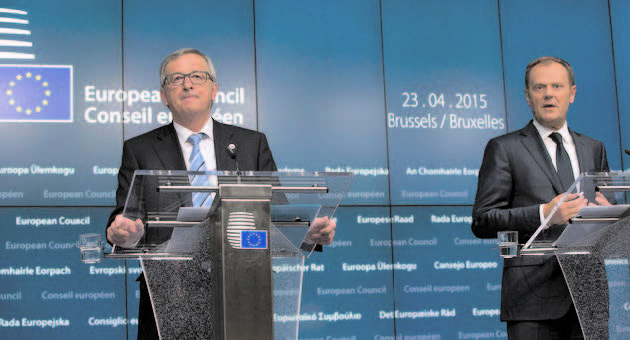
    BRUSSELS (TIP): Late to the rescue, European leaders came through on April 23 with pledges of big ships, aircraft and a tripling in funds to save lives in the Mediterranean after the deaths at sea of more than 1,300 migrants over the past three weeks, and agreed to lay the groundwork for military action against traffickers.

    Italian Prime Minister Matteo Renzi, whose country has been faced with almost daily tragedy as rescuers plucked bodies from frigid waters, called it “a giant step forward.”

    Within days, Britain’s aptly named HMS Bulwark and the German supply ship Berlin could be steaming to the heart of the Mediterranean in the biggest sign of the European Union’s belated commitment to contain the tide of rickety ships making the perilous crossing.

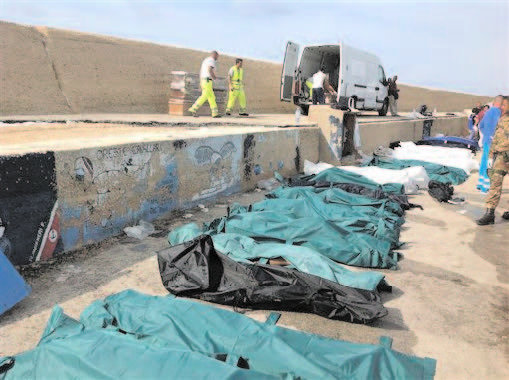
    The pledge of resources came as victims of the worst-ever migrant disaster in the Mediterranean were buried Thursday in Malta. Two dozen wooden caskets containing the only bodies recovered from a weekend capsizing off Libya that left at least 800 migrants feared dead were laid out for a memorial service.

    None of the bodies was identified: One casket had “No. 132” scrawled on it, referring to the number of the DNA sample taken from the corpse in case a relative ever comes to claim it.

    For several years as death tolls have mounted, EU leaders have done little more than deplore the loss of lives and mark tragedies with moments of silence and wreaths instead of fundamental action. When Libya disintegrated politically after the overthrow of longtime leader Moammar Gadhafi and unrest spread in neighboring countries, Europe failed to take forceful action.

    On Thursday, EU leaders pledged to do more, committing at least nine vessels to monitor the waters for traffickers and intervene in case of need. Other member states, from France to Latvia, also lined up more ships, planes and helicopters that could be used to rescue migrants.

    The member states agreed to triple funding to 9 million euros ($9.7 million) a month for the EU’s border operation that patrols the Mediterranean.

    They also assigned EU foreign policy chief Federica Mogherini to line up the diplomatic options that would allow EU militaries to strike against the boats used by traffickers. Officials said the lack of a strong Libyan government would likely make UN backing necessary.

    “Leaders have already pledged significantly greater support, including many more vessels, aircraft and experts” than had been anticipated before the summit, EU President Donald Tusk said.

    Despite the sudden deluge of goodwill, huge questions remained about whether it would be enough to defeat the smugglers and human traffickers.

    “Right now, it’s a question of fixing yesterday’s errors,” French President Francois Hollande said.

    He said the EU would hold a summit in Malta with African countries by this summer to see how the continents can work together to better deal with a crisis that has grown dramatically in recent years.

    In contrast to the Italian premier, the head of another Mediterranean nation on the frontline of the tragedies was far less enthusiastic.

    For tiny Malta, the smallest EU member state with a population of 450,000, the summit produced nothing particularly new, apart from a fresh resolve to break up the smuggling networks.

    The assets being proposed “will never be enough,” Malta’s prime minister, Joseph Muscat said. “It is definitely not enough if the numbers that are being communicated about prospective migratory flows are anything to go by.”

    Over the past week alone, more than 10,000 people have been plucked from the high seas between Italy and Libya as desperate migrants fleeing war, repression and poverty threw their lot in with smugglers who charged $1,000 to $2,000 for a spot on overcrowded and unseaworthy boats to make the perilous crossing.

    At least 1,300 people have died in April alone, putting 2015 on track to be the deadliest year ever.

    Ending that is Europe’s main challenge. Even optimists say any measures agreed at Thursday’s summit would not fully stem the tide of unstable ships crossing the Mediterranean.

    But Dutch Prime Minister Mark Rutte insisted that Europe should not take the brunt of blame. “We also ask that Africa, the source of the problem, also collectively takes up its responsibility,” Rutte said. “Last time I checked Libya was in Africa, not Europe.”

    Over the past year, what little political structure Libya had has collapsed. There are two rival governments, neither with any real authority, and each fighting the other on the ground. Local militias hold sway around the country, some of them with hard-line Islamist ideologies, and the Islamic State group has emerged as a strong and brutal force.

  • Spain migrant drowning toll rises to 11

    Spain migrant drowning toll rises to 11

    MADRID (TIP):
    Police found the body of a migrant on a beach in Ceuta on February 12, bringing to 11 the number of people who drowned trying to swim to the Spanish territory from Morocco, an official said. Officers discovered the body of a man in his twenties at Ceuta’s Tarajal beach, a spokesman for the Spanish government’s delegation in the territory said. He is one of hundreds of sub- Saharan African migrants who tried to enter Ceuta on Thursday by swimming from a beach in neighbouring Morocco, the spokesman added. “The body was found this afternoon, it was washed ashore by the currents.

    Police have been combing the beach since Thursday’s events,” the official said. Interior Minister Jorge Fernandez Diaz will appear before parliament on Thursday to discuss the deaths after rights groups and Spanish media cited migrants who alleged that police fired into the sea where they were swimming.Spanish authorities said civil guards in Ceuta used rubber bullets to ward off the migrants but that they fired them in the air and did not target anyone directly.

    The director general of the civil guards, Arsenio Fernandez de Mesa, defended the force during a visit to Ceuta, telling reporters that officers had acted “impeccably”.”I have asked them to continue the same way to maintain law and order, to contain the flood of people exploited by criminal gangs that try to defeat the rule of law, and to guarantee security inside national territory,” he added after meeting with civil guards in Ceuta. He said the civil guards would take legal action against anyone who “has insulted, slandered or made false allegations regarding the events of the last few days.

    “Hundreds of people demonstrated in Madrid and other Spanish cities on Wednesday evening in outrage at the deaths. In the capital, protesters held a banner reading: “No more deaths at the borders” and shouted: “They didn’t drown, they were murdered.” “The government should apologise because they did nothing to help” the migrants, one demonstrator, Paula Madinabeitia, an 18-year-old student, told mediapersons. The bodies of eight men and a woman were found on a beach in Morocco near Ceuta on Thursday. Spanish police found the body of another man on a beach in Ceuta on Saturday.Morocco, under pressure from Spain, is trying to stem a stream of sub- Saharan African migrants, who head to its northern shores in a desperate quest to reach mainland Europe.

  • 92 Niger migrants die of thirst while trying to cross Sahara Desert

    92 Niger migrants die of thirst while trying to cross Sahara Desert

    NIAMEY (TIP): The corpses of 92 migrants, most of them women and children, have been found in northern Niger after their vehicles broke down attempting to cross the vast Sahara desert, authorities said on october 31.

    The migrants had set off in two trucks from the uranium mining town of Arlit in northern Niger towards Tamanrasset in Algeria in mid-October, officials said. After one of the trucks broke down, the second turned back to find help but found itself stranded and the passengers attempted to make it back by foot. The mayor of Arlit, Maouli Abdouramane, said 92 bodies had been recovered after days of searching — 52 children, 33 women and seven men.

    “The search is still going on,” Abdouramane said. He said the victims were all from Niger but their final destination was unclear. A military officer said about 20 people survived the ordeal. Five of those walked for dozens of kilometres across the burning desert back to Arlit to inform authorities. The bodies were strewn across the desert within 20km of the border with Algeria, a second military source said. Most people who use the perilous route across the dunes are young African men in search of work in Europe or north Africa, raising questions about the purpose of the doomed convoy of women and children.