Tag: EVM

  • India’s Election Commission: Murder of an Institution

    India’s Election Commission: Murder of an Institution

    E.C. has not taken any action on the complaints against the Prime Minister even after a month for violating the moral code by explicitly attacking a minority community in his campaign speeches.

    “The Indian Constitution Article 324 establishes an independent election commission; Article 327 empowers Parliament to enact laws governing all aspects of elections. Article 329 provides a mechanism for resolving electoral disputes through review by an independent judiciary. These articles reflect the clear preference of the constituent assembly to ensure the autonomy and independence of the ECI, protecting it from Executive interference (Devi and Mendiratta, 2000). ECI has been considered one of the most trusted public institutions in India that ensured integrity and conducted 17 national and 370 state elections since India’s independence in one of the most populous countries in the world.”

    By George Abraham

    Ever since the BJP/RSS came to power with Narendra Modi at its helm, institutions built under the Nehruvian-Ambedkar vision have been facing either servitude or total decimation. India’s election commission, one of the revered pillars of Indian Democracy, appeared to have suffered the same fate as many others in their ongoing battle to move the nation towards a majoritarian rule rooted in the Hindutva philosophy.

    Under the visionary leadership of Jawaharlal Nehru and B.R. Ambedkar, India  created institutions that preserved freedom and Democracy for everyone. If we look back at history, many other countries that have gained independence along with India failed in their quest to safeguard freedom for their citizens. However, India has succeeded, whereas others have failed only because of those institutions that stood the test of time. Undoubtedly, the Election Commission is one institution that conducts free and fair elections and guarantees peaceful transfer of power  to the victor of the people’s mandate every time.

    BJP was only interested in free and fair elections until they reached the pinnacles of the power structure. Soon, they started meddling all around, weakening institutions, muzzling media, and intimidating and removing civil society, all in their quest to perpetuate power and establish long-lasting control over every segment of society. In their second term, they must have been anxious for their tenuous hold on power, considering their mammoth failures in tackling the nation’s pressing problems, such as rampant inflation, youth unemployment, and unrest in the agricultural sector.

    Towards that end, they have decided to remake the Election Commission to make it a handmaiden, a blow to Democracy and the established constitutional order. Democracy means that all the people in a nation have a say in one way or another in everything that affects their lives. That was the point of contention for a party like the BJP, which believed in majoritarian governance. Democracy is also a controversial concept often misused by dictators and single-party regimes to assert popular support to justify their power grab.

    The Indian Constitution Article 324 establishes an independent election commission; Article 327 empowers Parliament to enact laws governing all aspects of elections. Article 329 provides a mechanism for resolving electoral disputes through review by an independent judiciary. These articles reflect the clear preference of the constituent assembly to ensure the autonomy and independence of the ECI, protecting it from Executive interference (Devi and Mendiratta, 2000). ECI has been considered one of the most trusted public institutions in India that ensured integrity and conducted 17 national and 370 state elections since India’s independence in one of the most populous countries in the world.

    However, what has been happening during this election cycle under the watch of the current E.C. is genuinely disconcerting and tantamount to betraying their sacred duty as the chief guardian of Democracy in exercising their impartial judgment in the conduct of a free and fair election. The move to reorganize the ECI outside of the collegium, outlined by the Supreme Court, where the prime minister, the chief justice, and the opposition leader together choose election commissioners, was a grave mistake. As a result, the independence of the ECI has been lost, and it has become another instrument in the hands of an administration with a history of subjugation to achieve its political ends.

    Consequently, the court system is forced to work extra hours and sit in judgment on the issue of compliance with the election laws or with the moral code of conduct violations by the parties or their candidates. The court has directly intervened and criticized the election commission for failing to address various complaints nationwide. E.C. has not taken any action on the complaints against the Prime Minister even after a month for violating the moral code by explicitly attacking a minority community in his campaign speeches. E.C. sent a notice to the BJP President rather than the individual who made that offending statement. To any independent observer, it becomes clear that the level of communal statements and hate speeches during the election cycle is on a much larger scale than in any other election in the past. Subsequently, a Congress delegation met the Election Commission and gave a memorandum criticizing Modi’s statements that created false and divisive insinuations targeting a particular religious community, which is a clear provocation to the general public to act and breach the peace.

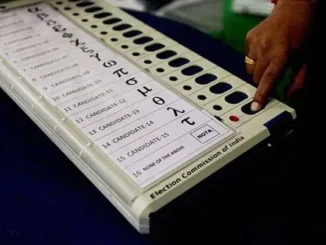
    The Supreme Court’s dismissal of adding VVPAT to every EVM on the petition by the Association of Democratic Reforms was quite unfortunate, and it has become abundantly clear now that the people lack faith in the current E.C. to fix the problems associated with these voting machines. There are several reports of the malfunctioning of EVMS and subsequent delays in voting across the country. The storage and safekeeping of this equipment until the counting is also under scrutiny as reports of CCTV camera failures emerge in this unusually long election cycle. Why it would take two months to conduct an election and for whose convenience, etc., are also shrouded in mystery. There is little doubt that EVMs are under the spotlight now, and real fears over fairness and openness in this regard are no longer limited to civil society debates.

    Congress Working Committee member Gurdeep Sappal said that people have voted in large numbers to vote this government out. Now, the number of votes counted will decide the outcome. “the E.C. must ensure that people have faith in its process. Unfortunately, this trust is missing. E.C.’s assertion that political parties must do their data analytics before coming to the commission was outrageous. Any institution that indulges in such whataboutery has something to hide. We never thought there would be a day in this country when the E.C. would refuse to give even the data of the votes polled on a particular day,” Mr. Sappal added.

    Indian Democracy is in an existential crisis. The values it embodies—specifically the right to choose leaders in a fair and free election—are under assault right now. The system finds itself battered and weakened. The slow and painful death of the Election Commission is another warning sign that India as a free society may cease to exist shortly unless people in large numbers realize the potential danger and speak out loud and together by casting their votes.

    (The author is a former Chief Technology Officer at the United Nations. He is currently the Vice Chair of IOC USA. He can be reached at gta777@gmail.com) )                   

  • Modi’s claim of 400 plus seats entails 100% EVM-VVPAT

    Modi’s claim of 400 plus seats entails 100% EVM-VVPAT

    “Free and fair elections are fundamental to a thriving democracy. One of the foremost indications of that effect is citizenship participation in the democratic process. It is every citizen’s right and duty to vote in the electoral process. Through that participation, they help to build a better democratic system that could effectively serve the public. However, intimidation, corruption, and threats to citizens during or before an election are against the principles of democracy, and the same also holds true for manipulating the voter lists or the voting mechanisms. There ought to be transparency in the public square where those in power are genuinely accountable to the people, and the voters should be fully appraised of what decisions are made, by whom, and why.”

    By George Abraham

    Prime Minister Modi claims that their NDA coalition will win 400 plus seats in the upcoming Parliamentary elections that will take place in India starting April 19 of this year. Is it a panacea or a realistic assessment considering nationwide political dynamics? What is the purpose of making such exaggerated claims if they are not based on accurate data? Their history is replete with fraudulent claims and unscrupulous behavior. Why then should the public believe it now? Anyway, this whole public relations campaign may also be aimed at enthusing the cadres.

    Responding to their claim, Mr. Sam Pitroda, who is also known as the father of the Telecommunication revolution in India, retorted, “BJP can win more than 400 seats in the 2024 elections if issues associated with EVMs are not fixed “. In further expressing his concerns, Mr. Pitroda cited a report by “The Citizens’ Commission on Elections,” chaired by former Supreme Court judge Madan B Lokur and said that the main recommendations of the report were to modify the current design of the VVPAT System to make it truly “voter-verified.”

    It appears that the BJP leaders are engaged in a psychological warfare where people are being conditioned to believe that Modi’s victory is inevitable. It has dual purposes: one is to demoralize the opposition and dispirit their grassroots, and the other is to set up the stage for any illicit operations that would benefit the party before a desensitized electorate. Their strategy is apparently working.

    The public generally assumes that Modi’s third term is inevitable, and to them, it is just a numbers game as far as how big a majority his party could achieve. Is the Indian electorate so naïve as to believe a narrative created by the BJP without supporting facts? However, the BJP is confident that a public that believes in the ‘Gujarat Model’ can be swayed time after time and will fall prey to their deception once again.

    An entirely different picture might emerge if one looks at the electoral map. Their carefully crafted plans may have little impact in South India. With Karnataka going back to the Congress fold, BJP’s expectations of a repeat performance are quite unlikely. The victory in Telangana by the Congress and the BJP’s lack of an alliance with TRS may also spell trouble for the BJP there. In short, the BJP’s plan of building on the 2019 election results is indeed further complicated by the setbacks in these two southern states. With 130 seats distributed among the five states and the union territory in the south, the BJP’s chances of making any substantial gains in South India will remain as elusive as ever before.

    If we look at the poll results in the Northern States, the BJP almost swept them out, creating the current brute majority in the Loka Sabha. They have won all the seats in states like Gujarat, Rajasthan, Haryana, Himachal Pradesh, Uttarakhand, Delhi, and Tripura. In addition, Madhya Pradesh, Bihar, Maharashtra, U.P., Odisha, and Chhattisgarh combined for a whopping 92% of all seats gained by the NDA coalition. It was an incredible win that even the Political pundits have had a hard time explaining since that came at the heel of a disastrous mismanagement of the COVID-19 pandemic that killed more people in India than anywhere else.

    For any sane mind, that history will be hard to replicate. At present, the Modi regime is in the throes of a mushrooming corruption scandal involving Electoral bonds. If the current allegations of pay-to-play are proven, this BJP government may be one of the most corrupt administrations in the history of an Independent India. This is the party that came to power, putting the Manmohan Singh government on the defensive as regards a number of alleged scams. Yet, they have far exceeded in excelling in corrupt ways while covering up their misdeeds from the public’s view. Thanks to the Supreme Court, the public is learning much more about the crimes and the exploitation the country has been subjected to.

    For the BJP leaders, it is imperative that they stay in power not only to perpetuate their ideology and remake India in its medieval ways but also to be in the unenviable position of power where they will never be held accountable for their misdeeds and misgovernance. It is common knowledge that the economy for the man on the main street is not working that well. Rampant inflation, increasing unemployment among the youth, and persistent poverty at the lower end of the strata have all clouded the high GDP numbers India boasts about. The economy is working for the elites and the super-rich, who already own 40% of India’s wealth. It is crony capitalism at its best, joined at the hip by the governing establishment.

    There is a limit to one who can exploit religious sentiment to win votes. The euphoria over the Ram Janmabhoomi Kshetra may be just about dissipated. Patriot games using CAA and NRC may also have found their boundaries. Therefore, despite all the bravado about winning 400 or more seats, the BJP team must be worried, and their internal polls must have indicated the same. Therefore, they dwell on propagating this narrative about the upcoming massive victory, intending to inject inertia into the minds of the opposition while adding fuel to energize their cadre.

    Considering these circumstances, one should be overly concerned about whether the country will have free and fair elections. It doesn’t matter whether the electorate is dissatisfied or opposition parties run a well-rounded campaign if the will of the people is not truly reflected in the outcome. Some countries in the world would conduct pre-determined elections, whereas India stood as a champion of democracy, transferring power when people finally spoke through the ballot boxes. The question being raised by Sam Pitroda and others touches on this susceptible issue.

    Free and fair elections are fundamental to a thriving democracy. One of the foremost indications of that effect is citizenship participation in the democratic process. It is every citizen’s right and duty to vote in the electoral process. Through that participation, they help to build a better democratic system that could effectively serve the public. However, intimidation, corruption, and threats to citizens during or before an election are against the principles of democracy, and the same also holds true for manipulating the voter lists or the voting mechanisms. There ought to be transparency in the public square where those in power are genuinely accountable to the people, and the voters should be fully appraised of what decisions are made, by whom, and why.

    Therefore, the Supreme Court’s query to the Election Commission on adding VVPAT to every EVM is sensible. Voter Verified Paper Audit Trail is a machine that prints a paper slip of a candidate’s name, serial number, and party’s symbol after a voter has cast their vote. It displays a paper slip for seven seconds for the voters to check if their vote is cast for the chosen candidate. The paper slip then drops down to a locked compartment, and it can be used to audit voting data in the EVMs. Whether the handpicked election commissioners by Modi Sarkar would comply with the public sentiment on this issue will be critical in saving democracy for India and its future generations.

    (The author is a former Chief Technology Officer at the United Nations. He is Vice Chair of Indian Overseas Congress. He can be reached at gta777@gmail.com)

  • India Gears Up for Historic General Elections: A Test of Democracy’s Integrity

    By Prof. Indrajit S Saluja

    As India braces itself for what is anticipated to be the largest and longest general election in its history, the significance of the democratic process reverberates not only within the nation’s borders but resonates globally. With the Election Commission’s notification for the 18th Lok Sabha elections, slated to span from 19th April 2024 to 1st June 2024, India is poised to witness a monumental exercise in democratic participation.

    The sheer scale of these elections is unprecedented. Covering a vast electorate of approximately 960 million eligible voters out of a population of 1.4 billion, this election surpasses any previous in terms of sheer magnitude. Seven phases will unfold over 44 days, excluding the first general election in 1951–52, marking a testament to the democratic ethos entrenched within the Indian polity.

    Key to this election is the incumbent Prime Minister Narendra Modi, seeking a third consecutive term in office. Having completed two terms, Modi’s leadership faces scrutiny and endorsement from the Indian electorate once again. However, amidst the fervor of electoral campaigns and political rallies, a crucial aspect has emerged — the integrity of the electoral process.

    In recent times, doubts have been cast upon the fairness of elections, with concerns surrounding Electronic Voting Machines (EVMs) and allegations of tampering to sway electoral outcomes. The Election Commission, tasked with safeguarding the sanctity of the electoral process, has faced mounting pressure to address these concerns. Calls for voter verification mechanisms and enhanced transparency in the electoral process have gained traction, echoing across the political spectrum.

    Even India’s sitting Supreme Court Chief Justice, Chandrachud, has underscored these concerns, emphasizing the imperative of ensuring a transparent and accountable electoral process. In a democracy, elections serve as the cornerstone of representation, reflecting the will of the people. Thus, ensuring the integrity and fairness of elections is paramount to upholding the democratic fabric of the nation.

    Simultaneously, the general elections coincide with legislative assembly elections in several states, including Andhra Pradesh, Arunachal Pradesh, Odisha, and Sikkim. These concurrent elections further underscore the magnitude and complexity of the electoral exercise, as millions of voters across the country prepare to cast their ballots. Moreover, the inclusion of by-elections for 35 seats across 16 states adds another layer of significance to the electoral landscape. These by-elections present an opportunity for constituents to voice their preferences and influence the composition of legislative bodies at both the state and national levels.

    As the world watches with anticipation, the spotlight shines brightly on India, heralded as the largest democracy in the world. The forthcoming elections are not merely a domestic affair but hold implications for global democracy and governance. The manner in which India conducts its elections sets a precedent for other democracies worldwide, reaffirming the principles of transparency, accountability, and electoral integrity.

    In the lead-up to the elections, political parties are engaged in a frenetic battle of ideas, canvassing support and articulating their vision for the future of the nation. From grassroots mobilization to high-profile rallies, the electoral landscape is awash with fervent political discourse and spirited campaigning.

    However, amidst the cacophony of electoral politics, it is imperative to prioritize the integrity of the electoral process. Electoral malpractices, tampering with EVMs, and disenfranchisement of voters undermine the very foundation of democracy. Therefore, all stakeholders, including political parties, the Election Commission, and the incumbent government, must demonstrate a collective commitment to ensuring free, fair, and transparent elections.

    Furthermore, the role of civil society, media, and international observers assumes heightened significance in safeguarding the integrity of the electoral process. Vigilance, accountability, and transparency must be upheld at every stage of the electoral cycle, from voter registration to the declaration of results.

    The forthcoming general elections in India represent a pivotal moment in the nation’s democratic journey. As the world’s largest democracy, India has a responsibility to uphold the sanctity of the electoral process and set a precedent for democratic governance globally. With the eyes of the world upon it, India stands at the cusp of history, poised to reaffirm its commitment to democracy, justice, and the rule of law. As the electorate prepares to exercise its franchise, let us collectively strive to ensure that these elections reflect the true spirit of democracy — a celebration of diversity, inclusion, and the power of the people.

  • Misuse of probe agencies

    Opposition parties’ plea in SC raises significant issues

    A plea by 14 Opposition parties alleging arbitrary arrests and misuse of Central probe agencies against political opponents has been listed for hearing by the Supreme Court on April 5. In asking for framing of pre-arrest and post-arrest bail guidelines, the petition claims that there is a clear pattern of investigative agencies being used to target political rivals and dissenting citizens. It is alleged that cases are registered in quick succession to ensure that the accused stays in custody for a prolonged period. Instances have also been cited of slowing down of probe proceedings or a clean chit being given to politicians who have crossed over to the ruling party at the Centre.

    The plea contends that 95 per cent of the cases filed by probe agencies such as the Central Bureau of Investigation and the Enforcement Directorate in the recent past were against leaders of Opposition parties. This cannot be a coincidence. It amplifies the allegation that the fight against corruption is increasingly being used as an instrument of vendetta politics. The BJP’s counter of zero tolerance for graft is well taken, but the party does not emerge as too different from those it had lambasted when it was in the Opposition for eroding the autonomy of investigative agencies.

    The rare convergence of non-BJP parties has some similarity to their coming together in 2019 to demand the random verification of at least 50 per cent electronic voting machines (EVMs) using the voter verifiable paper audit trail (VVPAT) in every Assembly segment of a parliamentary constituency. The Supreme Court had then directed the Election Commission to raise the VVPAT-EVM verification from one EVM to five in each Assembly segment. With several states going to the polls later this year, followed by the 2024 General Election, the outcome of the current case can have a bearing on the Opposition’s fortunes.

    (Tribune, India)

  • EC orders repolling in Assam’s Ratabari station after EVMs’ found in BJP candidate’s car

    EC orders repolling in Assam’s Ratabari station after EVMs’ found in BJP candidate’s car

    New Delhi (TIP): A day after a video surfaced on social media which allegedly showed electronic voting machines (EVMs) in the car of Patharkandi BJP candidate Krishnendu Paul, the Election Commission ordered repolling in polling station 179 of Ratabari seat in Assam. The officers responsible for the transportation of EVMs have been suspended. The video had surfaced after the second phase of polling concluded in Assam on Thursday, April 1. It was tweeted out by Assam-based journalist Atanu Bhuyan, who mentioned that the “situation is tense in Patharkandi” following the incident. Targeting the BJP over the incident, Congress leader Priyanka Gandhi said the Election Commission should act decisively on such complaints and that a serious re-evaluation of the use of EVMs needs to be carried out by all national parties. Priyanka also said that the BJP uses its media machinery to accuse those who exposed them as sore losers. “Every time there is an election video of private vehicles caught transporting EVM’s show up. Unsurprisingly they have the following things in common: 1. The vehicles usually belong to BJP candidates or their associates. 2. The videos are taken as one off incidents and dismissed as aberrations. 3. The BJP uses its media machinery to accuse those who exposed the videos as sore losers,” she tweeted. “The fact is that too many such incidents are being reported and nothing is being done about them. The EC needs to start acting decisively on these complaints and a serious re-evaluation of the use of EVM’s needs to be carried out by all national parties,” Priyanka added.