Tag: F.D.A.

  • F.D.A. Authorizes Second Boosters for Those 50 and Older and Some Immunocompromised People

    F.D.A. Authorizes Second Boosters for Those 50 and Older and Some Immunocompromised People

    WASHINGTON, D.C. (TIP): Federal regulators authorized second booster shots of the Pfizer-BioNTech and Moderna coronavirus vaccines on Tuesday for everyone 50 and older. The move came after the Biden administration decided it should seek to bolster waning immunity in older Americans in case the virus sweeps the nation again in the coming months. The Food and Drug Administration also authorized a second booster dose for individuals at least 12 years old and older with certain immune deficiencies, such as people who have undergone solid organ transplants. The agency said the additional shot can be given at least four months after a first booster for both cohorts.

    The Centers for Disease Control and Prevention is expected to issue some kind of advice on who should consider getting the shot as early as Tuesday. As of late last week, officials were planning to present the second booster essentially as an option that older Americans or people with underlying medical conditions should consider.

    The F.D.A. made the decision with scant data, as an interim measure to strengthen protection for older Americans and others considered especially vulnerable until the fall. At that point, federal health officials say they expect that everyone will need another shot. There is some hope that by then, scientists will have developed vaccines that work better against the variants that have emerged over the past four months. The idea that another shot is necessary now, just six months after federal regulators authorized the first round of boosters, could add to fatigue with Covid vaccines. With each authorized additional dose, fewer and fewer Americans get the shot.

    On the other hand, many experts now acknowledge that the government’s decision last fall to authorize a first booster shot — the subject of much scientific debate at the time — saved lives during the winter Omicron wave.

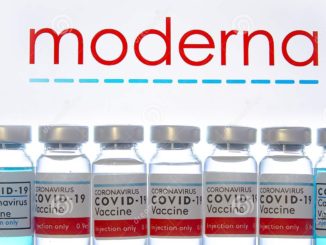
  • Moderna asks the F.D.A. for authorization for a second booster for all adults

    Moderna asks the F.D.A. for authorization for a second booster for all adults

    WASHINGTON, D.C. (TIP): Moderna said late Thursday, March 17,  that it asked the Food and Drug Administration for emergency authorization of a second booster of its coronavirus vaccine for all adults, a significantly broader request than Pfizer and BioNTech filed for their shot this week, says a New York Times report. The request is likely to intensify the latest round of an ongoing scientific debate over how long protection from the two most-used vaccines in the United States lasts in the face of new variants.

    On Tuesday, March 15,  Pfizer and its German partner, BioNTech, asked for emergency authorization for a second booster for those 65 and older. The firm’s request was based heavily on data from Israel, where such shots are authorized for a somewhat broader group. Federal health officials have said they are concerned about waning potency of the booster shot that was authorized for both Moderna and Pfizer in the fall. But although there are indications that regulators could move swiftly on Pfizer’s request, it is unclear how favorably they will view Moderna’s more sweeping application. Moderna said its request covered all adults so the Centers for Disease Control and Prevention and health care providers could determine the appropriate use of a second booster, including for those at higher risk of Covid-19 disease because of age or underlying medical conditions. About 48 percent of eligible American adults, or 93 million people, have gotten booster shots, according to the C.D.C. More than two-thirds of those 65 or older have gotten the extra shot. Moderna said its request was partly based on recent data on how well its vaccine protected against the Omicron variant in the United States and Israel.

    Outside scientists are sharply divided over whether another dose is necessary now, and if so, for whom. In an interview on Friday, Dr. Peter J. Hotez, a vaccine expert at the Baylor College of Medicine in Houston, said, “I’m a strong proponent of giving a second booster now.”

    He said the first booster shot had “made a huge difference” in bolstering protection against hospitalization and even infection from the Omicron variant. “It’s also clear that protection is waning now pretty quickly a few months after your third dose,” he said. “So, it’s short-lived. The hope is that a second booster would restore it.” But Dr. Jesse L. Goodman, a former chief scientist for the F.D.A., said: “While protection is waning against mild infections, without more information we do not yet know to what extent, if any, protection is waning against severe disease.” Nor it is clear, he said, “to what degree and for how long another booster might help.” Among the data the companies cited was a study released last month by the Centers for Disease Control and Prevention that found the effectiveness of Pfizer’s and Moderna’s vaccines against hospitalization dropped from 91 percent two months after a booster shot to 78 percent after four months. The study presented a broad snapshot; it did not break down hospitalizations by age, presence of underlying conditions or other factors.

    (Source: PTI)