Tag: Farm Laws

  • Sanity has prevailed.

    Sanity has prevailed.

    On Prime Minister Narendra’s Announcement of repeal of farm laws


           Prof Indrajit S Saluja

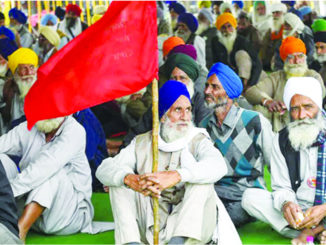
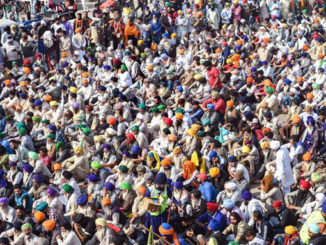
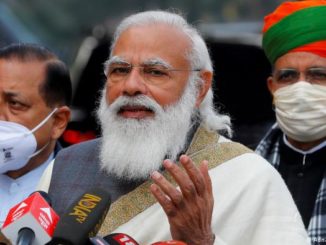
    After remaining adamant for more than a year on not repealing the farm laws, Prime Minister Narendra Modi acknowledged in his address to the nation on November 19th, the 552nd birth anniversary of the First Master of the Sikhs Shri Guru Nanak Dev Ji, that there was widespread resentment among the farmers over the farm laws , and announced the laws will be repealed. Hopefully, the announcement will end a painful period in the lives of the farmers of India who lost 700 of their brethren during a year and a half of protest against the farm laws, besides untold suffering the protesters and their families went through.

    One man who with his plain-speak has endeared himself to farmers and all right thinking people across the world is Satya Pal Malik, Governor of Meghalaya who despite  being a Modi appointee, warned Modi government of consequences of having a confrontation with the farmers, and always asserted  that he would prefer to stand with the farmers rather than stay glued to his cushy job.

    The farmers’ protest has united the farmers over a large part of north India. A number of leaders, including Rakesh Tikait, have emerged as potential power centers and have all the opportunity to lead farmers to political power. It is well to recall the well-known and strong leaders like Chaudhary Charan Singh in Uttar Pradesh and Devi Lal in Haryana who wielded political power on the strength of the farming community that they belonged to.

    Indians abroad must be feeling vindicated for their support to the protesting farmers in India. Some of them including Darshan Singh Dhaliwal in the US had their OCI cards revoked and they were not allowed to enter India for their support to protesting farmers. Government of India should now restore their OCI cards and visas and welcome  them to India. And this decision should be taken now.

    Good to see sanity prevail.

    Happy Guru Nanak Jayanti!

  • Why House panel wants govt to implement one farm law

    Why House panel wants govt to implement one farm law

    The Standing Committee on Food, Consumer Affairs and Public Distribution has asked the government to implement in “letter and spirit” the Essential Commodities (Amendment) Act, 2020, one of the three farm laws against which the farmers are protesting at the borders of Delhi for the last 116 days.

    What is the law?

    The Essential Commodities (Amendment) Act, 2020 is one of the three contentious farm laws. It was enacted on September 26, 2020 by amending the Essential Commodities Act, 1955. Under the amended law, the supply of certain foodstuffs — including cereals, pulses, oilseeds, edible oils, potato — can be regulated only under extraordinary circumstances, which include an extraordinary price rise, war, famine, and natural calamity of a severe nature. In effect, the amendment takes these items out from the purview of Section 3(1), which gave powers to the central government to “control production, supply, distribution, etc., of essential commodities.”

    Through the Essential Commodities Act, 2020, the government has inserted sub-section I(A) in the Section 3 of the Essential Commodities Act, 1955. The new sub-section states, “the supply of such foodstuffs, including cereals, pulses, potato, onion, edible oilseeds and oils, as the Central Government may, by notification in the Official Gazette, specify, may be regulated only under extraordinary circumstances which may include war, famine, extraordinary price rise and natural calamity of grave nature…”

    The new law also specifies conditions when the stock limits can be imposed.

    The Parliamentary Standing Committee on Food, Consumer Affairs and Public Distribution, headed by TMC member Sudip Bandyopadhyay, has recommended to the government to implement, “in letter and spirit,” the Essential Commodities (Amendment) Act, 2020. In its report on ‘Price Rise of Essential Commodities- Causes and Effects,’ the committee has given reasons for the implementation of the law.

    “The Committee note that although the country has become surplus in most agricultural commodities, farmers have been unable to get better prices due to lack of investment in cold storage, warehouses, processing and export as entrepreneurs stated to be get discouraged by the regulatory mechanisms in the Essential Commodities Act, 1955,” says the report of the committee.

    How is an ‘essential commodity’ defined?

    There is no specific definition of essential commodities in The Essential Commodities Act, 1955. Section 2(A) states that an “essential commodity” means a commodity specified in the Schedule of the Act. The Act gives powers to the central government to add or remove a commodity in the Schedule. The Centre, if it is satisfied that it is necessary to do so in public interest, can notify an item as essential, in consultation with state governments. According to the Ministry of Consumer Affairs, Food and Public Distribution, which implements the Act, the Schedule at present contains seven commodities — drugs; fertilisers, whether inorganic, organic or mixed; foodstuffs including edible oils; hank yarn made wholly from cotton; petroleum and petroleum products; raw jute and jute textiles; seeds of food-crops and seeds of fruits and vegetables, seeds of cattle fodder, jute seed, cotton seed.

  • Polarization of societies

    Polarization of societies

    By Shyam Saran

    “The Right has been able to exploit the existing social, communal and sectarian fault lines to deflect attention from its complicity in the disempowerment and the immiseration of the majority. In the US, it is by deliberately sharpening the racial divide, stoking the fear of immigrants and loss of cultural identity that a figure like Trump was able to continue rewarding the corporate class with large tax cuts at the cost of the very services that could ameliorate the worsening economic status of the less-educated white minority. Recently, historian Rana Dasgupta has drawn attention to a very cynical insight offered by Lyndon Johnson, a former President: ‘If you can convince the lowest white man he’s better than the best-colored man, he won’t notice you’re picking his pocket. Hell, give him somebody to look down upon and he’ll empty his pockets for you.’


    Stop the Steal. Trump supporters stormed the capitol on January 6

    We see echoes of what Johnson was alluding to in our own country. Those most affected by demonetization were the already poor and those eking out a constantly threatened existence as small and medium enterprises and their unorganized workers. But millions were ready to stand in unending queues to get their paltry sums exchanged, their pain dulled by the belief that fat cats and money bags had been deprived of their ill-gotten gains. Except that they had not and many profited by turning their black money into white. Or if the lowliest Hindu is made to feel superior to the best among the Muslims in the country, perhaps he is ready to accept his dire economic situation and forget who may be really responsible for his deprivation.

    There has been a sigh of relief manifest across the world as Joe Biden has succeeded to the US presidency, presaging a more predictable and more ‘normal’ conduct of domestic and external affairs under an experienced and professional administration. Biden has promised to heal a deeply divided country, to promote reconciliation and unity and to restore the democratic and liberal credentials of the US as the world’s oldest democracy. This promises to be a long haul and unlikely to be achieved during one four-year administration. He would be deemed a success if he at least manages to, as he said, ‘lower the temperature.’

    The social and political polarization on display in the US is increasingly manifest in other democracies, including our own. A key causal factor is the rising inequalities of wealth and income that undermine the most powerful appeal of democracy which is egalitarianism, the equality of opportunity it promises and the fairness with which the state will treat all its citizens. As economies develop, as technology advances, there will inevitably be winners and losers. A democratic state will have to continually ensure that it is able to redistribute rising incomes and wealth in a manner that helps those left behind to retain hope in a better future, if not for themselves, then at least for their children. It is not that globalizationin itself has spawned huge inequalities, nor that inequality is inherent in increasingly arcane and specialized technological advancement. The fault lies with public policy which has failed to distribute the benefits of globalization more evenly. When the number of losers far outstrips the winners, and this state of affairs persists and even worsens, democracy will be challenged. This is what we witness in the US and in democracies across the world, India included.

    There is an intriguing question, however. It is the political Left (in which I broadly include the liberal constituency) which has historically mobilized support among those who are at the lower end of the economic and social scale. In the present case, the Right and nativist forces have captured the imagination of the exploited and deprived. The Left targets the rich and the corporate sector; the Right does not pay a price for associating with this privileged minority and profiting from its generous funding. What explains this oddity? That there is an alliance between the populist and the powerful elements within the corporate sector is more than apparent. But the liberal and the Left have been unable to leverage this to mobilize support among those who are, in fact, at the receiving end of this powerful nexus. The Right has been remarkably successful in co-opting the ranks of the dejected and deprived to buttress its own power. How is this possible?

    The Right has been able to exploit the existing social, communal and sectarian fault lines to deflect attention from its complicity in the disempowerment and the immiseration of the majority. In the US, it is by deliberately sharpening the racial divide, stoking the fear of immigrants and loss of cultural identity that a figure like Trump was able to continue rewarding the corporate class with large tax cuts at the cost of the very services that could ameliorate the worsening economic status of the less-educated white minority. Recently, historian Rana Dasgupta has drawn attention to a very cynical insight offered by Lyndon Johnson, a former President: ‘If you can convince the lowest white man he’s better than the best-colored man, he won’t notice you’re picking his pocket. Hell, give him somebody to look down upon and he’ll empty his pockets for you.’ Dasgupta points to an ugly truth: Sometimes people can be persuaded to ‘prize the removal of others’ rights above the preservation of their own.’

    And this is what is happening in the US. Can Biden change this?

    Why is the Left unable to build its constituency in the ranks of the deprived? Precisely because ideologically, it sees its role as transcending the societal fault lines and uniting around a more inclusive concept of egalitarianism.

    We see echoes of what Johnson was alluding to in our own country. Those most affected by demonetization were the already poor and those eking out a constantly threatened existence as small and medium enterprises and their unorganized workers. But millions were ready to stand in unending queues to get their paltry sums exchanged, their pain dulled by the belief that fat cats and money bags had been deprived of their ill-gotten gains. Except that they had not, and many profited by turning their black money into white.

    Or if the lowliest Hindu is made to feel superior to the best among the Muslims in the country, perhaps he is ready to accept his dire economic situation and forget who may be really responsible for his deprivation.

    There was only one brief occasion when the current political dispensation was threatened and that was when the label of ‘suit-boot kisarkar’ struck home but then it was never built up into an alternative political narrative. The Left in our country has failed precisely because it has become defensive about its core beliefs and started flirting with the narrow inclinations of the Right, for example, by doing its own religious rituals and spouting nationalist slogans. Nor is there stomach to shine the spotlight on the nexus among the politician-bureaucracy and big business that has come to dominate governments in democracies across the world.

    There are parallels between the oldest and the largest democracies in the world. Both are at critical junctures in their evolution as enlightened democracies envisaged by their respective constitutions. But I believe that the future of democracy as a political ideal may likely be determined by the trajectory that India takes in the coming years rather than the US, especially when the Chinese model of authoritarian capitalism seems to bewinning admirers across the world.

    (The author is Former Foreign Secretary and senior fellow, Centre for Policy Research)