Tag: FATF

  • The PMLA – a law that has lost its way

    The PMLA – a law that has lost its way

    The most serious aspect of the Prevention of Money Laundering Act is the inclusion of offences which have nothing to do with the original motive — namely, to combat the laundering of drug money.

    By P.D.T. Achary

    The Prevention of Money Laundering Act (PMLA), 2002 was enacted with a distinct objective. The humongous volume of black money generated through international drug trafficking posed a grave threat to the economy of many countries. There was widespread realization that the black money generated through the flourishing drug trade and integrated into the legitimate economy was likely to destabilize the world economy and endanger the integrity and sovereignty of nations.

    The background to the law is important
    The United Nations took serious note of this, and in 1988, held the United Nations Convention against Illicit Traffic in Narcotic Drugs and Psychotropic Substances. All countries were urged to take urgent steps to prevent the laundering of the proceeds of drug crimes and other connected activities. Subsequent to this, seven major industrial nations held a summit in Paris (July 1989) and established the Financial Action Task Force (FATF) to examine the problem of money laundering and recommend measures to tackle this menace. Thereafter, in 1990, the United Nations General Assembly adopted a resolution, namely, the Political Declaration and Global Programme of Action which called upon all member-countries to enact suitable pieces of legislation to effectively prevent the laundering of drug money.

    In pursuance of this resolution of the UN General Assembly, the Government of India used the recommendations of the FATF to formulate a legislation to prevent drug money laundering. As drug trafficking is a trans-border operation, the UN held a special session on June 10, 1998 on the theme ‘Countering World Drug Problem Together’ and made another declaration on the urgent need to combat money laundering. Accordingly, the Indian Parliament enacted the Prevention of Money Laundering Act in 2002. But it was brought into force in 2005.

    This narration of the history of this law is necessary in order to emphasize the original objective and the circumstances which lead to the enactment. As is clear from history, the main focus of the law is on combating the laundering of drug money. Accordingly, the Act of 2002 contained a few offences listed in the Indian Penal Code (IPC) and the Narcotic Drugs and Psychotropic Substances Act, 1985. The UN resolutions, and the FATF recommendations are all focused on the prevention of money from the laundering of drugs. However, the PMLA of India acquired a different character through amendments from time to time.

    The law on money laundering revolves around the “crime proceeds” which are laundered. Not only the persons involved directly in the crime and the generation of the crime proceeds but also persons who have nothing to do with the crime but who have some involvement at a later stage in the laundering process are also guilty under this law.

    But the most serious aspect of the PMLA is that it includes a large number of offences in the schedule which have nothing to do with the original purpose of this law — namely, combating the laundering of drug money. The UN resolution on the basis of which the law on laundering was enacted in India spoke only about the offence of the laundering of drug money. This was considered the most serious economic crime which had the potential to destabilize the world economy and endanger the sovereignty of nations, as highlighted above. The preamble to the PMLA endorses it. So, there was global consensus on the need to have a tough law to deal effectively with this crime. Thus, the raison d’etre of the PMLA is the crime of the laundering of a huge volume of black money generated from the international drug trade and the specter of destabilization of the world economy.

    The PMLA’s enactment
    Further, the PMLA was enacted by India’s Parliament under Article 253 which empowers it to make laws for implementing the international conventions. This Article indicates that a law Parliament makes to implement any decision of an international body will be confined to the subject matter of that decision. Item 13 in the Union list of the Seventh Schedule of the Constitution is specific on this point. Thus, the law on money laundering enacted under Article 253 and Item 13 of the Union list in the context of the UN resolution referred to above can only be on drug money. Various amendments made in this Act at different times bloated the schedule which now contains such offences which are either ordinary offences listed in the IPC or for which there are special laws in force. Since money laundering as an offence is linked to one of the scheduled offences, the offences contained in the schedule become the starting point of the whole process of operationalization of the PMLA.

    A close look at the schedule will convince a man of ordinary prudence that this law has deviated from its original scheme. The provisions contained in it are draconian which were meant to deal with the dangerous men involved in drug trafficking and the money chain. These provisions are now being used in other scheduled offences too without mitigating their rigor. Offences which by their very nature do not generate crime proceeds of a scale which can destabilize the economy and endanger the sovereignty of the nation are being tried under this law. One such example is the Prevention of Corruption Act, 1988 which is aimed at curbing corruption among public servants. This Act was added to the schedule of offences in 2009. The PMLA now applies with all its rigor to public servants. Thus, a public servant charged with corruption and a hard-core drug trafficker are treated alike. A very disturbing thing about the PMLA is that an accused under this law is presumed to be guilty until proved innocent.

    A fundamental principle of Anglo-Saxon jurisprudence is that a person is presumed innocent until proven guilty. PMLA turns this principle upside down. An accused will be denied bail by the entire hierarchy of courts because the bail provision contained in section 45 of the PMLA says that a judge can give bail only when he is satisfied that the accused is innocent. Which judge will take such a risk? So the person will rot in jail for years together without trial.

    The authority of ED and usage of PMLA
    The bail provision
    The bail provision of the PMLA Act (Section 45) is invested with a lot of political significance in present day India. It was held unconstitutional by a two-judge Bench of the Supreme Court of India in Nikesh Tarachand Shah vs Union of India (2018) as violating Article 14 and Article 21. However, Parliament, with great alacrity, restored this provision with certain amendments which was upheld by a three-judge Bench headed by Justice A.M. Khanwilkar in Vijay Madanlal Choudhary vs Union of India (2022). The top court held that this provision is reasonable and has direct nexus with the purposes and objects of the PMLA Act. Herein lies the problem.

    The object of the Act is to curb the laundering of black money and to save the economy from being destabilized. But what about less serious offences which have found a place in the schedule? The learned judges nearly said that inclusion of a particular offence in the schedule comes within the domain of the legislative policy.

    The present judicial approach to the issue of bail in PMLA cases appears to be very technical. The judicial perspective on bail was laid out by Justice V.R. Krishna Iyer back in 1978 under the following words in Gudikanti Narasimhulu And Ors vs Public Prosecutor, High Court Of Andhra: “Personal liberty, deprived when bail is refused, is too precious a value of our constitutional system recognized under Article 21 that the curial power to negate it is a great trust exercisable, not casually but judicially, with lively concern for the cost to the individual and the community”. From Justice V.R. Krishna Iyer to Justice A.M. Khanwilkar, the apex court has travelled a long distance.

    (The author is a former Secretary General, Lok Sabha)

  • Pakistan almost off FATF grey list

    Islamabad (TIP): removed from the Financial Action Task Force (FATF) list after the body said on June 17 that Islamabad had met all 34 items on two separate action plans.

    The FATF will now schedule an on-site visit to verify the implementation and sustainability of the country’s money laundering and counter-terrorism financing measures before formally removing it from the list of countries requiring increased monitoring, also known as the grey list.

    The FATF said Pakistan’s substantial completion of both its action plans showed that it had the necessary political commitment to sustain implementation and improvement in the future. “The FATF will continue to monitor the Covid situation and conduct an on-site visit at the earliest possible date,” a statement said. “Pakistan demonstrated that terror-financing investigations and prosecutions target senior leaders and commanders of United Nations-designated terrorist groups and that there is a positive upwards trend in the number of money laundering investigations and prosecutions being pursued in Pakistan,” it observed, adding that Pakistan also largely addressed its 2021 action plan ahead of the set times.

    The Financial Action Task Force (FATF) decision was announced at a press conference after the conclusion of its four-day plenary session in Berlin. Pakistan has been on the grey list since June 2018 and its cause was helped by an anti-terrorism court that sent Lashkar-e-Toiba chief Hafiz Saeed to prison for 33 years on terrorism charges.  (PTI)

  • A ‘crucial’ colloquy at the G7 Summit

    A ‘crucial’ colloquy at the G7 Summit

    Besides addressing issues like global vaccination, vaccine passport, counterterrorism and economy, the G7 Summit could take a stern stance towards China

    By Prabhu Dayal

    “The likely “Policy Priorities” that could be discussed at the Summit include leading the global recovery from coronavirus while strengthening resilience against future pandemics, promoting future prosperity by championing free and fair trade, tackling climate change and preserving the planet’s biodiversity, and championing globally shared values. Some issues will flow from the G7 ministerial meeting which are important from India’s point of view.”

    The G7 Summit between June 11-13 in Cornwall is set to discuss major world issues. As the world’s most influential leaderships prepare to meet at the first in-person meet in two years, a question remains whether the Summit will send a tough message to China.

    The Group of Seven (G7) is an informal club of wealthy democracies consisting of the United States, the United Kingdom, France, Germany, Japan, Italy and Canada. It represents 62 per cent of the global net wealth, more than 46 per cent of the global nominal GDP and more than 32 per cent of the global GDP based on purchasing power parity.

    The UK, which currently holds the G7 Presidency, has invited representatives from India, Australia, South Korea and South Africa as guest members, indicating that it is serious about pivoting the Indo-Pacific. Prime Minister Narendra Modi will attend the Summit virtually given the Covid situation in India.

    The likely “Policy Priorities” that could be discussed at the Summit include leading the global recovery from coronavirus while strengthening resilience against future pandemics, promoting future prosperity by championing free and fair trade, tackling climate change and preserving the planet’s biodiversity, and championing globally shared values. Some issues will flow from the G7 ministerial meeting which are important from India’s point of view.

    UK Prime Minister Boris Johnson could call on fellow G7 leaders to make concrete commitments to vaccinate the entire world against coronavirus by the end of 2022. He is expected to call for stepping up the manufacture of vaccines, lowering barriers to the international distribution of vaccines and sharing surplus doses with developing countries. Another issue is that of “vaccine passports”. Earlier this week, UK Prime Minister Boris Johnson had indicated that he would like to push the G7 to look at the possibility of agreeing on the issue of “vaccine passports”. The proposal is intended to ease international travel and would involve recording immunity, vaccination or test in the “vaccine passport”. However, there have been concerns that this could create hurdles for citizens from countries that are unable to increase the pace of vaccination due to manufacturing limitations. India’s Health Minister, Harsh Vardhan, had also expressed his opposition to this idea. He pointed out that there are lower levels of vaccination in developing countries in contrast to the developed countries, and vaccine passport will be hugely discriminatory and disadvantageous for the developing countries. He suggested that implementation of the same be made only after duly addressing the concerns.

    The taxation of multinational companies will be yet another important issue. Speaking at the recent meeting of the G7 Finance Ministers, Rishi Sunak, UK Chancellor of the Exchequer said that the world cannot “continue to rely on a tax system that was largely designed in the 1920s”. The G7 Finance Ministers reached an important deal to close cross-border tax loopholes used by some of the world`s biggest companies. This landmark deal aims to squeeze more money out of multinational companies and reduce their incentive to shift profits to low-tax offshore havens. The deal would be discussed at the G7 Summit and later put up before the G20 Finance Ministers meeting on July 9-10, 2021. It could form the basis of a global pact aimed at ending a prevailing trend in which ‘tax haven’ countries have competed to attract corporate giants by offering ultra-low tax rates and exemptions. Rich nations like the G7 have struggled for years to agree on a way to raise more revenue from large multinationals that often book profits in jurisdictions where they pay little or no tax. In terms of this deal, the G7 said it would back a minimum global corporation tax rate of at least 15 per cent, and put in place the measures to ensure that taxes were paid in the countries where businesses operate.

    On the issue of counterterrorism, the communique issued after the recent G7 Finance Ministers meeting stated: “Global implementation of the FATF standards for combating money laundering, terror-financing and proliferation financing remains uneven. We recognize the role of the nine FATF-Style Regional Bodies (FSRBs) in assessing and supporting the implementation of the FATF standards around the world.” The G7 Finance Ministers have committed to providing additional expertise and funding to support the FSRB’s assessment programs by at least USD 17 million during 2021-24. From India’s viewpoint, it is a welcome sign that the G7 is devoting attention to terror financing because the abetment and financing of terrorist outfits by Pakistan has shown no signs of abating. An influential grouping like G7 can do much more to rein in the scourge of terrorism.

    China is likely to figure prominently in the discussions at the Summit in Cornwall. The communique issued after the Foreign Ministers meeting called on China to participate constructively in the rules-based international system, guided by the principles such as respect for human rights and fundamental freedoms, in context of Xinjiang, Tibet and especially the Uyghurs. Moreover, the PRC was reminded that it is obliged to respect the high degree of autonomy, rights and freedoms of Hong Kong, ‘including those set out in the Sino-British Joint Declaration and the Basic Law’. In terms of economic matters, G7 Foreign Ministers had noted that, as nations that support free and open trade, they expect the fair economic system, trade, investment and capital growth not to be undermined. The PRC was urged to assume and fulfil obligations and responsibilities commensurate with its global economic role. Beijing was also asked to refrain from conducting or supporting intellectual property theft by exploiting cyberspace. Besides, they expressed support for Taiwan’s participation in the WHO and World Health Assembly WHA. They also expressed concern about the situation in the East and South China Seas. India will watch with interest what transpires at the Summit concerning all these important issues.

    (Prabhu Dayal is a retired Indian diplomat. He is an author and a commentator, particularly on foreign affairs. A regular panelist at TV channels, he also contributes articles regularly to many publications, including New York based The Indian Panorama. He can be reached at prabhu_dayal70@hotmail.com)

  • Sectarian strife in Pakistan

    Sectarian strife in Pakistan

    By G Parthasarathy

    Deobandi and Bareilvi alignments a challenge to governance and peace

     India has done well to establish a back channel for talks with Pakistan’s military. A major result has been the signing of an agreement for a ceasefire across the LoC in J&K.

    The two major schools of Islam, which emerged in the 19th century in the territories of present-day India, have traditionally been described as Deobandi and Bareilvi. The sects emerged from the efforts of many Muslim clerics and thinkers who fled from Delhi following their persecution by the British after the Mughal rule ended. Deobandi practices were widely adopted in Pakistan’s Khyber Pakhtunkhwa province, and by virtually all Pashtuns in Afghanistan. The Deobandis thus established a firm foothold amongst the Pashtun population in both Pakistan and Afghanistan. Most importantly, while the Bareilvis remained content with their influence in the subcontinent, the Deobandis reached out to people in the Arabian Peninsula in the 19th century. This was an initiative that has paid rich dividends through Saudi financial backing of Deobandi organizations.

    Thanks to the FATF and actions by the US and its allies, Pakistan is being squeezed to end support to such groups.

    The most far-reaching decision by India’s Deobandi leaders was to make common cause with the secular ideals of India, while supporting the struggle led by Mahatma Gandhi for India’s independence. The main center for study and learning of the Deobandi school of Islam was and remains the Darul Uloom, located at Deoband in UP. While sections of the Bareilvi leadership initially shared the views of their Deobandi compatriots, those mainly living in Pakistan, eventually chose to support the Partition. On November 3, 2009, Jamiat-i-Ulama-i-Hind, a group of Deobandi scholars, dedicated to the welfare of Muslims in India, met at Deoband and condemned suicide bombings and attacks targeting innocent civilians. This amounted to direct criticism of Pakistan’s propensity to use terrorism as an instrument of state policy.

    The Bareilvi population in Pakistan’s Punjab province soon found that it had little political space to operate in. The military extended support to groups like the Lashkar-e-Taiba (LeT), the Jaish-e-Mohammed (JeM) and the Afghan Taliban that worked jointly with the military establishment. While the JeM organized the attack on the Indian Parliament in 2001, the 2008 Mumbai terrorist attack was masterminded by the LeT. Moreover, the ISI midwifed the close relations of these groups with the Taliban in Afghanistan. The Bareilvis were soon finding that despite their influence and political support in Pakistani Punjab, they were losing political relevance in Pakistan. Ever since the Soviet invasion of Afghanistan, the Pashtuns, who are predominantly Deobandi, dominated the attention and patronage of the ISI, and, indeed, in the world. The Taliban also have what they believe to be Deobandi credentials and collaborate closely with Wahhabi-oriented groups like the LeT and the JeM.

    Pashtun Deobandis in Pakistan’s northwest and in southern Afghanistan became natural allies of Gen Zia-ul-Haq, after he overthrew and hanged ex-PM Zulfiqar Ali Bhutto. General Zia brought in a new phase of ‘Islamization’ of politics and developed close relations with radical Islamic elements in Pakistan, most notably the Jamaat-e-Islami in Punjab and Sind, and the Pashtun Deobandis in the north. The Soviet Union then made the folly of invading Afghanistan, enabling the US to join Pakistan in waging a Saudi-backed, Deobandi-oriented jihad against the Soviet forces. Wahhabi-oriented organizations in Pakistan joined this jihad. The ISI developed links with the Jamaat-e-Islami in J&K and used this Deobandi-oriented force to facilitate its jihad in J&K.

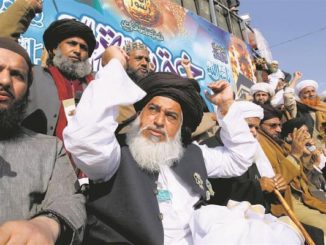
    Given Bareilvi practices of virtually worshipping the Prophet, Saudi Arabia treats them as heretics. According to Najam Sethi, the Editor of Pakistan’s Friday Times, the Bareilvis in Pakistan, and particularly in the majority Punjab province, have responded to critics by actions ‘borne of the religious passion to defend and uphold the Prophet of Islam, from blasphemy by Muslims and non-Muslims alike, at home and abroad’. This led to the establishment of a politically oriented, militant organization called the Tehriq-e-Labaik, which soon swept across towns and villages, preaching religious intolerance in Pakistan’s military-dominated Punjab.

    The first victim was a Punjabi Hindu woman, Asia Noreen, popularly known as Asia Bibi, who was convicted and sentenced to death for allegedly making blasphemous comments. She was arbitrarily handed the death sentence by hanging — a verdict that was overturned by the Supreme Court in 2011. She, thereafter, immediately fled to Canada.

    The Tehriq-e-Labaik attained notoriety, when one of its members, a security guard, assassinated the Governor of Punjab, Salman Taseer, for supporting Asia Bibi. The guard was treated like a revolutionary hero by the outfit. It now has substantial political clout in the Punjab province. It virtually brought Punjab to a standstill during recent demonstrations to demand the expulsion of the French ambassador, because of alleged disrespect shown in France to the Prophet.

    Thanks to the threats of sanctions by the Financial Action Task Force and strong actions by the US and its European allies, Pakistan is being squeezed to end support to such groups. Pakistan is also realizing that faith alone cannot hold a nation together, especially in the face of sectarian differences. Neither the Tehriq-e-Taliban, which is now waging a low-intensity conflict within Pakistan, or even the Taliban leadership in Afghanistan has ever recognized the Durand Line as an international border.

    India has done well to establish a back channel for talks with Pakistan’s military. A major result has been the signing of an agreement for a ceasefire across the LoC in J&K. Pakistan’s mercurial PM, Imran Khan, meanwhile, has rejected a proposal to import Indian agricultural products, which he had initiated and approved earlier. He certainly does not enjoy global popularity. The world has noted that it was General Bajwa who first met Crown Prince Salman in Saudi Arabia, before the Crown Prince gave an audience to Imran Khan last week. US President Biden is yet to meet or speak to Imran Khan.

    (The author is Chancellor, Jammu Central University & former High Commissioner to Pakistan)