Tag: Featured

  • Three Indian-American luminaries among Padma Award honorees

    Three distinguished Indian-Americans have been named among the recipients of India’s prestigious Padma Awards 2026, the Government of India announced on the eve of Republic Day. The honours recognize outstanding contributions in medicine and sports, and will be conferred by the President of India at a ceremonial function later this year.
    Padma Bhushan for Dr. Nori Dattatreyudu
    Dr. Dattatreyudu Nori, a renowned radiation oncologist based in the United States, has been awarded the Padma Bhushan, India’s third-highest civilian honour, for his lifelong service to medicine.
    Born in Mantada village in Andhra Pradesh, Dr. Nori trained at Kurnool Medical College and Osmania Medical College before moving to the United States, where he built a distinguished career in cancer care. He is widely recognized as a leader in brachytherapy — a targeted form of radiation therapy — and has pioneered techniques that have improved treatment outcomes for many cancer patients. Beyond clinical innovation, Dr. Nori has advised government and health organizations on cancer prevention and care strategies. He was previously awarded the Padma Shri in 2015 for his contributions to medicine.
    Dr Nori’s contributions have been widely acknowledged at both national and international levels. In 2014, he received the Ellis Island Medal of Honour, one of the highest civilian awards in the United States. He was also conferred the Padma Shri in 2015 for his services to medicine.

    In addition, he has been named among the top doctors in America by his peers, based on evaluations by tens of thousands of oncologists, particularly for his work in treating cancers in women.

    Padma Bhushan for Vijay Amritraj
    Vijay Amritraj, one of India’s most celebrated tennis players, has also been honoured with the Padma Bhushan.
    Born in Madras (now Chennai) in 1953, Amritraj became a global ambassador for Indian sport during his professional tennis career. He reached the quarterfinals at both Wimbledon and the US Open, won numerous titles, and captained India’s Davis Cup team. After retiring from competition, he became a respected sports commentator and broadcaster. Amritraj has also worked in film and served as a United Nations Messenger of Peace, advocating for health and social causes. He was earlier honoured with the Padma Shri in 1983 and was inducted into the International Tennis Hall of Fame in 2024.
    Padma Shri for Dr. Prateek Sharma
    Dr. Prateek Sharma has been named a Padma Shri recipient for his contributions to medicine.
    Dr. Sharma, a leading Indian-American gastroenterologist, is internationally recognized for his work in diagnosing and treating gastrointestinal diseases and cancers. His efforts include advancing imaging and endoscopic techniques that help detect conditions such as Barrett’s esophagus and early-stage gastrointestinal cancer, improving patient outcomes. Dr. Sharma’s leadership in medical research and his role in professional healthcare organisations have brought him wide recognition in the field.
    The Padma Awards — comprising the Padma Vibhushan, Padma Bhushan, and Padma Shri — are among the highest civilian honours in India. They are announced annually on Republic Day and celebrate distinguished service across medicine, arts, sports, science, public affairs, and other fields. In 2026, a total of 131 awardees were selected.

  • Mahakumbh: A Mighty Event, A Mighty Book

    Mahakumbh: A Mighty Event, A Mighty Book

    • Book Review by Usha Akella

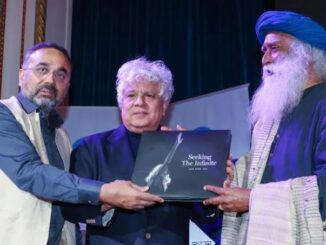
    “Mega events such as the Mahakumbh… bring upon us the realization that humankind has one unifying divine core,” writes Yakub Mathew in his recently released coffee table book, ‘Seeking the Infinite’.

    In our times, wherein one feels pressured to cast her/his lot with Left or Right—and other fractured polarities—and be damned either way, a bold book arrived shining and fearless at the IAAC ((Indo-American Arts Council)) Literary Fest 2025 last November to announce the possibilities of reconciliation—and harmony. A mighty event rooted in a myth of nectar, and a mighty book exploring the infinite, no less—Seeking the Infinite redefines the Mahakumbh as one of humanity’s heritages, not solely Indian or Hindu. The book draws our attention to water as a fundamental metaphor of purification, unity, and surrender. In its pages the Mahakumbh is recognized as a clarion call from India of the truth of one ultimate religion—humanity. As a reader you can position yourself on the shore of this book, and marvel at the timeless ripples of faith ignited by hope for a healed world.

     Immortalizing the Mahakumbh in a book

    ‘Dedicated to the journey within’, Yakub Mathew’s book aims to capture the gravitas of the Mahakumbh—a once in 144 years riverine confluence termed Triveni Sangam (reflected in the skies by a rare astronomical configuration of Jupiter, Sun and Moon/the orbital revolution of Jupiter around the sun) in Prayagraj that welcomed an estimated 640 million devotees in 2025. The three rivers whose waters become a single stream are read symbolically in various fashions but mostly as an emblem of unity.

    Yakub Mathew with his book.

    That one of these rivers is mythical (Saraswati) does not hamper faith. And that a gathering of such staggering numbers rolled off peacefully, across nearly two months, is a miracle. A coffee table book with stunning photographs laid across 246 pages and lit by luminous quotes and narratives, Seeking the Infinite has immortalized the Mahakumbh as never before.

    The very dedication states the resolution and celebration of paradoxes—the outward pilgrimage is veritably the turning within to touch an ineffable shore we carry in our souls. The book in its scope, aim and production is a Mahakumbh of an undertaking unafraid to boldly go toward impeccable standards of production and embark on an archaeology of semantics of the event. Turning the pages of this book feels like mimicking the journey, by entering the preliminary waters of the first chapter of ‘Blessings’ by a mystic, Hindu yogis and a Cardinal (Sadhguru, Swami Avdeshanand Giri Maharaj, Maharaj Radhanath Swami and His Eminence Cardinal Oswald Gracias), onward to deeper waters of musings and explorations. Finally, the reader emerges refreshed by India’s eternal reverberating spiritual current, and  is reminded of a tenacious civilization that has neither been afraid to ask the deepest questions, nor hesitated to attempt to answer them. Answers that have buffeted along seemingly contradictory banks of form and formless, faith and agnosticism, ritual and dhyana—finally averring the human soul as the ultimate anthem of mystery. The overlapping waters of three rivers continue to transfer to the pages of this book asking for awakening from narrow and bigoted definitions of religion.

    Yakub Mathew states his vision early on casting the Mahakumbh as an inter-national heritage not constrained by geographical borders. Though he describes himself as an accidental author, Mathew is not an accidental seeker. The journey undertaken by a Syrian Christian New York-based banker with his beloved wife, and a bevy of 18 friends to celebrate his 60th birthday and life after a dire illness has spawned what will be an everlasting tribute to the Mahakumbh. That he sought such an experience to define a rite of passage in human life is an indicator of the predilections of his soul.

    Yakub has straddled temporal and spiritual worlds

    Raised by a mother widowed young in Delhi, his childhood is reminiscent with interactions and mentorship by Mother Teresa and His Holiness Bishop Paulos Gregorios. Perhaps the first seeds of faith were laid at this time. Also, raised by uncles (P.C. Alexander and P.M. Thomas) who were public servants brought Yakub into the ken of the political and powerful—thus the two worlds of temporal and spiritual spanned the orb of his growing years. Yakub Mathew was never to forget that a delicate balance of human and cosmic forces shapes a life. Schooled in St. Xavier’s and St Stephen’s College, a typical brand of Indian Christianity contoured by an Indian world view shaped his humanist values, and global perspective. After some world travels, he finally went on to navigate his worldly role as a banker in New York City, abiding also by his inner yearnings. A privileged life has not tainted his wonder of existence or barred his unceasing engagement with subtler mysteries.

    Sadhu blowing a conch: a picture from the book. (Photos / courtesy Yakub Mathew)

    The Kumbh till this visit was seared in his memory only as a theatrical event of human drama, but in 2025 it alchemized spiritually into an experiential landmark expressed as, “I was just an insignificant speck of dust on the soap bubble of universe.” The riotous burgeoning of sounds and sights around him during the two days were not cacophony but the very pulsations of his own soul; as he dipped into the waters as one of the multitudes, he felt blessed for the opportunity to offer prayers ‘for peace in this turbulent world.’ The mammoth spectacle of humanity and human endeavor brought forth an utterance, “Shakti in Bhakti!” from him, and the Mahakumbh translated into a riveting passage of transformation too deep for words—reaffirming the knowledge that the microcosm and the macrocosm vibrate together: My soul too sang along with the music of the spheres.

    A delightful potpourri of profound impressions rooted in personal experience, literary penmanship, academic scholarship, and spiritual insight suffuse the book. The musings uncover multi dimensions of the Mahakumbh from mythic to astronomic by luminaries in various fields such as spirituality, fashion, religion, administration, medicine, journalism, business, politics, theater, academia, sports, film, art, and music.

    The scintillating writerly roster

    The scintillating writerly roster of 55 names includes Pujya Swami Chidanand Saraswati, Ayaan Ali Bangash, Kabir Bedi, Harish Parvatheni, Satya Hinduja, Dr. Shashi Tharoor, George Mathew, Lord Meghnad Desai, Rev. Victor Lobo, Rev. Father Thomas V. Kunnukal, Dr. Navin Mehta, Farokh Engineer, Dr. Jagdish Bhagwati, Muzaffar Ali, Didi Krishna Kumari, Rakesh Kaul, Ashi Sonam Choden Dorji, Sadhvi Bhagwati Saraswati, Haji Syed Salman Chisty, Swami Swaroopananda, Anupam Kher, Swami Sarvapriyananda, Dr. Subramanian Swamy, Mokshapriya, Suhel Seth, Yogmata Keiko Aikawa, Radhe Jaggi, Barkha Dutt, and Ustad Hidayat Khan.

    Even technology played its part in the 2,750 AI driven CCTV cameras monitoring the festivities as we are reminded by Amitabh Kant. Dr. Dinesh Singh creatively interprets the legendary River Saraswati as the flow of humanity itself. Dr. Achintya Moulick brilliantly perceives his surgical work to be his own Mahakumbh—he understands it as another kind of confluence of science and faith where he has witnessed miracles; the ‘hospital a temple, every heartbeat a mantra’. Such creative and profound writerly narratives mark the book as a treasure house of fresh insights.

    Message of unity in diversity

    Usha Akella- reviewer of the book (Photo : Courtesy Usha Akella)

    But the book must not mistakenly be read as a page turner of the famous, high or mighty but rather viewed as the melding of voices to form one voice of homage to capture the mightiest sacred geo-astronomical occurrence in India—which in turn ignites a reexamination of India’s role in the world, and her eternal/everlasting (Sanatan) message of unity in diversity.

    Even though the tumult has quietened down, millions have returned home and the waters lap on in all those who dipped into the sangam. The pluralistic waters of the Mahakumbh are representative of the eternal seeking for the divine of various religious voices fired by the single current of—yearning for the transcendental. Water has no boundary, it surges and flows, turns corners, and erodes hardened hearts. The Mahakumbh demands all masks and attire are surrendered to her waters, to find a single skin underneath — humanity. It is a purification rite that restores the truth underlying all human narratives.

    Symbolically we can still dip in the pages of this book to relive the thrill of the event. For those such as myself, who could not attend the event early last year, reading the book is a reenactment of the ritual to experience its excitement and energy. The book has done a great service immortalizing the Mahakumbh, making it tangible for posterity. Finally, we grasp that Prayagraj, a holy site of pilgrimage like Mecca, Jerusalem or Kashi is the human heart where we discover the reconciliation of all contradictions and paradoxes. Where Love finally is the beginning, remainder, and the destination in all our inner and outer journeys. As is expressed so beautifully by His Eminence Cardinal Oswald Gracias: “This book will help us listen more deeply—to the longings of our own heart, to the silent music of creation, and to the voice of the One who speaks through both.”

    Author bio

    Usha Akella, Austin-based poet, has authored 11 books that include poetry and spiritual musical dramas. She has been invited to numerous international poetry festivals. She is the founder of the decade-old Matwaala (www.matwaala.com) that amplifies South Asian diasporic poets.

    Her editorial works include a ‘A House of Words’, a festschrift dedicated to Keki Daruwalla published by the Sahitya Akademi of India. Her travel articles have appeared in Indian Express, Swagat, etc., and she has also won acclaim for her astute interviews of various people in The Hindu, Parabola and on her own website of curated interviews www.the-pov.com.

  • AR RAHMAN AND RAMAYANA

    AR RAHMAN AND RAMAYANA

    By Mike Ghouse

    Sri Ram is a figure revered by people of all faiths; he is our cultural icon, and we are all influenced by the Maryada Purushottam, as he is often called. As a Muslim, I view him as an integral part of our legacy and hold him in high regard among humanity’s great personalities. I grew up listening to Kathas (stories) in my hometown of Yelahanka, near Bangalore, and while in Dallas, I had the opportunity to hear Morari Bapuji at the Ekta Mandir. He highlighted all the virtues of Sri Ram.

    Some narrow-minded individuals try to confine Sri Ram as if he were their personal property. However, no one truly owns Ram; instead, he belongs to all of us. Each of us can learn from the values he embodied and strive to follow them.

    Sri Ram, also known as Rama, is one of the most revered figures in Hinduism. He is celebrated as the embodiment of moral virtue, righteousness (dharma), duty, compassion, courage, and ideal leadership. Often referred to as Maryada Purushottama, meaning “the supreme man,” he upholds the highest standards of conduct and honor. His life and adventures are central to the ancient Hindu epic, the Ramayana, which is attributed to the sage Valmiki. This epic is one of the two major epics of Hinduism, the other being the Mahabharata. The story symbolizes the triumph of good over evil, emphasizes the importance of fulfilling one’s duty even in times of adversity, and highlights the power of devotion and loyalty.

    Music maestro A.R. Rahman recently discussed his work on the album for Nitesh Tiwari’s upcoming film, “Ramayana,” emphasizing that his faith did not hinder his connection to the project. He also shared insights about collaborating with Hans Zimmer on the film starring Ranbir Kapoor and Yash. We need to embrace a Muslim artist like Rahman as musical director for the epic “Ramayana,” as it highlights the universality of Sri Ram’s character. Rather than diminishing Ram, we should celebrate his significance.

    In an interview with BBC Asian’s YouTube channel, Rahman was asked whether his religious beliefs influenced his composition process. Responding to this, he said, “I studied in a Brahmin school, and every year we had Ramayana and Mahabharata, so I know the story. The story is about how virtuous a person is, higher ideals, and all that stuff. People may argue, but I value all those good things — any good things that you can learn from. The prophet has said that knowledge is something invaluable, no matter where you get it from — a king, a beggar, a good act, or a bad one. You can’t shy away from things.”

    He further reflected on the larger message of unity and growth, adding, “I think we need to elevate from small-mindedness and selfishness. Because when we elevate, and we become radiant, we become a radiant of that, and that’s very important. I am proud of the whole project because it’s from India to the whole world, with such love. Hans Zimmer is Jewish, I am Muslim, and the Ramayana is Hindu.”

    (Dr. Ghouse is the President and founder of the Center for Pluralism and director of the World Muslim Congress. He is an Interfaith Wedding Officiant for InterfaithMarriages.org and a Muslim Wedding Officiant. He is a Muslim, a Pluralist, an activist, a speaker, an author, and a social scientist. More on Google.)

  • Remembering the Young Martyrs: How the Sahibzadas’ martyrdom was observed in India and abroad

    Remembering the Young Martyrs: How the Sahibzadas’ martyrdom was observed in India and abroad

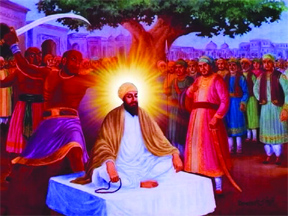
    The martyrdom of the Sahibzadas-Baba Zorawar Singh and Baba Fateh Singh, the younger sons of Guru Gobind Singh Ji-stands as one of the most heart-rending yet inspiring episodes in world history. In December 1705, the two children, aged just nine and seven, were executed at Sirhind for refusing to abandon their faith. Their sacrifice, along with the earlier martyrdom of the elder Sahibzadas, Baba Ajit Singh and Baba Jujhar Singh, has come to symbolise unshakeable faith, moral courage and resistance against tyranny. In India and across the global Sikh diaspora, the remembrance of this supreme sacrifice is observed with deep solemnity, reflection and collective resolve.
    In recent years, the observance has acquired renewed national and global visibility through Veer Bal Diwas, commemorated annually on December 26, marking a moment of shared remembrance beyond the Sikh community. In 2025, the martyrdom of the Sahibzadas was remembered with particular intensity in India and abroad, blending traditional Sikh religious practices with broader civic and educational engagement.
    India: Sacred Remembrance Rooted in History
    In India, the observance of the Sahibzadas’ martyrdom is deeply intertwined with sacred geography and collective memory. Key historical sites associated with the events of 1705-06 became centres of prayer and reflection. At Fatehgarh Sahib in Punjab, where Baba Zorawar Singh and Baba Fateh Singh were martyred, thousands of devotees gathered for *shaheedi samagams*, Akhand Paaths and kirtan darbars. The atmosphere was solemn rather than celebratory, with hymns and discourses focusing on sacrifice, steadfastness and faith in the face of cruelty.
    Gurdwaras across Punjab, Haryana, Uttar Pradesh, Delhi and Bihar organised special religious congregations, during which the life stories of the Sahibzadas were narrated in detail. Katha and Gurbani recitations emphasised not just the tragedy of their deaths, but the moral clarity and spiritual courage displayed by the young martyrs. Langars were organised as acts of seva, reinforcing the Sikh belief that remembrance must be accompanied by service.
    Veer Bal Diwas: National Recognition of Courage
    The observance of Veer Bal Diwas on December 26 has added a national dimension to the remembrance of the Sahibzadas. In 2025, schools, cultural institutions and government bodies across India marked the day through commemorative programmes, exhibitions and educational events. Special assemblies were held in schools, where students learned about the Sahibzadas as symbols of fearlessness, moral strength and youthful heroism.
    National and state-level events highlighted the relevance of the Sahibzadas’ sacrifice in contemporary society, particularly in the context of standing up for truth and conscience. Speeches and cultural presentations portrayed the Sahibzadas not merely as historical figures, but as role models whose lives challenge modern notions of courage and resilience. Veer Bal Diwas thus functioned as a bridge-bringing a deeply Sikh historical memory into the broader national narrative of sacrifice and ethical courage.
    As part of the national observance, Prime Minister Narendra Modi paid heartfelt tribute to the Sahibzadas on Veer Bal Diwas, underscoring the profound moral and historical significance of their sacrifice. Speaking at the national programme in Bharat Mandapam, New Delhi, Modi described Veer Bal Diwas as “a day of reverence, dedicated to remembering the sacrifice of the brave Sahibzades,” and highlighted how their courage, conviction and steadfast adherence to righteousness continue to inspire generations across India. He recalled the unshakeable faith of Mata Gujri Ji and the immortal teachings of Sri Guru Gobind Singh Ji, and called on the youth to draw strength from the Sahibzadas’ indomitable spirit as they pursue their dreams and responsibilities for the nation’s future. Modi observed that the legacy of their bravery not only reflects the Sikh tradition of sacrifice but also embodies values of courage and moral clarity that are vital for all Indians today, affirming that such examples will continue to motivate people for generations to come.
    Spiritual Observances and Community Participation
    Across India, the martyrdom observances were marked by a distinctive spiritual tone. Unlike festive gurpurabs, these days were characterised by quiet devotion, contemplation and humility. Many gurdwaras observed early-morning prayers, followed by kirtans that dwelt on themes of *chardi kala*-the Sikh principle of remaining spiritually elevated even in suffering. Gatka displays, where organised, were restrained and symbolic, underscoring discipline and readiness rather than spectacle.
    Community participation extended beyond religious spaces. Sikh organisations arranged blood donation camps, charity drives and free medical camps in memory of the Sahibzadas, translating remembrance into social responsibility. These acts reflected the Sikh understanding that martyrdom is honoured not by mourning alone, but by living according to the values for which the martyrs stood.
    Canada: Diaspora Remembrance and Youth Engagement
    In Canada, the martyrdom of the Sahibzadas was observed with deep emotional resonance, particularly among Sikh youth. Gurdwaras in Ontario and British Columbia held special shaheedi samagams, where kirtan and katha focused on the historical events at Sirhind and the spiritual maturity displayed by the young Sahibzadas. Educational sessions were organised in Punjabi schools and Sikh study circles, ensuring that younger generations born abroad remained connected to this foundational episode of Sikh history.
    Veer Bal Diwas was also acknowledged through community-led initiatives, including seminars, storytelling sessions and youth-centric discussions on courage, identity and ethical decision-making. In some cities, Sikh organisations collaborated with local institutions to present the story of the Sahibzadas as a universal lesson in standing firm against injustice, irrespective of age or circumstance.
    United States: Faith, Memory and Interfaith Awareness
    Across the United States, Sikh communities marked the martyrdom with religious solemnity and outreach. Gurdwaras in New York, New Jersey, California and Texas organised Akhand Paaths and special kirtan programmes dedicated to the Sahibzadas. Religious leaders used the occasion to explain the historical context of Mughal persecution and the Guru’s uncompromising stand for religious freedom.
    Veer Bal Diwas observances in the U.S. often included interfaith components, with Sikh organisations inviting educators, students and civic representatives to learn about the Sahibzadas’ sacrifice. Youth groups played a central role, using presentations, dramatizations and discussions to communicate the message of fearless integrity to wider audiences.
    Australia and Other Global Communities
    In Australia, where Sikh communities continue to grow, the martyrdom of the Sahibzadas was observed with reverence and educational focus. Gurdwaras in Melbourne, Sydney and Adelaide held prayer services and katha sessions, while community leaders emphasised the relevance of the Sahibzadas’ sacrifice in nurturing moral strength among children and youth in modern societies.
    Similar observances took place in the United Kingdom, Europe and Southeast Asia, where Sikh diaspora communities used the occasion to reaffirm collective identity and pass on historical memory through oral narration, devotional music and community service.

  • From Principled Left to Power Without Purpose: The CPM’s Crisis in Kerala

    From Principled Left to Power Without Purpose: The CPM’s Crisis in Kerala

    By George Abraham

    The people of Kerala have spoken decisively in the recent Panchayat and Municipal elections, delivering a clear rebuke to the corrupt and authoritarian style of governance under Pinarayi Vijayan and his close coterie within the CPM. As one surveys the damage inflicted on a party that was once a credible voice for the poor and the disadvantaged, it is evident how far it has fallen and reduced to an empty shell, stripped of ideological coherence and moral authority.

    It is therefore worth revisiting whether the CPM’s past misjudgments continue to haunt it today, accelerating its steady decline and pushing the party toward political irrelevance. Once a formidable force in West Bengal since Independence, the CPM governed the state uninterrupted for 34 years. The turning point came during the final phase of its rule, when land acquisition controversy severely undermined its credibility. The violence in Nandigram proved to be a fatal blow, exposing a governance model increasingly associated with intimidation, favoritism, and corruption at both local and state levels.

    At the national level, the CPM remained a powerhouse even as the UPA-1 wrested power from the NDA in 2004. Together, the CPI and CPM commanded more than 61 seats in the Lok Sabha. With such significant representation, the Left could have demanded key portfolios in the Manmohan Singh cabinet, strengthening its national influence while delivering transformative projects to its strongholds in West Bengal and Kerala. Instead, the party squandered this historic opportunity by staying on the sidelines and ultimately withdrawing support from the government over the Indo–U.S. Civil Nuclear Agreement, a landmark deal that legitimized India’s entry into the global nuclear order.

    Prakash Karat, then General Secretary of the CPM, will likely be remembered as one of the principal architects of the party’s marginalization in national politics, having presided over decisions that sacrificed strategic influence at the altar of ideological rigidity. His insistence on party discipline culminated in the unfortunate and widely criticized action against a leader of immense stature, the then Speaker of the Lok Sabha, Mr. Somnath Chatterjee, an episode many viewed as a display of political arrogance that further eroded the party’s credibility. What we are witnessing today appears to be a continuation of that decline, now unfolding under the stewardship of Pinarayi Vijayan, with the CPM steadily losing its remaining footholds and diminishing its relevance in contemporary Indian politics.

    The Pinarayi Vijayan regime is not only eroding the party’s legacy as a populist force but is also widely perceived as one of the most corrupt administrations in Kerala’s history. It is a striking paradox that a leader who rose from modest beginnings is now seen as embracing luxury and fostering a culture of nepotism. Power is widely believed to be heavily centralized in the Chief Minister’s Office, with cabinet ministers and party functionaries frequently sidelined, thereby weakening collective decision-making. Critics further argue that transparency and accountability have been severely compromised, and that dissent or questioning of authority is met with little tolerance, marking a sharp departure from the Left’s traditional democratic ethos.

    Over time, a series of controversies have significantly dented the public image of the Pinarayi Vijayan administration. The gold smuggling case, which involved individuals with alleged links to the Chief Minister’s Office, raised serious questions about oversight and accountability. The LIFE Mission controversy further called attention to possible procedural violations, while irregularities in cooperative banks—allegedly involving party cadres—have reinforced perceptions of entrenched corruption within the system.

    Adding to these concerns, T. Veena, the Chief Minister’s daughter, has been named in an ongoing corporate fraud case linked to Cochin Minerals and Rutile Limited (CMRL). The Serious Fraud Investigation Office (SFIO) has alleged that Veena and her firm, Exalogic Solutions, received approximately ₹2.7 crore from CMRL without providing corresponding services, amounting to alleged fraudulent payments under the Companies Act. The Enforcement Directorate has also reportedly registered a case under the Prevention of Money Laundering Act (PMLA) in connection with these transactions. These matters remain under investigation.

    Equally troubling for the people of Kerala is what critics describe as economic mismanagement by the current government. Rising public debt and increasing dependence on borrowing point to a growing fiscal strain. The administration is accused of showing limited regard for fiscal discipline and offering little clarity on sustainable revenue generation. Despite repeated announcements of memoranda of understanding (MoUs), private investment, outside the consumer sector, has remained limited, resulting in inadequate job creation and continued migration of young Keralites in search of better opportunities elsewhere.
    Over the years, the CPM has been the principal nemesis of the BJP in Kerala, with youth cadres from both sides frequently engaging in violent clashes that have tragically resulted in loss of life. The CPM also positioned itself as the foremost proponent and defender of secularism, often castigating the Congress for what it perceived as ideological laxity. CPM leaders routinely and vociferously criticized the BJP’s policies and its Hindutva-driven politics.

    However, what has unfolded during the Pinarayi Vijayan regime has given rise to troubling accusations and narratives suggesting informal or tactical understandings, and even collaboration between the CPM and the BJP. Despite multiple corruption allegations involving Pinarayi Vijayan and his family, the BJP has adopted a noticeably soft approach, raising serious questions among political observers. Even the long-pending Lavalin case involving Pinarayi Vijayan has been deferred repeatedly, not at the behest of the defense but reportedly at the request of the prosecution. These developments prompt an uncomfortable question: whether knowingly or otherwise, the CPM has aligned itself with the BJP’s broader objective of creating a Congress-mukt Bharat.
    Such short-sightedness is deeply concerning. History shows that the BJP has consistently absorbed or marginalized its partners once it secures a foothold. A compromised and vulnerable Pinarayi Vijayan thus becomes a liability for Kerala, a complacent collaborator who risks opening the door for the BJP to inject communal poison into a state long known for its social harmony. Reports of closed-door meetings between CPM and BJP leaders have further fueled these suspicions. There is widespread speculation that vote transfers or tacit understandings may emerge in the upcoming Assembly elections, serving the interests of both parties. Similar patterns have been observed in West Bengal, where historical accounts from local and panchayat elections describe tactical cooperation between BJP and CPM workers at the grassroots level to counter the Trinamool Congress.
    Until now, BJP’s failure to gain a strong foothold in Kerala has largely been due to a vigilant electorate that instinctively shifts support between the UDF and the LDF whenever communal politics appears to gain ground. This delicate voter equilibrium, however, is being severely undermined by the CPM’s alleged attempts to protect the private interests of the Vijayan family.
    Pinarayi Vijayan and the present CPM leadership have strayed far from the values and principles upheld by stalwarts such as E. M. S. Namboothiripad and A. K. Gopalan, leaders who dedicated their lives selflessly to the upliftment of the poor and the marginalized without seeking personal gain. While I am not an admirer of communist philosophy, I have always respected those leaders for their idealism, personal sacrifice, and moral integrity, which deserve universal admiration. Pinarayi Vijayan, however, has rewritten that script, sacrificing ideological purity for personal and political survival, pushing the party toward irrelevance and plunging the state into deep uncertainty.

    The CPM today stands at a crossroads. Socialism in its classical form has failed across much of the world, and in Kerala the party appears increasingly devoid of a coherent political philosophy. Instead, it seems intent on perpetuating power through policies that erode the state’s financial stability, disturb social peace, and foster opportunistic alliances with communal forces for short-term gains, often accompanied by reckless populism and vote-oriented freebies.

    The verdict delivered by the people of Kerala in recent local body elections is not merely an electoral setback; it is a moral indictment. The people of Kerala are no longer blind to these ploys. History offers the CPM a sobering lesson. In West Bengal, prolonged rule bred arrogance, intolerance of dissent, and ultimately collapse. In national politics, ideological inflexibility squandered historic opportunities and hastened marginalization. Kerala now stands at a similar inflection point. The persistence of alleged compromises, whether ideological, ethical, or tactical, threatens not only the party’s future but also the delicate secular and social fabric of the state.
    (George Abraham is a former chief technology officer, United Nations. He is Vice-Chair of IOCUSA. He can be reached at gta777@gmail.com

  • Haters and bigots disrupt Christmas celebrations across India

    Haters and bigots disrupt Christmas celebrations across India

    Even as Prime Minister Narendra Modi extended Christmas greetings to the nation, several states across India reported disruptions of Christmas celebrations, vandalism of decorations and protests outside churches in the days leading up to and including December 25. The incidents were reported from Madhya Pradesh, Chhattisgarh, Uttar Pradesh, Assam, Kerala, Gujarat, Rajasthan and Uttarakhand.
    On December 25, Prime Minister Modi wished citizens “hope, warmth and a renewed commitment to kindness” and shared a video of himself attending a Christmas service at a church. However, reports from multiple regions described confrontations involving individuals and groups associated with Hindutva organizations, with police intervention in some cases.
    Madhya Pradesh: Jabalpur Incident
    One of the most widely reported incidents occurred in Jabalpur, Madhya Pradesh, where a BJP leader and others disrupted a Christmas-related luncheon a few days before Christmas. The Jabalpur city BJP vice-president, Anju Bhargava, was seen in videos verbally abusing attendees from a blind school and physically heckling a visually impaired woman for attending a church event.
    Following public backlash on social media, the BJP issued a show-cause notice to Bhargava.
    Chhattisgarh: Bandh and Violence

    In Chhattisgarh, Hindutva groups had called for a state-wide bandh on December 24, citing alleged illegal religious conversions. The bandh followed communal clashes in Bade Tewada village of Kanker district earlier this month.
    In Raipur, a group chanting “Jai Sri Ram” entered Magneto Mall on Christmas Eve and vandalised property after alleging that the mall had not supported the bandh. Police registered a complaint against more than 40 unidentified individuals based on video evidence circulating on social media.
    Abha Gupta, marketing head of the mall, told the media that 50 to 100 people entered the closed premises carrying sticks and hockey sticks and questioned staff members about their religion and caste.
    In Kanker district, more than 30 people allegedly attacked homes of families who had converted to Christianity several years ago. According to residents interviewed by television channels, the affected tribal families said they had adopted Christianity voluntarily.
    Uttar Pradesh: Protests Outside Churches
    In Bareilly, members allegedly linked to Bajrang Dal and Vishva Hindu Parishad gathered outside St. Alphonsus Cathedral Church on December 24 and recited the Hanuman Chalisa. Police were deployed at the site. The groups later submitted a memorandum to the police alleging that church activities during Christmas were intended to defame Hinduism.
    On December 25, Bajrang Dal workers staged a protest outside the Kotwali police station in Bareilly, demanding that a case be registered against the church.
    In Ghaziabad, a video circulated online showing a group chanting “Jai Sri Ram” near worshippers praying at St. Thomas Orthodox Maha Idavaka Church. Fact-checkers later confirmed the incident took place in Ghaziabad and not in Delhi, as initially claimed on social media.
    Assam: Decorations Vandalised
    In Assam, Christmas decorations at St. Mary’s School in Panigaon were vandalised on December 24. Videos showed installations being destroyed and set on fire while slogans were raised. In a separate incident in Nalbari, individuals were seen removing Christmas decorations from shops and burning them.Nalbari SSP Bibekananda Das confirmed that four people were arrested in connection with the vandalism and said they were affiliated with Bajrang Dal and Vishva Hindu Parishad.
    Kerala: Attack on Carolers
    In Palakkad, Kerala, a group of Christmas carolers was allegedly attacked on December 21. According to police, one person, identified as Ashwin Raj, was arrested after a case was registered.
    Gujarat: Mall Installation Removed
    In Ahmedabad, alleged members of Hindutva outfits entered Palladium Mall on December 27 and dismantled Christmas installations. Mall authorities said staff members were threatened during the incident.
    Rajasthan and Uttarakhand:
    Events Restricted
    In Rajasthan’s Sriganganagar district, the additional district education officer issued a directive asking private schools not to ask students to wear Santa Claus costumes. The directive followed a letter from an organisation named Bharat-Tibet Sahyog Manch. State authorities later clarified that the decision was taken at the local level without instructions from the education minister or education directorate. In Haridwar, Uttarakhand, a Christmas programme scheduled at a hotel run by the Uttar Pradesh tourism department was cancelled following objections raised by Hindutva groups.
    Police Response
    Police action was reported in several cases, including arrests in Assam and registration of cases in Chhattisgarh and Kerala. Authorities said investigations were ongoing in other incidents.

  • Tragedies that shook India in 2025

    Tragedies that shook India in 2025

    From deadly stampedes and terror attacks to plane crashes, floods and industrial disasters, 2025 saw hundreds of deaths across India. Here are the major tragedies that shook India to the core this year.

    2025: A Year Of Death And Disaster For India
    Hundreds of lives were lost in several incidents across India, including stampedes, natural disasters, accidents, and terror attacks. Incidents like the Maha Kumbh Mela stampede, the Pahalgam terror attack, the Air India crash, the Delhi blast and others have shaken the nation to the core. Some tragic incidents also exposed negligence and mismanagement, while others were acts of sudden violence or unleashed by nature. These incidents have left deep scars on communities and raised urgent questions about safety, preparedness and accountability.
    Maha Kumbh Mela Stampede
    At least 30 people were killed, while 60 others were injured at the world’s largest religious gathering of Maha Kumbh Mela in Prayagraj on January 29, 2025. Thousands of pilgrims had gathered to take a holy dip in the Sangam on the occasion of Mauni Amavasya, one of the most auspicious days of the Hindu calendar. The 45-day-long festival witnessed over 660 million pilgrims in total.
    New Delhi Railway Station Stampede
    At least 18 people were killed, and 15 were injured in a stampede at New Delhi Railway Station late on February 15. The incident occurred after a sudden surge of passengers waiting to board trains to Prayagraj for the ongoing Maha Kumbh. Severe overcrowding on platforms 12 and 14 led to panic and chaos, resulting in one of the deadliest crowd crushes at the station in recent years.
    Telangana Tunnel Collapse
    On 22 February, in Telangana’s Nagarkurnool district, a section of the Srisailam Left Bank Canal tunnel under construction collapsed, trapping workers inside. Rescue teams fought hazardous conditions in an attempt to reach those buried under debris. The accident claimed the lives of at least eight workers, highlighting serious concerns over safety standards at major infrastructure worksites.
    Bengaluru Stampede
    On June 4, 2025, Bengaluru’s IPL victory celebrations turned tragic when a massive crowd crush occurred near the M. Chinnaswamy Stadium. Over two lakh fans gathered for the Royal Challengers Bengaluru (RCB) felicitation, leading to chaos. Asphyxia claimed the lives of 11 people, while many others were injured. The tragedy highlighted the dangers of severe overcrowding and poor crowd control during the victory event.
    Air India Flight 171 Crash
    In one of the deadliest plane crashes in history, London-bound Air India Flight 171, carrying 242 people onboard, crashed moments after taking off from the Sardar Vallabhbhai Patel International Airport in Ahmedabad on June 12. The Boeing 787 Dreamliner crash resulted in the death of 241 people on board, leaving only one survivor. Other casualties were also reported on the ground at the site of the crash, bringing the total death toll to 260. The investigation into the incident is still underway.
    Telangana Chemical Factory Explosion
    A massive explosion occurred at Sigachi Industries Limited in Pashamylaram, Sangareddy district, on June 30, killing 54 people and leaving eight missing. The blast, which flattened a three-story production building, was likely triggered by the ignition of a combustible dust cloud in a confined area. A technical committee cited gross negligence, including the use of untrained staff and outdated machinery, as primary causes.
    Uttarkashi Flash Flood
    On August 5, a devastating cloudburst (later suspected to be a glacial lake outburst) hit Dharali and Harsil villages in Uttarkashi. The resulting flash floods along the Kheer Ganga river claimed at least 5 lives, with over 50 people – including 11 Army personnel – missing. The deluge destroyed nearly 30 homes and 20 hotels. A massive rescue operation involving the Army, NDRF, and SDRF successfully evacuated over 400 people.
    Kishtwar Flash Flood
    On August 14, a massive cloudburst struck Chasoti village in Kishtwar, Jammu and Kashmir, killing at least 50 people and injuring 100 others. The disaster occurred midday when a large number of people had gathered for the Machail Mata yatra, catching a large gathering of pilgrims off guard. A massive rescue operation was launched involving the Army, NDRF, and SDRF to locate the missing and provide medical aid to survivors in the remote region.
    Karur Stampede
    On September 27, a tragic stampede occurred during a political rally for the Tamilaga Vettri Kazhagam (TVK) party, founded by actor-turned-politician Vijay. The incident took place at Velusamypuram in Karur district, Tamil Nadu, when large sections of the crowd surged towards Vijay in an attempt to catch a glimpse of his convoy after his arrival was delayed by nearly seven hours, leading to a stampede and crowd mismanagement. In the incident, 41 people were killed while over 100 others were injured.
    Nowgam Explosion
    At least nine people were killed, and 29 were injured after a blast at Nowgam Police Station in Jammu and Kashmir, which was investigating the “white-collar” Faridabad terror module, late November 14. The accidental explosion occurred when personnel were extracting samples from the cache of explosives, the officials said.
    Goa Nightclub Fire
    On December 6, a massive blaze erupted at the Birch by Romeo Lane nightclub in Arpora, North Goa, killing 25 people. Following the incident, the nightclub’s owners, Gaurav and Saurav Luthra, fled to Thailand. Investigators revealed that the venue lacked mandatory fire safety equipment and had no proper emergency exits on either the ground floor or the deck, despite hosting a large number of patrons. The fire left people trapped, with little chance to escape. The police have said that the Luthra brothers were aware of the safety lapses but went ahead with the event regardless. The brothers arrested in Delhi on December 16, after being deported from Bangkok, are now facing trial.

  • Newsmakers of 2025: Faces who defined India

    Every year brings a set of personalities whose actions, achievements, controversies, or resilience leave a lasting imprint on the nation. In 2025, India witnessed political shifts, cultural milestones, sporting triumphs, and social movements that captured headlines and public imagination. From stalwarts consolidating power to rising stars challenging the status quo, these individuals shaped national discourse and became the defining newsmakers of the year.
    Political Titans and Game Changers
    Narendra Modi – Steering India Through Turbulent Times
    Prime Minister Narendra Modi dominated headlines throughout 2025. The Lok Sabha elections, which resulted in a redefined political landscape, tested both his leadership and the ruling party’s organizational strength. The elections were marked by new alliances, shifting vote banks, and youth engagement, and Modi’s campaign strategy, combining mass outreach with digital mobilization, proved decisive.
    Beyond elections, the Prime Minister’s management of national security crises, including the Pahalgam massacre and the Red Fort car bombing, showcased a balancing act between diplomatic restraint and domestic action. His speeches emphasized unity and resilience, reinforcing his image as a decisive yet composed leader. Policy measures in renewable energy, digital governance, and infrastructure expansion also kept him in constant media focus.
    Rahul Gandhi – The Opposition Voice
    Rahul Gandhi, former Congress President and prominent leader of the opposition, emerged as one of the most vocal and active political figures of 2025. He played a critical role during the Lok Sabha elections, articulating the Congress party’s vision and critiquing government policies on employment, agrarian distress, and democratic accountability.
    Post-elections, Rahul Gandhi continued to influence the national conversation, focusing on democratic reforms, women’s reservation in legislatures, and social welfare measures. His speeches in Parliament, combined with media engagements and social campaigns, kept him consistently in the public eye, making him a central figure in debates over governance and policy. His efforts to revitalize grassroots politics and connect with youth voters reinforced his status as a key newsmaker of the year.
    Mallikarjun Kharge – Strategic Opposition Leader
    As leader of the opposition in Parliament, Mallikarjun Kharge complemented Rahul Gandhi’s activism by steering legislative debates, holding the government accountable, and highlighting policy gaps. His calm but assertive approach to parliamentary oversight earned him respect and media attention throughout the year.
    Smriti Irani – Championing Social and Educational Initiatives
    Union Minister Smriti Irani gained widespread recognition in 2025 for her work in women’s empowerment, education reform, and skill development initiatives. From launching innovative digital education programs to advocating for safety measures for women across states, her proactive approach made her a consistent feature in national headlines.
    Entertainment Icons
    Alia Bhatt – Redefining Contemporary Cinema
    Alia Bhatt had a breakthrough year, starring in films that blended social messaging with mainstream appeal, tackling themes such as mental health, gender equality, and urban isolation. Beyond acting, she made waves as a producer, supporting independent cinema and creating opportunities for emerging filmmakers. Her social advocacy, particularly in raising awareness about women’s safety and mental health, cemented her status as a newsmaker beyond the silver screen.
    Shah Rukh Khan – Global Ambassador of Indian Cinema
    SRK continued to be a focal point in entertainment news, with international collaborations and strategic business ventures drawing media attention. His philanthropic work, including educational and health initiatives, coupled with high-profile appearances at global events, kept him relevant in both film and social discourse.
    Rashmika Mandanna – The Pan-Indian Star
    Rashmika’s 2025 releases, including ‘Cocktail 2’ and other high-profile romantic comedies, cemented her status as one of India’s most bankable stars. She emerged as a youth icon, with her interviews, brand endorsements, and social media presence generating significant media coverage.
    Sports Stars – Triumphs and Glory
    Virat Kohli – The Cricketing Maestro
    Virat Kohli remained in the headlines for his leadership in domestic and international cricket. His focus on mentoring young talent, coupled with spectacular performances in high-stakes tournaments, ensured his position as one of India’s most influential sports figures.
    PV Sindhu – Bringing Glory to Indian Badminton
    PV Sindhu continued her remarkable run on the global stage, winning medals at world championships and inspiring a new generation of athletes. Her dedication, combined with advocacy for women in sports, made her a symbol of national pride.
    Neeraj Chopra – The Javelin Phenomenon
    Neeraj Chopra’s consistency and record-breaking performances in athletics kept him in the news throughout 2025. His commitment to training and representing India internationally highlighted the growing stature of Indian athletes on the world stage.
    Business Leaders and Entrepreneurs
    Ratan Tata – The Philanthropic Visionary
    Even in 2025, late Ratan Tata made headlines for philanthropic initiatives and mentoring young entrepreneurs, particularly in sectors like sustainability, healthcare, and technology innovation. His voice carried moral authority, blending business acumen with social responsibility.
    Mukesh Ambani – Expanding the Corporate Footprint
    Mukesh Ambani remained central in business news due to Reliance Industries’ expansion into renewable energy, digital infrastructure, and consumer tech. Ambani’s strategic partnerships, both domestic and international, reflected India’s growing corporate influence globally.
    Byju Raveendran – Revolutionizing Education Technology
    Byju continued to innovate in edtech, expanding learning platforms for students across India and abroad. International collaborations and initiatives to bridge digital education gaps kept him prominently in the news.
    Social Activists and Thought Leaders
    Medha Patkar – Environmental and Social Advocacy
    Patkar remained active in campaigning against displacement due to industrial and infrastructure projects, advocating for the rights of marginalized communities. Her involvement in nationwide environmental movements drew media attention and public support.
    Kiran Bedi – Law Enforcement and Public Safety Initiatives
    The former IPS officer maintained a visible presence in media discussions on police reforms, women’s safety, and governance accountability, further establishing her as a respected public intellectual.
    Faye D’Souza – Journalism with a Purpose
    Faye D’Souza continued to challenge societal and political narratives through fearless reporting. Her investigative journalism on social justice issues kept her at the forefront of media discourse.
    Science, Technology, and Health Pioneers
    Dr. Gagandeep Kang – Public Health Leadership
    Dr. Kang’s research and policy contributions in vaccine development and public health continued to influence India’s approach to health crises. Her work on community immunization and disease prevention kept her in the public eye.
    Shubhanshu Shukla
    A group captain and test pilot with the Indian Air Force (IAF) and gaganyatri (astronaut) with the Indian Space Research Organisation (ISRO). In July 2025 Shukla became the first ISRO astronaut to visit the International Space Station (ISS) while participating in Axiom Mission 4, a privately organised spaceflight. He is the second Indian to travel to space, following Rakesh Sharma’s flight in 1984.
    Cultural and Artistic Icons
    Anish Kapoor – International Artistic Influence
    Kapoor’s 2025 exhibitions, blending traditional Indian motifs with contemporary art, made waves globally, reinforcing India’s cultural influence in the art world.
    Zoya Akhtar – Filmmaking for Social Change
    Akhtar received accolades for films addressing gender, class, and societal challenges, making her a leading figure in socially conscious cinema.
    Raghu Dixit – Music as Activism
    Through cross-cultural performances and social messaging in his music, Dixit remained a prominent cultural voice in 2025.
    Emerging Faces
    2025 also saw young innovators, activists, and artists making headlines:
    – Aarav Mehta: Climate activist leading nationwide youth initiatives.
    – Ananya Singh: Health-tech entrepreneur gaining recognition for digital healthcare innovations.
    – Ishan Kapoor: Independent filmmaker whose socially relevant narratives gained national and international attention.
    Reflections on the Year
    The newsmakers of 2025 represent India’s diversity – politics, sports, entertainment, science, and social activism. Some shaped public opinion, some inspired change, and others became symbols of accountability and courage. The inclusion of Rahul Gandhi as a central opposition leader highlights the balance of political forces shaping discourse. As India prepares for 2026, these individuals embody stories of resilience, influence, and aspiration, and will continue to shape the narratives that define the nation.

  • 2025 in Indian Cinema: Blockbusters, Brave Voices and a Year of Creative Contrasts

    2025 in Indian Cinema: Blockbusters, Brave Voices and a Year of Creative Contrasts

    The year 2025 proved to be one of the most dynamic in the recent history of Indian cinema – a year where massive box-office success collided with bold, socially conscious storytelling, and where audiences were invited to both cheer and reflect. Indian filmgoers flocked to theatres for spectacle and yearned for substance from the screen. What emerged was a cinematic landscape defined not by uniformity but by its contrasts: grand narratives and quiet truths, patriotic fervor and marginal voices, commercial polish and artistic risk.
    In 2025, Indian cinema expanded its reach – not just in terms of box?office records, but also in cultural conversation. The stories that dominated our screens reflected a nation grappling with identity, pride and the lived realities of its people.
    Dhurandhar: A Spectacle of Patriotism
    No discussion of Indian cinema in 2025 can begin without acknowledging Dhurandhar – a film that became a paradigm of mainstream success and cultural resonance.
    Directed by Aditya Dhar and boasting an ensemble cast that includes Ranveer Singh, Akshaye Khanna, Sanjay Dutt, R. Madhavan, Arjun Rampal and Sara Arjun, Dhurandhar turned the spy thriller into a nationwide event. With its taut pacing, high?octane action sequences and sweeping production values, the film skillfully blended entertainment with echoes of real historical events like the Kandahar hijack, the Parliament attack, and the 26/11 Mumbai terror attacks.
    But what truly set Dhurandhar apart was its phenomenal box?office performance. Opening to strong collections and holding steady through weeks of release, it didn’t just dominate market share – it shattered records. By mid?December, industry trackers reported that Dhurandhar had collected over ?870 crore worldwide, making it one of the biggest Indian films of the year. Along the way it surpassed the lifetime totals of films such as Kantara: A Legend – Chapter 1 and cemented its place in the upper echelon of Indian cinematic earnings. Audiences across age groups responded not just to its star power and action set pieces, but to the film’s emotional undercurrents – a mix of loyalty, sacrifice and national pride that struck a chord in a year of broader social introspection.
    Critics acknowledged the film’s technical mastery – the slick editing, immersive cinematography, and an expansive soundscape – while also debating the ideological contours of its narrative. Some saw in Dhurandhar a celebration of courage and resolve; others cautioned against simplistic narratives of nationalism. Regardless of interpretation, the film became a cultural flashpoint, setting the tone for how cinema and national identity intersect in contemporary India.
    Homebound: The Power of Human Stories
    In stark contrast to Dhurandhar’s explosive scale stood Homebound, a film that operated on intimacy and empathy rather than spectacle. Directed by Neeraj Ghaywan and chosen as India’s official entry for the Oscars, Homebound was named by critics and audiences alike as one of the most socially resonant films of the year.
    At its heart, Homebound is a story about friendship, aspiration and the structural inequalities that shape Indian society. It follows two protagonists – one Dalit, one Muslim – as they navigate the obstacles that caste, class and systemic bias place in their paths. The power of the film lies not in plot twists or larger?than?life heroics, but in its observational, humane storytelling. Its characters are fully realized, their motivations clear, their struggles reflective of many real lives in contemporary India.
    Shot with a deliberate eye for realism, the film uses its visuals to contrast spaces of privilege and marginalization, showing not only geographic divides but emotional ones. The performances – particularly from the two leads – are quietly potent, grounding the narrative in lived experience rather than cinematic artifice.
    Homebound resonated at international film festivals from Venice to Toronto to Berlin, where audiences praised its sensitivity, depth and universality. In a year dominated by thunderous entertainment, it emerged as a reminder that cinema’s greatest strength is its ability to make us see ourselves in the stories of others.
    A Year of Diversity: Film Beyond the Blockbuster
    The year’s cinematic offerings were not limited to these two poles of blockbuster spectacle and hard?hitting social drama. Across the country, filmmakers in every language and genre produced work that expanded the language of Indian cinema.
    Chhaava, starring Vicky Kaushal and Rashmika Mandanna, stood out as a historical epic, sweeping audiences into its richly detailed portrayal of valor and legacy. The film grossed over Rs 800 crore globally, affirming that historical narratives remain powerful engines for both emotion and box?office returns.
    On a different register, Saiyaara, released in July, defied conventional expectations to become the highest-grossing Indian romantic film of all time. Its emotional storytelling, paired with a captivating musical score, proved that romance – when anchored in fresh performances and a thoughtful script – still has a dedicated and vast audience. Cinema in 2025 also saw the rise of genre diversity, with films like the animated Mahavatar Narsimha appealing to family audiences, the action-packed War 2 delivering mass thrills, and regional hits like Coolie (Tamil) making significant dents at the global box office. The year’s highest grossing films reflected this diversity: from Kantara: A Legend – Chapter 1 to Lokah Chapter One: Chandra and They Call Him OG, audiences celebrated stories from different regions, languages and cinematic traditions, proving yet again that Indian cinema is pan?Indian, not monolithic.
    Independent and Critical Favorites: Beyond the Conventional Frame
    Beyond the financial metrics, 2025’s critical conversation was animated by films that challenged narrative norms and foregrounded marginalized voices. Among these:
    Humans in the Loop – a sci?fi drama that used artificial intelligence as a lens to explore human agency and inequity.
    Jugnuma – a genre?blending tale of caste, capitalism and the supernatural set in the Uttarakhand hills.
    Dhadak 2 – a mainstream romance that tested familiar formulas with its commentary on caste barriers.
    The Mehta Boys – a heartfelt dramedy directed by Boman Irani, centering family dynamics and generational tensions.
    Nishanchi, from Anurag Kashyap, embraced experimental storytelling and genre subversion.
    The Great Shamsuddin Family offered a warm, inclusive portrait of Muslim family life that resonated widely across streaming audiences.
    These films – each distinct in tone and intent – demonstrated that Indian cinema’s future lies not just in bigger budgets or star casts, but in storytelling that reaches deeper into lived experience.
    The Gender, Genre, and Narrative Landscape
    One of the more intriguing currents in 2025 was the resurgence of certain traditional tropes even as new ones emerged. Films like Saiyaara and Ek Deewane Ki Deewaniyat saw the familiar – sometimes problematic – “spoilt man child” archetype return to prominence in romantic narratives. While these films drew strong box?office numbers, they also sparked debate about gender dynamics, representation and audience desire for both nostalgia and progress.
    At the same time, films like Homebound and Humans in the Loop illustrated a keen interest in narratives that move beyond provinces of the self, asking not only “What entertains?” but “What transforms?” The dual currents of spectacle and introspection – sometimes at odds, sometimes complementary – made 2025’s cinematic dialogue richer and harder to pigeonhole.

  • 2025 in the Shadow of Fear: The Deadliest Terror Attacks That Shook India

    2025 in the Shadow of Fear: The Deadliest Terror Attacks That Shook India

    In 2025, India’s vibrant life was punctuated by moments of tragedy that reminded the nation of the persistent threat of terrorism. The year saw attacks that claimed lives, challenged security agencies, and left a deep emotional scar on the country. From scenic tourist valleys to the heart of the national capital, terror struck indiscriminately, leaving families, communities, and the nation to grapple with loss, grief, and the urgent need for heightened vigilance.
    This feature revisits the deadliest terror incidents of 2025, exploring the events, the human stories behind them, and their long-lasting implications.
    Pahalgam Massacre: Innocence Shattered in the Valley
    On a bright spring afternoon of 22 April 2025, the picturesque Baisaran Valley in Pahalgam, Jammu and Kashmir, became the site of unimaginable horror. The valley, known for its rolling meadows, pony rides, and tourist gatherings, was suddenly invaded by armed militants. Witnesses later described the terrifying moments when automatic gunfire ripped through the tranquil air, turning laughter and leisure into panic and chaos.
    By the end of the assault, 26 civilians had been killed and over 20 injured. Most victims were tourists – newlyweds, families, and foreign visitors. A local pony operator, who reportedly tried to protect visitors, also lost his life. Survivors recounted the attackers asking victims about their religion before shooting, adding a chilling psychological layer to the brutality.
    The militant group The Resistance Front (TRF), allegedly linked to Lashkar-e-Taiba, initially claimed responsibility but later denied involvement. The attack sparked nationwide outrage, highlighting gaps in tourist security in conflict-prone regions and prompting questions about intelligence lapses.
    Aftermath and Response
    The federal government acted swiftly. Security forces launched extensive counter-terror operations, conducting raids and detaining over 175 suspects. Homes of suspected militants were demolished, while border and internal security were tightened to prevent further attacks. In a diplomatic move, the government temporarily suspended visas for Pakistani nationals, signaling serious concern over cross-border militant involvement.
    The tragedy also resonated internationally. Multilateral forums, including the Shanghai Cooperation Organisation, condemned the attack and called for collective action against terrorism, reflecting the global implications of local violence.
    Red Fort Car Bombing: Terror Strikes the Capital
    Less than seven months later, India witnessed another shocking attack – this time in its capital, New Delhi. On 10 November 2025, a car laden with explosives detonated near the Red Fort Metro Station, one of the city’s most iconic landmarks. The blast killed 15 people and injured more than 20, leaving debris scattered across streets and damaging nearby buildings.
    Investigators revealed that the attack was carefully planned to strike during peak hours, ensuring maximum casualties. The National Investigation Agency (NIA) swiftly took charge, arresting several suspects linked to the plot. Among them was Yasir Ahmad Dar, alleged to have pledged himself to a suicide mission, along with others reportedly affiliated with extremist networks across northern India.
    The Red Fort bombing prompted urgent debates on urban security preparedness. Lawmakers, security analysts, and civil society highlighted the need for enhanced surveillance, rapid emergency response, and intelligence integration to prevent attacks in densely populated areas. Internationally, the blast drew condemnation from world leaders, including the United States, which praised India’s methodical investigation and response.
    Other Violent Incidents: Insurgency and Extremism
    While Pahalgam and Red Fort were the deadliest attacks, other incidents underscored the multiplicity of security challenges in India. In Bijapur district, Chhattisgarh, Maoist insurgents detonated an improvised explosive device targeting a security convoy, killing eight personnel and a civilian driver in January 2025. This internal insurgency highlighted that terrorism in India is not only transnational but also deeply domestic, rooted in longstanding socio-political grievances.
    Collectively, these incidents exposed vulnerabilities across urban and rural India, prompting the government to reassess counter-terror strategies, resource allocation, and rapid response mechanisms.
    The Human Toll: Grief and Resilience
    The deadliest attacks of 2025 were not just statistics; they represented human lives, families, and dreams abruptly ended. In Pahalgam, parents mourned children, spouses lost partners on their honeymoon, and communities grappled with trauma. In Delhi, ordinary commuters, workers, and passersby became victims in an attack that shattered the sense of safety in the capital.
    Yet, amid the grief, stories of courage and resilience emerged. Locals who assisted the injured, citizens who volunteered for relief, and communities that organized vigils and memorials displayed the nation’s ability to unite in the face of terror.
    National Reflection and Security Lessons
    The attacks of 2025 prompted a national introspection on security and preparedness. Authorities enhanced urban surveillance, intelligence sharing, and coordination between central and state agencies. Public awareness campaigns encouraged citizens to remain vigilant and report suspicious activities.
    Furthermore, the incidents influenced diplomatic engagement, with India emphasizing the need to combat cross-border terrorism through international cooperation while balancing domestic policy and civil liberties.
    Looking Forward
    While 2025 will be remembered for these tragic attacks, it is also a testament to India’s resilience and resolve. The year underscored that terrorism, in its many forms, remains a potent threat, but collective vigilance, intelligence, and community solidarity can mitigate its impact.
    As India moves forward, the lessons of Pahalgam, Red Fort, and other attacks will continue to shape national security policy, urban preparedness, and public consciousness, ensuring that while terror may strike, the spirit of the nation endures unbroken.

  • Remembering the icons we lost in 2025 – India’s cultural & artistic giants

    They shaped our imagination, our language of emotions, our collective memory. In 2025, India paused repeatedly-to mourn, to remember, and to honor those whose lives left an indelible imprint on its cultural soul.
    The year 2025 will be remembered as one of profound transition-not merely for political churn or social change, but for the quiet departures of giants who had long been part of India’s everyday life. Actors whose faces felt familiar as family, singers whose voices became emotional landmarks, creators who shaped how India spoke to itself-many took their final bow this year.
    What united these losses was not just fame, but enduring relevance. These were figures who had outlived trends, crossed generations, and remained woven into India’s shared consciousness. Their passing marked the end of eras-and the beginning of reflection.
    Dharmendra (1935-2025): The Eternal He-Man with a Gentle Soul
    For over six decades, Dharmendra stood tall as one of Hindi cinema’s most enduring leading men. Dubbed the “He-Man” of Bollywood, he embodied rugged masculinity-but beneath the brawn lay an actor of extraordinary emotional sensitivity.
    From the rebellious passion of Phool Aur Patthar to the stoic righteousness of Satyakam, from the thunderous camaraderie of Sholay to the playful warmth of Chupke Chupke, Dharmendra moved effortlessly between intensity and tenderness. He represented an India that was idealistic yet grounded, heroic yet humane.
    In his later years, Dharmendra became less a star and more a living institution-a bridge between cinema’s golden age and its modern reinventions. His death in November 2025 prompted tributes that cut across generations, languages, and ideologies. For many, he was not just an actor-but a reminder of cinema’s moral heart.
    Manoj Kumar (1937-2025): Cinema’s Conscience Keeper
    Known eternally as “Bharat Kumar,” Manoj Kumar redefined patriotism on screen-not through spectacle, but through quiet conviction. At a time when nationalism was still finding its post-Independence voice, his films spoke directly to the nation’s conscience.
    Upkar, Purab Aur Pachhim, Roti Kapda Aur Makaan-these were not merely films, but cultural statements. Manoj Kumar believed cinema had a responsibility to society, and his body of work reflected that belief with unwavering clarity.
    His passing in April 2025 felt symbolic, coming at a time when India was once again debating ideas of nationhood, identity, and belonging. His films remain a reminder that patriotism, at its strongest, is rooted in empathy and social justice.
    Kamini Kaushal (1927-2025): A Pioneer Who Refused to Fade
    Kamini Kaushal belonged to an era when women on screen were expected to vanish after marriage. She quietly-and resolutely-defied that norm.
    From her historic debut in Neecha Nagar to her continued presence in cinema across decades, Kamini Kaushal embodied dignity, restraint, and inner strength. She aged on screen with grace at a time when roles for older women were scarce-and often stereotyped.
    Her passing closed a rare chapter of Indian cinema: that of an actress who had witnessed-and participated in-its journey from pre-Independence realism to contemporary storytelling.
    Asrani (1941-2025): Laughter That Outlived the Punchline
    Comedy in Indian cinema has often been underestimated. Asrani proved it could be immortal.
    Whether as the unforgettable jailer in Sholay or the gentle disruptor in Hrishikesh Mukherjee classics like Guddi and Chupke Chupke, Asrani possessed a rare gift-he could make audiences laugh without malice, satire without cruelty.
    His death in October 2025 felt deeply personal to viewers who had grown up repeating his dialogues, often without remembering when they first heard them. His legacy is laughter that never felt dated-and kindness that never felt forced.
    Satish Shah (1952-2025): Wit, Warmth, and the Middle-Class Mirror
    Few actors captured the quirks of India’s urban middle class as sharply as Satish Shah. With impeccable comic timing and observational humour, he made everyday absurdities unforgettable.
    For a generation, he will forever remain Indravadan Sarabhai-opinionated, sarcastic, and oddly lovable. Yet his career stretched far beyond sitcom fame, encompassing theatre, cinema, and voice work.
    Satish Shah’s death marked the loss of an actor who made intelligence funny and humor thoughtful-a rare balance in popular entertainment.
    Zubeen Garg (1972-2025): The Voice of a Region, the Sound of a Generation
    Zubeen Garg was not just a singer-he was a cultural movement. From Assam to Bollywood, his voice carried emotion, defiance, and deep-rooted identity.
    Equally at home singing soulful Bollywood numbers and Assamese folk-inspired compositions, Zubeen represented a generation of artists who refused to be boxed into one language or geography.
    His sudden passing in September 2025 sent shockwaves across the Northeast and beyond, highlighting how deeply regional voices have shaped India’s national cultural fabric.
    Pankaj Dheer (1956-2025): The Warrior with a Tragic Grace
    To millions, Pankaj Dheer will always be Karna-the noble warrior wronged by fate. His portrayal in Mahabharat was marked by dignity, restraint, and quiet pain.
    Beyond mythological television, Dheer worked steadily in films and serials, embodying authority figures with moral complexity. His death in October 2025 reminded audiences of an era when television characters were written-and performed-with epic gravitas.
    Mukul Dev (1971-2025): The Actor Who Thrived in the Shadows
    Mukul Dev never chased stardom-yet he never went unnoticed. With a commanding screen presence and understated intensity, he excelled in supporting roles that elevated entire narratives. From action dramas to comedies, he brought credibility and depth, often becoming the emotional anchor of the story. His untimely death in May 2025 was widely mourned within the industry, a reminder of how essential character actors are to Indian cinema’s ecosystem.
    Piyush Pandey (1955-2025): The Man Who Taught Brands to Speak Human
    Few individuals shaped India’s emotional vocabulary as profoundly as Piyush Pandey. Through advertising, he taught brands to speak the language of people-not markets.
    His campaigns blended humour, nostalgia, social insight, and storytelling, often reflecting India back to itself with warmth and honesty. His passing in 2025 was mourned not just by advertisers, but by anyone who had ever smiled at a commercial that felt deeply personal.

  • 2025 Supreme Court Review: Key judgments on women’s reservation, presidential reference, constitutional rights

    2025 Supreme Court Review: Key judgments on women’s reservation, presidential reference, constitutional rights

    The year 2025 proved to be a landmark one for the Supreme Court of India. As the nation grappled with social change, governance debates, and questions of constitutional authority, the apex court delivered a series of rulings that left an enduring imprint on Indian law, politics, and society. From clarifying the powers of the President and Governors, to advancing women’s representation in legal institutions, to reinforcing fundamental rights, the Court’s judgments reflected a careful balancing of tradition, equity, and constitutional principles.
    Presidential Reference on Assent Powers: Upholding Institutional Independence
    In November, the Supreme Court issued its advisory opinion on a Presidential Reference regarding the powers of the President and Governors to grant assent to bills passed by state legislatures. The Court clarified that no fixed timeline can be imposed on the President or Governors for assenting to legislation, holding that the concept of “deemed assent” was incompatible with the Constitution’s basic structure.
    The judgment was a strong reaffirmation of the separation of powers, ensuring that constitutional authorities retain independent discretion without being coerced by deadlines or political pressure. Legal analysts hailed this opinion as an important milestone in safeguarding federal balance and the deliberative processes of democracy.
    Women’s Reservation in State Bar Councils: Advancing Gender Equity
    Another socially transformative ruling came in the form of a mandate for 30 percent representation of women in State Bar Councils. The Court ordered that 20 percent of seats be filled through elections, with 10 percent through co-option by existing council members.
    This judgment addressed the stark under-representation of women in legal governing bodies, and was widely celebrated as a progressive step toward substantive equality. Advocates argued that it would not only empower female legal professionals but also reshape decision-making and policy formulation in India’s legal institutions.
    Balancing Culture and Environment: Firecracker Regulations
    Ahead of Diwali, the Court modified earlier restrictions on firecrackers in the Delhi-NCR region, allowing licenced traders to sell NEERI-certified “green crackers” under regulated conditions. This ruling demonstrated the Court’s nuanced approach, balancing environmental concerns with cultural and religious practices, and underscored its role as a mediator between social values and ecological responsibility.
    Tribunal Reforms Act: Protecting Judicial Independence
    In a pivotal judgment on administrative law, the Supreme Court struck down key provisions of the Tribunal Reforms (Rationalisation and Conditions of Service) Act, 2021, reiterating that tribunals must remain insulated from executive interference. By safeguarding the impartiality of adjudicatory bodies outside regular courts, the Court reinforced a core tenet of constitutional governance: that justice institutions must operate free from undue influence to maintain public trust.
    Criminal Justice: Upholding the Standard of Proof
    The apex court also delivered a critical criminal law judgment in the Nithari serial killings case. Reversing the conviction of Surendra Koli, the Court underscored that suspicion cannot replace proof beyond reasonable doubt. The ruling reaffirmed that convictions must be anchored in solid evidence, not expediency or public sentiment, emphasizing the judiciary’s role as a guardian of fair trial and due process.
    Judicial Service Eligibility: Emphasizing Practical Experience
    In 2025, the Court reinstated the requirement of three years of practical legal practice for candidates seeking judicial service, emphasizing that courtroom experience is essential for competent adjudication. This decision reinforced professional standards in the judiciary and highlighted the importance of experience in administering justice effectively.

    Animal Welfare and Public Safety: Stray Dog Sterilization
    Demonstrating sensitivity to public health and animal welfare, the Court directed that sterilized, vaccinated, and dewormed stray dogs should be returned to their locality, rather than confined indefinitely in shelters. Exceptions applied to aggressive or rabies-suspected animals. This judgment reflected a balanced approach to rights, safety, and humane treatment.
    2025 in Retrospect: Constitutional Rights, Social Justice, and Judicial Oversight
    Taken together, the Supreme Court’s 2025 judgments reflect a judiciary conscious of its constitutional mandate, social responsibilities, and role in governance. Whether clarifying presidential powers, promoting gender equality, or protecting fundamental rights, the Court consistently reinforced principles of democracy, fairness, and institutional integrity.
    Legal scholars have described the year’s rulings as a demonstration of judicial foresight-where courts did not merely interpret law, but actively shaped the contours of governance, justice, and social equity.
    2025 will be remembered as a year when the Supreme Court not only clarified legal ambiguities but also advanced the cause of social justice, gender equity, and constitutional safeguards, reaffirming its position as the guardian of India’s democratic framework.

  • Defining Moments of India in 2025

    Defining Moments of India in 2025

    The year the nation recalibrated its power, priorities and purpose

    2025, despite having had only two Assembly elections, was a year dominated by electoral politics. As the year draws to a close, it is safe to say that the Bharatiya Janata Party (BJP) not only regained the ground it appeared to have lost after the 2024 Lok Sabha elections, but also reasserted its command over the electoral narrative.
    Running parallel to this electoral dominance, however, was a persistent unease over democratic processes, with allegations of “vote manipulation” raised by the Opposition Congress and concerns around electoral roll revisions.
    Before the dawn of another year, let’s have a look at the biggest headline-grabbing episodes of Indian politics in 2025.
    Saffron wave from Delhi to Bihar
    The BJP returned to power in the national capital in February after 27 years. Arvind Kejriwal-led Aam Aadmi Party (AAP) was confined to 22 seats while the BJP won 48 seats in the 70-member Assembly. Later, Shalimar Bagh MLA Rekha Gupta took oath as the Chief Minister of Delhi.
    Another electoral victory greeted the BJP-led NDA alliance in Bihar where Nitish Kumar managed to overcome both anti-incumbency and several ‘suspicions’ regarding his deteriorating health and was sworn in as the Chief Minister of the State for the tenth time.

    The election results came as a big wake-up call for the Opposition Mahagathbandhan alliance which was restricted to just 35 seats in the 243-member Assembly, with the Congress proving to be the weakest link in the alliance.
    The BJP emerged as the single-largest party with 89 seats followed by the JD(U) that won 85 seats.
    As of now, the NDA is in power in 18 States and two Union Territories, excluding Manipur which is under the President’s rule.
    Rahul pushes back with ‘vote chori’ charge
    The allegations surrounding the integrity of the election process in India is not new. The Congress and its alliance partners have raised concerns on use of electronic voting machines (EVMs) and have demanded a return to ballot paper on several occasions. This year, however, Leader of the Opposition (LoP) in the Lok Sabha Rahul Gandhi took the allegations further and accused the Election Commission of India (ECI) of colluding with the ruling BJP and allegedly favouring it.
    Rahul held high-profile press conferences presenting “proof of voter manipulation” in several Lok Sabha seats and the Haryana Assembly polls. His claims sent shock waves from Haryana to Brazil, quite literally, as Rahul claimed a Brazilian model’s photograph was used 22 times in 10 booths in the Rai Assembly constituency during the 2024 Haryana elections.
    At the same time, the ECI conducted Special Intensive Revision (SIR) of electoral rolls in several poll-bound States. The process began from Bihar, leading to Opposition parties accusing the poll body and the BJP of conducting ‘NRC in disguise’.
    Karnataka and ‘breakfast table conversations’
    After a lot of noise over change of guard in Karnataka, two breakfast meetings saved the Congress government from a public fallout, at least for now.
    Following a bunch of round-trips to Delhi, as per Chief Minister Siddaramaiah and his deputy D K Shivakumar, there are no differences between them and the party high command has chalked out an agreement to be followed by both the leaders.
    The Chief Minister has expressed confidence that the party leadership supported him to complete his full five-year term.
    The Opposition BJP raked up the issue in the State Assembly and said political uncertainty over the top post was affecting the State’s development.
    The speculation was fuelled by a rumoured “power-sharing” pact between Siddaramaiah and Shivakumar when the government was formed in 2023.
    India retalites to terror
    The year also saw two ghastly terror attacks in India — the Pahalgam attack in April and the Delhi Red Fort blast that happened in November.
    The Pahalgam attack which claimed the lives of 26 civilians led to India retaliating with Operation Sindoor, a precise, retaliatory military operation in May 2025 against terrorist infrastructure in Pakistan and Pakistan-occupied Kashmir (PoK). In the following days, border tensions escalated between the neighbouring country until a ceasefire was called on May 10.
    The ‘ceasefire’ worked as fodder for the Opposition as US President Donald Trump claimed that he brokered the India-Pakistan ceasefire by threatening the countries of snapping trade ties with them.
    Legislature in limelight
    Several Bills were passed by both the Houses of Parliament during different sessions with far reaching consequences for the laymen. Of these, the Waqf (Amendment) Act passed by Parliament in April and the VB-G RAM G Bill during the Winter session made the most noise.
    The ruling BJP-led NDA has hailed the law as a step towards transparency and empowerment for backward Muslims and women in the community, while the Opposition has criticised it, alleging that it infringes upon the rights of Muslims.
    The VB-G RAM G Act, which will replace the 20-year-old Mahatma Gandhi National Rural Employment Guarantee Act (MGNREGA), guarantees 125 days of rural wage employment every year. The Opposition strongly protested the removal of Mahatma Gandhi’s name from the MGNREGA, and said that the government was putting the financial burden on States.
    Parliament also witnessed the sudden resignation of Vice-President Jagdeep Dhankhar in July. Dhankhar’s unceremonious departure was largely attributed to him pre-empting the government’s moves on the removal of High Court judge Justice Yashwant Varma.
    C P Radhakrishnan was sworn-in as the new Vice President in September.
    Governor vs govt in Tamil Nadu
    M K Stalin-led Tamil Nadu government and Governor R N Ravi remained at loggerheads with each other throughout the year.
    After the Supreme Court’s verdict on April 8, 2025 in the matter involving Bills vis-a-vis the Governor, the Tamil Nadu government notified 10 Bills (on April 12, 2025 in the government gazette).
    The court had held that the Bills sent to the President by Governor Ravi following re-adoption by the Tamil Nadu Assembly were deemed to have been accorded assent. Later, the Supreme Court, however, in its advisory opinion in the matter of Presidential reference said that there cannot be deemed assent to Bills.
    Tariffs, Taliban and thaw with China
    As India-Pakistan hostilities reached an all-time high in recent years, India warmed up its stance on Taliban and assured of restoring the status of its mission in the capital of Afghanistan to that of an embassy along with restarting supporting development projects in the conflict-ravaged country.
    External Affairs Minister S Jaishankar hosted the Foreign Minister of the Taliban regime in Kabul, Amir Khan Muttaqi, in October this year. Afghanistan, too, promised India that no group or individual would be allowed to use its territory against India.
    India-US ties, on the other hand, mostly remained tense as Washington imposed 50 per cent tariffs on Indian goods, citing unfair trade practices and Russia oil imports. US is India’s largest export destination and the steep tariffs have strained the Modi-Trump bonhomie. Both the countries are yet to reach a trade deal.
    China and India relations, meanwhile, witnessed a period of thaw as Prime Minister Narendra Modi visited China after a gap of seven years and met with Chinese President Xi Jinping on the sidelines of the 25th Shanghai Co-operation Organisation meeting in September.
    The two sides took a series of measures to repair the ties, including the resumption of the Kailash Mansarovar Yatra and the resumption of direct India-China flights.
    As India enters 2026, four States and a Union Territory — West Bengal, Kerala, Tamil Nadu, Assam and Puducherry — await Assembly polls amid the chaos of SIR. It will be interesting to note whether the Opposition will manage to overcome the defeats of this year to leave a mark on the electoral landscape or the ruling party will further tighten its grip. But, above the electoral battles, the unresolved unease over democratic institutions and federal balance needs serious consideration.

  • Guru Gobind Singh: The divine warrior, saint and poet

    Few figures in history embody the rare combination of spiritual depth, poetic brilliance, and fearless courage like Guru Gobind Singh Ji, the tenth Sikh Guru. Born in 1666, he emerged as a saint, a poet, and a warrior, shaping not only the Sikh faith but leaving a legacy that resonates across centuries. From his early days in Patna and Anandpur to the creation of the Khalsa, Guru Gobind Singh’s life was a tapestry of devotion, intellect, valor, and sacrifice.
    As a saint, he exemplified unwavering faith, humility, and moral clarity, guiding his followers toward spiritual growth. As a poet, he expressed profound philosophy, divine praise, and heroic inspiration in works like Jaap Sahib and Bachittar Natak, blending devotion with literary genius. And as a warrior, he led the Sikhs in defense of justice and righteousness, demonstrating that spirituality and courage are inseparable.
    Through his teachings, sacrifices, and indomitable spirit, Guru Gobind Singh remains a beacon of fearless faith, ethical leadership, and eternal wisdom, inspiring generations to live with honor, devotion, and courage.
    Guru Gobind Singh was born on 22 December 1666 in Patna Sahib, at a time when India stood at the crossroads of intense political turmoil and religious persecution. Born as Gobind Rai, he was the only son of Guru Tegh Bahadur, the ninth Sikh Guru, and Mata Gujri, a woman of extraordinary spiritual strength.
    His birth itself was seen as providential—a soul destined to reshape the moral and spiritual destiny of a people.Gobind Rai’s early years were marked not by royal luxury but by discipline, learning, and deep spiritual exposure.
    From a young age, he was trained in classical languages such as Sanskrit, Persian, and Braj, alongside the study of scriptures, philosophy, history, and poetry. Equally important was his martial training—horse riding, archery, swordsmanship, and military strategy—reflecting the Sikh ideal that spirituality and strength must walk together.The defining moment of his childhood came in 1675, when Guru Tegh Bahadur was executed in Delhi by the Mughal emperor Aurangzeb for defending the religious freedom of Kashmiri Pandits. Gobind Rai was only nine years old when he accepted the mantle of Guruship, transforming personal tragedy into spiritual resolve.
    From that moment, the child became a Guru—bearing the weight of sacrifice, truth, and leadership with remarkable maturity.
    Early Life – The Making of a Saint from Patna to Anandpur
    Guru Gobind Singh’s birth was celebrated with immense joy by the Sikh community, who saw divine purpose in this child destined to shape the course of Sikh history. Even as an infant, he was said to have an aura of wisdom and composure, inspiring reverence among elders.
    From an early age, Gobind Rai displayed a keen intellect, spiritual inclination, and extraordinary courage. He was trained in martial skills, archery, swordsmanship, and horse-riding, while also studying Persian, Sanskrit, and local languages, as well as Sikh scriptures. His upbringing emphasized the balance between spiritual learning and physical discipline, reflecting the Sikh ideal of the Saint-Soldier.
    When his father moved the family to Anandpur, young Gobind Rai witnessed first-hand the challenges faced by Sikhs under Mughal rule and hostile hill rajas. These experiences instilled in him a sense of justice, resilience, and leadership that would later define his life. The serene hills of Anandpur became both his classroom and training ground, shaping his mind, body, and spirit for the monumental responsibilities ahead.
    The Making of a Guru – Ascension and Early Leadership
    At the tender age of nine, Gobind Rai ascended to the position of tenth Sikh Guru after the martyrdom of his father, Guru Tegh Bahadur Ji, who sacrificed his life defending the religious freedom of Hindus against Mughal tyranny. Despite his youth, Guru Gobind Singh exhibited exceptional maturity, guiding the Sikh community with wisdom, courage, and clarity. He took immediate steps to strengthen the spiritual and martial foundations of the Sikh community. Under his leadership, Sikhs were trained not only in devotional practices but also in combat, strategy, and governance, preparing them for the challenges posed by oppressive rulers. His early writings, including portions of Bachittar Natak, reveal his poetic brilliance, philosophical depth, and visionary outlook.
    During this period, he traveled extensively, visiting villages and towns to preach moral courage, equality, and devotion to God. These formative years set the stage for his transformative contributions to Sikhism and established him as both a spiritual guide and a leader capable of uniting a diverse and dispersed community.
    Birth of Khalsa – Forging the Sikh Identity
    The creation of the Khalsa on 30 March 1699, during Baisakhi at Anandpur Sahib, remains the defining moment in Sikh history. Guru Gobind Singh envisioned a community of fearless devotees committed to justice, truth, and God. This was a revolutionary step: the Sikh community was now to be identified not just by faith, but also by distinctive symbols, disciplined conduct, and unwavering courage.
    On that historic day, Guru Gobind Singh asked who was willing to give up their life for the service of God. Five brave men, later known as the Panj Pyare (Five Beloved Ones), stepped forward. Each was initiated with Amrit (sweetened water stirred with a double-edged sword), symbolizing spiritual rebirth, courage, and equality. This ritual emphasized sacrifice, devotion, and moral responsibility.
    The Khalsa was given the Five Ks:
    – 1. Kesh (uncut hair) – Acceptance of God’s will.
    – 2. Kangha (wooden comb) – Discipline and cleanliness.
    – 3. Kara (steel bracelet) – Eternal connection to God and moral restraint.
    – 4. Kachera (cotton undergarment) – Self-control and modesty.
    – 5. Kirpan (sword) – Readiness to protect justice and the oppressed.
    This event not only strengthened Sikh identity but also merged spiritual devotion with martial readiness, laying the foundation for centuries of Sikh courage and community resilience.

  • The Martyrdom of Guru Tegh Bahadur Ji: Its Relevance Today

    The Martyrdom of Guru Tegh Bahadur Ji: Its Relevance Today

    ਨਿਰਭਉ ਨਿਰਵੈਰੁ  ਤੋਂ ਭੈ ਕਾਹੂ ਕਉ ਦੇਤ ਨਹਿ ਨਹਿ ਭੈ ਮਾਨਤ ਆਨ।। ਤਕ ਦਾ ਸਫਰ

    From being “fearless and without enmity” to “giving fear to none, nor fearing anyone,” such was the journey of Guru Tegh Bahadur Ji.

    By Gurcharanjit Singh Lamba

    Panthic poet Teja Singh Sabhar beautifully described a garland of martyrdoms:

    ਸੁਰਗਾਂ ਦੇ ਵਿਚ ਬੈਠੀਆਂ ਹੈਸਨ, ਇਕ ਜਗ੍ਹਾ ਸਰਕਾਰਾਂ ਦੋ।

    ਵੇਖਣ ਵਾਲੇ ਵੇਖ ਰਹੇ ਨੇ ਬੁਤ ਏ ਇਕ ਨੁਹਾਰਾ ਦੋਂ।

    ਗੱਲਾਂ ਵਿਚੋਂ ਗਲ ਇਹ ਨਿਕਲ ਗੱਲ ਏ ਇਕ ਵਿਚਾਰਾਂ ਦੋ।

    ਇਕ ਨੇ ਪੰਚਮ ਪਿਤਾ ਪਿਆਰੇ, ਇਕ ਉਹਨਾਂ ਦੇ ਪੋਤੇ ਜੋ।

    ਉਸ ਪੋਤੇ ਨੇ ਪੋਤੇ ਲੈ ਲਏ, ਦੋ ਏਧਰ ਤੇ ਏਧਰ ਦੋ।

    In the heavens sit two divine emperors,
    Beheld by many as two wondrous figures.
    From their talks emerged a single thought,
    One is the Fifth Guru, the other his grandson Ninth Guru.
    The grandson took his grandsons on His laps –two each of both sides.

    This chain of martyrdoms began with Guru Arjan Dev Ji’s sacrifice, followed by a series of martyrdoms.

    On 24 November 1675, near the Red Fort in Delhi, the Ninth Guru, Sri Guru Tegh Bahadur Ji, was martyred on the orders of Aurangzeb. In human history, this event stands unique from many perspectives, with no parallel example. Guru Gobind Singh Ji, in his autobiography, wrote about this martyrdom:ਤੇਗ ਬਹਾਦੁਰ ਸੀ ਕ੍ਰਿਆ ਕਰੀ ਨ ਕਿਨਹੂੰ ਆਨਿ ॥੧੫“Tegh Bahadur performed a deed unmatched by anyone else.”

    Throughout world history, countless sacrifices have been cherished in the heart of humanity, impossible to erase. But what was so special about Guru Tegh Bahadur Ji’s martyrdom that led Guru Gobind Singh Ji to declare it the ultimate act, beyond which none could go? Was this martyrdom merely a momentary event, destined to fade with time? If so, it would be an injustice to that great sacrifice. In reality, Guru Tegh Bahadur Ji’s martyrdom has many dimensions and facets. Even after 350 years, the same causes, oppressions, and injustices persist across the globe. Mankind is facing the same issues, only the perpetrators and victims have changed.  It seems humanity has neither fully valued nor learnt from this sacrifice. Thus, its significance and relevance remain as strong today as ever. Guru Gobind Singh Ji’s words affirm:“Deities and demons were created.” (Dasam Granth)ਦੇਵ ਦੈਤ ਜਛਨ ਉਪਜਾਯੋ।। (.ਗ੍ਰ.)

    If these two forces continue to coexist in the world, Guru Tegh Bahadur Ji’s martyrdom will forever inspire humanity.

    A poet beautifully captured this sacrifice:

    ਵਾਰ ਕੇ ਸੀਸ ਜਗਾਇ ਦੀਏ ਸਭ, ਸੋਏ ਪੜੇ ਥੇ ਜੋ ਪਾਇ ਪਸਾਰੇ

    ਕੰਠ ਲਗਾਇ ਅਭੇਦ ਕੀਏ ਜਨ, ਨੀਚ ਅਜਾਤ ਅਛੂਤ ਵਿਚਾਰੇ।

    ਚਾਰ ਦਿਸ਼ਾ ਜਿਨ ਕੀ ਕਿਰਪਾ ਹੂੰ ਤੇ, ਬਾਜਤ ਹੈਂ ਅਬ ਸੰਖ ਨਗਾਰੇ।

    ਧੰਨ ਗੁਰੂ ਗੁਰ ਤੇਗ਼ ਬਹਾਦੁਰ, ਸੀਸ ਧਰੋਂ ਤਿਨ ਕੇ ਚਰਨਾਰੇ।

    He gave his head to awaken those asleep,
    Embraced and revealed the plight of the oppressed and outcast.
    By his grace, drums and conch shells resound in all four directions.
    Blessed Guru Tegh Bahadur, I lay down my head at thy feet.

    The foundation of this sacrifice lies in Guru Nanak Dev Ji’s divine proclamation, describing the Creator as Nirbhau (fearless) and Nirvair (without enmity). He firmly stated that without embracing these two divine qualities, one cannot connect with God. Guru Tegh Bahadur Ji embodied this message by living the principle:“Gives fear to none, nor fears anyone.”ਭੈ ਕਾਹੂ ਕਉ ਦੇਤ ਨਹਿ ਨਹਿ ਭੈ ਮਾਨਤ ਆਨ।।The words “fearless and without enmity” sound appealing, but to live them in the face of tyrants like Babur or Aurangzeb requires the courage of a true divine soul.

    History bears witness that being both fearless and without enmity at the same time is extremely difficult. Every coward claims to be no  enmity, and every tyrant claims to be fearless. But Gurmat demands both qualities simultaneously, and Guru Tegh Bahadur Ji proved this through his actions, showing he would neither instill fear nor accept it.

    In world history, there are countless examples of sacrifices for oneself, family, community, or faith. But to give one’s life for another’s religion, for their religious rights, and for freedom of conscience—that’s a lighthouse illuminating Chandni Chowk. This is why Guru Gobind Singh Ji gave the profound principle that, at the level of humanity, there can be no discrimination. His words state:“When the illusion of the heart is removed, what difference remains between Hindu and Turk?”ਜਾਂ ਤੇ ਛੂਟ ਗਯੋ ਭ੍ਰਮ ਉਰ ਕਾ, ਤਿਸ ਆਗੇ ਹਿੰਦੂ ਕਯਾ ਤੁਰਕਾ।This means that for one whose heart is free of duality, the distinction between Hindu and Muslim vanishes.

    This sacrifice was for the protection of religious symbols—the tilak and sacred thread—which Guru Nanak Dev Ji had rejected for his own path, declaring that his followers would not be bound by such rituals. Yet, Guru Tegh Bahadur Ji’s sacrifice for those very Hindu symbols stunned the world.

    As a poet said:

    ਸਿਰ ਰਾਖੇ ਸਿਰ ਜਾਤ ਹੈ, ਸਿਰ ਕਾਟੇ ਸਿਰ ਸੋਹੇ।

    ਜੈਸੇ ਬਾਤੀ ਦੀਪ ਕੀ ਕਟੇ ਉਜਿਆਰਾ ਹੋਏ।।

    “Head saved, head lost. Head severed, yet it shines.
    Like a lamp’s wick cut, but still giving light.”

    In 1934, the renowned freedom fighter Bhai Parmanand, upon returning from abroad and visiting Kashmir, wrote in his book Story of My Life (p. 178):“Whenever I see a tilak on the forehead of a Brahmin boy in Kashmir, my head instinctively bows in gratitude to God, reminding me of the great sacrifice of Guru Tegh Bahadur Ji.”

    However, a bitter truth remains: in 1675, at the age of 54, Guru Tegh Bahadur Ji gave an unparalleled sacrifice for the Hindu faith. At that time, Guru Gobind Singh Ji was just nine years old. Yet, just 12 years later, Hindu hilly rulers allied with Aurangzeb’s forces to attack Guru Gobind Singh Ji. Such is the paradox of the world.

    The place where Guru Ji’s head was severed is called Sis Ganj. His head was cremated at Anandpur Sahib, and his body was cremated at Baba Lakhi Shah Vanjara’s haveli, now Rakab Ganj Sahib in Delhi. Both Chandni Chowk and Anandpur Sahib are known as Sis Ganj Sahib. Where Sikhs offer their heads, those places are called Shaheed Ganj (martyrdom shrines). Sis Ganj is a seed from which countless Shaheed Ganjs have sprouted.A poet wrote:

    ਸ਼ਮਾਂ ਭੀ ਕਮ ਨਹੀਂ, ਕੁਛ ਇਸ਼ਕ ਮੇਂ ਪਰਵਾਨੇ ਸੇ।

    ਜਾਨ ਦੇਤਾ ਹੈ ਮਗਰ ਵੋ, ਤੇ ਯੇ ਸਰ ਦੇਤੀ ਹੈ।

    “The candle is no less than the moth in love.
    The moth gives its life, but this one gives its head.”

    During Guru Nanak Dev Ji’s time, when Babur invaded India, He stood up for oppressed Hindus and Muslim women alike, crying out:“Muslim women read their scriptures, yet suffer in agony, O Lalo!”(M:1, 723)ਮੁਸਲਮਾਨੀਆ ਪੜਹਿ ਕਤੇਬਾ ਕਸਟ ਮਹਿ ਕਰਹਿ ਖੁਦਾਇ ਵੇ ਲਾਲੋ।। (:੧ ੭੨੩)
    But during Aurangzeb’s persecution of Hindus, Guru Tegh Bahadur Ji gave his head.

    As has been said by Guru Gobind Singh ji:“Be it Babur or Baba, both are in the hands of the Divine.” (Dasam Granth)ਬਾਬੇ ਕੇ ਬਾਬਰ ਕੇ ਦੋਊ।। ਆਪ ਕਰੈ ਪਰਮੇਸਰ ਸੋਊ।।(ਦ.ਗ੍ਰੰ.)

    The “Shield of India,” Guru Tegh Bahadur Ji’s martyrdom at the hands of Aurangzeb, was documented by Guru Gobind Singh Ji himself, stating that his father protected the tilak and sacred thread of Hindus. This is profoundly significant. In 1975, during the 300th anniversary of Guru Tegh Bahadur Ji’s martyrdom, a malicious attempt was made to spread the false narrative that his martyrdom was not for religious freedom or the tilak and sacred thread but for disrupting law and order, for which he was punished according to the law.

    However, the uproar that followed forced the professor who propagated this to admit that the most reliable testimony is an autobiography, and Guru Gobind Singh Ji’s own writings detailed the truth. This quelled the falsehood.

    Thus, Guru Gobind Singh Ji’s words in his Bani are of utmost importance:

    ਤਿਲਕਜੰਞੂਰਾਖਾਪ੍ਰਭਤਾਕਾਕੀਨੋਬਡੋਕਲੂਮਹਿਸਾਕਾ

    ਸਾਧਨ ਹੇਤਿ ਇਤੀ ਜਿਨਿ ਕਰੀ ॥ਸੀਸੁ ਦੀਯਾ ਪਰੁ ਸੀ ਨ ਉਚਰੀ ॥੧੩

    “He protected the tilak and sacred thread, performing a great deed in this dark age.
    For the sake of the righteous, he gave his head but did not utter a cry.”

    Yet now, attempts are being made again, in hushed tones, to claim that this Bani is not even Guru Gobind Singh Ji’s. This is part of a deeper conspiracy to erase the crucial testimony of Guru Tegh Bahadur Ji’s martyrdom, as if to martyr him again.

    Guru Gobind Singh Ji presented another dimension of this martyrdom, stating it was for Dharma, and Guru Ji gave his head but not his resolve:“For the sake of Dharma, he gave his head but did not surrender his principles.”ਧਰਮ ਹੇਤ ਸਾਕਾ ਜਿਨਿ ਕੀਆ ॥ਸੀਸੁ ਦੀਆ ਪਰੁ ਸਿਰਰੁ ਨ ਦੀਆ ॥

    However, an equally significant point is Guru Tegh Bahadur Ji’s rejection of performing miracles, which renowned scholar  Dr. J.S. Grewal highlights in Guru Tegh Bahadur and Persian Chronicles with multiple references. Historical texts like Khalsanama by Bakht Mal, Tarikh-e-Punjab by Ghulam Muhiyuddin Bute Shah, Risala Dar Ahwal-i-Nanak Shah Darvesh by Budh Singh, Umdat-ut-Tawarikh by Sohan Lal, Tawarikh-e-Sikhan by Khushwaqt Rai, Char Bagh-e-Punjab by Ganesh Das, and Ibratnama by Aliuddin are particularly noteworthy.

    In Islamic philosophy, miracles (karamat) are believed to be a power possessed by auliya (those close to Allah). The authorities wanted to confirm that Guru Tegh Bahadur Ji was not an auliya. However, not only did Guru Ji refuse to display miracles, but he also declared:

    “Performing theatrical miracles is a futile act. It brings shame to the divine.”

    ਧਰਮ ਹੇਤ ਸਾਕਾ ਜਿਨਿ ਕੀਆ ॥ਸੀਸੁ ਦੀਆ ਪਰੁ ਸਿਰਰੁ ਨ ਦੀਆ ॥

    ਨਾਟਕ ਚੇਟਕ ਕੀਏ ਕੁਕਾਜਾ ॥ਪ੍ਰਭ ਲੋਗਨ ਕਹ ਆਵਤ ਲਾਜਾ ॥੧੪

    Thus, Guru Ji dismissed miracles as mere “tricks of jugglers.”

    In Islamic tradition, extraordinary and supernatural acts are divided into four categories:

    1. Mu’jiza: Miracles performed by prophets.
    2. Karamat: Miracles performed by auliya (saints).
    3. Ma’unat: Acts performed by mystics or those in a state of divine ecstasy.
    4. Istidraj: Acts performed by those outside the fold of true faith.
      (Source: Punjabi Sufi Sahit Sandarbh Kosh, Gurdev Singh, p. 128)

    Despite these categorizations, Guru Tegh Bahadur Ji refused to perform miracles. It is said that he was even asked to publicly declare that he possessed no miraculous powers. However, Guru Ji neither performed miracles nor denied having them.

    Guru Ji’s martyrdom followed, which Guru Gobind Singh Ji immortalized in his writings:

    ਦੋਹਰਾ ॥ਠੀਕਰ ਫੋਰਿ ਦਿਲੀਸ ਸਿਰਿ ਪ੍ਰਭ ਪੁਰਿ ਕੀਯਾ ਪਯਾਨ ॥

    ਤੇਗ ਬਹਾਦੁਰ ਸੀ ਕ੍ਰਿਆ ਕਰੀ ਨ ਕਿਨਹੂੰ ਆਨਿ ॥੧੫

    ਤੇਗ ਬਹਾਦੁਰ ਕੇ ਚਲਤ ਭਯੋ ਜਗਤ ਕੋ ਸੋਕ ॥

    ਹੈ ਹੈ ਹੈ ਸਭ ਜਗ ਭਯੋ ਜੈ ਜੈ ਜੈ ਸੁਰ ਲੋਕਿ ॥੧੬ 

    Dohra: He broke the potsherds at Delhi’s head, and departed to the divine city.
    Tegh Bahadur performed a deed unmatched by any other.
    At Tegh Bahadur’s departure, the world was filled with sorrow.
    The earth cried “Alas! Alas!” while the heavens resounded with “Victory! Victory!”

    This was a unique event in human history. The world exclaimed in shock, “Can such a thing happen?” Yet, in the divine realm, there was jubilation. Poet Kankan captures this in his vivid style:

    ਸੀਸ ਦੀਯਾ ਤਹਿ ਸਤਿਗੁਰੂ ਸਿਰਰ ਨ ਦੀਨਾ ਜਾਇ।

    ਜੰਞੂ ਟਿੱਕਾ ਰਾਖਿਆ ਚਲੇ ਰਾਮ ਗੁਨ ਗਾਇ।।੧੭੪।।

    ਹਯ ਹਯ ਹਯ ਸਭ ਜਗ ਭਯਾ ਸੁਰਗ ਲੋਕ ਜਯਕਾਰ ।

    ਭਈ ਬਧਾਈ ਇੰਦ੍ਰ ਕੇ ਆਏ ਆਪ ਮੁਰਾਰਿ।।੧੭੫।।

                                                                       (ਦਸ ਗੁਰ ਕਥਾ – ਕੰਕਣ)

    The True Guru gave his head but did not surrender his resolve.
    He protected the sacred thread and tilak, singing the praises of Ram.
    The world cried “Alas! Alas!” while the heavens roared in victory.
    Indra himself came to offer congratulations. (Das Gur Katha – Kankan)

    At the time of his father’s martyrdom, Guru Gobind Singh Ji was just nine years old. As Guru Nanak Dev Ji said:“When the father believed, the father and son merged in the same hue.” ਕਹੁਨਾਨਕਜਉਪਿਤਾਪਤੀਨੇ।।ਪਿਤਾਪੂਤਏਕੈਰੰਗਿਲੀਨੇ।।੪।।।।੨੨।।(:੪੧੧੪੧)

    This martyrdom for the sake of the tilak and sacred thread took place in 1675. Exactly 273 years later, on 10 December 1948, the United Nations adopted the Universal Declaration of Human Rights (UDHR), signed by 48 countries, including India. The UDHR’s thirty articles are significant, but Articles 1 and 18 stand out:

    Article 1: All human beings are born free and equal in dignity and rights. They are endowed with reason and conscience and should act towards one another in a spirit of brotherhood.

    Article 18: Everyone has the right to freedom of thought, conscience, and religion; this right includes freedom to change their religion or belief, and freedom, either alone or in community with others and in public or private, to manifest their religion or belief in teaching, practice, worship, and observance.

    It feels as though these articles were written with Guru Tegh Bahadur Ji’s philosophy of sacrifice as their foundation. They affirm that every person is born free, with equal rights, free from discrimination, and entitled to live with a spirit of brotherhood. They also ensure freedom of thought, conscience, and religion, including the right to practice, teach, and worship, whether individually or collectively, publicly or privately.

    Guru Tegh Bahadur Ji’s unparalleled martyrdom remains a global inspiration for religious tolerance and the fight for human rights. It stands as a milestone in the struggle for human dignity, where one sacrificed their life for another’s faith. Interestingly, India’s Constitution also reflects these principles, emphasizing “fraternity.”

    The lesson Guru Tegh Bahadur Ji taught through his sacrifice was adopted in principle by the United Nations. However, in practice, the world has failed to ensure religious freedom and human rights protection adequately. This remains a matter of concern. Every year, reports of human rights violations, including in India, are published in glossy formats. Governments often dismiss these reports, claiming the authors lack understanding of local realities. Thus, Guru Tegh Bahadur Ji’s martyrdom remains even more relevant today than ever before.

    For India and its people, this martyrdom should hold immense significance. Yet, does it? It is no secret that the Sikh community, the heirs of Guru Tegh Bahadur Ji, has faced unresolved religious, social, legal, and cultural grievances for the past 75 years. These issues need resolution. Mere speeches or commemorative events are not enough.

    The principles of Guru Tegh Bahadur Ji’s martyrdom still await realization, even 350 years later. While the world acknowledges these principles, two dates are particularly significant:

    • 25 November 2025: The 350th anniversary of Guru Ji’s martyrdom.
    • 10 December 2025: United Nations Human Rights Day.

    At the very least, efforts should be made to urge the United Nations and the Indian government to dedicate 10 December 2025 to Guru Tegh Bahadur Ji’s martyrdom.

    A unique feature of Guru Tegh Bahadur Ji’s Bani (spiritual compositions) is that it was written in simple, widely understood language, accessible to all. He also referenced mythological tales familiar to the masses. Before departing this transient world, Guru Ji composed his final Bani in Raag Jaijawanti, a melody of the first quarter of the night, resounding with divine praise:

    Jaijawanti Mahala 9: Life passes, life passes, wasted in vain.
    Hearing the Puranas day and night, yet the ignorant understand not.
    Death has arrived, where will you flee?
    The body you thought eternal will turn to dust.
    Why not chant the Lord’s name, O shameless fool?
    Bring Ram’s devotion to your heart, abandon your mind’s pride.
    Nanak’s servant says: Shine in this world. (M:9, 1353)

    ਜੈਜਾਵੰਤੀ ਮਹਲਾ ੯ ॥ਬੀਤ ਜੈਹੈ  ਬੀਤ ਜੈਹੈਜਨਮੁ ਅਕਾਜੁ ਰੇ  ॥

    ਨਿਸਿ ਦਿਨੁ ਸੁਨਿ ਕੈ ਪੁਰਾਨਸਮਝਤ ਨਹ  ਰੇ ਅਜਾਨ  ॥

    ਕਾਲੁ ਤਉ ਪਹੂਚਿਓ ਆਨਿਕਹਾ ਜੈਹੈ ਭਾਜਿ  ਰੇ  ॥੧॥ ਰਹਾਉ ॥

    ਅਸਥਿਰੁ ਜੋ ਮਾਨਿਓ ਦੇਹਸੋ ਤਉ ਤੇਰਉ ਹੋਇ ਹੈ ਖੇਹ ॥

    ਕਿਉ ਨ ਹਰਿ ਕੋ ਨਾਮੁ ਲੇਹਿਮੂਰਖ ਨਿਲਾਜ ਰੇ  ॥੧॥

    ਰਾਮ ਭਗਤਿ ਹੀਏ ਆਨਿਛਾਡਿ ਦੇ  ਤੈ ਮਨ ਕੋ ਮਾਨੁ ॥

    ਨਾਨਕ ਜਨ  ਇਹ ਬਖਾਨਿਜਗ ਮਹਿ ਬਿਰਾਜੁ ਰੇ ॥੨॥੪॥ (ਮ:੯ ੧੩੫੩)

    This is Guru Tegh Bahadur Ji’s eternal message to humanity.

    In conclusion, Master Tara Singh’s words beautifully encapsulate the martyrdom:

    1. Blessed is the one who gets to serve others.
    2. More blessed is the one who serves their faith.
    3. Even more blessed is the one who serves another’s faith.
    4. Greater still is the one who protects another’s religion.
    5. The greatest is the one who gives their life for another’s religion.

    Finally, Guru Gobind Singh Ji’s blessing remains our solace:“Remember Tegh Bahadur, and the nine treasures rush into your home.He provides help everywhere.”ਤੇਗ ਬਹਾਦੁਰ ਸਿਮਰੀਐ ਘਰਿ ਨੌ ਨਿਧ ਆਵੈ ਧਾਇ ॥ਸਭ ਥਾਈ ਹੋਇ ਸਹਾਇ ॥੧ 

    (Gurcharanjit Singh Lamba is a lawyer by training and profession, a journalist, and a writer. He  is based in New Jersey, USA, and can be reached at lambags@gmail.com

  • Thanksgiving Day: A celebration of gratitude, gathering & American tradition

    Thanksgiving Day: A celebration of gratitude, gathering & American tradition

    Thanksgiving Day stands as one of the most cherished and culturally significant holidays in the United States-an annual moment when families gather, communities bond, and gratitude becomes the central language of the nation. More than a feast, more than a long weekend, Thanksgiving carries layers of history, myth, memory, and evolving meaning. Across generations, it has transformed from a humble harvest celebration to a national ritual that shapes American identity and togetherness.
    It is a national holiday in the United States, and Thanksgiving 2025 occurs on Thursday, November 27.
    In 1621, the Plymouth colonists and Wampanoag Native Americans shared an autumn harvest feast that is acknowledged today as one of the first Thanksgiving celebrations in the colonies. For more than two centuries, days of thanksgiving were celebrated by individual colonies and states. It wasn’t until 1863, in the midst of the Civil War, that President Abraham Lincoln proclaimed a national Thanksgiving Day to be held each November.
    Thanksgiving at Plymouth
    In September 1620, a small ship called the Mayflower left Plymouth, England, carrying 102 passengers—an assortment of religious separatists seeking a new home where they could freely practice their faith and other individuals lured by the promise of prosperity and land ownership in the New World. After a treacherous and uncomfortable crossing that lasted 66 days, they dropped anchor near the tip of Cape Cod, far north of their intended destination at the mouth of the Hudson River. One month later, the Mayflower crossed Massachusetts Bay, where the Pilgrims, as they are now commonly known, began the work of establishing a village at Plymouth.
    Throughout that first brutal winter, most of the colonists remained on board the ship, where they suffered from exposure, scurvy and outbreaks of contagious disease. Only half of the Mayflower’s original passengers and crew lived to see their first New England spring. In March, the remaining settlers moved ashore, where they received an astonishing visit from an Abenaki Native American who greeted them in English.
    Several days later, he returned with another Native American, Squanto, a member of the Pawtuxet tribe who had been kidnapped by an English sea captain and sold into slavery before escaping to London and returning to his homeland on an exploratory expedition. Squanto taught the Pilgrims, weakened by malnutrition and illness, how to cultivate corn, extract sap from maple trees, catch fish in the rivers and avoid poisonous plants. He also helped the settlers forge an alliance with the Wampanoag, a local tribe, which would endure for more than 50 years and tragically remains one of the sole examples of harmony between European colonists and Native Americans.
    In November 1621, after the Pilgrims’ first corn harvest proved successful, Governor William Bradford organized a celebratory feast and invited a group of the fledgling colony’s Native American allies, including the Wampanoag chief Massasoit. Now remembered as American’s “first Thanksgiving”—although the Pilgrims themselves may not have used the term at the time—the festival lasted for three days.
    Historians have suggested that many of the dishes were likely prepared using traditional Native American spices and cooking methods. Because the Pilgrims had no oven and the Mayflower’s sugar supply had dwindled by the fall of 1621, the meal did not feature pies, cakes or other desserts, which have become a hallmark of contemporary celebrations
    Pilgrims held their second Thanksgiving celebration in 1623 to mark the end of a long drought that had threatened the year’s harvest and prompted Governor Bradford to call for a religious fast. Days of fasting and thanksgiving on an annual or occasional basis became common practice in other New England settlements as well.
    During the American Revolution, the Continental Congress designated one or more days of thanksgiving a year, and in 1789 George Washington issued the first Thanksgiving proclamation by the national government of the United States; in it, he called upon Americans to express their gratitude for the happy conclusion to the country’s war of independence and the successful ratification of the U.S. Constitution. His successors John Adams and James Madison also designated days of thanks during their presidencies.
    In 1817, New York became the first of several states to officially adopt an annual Thanksgiving holiday; each celebrated it on a different day, however, and the American South remained largely unfamiliar with the tradition.
    In 1827, the noted magazine editor and prolific writer Sarah Josepha Hale-author, among countless other things, of the nursery rhyme “Mary Had a Little Lamb”-launched a campaign to establish Thanksgiving as a national holiday. For 36 years, she published numerous editorials and sent scores of letters to governors, senators, presidents and other politicians, earning her the nickname the “Mother of Thanksgiving.”
    Abraham Lincoln finally heeded her request in 1863, at the height of the Civil War, in a proclamation entreating all Americans to ask God to “commend to his tender care all those who have become widows, orphans, mourners or sufferers in the lamentable civil strife” and to “heal the wounds of the nation.” He scheduled Thanksgiving for the final Thursday in November, and it was celebrated on that day every year until 1939, when Franklin D. Roosevelt moved the holiday up a week in an attempt to spur retail sales during the Great Depression. Roosevelt’s plan, known derisively as Franksgiving, was met with passionate opposition, and in 1941 the president reluctantly signed a bill making Thanksgiving the fourth Thursday in November.
    Traditions
    In many American households, the Thanksgiving celebration has lost much of its original religious significance; instead, it now centers on cooking and sharing a bountiful meal with family and friends. Turkey, a Thanksgiving staple so ubiquitous it has become all but synonymous with the holiday, may or may not have been on offer when the Pilgrims hosted the inaugural feast in 1621. Today, however, nearly 90 percent of Americans eat the bird-whether roasted, baked or deep-fried-on Thanksgiving, according to the National Turkey Federation. Other traditional foods include stuffing, mashed potatoes, cranberry sauce and pumpkin pie. Volunteering is a common Thanksgiving Day activity, and communities often hold food drives and host free dinners for the less fortunate.
    Parades have also become an integral part of the holiday in cities and towns across the United States. Presented by Macy’s department store since 1924, New York City’s Thanksgiving Day parade is the largest and most famous, attracting some 2 to 3 million spectators along its 2.5-mile route and drawing an enormous television audience. It typically features marching bands, performers, elaborate floats conveying various celebrities and giant balloons shaped like cartoon characters.
    Beginning in the mid-20th century and perhaps even earlier, the president of the United States has “pardoned” one or two Thanksgiving turkeys each year, sparing the birds from slaughter and sending them to a farm for retirement. A number of U.S. governors also perform the annual turkey pardoning ritual.
    Ancient Origins
    Although the American concept of Thanksgiving developed in the colonies of New England, its roots can be traced back to the other side of the Atlantic. Both the Separatists who came over on the Mayflower and the Puritans who arrived soon after brought with them a tradition of providential holidays-days of fasting during difficult or pivotal moments and days of feasting and celebration to thank God in times of plenty. As an annual celebration of the harvest and its bounty, moreover, Thanksgiving falls under a category of festivals that spans cultures, continents and millennia. In ancient times, the Egyptians, Greeks and Romans feasted and paid tribute to their gods after the fall harvest. Thanksgiving also bears a resemblance to the ancient Jewish harvest festival of Sukkot. Finally, historians have noted that Native Americans had a rich tradition of commemorating the fall harvest with feasting and merrymaking long before Europeans set foot on their shores.
    Understanding the Native
    American Perspective
    In recent years, Thanksgiving has also become a moment for deeper historical reflection. For many Native American communities, the holiday holds painful memories of colonization, displacement, and cultural loss. Some groups observe Thanksgiving as a National Day of Mourning, using it to honor their ancestors and highlight their continuous struggle for recognition and justice.
    This duality-celebration for some, mourning for others-has opened space for more honest conversations about American history. Schools and families increasingly acknowledge the complexities behind the traditional story, promoting a more inclusive and respectful understanding of the holiday.
    A Holiday That Speaks to the Soul
    At a time when the world often feels divided, rushed, or uncertain, Thanksgiving offers something simple yet profound-a chance to slow down, gather, appreciate, and reconnect. It reminds people that gratitude is not an event but a way of living. More than a holiday, Thanksgiving is a pause button on the American calendar. A moment to breathe. A moment to remember. A moment to give thanks for all that sustains us-family, friendships, health, community, and the hope that tomorrow will be better.

  • Art, culture & heritage: Guru Tegh Bahadur lives through paintings, poetry & sacred architecture

    Art, culture & heritage: Guru Tegh Bahadur lives through paintings, poetry & sacred architecture

    Across the vast canvas of South Asian civilization, few figures unify art, memory, devotion, and resistance the way Guru Tegh Bahadur, the Ninth Guru of the Sikhs, does. His life-a tapestry of meditation, moral courage, compassion, and martyrdom-has inspired artists, poets, architects, musicians, and entire communities for more than three centuries. Because his message transcended religious boundaries, the creative imagination of Punjab and northern India has continually found new ways to express the magnitude of his sacrifice.
    Guru Tegh Bahadur does not live only in manuscripts and historical chronicles; he thrives in paintings and frescoes, in marble domes and sacred courtyards, in folk songs sung by wandering musicians, and in the poetry and kirtan that echo in Gurdwaras across the world. His legacy-fought for with his head but never surrendered in spirit-continues to shape artistic and cultural heritage in ways that are profound and enduring.
    What follows is a journey through the many artistic traditions that preserve and reinterpret his memory, revealing how culture becomes the custodian of courage.
    Depictions of Guru Tegh Bahadur in Sikh Art Through the Centuries
    The earliest depictions of Guru Tegh Bahadur emerged soon after his martyrdom, when the Sikh community sought visual ways to immortalize a tragedy so vast that it shook the spiritual conscience of India. These works, produced in the 17th and 18th centuries, often followed the detailed lines of Mughal miniature painting. The Guru appears serene and contemplative, seated cross-legged with a white robe flowing gently and a rosary in hand. The emphasis was not on grandeur but on stillness, reflecting the 26 years he spent meditating at Baba Bakala.
    As the Sikh kingdoms and principalities grew in the 18th and early 19th centuries, especially under Maharaja Ranjit Singh, Sikh art blossomed. Court painters in Lahore, Patiala, Amritsar, and Kapurthala adopted more vibrant colours and dramatic flourishes. Paintings of this period often depict the Guru’s spiritual radiance, the royal grace of the House of Guru Hargobind, and scenes of the young Gobind Rai receiving blessings from his father. These works emphasize lineage, continuity, and the spiritual heritage passed down from father to son.
    The later 19th and 20th centuries saw the rise of lithographs, woodcuts, and mass-produced calendar art. These images-found in homes, dharamsalas, shops, and workshops-played a major role in shaping popular Sikh memory. Artists began portraying dramatic scenes: the Guru speaking to the Kashmiri Pandits seeking refuge, his arrest and torture, his final moments in Chandni Chowk, and the courageous cremation by Bhai Lakhi Shah Vanjara. This was art in service of remembrance, meant to teach even the simplest villager the story of a Guru who gave his life for the freedom of another faith.
    In the 21st century, Sikh art has entered a digital renaissance. Muralists in cities, graphic novelists, calligraphers, and digital illustrators reinterpret the Guru with bold lines, symbolic motifs, and modern colour schemes. The imagery now often frames Guru Tegh Bahadur as a global symbol of human rights-a man who stood for liberty long before the concept took shape in modern political discourse. In these contemporary artworks, he stands tall: sword in one hand, scripture in the other, radiating both saintly compassion and the steel of resistance. The blend mirrors his true legacy-meditation and martyrdom, spirituality and sacrifice.
    Sacred Architecture Inspired by the Ninth Guru
    If visual art captures emotion, sacred architecture captures memory. The Gurdwaras associated with Guru Tegh Bahadur stand as architectural testaments to the resilience of a people who refused to let tyranny silence their truth. These structures are not mere shrines; they are living museums of Sikh identity.
    Two of the most iconic shrines are Gurdwara Sis Ganj Sahib and Gurdwara Rakab Ganj Sahib, both in Delhi. Sis Ganj Sahib marks the exact spot where the Guru offered his head to protect the right of Kashmiri Pandits to practise their faith. The well from which he bathed and the banyan tree under which he meditated before martyrdom still form part of the sacred complex. Its Indo-Mughal arches and gilded sanctum symbolize the community’s survival through oppression.
    Rakab Ganj Sahib commemorates the heroic act of Lakhi Shah Vanjara, who risked his life to cremate the Guru’s body by setting his own house on fire. The marble-domed Gurdwara stands where flames once rose as a shield against tyranny. Every stone of Rakab Ganj speaks of devotion rising above fear.
    Beyond Delhi, the architecture of Baba Bakala Sahib preserves the deep spiritual life of the Guru. Its subterranean meditation chamber and historic well remind visitors of the decades he spent immersed in contemplation before being revealed as the true Guru. The structure reinforces themes of depth, silence, and inner knowing.
    Equally significant is Anandpur Sahib, founded by Guru Tegh Bahadur as Chakk Nanaki. Though Anandpur became historically associated with Guru Gobind Singh, its foundations bear the imprint of the Ninth Guru’s vision. The Takht, the fort-like structures, the havelis, and the terraced courtyards embody the philosophy of Miri and Piri-the harmony of temporal responsibility and spiritual authority first instituted by Guru Hargobind and carried forward by Guru Tegh Bahadur.
    Travel along the path of Guru Tegh Bahadur-from Patna Sahib to Assam-and one encounters smaller yet equally powerful shrines. The architecture in these regions merges Sikh tradition with local aesthetics: Bengali curved roofs, Assamese bamboo craftsmanship, and eastern Indian brick patterns. These Gurdwaras remind us that the Guru was not confined to Punjab; he was a traveler who carried solace to distant lands, awakening devotion across rivers, forests, and kingdoms.
    Through these sacred spaces, architecture becomes an eternal custodian of his memory, sheltering his message within walls built by love, sacrifice, and community.
    How Folk Traditions Preserve the Memory of His Martyrdom
    While art and architecture preserve the Guru’s image, folk traditions keep his spirit alive. In the villages of Punjab, Himachal, Haryana, and the plains stretching into the Ganga belt, the story of Guru Tegh Bahadur is woven into songs, oral narratives, and communal gatherings.
    The dhadi-sarangi tradition remains one of the most powerful carriers of this memory. Dhadi jathas-wandering balladeers-sing heroic narratives called vaars. Their deep, resonant voices recount the pain of the Kashmiri Pandits who sought refuge, the Guru’s noble decision to sacrifice himself, the brutal tortures inflicted upon Bhai Mati Das, Bhai Sati Das, and Bhai Dayala, and the tearful moment young Gobind Rai received the news of his father’s martyrdom. These ballads keep alive emotions that no textbook can capture: pride, grief, devotion, and the moral thunder of resistance.
    In rural gatherings, elderly storytellers narrate tales of the Guru’s travels-how he blessed the poor, mediated conflicts, and stood beside the oppressed in distant regions. Villages associated with Guru Tegh Bahadur-such as Baba Bakala, Kiratpur Sahib, and Anandpur-host annual fairs and commemorations where these stories are retold to new generations. The oral tradition ensures that children learn not just the facts but the values behind the sacrifice.
    Among the nomadic Vanjara tribes, especially the descendants of Lakhi Shah Vanjara, stories about the covert cremation have become part of community identity. They speak of a night when a man burnt his own house to protect the dignity of a Guru, transforming a humble dwelling into a pyre of courage.
    Even in Uttarakhand, Himachal, and parts of UP, local folk songs recount the Guru’s refusal to bow to Aurangzeb, portraying him as a guardian of dharma. These traditions reveal how deeply Guru Tegh Bahadur’s sacrifice penetrated the consciousness of diverse cultures.
    Folk culture, thus, becomes a living monument-one that breathes, moves, travels, and evolves.
    Poetry, Ballads & Kirtan That Celebrate His Legacy
    If folk songs carry emotion and architecture carries memory, then poetry and kirtan carry the spiritual essence of Guru Tegh Bahadur.
    His own hymns-115 in the Guru Granth Sahib-form the philosophical core of his artistic legacy. These shabads explore themes such as detachment from material illusions, impermanence of life, compassion for the suffering, and the importance of meditative awareness. His compositions like “Jo nar dukh me dukh nahin maanta…”, “Chit charan kamal ki mauj…”, and “Sagal duar kau chhaad kai…” represent some of the highest expressions of Sikh metaphysics: fearless devotion to the Divine.


  • Historic gurdwaras and sacred sites related to Guru Tegh Bahadur

    Historic gurdwaras and sacred sites related to Guru Tegh Bahadur

    The landscape of Sikh history is mapped not only through scriptures and memories, but through living monuments-gurdwaras and sacred sites that stand as witnesses to the life, travels, teachings, and martyrdom of Guru Tegh Bahadur Ji, the Ninth Guru of the Sikhs. Each site holds within its walls echoes of courage, quiet meditation, divine insight, and the ultimate sacrifice that reshaped the moral conscience of India. Together, they form a geographical tapestry that narrates the Guru’s spiritual odyssey-from his birth and early travels to his last days in Delhi and the aftermath of his martyrdom.
    In these historic spaces, the past is not distant-it breathes through the sangat, the shabad, and the ever-glowing flame of remembrance.
    GURDWARA SIS GANJ SAHIB, DELHI: THE SITE OF SUPREME SACRIFICE
    At the heart of Chandni Chowk stands Gurdwara Sis Ganj Sahib, one of the most sacred sites in Sikh memory. Here, on 24 November 1675, Guru Tegh Bahadur Ji was publicly beheaded under the orders of Mughal Emperor Aurangzeb for defending the religious freedoms of Kashmiri Pandits. This site is not merely a memorial-it is the very ground where the Guru’s luminous moral stand reached its zenith.
    A Testimony to Fearlessness
    The Guru faced death with complete serenity. The Mughal court hoped to break his resolve with torture, humiliation, and threats, but the Guru remained unmoved. His martyrdom elevated the principle of “sarbat da bhala”-the welfare of all, demonstrating that spirituality and human rights are inseparable.
    A Living Symbol in a Bustling Bazaar
    Today, amidst the chaos of old Delhi, the gurdwara stands like an island of peace-its golden dome and white marble walls reminding millions of the price paid for religious liberty. The well where the Guru bathed in captivity, the remains of the Mughal kotwali, and the sacred tree believed to be present at the time of martyrdom offer a direct link to that historic moment.
    GURDWARA RAKAB GANJ SAHIB: THE HEROISM OF LAKHI SHAH VANJARA AND THE CREMATION IN FLAMES
    Not far from the Parliament House in New Delhi stands Gurdwara Rakab Ganj Sahib-the site where the headless body of Guru Tegh Bahadur Ji was taken secretly and cremated by the devoted Sikh Lakhi Shah Vanjara and his son, Bhai Naghaiya.
    A Night of Heroism Against the Shadow of Tyranny
    After the martyrdom, the Mughal authorities forbade anyone from claiming the Guru’s body. But Lakhi Shah Vanjara, a humble transporter and trader, risked everything to rescue it. Hiding the sacred body beneath stacks of hay and wood on his ox-cart, he carried it away under the cover of night.
    To avoid detection, he set his entire house on fire-burning it down intentionally-so that the Guru’s body could be cremated respectfully without arousing suspicion.
    Gurdwara Rakab Ganj Sahib stands today as a tribute to this unparalleled act of devotion. The sacred site represents the courage of the common Sikh who rose above fear, proving that the Guru’s legacy was protected not only by warriors, but by ordinary devotees willing to risk their lives.
    BABA BAKALA SAHIB: THE SEAT OF REVELATION
    Before he became the Ninth Guru, Tegh Bahadur lived for many years in the quiet town of Bakala, immersed in meditation. It was here that the revelation of his Guruship unfolded after the passing of Guru Har Krishan Ji. When Guru Har Krishan Ji uttered the cryptic words “Baba Bakale” before his passing, many claimants appeared. Confusion reigned, and the sangat was bewildered. Yet in the silence of Bakala, the true Guru remained in deep contemplation.
    Makhan Shah Lubana’s Historic Cry
    The revelation came through the Sikh trader Makhan Shah Lubana, who proclaimed, “Guru ladho re!”-“I have found the Guru!”-after testing the claimants. His historic cry filled the town, ending the confusion and establishing Guru Tegh Bahadur Ji as the rightful Guru.
    Today, Gurdwara Baba Bakala Sahib stands as a beacon of truth, discernment, and the spiritual depth that defined the Ninth Guru’s early years.
    SRI ANANDPUR SAHIB: THE VISION, THE FOUNDATION & THE RISING OF A NATION
    Anandpur Sahib is inseparable from the story of Guru Tegh Bahadur Ji. It was he who purchased the land, laid the foundations of the settlement, and named it Anandpur-the City of Bliss. This sacred ground would later become the birthplace of the Khalsa under Guru Gobind Singh Ji.
    Guru Tegh Bahadur Ji envisioned Anandpur as a place where spirituality, community life, education, and moral training could flourish. He built a small settlement that attracted seekers, scholars, poets, and warriors.Though he would be martyred before witnessing Anandpur’s golden age, he planted the seed from which the Khalsa Raj would blossom.
    A Place Where Legacy Turned Into Movement
    Under Guru Gobind Singh Ji, Anandpur Sahib transformed into the nucleus of Sikh sovereignty, but its spiritual foundations rested firmly on the contributions of Guru Tegh Bahadur Ji.
    GURDWARA BANGLA SAHIB, MATHURA
    One of the lesser-known yet deeply significant sites associated with Guru Tegh Bahadur is the Gurdwara in Mathura, often referred to by devotees as Gurdwara Sri Bangla Sahib (Mathura).
    During his extensive travels, Guru Tegh Bahadur visited Mathura-a city under severe economic and religious pressure during Mughal rule.
    Tradition narrates that the Guru stayed in a small dwelling (the ‘Bangla’), now commemorated as a Gurdwara, offering hope and counsel to the oppressed Hindu population. His presence symbolized spiritual resistance in a city ravaged by harsh jizya taxes and temple demolitions.
    The Mathura Gurdwara today stands as a testament to the Guru’s outreach beyond Punjab-his universal mission to support the downtrodden and uplift the spirit of faith during dark times.
    Guru ka Tal Gurudwara in Agra
    Guru ka Tal is a historical Sikh pilgrimage site dedicated to the memory of ninth Guru Sri Guru Tegh Bahudar Ji. The Gurudwara was built over the place where the Guru Tegh Bahadur offered voluntary arrest to Aurangazeb, the Mughal Emperor. This historic structure dates back to the 17th century.
    THE GURU’S TRAVEL ROUTE: FROM PATNA TO ASSAM-A PILGRIMAGE OF COMPASSION AND COURAGE
    Guru Tegh Bahadur Ji’s travels across Northern and Eastern India left behind a trail of sacred sites that continue to inspire millions. His journeys were not political campaigns but missions of compassion-reaching out to communities living under hardship, giving spiritual guidance, and strengthening the Sikh presence across the subcontinent.
    Patna Sahib: The Cradle of Destiny
    Guru Tegh Bahadur’s travels to Patna resulted in the birth of his son, Gobind Rai, in 1666. Today, Takht Sri Patna Sahib stands as a major Sikh shrine, celebrating the union of family destiny with divine purpose.
    Bihar, Bengal & Dhubri: The Guru’s Quiet Footsteps
    From Patna, the Guru traveled extensively, visiting: Gurdwara Handi Sahib (Bihar), Gurdwara Gaya Sahib, Sites in Bengal around Dhaka and Faridpur, Gurdwara Damdama Sahib, Dhubri, Assam. His presence brought hope to regions struggling under Mughal and local oppression. At Dhubri on the banks of the Brahmaputra, he mediated conflicts, opened avenues for peace, and offered the healing light of the Guru’s word.
    Assam: A Chapter of Diplomacy and Healing
    The Guru’s visit helped ease tensions between the Ahom rulers and local factions. His presence brought stability, and the memory of the “Brahmaputra Darshan” still lingers as a luminous moment in regional history.
    From village shrines to major gurdwaras, each site along the route marks an encounter between the Guru’s compassion and the people’s yearning for justice and spiritual clarity.
    A SACRED MAP OF SACRIFICE, SERVICE & SPIRITUAL ENDURANCE
    The gurdwaras and sacred spaces associated with Guru Tegh Bahadur Ji form a powerful spiritual geography. From the quiet sanctity of Baba Bakala to the brutal site of Sis Ganj, from the flames of Rakab Ganj to the serene paths of Assam, each site narrates a fragment of the Guru’s soul.
    Together, they remind us that: sanctity resides not in stone but in sacrifice, history lives not in monuments but in memory, and the path of the Guru is not a trail of power-but of truth.

  • Guru Tegh Bahadur and the legacy that lives on

    Guru Tegh Bahadur and the legacy that lives on

    The story of Sikh history in the 17th century is not merely a chronicle of religious events-it is a living continuum of family values, spiritual courage, and intergenerational legacy. It is the tale of a house whose foundation was laid by Guru Hargobind’s doctrine of Miri-Piri, whose walls were strengthened by Mata Gujri’s silent devotion, whose flame was lit by Guru Tegh Bahadur’s supreme sacrifice, and whose crown was forged by Guru Gobind Singh in the creation of the Khalsa. It is a lineage where every generation rose above personal trials to shape the destiny of millions.
    This is the story of family as strength, lineage as responsibility, and legacy as the eternal compass of the Sikh spirit.
    MATA GUJRI JI: THE MATRIARCH WHO HELD THE FOUNDATION TOGETHER
    When we turn the pages of Sikh history, the women behind the Gurus often appear as faint outlines. Yet, without their strength, the edifice of Sikh dharma could never have stood so tall. Among them, Mata Gujri Ji is a towering figure-though she never sought recognition, she shaped an entire epoch through courage, intelligence, and unshakeable poise.
    Married into the house of Guru Hargobind, Mata Gujri grew up in an environment where spirituality walked hand in hand with responsibility, where the Hukam of the Divine guided every act of daily life, and where the Sikh community looked to the Guru’s household as its heartbeat.
    As the wife of Guru Tegh Bahadur, she witnessed: his long years of contemplation in Bakala, his deep immersion in naam-simran, his reluctance to project himself, and the quiet nobility of a saint who lived without desire.
    Yet she never wavered. She managed the household, supported him with unwavering faith, and built an atmosphere in which his spiritual clarity could bloom.
    When Kashmiri Pandits came seeking help, tortured by forced conversions, it was not just the Guru who was summoned by destiny-it was the entire household. Mata Gujri’s silent acceptance of the Guru’s decision to give his life for the freedom of another faith remains one of the most profound spiritual acts in Sikh history.
    She did not plead.She did not ask, “Why must you go?” She understood.
    Her acceptance of loss for the greater good elevated her from a figure in the Guru’s household to a universal mother of courage.
    Raising the Future Guru
    After Delhi witnessed the beheading of Guru Tegh Bahadur, the body and head being separated under brutal orders, Mata Gujri stood as the guardian of the nine-year-old Gobind Rai. She carried the emotional weight of explaining to him not only what had happened but why it had happened.
    She shaped his understanding of: freedom of conscience, the nature of tyranny, the spiritual meaning of sacrifice, and the responsibility that now rested on his shoulders.
    Without her inner steel, the future Guru Gobind Singh could not have emerged with the clarity and resolve that he did.
    YOUNG GOBIND RAI: A CHILD TRANSFORMED BY MARTYRDOM
    History often underestimates the impact of early trauma on leaders. But Gobind Rai’s experience was not trauma-it was revelation. The child who saw the severed head of his father brought secretly to Anandpur Sahib witnessed the cruelty of oppression, but he also saw the immense power of truth that could shake an empire without lifting a sword.
    From a tender age, Gobind Rai had a keen intellect, a poetic soul, and a mind that questioned everything. But the martyrdom gave him clarity of purpose.
    Under the guidance of Mata Gujri and the sangat, Gobind Rai matured rapidly into a visionary. Every tale of his father’s courage, every memory of the sacrifices made, entered his being like drops of molten gold.
    From age nine onward, Gobind Rai was no ordinary child. He became the center of the Sikh community: composing poetry full of metaphysical depth, holding spiritual assemblies with grace and authority, and training in archery, horsemanship, and warfare with unmatched zeal.
    The martyrdom created a dual path within him-compassion for the suffering and steel for the oppressor. This duality later became the hallmark of the Khalsa.
    HOW GURU TEGH BAHADUR’S SACRIFICE BECAME BLUEPRINT FOR THE KHALSA
    The martyrdom of Guru Tegh Bahadur did not end with his execution-it began a movement. It became the spark that ignited a transformation in Sikh identity and global religious consciousness.
    Never before in human history had a spiritual leader given his life not for his own followers, not for his own faith, but for the right of another religion to practice freely. This supreme altruism set a standard unmatched in world civilisation.
    The message was clear: righteousness is universal, threats to any community are threats to all, and true spiritual leadership transcends boundaries.
    When Guru Gobind Singh created the Khalsa in 1699, he was not introducing a new ideology-he was crystallising the essence of his father’s sacrifice.
    The martyrdom became the philosophical spine of the new order. The Khalsa was designed to ensure that no tyrant would ever again terrorise the innocent, and no community would ever again stand defenseless.
    AN UNBROKEN CHAIN OF MIRI-PIRI
    The Sikh Gurus were not disconnected figures-they were a continuum of evolving wisdom. The lineage from Guru Hargobind to Guru Tegh Bahadur represents a seamless, purposeful progression.
    Guru Hargobind introduced the two swords-Miri and Piri-symbolising the synthesis of temporal leadership and spiritual authority. He changed Sikhism forever by declaring that devotion must walk with courage.
    He built the Akal Takht as the throne of the timeless One, signalling that Sikhs would henceforth uphold justice actively.
    Where Guru Hargobind externalised resistance, Guru Tegh Bahadur internalised it. His life was one of: deep meditation, philosophical insight, compassion for the downtrodden, and readiness for the ultimate sacrifice.
    His bani in the Guru Granth Sahib repeatedly emphasises the state of “nirbhau, nirvair”-without fear, without hate. His life was the greatest demonstration of that truth.
    Guru Gobind Singh perfected the Miri-Piri tradition by blending the courage of Guru Hargobind and the moral clarity of Guru Tegh Bahadur. The Khalsa he created was: spiritual yet disciplined, warrior-like yet compassionate, sovereign yet humble.
    The story of Mata Gujri, Guru Tegh Bahadur, and Guru Gobind Singh is not confined to the past. It continues to define Sikh identity and global ideals of freedom and justice. Their legacy teaches that: true courage is often silent, sacrifice is the highest form of leadership, and spiritual power can challenge empires without raising a weapon.
    The family line that began with Guru Hargobind’s vision ultimately gave to the world a community that stands for dignity, equality, and universal freedom.

  • Guru’s sacrifice and the battle for conscience

    Guru’s sacrifice and the battle for conscience

    On 24 November 1675, in the bustling heart of Mughal Delhi, a moment unfolded that would permanently alter the moral and civilizational direction of India. Guru Tegh Bahadur, the Ninth Guru of the Sikh tradition, was publicly executed on the orders of Emperor Aurangzeb. To the Mughal court, it was punishment for “defying imperial authority” and “protecting the idolatrous Hindus.” To history, however, it was something far greater: a martyrdom for freedom of conscience, centuries before such concepts were formally articulated by modern democracies and international human-rights charters.
    As India commemorates the 350th Martyrdom Anniversary of Guru Tegh Bahadur, it becomes essential to revisit not only the event but also the complex religious, political, and social forces that converged to make his sacrifice inevitable-and transformative.

    Guru Tegh Bahadur did not die for Sikhs alone.
    – He did not die for political power.
    – He did not die for territorial gain.
    – He died for a principle that forms the bedrock of civilisational India: the right of individuals and communities to live and worship without fear.
    HISTORICAL BACKGROUND – THE ERA OF THE NINTH GURU
    To understand why Guru Tegh Bahadur’s martyrdom holds such monumental significance, one must look closely at the world into which he stepped as Guru.
    A Youth Tempered by Discipline and Reflection
    Born in 1621 in Amritsar as Tyag Mal, the young Guru was trained in warfare by Guru Hargobind but drawn deeply toward contemplation. His childhood blended: the discipline of martial training, the silence of meditation, the values of humility and compassion, and the spiritual richness of the Guru household.
    He earned the name Tegh Bahadur (Brave of the Sword) for his valour in the Battle of Kartarpur, yet the sword he ultimately wielded was the sword of spiritual courage, not violence.
    By the time he became Guru in 1664, India was undergoing seismic changes:
    Guru Tegh Bahadur’s predecessors had laid a strong ethical, spiritual, and community foundation. Sikh institutions-gurdwaras, sangats, humanitarian networks-were thriving across Punjab and beyond.
    After Shah Jahan’s fall, Aurangzeb seized power through war and imprisonment. His ascension marked a shift from the culturally syncretic ethos of earlier Mughal rulers.
    Sufi mystics, Bhakti poets, Hindu sanyasis, Jain monks, Sikh Gurus, and intellectuals across India challenged the rigidity of orthodoxy. Aurangzeb saw such movements as threats to imperial control.
    Through extensive travels-from Bengal and Assam to Uttar Pradesh, Punjab, and Delhi-Guru Tegh Bahadur preached: equality, fearlessness, honest living, spiritual detachment, compassion respect for all faiths.
    The popularity of his teachings across Hindu, Sikh, Muslim, and local tribal communities drew both admiration and suspicion from the Mughal state.
    In simple terms:
    Guru Tegh Bahadur had become the moral voice of a pluralistic India – exactly what Aurangzeb’s increasingly rigid empire sought to suppress.
    THE CRISIS IN KASHMIR – A CIVILIZATIONAL APPEAL FOR HELP
    To understand the magnitude of Guru Tegh Bahadur’s decision, one must grasp the intensity of the crisis unfolding in Kashmir during the mid-17th century. For centuries, Kashmir was celebrated as a cradle of Indian intellect-home to: towering Sanskrit scholars, centres of Shaivite and Vaishnavite philosophy, renowned Pandit families with unbroken lineages, poets, mystics, grammarians, mathematicians, a syncretic culture influenced by Shaivism, Buddhism, Sufism, and Bhakti, By 1670, this world stood on the brink of collapse.
    Under Emperor Aurangzeb, Iftikhar Khan was appointed governor of Kashmir. His radical interpretation of the emperor’s religious agenda included: forced conversions at mass scale, orders to demolish temples, public humiliation of Pandits, bans on religious gatherings, heavy taxation on non-Muslims, pressure on families to surrender their cultural traditions.
    The centuries-old Kashmiri Pandit community found itself facing an existential threat. Their physical safety, spiritual identity, and cultural continuity were all in jeopardy.
    The Delegation of Pandits: A Historic Journey
    Unable to resist militarily, the Pandits sought refuge not in armies but in spiritual and moral leadership. Led by Pandit Kirpa Ram Dutt, a group of nearly 500 Pandits travelled from the cold valleys of Kashmir to the plains of Anandpur Sahib.
    Their journey was both an act of desperation and a testament to the Guru’s stature as a universal spiritual guardian.
    The Appeal Before Guru Tegh Bahadur
    Historical accounts describe the Pandits: with shaved heads forced by Mughal edicts, torn clothes symbolising humiliation, sacred threads removed by coercion, and eyes filled with fear yet carrying a last ember of hope.
    When they narrated their suffering, Guru Tegh Bahadur listened in silence-absorbing the weight of their pain.
    After a period of contemplation, the Guru uttered the words that echoed through history: “Go tell your Emperor:
    If he can convert your Guru, you shall all willingly accept his command.”
    This moment became the turning point of India’s civilizational story.
    Why This Offer Was Extraordinary
    It meant:
    – The Guru placed his own life between tyranny and the oppressed.
    – He accepted suffering not for Sikh rights, but for the religious freedom of another community.
    – He transformed the struggle into a moral battle that no empire could justify.
    The Kashmiri Pandits returned to Aurangzeb with the Guru’s message – and the Mughal emperor immediately recognised the implications.
    Aurangzeb knew he was no longer confronting a group of defenceless Pandits; he was confronting the moral authority of a Guru whose influence transcended geography and faith.
    This was the spark that set the next chapter in motion.
    AURANGZEB’S INDIA – POLITICS OF ORTHODOXY, EMPIRE & CONTROL
    Guru Tegh Bahadur’s martyrdom cannot be understood without analyzing the political atmosphere created by Aurangzeb-a ruler whose policies shaped the subcontinent’s destiny.
    Before Aurangzeb:
    – Akbar promoted Sulh-i-Kul (peace for all) and interfaith dialogues.
    – Jahangir enjoyed the arts, supported Sufis, and maintained political pragmatism.
    – Shah Jahan encouraged temple patronage and regional cultural expression.
    – Aurangzeb reversed this trajectory.
    – The empire moved from acceptance to uniformity, from engagement to imposition.
    Policies That Redefined the Era
    – Reimposition of Jizya
    The tax on non-Muslims had been abolished by Akbar, but Aurangzeb reinstated it as a symbol of religious hierarchy.
    – Temple Destruction and Conversion
    Several major temples-including Kashi Vishwanath and Mathura’s Kesava Deo-were demolished or converted into mosques. Many others suffered desecration.
    – State-Driven Conversions
    Governors and qazis were encouraged to increase conversion numbers, leading to widespread coercion.
    – Persecution of Intellectual Dissidents
    Aurangzeb’s intolerance extended even to: Sufi mystics, unorthodox Muslim scholars, poets, critics of imperial policy, regional saints promoting pluralism, Many were imprisoned or executed.
    – A Suspicious Eye Toward Popular Spiritual Leaders
    – Figures like Guru Tegh Bahadur posed a different kind of threat:
    – They did not seek political power, but they commanded moral authority – and that frightened an absolutist ruler more than any army.
    Why Aurangzeb Saw the Guru as a Threat
    Guru Tegh Bahadur advocated religious freedom, attracted diverse followers, challenged orthodoxy through philosophy, not war, travelled across Mughal territories spreading a message of liberation, commanded deep respect from ordinary people as well as intellectuals, was becoming a moral rallying point for the oppressed, To Aurangzeb, this was unacceptable.
    A Guru who taught fearlessness (nirbhau) and non-discrimination (nirvair) was more dangerous to tyranny than any military commander.
    In the emperor’s eyes, by siding with the Kashmiri Pandits, Guru Tegh Bahadur had openly challenged the ideological core of imperial power.
    Thus, the Mughal court decided not simply to punish him – but to make an example of him. The stage was set for confrontation.
    THE GURU’S DECISION – A SPIRITUAL STAND WITH CIVILIZATIONAL IMPACT
    Guru Tegh Bahadur’s acceptance of the Kashmiris’ plea was not a spontaneous emotional response. It was a conclusion born from deep spiritual insight and historical responsibility.
    After the Kashmiri Pandits narrated their suffering, the Guru withdrew into meditation. His quiet reflection was not a retreat from responsibility, but a profound evaluation of the stakes:
    – An entire intellectual civilisation was endangered.
    – A community vital to India’s philosophical and cultural memory faced erasure.
    – Aurangzeb’s policies were quickly spreading to other regions-Punjab, Banaras, Bengal, and even Deccan.
    – Silence from spiritual leaders could permanently distort India’s future.
    He emerged from contemplation with clarity: To protect the freedom of another faith is the highest expression of one’s own.
    The Role of the Young Gobind Rai
    A pivotal moment occurred when Guru Tegh Bahadur asked his young son, Gobind Rai (the future Guru Gobind Singh):
    “Who in this world could sacrifice their life to protect the right of people to practice their faith?”
    Gobind Rai, merely a child but spiritually mature beyond his years, answered:
    “None other than you, revered father.”
    This statement did not influence the Guru’s decision-it affirmed it. The lineage of the Gurus was built on responsibility, sacrifice, and unwavering commitment to the oppressed.
    A Sacrifice Rooted in Spiritual Philosophy
    Guru Tegh Bahadur’s bani emphasised: renunciation of ego, detachment from worldly fears, confronting injustice, equality beyond religious identity, spiritual sovereignty.
    These themes were not poetic expressions; they became the philosophical framework for his act.
    He stood for:
    – Hindus facing persecution,
    – but equally for the idea that no empire may dictate human conscience.
    – and for humanity’s inherent right to choose its spiritual path.
    – His sacrifice was a spiritual declaration, not a political rebellion.
    A Deliberate Acceptance of Martyrdom
    Guru Tegh Bahadur did not prepare for war. He did not mobilize armies. He did not seek alliances.
    Instead, he prepared himself and his companions for voluntary arrest.
    This was a moral confrontation, not a military one.
    A message to the empire:
    – You may command swords, but not souls.
    – The Political Shockwave of His Decision
    When Aurangzeb received news that the Guru himself had stepped forward, the emperor was stunned. The Guru’s act undermined everything the Mughal state attempted to achieve:
    – He raised the ethical stakes to a level where coercion looked barbaric.
    – He transformed a local crisis into a pan-Indian moral reckoning.
    – He made himself a symbol for every persecuted community.
    – He exposed the empire’s fragility – for tyranny fears spiritual authority more than rebellion.
    In this light, Guru Tegh Bahadur’s decision was nothing short of civilizational defiance – a stand that would reverberate for centuries.
    THE ARREST – FROM ANANDPUR TO DELHI
    Once Guru Tegh Bahadur decided to confront Aurangzeb directly, the path of martyrdom became inevitable.
    In July 1675, Guru Tegh Bahadur, accompanied by three devoted Sikhs –
    Bhai Mati Das, Bhai Dayala, and Bhai Sati Das – began his journey from Anandpur toward Delhi.
    He was not fleeing; he was presenting himself.
    This journey was symbolic:
    – It represented the moral walk into the heart of tyranny.
    – It echoed the ancient Indian tradition of sages facing emperors to defend dharma.
    – It marked the beginning of the Guru’s personal sacrifice.
    Along the way, countless villagers gathered for his blessings, unaware they were witnessing a moment that would reshape India’s moral foundations.
    Arrest at Malikpur Ranghar
    The Mughal forces, acting on Aurangzeb’s direct orders, intercepted the Guru near Malikpur Ranghar, close to Agra.
    Accounts suggest the manner of arrest was intentionally humiliating:
    – Soldiers surrounded the Guru.
    – He and his companions were chained.
    – They were paraded publicly to instill fear among the people.
    – But the Guru walked with a calmness that unsettled even his captors.
    – His serenity was his rebellion.
    Imprisonment in Agra
    Before being transferred to Delhi, Guru Tegh Bahadur was held briefly in Agra. This served two purposes:
    – To assess his intentions – the Mughal court could not believe he had voluntarily come forward.
    – To intimidate him – the empire hoped that confinement would break his resolve.
    – But the Guru remained unmoved.
    It is in Agra that the first reports reached Aurangzeb: the Guru is ready to die, but not convert.
    This enraged the emperor, for it challenged his authority at its core.
    The Long March to Delhi: A Parade of Intimidation
    The transfer from Agra to Delhi was deliberately slow. Mughal officials hoped to use the journey as a psychological tactic:
    – The Guru and his Sikhs were shackled and marched through towns.
    – Crowds gathered, some horrified, some helpless, some silently praying.
    – The Mughals intended to project their strength; instead, the Guru’s dignified composure inspired awe and devotion.
    Many later chroniclers write that: The Guru walked like a king and the empire trembled like a prisoner.
    Arrival at Delhi: A City Divided
    Guru Tegh Bahadur’s arrival in Delhi created an emotional and political storm.
    – Common people whispered that a holy man had been arrested unjustly.
    – Hindu traders, Sufi faqirs, and ordinary Muslims feared the consequences of the empire’s actions.
    – Even some nobles in the Mughal court were uneasy – many admired the Guru.
    – Aurangzeb saw the Guru as a threat not because of arms, but because of the moral unity he created.
    – The Guru was imprisoned in Kotwali Jail, a place where political prisoners and dissenters were kept.
    Attempts to Break His Spirit
    Over the next days, the Mughal officials attempted:
    – persuasion
    – philosophical debate
    – pressure
    – threats
    – false promises
    – humiliation
    They failed at each attempt.
    Guru Tegh Bahadur had embraced his destiny – martyrdom had already been accepted before the empire laid a hand on him.
    The Tortures, the Trials, and the Unshaken Resolve
    Guru Tegh Bahadur’s final journey stands as one of the most defining chapters in India’s civilisational memory-a moment when a single luminous soul confronted the might of an empire and, through an act of serene defiance, altered the trajectory of Indian history. The tortures, trials, and unbroken resolve of the Ninth Sikh Guru form a narrative that transcends religion and era. They speak to the eternal struggle between spiritual sovereignty and political absolutism, between the freedom of conscience and coercive power. When the Kashmiri Pandits approached the Guru at Anandpur Sahib, narrating the torment they faced under Governor Iftikhar Khan’s implementation of Aurangzeb’s policies, their plight became a defining moral moment. Guru Tegh Bahadur’s decision was immediate, courageous, and unparalleled; he declared that if the Emperor could convert him, all the Pandits would follow. It was a challenge that exposed the spiritual emptiness of tyranny and illuminated the Guru’s determination to stand as a shield for Dharma, not just for his community but for an entire civilization.
    Delhi’s Fear of a Fearless Saint
    The Mughal court viewed him as a threat-not because he commanded armies or ruled kingdoms, but because he possessed moral authority that could not be coerced, bribed, or intimidated. His arrest near Agra was therefore not a political necessity but a calculated attempt to silence a spiritual conscience that resonated across India. He was chained alongside his closest companions-Bhai Mati Das, Bhai Sati Das, and Bhai Dayala-and paraded toward Delhi as if he were a criminal. But the crowds who saw him pass by witnessed not a prisoner, but a radiant ascetic whose calm eyes reflected an inner sovereignty stronger than imperial power.
    The Court of Coercion: Convert or Perish
    In Delhi, he was offered the same choice repeatedly: convert to Islam or face death. The interrogators failed to grasp that a man who lived in union with the Divine could not be intimidated by mortality. Guru Tegh Bahadur responded with grace and clarity. He had embraced Dharma not as ritual but as righteous duty. To protect the weak was an act of truth, and to renounce this calling would be to betray the very essence of his existence. Aurangzeb, frustrated by the Guru’s serenity, orchestrated a series of tortures meant to break his spirit by breaking the bodies of those he loved.
    Martyrs Who Stood Beside the Guru
    Bhai Mati Das was tied between two pillars and sawn alive. Historical accounts describe that as the blade cut through his skull, he continued reciting sacred verses, his voice unshaken. Bhai Dayala was boiled alive in a cauldron of water and yet maintained constant meditation until his last breath. Bhai Sati Das was wrapped in cotton, drenched in oil, and set aflame, turning into a pillar of fire while chanting the Divine Name. These martyrdoms were intended to crush the Guru’s resistance, but instead they carved their place into the soul of the Sikh tradition. The Guru watched each execution in full awareness, his composure unbroken, his spirit only rising higher with each act of brutality. When the imperial judges again demanded conversion, the Guru sat unmoved, lost in meditation. No earthly authority could dictate his conscience.
    The Martyrdom: 24 November 1675 – A Day That Altered India
    Finally, on 24 November 1675, in Chandni Chowk, the sentence was carried out. A massive crowd gathered, their silence conveying grief, awe, and bewilderment. Guru Tegh Bahadur’s final moments were imbued with profound peace. He sat in stillness, as though offering his head in complete surrender to the Divine. The executioner hesitated before raising the sword. When the blow fell, it ended a life but ignited a legacy that would shape the destiny of India. He became not only the defender of Kashmiri Brahmins but the first martyr for religious freedom in recorded Indian history-a man who gave his life for the right of others to practise their faith.
    The Storm, the Secrecy and the Sacred Rescue
    A sudden storm swept Delhi after the execution, plunging the area into chaos. In the confusion, Bhai Jaita (Rangretta) carried the Guru’s severed head from Delhi to Anandpur Sahib, undertaking a journey that was both perilous and sacred. Meanwhile, Bhai Lakhi Shah Vanjara smuggled the Guru’s body away and cremated it by burning down his own house. These acts of supreme devotion ensured that the Guru’s remains would be honoured, and the sites of these events would later become Gurdwara Sis Ganj Sahib and Gurdwara Rakab Ganj Sahib-monuments not to death, but to the immortality of truth.
    Impact on Sikh History, Indian Civilization & the Freedom Movement
    The Seed of the Khalsa Consciousness
    The martyrdom of Guru Tegh Bahadur fundamentally reshaped Sikh consciousness. His son, Guru Gobind Singh, drew from this moment of sacrifice the inspiration to forge the Khalsa-a community of saint-soldiers dedicated to protecting righteousness and resisting tyranny in all its forms. The Guru’s death transformed meditation into moral force, devotion into defiance, and spirituality into a living, protective power. It was this legacy that culminated in the doctrine of the Khalsa: fearlessness, moral clarity, and readiness to defend the oppressed.
    A Civilisational Turning Point
    Beyond Sikh history, the Guru’s sacrifice stands as a luminous milestone in India’s civilisational journey. He gave his life not for his own followers, nor for political gain, but for the protection of another faith entirely. This made him an unprecedented figure-a martyr for universal human rights centuries before such terms existed in political discourse. Had he not stood firm when he did, India’s cultural and religious landscape might have been drastically altered. His sacrifice restored the psychological confidence of a society under siege and renewed its belief that Dharma could still be defended through courage rooted in inner freedom.
    Inspiration for India’s Freedom Struggle
    This legacy extended into India’s modern freedom movement. Leaders such as Mahatma Gandhi, Subhas Chandra Bose, Rabindranath Tagore, and Bhai Vir Singh all invoked the Guru as a beacon of spiritual courage. Revolutionaries and reformers alike saw in him a symbol of resistance to authoritarianism. His words-“Nishchay kar apni jeet karo,” a call to resolute self-victory-became a mantra for generations seeking liberation, not only from colonial rule but from fear, injustice, and inner bondage.
    The Eternal Lamp of Conscience
    Guru Tegh Bahadur’s martyrdom was not merely a moment of tragic beauty. It was a civilisational turning point. It reaffirmed India’s commitment to pluralism and the sanctity of conscience. It taught that spiritual conviction can be stronger than empires, and that defending the faith of another can be the highest dharma. In a world still struggling with intolerance, forced identities, and religious conflict, the memory of the Ninth Guru stands tall-reminding humanity that true courage lies not in domination but in protection, not in coercion but in compassion.
    The Sword That Awakened a Nation
    On 24 November 1675, a sword tried to silence a sage. Instead, it awakened a nation. Guru Tegh Bahadur did not merely give his head; he gifted India its moral spine. His martyrdom continues to illuminate India’s civilisational path, a reminder that when conscience stands firm, tyranny trembles.

  • The philosopher-martyr: Guru Tegh Bahadur’s teachings for a turbulent age

    The philosopher-martyr: Guru Tegh Bahadur’s teachings for a turbulent age

    Guru Tegh Bahadur, the Ninth Guru of the Sikhs, is often remembered for his unparalleled martyrdom, but his spiritual and scriptural contributions form an equally monumental legacy. His Bani, preserved in the Guru Granth Sahib, carries a voice of profound introspection-calm, detached, fearless, and universally compassionate. Through a relatively small yet spiritually immense corpus of hymns, he shaped Sikh philosophy into an inward-facing, contemplative tradition deeply attuned to the human condition.
    Guru Tegh Bahadur’s Bani in the Guru Granth Sahib: A Tapestry of Renunciation, Courage & Inner Peace
    Though Guru Tegh Bahadur’s contribution amounts to 116 Shabads and 15 Saloks, their philosophical weight is extraordinary. His verses are placed across 15 ragas, from Bhairav and Jaijaiwanti to Sarang and Basant, each ornamented with a reflective, meditative tone.
    His Bani emerges after a century of Sikh experience marked by community-building, persecution, political upheaval, and spiritual expansion. Therefore, his hymns are not abstract philosophy; rather, they arise from the lived reality of suffering, impermanence, struggle, and the quest for divine anchoring.
    Key Themes in His Bani
    – Renunciation without Withdrawal
    Guru Tegh Bahadur’s concept of tyag is neither monastic nor escapist. It is about loosening the grip of ego, desire, and material obsession so that one may engage in the world with purity of heart and clarity of purpose.
    – Courage as a Spiritual State
    His verses repeatedly encourage the seeker to rise above fear-fear of death, fear of loss, fear of judgment. This fearlessness becomes the soil from which moral courage grows.
    – Sehaj: The Inner Equilibrium
    His poetry resonates with sehaj-a serene state of being where the mind rests effortlessly in divine presence, untouched by turbulence.
    The Bani of Guru Tegh Bahadur, thus, merges introspection with action, silence with moral stance, and inner detachment with outer responsibility.
    Philosophy of “Tyag” & Detachment in His Hymns
    The heart of Guru Tegh Bahadur’s teaching is the philosophy of tyag-but it is essential to understand it as he intended.
    Tyag is not rejection of the world-
    it is liberation from the illusions that enslave the mind.
    His hymns speak of the transient nature of human experience:
    – Wealth appears permanent but vanishes like dust.
    – Youth fades like a passing shadow.
    – Relationships, so tightly held, dissolve with time.
    – Life itself is a temporary abode.
    – This is not pessimism; it is illumination.
    By accepting impermanence, one discovers stability. By understanding detachment, one finds deeper love. Guru Tegh Bahadur’s tyag encourages: a mind unfettered by anxiety, a heart free of possessiveness, a life rooted in compassion rather than ambition.
    This philosophical detachment empowered him to stand before the Mughal empire without fear, for his mind was already free from attachment to body, praise, or power.
    Teachings on Human Rights, Freedom of Faith & Universal Brotherhood
    Guru Tegh Bahadur’s stand for the Kashmiri Pandits was the world’s first recorded defence of religious freedom by sacrificing one’s own life-not for one’s own community, but for another’s right to worship freely.
    His Bani expresses this universal ethics:
    – All humans are children of the same Divine.
    – Forced conversion violates the very essence of spiritual autonomy.
    – No path is superior; sincerity of devotion matters more than ritual.
    – Standing with the oppressed is a moral obligation, not a choice.
    His martyrdom, therefore, was not for religion-it was for freedom of conscience, the foundation of any civilised society. This makes him not only a Sikh Guru, but a global champion of human rights long before these terms existed.
    The Eternal Relevance of Salok Mahalla 9 in Today’s Turbulent World
    The Salok Mahalla 9, composed in the final days before his martyrdom, distils the wisdom of a perfected soul observing humanity with compassion and lucidity. These verses address modern dilemmas with uncanny precision.
    Why are these saloks timeless?
    – They reflect the fragility of existence.
    – In a world overwhelmed by materialism, they remind us that life is fleeting and must be lived mindfully.
    – They expose the illusions of ego and pride.
    – In an era of social media, self-image, and competition, these saloks call us to humility.
    – They teach acceptance of divine will.
    – In times of anxiety, uncertainty, and global conflict, they offer a path to inner stability.
    – They call for conscious living.
    – Guru Tegh Bahadur urges us to awaken from spiritual slumber and live with purpose.
    – They illuminate the path of courage and moral clarity.
    – His closing teachings are a manual for living with dignity even in adversity.
    The saloks remain a balm for the distressed and a compass for the confused-guiding humanity toward balance, peace, and fearlessness.
    A Beacon for the Ages
    Guru Tegh Bahadur’s spiritual and scriptural legacy stands at the intersection of courage and compassion, detachment and responsibility, introspection and justice. His hymns are not relics of the past-they are living teachings, offering clarity in an age clouded by noise, conflict, and uncertainty.
    He reminds us:
    – To live without fear.
    – To serve without ego.
    – To love without attachment.
    – To defend the dignity of every human being.
    – To remain rooted in truth even when the world trembles. In a world searching for moral anchoring, his message shines brighter than ever-an eternal flame of wisdom guiding humanity across centuries.

  • Guru Tegh Bahadur: A timeless beacon of freedom, tolerance & courage

    Guru Tegh Bahadur: A timeless beacon of freedom, tolerance & courage

    In an age defined by polarisation, identity clashes, and shrinking spaces for dialogue, the life and martyrdom of Guru Tegh Bahadur Ji continue to shine like a moral lighthouse for the world. Three hundred and fifty years after his supreme sacrifice, the Ninth Guru’s legacy is not confined to scriptures or memorials-his message echoes through human rights discourses, interfaith movements, global conversations on religious liberty, and the values we must pass on to younger generations. To understand the true power of his teachings today, one must revisit not merely the events of 1675 but the spirit behind them-a spirit rooted in courage, dignity, and an unwavering defence of humanity.
    Guru Tegh Bahadur as a Global Symbol of Religious Freedom
    In the international discourse on fundamental freedoms, Guru Tegh Bahadur Ji occupies a rare and profound position. Most symbols of human rights are political; his was spiritual. At a time when the Mughal empire exerted immense pressure on people to renounce their faith, Guru Tegh Bahadur rose as a protector not only of Sikhs but of Hindus, ascetics, scholars, and ordinary civilians whose right to their own belief system was being threatened.
    His stand in 1675-public, fearless, and without the slightest personal gain-was essentially the world’s earliest, clearest assertion of the principle now enshrined in modern constitutions: “Let every human follow their conscience.” This universal moral stance transcends geography and religion, making the Ninth Guru a global symbol for freedom of thought and expression. He didn’t merely preach tolerance; he demonstrated it through sacrifice. In an era when governments, societies, and communities still struggle with coexistence, Guru Tegh Bahadur remains the embodiment of the statement: “Humanity is greater than any empire.”
    Why the World Needs His Message of Tolerance & Sacrifice Today
    Modern societies are facing a profound erosion of empathy. Intolerance spreads through social media walls, communal distrust grows in public spaces, and ideological rigidity fractures friendships, families, and nations. In such a climate, the Ninth Guru’s message offers a transformative antidote.
    Guru Tegh Bahadur taught that moral courage is not loud-it is steady. True tolerance is not passive-it requires active commitment. And sacrifice is not loss-it is the price of universal justice.
    His teachings urge us to rise above the noise of divisive politics and reclaim the shared humanity that binds us. He did not oppose a religion; he opposed tyranny. He did not die for a single community; he died for humanity’s collective right to believe freely. His legacy reminds the world that freedom survives only when individuals are willing to stand for the oppressed-without expecting rewards or fearing consequences.
    Human Rights Movements and the Ideals of Guru Tegh Bahadur
    Across continents, human rights activists, reformers, and defenders of civil liberties echo principles rooted in the Guru’s life. The global language of rights-liberty of conscience, dignity of belief, equality before law-reflects the ideals he championed through action.
    International organisations that advocate for persecuted minorities often cite historical precedents of moral resistance; few parallels match the magnitude of Guru Tegh Bahadur’s stand. Unlike rebellions or armed uprisings, his was a peaceful, ethical, voluntary submission to suffering for the protection of others. It is rare in world history to find a figure who embraced martyrdom so that people of another belief could continue to practice it.
    Human rights scholars often refer to his sacrifice as a “nonviolent assertion of conscience”, a concept that predates modern philosophical frameworks. In many ways, he was the world’s first defender of religious rights, centuries before these values entered legal charters or global treaties.
    Interfaith Harmony in Modern India & the Guru’s Legacy
    India’s greatest strength has always been its pluralism. Yet this pluralism is fragile-tested repeatedly by political tensions, cultural anxieties, and historical wounds. Guru Tegh Bahadur’s life stands as a reminder of the subcontinent’s deepest truth: that unity cannot be imposed; it must be lived.
    When he offered his life for Kashmiri Pandits, he was not making a religious statement-he was making a civilisational one. His action declared that India belongs equally to all who inhabit it, regardless of faith. The Ninth Guru’s legacy thus becomes a foundational pillar for interfaith dialogue, multicultural coexistence, and national harmony.
    Gurdwaras today welcome people of every community; the Guru’s langar feeds millions without discrimination; his teachings promote convergence, not conflict. In a culturally complex nation like India, the Ninth Guru’s ideals act as a blueprint for peace-a reminder that spiritual leadership is not about exclusion but protection.
    Educating Today’s Youth Through the Teachings of the Ninth Guru
    The youth of today navigate a world of information overload, moral ambiguity, and increasing pressure to conform. Guru Tegh Bahadur’s teachings can serve as a powerful compass for them-pointing toward inner resilience, clarity of purpose, and moral courage.
    His bani (teachings) emphasises calmness in adversity, detachment from ego, purity of conduct, and fearlessness in righteousness. These values are profoundly relevant in an age of anxiety, consumerism, and identity crises. Educators and institutions can draw from his life to teach young people: how to stand up against bullying and injustice, how to value truth over convenience, how to honour diversity instead of fearing it, how to cultivate spiritual and mental strength, how to lead without seeking applause.
    For students, the story of the Ninth Guru is not just history-it is a lesson in character-building, leadership, and ethical citizenship.
    The Forgotten Disciples: Unsung Heroes Who Stood With the Guru
    The story of Guru Tegh Bahadur’s martyrdom is incomplete without acknowledging the brave souls who walked beside him. While history often focuses on the Guru’s last days in Delhi, many disciples-ordinary villagers, traders, soldiers, scholars-supported him throughout his spiritual mission.
    Figures like Bhai Mati Das, Bhai Sati Das, and Bhai Dayala are remembered, but countless others remain nameless: the families who sheltered him during his travels, the devotees who endured persecution, and the communities that upheld Sikh values despite imperial pressure. These unsung heroes kept the flame of justice alive at great personal cost. Their sacrifices remind us that revolutions are never the work of one person alone-they are built upon the courage of many who choose to stand on the right side of history.
    A Legacy That Refuses to Fade
    Guru Tegh Bahadur’s martyrdom did not end with his passing-it became the spark that illuminated the birth of the Khalsa under Guru Gobind Singh. His message continues to ripple across centuries, shaping philosophies, communities, and democracies.
    Today, as nations struggle with intolerance and humanity grapples with division, the Ninth Guru’s sacrifice stands like a timeless declaration: Freedom cannot be gifted by rulers; it must be upheld by the fearless. His legacy urges us to rise above self-interest, embrace moral courage, and protect the rights of others-even when the world chooses silence.
    His story is not just remembered-it is lived, sung, commemorated, and carried forward. Because some sacrifices do not belong to the past; they belong to eternity.

  • Guru Tegh Bahadur: The ninth Sikh master

    Guru Tegh Bahadur: The ninth Sikh master

    In the grand tapestry of Indian spiritual history, few figures radiate the moral force, courage, and spiritual clarity of Guru Tegh Bahadur, remembered with reverence as Hind di Ch?dar-the Shield of India. His life, shaped by renunciation, fearless sacrifice, and vast spiritual outreach, became a turning point in Sikh history. From his humble childhood as Tyag Mal, to the revelation of the Ninth Guru at Baba Bakala, to his extensive travels and founding of Sri Anandpur Sahib, Guru Tegh Bahadur’s journey remains a saga of unparalleled spiritual aura and civilizational defence.
    From Tyag Mal to Tegh Bahadur
    Guru Tegh Bahadur was born on 1 April 1621 in Amritsar to Guru Hargobind Sahib, the Sixth Sikh Guru, and Mata Nanaki. He was originally named Tyag Mal, symbolizing a life rooted in selflessness, meditation, and inner discipline. Yet, destiny had inscribed both stillness and velour into his path.
    As a young boy, he displayed deep inclination toward contemplation, often absorbed in reflection even during the lively tempos of daily life in the Guru’s household. But fate had other tests in store. At the symbolic Battle of Kartarpur, where Guru Hargobind defended Sikh sovereignty, the young Tyag Mal fought with such remarkable courage that his father bestowed upon him the title “Tegh Bahadur”-Master of the Sword.
    This duality of ty?g (renunciation) and tegh (courage) defined his personality: a warrior who avoided violence, but stood up when dharma demanded it; a saint who embraced silence, yet spoke with a thunderous moral spine when defending the oppressed.
    For years after the Sixth Guru’s passing, Tegh Bahadur lived quietly with his family at Baba Bakala, immersed in deep meditation, humility, and seva. Little did the world know that this silence would one day become the voice of a nation’s conscience.
    The Coronation at Baba Bakala: How the Ninth Guru Was Revealed
    The announcement of the next Guru after Guru Har Krishan Sahib was cryptic: “Baba Bakale.” Amid the confusion, 22 claimants emerged at the village. It was a moment demanding both spiritual discernment and divine timing.
    Enter Makhan Shah Lubana, a devout Sikh merchant. Having prayed for divine intervention during a storm at sea, he vowed to offer 500 gold coins to the true Guru if his life was saved. When he reached Baba Bakala, every claimant accepted only two coins – except one.
    The recluse Tegh Bahadur, immersed in meditation, accepted the full 500, saying gently, “Why test the Guru?”
    Makhan Shah ran to the rooftop and proclaimed: “Guru Ladho Re! I have found the Guru!”
    The Sikh world erupted with clarity. On 20 March 1665, Tegh Bahadur was formally enthroned as the Ninth Guru of the Sikhs-a moment that reinstated spiritual unity and reaffirmed the lineage of Guru Nanak.
    Guru Tegh Bahadur’s Extensive Travels:
    Once enthroned, Guru Tegh Bahadur set out on one of the most extensive spiritual journeys undertaken by any Sikh Guru. These travels were not political tours-they were missions of consciousness, humility, and inner reform.
    Across Eastern India: Bengal, Assam, and Bihar
    Guru Tegh Bahadur travelled eastward to regions where Guru Nanak’s earlier message had taken root. At Dhaka, Sylhet, Pandua, and Assam, he engaged in inter-faith dialogue, uplifted local communities, and inspired devotional practice. His meeting with King Raja Ram Singh in Assam helped de-escalate conflict and promote peace-an act that revealed his quiet diplomatic wisdom.
    Northern Plains: Haryana, Uttar Pradesh, and Delhi
    At places like Kurukshetra, Agra, Mathura, and Allahabad, he spread Guru Nanak’s message of equality, compassion, and devotion. His kirtan gatherings drew Hindus, Muslims, and Sikhs alike. At Delhi, he encountered the turbulence of Aurangzeb’s reign-signalling the confrontation that history would inevitably record.
    Malwa and Southern Punjab
    He travelled extensively in Malwa, founding and blessing numerous villages such as Mandi, Talwandi Sabo, Bahadurgarh, Patiala region, and Mullowal. These regions blossomed into Sikh centres due to his spiritual presence and social upliftment.
    The Philosophical Footprint
    During these travels, Guru Tegh Bahadur composed hymns infused with deep detachment, spiritual clarity, and a philosophical understanding of life’s impermanence. His verses-now part of the Guru Granth Sahib-guide seekers toward fearlessness, humility, and liberation from ego.
    Historic Encounters: Guru Tegh Bahadur and Contemporary Sikh, Hindu, and Muslim Leaders
    Guru Tegh Bahadur’s life intersected with some of the most influential figures of the 17th century.
    With Sikh Sangats and Saints
    He rejuvenated distant Sikh congregations that had not seen a Guru in decades. His engagement with Sangats in Eastern India and Malwa revived spiritual vigour across communities.
    With Hindu Leaders: A Voice for Collective Dharma
    His later years saw a defining moment when Kashmiri Pandit scholars from Mattan sought protection from forced conversions under Aurangzeb. Their appeal echoed across India. Guru Tegh Bahadur’s response was simple yet epoch-making:
    “Tell the Emperor that if he can convert Tegh Bahadur, all will follow.”
    This was not a defense of any one religion; it was a defense of freedom of conscience-the right of every human being to worship without fear.
    With Muslim Scholars and Saints
    Contrary to popular simplification, Guru Tegh Bahadur engaged with several Muslim faqirs, saints, and leaders during his travels. His discussions emphasised the unity of the Divine, transcending sectarian divides. His martyrdom, too, saw Muslim figures-such as Saiyyad Adam Shah and others-decry cruelty and honour his sacrifice.
    Sri Anandpur Sahib: The City Founded Under His Vision
    In 1665, Guru Tegh Bahadur purchased land from Raja Deep Chand of Bilaspur and laid the foundation of Chak Nanki, which later became Sri Anandpur Sahib-one of the most sacred centres of Sikh history.
    A City of Spiritual Learning and Martial Preparedness
    Anandpur was envisioned as a place where: spiritual learning thrived, Sikh arts flourished, martial training coexisted with devotional practice, and communities lived under the ideals of equality and self-respect.
    After Guru Tegh Bahadur’s martyrdom, it was here that Guru Gobind Singh forged the Khalsa in 1699-a direct continuation of his father’s vision to create a society free from fear, injustice, and oppression.
    Legacy of Anandpur Sahib
    To this day, Sri Anandpur Sahib stands as a living testament to the Ninth Guru’s foresight-an epicentre of Sikh courage, culture, and spiritual discipline.
    Guru Tegh Bahadur’s martyrdom in 1675 at Chandni Chowk, Delhi, where he gave his life to protect religious freedom, remains unmatched. His sacrifice changed the course of history and catalysed the formation of the Khalsa under Guru Gobind Singh.
    He is remembered not merely as a Sikh Guru, but as a defender of humanity, a guardian of civil liberties, and truly, Hind di Ch?dar-the Shield of India.
    His life continues to inspire generations with its message of fearless righteousness, unyielding compassion, and unwavering commitment to truth.

  • HONORING OUR HEROES: VETERANS DAY AND THE CALL FOR A GRATEFUL NATION

    • By Prof. Indrajit S. Saluja

    As America pauses on November 11 to salute its defenders, the day’s solemn history, its civic purpose, and the unfinished duty of caring for veterans remind us that patriotism must live not only in our words but in our deeds.

    Every year, on November 11, the United States pauses to honor those who have stood in uniform — men and women who have borne the weight of duty, discipline, and danger in defense of their nation. Veterans Day is more than a ceremonial observance marked by parades and speeches; it is a day of national reflection, gratitude, and resolve — to remember the sacrifices of those who fought for liberty and to renew the nation’s commitment to their welfare when the guns fall silent.

    A DAY ROOTED IN HISTORY

    The origins of Veterans Day trace back to the closing chapter of World War I, a conflict once described as “the war to end all wars.” On the eleventh hour of the eleventh day of the eleventh month in 1918, the armistice between the Allied powers and Germany took effect, ending the bloodiest war the modern world had then known.

    In 1919, President Woodrow Wilson proclaimed November 11 as Armistice Day, honoring the heroism of those who served and celebrating the triumph of peace.

    But as history unfolded, new generations went to war. After World War II and the Korean conflict, Congress amended the 1938 Act, and in 1954 President Dwight D. Eisenhower signed the proclamation renaming it Veterans Day — a tribute to all who served, in war or peace, living or deceased.

    THE PURPOSE AND THE PROMISE

    Veterans Day differs from Memorial Day: it honors not only those who died but all who have worn the nation’s uniform. It seeks to recognize valor, remind the nation of the cost of freedom, and inspire civic unity.

    At its core, Veterans Day calls every American to go beyond ceremony — to acknowledge not just the battles fought abroad but the struggles many veterans face at home.

    CELEBRATION ACROSS THE NATION

    The most solemn ceremony takes place at Arlington National Cemetery, where the President lays a wreath at the Tomb of the Unknown Soldier. Across the country, parades, school programs, community luncheons, and interfaith services fill the day with color and reverence.

    “The nation’s gratitude must be measured not in words but in care.”

    Businesses extend small courtesies, offering meals or discounts. Yet, beyond these gestures, the true measure of national gratitude lies in sustained care and opportunity for those who once stood guard.

    THE FORGOTTEN FRONT: CARE AND NEGLECT

    Behind the bright parades lies a troubling reality. For too many, homecoming brings hardship, not peace.

    More than 33,000 veterans remain homeless nationwide. Nearly one in four post-9/11 veterans struggles with PTSD or depression. And 17 veterans die by suicide every day — a number that should haunt America’s conscience.

    Access to timely healthcare remains uneven, particularly in rural areas. Bureaucratic backlogs persist, despite improvements and the passage of the 2022 PACT Act. Employment transitions can be rocky; translating military skills to civilian careers is often difficult.

    “Each homeless veteran is a promise the nation has not kept.”

    THE MORAL OBLIGATION

    “Support our troops” must mean more than wartime rhetoric. It must take the form of comprehensive healthcare, affordable housing, job training, and mental-health resources.

    Government, corporate America, and community organizations share this duty. Companies can expand veteran hiring and mentorship programs; schools can teach the living history of service and sacrifice.

    A grateful nation does not salute once a year — it sustains its veterans all year.

    PATRIOTISM RENEWED

    Veterans Day is a renewal of America’s founding ideals — liberty, justice, equality, compassion. It reminds citizens that true patriotism is proven by how we care for those who have already paid the price of freedom.

    As President John F. Kennedy observed:

    “As we express our gratitude, we must never forget that the highest appreciation is not to utter words, but to live by them.”

    A CONTINUING LEGACY

    From the Revolution to Afghanistan, more than 41 million Americans have served in uniform. Their stories span centuries, yet share the same thread — faith in a cause larger than self.

    The younger generation of veterans brings that same courage into civilian life, enriching workplaces, communities, and public service. The nation must harness that strength with opportunity and respect.

    TOWARD A MORE GRATEFUL NATION

    To make Veterans Day meaningful, America must act on three fronts:

    Universal Access to Care: Every veteran must receive timely, quality medical and mental-health services.

    End Veteran Homelessness: No one who has defended freedom should sleep without shelter.

    Support Families of Veterans: Extend education, counseling, and employment support to those who share the burdens of service.

    “Patriotism lives not in applause but in action.”

    A SALUTE BEYOND THE PARADE

    As the flags wave and the bands play, let every citizen remember: our freedom is daily guarded by those who once risked everything for it. Veterans Day calls us not merely to remember but to serve — to build a country worthy of their sacrifice.

    In the quiet dignity of the veteran lies America’s enduring strength — its conscience, courage, and continuity.


  • Veterans Day: Honoring courage, preserving legacy

    Veterans Day: Honoring courage, preserving legacy

    Veterans Day, observed on November 11, honors the brave men and women who have served in the United States Armed Forces. It is a solemn reminder of their sacrifice, courage, and enduring commitment to safeguarding the nation’s freedom and values.

    Each year on 11 November, the United States pauses for a moment of deep gratitude. In the hush between autumn’s fading colors and winter’s first chill, Veterans Day arrives as a national reminder that the freedoms enjoyed by millions have been shaped, safeguarded, and defended by those who wore the uniform. It is more than a ceremonial date; it is a collective act of remembrance, respect, and recommitment to those who have served in the U.S. Armed Forces.
    Origins Rooted in the End of a Global Storm
    The story of Veterans Day begins in the closing hours of World War I, once called “the war to end all wars.” On November 11, 1918, at the 11th hour of the 11th day of the 11th month, the Armistice between the Allied nations and Germany came into effect, silencing the guns across Europe.
    In 1919, President Woodrow Wilson proclaimed the first Armistice Day, dedicated to peace and to honoring those who fought in the Great War. After World War II and the Korean War, the day took on a broader purpose. In 1954, Congress officially renamed it Veterans Day, transforming it from a World War I commemoration into a nationwide expression of respect for all American veterans – past, present, and future.
    To understand how Veterans Day came into existence, we must begin long before the holiday itself – in the turbulent years that led to World War I. By the early 20th century, Europe was a powder keg of military rivalries, expanding empires, rigid alliances, and rising nationalism. The assassination of Archduke Franz Ferdinand in June 1914 triggered a chain reaction that plunged the world into its first truly global war. Over the next four years, more than 30 nations were drawn into the conflict, mobilizing tens of millions of soldiers and introducing catastrophic new technologies like machine guns, tanks, poison gas, and aerial bombing.
    The Armistice of 1918: The Moment the Guns Fell Silent
    After four years of destruction, exhaustion and collapse spread across Europe. Germany’s economy and military were failing, its allies were defeated, and domestic unrest was rising. In the early morning of November 11, 1918, representatives from Germany and the Allied Powers met in a railway carriage in France’s Compiègne Forest to sign an armistice agreement.
    The truce officially took effect at 11:00 a.m. – the 11th hour of the 11th day of the 11th month. The symbolism was deliberate, marking a moment of solemn symmetry and hope for a peaceful future. Across the Western Front, soldiers who had spent years in mud-filled trenches stood in stunned silence as the gunfire ceased. That singular moment would become the foundation of the holiday we know today.
    The Birth of Armistice Day in the United States
    One year later, in 1919, President Woodrow Wilson declared the first Armistice Day, calling it a day filled with “solemn pride in the heroism” of those who served in World War I. The observance included parades, church services, public gatherings, and moments of silence at 11 a.m. The idea resonated deeply with a nation that had seen more than 116,000 of its service members perish in the war.
    In 1926, Congress passed a resolution urging states to observe November 11 with appropriate ceremonies. In 1938, the day officially became a national holiday dedicated to promoting peace and honouring World War I veterans. At this stage, Armistice Day was a tribute to the hope that the Great War would truly be the “war to end all wars.”
    The Transformation After World War II and Korea
    However, as history unfolded, that hope faded. The outbreak of World War II – followed by the Korean War – exposed the fragility of global peace and significantly expanded the number of Americans who had served in uniform. More than 16 million Americans fought in World War II, and another 1.8 million served in Korea. Veterans organizations and community leaders began advocating that November 11 should honor all veterans, not just those of the First World War.
    A key figure in this movement was Raymond Weeks, a World War II veteran from Alabama, who in 1947 organized the first “Veterans Day” celebration and pushed leaders in Washington to adopt a broader observance. His idea attracted support from General Dwight D. Eisenhower, who later became President.
    The Official Change to “Veterans Day” in 1954
    The transformation became law in June 1954, when President Eisenhower signed a bill replacing the word “Armistice” with “Veterans.” The newly named Veterans Day recognized all American veterans – those of past conflicts, current service members, and future generations who would defend the nation. This marked a shift from a day focused on peace to a day focused on service, sacrifice, and national gratitude.
    The Forgotten Chapter: The Attempt to Move the Holiday
    In 1968, Congress passed the Uniform Monday Holiday Act, moving Veterans Day to the fourth Monday in October to create a long weekend. The change took effect in 1971 – and was immediately met with widespread public opposition.
    Veterans groups insisted that the historic significance of November 11 should never be detached from the Armistice that ended World War I. Some states simply ignored the federal change and continued to celebrate on November 11. The discontent grew so strong that Congress reversed the decision. In 1975, President Gerald Ford restored November 11 as the official date. Since 1978, Veterans Day has been celebrated on this date every year.
    Key Figures Who Shaped Veterans Day
    The evolution of Armistice Day into Veterans Day involved several influential individuals:
    President Woodrow Wilson
    He established the first Armistice Day observance and framed it as a moral tribute to peace.
    General John J. Pershing
    Commander of the American Expeditionary Forces, Pershing became a revered advocate for honoring WWI soldiers.
    Raymond Weeks (The
    “Father of Veterans Day”)
    A World War II veteran, Weeks proposed expanding Armistice Day into a day for all veterans. He organized the first Veterans Day celebration in 1947, gaining the backing of national leaders.
    President Dwight D. Eisenhower
    As a former Supreme Allied Commander during World War II, Eisenhower strongly supported Weeks’ idea. In 1954, he signed the law officially renaming the holiday Veterans Day.
    The Global Context: How Other Nations Observe the Armistice
    Although Veterans Day is unique to the United States, the date carries global significance. Many other countries observe November 11 as Remembrance Day or Armistice Day.
    – United Kingdom, Canada, Australia, and New Zealand commemorate Remembrance Day with two minutes of silence and the wearing of red poppies.
    – France and Belgium observe Armistice Day with ceremonies at historic World War I battlefields like Verdun, the Somme, and Ypres.
    While these nations focus primarily on honouring the war dead, the U.S. version distinguishes itself by honouring all veterans, living or deceased.
    The Tomb of the Unknown Soldier: A Symbol of Unspoken Sacrifice
    A central part of Veterans Day history is the Tomb of the Unknown Soldier, established in 1921 with the burial of an unidentified World War I serviceman at Arlington National Cemetery. The tomb symbolizes all missing and unidentified American service members from every conflict. The site became the national focal point of Veterans Day ceremonies. Each November 11, a presidential wreath-laying ceremony is held here, reinforcing the nation’s commitment to honouring those whose identities remain forever unknown.
    Why the History of Veterans Day Still Matters Today
    Understanding the history of Veterans Day reveals its deeper purpose. It is not merely a public holiday or a patriotic ritual – it is a symbolic bridge between generations. It links the soldiers in the trenches of 1918 to those who patrol oceans, deserts, cyber networks, and distant skies today. It reminds the nation that the freedoms enjoyed in daily life were safeguarded by those who stood ready to defend them.
    The day’s origins in the Armistice of 1918 give it a universal message: that peace is precious, that service demands remembrance, and that the cost of freedom must never be forgotten.
    The Symbolism of November 11: Numbers and Meaning
    The triple repetition – 11/11 at 11 a.m. – is not accidental.
    – 11 symbolizes harmony in numerology: balance between conflict and resolution.
    – The symmetry of these numbers commemorates the universal desire for peace after global catastrophe.
    – The moment also marks the beginning of modern international diplomacy and the hope of collective security.
    How Veterans Day Helped
    Shape Veterans’ Rights in America
    Throughout the 20th century, Veterans Day became closely linked with the evolution of benefits and support systems for veterans.
    Major developments include:
    – The 1944 G.I. Bill, enabling education, home loans, and economic opportunity for millions of WWII veterans.
    – Expansion of VA hospitals in the 1950s and 1960s.
    – Recognition of PTSD after the Vietnam War, leading to increased mental health services.
    – Support programs for post-9/11 veterans, including improved healthcare, disability benefits, and reintegration initiatives.
    Veterans Day helped highlight the need for these reforms, pushing lawmakers to strengthen veterans’ welfare.