


Christmas, celebrated each year on December 25, is today one of the most widely observed festivals in the world. It is both a deeply sacred religious occasion for Christians and a global cultural event embraced far beyond church walls. Yet the Christmas we recognize today-with decorated trees, gift exchanges, carols, Santa Claus, and festive cheer-is the result of centuries of evolution, shaped by ancient pagan festivals, early Christian theology, medieval customs, literature, and modern commercial culture.
To understand Christmas fully, one must look beyond the nativity scene and trace the layers of history, belief, and human storytelling that gradually shaped the festival into what it is today.
How Did Christmas Begin?
In its earliest centuries, Christianity did not celebrate the birth of Jesus. Early Christians were far more focused on Easter, commemorating the resurrection, which they viewed as the central event of Christian faith. Birthdays, in fact, were not widely celebrated in ancient Jewish and early Christian traditions.
The first recorded celebration of Christmas as the birth of Christ appears in Rome in the 4th century CE, during a time when Christianity was transitioning from a persecuted faith to the official religion of the Roman Empire. As the Church sought to establish a structured liturgical calendar, the idea of commemorating Jesus’ birth gradually gained importance.
By the mid-300s CE, December 25 began to be observed as the Feast of the Nativity, laying the foundation for what would eventually become Christmas.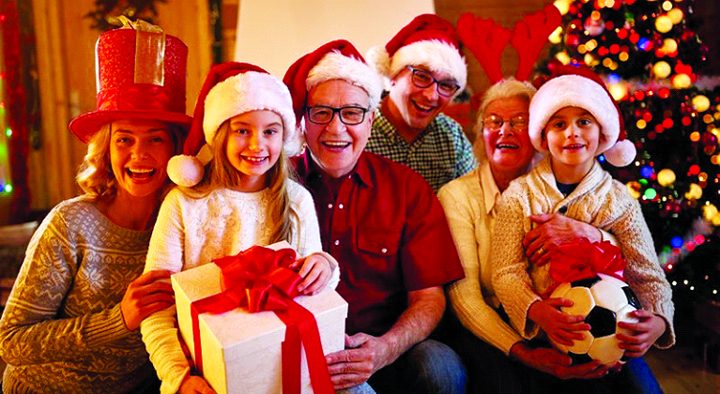
Saturnalia and the Pagan Influence on Christmas
One of the most significant influences on Christmas comes from Saturnalia, an ancient Roman festival held in mid-December in honour of Saturn, the god of agriculture. Saturnalia was marked by feasting, gift-giving, role reversals, public merriment, and widespread celebration-a joyful break from social norms.
During Saturnalia:
– Homes were decorated with greenery and lights
– Gifts were exchanged
– Public revelry was encouraged
– Masters and servants symbolically reversed roles
As Christianity spread through the Roman world, Church leaders faced a practical challenge: how to introduce Christian observances without alienating populations deeply attached to existing traditions. Rather than abolish popular festivals, the Church often reframed them, assigning new Christian meaning to familiar customs.
Placing Christmas in late December allowed Christian leaders to absorb and transform Saturnalia’s celebratory spirit, redirecting attention from pagan gods to the birth of Christ. Many elements now associated with Christmas-festivity, generosity, communal meals-echo these ancient winter celebrations.
Is Christmas Really the Day Jesus Was Born?
The short answer is: probably not.
The Bible does not specify an exact date for Jesus’ birth. In fact, clues within the Gospel narratives-such as shepherds tending flocks outdoors at night-suggest a springtime birth rather than mid-winter, as December nights in Judea would have been too cold for grazing.
Several alternative dates were proposed by early Christian scholars, including March and September. December 25 appears to have been chosen symbolically rather than historically.
Some historians believe the date aligned with:
– The Roman festival of Sol Invictus (the Unconquered Sun)
– The winter solstice, symbolising light overcoming darkness
– The belief that Jesus was conceived on March 25, making December 25 nine months later
Thus, Christmas became less about historical precision and more about theological symbolism-celebrating Christ as the “Light of the World” entering a darkened world.
The Middle Ages: Christmas
Becomes a Popular Festival
By the Middle Ages, Christmas had firmly taken root across Europe. It became a twelve-day festival, running from December 25 to January 6 (Epiphany). Feasts, plays, church services, and community gatherings dominated the season.
Medieval Christmas traditions included:
– Mystery plays depicting the Nativity
– Caroling, originally communal singing
– Yule logs, inherited from Norse winter customs
– Lavish feasts for both nobles and commoners
However, Christmas was not always universally embraced. During the 17th century, Puritans in England and colonial America viewed Christmas as excessive and unbiblical. In some places, celebrations were even banned. It would take time-and cultural transformation-for Christmas to regain its widespread popularity.
‘A Christmas Carol’: The Story That Changed Christmas
Few works have shaped modern Christmas more than Charles Dickens’ *A Christmas Carol*, published in 1843. At a time when industrialisation had deepened social inequality, Dickens reimagined Christmas as a season of compassion, generosity, and moral renewal.
The story of Ebenezer Scrooge, transformed from miser to benefactor, reframed Christmas not merely as a religious holiday but as a time for:
– Caring for the poor
– Strengthening family bonds
– Practising kindness and forgiveness
Dickens’ vision deeply influenced Victorian society and helped redefine Christmas as a warm, family-centred festival. Many traditions we associate with Christmas today-festive meals, goodwill, charitable giving-owe much to the moral tone set by ‘A Christmas Carol’.
Who Invented Santa Claus? The Making of a Global Icon
Santa Claus, perhaps the most recognisable symbol of Christmas today, did not emerge fully formed. He is the product of centuries of myth-making and cultural blending.
His origins lie with Saint Nicholas, a 4th-century Christian bishop from Myra (modern-day Turkey), known for secret gift-giving and compassion for children and the poor. Over time, Dutch settlers in America brought stories of Sinterklaas, which gradually merged with local traditions.
In the 19th century:
– The poem “A Visit from St. Nicholas” (1823) popularised Santa as a jolly gift-giver arriving by sleigh
– Illustrator Thomas Nast gave Santa his familiar appearance
– Coca-Cola advertisements in the 20th century cemented the red-suited, white-bearded image globally
Thus, Santa Claus evolved from a Christian saint into a universal symbol of generosity and joy.
The Christmas Tree and Other Traditions
The Christmas tree, now central to celebrations, has roots in Germanic pagan traditions, where evergreen trees symbolised life during winter. By the 16th century, decorated trees were part of German Christmas customs and later spread across Europe and America.
Other traditions include:
– Gift-giving, linked to the Magi and Saturnalia
– Carols, evolving from medieval hymns
– Lights, symbolising hope and divine presence
– Festive meals, reinforcing community and abundance
Each tradition reflects layers of history rather than a single origin.
Christmas in the Modern World
Today, Christmas is celebrated across continents, often adapted to local cultures. In some countries it remains deeply religious; in others it is largely secular. It has also become a major commercial season, prompting debates about materialism versus meaning.
Yet, at its core, Christmas continues to carry a powerful message-hope, renewal, generosity, and togetherness. Christmas did not begin on a single night in Bethlehem, nor was it shaped by one tradition alone. It is the result of faith meeting history, belief meeting culture, and ancient customs meeting modern life.
From Saturnalia to Saint Nicholas, from Dickens to Santa Claus, Christmas has continually reinvented itself-while preserving its central spirit. That enduring adaptability may explain why, after two millennia, Christmas remains not just a holiday, but a shared human celebration.
Christmas Around the World: How Cultures Across Continents Celebrate the Season
From midnight masses in Europe to beachside festivities in the Southern Hemisphere, from solemn religious observances to vibrant folk customs, Christmas reflects the cultural soul of each society it touches. What unites these varied traditions is a shared emphasis on family, generosity, light, and renewal, even as climate, history, and local customs shape the way the season unfolds.
Europe: Where Many Christmas Traditions Took Shape
In the United Kingdom, Christmas is deeply influenced by Victorian-era traditions popularised by Charles Dickens. Homes are decorated with holly, mistletoe, and Christmas trees, while carol singing remains a cherished custom. The traditional Christmas meal includes roast turkey, stuffing, roast potatoes, and Christmas pudding, often served with brandy butter.
The Queen’s (now King’s) Christmas message, broadcast annually, is a modern tradition that reflects on national life and shared values. Boxing Day, celebrated on December 26, continues the festive spirit with family gatherings and sporting events.
Germany: Advent, Markets and the Christmas Tree
Germany is widely regarded as the birthplace of many modern Christmas customs. The Advent calendar and Advent wreath originate here, marking the countdown to Christmas. German towns are famous for their Weihnachtsmärkte (Christmas markets), where stalls sell mulled wine (Glühwein), gingerbread (Lebkuchen), and handcrafted ornaments.
The tradition of decorating a Christmas tree began in Germany in the 16th century and later spread worldwide. Christmas Eve is often the main celebration, when families exchange gifts and attend church services.
France: Midnight Mass and Réveillon
In France, Christmas blends elegance with devotion. Many families attend Midnight Mass before returning home for le réveillon, a long, elaborate late-night feast featuring oysters, foie gras, roast meats, and fine desserts. In Provence, the tradition of thirteen desserts symbolises Jesus and the twelve apostles. Nativity scenes, known as crèches, are common in homes and churches, reflecting France’s strong cultural connection to the story of Christ’s birth.
Italy: Faith at the Heart of Christmas
In Italy, Christmas remains deeply religious. Nativity scenes (*presepi*) are central, sometimes more important than Christmas trees. The Vatican’s Midnight Mass, led by the Pope, is watched by millions worldwide.
Children often receive gifts not from Santa Claus but from La Befana, a folkloric figure who delivers presents on Epiphany (January 6), extending the festive season beyond Christmas Day.
United States: A Cultural Melting Pot
Christmas in the United States reflects the country’s diversity. Traditions include decorated trees, gift exchanges, stockings, and Santa Claus, alongside church services and family meals. Popular foods vary by region, but roast turkey, ham, and pies are common.
Public displays, Christmas movies, and commercial celebrations play a major role, while December 25 has been a federal holiday since 1870. Despite its commercialisation, Christmas remains a time for charity, volunteering, and family gatherings.
Mexico: Posadas and Community Faith
In Mexico, Christmas is celebrated through Las Posadas, a nine-day re-enactment of Mary and Joseph’s search for shelter. Each evening involves prayer, songs, and communal feasts. Christmas Eve (Nochebuena) is the main event, marked by midnight Mass and family celebrations. Traditional foods include tamales, bacalao (salted cod), and ponche, a warm fruit drink. Piñatas shaped like stars symbolise the triumph of good over evil.
Brazil: Christmas in Summer
In Brazil, Christmas arrives in the height of summer. Celebrations often extend outdoors, with fireworks and open-air feasts. Many families attend Missa do Galo (Rooster’s Mass) at midnight on Christmas Eve.
Festive meals include tropical fruits alongside traditional dishes. Cities like Rio de Janeiro feature massive floating Christmas trees and elaborate light displays.
Africa: Faith, Music and Community
In Ethiopia, Christmas-known as Genna-is celebrated on January 7, following the Orthodox calendar. The day begins with long church services and fasting, followed by communal meals. Traditional white garments and processions highlight the deeply spiritual nature of the celebration.
Nigeria and Ghana: Joyful Worship and Togetherness
In many African countries, Christmas is marked by lively church services, music, dance, and extended family gatherings. Urban residents often travel back to their hometowns, making Christmas a major period of reunions.
Asia: Faith, Festivals and Cultural Adaptation
The Philippines celebrates Christmas longer than any other country, beginning as early as September. The season peaks with Simbang Gabi, a series of dawn Masses leading up to Christmas Day.
Festivities centre on family, food, and faith, with colourful parol lanterns symbolising the Star of Bethlehem.
India: Regional Diversity and Harmony
In India, Christmas is celebrated by Christian communities across states such as Goa, Kerala, and the Northeast. Churches host midnight Mass, homes are decorated with stars and cribs, and festive foods vary regionally. In many cities, Christmas has also become a broader cultural celebration, marked by markets, decorations, and shared goodwill across communities.
Japan: A Secular Celebration of Togetherness
In Japan, Christmas is largely secular and commercial. It is seen as a time for couples rather than families. A uniquely Japanese tradition involves eating fried chicken, popularised by marketing campaigns in the 1970s.
Australia and NZ: A Summer Christmas
In Australia and New Zealand, Christmas falls during summer. Celebrations often involve barbecues, beach outings, and outdoor lunches. Traditional Christmas foods are adapted to the climate, with seafood and cold desserts replacing heavy roasts. Carols by Candlelight events reflect the blend of tradition and modern lifestyle. Christmas is celebrated in churches and homes, in snow-covered villages and sunlit beaches, in solemn silence and joyful song. While traditions differ widely, the heart of Christmas remains constant-a celebration of hd human connection.


Be the first to comment