
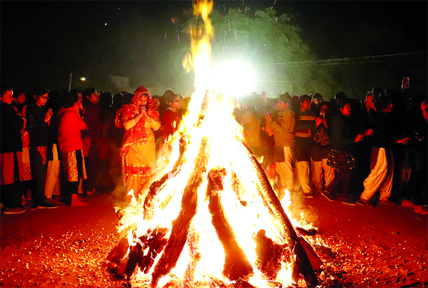

As winter tightens its grip over North India, a sudden glow begins to punctuate the cold January nights. Bonfires crackle in village courtyards and urban colonies alike, folk songs rise into the frosty air, and communities gather in warmth and celebration. This is Lohri-Punjab’s most evocative winter festival, where fire becomes both symbol and centre, marking the triumph of life over cold, scarcity over abundance, and despair over hope.
Celebrated annually on January 13, Lohri stands at the threshold of seasons, welcoming the gradual retreat of winter and the approach of longer, brighter days. Rooted in agrarian rhythms, folk legends and communal joy, Lohri is far more than a festival-it is a living expression of North India’s cultural soul.
The Significance of Lohri
At its heart, Lohri is a harvest festival, deeply connected to the agricultural cycle of Punjab, Haryana, Himachal Pradesh and parts of western Uttar Pradesh. It marks the ripening of the Rabi crop, particularly wheat, which is sown in winter and harvested in spring. For farming communities, Lohri is a moment of thanksgiving-an offering of gratitude to nature for sustaining life through harsh winters.
The festival also coincides with the winter solstice period, when days begin to lengthen. The bonfire, central to Lohri celebrations, symbolises the Sun’s return, warmth, energy and renewal. Fire is revered as a purifier and protector, believed to burn away negativity, illness and misfortune.
Traditionally, Lohri holds special significance for:
– Newlyweds, celebrating their first Lohri together
– Newborn children, especially the birth of a son in older traditions (though today the celebration is increasingly gender-neutral)
For these families, Lohri is a public affirmation of joy, continuity and prosperity.
The Legend of Dulla Bhatti:
Punjab’s Folk Hero
 No Lohri celebration is complete without invoking the legendary figure of Dulla Bhatti, a 16th-century Punjabi folk hero who lived during the reign of Mughal emperor Akbar. Often described as the “Robin Hood of Punjab,” Dulla Bhatti is remembered for his defiance of tyranny and his compassion for the vulnerable.
According to folklore, Dulla Bhatti rescued poor girls from being forcibly sold or enslaved and arranged their marriages with dignity. Lacking dowries, he is said to have acted as their brother, providing them with essentials and lighting the sacred fire during their wedding rituals.
Children singing Lohri songs still chant:
“Sundar mundriye ho!
Tera kaun vichara ho?
Dulla Bhatti wala ho!”
Through these verses, Dulla Bhatti lives on as a symbol of justice, bravery and social responsibility, embodying the moral values that Lohri celebrates.
The Bonfire Ritual
The most iconic image of Lohri is the bonfire, lit after sunset in open spaces. Families and neighbours gather around it, circling the flames in reverence. Offerings are thrown into the fire-til (sesame seeds), gur (jaggery), peanuts, popcorn and rewri-each carrying symbolic meaning.
– Til and gur represent warmth, sweetness and energy during winter
– Peanuts and popcorn symbolise abundance and fertility
– Fire serves as a witness to prayers for health, prosperity and protection
– People offer prayers, walk around the fire (parikrama), and bow in respect, acknowledging nature’s generosity and divine forces.
Music, Dance and Community Joy Lohri is inseparable from Punjabi folk culture.
As the night deepens, the atmosphere comes alive with the rhythmic beats of the dhol. Men perform the energetic Bhangra, leaping and twirling in celebration of harvest and vitality, while women gather for Gidda, singing traditional songs filled with humour, longing and wisdom.
The songs of Lohri are both festive and reflective-celebrating fertility, family bonds, bravery and the cycles of life. In villages, children go door-to-door singing Lohri songs and collecting treats, reinforcing the spirit of sharing and community bonding.
Traditional Foods
Food plays a central role in Lohri celebrations, reflecting seasonal produce and rustic flavours. Common delicacies include:
– Makki di roti (cornbread)
– Sarson da saag (mustard greens)
– Til-gur laddoos
– Rewri and gajak
– Warm milk and sugarcane products
These hearty foods provide nourishment during winter while strengthening communal ties as families and neighbors eat together.
The First Lohri
Among all Lohri celebrations, none are as emotionally charged and ceremonially elaborate as the First Lohri of a newborn child or a newlywed bride. These observances transform the festival from a seasonal ritual into a deeply personal milestone, marking entry into new phases of life and family.
The First Lohri of a Child: Welcoming Life and Lineage
The birth of a child-traditionally the firstborn-adds a special glow to Lohri celebrations. The child’s first Lohri is considered a blessing-filled occasion, symbolising fertility, continuity and divine grace. In Punjabi households, this Lohri is celebrated with heightened enthusiasm, as elders invoke prosperity, good health and protection for the newborn.
The family hosts a gathering where:
– The child is dressed in new clothes, often in bright reds or traditional Punjabi attire
– The bonfire becomes the centre of prayers, with special offerings made in the child’s name
– Elders bless the infant, touching til-gur to the lips as a sign of sweetness and abundance
– Relatives bring gifts, sweets, clothes and sometimes symbolic gold or silver items
– Folk songs sung during this Lohri often reference growth, courage and honour, embedding the child into the shared cultural memory of the community.
– While older customs emphasized the birth of a son, modern celebrations increasingly honour daughters with equal pride, reflecting evolving social values while retaining ritual warmth.
The First Lohri of a Bride: Welcoming a New Daughter
Equally significant is the First Lohri of a newly married woman, celebrated as her formal introduction into her marital home’s traditions. This Lohri is both a welcome and a blessing-an acknowledgment of the bride as a bearer of continuity, harmony and prosperity.
The bride’s parental family traditionally sends:
– Lohri thaalis filled with rewri, gajak, peanuts and popcorn
– New clothes, jewellery or shawls
– Festive foods and sweets prepared at home
Dressed in finery, the bride participates in the bonfire rituals, often receiving special attention as relatives shower her with blessings and songs. Women gather around her, singing traditional suhag and Lohri geet, celebrating marriage, companionship and shared futures.
This observance underscores the festival’s deeper message-that Lohri is not merely about harvests, but about human relationships and generational continuity.
Rituals of Inclusion and Continuity
What unites both these First Lohri celebrations is their emphasis on inclusion-welcoming new life and new relationships into the collective fold. The bonfire becomes a witness to transitions, carrying prayers for fertility, harmony and protection skyward with its flames.
In contemporary times, many families consciously celebrate both bride and child together, using Lohri as a platform to reaffirm equality, gratitude and shared joy.
Lohri in Modern Times
While Lohri’s roots lie in rural agrarian life, the festival has gracefully adapted to urban settings. In cities, residential societies organise community bonfires, cultural evenings and folk performances. Social media and digital greetings have added a contemporary touch, but the essence remains unchanged.
Encouragingly, Lohri is also witnessing a progressive shift-celebrated equally for daughters and sons, emphasising joy, equality and inclusiveness over old biases.
A Festival of Warmth in Every Sense
In an age of fast-paced lives and fading traditions, Lohri endures because it fulfils a deep human need-for warmth, togetherness and hope. Around its flames, generations meet, stories are shared, and the coldest night becomes a celebration of life itself.
More than a harvest festival, Lohri is a reminder that even in the depths of winter, renewal is inevitable, and that community, gratitude and fire can light the way forward.


Be the first to comment