
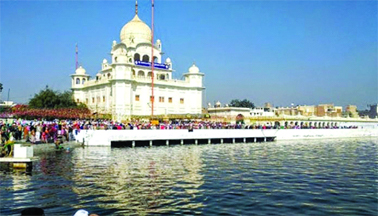

Every January, as the Sun begins its northward journey and Punjab emerges from the depths of winter, thousands of devotees converge at a sacred town whose very name echoes redemption-Sri Muktsar Sahib. Here, on the occasion of Maghi, Punjab observes one of its most solemn and spiritually charged gatherings: Maghi Mela.
Held a day after Lohri and coinciding with Makar Sankranti, Maghi Mela is not a festival of revelry but of remembrance, repentance and renewal. It commemorates the unparalleled sacrifice of the Chali Mukte-the Forty Liberated Ones-whose martyrdom transformed this land into a symbol of spiritual emancipation within Sikh history.
Sri Muktsar Sahib: The Land of Liberation
At the heart of Maghi Mela lies Sri Muktsar Sahib, a revered Sikh pilgrimage centre in southern Punjab. The town derives its name from the historic transformation it witnessed-Muktsar, meaning “the pool of liberation”.
Originally known as Khidrana, this site became sacred following the battle fought here in 1705 between Guru Gobind Singh’s followers and the Mughal forces. It was here that forty Sikhs, who had earlier renounced their allegiance to the Guru under duress, returned to defend him, driven by remorse and unshakable faith.
After the fierce battle, Guru Gobind Singh personally blessed the martyrs, tearing up the document of renunciation and declaring them “Mukte”-those who had attained liberation. The transformation of Khidrana into Sri Muktsar Sahib stands as one of the most powerful moments of forgiveness and grace in Sikh tradition.
Today, the town is dotted with historic gurdwaras, sacred sarovars and memorials associated with the Chali Mukte, making it the epicentre of Maghi observances.
Origins of Maghi Mela: History Forged in Sacrifice
The origins of Maghi Mela are inseparable from the Battle of Muktsar. During the prolonged siege of Anandpur Sahib by Mughal and hill chieftain forces, forty Sikhs-exhausted and fearful-signed a document disavowing Guru Gobind Singh. However, their conscience soon awakened.
Under the leadership of Mai Bhago, a formidable Sikh woman warrior, the forty Sikhs pursued the Guru and confronted the Mughal army at Khidrana. Despite being vastly outnumbered, they fought with extraordinary bravery, attaining martyrdom while ensuring the Guru’s safety.
Their sacrifice was not merely martial-it was moral and spiritual, exemplifying the Sikh ideals of responsibility, repentance and selfless courage.
Spiritual Significance: From Repentance to Redemption
Maghi Mela occupies a unique place in Sikh spirituality because it commemorates not only martyrdom but the possibility of redemption. The story of the Chali Mukte teaches that spiritual liberation is attainable through sincere remorse and righteous action.
The observance coincides with Uttarayan, reinforcing the symbolism of turning toward light-both cosmically and inwardly. For pilgrims, Maghi becomes a moment of introspection, encouraging them to confront personal failings and renew commitment to truth and justice.
Pilgrimage and the Sacred Sarovar
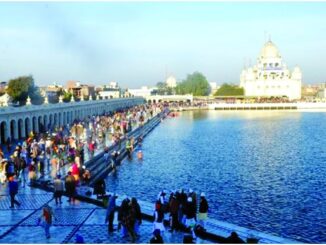
A defining ritual of Maghi Mela is the holy dip at the sacred sarovar of Sri Muktsar Sahib. Pilgrims arrive in the pre-dawn hours, braving the winter cold to bathe in waters believed to carry the blessings of the Chali Mukte.
After the dip, devotees visit key gurdwaras, including:
– Gurdwara Tuti Gandi Sahib, marking where Guru Gobind Singh tore the renunciation letter
– Gurdwara Tibbi Sahib, associated with the Guru’s strategic position
– Gurdwara Shahid Ganj, commemorating the martyrs
These visits transform the mela into a living historical journey, where faith and memory merge.
Traditions and Observances: Faith in Action Ardas, Kirtan and Katha
Special prayers are offered throughout the day, accompanied by continuous kirtan and historical discourses recounting the battle and its lessons. The emphasis remains on humility, courage and moral responsibility.
Langar: The Spirit of Equality
Massive langars operate day and night, feeding thousands. Volunteers from across Punjab and beyond serve meals selflessly, reflecting the Sikh principle that service to humanity is service to the Divine.
Charity and Community Service
In keeping with the spirit of Maghi and Makar Sankranti, acts of charity-donations of food, clothes and money-form an integral part of the observance.
Maghi Beyond the Shrine:
Cultural and Agrarian Dimensions
While Sri Muktsar Sahib remains the spiritual nucleus, Maghi is observed across Punjab as:
– The beginning of the new agricultural year
– A time for settling land leases and accounts
– A marker of seasonal transition and renewed labour
Folk gatherings, local fairs and markets accompany the religious observance, lending Maghi a gentle cultural vibrancy without diminishing its solemn tone.
Maghi Mela in Contemporary Times
Today, Maghi Mela draws pilgrims from across India and the global Sikh diaspora. Modern civic arrangements support the massive turnout, while educational initiatives-exhibitions, lectures and publications-ensure the historical and spiritual essence of Sri Muktsar Sahib is preserved for future generations.
Maghi Mela is ultimately a tribute to the idea that faith is not defined by perfection, but by the courage to return, repent and rise. The Chali Mukte did not erase their past-they redeemed it through sacrifice.
As pilgrims gather each year at Sri Muktsar Sahib, they are reminded that liberation is not distant or abstract. It lies in truthful living, moral courage and unwavering devotion.
In the quiet prayers by the sacred sarovar and the echo of Gurbani across the winter air, Maghi Mela continues to affirm Punjab’s timeless lesson:
that even in failure, the path to liberation remains open.

Be the first to comment