

Each January, as winter slowly loosens its grip and the chill in the air carries the promise of warmth, India witnesses a quiet yet momentous cosmic shift. The Sun begins its northward journey, crossing into Makara Rashi (Capricorn). This celestial transition is celebrated as Makar Sankranti-one of the subcontinent’s most ancient, scientifically precise and spiritually resonant festivals.
Unlike most Indian festivals governed by the lunar calendar, Makar Sankranti follows the solar cycle, falling almost unfailingly on January 14 (occasionally January 15). It marks the beginning of Uttarayan, the auspicious half of the year when days lengthen and light triumphs over darkness. Across India’s vast geography, this solar event blossoms into harvest celebrations, pilgrimages, rituals of charity and vibrant regional traditions-each echoing the same eternal truth: renewal is inevitable.
The Significance of Makar Sankranti
At its core, Makar Sankranti is a festival of transition-from cold to warmth, from scarcity to abundance, from dormancy to growth. In Hindu cosmology, the Sun (Surya) is not merely a celestial body but the visible manifestation of divine consciousness, the sustainer of life and the regulator of time.
The Rig Veda venerates the Sun as the cosmic witness:
“?ditya? sarva-bh?t?n?? cak?u?”
(The Sun is the eye of all beings)
When the Sun begins its northward ascent, it symbolises spiritual awakening and upward movement-a belief that elevates Makar Sankranti far beyond a seasonal marker.
The Bhagavad Gita reinforces this sanctity:
“Agnir jyotir aha? ?ukla? ?a?-m?s? uttar?ya?am…” (8.24)
(Fire, light, day, the bright fortnight and the six months of Uttarayan…)
Lord Krishna identifies Uttarayan as the path associated with liberation, establishing Makar Sankranti as a cosmic gateway aligned with moksha-consciousness.
Bhishma Pitamah and the Power of Auspicious Time
One of the most profound scriptural moments linked to Makar Sankranti appears in the Mahabharata. Bhishma Pitamah, endowed with icch?-m?tyu (the boon to choose the time of death), lies on a bed of arrows through weeks of suffering, waiting patiently for the Sun to turn northward.
His departure during Uttarayan embodies an enduring belief: time itself becomes sacred when aligned with cosmic rhythm. The episode elevates Makar Sankranti into a moment when destiny, discipline and divinity converge.
Legends of Harmony: Surya and Shani
Puranic lore narrates that on Makar Sankranti, Lord Surya visits his son Shani Dev, the ruler of Capricorn. Despite their strained relationship, this symbolic meeting represents reconciliation, balance and moral order.
The legend quietly shapes the festival’s ethical core-setting aside ego, resolving conflict and restoring harmony, much like the Sun’s steady, impartial warmth that touches all life equally.
Observances and Rituals
Makar Sankranti is marked by rituals that emphasise cleansing, gratitude and generosity.
Holy Dips and Sun Worship
Before sunrise, devotees take ritual baths in sacred rivers-the Ganga, Yamuna, Godavari, Krishna and Kaveri-or at the sea. The act symbolises the washing away of past burdens and a fresh alignment with natural forces.
Pilgrimages such as the Gangasagar Mela in West Bengal and congregations at Prayagraj and Haridwar draw millions, rooted in the belief-recorded in the Puranas-that waters are especially sanctified on this day.
Daana: The Dharma of Charity
Charity is central to Makar Sankranti. The Dharma Shastras emphasise that gifts offered during Uttarayan yield multiplied spiritual merit.
Donations of til (sesame seeds), jaggery, grains, cattle fodder, clothes and blankets are considered especially auspicious. Sesame, believed to be sanctified by Yama, carries the power to cleanse karmic debts.
The popular saying-“Til-gud ghya, god god bola”-is not merely cultural but ethical: let sweetness enter the body and kindness enter speech.
Regional Celebrations
Makar Sankranti is among the most pan-Indian festivals, celebrated under diverse names:
– Punjab & North India: Lohri and Maghi, with bonfires, folk songs and harvest feasts
– Tamil Nadu: Pongal, a four-day thanksgiving to the Sun, cattle and nature
– Assam: Magh Bihu, blending feasting with community bonding
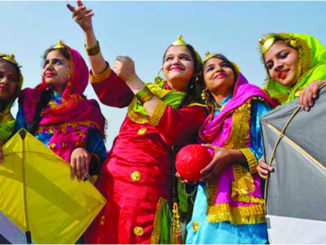
– Gujarat & Rajasthan: Kite festivals filling the skies with colour and joy
– Maharashtra: Exchange of til-gul sweets and warm greetings
– Andhra Pradesh & Telangana: Sankranti with rangoli, bullock festivities and ancestral rituals
– West Bengal: Gangasagar Mela, one of India’s largest pilgrimages
Despite regional variations, the essence remains unchanged-gratitude for harvest, reverence for nature and hope for renewal.
Food Symbolism: Sweetness Against Winter’s Edge
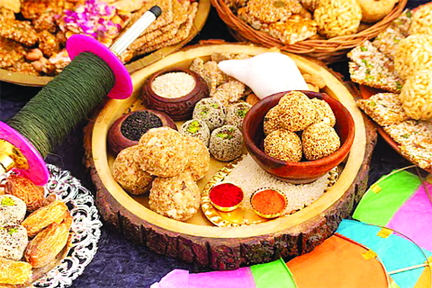
Traditional foods prepared during Makar Sankranti reflect both seasonal wisdom and spiritual metaphor. Sesame and jaggery-warming, nourishing ingredients-dominate kitchens across India.
Whether as til laddoos, chikki, pongal or khichdi, these foods symbolise:
– Protection against winter’s chill
– Strength and resilience
– Sweetness in human relationships
Ayurveda views this diet as harmonising the body during seasonal transition, reinforcing how ancient practices balanced ritual, health and environment.
Makar Sankranti in Contemporary Times
In modern India, Makar Sankranti continues to evolve-celebrated through community gatherings, eco-friendly kite festivals, charitable drives and digital greetings. Yet its solar precision and philosophical grounding remain untouched.
It stands apart as a festival where science and spirituality coexist seamlessly, reminding people that ancient wisdom was deeply attuned to cosmic order.
A Festival That Teaches Alignment
More than a harvest festival or ritual observance, Makar Sankranti is a lesson in alignment-with time, nature and inner purpose. As the Sun turns northward, the festival invites humanity to rise above inertia, bitterness and darkness.
It affirms a timeless truth embedded in Indian thought: when the cosmos moves toward light, so must the human spirit.

Be the first to comment