
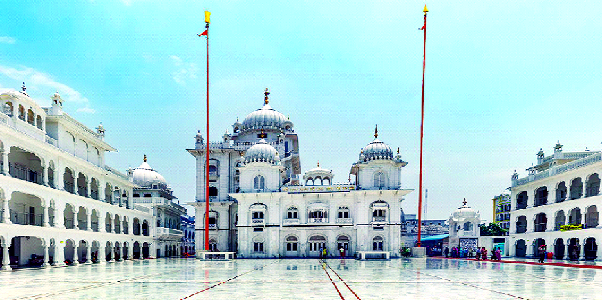

Across the sacred geography of Sikhism, the life and legacy of Guru Gobind Singh Ji unfold not merely through texts or tradition, but through a constellation of historic Gurdwaras that stand as living embodiments of his vision. These shrines are not just markers of memory-they are powerful spiritual centers where history, faith, and valor converge.
Each Gurdwara associated with the Tenth Guru is a chapter in a grand spiritual narrative-one that chronicles the transformation of a persecuted community into the Khalsa, a fearless order of saint-soldiers committed to righteousness, equality, and justice.
The Sacred Trail of the Tenth Guru
The life of Guru Gobind Singh Ji (1666-1708) spanned vast regions-from the eastern plains of Bihar to the Deccan plateau of Maharashtra. His journey, especially after the pivotal events of 1704-1705, created a sacred trail across northern India. Today, many of these sites are connected through the historic “Guru Gobind Singh Marg,” symbolizing not only physical travel but also a profound spiritual progression-from struggle to wisdom and liberation.
These Gurdwaras collectively represent the multidimensional personality of the Guru-as a warrior, poet, philosopher, and divine guide.
Anandpur Sahib: The Birthplace of the Khalsa Revolution
At the foothills of the Shivalik range lies Anandpur Sahib, the city that became the epicenter of Sikh strength under Guru Gobind Singh Ji. It was here that the Guru spent nearly a quarter of a century nurturing a spiritual community that would soon redefine history.
Takht Sri Keshgarh Sahib: The Dawn of a New Order
This sacred Takht is not only one of the five temporal seats of Sikh authority but also the birthplace of the Khalsa. On Vaisakhi of 1699, Guru Gobind Singh Ji called upon a gathering of thousands and asked for a head-testing the faith of his followers. One by one, five men stepped forward, later known as the Panj Pyare. Through the initiation ceremony, the Guru created the Khalsa Panth-a collective identity grounded in equality, discipline, and spiritual sovereignty.
The significance of this moment remains profound: caste distinctions were abolished, and every initiate became Singh or Kaur, symbolizing dignity and empowerment.
The Forts of Anandpur: Defenders of Faith
Gurdwaras like Anandgarh Sahib, Lohgarh Sahib, and Holgarh Sahib mark the locations of fortified structures built by the Guru. These forts were not merely military outposts but symbols of a new vision-where spirituality and readiness to defend righteousness coexisted. The battles fought here against Mughal and hill forces were not for territorial gain, but for the protection of religious freedom.
Chamkaur Sahib: The Pinnacle of Sacrifice
The town of Chamkaur Sahib is sanctified by one of the most heroic episodes in Sikh history-the Battle of Chamkaur (1704).
Gurdwara Katalgarh Sahib: Martyrdom of the Sahibzadas
Within a small fortress-like structure, Guru Gobind Singh Ji and a handful of Sikhs faced an army of thousands. Here, his elder sons-Sahibzada Ajit Singh Ji and Sahibzada Jujhar Singh Ji-embraced martyrdom in their youth. Their courage was rooted in spiritual conviction and unwavering faith.
The Guru’s acceptance of their sacrifice demonstrated a profound truth: that the path of righteousness often demands the highest personal cost.
Gurdwara Garhi Sahib: Defiance Against All Odds
This site marks the fortress where the Guru made his stand. The events at Chamkaur are remembered not as a defeat, but as a moral and spiritual victory-where a small group stood against overwhelming forces, embodying the Khalsa ideal of fearless resistance.
Machhiwara: The Night of Divine Solitude
After escaping Chamkaur, Guru Gobind Singh Ji entered the dense forests of Machhiwara. These days were marked by physical hardship but deep spiritual reflection.
Gurdwara Charan Kanwal Sahib:
Where the Divine Walked
This serene shrine commemorates the place where the Guru rested amidst wilderness and adversity. It is associated with his poetic expressions of longing for the Divine.
Machhiwara represents an introspective phase in the Guru’s journey-reminding devotees that even in the most challenging circumstances, faith remains steadfast.
Sri Muktsar Sahib: Redemption Through Courage
The sacred land of Sri Muktsar Sahib holds a story of extraordinary redemption.
The Battle of Muktsar and the Chali Mukte
Forty Sikhs who had once abandoned the Guru returned, driven by remorse and renewed faith. In the Battle of Khidrana, they fought bravely and attained martyrdom. Guru Gobind Singh Ji blessed them as the “Chali Mukte”-the Forty Liberated Ones-granting them spiritual salvation.
Gurdwara Tuti Gandi Sahib: Grace Beyond Judgment
This Gurdwara commemorates the tearing of the declaration of desertion. The Guru’s act of forgiveness stands as one of the most powerful examples of compassion in Sikh history.
Muktsar teaches that redemption is always possible for those who return to the path with sincerity.
Talwandi Sabo: The Seat of Learning and Reflection
In Talwandi Sabo, Guru Gobind Singh Ji found a period of reflection after years of conflict.
Takht Sri Damdama Sahib: The Literary Legacy
Here, the Guru oversaw the final recension of the Guru Granth Sahib. This site became a center of Sikh learning, earning the title “Guru Ki Kashi.”
It was in Talwandi Sabo that the Guru emphasized knowledge as a cornerstone of spiritual growth, ensuring that Sikhism remained rooted in both devotion and intellect.
Takht Patna Sahib: The Divine Beginning
The historic city of Patna is home to Takht Sri Patna Sahib, the birthplace of Guru Gobind Singh Ji.
This shrine preserves memories of his early years, where signs of spiritual wisdom and courage were evident even in childhood. Stories from this period continue to inspire devotees across generations.
Takht Hazur Sahib: The Eternal Transition
The journey culminates in Nanded, at Takht Sri Hazur Sahib.
Here, in 1708, Guru Gobind Singh Ji departed from the physical world after a life of immense sacrifice. Before his passing, he made a historic declaration-bestowing eternal Guruship upon the Guru Granth Sahib.
This moment marked a defining transition, ensuring that the Sikh community would forever be guided by sacred scripture rather than a human successor.
The Deeper Spiritual Symbolism
These historic Gurdwaras collectively form a spiritual arc:
– Anandpur Sahib – Creation and identity
– Chamkaur Sahib – Sacrifice and courage
– Machhiwara – Faith in adversity
– Muktsar Sahib – Redemption and grace
– Damdama Sahib – Knowledge and reflection
– Patna Sahib – Divine origin
– Hazur Sahib – Eternal continuity
They mirror the journey of the human spirit-from birth and struggle to realization and liberation.
A Living Legacy of Faith and Courage
To walk through these historic Gurdwaras is to walk alongside Guru Gobind Singh Ji-to witness the forging of the Khalsa, the pain of separation, the triumph of faith, and the enduring message of righteousness.
These shrines are not silent monuments; they are vibrant centers of devotion where hymns resonate, community kitchens serve all without distinction, and the spirit of selfless service thrives. They continue to inspire millions to live with courage, compassion, and unwavering faith.
In their sanctity, one does not merely remember history-one experiences the timeless presence of the Guru, guiding humanity toward truth, justice, and spiritual unity.



Be the first to comment