

In Sikhism, festivals are not simply occasions of joy-they are profound moments of remembrance, spiritual renewal, and collective identity. Rooted in history and guided by devotion, Sikh festivals bring communities together in a shared experience of prayer, music, service, and reflection.
Each festival commemorates a defining moment in Sikh history-whether it is the birth of a Guru, the creation of the Khalsa, or an act of sacrifice that shaped the Sikh community. Through these observances, history is not just remembered-it is relived, internalized, and passed on to future generations.
The Spiritual Essence of Sikh Celebrations
At the core of every Sikh festival lies the guidance of the Guru Granth Sahib. Celebrations are deeply spiritual in nature, beginning with prayer and the recitation of Gurbani.
Unlike festivals centered primarily on ritual or spectacle, Sikh observances emphasize:
– Spiritual reflection and devotion
– Congregation (Sangat)
– Selfless service (Seva)
– Equality through the institution of Langar
These elements transform festivals into meaningful experiences that strengthen both personal faith and communal bonds.
Vaisakhi: The Birth of the Khalsa
One of the most important festivals in Sikhism is Vaisakhi, celebrated every year in April.
It commemorates the historic day in 1699 at Anandpur Sahib, when Guru Gobind Singh Ji founded the Khalsa.
This moment marked a transformation in Sikh identity, establishing a disciplined community committed to equality, courage, and justice.
Celebrations and Rituals
– Amrit Sanchar ceremonies: Initiation into the Khalsa
– Nagar Kirtans: Processions led by the Panj Pyare, accompanied by devotional singing
– Special prayers and kirtan in Gurdwaras
– Community meals (langar) served to thousands
Vaisakhi is both a spiritual milestone and a celebration of unity and identity.
Gurpurabs: Honoring the Lives of the Gurus
Gurpurabs mark the birth and martyrdom anniversaries of the Sikh Gurus and are among the most widely observed Sikh festivals.
Guru Nanak Gurpurab
The birth anniversary of Guru Nanak Dev Ji is one of the most significant celebrations in Sikhism.
Key Observances
– Akhand Path: A continuous 48-hour reading of the Guru Granth Sahib
– Prabhat Pheris: Early morning devotional processions through neighborhoods
– Kirtan and discourses highlighting the Guru’s teachings
– Langar open to all, reinforcing equality
The festival reflects Guru Nanak’s timeless message of unity, humility, and devotion.
Other Gurpurabs
Celebrations of Gurus such as Guru Gobind Singh Ji and Guru Arjan Dev Ji highlight different dimensions of Sikh teachings-courage, sacrifice, resilience, and faith.
Hola Mohalla: The Spirit of Strength and Discipline
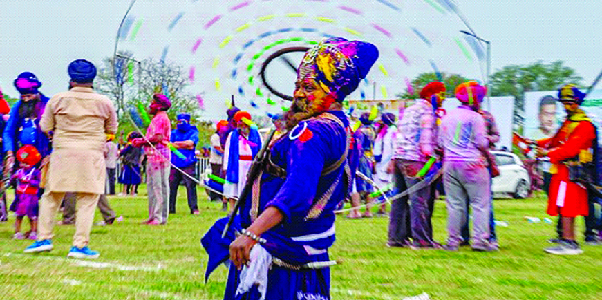
Introduced by Guru Gobind Singh Ji, Hola Mohalla is a unique festival that combines spiritual devotion with martial tradition.
Held annually in Anandpur Sahib, it reflects the Sikh ideal of the saint-soldier.
Key Features
– Gatka demonstrations showcasing traditional Sikh martial arts
– Mock battles and displays of physical skill
– Kirtan and poetry recitations
– Large-scale langar and community participation
Hola Mohalla is not merely a display of strength-it is a reminder of discipline, readiness, and the responsibility to defend justice.
Maghi: A Tribute to Sacrifice
The festival of Maghi commemorates the martyrdom of the Forty Liberated Ones (Chali Mukte), who sacrificed their lives in the Battle of Muktsar.
Observed in Sri Muktsar Sahib, Maghi is both solemn and inspiring.
Observances
– Pilgrimages and ritual bathing in sacred water bodies
– Kirtan and historical narratives recounting the sacrifice
– Community gatherings and langar
Maghi emphasizes themes of courage, redemption, and unwavering faith.
Bandi Chhor Divas: A Celebration of Freedom
Celebrated alongside Diwali, Bandi Chhor Divas marks the release of Guru Hargobind Sahib Ji from imprisonment.
The Guru refused to leave captivity unless 52 other prisoners were also freed, making this event a powerful symbol of justice and compassion.
Celebrations
– Illumination of Gurdwaras with lights and candles
– Fireworks and community gatherings
– Special kirtan and prayers
At the Harmandir Sahib, the Golden Temple is illuminated beautifully, attracting thousands of devotees.
Common Rituals Across Sikh Festivals
Despite their diversity, Sikh festivals share several key practices that define their spiritual character:
Akhand Path
A continuous, uninterrupted reading of the Guru Granth Sahib, symbolizing devotion and reverence.
Nagar Kirtan
Public processions led by the Panj Pyare, accompanied by devotional singing and community participation.
Langar
The community kitchen remains central to every celebration, serving free meals to all and reinforcing equality.
Seva
Voluntary service-cooking, cleaning, organizing-becomes an integral part of every festival, embodying humility and compassion.
Festivals as Living History
and Cultural Continuity
Sikh festivals serve as bridges between past and present. They preserve historical memory while making it relevant to contemporary life.
Through storytelling, hymns, and participation, each generation learns about:
– The lives and teachings of the Gurus
– The sacrifices that shaped Sikh identity
– The values of equality, courage, and service
These festivals ensure that Sikh history remains a living, evolving tradition.
A Global Expression of Sikh Identity
With Sikh communities spread across the world, festivals have taken on a global dimension. From Punjab to cities in Canada, the United Kingdom, the United States, and beyond, Gurdwaras become centers of vibrant celebration. Public processions, cultural events, and interfaith participation highlight the inclusive nature of Sikh festivals. They serve not only as religious observances but also as platforms for cultural exchange and community engagement.
Faith in Celebration, Community in Action
Sikh festivals are powerful expressions of a living faith-where devotion, history, and community come together in harmony. They remind us that spirituality is not confined to individual practice; it is shared through collective experience. Through prayer, music, service, and fellowship, these festivals continue to inspire values of equality, courage, and compassion.


Be the first to comment